Humanity doesn’t just need to escape from the mental prison of imperial indoctrination. It needs to escape from the heart prison as well.
I’m always talking here about the need to fight empire propaganda to help the public awaken to the fact that everything we’ve been trained to believe about the world is a lie, because that insight taking root in sufficient numbers would be the first step toward the revolutionary changes our world so desperately needs.
But large numbers of people opening their eyes to the reality of mass-scale psychological manipulation by the powerful would by itself be insufficient, because people need not only to see the truth — they also need to care.
Realizing the depravity and immense human suffering the US-centralized empire is responsible for creates an opportunity to respond to this insight with horror and begin resisting it — but it is only an opportunity. At that juncture it’s still possible for someone to realize that we’re not being told the truth about what’s happening in the world, but decide to play along with the lies anyway, either because the existing world order has made them wealthy, or because they are too indoctrinated with support for western power structures, or because they ideologically support Israel, or because they’re afraid of the changes and upheaval that would come with an overturning of the status quo, or because they are intellectually and morally lazy, or some other selfish reason.
Realizing that you’ve been indoctrinated into accepting a pernicious status quo unlocks an important door within yourself, but just because that door is opened doesn’t mean you have to walk through it. Walking through it requires another kind of awakening — an awakening of the heart.
Really no amount of knowledge or intellectual insight will ever set us free as a species in and of itself. You could upload the sum total of human knowledge into the brain of everyone on earth — including even government secrets that aren’t public knowledge — but unless this is accompanied by a collective opening of the heart, it wouldn’t make any difference. Unless people can find it within themselves to care deeply about the horrific things our rulers have been doing to our fellow human beings, no amount of knowledge about those things will catalyze real change.
And there are plenty of people who know but don’t care. The most powerful government agencies in the world are run by people who know terrible secrets about our ruling power structures that we ordinary members of the public are not allowed to know, but because their loyalty is to the empire and not to humanity, they don’t care about the moral implications of what they know or the human suffering the empire is responsible for.
So the demand of this moment in history is not just to understand, but to care. Not just to know what’s wrong with the world, but to feel it. Not just to awaken on the level of the head, but to awaken on the level of the heart as well. Not just to value our own personal understanding, but to value humanity as a whole.
Knowledge of the truth can lead to a profound compassion for the victims of the globe-spanning power structure which rules over us and a determination to oppose its cruelty — that’s why said power structure pours so much energy into keeping everyone propagandized. But it doesn’t necessarily need to lead to such compassion. The light of truth can stop its expansion at the gates of the heart, unless there’s some willingness from somewhere deep inside us to throw those gates open.
Ultimately humanity just needs to wake up, on every level. We need to liberate ourselves from the shackles of propaganda. We need to liberate ourselves from the shackles on our hearts. We need to liberate ourselves from the shackles of the ego. We need to liberate ourselves from the shackles of the dualistic perspective which obfuscates the oneness of all of reality from our vision.
That’s what’s being asked of us at this juncture. To wake all the way up and become a conscious species. That’s the only way we’ll ever be able to move about on this planet in a healthy and harmonious way.
And we’ll either rise to the occasion or we won’t. We’ll either wake up, or we’ll destroy ourselves. I believe we have the freedom as a species to go either way.
When exposing a crime is treated as committing a crime, you are being ruled by criminals.
In the current governmental climate, obeying one’s conscience and speaking truth to the power of the police state can easily render you an “enemy of the state.”
The government’s list of so-called “enemies of the state” is growing by the day.
Wikileaks founder Julian Assange is merely one of the most visible victims of the police state’s war on dissidents and whistleblowers.
Five years ago, on April 11, 2019, police arrested Assange for daring to access and disclose military documents that portray the U.S. government and its endless wars abroad as reckless, irresponsible, immoral and responsible for thousands of civilian deaths.
Included among the leaked materials was gunsight video footage from two U.S. AH-64 Apache helicopters engaged in a series of air-to-ground attacks while American air crew laughed at some of the casualties. Among the casualties were two Reuters correspondents who were gunned down after their cameras were mistaken for weapons and a driver who stopped to help one of the journalists. The driver’s two children, who happened to be in the van at the time it was fired upon by U.S. forces, suffered serious injuries.
There is nothing defensible about crimes such as these perpetrated by the government.
When any government becomes almost indistinguishable from the evil it claims to be fighting—whether that evil takes the form of war, terrorism, torture, drug trafficking, sex trafficking, murder, violence, theft, pornography, scientific experimentations or some other diabolical means of inflicting pain, suffering and servitude on humanity—that government has lost its claim to legitimacy.
These are hard words, but hard times require straight-talking.
It is easy to remain silent in the face of evil.
What is harder—what we lack today and so desperately need—are those with moral courage who will risk their freedoms and lives in order to speak out against evil in its many forms.
Throughout history, individuals or groups of individuals have risen up to challenge the injustices of their age. Nazi Germany had its Dietrich Bonhoeffer. The gulags of the Soviet Union were challenged by Aleksandr Solzhenitsyn. America had its color-coded system of racial segregation and warmongering called out for what it was, blatant discrimination and profiteering, by Martin Luther King Jr.
And then there was Jesus Christ, an itinerant preacher and revolutionary activist, who not only died challenging the police state of his day—namely, the Roman Empire—but provided a blueprint for civil disobedience that would be followed by those, religious and otherwise, who came after him.
Indeed, it is fitting that we remember that Jesus Christ—the religious figure worshipped by Christians for his death on the cross and subsequent resurrection—paid the ultimate price for speaking out against the police state of his day.
A radical nonconformist who challenged authority at every turn, Jesus was a far cry from the watered-down, corporatized, simplified, gentrified, sissified vision of a meek creature holding a lamb that most modern churches peddle. In fact, he spent his adult life speaking truth to power, challenging the status quo of his day, and pushing back against the abuses of the Roman Empire.
Much like the American Empire today, the Roman Empire of Jesus’ day had all of the characteristics of a police state: secrecy, surveillance, a widespread police presence, a citizenry treated like suspects with little recourse against the police state, perpetual wars, a military empire, martial law, and political retribution against those who dared to challenge the power of the state.
For all the accolades poured out upon Jesus, little is said about the harsh realities of the police state in which he lived and its similarities to modern-day America, and yet they are striking.
Secrecy, surveillance and rule by the elite. As the chasm between the wealthy and poor grew wider in the Roman Empire, the ruling class and the wealthy class became synonymous, while the lower classes, increasingly deprived of their political freedoms, grew disinterested in the government and easily distracted by “bread and circuses.” Much like America today, with its lack of government transparency, overt domestic surveillance, and rule by the rich, the inner workings of the Roman Empire were shrouded in secrecy, while its leaders were constantly on the watch for any potential threats to its power. The resulting state-wide surveillance was primarily carried out by the military, which acted as investigators, enforcers, torturers, policemen, executioners and jailers. Today that role is fulfilled by the NSA, the FBI, the Department of Homeland Security and the increasingly militarized police forces across the country.
Widespread police presence. The Roman Empire used its military forces to maintain the “peace,” thereby establishing a police state that reached into all aspects of a citizen’s life. In this way, these military officers, used to address a broad range of routine problems and conflicts, enforced the will of the state. Today SWAT teams, comprised of local police and federal agents, are employed to carry out routine search warrants for minor crimes such as marijuana possession and credit card fraud.
Citizenry with little recourse against the police state. As the Roman Empire expanded, personal freedom and independence nearly vanished, as did any real sense of local governance and national consciousness. Similarly, in America today, citizens largely feel powerless, voiceless and unrepresented in the face of a power-hungry federal government. As states and localities are brought under direct control by federal agencies and regulations, a sense of learned helplessness grips the nation.
Martial law. Eventually, Rome established a permanent military dictatorship that left the citizens at the mercy of an unreachable and oppressive totalitarian regime. In the absence of resources to establish civic police forces, the Romans relied increasingly on the military to intervene in all matters of conflict or upheaval in provinces, from small-scale scuffles to large-scale revolts. Not unlike police forces today, with their martial law training drills on American soil, militarized weapons and “shoot first, ask questions later” mindset, the Roman soldier had “the exercise of lethal force at his fingertips” with the potential of wreaking havoc on normal citizens’ lives.
Acts of civil disobedience by insurrectionists. Much like the Roman Empire, the American Empire has exhibited zero tolerance for dissidents such as Julian Assange, Edward Snowden and Chelsea Manning who exposed the police state’s seedy underbelly. Jesus was also branded a political revolutionary starting with his attack on the money chargers and traders at the Jewish temple, an act of civil disobedience at the site of the administrative headquarters of the Sanhedrin, the supreme Jewish council.
Military-style arrests in the dead of night. Jesus’ arrest account testifies to the fact that the Romans perceived Him as a revolutionary. Eerily similar to today’s SWAT team raids, Jesus was arrested in the middle of the night, in secret, by a large, heavily armed fleet of soldiers. Rather than merely asking for Jesus when they came to arrest him, his pursuers collaborated beforehand with Judas. Acting as a government informant, Judas concocted a kiss as a secret identification marker, hinting that a level of deception and trickery must be used to obtain this seemingly “dangerous revolutionist’s” cooperation.
Torture and capital punishment. In Jesus’ day, religious preachers, self-proclaimed prophets and nonviolent protesters were not summarily arrested and executed. Indeed, the high priests and Roman governors normally allowed a protest, particularly a small-scale one, to run its course. However, government authorities were quick to dispose of leaders and movements that appeared to threaten the Roman Empire. The charges leveled against Jesus—that he was a threat to the stability of the nation, opposed paying Roman taxes and claimed to be the rightful King—were purely political, not religious. To the Romans, any one of these charges was enough to merit death by crucifixion, which was usually reserved for slaves, non-Romans, radicals, revolutionaries and the worst criminals.
Jesus was presented to Pontius Pilate “as a disturber of the political peace,” a leader of a rebellion, a political threat, and most gravely—a claimant to kingship, a “king of the revolutionary type.” After Jesus is formally condemned by Pilate, he is sentenced to death by crucifixion, “the Roman means of executing criminals convicted of high treason.” The purpose of crucifixion was not so much to kill the criminal, as it was an immensely public statement intended to visually warn all those who would challenge the power of the Roman Empire. Hence, it was reserved solely for the most extreme political crimes: treason, rebellion, sedition, and banditry. After being ruthlessly whipped and mocked, Jesus was nailed to a cross.
Jesus—the revolutionary, the political dissident, and the nonviolent activist—lived and died in a police state. Any reflection on Jesus’ life and death within a police state must take into account several factors: Jesus spoke out strongly against such things as empires, controlling people, state violence and power politics. Jesus challenged the political and religious belief systems of his day. And worldly powers feared Jesus, not because he challenged them for control of thrones or government but because he undercut their claims of supremacy, and he dared to speak truth to power in a time when doing so could—and often did—cost a person his life.
Unfortunately, the radical Jesus, the political dissident who took aim at injustice and oppression, has been largely forgotten today, replaced by a congenial, smiling Jesus trotted out for religious holidays but otherwise rendered mute when it comes to matters of war, power and politics.
Yet for those who truly study the life and teachings of Jesus, the resounding theme is one of outright resistance to war, materialism and empire.
What a marked contrast to the advice being given to Americans by church leaders to “submit to your leaders and those in authority,” which in the American police state translates to complying, conforming, submitting, obeying orders, deferring to authority and generally doing whatever a government official tells you to do.
Will we follow the path of least resistance—turning a blind eye to the evils of our age and marching in lockstep with the police state—or will we be transformed nonconformists “dedicated to justice, peace, and brotherhood”?
As Martin Luther King Jr. reminds us in a powerful sermon delivered 70 years ago, “This command not to conform comes … [from] Jesus Christ, the world’s most dedicated nonconformist, whose ethical nonconformity still challenges the conscience of mankind.”
Ultimately, as I make clear in my book Battlefield America: The War on the American People and in its fictional counterpart The Erik Blair Diaries, this is the contradiction that must be resolved if the radical Jesus—the one who stood up to the Roman Empire and was crucified as a warning to others not to challenge the powers-that-be—is to be an example for our modern age.
At this point in history the most effective way for westerners to fight the empire and build support for revolutionary change is to undermine public support for western status quo systems and institutions. One does this by using every means at their disposal to help people see that the power structures which rule over us don’t serve our interests, and that they are in fact profoundly evil and destructive.
It takes a flash of insight for a westerner to be able to really see the perniciousness of the US-centralized empire in all its blood-soaked glory. This is because westerners spend their entire lives marinating in empire propaganda from childhood, which has normalized and manufactured their consent for the murderous, exploitative and oppressive power structure we live under. The current status quo is all they’ve ever known, and the idea that something better might be possible is alien to them.
Teachers of spiritual enlightenment point students to the truth of their being in as many ways as possible in an effort to facilitate a flash of insight into reality. The reason they do that rather than saying the same words over and over again from day to day is because everyone’s mind is unique and ever-changing, and what knocks things home for one student one day will just be useless noise to another student who will later pop open at something completely different. The receptivity to insight varies from person to person.
Similarly, a westerner who’s been swimming in empire propaganda their whole life won’t have their moment of insight into the depraved nature of the empire until something lands for them that they are personally receptive to. Someone who isn’t receptive to words about the exploitative and ecocidal nature of global capitalism may be receptive to the threat of rapidly expanding censorship, surveillance, police militarization and other authoritarian measures. Someone who is unbothered by the empire’s nuclear brinkmanship with Russia and looming war with China may have their heart broken and their worldview changed when shown what is happening in Gaza.
What triggers the opening of one pair of eyes may not be what triggers another. A kickboxer doesn’t throw only overhand rights because that happened to be what scored a knockout in his last bout, he throws a diverse array of strikes in varied combinations at all levels to overwhelm the defenses of his opponent and land a fight-ending blow. When fighting the empire, one needs to bring the same approach.
Look for fresh opportunities to show westerners that the mass media are deceiving and propagandizing them to get them questioning their assumptions about what they’ve been told about the world. Look for fresh opportunities to show them evidence that the US war machine is the most murderous and destructive force on this planet. Look for fresh opportunities to show them how status quo systems create a far less beneficial society and a far less healthy world than what we could have under different systems. You never know what could be the one thing that snaps somebody’s eyes open.
Nothing you do on this front is wasted effort. All positive changes in human behavior at any level are always preceded by an expansion of awareness, so anything you can do to help bring awareness to the reality of our situation is energy well spent. Any effort you make to shove human consciousness toward the light of truth in even the tiniest way has a beneficial effect on our species.
So use whatever tools you can to make that happen. Have conversations, attend demonstrations, put up signs and stickers, write, tweet, make podcasts, make videos — whatever you find effective for you. Just make sure you’re coming at this thing from as many angles as possible, because diversifying your attacks on the mind control machine is the best way to get through its defenses.
Over the last few decades, many have written about our time as a space where humanity is between worlds. On one hand, we have our current way of life which is incredibly demanding on our minds and bodies, is rather toxic, and filled with conflict and destruction. On the other hand is a vision for a world that’s slower, more connected, more natural, and more loving.
As we navigate what appears to be the dying stages of the old paradigm, the intensity of what it is seems to increase. The qualities of the old system become louder, acting as an evolutionary pressure to push things along.
Many become inspired to explore ways to bring the ‘new world’ to the here and now via their actions.
How do I live without money? How do I exit the toxicity of our current system? How do I not participate anymore?
If we aren’t careful, these questions can create a framing of our current world that can make it very hard to live within.
If we deeply judge the need to work, to make money, to pay taxes etc, all of it can become a heavy thing to carry. We end up waking up every day dreading going to work, and having endless conversations, thoughts and emotions about how the bad guys are ruining life for us and we’re the victims in it all.
While there may be truth to some of the observations about our society, the framing of it in our minds is disempowering many of us, and it’s making our current moment dreadful. Further, it holds us back from living and being able to solve the problem.
So how do we work with this? How do we live in the space between worlds?
What Feels Natural To Us?
Indeed, our current societal design is not supportive of human beings thriving. In that sense, it has been poorly designed. We have such an easy time as a species doing this because our higher-order thinking allows us to override what is good for our biology. Simply put: it’s easy to ignore our needs using our thinking, especially when we become so identified with life cognitively.
I have 7 alpacas. The moment they need to poop, they just do it, no thinking, no “I’ll just finish this paragraph,” they just do it. They listen to their biology. Humans on the other hand don’t always listen. In some cases we don’t because we have social structures, social norms, and brains to hold this all together. But we also don’t because we’ve learned to ignore our body, feelings, and emotions in many ways.
While our higher-order thinking is beautiful in one sense, how do we know when it begins to work against us?
I often use an example with friends and clients of a bear. The bear (a mammal like us) was likely raised by an attached parent. It learned how to ‘bear’ and how to be in its environment from that parent in its natural environment. If that bear’s ecosystem was cut down or destroyed by humans, it wouldn’t stay for too long. It would know that concrete, a lack of forest, and a lack of fresh water aren’t good for it, and it would leave to find a suitable home. The bear is simply following its connection to its biology.
We as humans know we are doing this to animals and call it ‘displacing nature/animals.’ Interestingly, we tend to see ourselves ‘outside’ of nature, conveniently ignoring how we’re ‘displacing’ ourselves.
As mentioned, humans are resilient in that we can survive in different environments. We find ways to adjust, cope, and problem solve within environments that are not natural to us. Here I’m not just talking about physical environments but also emotional ones. We find ways to survive in abusive situations for example. We know we should leave, but sometimes we feel we can’t or don’t have the capacity to.
Further, there are difficult elements to our environments like not having access to clean food, clean water, and shelter without having to work very hard to get them.
Because of our amazing thinking brains, humans can do and create incredible things, but we can also become so cognitively and mentally identified that we override our basic biology so much so that we build systems that aren’t attuned to our own well-being.
Thus, humans are currently surviving, but we are in no way thriving. And we did this to ourselves via a disconnection from ourselves.
To be clear, it’s not that we shouldn’t have roads, technology, and societal systems, it’s that they should be designed with human and natural thrivability in mind. Instead, our world is designed with economic thrivability and elite power structures in mind. All at the expense of human wellness.
The tricky part is, that the more people see and experience this truth, the more we can become angered and upset by it. This is fair. A boundary feels crossed because we living now aren’t necessarily the ones who built it or are choosing it. “Why am I subjected to a system I don’t like nor support, yet feel like I can’t escape it?”
As I stated in my essay If No One Wants This, Why Are We Doing It?our way of life doesn’t feel natural to us deep down and it’s overwhelming the challenge is we can’t change it overnight. So what do we do to live within it without driving ourselves mad?
Exploring The Art of Existing Between Worlds
Over the last 15 years exploring alternative thinking and spiritual spaces, I have discovered that it’s common for people to want to fully “exit” the system. They don’t want to integrate, use money, or do anything within the system as they feel it’s “toxic.”
As mentioned, these feelings are somewhat valid, but how we choose to navigate them is everything. Here are a few key observations.
1. Having unprocessed anger, resentment, victimhood and judgment for the system is a recipe for disaster.
If we go to work each day, pay taxes, or drive on highways with the mindset and emotional drive that we are victims and stuck, we will certainly make our lives feel more challenging. Our mental, emotional, physical, and spiritual framing at that point is that of contraction and stuckness. And it’s often built on a nervous system foundation of survival.
Everything will feel much more difficult in this state. Now, this doesn’t mean we can’t observe the state of the world, understand it, and explore how to change it, all of that can be done without getting stuck in mental and emotional traps. But we have to be careful about the general state of mind and being we are taking into our daily lives. Without being aware of this, we give all of our power away to the system and allow it to dictate how we feel.
I’ve watched people panic and freak out about not eating organic apples, yet their mindset and relationship with themselves and the world is creating more toxicity in themselves than a non-organic apple.
When this mindset goes unchecked, our locus of control for our own well-being is outside of us, not inside. (Key note, I’m not suggesting that the system doesn’t have toxic effects on us, I’m saying that there is a space where we can exist within the system with greater wellness.)
Can we begin to see work, life, and what we currently have going as an opportunity? Can we change the lens through which we see it so it doesn’t add to greater dis-ease? Can we support ourselves, our nervous system, and our emotional well-being through practice that helps us build capacity and resilience?
2. Trying to exit completely is incredibly hard, and most end up just as unhappy.
I have found a lot of people trying everything in their power to avoid working and making money. Here I’m not referring to people who are not well or injured and can’t work, I’m talking about folks who can yet have such a degree of judgment toward the system that they avoid being within it.
Often this path leaves people stuck, uninspired, unable to experience much of the world, and unable to even afford fun projects at home. Life begins to become small, and these people rarely seem truly happy.
That said, intentional communities are an interesting path for some. Although they work and exist within the system in more ways than people think. Sure, a few places are fully off grid, but for the most part money, utilities, land purchases, property tax etc, are all part of the mix.
If you don’t have a lot of money, this path is very tough. People can of course move to countries where things are very cheap and start over, but even that is tough for most people as it’s still expensive and work still needs to be found to live well into the future.
1. Exploring capacity and resilience building to exist in our current world and help solve problems within it seems a fruitful path. This includes doing small things within the system to make life more natural.
To me, this is a path that is accessible to most people and provides a meaningful balance of making a difference and enjoying life. I may also be biased toward this as this is the path I’ve chosen and have taught throughout my work since 2009.
For example, I chose to start a company and embrace the world as it was in 2009. I built my business on a foundation of creating an amazing work environment for employees to work, rest, grow, and contribute to a ‘collective evolution.’ Over time, I was able to give back by hiring 14 people to come into this environment of serving something greater than our personal ambitions, yet those were taken care of too.
We did some amazing projects around the world with excess funds, and we helped establish an internet culture of wellness, consciousness and conscious media. If I had kept the system at a distance, those benefits would not have been shared.
Humans have lived for such a long time in unnatural ways, disconnected from ourselves, and not processing our emotions and traumas, our nervous systems hold that history. It is further being re-inforced by the reality that yes, there is toxicity still in our world. It is badly designed.
But still, regulation and capacity at a deep cellular level need to be restored for most of us. We need to clear out the messy stuff. Otherwise, we will take our pains into any revolutionary systems that pops up outside the system anyway. We see this a lot with intentional communities that collapse.
This means focusing on deeply restoring physiological safety, wellbeing, emotional fluidity and regulation is foundational to living well, and it can be done even in the existing system. Even though our system is tough, this path gives us much more energy, resilience and capacity to exist within the system and make as big a difference as possible while enjoying life.
This path is work. It acknowledged that it isn’t easy to feel great in our world due to the poor design, but that it’s still within our capacity if we focus on it.
This doesn’t mean we ignore the need to change or adjust our system. But this path gives us the greatest ability to do so as we will have built the capacity and deep empowerment to actually do it, vs. being feeling stuck, tired and victimized resisting the system so heavily.
Existing in a space between worlds means building individual and collective wellbeing, and creating change along the way. The more resilient we are, the more we can make money and use it as a tool to find ways to make our lives better, less reliant on the system, and healthier.
In that space of wellness, we can have meaningful conversations and learn to hold visions of a future world that isn’t built on hating and resenting the old. If I’m honest, almost all of the successful changes and projects I’ve seen out there have come from this space of being.
In summary, taking stock of whether our observations of the world have become deep disempowering judgements is a worthwhile reflection. Being ‘awake to corruption’ doesn’t have to come with lifelong resentment toward the system, where we comment online about ‘the bad guys’ ruining things for everyone. Or that somehow Biden, Trump, Trudeau etc. are the root of the problems. I hate to say it but, this gets us nowhere.
Questioning whether we are truly living our lives in a way that promotes emotional, physical, and spiritual well-being and expansiveness is important. Without this, our foundation is weak.
The path forward I’m suggesting is one of building enough strength, well-being, and energy to live with wellness in our current system, so we have energy left over to see clearly and act upon changing what is not natural to us. Good sensemaking of our current events goes alongside this, but as you’ll note from my previous work, good sensemaking is built on a healthy nervous system.
In our current technocratic society, it’s incredibly rare to meet someone who is genuinely free. The erosion of the Consent Decrees of 1948—which allowed media conglomerates to own and control movie theaters—drastically altered the landscape of film and video production, further destabilizing an already unlevel playing field between corporate interests, content creators, and consumers. The trickle-down economics Reagan touted in his 1981 tax act proved only to favor the affluent, further alienating independent creators who were frozen out of a livelihood through economic blacklisting, a perpetual attack that continues to this day. Bill Clinton’s elimination of the fin-syn rules that required television networks to source 35% of their content from independent producers only helped to continue this trend into the new millennium, and soon the mainstream movie and TV-consuming public was offered a slate of hegemonic programming supplied by a monopoly rule.
With traditional avenues of information exchange becoming more restricted, pockets of transgressive media resistance—inspired by the countercultural film and video collectives of the ‘60s and ‘70s—gained 501(c)(3) non-profit status in 1980s America. These artist-run community organizations championed alternative educational perspectives on media literacy and performance, such as Artists’ Television Access in the Mission District of San Francisco, California. Operating under the umbrella of this community space exists a cinematic collective with a subversive trajectory: a film screening series and analog archive curated from the margins of mainstream media and acceptable art practice. Under the stewardship of underground filmmaker and curator Craig Baldwin, Other Cinema stands as the vanguard of Baldwin’s personal artistic conviction—what he calls “cinema povera,” an anti-capitalist filmmaking creed where artists only use the materials at their disposal to create art. Combine this practice with an ethos of media archeology and mixed-media collage that predates our current remix culture activities and what’s generated is an exhibition calendar of the modern avant-garde—a thirty-six week screening schedule projecting experimental film and video to the masses. Every Saturday night, cartoons, B movies, and commercials hold equal ground with industrial, educational, documentary, personal essay, and public domain/orphan films, bringing together numerous artists and filmmakers from around the world under one cinematic ceiling for close to 40 years.
Specific details surrounding the origins of Other Cinema are hard to quantify, partially due to the vastly prolific yet oddly cryptic career of founder Craig Baldwin. Born into a self-admitted 1950s middle-class existence in the Sacramento suburb of Carmichael, California, Baldwin spent his teenage years nurturing a ravenous curiosity for subversive cultures and media. During high school, he was often at the local Towne Theater enjoying the latest midnight show of underground programming, absorbing the cinematic combustion of the ‘60s experimental scene led by filmmakers like George Kuchar and Bruce Conner, who as a teacher would later kick Baldwin out of his film class while attending San Francisco State University. In college Baldwin also indulged in subterranean films such as Peter Watkins’s 1966 pseudo-doc The War Game and exploitation flicks like Paul Bartel’s 1975 sci-fi dystopian romp Death Race 2000. Forming a fascination with film exhibition, Baldwin worked as a projectionist at several movie houses throughout the city, navigating the film worlds through an eclecticism of arthouse, exploitation, pornography, and political activism—including contributing programming and film services to El Salvador Film and Video Projects for the Salvadoran solidarity movement of northern California. His early activism with the artistic political action collective the Urban Rats saw him and his cohorts reclaim San Francisco’s urban landscape through adverse possession or “squatter’s rights,” which allowed Baldwin to experiment with expanded cinema performance, such as projecting film in abandoned buildings and other derelict dwellings.
This direct approach towards genre and social action speaks to Baldwin’s personal opposition towards the status quo, an attitude that not only informs Other Cinema’s motion picture programming but also Baldwin’s own filmmaking forays. His early experiments with Super 8 film—such as the prototypical culture jam/situationist prank Stolen Movie—bled into his 16mm attacks on advertising, consumerism, and colonialism in Wild Gunmanand RocketKitKongoKit before gaining maximum velocity with his Dexedrine-driven, countermyth conspiracy report Tribulation 99. Making up the pure found footage/collage aesthetic of his filmography until introducing live-action performance into the mix with his films !O No Coronado!, Spectres of the Spectrum, and Mock Up on Mu, these early works draw heavily from Baldwin’s now massive archive of analog film. Housed beneath the Artists’ Television Access property, this subterranean scroll of marginalized media is continuously rescued from the bowels of civilization’s ever evolving technological burden and given new purpose. The shift from film in the 1970s to magnetic tape in the 1980s saw major institutions overhaul their audio/visual collections in favor of more economical video formats, sending reels of celluloid to the dumpsters and landfills. Much like the Dadaists of the early 20th century avant-garde, whose use of appropriation and photomontage expressed anti-bourgeois protest through their art, Baldwin and company salvaged these bastardized works from material obscurity and celebrated their ephemeral nature through collage and remix. These hybrid works of the late 20th century serve as precursor to many of our current 21st century new media innovations, resulting in the continued radicalization of modern artistic folklore, such as the mashups and supercuts of Everything Is Terrible! and the radical anti-authoritarian statements of the sister collective Soda Jerk.
Baldwin and Other Cinema’s defense of the diminished and discarded extends not only to the physical media he interacts with but to the audience he exhibits for. Maintaining a dialectical attitude, Baldwin expresses both respect and disrespect towards film genre and classification by spinning one off the other and forming new categories. Each screening is meant to give equal weight to diverse voices and provoke participation amongst attendees—an ethos Baldwin codified with his underground screening series The RAD, The MAD & The BAD while programming film events for Artists’ Television Access during the organization’s formative years. A protean yet practical film genre grouping system sorted through three major categories stripped of pretense and soaked in punk rock colloquialism, each selection was designated its own time slot on Wednesdays and Saturdays with those represented creating a continuity across each section:
The RAD: showcasing political and social action films
The MAD: mad genius or auteur cinema
The BAD: psychotronic themes of horror/sci-fi/exploitation
Defying the unspoken restraint behind many traditional classification systems that favor a false high-brow aesthetic to an honest low-brow sensibility, The RAD, The MAD & The BAD crossed the cultural demarcation line with an egalitarian stance towards genre representation, allowing for serious discussion about what constitutes a film’s importance and its commodification within society. More importantly, it displayed through example that poor production doesn’t always mean poor quality, and films created on the margins of capital contain a certain cultural influence and accessibility that corporate-backed productions can only hope to afford or inspire.
The authentic response audiences gave towards the weekly film schedule at Artists’ Television Access saw the prestigious San Francisco Cinematheque approach Baldwin to bring his street sensibility to their precocious crowd with Sub-Cinema, a RAD, MAD & BAD-inspired program that ran over the course of 1985. The creation of other pop-up programs like Anti-Films and Eyes of Hell inspired Baldwin to consolidate his film selections under his own programming umbrella, and soon the ethos that fueled The RAD, The MAD & The BAD manifested itself into the physical embodiment of Baldwin’s own psyche and practice with the foundation of Other Cinema.
If the RAD, MAD & BAD helped bring acceptance to the concept of marginalization in film selection and exhibition during the 1980s, the programming behind Other Cinema built upon this provocation by introducing new alternative voices from the microcinema scene of the 1990s. One of the forefronts of this new cinematic experience, Other Cinema became a home for a subculture of film using and reusing old and new technologies to create future underground works, with filmmakers and exhibitors from across the country like Sam Green, Martha Colburn, Greta Snider, Bill Daniel, Orgone Cinema, 3Ton Cinema, and “others” coalescing to this space like the children of Hamelin to the Pied Piper’s whimsical flute. Many of these groups and individuals appear in Baldwin’s upcoming career monograph Avant to Live!, a 500-page treatise detailing his cinematic trajectory in the media arts.
The decline of physical media coupled with our perpetual progression towards a digital state continues to divide us, with some championing the virtual realm and its democratization of new technologies and others questioning its effect on the human experience and how we interact with each other. The popularity of streaming services continues to challenge the economic longevity of physical media, forcing film formats into a wave of obsolescence. Despite this, Craig Baldwin and Other Cinema rise against the tide with an analog assault of expanded cinema every Saturday night. Filmmakers on the fringe and maverick media archeologists with an overwhelming responsibility to film history, yet hamstrung by a lack of resources, congregate at Other Cinema to embrace the struggle in an ever evolving motion picture renaissance. It’s a form of masochism one needs to make it on this side of the art world—the “masochism of the margins,” as Baldwin often says. It takes pain and sacrifice to live here, yet the psychic rewards far outweigh the material loss.
Andy Prisbylla is an underground filmmaker and exhibitor from the rust belt apocalypse of Steel City, PA. His screening series SUBCINEMA showcases subterranean movies and art through digital programming and live pop-up events. Find out more through Letterboxd and Mastodon.
There are always, ALWAYS lies, obfuscations and manipulations involved in marketing a new war to the public, or in hiding its involvement in foreign wars from public attention.
If you’re among those who have only just begun paying attention to US foreign policy and western media bias in light of Israel’s destruction of Gaza and Biden’s act of war against Yemen, it’s important to understand that none of the depravity you’re seeing is new. The lies. The insane double standards. The murderousness. The western political/media class always does this.
Every war the US involves itself in is always facilitated by lies promulgated in one voice by the official government in Washington and by the “independent” “free” press (actually propaganda services) of the western world. They deceived the world about Ukraine. They deceived the world about Yemen. They deceived the world about Syria, Libya and Iraq. There are always, always lies, obfuscations and manipulations involved in marketing a new war to the public, or in hiding its involvement in foreign wars from public attention.
All of this manipulation and deceit is necessary to hide the fact that the US-centralized empire is the most tyrannical power structure on this planet. And make no mistake, it is an empire. Washington serves as the hub of an undeclared empire comprised of alliances, partnerships, assets, public deals and secret agreements which knit a large number of nations together into what functions as a single power structure with regard to international affairs.
Most of the beneficiaries of this power structure reside in the west, or global north, while the most exploited and abused victims of this power structure tend to reside in the east, or global south. There are all sorts of rules and regulations and narratives and justifications for why this all happens the way it happens, but if you mentally “mute” the soundtrack on the verbal overlay and just look at what’s actually happening, what you will see is the lion’s share of the world’s wealth and resources moving northward and westward from populations of a darker average skin tone toward populations of a paler average skin tone. Wherever that movement is hindered, diverted, threatened or inconvenienced, you will see western war machinery moving southward and eastward to get it back on the desired track.
Most major international conflicts can be understood as either direct or indirect efforts by the US empire to shore up planetary domination, which are often met with resistance by populations who wish to retain their sovereignty. Much of this conflict happens in the middle east because that’s where the world gets a lot of its oil from, with US-aligned nations like Israel and Saudi Arabia frequently serving as the frontline for hostilities with non-US-aligned nations like Iran and Syria as well as non-US-aligned forces like Hezbollah, Ansarallah and Hamas.
This struggle for US planetary hegemony is disguised by the western political/media class as something other than what it is, because you can’t allow the public in a democratic nation to understand clearly that their government is on the side of evil. They’ll frame it as a US-led international coalition to liberate a nation from a tyrannical dictator. As a humanitarian intervention to protect human rights. As support for Israel’s right to defend itself. As protection of freedom of navigation in the Red Sea. But what’s actually happening is the world’s most powerful and murderous power structure killing human beings in western Asia in order to secure control over a crucial resource.
You see this all over the world against nations which refuse to allow themselves to be absorbed into the US-centralized power structure like North Korea, Venezuela and Cuba, with China being by far the strongest of these and Russia a distant second. And you will notice that you have heard every nation I just mentioned cast in a very negative light by the western press over the years. This is not a coincidence.
You don’t need to believe anything I’m saying on faith. If you just keep in mind what I said and start watching the patterns for yourself while seeking out the truth day by day, you will see it for yourself. You will see the same patterns emerging over and over again, year after year. Over and over again you will see the US and the states that are aligned with it acting with extreme aggression toward non-US-aligned powers in ways that benefit the US-centralized power structure, and you will see the western press deceiving the world about what’s happening. The next Official Bad Guy you see dominating western press coverage on international affairs will be a non-US-aligned power, and if you apply diligent research and critical thinking you will find that they are not presenting an accurate picture of what’s happening.
Just keep learning and studying the patterns with open curiosity and self-honesty, and the picture will inevitably become clear to you. And then you will clearly see who’s really driving the bulk of the violence and disorder in our world.
While this article will focus on the genocide in Gaza, it is important to recognize that this genocide against the Palestinians – second only in its severity to the original Nabka in 1948 – is simply exploiting longstanding Zionist aspirations to play a key part in fulfilling a wider Elite program.
If you prefer watching film, this four-part series does an excellent job with archival footage to also illustrate the long history of Zionist planning, political manipulation and imperial collusion that generated and maintains the extraordinary violence inflicted on the people of Palestine. See ‘Al-Nabka: The Palestinian catastrophe – Episodes 1-4’.
But whichever way(s) you acquire a deeper understanding of what has taken place and why it is still taking place, several things will become clear. Most notably for me was (again) perceiving the sheer terror and insanity (and thus warped worldview and predisposition to violence) of those ‘behind’ the entire enterprise from the beginning right through to those responsible for imposing it now. I have discussed this issue many times previously, including here: ‘The Global Elite is Insane Revisited’.
And if you would like to read the 23 emotional characteristics that define the psychological profile of ‘archetype perpetrators of violence’ (such as people like Israeli Prime Minister Benjamin Netanyahu, Defence Minister Yoav Gallant and the Elite figures who put people like this in place), you can do so in the document ‘Why Violence?’ pp.12-15.
This partly explains why the amount of time it takes to kill or displace the bulk of the Palestinian population is of no consequence to Elite agents, including the Israeli and US governments, despite some authors expressing concern that the death of Israeli soldiers is costing the Israeli government support for its genocidal invasion. See ‘Industrial Killing of Civilians in Gaza Won’t Defeat the Armed Insurgency’.
This is because it is neither the Israeli government nor the government of the United States orchestrating this genocide, even though it appears to constitute the latest manifestation of C19th Zionist aspirations to create a Jewish ‘homeland’ in an ethnically cleansed Palestine. Hence, what the respective electorates of Israel and the United States think of this genocide is inconsequential to their governments. The governments answer to a higher power.
But with Elite plans for all cities extensively documented in the ‘smart city’ literature readily available, there remains much more to make Gaza, particularly following its recent substantial destruction, into the technocratic prison that Elite planners envisage for us all.
This was highlighted by Elon Musk’s latest visit to Israel to discuss ‘the operation of Starlink satellite internet in Gaza’ with Israeli officials, including Prime Minister Benjamin Netanyahu and President Isaac Herzog, during which it was made clear that deployment of the satellites – a critical foundation stone that enables creation of the new technocratic surveillance and control-oriented ‘smart cities’ – is already being planned even while the genocide is still being conducted and whatever ‘humanitarian’ slant might be attached to their deployment in the short-term. The agreement between Musk’s company SpaceX and Israel allows the company’s Starlink Internet satellites to operate in the Gaza Strip ‘with the approval of the Israeli ministry of communication’. See ‘Has Power of Starlink Turned Elon Musk Into Tech Oligarch?’ and ‘Elon Musk’s Power as Geopolitical Arbiter Signals “Decay” of US State’.
After all, even with Gaza largely populated by Israeli settlers, Elite plans to imprison us all in ‘smart’ cities means that there is no distinction between Palestinians and ‘ordinary’ Israelis when it comes to how the future population of Gaza will be treated.
If you would like to read an account of how the televised genocide in Gaza is being used to advance the Elite program – including the extensive interests of the Rothschild family – while some sections of the world (including the UN, various national leaders, some Islamic and Arabic organizations and members of the protesting public) complain powerlessly, even while Hamas and its allies within Gaza and the West Bank as well as in the Axis of Resistance (Iran, Syria, the Ansar Allah [Houthis] in Yemen, Hezbollah in Lebanon, and the Popular Mobilization Forces in Iraq) offer military resistance, you can do so in this article: ‘Will Palestine Ever Be Free? Understanding Elite Strategy in the Global Context’.
The problem is simple. Whether in politics or in other domains, while listening to what people say it is imperative to observe what they do. While articles such as these document a range of actors from the US Secretary of Defense Lloyd Austin, prominent actors in West Asia such as Saudi Crown Prince Mohammed bin Salman and others in key Arab and Muslim states suggesting what Israel should do to end the genocide, none of them is willing to take any action that would force Israel’s hand, such as cut off weapons supplies, or even take action that would seriously impede Israel’s genocidal assault. The unspoken message to Israel is as follows: ‘We will make ourselves look good by calling on you Israelis to take some token action to end the genocide but we won’t get in your way. So go ahead.’
And it has never troubled the Elite (and thus its agents) about what might appear to be happening. To reiterate, it is no ‘strategic defeat’ for Israel, as some commentators have argued, or even a ‘political defeat of Israel on the global stage’ because it ignored ‘the fundamental precepts of international humanitarian law’ and allowed itself ‘to be characterized as a practitioner of genocide, and its actions against Gaza as war crimes’. See ‘Israel Headed for Strategic Defeat in Gaza’.
So why don’t these issues concern the Elite and its agents? The answer is simple: As explained below, at the superficial level, the Elite knows that it cannot be held accountable (and it can protect those of its agents that it chooses for as long as it chooses). But there is a more fundamental reason which I will explain after briefly elaborating why the Elite knows it cannot be held accountable.
First, international law is a toothless tiger. Moreover, there is no national jurisdiction that can hold the Elite accountable either. The Elite is immune from prosecution in any court, anywhere.
So don’t be impressed/deceived by governments ‘calling for a ceasefire’ or its various equivalents, UN resolutions, scholars and others signing statements, calls for accountability under international law and large numbers of people signing petitions or protesting. Whatever the level of revulsion expressed, history teaches us that such actions mean nothing but are useful in convincing the ill-informed wider public that ‘something is being done’. It isn’t.
And this brings us to the most fundamental issue: For the Elite, ‘winning’ or ‘losing’ in limited contexts such as Gaza is not important. Killing as many people as possible, enslaving those left alive (these days, technocratically), redistributing wealth and reshaping world order to enhance Elite control are the desired outcomes. As has been the case for the past 230 years at least.
This is why, for example, the United States has been engaged in perpetual war since World War II, has conducted a wide range of coups d’état (‘regime changes’) or otherwise militarily intervened in other countries. See Killing Hope: US Military and CIA Interventions Since World War II.
The point is this: These wars killed millions of people (mainly civilians), enslaved many people (by forcing them into the periphery of the world economy), transferred enormous wealth to the Elite in a wide range of ways and consolidated Elite control. So it matters nought to the Elite if the US government is $34trillion dollars in debt – see US Debt Clock – and much of the US population impoverished.
But to return our attention to Gaza: If you want an accurate understanding of what is actually being done, just keep an eye out for any individual, government, international organization or other entity taking action that actually impedes the genocide and/or moves Palestine closer to liberation.
And people participating in the ongoing Palestinian Boycott, Divestment, Sanctions (BDS) movement – see ‘Act Now Against These Companies Profiting from the Genocide of the Palestinian People’ – are leading the resistance to the Israeli occupation and genocide in the nonviolent realm, although a great deal more needs to be done in this realm for it to have the strategic impact necessary to succeed.
My point is straightforward: After documenting ‘this catastrophe for the Palestinians’, long-time and highly regarded scholar Professor John Mearsheimer poses ‘one simple question for Israel’s leaders, their American defenders, and the Biden administration: have you no decency?’ See ‘Death and Destruction in Gaza’.
The answer, of course, is ‘no’. Elite agents, whether in Israel or the US (or elsewhere), do as they are directed, and morality of any kind is not a consideration. If wars and genocides throughout history, including the C20th, have taught us anything, it is that ‘decency’ is not a factor that enters into Elite deliberations when mass killing is organized and perpetrated to serve Elite ends. And anyone with a cursory knowledge of history and the capacity to analyze should know this too.
In essence, if the primary objectives of Hamas – notably including statehood for Palestine, the release of Palestinian prisoners from Israeli jails and an end to Israeli settler and police incursions into the al-Aqsa mosque in Jerusalem: see the Hamas document ‘Our Narrative… Operation Al-Aqsa Flood’ – are used as the measure of progress (as they should be), then the results are little short of catastrophic so far.
How even ‘winning’ the war in Gaza, assuming this ultimately occurs, achieves Palestinian statehood is problematic, to put it mildly; so far only about 240 Palestinian detainees and prisoners out of 5,000 – see ‘Statistics on Palestinians in Israeli custody’ – have been released in exchange for over 100 Israeli hostages; and there is no mention in anything I have read that suggests that any progress has been made on putting in place a protocol for ending Israeli civilian and police incursions into the al-Aqsa mosque, with the latest Good Shepherd Collective report advising ‘Settlers continue with their program to change the status quo at the Al-Aqsa Mosque, with armed incursions.’ See ‘Weekly Report’.
So the only clear tangible gain for Hamas so far (in relation to its apparent objectives) is some 240 released prisoners.
The strategic reality is that halting the genocide in Gaza and, ultimately, liberating Palestine while also defeating imposition of the global technocracy which this conflict is facilitating, will not be achieved by such tactics.
And the genocide will not be halted, Palestine liberated or the advancing global technocracy impeded by those solidarity groups, such as Palestine Action in the UK, that campaign against Elbit (Israel’s largest weapons manufacturer) by encouraging secretive acts of sabotage by individuals or small ‘cells’ – see ‘The Underground Manual’ – despite occasional apparent ‘victories’. See ‘Palestine Action Campaign Leads to Fisher German Ending Ties with Elbit’.
Halting the Genocide in Gaza and Ending the Occupation of Palestine using Nonviolent Strategy
If the genocide is to be halted and the occupation ended, it will require a substantial mobilization of people to participate in a comprehensive strategically-oriented campaign that precisely identifies the tactics to be undertaken (not just a random list of actions) and, as the historical record demonstrates, not by using secrecy and sabotage in their execution. For detailed explanations of these points, see The Strategy of Nonviolent Defense: A Gandhian Approach.
Before proceeding, if you doubt that a nonviolent strategy can halt a genocide in progress, you can read a solid account of when this has occurred historically and how it was accomplished in the section titled ‘Nonviolent Defense Against an Extremely Ruthless Opponent’ on pp.238-245 of the book just cited.
But if we are able to mobilize enough people to halt the genocide, we will be in a stronger position to keep struggling to end the occupation as well so, strategically speaking, it is useful to see these two political purposes as related.
And while defeating the attempt to impose a global technocracy on us all will require a worldwide mobilization far beyond what has even begun yet, success in Palestine could bolster these efforts. After all, what is happening in Gaza is coming to us all, one way or another, although few people are aware of this yet.
Anyway, to illustrate what both a nonviolent strategy to halt the genocidal assault by Israel against Gaza and a nonviolent strategy to liberate Palestine would entail, I have reproduced below just nineteen ‘consolidated’ strategic goals, written in a form appropriate for this particular context, taken from the comprehensive but generalized list of 50 ‘Strategic Goals for Defeating a Genocidal Assault’.
In most cases, I have also briefly explained the value of that strategic goal and perhaps offered examples, either historically or in the current context, where tactics in pursuit of that goal have been undertaken.
This incomplete/consolidated list of strategic goals is based on principles not explained here but carefully elaborated on the website just identified. Needless to say, it is a straightforward task to consult the full list of strategic goals (to halt a genocide or liberate an occupied country) and reword each of the remaining goals to make it appropriate to the Palestinian situation and nominate the specific groups that should be mentioned where appropriate.
Thus, just nineteen strategic goals that would contribute both to defeating Israel’s genocidal assault on Gaza and liberating Palestine (which conform to the formula described on the website) are listed below (with brief explanations and historical examples where appropriate). It should be noted, however, that the list would be considerably longer as individual organizations – such as each organization involved in inciting, facilitating, organizing, conducting and/or benefiting from the genocide (for whatever reason but including national and religious groups with competing perspectives as well as corporations involved in media, banking and resource extraction) – should be specified separately.
Of course, individual groups within the defense would usually accept responsibility for focusing their work on achieving just one or two of the strategic goals. It is the responsibility of the struggle’s strategic leadership to ensure that each of the strategic goals (identified and prioritized according to local circumstances) is being addressed (or to prioritize if resource limitations require this).
If there is no identified strategic leadership, individuals and local groups should proceed to tackle those strategic goals most relevant to their circumstances, interests and capacities.
(1) To cause the people of Palestine(men, women and children) to identify their support for, and participation in, the Palestinian resistance strategy by wearing a symbol of Palestinian unity (a keffiyeh,as a head covering or scarf, orthe colors of the Palestinian flag: black, white, green and red) and by boycotting all corporate/governmentmedia and social media outlets that support the genocide in Gaza and/or the occupation of Palestine.
(2) To cause the people of Israel(men, women and children) to identify their solidarity with the people of Palestineand opposition to the genocide and occupation by wearing a symbol of solidarity(a keffiyeh,as a head covering or scarf, orthe colors of the Palestinian flag: black, white, green and red) and by boycotting all corporate/governmentmedia and social media outlets that support the genocide in Gaza and/or the occupation of Palestine.
Government and corporate media and social media have long been used to control the narrative regarding what is happening in Palestine. If you choose to boycott these outlets, in favor of outlets committed to telling you the truth, you play a valuable role in holding media that lies accountable and supporting those telling the truth who are often suppressed.
(3) To cause people elsewhere in the world(men, women and children) to identify their solidarity with the people of Palestineand opposition to the genocide and occupation by wearing a symbol of solidarity(a keffiyeh,as a head covering or scarf, orthe colors of the Palestinian flag: black, white, green and red) and by boycotting all corporate/governmentmedia and social media outlets that support the genocide in Gaza and/or the occupation of Palestine.
(4) To cause young people in Israel to resist conscription and recruitment into the military, police, intelligence services and other forces/organizations inciting, facilitating, organizing and/or conducting the genocide or maintaining the occupation of Palestine.
For example, prior to the current genocide and despite four stints in prison, 19-year-old Israeli woman Hallel Rabin resolutely stood her ground, refusing to serve in the Israeli army occupying Palestine. This article includes a video of Rabin speaking eloquently about her reasons for resisting. See ‘Refusing to serve in the army is my small act of making change’.
And despite the risk of a significant jail sentence, Ariel Davidov, a 19-year-old Israeli ‘refusenik’ believes that ‘not joining the army is one of the most effective things you can do’ to ‘end the cycle of violence’. See ‘Why Israeli army refusers are crucial to ending the cycle of violence’.
These intelligent and conscientious young people are far from alone and highlight the possibilities open to those of us who choose to mobilize an effective nonviolent resistance to violence, wherever it occurs in the world.
We just need their commitment and courage.
(5) To cause soldiers, airmen, sailors, intelligence personnel, drone pilots and others in the Israeli military to refuse to obey orders that will lead to the arrest, assault, torture, shooting, bombing and other forms of harm to Palestinians, medical personnel, foreign aid workers, journalists, solidarity activists and othersin Palestine.
Of course, the right and duty to make decisions based on conscience were enshrined in international law a long time ago, including in Principle IV of the Nuremberg Charter: ‘The fact that a person acted pursuant to order of [their] Government or of a superior does not relieve [them] from responsibility under international law, provided a moral choice was in fact possible to [them]’. See ‘Principles of International Law Recognized in the Charter of the Nürnberg Tribunal and in the Judgment of the Tribunal 1950’.
And the historical record demonstrates that dialogue and nonviolent action designed to convince troops to disobey their orders have sometimes been successful. For example, it was a vital element of the Czechoslovakian resistance to the Warsaw Pact invasion during 1968, it was the defining feature of the nonviolent revolution in the Philippines in 1986, it was the crucial factor in thwarting the Chinese government’s first attempt to clear Tiananmen Square on 20 May 1989, and it was fundamental to the defeat of the Soviet coup in 1991. See The Strategy of Nonviolent Defense: A Gandhian Approach. pp.256-8.
Individuals in Israel who make such conscience-based choices are supported by Mesarvot, one of the organizations that supports Israeli ‘refuseniks’ in a campaign against the occupation of Palestine.
[An earlier organization – Yesh Gvul (‘There is a limit’) – was founded in 1982 ‘as a political movement aimed at supporting refuseniks and conscientious objectors’. It now appears to be inactive.]
But the potential for something more significant might be inferred from this article by Shimri Zameret, a soldier who conscientiously resisted participation in the Israeli military response to the Palestinian second Intifada, spending 21 months in prison as a result, and now comments on disquiet within the military for the anti-democratic ‘reforms’ pursued by Netanyahu in 2023. See ‘A mass wave of Israeli army refusal could be a transformative moment’.
Zameret and many others are part of another organization – the Refuser Solidarity Network – that also supports soldiers opposed to the occupation and the policies (genocidal and otherwise) that derive from it.
In any case, there is enough evidence of disquiet among young Israeli conscripts and serving soldiers (and possibly personnel in other services, such as the intelligence services) concerned about participating in the genocide and occupation to make it strategically worthwhile for people, whether in Israel or elsewhere, to contact serving personnel with encouragement to consider their conscience about the moral path in this context and offers to listen while they deliberate.
(6) To cause the private military contractors (mercenaries) employed by the Israeli Army to refuse to participate in the genocide in Gaza and/or in maintenance of the occupation.
According to one source, there are an estimated 28,000 mercenaries in the Israeli military. This constitutes a heavy drain on the Israeli economy, which is now being threatened by various measures. See ‘Gaza Exhausted Israel’s Economy’.
Apart from efforts to dissuade foreign soldiers from joining the Israeli military, increasing pressure on the Israeli economy will make it difficult for ordinary Israelis impacted – as Mohandas K. Gandhi understood the Indian boycott of cloth imports from Manchester in defence of the indigenous khadi industry would make it difficult for workers in England – but the Israeli leadership will endeavour to hold out against enormous pressure as it will be directed to do. Nevertheless, there are many measures that can be taken, including those outlined below, to keep this pressure building.
(7) To cause the officers in the Israeli police and Shin Bet (the security agency) in Israel to refuse to obey orders toinflict violence on Israeli nonviolent activists and to arrest, assault, torture and shoot Palestinians, medical personnel, foreign aid workers, journalists, solidarity activists and othersin Palestine.
Again, there are many historical precedents around the world of police refusing orders to inflict violence on populations they police, including during the lockdowns imposed as part of the restrictions enforced under the recent Covid-19 regime. See ‘Policing the Elite’s Technocracy: How Do We Resist This Effectively?’
And there is already substantial dissatisfaction within the Israeli Police for various reasons, leading significant numbers to leave the force. A key reason for the dissatisfaction is that senior officers are often abusive of lower ranks (in various ways) and, whether in the police or Shin Bet, punishment of these officers is virtually non-existent (or trivial when it happens). See ‘Why do so many Israel Police officers quit?’
Fortunately, the long legacy of nonviolent struggle in extremely violent contexts has much to teach nonviolent activists about dealing powerfully with such situations. This article offers 20 ideas of use in both the Israeli and Palestinian contexts: ‘Nonviolent Action: Minimizing the Risk of Violent Repression’.
Not every police or Shin Bet officer will follow orders to be violent unthinkingly. Our challenge is to amplify their inclination to do what is right, irrespective of the orders they are given.
(8) To cause military personnel in the military forces of Israeli-allied countries including the United States, the United Kingdom and elsewhere to refuse deployment to the conflict zone near Israel and Palestine.
Since then, the United States has set up and deployed ‘Operation Prosperity Guardian’, a multinational coalition supposedly intended ‘to help protect merchant ships in the Red Sea area from drones and missiles’ fired by Yemen’s Ansar Allah against vessels perceived to be supporting, directly or indirectly, Israel’s attacks on Gaza. See ‘US unveils international force to defend Red Sea. Here’s what we know’.
This can also be resisted by people, including anti-war activists, in the various countries (the United States, United Kingdom, Bahrain, Canada, France, Italy, Netherlands, Norway, Seychelles and Spain) that are deploying troops and weapons systems to the region by taking targeted nonviolent action against weapons producers and the troops facing deployment to the region. As always, see the list of possible actions in the article ‘198 Tactics of Nonviolent Action’.
(9)To cause members of trade unions and professional associations, activist groups, religious bodies, women’s organizations, student bodies, consumer groups andethnic groups, as well as artists, musicians, intellectuals and members of other key social groupsin Israel to resist the genocide and the occupation by encouraging their members to boycott all government/corporate media and social media that support the genocide or occupation and to withdraw their labor [temporarily/permanently] from any organization complicit in the genocide and/or occupation.
And while loudly condemned by most of his fellow MPs in the Israeli Knesset, Ofer Cassif had the courage to sign a petition in support of the hearing at the International Court of Justice accusing Israel of genocide in Gaza. In response to his widespread condemnation, Cassif noted ‘I will not give up the fight for our existence as a moral society. This is true patriotism…’. See ‘Balls of Steel’.
While it will clearly take stronger actions than these to halt the genocide, like the efforts of those young Israelis resisting conscription into the Israeli military, they are undertaken by those who have a conscience and the courage to live it and all movements for justice are built on such individuals.
No doubt Israel has plenty more yet and one of our tasks is to encourage Israelis to act and support them when they do. There are plenty of people in the United States and elsewhere who could usefully focus some effort on contacting Israelis they know and encouraging them to take a conscientious stand (and perhaps listen supportively while any individual considers such a course).
As mentioned above, there are trade unions, professional associations, religious bodies, women’s organizations and a great many other groups in Israel that can be approached to ask their members to boycott media supporting the genocide/occupation and to consider withdrawing their labor from organizations that are complicit.
The wider the resistance is spread, the less pressure there is on any one individual.
(10) To cause members of trade unions and professional associations, activist groups, religious bodies, women’s organizations, student bodies, consumer groups andethnic groups, as well as artists, musicians, intellectuals and members of other key social groupsin countries in which governments are complicit in the genocide (including the USA, UK, Germany and other European countries particularly) to resist the genocide and the occupation by encouraging their members to boycott all government/corporate media and social media that support the genocide or occupation and to withdraw their labor [temporarily/permanently] from any organization complicit in the genocide and/or occupation.
The point is that this discontent is everywhere and, at some point, the more courageous will act and inspire many around them, whatever organization in which they work.
And other forms of resistance that are especially effective in that particular context can be considered. Again, for inspiration, consider ‘198 Tactics of Nonviolent Action’.
(11) To cause members of trade unions and labor organizations, activist groups, religious bodies, women’s organizations, student bodies, consumer groups andethnic groups, as well as artists, musicians, intellectuals and members of other key social groupsin countries in which governments are complicit in the genocide (including the USA, UK, Germany and other European countries particularly) to resist the genocide and the occupation by encouraging their members to boycott those products that are extracted (or produced)and exported by corporations acting in concert with the Israeli government.
While Felicity Arbuthnot, in the 2013 article just cited, nominated the interest of the BG Group in Gaza’s gas and oil reserves, in early 2016, the BG Group became part of Shell Global. See ‘Combining Shell and BG: a simpler and more profitable company’.
Of course, Shell has been a Rothschild corporation since the very early 20th century. According to the Rothschild Archive: ‘As it turned out, Rothschilds had a decisive influence in shaping Royal Dutch Shell, more so than anyone had previously imagined.’ See ‘Searching for oil in Roubaix’. But Shell does not represent the only Rothschild investment in energy supplies.
Consequently, widespread and persistent consumer boycotts that target Shell, Chevron (for which the key brand names are Texaco and Caltex) and Siemens products could play a valuable role in compelling these corporations, and their Elite owners, to reconsider their role in sponsoring the genocide and occupation.
(12) To cause people in your country to boycott Israel as a tourist destination.
The genocide in Gaza has had a significant, adverse impact on the Israeli economy. See ‘Gaza Exhausted Israel’s Economy’. Causing people to boycott Israel as a tourist destination (in favor of traveling elsewhere) is an effective way to reduce Israeli government finance available for the genocide and occupation.
An important subset of this, which focuses more on removing the apparent legitimacy attached to Israeli institutions, is advocated by the BDS Movement and involves the encouragement of academics, prominent entertainers, cultural figures (such as writers and artists) and sportspeople to boycott Israel. See ‘Academic Boycott’ and ‘Cultural Boycott’. Individuals in this category can set a powerful example for their colleagues/fans.
(13) To cause the workers in the trade unions andprofessional associationsthat work for individual weapons corporations (such as Elbit Systems, Rafael, Lockheed Martin and Boeing)that supply weapons to the Israeli militaryto withdraw their labor [partially/wholly], [temporarily/permanently].
Thus, whether in relation to an Israeli weapons corporation, such as Elbit Systems and Rafael, or a weapons corporation in the US, the UK, Germany or other countries that supply weapons to Israel, each trade union and/or professional association representing employees working for the corporation is effectively supporting individuals to participate in enabling the genocide and maintenance of the occupation.
Individuals and organizations can be encouraged to choose not to do so using a variety of means, always beginning with dialogue but then, if the issue cannot be resolved through listening and clear communication, using a range of nonviolent tactics at worksites, ranging from demonstrations and picket lines to blockades. But again, plenty of options here: ‘198 Tactics of Nonviolent Action’.
(14) To cause corporations that provide vital services/components to weapons corporations that supply weapons to Israel to cease doing so.
But there are a great many possibilities as the sheer diversity of parts in military weapons means that many corporations are drawn into the staggering array of supply lines. Choosing those services and components that are more specific and critical to military impact – including command, control, communications, delivery, targeting – rather than some insignificant, generic part, will ensure strategic value derives from success in any campaign.
If this isn’t feasible (or efforts fail) in a particular context, consider the following strategic goal.
(15) To cause the workers in the relevant trade unions or labor organizations to withdraw their labor [temporarily/permanently] [partially/wholly] from those corporations that supply services/components to weapons corporations that supply weapons to Israel.
A corporation management might not have a conscience but plenty of workers do, and approaching them through their trade union or labor organization might open opportunities to discuss possible ways they can noncooperate with the genocide and occupation.
(16) To cause vessels and cargo planes engaged in transporting goods and weapons to or from Israel to cease doing so [temporarily/permanently].
Beyond that, however, and given that most governments won’t do this, activists working in conjunction with local trade unions can do it too. For example, starting in the late 1980s in Australia, the combined efforts of nonviolent activists and trade unionists caused significant delays in the unloading of imported rainforest timber from cargo ships. The awareness generated by these widely publicized and graphic actions was used to mobilize a massive boycott of imported rainforest timber by the Australian community, effectively eliminating the trade within three years as entire industries switched to sourcing timber from more sustainable sources. Watch ‘Time to Act’ and see ‘Nonviolent Struggle for the Rainforests’.
Of course, trade union action of this nature has a long history. For example, during the apartheid era in South Africa, Danish dock workers in 1963 decided not to unload ships carrying South African products, triggering a similar boycott in Sweden, England and elsewhere.
In relation to Palestine, the first solidarity action of this nature occurred in South Africa when the South African Transport and Allied Workers Union (SATAWU) decided not to unload an Israeli ship due to arrive in Durban on 8 February 2009. See ‘The BNC Salutes South African Dock Workers Action!’
And in 2014, the Arab Resource and Organizing Center in the United States launched Block the Boat in response to the call by the Palestinian General Federation of Trade Unions (PGFTU) and a coalition of all major Palestinian workers unions and professional associations who called on their fellow trade unionists and workers worldwide to boycott Israel and businesses that are complicit with its apartheid regime. They specifically urged a refusal to handle Israeli goods and support for union members refusing to build Israeli weapons.
Analysing the ten-year history of ‘Block the Boat’ actions in various countries, researchers Rafeef Ziadah and Katy Fox-Hodess identified some crucial variables worth addressing to make these nonviolent actions have maximum impact. Critically, this included thinking carefully about how activists could most effectively get involved in working with unions and how activists can take some of the more extreme pressures off workers, particularly when sanctions for taking solidarity action are onerous. See ‘Dockworkers and Labor Activists Can Block the Transport of Arms to Israel’.
Workers in Palestine has recently posted a video of nonviolent actions undertaken around the world to shut down weapons factories and disrupt weapons shipments to Israel in response to the genocide in Gaza.
If nonviolent actions of this nature in solidarity with Palestine appeal to you and other activists in your local port, you can identify the arrival of Israel’s ZIM vessels on their port schedule – see ZIM vessels Port schedule – and track their vessels on either Marine Traffic or Vessel Finder.
(17) To cause consumers, including members of religious, service, sporting, business and other community organizations,to boycott those products produced by companies taking advantage of the Israeli occupation economy in Palestine.
As the BDS Movement points out, it is superior strategy for people to focus their efforts on certain companies prioritized for targeting (because of their deep complicity in the occupation) rather than dissipate effort so widely that little impact is felt anywhere. See ‘BDS Guide to Strategic Campaigning for Palestinian Rights’.
But if you want more comprehensive lists to view other companies you can boycott, the Who Profits Research Center has compiled a list of companies to boycott because they profit from the Israeli occupation economy.
The American Friends Service Committee has also compiled a list of companies, with two sectors additional to the ‘Who Profits’ list above. See ‘Investigate: What are you invested in?’
Another simple option is to sign the ‘No Tech for Apartheid’ letter to Google and Amazon for providing ‘cloud technology to the Israeli government and military… to surveil Palestinians and force them off their land’. But boycotting Google and Amazon is a far more powerful option given they are spying on you too as part of their role in advancing the Elite’s technocracy.
(18) To cause the individual and organizational investors(including religious and sporting bodies) of banks,asset managers, insurance companies and pension funds in Israel and elsewhere to shift their money to ethical banks and credit unions, asset managers, insurance companies and pension funds that do not finance, invest in or are otherwise involved in supplying banking, asset management, insurance or pension services toIsrael (and Israeli settlements in occupied Palestine) or to weapons corporations that supply weapons to Israel.
The BDS Movement specifically encourages divestment from the French multinational insurance giant AXA ‘for its investments in Israeli banks [with Bank Hapoalim, Bank Leumi, First International Bank of Israel, Israel Discount Bank, Mizrahi Tefahot Bank being the main five], which are deeply complicit in Israel’s illegal settlement enterprise on occupied Palestinian land’. See ‘AXA Divest’.
If you live outside Europe or an organization is not listed and you are in doubt, the general principle is to always seek those (invariably smaller) institutions that identify as ‘ethical’ and investigate these to see if they deserve your patronage.
As an aside, if your knowledge of the management (or membership) of a financial institution with which you deal suggests they might be willing to divest from Israel (or weapons corporations) without significant public engagement first, it may be worth your while to approach them to find out. Obviously, you do not need to boycott or organize a wider boycott of an institution that is responsive to dialogue.
(19) To cause SpaceX, which manufactures and deploys Starlink spy satellites to facilitate genocide in Gaza and the occupation of Palestine generally, to cease doing so.
One way in which pressure can be exerted is by mobilizing people, wherever they live, to boycott the Starlink service (and switch to another provider) in their area. Another less direct way is to boycott X (formerly Twitter) because it is also owned by Elon Musk (who owns SpaceX).
Summary
Not all of the strategic goals nominated above will need to be achieved for the strategy to be successful but each goal is focused in such a way that its achievement will functionally undermine the power of those conducting the genocide and the occupation.
And if we are to defeat the Elite technocracy being imposed on the entire human population, with Palestine (in both the West Bank and Gaza) being used as the testing ground and incubator of so many of the technologies that will be used to kill or enslave us all, then we must resist strategically, as explained in the campaign of ‘We Are Human, We Are Free’ with one-page flyers, identifying the simplest version of the strategy, available in 23 languages.
Conclusion
The people of Palestine have the same choice we all face in relation to the Elite’s rapidly advancing technocracy.
We can do nothing, we can complain (by lobbying and petitioning governments or international organizations), we can sign public declarations, we can turn up at demonstrations, and do all of the other things that put the power to change things in the hands of others. And watch this come to nought.
According to Dr Anis Sayigh, Palestinian intellectual and chairman of the Palestine Research Center in Beirut until it was destroyed by Israel in 1983, in 1936 the Palestinians were convinced by Arab leaders in the region to end a nonviolent general strike to give Britain a chance to prove its ‘good intentions’. Dr Sayigh goes on to state: ‘Unfortunately, to this day, we are still discussing UN resolutions and American and European initiatives to give the West a chance to prove its good intentions.’ Watch episode 2 of ‘Al-Nabka: The Palestinian catastrophe – Episodes 1-4’.
The point is simple: Until we learn that the Elite and its agents – no matter who or where they are: western, Arabic, Israeli, Russian, Chinese, Indian, Christian, Jewish, Islamic, Hindu, international organization, corporation, NGO, philanthropic foundation…. – will never change a system from which they benefit enormously by exploiting us, we will continue to run the treadmill of defeat whatever the cause for which we fight.
So we have a choice: Keep doing what history clearly demonstrates does not work or plan and take strategically-focused action that makes a difference ourselves.
That choice is yours whether we are fighting to defend Palestinians in Gaza from the ongoing genocide, liberate Palestine from Israeli occupation or defend humanity from the rapidly advancing technocracy.
Biodata: Robert J. Burrowes has a lifetime commitment to understanding and ending human violence. He has done extensive research since 1966 in an effort to understand why human beings are violent and has been a nonviolent activist since 1981. He is the author of ‘Why Violence?’ His email address is flametree@riseup.net and his website is here.
From 2004 – 2016, I felt like I was a part of something special. I was participating in an “awakening.” The world was changing. Consciousness was shifting. The hidden hand was being exposed and all secrets were being revealed!
Right?
Or maybe it was wishful thinking.
9/11 happened. And for the next decade and a half, people all over the world began to question the events of that day. Then, major events in general. It was the beginning of an uprising. A revolution!
Right…?
Something else emerged during that time. Social media.
Social media has its upsides and downsides. Mostly upsides. But the downsides have serious ramifications. Specifically on communication.
Social media brings us together and tears us apart.
2001: A Truth Odyssey
By 2001, almost everyone was online and connected to the internet. But it was still in its infancy.
The iPhone didn’t exist. There was no YouTube, Facebook, Instagram, or Twitter. Even MySpace wasn’t around yet.
We had access to the internet, but we had no idea what we were in store for.
As the internet expanded, so did our ability to share information.
Alternative perspectives, counter-narratives, and “conspiracy theories” became more accessible. For the first time (possibly) in history, “official stories” were being challenged in real time. With evidence to support claims.
I was dubious about 9/11 as it was happening. Not because of the internet. Not because I was a conspiracy theorist. But because I hated George Bush. As a born and raised Democrat, I didn’t trust him. I was staunchly anti-war (and still am), and I knew America’s response to the attacks was going to be insane.
A few years later, someone shared a documentary with me called Loose Change. A film deconstructing the 9/11 narrative. My mind was blown, and it was off to the races.
Down, Down, Down The Rabbit Hole.
YouTube hit the scene in 2005. I used it strictly for conspiracy-related research.
Conspiracy content blew up online. A truth movement had begun. The masses were on the verge of waking up, well, en masse.
Right?!?!
Divide & Conquer
Fast forward to 2024. I have good news and bad news.
The good news is that more people are questioning things than ever. Distrust in anything mainstream is at an all time high.
The bad news:
Societal division is worse than it’s ever been. In my lifetime anyway. It’s hard to even call it division because division implies splitting into two halves.
This is a direct result of thumb-typed communication. (Generation Text.)
These days, most people prefer texting, emailing, or commenting over direct engagement. We yearn for human connection, but we’ve patterned ourselves to avoid it as much as possible. (I’m speaking generally, of course.)
Confronting someone is uncomfortable. But confrontation is a necessary part of human interaction. It’s a key component in solving conflict or avoiding it altogether. But since it can be terrifying, people today have the easy-out of typing instead of speaking.
Typed communication lacks empathy. It’s indirect. Impersonal. It’s both a barrier and a shield.
So people say things to each other online that they would never say out loud. They rip each other apart over the slightest differences of opinion. Many (especially YouTube commenters) hide behind avatars and pseudonyms to say whatever they want with no accountability.
Basically, everyone has free rein to be an asshole with zero repercussions.
Worst of all, no one is listening to each other anymore.
We haven’t just been divided; we’ve been fractalized into smithereens.
Awake Vs. Woke
The “awake” crowd is as insufferable as the “woke” one. Change my mind.
Mean-spirited mudslinging and public shaming are the online norm.
Checking the timeline on Facebook, for instance, is a disheartening experience.
It’s a daily mélange of proselytizing, bickering, and judging others. The sentiment is “my way or the highway.”
“I’m right, and you’re wrong. And not only are you wrong, you’re also a stupid idiot.”
Many on the alternative or “conspiracy” side of things have fallen into the same trap as the “sheep” they condemn.
Arrogant allegiance to ideas, beliefs, and opinions.
Critical Thinking
At the height of the truth movement in the 2010s, there was an emphasis on critical thinking. The Trivium was making a comeback.
Grammar, logic, and rhetoric
In that order.
More often than not, online communication is rhetoric without grammar and logic to back it up.
Sweeping generalizations abound.
Accusations
Declarations
Proclamations
& Polarizing opinions disguised as facts
But opinions are not facts. (And you are not your opinions.)
“A great many people think they are thinking when they are merely rearranging their prejudices.” – William James
Social media algorithms are designed to keep you in a feedback loop.
A lot of people use their (typed) voice online to “speak the truth.” But they’re preaching to the choir in an echo chamber.
There’s camaraderie to be found in this. Which is good. But the likelihood of their rantings reaching those who (they feel) need to hear them is small.
The aggression that comes through many posts is ugly and derogatory.
Anger
Anger is a powerful emotion. But it’s like fire. It can warm your house or burn it down.
“Heat not a furnace for your foe so hot that it do singe yourself.” – William Shakespeare
Many people lean on anger to convey their conviction about a topic. They use it to stress the importance of something. But more often than not, it’s ineffective.
Anger is best utilized when it’s the seed preceding something more interesting.
In other words, anger alone is a weak emotion for personal expression.
When anger sparks an idea, and that idea is built upon with clarity and care, the expression of that idea has the power to shift someone’s perspective.
Many of my poems and JoyCamp videos came from an angry place. But anger is nowhere to be found in the final product.
Some think I’m too soft in my approach. Well, they’re welcome to think whatever they want. I’ve learned through trial and error that bluntly and angrily stating “the truth” is a fool’s errand. People don’t want to hear it, no matter how right or passionate you are.
Use anger like clay and sculpt it.
I tried anger in my 20s, and it got me nowhere. If anything, it only made situations worse. Speaking loudly and angrily puts more distance between your conversation partner and the point you want them to understand.
I’m committed to the truth and helping others discover it for themselves. Over the course of 15 years, I developed a nuanced approach to communication that actually works. One that I’ve taught to hundreds of people in my Parrhesia program (now called Free Your Speech).
If you didn’t pull the trigger on Parrhesia when I was offering it live, you can still purchase the course itself.
I’ve dropped the price to $149. It’s an election year. It’s probably worth your while.
Logic
It’s agonizing to witness your friends, family, and society at large fall into what you perceive as traps.
What’s painfully obvious to you is beyond absurd or ridiculous to them. And no matter how much you try to convince them otherwise, they double down on their commitment to the trap.
People are not logical. They’re emotional and motivated by fear, comfort, and ego.
“No one can possibly behave above his own level of understanding. Don’t expect people to do any better than they are compelled to do at their present level. Your problem is assuming that they should and could behave better. Understand this and annoyance disappears. As you gradually awaken you will feel the urge to share your discovery with others. Because you will find others in various stages of receptivity, remember this: Never give more than others can understand and appreciate in the moment. This is cosmic law. To try and give what others cannot receive is like tossing a ball against a brick wall—it bounces back to strike you. Jesus explained this law by saying that we should not cast our pearls before swine; that is, before those whose comprehension of truth makes them indifferent or hostile about it.” – François Fénelon
This is the cornerstone of my communication philosophy and approach.
The Real Awakening
There is no truth movement. There never was. There is only your journey to discovering what the truth is.
Pick your lane and choose your battles wisely.
Worry less about the world and other people’s opinions.
Concern yourself with what you’re capable of. Challenge your comfort zone. And focus your efforts on how you can help.





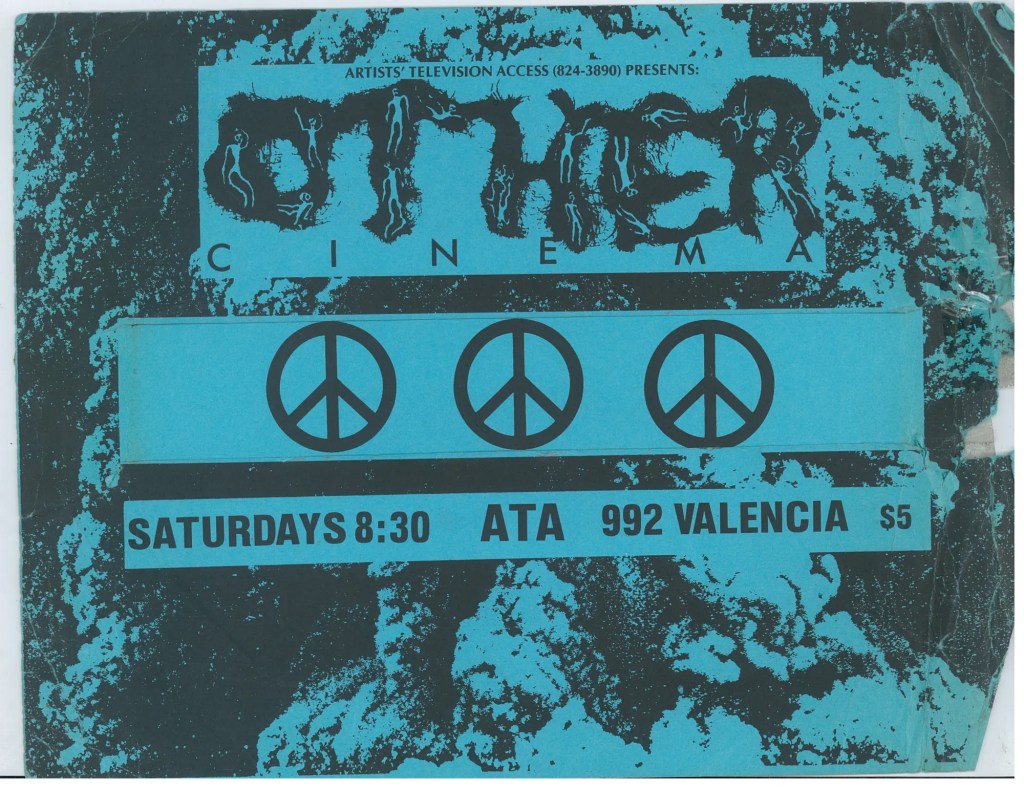

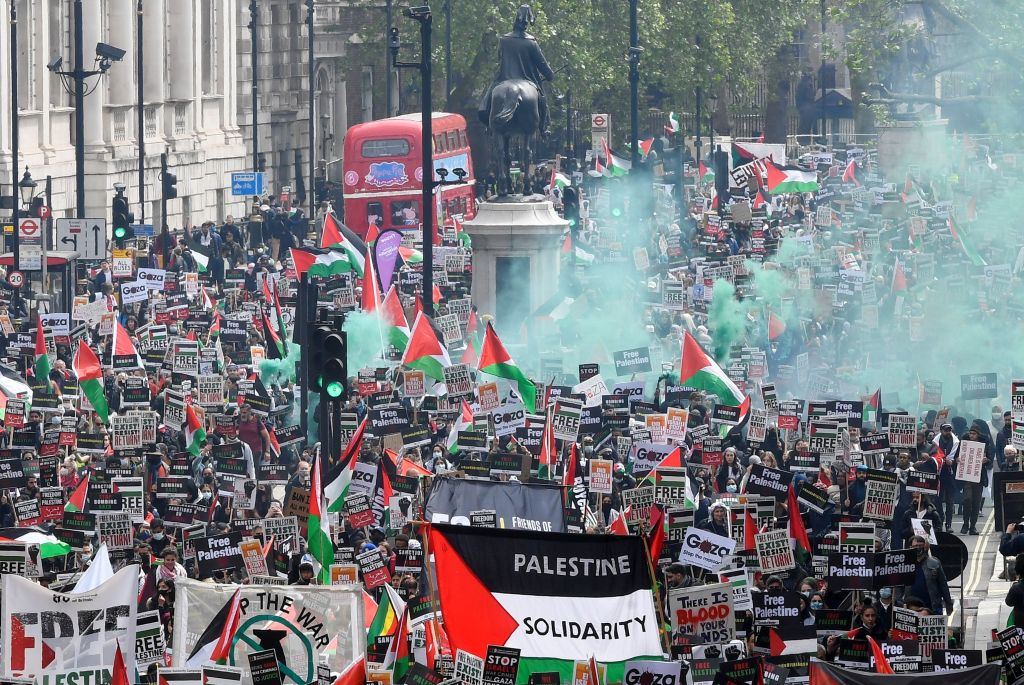
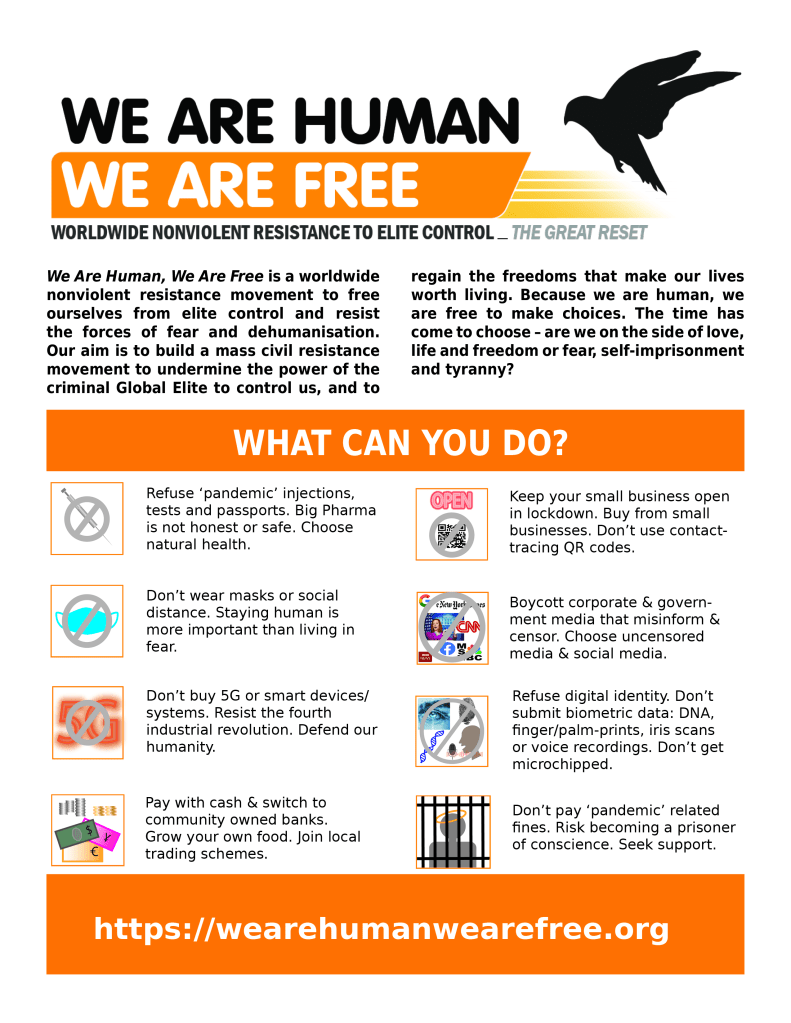

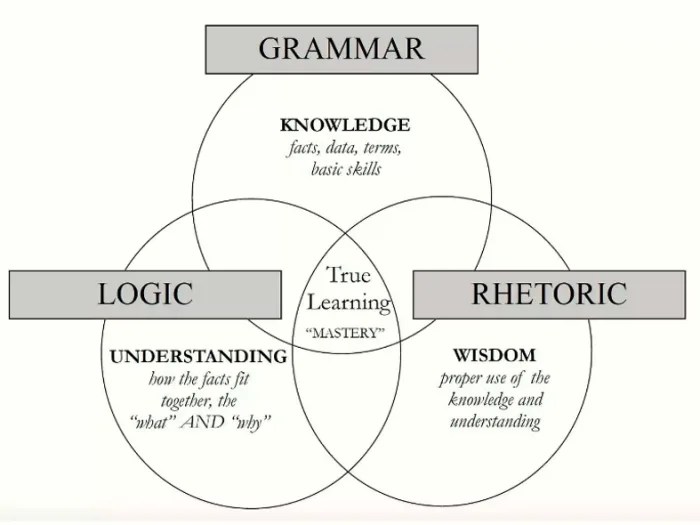
 After the Crash