Saturday Matinee: Midnight Cowboy

Midnight Cowboy

Whatever you hear about Midnight Cowboy is true.

By Scott Nash

Source: Three Movie Buffs

Midnight Cowboy is one of those movies that is so famous that even though this was the first time I’d ever actually watched it, I already felt familiar with it. I mean everybody knows the line, “I’m walking here!” by Dustin Hoffman. The AFI named that line the 27th greatest movie quote of all time (The movie itself is also on the AFI’s 100 greatest movies list). Most film fans also know that it is the only X-Rated film to ever win the Best Picture Oscar. Ratso Rizzo and Joe Buck are iconic cinematic characters. And yet, despite all that I’d never actually watched it until now.

Although Hoffman is top billed, Jon Voight stars as Joe Buck; a young, not very bright Texan who decides to head to New York where he thinks he’ll be able earn money as a male escort to rich New York women. Buck has a troubled past that is revealed through stream-of-consciousness flashbacks. Voight is good as the naive cowboy and his performance not only brought him to stardom, but also earned him an Oscar nomination.

As good as Voight is though, Hoffman steals the film as Enrico “Ratso” Rizzo; the streetwise, hustling New Yorker. His accent, his limp and his mannerisms form a character for the ages. His nickname is an apt one because he is very rat like as he crawls the streets of the city. Like Voight, Hoffman was also nominated for an Oscar for his role.

Together Buck and Rizzo form an unlikely friendship after a rough start when Rizzo cons Buck. As a pair they prove that the protagonists of a film don’t have to be likable for a movie to be good. You wouldn’t want to hang out with either of these two guys but at the same time you want to see what happens to them. Despite being fairly unlikable, you can empathize with their feelings of isolation, loneliness and the need to cling to another person for companionship no matter how unlikely the pairing.

The third main character in the story is New York City, but not the Disneyfied New York of today. This was a time when Times Square wasn’t a place you took the family to see. It was filled with adult theaters and male and female prostitutes on the prowl. Abandoned buildings had yet to be torn down and replaced by Condos, McDonalds and Baby Gaps. Director Schlesinger does a great job of capturing the gritty essence of that bygone city.

While the central characters are interesting and the acting is superb, the plot isn’t a cohesive whole. A series of events happen that aren’t always connected rather than a true story being told. The real story of the movie is the friendship between Joe and Ratso, but too often that is obscured by different episodes. It’s a platonic love story between two men essentially.

The fact that this movie was rated X at one time now seems quite quaint. The nudity is incredibly brief and the language is mild. Sex is talked about a great deal but only shown in a way that you could now practically get away with showing on network television. I imagine the biggest reason for the X might have been the scene when Joe gets a blow job from a strange man in a Times Square theater, although nothing is really shown of it. It has since been re-rated and now stands at the more sensible R rating.

Not every classic film lives up to its fame and I’m not sure as a whole if I’d say Midnight Cowboy does. Pieces of it though are brilliant, especially the performances of its two leads. They are the real reason this movie is remembered so well and they are the reason to watch it again or for the first time.

____________________

Watch Midnight Cowboy on Hoopla here: https://www.hoopladigital.com/title/11080259

What is the Rules-Based Order?

By Kim Petersen

Source: Dissident Voice

In fits of, what might well be termed, masochism, some of us now-and-then tune in to the legacy media. When doing so, one is likely to hear western-aligned politicians rhetorize ad nauseam about the linguistically vogue rules-based order. Now and then, the word “international” is also inserted: the rules-based international order.

But what exactly is this rules-based order?

The way that the wording rules-based order is bandied about makes it sound like it has worldwide acceptance and that it has been around for a long time. Yet it comes across as a word-of-the-moment, both idealistic and disingenuous. Didn’t people just use to say international law or refer to the International Court of JusticeNuremberg Law, the UN Security Council, or the newer institution — the International Criminal Court? Moreover, the word rules is contentious. Some will skirt the rules, perhaps chortling the aphorism that rules are meant to be broken. Rules can be unjust, and shouldn’t these unjust rules be broken, or better yet, disposed of? Wouldn’t a more preferable wording refer to justice? And yes, granted that justice can be upset by miscarriages. Or how about a morality-based order?

Nonetheless, it seems this wording of a rules-based order has jumped to the fore. And the word order makes it sound a lot like there is a ranking involved. Since China and Russia are advocating multipolarity, it has become clearer that the rules-based order, which is commonspeak among US and US-aligned politicians, is pointing at unipolarity, wherein the US rules a unipolar, US-dominated world.

An Australian thinktank, the Lowy Institute, has pointed to a need “to work towards a definition” for a rules-based order. It asks, “… what does America think the rules-based order is for?

Among the reasons cited are “… to entrench and even sanctify an American-led international system,” or “that the rules-based order is a fig leaf, a polite fiction that masks the harsh realities of power,” and that “… the rules-based order can protect US interests as its power wanes relative to China…”

China is aware of this, and this is expressed in the Asia Times headline: “US ‘rules-based order’ is a myth and China knows it.”

The Hill wrote, “The much-vaunted liberal international order – recently re-branded as the rules-based international order or RBIO – is disintegrating before our very eyes.” As to what would replace the disintegrated order, The Hill posited, “The new order, reflecting a more multipolar and multicivilizational distribution of power, will not be built by Washington for Washington.”

The Asia Times acknowledged that it has been a “West-led rules-based order” and argued that a “collective change is needed to keep the peace.”

It is a given that the rules-based order is an American linguistic instrument designed to preserve it as a global hegemon. To rule is America’s self-admitted intention. It has variously declared itself to be the leader of the free world, the beacon on the hill, exceptional, the indispensable nation (in making this latter distinction, a logical corollary is drawn that there must be dispensable nations — or in the ineloquent parlance of former president Donald Trump: “shithole” nations).

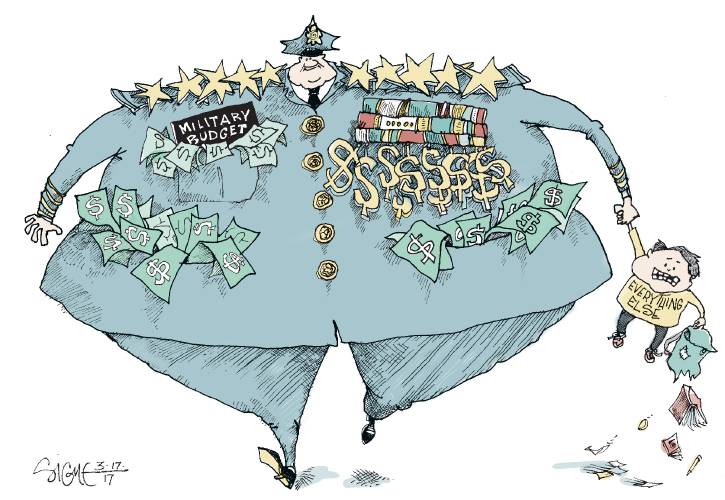
Thus, the US has placed itself at the apex of the international order. It seeks ultimate control through full-spectrum dominance. It situates its military throughout the world; it surrounds countries with bases and weapons that it is inimically disposed toward — for example, China and Russia. It refuses to reject the first use of nuclear weapons. It does not reject the use of landmines. It still has a chemical-weapons inventory, and it allegedly carries out bioweapons research, as alluded to by Russia, which uncovered several clandestine biowarfare labs in Ukraine. This news flummoxed Fox News’ Tucker Carlson. Dominance is not about following rules, it is about imposing rules. That is the nature of dominating. Ergo, the US rejects the jurisdiction of the International Criminal Court and went so far as to sanction the ICC and declare ICC officials persona non grata when its interests were threatened.*****Having placed itself at the forefront, the US empire needs to keep its aligned nations in line.

Thus it was that Joe Biden, already back in 2016, was urging Canada’s prime minister Trudeau to be a leader for rules-based world order.

When Trudeau got together with his Spanish counterpart, Pedro Sánchez, they reaffirmed their defence of the rule-based international order.

It is a commonly heard truism that actions speak louder than words. But an examination of Trudeau’s words compared to his actions speaks to a contradiction when it comes to Canada and the rule of law.

So how does Trudeau apply rules based law?1

Clearly, in Canada it points to a set of laws having been written to coerce compliance. This is especially evident in the case of Indigenous peoples.2

It seems Canada is just a lackey for the leader of the so-called free world.

One of the freedoms the US abuses is the freedom not to sign or ratify treaties. Even the right-wing thinktank, the Council on Foreign Relations lamented, “In lists of state parties to globally significant treaties, the United States is often notably absent. Ratification hesitancy is a chronic impairment to international U.S. credibility and influence.”

The CFR added, “In fact, the United States has one of the worst records of any country in ratifying human rights and environmental treaties.”

It is a matter of record that the US places itself above the law. As stated, the US does not recognize the ICC; as a permanent member of the UN Security Council, the US has serially abused its veto power to protect the racist, scofflaw nation of Israel; it ignored a World Court ruling that found the US guilty of de facto terrorism for mining the waters around Nicaragua.

The historical record reveals that the US, and its Anglo-European-Japanese-South Korean acolytes, are guilty of numerous violations of international law (i.e., the rules-based, international order).

When it comes to the US, the contraventions of the rules-based order are myriad. To mention a few:

  1. Currently, the US is occupying Syria and stealing the oil of the Syrian people;
  2. It attacked, occupied, and plundered Afghanistan;
  3. It has been carrying out an embargo, condemned by the international community, against Cuba and its people for six decades;
  4. The US has been in illegal occupation of Cuba’s Guantanamo Bay since 1903; even if deemed to be legal, it is clearly unethical;
  5. American empire has a history of blatant, wanton disregard for democracy and sovereignty;
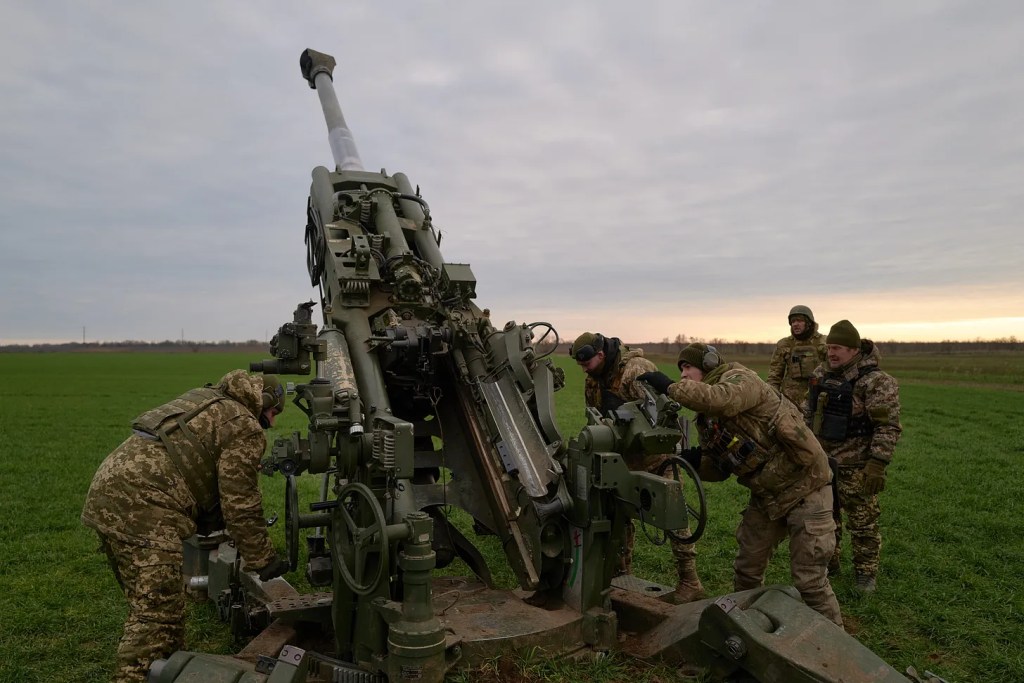
  6. The US funded the Maidan coup that overthrew the elected president of Ukraine, leading to today’s special military operation devastating Ukraine, which continues to fight a US-NATO proxy war.
  7. Then, there is the undeniable fact that the US exists because of a genocide wreaked by its colonizers, which has been perpetuated ever since.
  8. Even the accommodations that the US imposed on the peoples it dispossessed are ignored, revealed by a slew of broken treaties.3

The history of US actions (as opposed to its words) and its complicit tributaries needs to be kept firmly in mind when the legacy media unquestioningly reports the pablum about adhering to a rules-based order.

  1. See also Yves Engler, “Ten ways Liberals undermined international rules-based order,” rabble.ca, 17 September 2021. []
  2. Read Bob Joseph, 21 Things You May Not Know About the Indian Act: Helping Canadians Make Reconciliation with Indigenous Peoples a Reality, 2018. []
  3. Vine Deloria, Jr., Behind the Trail of Broken Treaties: An Indian Declaration of Independence, 1985. This governmental infidelity to treaties is also true in the Canadian context. []

Major Economic Contraction Coming In 2023 – Followed By Even More Inflation

By Brandon Smith

Source: Investment Watch

The signs are already present and obvious, but the overall economic picture probably won’t be acknowledged in the mainstream until the situation becomes much worse (as if it’s not bad enough). It’s a problem that arises at the onset of every historic financial crisis – Mainstream economists and commentators lie to the public about the chances of recovery, constantly giving false reassurances and lulling people back to sleep. Even now with price inflation pummeling the average consumer they tell us that there is nothing to worry about. The Federal Reserve’s “soft landing” is on the way.

I remember in 2007 right before the epic derivatives collapse when media pundits were applauding the US housing market and predicting even greater highs in sales and in valuations. I had only been writing economic analysis for about a year, but I remember thinking that the overt display of optimism felt like compensation for something. It seemed as if they were trying to pull the wool over the eyes of the public in the hopes that if people just believed hard enough that all was well then the fantasy could be manifested into reality. Unfortunately, that’s not how economics works.

Supply and demand, debt and deficit, money velocity and inflation; these things cannot be ignored. If the system is out of balance, collapse will set its ugly foot down somewhere and there’s nothing anyone including central banks can do about it. In fact, there are times when they deliberately ENGINEER collapse.

This is the situation we are currently in today as 2022 comes to a close. The Fed is in the midst of a rather aggressive rate hike program in a “fight” against the stagflationary crisis that they created through years of fiat stimulus measures. The problem is that the higher interest rates are not bringing prices down, nor are they really slowing stock market speculation. Easy money has been too entrenched for far too long, which means a hard landing is the most likely scenario.

In the early 2000s the Fed had been engaged in artificially low interest rates which inflated the housing and derivatives bubble. In 2004, they shifted into a tightening process. Rates in 2004 were at 1% and by 2006 they rose to over 5%. This is when cracks began to appear in the credit structure, with 4.5% – 5.5% being the magic cutoff point before debt became too expensive for the system to continue the charade. By 2007/2008 the nation witnessed an exponential implosion of credit, setting off the biggest money printing bonanza in US history in order to save the banking sector, at least for a time.

Since nothing was actually fixed by the Fed back then, I will continue to use the 5% funds rate as a marker for when we will see another major contraction. The difference this time is that the central bank does not have the option to flood the economy with more fiat, at least not without immediately triggering a larger stagflationary spiral. I am also operating on the premise that the Fed WANTS a crash at this time.

As I noted in my article ‘The Fed Is Taking The Punch Bowl Away – But The Inflation Crisis Will Continue To Grow’, published in May:

Mainstream financial commentators want to believe the Fed will capitulate because they desperately want the party in stock markets to continue, but the party is over. Sure, there will be moments when the markets rally based on nothing more than a word or two from a Fed official planting false hopes, but this will become rare. Ultimately, the Fed has taken away the punch bowl and it’s not coming back. They have the perfect excuse to kill the economy and kill markets in the form of a stagflationary disaster THEY CAUSED. Why would they reverse course now?”

If Government Officials Want To Prevent Rebellion They Should Stop Committing Treason

By Brandon Smith

Source: Alt-Market.us

I have been working within the liberty movement for almost 17 years now. In that time I’ve been involved in numerous organizations that all generally fought the same battle, or the same war – The war against encroaching centralization and authoritarianism. Each group and each institution has had different ideas about how to go about solving the problem of incremental tyranny.

Some of them focused on politics, others on preparedness, and still others on convincing police and military to stand on the side of freedom. Some of them had focused goals, some of them were scattered. Some had decent leadership, while the leadership in others was lacking (or self sabotaging). None of them, however, had malicious intent. None of them sought power over others, only to prevent power from being abused.

In some cases the effort became confrontational because that was the only option, as with Bundy Ranch. Liberty activists vowed never to allow another Waco or another Ruby Ridge in which federal agents violate the due process of targeted citizens, or outright murder them. And we should continue to hold to that promise. As we have seen time and time again, agencies like the FBI, ATF, CIA, etc are corrupt beyond all reckoning and there comes a point where the only solution to deal with a bully is to punch him in the teeth.

The Jan 6th event is also something that has been highly misrepresented on both sides – Leftists argue that it was an “insurrection” worse than anything seen since the Civil War in the name of installing Trump as a dictator. Many conservatives argue that it was a “honey pot” or “false flag” which was completely controlled by feds and informants. Neither claim is accurate.

Yes, there were obviously feds present at the event and yes, Capitol Police let protesters into the building as video evidence proves. But, the vast majority of people that showed up to the capitol that day were not feds. They were normal Americans seeking to air their grievances, as is their constitutional right. It is a mistake to pigeonhole very single major event as nothing more than a false flag; it’s lazy and it ignores the greater reality that many millions of people in the US are unhappy with the declining state of our nation.

As for those that claim it was an insurrection, they don’t know what an insurrection is.

Inconveniencing the government for a couple hours is not an insurrection. Protesting at the Capitol Building is not an insurrection. A real insurrection would be led by armed groups that would not leave the capitol voluntarily, and many people on both sides would die during such an action. As it stands, not a single person was killed by a Jan. 6th protester. Not one. This is not something that can be honestly said for the BLM protests which caused dozens of deaths and billions of dollars in property damage across the country.

If it had been BLM that day marching into the Capitol Building, the media would have nothing but applause and positive things to say. But because it was a show of conservative strength, they call it an insurrection and they seek to imprison the people involved. The media response to BLM vs their response to Jan 6th tells us one thing – The establishment wants to destroy conservatives and elevate leftist movements.

This debate, however, ignores the bigger question: Why is half the country angry? Why does half the country mistrust the government to the point that a potential civil war seems like the only viable option?

The establishment controlled media and the Biden Administration would argue that it is our fault. We are “conspiracy theorists” suffering from delusions of rising totalitarianism. We supposedly misinterpret everything we see as something more nefarious than what it is. We are dangerous because we are willing to lash out over changes that serve the greater good but disadvantage us in some way. Or, we are “white supremacists” and the evolving demographics of the country are triggering our inherent toxic ideology.

None of these claims are true. All of them are easily debunked propaganda, but they represent a narrative that is repeated ad nauseam on every mainstream outlet, on every social media website and by every leftist politician. There is no conspiracy theory, there is only conspiracy reality.

Almost every single “conspiracy claim” made by liberty groups over the past two decades has turned out to be true. There is indeed an authoritarian agenda at the core of our government today, and it has been gestating for many years. We saw this agenda enacted right out in the open during the pandemic lockdowns. the federal government and some state governments sought to erase nearly every protection outlined in the Bill of Rights, including free speech.

Most recently, we have seen the exposure of the Twitter Files by Elon Musk, which contain hard evidence of collusion (direct communications) between government agencies and Big Tech companies to silence the 1st Amendment rights of American citizens.

Multiple agencies have been exposed this year in a conspiracy with the old Twitter management (and undoubtedly all other large social media platforms) to censor and ban targeted individuals or groups that discuss information that is contrary to the establishment narrative. Whether it is info on Jan 6th, or info on the covid pandemic or vaccines, or info on Hunter Biden’s laptop, the FBI, DHS, the DNC, etc were all engaging in a joint effort to erase dissent and hide the facts according to internal documents and communications with Twitter staff.

The FBI in particular has even been caught PAYING Twitter staff millions of dollars to process their requests (censor people). This is proven TREASON, a violation of several elements of the Bill of Rights, and the FBI should be eliminated for it. Not reprimanded, but eliminated.

The FBI’s response to being caught was predictable. They state:

“The men and women of the FBI work every day to protect the American public. It is unfortunate that conspiracy theorists and others are feeding the American public misinformation with the sole purpose of attempting to discredit the agency.”

Translation: We are your “protectors”, therefore we can do whatever we want. Anyone that calls us out on our corrupt operations is crazy and a liar regardless of evidence. Discrediting the agency puts the public at risk. We are too big to fail.

The corporate media will come up with numerous spin devices to try to dilute the Twitter revelations, but they will fail. There is no way around it – The US government has been working with Big Tech companies to control free debate and silence citizens. The FBI has chosen a clear political side. They have gone to war against Americans that support constitutional liberty. This is illegal and if punishment is not dealt to the officials involved then eventually punishment will be enacted by members of the American public.

Conservative/libertarian rebellions usually do not happen without good reason. Conservatives prefer order rather than chaos. We prefer stability rather than crisis. We tend to want the system to work and serve the public as it is supposed to. It’s our strength as well as our weakness. Where others see a broken country, we see something that might be fixed.

We have no use for deconstructionists who see crisis and disaster as an opportunity.

That said, when it becomes clear that the system does not work, that it has been corrupted beyond redemption and that the establishment is openly instituting tyrannical policies, we aren’t going to stand by, we are going to act.

Some people claim this is “never” going to happen. Yet, tens of thousands of people showed up to face off with the feds at Bundy Ranch, half the states in the US stood against the covid mandates and thousands of people marched to the Capitol on Jan 6th. It’s only a matter of time.

I don’t think people realize how close we actually came to a kinetic civil war because of the covid mandates and the attempted vaccine passports. We were two seconds away from midnight. All I can say is, the moment someone tries to force me to take an untested Big Pharma product, I’ll put them six feet under. And, almost everyone I know feels the same way.

The big secret that’s not really secret is this: The establishment knows they are playing with fire. It’s why they backed off from the mandates. They know that their corrupt actions are fomenting civil unrest and that in some cases we have majority public support. They know that in the near future there is going to be a rebellion against them. They know this because they plan to continue chipping away at our freedoms until we snap; they just want to be able to control the outcome when we do.

The narratives we are hearing today about white supremacy, domestic terrorism, conspiracy theory and conservative rage are only about one thing: Gaslighting.

They poke and prod and stab at us, they attack us and degrade our freedoms subversively, and at the same time they paint us as the “insurrections”, the aggressors. They do this so that when we move to stop them from attacking us, the notion that we are the aggressors is already planted within the public consciousness.

This is 4th Generation warfare. It’s classic psy-ops. If you are the psychopath causing harm the best case scenario is to make your victims out to be the bad guys instead, so that when you get caught or your victims strike back you can claim to be a victim yourself.

Is this scheme going to work for establishment elites? No, not in the long term. No amount of gaslighting is going to save a psychopath when his victims come to pay him back. What the rest of the public thinks of you does not matter, only justice matters. That said, I want to reiterate the greater point here, which is that the actions of government agencies and the media suggest that the liberty movement is a legitimate threat to them.

We are far more prevalent than they care to admit. They want to paint us as fringe crazies and marginal bigots, while at the same time promoting the notion that we are capable of a national insurrection. They can’t have it both ways.

We are indeed a danger to them. Not to America, just to the despots that want to deconstruct it. What they don’t want the populace to know is that there is a very easy way to stop us – Simply stop committing treason and we will go away. Stop trying to erase our freedoms and we will back off quietly. Stop abusing governmental powers and you have nothing to fear from us.

Continue in these behaviors and policies, and yes, you should be afraid. Because once the reckoning begins, it will not stop until all elements of corruption are washed away.

Why the CIA’s Operation Mockingbird is Widely Misunderstood

By Alex Constantine

Source: Constantine Report

In November, Newsweek, one of the most trusted news sources in the land, referred to Operation Mockingbird (CIA influence on the media, and, in many cases, infiltration) as “a supposed Cold War-era CIA program that is frequently referenced by QAnon conspiracy theorists.” (Source) Newsweek, of course, and the Washington Post were hubs in the Mockingbird network, so denial and misrepresentation are understandable.

But in the real world of CIA shenanigans …

Sourcewatch: “Operation Mockingbird was a secret Central Intelligence Agency campaign to influence domestic and foreign media beginning in the 1950s.

“The activities, extent and even the existence of the CIA project remain in dispute: the operation was first called Mockingbird in Deborah Davis’ 1979 book, Katharine the Great: Katharine Graham and her Washington Post Empire. But Davis’ book, alleging that the media had been recruited (infiltrated) by the CIA for propaganda purposes, was itself controversial and has since been shown to have had a number of erroneous assertions. More evidence of Mockingbird’s existence emerged in the 2007 memoir American Spy: My Secret History in the CIA, Watergate and Beyond, by convicted Watergate “plumber” E. Howard Hunt and The Mighty Wurlitzer: How the CIA Played America by Hugh Wilford (2008).”

https://www.sourcewatch.org/index.php/The_CIA_and_journalism

Carl Bernstein wrote about the program at length in Rolling Stone, and he waasn’t a QAnon adherent. Neither were the many journalists who have documented the history of the CIA-media relationship.

A misunderstanding about the code name Mockingbird has led some investigative reporters to dispute the operation’s existence. An FOIA request is submitted to the CIA for any related records. The Agency responds that it has no files under that code name. The journalist does receive documents on a Project Mockingbird, but that was an unrelated media surveillance op, and had nothing to do with Wurlitzers pumping out military-industrial propaganda. The journalist does his research, he finds that the CIA has, in fact, influenced public opinion via the news media, but where is the nomenclature Operation Mockingbird?

The journalist then brow-beats “conspiracy theorists” for falling into rabbit holes.

The fault lies with the reporter who doesn’t do essential homework on the origins of the bird. Officially, there is no  “Operation Mockingbird,” for the simple reason that the CIA didn’t exist when the it was conceived. Truman signed the Agency into existence in 1947. Allen Dulles, who would be appointed as its director, christened Operation Mockingbird the year before the Agency was born. His ambition to control men’s minds was a glint in his eye at the time. Cold war loomed, and he considered propaganda to be a priority. Dulles began lining up publishers, editors and journalists for an undertaking he thought of as mass mind control.

Nearly all of the CIA’s mind control files were destroyed in January, 1973 at the direction of DCI Richard Helms, so it’s possible that OM documents were among them. (Source: “Joint Hearings Before the Select Committee on Intelligence,” August 3, 1977, p. 3.)

By the time the CIA was repurposed from the obsolete postwar OSS, Operation Mockingbird was already well underway. As CIA director, Dulles pressed on with his objective to manipulate the common volk with dodgy news copy and op-ed treatises. It was a Dulles initiative before the CIA took Mockingbird under its wing.

Frank Wisner, the notorious Nazi recruiter, was selected to oversee the program. Wisner was recruited by Dean Acheson 1947 for a slot in the State Department’s Office of Occupied Territories. Shortly thereafter, the CIA created a the Office of Policy Coordination (OPC), the covert operations division of the Agency,  and Wisner was put in charge of the off-the-books media operation. (“Project Mockingbird,” the CIA journalist surveillance op, may well have been a sub-program.) So Mockingbird was a going concern by 1950, the year given by SourceWatch, among others, for its inception. Another common misunderstanding is the assumption that, because the CIA interacts with the media, all news is “fake news.” It isn’t. The overwhelming majority of journalists are independent of control beyond the editor’s desk. The lion’s share of all news reports are accurate enough — with the exception of the ultra-conservative echo chamber. But “fake news” is planted in the public print. Reader’s Digest, for instance, was a Mockingbird disinformation outlet for decades, and still prints propaganda. But the magazine wasn’t filled cover-to-cover with CIA perception management. One or two articles on Cold War topics were dropped into a mix of compressed books, human interest pieces, recipes, dieting tips, and the usual Digest  mom’s-jowls content. In some instances, paid CIA assets wrote the political articles. It’s the occasional planted story that warps public opinion. It’s not all that heavy-handed, a poison pill not a sledge hammer.

Newsweek was (and is) among the magazines most useful to the Operation. The code name may be unofficial, but infiltration of the media is not hard to prove, and it doesn’t take a complicit news weekly to know which way the wind blows.

“Putin Has Misread the West (And) if He Doesn’t Wake Up Soon, Armageddon Is Upon Us”

Interview with Paul Craig Roberts

By Mike Whitney and Paul Craig Roberts

Source: The Unz Review

Question 1—You think that Putin should have acted more forcefully from the beginning in order to end the war quickly. Is that an accurate assessment of your view on the war? And—if it is—then what do you think is the downside of allowing the conflict to drag on with no end in sight?

Paul Craig Roberts—Yes, you have correctly stated my position. But as my position can seem “unAmerican” to the indoctrinated and brainwashed many, those who watch CNN, listen to NPR, and read the New York Times, I am going to provide some of my background before going on with my answer.

I was involved in the 20th century Cold War in many ways: As a Wall Street Journal editor; as an appointee to an endowed chair in the Center for Strategic and International Studies, part of Georgetown University at the time of my appointment, where my colleagues were Henry Kissinger, National Security Advisor and Secretary of State, Zbigniew Brzezinski, National Security Advisor, and James Schlesinger, a Secretary of Defense and CIA director who was one of my professors in graduate school at the University of Virginia; as a member of the Cold War Committee on the Present Danger; and as a member of a secret presidential committee with power to investigate the CIA’s opposition to President Reagan’s plan to end the Cold War.

With a history such as mine, I was surprised when I took an objective position on Russian President Putin’s disavowal of US hegemony, and found myself labeled a “Russian dupe/agent” on a website, “PropOrNot,” which may have been financed by the US Department of State, the National Endowment for Democracy, or the CIA itself, still harboring old resentments against me for helping President Reagan end the Cold War, which had the potential of reducing the CIA’s budget and power. I still wonder what the CIA might do to me, despite the agency inviting me to address the agency, which I did, and explain why they went wrong in their reasoning.

I will also say that in my articles I am defending truth, not Putin, although Putin is, in my considered opinion, the most honest player, and perhaps the most naive, in the current game that could end in nuclear Armageddon. My purpose is to prevent nuclear Armageddon, not to take sides. I remember well President Reagan’s hatred of “those godawful nuclear weapons” and his directive that the purpose was not to win the Cold War but to end it.

Now to Mike’s question, which is to the point. Perhaps to understand Putin we need to remember life, or how it was presented by the West to the Soviet Union and the American broadcasts into the Soviet Union of the freedom of life in the West where streets were paved with gold and food markets had every conceivable delicacy. Possibly this created in the minds of many Soviets, not all, that life in the Western world was heavenly compared to the hell in which Russians existed. I still remember being on a bus in Uzbekistan in 1961 when a meat delivery truck appeared on the street. All traffic followed the truck to the delivery store where a several block long line already waited. When you compare this life with a visit to an American supermarket, Western superiority stands out. Russian hankerings toward the West have little doubt constrained Putin, but Putin himself has been affected by the differences in life between the US in those times and the Soviet Union.

Putin is a good leader, a human person, perhaps too human for the evil he faces. One way to look at my position that Putin does too little instead of too much is to remember the World War II era when British Prime Minister Chamberlin was accused of encouraging Hitler by accepting provocation after provocation. My own view of this history is that it is false, but it remains widely believed. Putin accepts provocations despite having declared red lines that he does not enforce. Consequently, his red lines are not believed. Here is one report:

RT reported on December 10 that “The US has quietly given Ukraine the go-ahead to launch long-range strikes against targets inside Russian territory, the Times reported on Friday, citing sources. The Pentagon has apparently changed its stance on the matter as it has become less concerned that such attacks could escalate the conflict.”

In other words, by his inaction Putin has convinced Washington and its European puppet states that he doesn’t mean what he says and will endlessly accept ever worsening provocations, which have gone from sanctions to Western financial help to Ukraine, weapons supply, training and targeting information, provision of missiles capable of attacking internal Russia, attack on the Crimea bridge, destruction of the Nord Stream pipelines, torture of Russian POWs, attacks on Russian parts of Ukraine reincorporated into the Russian Federation, and attacks on internal Russia.

At some point there will be a provocation that is too much. That’s when the SHTF.

Putin’s goal has been to avoid war. Thus, his limited military objective in Ukraine to throw the Ukrainian forces out of Donbass meant a limited operation that left Ukrainian war infrastructure intact, able to receive and deploy advanced weapons from the West, and to force Russian withdrawals to lines more defensible with the very limited forces Putin committed to the conflict. The Ukrainian offensives convinced the West that Russia could be defeated, thus making the war a primary way of undermining Russia as an obstacle to Washington’s hegemony. The British press proclaimed that the Ukrainian Army would be in Crimea by Christmas.

What Putin needed was a quick victory that made it completely clear that Russia had enforceable red lines that Ukraine had violated. A show of Russian military force would have stopped all provocations. The decadent West would have learned that it must leave the bear alone. Instead the Kremlin, misreading the West, wasted eight years on the Minsk Agreement that former German Chancellor Merket said was a deception to keep Russia from acting when Russia could have easily succeeded. Putin now agrees with me that it was his mistake not to have intervened in Donbass before the US created a Ukrainian army.

My last word to Mike’s question is that Putin has misread the West. He still thinks the West has in its “leadership” reasonable people, who no doubt act the role for Putin’s benefit, with whom he can have negotiations. Putin should go read the Wolfowitz Doctrine. If Putin doesn’t soon wake up, Armageddon is upon us, unless Russia surrenders.

Question 2—I agree with much of what you say here, particularly this: “Putin’s inaction has convinced Washington… that he doesn’t mean what he says and will endlessly accept ever worsening provocations.”

You’re right, this is a problem. But I’m not sure what Putin can do about it. Take, for example, the drone attacks on airfields on Russian territory. Should Putin have responded tit-for-tat by bombing supplylines in Poland? That seems like a fair response but it also risks NATO retaliation and a broader war which is definitely not in Russia’s interests.

Now, perhaps, Putin would not have faced these flashpoints had he deployed 500,000 combat troops to begin and leveled a number of cities on his way to Kiev, but keep in mind, Russian public opinion about the war was mixed at the beginning, and only grew more supportive as it became apparent that Washington was determined to defeat Russia, topple its government, and weaken it to the point where it could not project power beyond its borders. The vast majority of the Russian people now understand what the US is up-to which explains why Putin’s public approval ratings are presently at 79.4% while support for the war is nearly universal. In my opinion, Putin needs this level of support to sustain the war effort; so, postponing the mobilization of additional troops has actually worked to his benefit.

More importantly, Putin must be perceived to be the rational player in this conflict. This is absolutely essential. He must be seen as a cautious and reasonable actor who operates with restraint and within the confines of international law. This is the only way he will be able to win the continued support of China, India etc. We must not forget that the effort to build a multipolar world order requires coalition building which is undermined by impulsive, violent behavior. In short, I think Putin’s “go-slow” approach (your words) is actually the correct course of action. I think if he had run roughshod across Ukraine like Sherman on his way to the sea, he would have lost critical allies that will help him establish the institutions and economic infrastructure he needs to create a new order.

So, my question to you is this: What does a Russian victory look like? Is it just a matter of pushing the Ukrainian army out of the Donbas or should Russian forces clear the entire region east of the Dnieper River? And what about the west of Ukraine? What if the western region is reduced to rubble but the US and NATO continue to use it as a launching pad for their war against Russia?

I can imagine many scenarios in which the fighting continues for years to come, but hardly any that end in either a diplomatic settlement or an armistice. Your thoughts?

Paul Craig Roberts—I think, Mike, that you have identified the reasoning that explains Putin’s approach to the conflict in Ukraine. But I think Putin is losing confidence in his approach. Caution about approaching war is imperative. But when war begins it must be won quickly, especially if the enemy has prospects of gaining allies and their support. Putin’s caution delayed Russia’s rescue of Donbass for eight years, during which Washington created and equipped an Ukrainian army that turned what would have been an easy rescue in 2014 like Crimea into the current war approaching a year in duration. Putin’s caution in waging the war has given Washington and the Western media plenty of time to create and control the narrative, which is unfavorable to Putin, and to widen the war with US and NATO direct participation, now admitted by Foreign Minister Lavrov. The war has widened into direct attacks on Russia herself.

These attacks on Russia might bring the pro-Western Russian liberals into alignment with Putin, but the ability of a corrupt third world US puppet state to attack Russia is anathema to Russian patriots. The Russians who will do the fighting see in the ability of Ukraine to attack Mother Russia the failure of the Putin government.

As for China and India, the two countries with the largest populations, they have witnessed Washington’s indiscriminate use of force without domestic or international consequence to Washington. They don’t want to ally with a week-kneed Russia.

I will also say that as Washington and NATO were not constrained by public opinion in their two decades of wars in the Middle East and North Africa, based entirely on lies and secret agendas, what reason does Putin have to fear a lack of Russian public support for rescuing Donbass, formerly a part of Russia, from neo-Nazi persecution? If Putin must fear this, it shows his mistake in tolerating US-financed NGOs at work in Russia brainwashing Russians.

No, Putin should not engage in tit-for-tat. There is no need for him to send missiles into Poland, Germany, the UK, or the US. All Putin needs to do is to close down Ukrainian infrastructure so that Ukraine, despite Western help, cannot carry on the war. Putin is starting to do this, but not on a total basis.

The fact of the matter is that Putin never needed to send any troops to the rescue of Donbass. All he needed to do was to send the American puppet, Zelensky, a one hour ultimatum and if surrender was not forthcoming shut down with conventional precision missiles, and air attacks if necessary, the entirety of the power, water, and transportation infrastructure of Ukraine, and send special forces into Kiev to make a public hanging of Zelensky and the US puppet government.

The effect on the degenerate Woke West, which teaches in its own universities and public schools hatred of itself, would have been electric. The cost of messing with Russia would have been clear to all the morons who talk about Ukraine being in Crimea by Christmas. NATO would have dissolved. Washington would have removed all sanctions and shut up the stupid, war-crazy neoconservatives. The world would be at peace.

The question you have asked is, after all of Putin’s mistakes, what does a Russian victory look like? First of all, we don’t know if there is going to be a Russian victory. The cautious way that Putin reasons and acts, as you explained, is likely to deny Russia a victory. Instead, there could be a negotiated demilitarized zone and the conflict will be set on simmer, like the unresolved conflict in Korea.

On the other hand, if Putin is waiting the full deployment of Russia’s hypersonic nuclear missiles that no defense system can intercept and, following Washington, moves to first use of nuclear weapons, Putin will have the power to put the West on notice and be able to use the power of Russian military force to instantly end the conflict.

Question 3—You make some very good points, but I still think that Putin’s slower approach has helped to build public support at home and abroad. But, of course, I could be wrong. I do disagree strongly with your assertion that China and India “don’t want to ally with weak-kneed Russia”. In my opinion, both leaders see Putin as a bright and reliable statesman who is perhaps the greatest defender of sovereign rights in the last century. Both India and China are all-too-familiar with Washington’s coercive diplomacy and I’m sure they appreciate the efforts of a leader who has become the world’s biggest proponent of self-determination and independence. I’m sure the last thing they want, is to become cowering houseboys like the leaders in Europe who are, apparently, unable to decide anything without a ‘nod’ from Washington. (Note: Earlier today Putin said that EU leaders were allowing themselves to be treated like a doormat. Putin: “Today, the EU’s main partner, the US, is pursuing policies leading directly to the de-industrialization of Europe. They even try to complain about that to their American overlord. Sometimes even with resentment they ask ‘Why are you doing this to us?’ I want to ask: ‘What did you expect?’ What else happens to those who allow feet to be wiped on them?”)

Paul Craig Roberts—Mike, I agree that Russia for the reasons you provide is the choice partner of China and India. What I meant is that China and India want to see a powerful Russia that shields them from Washington’s interference. China and India are not reassured by what at times seems to be Putin’s irresolution and hesitancy. The rules that Putin plays by are no longer respected in the West.

Putin is correct that all European, and the Canadian, Australian, Japanese, and New Zealand governments, are doormats for Washington. What escapes Putin is that Washington’s puppets are comfortable in this role. Therefore, how much chance does he have in scolding them for their subservience and promising them independence? A reader recently reminded me about the Asch experiment in the 1950s, which found that people tended to conform to the prevalent narratives, and of the use to which Edward Bernays analysis of propaganda is put. And there is the information given me in the 1970s by a high government official that European governments do what we want because we “give the leaders bags of money. We own them. They report to us.”

In other words, our puppets live in a comfort zone. Putin will have a hard time breaking into this with merely exemplary behavior.

Question 4—For my final question, I’d like to tap into your broader knowledge of the US economy and how economic weakness might be a factor in Washington’s decision to provoke Russia. Over the last 10 months, we’ve heard numerous pundits say that NATO’s expansion to Ukraine creates an “existential crisis” for Russia. I just wonder if the same could be said about the United States? It seems like everyone from Jamie Diamond to Nouriel Roubini has been predicting a bigger financial cataclysm than the full-system meltdown of 2008. In your opinion, is this the reason why the media and virtually the entire political establishment are pushing so hard for a confrontation with Russia? Do they see war as the only way the US can preserve its exalted position in the global order?

Paul Craig Roberts—The idea that governments turn to war to focus attention away from a failing economy is popular, but my answer to your question is that the operating motive is US hegemony. The Wolfowitz Doctrine states it clearly. The doctrine says the principal goal of US foreign policy is to prevent the rise of any country that could serve as a constraint on US unilateralism. At the 2007 Munich security conference Putin made it clear that Russia will not subordinate its interest to the interest of the US.

There are some crazed neoconservatives in Washington who believe nuclear war can be won and who have shaped US nuclear weapons policy into a pre-emptive attack mode focused on reducing the ability of the recipient of a first strike to retaliate. The US is not seeking a war with Russia, but might blunder into one. The operative neoconservative policy is to cause problems for Russia that can cause internal problems, distract the Kremlin from Washington’s power moves, isolate Russia with propaganda, and even possibly pull off a color revolution inside Russia or in a former Russian province, such as Belarus, as was done in Georgia and Ukraine. People have forgot the US-instigated invasion of South Ossetia by the Georgian army that Putin sent in Russian forces to stop, and they have forgot the recent disturbances in Kazakhstan that were calmed by the arrival of Russian troops. The plan is to keep picking away at the Kremlin. Even if Washington doesn’t meet in every case with the success enjoyed in the Maidan Revolution in Ukraine, the incidents succeed as distractions that use up Kremlin time and energy, result in dissenting opinions within the government, and that require military contingency planning. As Washington controls the narratives, the incidents also serve to blacken Russia as an aggressor and portray Putin as “the new Hitler.” The propaganda successes are considerable–the exclusion of Russian athletes from competitions, refusals of orchestras to play music of Russian composers, exclusion of Russian literature, and a general refusal to cooperate with Russia in any way. This has a humiliating effect on Russians and might be corrosive of public support for the government. It has to be highly frustrating for Russian athletes, ice skaters, entertainers, and their fans.

Nevertheless, the conflict in Ukraine can turn into a general war intended or not. This is my concern and is the reason I think the Kremlin’s limited go-slow operation is a mistake. It offers too many opportunities for Washington’s provocations to go too far.

There is an economic element. Washington is determined to prevent its European empire from being drawn into closer relations with Russia from energy dependence and business relationships. Indeed, some explain the economic sanctions as de-industrializing Europe in behalf of Washington’s economic and financial hegemony. See: https://www.unz.com/mhudson/german-interview/

Forecast 2023 — Get Out of the Way if You Can’t Lend a Hand

By James Howard Kunstler

Source: Kunstler.com

“The powerful are panicking, and so they should. Their secrets are leaking.” —Miranda Devine

“It’s all just snake oil. We want to save the planet, and the life upon it, but we’re not willing to pay the price and bear the consequences. So we make up a narrative that feels good and run with it.” — Raul Ilargi Meier

“2023 could be a pivotal year for the USA if the pervasive lying can be exposed, digested, and believed. All that exposure has to happen amidst continuing boondoggles toward the Great Reset agenda.” – Truman Verdun

“More borrowing only ever makes sense if you are expecting a larger economy in the future.  All economic expansion is based on energy.  Countries with energy can expand, those without cannot.” —  Chris Martenson

“To be an enemy to America can be dangerous, but to be a friend is fatal.” — Henry Kissinger

“The incorrect narrative provided by mainstream media (MSM) is that climate change is our worst problem. To lessen this problem, citizens need to move quickly away from fossil fuels and transition to renewables. The real narrative is that we are running short of fossil fuels that can be profitably extracted, and renewables are not adequate substitutes. However, this narrative is too worrisome for most people to handle.” — Ugo Bardi

It’s hard to contemplate 2023 without spiraling into nausea, tachycardia, and cold sweat. But it is an inescapable duty here to lay out the probabilities ahead. I’ve been doing this forecast thing for some years now, and, of course, I am often wrong, so take some solace in that and relax. Maybe the new year will be all unicorns, rainbows, talking gerbils, and candied violets.

   2022 sure was a cold shower. The long emergency I talk so much about finally got up to cruising speed, with the ectoplasmic “Joe Biden” revving our country into economic, political, and cultural collapse — a hat-trick of calamity — and he did it more swiftly and directly than any emperor managed in late-day Rome, with policies and actions 180-degrees contra to America’s public interest — cheered on by a thinking class that had obviously lost it consensual mind.

     Was the governing strategy simply to do the opposite of what the loathed and detested Mr. Trump would do? Could it be that simple or that automatic? The thinking class’s eyes have a zombified glaze these days. It’s obvious, you might agree, that “Joe Biden” is not in charge of anything, really. He’s an animatronic figure programmed to read a teleprompter and not much else. Half the time, he can’t even find his way off-stage after doing that one trick. The claque pulling his strings just may be the crew you see around him (you know, WYSIWYG): Susan Rice, Ron Klain, Jake Sullivan, Antony Blinken, Victoria Nuland, and company. Ms. Rice has kept herself completely hidden backstage at the White House for two years. Nobody ever hears about her or sees her. Weird, a little bit, for the Director of the Domestic Policy Council.

      Or else, are there puppeteers deeper in the shadows, say, “JB’s” former boss Barack Obama, Der Schwabenklaus and his WEF retinue, Bill Gates and other tech billionaires, the “systemically important” bankers, George Soros…? Or some coven of super-elite warlocks we’d never heard of? The US leadership dynamic is truly mystifying and has been for two whole years. Will mysteries be revealed in 2023? Personally, I think so. Things are lining up in that direction, though who knows whether the damage can even be reversed at this point. And now onto the shape of things to come….

Economy

     All you can really say is that the folks running things have hijacked every module of our nation’s interests and tilted them down into decadence and ruin. They’ve tanked whatever’s left of the US economy with an array of surefire idiotic maneuvers. By spending trillions of dollars that don’t exist to buy votes, they’ve inflated away our money’s purchasing power — an Econ 101 level mistake. The “Green New Deal” is a swindle, an out-front, in-your-face nefarious operation to subvert Western Civ by the WEF, and its stooges — laid out explicitly in its house publications.

     There is no way we can run our society as currently outfitted on any combination of alt.energies. All the Greenies can really accomplish with this crusade is to destroy the complex systems we rely on faster than would happen in the normal course of things, foreclosing any chance of an orderly retreat to a plausibly downscaled arrangement for daily life. We are exiting the current system anyway, like it or not — the longstanding thesis of The Long Emergency.

      This gets to the heart of the conundrum we face. Ill-intentioned as the WEF and its allies may be, the world is heading toward a Great Re-set. The catch is, it won’t be the WEF’s version of it, their schematic techno-nirvana with a tiny comfortable elite lording over the bug-eating hoi-polloi. They somehow miss the glaring point that the energy required to run their precious transhuman tech won’t be there. By the way, the WEF’s core idea of central control by a coordinated world government is at odds with the core reality of the times ahead, which is that life is about to get much more local and downscaled — the exact opposite of centralized. Everything organized at the giant scale is veering into failure: empires, global corporations, hypertrophic cities, giant universities, giant farms, you name it. Their business models are broken. The activities these things represent have to get smaller, finer, and more regional. Depending on what we’re able to salvage and re-purpose from the fabricated leftovers of Modernity, we’ll be lucky to land back in life lived at the level of the early 1800s. Or else, if we really mess up, we’ll plunge haplessly into a dark age in a resource-stripped world.

      The “Green New Deal,” based on a combination of wishful thinking and self-destructive malice, includes the deliberate undermining of what’s left of America’s oil industry by cancelling pipelines, drilling licenses on public lands, draining the strategic petroleum reserve, and other efforts to sabotage what’s left. America still has a lot of oil in the ground, yet much of it is hard to get at and uneconomical to produce at the scale required. It’s a money-loser, and losing money consistently doesn’t pencil out for any real business.

     This hard reality is especially true of shale oil, which had a good run production-wise 2009 to 2022, though the producers could barely make a dime at it. The shale oil “miracle” was largely a byproduct of near-zero interest rates. Investors flocked to it after 2009 because they couldn’t get any yield from bonds. Shale oil was played-up as a sure thing. It took investors a decade, and over a hundred oil company bankruptcies, to catch on — and now shale oil can’t attract enough new investment to keep up the giant operations at scale. The main shale oil regions, the Permian Basin in Texas and the Bakken fields of North Dakota, have entered permanent decline as they run out of “sweet spots” to drill and frack. Considering the new era of capital scarcity ahead, money for shale oil companies will be even harder to get and we’ll get less shale oil every year, while conventional oil continues its own remorseless decline. The catch here is that oil prices are just as likely to go down as up because the foundering economy creates substantial demand destruction — meaning that customers drop out of the market.

      Natural gas involves similar dynamics. There seems to be a lot of it for now in the Marcellus formation spread over Pennsylvania, Ohio, West Virginia, and into New York (where fracking has been prohibited for years). Natgas is very useful for electric generation, home heating, and some manufacturing, but not so much for transportation. Shale gas production is also based on “sweet spots” for drilling and there are fewer of them every year. The depletion curve for natgas is even more extreme than it is for oil: the flow stops all at once. The early shale gas plays in the southern US — Haynesville, Fayetteville, Barnett — have been in decline for years. As with shale oil, producing shale gas is expensive, with all the trucks ceaselessly delivering sand, water, and fracking chemicals to the drilling pads, and then transporting waste liquids off-site. Prediction: in 2023, we’ll hear the first rumblings about “nationalizing the oil industry,” which will be a giant step toward killing it altogether, given the all-around incompetence of government.

      The strategy of changing out oil-based cars and trucks for electric vehicles (EVs) is a loser on several counts beyond the disruption and instability facing US oil production. One, it’s premised on the fantasy that we can continue living in a suburban sprawl arrangement by other means. Two, the electric grid is too inadequate and fragile to support the charging of so many millions of EVs in addition to everything else we ask it to do. Three, the middle class is being decimated, so there are fewer credit-worthy customers for cars priced out of their shrinking budgets anyway. Four, far less capital will be available for consumer loans. The car industry itself may not survive the re-possession orgy coming in 2023 for defaulted auto loans. That shortfall will infect banking, too. The economy is already hurting. The “Green New Deal” will cut its wobbly legs off.

     Similarly, the new mandates against the use of nitrogenous fertilizers (made from natgas). European countries are already on-board with this WEF folly. The Netherlands, Europe’s leading food producer, is going so far as to forcibly shut down thousands of farms and limit fertilizer use on the remaining ones. Germany is likewise limiting fertilizers. Canada fell in line next. Prediction: in early 2023, “Joe Biden” will set in motion anti-fertilizer policies in the US. There will be plenty of squawking in the big farming states, rising to angry protests. The tractor convoys may invade Washington. The situation sets up a grim prospect for the US food supply: scarcity, high prices, and hunger ahead.

      The Ukraine bread-basket is out of the picture in 2023, unless military action ends well before planting season. Thanks to “Joe B’s” stupid sanctions policy, a more vulnerable Europe can’t depend on Russia, another world-leading grain producer. By summer, the projected harvests all over Western Civ will be inadequate to feed the existing populations. Routine grain exports to the poor nations of the “global south” will stop and a lot of people will starve in those countries. By then, it will be too late to fix anything. The price of food will soar throughout Western Civ, aggravating other economic crises that will amount to metastasizing poverty. Populations will get very restless. Governments will fall (candidates: France, Germany, UK, Australia, the USA). In some places they will not recover in their prior form.

     As a general proposition, Globalism is done. That got that underway in earnest with the Covid shut-downs. Now, geopolitical friction gets worse and trade relations deteriorate further. There will still be trade between nations, but much reduced. Global supply chains are already wrecked, especially for specialized mechanical replacement parts and electronic components. It will be harder to fix cars, trucks, turbines, really any sort of machine, including computers and things run by them. A lot of commercial activity will just stop.

     Europe has already blundered into buying its one-way ticket to Palookaville. Germany and the rest paid for that ticket by going along with feckless US policy to “weaken” Russia with sanctions (mission not accomplished). The coup de grace was the US wrecking the Nord Stream pipelines. So, Euroland has inadvertently decided to ditch its industrial base, which means they go medieval or worse. They have committed economic suicide. They’d better hope reincarnation is for-real. Anyway, they’re not coming back from this fiasco the way they went into it, that is, the way things were. When the shock of winter is over in early 2023, strife will be the new leitmotif in the Old World. People grow desperate in the six-weeks-wont of springtime. Nations crack up.

     America’s economy largely hinges on finance now that financialization replaced manufacturing as the basis for prosperity. Alas, financialized prosperity is false prosperity, since it consists mainly of borrowing ever greater amounts of money to keep up the mere appearance of prosperity. In real life, prosperity requires producing things of value, not just trading increasingly abstract financial instruments purporting to represent money. I’ve discussed this enough in books, prior blogs, and previous forecasts. Suffice it to say we’ve run out the string on this stunt. All we’re left with now is the debt markers, documents that purport to represent wealth. The collateral is all the stuff we produced previously that is still standing: buildings, developed properties, public works. A lot of this stuff is deteriorating quickly, losing its value — for instance the tens of millions of suburban houses built with shitty, short-lived materials like strand-board and vinyl… all the cars….

    Financialization led to the current inflation in our debt-based money system. More borrowing becomes more money going into existence, chasing a declining amount of goods as production falls off and supply lines choke. Services also suffer. People can’t afford to eat out, get acupuncture, visit hair-dressers. When the inflation is bad enough, say more than ten percent annually, it will cause enough economic damage to provoke a big contraction in activity, bringing on a deluge of loan defaults on mortgages, car payments, and corporate obligations. Loan defaults cause money to disappear from the system. This flips inflation into deflation. The bond-market is blowing up as this occurs, because bonds are debts and they’re not being serviced or paid-off. The imploding bond market infects the stock markets and they crash, too.

      Before long, nobody has money, except people who invested in gold and silver. Prediction: the change-over from inflation to deflation comes in summer of 2023 and gathers momentum into the fall. The implosion leads to economic conditions worse than the Great Depression of the 1930s because our social and family arrangements have disintegrated along with our towns and cities. Civil disorder ignites. The government attempts lockdowns, but this time without a disease to blame it on. It’s no longer safe to be a politician.

The Covid-19 Story Backfires Badly and Hell Breaks Loose

     Against the backdrop of a developing economic depression, the public can no longer avoid seeing the calamity that the mRNA vaccines have instigated. Early death is in the news daily now and from exactly the adverse effects that have been derided as “conspiracy theory” by public health experts since 2021: myocarditis, blood clots, organ damage, neurological illness, unusually aggressive cancers, damaged immune systems. Meanwhile, America’s public health aristocracy — Dr. Tony Fauci, Rochelle Walensky, Francis Collins, Deborah Birx, Surgeon General Vivek Murthy, and many, many others will be compelled to testify under oath before newly re-constituted House committees and finally answer for all their dishonesty in the Covid-19 response saga. They lied about everything, especially the “vaccines?” It will go worse for them as public sentiment turns from submission to official bullshit to rage over a deadly fraud.

      By then, the past efforts of this gang to mislead the public on Twitter and other social media will be well-documented. The exposed slime-trail of money and corruption between Pharma and federal bureaucrats will finally make an impression on the long-bamboozled nation. The mainstream media will be dragged into this morass and the public will begin to understand how the newspaper editors and TV news producers, too, were bought off by Pharma and controlled by the national security state to pimp for the Democratic Party and globalist interests outside the USA. This exposure could be the end of the great legacy news organs, The New York Times and the rest of the gang. Their executives will have to testify along with everyone else. They might not be prosecuted — in a gesture of respect for the First Amendment — but rather will suffer badly from their loss of credibility.

     All of this will aggravate the animus against the government and the Democrat Party’s “Joe Biden” regime — which will be under assault from separate inquiries into the Hunter Biden laptop and its abundant evidence of bribery and treason, and hearings about the wide-open border, payments to Ukraine, and the gestapo-like behavior of the FBI.

    Here’s a scenario for you: The Justice Department will be drowning in criminal referrals. The FBI will be in a state of paralysis, unable to carry out more insults against US citizens as its systematic crimes are revealed. When the DOJ dithers about bringing action, the public will be even more enraged. The current Attorney General, Merrick Garland, gets dragged into Congress to answer for his misconduct and the resulting humiliation will run him out of office. “Joe Biden” may be forced to resign, drowned in a sea of troubles and scandals revealed. A deal will be made to let Veep Kamala Harris off the hook in exchange for her resignation.

      That will leave the Republican Speaker of the House, whoever it is, to become president. He will fire every political appointee in the executive branch and replace them with people who will follow the law. It will look like a promising return to decency and the rule of law. But the damage to America’s prestige will have been so gross by then that the federal government has lost legitimacy. The financial crisis, meanwhile, puts the government into something that smells like bankruptcy. The country is in a ferocious depression, the people have no money, but neither does the government. Real authority devolves to states and localities. The playing out of these dynamics also depends on what is happening outside the USA.

Europe in Macro 

    Don’t forget, Europe, the west end of the Eurasian landmass, used to be an important part of the world, with an aggregate GDP greater than even the USA’s or China’s. Europe is the birthplace of Western Civ, a division of the human project the past few thousand years that yielded tremendous advances in science, art, music, philosophy, and organized intelligence generally. Now it is on the rocks. Europe, in the aggregate, as represented, say, by the European Union, or NATO, made a grave error going along with the USA’s foolish Neocon project to make a heap trouble in Ukraine in order to “weaken” Russia.

     Russia was no longer a threat to the USA after 1991. Once the USSR was done as a political entity, and after Russia recovered from the daze of collapse, it wanted to be treated by the West as a normal European nation. Russia became a market economy, like all the others in Europe. It held elections like the others, had a legislature, a new body of property law, a private news media, regular banks, and all the other trappings of modern political normality. Russia even requested early-on to become a member of NATO. The USA and Europe refused NATO membership, but also refused to admit Russia into European normality. Instead, led by the USA, the West conducted an asset stripping operation which hampered Russia’s redevelopment.

     Otherwise, the West mostly ignored Russia, and in spite of all that Russia got back on its feet, got some industries going, especially oil-and-gas, and enjoyed two decades of relative stability. Russia eventually began reaching out in the world and made trade agreements with other countries. It built those Nord Stream gas pipelines. It organized a regional “customs union” among its Eurasian neighbors that functioned rather like the Eurozone.

     As that was all happening — pay attention — around 2010 then-Secretary of State Hillary Clinton sat on a State Department’s Committee on Foreign Investment in the United States (CFIUS) that threatened to block the sale of a Canadian company, Uranium One, to Rosatom, the Russian State Atomic Energy Corporation, on the grounds that Uranium One’s assets included 20-percent of the USA’s uranium supply. Selling all that American uranium to Russia looked kind of bad, you’d think, and you’d be right. But then, suddenly, about $150-million dollars poured into the Clinton Foundation — much of it from Uranium One’s owner, one Frank Giustra — plus Bill Clinton happened to get a half-million dollar speaking gig in Russia, and… whaddaya know, CFIUS ended up approving the sale. The public hardly heard a peep about it. (Where was the US new media?)

     During that same period, Hillary Clinton also helped facilitate the transfer of American bio-medical, nuclear, and Info technology to the high-tech consortium called Skolkovo, Russia’s version of Silicon Valley. Much of the tech at issue was dual-use, good for civilian and military applications. Again, tens of millions of dollars gushed into the Clinton Foundation from the corporate participants in the Skolkovo deal. Crickets from the news media again.

    In 2011, relations between the US and Russia soured when President Putin accused the US of fomenting protests in Russia over its parliamentary elections. And from there, our State Department decided that Russia and the USA could not even pretend to be friendly.

     Jump ahead to 2014: Neocons in the Obama administration figured it was time to cut Russia back down to size. That effort crystalized around the former Soviet province, Ukraine, and blossomed into the US-sponsored-and-organized Maidan Revolution, utilizing Ukraine’s sizeable Stepan Bandara legacy Nazi forces in the vanguard, to foment violence in Kiev’s main city square. The US shoved out elected Ukraine President Yanukovych — who angered America by pledging to join Russia’s Custom’s Union instead of the EU — and installed its own puppet Yatsenyuk, who was ultimately replaced by the candy tycoon, Poroshenko, replaced by the Ukrainian TV star, comedian Volodymyr Zelensky. Ha Ha. Who’s laughing now? (Nobody.)

     From 2014-on, Ukraine, with America’s backing, did everything possible to antagonize Russia, especially showering the eastern provinces of Ukraine, called the Donbas, with artillery, rockets, and bombs to harass the Russia-leaning population there. After eight years of that, and continued American insults (the Steele Dossier, 2016 election interference), and renewed threats to drag Ukraine into NATO, Mr. Putin had enough and launched his “Special Military Operation” to discipline Ukraine. Once that started, American Defense Secretary Lloyd Austin stated explicitly to the world that America’s general policy now was to “weaken Russia.”

     That declaration was accompanied by America’s policy to isolate Russia economically with ever more sanctions. Didn’t work. Russia just turned eastward to the enormous Asian market to sell its oil and gas and utilized an alternate electronic trade-clearance system to replace America’s SWIFT system. Sanctions also gave Russia a reason to aggressively pursue an import-replacement economic strategy — manufacturing stuff that they had been buying from the West, for instance, German machine tools critical for industry.

     Russia did sacrifice more than $50-billion in financial assets stranded in the US banking system — we just confiscated it — but, ultimately, that only harmed the US banking system’s reputation as a safe place to park money, and made foreign investors much more wary of stashing capital in American banks. Net effect: the value of the ruble increased and stabilized, and Russia found new ways to neutralize American economic bullying.

     Europe was the big loser in all that. For a while, Europe could pretend to go along with the US / NATO project, pouring arms and money into Ukraine, and at the same time depend on Russian oil and gas imports. Eight months into the Ukraine-Russia conflict, the US blew up the Nord Stream One and Two pipelines, and that was the end of Europe’s supply of affordable natgas, to heat homes and power industry. In a sane world, that sabotage would have been considered an act of war against Germany by the USA. But it only revealed the secret, humiliating state of vassalage that Europe was in. Europe had already made itself ridiculous buying into the hysteria over climate change and attempting to tailor its energy use to so-called “renewables” in history’s biggest virtue-signaling exercise. Germany, the engine of the EU’s economy, made one dumb mistake after another. It invested heavily in wind and solar installations, which fell so short of adequacy they were a joke, and it closed down its nuke-powered electric generation plants so as to appear ecologically correct.

    So now, Germany, and many other EU member states, teeter on the edge of leaving Modernity behind. They managed to scramble and fill their gas reserves sufficiently this fall to perhaps squeak through winter without freezing to death, but not without a lot of sacrifice, chopping down Europe’s forests, and wearing their coats indoors. Now, only a few days into Winter, it remains to be seen how that will work out. We’ll know more in March of the new year. France had been the exception in Europe, due to its large fleet of atomic energy plants. But many of them have now aged-out, some shut down altogether, and “green” politics stood in the way of replacing them, so France, too, will find itself increasingly subject to affordable energy shortages.

     Prediction: Europe’s industry will falter and close down by painful increments. The EU will not withstand the economic stress of de-industrialization. It will shatter and leave Europe once again a small continent of many small fractious nations with longstanding grudges. Some of these countries may break-up into smaller entities in turn, as Yugoslavia, Czechoslovakia, and Russia did in the 1990s. Keep in mind, the macro trend world-wide will be downscaling and localization as affordable energy recedes for everyone. Since the end of World War Two, Europe was the world’s tourist theme park. Now it could go back to being a slaughterhouse. The Euro currency will have to be phased out as sovereign bankruptcies make the EU financial system untenable, and animosities and hostilities arise. Each country will have to return to its traditional money. Gold and silver will play a larger role in that.

     The USA poured over $100-billion into Ukraine in arms, goods, and cash in 2022. That largesse will not continue as America sinks into its Second Great Depression. In any case, much of that schwag was fobbed off with. The arms are spent, the launchers destroyed. A lot of weapons were trafficked around to other countries and non-state actors. Russia is going to prevail in Ukraine. The news emanating from American media about Ukraine’s military triumphs has been all propaganda. There was hardly ever any real doubt that Russia dominated the war zone strategically and tactically. Even its withdrawals from one city or another were tactically intelligent and worthwhile, sparing Russian lives. The Special Military Operation wasn’t a cakewalk because Russia wanted to avoid killing civilians and refrain from destroying infrastructure that would leave Ukraine a gutted, failed state. Over time, the USA proved itself to be negotiation-unworthy, and Ukraine’s president Zelensky refused to entertain rational terms for settling the crisis. So, now the gloves are off in Ukraine. As of December 29, Russia shut off the lights in Kiev and Lvov.

     The open questions: how much punishment does Ukraine seek to suffer before it capitulates? Will Zelensky survive? (Even if he runs off to Miami, he may not survive.) What exactly will be left of Ukraine? In 2023 Russia will decide the disposition of things on-the-ground. Failed states make terrible neighbors. One would imagine that Russia’s main goal is to set up a rump Ukraine that can function, but cease to be an annoying pawn of its antagonists. Ukraine will no longer enjoy access to the Black Sea; it will be landlocked. The best case would be for Ukraine to revert to the agricultural backwater it was for centuries before the mighty disruptions of the modern era. Perhaps Russia will take it over altogether and govern it as it had ever since the 1700s — except for Ukraine’s brief interlude post-USSR as one of the world’s most corrupt and mal-administered sovereign states.

     Bottom line: Ukraine is and always was within Russia’s sphere-of-influence, and will remain so. The USA has no business there and it will be best for all concerned when we bug out. Let’s hope that happens without America triggering a nuclear World War Three. (Yeah, “hope” is not a plan. Try prayer, then.) Mr. Putin’s challenge going into 2023 is to conclude the Ukraine hostilities without humiliating the USA to the degree that we do something really stupid.

     Asia

       The enormous region where most of the world’s people live is swirling with quickly changing dynamics. It’s hard to tell what kind of shape China is actually in at the close of 2022. The CCP capitulated on its extreme lockdown policy and now the country seems gripped by a new and severe outbreak of the Covid virus. It’s killing a lot of people, including quite a few higher-ups in the CCP. The world saw the beginning of a popular revolt in China through the fall of 2022 as demonstrations erupted. The political side remains opaque.

     The economic side, less so. China’s wealth since year 2000 has derived from its immense factory capacity and cheap labor force. Globalism is wobbling, and with that the world’s supply line network. If trade relations with the USA continue to sour, both China and the USA will suffer. China will find itself at over-capacity, even for the giant Asian market. And they are competing with several other quickly-industrialized nations in the south, plus India, plus the old stalwarts South Korea and Japan.

      The main problem for China, and indeed all the Pacific Rim nations on the Asian side: energy. China doesn’t have very much oil in the ground and is utterly dependent on imports. It has a lot of low-quality coal. It’s building coal and nuke plants like mad. Will that suffice? Electricity is great, but you need fossil fuels to run heavy industries. In the great shiftings of 2022, China made deals for getting more oil and gas from Russia. That might work for a while. But Russia’s energy resources are probably near peak production now. What happens on the way down from that peak? Maybe Russia will be less avid for sharing its fossil fuels with its neighbors. Maybe that will cause political friction. Maybe a desperate China will reach out and try to grab resources from Russia’s vast Siberian territories? Not next year, though….

     The Neocon-led US foreign policy establishment is insane for sure, but the CCP is only not-crazy during times of great stability. Throw in some popular dissent and some economic distress, and the CCP could go cuckoo. Uncle Xi shows very Mao-like tendencies for creative despotism. The party must have a long game for Taiwan, but a distressed and crazed CCP, and an agitated Uncle Xi, could turn that into a short game out of desperation — and then what? We’d have two really crazed governments, the USA and China, ginning up the Eastern theater of World War Three. The upshot of predicament depends to some extent on how delicately Mr. Putin can organize America’s exit from Ukraine.

     Prediction: For 2023 internal friction will preoccupy China as it attempts to square its operations with those pressing trends of our time: downscaling and relocalization. All this could easily lead to regional strife in China. For decades, the CCP has been the glue between its disparate peoples. It may prove to not be superglue.

     Japan remains as enigmatic as ever. It has drifted economically for nearly forty years. Now it looks like it’s drifting into a sovereign bankruptcy as it loses control of its deeply-gamed bond markets. I’ll stick to my old predication that Japan is en route to going medieval. Its pre-industrial culture was very charming and worked well for long periods of history. Industrial modernity demoralized them. Japan imports all its oil. Without it, you can’t even begin to run a modern war machine, so there won’t be a second reaching-out for resources as in the 20th century. The Japanese will not be alone in the new medievalism when this era completes itself.

The Deep State, an Appreciation

    America is at a crossroads, a threshold, a tipping point. Every vital institution in the land has been at least partially wrecked, most especially the ones in charge of the rule of law, which was the best thing we had going for us. The Deep State is for real — the weaponization of a national bureaucracy against the nation itself. Yet, it’s certainly not just an American thing; it’s happening across Western Civ. Is it some natural process of self-destruction? An auto-immune disorder of a giant cultural organism, with parts attacking the whole? The USA, Great Britain, Canada, and Australia took such special pride in being open societies and now they are consumed in censorious lunacy. Continental Europe had a sketchier history with liberty, the enlightened individualism of Everyman, though they actually birthed its principles. But now the whole works is infected and ailing, and by what? It’s as if some cosmic spike protein came among us all and got into our hearts.

     Most major religions feature some version of the idea of death-and-rebirth, and it’s a fact that we see ourselves embedded in cycles, especially seasons. Things turn and return, are born, develop, degenerate, pass away. This was the brilliant application of Strauss and Howe’s Fourth Turning theory to the study of history, and by those terms we are have entered a deep secular winter of the human project. One can appreciate how the onset of winter spooked our prehistoric ancestors. They developed their prayerful ceremonies for bringing back the sun, and warmth, and new growth, dancing around the fire in the skins of animals, often making blood sacrifices to the mysterious forces in charge of… everything. The modern way of reenacting all that seems to be industrial-strength warfare. Many of us are praying right now that we don’t have to go through that.

      More likely, I think, we’ll forego the nuclear fire and simply go through a collapse of the socioeconomic organization that our governance rests on, and the Deep State illness with it. It’ll come with plenty of hardship, but it will purge the poisons that have disordered us, and when we get through it, we’ll make new arrangements for daily life. For some years, I’ve been calling this process a long emergency, and now we seem to be right in the thick of it. I believe in the natural process called emergence. Systems transform themselves organically from one state to another when acted upon by the circumstances of time and place. The outcome is usually a surprise, and not all surprises are bad. So, adios 2022 and hello little baby 2023. Lead us where you will and let’s go forward into it bravely. As Bob said so many years ago, it’s all right, Ma. It’s life and life only….