
Saturday Matinee: Belladonna of Sadness

Reconsidering Belladonna of Sadness: Still powerful after almost 50 years

By Carmen Antreasian

Source: Anime Feminist

A cult film originally released in 1973, Belladonna of Sadness can be read as a second-wave feminist work. However, in order to understand the film as feminist, it is important to emphasize that the film’s plot is based on Jules Michelet’s La Sorcière (translated as Satanism and Witchcraft or The Witch of the Middle Ages in English), originally published in 1862. In his book Michelet discusses his conception of the Witch’s way of life and the persecution the Witch faced by feudal Christian societies in the Middle Ages. Michelet defends the Witch in his book as a champion of love and healing and defends witchcraft as a prelude to science: “…we shall mark the beginning of the professional man as juggler, astrologer, or prophet, necromancer, priest, physician. But at first the woman is everything”. Belladonna of Sadness follows Michelet’s same view, combining this 19th century vision of the liberated witch with second-wave feminist ideology to create a flawed but fascinating work that invites revisiting even all these years later. 

To those unfamiliar with the film, Belladonna of Sadness is the story of Jeanne and the persecution she faces as a woman in a feudal society. The story begins when newlywed Jeanne is gang-raped by the local baron and his attendants under the justification of “prima nocta”. When her husband falls ill, Jeanne becomes desperate and a clitoral/phallic demon appears to her and gives Jeanne wealth and influence as the village money-lender. She holds this role and this power until she is stripped of it–literally–and chased out of town. She ultimately “sells her soul to the devil”, which is the grown version of the initial phallic creature, and becomes a witch who lives apart from the village. Plague breaks out in the feudal society, and the villagers eventually join Jeanne, who builds a society that celebrates herbal medication and sexuality. Having lost power over the villagers, the baron offers her power as a means to control her knowledge; when she refuses to tell him, she is burnt at the stake.

This is a film written and directed by men (Yamamoto Eiichi and Fukuda Yoshiyuki) and is considered a Japanese “pink film”’ as it is includes graphic depictions of sex and nudityBelladonna of Sadness uses its “pink film” attributes in order to demonstrate the plight of the main character Jeanne as an example of Michelet’s Witch. Jeanne’s sexuality is the focal point of her journey and the catalyst for the social changes that occur throughout the story.

Created during the Japanese feminist movement of the early 1970sBelladonna of Sadness is a second-wave feminist film, and it’s impossible to talk about Japan’s women’s liberation without discussing the ideas of Tanaka Mitsu, arguably its most prominent leader. Tanaka fought against the popular notion of the woman as either a housewife or an object for male sexual pleasure. Instead, she advocated for the woman to be seen as an individual with agency over her own sexuality and shared her own life experiences with sexual assault, including rape and harassment, to inspire other women to support women’s liberation, a.k.a. uuman libu

This seems to pair nicely with Jeanne: she’s initially (and presumably) destined to fulfill a wifely role in marrying her lover Jean but instead is forced into the role of sex object when brutally raped by the baron and his cronies, and gains agency as an individual through the awakening of her own sexuality. After this awakening she does not fall into the housewife/male-sex-object binary but gains power and instead assumes a leadership role in the village. However, the phallic nature of Jeanne’s sexual awakening complicates this viewpoint. To explore this, it’s crucial to look at Jeanne’s initial encounter with the little creature who awakens her sexuality before “it” becomes “him”– the devil/phallus character.

When she first meets the devil/phallus character, Jeanne is in a desperate position. Not only is she emotionally scarred from being raped, but she lives in poverty with her ill husband who, despite telling her they would move on from her assault, later attempted to strangle her. One night while her husband is asleep, a small clitoral-esque creature appears.   

The clitoral creature states that it is her. It does not deny being “the devil”, but it is born of her desire. Her sexual awakening has begun. The clitoral creature then tickles her all over her body, making her laugh, and she questions how this small thing could give her power. Then it “teaches” her how to make it grow by rubbing itself in her hand, which turns “it” into a phallic creature that gives her sexual pleasure as she lays next to her sleeping husband. This is Jeanne’s first experience with masturbation, initiated by a clitoral-to-phallic creature, a personification of her individual sexuality—“I am you”—and summoned by her “screaming soul”. The agency of the “soul” is another important aspect of 1970s Japanese feminism, as Tanaka stated, “I want to have a stronger soul with which I can burn myself out either in heartlessness or in tenderness. Yes, I want a stronger soul.” Tanaka’s soul calls out for strength as Jeanne’s does for power, both qualities that were specifically reserved for men.

Jeanne’s individual sexual agency is exactly the kind of liberation Japanese feminists of the early 1970s envisioned, and in the film, it sets in motion Jeanne’s success within  feudal society. Her sexual awakening was triggered not by the horrific rape she experienced beforehand but by her own, albeit guided, exploration of sexual pleasure without another person. However, it must be noted that this devil creature is gendered with a distinct male voice and phallic appearance.To discuss this, it’s helpful to bring in another element of the 1970s: the psychoanalytic female subject. This idea comes from Jacques Lacan’s theory of sexuation, conceived in 1972-1973. While Belladonna was in production as this theory was being published, it’s a useful way to boil down 1970s psychoanalysis to one analytical lens for the purpose of this essay.

Why use psychoanalysis and, of all psychoanalytic theorists, why Lacan, a man who once said that his brand of psychoanalysis wasn’t applicable to the Japanese? Both psychoanalysis and second-wave feminism were popular ways of thinking in the early 1970s that sometimes overlapped and often-times butted heads. Jeanne may be a feminist character, but she is also one created by men. Jeanne may be a character in a Japanese film, but she is also one based on a French man’s story of a witch in the European Middle Ages within a European social structure. And while Lacan might be thoroughly outdated in real life, his influential work still makes for a compelling tool of literary analysis. 

Sexuation, to be dangerously brief, is Lacan’s theory of how a subject becomes a desiring subject through his/her sexuality. This theory relies on a binary, and there are different roles for male and female subjects. The female subject in sexuation fits one of three roles, two of which are to cater to the male subject and one that seeks what the male subject seeks: the “phallus”, otherwise known as power. Jeanne is the latter of the three. The phallus manifests when her sexuality is awakened; the phallus gives her power; when she is destitute and chased from the village, she seeks the phallus; again, the phallus gives her power. Jeanne fits the mold almost too perfectly… but does she?

If Jeanne were to truly fit Lacan’s mold as female-subject-who-seeks-the-phallus/power, then she would not be able to dismantle the patriarchal social structure once she becomes the leader of the village. Why? Because she would then be playing into a patriarchal structure herself, adhering to an identity constructed by men for a woman in power. When she first gains power and wealth in the feudal system, she continues to lead in accordance with it. She still pays and collects taxes—in fact, her husband becomes the tax collector—and she still meets with her superiors in the feudal system. Nothing systemic really changes except that she becomes the leader of the villagers and brings them wealth. 

Jeanne is exposed to the violence and greed of those men for which the system was created once they deem her a threat to their power, and so she is eventually chased out of the village and away from the system completely. This is the moment when she “sells her soul to the devil”. It is a desperate moment, as was the very first time the clitoral-phallic creature appeared to her. This time, though, the creature is entirely phallic, monstrously large and referred to as the devil, but there is one very important detail to remember: “I am you.” 

This phallic character, once a small creature on a spool of thread, is a manifestation of her sexuality. Yes, it is exceedingly heterosexual, and a product of male writers and animators, but Joanne still has agency to engage with the manifestation of sexual desire and independence she herself has cultivated. Albeit clearly depicted as masculine, the devil phallus does not adhere to the feudal social structure but rather an invitation to the possibility of something new, born of embodiment rather than socially constructed. 

Bodily knowledge, although depicted heteronormatively, is what creates Jeanne’s new society. The beautifully animated scene of Jeanne’s sexual experience with the devil is also full of Yonic imagery. When the devil appears to her, he parts the clouds by flying down in a circular motion, revealing a clear sky without a sun. Just before the devil lands, however, he shoots out of a shape in this clear blue sky: vaginally-shaped pink, red and purple oval. This vaginal space appears to stand in for the sun and allows the devil to manifest on the earth. This phallus originates from the vaginal.

Once Jeanne and the devil’s intercourse climaxes, images of modern—okay, 1973-modern—entertainment, technology and everyday life flash before the viewer’s eyes, signifying that she made it happen. This is in accordance with Michelet’s message that it is the woman who was first to create and resonates with 1970s Japanese feminist Raicho Hiratsuka’s sentiment that “in the beginning woman was the sun”, evidence of the importance of the aforementioned Yonic imagery in the film. Jeanne’s embodied sexuality sparks the possibility for all that will be created, even that which is phallic.

Jeanne gets another chance at dismantling the feudal patriarchal social structure when the black death, better known as the Plague, destroys the village. One of the not-dead-yet villagers finds himself near her, and she cures him with what he refers to as “poison,” telling him “poison is medicine.” He goes back to tell the others, who spread rumors that she is a witch but run to join her because of her healing powers, sympathy toward others, and rejection of social hierarchies and sexual norms. On these foundations she builds her own society, one that is inclusive, even to those who have wronged her and come to her for help. She builds a society based on liberation, kindness, and open-mindedness. 

She provides antidotes specifically related to female reproduction such as labor pain medication and birth control, access to which was a large part of the Japanese women’s liberation movement in the 1970s (and remains an issue there as it does abroad). People are free to have sex as often as they wish without worrying about the potential financial burden of having children. People are free to experiment sexually, shown in the orgy scene in Jeanne’s hair. Her new society is not a patriarchal one, but she also did not have to dismantle the previous patriarchal society to create her own. The Plague provides the conditions to build her feminist society separate from the existing feudal structure. Her society is not a rebellion or antithesis of the feudal structure but a revolutionary system of its own making.

Jeanne and her sexuality—from “selling her soul” to the devil/phallus, who is also a part of herself—demonstrate that a feminist society is possible, though its conception of what that might encompass is limited due in part to the restrictions of Michelet’s source material. The sexual symbolism in the villager’s activities are heterosexually binary, and the villagers all form man/woman pairs when they first engage with Jeanne’s society. The bodies of the villagers continue to be drawn as either clearly heteronormatively male or female as well.

The major exception is the non-heteronormative sexuality depicted in Jeanne’s alternative society during the long orgy scene in Jeanne’s hair, where the villagers are all connected in sexual positions and occasionally break out to showcase various other non-hetero sexual scenarios.There are moments of bisexuality seen in the orgy and one flash of two men together, but anytime a person strays from being either cis male or female, they are merged with an animal and meant to be comical. This lack of tender, intimate queerness even under liberation becomes the biggest failing of the film’s vision.

Ultimately, however, Jeanne and the villagers are forced to go back to feudal society. Jeanne’s husband comes to her, telling her she will be forgiven by the lord if she returns. She isn’t fooled by the lord’s blatant lie, but she knows that if she doesn’t go back, the lord will send troops to capture and kill her. She is in a lose-lose situation. The patriarchal structure proves its all-powerful authority, and that her separatism is impossible without dismantling the oppressive structures she fled. When she goes back, the lord does, in fact, offer her land in exchange for her knowledge.

He not only wants her power—the lord wants to indoctrinate her power into a patriarchal system, taking the feminine healer’s “witchcraft” and rebranding it as “science”. The lord desperately tries to get her to reveal her healing power by offering her more and more power in the feudal system, but Jeanne is not interested in being a part of his patriarchal hierarchy. She’s experienced the possibility of a feminist society and desires revolution over anything she could obtain in the existing structure.

During the film’s final moments, when Jeanne is burned at the stake, the faces of the women villagers watching her begin to change one by one to resemble her face, symbolizing the perpetuation of Jeanne’s influence. These villagers’ faces reflecting Jeanne’s face is a sign of Jeanne’s legacy. It is revolutionary in its admission that it’s possible to envision a society outside of the existing oppressive structure.

Watching the film in 2022 through an intersectional lens informed by evolving feminist and queer theories, Belladonna of Sadness may no longer seem progressive. The “girl power” message its male writers were trying to get across may be lost in its overwhelmingly graphic heterosexuality, and Michelet’s vision of The Witch may not resonate or hold the same power for contemporary viewers. 

The homogeneity of the womens’ faces at the end of the film demonstrate that the “girl power” Jeanne had put in motion is homogenous. It suggests that there is only one type of woman that can grasp and perpetuate Jeanne’s vision. Through a lens of queer and critical race theory, the womens’ faces merely play into existing power structures, as the faces are all the same and, most importantly, all white with feminine traits such as big eyes, dark eyelashes, full pink lips. A truly radical depiction of Jeanne’s society in these face changes to push against patriarchal power structures would include a wide array of faces.

Through hindsight it may not hold up today in some regards, but I firmly believe that it is still revolutionary in that it depicts the possibility of a society based in the power of sexual freedom, healing, and care, rather than one that merely reconfigures existing patriarchal structures. The society Jeanne creates outside the feudal land is radical. Her society is necessarily birthed of the female body; even the phallus cannot come into being without her sexuality. Belladonna of Sadness is a historically important film that deserves to be revisited and reconsidered. It helps us better understand current feminist thought by knowing where we’ve come from and, in analyzing its flaws as well as its more deeply embedded subversions, allows us to push current critical theory even further. 

____________________

Watch Belladonna of Sadness on Kanopy here: https://www.kanopy.com/en/product/584431

There Are No Permanent Allies, Only Permanent Power

If we do not build left-right coalitions on issues such as militarism, health care, a living wage and union organizing, we will be impotent in the face of corporate power and the war machine.

Give Enough Rope – by Mr. Fish

By Chris Hedges

Source: The Chris Hedges Report

On Sunday, February 19, I will be at the Lincoln Memorial in Washington at noon to speak at the anti-war rally, Rage Against the War Machine. There, I will be joined by Jimmy DoreDennis KucinichAnn WrightJill SteinMax BlumenthalCynthia McKinneyAnya ParampilDavid Swanson and other left-wing, anti-war activists I have shared platforms with for many years. I will also be joined by Ron PaulScott Horton and right-libertarian, anti-war figures whose political and cultural opinions I often disagree with. The inclusion of the right-wing has seen anti-war groups I respect, such as Veterans for Peace (VFP), refuse to join the rally. VFP issued a statement sent to me on Friday saying that “to endorse this event would have caused a huge disruption in VFP and had little effect on the outcome of the demonstration.” The board of Code Pink asked its co-founder, Medea Benjamin, one of the nation’s most important and effective left-wing and anti-war activists, to cancel her scheduled talk at the rally. 

“The left has become largely irrelevant in the U.S. because it is incapable of working with the right,” said Nick Brana, chair of The People’s Party, which organized the rally with libertarians. “It clings to identity politics over jobs, health care, wages and war, and condemns half the country as deplorables.”

We will not topple corporate power and the war machine alone. There has to be a left-right coalition, which will include people whose opinions are not only unpalatable but even repugnant, or we will remain marginalized and ineffectual. This is a fact of political life. Alliances are built around particular issues, in this case permanent war, which often fall apart when confronting other concerns. If I had organized the rally, there are some speakers I would not have invited. But I didn’t. This does not mean that there are no red lines: I would not join a protest that included neo-Nazi groups such as Aryan Nations or militias such as The Proud Boys or Oath Keepers. 

My father, a Presbyterian minister who was an army sergeant in North Africa during World War II, was a member of Concerned Clergy and Laity About Vietnam, an anti-war group that included the radical Catholic priests Philip and Daniel Berrigan. He took me with other clergy, almost all veterans, to anti-war rallies. There was much in the anti-war movement that he and other members of the religious group opposed, from the Yippies — who put forward a 145-pound pig named Pigasus the Immortal as a presidential candidate in 1968 — to groups such as the Weather Underground that embraced violence. He and the other clergy disliked the widespread drug use and propensity of some protestors to insult and bait the police. They had little in common with the Maoists, Stalinists, Leninists and Trotskyites within the movement. Daniel Berrigan, one of the most important anti-war activists in American history who was constantly in and out of jail and spent two years in federal prison, opposed abortion — a stance that today would probably see him deplatformed by many on the left. These clergy understood that the masters of war were their real enemies. They understood that the success of the anti-war movement meant forming alliances with people whose ideologies and beliefs were far removed from their pacifism, abstemious lifestyles and Christian faith. When I was about 12, my father told me that if the war was still going on when I turned 18 and I was drafted, he would go to prison with me. The jolt of that promise has remained with me my entire life.

The demands of the Rage Against the War Machine rally are ones I share. They include Not One More Penny for War in Ukraine; Negotiate Peace; Stop the War Inflation; Disband NATO; Global Nuclear De-Escalation; Slash the Pentagon Budget; Abolish the CIA and Military Industrial Deep State; Abolish War and Empire; Restore Civil Liberties; and Free Julian Assange.

I know war. I spent two decades reporting on conflicts all over the globe, including many months in Gaza, the world’s largest open-air prison, containing two million people including over a million children. I saw thousands of lives destroyed by United States military adventurism in Central America, Africa and the Middle East. Dozens of people I knew and worked with, including Kurt Schork, a Reuters reporter, and the Spanish cameraman Miguel Gil Moreno de Mora, died violent deaths.  

We must halt the decades of rampant and futile industrial killing. This includes ending the proxy war in Ukraine. It includes drastic cuts to the funding of the U.S. war machine, a state within a state. It includes disbanding NATO, which was established to prevent Soviet expansion into Eastern and Central Europe, not wage war around the globe. If Western promises to Moscow not to expand NATO beyond the borders of a unified Germany had been kept, I expect the Ukrainian war would have never happened.

To those who suffer directly from U.S. aggression, these demands are not academic and theoretical issues. The victims of this militarism do not have the luxury of virtue-signaling. They want the rule of law to be reinstated and the slaughter stopped. So do I. They welcome any ally who opposes endless war. For them, it is a matter of life or death. If some of those on the right are anti-war, if they also want to free Julian Assange, it makes no sense to ignore them. These are urgent existential issues that, if we do not mobilize soon, could see us slip into a direct confrontation with Russia, and perhaps China, which could lead to nuclear war. 

The Democratic Party, along with most of the Republican Party, is captive to the militarists. Each year, Congress increases the budget for the war industry, including for fiscal year 2023. It approved $847 billion for the military — a total that is boosted to $858 billion when accounts that don’t fall under the Armed Services committees’ jurisdiction are included. The Democrats, including nearly all 100 members of the House Congressional Progressive Caucus, and Republicans slavishly hand the Pentagon everything it demands.

The rally on February 19 is not about eliminating Social Security and Medicare or abolishing the minimum wage, which many libertarians propose. It is not a rally to denounce the rights of the LGBTQ community, which have been attacked by at least one of the speakers. It is a rally to end permanent war. Should these right-wing participants organize around those other issues, I will be on the other side of the barricades.

“I supported the Rage Against the War Machine Rally from the time of its conception and I support it today, even though I will not be one of the speakers because the organization I have been associated with for 20 years, CODEPINK, urged me not to speak,” Medea Benjamin told me in an email. “The CODEPINK staff felt that my participation would hurt the group’s standing with other coalitions committed to gay rights, women’s rights and anti-racism. They felt that Jackson Hinkle has taken stands that are anti-gay, anti-trans, anti-feminist and Islamophobic, and they were concerned about the sponsorship of the Libertarian Party’s Mises Caucus which, according to the Southern Poverty Law Center, has ties to white nationalists.”

“So why do I support the rally?” she asked. “Because I am heartbroken by a war that is causing such death and destruction in Ukraine. Because I have real fears that this war could lead us into World War III or a nuclear confrontation. Because both political parties are complicit in giving over $100 billion to Ukraine to keep this war going. Because the Biden administration is pushing this war to weaken Russia instead of promoting solutions. Because we urgently need as many voices as possible, from a broad variety of perspectives, to speak out so we can be much more effective at pressuring Congress and the White House to move this conflict from the bloody battlefield to the negotiating table. The future of our world stands in the balance.”

Benjamin said although she will not speak, she will be at the rally “cheering on the speakers” and is planning a lobby day two days later, on February 21, for those who want to take their anti-war message directly to the offices of Congress. You can register for the lobby day here.

Ralph Nader, who has just founded the Capitol Hill Citizena newspaper focused on Congress, has long advocated a left-right coalition as the only effective mechanism to push back against corporate power. He argues that those on the left who refuse to join left-right alliances are engaging in “self-immolation.” This refusal, he says, fosters political paralysis, not unlike the paralysis in the face of Senator Joseph McCarthy’s witch hunts in the 1950s against supposed Communists. Although many loathed McCarthy, the Republican establishment refused to join forces with the liberals and Democrats to end the smearing, blacklisting and imprisonment of dissidents. The left-right coalition is especially important if we are to rebuild labor unions, Nader points out, the only mechanism capable of crippling the ruling oligarchy. If we cannot reach across ideological divides, we will slit our own throats.  

“A left-right alliance on issue after issue, whether it’s on a living wage, ending endless wars of aggression by the United States; whether it’s striking down hard on corporate crime, fraud and abuse; whether it’s universal health insurance is an unbeatable movement,” Nader told me when I reached him by phone. “Just think of a senator receiving ten constituents from back home and five are liberals and five are conservatives. How is a senator going to game them? How is a senator going to sugarcoat them? It’s very difficult. Any time there is a left-right alliance, as in the enactment over 30 years ago of the Federal False Claims Act to go after corporate fraud in government programs and contracts, it’s an unbeatable combination.”

Sponsored by leading Republicans and Democrats, the False Claims Act amendments of 1986 have been used by the federal government to recover more than $62 billion of fraud and mismanagement funds stolen by corporations with government contracts.

“If you want to prevail on Congress to fulfill its duties under the Constitution and never engage in wars or become co-belligerents without a declaration of war by Congress — the last war that was declared by Congress was World War II, and we’ve engaged in many wars since then and are continuing to do so — you must have a left-right coalition,” Nader said. “Because there is no coalition in Congress, both Republicans and Democrats are war parties. They support a Pentagon budget that gives the generals more than they ask for. They have done this for almost eight years, most recently giving the Pentagon $48 billion more than the generals and President Biden requested, instead of giving that money for public health to prevent pandemics, death, injury and disease.”

Those who will pay the steepest price for this paralysis are those killed, wounded and displaced by the war machine, including the over 900,000 civilians killed directly, and millions more indirectly, as a result in the post-9/11 U.S. wars in Iraq, Afghanistan, Yemen, Syria, Libya, Somalia and Pakistan. But the left, mesmerized by a self-defeating boutique activism, also pays a price. As the empire unravels, the woke left, demanding moral absolutism, marginalizes and discredits itself at a moment of crisis. This myopia is a gift to the oligarchs, militarists and Christian fascists we must defeat.

Distract, Divide and Conquer: The Painful Truth About the State of Our Union

By John & Nisha Whitehead

Source: The Rutherford Institute

Step away from the blinders that partisan politics uses to distract, divide and conquer, and you will find that we are drowning in a cesspool of problems that individually and collectively threaten our lives, liberties, prosperity and happiness.

These are not problems the politicians want to talk about, let alone address, yet we cannot afford to ignore them much longer.

Foreign interests are buying up our farmland and holding our national debt. As of 2021, foreign persons and entities owned 40.8 million acres of U.S. agricultural land, 47% of which was forestland, 29% in cropland, and 22% in pastureland. Foreign land holdings have increased by an average of 2.2 million acres per year since 2015. Foreign countries also own $7.4 trillion worth of U.S. national debt, with Japan and China ranked as our two largest foreign holders of our debt.

Corporate and governmental censorship have created digital dictators. While the “Twitter files” revealed the lengths to which the FBI has gone to monitor and censor social media content, the government has been colluding with the tech sector for some time now in order to silence its critics and target “dangerous” speech in the name of fighting so-called disinformation. The threat of being labelled “disinformation” is being used to undermine anyone who asks questions, challenges the status quo, and engages in critical thinking.

Middle- and lower-income Americans are barely keeping up. Rising costs of housing, food, gas and other necessities are presenting nearly insurmountable hurdles towards financial independence for the majority of households who are scrambling to make ends meet. Meanwhile, mounting layoffs in the tens of thousands are adding to the fiscal pain.

The government is attempting to weaponize mental health care. Increasingly, in communities across the nation, police are being empowered to forcibly detain individuals they believe might be mentally ill, even if they pose no danger to others. While these programs are ostensibly aimed at getting the homeless off the streets, when combined with the government’s ongoing efforts to predict who might pose a threat to public safety based on mental health sensor data (tracked by wearable data and monitored by government agencies such as HARPA), the specter of mental health round-ups begins to sound less far-fetched.

The military’s global occupation is spreading our resources thin and endangering us at home. America’s war spending and commitment to policing the rest of the world are bankrupting the nation and spreading our troops dangerously thin. In 2022 alone, the U.S. approved more than $50 billion in aid for Ukraine, half of which went towards military spending, with more on the way. The U.S. also maintains some 750 military bases in 80 countries around the world.

Deepfakes, AI and virtual reality are blurring the line between reality and a computer-generated illusion. Powered by AI software, deepfake audio and video move us into an age where it is almost impossible to discern what is real, especially as it relates to truth and disinformation. At the same time, the technology sector continues to use virtual reality to develop a digital universe—the metaverse—that is envisioned as being the next step in our evolutionary transformation from a human-driven society to a technological one.

Advances in technology are outstripping our ability to protect ourselves from its menacing side, both in times of rights, humanity and workforce. In the absence of constitutional protections in place to guard against encroachments on our rights in the electronic realm, we desperately need an Electronic Bill of Rights that protects “we the people” from predatory surveillance and data-mining business practices.

The courts have aligned themselves with the police state. In one ruling after another, the courts have used the doctrine of qualified immunity to shield police officers from accountability for misconduct, tacitly giving them a green light to act as judge, jury and executioner on the populace. All the while, police violence, the result of training that emphasizes brute force over constitutional restraints, continues to endanger the public.

The nation’s dependence on foreign imports has fueled a $1 trillion trade deficit. While analysts have pointed to the burgeoning trade deficit as a sign that the U.S. economy is growing, it underscores the extent to which very little is actually made in America anymore.

World governments, including the U.S., continue to use national crises such as COVID-19 to expand their emergency powers. None are willing to relinquish these powers when the crisis passes. According to the Brennan Center for Justice, the U.S. government still has 42 declared national emergencies in effect, allowing it to sidestep constitutional protocols that maintain a system of checks and balances. For instance, the emergency declared after the 9/11 has yet to be withdrawn.

The nation’s infrastructure is rapidly falling apart. Many of the country’s roads, bridges, airports, dams, levees and water systems are woefully outdated and in dire need of overhauling, and have fallen behind that of other developed countries in recent years. The American Society of Civil Engineers estimates that crumbling infrastructure costs every American household $3,300 in hidden costs a year due to lost time, increased fuel consumption while sitting in traffic jams, and extra car repairs due to poor road conditions.

The nation is about to hit a healthcare crisis. Despite the fact that the U.S. spends more on health care than any other high-income country, it has the worst health outcomes than its peer nations. Experts are also predicting a collapse in the U.S. health care system as the medical community deals with growing staff shortages and shuttered facilities.

These are just a small sampling of the many looming problems that threaten to overwhelm us in the near future.

Thus far, Americans seem inclined to just switch the channel, tune out what they don’t want to hear, and tune into their own personal echo chambers.

Yet as I make clear in my book Battlefield America: The War on the American People and in its fictional counterpart The Erik Blair Diaries, no amount of escapism can shield us from the harsh reality that the danger in our midst is posed by an entrenched government bureaucracy that has no regard for the Constitution, Congress, the courts or the citizenry.

New Cold War Propaganda: About China’s Spy Balloon and the US Spy Planes that have Violated the Airspace of Sovereign Nations

By Timothy Alexander Guzman

Source: Silent Crow News

Washington’s political establishment says China was spying on US sovereign territory with what China has called their ‘weather balloon.  China’s Foreign Affairs Ministry Spokesperson issued a statement:

The airship is from China. It is a civilian airship used for research, mainly meteorological, purposes. Affected by the Westerlies and with limited self-steering capability, the airship deviated far from its planned course. The Chinese side regrets the unintended entry of the airship into US airspace due to force majeure. The Chinese side will continue communicating with the US side and properly handle this unexpected situation caused by force majeure

However, the Western mainstream-media has been non-stop with the hysteria on China’s “spy balloon” invading US sovereign territory, but when it comes to the US government and its Military-Industrial Complex (MIC) who has consistently invaded the airspace of many sovereign countries, it is barely mentioned and forgotten.  The bottom line is that the China balloon story is all about war propaganda.  The US and its allies are setting the stage for another war, this time against China. 

The Associated Press (AP) China balloon: Many questions about suspected spy in the sky reported on what the Pentagon has claimed regarding China’s spy balloon, “The Pentagon says the balloon, which is carrying sensors and surveillance equipment, is maneuverable and has shown it can change course. It has loitered over sensitive areas of Montana where nuclear warheads are siloed, leading the military to take actions to prevent it from collecting intelligence.”  Brigadier General Pat Ryder, the Pentagon’s press secretary said, “the balloon was not a military or physical threat” and that “once the balloon was detected, the U.S. government acted immediately to protect against the collection of sensitive information.”  

CNN also jumped in on the propaganda bandwagon and published What is a suspected Chinese spy balloon doing above the US?’, and surprisingly asked a legit question, “Don’t spies use satellites now?”  But CNN switched back to  its propaganda mode when they reported on what Peter Layton, a fellow at the Griffith Asia Institute in Australia and former Royal Australian Air Force officer had said, “Using balloons as spy platforms goes back to the early days of the Cold War. Since then, the US has used hundreds of them to monitor its adversaries.”  So, the US has used these types of balloons in the past, “But with the advent of modern satellite technology enabling the gathering of overflight intelligence data from space, the use of surveillance balloons had been going out of fashion.  Or at least until now.”  They mention the advancement of “miniaturization of electronics” which complements the idea of “floating intelligence platforms.”  Layton said that “Balloon payloads can now weigh less and so the balloons can be smaller, cheaper and easier to launch.”  An article published by The Washington Post ‘How do stratospheric Balloons Work? Here’s a Visual Guidesaid that “Experts in national security and aerospace said the craft appears to share characteristics with high-altitudes balloons used by developed countries around the world for weather forecasting, telecommunications and scientific research.”   

The Democrats and Republicans are united against a common adversary and that is China.  They say how dare the Chinese Communist Party release a surveillance balloon on our sovereign territory and defy international law.  Well, it is true that a foreign object that invades a sovereign country’s airspace  does violate international law, but for decades, the US has invaded the sovereign airspace of many countries around the world including Nicaragua, Venezuela, Iran, and others. 

So let’s go back to November 11th, 1984, the United Press International (UPI) headlined with Nicaragua said U.S. spy planes Sunday broke the sound… reported that “Nicaragua said U.S. spy planes Sunday broke the sound barrier twice over the country, causing minor damages and fueling the leftist Sandinista government’s fears of an American invasion.”  The SR-71 or its more accurate name, “The SR-71 “Blackbird” is used for “strategic reconnaissance” or in other words, to spy on its adversaries.  The SR-71 Blackbird is manufactured by Lockheed Martin, a heavyweight in the MIC was identified by the Sandinistas during the time of the Iran-Contra affair “Within two hours of each other, what the Nicaraguans identified as a U.S. SR-71 ‘Blackbird’ jets flew over Managua and other cities, breaking the sound barrier with a loud boom.”                  

Another incident happened on December 5th, 2011, this time in Iran. Lockheed Martin’s RQ-170 Sentinel unmanned aerial vehicle (UAV) was noticed in the city of Kashmar, located in northeastern Iran and was seized by a cyberwarfare unit from Iranian forces.  The Cyberwarfare unit gained control of the UAV spy drone and landed the plane although the western media reported that the spy plane was shot down.  The Obama regime initially denied Iran’s claims but later admitted that the aircraft that was supposedly shot down, was a US drone.  Iran did file a complaint to the United Nations over the US violating its airspace shortly after.  The RQ-170 Sentinel Unmanned Aerial Vehicle is described in Airforce-technology.com as “a high altitude and long-endurance unmanned aerial vehicle (UAV) designed and manufactured by Skunk Works, a division of Lockheed Martin Corporation, for the United States Air Force (USAF)” and that “The UAV can capture real-time imagery of the battlefield and transfer the data to the ground control station (GCS) through a line of sight (LOS) communication data link.”  It was also used against various countries, “The low-observable design enables the aircraft to fly on the borders of Iran, China, India and Pakistan for capturing real-time information regarding missile tests, telemetry and multispectral intelligence.”

On July 21st, 2019, Venezuela’s airspace was also violated by the US military as Reuter’s headlined with U.S. says Venezuelan plane aggressively shadowed a U.S. military aircraftnot mentioning that it was a spy plane, “The U.S. military on Sunday accused a Venezuelan fighter aircraft of “aggressively” shadowing a U.S. Navy EP-3 Aries II plane over international airspace, in yet another sign of the increasing hostility between the two nations.”  Keep in mind that that Obama had imposed sanctions against Venezuela, “The encounter between the U.S. and Venezuelan planes occurred on Friday, the same day that the Trump administration announced it was sanctioning four top officials in Venezuela’s military counterintelligence agency.”  The US military had issued a statement about the incident and said that “it had determined the “Russian-made fighter aggressively shadowed the EP-3 at an unsafe distance in international airspace for a prolonged period of time, endangering the safety of the crew and jeopardizing the EP-3 mission.”  So, what was that mission?  To spy on Venezuela’s oil fields?  This was during the time when the Trump regime’s hostilities towards the Maduro government was at an all-time high,  “U.S. President Donald Trump’s administration has repeatedly used sanctions in an effort to oust Venezuelan President Nicolas Maduro, whose 2018 re-election has been deemed illegitimate by the United States and most Western nations.”  The EP-3 stems from the P-3 Orion.  The P-3 Orion is an anti-submarine and surveillance aircraft also developed by Lockheed Martin in the 1960’s for the US Navy.  The EP-3 known as ARIES (Airborne Reconnaissance Integrated Electronic System) has specific capabilities that can intercept various signals.  It is an aircraft that is operated by naval personnel with specific skills that includes cryptographers, technicians and even linguists to translate intercepted messages in foreign languages. 

Online news website ‘The Drive’ is one of the internet’s main sources for news, features and guides about modern automotive culture and other technologies has a section called ‘The War Zone’ published an article titled The U.S. Army’s Newest Spy Plane in Action in Africa and Latin America admits that “After almost getting canned in 2012, the enhanced Medium Altitude Reconnaissance and Surveillance System is now snooping abroad.”  “Rules for thee, and not for me” is the US model, so “snooping abroad” is I guess justified.  According to The Drive:

The first version of the U.S. Army’s newest spy plane is in action in Africa and Latin America. At the same time, the service is finishing tests of three additional sub-variants in Arizona.  On March 12, 2017, Scout Warrior first reported these overseas deployments. The War Zone subsequently learned only some of the four signals intelligence-focused versions of the Enhanced Medium Altitude Reconnaissance and Surveillance System (EMARSS-S) were snooping abroad.

In an Email, U.S. Army Lt. Col. Sean Smith confirmed this particular model was supporting U.S. Africa Command (AFRICOM) and U.S. Southern Command (SOUTHCOM) operations. “There are no other EMARSS variants fielded or deployed at this time,” he added.  Despite its name, the EMARSS-S has a suite of signal-snooping gear to track and listen in on enemy communications, as well as the ability to record full-motion video during the day or at night. Each aircraft also has work stations connected to the controversial Distributed Common Ground System – Army (DCGS-A) intelligence data network, which is supposed to help collect, compile, and distribute information rapidly across units

Not only do they openly admit that the US has spy planes in Africa and Latin America, to them it makes perfect sense! 

Sending the aircraft to work with AFRICOM and SOUTHCOM makes perfect sense for early deployments. The regions these commands work are relatively low threat environments for American aircraft, but offer no shortage of work tracking drug smugglers, terrorists, and insurgents in remote areas

Let me get this straight, they are using spy planes “to track drug smugglers, terrorists, and insurgents”?  Call me cynical but “tracking drug smugglers, terrorists and insurgents” is only a half-truth.  Maybe in a small number of cases they have tracked real drug smugglers and others, but the US government has been involved in drug smuggling operations in the past, just ask the CIA.  As for tracking terrorists, the US government and the intelligence community has supported terrorists in the Middle East and Latin America for decades and as for tracking insurgencies of let’s say, in Iraq, it is usually against US and NATO occupiers, so who are they fooling? 

In Central and South America and Africa, Army spy planes such as the RC-12X Guardrail Common Sensor (GRCS) and EO-5C Airborne Reconnaissance Low – Multisensor (ARL-M) already fly routine missions, in cooperation with other aircraft and personnel from the U.S. Air Force, American law enforcement agencies, local security forces, and private contractors. After 9/11, the Pentagon found renewed interest in monitoring terrorist groups and potential hotspots in Africa with a similar mix of assets

To the US establishment, any form of spying on its territory is considered a declaration of war, but any violation of airspace of their perceived enemies anywhere in the Global South is justified because the US government can do whatever they want and bypass international law.  The Chinese spy balloon story is to create fear that an enemy is collecting data on its nuclear missile sites and on the American people.  Now they are accusing China of spying on Latin America with another balloon which asks the obvious question, why?  China has a good relationship with most of Latin America.  The US establishment, the MIC and the mainstream media are all pushing for a new war with a nuclear power that has a formidable military that would fight any foreign invasion on its territory.  China is not interested in becoming a global empire, it is the US who wants to remain a global empire.  It’s all war propaganda, nothing more, and nothing less.             

The Big Stiff: Russia-Iran dump the dollar and bust US sanctions

News of Russian banks connecting to Iran’s financial messaging system strengthens the resistance against US-imposed sanctions on both countries and accelerates global de-dollarization.  

By Pepe Escobar

Source: The Cradle

The agreement between the Central Banks of Russia and Iran formally signed on 29 January connecting their interbank transfer systems is a game-changer in more ways than one.

Technically, from now on 52 Iranian banks already using SEPAM, Iran’s interbank telecom system, are connecting with 106 banks using SPFS, Russia’s equivalent to the western banking messaging system SWIFT.

Less than a week before the deal, State Duma Chairman Vyachslav Volodin was in Tehran overseeing the last-minute details, part of a meeting of the Russia-Iran Inter-Parliamentary Commission on Cooperation: he was adamant both nations should quickly increase trade in their own currencies.

Ruble-rial trade

Confirming that the share of ruble and rial in mutual settlements already exceeds 60 percent, Volodin ratified the success of “joint use of the Mir and Shetab national payment systems.” Not only does this bypass western sanctions, but it is able to “solve issues related to mutually beneficial cooperation, and increasing trade.”

It is quite possible that the ruble will eventually become the main currency in bilateral trade, according to Iran’s ambassador in Moscow, Kazem Jalali: “Now more than 40 percent of trade between our countries is in rubles.”

Jalali also confirmed, crucially, that Tehran is in favor of the ruble as the main currency in all regional integration mechanisms. He was referring particularly to the Russian-led Eurasian Economic Union (EAEU), with which Iran is clinching a free trade deal.

The SEPAM-SPFS agreement starts with a pilot program supervised by Iran’s Shahr Bank and Russia’s VTB Bank. Other lenders will step in once the pilot program gets rid of any possible bugs.

The key advantage is that SEPAM and SPFS are immune to the US and western sanctions ruthlessly imposed on Tehran and Moscow. Once the full deal is up and running, all Iranian and Russian banks can be interconnected.

It is no wonder the Global South is paying very close attention. This is likely to become a landmark case in bypassing Belgium-based SWIFT – which is essentially controlled by Washington, and on a minor scale, the EU. The success of SEPAM-SPFS will certainly encourage other bilateral or even multilateral deals between states.

It’s all about the INSTC

The Central Banks of Iran and Russia are also working to establish a stable coin for foreign trade, replacing the US dollar, the ruble, and the rial. This would be a digital currency backed by gold, to be used mostly in the Special Economic Zone (SEZ) of Astrakhan, in the Caspian Sea, already very busy moving plenty of Iranian cargo.

Astrakhan happens to be the key Russian hub of the International North-South Transportation Corridor (INSTC), a vast network of ship, rail, and road routes which will drastically increase trade from Russia – but also parts of Europe – across Iran to West Asia and South Asia, and vice-versa.

And that reflects the full geoconomic dimension of the SEPAM-SPFS deal. The Russian Central Bank moved early to set up SPFS in 2014, when Washington began threatening Moscow with expulsion from SWIFT. Merging it with the Iranian SEPAM opens up a whole new horizon, especially given Iran’s ratification as a full member of the Shanghai Cooperation Organization (SCO), and now a leading candidate to join the extended BRICS+ club.

Already three months before the SEPAM-SPFS agreement, the Russian Trade Representative in Iran, Rustam Zhiganshin, was hinting that the decision “to create an analog of the SWIFT system” was a done deal.

Tehran had been preparing the infrastructure to join Russia’s Mir payment system since last summer. But after Moscow was hit with extremely harsh western sanctions and Russian banks were cut off from SWIFT, Tehran and Moscow decided, strategically, to focus on creating their own non-SWIFT for cross-border payments.

All that relates to the immensely strategic geoeconomic role of the INSTC, which is a much cheaper and faster trade corridor than the old Suez Canal route.

Russia is Iran’s largest foreign investor

Moreover, Russia has become Iran’s largest foreign investor, according to Iranian Deputy Finance Minister Ali Fekri: this includes “$2.7 billion worth of investment to two petroleum projects in Iran’s western province of Ilam in the past 15 months.” That’s about 45 percent of the total foreign investment in Iran over the October 2021 – January 2023 period.

Of course the whole process is in its initial stages – as Russia-Iran bilateral trade amounts to only US$3 billion annually. But a boom is inevitable, due to the accumulated effect of SEPAM-SPFS, INSTC, and EAEU interactions, and especially further moves to develop Iran’s energy capacity, logistics, and transport networks, via the INSTC.

Russian projects in Iran are multi-faceted: energy, railways, auto manufacturing, and agriculture. In parallel, Iran supplies Russia with food and automotive products.

Ali Shamkhani, the secretary of Iran’s Supreme National Security Council, is fond of reminding anyone that Russia and Iran “play complementary roles in global energy and cargo transit.” The Iran-EAEU free agreement (FTA) is nearly finalized – including zero tariffs for over 7,500 commodities.

In 2022, the EAEU traded more than $800 billion worth of goods. Iran’s full access to the EAEU will be inestimable in terms of providing a market gateway to large swathes of Eurasia – and bypassing US sanctions as a sweet perk. A realistic projection is that Tehran can expect $15 billion annual trade with the five members of the EAEU in five years, as soon as Iran becomes the sixth member.

The legacy of Samarkand

Everything we are tracking now is in many ways a direct consequence of the SCO summit in Samarkand last September, when Russian President Vladimir Putin and his Chinese counterpart Xi Jinping, in person, placed their bet on strengthening the multipolar world as Iran signed a memorandum to join the SCO.

Putin’s private talks with Iranian President Ebrahim Raisi in Samarkand were all about deep strategy.

The INSTC is absolutely crucial in this overall equation. Both Russia and Iran are investing at least $25 billion to boost its capabilities.

Ships sailing the Don and Volga Rivers have always traded energy and agricultural commodities. Now Iran’s Maritime News Agency has confirmed that Russia will grant their ships the right of passage along the inland waterways on the Don and Volga.

Meanwhile, Iran is already established as the third largest importer of Russian grain. From now on, trade on turbines, polymers, medical supplies, and automotive parts will be on a roll.

Tehran and Moscow have signed a contract to build a large cargo vessel for Iran to be used at the Caspian port of Solyanka. And RZD logistics, a subsidiary of Russian railway RZD, operates container cargo trains regularly from Moscow to Iran. The Russian Journal for Economics predicts that just the freight traffic on INTSC could reach 25 million tons by 2030 – no less than a 20-fold increase compared to 2022.

Inside Iran, new terminals are nearly ready for cargo to be rolled off ships to railroads crisscrossing the country from the Caspian to the Persian Gulf. Sergey Katrin, head of Russia’s Chamber of Commerce and Industry, is confident that once the FTA with the EAEU is on, bilateral trade can soon reach $40 billion a year.

Tehran’s plans are extremely ambitious, inserted in an “Eastern Axis” framework that privileges regional states Russia, China, India, and Central Asia.

Geostrategically and geoeconomically, that implies a seamless interconnection of INSTC, EAEU, SCO, and BRICS+. And all of this is coordinated by the one Quad that really matters: Russia, China, India, and Iran.

Of course there will be problems. The intractable Armenia-Azerbaijan conflict might be able to derail the INSTC: but note that Russia-Iran connections via the Caspian can easily bypass Baku if the need arises.

BRICS+ will cement the dollar’s descent

Apart from Russia and Iran, Russia and China have also been trying to interface their banking messaging systems for years now. The Chinese CBIBPS (Cross-Border Inter-Bank Payments System) is considered top class. The problem is that Washington has directly threatened to expel Chinese banks from SWIFT if they interconnect with Russian banks.

The success of SEPAM-SPFS may allow Beijing to go for broke – especially now, after the extremely harsh semiconductor war and the appalling balloon farce. In terms of sovereignty, it is clear that China will not accept US restrictions on how to move its own funds.

In parallel, the BRICS in 2023 will delve deeper into developing their mutual financial payments system and their own reserve currency. There are no less than 13 confirmed candidates eager to join BRICS+ – including Asian middle powers like Iran, Saudi Arabia, and Indonesia.

All eyes will be on whether – and how – the $30 trillion-plus indebted US will threaten to expel BRICS+ from SWIFT.

It’s enlightening to remember that Russia’s debt to GDP ratio stands at only 17 percent. China’s is 77 percent. The current BRICS without Russia are at 78 percent. BRICS+ including Russia may average only 55 percent. Strong productivity ahead will come from a BRICS+ supported by a gold and/or commodities-backed currency and a different payment system that bypasses the US dollar. Strong productivity definitely will not come from the collective west whose economies are entering recessionary times.

Amid so many intertwined developments, and so many challenges, one thing is certain. The SEPAM-SPFS deal between Russia and Iran may be just the first sign of the tectonic plates movement in global banking and payment systems.

Welcome to one, two, one thousand payment messaging systems. And welcome to their unification in a global network. Of course that will take time. But this high-speed financial train has already left the station.

A Star is Born!

By James Howard Kunstler

Source: Kunstler.com


“Everything that can be engineered is being engineered dishonestly.” —Truman Verdun

If you think the reasons behind the First World War were incomprehensible, imagine what historians of the future — pan-fraying peccary loins over their camp fires — will think about World War Three. Some people started something in Ukraine… and then the USA blew up the main energy supply line of its NATO ally, Germany… say, what…?!?

    Weird, a little bit.  A sane person in a sane world would call sabotaging the Nord Stream pipelines an act-of-war against a friendly nation, since the result was to virtually destroy the basis of Germany’s industry, not to mention the domestic comfort of German citizens. Now, thanks to 85-year-old Seymour Hersh, the independent investigator who uncovered the My Lai Massacre in 1969 and reported on the depraved antics of American jailers at the Abu Ghraib prison in Iraq in 2004, we have a pretty good idea how the Nord Stream caper went down.

     For a year before the op, “Joe Biden” and Undersecretary of State Victoria Nuland — architect of the 2014 Maidan Coup in Ukraine, which kicked-off the present fiasco there — blabbed about “ending” the Nord Streams. Curiously, the Germans said nothing. Meanwhile, the US made a deal to beef up military bases in Norway, an original NATO signatory (1949), for staging the Nord Stream sabotage op. Of course, Norway, being Western Europe’s remaining sole oil-and-gas exporter, had an interest in eliminating its competition.

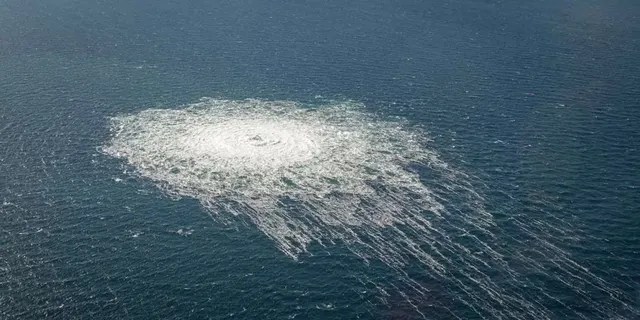
    In June of 2022, under cover of an annual NATO naval exercise in the Baltic Sea, US Navy divers attached mines to the Nord Stream pipelines. The mines had triggers that could be activated remotely at any time of choosing, and that moment came on September 26… kaboom. Ms. Nuland and Secretary of State Antony Blinken gloated publicly. Naturally, the US blamed Russia. America’s news media — catamite of the Intel Community — amplified the charge, despite the absurdity of Russia blowing up its most lucrative source of export revenue. The New York Times has so far made no mention of Mr. Hersh’s recent update of the Nord Stream sabotage.

     Germany, too, hardly made a peep, nor did the rest of Western Europe, which now faces a future that looks, energy-wise, like a return to the Fourteenth Century. Maybe they’re all jaded with modern life, all that tiresome bathing and malingering in the brightly-lit cafes. Under the sagacious guidance of the WEF they were all going “green,” anyway — but was that green like the heart-shaped leaves of the linden tree or green like the moldy veins in Roquefort cheese? I guess they’ll find out.

     Luckily, America had the Chinese balloon to distract them, and then “Joe B’s” State-of-the-Union extravaganza where the nation learned that we are living in the most extraordinary economic boom since the days of Babe Ruth and Charlie Chaplin. The perpetually-vacationing Leader of the Free World has apparently made America great again, despite the dastardly plots and ongoing insurrections of his far-right, white supremacist adversaries. Did the annual SOTU smell a little bit like a reelection pitch, though? I hope so.

     Speaking of insurrection, the House commenced hearings this past week, debuting with the Oversight Committee’s witness panel of Twitter execs who carried out a years-long censorship campaign against the First Amendment in cahoots with the FBI, CIA, DOD, DOJ, DOS, DHS… well you get the picture. A more arrogant crew of dedicated fascists would be hard to find in any other corner of the world today, except perhaps Canada, than the likes of Vijaya Gadde, Yoel Roth, Anika Collier Navaroli, and James Baker, former chief counsel of the FBI. They “moderated” speech on the chat app for the good of the American people, you understand, lest the public succumb to “misinformation” — otherwise known as reality.

     One reality being that the sedulously-repressed news of Hunter Biden’s crime-stuffed laptop represented interference in the 2020 election. James Baker told the committee he could not recall at the time (October 2020) whether he spoke to anyone back in his old haunts at the FBI about the matter — though there is no question that, as chief counsel, he knew the agency had possession of the laptop since 2019, and what was in it. Rep. Clay Higgins (R-La.) warned the four former Twitter employees that “this is the investigation part, later comes the arrest part.” Let’s hope so on that one, too.

     Meanwhile, the House Special Subcommittee on the Weaponization of the Federal Government held a lively colloquy with four “experts” including former FBI agents Nicole Parker and Thomas Baker, GWU Law Professor Jonathan Turley, and one Elliot Williams, former DOJ Assistant AG and currently shill for DC Lawfare tank the Raban Group. The theme, generally, was the change-in-mission in the FBI-DOJ nexus from law enforcement to harassment of US citizens who oppose Democratic Party policy.

     Most instructive in Thursday’s session, though, was the political debut of Rep. Danial Sachs Goldman (real name), newly elected member for New York’s Tenth District (which encompasses Wall Street). Among other distinctions, Mr. Goldman is an heir to the Levi-Strauss blue jeans fortune, and was lead counsel during the 2019 impeachment hearings against Donald Trump in the House Intelligence Committee. This vicious prick, an apt replacement for the inveterate liar and seditionist, Rep. Adam Schiff (CA), put on a florid demonstration of hectoring witnesses, cutting them off, and re-directing the committee’s attention at every opportunity to the so-called “insurrection” at the Capitol of 1/6/20.

      Mr. Goldman is a man to watch, especially as the House actually does give its complete attention later this year to the 1/6/20 matter and the true facts behind the FBI’s engineering of the event, including the nefarious actions of former Speaker Nancy Pelosi and her Capitol Police. When it comes, I can’t wait to watch Mr. Goldman unwind like one of those cheap counterfeit Rolex watchers that peddlers hawk on Wall Street’s sidewalk.

Quake Delivers Earth-Shattering Blow to U.S.-Led NATO Hypocrisy

By Finian Cunningham

Source: Strategic Culture Foundation

When a real-world emergency happens, all of NATO’s pious and self-regarding talk implodes in a pile of dust.

A 7.8. magnitude earthquake hits Europe’s southern neighbors Türkiye and Syria – and the NATO alliance does next to nothing in response. What sort of security organization is that?

Rather, it seems to be too busy trying to start World War Three by undertaking an unprecedented mobilization of resources and equipment in Ukraine against Russia. A mobilization that is completely unwarranted and indeed is an audacious gaslighting charade played on the Western public.

The United States-led North Atlantic Treaty Organization has an annual military budget that exceeds well over $1 trillion spread over its 30 member nations. One of those members is Türkiye.

What sort of priorities has NATO? Not rhetorical, theoretical, or presumed priorities, but real-life practical, demonstrable priorities.

On Monday morning this week, southern Türkiye and neighboring Syria were devastated by a 7.8 magnitude earthquake and multiple huge aftershocks. The death toll in both countries has risen to over 11,000 with tens of thousands injured and made homeless. With thousands of missing people trapped under rubble, the casualties will increase over the coming days.

Many countries were quick to send emergency rescue teams to the zone of havoc that straddles the border between Türkiye and Syria. Russia and Iran – experienced in such natural disasters – were among the first neighboring countries to send in aid and salvage crews.

By contrast, the apathetic response from the U.S.-led NATO bloc has been abject. What’s even more incredible, Türkiye is a long-time prominent member of the organization and is considered a vital partner for the European Union.

NATO bills itself as a “collective security organization”. Its remit is not just about military security. It touts itself as protecting the Euro-Atlantic hemisphere from all security threats including from natural disasters. Its lackluster response to the earthquake this week on the very doorstep of Europe is like that of a big shiny red fire engine parked lazily near a building ablaze – and doing diddly-squat about it.

All one has to do is compare the massive mobilization of military and financial aid that the U.S. and NATO mounted for Ukraine. The proxy war in that country against Russia has been fueled with over $100 billion in “emergency” spending by the United States and its European allies. No expense has been spared by Western governments who have signed off a blizzard of cheques funded by their taxpaying citizens to prop up a corrupt regime in Kiev to fight against Russia. (If you don’t know about the farcical Zelensky cabal and its teeming corruption then you have been reading too much Western media and getting your geopolitical views from Hollywood celebs.)

NATO has been bragging about showing “unity” and “resolve” in support of Ukraine where Ukrainian foot-soldiers are being slaughtered in what is a proxy confrontation for Washington against Russia.

The United Nations estimates that civilian deaths in Ukraine’s year-long war are around 7,000. That’s relatively low compared with the military casualties which amount to perhaps 200,000. Up to 10 million Ukrainians have been displaced by the violence and most of them are being sheltered in Russia. About four million Ukrainians who fled their country are being put up in hotels across the European Union, given visa-free status and generous comforts funded by taxpayers.

In a matter of hours, however, the earthquake to have hit Türkiye and Syria resulted in civilian casualties far surpassing the year-long war in Ukraine.

Why aren’t the United States and NATO members mobilizing tens of billions of dollars in aid and rescue crews for the quake victims? What are all those airplanes, ships, tanks and engineering equipment for if they can’t be deployed with efficient timing and logistics to save lives? Where is the will to move heaven and earth to dig people out of crushing debris?

Of course, the answer is that NATO is not a “security organization” in the normal meaning of the word. It is a war machine that serves U.S. imperialist objectives. It’s a relic from the Cold War that has now been redeployed to fight Russia and China, and in doing so push the world to the abyss of global nuclear war – the ultimate “insecurity”.

If practical security concerns had anything to do with NATO, the disaster this week in Türkiye and Syria demonstrates beyond doubt that the organization is nothing but a monstrous hypocritical front.

This week U.S. President Joe Biden gave his State of the Union speech before Congress. He was speaking less than 24 hours after the earthquake wrought devastation. He did not even mention the calamity during an hour and a half of cloying self-admiration about the virtues of the “unique nation”. Preposterously, he insisted in his nationwide address that the war in Ukraine is “a test of our age” for American leadership.

Biden claimed that the ever-so-chivalrous U.S. was “defending a stronger Europe” and “defending democracy” in Ukraine from “Russian aggression”. How’s that? By installing and weaponizing a Neo-Nazi regime in Kiev from a CIA-backed coup in 2014 and which is up to its eyeballs in corruption? Joe Biden is deceiving himself and the American public with narcissistic fairytales. No wonder the United States and its Western minions are in such a mess economically, socially and morally when unabashed delusion is aired nationwide on primetime TV.

The truth is far more ugly and bloody. And the truth is that the earthquake has inflicted such horrendous damage this week because of the decade-long U.S. and NATO proxy war in Syria. That failed war from 2011 for regime change in Damascus (using Islamist terror gangs as NATO foot-soldiers) caused millions of refugees and weakened infrastructure in the afflicted border area. A humanitarian crisis was already in place before the quake struck – a humanitarian crisis that Washington and its crime syndicate NATO organization have created from their criminal intrigues for regime change.

Adding ignominy to grievous injury, the international response to the earthquake is being hampered by U.S. and European Union sanctions against the Syrian state. Washington heartlessly said this week it was not going to lift its sanctions off Damascus in the aftermath of the quake.

All the grand vanity and deception of Washington and its NATO minions gets buried in an instant by a sudden movement in tectonic plates.

The United States and its lackey Western “powers” talk endlessly – and nauseatingly – about democracy, humanitarianism and security. Then when a real-world emergency happens, all the pious and self-regarding talk implodes in a pile of dust. And when the dust settles and the heartrending cries of children fade, all that’s left of Western claims is earth-shattered hypocrisy.