Two for Tuesday
Reply

By Justin Hart
Source: Brownstone Institute
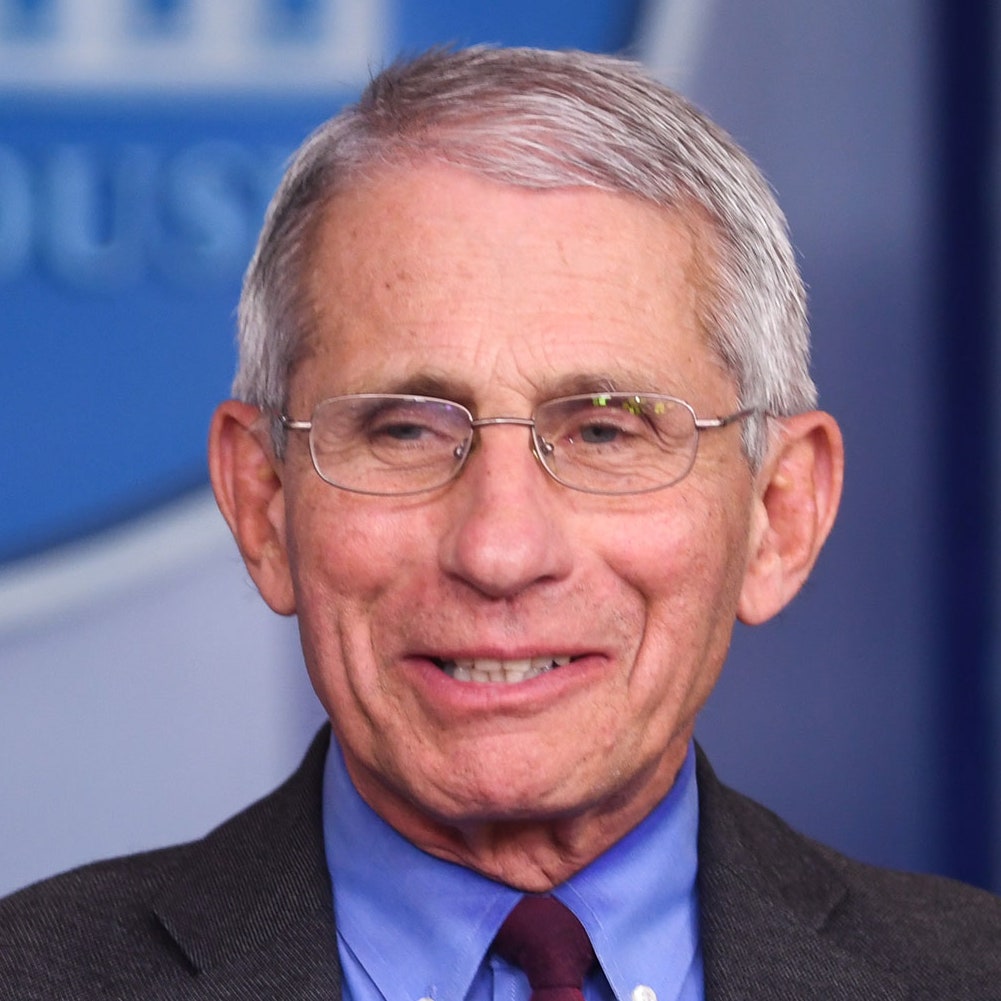
Norah O’Donnell has known Dr. Fauci and his wife for ages: “How are you guys?” she starts her interview with Dr. Fauci for InStyle Magazine where Fauci posed for the most hubris-exuding photo of the pandemic.
“With all due modesty, I think I’m pretty effective!” – Dr. Anthony Fauci, July 2020, InStyle Magazine
This was 3 years ago this past week:

Norah’s husband, Chef Geoff, owns the Georgetown restaurant, “Deluxe Hospitality” She admits in her opening that Dr. Fauci and his wife, the bioethicist, Dr. Christine Grady, are frequent patrons there.
“… these days mostly for takeout.” O’Donnell chuckles.
Revisiting this horrible puff piece you can’t help but see the obtuseness of the leader of the pandemic policy in stark relief.
First, as always, the man is incapable of actual reflection:
NO: What have we done wrong?
A F: You know, that’s almost an unanswerable question. There are so many possibilities. I don’t like to phrase it in the context of what we’ve done wrong, as opposed to let’s take a look at what happened and maybe we can have lessons learned.
Showing once again that Dr. Fauci (in July 2020) believed that we did NOT lock down hard enough:
If you look at the European countries, they shut down about 90 to 95 percent of the country. Whereas when we shut down, the calculation is that we shut down about 50 percent. So, put all of those factors together, I can’t say we did anything wrong, you know, but certainly we’ve got to do better.
Lambasting any move to “re-open” he continues: “What we need to do now is to learn the lesson of what happened with the recent surges. We’ve got to pause in the opening and maybe even take a step back in our phases…”
Pushing masks was a high priority for the man who months earlier admitted in an email that they don’t really do anything:
As we try to proceed, we need to really take seriously the issue of wearing masks all the time and not congregating in bars. I think we can stop that by just closing them, because they are certainly an important mechanism of this spread. Keep distances, wash hands, avoid crowds, wear a mask … I think if we diligently do those things, we can turn this around.
Norah asks him about the “noble lie” he told around masks (which is just ridiculous parsing):
NO: It’s been recently reminded to us by the White House that you advised against people wearing masks in public, and, of course, that was due to the surge because the concern was about saving PPEs for medical professionals. Do you regret that comment?
A F: No. I don’t regret anything I said then because in the context of the time in which I said it, it was correct.
I’m always struck as to the casual and flippant manner in which Dr. Fauci proscribed the policies. Here he is continuing to defend his noble lie and pushing masks with assertions that STILL have no science behind them – in fact, quite the opposite.
And also, it soon became clear that we had enough protective equipment and that cloth masks and homemade masks were as good as masks that you would buy from surgical supply stores.
The plan to vaccinate millions was already in place as this comments affirms:
By the beginning of the year we should have the first tens of millions and then hundreds of millions of doses. That being the case, I would think we could vaccinate a substantial portion of the population as we get into 2021 — if the vaccine is safe and effective.
The the hubris really kicks in:
NO: And how long do you see yourself at the NIAID?
A F: I don’t see any termination within the near future because I judge [my career] by my energy and my effectiveness. And right now, with all due modesty, I think I’m pretty effective.
Norah turns to Mrs. Fauci (Dr. Grady):
NO: Let me ask you, Chris, as a bioethicist, what do you make of this moment we’re in, when even a mask has become more of a divisive issue?
CG: Well, I would say that masks shouldn’t be divisive. It’s a relatively easy way to protect one’s self and others. And so for public health reasons, I think everybody should do it. From an ethical perspective there is always this tension between what you ask people to do that feels like a restriction of their liberty and what is required for public health. And in this case, it seems like a slam dunk. It’s not restricting liberty much, and it’s very helpful for public health.
She goes on to lament how “unfair” it all seems to her:
when he gets criticized, it feels unfair to me because he is working so hard for the right reasons.
NO: What feels unfair?
CG: That people are looking for things to criticize — I mean, for anything. They are making things up. They are not putting into perspective the contribution that he is making.
A curious aside, Dr. Fauci and Dr. Grady’s first encounter began with a lie – seems kind of appropriate if you’ll forgive my commentary on that.
CG: [laughs] I had just come back from spending two years with Project Hope in Brazil and came to work at the NIH. There was a patient, Pedro, on the unit at the time who was Brazilian and didn’t speak English. One day he asked me if I could speak to his doctors about sending him home because he really wanted to go home. So I set up a meeting with the fellows who were taking care of him and Tony, who was the attending physician. I had not met Tony before that. I was the interpreter. And Tony told him, “He may go home and be very careful about taking care of his health and doing his dressings and sitting with his leg up and things like that.” And when I told him that, Pedro said, “There’s no way I’m doing that. I’ve been in the hospital for months. I’m going to the beach, and I’m going dancing at night.” And I sort of in a split second decided to tell Tony, “He said he’d do exactly what you said.”
AF: She lied! [laughs]
CG: I lied! So the next day I was walking down the hall, and Dr. Fauci came by and said, “Can I see you in my office at the end of the day?” I thought I was going to get fired. But he asked me out to dinner. [laughs]
The entire hagiographical interview in hindsight is a classic look at the elitist bubble around the people in Washington, D.C. during the pandemic. Dr. Fauci’s contribution to history will not be seen in a kind light.
By Gary D. Barnett
Source: GaryDBarnett.com
“I believe that all government is evil, and that trying to improve it is largely a waste of time.”
H.L. Mencken
Throughout our history, and today, little, if any defense of this country or its people, has been necessary or warranted. The true enemy of the people of America is, and has always been, its own government. The real enemies are most all the politicians, regardless of party, the courts, the CIA, the NSA, the FBI, the IRS, the entire military industrial complex, and in general, the federal and state police forces. In other words, all the ruling class and it pawns in government, its enforcers, and all their institutions and bureaucracies, are the real threat to this populace and its natural freedoms. The ludicrous notion of national defense, and that government forces actually “defend the country,” is an outright lie; propagandized by the State and its mouthpieces in media, simply as a way to gain great power in order to own and control society.
Many will take offence to these statements, mostly due to the fact that since birth, they have been inundated and indoctrinated by false ‘authority’ figures, to believe that they cannot survive and prosper without restrictive laws and rule, and worthless government schooling, all kept in check by severe coercive State prosecution. They are taught (schooled) to abandon their individuality in favor of the so-called ‘greater good’ of a collective society, to depend on and trust others in power to protect and sustain them and their families throughout their lives. This breeds only ignorance and passivity in the face of State terror. Independence, a supposed hallmark of this nation-state and its residents, is literally vilified, and even prohibited in many instances, causing personal sovereignty to be discarded in the name of unified slavery.
We live in a country that has warred aggressively against fictitious enemies, meaning without cause or necessity, more than any other country on earth. It is stated, and supported, that the United States has been at war for at least 93% of its entire existence. I firmly believe this number to be much higher, and with proper consideration, it is likely closer to 100%. If one is to determine the actual damage done, the actual harm due to direct war, proxy war, what is insanely considered ‘collateral damage,’ what is the horrid long term cost to human life in the aftermath of this terror, the total number of causalities, including the dead, would be tens if not hundreds of millions of innocent people. But what is sold to the wrongly named ‘public, is that this country is and has been the savior of ‘democracy,’ a completely evil and failed ideology, which is a gross lie beyond the imagination of any sane and thinking human being.
Yes, the truth hurts, but without acceptance of truth, what is left is a deceitful lie; a manufactured myth so atrocious as to have caused an entire nation’s abhorrent and hostile policies to be supported by the masses to such an extent, as to have caused the most broad-based, aggressive, and egregious destruction of humanity in history. This should be the epitaph upon the death of this empire.
At this time in our lives, aggressive war by this government and all who support its heinous deeds, has graduated from its main objective of slaughtering innocent men, women, and children, in addition to the other devastation, in other countries most everywhere on earth, to include the entirety of this country’s population as well. The major war currently is against all of us who live and work in the U.S. by those who continue to claim to be our protectors. This contradiction is absurd, but is still little understood by the average American, as can be evidenced by the terroristic treatment inflicted, and with little if any resistance, on this society these past few years.
At a time when this country and the world are steeped in madness and hate, more and more atrocities continue to take place, with almost zero empathy evident by the political class. The last evil ‘ruler,’ just one among all, ‘chosen’ by the ‘people,’ was Biden, and this was his response to the State’s complicit murder of those in Lahaina just recently, after a very suspicious and devastating fire had destroyed an entire town and its residents. He had the audacity to offer these poor people who lost everything, including many family members, a one-time $700 payment per household. This was in the midst of giving over $200 million more to Ukraine’s political criminals recently, with plans to give many more billions; this after more than $113 billion has already been paid to enrich the newly rich politicians in Ukraine. (Apparently, blackmail garners payment more than actual need of Americans) This alone should be enough for everyone in this country to grasp how little this government cares about its own, and how worthless all in the governing system have become. To depend on, or trust this scum to defend you from harm, is asinine beyond explanation.
Who will defend you from harm? Who will defend you from foreign invasion, although that has never once happened in this country’s history, not even including the pre-planned setup called the Pearl Harbor attack? Who will defend you from hyper-inflation and the resulting extreme prices for goods? Who will defend you from mass censorship and constant surveillance? Who will defend you from food shortages, energy shutdowns, and extensive restrictions on all transactions and travel? Who will defend your children from the consuming perversion being forced on them at every opportunity with this government’s blessing? Who will defend you from aggression and tyranny? Who will defend you from yourself?
It will never be the evil State that defends you, nor will it be its ‘national defense systems,’ its enforcers in the military and police, the politicians, the banking cartels, the large corporate monsters, or any government at any level. There is only one legitimate defense, and that is self-defense. Only you, each of you, has the ability and desire to defend himself. No other and no State entity can or will ever be your savior. Until that is accepted, expect total serfdom to become your voluntarily accepted way of life.
Much more tyranny is coming. Lockdowns, fake ‘viruses,’ bioweapons, threats and totalitarian measures based on bogus ‘climate change, central bank digital currency, social credit restrictions, more inflation, destruction of money, health mandates, curfews, travel shutdowns, food shortages, transhuman promotion, among many other atrocities, including perpetual war.
National defense is an outright lie, and can never protect you, it can only harm you. There is but one enemy, and that enemy is the State! There is but one defense against this demon called government, and that is when individuals, or individuals working together en masse, abolish all rule. The responsibility for you is you, and any dependence on government whatsoever can only lead to despair, hopelessness, disaster, and enslavement. Defend yourself from this evil State, and break the chains that bind you.
“Every government is run by liars. Nothing they say should be believed.”
~ I.F. Stone
Reference links:

By Julian Rose
Source: 21st Century Wire
So here we are. For yes, this is where we are – if by ‘we’ one understands the current materialistically imprisoned post industrial world – driven on by the relentless force of globalisation.
Brussels, still a remarkably human city by today’s standards, has the misfortune of housing the European Union HQ, which is not a very human conglomerate. And what goes on in it is equally devoid of humanity. For it is about being ‘big, central and dominating’.
Big, central and dominating is the future of the planet if you subscribe to the techno-industrial mind’s two dimensional determinism. In the soothing words of Klaus Schwab and Yuval Noah Harari, it is to be an Information Technology/Artificial Intelligence future, in which Schwab tells us “we will have nothing and will be happy”.
The mobile phone tower and mast which tops the temple of techno-industrial prowess, is an ugly, spindly piece of steel which is an expression of dominance in its own right. The vast global infrastructure formed by these Saturnian steel structures carry with them a penetrating EMF amplified soup of toxicity.
It is this ‘network’ which acts as the gateway to the virtual reality world of those who depend on it for their ‘signals’. Signals that have an abstracted kind of dominance and pronounced tendency to thin the blood and blur the brain.
The majority of messages that come through this gateway concern how to get on in ‘the system’.
How to get from A to B faster; news faster; financial reports faster; connections with family and friends faster; everything faster.
Being permanently plugged-in to this hyper electromagnetic crossroads of life is said to be the only way to ‘stay in touch’, to be a participant in the mental matrix; to be part of ‘the programme’.
But already twenty years ago I decided to cut my ties with this programme. Dispensing with the mobile phone turned out to be an act of liberation, soon to be followed by the ousting of the TV.
Big Brother was consigned to the back seat and I saw that a life that belonged to myself still existed, all be it with the proviso that one prioritised one’s values with a solid dose of determination to be true to that which is ‘real’ in life.
Perhaps this is why I can see so clearly how those who continue to participate in the ‘programme’ are running blindly towards an uncompromisingly sheer cliff-face, and how their voracious demands on the natural environment are increasingly undermining her natural resilience.
I can see something particularly shocking – that this frenetic rush to the cliff face and the great consumption of finite resources it involves – has no other purpose than playing-out a quasi demonic fascination with ever more refined toys of distraction. Distraction from the real pulse of life.
Yet this techno-industrial suicide machine is staffed by humans who appear not to recognise that their joint mission is programmed to end in collapse.
On the contrary, they seem to think that by increasing the efficiency and speed of the means of travel, it will somehow consummate its own need to arrive at where it is headed for. Where or what that is – simply never gets asked.
However, the psychotic gods of insentient ‘progress’ who designed the programme have built into it a series of ‘events’ which reach a certain conclusion in something they call the Transhuman. A robotic state of computer connected and controlled brain power for those able to pay for it.
To pay for the right to be dehumanised and rendered devoid of the need – and indeed ability – to think. Freed from emotion and freed from a soul based link to one’s Creator.
Stations on the way to this dark point of human annulment are laid-out under the WEF creed known as ‘The Great Reset’. A ‘Reset’ from human to non human.
Here are some of stations along the Great Reset route to the Transhuman:
The cessation of food grown in soil and the manufacturing of synthetic food produced in laboratories (at least six of which are already in production).
The end of farming the land as we know it and the removal of redundant farmers and country dwellers into 5 and 6G controlled total surveillance ‘smart cities’.
Countryside and farm landscapes redesigned to accommodate ‘rewilding’ projects and gated access to designated ‘leisure sites’ for those who can afford access.
The end of bank notes and coinage, replaced by a centrally controlled digital currency whose availability will depend upon one’s ‘social credit’ a la China.
The confiscation of one’s assets and private property with the option to ‘rent’ aspects of them back from the corporate state that is to become the new owner.
‘Self-autonomous’ 5G guided transportation systems operating between major cities.
100% surveillance via satellite and ‘the internet of everything’ and the profligate use of algorithms to pick-up any signs of resistance in communications.
The repression of true spirituality in favour of a ‘one world religion’.
Deliberate blurring of sexual delineation ‘man/woman’ and the decline of normal sexual reproduction.
Sperm-counts further reduced due to de-vitaminised synthetic GMO foods, vaccinations and polluted air and water – population control.
Enforced ‘15 minute cities’ as centres of local authority control.
Designer gene-altered babies via laboratory cloning of DNA sequences and cell tissues.
The removal of certain words from the common language, particularly poetic and spiritual ones.
Real art reduced to pseudo art as an expression of the will of the state, including dark-side ritual.
‘Medical health’ seen as the sole domain of Big Pharma with natural medicine outlawed.
Further media/government control over the passing of public information.
There is more, much more. But this is enough to show the basic composition of the stations on the way to ‘Transhumanism’. The arrival point of which is said to be circa 2035.
Behind this in-your-face destruction of hard won human liberties is a vast global propaganda/indoctrination exercise already in existence for more than two decades and built around the now infamous ‘Zero carbon by 2045’ or ‘Net Zero’ in news-speak (Orwell).
When challenged by those still able to question the need for these deadly impositions, the answer is always the same “To save the world from Global Warming.”
This piece of acute brainwashing, initially devised at the Club of Rome in 1972, is key to the whole ‘programme’. As long as enough people buy into it for long enough, the slavery exercise will be irreversible. Based on the current rate of awakening, the discovery that anthropogenic Global Warming is a mega lie will likely be neutralised by the impositions already in place to prevent an uprising.
The techno-industrial god will then have served its purpose. Like the rocket booster that gets the capsule into orbit, it will have taken the majority of mankind over the brink into abject slavery to its hypnotic convenience culture, before imploding in on itself and taking much of humanity and nature’s life sustaining diversity with it.
BUT, all this can be avoided. It doesn’t have to happen. It won’t happen. Our lives do not depend upon adopting the smart technology of tomorrow, today. We won’t any longer be seduced by ‘convenience’ once we recognise it is leading to our self destruction, will we?
We will retain sufficient will-power to get shot of this addiction to the IT/AI life inhibiting distractions that make up the mind controlled road to Armageddon.
The only way to recognise just how diabolical is the trap that has been set for us – and that we have set for ourselves – is to get a grip on our sense of deeper purpose in this life. To make an unbreakable commitment to listen and respond to the call of our souls. The true self. And then pull this true self out of any association with the metaverse mincing machine.
Let no one in possession of a soul ever allow himself/herself to become processed into a sub human product of the techno-industrial behemoth. Stick with what’s solid, what’s real – and ditch the counterfeit virtual world that snares the unweary and turns once healthy minds into casualties of a blind rush to a dystopian digital nowhere land.

“Blueberry” (2004) is an acid western directed by Jan Kounen and based on the graphic novel by Jean Giraud (Moebius) and Jean-Michel Charlier. Unlike most acid westerns, the film has a relatively conventional narrative following the journey of Mike Donovan (Vincent Cassel) who, after losing his first love to Blount (Michael Madsen), is adopted by a native tribe and becomes a U.S. Marshall. What qualifies it as an acid western is the final showdown which depicts a spiritual battle via spectacularly psychedelic CGI and sound effects. Blueberry is also notable for its international roster of great character actors including Juliette Lewis, Temuera Morrison, Ernest Borgnine, Djimon Hounsou, Tchéky Karyo, Eddie Izzard and Colm Meaney.
Watch Renegade on Hoopla here: https://www.hoopladigital.com/title/16104849

By Gary D. Barnett
Source: GaryDBarnett.com
“We do not have to visit a madhouse to find disordered minds; our planet is the mental institution of the universe.”
~ Johann Wolfgang von Goethe
How many times in our lives has it been said or thought that things could not get worse, weirder, more absurd, more dangerous, more immoral, more brutal, more controlling, more restrictive, more perverted, more murderous, or more insane? Can those thoughts even be considered in this day and age of complete and total lunacy? What has happened to mankind, and can it all be blamed on brainwashing and indoctrination by the ruling class over the rest of society? I firmly believe that the causes for the inconceivable problems we see today, go much deeper than just blame on invited masters, and begin at the core of the psyche of humanity. If this is so, the struggle for man’s attempts to regain his sanity, morality, and freedom, are fully dependent on a large swath of society changing dramatically from one of total dependence and expectation of rule, to one of individual worth, and a mandatory acceptance of personal responsibility so overwhelming, as to lead to the total destruction of the State.
You might scoff at such a pronouncement as this, but at this stage of tyranny, indifference, and complete loss of integrity by the masses, nothing short of an absolute and unconditional reshaping of society will suffice in order to eliminate the threat of the extinction of humanity as we know it. We are teetering on the precipice of annihilation, and false hopes or prayers will never be enough to restore this so-called ‘civilization.’ Apathy is our enemy, and can only lead to an enslaved society at the hands of technocratic rulers.
Many might expect the State to implode given the pace of this takeover plot and reshaping of nation states, but what would take the place of the current systems should the weakest fall? Could that be the planned outcome, as with many failed State systems, a global restructuring by the strongest and most brutal countries, just as is the WEF plan indicates, would have a clear advantage in its new world order creation attempt? A transformation is necessary, but that transformation needs to be geared toward a Stateless structure created by individuals, instead of any new political governing scheme.
Real intelligence and critical thinking on this earth are missing in action, and what is disguised as intelligence is rarely ever anything other than State agenda-driven propaganda and lies. This is why what passes for ‘news’ is so unbelievably inaccurate, entirely incorrect, and child-like in nature. That is all that is necessary these days to fool the bulk of society. In other words, thinking is no longer required, as the masses have been conditioned and brainwashed to accept almost any claptrap being spewed by the rulers, fake ‘scientists,’ medical profession, politicians, government, and certainly the media circus made up of State sanctioning whores.
Any who still have the ability to think rationally and intelligently, go through each day in wonder at the wild, insane, and obscene things being reported to the mainstream population; that largest segment of society totally blinded by ignorance, apathy, and in many cases, stupidity. These attitudes make for easy fodder to feed the hopeless, gullible, and compliant sheep, and are in turn, allowing this heinous State to continue its march toward a globalized world run by the very few.
The completely bogus idea of human-caused ‘global warming’ and fake ‘climate change,’ is now taking shape as the primary reasoning for control over everything and everybody on earth by the technocrats. This ‘climate’ agenda will now be pursued until the end of life as we know it. It is not at the margin any longer, nor is it anymore hidden. Idiotic headlines concerning so-called weather terror, are expanding by the moment. Sensationalism can now be used universally, as one after another fake disaster looms according to these fraudulent so-called ‘scientists’ and imposters called ‘experts.’
Everything is on the table as extreme warmongers like to claim, but since this war is against all of us, this term takes on a new meaning. Completely asinine headlines continue, as now new and improved fear porn coming from the talking heads of the idiotic and imbecilic mainstream media abound, going so far as to label their fake paranoid ‘global warming’ nonsense as “global boiling.’
But there is so much more happening, as a myriad of false threats is ever upon us, or so the talking heads will claim. New plagues, diseases, ‘viruses,’ killer ticks, (if existent, they were likely to have been purposely created by the military) war threats, and especially ‘climate change’ absurdity. Climate and weather have become totally weaponized, and will be used to control life at most every level now and in the future.
Never forget the non-existent ‘covid pandemic’ lie. It will be revamped, whether as something the same or similar, or some new and approved killer on the loose; so scary as to drive everyone inside, supposedly away from the maddening crowd. Beware the ‘virus’ and emergency hype, as it will never end so long as the masses comply with rule, and obey as slaves.
Perusing just a few ‘news’ feeds will inundate the mind with nonsense, but most see these claims as real or possible; all without any legitimate accompanying evidence. The insane Trump saga leads the way of course, as this stupidity is followed by both sides of the political scam, which helps to keep most of the country at each other’s throats. But there is so much more. The banking sector is bankrupt, and personal and business accounts of many are being closed. Pensions and retirement funds are also being threatened. Cyber attacks are affecting large swaths of this country, and air travel is becoming impossible to deal with at times. The trans scam is continuing and will likely escalate after government schools open up this fall. More UFO reporting is being pursued every week, stores are closing nationwide, inflation is rampant, and the Ukraine false-flag war continues.
Incandescent lightbulbs have been banned, gas stoves and water heaters are targeted as well. There are more bank failures, more trucking company failures, savings are depleted, setting the stage for the digitization of America. CBDC trial and implementation will continue, and widespread default fears are increasing. Interest rates are still rising, as the U.S. credit rating has been downgraded.
The destruction of our world is upon us, as the crumbling of all that is natural and sane is being allowed to take place right before our eyes. All the things mentioned here are not a complete list by any stretch of the imagination, as so many things are going awry in broad daylight, all with little notice by the sheeplike masses. Dependency and indifference are our mortal enemies, We are living in a madhouse; a world at great odds with all sanity, and one that has become indifferent and morally bankrupt. This is not the way forward, but the way to hell on earth.
Finding the individual inside, taking solace in self, and abandoning the State is a better way.
“In individuals, insanity is rare; but in groups, parties, nations and epochs, it is the rule.”
~ Friedrich Nietzsche
As developments in West Africa demonstrate, the francophone countries are no longer willing to accept French neo-colonialism. With the fear factor finally removed, Africa’s quest for genuine independence is steadily coming to fruition.

By Brad Pearce
Source: TheCradle.co
The 26 July coup in the West African nation of Niger, which threatens to undermine French and US military presence in the region, has shed light on the historical exploitation and continued practices of Francafrique – the term used to describe the persistent exploitation by the former French Empire in Africa.
France heavily relies on nuclear energy, with 68 percent of its power coming from nuclear plants. It obtains 19 percent of the uranium required to run these plants from Niger. Despite this significant contribution toward France’s energy needs, only 14.3 percent of Nigeriens have access to a power grid, and even that is often unreliable. This stark contrast highlights the disparities and ongoing exploitation by rapine foreign powers throughout the African continent.
The Legacy of Francafrique
Francafrique has been known for its exploitative systems designed to profit from African resources, using pressure, capital, and frequently outright force to maintain control over its former empire. As a result, many African states, including Niger, continue to face poverty and underdevelopment.
Burkina Faso’s young, charismatic leader Ibrahim Traore recently spoke at the Russia-Africa summit in St. Petersburg and decried the fact that Africa is resource-rich, but its people are poor, and criticized African leaders seeking hand-outs from the west, as they perpetuate dependency and poverty. He also described what is being imposed on Africa as a form of slavery, stating:
“As far as what concerns Burkina Faso today, for more than eight years we’ve been confronted with the most barbaric, the most violent form of imperialist neo-colonialism. Slavery continues to impose itself on us. Our predecessors taught us one thing: a slave who cannot assume his own revolt does not deserve to be pitied. We do not feel sorry for ourselves, we do not ask anyone to feel sorry for us.”
France’s inability to justify its presence in Africa with a coherent narrative further complicates the situation. Paris cannot openly confess its greed, feign a “civilizing mission,” or admit to any responsibility due to its past crimes. This lack of purpose weakens French power on the continent, leading to violence and poverty in its wake.
West Africa’s drive for further independence has left Atlanticists concerned about the opening this leaves for Eurasian powers like Russia and China to increase their influence in Africa. The west’s reaction reflects a lack of respect for the sovereignty of African countries, viewing the continent merely as a theater to maintain global dominance.
Since the Ukraine war’s onset in early 2022, Atlanticists have expressed alarm over the unwillingness of Global South states to support the west’s anti-Russia policies, a trend further amplified by the shift to multipolarism everywhere. This weakening of western hegemony has opened a path for many nations to avidly explore their geopolitical options and diversify their economies.
A report from the Munich Security Conference held in February highlighted this very real schism with the west:
“Many countries in Africa, Asia, and Latin America have steadily lost faith in the legitimacy and fairness of an international system which has neither granted them an appropriate voice in global affairs, nor sufficiently addressed their core concerns. To many states, these failures are deeply tied to the west. They find that the western-led order has been characterized by post-colonial domination, double standards, and neglect for developing countries’ concerns.”
Fleeced by the CFA Franc
The aftermath of the Second World War marked a significant shift in global power dynamics, and the victorious powers sought to establish a new world order that would maintain peace and promote economic balance.
In the context of African colonies, where colonial troops played a major role in the allied victory, the victorious powers, including France, aimed to retain economic control and benefit from their former colonies even as the world moved towards decolonization.
This included the establishment of new currency systems, with French leader Charles De Gaulle creating two currencies collectively known as the CFA Franc in 1945 for former colonies in the Western and Central zone.
As the push for political independence grew stronger in the late 1950s, France organized referendums in its African colonies to vote on accepting a constitution drafted by the French.
Guinea, led by former trade unionist Sekou Toure, opposed accepting the French constitution and voted overwhelmingly against it. In a furious response, De Gaulle’s government withdrew all French administrators from Guinea and took action to sabotage the country’s infrastructure and resources. The harsh measures by Paris aimed to serve as an example of what would happen to any former French colony that resisted France’s agenda.
During the Cold War, the Communist states exploited such actions by presenting themselves as liberators and allies of African countries that sought independence from European influence. This stance has led to some Africans viewing countries like Russia as more equitable partners compared to France.
Over the years, France has demonstrated a pattern of intervening militarily – over 50 times since 1960 – in African countries to secure governments that remain compliant with French economic interests, particularly related to the continued use of the CFA Franc.
The system by which the CFA Franc operates has historically been one of a fixed exchange rate where the currency has unlimited convertibility but is permanently pegged to the French currency, previously the Franc and then the Euro.
African currency under French control
This means that African countries cannot influence the value of their own currency, and the difference in value makes it so that France can buy African products artificially cheap while Africans are able to buy fewer goods with the money they exchange.
Worse yet, France had requirements to store, and thus profit from, the foreign reserves owned by its former colonies, though the requirement of holding 50 percent of their foreign exchange reserves in a French-ran bank was dropped for the western zone in 2019.
Under this scheme, African states received a nominal amount of interest, but the bank benefited from lending that capital out at higher rates and attaining massive profits off of African resources and labor. This is despite the fact that many countries in Francophone Africa are major gold exporters and thus have a multitude of options for storing wealth to back a currency in alternative central banks.
While the CFA Franc system has provided some benefits in terms of stability and preventing Zimbabwean-style hyperinflation, it has also come under scrutiny for imposing requirements on African countries that are not placed on more powerful nations. The lack of control over their own currency has hindered economic growth and made these countries vulnerable to global economic shocks.
Northern African states such as Tunisia, Algeria, and Morocco chose to leave the CFA Franc upon gaining independence and have experienced relatively higher prosperity. Similarly, Botswana’s success with its own national currency demonstrates that proper management can lead to stable democracy and economic growth, even for less developed nations.
Exclusive rights and privileges
The CFA Franc system has been the geopolitical equivalent of one’s father insisting he manages their savings while leaving them out of his will. There are benefits to having a trade and currency zone, such as the current ECOWAS union that covers the Western part of the continent, but by design under the CFA Franc system, independence has been an illusion by which France has fleeced these countries.
France has been dependent on Africa for its status as a world power for more than a century. Among other privileges it has carved out for itself in post-colonial treaties, France has had the exclusive right to sell military equipment to former colonies, and enjoys the first right to any natural resources discovered. Paris makes great use of these privileges: as just one example, 36.4 percent of France’s gas is sourced from the African continent.
Moreover, a vast network of French business interests, which include major multinational companies, dominate industries such as energy, communications, and transportation in many African countries. France’s government also supports French businesses in Africa in several ways, including through an enormous public company called COFACE which guarantees French exports into these underdeveloped markets.
Towards independence and self-reliance
This economic dependence has contributed to the perpetuation of a system where African states remain weak, pliant, and reliant on resource exports, primarily benefiting French companies and interests. Additionally, African states are obligated to ally with France in any major conflict, further eroding their national sovereignty.
The African continent suffers from many ailments, but perhaps the most persistent and nefarious are a lack of sovereignty and access to capital. Meanwhile, much of Europe’s prosperity has been derived from looting the Global South for centuries.
The case of Brussels, built on the wealth derived from the brutal exploitation of the Congo under Belgian King Leopold II, is a stark reminder of the deep-rooted impact of colonialism. When the monarch’s crimes against humanity were discovered, he was ultimately forced to bequeath the majority of his fortune to the Belgian state upon his death.
Not wanting to do so, he embarked on an enormous series of public works to spend his ill-gotten gains, creating modern Brussels. Now the EU and NATO meet there and audaciously give disingenuous lectures about universal human rights while surrounded by the profits of some of the most brutal cases of oppression in human history.
While military governments often face challenges in achieving their stated goals, it is evident that western-backed “civil democracies” have also struggled to significantly improve the security and well-being of the African public.
The path to solving Africa’s problems lies in transformative leaders who can shrug off the legacy and remaining shackles of colonialism and enable the continent to carve out a genuine, homegrown path to independence and self-reliance.
By Ron Paul
Source: Eurasia Review
I am not a big fan of Federal Government disaster relief. Too much of the time the money never gets to those who need it most, and too often Washington’s armies of disaster “experts” are more interested in pushing people around than helping them.
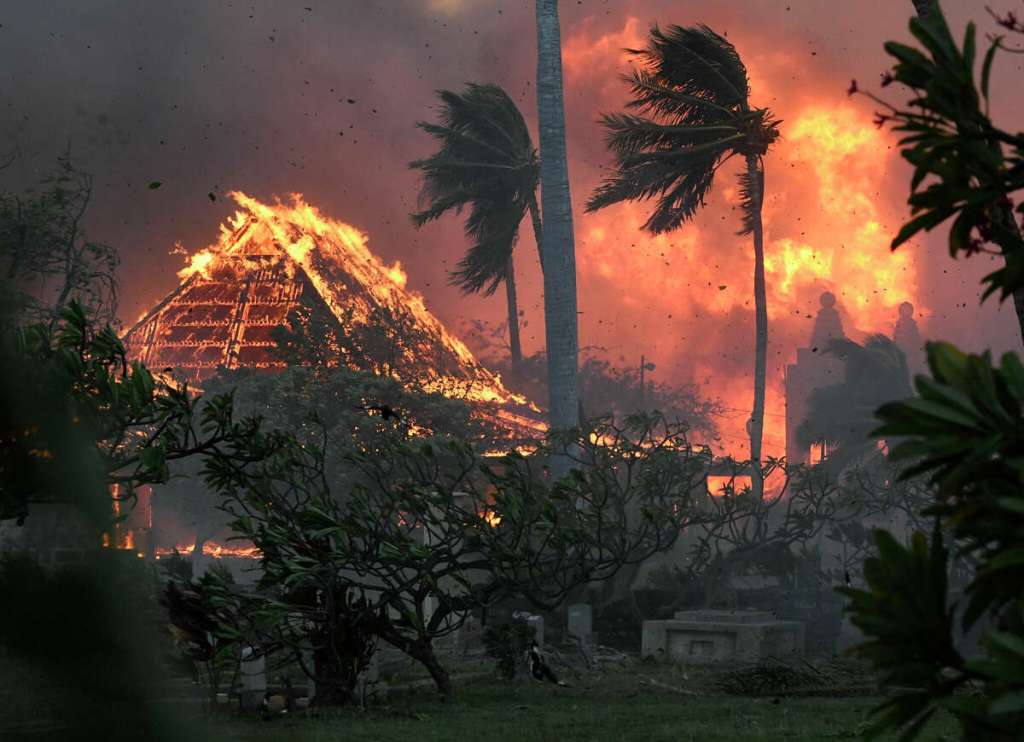
Nevertheless, it’s hard to look at recent footage of the devastation in Maui and then hear President Biden tell Congress that he needs another $24 billion for Ukraine. How can this Administration continue to justify tens of billions of dollars for this losing war that is not in our interest while the rest of the United States disintegrates?
Biden’s new $24 billion request comes on top of well over $120 billion already spent to fight the US proxy war on Russia in Ukraine. Heritage Foundation budget expert Richard Stern has done the math and determined that Biden’s spending on the Ukraine war thus far will cost each and every American household $900. How many Americans would rather have those $900 dollars back in their pocket rather than in the pockets of Lockheed-Martin, Raytheon, and Ukraine’s oligarchs?
Recent surveys have shown that a majority of Americans could not afford to cover a sudden $1,000 emergency. Will Americans connect the dots and realize that the reason they can’t find that $1,000 for an emergency is because the neocons have already sent it to Ukraine?
Ukraine has long been known as among the most corrupt countries on earth and not long ago investigative journalist Seymore Hersh wrote that Ukrainian president Vladimir Zelensky has embezzled at least $400 million in aid from the American people. Corruption scandals continue to break in Ukraine. Just last week Zelensky fired the heads of all local draft boards for corruption. Some press reports suggest that sales of luxury cars in Ukraine have broken all previous records. I wonder why.
No wonder the tide of US public opinion is turning against further involvement in the war. Recently CNN found that among all Americans, more than 55 percent are opposed to continued aid to Ukraine. Among Republicans the number opposing more aid to Ukraine rises to three-out-of-four. That is why we are finally starting to see more Republican Members raising concerns. I’d like to think they have seen the light that an aggressive and interventionist foreign policy is not in America’s interest, but most likely they are worried about losing elections. Whatever their motivation, this turning tide should be welcomed.
Yet the Biden Administration persists in backing Ukraine even as the US mainstream media is increasingly pointing out the obvious: Ukraine is not winning and cannot win, and continuing to pour money into a losing cause will just result in bankruptcy at home and more dead Ukrainians overseas.
Last week Newsweek published an article asking, “Does Ukraine Have Kompromat on Joe Biden?” In the article, Northeastern University Professor Max Abrahms wonders out loud whether Biden’s continued support for Ukraine might be related to compromising information held in Kiev about the many Biden family shady business ventures in Ukraine and the region. It is certainly worth considering.
Meanwhile, the residents of Maui that survived the recent horrific fire will take little comfort knowing that the Biden Administration is more interested in sending their money to Ukraine than in helping them recover.
INDIAN COUNTRY NEWS
"It is the duty of every man, as far as his ability extends, to detect and expose delusion and error"..Thomas Paine
Human in Algorithms
From the Roof Top
I See This
blog of the post capitalist transition.. Read or download the novel here + latest relevant posts
अध्ययन-अनुसन्धानको सार
 After the Crash