Even when a high-ranking White Helmet admits that some of the ‘rescuers’ came from the ranks of Syrian militants, all he gets from Canada’s national broadcaster is unquestioning praise and concern about “Russian disinformation.”
On March 30, Carol Off, the host of As it Happens on Canada’s government-funded CBC, interviewed Montreal-based Farouq Habib, deputy general manager of the White Helmets, about the organization’s operatives and their family members evacuated to Jordan (via Israel, with Canada’s help) nearly three years ago.
At the time, Canada pledged to take in 50 White Helmets and 200 family members. Off’s focus was on 43 evacuees who still haven’t arrived in Canada.
So she asked Habib: “There are some suggestions that the Canadian security believes that these remaining White Helmet people have a connection to the insurgency, that they were militants in some way. Is there evidence of that?”
Habib replied to the positive, “Regarding this particular issue, we don’t deny it at all. It’s declared and we are proud that many of the former fighters who were involved in the beginning in the war…They lay down their arms and they joined the rescue teams to rescue others...”
Militant-linked propaganda operation
The Western-funded White Helmets describe themselves as volunteer rescuers, and claim to have “saved more than 100,000 lives.” To prove – or rather, propagandize – their heroism, the group uses professionally-produced videos and social media content about their operations.
Western corporate media has been unblinkingly regurgitating their claims and content, while at the same time smearing journalists who actually went to Syria and interviewed civilians on the White Helmets. From far outside of Syria, it has instead been whitewashing the controversial, militant-linked group.
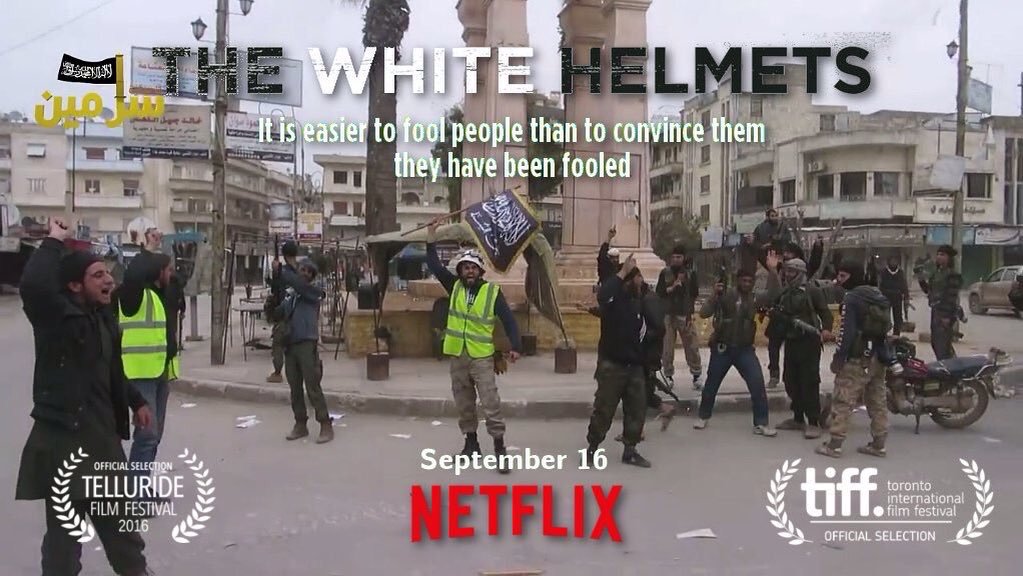
The White Helmets are not just propaganda, though. I wrote previously about their ties to terrorist and extremist groups. They have been filmed holding weapons alongside terrorists. They were seen at scenes of executions, standing over dead Syrian soldiers, and reportedly cleaning up after an execution in Daraa Governorate.
Journalists have taken testimonies of civilians who had lived under the rule of terrorists, who spoke of how the White Helmets worked alongside terrorists, numbered among them, and denied medical treatment to the people they were supposedly saving.
The White Helmets purport neutrality, but evidence – summarily dismissed by mainstream media as Russian and Syrian “disinformation” – shows they are in fact very partial – partial to militant factions.
Canada backs the White Helmets, giving at least $7.5 million and unquestioning media support.
Hence, CBC has a vested interest in reading the “hero” script on the White Helmets, instead of actually doing journalism.
No questions asked
With the above in mind, it shouldn’t surprise anyone that Carol Off never veered from her script to at least doubt Habib’s claims that all of the militant-linked White Helmets have really “laid down” their weapons. Not to mention the numerous other questions a responsible journalist could have asked, like:
-How many White Helmets members formerly (cough) fought in armed groups?
-Which factions were they members of?
-Do any have blood on their hands?
-Do any currently carry weapons?
-How can you ensure that they have dropped their extremist ways and now are truly impartial and dedicated to helping all Syrian civilians?
Off could have asked any of these questions, or all of them. Instead, she went on:
“Let’s remind people, the White Helmets are believed to have saved tens of thousands of lives. They were nominated for a Nobel Peace Prize. But at the same time, we know that Russian and and Syrian agents have conducted a disinformation smear campaign against the White Helmets. There’s been a lot of propaganda suggesting that they’re not real saviours, that they’re militants. Do you think that the Canadian officials might have been exposed to that propaganda?”
…as if she never heard the part where, just a moment earlier, Habib explicitly bragged that there are “former” militants among the White Helmets – a fact that, at the very least, should arouse suspicion with those responsible for letting them cross Canada’s border.
And just like that, no hard questions asked, the interviewer went on to trumpeting the White Helmets using their own propaganda about the “Russian/Syrian disinformation campaign.”
‘A few’ bad apples?
As for Off’s guest, just how neutral is Farouq al-Habib?
He was a leader of the Homs uprising against the Syrian government and a founder member of the ‘Homs Revolutionary Council.’ When jihadist commander and footballer Abdul Baset al-Sarout died in June 2019, Habib mourned his passing, lamenting his “heroism” and “honour.” Sarout not only held extremist and sectarian views, but was in a terrorist faction and pledged allegiance to ISIS.
It’s not surprising that Off chose not to probe into Habib’s history, just as she chose to ignore his admission of White Helmets’ supposedly-former militant affiliations.
As my own and other journalists’ research on the ground in Syria indicates, many White Helmets members are partial to militant or terrorist factions. They even cheered alongside and for al-Qaeda in Syria. In the rare cases of acknowledging that, media have played it down as just “a few bad apples.”
That’s not the case. Most of the apples are fully rotten. And so is the mainstream reporting.
Inequality is America’s Monster Id, and we’re continuing to fuel its future rampage daily.
What’s changed and what hasn’t in the past year? What hasn’t changed is easy:
1. Wealth / income inequality is still increasing. (see chart #1 below)
2. Wages / labor’s share of the economy is still plummeting as financial speculation’s share has soared. (see chart #2 below)
What’s changed is also obvious:
1. Money velocity has cratered. (see chart #3 below)
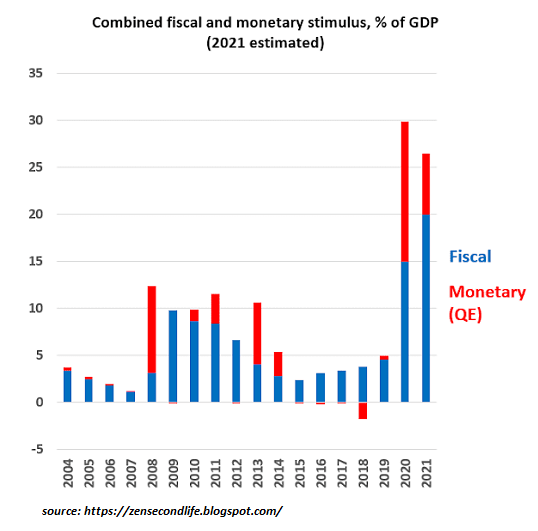
2. Federal borrowing / spending has skyrocketed, pushing federal debt to unprecedented levels. (see chart #4 below)
3. Speculation has reached the society-wide mania level. This is evidenced by record margin debt levels, record levels of financial assets compared to GDP and many other indicators. (see chart #5 below)
Interestingly, every one of historian Peter Turchin’s 3-point Political Stress Index is now checked. Recall that these are core drivers of consequential social disorder, the kind that leads to empires collapsing, the overthrow of ruling elites, social revolutions, etc.
1. Stagnating real wages (i.e. adjusted for real-world inflation): check
2. Overproduction of parasitic elites: double-triple check
3. Deterioration of central state finances: check
But what about social changes? This is an interesting topic because social changes are less easily tracked (few even ask relevant questions and compile the data). Social trends are often more difficult to discern, as surveys may not track actual changes in behavior: people may give answers they reckon are expected or acceptable.
Here are four long-term trends that may have been accelerated by the pandemic:
1. The residents of overcrowded tourist destinations are sick of tourists and are demanding limits that protect increasingly fragile environments and resident quality of life.
Here’s a typical observation of a resident in Hawaii now that tourists are coming back:
Sunday I saw a group of 30 spring break tourists littering the beach with red cups and bottles of alcohol and trash. They had a table full of booze on the beach and were happily leaving their trash everywhere. No masks and no cares for Hawaii. When they left, instead of using the beach access they all climbed over the fence into someone’s yard because it saved them a minute of walking.
No I don’t miss tourists.
This is a global phenomenon. The absence of tourists has awakened a powerful sense that the profits (which flow into elite hands, not local economies) have taken precedence over the protection of what makes the destination worth visiting.
2. Work from home is here to stay. The benefits are too personal and powerful. Corporations demanding a return to long commutes and central offices will find their most productive employees are giving them “take this job and shove it” notices as they find positions with companies that understand that you can’t turn back the clock or ignore the benefits of flexible schedules.
3. Consumer behaviors have changed and are continuing to change. This is not just an expansion of home delivery; it’s a re-appraisal of big-ticket spending on concerts, entertainment, sports events and many other sectors that depend solely on free-spending consumers who ignore the recent doubling or tripling of prices.
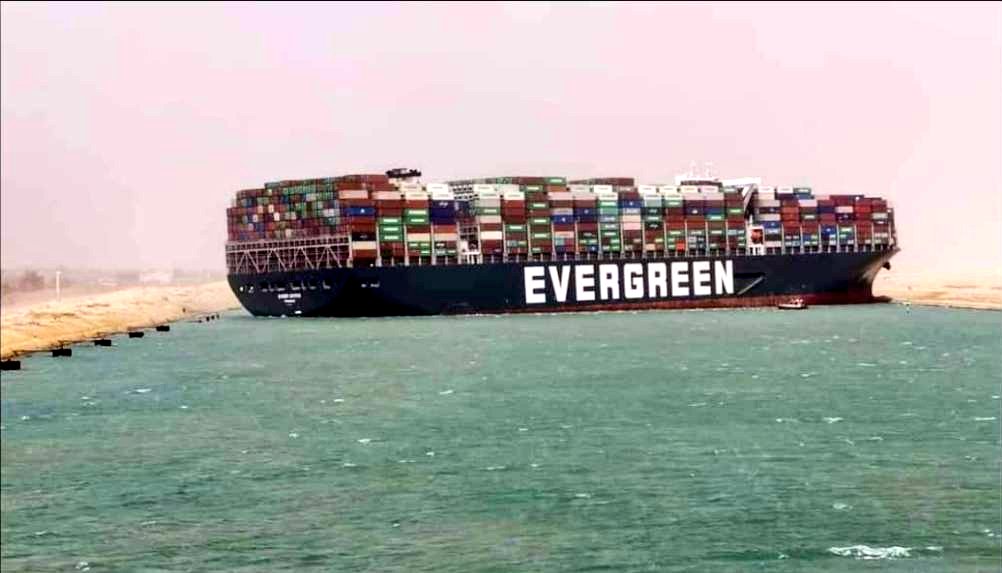
Did you hear? A supersized cargo ship got wedged in the Suez Canal on March 23rd? If you didn’t, you must do pretty well at avoiding the news, social media, and late night TV. But the short of it is: the Ever Given somehow lost control (sandstorm strength winds have been blamed, as have human errors) and crashed into the bank of the canal and lodged itself in.
So what? Is this really news? Or just a sensational story to distract us from the pandemic, which, one might argue, is itself a distraction from the rapid unraveling of Earth’s systems and thus human civilization? Perhaps. But then again perhaps not. Here’s why this incident is worth understanding.
But the main reason is because this is an excellent metaphor on how fragile our entire globalized system has become.
It makes you wonder where Dirk Gently is to help straighten all this out. If you haven’t heard of Gently, he is a holistic detective, who uses “the fundamental interconnectedness of all things” to find missing persons (and cats) and solve mysteries. In fact, the novel Dirk Gently’s Holistic Detective Agency includes him trying to figure out how a sofa got “irrevocably stuck” halfway up a staircase.
Similar story here: the Ever Given was jammed in tight—though fortunately with the help of the full moon and tides, unstuck without resorting to time travel (which was needed to free the errant sofa). And while the supernatural wasn’t at the root cause of this mishap as with the couch, instead of focusing just on the bad luck of a sandstorm (which are not uncommon in Egypt) combined with bad piloting, we should still investigate the root causes at play. So let’s peel back the layers one at a time.
Bigger is better!
At the surface, we might simply say the problem stems from the fact that we keep making bigger container ships. The Ever Given is a quarter mile long (one lap around a track or the height of the Empire State Building). And it weighs 220,000 tons and holds 20,000 containers (each 20-40 feet long). High oil prices (especially 2005-8), combined with cheap debt after the 2008 crash led shipping companies to invest in bigger and bigger ships. The Ever Given holds four times the cargo a ship carried in 2000. In fact, these containers were stacked so high that they acted like a giant sail and caught the intense winds that drove the Ever Given into the banks. So, yes, there’s more risk involved, but it’s cheaper to add more containers. To get as much on there as possible. Sometimes that means losing a load of containers to a storm or other incident (about 1600 containers are lost on average each year). Not to mention the fluke canal accident—not that this was a widely recognized risk. (However, this OECD report from 2015 did raise the challenges of burgeoning cargo ship sizes). But now this threat will need to be considered, including terrorists doing this intentionally to disrupt trade.
Now more concentrated!
But of course, looking holistically, let’s ask why do we even need these big ships? So, peeling another layer, we see that we have concentrated our manufacturing to a few major locations and promoted the consumer culture worldwide so we need to get goods of all types to rich Europeans, we need to get oil to run cars and planes in every country, we need to get livestock to the Middle East to feed this affluent desert population. Our globalized system depends on big old cargo ships. Even this incident is a reflection of our extreme globalization: the ship is owned by a Japanese company; run by a Taiwanese company (Evergreen); piloted by Indians; operating under a Panamanian flag; navigating through an Egyptian waterway, shipping brand name goods from all over the globe, and rescued by a Dutch salvage company. That’s kind of neat—a global Kumbaya moment—or a revelation of just how deeply aligned nations are in converting Earth’s forests, lands, water, and life into the latest in consumer products.
But wait, there’s more!
Peeling another layer, we find that the movement of all these consumer goods is driven by a culture fixated on growth, profit, and consumerism. We move factories to exploit cheaper labor, lax environmental rules; we spend $763 billion a year on advertising to convince people they need a new iPhone or a new car or a trip to wherever; we convert landscapes wholesale into resources; and we panic if our economies don’t grow. We’re trapped in a pursuit of material happiness, manipulated by the admen and politicians, driven now by our addictions to sweets, tobacco, alcohol, drugs, social media, and entertainment, to the point we’re “amusing ourselves to death.” But worse, we’re so amused we hardly even notice the death part any longer.
Free disconnect with every purchase!
And arriving at the inner layers of the onion, we find this: that our disconnection from the Earth is so deep, so profound, so complete, that we no longer even consider the planet in our decisions to manufacture items or ship them or buy them. We think instead about expanding our economies, upsizing our homes, upgrading our cars and phones, even stockpiling toilet paper (which again became a thing in the Suez Canal story as wood pulp supplies were potentially delayed). Even as scientists warn of ecological collapse, of cities lost to flooding seas, of regions abandoned due to perpetual drought, to the inevitable violence that all this will cause, to the countless species lost—many of whom we depend on directly for our survival—we focus on making memes, writing essays (guilty), and trying to live slightly-greener-around-the-edges-consumer-lifestyles.
Dealing with this metaphorical couch
Perhaps that’s why the struggling bulldozer became the source of so many memes. Except the most important one: The bulldozer as the environmental movement and the ship as Consumer Capitalism. Ultimately, trying to free the ship, or even convert it to run on green fuels or the latest in sail technology is treating the superficial layers. Instead, we need to dig deeper (yuk yuk). We need to re-regionalize production; reduce production; degrow our economies, find ways to disincentivize and discourage a consumer lifestyle; or better yet, make it clear that this whole culture of consumerism is suicidal and worse, anti-life, and must go in order to prevent future ship jams or far worse global disruptions. And even deeper, we need to reconnect people to the living Earth to make them understand that every sin against the planet, against other creatures, and against other humans who we exploit, we do to ourselves. That if we fail to change paths, we will run head first into the proverbial canal wall. And there will be no one to dig us out.
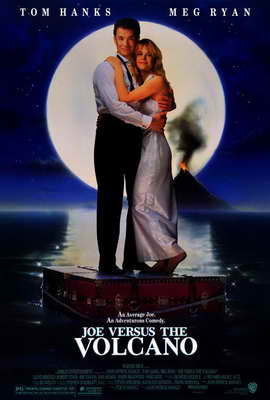
As my colleague Scott Tobias wrote in “Ten Notorious Flops Worth Seeing” John Patrick Shanley’s romantic fantasy Joe Versus The Volcano is about “nothing less than the joy of being alive.” It’s an incandescent trifle that nevertheless speaks to some of mankind’s most profound concerns. What does it mean to be alive? Is it a gift wasted on the living? Does impending death inherently give life more meaning?
That’s a lot for a first-time director to tackle, but Shanley was far from a neophyte. He’d established himself as a playwright, won an Academy Award for his very first screenplay (the swooningly romantic Moonstruck), and, for his directorial debut, roped in Steven Spielberg as Executive Producer and Tom Hanks, arguably our most beloved living movie star and the only apparent heir to James Stewart’s vacated title as America’s idealized everyman, as his star. Joe didn’t skimp on production values, either. It boasts the boundless invention and towering, gorgeous sets of a clever young prodigy who’d just been given the world’s largest toy box and was eager to make the most of it. It’s one of those rare movies where every element seems fussed over to perfection, where every molecule is perfectly in place. So if Joe Versus The Volcano was deemed a flop upon its initial release, that’s partially because expectations for it were so high.
Shanley immediately establishes a tricky fairy-tale tone with a scrawl that opens with “Once Upon a Time” before introducing us to our hapless hero, a miserable sad-sack (Hanks) who trudges drearily to work each day at a gothic factory straight out of Charles Addams or Edward Gorey’s morbid imagination. Hanks works for Dan Hedaya at a company that manufactures medical implements (“Home of the Rectal Probe!,” one woefully ineffective bit of bluster raves), but seems more intent on generating human misery for employees soul-sick from buzzing fluorescent lights and deadening routines.
At the office, Hanks lives a life that, to paraphrase Elvis Costello, is almost like suicide, so it’s pretty much a relief when he learns from doctor Robert Stack that he’s contracted a curious condition called a “Brain Cloud” and has less than a year to live. Hanks has been dying a long, slow, painful death since quitting the fire department years earlier and his impending exit from the land of the living liberates him from the grim concerns of day-to-day life, especially after manic pixie gazillionaire Lloyd Bridges offers to give Hanks a life of luxury on the condition that he eventually sail to a tropical island and jump into a volcano, thereby appeasing the native islanders so Bridges can score their precious, precious natural resources.
At each step in his journey, Hanks becomes involved with a different potential love interest played by Meg Ryan. Now normally the phrase “Meg Ryan in multiple roles” is enough to send shivers down the spine or suggest a fate worse than death. And while it pains me deeply to write this, Meg Ryan is adorable! In Joe Veruss The Volcano, at least. The film fully explores the actress’ remarkable range as she portrays everything from a mousy neurotic with a voice straight out of a ‘30s Warner Brothers melodrama to a flighty, neurotic, screwball L.A heiress to an unusually radiant variation on Ryan’s usual neurotic pixie persona.
Hanks encounters other memorable characters en route as well, especially Ossie Davis as a limo driver who views impeccable dressing as a matter of profound philosophical significance. Davis’ casually authoritative guide to the good life views luxury almost as a manner of life and death: this is poetically apt (Spoiler Alert!) in that when Hanks and Ryan are adrift in the ocean at the end of the film, it is literally Hanks’ choice to splurge on the decadently expensive luggage that saves their lives. Davis’ elegant mentor belongs to the strange cinema sub-strata of Magical Black Men, but the role is conceived and executed with such relaxed charm that he transcends stereotype.
As Hanks sheds his grim fatalism and embraces life, the film’s color palette morphs from cold grey drudgery to ripe, richly satiated jewel-box boldness. The East Coast sequences are a child’s giddy dream of New York while the island segments ooze infectious tropical sensuality. At the island, Hanks is met by Orange soda-loving Jewish Islanders led by the hilariously casual Abe Vigoda, who views Hanks less as a God-like hero than a mensch doing everyone a favor.
As Toys and Elizabethtown illustrate, whimsy is incredibly difficult to pull off. One man’s whimsical delight is another man’s cloying sugar headache. So when you’re trying to entice audiences to enter your magical little world of whimsy and delight, it helps immeasurably if your guide is Tom Hanks rather than, say, Robin Williams or Orlando Bloom.
Joe Versus The Volcano is an odd duck partially because it owes so much to Shanley’s theater background, from its extravagant, impressionist sets to its long takes to its stylized, beautifully wrought dialogue to its highly theatrical use of repetition, symbolism, and metaphor. Take Hedaya’s role for example. Hedaya essentially repeats endless minor variations on the same bit of dialogue for minutes on end. The effect is two-fold: the repetition develops a strangely hypnotic rhythm all its own and it indelibly conveys that Hedaya has probably been having this same maddeningly circular, essentially meaningless conversation for years, if not decades on end. He’s permanently locked in the poisonous, soul-crushing machine from which Hanks so joyfully extricates himself.
It didn’t make much of a splash at the time, but I can see the film’s storybook loveliness and bittersweet, child-like whimsy being a huge influence on Wes Anderson, especially The Life Aquatic, while the workplace absurdism and Bridges’ sprightly oddball turn anticipate Being John Malkovich and Orson Bean’s similarly twinkly performance as a genially warped old buzzard. But the loopy, child-like romanticism and winsome optimism at the heart of Joe belongs wholly and irrevocably to Shanley, who establishes himself as a true auteur here even as he draws extensively on the films of David Lynch, Tim Burton, and Spielberg. If nothing else, Joe Versus The Volcano should have announced the emergence of an audacious and a singular new directorial talent. Instead it was something of a cinematic dead end for a writer who went back to theater after gun-for hire work on We’re Back, Alive, and Congo, though he’s ostensibly directing a film adaptation of his Pulitzer Prize-winning play Doubt with Phillip Seymour Hoffman and Meryl Streep due out next year.
Most movies use the songs on their soundtrack like a bored teenager flipping through his iPod: a little hip-hop flava here, some punk rock aggression there, a little techno moodiness to top it off, and nothing meanders too long or makes much of an impression. But in Joe Versus The Volcano, the smartly selected songs play long enough to brood and sulk and develop a life of their own. Shanley lets Ray Charles’ transcendent take on “Ol’ Man River” linger long enough for its broken-down grace to shine through and implicate Hanks’ miserable existence in the process. Hanks’ evolution from suicidal despair to rapturous joy is reflected by a soundtrack that segues from the withering fatalism of “16 Tons” and “Ol Man River” to the infectious ebullience of “Good Loving.”
My father says Joe Versus The Volcano is held in high regard in the self-help community, which understandably embraces its narrative of a joyless sad-sack who discovers the tools to live out of his wildest fantasies. It’s a fizzy pop fable about the quirkiest possible route to self-actualization that’d probably have been better received by the public at large if it didn’t boast such a precious title or cutesy conceits like Orange-soda-loving, Volcano-fearing Jewish islanders. Which begs the question: Do movies like Ishtar, Gigli, Howard The Duck and Joe Versus The Volcano fail because they have terrible titles or are their titles only viewed as terrible because the films were such pronounced box-office failures? For this film, at least, I’d to think the second explanation holds true.
For such a strangely irresistible, life-affirming movie Joe proved awfully divisive. Shanley gave critics and haters plenty of ammunition (Meg Ryan in three mannered roles, all manner of twee cutesiness spilling around the edges), just as he gave the film’s growing cult plenty to fall in love with. Over and over again.
The average citizen of Earth is all tied up these days. Scarcely anyone has free time to take on one more task, to truly understand what goes on in the world, or glean any meaningful benefit from world affairs. Life goes on, albeit in a more chaotic sense, as it always has. The rich get richer, as they say, and the poor get poorer. There’s a simple reason to explain it all, but humanity is never allowed to come to terms with it. The solution to all our problems is patently simple. But the choice? Well, we’re conditioned to shun revolutions of thought and deed.
Now that I have opened a misty veil into the nebulous unknowing of world affairs, let me reveal once more, the dastardly cause of all our strife. The powers that be, whether, in the north, south, east, or west, want everything for themselves. You knew this since that first overheard conversation between old men, in Athens, Beirut, Charleston, or Dublin. And if you’ve dared to rear your head and lift your voice with the newfound freedom of digital means, beware, for they will soon smash you back down into the dark chamber of servitude, where you and I belong. Today’s case in point? The sister of billionaire Warren Buffett, Roberta Buffett Elliott, and an institution painted philanthropic, to cover a deceitful ghastliness. In this report, I have included Tweets from some of the panel that the Buffett Institute has assembled. The gist of these Tweets will further enlighten you.
In my email this morning there was a message from Annelise Riles, Executive Director of Northwestern University’s Roberta Buffett Institute for Global Affairs, a school I was not even familiar with before. The subject of the email was a Foreign Policy – Northwestern broadcast entitled “How to Stop Fake News” The tagline reads:
“Stopping fake news is the big problem we have to solve before we can more effectively address the global challenges facing humanity.”
The story of Roberta, Warren, and her fascinating husband David Elliott, is a subject worthy of a book, but for the sake of brevity, a $100 million dollar gift to create the Northwestern institute in 2015 was no charitable donation. The now-deceased husband David, was head of the largest Peace Corps operating in the world about the time J.F.K. was assassinated. Just to tweak the reader’s interest in how “agents” of liberal change are created.
Returning to the latest Buffett Institute initiative, it’s important to note that like every other supposed philanthropic gift by billionaires, there was a windfall beyond a tax writeoff. And now, with brother Warren and his elite colleagues pressing hard to dominate our world, the rebelliousness of independent thought must be squashed. The elite accomplishes our quietness via the same old methods. They not only own almost all the newspapers and TV stations, they also donate billions to cultivate journalists, scientists, politicians, bureaucrats, educators, and military leaders who will propagate their agendas.
Now, independent traditional and social media are a huge problem for those who want utter control. Now that the term “conspiracy theory” no longer has weight in light of exposed real conspiracies, the danger for the Warren Buffett or George Soros types of the world is acute. This “How to Stop Fake News” should be a wake-up call for every citizen of our world, a call to action to prevent the complete takeover of freedoms and elusive democracy. Make no mistake, the US President declaring war on Russia and Vladmir Putin in recent comments, the hardcore language aimed at Iran, China, and many other “perceived” threats to American hegemony, are the other warning signs.
This new initiative involves high-ranking members of the European Commission, Putin hater Olga Yurkova (Co-Founder, Stopfake.org), Marwan M. Kraidy (Dean and CEO, Northwestern University in Qatar), Justine Isola (Facebook), and others. One look into the backgrounds of these people will tell you the Roberta Buffett Institute is already presenting a narrative to students that is mightily skewed in favor of the liberal order. With Biden in charge now, and after Trump succeeding in destroying conservatism for good, Buffett and his fellows are ready for the push to subdue Russia or anything standing in the way. At least, this is my analysis.
Here in Greece, the Prime Minister just declared social media the “enemy of democracy” because the people are losing confidence in the government’s ability to immunize and protect citizens. This is not “fake news” Prime Minister Mitsotakis is on record saying this. For a few years now, institutions like Freedom House have been trumpeting the notion that social media is rotting democracy from within. The so-called “left’ has blamed this supposed decay on conservatives and the far-right. A Politico piece before the 2020 election suggested that Americans were becoming “superspreaders of misinformation.” At the other end of the spectrum, Annelise Riles, the lady in charge of the Buffett Institute, writes for Times Higher Education (THE); “Universities can help the US retake its seat at the global table.” Must I continue, or is the writing on the wall here? Riles was the recipient of a Marshall Scholarship herself, so what we are seeing is the most effects of replanting neo-colonialism, and the latest in the ongoing war for this world.
We must understand fully what former President Donald Trump’s role was in all this. Trump’s Tweets, the bombastic and often ridiculous content he spread, the sheer callousness and narcissism he foamed at us with, it set the stage for his colleagues to silence all moderators. Now, the liberal order Trump was supposed to expose, the Deep State and the Swamp he was sworn to unseat, has complete control (almost) of media, business, and even academia and medicine.
Currently, there is nothing whatsoever standing in the way of their turning us all into slaves. Putin and Russia represent a huge problem for them because the capitalistic systems they created will soon fail without new resources to leverage. Russia means growth for these people, and without the treasures of Russia, Iran, Venezuela, and other nations, the Warren Buffetts and Rothschilds of Earth cannot go forward. Their empires of Wall Street hot air will collapse within a decade. They must, you see, either command all the world’s mineral and human wealth or control us utterly and completely. The inevitable is unarguable. There is no bottomless vessel, from which to pour milk or honey endlessly. This liberal order that reshaped its power, will transform every freedom into a task that serves them. Much of our life is already dedicated to them, they take a piece of every move we make. It will only get worse. But humanity must be left standing. End of story.
By the way, this is not fake news, it is my real opinion based on decades of study, research, and inside information.
Phil Butler, is a policy investigator and analyst, a political scientist and expert on Eastern Europe, he’s an author of the recent bestseller “Putin’s Praetorians” and other books. He writes exclusively for the online magazine “New Eastern Outlook.”
A year of lockdowns, mask-wearing, isolation and depriving youngsters from seeing friends and grandparents has caused a surge in kids committing suicide, self-harming and suffering other mental health issues. It needs to end.
Scrolling through Twitter the other day, I came across a tweet about a worrying increase in the numbers of children and youths having suicidal thoughts.
It mentioned that Boston Children’s Hospital had reported a 47% increase “in kids needing to be hospitalized for suicidal ideation or attempts,” between July and October 2020 compared to the same period in 2019.
So I started to research, and in doing so tried to contact organizations concerned with the mental health of young people.
One UK suicide prevention organization that I emailed for information on the correlation between lockdown restrictions and the rise in child (and adult) suicides instead played down the effects of lockdowns and warned against writing about children being affected.
Its media spokesperson told me: “We’re really keen to avoid any media narratives that suggests that suicide is an inevitable consequence of the pandemic and its restrictions, as this can be harmful to vulnerable readers and induce a sense of hopelessness during these uncertain times.”
Although I am not saying suicide is an inevitable consequence of Covid-19 restrictions, clearly there are strong correlations between a year of lockdowns, isolation, depriving children from seeing friends, classmates and grandparents, making them wear masks and other measures, and a sharp rise in child suicides, self-harm and increased mental health issues in general.
The UK organization (whose name I will leave out because, while I am critical of their perspective on these issues, I don’t want to tarnish their reputation for the possibly life-saving work they otherwise do), deflected on the matter of the correlation, saying:
“Currently there is no evidence of a national rise in suicide rates, real-time data is not yet available to determine the true impact on particular population groups or geographic areas.”
But that simply is not true.
As was reported in January 2021, the UK Centre for Mental Health revealed, “500,000 children under 18 in England, with no previous problems, will need mental health care due to the devastating economic, health and family pressures caused by the ongoing coronavirus crisis. This has manifested itself in children as young as five reporting self-harm and suicidal thoughts to counsellors and a tripling in the number of eating disorders reported by adolescents.”
An article the following month, citing a UK doctor’s diary, revealed: “Children in mental health crisis used to be brought to A&E about twice a week. Since the summer it’s been more like once or twice a day. Some as young as 10 have cut themselves, taken overdoses, or tried to asphyxiate themselves.”
The rise in children committing suicide, having suicidal thoughts and self-harming is happening around the world. A December 2020 report by the American Academy of Pediatrics found, “a significantly higher rate of suicide ideation in March and July 2020 and higher rates of suicide attempts in February, March, April, and July 2020, as compared with the same months in 2019.”
A January 20, 2021 article cited the executive director of the Youth Services Bureau of Ottawa as saying, “We’re seeing about a 30-40 percent increase in those who are contacting mental health crisis services. We’re seeing a doubling of the calls that are young people calling or their family is calling because they’re worried about suicide.”
A UNICEF Canada March 2021 press release noted: “The COVID-19 pandemic and the lockdowns that have disrupted every aspect of a child and young person’s childhood is a grim reminder of the sacrifices made by young people over the last year. For children experiencing violence, neglect or abuse at home, lockdowns have left many stranded without the support of teachers, extended families and communities.”
A March 15 article on the McMaster Children’s Hospital in Hamilton, began, “Pandemic safety measures have had a negative impact on some aspects of children’s and teens’ health.”
It cited a threefold increase of youths admitted for medical support after a suicide attempt, with youngsters reporting a “lack of social interaction, increased conflict at home, and the inability to rely on friends as main contributors” as factors contributing to their plight.
The article also noted an increase in substance abuse admissions (“doubled compared to last year”) and “unprecedented” rates of eating disorders, with referrals up “90% in a four month period, compared to last year.”
In France, doctors have reported children as young as 8 years old, “deliberately running into traffic, overdosing on pills and otherwise self-harming.”
The same article said that a doctor working in a northern England infirmary “used to treat one or two children per week for mental health emergencies, including suicide attempts. The average now is closer to one or two per day, sometimes involving children as young as 8.”
The evidence is overwhelmingly clear: there is a serious rise in child suicide, suicide attempts and thoughts, self-harm and mental health issues that can be attributed directly to the result of Covid-19 measures enforced on children, including many with no previous history of mental health issues.
Lifting lockdown measures would help children heal
The lockdowns are based both on the premise that they are necessary in order to “flatten the curve,” as was said one year ago, and to protect people.
Now (goalposts moved), they are apparently needed until everyone is vaccinated (with rushed vaccines that have raised concerns they may cause blood clots or deaths).
The different stages of lockdowns are largely based on the incessant reports of rising “cases” of Covid-19.
Cases are determined by Covid-19 tests, which have proved to be unreliable and inaccurate, giving false positives and creating a false picture of reality. This faulty testing is exacerbating the media hype over “rising cases.”
Even Ontario’s associate chief medical officer of health in July 2020 admitted, “… if you’re testing in a population that doesn’t have very much Covid, you’ll get false positives almost half the time. That is, the person actually doesn’t have Covid, they have something else, they may have nothing.”
Or as noted in December 2020, even the World Health Organization, “released a guidance memo on December 14th, warning that high cycle thresholds on PCR tests will result in false positives.”
The 24/7, sensationalist media we have been subjected to for the past year is a major cause for anxiety, fear, depression and hopelessness.
Talking honestly about the negative impacts of lockdowns, isolation, masking and the resulting mental health issues is something we need to be doing.
A Canadian initiative, Save Our Youth, has produced a series of short videos of parents speaking about how lockdowns are affecting their children. The coalition encourages others to submit their own clips.
Journalist Robert Bridge recently wrote: “Children have been taught to look at each other warily, like walking chemical factories capable of infecting and even killing, as opposed to fellow human beings that can provide love, comfort and support.
“We did the most unconscionable thing imaginable, forcing young children – at the most momentous times of their lives – to adhere to social distancing rules while shutting down their schools and imprisoning them in their homes. That is simply cruel and unusual punishment. In a word, it is child abuse.”
The UK suicide prevention organization which deflected the correlation between lockdowns and rising child suicides and self-harm does children a disservice with its stance.
The lockdowns and related measures are, in my and many others’ opinions, the core reasons for childrens’ suffering. The sooner we return to normal and lift lockdowns and end the masking of children, the sooner our young will start to heal and live in ways beneficial to their physical and mental health.
I do, however, agree with the organization’s guidance to “remind people that suicide is preventable by encouraging help-seeking and including sources of help.” And for parents and loved ones to pay close attention to any changes in behaviour in children (or adults) who might be silently suffering.
Recently, the editor of the Toronto Sun said: “Keeping children under lockdown so much in quarantine, not letting them just interact with their natural environment as much as they would normally be doing is actually going to stand a risk of harming their immune system, develop allergies, asthma, and even autoimmune diseases later in life because they’re not having a natural exposure to to the microbial atmosphere out there.
“It’s unethical, it’s immoral, to ignore the harms that are being done to our children to the degree that we are ignoring them as a society.”
I wholeheartedly agree. We should be doing everything we can to protect children from lockdowns, potentially toxic masks, isolation and the spiralling mental health issues that result from them.
“The remedy is worse than the disease.”—Francis Bacon
One way or another, the majority of Americans will survive COVID-19.
It remains to be seen, however, whether our freedoms will survive the tyranny of the government’s heavy-handed response to the COVID-19 pandemic.
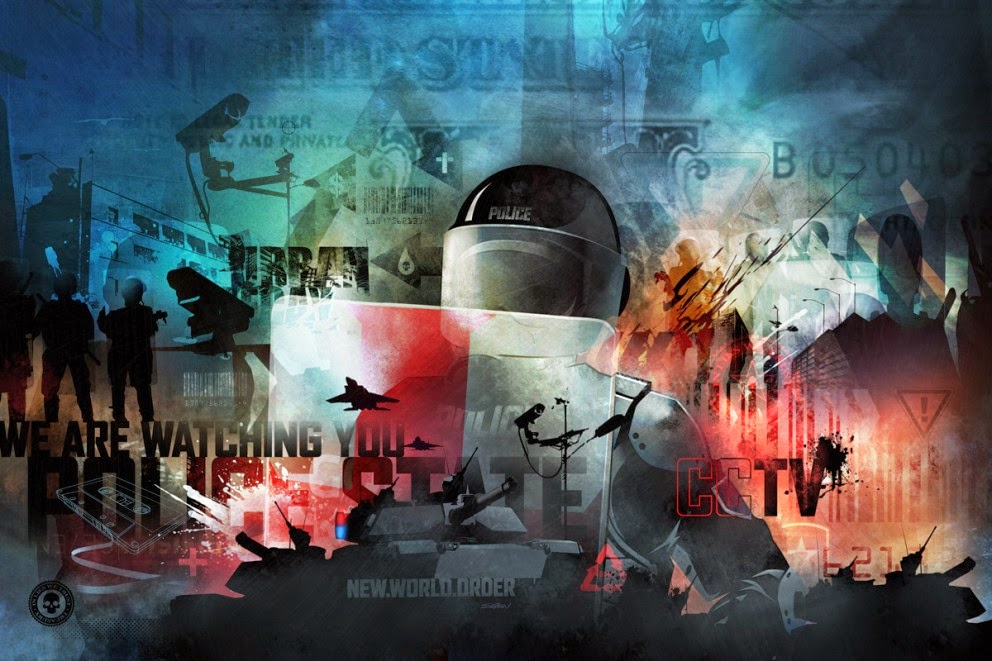
Indeed, now that the government has gotten a taste for flexing its police state powers by way of a bevy of lockdowns, mandates, restrictions, contact tracing programs, heightened surveillance, censorship, overcriminalization, etc., we may all be long-haulers, suffering under the weight of long-term COVID-19 afflictions.
Instead of dealing with the headaches, fatigue and neurological aftereffects of the virus, however, “we the people” may well find ourselves burdened with a Nanny State inclined to use its draconian pandemic powers to protect us from ourselves.
Therein lies the danger of the government’s growing addiction to power.
What started out a year ago as an apparent effort to prevent a novel coronavirus from sickening the nation (and the world) has become yet another means by which world governments (including our own) can expand their powers, abuse their authority, and further oppress their constituents.
Until recently, the police state had been more circumspect in its power grabs, but this latest state of emergency has brought the beast out of the shadows.
It’s a given that you can always count on the government to take advantage of a crisis, legitimate or manufactured. Emboldened by the citizenry’s inattention and willingness to tolerate its abuses, the government has weaponized one national crisis after another in order to expand its powers.
The war on terror, the war on drugs, the war on illegal immigration, asset forfeiture schemes, road safety schemes, school safety schemes, eminent domain: all of these programs started out as legitimate responses to pressing concerns and have since become weapons of compliance and control in the police state’s hands.
It doesn’t even matter what the nature of the crisis might be—civil unrest, the national emergencies, “unforeseen economic collapse, loss of functioning political and legal order, purposeful domestic resistance or insurgency, pervasive public health emergencies, and catastrophic natural and human disasters”—as long as it allows the government to justify all manner of government tyranny in the name of so-called national security.
This coronavirus pandemic has been no exception.
Not only have the federal and state governments unraveled the constitutional fabric of the nation with lockdown mandates that sent the economy into a tailspin and wrought havoc with our liberties, but they have almost persuaded the citizenry to depend on the government for financial handouts, medical intervention, protection and sustenance.
This past year under lockdown was a lesson in many things, but most of all, it was a lesson in how to indoctrinate a populace to love and obey Big Brother.
What started off as an experiment in social distancing in order to flatten the curve of this virus, and not overwhelm the nation’s hospitals or expose the most vulnerable to unavoidable loss of life scenarios quickly became strongly worded suggestions for citizens to voluntarily stay at home and strong-armed house arrest orders with penalties in place for non-compliance.
Every day brought a drastic new set of restrictions by government bodies (most have been delivered by way of executive orders) at the local, state and federal level that were eager to flex their muscles for the so-called “good” of the populace.
There was talk of mass testing for COVID-19 antibodies, screening checkpoints, mass surveillance in order to carry out contact tracing, immunity passports to allow those who have recovered from the virus to move around more freely, snitch tip lines for reporting “rule breakers” to the authorities, and heavy fines and jail time for those who dare to venture out without a mask, congregate in worship without the government’s blessing, or re-open their businesses without the government’s say-so.
To some, these may seem like small, necessary steps in the war against the COVID-19 virus, but they’re only necessary to the Deep State in its efforts to further undermine the Constitution, extend its control over the populace, and feed its insatiable appetite for ever-greater powers.
After all, whatever dangerous practices you allow the government to carry out now—whether it’s in the name of national security or protecting America’s borders or making America healthy again—rest assured, these same practices can and will be used against you when the government decides to set its sights on you.
The war on drugs turned out to be a war on the American people, waged with SWAT teams and militarized police. The war on terror turned out to be a war on the American people, waged with warrantless surveillance and indefinite detention. The war on immigration turned out to be a war on the American people, waged with roving government agents demanding “papers, please.”
This war on COVID-19 could usher in yet another war on the American people, waged with all of the surveillance weaponry at the government’s disposal: thermal imaging cameras, drones, contact tracing, biometric databases, etc.
Unless we find some way to rein in the government’s power grabs, the fall-out will be epic.
Everything I have warned about for years—government overreach, invasive surveillance, martial law, abuse of powers, militarized police, weaponized technology used to track and control the citizenry, and so on—has coalesced into this present moment.
The government’s shameless exploitation of past national emergencies for its own nefarious purposes pales in comparison to what is presently unfolding.
It’s downright Machiavellian.
Deploying the same strategy it used with 9/11 to acquire greater powers under the USA Patriot Act, the police state—a.k.a. the shadow government, a.k.a. the Deep State—has been anticipating this moment for years, quietly assembling a wish list of lockdown powers that could be trotted out and approved at a moment’s notice.
It should surprise no one, then, that the Trump Administration asked Congress to allow it to suspend parts of the Constitution whenever it deems it necessary during this coronavirus pandemic and “other” emergencies. It’s that “other” emergencies part that should particularly give you pause, if not spur you to immediate action (by action, I mean a loud and vocal, apolitical, nonpartisan outcry and sustained, apolitical, nonpartisan resistance).
In fact, the Department of Justice (DOJ) started to quietly trot out and test a long laundry list of terrifying powers that override the Constitution.
We’re talking about lockdown powers (at both the federal and state level): the ability to suspend the Constitution, indefinitely detain American citizens, bypass the courts, quarantine whole communities or segments of the population, override the First Amendment by outlawing religious gatherings and assemblies of more than a few people, shut down entire industries and manipulate the economy, muzzle dissidents, “stop and seize any plane, train or automobile to stymie the spread of contagious disease,” reshape financial markets, create a digital currency (and thus further restrict the use of cash), determine who should live or die.
These are powers the police state would desperately like to make permanent.
Don’t make the mistake of assuming that anything will change for the better under the Biden administration. That’s not how totalitarian regimes operate.
Bear in mind, however, that the powers the government officially asked Congress to recognize and authorize barely scratch the surface of the far-reaching powers the government has already unilaterally claimed for itself.
Unofficially, the police state has been riding roughshod over the rule of law for years now without any pretense of being reined in or restricted in its power grabs by Congress, the courts or the citizenry.
As David C. Unger, observes in The Emergency State: America’s Pursuit of Absolute Security at All Costs:
“For seven decades we have been yielding our most basic liberties to a secretive, unaccountable emergency state – a vast but increasingly misdirected complex of national security institutions, reflexes, and beliefs that so define our present world that we forget that there was ever a different America. … Life, liberty, and the pursuit of happiness have given way to permanent crisis management: to policing the planet and fighting preventative wars of ideological containment, usually on terrain chosen by, and favorable to, our enemies. Limited government and constitutional accountability have been shouldered aside by the kind of imperial presidency our constitutional system was explicitly designed to prevent.”
This rise of an “emergency state” that justifies all manner of government tyranny in the name of so-called national security is all happening according to schedule.
The civil unrest, the national emergencies, “unforeseen economic collapse, loss of functioning political and legal order, purposeful domestic resistance or insurgency, pervasive public health emergencies, and catastrophic natural and human disasters,” the government’s reliance on the armed forces to solve domestic political and social problems, the implicit declaration of martial law packaged as a well-meaning and overriding concern for the nation’s security: the powers-that-be have been planning and preparing for such a crisis for years now, not just with active shooter drills and lockdowns and checkpoints and heightened danger alerts, but with a sensory overload of militarized, battlefield images—in video games, in movies, on the news—that acclimate us to life in a totalitarian regime.
Whether or not this particular crisis is of the government’s own making is not the point: to those for whom power and profit are everything, the end always justifies the means.
The seeds of this present madness were sown several decades ago when George W. Bush stealthily issued two presidential directives that granted the president the power to unilaterally declare a national emergency, which is loosely defined as “any incident, regardless of location, that results in extraordinary levels of mass casualties, damage, or disruption severely affecting the U.S. population, infrastructure, environment, economy, or government functions.
Comprising the country’s Continuity of Government (COG) plan, these directives, which do not need congressional approval, provide a skeletal outline of the actions the president will take in the event of a “national emergency.”
Mind you, that national emergency can take any form, can be manipulated for any purpose, and can be used to justify any end goal—all on the say so of the president.
Just what sort of actions the president will take once he declares a national emergency can barely be discerned from the barebones directives. However, one thing is clear: in the event of a national emergency, the COG directives give unchecked executive, legislative and judicial power to the executive branch and its unelected minions.
The country would then be subjected to martial law by default, and the Constitution and the Bill of Rights would be suspended.
The emergency state is now out in the open for all to see.
Unfortunately, “we the people” refuse to see what’s before us.
This is how freedom dies.
We erect our own prison walls, and as our rights dwindle away, we forge our own chains of servitude to the police state.
Be warned, however: once you surrender your freedoms to the government—no matter how compelling the reason might be for doing so—you can never get them back.
No government willingly relinquishes power. If we continue down this road, there can be no surprise about what awaits us at the end.
That said, we still have rights. Technically, at least.
We should not voluntarily relinquish every shred of our humanity, our common sense, or our freedoms to a nanny state that thinks it can do a better job of keeping us safe.
The government may act as if its police state powers trump individual liberties during this COVID-19 pandemic, but for all intents and purposes, the Constitution—especially the battered, besieged Bill of Rights—still stands in theory, if not in practice.
The decisions we make right now—about freedom, commerce, free will, how we care for the least of these in our communities, what it means to provide individuals and businesses with a safety net, how far we allow the government to go in “protecting” us against this virus, etc.—will haunt us for a long time to come.
At times like these, when emotions are heightened, fear dominates, common sense is in short supply, liberty takes a backseat to public safety, and democratic societies approach the tipping point towards mob rule, there is a tendency to cast those who exercise their individual freedoms (to freely speak, associate, assemble, protest, pursue a living, engage in commerce, etc.) as foolishly reckless, criminally selfish, outright villains or so-called “extremists.”
Sometimes that is true, but not always.
There is always a balancing test between individual freedoms and the communal good.
What we must figure out is how to strike a balance that allows us to protect those who need protecting without leaving us chained and in bondage to the police state.
Blindly following the path of least resistance—acquiescing without question to whatever the government dictates—can only lead to more misery, suffering and the erection of a totalitarian regime in which there is no balance.
Whatever we give up willingly now—whether it’s basic human decency, the ability to manage our private affairs, the right to have a say in how the government navigates this crisis, or the few rights still left to us that haven’t been disemboweled in recent years by a power-hungry police state—we won’t get back so easily once this crisis is past.
A year ago, I warned that this was a test to see whether the Constitution—and our commitment to the principles enshrined in the Bill of Rights—can survive a national crisis and true state of emergency.
Nothing has changed on that front.
James Madison, the “father” of the U.S. Constitution and the Bill of Rights and the fourth president of the United States, once advised that we should “take alarm at the first experiment upon our liberties.”
These COVID-19 restrictions are far from the first experiment on our liberties. Yet if “we the people” continue to allow the government to trample our rights in the name of so-called national security, we can be assured that things will get worse, not better.