Maui is winning the war against Monsanto

hawaiians_against_gmo_720_375

By Michelle Kennedy Hogan

Source: Inhabitat

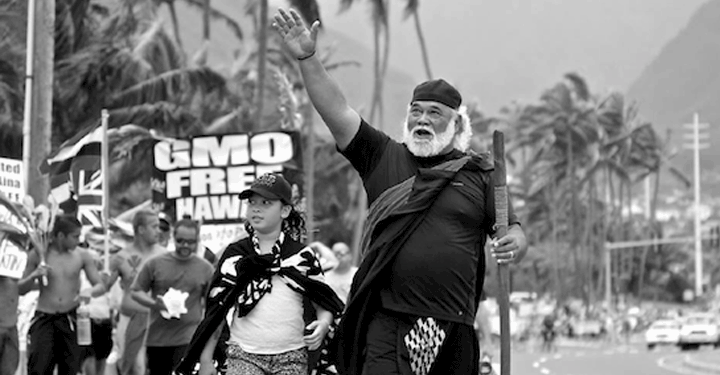
Maui is winning the war against Monsanto, according to an attorney for the Sustainable Hawaiian Agriculture for the Keiki and the Aina (SHAKA) Movement. On November 4, Maui voters approved a measure that would ban GMOs in Maui County. But earlier this year, Hawaii Judge Barry Kurren ruled that only states, not counties, can ban GMOs, saying that county laws are pre-empted by state law so they are “invalid.” Monsanto, Dow and others sued to stop the legislation, hoping that Kurren would rule the same after the Maui initiative passed, but Kurren decided to pass the case onto Chief Judge Susan Oki Mollway after public pressure mounted against him. Now the Maui ban on GMOs can move forward, marking a definitive win for the people of Maui.

According to the Natural Society, “until at least the fall of 2011, Judge Kurren’s wife, Faye, was a trustee of The Nature Conservancy (TNC), a 6-billion-dollar environmental group.” TNC specializes in working with mega-corporations, who donate major money, in return for receiving TNC’s “good housekeeping seal of approval” as friends of the environment. “In 2011, TNC leveraged a blockbuster deal with Dow Chemical. Dow pledged a $10 million donation. In exchange, Dow could forthwith use the TNC logo on its site and all its products. Among TNC’s council are businesspersons from Monsanto, Coca Cola, and of course, Dow. Among TNC’s corporate funders are again – Dow, Coke, DuPont, and Pepsi,” according to Natural Society.

In addition to striking down GMO bans, Kurren also recently struck down Ordinance 960 – a pesticide and GMO regulatory bill – in Kauai. Kurren was to be the presiding judge in the Maui County case, but knowing that Kurren has multiple ties to Big Agriculture, the people of Maui County pushed back. Many thought that the case could not be won, given Kurren’s past rulings and Big-Ag ties, and that Maui county would not be able to uphold the ban on GMOs on their island.

RELATED: How Monsanto is turning an island paradise into a GMO wasteland

Originally, the SHAKA Movement agreed to allow a magistrate judge to preside over the case – in this case, it was Kurren. Once the SHAKA Movement found out Kurren would be in charge of their case, they withdrew their approval. Kurren then relinquished the position to Chief Judge Susan Oki Mollway.

Having a different judge – a judge without known ties to the financial dealings of Monsanto and Dow Chemical – could have huge implications for the GMO ban and lead Maui to a win over Monsanto. The ruling further allows Maui County to file their own motions and respond to motions filed by the plaintiffs, according to SHAKA attorney Michael Carroll. If the law stands as voted, only the Maui County Council will be able to lift the ban on GMOs in their county.

The Boston Bombing Trial Starts, But Answers Aren’t on the Docket

Boston_Marathon-1024x576

By Russ Baker

Source: WhoWhatWhy

We do not know what will come out of the trial of Dzhokhar Tsarnaev, but one thing we are pretty sure of: we will not get the real, complete story of what actually happened.

Keep this in mind: the prosecution’s job is not principally to fully explain the background of a crime that was committed. It is to convince a jury to convict. Also, in cases such as this, where a lot of questions about security state operations have been raised, the prosecution, as an arm of the federal government, will be under strict orders to win its case without unduly exposing “sources and methods.” That’s a  polite way of saying, “let’s keep the skeletons in the family closet.”

Lead defense counsel Judy Clarke’s job, and her historic role in past cases, has been to do whatever is necessary to ensure her client avoids the death penalty. Meanwhile, the defendant’s job, right now, is to do what his lawyer tells him. It’s not his job to object or say, “Hey, there’s more to this story.”

Clarke’s interest in exposing the truth is strictly limited to: A) using the threat of embarrassing the government or B) casting doubt on its narrative solely as a bargaining chip to keep her client off death row. She has no particular mandate to find out what really happened. Even by her own pronouncements, Clarke either believes her client is guilty or, perceives that the only practical way forward is to accept that her client will be found guilty.

So don’t hold your breath for explanations to some of the questions we’ve raised. They include:

-What actual evidence exists that these brothers made such a sophisticated bomb—which some experts say they could not have? If not, then they had help and did not act alone, as the government insists. Aren’t the identities and roles of other possible players germane?

-What actual evidence exists that these brothers had bombs with them—and detonated them? Pictures of the backpacks that exploded to some people don’t look like the ones the brothers were wearing.

-What actual evidence exists that these brothers shot and killed an MIT police officer? We’re told that video cameras captured the act, but we’re also told that the video doesn’t make a positive ID.

-Did they actually carjack a man, and if so, for how long and under what circumstances? As we have reported, the purported victim, whose identity has not yet been disclosed, substantially changed his story of what happened.

-Why did the brothers’ uncle, who was the son-in-law of an important CIA official, quickly announce (within hours of their death/apprehension) his suspicion that his nephews were indeed the Boston bombers, despite the fact they had never done anything like that nor indicated that they may do such a thing?

-And what about the other CIA associate, a college professor and former case officer who corresponded with Dzhokhar Tsarnaev about Chechnya? Soon after the bombing, the professor, Brian Glyn Williams, was quoted as saying “I hope I didn’t contribute,” an apparent reference to Dzhokhar’s alleged radicalization.

-Why did the FBI seemingly ignore warnings from the Russians that the elder brother was involved in radical activity?

-Why did the FBI harass rather than seek to obtain information from crucial witnesses?

-After being warned by the Russians, why did the FBI fail to monitor Tamerlan when he left the country to travel to restive regions of Russia where Islamists were active? And then how was it that an alert for him was lowered just before he re-entered the U.S.?

-Why has no one been allowed to talk to Dzhokhar to find out his version of events?

-Will the authorities ever explain why so many things that were leaked by the government to prejudice the public (and the jury pool) turned out to be untrue? The claim that Tamerlan Tsarnaev was guilty in a triple homicide in Waltham, Mass., is just one example. The police never questioned Tamerlan about the slayings, even though they knew he was close friends with one of the victims.

-Will the conflicting and dubious explanations about the FBI’s shooting of an unarmed Ibragim Todashev, friend of Tamerlan, in his Florida apartment while being interrogated, be resolved?

-What about claims that there were drills going on during or around the time of the Marathon—and why were there bomb-sniffing dogs at the finish line? Even the cautious Boston Globe noted that officials had planned a training drill eerily similar to what actually happened.

These are some of the things any fair-minded, thoughtful person would like to know.

But the whole thing appears to be sealed, a done deal. We’re hoping for revelations at the trial. But we aren’t expecting too many. The authorities don’t think we need to know much about our country and its doings in that shadowy arena called “national security.” So the chances of them wanting to enlighten us are depressingly slim.

Image Credit:
Boston Bombing. Photo collage by DonkeyHotey for WhoWhatWhy adapted from photos in the public domain or Creative Commons: 
Street Scene – WikimediaDzhokhar Tsarnaev – WikimediaWhite House meeting – WikimediaPolice – Flickr/A Name Like Shields…Vigil – Flickr/Mark Zastrow and Tamerlan Tsarnaev & Ibragim Todashev – DonkeyHotey paintings.

E-Cig Users and Vapers Need to Join Anti-Drug War Movement

IMG_5220-e1408753980206

By Tony Newman

Source: Drug Policy Alliance

New Year’s Eve is around the corner and no doubt millions of smokers will make resolutions to quit.

Many smokers would love to give up the habit. But smoking is an incredibly hard addiction to quit. Many heroin users say it is harder to quit smoking than quitting heroin.

Thankfully, there is an exciting new tool that is helping millions give up on smoking: e-cigs and vaping. Stand on the streets of most major U.S. cities for five minutes and you will see people walking by with an e-cig instead of a cigarette hanging from their mouth.

It is encouraging how fast e-cigs and vaping have taken off. Smokers aren’t stupid. When offered a safer alternative, millions have chosen it. The fact that e-cigs can be purchased at most delis and stores makes it easy for those who want to reduce the harms associated with smoking.

Instead of praising the great news that millions have stopped smoking, too many in the health and anti-smoking fields beat the drums against e-cigs and vaping. Opportunistic politicians and anti-smoking lobbyists ignore emerging evidence that vaping is vastly safer than smoking, and instead are trying to equate the two activities.

City after city has passed anti-vaping laws akin to anti-smoking statues. Cities have prohibited where people can vape, and are currently trying to ban flavors that vapers say helps them quit. Legislation is also in the works to raise the age so people under 21 can’t use e-cigs.
E-cig users should be worried and they should be pissed.

They should be worried because people are going make it harder and harder to vape. And vapers should be pissed because these “health” advocates are trying to take away their tools that can literally help save their life.

It is time for smokers and vapers to join the growing anti-drug war movement. Smokers and vapers may not think about it, but they are also drug users and they are being demonized and threatened like other drug users. And vapers may not know it, but they are also harm-reductionists.

Harm reduction is a major philosophy of the drug reform movement. Thanks to harm-reduction activists we have clean syringe programs that have prevented hundreds of thousands of people from getting HIV.  We have passed laws that allow people to call 911 when witnessing an overdose without fear of being arrested.  And have expanded access to naloxone, that reverses overdose.

But there are too many backward-thinking politicians and uninformed folks who have tried to block such programs by using the same flawed logic that it sends the “wrong message.”

E-cigs and vaping is the most mainstream example of harm reduction in our society right now. It’s something that can save more lives than any other harm reduction practice in our society.

But there will be reactionary folks who will try to ban vaping and e-cigs like they tried to ban clean syringes.

Vapers need to fight for their rights and their lives. They need to join our movement and say we are not going to allow misinformed, judgmental folks to take away their e-cigs. There are millions of vapers who could be a powerful political voice.

Ethan Nadelmann, of the Drug Policy Alliance has a powerful message when he talks about the cost of a slow learning curve. It took the U.S. 20 years to get behind syringe exchange programs, even though much of the rest of the world had embraced it and the evidence was crystal clear that syringes reduced HIV while not increasing drug use. Because of this slow learning curve, 100’000’s of people needlessly got HIV and died.

This is our moment to organize and fight for e-cigs and vaping as a life-saving harm-reduction practice.

A slow learning curve is not something we can accept.

Tony Newman is the director of media relations for the Drug Policy Alliance.

Transcending The Soul Hackers

b35473427060a784b1d55d5d1d20e917

By Daniel Spaulding

Source: 21st Century Wire

With the closing of another year marked by media hysteria, the narrative that the crazed hermit North Korean regime orchestrated the hacking of the Japanese-owned Hollywood company Sony, thereby assaulting our precious freedom to crank out cultural subversion, has quickly begun to fall apart.

From the beginning the story never held neither consistency nor any forensic evidence. Yet the notion that ruthless Korean dictator Kim Jong Un wants to keep them from the movies, the modern substitute for the West’s emptying churches, has sent cable news consumers into a panic.

Elusive North Korean hackers have joined ISIS, Ebola, and a resurgent Russia on the ever- lengthening list of threats that government and media tell us we must fear. As it stands now, with the script quickly breaking down, the media and government (really two tentacles of the same power structure) are bound to quickly divert attention elsewhere; a new national security villain will be constructed and dangled in front of the attention-deficit public.

Meanwhile in France, several young radical Muslims have been attacking their host society, attempting to murder French police officers and Christmas shoppers. As has become standard fare in our era of political correctness, the French government quickly sought to dismiss the cosplay jihadists as having nothing to do with terrorism, casting them instead as a random assortment of mentally ill individuals senselessly lashing out. Similar ISIS-inspired escapades by marginal, ressentiment-driven characters have transpired in recent months, not only in France, but also in Canada, the United States, and Australia. Government authorities in these nations were equally quick to dismiss such attacks by self-styled holy warriors as aberrations that should not be seen as part of some wider pattern, lest the West’s entire secular multicultural project come under deeper scrutiny.

It is in this environment that the 20th century German philosopher Josef Pieper observed that while modern man is “looking out for the powers of corruption in a mistaken direction,” the lords of the technocracy “establish their rule before his eyes.” Modern man is diverted down a multitude of false paths toward dead ends, but he remains all too often oblivious to what is happening right under his very nose. His ignorance, often willful, lends strength to those who would seek even more power to control and manipulate him.

So while the public is held in a state of anxiety over North Korea and other manufactured phantoms, media reports have surfaced (and not for the first time) revealing that US police departments are utilizing their position in the new security architecture to scan and monitor social media and other online activities. In his endless benevolence, Big Brother is peering over your shoulder in order to develop a color-coded “threat rating.” Hence, as the 20th century science fiction writer Philip K. Dick foresaw, the age of “pre-crime” is upon us. As is normative in our times, the blatant power grabs of the surveillance state go mostly unnoticed and unprotested by the masses.

There is a serious disconnect between what the elite tell us we must fear and the “threats” they themselves utilize. While do-it-yourself jihadists (often themselves manipulated by domestic intelligence agencies) and other manifestations of underclass violence are brushed aside, those who dare openly express their dissatisfaction with the policies of our beloved rulers risk finding themselves listed as threats by the surveillance state. Leviathan grows ever larger and more pervasive in the name of security, only to use its power not against actual threats, but those it claims to protect. The Swiss philosopher Éric Werner provides some illumination here:

The current function of the police is not to fight insecurity. It is, which is quite different, to control and monitor people. Not just some people, as claimed by authorities (offenders, criminals, terrorists, etc.), but all of them. Even if the whole country turned into a no-go zone, the surveillance society would keep functioning… We do not develop the surveillance society in the fight against insecurity; rather, insecurity is used as an excuse to justify the surveillance society.

He further notes that the ruling politicians and bureaucrats’ real fear “is not insecurity, but rather potential retaliations against insecurity.”

We must ask what that oft-used buzzword “freedom” actually means in the modern West. For many, the ability to stream an inverted universe of pornography, or order off of Pizza Hut’s “subconscious menu” from their iPads – is enough assurance that they are still free, but the ever-expanding Leviathan state and the spread of vapid consumerism should give us all more than a moment’s pause. If freedom is reducible to a dazzling array of consumer options and self-gratification, why is that worth dying for? We must strive toward being higher than the perpetually consuming, soulless homo economicus.

In order to resist and confront the forces arrayed against him and to achieve a higher freedom, man must begin with repentance and spiritual reformation. His soul must be cleansed of sloth and apathy, as well as the other enslaving vices that leave him open to fear, manipulation, and despair; or as Ernst Jünger put it, one “must be free in order to become free.” The German adventurer further said that for the spiritually free man, “this world filled with oppression and oppressive agents,” will only “serve to make his freedom visible in all its splendor.”

The great Russian thinker Nicolas Berdyaev, who himself openly defied the murderous Bolsheviks who overran his homeland, taught that the “victory over slavery is a spiritual act,” and that “social and spiritual liberation ought to go hand in hand.” Repentance and spiritual resistance are the first, and most important, steps in confronting the powers of our age.

Author Daniel Spaulding earned a BA in English literature from Bridgewater State University. He currently works and lives in Seoul, South Korea. He enjoys reading philosophy, history, politics, and science fiction. 


Saturday Matinee: Putney Swope

Putney_Swope_poster

Putney Swope: Most under-rated cult film of the 1960s?

By Richard Metzger

Source: Dangerous Minds

Robert Downey Sr.‘s Putney Swope is an unusual film that splits audiences into two camps without breaking a sweat: those who absolutely love it and think it’s an unheralded masterpiece, and those who utterly loathe it (Check out Amazon reviews!) A third and far larger category would be comprised of everyone who’s never even heard of this odd little gem in the first place. Back in the early 80s, when super rare cheap to license cult films would often appear on some schlocky video label long before some mainstream films became available Putney Swope would often show up in the “Midnight Movies” or cult films section of video rental shops. After that it more or less disappeared until it came out on DVD. Every once in a while it’s on TV, too, but it’s still, sadly, Putney Swope is not a widely known film.

The Coen Brothers, Chris Rock, Dave Chapelle and Paul Thomas Anderson are all known to be big fans of the film. Jane Fonda declared it a masterpiece to Johnny Carson on The Tonight Show in 1969 and the Beastie Boys have sampled from it and rapped about it. Anderson even lifted a scene from it for Boogie Nights.

The first three times I saw Putney Swope I thought it was an incredible masterpiece. I was stunned by it. I laughed out loud. I sobbed. It was amazing. It was profound and symbolic of everything! Then again, the first three times I saw the film I was ridiculously high on LSD and I watched it over and over again, by myself, three times in the same night!

When the acid wore off I still thought it was a great and profound film, perhaps just not as great. That didn’t stop me from being an evangelist for this weird little movie, which satirized race, how race was portrayed in advertising, race in the workplace, black militants, white privilege and corporate corruption (there’s even a hint of Orwell’s Animal Farm in it), to all of my friends. Man did I force this film on a lot of (grateful!) people. I’ve easily seen it 30 times.

The plot goes something like this: Arnold Johnson (who later played “Hutch” on Sanford and Son) is Putney Swope, a middled-aged black man who works at a Madison Avenue advertising agency with a bunch of corrupt corporate buffoons. When the founder of the agency dies mid-speech, the board holds a vote to find his successor while his body goes cold on the table. Everyone writes down a name on a piece of paper. They are informed that they cannot vote for themselves and so each man tears up his ballot. They cut deals with each other and then all vote for the one guy who they think no one else will vote for either, Putney Swope, the only black guy.

So Swope becomes the new CEO with a landslide. His motto is “Rockin’ the boat’s a drag. You gotta sink the boat!”  He promptly fires all of the white executives (save for one), renames the agency “Truth & Soul” and hires a young, idealistic and politically militant black staff who want to tell the actual truth in advertising. “Truth & Soul” refuse to take accounts from cigarette manufacturers, liquor companies or the war machine. They become so successful that the government becomes alarmed. Eventually everyone becomes corrupted, even Putney himself, who takes to dressing like Fidel Castro.

That’s about it, plot-wise, but a lot of stuff happens in Putney Swope that would be difficult to try to describe here. The film is mainly in black and white, but the commercial parodies are in color. Antonio Fargas Jr. (“Huggy Bear” on Starsky & Hutch) has a memorable role as “The Arab,” Putney’s Muslim advisor and prankster Alan Abel is also seen in a cameo role. Putney Swope has great lines like “Anything that I have to say would just be redundant”; “A job? Who wants a JOB?”; and “Are you for surreal?!” that have been quoted over and over again (at least in my house). The US president and his wife are played by midgets who engage in a threesome with a photographer. There is a Mark David Chapman-type weirdo hovering around. It’s hard to describe, you really just have to see it. I think Putney Swope is one of the great, great, great American counterculture films of the 1960s. One day. I predict confidently, it will be seen as the equal to Easy Rider or Five Easy Pieces. I’m surprised that French cinemaphiles haven’t discovered it yet… but they will. They will.

This probably isn’t the best way to watch the film (grab the Putney Swope DVD on Amazon)  but DO watch the first scene up to the point where Putney takes over the advertising agency. If that doesn’t make you want to watch the rest, I can’t do much for you…

Internationally Banned Tear Gas: For Domestic Use Only

19-ferguson-gas.w529.h352.2x

By Abby Martin

Source: Media Roots

As unrest erupts from Oakland to Egypt, there’s one weapon of war that has come to define the militarized police state: tear gas.

And while a St. Louis judge ruled recently that limits must be placed on the use of tear gas in Ferguson, he didn’t rule that tear gas should only be implemented as a last resort.

Around the country, contingents of peaceful protesters are being confronted by assemblies of heavily militarized police officers that regularly use chemical agents to disperse crowds. But usually the act of getting doused with chemicals is so infuriating that it only incites chaos.

People have a good reason to be afraid of tear gas, considering it’s a banned agent of war under the 1993 Chemical Weapons Convention. Here’s the catch – there’s a clause in the treaty that includes an exception for domestic use. Yes, it’s illegal for the US military to use tear gas against ISIS, but cool to use against American citizens.

The US ensured the exception, claiming it was afraid the convention may prohibit lethal injection. Because of this caveat for riot control, countries around the world regularly and irresponsibly use chemical agents against their own populations. In American cities like Ferguson, police deploy tear gas at the drop of a hat, often at cameramen and journalists.

Despite all of the apocalyptic imagery associated with the weapon, government officials maintain tear gas is perfectly safe, including Ferguson police chief Tom Jackson, who said ”There are complaints about the response from some people… but to me, nobody got hurt seriously, and I’m happy about that.”

He forgot to say yet, considering how Ferguson police are using tear gas canisters from the Cold War era and are so old, there’s a severe risk of shrapnel flying into crowds. Make no mistake, this “less than lethal” weapon can actually be quite deadly. Look no further than Palestine, where a man was killed from a tear gas canister hitting him at close range in 2011. Or in Egypt, when a policeman shot tear gas into a caravan holding  37 protesters, choking and killing them all.

Horrifyingly, tear gas also causes amputations and miscarriages. In Bahrain, Physicians for Human Rights reported that many pregnant women had miscarriages after exposure with the chemical agent. Officials assure there are no long term health effects, but that hasn’t been proven given the lack of long term studies. Sven-Eric Jordt, a leading expert in tear gas, says

“I frankly think that we don’t know much about the long-term effects, especially in civilian exposure…There’s very few follow-up studies. These are very active chemicals that can cause quite significant injury. I’m very concerned that, as use has increased, tear gas has been normalized. The attitude now is like, this is safe and we can use it as much as we want.”

And boy, do we. As the world’s leading military and arms supplier, the US is also the biggest producer of less than lethal weaponry. During Egypt’s revolution, while police gunned down protesters and made mass arrests, they liberally used tear gas that read “Made in the USA” (at a little place called Combined Systems International of Jamestown, Pennsylvania). According to VisionGain, the non-lethal weapons market has exploded over the last decade, and is worth a whopping 1.6 billion dollars this year.

Somehow the government has convinced the American people that using tear gas is perfectly harmless, despite stark evidence to the contrary. So, next time it tries to sell us another war because *this leader gasses his own people*, remember that claim isn’t so far from home.

Genetically Modified Organisms (GMO): Profit, Power and Geopolitics

monsanto

By Colin Todhunter

Source: GlobalResearch.ca

Genetically modified organisms (GMOs) are not essential for feeding the world [1,2], but if they were to lead to increased productivity, did not harm the environment and did not negatively impact biodiversity and human health, would we be wise to embrace them anyhow?

The fact is that GMO technology would still be owned and controlled by certain very powerful interests. In their hands, this technology is first and foremost an instrument of corporate power, a tool to ensure profit. Beyond that, it is intended to serve US global geopolitical interests. Indeed, agriculture has for a long time been central to US foreign policy.

“American foreign policy has almost always been based on agricultural exports, not on industrial exports as people might think. It’s by agriculture and control of the food supply that American diplomacy has been able to control most of the Third World. The World Bank’s geopolitical lending strategy has been to turn countries into food deficit areas by convincing them to grow cash crops – plantation export crops – not to feed themselves with their own food crops.” Professor Michael Hudson [3].

The Project for a New American Century and the Wolfowitz Doctrine show that US foreign policy is about power, control and ensuring global supremacy at any cost [4,5]. Part of the plan for attaining world domination rests on the US controlling agriculture and hijacking food sovereignty and nations’ food security.

In his book ‘Seeds of Destruction’, William Engdahl traces how the oil-rich Rockefeller family translated its massive wealth into political clout and set out to capture agriculture in the US and then globally via the ‘green revolution’ [6]. Along with its big-dam, water-intensive infrastructure requirements, this form of agriculture made farmers dependent on corporate-controlled petroproducts and entrapped them and nations into dollar dependency and debt. GMOs represent more of the same due to the patenting and the increasing monopolization of seeds by a handful of mainly US companies, such as Monsanto, DuPont and Bayer.

In India, Monsanto has sucked millions from agriculture in recent years via royalties, and farmers have been compelled to spend beyond their means to purchase seeds and chemical inputs [7]. A combination of debt, economic liberalization and a shift to (GMO) cash crops (cotton) has caused hundreds of thousands of farmers to experience economic distress, while corporations have extracted huge profits [8]. Over 270,000 farmers in India have committed suicide since the mid to late nineties [9].

In South America, there are similar stories of farmers and indigenous peoples being forced from their lands and experiencing violent repression as GMOs and industrial-scale farming take hold [10]. It is similar in Africa, where Monsanto and The Gates Foundation are seeking to further transform small-scale farming into a corporate controlled model. They call it ‘investing’ in agriculture as if this were an act of benevolence.

Agriculture is the bedrock of many societies, yet it is being recast for the benefit of rich agritech, retail and food processing concerns. Small farms are under immense pressure and food security is being undermined, not least because the small farm produces most of the world’s food [11]. Whether through land grabs and takeovers, the production of (non-food) cash crops for export, greater chemical inputs or seed patenting and the eradication of seed sharing among farmers, profits are guaranteed for agritech corporations and institutional land investors.

The recasting of agriculture in the image of big agribusiness continues across the globe despite researchers saying that this chemical-intensive, high-energy consuming model means Britain only has 100 harvests left because of soil degradation [12]. In Punjab, the ‘green revolution’ model of industrial scale, corporate dominated agriculture has led to a crisis in terms of severe water shortages, increasing human cancers and falling productivity [13]. There is a global agrarian crisis. The increasingly dominant corporate-driven model is unsustainable.

More ecological forms of agriculture are being called for that, through intelligent crop management and decreased use of chemical inputs, would be able to not only feed the world but also work sustainably with the natural environment. Numerous official reports and scientific studies have suggested that such policies would be more appropriate, especially for poorer countries [14-16].

When on occasion the chemical-industrial model indicates that it does deliver better yields than more traditional methods (a generalization and often overstated [17]), even this is a misrepresentation. Better yields but only with massive chemical inputs from corporations and huge damage to health and the environment as well as ever more resource-driven conflicts to grab the oil that fuels this model. Like the erroneous belief that economic ‘growth’ (GDP) is stimulated just because there becomes greater levels of cash flows in an economy (and corporate profits are boosted), the notion of improved agricultural ‘productivity’ also stems from a set of narrowly defined criteria.

The dominant notions that underpin economic ‘growth’, modern agriculture and ‘development’ are based on a series of assumption that betray a mindset steeped in arrogance and contempt: the planet should be cast in an urban-centic, ethnocentric model whereby the rural is to be looked down on, nature must be dominated, farmers are a problem to be removed from the land and traditional ways are backward and in need of remedy.

“People are perceived as ‘poor’ if they eat food they have grown rather than commercially distributed junk foods sold by global agri-business. They are seen as poor if they live in self-built housing made from ecologically well-adapted materials like bamboo and mud rather than in cinder block or cement houses. They are seen as poor if they wear garments manufactured from handmade natural fibres rather than synthetics.” Vandana Shiva [18]

Western corporations are to implement the remedy by determining policies at the World Trade Organization, IMF and World Bank (with help from compliant politicians and officials) in order to  depopulate rural areas and drive folk to live in cities to then strive for a totally unsustainable, undeliverable, environment-destroying, conflict-driving, consumerist version of the American Dream [19,20].

It is interesting (and disturbing) to note that ‘developing’ nations account for more than 80% of world population, but consume only about a third of the world’s energy. US citizens constitute 5% of the world’s population, but consume 24% of the world’s energy. On average, one American consumes as much energy as two Japanese, six Mexicans, 13 Chinese, 31 Indians, 128 Bangladeshis, 307 Tanzanians and 370 Ethiopians [21].

Despite the environmental and social devastation caused, the outcome is regarded as successful just because business interests that benefit from this point to a growth in GDP. Chopping down an entire forest that people had made a living sustainably from for centuries and selling the timber, selling more poisons to spray on soil or selling pharmaceuticals to address the health impacts of the petrochemical food production model would indeed increase GDP, wouldn’t it? It’s all good for business. And what is good for business is good for everyone else, or so the lie goes.

“Corporations as the dominant institution shaped by capitalist patriarchy thrive on eco-apartheid. They thrive on the Cartesian legacy of dualism which puts nature against humans. It defines nature as female and passively subjugated. Corporatocentrism is thus also androcentric – a patriarchal construction. The false universalism of man as conqueror and owner of the Earth has led to the technological hubris of geo-engineering, genetic engineering, and nuclear energy. It has led to the ethical outrage of owning life forms through patents, water through privatization, the air through carbon trading. It is leading to appropriation of the biodiversity that serves the poor.” [22]

The ‘green revolution’ and now GMOs are ultimately not concerned with feeding the world, securing well-rounded nutritious diets or ensuring health and environmental safety. (In fact, India now imports foods that it used to grow but no longer does [23]; in Africa too, local diets are becoming less diverse and less healthy [24].) Such notions are based on propaganda or stem from well-meaning sentiments that have been pressed into the service of corporate interests.

Biotechnological innovations have always had a role to play in improving agriculture, but the post-1945 model of agriculture has been driven by powerful corporations like Monsanto, which are firmly linked to Pentagon and Wall Street interests [25]. Motivated by self-interest but wrapped up in trendy PR about ‘feeding the world’ or imposing austerity to ensure prosperity, the publicly stated intentions of the US state-corporate cabal should never be taken at face value [26,27].

In India, Monsanto and Walmart had a major role in drawing up the Knowledge Initiative on Agriculture [28]. Monsanto now funds research in public institutions and its presence and influence compromises what should in fact be independent decision and policy making bodies [29,30]. Monsanto is a driving force behind what could eventually lead to the  restructuring and subjugation of India by the US [31]. The IMF and Monsanto are also working to ensure Ukraine’s subservience to US geopolitical aims via the capture of land and agriculture [32]. The capture of agriculture (and societies) by rich interests is a global phenomenon.

Only the completely naive would believe that rich institutional investors in land and big agribusiness and its backers in the US State Department have humanity’s interests at heart. At the very least, their collective aim is profit. Beyond that and to facilitate it, the need to secure US global hegemony is paramount.

The science surrounding GMOs is becoming increasingly politicized and bogged down in detailed arguments about whose methodologies, results, conclusions and science show what and why. The bigger picture however is often in danger of being overlooked. GMO is not just about ‘science’. As an issue, GMO and the chemical-industrial model it is linked to is ultimately a geopolitical one driven by power and profit.

Notes

1] This report indicates the root causes for global food shortages:  http://www.cban.ca/Resources/Topics/Feeding-the-World/Will-GM-Crops-Feed-the-World

2] Citing official reports and data sources, references in this article indicate agricultural productivity in India was better in 1760 and 1890 and that India does not require chemical-industrial agriculture let alone GMOs: http://www.globalresearch.ca/india-genetically-modified-seeds-agricultural-productivity-and-political-fraud/5328227

3] http://michael-hudson.com/2014/10/think-tank-memories/

4] http://www.informationclearinghouse.info/article1665.htm

5] http://www.informationclearinghouse.info/article40093.htm

6] Arun Shrivastava reviews and summarizes Engdahl’s book here: http://www.globalresearch.ca/seeds-of-destruction-the-hidden-agenda-of-genetic-manipulation-2/9379

7] http://www.countercurrents.org/shiva180614.htm

8]  Based on the findings of a report by researchers at Cambridge University in the UK: http://www.cam.ac.uk/research/news/new-evidence-of-suicide-epidemic-among-indias-marginalised-farmers

9] Official figure quoted by the BBC as of 2013: http://www.bbc.co.uk/news/magazine-21077458

10]http://www.theecologist.org/News/news_analysis/2267255/gm_crops_are_driving_genocide_and_ecocide_keep_them_out_of_the_eu.html

11] Official report released by GRAIN: http://www.grain.org/article/entries/4929-hungry-for-land-small-farmers-feed-the-world-with-less-than-a-quarter-of-all-farmland

12] Farmers Weekly quotes a report by researchers at the University of Sheffield in the UK: http://www.fwi.co.uk/news/only-100-harvests-left-in-uk-farm-soils-scientists-warn.htm

13] Newspaper report quoting official statistics and research findings: http://www.deccanherald.com/content/337124/punjab-india039s-grain-bowl-now.html

14] Official UN report: http://unctad.org/en/PublicationsLibrary/tdr2013_en.pdf

15]http://www.srfood.org/en/official-reports# and http://www.plantpartners.org/agroecology-reports.html

16] http://www.tandfonline.com/doi/full/10.1080/14735903.2013.806408#tabModule

17] http://phys.org/news/2014-12-crops-industrial-agriculture.html

18] http://www.organicconsumers.org/btc/shiva112305.cfm

19] Food policy analyst Devinder Sharma outlines the motives of Western corporations in India: http://www.bhoomimagazine.org/article/cash-food-will-strike-very-foundation-economy

20] Arundhati Roy discusses the erroneous notion of ‘progress’ being applied in India and the conflict and violence that has followed: http://www.guernicamag.com/features/we-call-this-progress/

21] http://public.wsu.edu/~mreed/380American%20Consumption.htm

22] http://www.spaziofilosofico.it/numero-07/2959/economy-revisited-will-green-be-the-colour-of-money-or-life/

23] Vandana Shiva describes how the ‘green revolution’ and ‘free trade’ have turned India into a net importer of foods it used to be self sufficient in: http://www.aljazeera.com/indepth/opinion/2013/09/201398122228705617.html

24] Article describing the plight of agriculture in Africa: http://www.globalresearch.ca/behind-the-mask-of-altruism-imperialism-monsanto-and-the-gates-foundation-in-africa/5408242

25] http://www.globalresearch.ca/monsantos-gmo-food-and-its-dark-connections-to-the-military-industrial-complex/5389708

26] Article providing factual historical insight into Monsanto and its wrongdoings: http://www.globalresearch.ca/the-complete-history-of-monsanto-the-worlds-most-evil-corporation/5387964

27] Analysis of Wall Street’s fraudulent practices in recent times and the complicity of the entire political and economic system: http://www.wsws.org/en/articles/2012/03/pers-m15.html

28]http://www.democracynow.org/2006/12/13/vandana_shiva_on_farmer_suicides_the

29]  http://dissidentvoice.org/2009/07/monsanto-a-contemporary-east-india-company-and-corporate-knowledge-in-india/

30] http://www.thehindu.com/opinion/lead/nip-this-in-the-bud/article5012989.ece

31] http://www.countercurrents.org/todhunter031114.htm

32] http://www.oaklandinstitute.org/food-security-hostage-wall-street-and-us-global-hegemony