A Brief History of Nicaragua

IMG_4398

To have even a basic understanding of Nicaraguan culture it’s important to first know a little about the land’s history. In the Pre-Columbian era, the region now called Nicaragua was inhabited by several tribes culturally related to Aztec and Maya civilizations. Not long after Christopher Columbus first reached Nicaragua in 1502, an attempt was made to conquer the region by Gil González Dávila in the 1520s. On April 17, 1523, Dávila first met with Cacique Diriangen, leader of the Dirian peoples. Dávila gave the tribe a three day deadline to become Christians but rather than comply Diriangen led an attack, making him the first known resistance fighter of Nicaragua.
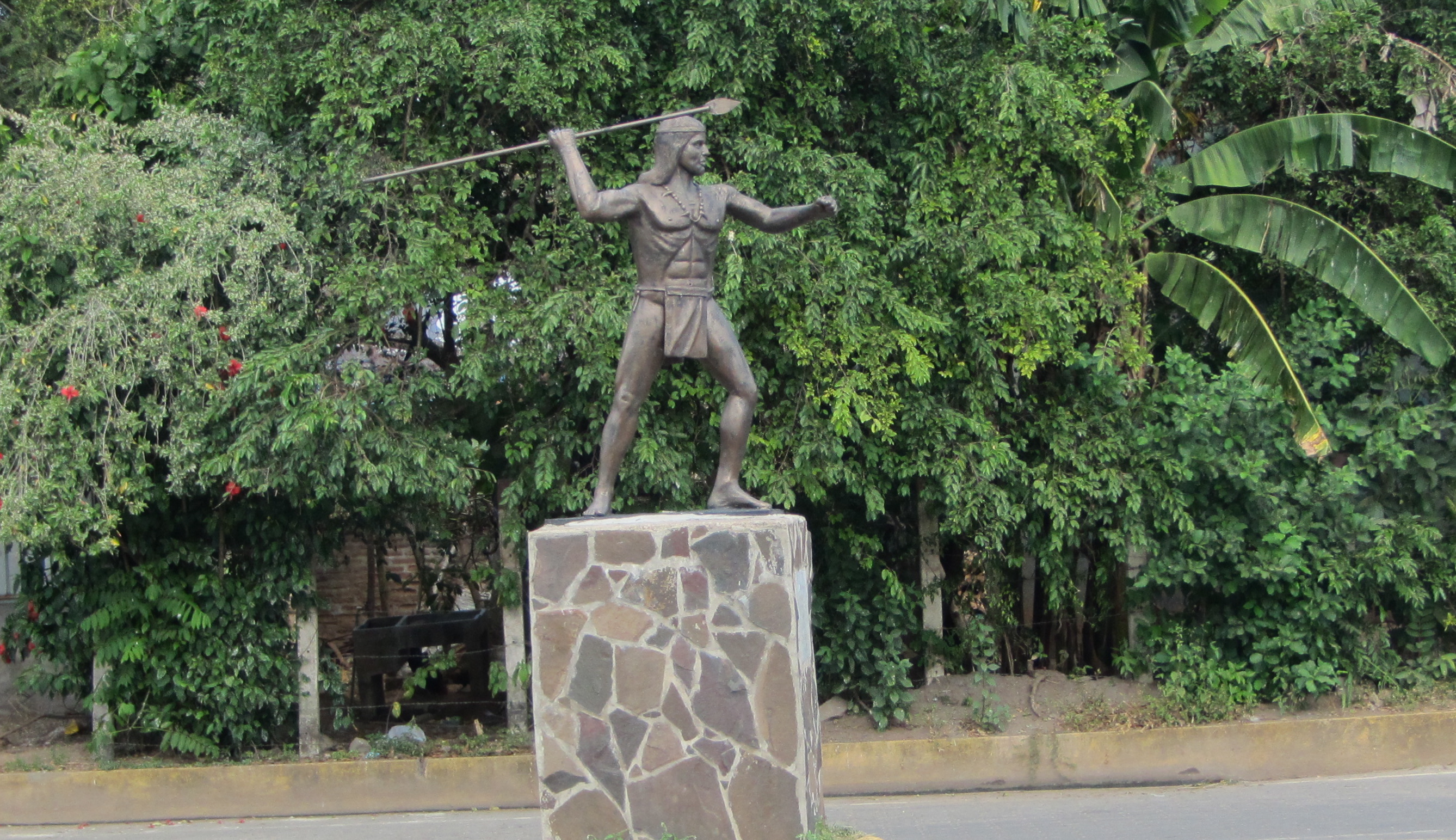
A statue of Diriangen at the entrance to the town of Diria.

A statue of Diriangen at the entrance to the town of Diria.

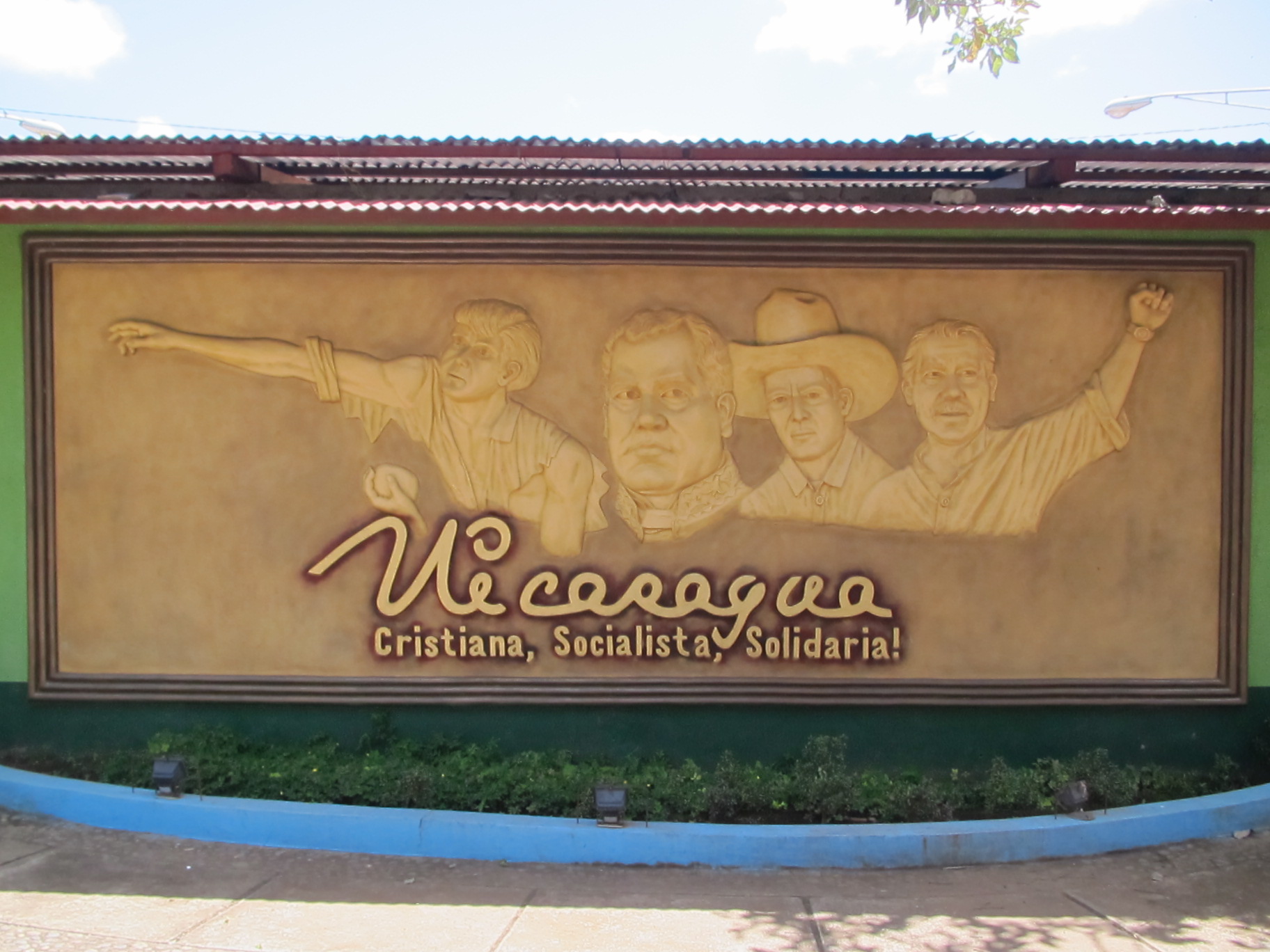
During over 300 years of colonization, countless indigenous people died of diseases, rival conquistadors waged war on each other, Caribbean pirates raided cities along Lake Nicaragua, British forces fought the Spanish in Nicaragua during a sub-conflict of the the Seven Years’ War, and in 1610 Momotombo volcano erupted, destroying the old capital city of León. In 1838, Nicaragua became an independent republic. Within a few decades, during a power struggle between León and Granada, filibusterer William Walker was hired by the government of León to fight on their side but he exploited the region’s instability and briefly established himself as President of Nicaragua before being forced out of the country a few years later. Three decades of conservative rule followed, during which the U.S. began formulating plans to build a canal across Nicaragua (which may soon become a reality with funding from Chinese corporations). However, when the U.S. shifted their plans to Panama, President Jose Santos Zelaya attempted to negotiate with European partners. Because of the potential threat Zelaya posed to U.S. hegemony and his ambitions to unite the Central American nations, the U.S. government compelled him to resign with the threat of military force and funding of conservative opposition groups, replacing him with a series of puppet regimes. Attempting to prevent insurrection, Nicaragua was occupied by U.S. Marines from 1912 to 1933. From 1927 (the start of Somoza’s rise to power though the National Guard), national hero Augusto César Sandino led a guerrilla war against the conservative government and the U.S. Marines. Shortly after a peace agreement was reached with a newly elected Sacasa administration, the Marines left Nicaragua and the head of the National Guard, Anastasio Somoza García ordered Sandino’s assassination. Sandino was killed by National Guard troops on February 21, 1934. His body was hidden and never found. In 1937 Somoza ousted the Sacasa government in a rigged election.
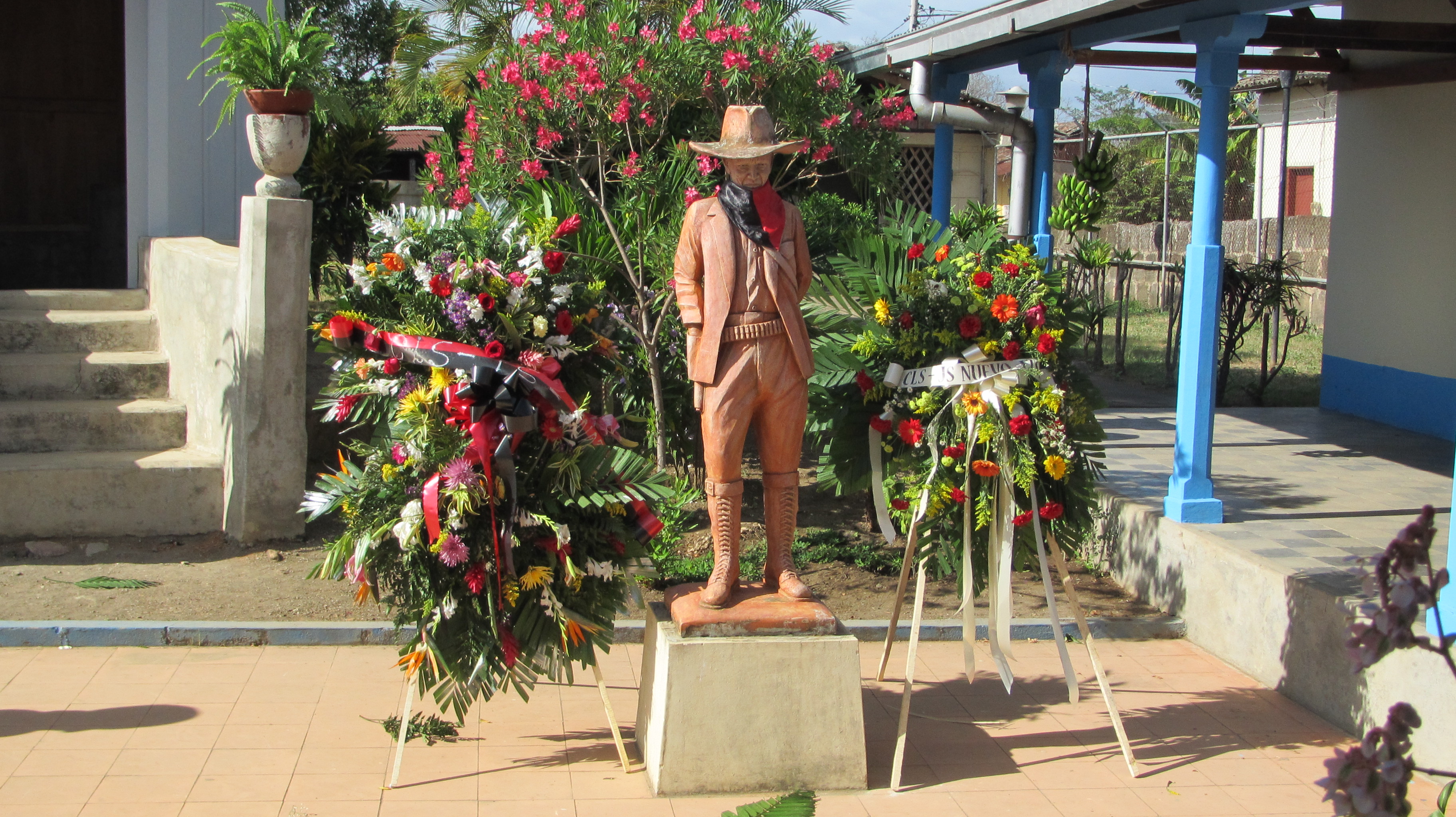
A statue of Sandino at the Augusto C. Sandino Library, a museum located in the house where he grew up in the town of Niquinohomo (Valley of the Warriors).

A statue of Sandino at the Augusto C. Sandino Library, a museum located in the house where he grew up in the town of Niquinohomo (Valley of the Warriors).

The Somoza regime was Nicaragua’s longest lasting hereditary military dictatorship, having ruled for 43 years. The father of the dynasty, Anastasio Somoza García, was famously called “our son of a bitch” by FDR and was assassinated by 27 year old poet Rigoberto López Pérez in León in 1956. In response to increasingly corrupt and reactionary policies of the Somoza government, Carlos Fonseca, Silvio Mayorga, and Tomás Borge led the formation of the Sandinista National Liberation Front (Frente Sandinista de Liberación Nacional or FSLN, named after and inspired by Augusto Sandino) in 1961. In 1972 a major earthquake hit Managua killing 6000 people, injuring tens of thousands and leaving hundreds of thousands homeless. President Anastasio Somoza Debayle mishandled the situation by failing to distribute essential aid and supplies. When it was later revealed that the government was siphoning relief money for personal gain, popularity and membership of the FSLN greatly increased. Hundreds of Chilean refugees also joined their ranks after a CIA-backed coup assassinated Chilean president Salvador Allende in 1973 and installed the dictator Augusto Pinochet the following year.
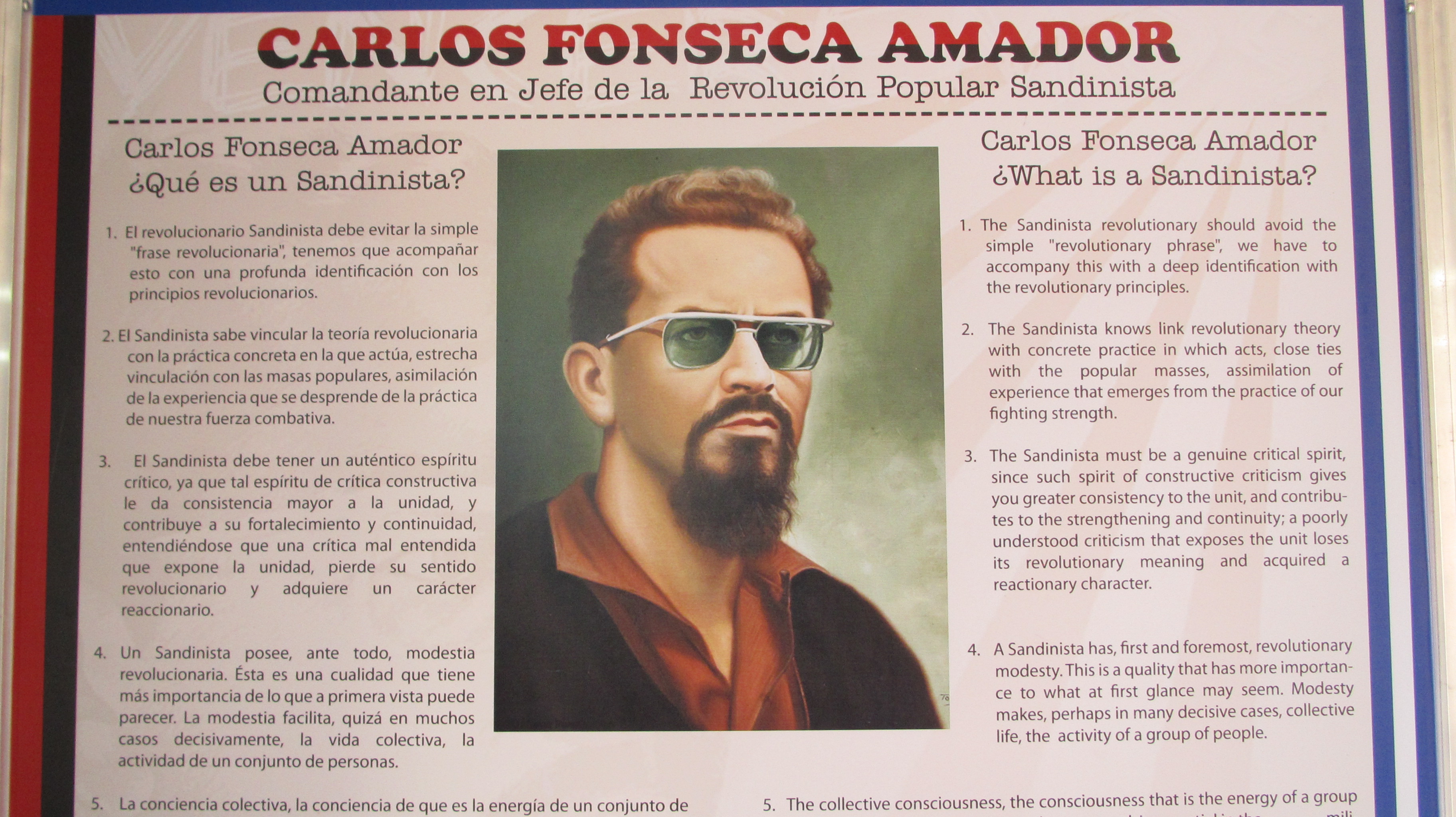
A display at the Carlos Fonseca Museum in Matagalpa.

A display at the Carlos Fonseca Museum in Matagalpa.

When Pedro Joaquin Chamorro, editor of the national newspaper and critic of Somoza, was assassinated by the government on January 10, 1978, a mass insurrection was triggered. By the end of Summer, armed youths took over Matagalpa while factions of the FSLN and civilian recruits had the National Guard under siege in Managua, Masaya, León, Chinandega and Estelí. On July 19, 1979, FSLN forces entered the capital and officially assumed power. Just two days before, Anastasio Somoza Debayle resigned and fled to Miami. He was killed a year later by a rocket attack from members of the Argentinian Revolutionary Workers Party while in exile in Paraguay.

Though the Sandinista government inherited a country in ruins and over a billion dollars in debt, they had an ambitious platform which included:

  • nationalization of property owned by the Somozas and their supporters
  • improved rural and urban working conditions
  • free unionization for all workers, both urban and rural
  • price fixing for commodities of basic necessity
  • improved public services, housing conditions, education
  • abolition of torture, political assassination and the death penalty
  • protection of democratic liberties
  • equality for women
  • non-aligned foreign policy

The Sandinistas had early successes with their education and literacy programs but were soon hindered by emerging conflicts with counter-revolutionary Contra forces heavily financed, armed and trained by the CIA. Investigations into the Iran-Contra scandal revealed some of the funding was acquired through arms sales to Iran and drug shipments to U.S. inner cities (read Gary Webb’s Dark Alliance for more about this). Despite strong support for the opposition by the U.S., the FSLN’s Daniel Ortega won the 1984 elections. Less than a year later the Reagan administration implemented a complete embargo on U.S. trade with Nicaragua that would last five years. By the late 80s, the continuing Contra campaign was notorious for human rights violations, corruption and terrorism. In August 1987, Costa Rican president Oscar Arias Sanchez created a peace accord which led to a ceasefire signed by Contra and Sandinista representatives a year later. Disillusioned by conflict and economic strife (made worse by Reagan’s embargo), Nicaraguan voters elected conservative administrations throughout the 1990s and early 2000s but seeing little improvement and much corruption, they reelected FSLN member Daniel Ortega in 2006 and 2011. So far, there has not yet been radical reforms that corporate investors feared and that more radical liberals hoped for, but Ortega has maintained a skepticism towards capitalism while simultaneously maintaining relations with the U.S. and rivals such as Iran, Libya and Venezuela.

As for how the average Nicaraguan feels about their current situation, opinions seem to vary but I plan to share some of the impressions I got in a future post.
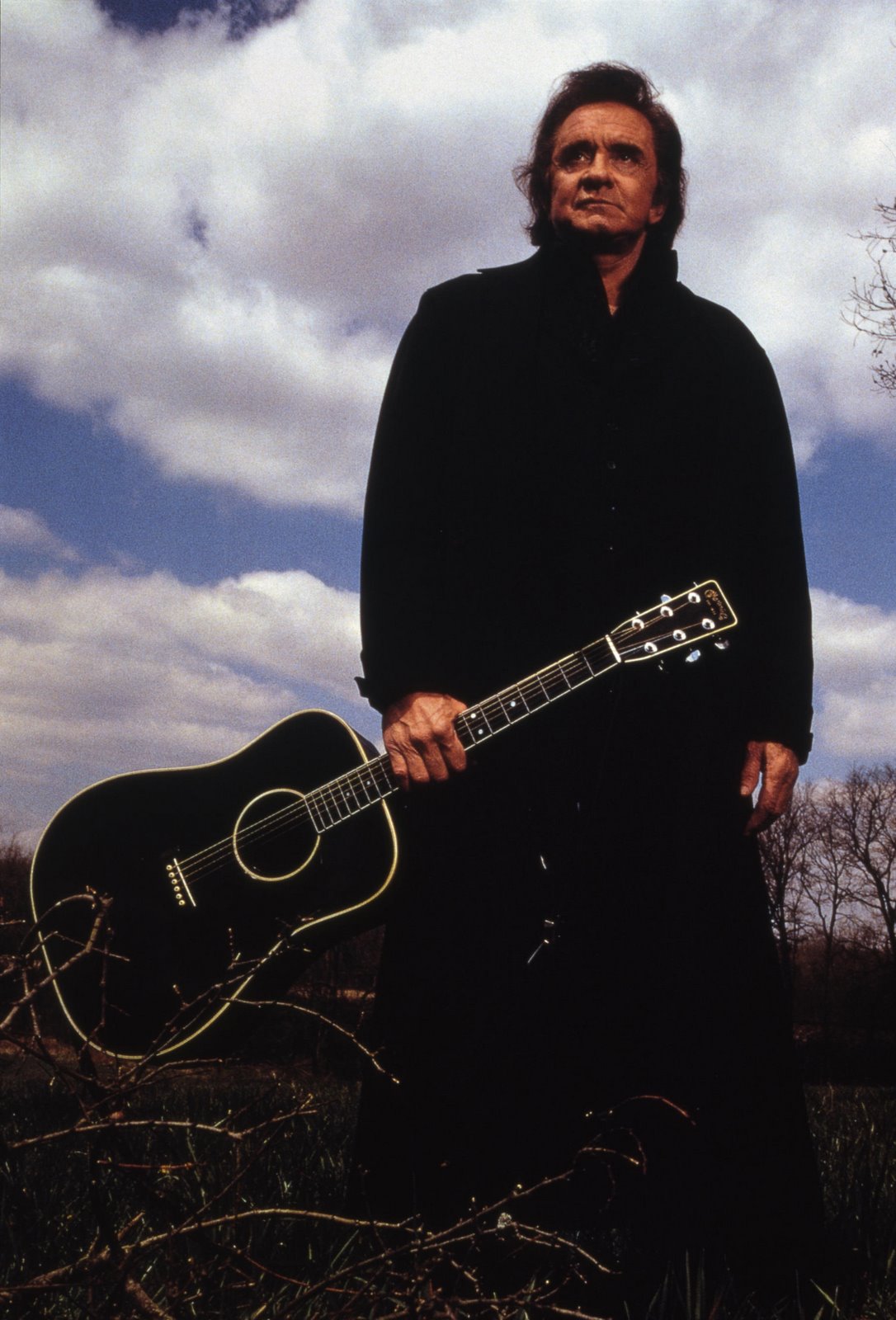
Johnny Cash (February 26, 1932 – September 12, 2003)

johnny-cash-743802

Today marks the anniversary of Johnny Cash’s birthday (he would have been 82). Though I’m not a hardcore fan I can appreciate his contributions to country music and particularly enjoy his song on the following video. According to wikipedia it won a Grammy Award and was directed by Tony Kaye (director of “American History X”) in 2006 and features an interesting mix of famous people who I presume are Johnny Cash fans including (in order of appearance): David Allan Coe (Intro), Iggy Pop, Kanye West, Chris Martin, Kris Kristofferson, Patti Smith, Terrence Howard, Flea, Q-Tip, Adam Levine, Chris Rock, Justin Timberlake, Kate Moss, Sir Peter Blake, Sheryl Crow, Dennis Hopper, Woody Harrelson, Amy Lee, Tommy Lee, The Dixie Chicks, Mick Jones, Sharon Stone, Patricia Arquette, Bono, Shelby Lynne, Anthony Kiedis, Travis Barker, Lisa Marie Presley, Kid Rock, Jay-Z, Keith Richards, Billy Gibbons, Corinne Bailey Rae, Johnny Depp, Graham Nash (holding photos of Johnny Cash), Brian Wilson, Whoopi Goldberg (brief flash), Rick Rubin, and Owen Wilson. As fun as it may be to spot the celebrities, don’t let it distract from the powerful vocals and lyrics.

Back in the Belly of the Beast

Those who spend their lives within the belly of the beast see mostly the insides of the belly. Traveling outside the beast gives one a better idea of what the beast looks like and the impact of its actions on the world. For those who missed the 1/31 post (my last “live” post before this one), for the past few weeks I’ve been traveling through Central America. More specifically, exploring various towns, cities and nature reserves across Nicaragua. Though my primary reason for being there was for vacation, I took it as an opportunity to learn much about the region’s culture, environment, and often turbulent past. Though I’m sure much has happened while I was away (I’m still catching up on news), within the next few days I hope to share some of what I learned and experienced on the trip.

For others who might be planning vacations to other countries combining recreation and education, the importance of having at least a basic grasp of the native language (or traveling with fluent bilingual people) shouldn’t be underestimated. It greatly enriches interactions not only because locals can express themselves more authentically in their primary language, but it could help reduce potential social tensions. While many less developed nations including Nicaragua are increasingly economically dependent on the tourism industry, tourists need to be aware of problems their presence may cause or contribute to such as gentrification, cultural commodification and cultural dilution. U.S. tourists speaking in native tongues might not solve such problems, but it at least symbolically helps counteract inherent power imbalances while making possible more conscious consumer choices such as supporting smaller ecotourism, agritourism and community-based establishments which may not offer the same level of English language services and materials as larger, often foreign-owned businesses which cater to English language speakers. Greater fluency in the native language also allows tourists to acquire and compare more information on essential expenditures such as transportation, lodging and food, resulting in options of higher quality or greater practicality (and preferably locally-owned) for less money.

That being said, I’m definitely not fluent in Spanish but was fortunate enough to travel with someone who is. Without my travel partner I wouldn’t have been able to experience nearly as much as I did. Among the highlights:

  • Jumping into the Rio Coco in Somoto Canyon from a height of 12 meters (high enough for me).
  • Hiking though a cloud forest in the mountains surrounding Jinotega.
  • Kayaking on rough waters of Lake Apanas.
  • Seeing indigenous petroglyphs in a rural village near Matagalpa.
  • Climbing to the roof of the Basilica Catedral de la Asuncion in Leon, the largest church in Central America.
  • Learning to ride a motorcycle and driving it across Ometepe Island.
  • Hiking around the top of the Mombacho Volcano Nature Reserve.
  • Boating through Las Isletas near Granada.

There’s lots I’m leaving out, including visits to various cultural museums in different towns, some of which I plan to feature in future posts.

Saturday Matinee: Mind Game

series_4825

“Mind Game” (2004) is possibly the strangest anime feature film ever made. It was produced by the groundbreaking Studio 4C animation studio and directed by Masaaki Yuasa, previously most famously known for his involvement in the “Crayon Shin-chan” series (sort of a Japanese take on “The Simpsons”). The film’s plot is deceptively simple, centering on a young man named Nishi who is killed while trying to defend his childhood crush Myon. After a short visit to the afterlife he has a chance to change his fate, transforming his previously dull life into a psychedelic, mythopoetic adventure. At times the film overwhelms the senses with its wild mix of animation styles, exaggerated colors and perspectives, absurd situations and wild soundscape by Seiichi Yamamoto of noise rock band The Boredoms. Mind Game has never had an official DVD release in the U.S. but last June a kind soul put it on YouTube for the world to enjoy.

Hunter Thompson on Finding One’s Purpose and Living a Meaningful Life

tumblr_lcc4hfxUvw1qzezj5o1_400

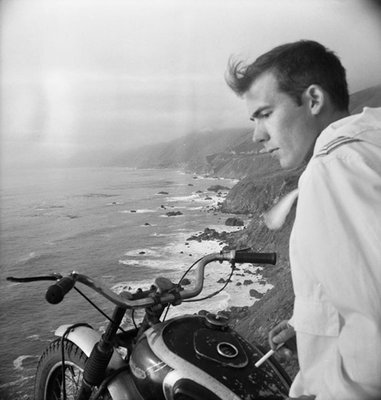
Today marks the ninth anniversary of the death of Hunter S. Thompson. As a tribute to the legendary Gonzo journalist I’d like to share an article on a rather philosophical and motivational letter he wrote to his friend Hume Logan in 1958. Cynics may question the worth of Thompson’s advice given he was only 20 at the time, his notoriety as a drug abuser later in life and his alleged suicide. In Thompson’s defense, the letter shows he developed a sense of intellectual adventurousness and sophistication of thought at a relatively early age. Though he did partake in recreational drugs, it was probably at far below the levels described in his Gonzo essays in which he adopted a public persona and exaggerated details of events, blurring the lines between fact and fiction. And it is arguable if Hunter S. Thompson actually killed himself because there remains suspicions that he may have been murdered.

From Brain Pickings:

20-Year-Old Hunter S. Thompson’s Superb Advice on How to Find Your Purpose and Live a Meaningful Life

by Maria Popova

“It is not necessary to accept the choices handed down to you by life as you know it.”

As a hopeless lover of both letters and famous advice, I was delighted to discover a letter 20-year-old Hunter S. Thompsongonzo journalism godfather, pundit of media politics, dark philosopher — penned to his friend Hume Logan in 1958. Found in Letters of Note: Correspondence Deserving of a Wider Audience (public library) — the aptly titled, superb collection based on Shaun Usher’s indispensable website of the same name — the letter is an exquisite addition to luminaries’ reflections on the meaning of life, speaking to what it really means to find your purpose.

Cautious that “all advice can only be a product of the man who gives it” — a caveat other literary legends have stressed with varying degrees of irreverence — Thompson begins with a necessary disclaimer about the very notion of advice-giving:

To give advice to a man who asks what to do with his life implies something very close to egomania. To presume to point a man to the right and ultimate goal — to point with a trembling finger in the RIGHT direction is something only a fool would take upon himself.

And yet he honors his friend’s request, turning to Shakespeare for an anchor of his own advice:

“To be, or not to be: that is the question: Whether ’tis nobler in the mind to suffer the slings and arrows of outrageous fortune, or to take arms against a sea of troubles…”

And indeed, that IS the question: whether to float with the tide, or to swim for a goal. It is a choice we must all make consciously or unconsciously at one time in our lives. So few people understand this! Think of any decision you’ve ever made which had a bearing on your future: I may be wrong, but I don’t see how it could have been anything but a choice however indirect — between the two things I’ve mentioned: the floating or the swimming.

He acknowledges the obvious question of why not take the path of least resistance and float aimlessly, then counters it:

The answer — and, in a sense, the tragedy of life — is that we seek to understand the goal and not the man. We set up a goal which demands of us certain things: and we do these things. We adjust to the demands of a concept which CANNOT be valid. When you were young, let us say that you wanted to be a fireman. I feel reasonably safe in saying that you no longer want to be a fireman. Why? Because your perspective has changed. It’s not the fireman who has changed, but you.

Touching on the same notion that William Gibson termed “personal micro-culture,” Austin Kleon captured in asserting that “you are the mashup of what you let into your life,” and Paula Scher articulated so succinctly in speaking of the combinatorial nature of our creativity, Thompson writes:

Every man is the sum total of his reactions to experience. As your experiences differ and multiply, you become a different man, and hence your perspective changes. This goes on and on. Every reaction is a learning process; every significant experience alters your perspective.

So it would seem foolish, would it not, to adjust our lives to the demands of a goal we see from a different angle every day? How could we ever hope to accomplish anything other than galloping neurosis?

The answer, then, must not deal with goals at all, or not with tangible goals, anyway. It would take reams of paper to develop this subject to fulfillment. God only knows how many books have been written on “the meaning of man” and that sort of thing, and god only knows how many people have pondered the subject. (I use the term “god only knows” purely as an expression.)* There’s very little sense in my trying to give it up to you in the proverbial nutshell, because I’m the first to admit my absolute lack of qualifications for reducing the meaning of life to one or two paragraphs.

Resolving to steer clear of the word “existentialism,” Thompson nonetheless strongly urges his friend to read Sartre’s Nothingness and the anthology Existentialism: From Dostoyevsky to Sartre, then admonishes against succumbing to faulty definitions of success at the expense of finding one’s own purpose:

To put our faith in tangible goals would seem to be, at best, unwise. So we do not strive to be firemen, we do not strive to be bankers, nor policemen, nor doctors. WE STRIVE TO BE OURSELVES.

But don’t misunderstand me. I don’t mean that we can’t BE firemen, bankers, or doctors—but that we must make the goal conform to the individual, rather than make the individual conform to the goal. In every man, heredity and environment have combined to produce a creature of certain abilities and desires—including a deeply ingrained need to function in such a way that his life will be MEANINGFUL. A man has to BE something; he has to matter.

As I see it then, the formula runs something like this: a man must choose a path which will let his ABILITIES function at maximum efficiency toward the gratification of his DESIRES. In doing this, he is fulfilling a need (giving himself identity by functioning in a set pattern toward a set goal) he avoids frustrating his potential (choosing a path which puts no limit on his self-development), and he avoids the terror of seeing his goal wilt or lose its charm as he draws closer to it (rather than bending himself to meet the demands of that which he seeks, he has bent his goal to conform to his own abilities and desires).

In short, he has not dedicated his life to reaching a pre-defined goal, but he has rather chosen a way of life he KNOWS he will enjoy. The goal is absolutely secondary: it is the functioning toward the goal which is important. And it seems almost ridiculous to say that a man MUST function in a pattern of his own choosing; for to let another man define your own goals is to give up one of the most meaningful aspects of life — the definitive act of will which makes a man an individual.

Noting that his friend had thus far lived “a vertical rather than horizontal existence,” Thompson acknowledges the challenge of this choice but admonishes that however difficult, the choice must be made or else it melts away into those default modes of society:

A man who procrastinates in his CHOOSING will inevitably have his choice made for him by circumstance. So if you now number yourself among the disenchanted, then you have no choice but to accept things as they are, or to seriously seek something else. But beware of looking for goals: look for a way of life. Decide how you want to live and then see what you can do to make a living WITHIN that way of life. But you say, “I don’t know where to look; I don’t know what to look for.”

And there’s the crux. Is it worth giving up what I have to look for something better? I don’t know—is it? Who can make that decision but you? But even by DECIDING TO LOOK, you go a long way toward making the choice.

He ends by returning to his original disclaimer by reiterating that rather than a prescription for living, his “advice” is merely a reminder that how and what we choose — choices we’re in danger of forgetting even exist — shapes the course and experience of our lives:

I’m not trying to send you out “on the road” in search of Valhalla, but merely pointing out that it is not necessary to accept the choices handed down to you by life as you know it. There is more to it than that — no one HAS to do something he doesn’t want to do for the rest of his life.

Both reflecting and supporting Usher’s heartening echelon of independent online scholarship and journalism at the intersection of the editorial and the curatorial, Letters of Note is brimming with other such timeless treasures from such diverse icons and Brain Pickings favorites as E. B. White, Virginia Woolf, Ursula Nordstrom, Nick Cave, Ray Bradbury, Amelia Earhart, Galileo Galilei, and more.