“Shock and Awe” Comes to America

Ferguson_Day_6,_Picture_44

By Wayne Madsen

Source: Strategic Culture Foundation

The United States has employed «shock and awe» techniques – described by Pentagon policy documents as the use of «spectacular displays of force» to intimidate an opponent – against the civilian population of the St. Louis, Missouri suburb of Ferguson, just a stone’s throw from Lambert-St. Louis International Airport. The police use of shock and awe tactics followed street protests after the police shooting death of an 18-year old black teen, Michael Brown. According to a private autopsy, Brown, an African-American, was shot six times, including twice in the head, by white Ferguson police officer Darren Wilson. The St. Louis County coroner concluded that the number of shots that hit Brown could have been as high as eight.

Ferguson and St. Louis County police immediately dispatched military vehicles and equipment to quell the initially non-violent protests in Ferguson that erupted after the shooting. Two reporters covering the protests, one from The Washington Post and the other from the Huffington Post, were arrested by the police. An Al Jazeera television crew was subjected to a tear gas attack by police who then proceeded to shut off the news crew’s lights and disable their cameras.

After the local Ferguson and St. Louis County police were criticized for their «shock and awe» tactics, which also saw innocent protesters and members of the clergy shot at point blank range with rubber bullets and tear gassed, Missouri Governor Jay Nixon, who was slow to respond to the racially-inflamed incident, ordered Ferguson and St. Louis County police to stand down. Nixon replaced the local police with Missouri state police troopers who did not initially use military-clad law enforcement or vehicles.

However, after it was revealed that Brown was shot multiple times, rioters were reported to have looted local businesses. Nixon ordered the Missouri National Guard on to the streets and imposed a strict night time curfew. Police on the scene also issued a «keep moving» order to Ferguson citizens, an attempt to prevent any public protest organization efforts by pedestrians.

There were also numerous reports of neo-Nazi, Ku Klux Klan, and other far-right extremists arriving in Ferguson, with police «wink and a nod» foreknowledge in some cases, to stoke violence and engage in «false flag» attacks on people and property. In many respects, Ferguson discovered what occurs when government authorities, officially or unofficially, team up with right-wing racists and xenophobes to menace an entire civilian population. The authorities in Kiev have made similar deals with neo-Nazis, who have links to American white supremacist groups, to attack civilians in eastern and southern Ukraine.

Police allegedly reported that Molotov cocktails were thrown at police by unknown parties after violence increased. The violence was stirred after Ferguson police released a videotape from a convenience store that allegedly showed Brown in a physical altercation with the store’s clerk after Brown was said to have stolen a pack of miniature cigars. The store owner later said that the videotaped individual in what the police released to the media was not Brown and the Ferguson Police Chief later admitted that Officer Wilson did not stop Brown based on any suspicion that it was he who had stolen the cigars.

Eyewitnesses said that police reports that Molotov cocktails were thrown at police vehicles were false. And as further proof that police were permitting agitators to stir up violence, there were a number of social media reports that among those stoking violence in Ferguson was a white man sporting a swastika tattoo.

Governor Nixon later stated that the release of the store’s video by police needlessly incited an already tense situation in Ferguson.

American police using heavy-handed tactics against peaceful protesters is not limited to Ferguson and neither are police arrests of journalists covering protests. Neither was Ferguson the first time police arrested or threatened to arrest national television and radio reporters, as St. Louis area police threatened to do with a reporter for MS-NBC after another night of street violence in Ferguson.

In 2008, national reporters were arrested by police who used unjustified force at a protest at the Republican National Convention in St. Paul, Minnesota. The scenes from Ferguson were also reminiscent of strong-armed police tactics sued against Occupy Wall Street protesters around the country, as well as anti-globalization demonstrations in Seattle; Washington, DC; Pittsburgh, and other cities.

The presence of police-sanctioned provocateurs who engaged in violent acts in order to provoke a «shock and awe» response from military-armed police is endemic to protests around the United States, especially after 9/11, the date viewed by many Americans as the watershed date between pre- and post-Constitutional America.

Someone in the St. Louis County Coroner’s Office also leaked information on Brown’s blood test, saying that it showed past use of marijuana. The leak appeared timed to hurt a number of referenda around the United States on the legalization of marijuana. Many police departments are campaigning against the referenda and it would appear that the St. Louis authorities leaked the information as some sort of proof, albeit bogus, that marijuana legalization will lead to an increase in «violence.»

Many media commentators also drew comparisons between the scenes of the heavy paramilitary presence on the streets of Ferguson to scenes of Israeli soldiers in Gaza and on the West Bank. There are valid reasons for the comparisons.

In 2011, St. Louis County Police Chief Timothy Fitch received training from Israeli Defense Force (IDF) and Israeli National Police officials during a trip to Israel sponsored by the right-wing Anti-Defamation League (ADL). That same year, Oakland, California police who received similar training from former members of the IDF, shot Iraqi war U.S. Army veteran Scott Olsen in the head. Olsen suffered a severe brain injury from the assault.

Companies associated with Israel’s military-law enforcement infrastructure, including those specializing in Israeli Krav Maga martial arts techniques and other Israel crowd control tactics, have not only trained state and metropolitan police forces in the United States, but also state National Guard units. Police departments receiving such training include the St. Louis County Police, as well as the police departments of New York, Philadelphia, Houston, Dallas, Louisville, Richmond, Charlotte, Nashville, Albuquerque, Tulsa, and Atlantic City.

American police departments have a seemingly unlimited supply of military gear, weapons, and vehicles at their disposal. Under the Pentagon’s 1033 program, the Defense Department has made available, often free-of-charge, surplus military equipment to police departments from St. Louis County and Ferguson to Lewiston, Maine and Ohio State University.

Among the excess military equipment distributed to local, metropolitan, county, and state police by the Defense Logistics Agency are highly-mobile multi-wheeled vehicles (Humvees), militarized water craft, mine-resistant ambush protection (MRAP) vehicles, long-range acoustic device (LRAD) sound cannons, assault rifles, night scopes, flash bang grenades, and helicopters.

In addition to receiving population control training from Israelis, American police departments have also been trained by the constantly name-changing firm once known as Blackwater. Formerly known as Xe Security and Academi, the CIA-linked private military company, now merged with Triple Canopy under the Constellis Holdings, Inc., trained a number of U.S. police departments at its military base-like facility in Moyock, North Carolina. One of the police patches on the firm’s training alumni board in Moyock is that of the St. Louis County Police.

In addition to the St. Louis County Police, other U.S. law enforcement agencies trained by Blackwater include the Maricopa County, Arizona Sheriff’s Department; Atlanta Police; Chillicothe, Ohio Police; Charleston, South Carolina Police; Metropolitan Washington, DC Police; Metropolitan Washington Airports Authority Police (Dulles and Reagan National Airports); Prince George’s County, Maryland Police; the FBI SWAT Team; New York Police Department; Fairfax County, Virginia Police; Tampa Police; U.S. Drug Enforcement Administration (DEA); DeKalb County, Georgia Police; Arlington County, Virginia Police; Baltimore Police; U.S. Coast Guard; University of Texas Police; Norfolk, Virginia Police; Chicago Police Department; Oregon State Police; Los Angeles Police Department; Harvey Cedars, New Jersey Police; City of Fairfax, Virginia Police; Alexandria, Virginia Police Special Operations; Illinois State Police; and Dallas Police.

Based on the actions of the St. Louis County police and their cache of Pentagon weapons, as well as their Israeli and Blackwater training, the next dead U.S. citizen – African American, Caucasian, Hispanic, or otherwise – could be found lying in a pool of his or her own blood, drawn by a militarized police officer, from the Jersey shore to the streets of Los Angeles.

Weed + Sci Fi = Chromicon: The world’s first cannabis friendly sci-fi, fantasy and comic book convention

tumblr_m3t3tqkYrg1rrz17so1_1280

By Chris Lites

Source: Omni Reboot

Anyone who’s seen Zardoz knows how well weed and sci-fi go together. Now, like something out of a Kevin Smith movie, Jaymen Johnson brings Denver Chromic Con. One half expects Bluntman and Chronic to make an appearance. Inspired by his long history of attending conventions while high, Johnson, decided to bring this once illicit activity out into the marijuana friendly Denver and Colorado Springs weed club scene. Three such clubs will serve as venues for the con which includes sci-fi, fantasy and comic books along with the presumably non-requisite weed. Johnson himself owns one of the clubs, Speak Easy Vape Lounge, and promises “light saber [sic]whiffle ball” among the con’s attractions.

I’ve attended more than a couple of cons in an altered state and always had a great time. Any con-goer knows about party floors dedicated to themed libations patrolled by the drunken ranks of Barfleet Personnel. The first con I attended in such a state featured a gay Klingon wedding. In the aftermath, as the sun crept through the hotel windows in the ballroom, one could see a host of Klingons passed out under tables, atop the DJ machine, behind curtains. It looked rather like the aftermath of a battle until one of them threw up. But cons and partying have a long history as do altered states and creativity. SF/F, in particular, has always lent itself to those on the fringes of normalized demographics. Just as the “nerd” has popularly typified fandom, so too do the legions of those who enjoy altered states with their creativity. Artists too, have long espoused the virtues of blended artistic creation. Grant Morrison’s The Invisibles is practically a catalogue of psychoactive trips the writer himself took. Thomas Pynchon claims writing large sections of Gravity’s Rainbow higher than an esoterically referential kite. Drugs and the creative process behind SF/F has a long history.

Chromic Con [the logo divides the M so that you can read the word “chronic”] offers the first Alchemical Wedding of the outsider art of comics and the outsider recreation of pot smoking. But this begs the question: are either really outsider anymore? Chromic Con’s inception suggests they are not. In much the same way “geek” culture has become mainstream, so too has pot culture. Recent polls suggest those who like to toke-up are as legion as those who flocked to theaters to see The Avengers, some likely high at the time. Pot has become mainstream. The days of Reefer Madness are largely behind us. It’s only a matter of time before Wil Wheaton takes up the pot banner and becomes fandom’s Tommy Chong. The licensing alone might bring Disney into the fold. Imagine smoking some great skunk out of R2D2 or Darth Vader’s head? A Millennium Falcon bowl can’t be far behind.

William Gibson has suggested that there are no more Bohemias. As soon as a sub-culture pops up these days, it’s co-opted by the mainstream and commodified. While Chromic Con is still an indie event [as evidenced by its site, a kind of throwback to 90s web design], I can’t help but think that it’s the first step in a corporatization of the weed-SF Rainbow Bridge that’s always existed behind the scenes. Soon, I can imagine Comicon rife with glazed-eyed James Franco types promoting their latest movie and their favorite strain of California’s best. What kind of pot does Wolverine smoke in those blunts he calls “cigars?” Marvel could partner with a major pot corporation and let you know!
To be fair, Chromic Con is still very much a small event. The website suggests almost no celebrity guests have yet signed up [presumably unwilling to commit to the weed association just yet], and the event list is scant. It doesn’t look like it’s going to be a full con in sense most of us think of when we hear the term. Yet, where Jaymen Johnson may not produce much more than a fun curiosity this time out, he may presage the marriage of pot and mainstream conventions.

I’m all for the open enjoyment of comics, science fiction and weed, but I can’t help but feel that something is being lost. The stamp of the establishment on anything, however putative, takes away some of the exclusivity of the activity. Chromic Con’s site features its weed friendly sponsors prominently. Fandom is still alive and well, but the mainstreaming of genre favorites like Game of Thrones and Lord of the Rings does carry with it a certain deference to the larger culture. It’s been recently announced that John Constantine won’t smoke in the upcoming NBC TV adaptation. A small thing, perhaps, but a significant one. Once we open the fringes to the doors of corporate America, there is always a period of sanitization. When the sub-culture and the root culture merge, it’s almost always the former that has to change some of its DNA. Chromic Con isn’t that. It isn’t close to that, but it is, I think, in the same neighborhood. You can see Snoop Lion endorsing San Diego Comic Con’s toking booth from here.

Detroit Cronies Sucking Money out of City to build Red Wings’ Stadium

Source: Collapse.com and Reason

Though I am usually not a fan of infographics/datagraphics, Reason just published the below graphic which details the horrible deal that the city of Detroit is getting by building this new arena. We see these kinds of deals being struck all around the country as politicians think that any sports team will be a boom to the local economy. What really ends up happening is that the owners of the teams get richer at the expense of the taxpayer.

These programs rarely net a positive result to the local economy. Most economists recognize research that has been done that shows that teams and new arenas do not increase entertainment spending in the region but just divert it from elsewhere that it would be spent. Ultimately, Detroit, a city that is dying already, stands to lose jobs and lose money on this investment and it just might be the straw that breaks the Detroit camel’s back.

Detroit Redwings Stadium Infographic

Sources

The Risky Economics of Sports Stadiums

Pro Sports Stadiums Don’t Bolster Local Economies, Scholars Say

General information about the Stadium proposal

Debunking the Economic Case for Sports Stadiums

Local Police and Much Else Will Be Militarized As Long As Federal Government Is

Outrage In Missouri Town After Police Shooting Of 18-Yr-Old Man

By David Swanson

Source: OpEdNews.com

Groups on the ground in St. Louis are calling for nationwide solidarity actions in support of Justice for Mike Brown and the end of police and extrajudicial killings everywhere.”

As they should. And we should all join in.

But “nationwide” and “everywhere” are odd terms to equate when discussing police militarization. Are we against extrajudicial killings (otherwise known as murder) by U.S. government employees and U.S. weapons in Pakistan? Yemen? Iraq? Gaza? And literally everywhere they occur? The militarization of local police in the United States is related to the militarization of U.S. foreign policy, which has now reached the point that bombing and “doing nothing” are generally conceived as the only two choices available. Local police are being militarized as a result of these factors:

  • A culture glorifying militarization and justifying it as global policing.
  • A federal government that directs roughly $1 trillion every year into the U.S. military, depriving virtually everything else of needed resources.
  • A federal government that still manages to find resources to offer free military weapons to local police in the U.S. and elsewhere.
  • Weapons profiteers that eat up local subsidies as well as federal contracts while funding election campaigns, threatening job elimination in Congressional districts, and pushing for the unloading of weapons by the U.S. military on local police as one means of creating the demand for more.
  • The use of permanent wartime fears to justify the removal of citizens’ rights, gradually allowing local police to begin viewing the people they were supposed to protect as low-level threats, potential terrorists, and enemies of law and order in particular when they exercise their former rights to speech and assembly. Police “excesses” like war “excesses” are not apologized for, as one does not apologize to an enemy.
  • The further funding of abusive policing through asset forfeitures and SWAT raids.
  • The further conflation of military and police through the militarization of borders, especially the Mexican border, the combined efforts of federal and local forces in fusion centers, the military’s engagement in “exercises” in the U.S., and the growth of the drone industry with the military, among others, flying drones in U.S. skies and piloting drones abroad from U.S. land.
  • The growth of the profit-driven prison industry and mass incarceration, which dehumanize people in the minds of participants just as boot camp and the nightly news do to war targets.
  • Economically driven disproportionate participation in, and therefore identification with, the military by the very communities most suffering from its destruction of resources, rights, and lives.

But policing is not the only thing militarized by what President Eisenhower called the “total influence — economic, political, even spiritual” of the military industrial complex. Our morality is militarized, our entertainment is militarized, our natural world is militarized, and our education system is militarized. “Unwarranted influence, whether sought or unsought, by the military industrial complex” is not easily opposed while maintaining the military industrial complex. When Congress Members lend their support to a new war in Iraq while proposing that the U.S. Post Office and a dozen other decent things not be defunded, they are speaking out of both sides of their mouths. The United States cannot live like other wealthy nations while dumping $1 trillion a year into a killing machine.

The way out of this cycle of madness in which we spend more just on recruiting someone into the military or on locking them up behind bars than we spend on educating them is to confront in a unified and coherent manner what Martin Luther King Jr. called the evils of racism, extreme materialism, and militarism. Not racism, extreme materialism, and what the military does to the local police. Not racism, extreme materialism, and what the military does to weapons testing sites. Not racism, extreme materialism, and what the military does to the people of Honduras causing them to flee to a land that then welcomes them with an attitude of militarism. Not any of these partial steps alone, but the whole package of interlocking evils of attitude and mindset.

There is a no-fly-zone over Ferguson, Missouri, because people in the U.S. government view the people of the United States increasingly as they view the people of other countries: as best controlled from the air. Notes the War Resisters League,

“Vigils and protests in Ferguson — a community facing persistent racist profiling and police brutality — have been attacked by tear gas, rubber bullets, police in fully-armored SWAT gear, and tank-like personnel carriers. This underscores not only the dangers of being young, Black, and male in the US, but also the fear of mobilization and rebellion from within racialized communities facing the violence of austerity and criminalization.

“The parallels between the Israeli Defense Forces in Palestine, the Military Police of Rio de Janeiro, the Indian police in Kashmir, the array of oppressive armed forces in Iraq, and the LAPD in Skid Row could not be any clearer. . . .

“This is not happening by accident. What is growing the capacity of local police agencies to exercise this force are police militarization programs explicitly designed to do so. As St. Louis writer Jamala Rogers wrote in an article on the militarization of St. Louis Police this past April, ‘It became clear that SWAT was designed as a response to the social unrest of the 1960s, particularly the anti-war and black liberation movements.’ Federal programs such as DoD 1033 and 1122, and the Urban Areas Security Initiative (UASI), in which St. Louis Police are active participants, provide weapons and training to police departments across the country, directly from the Pentagon. Commenting on the ominous growth of the phenomenon, Rogers continues: ‘and now, Police Chief [of St. Louis Police] Sam Dotson wants to add drones to his arsenal.’

“The events in Ferguson over these last few days demonstrate that the violence of policing and militarism are inextricably bound. To realize justice and freedom as a condition for peace, we must work together to end police militarization and violence.”

The War Resisters League is organizing against Urban Shield, an expo of military weapons for police and training event planned for Oakland, Calif., this September 4-8. The Week of Education and Action will take place in Oakland from August 30-September 5. Read all about it here.

David Swanson is a member of the National Committee of the War Resisters League and wants you to declare peace at http://WorldBeyondWar.org His new book is War No More: The Case for Abolition. He blogs at http://davidswanson.org and http://warisacrime.org and works for http://rootsaction.org. He hosts Talk Nation Radio. Follow him on Twitter: @davidcnswanson and FaceBook.uson

Marcus Garvey (17 August 1887 – 10 June 1940)

200px-Marcus_Garvey_1924-08-05

Many are familiar with Marcus Garvey through numerous references to him in Reggae music since he’s a prophet in the Rastafarian religion. However, those of us in the US who value civil rights should be particularly thankful for Garvey’s legacy, for his life and the ideas he promoted were an influence on Malcolm X and Martin Luther King Jr. among many others and the organization he founded, the Universal Negro Improvement Association and African Communities League, continues his work to this day. This biography is from the Marcus Garvey Foundation:

The Honorable Marcus Mosiah Garvey was born in St. Ann Bay in the parish of St. Ann on the north coast of the island of Jamaica on 17 August 1887. He described it like this, “I was born in the beautiful Parish of St. Ann, near the falls of the Roaring River. I grew up with nature and drank much of her inspiration.” He developed an interest in playing cricket early in life. Apprenticed to his godfather who was a printer, young Marcus early evinced an interest in the printed word. He read widely and was always anxious to discuss current events as well as history. At the age of eighteen he was already a foreman at P.J. Benjamin’s Printing Shop in Jamaica’s capital city of Kingston. He could be seen grounding with his brethren at Victoria Pier on Sunday nights. Garvey joined the printer’s trade union and gained a reputation as courageous, dedicated and highly concerned young leader. At the age of twenty-three he embarked upon a most significant journey that carried him to both Latin America and Europe. He found employment on the docks of London, Liverpool and Cardiff like many West Indians and Africans at the time.

Meeting Duse Mohammed Ali, an Egyptian editor and publisher of the African Times and Orient Review, made a lasting impression on Marcus Garvey. Duse Ali later became active in the UNIA and later a newspaper publisher in Nigeria. Five days after he returned to Kingston, Jamaica, Marcus Garvey founded the Universal Negro Improvement Association, a mass based organization designed to unite people of African ascent around the world. Those who joined Garvey in founding the UNIA shared with him an interest in working hard to overcome conditions of oppression. The organization’s motto is “One God, One Aim, One Destiny.” Seeking the advice and assistance of Booker T. Washington, a well-known leader in the Black world community and at the helm of Tuskegee Institute, Marcus Garvey arrived in the U.S.A. several months after Washington’s death. He traveled from city to city spreading the word of Pan African unity. On May 10, l916, he kicked off the lecture tour at St. Mark’s Roman Catholic Church Hall on 138th Street and reportedly visited 38 states in a year. The cities Garvey visited later were to become major sites of UNIA activity. From those formative years at Liberty Hall on West 138th Street, this mass movement engulfed the African world, increasing from a few to millions worldwide. It wasn’t long before the establishment of the Negro World, Negro Factories Corporation, grocery stores, markets, steamships, and steam laundry companies occurred. The launching of the Black Star Line in 1919 and the successful First International Convention of the Negro Peoples of the World in 1920 catapulted this organization on to the world stage. Between World Wars I and II the UNIA rose and declined, never to be rivaled by another black mass movement.

Currently, the UNIA lives not only in its present form, but also in the memories of so many around the world. It is clear that the Universal Negro Improvement Association and African Communities League served as the model and foundation for 20th century Pan African movements.

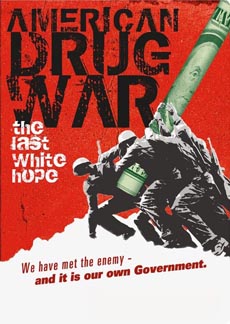
Saturday Matinee: Drug War Double Feature

American_Drug_War_-_The_Last_White_HopeIMG_5412

Source: AmericanDrugWar.com

The War on Drugs has become the longest and most costly war in American history, the question has become, how much more can the country endure? Inspired by the death of four family members from “legal drugs” Texas filmmaker Kevin Booth sets out to discover why the Drug War has become such a big failure. Three and a half years in the making the film follows gang members, former DEA agents, CIA officers, narcotics officers, judges, politicians, prisoners and celebrities. Most notably the film befriends Freeway Ricky Ross; the man many accuse for starting the Crack epidemic, who after being arrested discovered that his cocaine source had been working for the CIA.

AMERICAN DRUG WAR shows how money, power and greed have corrupted not just dope fiends but an entire government. More importantly, it shows what can be done about it. This is not some ‘pro-drug’ stoner film, but a collection of expert testimonials from the ground troops on the front lines of the drug war, the ones who are fighting it and the ones who are living it.

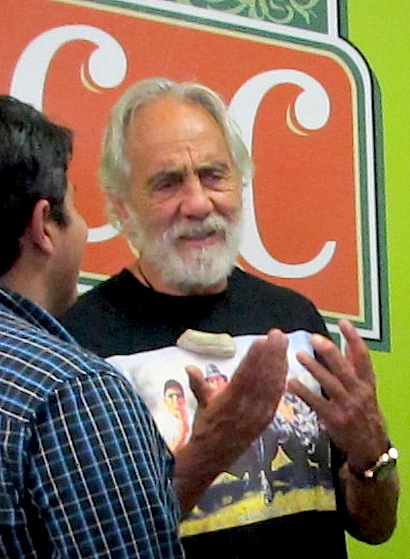
Source: AKATommyChong.com

At the height of popularity of the Bush administration — the federal government entrapped and subsequently imprisoned Tommy Chong.  Josh Gilbert began documenting the federal case against his long time friend, for the terrible crime of selling bongs.

This film examines the personal effects on Tommy, the motivations and tactics of the politicized Justice Department under George Bush, set against the back drop of the War on Drugs and the legal issues involved. The film premiered at the Toronto Film Festival to huge press and critical acclaim, and appeared at many other film festivals. It premiered theatrically at Film Forum in New York City and went on to a successful arthouse theatrical release throughout North America. It was recently broadcast on Showtime and the CBC in Canada.

Bukowski on Quitting a Soul-Sucking Job to Become a Full-Time Writer

Charles_Bukowski_smokingTomorrow marks the birthday of working class poet and author Charles Bukowski (he would have been 94). Bukowski’s creativity had been stifled for most of his adult life as a wage slave until at age 49 he seized an opportunity to break free. Bukowski showed his gratitude to his benefactor, Black Sparrow Press, by publishing most of his subsequent major works with them while supporting countless other independent presses across the country with numerous poetry and short story submissions. He also wrote a letter of thanks to John Martin, owner of Black Sparrow Press in 1986, (also containing thoughts on modern life many of us can relate to) featured in the following article:

Bukowski’s Letter of Gratitude to the Man Who Helped Him Quit His Soul-Sucking Job and Become a Full-Time Writer

By Maria Popova

Source: Brain Pickings

“To not have entirely wasted one’s life seems to be a worthy accomplishment, if only for myself.”

“Unless it comes unasked out of your heart and your mind and your mouth and your gut,” Charles Bukowski wrote in his famous poem about what it takes to be a writer, “don’t do it.” But Bukowski himself was a late bloomer in the journey of finding one’s purpose, as his own “it” — that irrepressible impulse to create — took decades to coalesce into a career.

Like many celebrated authors who once had ordinary day jobs, Buk tried a variety of blue-collar occupations before becoming a full-time writer and settling into his notorious writing routine. In his mid-thirties, he took a position as a fill-in mailman for the U.S. Postal Service. But even though he’d later passionately argue that no day job or practical limitation can stand in the way of true creativity, he found himself stifled by working for the man. By his late forties, he was still a postal worker by day, writing a column for LA’s underground magazine Open City in his spare time and collaborating on a short-lived literary magazine with another poet.

In 1969, the year before Bukowski’s fiftieth birthday, he caught the attention of Black Sparrow Press publisher John Martin, who offered Buk a monthly stipend of $100 to quit his day job and dedicate himself fully to writing. (It was by no means a novel idea — the King of Poland had done essentially the same for the great astronomer Johannes Hevelius five centuries earlier.) Bukowski gladly complied. Less than two years later, Black Sparrow Press published his first novel, appropriately titled Post Office.

But our appreciation for those early champions often comes to light with a slow burn. Seventeen years later, in August of 1986, Bukowski sent his first patron a belated but beautiful letter of gratitude. Found in Reach for the Sun: Selected Letters 1978–1994 (public library), the missive emanates Buk’s characteristic blend of playfulness and poignancy, political incorrectness and deep sensitivity, cynicism and self-conscious earnestness.

August 12, 1986

Hello John:

Thanks for the good letter. I don’t think it hurts, sometimes, to remember where you came from. You know the places where I came from. Even the people who try to write about that or make films about it, they don’t get it right. They call it “9 to 5.” It’s never 9 to 5, there’s no free lunch break at those places, in fact, at many of them in order to keep your job you don’t take lunch. Then there’s overtime and the books never seem to get the overtime right and if you complain about that, there’s another sucker to take your place.

You know my old saying, “Slavery was never abolished, it was only extended to include all the colors.”

And what hurts is the steadily diminishing humanity of those fighting to hold jobs they don’t want but fear the alternative worse. People simply empty out. They are bodies with fearful and obedient minds. The color leaves the eye. The voice becomes ugly. And the body. The hair. The fingernails. The shoes. Everything does.

As a young man I could not believe that people could give their lives over to those conditions. As an old man, I still can’t believe it. What do they do it for? Sex? TV? An automobile on monthly payments? Or children? Children who are just going to do the same things that they did?

Early on, when I was quite young and going from job to job I was foolish enough to sometimes speak to my fellow workers: “Hey, the boss can come in here at any moment and lay all of us off, just like that, don’t you realize that?”

They would just look at me. I was posing something that they didn’t want to enter their minds.

Now in industry, there are vast layoffs (steel mills dead, technical changes in other factors of the work place). They are layed off by the hundreds of thousands and their faces are stunned:

“I put in 35 years…”

“It ain’t right…”

“I don’t know what to do…”

They never pay the slaves enough so they can get free, just enough so they can stay alive and come back to work. I could see all this. Why couldn’t they? I figured the park bench was just as good or being a barfly was just as good. Why not get there first before they put me there? Why wait?

I just wrote in disgust against it all, it was a relief to get the shit out of my system. And now that I’m here, a so-called professional writer, after giving the first 50 years away, I’ve found out that there are other disgusts beyond the system.

I remember once, working as a packer in this lighting fixture company, one of the packers suddenly said: “I’ll never be free!”

One of the bosses was walking by (his name was Morrie) and he let out this delicious cackle of a laugh, enjoying the fact that this fellow was trapped for life.

So, the luck I finally had in getting out of those places, no matter how long it took, has given me a kind of joy, the jolly joy of the miracle. I now write from an old mind and an old body, long beyond the time when most men would ever think of continuing such a thing, but since I started so late I owe it to myself to continue, and when the words begin to falter and I must be helped up stairways and I can no longer tell a bluebird from a paperclip, I still feel that something in me is going to remember (no matter how far I’m gone) how I’ve come through the murder and the mess and the moil, to at least a generous way to die.

To not to have entirely wasted one’s life seems to be a worthy accomplishment, if only for myself.

yr boy,

Hank

Complement with Bukowski’s “so you want to be a writer,” then revisit this essential compendium of advice on how to find your purpose and do what you love and the spectacular resignation letter Sherwood Anderson wrote when he decided to quit his soul-sucking corporate job and become a full-time writer.