
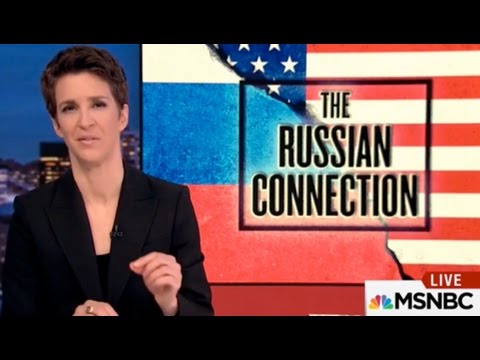
Russiagate as Organized Distraction

By Oliver Boyd-Barrett

Source: Consortium News

For over two years Russiagate has accounted for a substantial proportion of all mainstream U.S. media political journalism and, because U.S. media have significant agenda-setting propulsion, of global media coverage as well. The timing has been catastrophic. The Trump administration has shredded environmental protections,jettisoned nuclear agreements, exacerbated tensions with U.S. rivals and pandered to the rich.

In place of sustained media attention to the end of the human species from global warming, its even more imminent demise in nuclear warfare, or the further evisceration of democratic discourse in a society riven by historically unprecedented wealth inequalities and unbridled capitalistic greed, corporate media suffocate their publics with a puerile narrative of alleged collusion between the 2016 Trump campaign and Russia.

The Russiagate discourse is profoundly mendacious and hypocritical. It presumes that the U.S. electoral system enjoys a high degree of public trust and security. Nothing could be further from the truth. The U.S. democratic system is deeply entrenched in a dystopian two-party system dominated  by the rich and largely answerable to corporate oligopolies; it is ideologically beholden to the values of extreme capitalism and imperialist domination. Problems with the U.S. electoral system and media are extensive and well documented.

U.S. electoral procedures are profoundly compromised by an Electoral College that detaches votes counted from votes that count. The composition of electoral districts has been gerrymandered to minimize the possibility of electoral surprises. Voting is dependent on easily hackable corporate-manufactured electronic voting systems. Right-wing administrations reach into a tool-box of voter-suppression tactics that run the gamut from minimizing available voting centers and voting machines through to excessive voter identification requirements and the elimination of swathes of the voting lists (e.g. groups such as people who have committed felonies or people whose names are similar to those of felons, or people who have not voted in previous elections). Even the results of campaigns are corrupted when outgoing regimes abuse their remaining weeks in power to push through regulations or legislation that will scuttle the efforts of their successors. Democratic theory presupposes the formal equivalence of voice in the battlefield of ideas. Nothing could be further from the reality of the U.S. “democratic” system in which a small number of powerful interests enjoy ear-splitting megaphonic advantage on the basis of often anonymous “dark” money donations filtered through SuperPacs and their ilk, operating outside the confines of (the somewhat more transparently monitored) electoral campaigns.

Free and Open Exchange of Ideas

Regarding media, democratic theory presupposes a public communications infrastructure that facilitates the free and open exchange of ideas. No such infrastructure exists.  Mainstream media are owned and controlled by a small number of large, multi-media and multi-industrial conglomerates that lie at the very heart of U.S. oligopoly capitalism and much of whose advertising revenue and content is furnished from other conglomerates.

The inability of mainstream media to sustain an information environment that can encompass histories, perspectives and vocabularies that are free of the shackles of U.S. plutocratic self-regard is also well documented. Recent U.S. media coverage of the U.S.-gestated crisis in Venezuela is a case in point.

The much-celebrated revolutionary potential of social media is illusory. The principal suppliers of social media architecture are even more corporatized than their legacy predecessors. They depend not just on corporate advertising but on the sale of big data that they pilfer from users and sell to corporate and political propagandists often for non-transparent AI-assisted micro-targeting during “persuasion” campaigns. Like their legacy counterparts, social media are imbricated within, collaborate with, and are vulnerable to the machinations of the military-industry-surveillance establishment. So-called election meddling across the world has been an outstanding feature of the exploitation of social and legacy media by companies linked to political, defense and intelligence such as – but by no means limited to – the former Cambridge Analytica and its British parent SCL.

Against this backdrop of electoral and media failures, it makes little sense to elevate discussion of and attention to the alleged social media activities of, say, Russia’s Internet Research Agency.

Russian Contacts Deplored

Attention is being directed away from substantial, and substantiated, problems and onto trivial, and unsubstantiated, problems. Moreover, in a climate of manufactured McCarthyite hysteria, Russiagate further presupposes that any communication between a presidential campaign and Russia is in itself deplorable. Even if one were to confine this conversation only to communication between ruling oligarchs of both the U.S. and Russia, however, the opposite would surely be the case. This is not simply because of the benefits that accrue from a broader understanding of the world, identification of shared interests and opportunities, and their promise for peaceful relations. A real politick analysis might advise the insertion of wedges between China and Russia so as to head off the perceived threat to the USA of a hybrid big-power control over a region of the world that has long been considered indispensable for truly global hegemony.

Even if we address Russiagate as a problem worthy of our attention, the evidentiary basis for the major claims is weak.

Former Special Counsel Robert Mueller’s indictments and investigations implicated several individuals for activities that in some cases have no connection whatsoever to the 2016 presidential campaign.  In some other instances they appear to have been more about lies and obstructions to his investigation rather than material illegal acts, or amount to charges that are unlikely ever to be contested in a court of law.

The investigation itself is traceable back to two significant but extremely problematic reports made public in January 2017. One was the “Steele dossier” by former MI6 officer Christopher Steele. This is principally of interest for its largely unsupported allegations that in some sense or another Trump was in cahoots with Russia. Steele’s company, Orbis, was commissioned to write the report by Fusion GPS which in turn was contracted by attorneys working for the Democratic National Campaign. Passage of earlier drafts of the Steele report through sources close to British intelligence, and accounts by Trump adviser George Papadopoulos concerning conversations he had concerning possible Russian possession of Clinton emails with a character who may as likely have been a British as a Russian spy, were instrumental in stimulating FBI interest in and spying on the Trump campaign.

There are indirect links between Steele, another former MI6 agent, Pablo Miller (who also worked for Orbis) and Sergei Skripal, a Russian agent who had been recruited as informer to MI6 by Miller and who was the target of an attempted assassination in 2018. This event has occasioned controversial, not to say highly implausible and mischievous British government claims and accusations against Russia.

The  most significant matter raised by a second report, issued by the Intelligence Community Assessment and representing the conclusions of a small team picked from the Director of Intelligence office, CIA, FBI and NSA, was its claim that Russian intelligence was responsible for the hacking of the computer systems of the DNC and its chairman John Podesta in summer 2016 and that the hacked documents had been passed to Julian Assange and WikiLeaks. No evidence for this was supplied.

Although the hacking allegations have become largely uncontested articles of faith in the RussiaGate discourse they are significantly reliant on the problematic findings of a small private company hired by the DNC. There is also robust evidence that the documents may have been leaked rather than hacked and by U.S.-based sources. The fact that the documents revealed that the DNC, a supposedly neutral agent in the primary campaign, had in fact been biased in favor of the candidacy of Hillary Clinton, and that Clinton’s private statements to industry were not in keeping with her public positions, has long been obscured in media memory in favor a preferred narrative of Russian villainy.

Who Benefits?

Why then does the Russiagate discourse have so much traction? Who benefits?

Russiagate serves the interest of a (No. 1) corrupted Democratic Party, whose biased and arguably incompetent campaign management lost it the 2016 election, in alliance (No. 2) with powerful factions of the U.S. industrial-military-surveillance establishment that for the past 19 years, through NATO and other malleable international agencies, has sought to undermine Russian President Vladimir Putin’s leadership, dismember Russia and the Russian Federation (undoubtedly for the benefit of Western capital) and, more latterly, further contain China in a perpetual and titanic struggle for the heart of EurAsia.

In so far as Trump had indicated (for whatever reasons) in the course of his campaign that he disagreed with at least some aspects of this long-term strategy, he came to be viewed as unreliable by the U.S. security state.

While serving the immediate purpose of containing Trump, U.S. accusations of Russian meddling in U.S. elections were farcical in the context of a well-chronicled history of U.S. “meddling” in the elections and politics of nations for over 100 years. This meddling across all hemispheres has included the staging of coups, invasions and occupations on false pretext in addition to numerous instances of “color revolution” strategies involving the financing of opposition parties and provoking uprisings, frequently coupled with economic warfare (sanctions).

A further beneficiary (No.3) is the sum of all those interests that favor a narrowing of public expression to a framework supportive of neoliberal imperialism. Paradoxically exploiting the moral panic associated with both Trump’s plaintive wailing about “fake news” whenever mainstream media coverage is critical of him, and social media embarrassment over exposure of their big-data sales to powerful corporate customers, these interests have called for more regulation of, as well as self-censorship by, social media.

Social media responses increasingly involve more restrictive algorithms and what are often partisan “fact-checkers” (illustrated by Facebook financial support for and dependence on the pro-NATO “think tank,” the Atlantic Council). The net impact has been devastating for many information organizations in the arena of social media whose only “sin” is analysis and opinion that runs counter to elite neoliberal propaganda.

The standard justification of such attacks on free expression is to insinuate ties to Russia and/or to terrorism. Given these heavy handed and censorious responses by powerful actors, it would appear perhaps that the RussiaGate narrative is increasingly implausible to many and the only hope now for its proponents is to stifle questioning. These are dark days indeed for democracy.


Oliver Boyd-Barrett is professor emeritus at Bowling Green State University. He is author of “RussiaGate and Propaganda: Disinformation in the Age of Social Media” London and New York (Routledge).

How GMO Seeds and Monsanto/Bayer’s “RoundUp” are Driving US Policy in Venezuela

Hugo Chavez and Luiz Inacio Lula da Silva visit a soy farm in El Tigre in Venezuela’s Anzoategui state, Oct. 30, 2009. Ariana Cubillos | AP

With Juan Guaidó’s parallel government attempting to take power with the backing of the U.S., it is telling that the top political donors of those in the U.S. most fervently pushing regime change in Venezuela have close ties to Monsanto and major financial stakes in Bayer.

By Whitney Webb

Source: MintPress News

As the political crisis in Venezuela has unfolded, much has been said about the Trump administration’s clear interest in the privatization and exploitation of Venezuela’s oil reserves, the largest in the world, by American oil giants like Chevron and ExxonMobil.

Yet the influence of another notorious American company, Monsanto — now a subsidiary of Bayer — has gone largely unmentioned.

While numerous other Latin American nations have become a “free for all” for the biotech company and its affiliates, Venezuela has been one of the few countries to fight Monsanto and other international agrochemical giants and win. However, since that victory — which was won under Chavista rule — the U.S.-backed Venezuelan opposition has been working to undo it.

Now, with Juan Guaidó’s parallel government attempting to take power with the backing of the U.S., it is telling that the top political donors of those in the U.S. most fervently pushing regime change in Venezuela have close ties to Monsanto and major financial stakes in Bayer.

In recent months, Monsanto’s most controversial and notorious product — the pesticide glyphosate, branded as Roundup, and linked to cancer in recent U.S. court rulings — has threatened Bayer’s financial future as never before, with a litany of new court cases barking at Bayer’s door. It appears that many of the forces in the U.S. now seeking to overthrow the Venezuelan government are hoping that a new Guaidó-led government will provide Bayer with a fresh, much-needed market for its agrochemicals and transgenic seeds, particularly those products that now face bans in countries all over the world, including once-defoliated and still-poisoned Vietnam.


U.S.-Backed Venezuelan opposition seeks to reverse Chavista seed law and GMO ban

In 2004, then-president of Venezuela, Hugo Chávez, surprised many when he announced the cancellation of Monsanto’s plans to plant 500,000 acres of Venezuelan agricultural land in genetically modified (GM) soybeans. The cancellation of Monsanto’s Venezuela contract led to what became an ad hoc ban on all GM seeds in the entire country, a move that was praised by local farmer groups and environmental activists. In contrast to anti-GM movements that have sprung up in other countries, Venezuela’s resistance to GM crops was based more on concerns about the country’s food sovereignty and protecting the livelihoods of farmers.

Although the ban has failed to keep GM products out of Venezuela — as Venezuela has long imported a majority of its food, much of it originating in countries that are among the world’s largest producers of genetically modified foods — one clear effect has been preventing companies like Monsanto and other major agrochemical and seed companies from gaining any significant foothold in the Venezuelan market.

In 2013, a new seed law was nearly passed that would have allowed GM seeds to be sold in Venezuela through a legal loophole. That law, which was authored by a member of the Chavista United Socialist Party of Venezuela (PSUV), was widely protested by farmers, indigenous activists, environmentalists, and eco-socialist groups, which led to the law’s transformation into what has been nicknamed the “People’s Seed Law.” That law, passed in 2015, went even farther than the original 2004 ban by banning not just GM seeds but several toxic agrochemicals, while also strengthening heirloom seed varieties through the creation of the National Seed Institute.

Soon after the new seed law was passed in 2015, the U.S.-backed Venezuelan opposition led by the Roundtable of Democratic Unity (MUD) — a group comprised of numerous U.S.-funded political parties, including Guaidó’s Popular Will — took control of the country’s National Assembly. Until Venezuela’s Supreme Court dissolved the assembly in 2017, the MUD-legislature attempted to repeal the seed law on several occasions. Those in favor of the repeal called the seed bill “anti-scientific” and damaging to the economy.

Despite the 2017 Supreme Court decision, the National Assembly has continued to meet, but the body holds no real power in the current Venezuelan government. However, if the current government is overthrown and Guaidó  — the “interim president” who is also president of the dissolved National Assembly — comes to power, it seems almost certain that the “People’s Seed Law” will be one of the first pieces of legislation on the chopping block.


The AEI axis

Some of the key figures and loudest voices supporting the efforts of the Trump administration to overthrow the Venezuelan government in the United States are well-connected to one particular think-tank, the American Enterprise Institute (AEI). For instance, John Bolton — now Trump’s national security advisor and a major player in the administration’s aggressive Venezuela policy — was a senior fellow at AEI until he became Trump’s top national security official. As national security adviser, Bolton advises the president on foreign policy and issues of national security while also advising both the Secretary of State and the Secretary of Defense. As of late, he has been pushing for military action in Venezuela, according to media reports.

Another key figure in Trump’s Venezuela policy — Elliott Abrams, the State Department’s Special Representative for Venezuela — has been regularly featured at AEI summits and as a guest on its panels and podcasts. According to Secretary of State Mike Pompeo, Abrams’ current role gives him the “responsibility for all things related to our efforts to restore democracy” in Venezuela. Other top figures in the administration, including Vice President Mike Pence and Secretary of State Mike Pompeo, were featured guests at the AEI’s “secretive” gathering in early March. As MintPress and other outlets have reported, Guaidó declared himself “interim president” of Venezuela at Pence’s behest. Pompeo is also intimately involved in directing Trump’s Venezuela policy as the president’s main adviser on foreign affairs.

Other connections to the Trump administration include Secretary of Education Betsy DeVos who was previously on AEI’s board of trustees.

AEI has long been a key part of the “neoconservative” establishment and employs well-known neoconservatives such as Fred Kagan — the architect of the Iraq “troop surge” — and Paul Wolfowitz, the architect of the Iraq War. Its connections to the George W. Bush administration were particularly notable and controversial, as more than 20 AEI employees were given top positions under Bush. Several of them, such as Bolton, have enjoyed new prominence in Trump’s administration.

Other key Bush officials joined the AEI soon after leaving their posts in the administration. One such was Roger Noriega, who was the U.S. representative to the Organization of American States (OAS) during the failed, U.S.-backed 2002 coup and went on to be assistant secretary of state for Western Hemisphere affairs from 2003 to 2005, where he was extremely influential in the administration’s policies towards Venezuela and Cuba.

Since leaving the Bush administration and promptly joining the AEI, Noriega has been instrumental in pushing claims that lack evidence but aim to paint Venezuela’s current President Nicolas Maduro-led government as a national security threat, such as claiming that Venezuela is helping Iran acquire nuclear weapons and hosts soldiers from Lebanon’s Hezbollah. He also lobbied Congress to support Venezuelan opposition leader Leopoldo López, Guaidó’s political mentor and leader of his political party, Popular Will.

Not only that, but Noreiga teamed up with Martin Rodil, a Venezuelan exile formerly employed by the IMF, and José Cardenas, who served in the Bush administration, to found Visión Américas, a private risk-assessment and lobbying firm that was hired to “support the efforts of the Honduran private sector to help consolidate the democratic transition in their country” after the U.S.-backed Honduran coup in 2009. In recent months, Noriega and his associates have been very focused on Venezuela, with Cardenas offering Trump public advice about how “to hasten Maduro’s exit,” while Rodil has publicly offered “to get you a deal” if you have dirt on Venezuela’s government.

While the AEI is best known for its hawkishness, it is also a promoter of big agricultural interests. Since 2000, It has hosted several conferences on the promise of “biotechnology” and genetically modified seeds and has heavily promoted the work of former Monsanto lobbyist Jon Entine, who was an AEI visiting fellow for several years. The AEI also has long-time connections to Dow Chemical.

The most likely reason for the AEI’s interest in promoting biotech, however, can be found in its links to Monsanto. In 2013, The Nation acquired a 2009 AEI document, obtained through a filing error and not intended for public disclosure, that revealed the think tank’s top donors. The form, known as the “schedule of contributors,” revealed that the AEI’s top two donors at the time were the Donors Capital Fund and billionaire Paul Singer.

The Donors Capital Fund, which remains a major contributor to the AEI, is linked to Monsanto interests through the vice chairman of its board, Kimberly O. Dennis, who is also currently a member of the AEI’s National Council. According to AEI, the National Council is composed of “business and community leaders from across the country who are committed to AEI’s success and serve as ambassadors for AEI, providing us with advice, insight, and guidance.”

Dennis is the long-time executive chairwoman of the Searle Freedom Trust, which was founded in 1988 by Daniel Searle after he oversaw the sale of his family pharmaceutical company — G.D. Searle and Company — to Monsanto in 1985 for $2.7 billion. The money Searle had made from that merger was used to fund the trust that now funds the AEI and other right-wing think tanks. Searle was also close to Donald Rumsfeld, who led G.D. Searle and Co. for years and was Secretary of Defense under Gerald Ford and George W. Bush. Searle was also a trustee of the Hudson Institute, which once employed Elliott Abrams.

After the family company — which gained notoriety for faking research about the safety of its sweetener, aspartame or NutraSweet — was sold to Monsanto, G.D. Searle executives close to Daniel Searle rose to prominence within the company. Robert Shapiro, who was G.D. Searle’s long-time attorney and head of its NutraSweet division, would go on to become Monsanto’s vice president, president and later CEO. Notably, Daniel Searle’s grandson, D. Gideon Searle, was an AEI trustee until relatively recently.


Why is a top to Marco Rubio increasing his stake in Bayer while others flee?

Yet, it is AEI’s top individual donor noted in the accidental “schedule of contributors” disclosure who is most telling about the private biotech interests guiding the Trump administration’s Venezuela policy. Paul Singer, the controversial billionaire hedge fund manager, has long been a major donor to neoconservative and Zionist causes — helping fund the Foreign Policy Initiative (FPI), the successor to the Project for a New American Century (PNAC); and the neoconservative and islamophobic Foundation for the Defense of Democracies (FDD), in addition to the AEI.

Singer is notably one of the top political donors to Senator Marco Rubio (R-FL) and has been intimately involved in the recent chaos in Venezuela. He has been called one of the architects of the administration’s current regime-change policy, and was the top donor to Rubio’s presidential campaign, as well as a key figure behind the controversial “dossier” on Donald Trump that was compiled by Fusion GPS. Indeed, Singer had been the first person to hire Fusion GPS to do “opposition research” on Trump. However, Singer has largely since evaded much scrutiny for his role in the dossier’s creation, likely because he became a key donor to Trump following his election win in 2016, giving $1 million to Trump’s inauguration fund.

Singer has a storied history in South America, though he has been relatively quiet about Venezuela. However, a long-time manager of Singer’s hedge fund, Jay Newman, recently told Bloomberg that a Guaidó-led government would recognize that foreign creditors “aren’t the enemy,” and hinted that Newman himself was weighing whether to join a growing “list of bond veterans [that have] already begun staking out positions, anticipating a $60 billion debt restructuring once the U.S.-backed Guaidó manages to oust President Nicolas Maduro and take control.” In addition, the Washington Free Beacon, which is largely funded by Singer, has been a vocal advocate for the Trump administration’s regime-change policy in Venezuela.

Beyond that, Singer’s Elliott Management Corporation gave Roger Noriega, the former assistant secretary of state for Western Hemisphere affairs under Bush, $60,000 in 2007 to lobby on the issue of sovereign debt and for “federal advocacy on behalf of U.S. investors in Latin America.” During the time Noriega was on Singer’s payroll, he wrote articles linking Argentina and Venezuela to Iran’s nonexistent nuclear program. At the time, Singer was aggressively pursuing the government of Argentina in an effort to obtain more money from the country’s prior default on its sovereign debt.

While Singer has been mum himself on Venezuela, he has been making business decisions that have raised eyebrows, such as significantly increasing his stake in Bayer. This move seems at odds with Bayer’s financial troubles, a direct result of the slew of court cases regarding the link between Monsanto’s glyphosate and cancer. The first ruling that signaled trouble for Monsanto and its new parent company Bayer took place last August, but Singer increased his stake in the company starting last December, even though it was already clear by then that Bayer’s financial troubles in relation to the glyphosate court cases were only beginning.

Since the year began, Bayer’s problems with the Monsanto merger have only worsened, with Bayer’s CEO recently stating that the lawsuits had “massively affected” the company’s stock prices and financial performance.


Forcing open a new market for RoundUp

Part of Singer’s interest in Bayer may relate to Venezuela, given that Juan Guaido’s “Plan País” to “rescue” the Venezuelan economy includes a focus on the country’s agricultural sector. Notably, prior to and under Chavismo, agricultural productivity and investment in the agricultural sector took a backseat to oil production, resulting in under 25 percent of Venezuelan land being used for agricultural purposes despite the fact that the nation has a wealth of arable land. The result has been that Venezuela needs to import much of its food from abroad, most of which originate in Colombia or the United States.

Under Chávez and his successor, Maduro, there has been a renewed focus on small-scale farming, food sovereignty and organic agriculture. However, if Maduro is ousted and Guaidó moves to implement his “Plan País,” the opposition’s coziness with foreign corporations, the interests of U.S. coup architects in Bayer/Monsanto, and the opposition’s past efforts to overturn the GM seed ban all suggest that a new market for Bayer/Monsanto products — particularly glyphosate — will open up.

South America has long been a key market for Monsanto and — as the company’s problems began to mount prior to the merger with Bayer — it became a lifeline for the company due to less stringent environmental and consumer regulations that many Western countries. In recent years, when South American governments have opened their countries to more “market-friendly” policies in their agricultural sectors, Monsanto has made millions.

For instance, when Brazil sought to expand biotechnology (i.e. GM seed) investment in 2012, Monsanto saw a 21% increase in its sales of GM corn seed alone, generating an additional $1 billion in profits for the company. A similar comeback scenario is needed more than every by Bayer/Monsanto, as Monsanto’s legal troubles saw the company’s profits plunge late last year.

With countries around the world now weighing glyphosate bans as a result of increased litigation over the chemical’s links to cancer, Bayer needs a new market for the chemical to avoid financial ruin. As Singer now has a significant stake in the company, he — along with the politicians and think tanks he funds — may see promise in the end of the anti-GM seed ban that a Guaidó-led government would bring.

Furthermore, given that Guaidó’s top adviser wants the Trump administration to have a direct role in governing Venezuela if Maduro is ousted, it seems likely that Singer would leverage his connections to keep Bayer/Monsanto afloat amid the growing controversy surrounding glyphosate. Such behavior on the part of Singer would hardly be surprising in light of the fact that international financial media have characterized him as a “ruthless opportunist” and “overly aggressive.”

Such an outcome would be in keeping with the increased profit margins for Monsanto and related companies that have followed its expansion into countries following U.S.-backed coups. For instance, after the U.S.-backed coup in Ukraine in 2014, the loans given to Ukraine by the International Monetary Fund and the World Bank forced the country to open up and expand the use of “biotechnology” and GM crops in its agricultural sector, and Monsanto, in particular, made millions as the prior government’s ban on GM seeds and their associated agrochemicals was reversed. If Maduro is ousted, a similar scenario is likely to play out in Venezuela, given that the Guaidó-led government made known its intention to borrow heavily from these institutions just days after Guaidó declared himself “interim president.”


Whitney Webb is a MintPress News journalist based in Chile. She has contributed to several independent media outlets including Global Research, EcoWatch, the Ron Paul Institute and 21st Century Wire, among others. She has made several radio and television appearances and is the 2019 winner of the Serena Shim Award for Uncompromised Integrity in Journalism.

Kieran Barr contributed to the research used in this report.

The Martyrdom of Julian Assange

By Chris Hedges

Source: Truthdig

The arrest Thursday of Julian Assange eviscerates all pretense of the rule of law and the rights of a free press. The illegalities, embraced by the Ecuadorian, British and U.S. governments, in the seizure of Assange are ominous. They presage a world where the internal workings, abuses, corruption, lies and crimes, especially war crimes, carried out by corporate states and the global ruling elite will be masked from the public. They presage a world where those with the courage and integrity to expose the misuse of power will be hunted down, tortured, subjected to sham trials and given lifetime prison terms in solitary confinement. They presage an Orwellian dystopia where news is replaced with propaganda, trivia and entertainment. The arrest of Assange, I fear, marks the official beginning of the corporate totalitarianism that will define our lives.

Under what law did Ecuadorian President Lenin Moreno capriciously terminate Julian Assange’s rights of asylum as a political refugee? Under what law did Moreno authorize British police to enter the Ecuadorian Embassy—diplomatically sanctioned sovereign territory—to arrest a naturalized citizen of Ecuador? Under what law did Prime Minister Theresa May order the British police to grab Assange, who has never committed a crime? Under what law did President Donald Trump demand the extradition of Assange, who is not a U.S. citizen and whose news organization is not based in the United States?

I am sure government attorneys are skillfully doing what has become de rigueur for the corporate state, using specious legal arguments to eviscerate enshrined rights by judicial fiat. This is how we have the right to privacy with no privacy. This is how we have “free” elections funded by corporate money, covered by a compliant corporate media and under iron corporate control. This is how we have a legislative process in which corporate lobbyists write the legislation and corporate-indentured politicians vote it into law. This is how we have the right to due process with no due process. This is how we have a government—whose fundamental responsibility is to protect citizens—that orders and carries out the assassination of its own citizens such as the radical cleric Anwar al-Awlaki and his 16-year-old son. This is how we have a press legally permitted to publish classified information and a publisher sitting in jail in Britain awaiting extradition to the United States and a whistleblower, Chelsea Manning, in a jail cell in the United States.

Britain will use as its legal cover for the arrest the extradition request from Washington based on conspiracy charges. This legal argument, in a functioning judiciary, would be thrown out of court. Unfortunately, we no longer have a functioning judiciary. We will soon know if Britain as well lacks one.

Assange was granted asylum in the embassy in 2012 to avoid extradition to Sweden to answer questions about sexual offense allegations that were eventually dropped. Assange and his lawyers always argued that if he was put in Swedish custody he would be extradited to the United States. Once he was granted asylum and Ecuadorian citizenship the British government refused to grant Assange safe passage to the London airport, trapping him in the embassy for seven years as his health steadily deteriorated.

The Trump administration will seek to try Assange on charges that he conspired with Manning in 2010 to steal the Iraq and Afghanistan war logs obtained by WikiLeaks. The half a million internal documents leaked by Manning from the Pentagon and the State Department, along with the 2007 video of U.S. helicopter pilots nonchalantly gunning down Iraqi civilians, including children, and two Reuters journalists, provided copious evidence of the hypocrisy, indiscriminate violence, and routine use of torture, lies, bribery and crude tactics of intimidation by the U.S. government in its foreign relations and wars in the Middle East. Assange and WikiLeaks allowed us to see the inner workings of empire—the most important role of a press—and for this they became empire’s prey.

U.S. government lawyers will attempt to separate WikiLeaks and Assange from The New York Times and the British newspaper The Guardian, both of which also published the leaked material from Manning, by implicating Assange in the theft of the documents. Manning was repeatedly and often brutally pressured during her detention and trial to implicate Assange in the seizure of the material, something she steadfastly refused to do. She is currently in jail because of her refusal to testify, without her lawyer, in front of the grand jury assembled for the Assange case. President Barack Obama granted Manning, who was given a 35-year sentence, clemency after she served seven years in a military prison.

Once the documents and videos provided by Manning to Assange and WikiLeaks were published and disseminated by news organizations such as The New York Times and The Guardian, the press callously, and foolishly, turned on Assange. News organizations that had run WikiLeaks material over several days soon served as conduits in a black propaganda campaign to discredit Assange and WikiLeaks. This coordinated smear campaign was detailed in a leaked Pentagon document prepared by the Cyber Counterintelligence Assessments Branch and dated March 8, 2008. The document called on the U.S. to eradicate the “feeling of trust” that is WikiLeaks’ “center of gravity” and destroy Assange’s reputation.

Assange, who with the Manning leaks had exposed the war crimes, lies and criminal manipulations of the George W. Bush administration, soon earned the ire of the Democratic Party establishment by publishing 70,000 hacked emails belonging to the Democratic National Committee (DNC) and senior Democratic officials. The emails were copied from the accounts of John Podesta, Hillary Clinton’s campaign chairman. The Podesta emails exposed the donation of millions of dollars from Saudi Arabia and Qatar, two of the major funders of Islamic State, to the Clinton Foundation. It exposed the $657,000 that Goldman Sachs paid to Hillary Clinton to give talks, a sum so large it can only be considered a bribe. It exposed Clinton’s repeated mendacity. She was caught in the emails, for example, telling the financial elites that she wanted “open trade and open borders” and believed Wall Street executives were best positioned to manage the economy, a statement that contradicted her campaign statements. It exposed the Clinton campaign’s efforts to influence the Republican primaries to ensure that Trump was the Republican nominee. It exposed Clinton’s advance knowledge of questions in a primary debate. It exposed Clinton as the primary architect of the war in Libya, a war she believed would burnish her credentials as a presidential candidate. Journalists can argue that this information, like the war logs, should have remained hidden, but they can’t then call themselves journalists.

The Democratic leadership, intent on blaming Russia for its election loss, charges that the Podesta emails were obtained by Russian government hackers, although James Comey, the former FBI director, has conceded that the emails were probably delivered to WikiLeaks by an intermediary. Assange has said the emails were not provided by “state actors.”

WikiLeaks has done more to expose the abuses of power and crimes of the American Empire than any other news organization. In addition to the war logs and the Podesta emails, it made public the hacking tools used by the CIA and the National Security Agency and their interference in foreign elections, including in the French elections. It disclosed the internal conspiracy against British Labour Party leader Jeremy Corbyn by Labour members of Parliament. It intervened to save Edward Snowden, who made public the wholesale surveillance of the American public by our intelligence agencies, from extradition to the United States by helping him flee from Hong Kong to Moscow. The Snowden leaks also revealed that Assange was on a U.S. “manhunt target list.”

A haggard-looking Assange, as he was dragged out of the embassy by British police, shook his finger and shouted: “The U.K. must resist this attempt by the Trump administration. … The U.K. must resist!”

We all must resist. We must, in every way possible, put pressure on the British government to halt the judicial lynching of Assange. If Assange is extradited and tried, it will create a legal precedent that will terminate the ability of the press, which Trump repeatedly has called “the enemy of the people,” to hold power accountable. The crimes of war and finance, the persecution of dissidents, minorities and immigrants, the pillaging by corporations of the nation and the ecosystem and the ruthless impoverishment of working men and women to swell the bank accounts of the rich and consolidate the global oligarchs’ total grip on power will not only expand, but will no longer be part of public debate. First Assange. Then us.


Send the Mad Dog to the Corporate Kennel

By Ray McGovern

Source: Consortium News

Outgoing Defense Secretary Gen. James “Mad Dog” Mattis was famous for quipping, “It’s fun to shoot some people.” It remains a supreme irony that Mattis was widely considered the only “adult in the room” in the Trump administration. Compared to whom? John Bolton, the rabid neocon serving as national security adviser? That would be the epitome of “condemning with faint praise.”

With his ramrod-straight image, not to mention his warrior/scholar reputation extolled in the media, Mattis was able to disguise the reality that he was, as Col. Andrew Bacevich put it on Democracy Now! this morning, “totally unimaginative.” Meaning that Mattis was simply incapable of acknowledging the self-destructive, mindless nature of U.S. “endless war” in the Middle East, which candidate-Trump had correctly called “stupid.” In his resignation letter, Mattis also peddled the usual cant about the indispensable nation’s aggression being good for the world.

Mattis was an obstacle to Trump’s desire to pull troops out of Syria and Afghanistan (and remains in position to spike Trump’s orders). Granted, the abrupt way Trump announced his apparently one-man decision was equally stupid. But withdrawal of ground troops is supremely sane, and Mattis was and is a large problem. And, for good or ill, Trump — not Mattis — was elected president.

Marine Wisdom

Historically, Marines are the last place to turn for sound advice. Marine Gen. Smedley Butler (1881-1940), twice winner of the Medal of Honor, was brutally candid about this, after he paused long enough to realize, and write, “War is a Racket”:

“I suspected I was just part of a racket at the time. Now I am sure of it. Like all members of the military profession I never had an original thought until I left the service. My mental faculties remained in suspended animation while I obeyed the orders of the higher- ups. …”

Shortly after another Marine general, former CENTCOM commander Anthony Zinni, retired, he stood by silently as he personally watched then-Vice President Dick Cheney give his most important speech ever (on August 26, 2002). Cheney blatantly lied about Iraq’s (non-existent) WMD, in order to grease the skids for the war of aggression against Iraq. Zinni had kept his clearances and was “back on contract.” He was well read-in on Iraq, and knew immediately that Cheney was lying.

A few years later, Zinni admitted that he decided that his lips would be sealed. Far be it for a Marine to play skunk at the picnic.  And, after all, he was being honored that day at the same Veterans of Foreign Wars convention where Cheney spoke.  As seems clear now, Zinni was also lusting after the lucrative spoils of war given to erstwhile generals who offer themselves for membership on the corporate Boards of the arms makers/merchants that profiteer on war.

(For an earlier critique of senior Marines, see: “Attacking Syria: Thumbing Noses at Constitution and Law.” )

Marine officer, now Sen. Pat Roberts, R, Kansas, merits “dishonorable mention” in this connection. He never rose to general, but did become Chair of the Senate Intelligence Committee at an auspicious time for Cheney and Bush. Roberts kowtowed, like a “good Marine,” to their crass deceit, when a dollop of honesty on his part could have prevented the 2003 attack on Iraq and the killing, maiming, destruction, and chaos that continues to this day.  Roberts knew all about the fraudulent intelligence, and covered it up — together with other lies — for as long as he remained Senate Intelligence Committee Chairman

Scott Ritter on Pat Roberts

Roberts’s unconscionable dereliction of duty enraged one honest Marine, Maj. Scott Ritter, who believes “Semper Fi” includes an obligation to tell the truth on matters of war and peace.  Ritter, former UN chief weapons inspector for Iraq, who in April  wrote in April 2005 “Semper Fraud, Senator Roberts,” based partly on his own experience with that complicit Marine.

Needless to say, higher ranking, more malleable Marines aped Zinni in impersonating Uncle Remus’s Tar Baby — not saying nuttin’.

It is conceivable that yet another sharply-saluting Marine, departing Chairman of the Joint Chiefs of Staff Joseph Dunford, may be tapped by Trump to take Mattis’s job. If that happens, it will add to President Trump’s bizarre penchant for picking advisers hell bent on frustrating the objectives he espoused when he was running for office, some of which — it is becoming quite clear — he genuinely wants to achieve.

Trump ought to unleash Mattis now, and make sure Mattis keeps his distance from the Pentagon and the Military-Industrial Complex, before he is asked to lead an insurrection against a highly vulnerable president — as Gen. Smedley Butler was asked to do back in the day. Butler said no.

Trump proposes huge hike in military and police spending

discretionary_spending_pie_2015_enacted

By Patrick Martin

Source: WSWS.org

The Trump administration sent instructions to federal agencies Monday proposing a $54 billion increase in spending for the Pentagon, the intelligence agencies and the Department of Homeland Security, to be offset by $54 billion in cuts for other agencies, mainly those involved in domestic social services and regulation of business.

Trump’s budget outline sets the stage for his first address to Congress on Tuesday. It provides further evidence that the Trump administration will be dedicated to radically rolling back social spending to finance a dramatic escalation of military operations, both in the neo-colonial wars in the Middle East and against the United States’ ‘great power’ rivals: China and Russia.

Federal departments are being told to file budget requests for the fiscal year that begins October 1, 2017 based on the numbers they were given by the Office of Management and Budget. Each agency will be responsible for working out the cuts required to meet proposed reductions, while the Pentagon, CIA and DHS will propose expanded operations with the additional funds they are to be awarded.

There were no details made public about the exact budget ceilings given to each federal department, but White House officials made it clear that foreign aid programs in the State Department and anti-pollution regulation through the Environmental Protection Agency (EPA) would suffer some of the largest cuts.

The total budget of the EPA is only $9 billion, so many other domestic programs are certain to be hard-hit, involving such departments as Education, Labor, Transportation, Agriculture (which includes food stamps), Housing and Urban Development and Health and Human Services.

The biggest federal social programs, Social Security, Medicare and Medicaid, are not affected by the budget order, which involves only funding for so-called discretionary programs, those financed through annual congressional appropriations. Entitlement programs, where benefits are paid out automatically to those who establish their eligibility, are covered by a separate budget process.

OMB Director Mick Mulvaney appeared at the White House press briefing Monday afternoon to explain the action taken by the Trump administration. He emphasized that setting what he called the “top-line budget number” for each department was only the start of a protracted process.

The OMB will use the figures from each department and agency to prepare a budget outline to be submitted to Congress on March 16. A full budget will not be ready until sometime in May, Mulvaney said. He also indicated that while spending on Social Security, Medicare and Medicaid were not addressed in the action taken Monday, “entitlement reform”—i.e., cuts in these critical programs—would be a subject of discussion with congressional leaders later in the budget process.

Press reports identified the three White House officials who have played the main roles in the initial budgeting: Mulvaney, who was confirmed on February 16 as budget director; National Economic Council Director Gary Cohn, the former president of Goldman Sachs, the huge investment bank; and Stephen K. Bannon, Trump’s chief strategist, the former chief executive of the fascistic Breitbart News site, who exercises increasingly broad sway over all White House policy decisions.

While no details have yet been released of what the $54 billion increase in military-police spending will pay for, the scale of the increase, in and of itself, shows the real character of the Trump administration. This is to be a government of war abroad and mass repression at home.

Trump himself touched on this theme in typically rambling and unfocused remarks to a meeting of the National Governors Association Monday. “We never win a war,” he said. “We never win. And we don’t fight to win. We don’t fight to win. So we either got to win, or don’t fight at all.”

He continued, telling the governors, “My first budget will be submitted to the Congress next month. This budget will be a public safety and national security budget, very much based on those two with plenty of other things, but very strong. And it will include a historic increase in defense spending to rebuild the depleted military of the United States of America at a time we most need it.”

Additional money for the Pentagon is likely to go to a dramatically increased tempo of operations in Iraq and Syria. Defense Secretary James Mattis delivered proposals to the White House Monday for an offensive against Islamic State in Iraq and Syria (ISIS), as required by an executive order issued by Trump last month. No details are available yet, but any acceleration of the bombing campaign, let alone the deployment of significant numbers of the US ground troops, would increase the cost of that war by many billions.

The $54 billion increase would also presumably include funds for the construction of Trump’s planned wall on the US-Mexico border, as well as a massive increase in spending on detention facilities for the hundreds of thousands of immigrants to be rounded up under the executive orders already issued by the White House.

The federal budget is operating under the constraints imposed by the 2011 Budget Control Act, the bipartisan legislation negotiated by the Obama White House, the Republican-controlled House of Representatives, and a Democratic-controlled Senate. This set up the so-called sequester process, under which all discretionary spending is subject to a budget freeze, for both domestic and military programs.

Each year, increased spending for programs under the sequester has been worked out on the basis of roughly equal increases for domestic and military programs. Last year, for fiscal year 2016, Congress approved $543 billion for domestic discretionary programs and $607 billion for the military. The Trump White House plan would thus represent a cut of about 10 percent for domestic programs, and an increase of nearly that amount for the military.

Any significant change in the sequester process would require support from congressional Democrats, particularly in the Senate, where the Republican party holds only a narrow 52-48 edge, and any major legislation would require a 60-vote majority to pass.

Several congressional Republican leaders criticized the White House plan as insufficiently skewed to the military. House Armed Services Committee Chairman Mac Thornberry of Texas issued a statement criticizing the “low budget number” and adding, “The administration will have to make clear which problems facing our military they are choosing not to fix.”

Senator John McCain of Arizona, chairman of the Senate Armed Services Committee, declared that the Trump plan is “a mere 3 percent above President Obama’s defense budget, which has left our military underfunded, undersized and unready.”

For all the statements by Trump and the Republicans bemoaning the supposedly “depleted” state of the US military, the United States spends more on its armed forces than the next 15 countries in the world combined. The military budget is only inadequate if the mission of the US military is assumed to be the conquest of the entire planet and the subduing of all armed resistance from any quarter—which is actually the perspective of the American ruling elite.