The Corporate Liberal in America

hillary-clinton-winking-AP-640x480

By Jason Hirthler

Source: CounterPunch

“I have almost reached the regrettable conclusion that the Negro’s greatest stumbling block in his stride toward freedom is not the White Citizen’s Counciler or the Ku Klux Klanner, but the white moderate, who is more devoted to ‘order’ than to justice.”

— Martin Luther King, Jr., Letter from a Birmingham Jail

Whether seated in Congress or exiting a voting booth, a corporate liberal is someone who supports anything progressive that does not challenge corporate power. In practice, this means corporate liberals will fight for progressive identity politics. If it has to do with race, sexual orientation, and gender, it generally doesn’t challenge corporate power. Major corporations support progressive positions on those issues, too. Corporate liberals march for gay rights and the larger LGBTQ community itself. They support feminism. They support reproductive rights. They support African-American protests against police brutality—up to the point where they become threatening to the establishment. (Bill Clinton did initiate the prison industrial complex that unduly incarcerates huge numbers of minorities.)

This support is all to the good. Tremendous progress has been made by popular protest of the devastating prejudices that have for years denied individual rights. But when their elected Democrats undermine economic justice, promote imperial warfare, and refuse to seriously address climate change, corporate liberals just look the other way. As Joe Clifford noted in his piece on Bernie Sanders, being a corporate liberal also means rejecting, “…a ban on fracking, a proposal to oppose TPP, the $15 per hour minimum wage proposal, a call for single-payer health care, and a statement of opposition to the illegal Israeli occupation.” These proposals, courageously put forward by James Zogby, Bill Mckibben, Cornell West and the rest of the Sanders contingent at the recent Democratic Platform Committee meeting in Washington, were all struck down. In a beautiful expression of moral courage, West refused to back the platform in its final iteration, saying,

“[If] we can’t say a word about [Trans-Pacific Partnership], if we can’t talk about Medicare for all explicitly, if the greatest prophetic voice dealing with impending ecological catastrophe can hardly win a vote and if we can’t even acknowledge occupation as something that’s real in the lives of a slice of humanity … it just seems to me there’s no way in good conscience I can say take it to the next stage.”

Yada Yada Yada

Words like these have no effect on the corporate liberal. If there’s a centimeter’s difference between their Democratic platform and the diseased corpus of Republican anarchism, the corporate conscience is salved. A corporate liberal is the one that puts “occupation” in quotes. A corporate liberal never makes the perfect the enemy of the good. A corporate liberal believes in reform, in humanitarian warfare, in the responsibility to protect, and in The New York Times front page. A corporate liberal supports all of this, though reform may be glacial, though good wars may slay millions, though interventions may undermine sovereignty, and though The Times may be rife with half-truth. It makes no difference, so long as reform is better than rollback, Barack’s slaughter is numerically less than Dubya’s, and The Washington Post is marginally more truthful than FOX News. As long as you can trust Erin Burnett more than Bill O’Reilly, it makes no difference that we will move further and further to the right, picking up steam until we barrel straight into corporate fascism. So long as the corporate liberal sits to the left of the patrician publican, he has some claim on the progressive mandate. Or so he says. Yet the best way to repel fascism, and realize that progressive mandate, is by joining a movement headed left, rather than a party moving right.

Nothing Forbidden

As Alan Nasser elucidates, there is nothing intolerable in the lesser evilism of the corporate liberal. He will endure—or more likely, watch others endure—intolerable realities while maintaining the unblinking rectitude of the blind ideologue. Author Chris Hedges writes that capitalism is “plunging us into a state of neo-feudalism, perpetual war, ecological disaster, and a dystopian nightmare.” But this, too, is not intolerable. We must accept it in order to ensure that the real nightmare—whomever happens to be running on the Republican ticket—is barred from the White House forever.

We must tolerate whatever Democrats do because they are better than Republicans. Even if that means, as it surely has and surely will, for all the identity groups corporate liberals support, a deteriorating quality of life. Lower incomes, higher unemployment. Bigger debts, bullshit jobs. Higher infant mortality, higher heart disease. More inequality, less social support. Less social support, more incarceration. More suicide, more alcoholism, more drug abuse, more debt, more stress, more unhappiness. And, if one is aware enough, the consciousness of having—perhaps unwittingly at the time—for more slaughter of brown people abroad, and the deliberate aggression against nuclear powers that will raise the prospect of nuclear extermination for millions. The Democrats have no such mandate, but the corporate liberal gives them the power to pretend they do. These are the wages of neoliberalism and imperialism, enabled by the logic of the lesser evil.

Like Dr. King, Karl Marx understood the major threat was not the fanatic on the fringe, but the moderate in the middle. The real threat is not the extremist, who will burn out by necessity if not already burned down by the moderate herd. It is the moderate herd that threatens to permit the intolerable through gradualism. Incremental genocide. Slow-motion regime change. The soft coup. The generational heist of millions of working class jobs. The decade-long liquidation of working class home equity. The century-long evisceration of labor rights. The hidden decades of disinformation campaigns that conflate freedom with free markets. Marx said, “Our task is that of ruthless criticism, and much more against ostensible friends than against open enemies.” He understood what King did, which is part of the reason why they are two of the most revolutionary figures of the last couple of centuries of Western civilization.

Too Much to Lose

Corporate liberals rehearse Manichean pieties about good and evil locked in a dualistic embrace, fighting to the death. There are no third parties in this vision. It is a necessary dualism. Hence the occasional need to undermine democracy to save it, as Hillary’s campaign demonstrated through repeated voting irregularities and financial chicanery engineered through her DNC front. It’s just simpler that way. For a political party of millionaires backed by billionaires, it just doesn’t do to disturb the status quo, rock the boat, upset the apple cart, shake the foundations, incite protest, disturb our creature comforts, move us out of our comfort zone, spark rebellion, overthrow the system, or change the world.

Is lesser evilism an elaborate rationale for preserving the status quo? Lenin said you can’t make a revolution in white gloves, and there are plenty of corporate liberals paying lip service to progress while glad-handing its well-heeled antagonists. That is why, in the end, corporate liberals are anti-revolutionaries. They would rather save capitalism than endure a potentially messy transition to socialism. Leave the revolution to Universal Studios and stubble-cheeked Third World rebels in hand-knitted berets. Social reforms in capitalist countries seem to happen like they did in South Africa, where identity politics achieve astounding successes, and calls for economic justice are swallowed up in the celebratory din. This is because corporate power cares deeply about economic power, but couldn’t care less about your sexual identity. For corporations—even if the executive board morally supports it—the gay community is ultimately another target market, a rich source of disposable income to be mined.

The least oppressed in any electorate always seem to be the greatest obstacle to change. Always willing to put justice on layaway. Always arguing for incrementalism, which strikes me as a luxury of the leisure class. Social progress will have little impact on them anyway, but paying lip service to its values will burnish their reputation. The discomfiting appearance of Bernie Sanders disturbed the polished script rehearsed by the Hillary camp for years. It was her turn, the first female president, upholding the rights of the vulnerable and achieving hard-won incremental gains through patience, hard work, and political acumen. For a moment, the Hillary faithful looked harried, wrong-footed, and exposed to the will of the mob. But now that the dodgy primaries are done, and Bernie has scampered back to the warmth of the herd, we can return to the language of compromise and the lesser evil. Had Bernie broke with the party he refused to technically join for 40 years, joined Jill Stein on the Green ticket, garnered support from voices like Kshama Sawant and movements like Socialist Alternative and Black Lives Matter, he could have founded a serious alternative to the mercenary duopoly. But he fell for the ruse of internal reform. But not everyone does. King continued in his Birmingham letter to discuss the white moderate, saying he was the one,

“… who prefers a negative peace which is the absence of tension to a positive peace which is the presence of justice; who constantly says: “I agree with you in the goal you seek, but I cannot agree with your methods of direct action”; who paternalistically believes he can set the timetable for another man’s freedom; who lives by a mythical concept of time and who constantly advises the Negro to wait for a “more convenient season.” Shallow understanding from people of good will is more frustrating than absolute misunderstanding from people of ill will. Lukewarm acceptance is much more bewildering than outright rejection.”

Sound familiar? King’s white moderate and Marx’s ostensible friend is our corporate liberal. Same spin, different decade. The corporate liberal is an embodiment of the idea that political parties are the graveyards of movements. Hedges himself wrote a book called, “Death of the Liberal Class” five years ago. It should’ve been the elegy before the interment of the Democratic Party as a serious option in electoral politics. Yet here we are, about to anoint another corporate liberal to the highest seat in the land. In that case, consider this article yet another epitaph awaiting its headstone. Let’s hope it’s not a long wait. Voices like Sawant’s and the momentum of movements like BLM give us reason to think it won’t be.

Jason Hirthler is a veteran of the communications industry and author of The Sins of Empire: Unmasking American Imperialism. He lives in New York City and can be reached at jasonhirthler@gmail.com.

John Perkins: The New Confessions of an Economic Hitman

apologiesofaneconomichitman

Reposted below is the introduction and sample chapter from John Perkin’s “The New Confessions of an Economic Hitman” (also available in pdf form on his site here).

Introduction

The New Confessions

I’m haunted every day by what I did as an economic hit man (EHM). I’m haunted by the lies I told back then about the World Bank. I’m haunted by the ways in which that bank, its sister organizations, and I empowered US corporations to spread their cancerous tentacles across the planet. I’m haunted by the payoffs to the leaders of poor countries, the blackmail, and the threats that if they resisted, if they refused to accept loans that would enslave their countries in debt, the CIA’s jackals would overthrow or assassinate them.

I wake up sometimes to the horrifying images of heads of state, friends of mine, who died violent deaths because they refused to betray their people. Like Shakespeare’s Lady Macbeth, I try to scrub the blood from my hands.

But the blood is merely a symptom.

The treacherous cancer beneath the surface, which was revealed in the original Confessions of an Economic Hit Man, has metastasized. It has spread from the economically developing countries to the United States and the rest of the world; it attacks the very foundations of democracy and the planet’s life-support systems.

All the EHM and jackal tools—false economics, false promises, threats, bribes, extortion, debt, deception, coups, assassinations, unbridled military power—are used around the world today,even more than during the era I exposed more than a decade ago. Although this cancer has spread widely and deeply, most people still aren’t aware of it; yet all of us are impacted by the collapse it has caused. It has become the dominant system of economics, government, and society today.

Fear and debt drive this system. We are hammered with messages that terrify us into believing that we must pay any price,assume any debt, to stop the enemies who, we are told, lurk at our doorsteps. The problem comes from somewhere else. Insurgents. Terrorists. “Them.” And its solution requires spending massive amounts of money on goods and services produced by what I call the corporatocracy—vast networks of corporations, banks, colluding governments, and the rich and powerful people tied to them. We go deeply into debt; our country and its financial henchmen at the World Bank and its sister institutions coerce other countries to go deeply into debt; debt enslaves us and it enslaves those countries.

These strategies have created a “death economy”—one based on wars or the threat of war, debt, and the rape of the earth’s resources. It is an unsustainable economy that depletes at ever-increasing rates the very resources upon which it depends and at the same time poisons the air we breathe, the water we drink, and the foods we eat. Although the death economy is built on a form of capitalism, it is important to note that the word capitalism refers to an economic and political system in which trade and industry are controlled by private owners rather than the state. It includes local farmers’ markets as well as this very dangerous form of global corporate capitalism, controlled by the corporatocracy, which is predatory by nature, has created a death economy, and ultimately is self-destructive.

I decided to write The New Confessions of an Economic Hit Man because things have changed so much during this past decade. The cancer has spread throughout the United States as well as the rest of the world. The rich have gotten richer and everyone else has got-ten poorer in real terms.

A powerful propaganda machine owned or controlled by the corporatocracy has spun its stories to convince us to accept a dogma that serves its interests, not ours. These stories contrive to convince us that we must embrace a system based on fear and debt, accumulating stuff, and dividing and conquering everyone who isn’t “us.” The stories have sold us the lie that the EHM system will provide security and make us happy.

Some would blame our current problems on an organized global conspiracy. I wish it were so simple. Although, as I point out later,there are hundreds of conspiracies—not just one grand conspiracy—that affect all of us, this EHM system is fueled by something far more dangerous than a global conspiracy. It is driven by concepts that have become accepted as gospel. We believe that all economic growth benefits humankind and that the greater the growth, the more widespread the benefits. Similarly, we believe that those people who excel at stoking the fires of economic growth should be exalted and rewarded, while those born at the fringes are available for exploitation. And we believe that any means—including those used by today’s EHMs and jackals—are justified to promote economic growth; preserve our comfortable, affluent Western way of life; and wage war against anyone (such as Islamic terrorists) who might threaten our economic well-being, comfort, and security.

In response to readers’ requests, I have added many new details and accounts of how we did our work during my time as an EHM, and I have clarified some points in the previously published chapters. More importantly, I have added an entirely new part 5, which explains how the EHM game is played today—who today’s economic hit men are, who today’s jackals are, and how their deceptions and tools are more far-reaching and enslaving now than ever.

Also in response to readers’ requests, part 5 includes new chapters that reveal what it will take to overthrow the EHM system, and specific tactics for doing so.

The book ends with a section titled “Documentation of EHM Activity, 2004–2015,” which complements my personal story by offering detailed information for readers who want further proof of the issues covered in this book or who want to pursue these subjects in more depth.

Despite all the bad news and the attempts of modern-day robber barons to steal our democracy and our planet, I am filled with hope. I know that when enough of us perceive the true workings of this EHM system, we will take the individual and collective actions necessary to control the cancer and restore our health. The New Confessions of an Economic Hit Man reveals how the system works today and what you and I—all of us—can do to change it.

Tom Paine inspired American revolutionaries when he wrote,“If there must be trouble, let it be in my day, that my child may have peace.” Those words are as important today as they were in 1776. My goal in this new book is nothing less than Paine’s: to inspire and empower us all to do whatever it takes to lead the way to peace for our children.


CHAPTER 34

Conspiracy: Was I Poisoned?

The situation has gotten much worse since Confessions of an Economic Hit Man was first published. Twelve years ago, I expected that books like mine would wake people up and inspire them to turn things around. The facts were obvious. I and others like me had created an EHM system that supported the corporatocracy. Together, the EHMs, corporate magnates, Wall Street robber barons, governments and jackals, and all their networks around the world have created a global economy that fails everyone. It is based on war or the threat of war, debt, an extreme form of materialism that pillages the earth’s resources and is consuming itself into extinction. In the end, even the very rich will fall victim to this death economy.

Most of us have bought into it in a big way; we are collaborators—often unconscious ones. Now it is time to change. I had hoped that exposing these facts, making people conscious, would inspire a movement that, by 2016, would have resulted in a new vision, anew story.

People were in fact shaken awake. Activities in so many parts of the world, including localized ones such as the Occupy movements,national ones in places as diverse as Iceland, Ecuador, and Greece, and regional ones such as the Arab Spring and Latin America’s Bolivarian Alliance for the Peoples of Our America (ALBA), have demonstrated that we understand our world is collapsing.

What I had not anticipated was the flexibility in the EHM system or its absolute determination to defend and promote the death economy. I had not anticipated the rise of an entirely new class of EHMs and jackals.

I made it clear in the original book that I did not believe the EHM system was driven by some nefarious, illegal, secret plan devised by a small group of people determined to control the world; in other words, I did not believe in some unified “grand conspiracy.”

Then something strange happened.

In late March 2005, less than five months after publication of the book, I flew to New York City on a Monday. I was scheduled to speak at the United Nations the next day. I was in perfect health,as far as I knew. A man who identified himself only as a free-lance journalist had been hounding my publicist for an interview. Because his credentials were sketchy and I was receiving a lot of press at that time, she kept putting him off. But when he suggested picking me up at LaGuardia Airport, taking me to lunch, and driving me to the apartment where I was staying with a friend, she consulted with me and I acquiesced. He was waiting for me when I exited the airport. He took me to a small cafe, told me how much he admired my book, asked some of what had become rather standard questions about my life as an EHM, and then drove me to my friend’s apartment on the Upper West Side.

I never saw that man again, and meeting him would have been an unmemorable event—except that a couple hours later I suffered severe internal bleeding. I lost about half the blood in my body,went into shock, and was rushed to Lenox Hill Hospital. I ended up spending two weeks there and having more than 70 percent of my large intestine removed.

As I lay recovering in that hospital bed, I thought that perhaps my illness was a message to slow down, that my body was over-taxed and I needed to cut back on writing and the speaking tours.

The New York gastroenterologist told me that I’d suffered from complications due to a severe case of diverticulosis. I was shocked to hear this, because I’d recently had a colonoscopy. My Florida doctor had assured me that there were no signs of cancer, which had been my main concern. He mentioned that I had some diverticula, “like most people your age,” and ended by advising me to come back in five years.

Of course, my UN speech was canceled, as were numerous other media events. Word of my operation got out very quickly, and soon I was receiving lots of e-mails. Most supported me and expressed concern for my well-being. Some e-mails came from people who accused me of being a traitor to my country. Several assured me that I’d been poisoned.

When I asked my gastroenterologist, he responded that he was“quite certain” I hadn’t been poisoned, but that he’d also learned“never to say never.” In any case, all of it got me to thinking and reading more about conspiracies.

I still do not believe in the grand conspiracy theory. In my experience, there is no secret club of individuals who get together to plot illegal, world-dominating strategies. However, I do know that part of the power of the EHM system is that it foments many small conspiracies. By “small,” I mean that they are focused on specific objectives. Such conspiracies—secret actions to accomplish illegal goals—happened when I was just beginning school, such as the CIA coup that replaced the democratically elected Iranian prime minister, Mossadegh, with the shah, in 1953. They continued during my high school years; consider the CIA-supported Bay of Pigs invasion of Cuba, in 1963. But I became most aware of them when I was an EHM and the CIA arranged the assassinations of my two clients, Ecuador’s Roldós and Panama’s Torrijos, in 1981. Then, as I began writing the original of this book in 2002, there was the US-led conspiracy to overthrow Venezuela’s president, Hugo Chávez. After that came the conspiratorial lie about weapons of mass destruction in Iraq. This was followed by a flurry of conspiracies against leaders and governments in the Middle East and Africa.

While I was an EHM, the goals of most conspiracies were to further US and corporate interests in the economically developing countries—to do whatever it took, including overthrowing or killing government leaders, to enable our companies to exploit resources. After my colon operation, as I lounged around my home reading various reports, it became obvious that the tools I had used in Indonesia, Panama, Egypt, Iran, Saudi Arabia, and other countries were now being applied in Europe and the United States. Fortified by the so-called threat of global terrorism after 9/11, these conspiracies have given excessive power to the very wealthy individuals who control global corporations. Among the most striking are conspiracies to implement “free” trade agreements such as NAFTA and CAFTA, and the more recent Trans-Pacific Partnership (TPP) and the Transatlantic Trade and Investment Partnership (TTIP), which empower corporations to assume defacto sovereignty over governments in countries around the world; to convince politicians to pass laws that permit the rich to avoid paying taxes, to control the media, and to use media to influence politics; and to terrify US citizens into fighting endless wars.

These and many other conspiracies took the EHM system far beyond where it had been in the 1970s. Despite all that I had writ-ten, I had to admit that I’d missed much of what had been going on beneath the surface. The old tools had been sharpened and new ones invented. The heart of this system remained the same: an economic and political ideology based on enslavement through debt and enforced by paralyzing people with fear. In my day, it had convinced the majority of Americans and much of the rest of the world that all actions were justified if they protected us from Communist subversives; the fear had now switched to Muslim terrorists,immigrants, and anyone threatening to rein in corporations. The dogma was similar, but the impact was now much greater.

Recuperating from that operation also sent me into the dark abyss of guilt. I’d wake up in the middle of the night haunted by memories of leaders I’d bribed and threatened. I had not yet come to terms with my EHM past.

I asked myself why I’d stayed in that job for ten long years. And then I realized how difficult it had been to escape. It wasn’t just the seduction of money, flying first class, staying in the best hotels, and all the other perks. Nor was it the pressure exerted by my bosses and fellow employees at MAIN. It was also the aura of the job, my title—the very story of my culture. I was doing what I’d been schooled to do, what I’d been told was the right thing to do. I was educated as an American whose job it was to sell America and to believe and convince everyone else that Communist regimes were out to destroy us.

One day, a friend e-mailed me a photograph of a poster like one that had hung on the wall of the boys’ bathroom in my elementary school. It depicted a sinister-looking man who asked, “Is your washroom breeding Bolsheviks?” It was an ad for Scott paper towels, and the subtitle read, “Employees lose respect for a company that fails to provide decent facilities for their comfort.” It sent a strong message that not buying American was akin to treason.

That photograph got me thinking about those most formative years in my life. After the Soviet Union launched Sputnik, the first satellite, we all became convinced that nuclear warheads were on the way. The chilling scream of sirens sent us scampering under our desks in weekly drills, to hide from imagined Soviet missiles. Movies and TV shows like I Led Three Lives, a gripping drama based on the memoir of an FBI agent who infiltrated a Communist cell in the United States, warned us to be vigilant; Red provocateurs, like the evil Bolshevik in the poster, lurked among us, ready to pounce.

By the time I entered the EHM ranks, it had become apparent that we were losing in Vietnam, a nation portrayed as a Sino-Soviet puppet. We were told that there would be a “domino effect”—that Indonesia would go next, then Thailand, South Korea, the Philip-pines, and on and on. It wouldn’t be long before the Red tide would sweep Europe and then engulf the United States. Democracy and capitalism were doomed—unless we halted the onslaught. And that meant doing whatever it would take to promote companies such as Scott, which portrayed themselves as bulwarks against communism.

Delving into my feelings of guilt helped me see the ease with which I had deceived myself in those years. It opened my mind to understanding that millions of people are in positions similar to mine. They are no longer taught to fear communism, but they still fear Russia, China, and North Korea, in addition to al-Qaeda and other terrorists. They may not travel to foreign lands and confront, face-to-face, the consequences of what their companies do. They may not personally stand beside oil spills in the Amazon or see the hovels where sweatshop workers sleep. Instead, they anesthetize themselves with TV. They succumb to assurances by their schools, banks, human relations experts, and government officials that they are contributing to progress. But in their hearts they know other-wise. Deep down, they—we—realize that the stories misrepresent. And now it is time to admit to our complicity.

On a trip to Boston, not long after my operation, I reconnected with my former Boston University professor and the author of A People’s History of the United States, Howard Zinn. Now in his eighties, he was still actively campaigning to reform a system he saw as an experiment that hadn’t worked. When I shared with him the guilt that so often threatened to overwhelm me, he urged me to keep opening to it.

“Don’t be afraid of it,” he said. “You are guilty. We’re all guilty. We have to admit that although the big corporations own the propaganda machine, we allow ourselves to be duped. You can set an example. Show people that the way out, redemption, comes from changing it.”

I told him that I often thought of middle-class Americans as being like the medieval bourgeoisie—the majority of the people, who lived in the bourgs outside the castle walls. “We pay our taxes so soldiers and jackals will defend us from the knights in the neighboring castles.”

“Exactly,” he said, with that smile of his that had enchanted and inspired so many students. “We will do anything to maintain a system that has failed us.”

I came to understand, during those days following my operation and in discussions with Howard, that my most important lesson since the publication of Confessions of an Economic Hit Man was similar to the one I had learned as a Peace Corps volunteer working with Andean brick makers: the only reason the EHM system works is because the rest of us give it permission to work. At best, we look the other way; at worst, we actively support it. One of the things that most bothered me was having to admit to myself that I not only had looked the other way but also had convinced many people to actively support that system. I made a commitment to myself that I’d be more diligent; I’d watch more closely what was going on in my own community, my country, and the world.

Although I was determined to follow Howard’s advice, I also found myself envying another man, who did not struggle with his conscience—a friend who became an immense support during my physical recuperation in Florida and who seemed to have no problem justifying his own violent actions. He was a jackal, taking a short leave of absence from the Middle East.

ABOUT THE AUTHOR

As Chief Economist at a major international consulting firm, John Perkins advised the World Bank, United Nations, IMF, U.S.Treasury Department, Fortune 500 corporations, and leaders of countries in Africa, Asia, Latin America, and the Middle East.

The New Confessions of an Economic Hit Man(2016), a follow-up to John’s classic New York Times bestseller, brings the story of economic hit men and jackal assassins up to date and chillingly home to the U.S. It goes on to provide practical strategies to transform the failing global death economy into a regenerative life economy. Confessions of an Economic Hit Man(70 weeks on the New York Times bestseller list, 32 languages), The Secret History of the American Empire(New York Times bestseller) and Hoodwinked were ground-breaking exposés of the clandestine operations that created the current global crises; they set the stage for the revelations and strategies detailed in The New Confessions of an Economic Hit Man.

John is a founder and board member of Dream Change and The Pachamama Alliance, nonprofit organizations devoted to establishing a world future generations will want to inherit, has lectured at Harvard, Oxford, and more than 50 other universities around the world, and is the author of books on indigenous cultures and transformation, including Shapeshifting, The World Is As You Dream It, Psychonavigation, Spirit of the Shuar, and The Stress-Free Habit. He has been featured on ABC, NBC, CNN, CNBC, NPR, A&E, the History Channel, Time, The New York Times, The Washington Post,Cosmopolitan, Elle, Der Spiegel, and many other publications, as well as in numerous documentaries including The End of Poverty?, Zeitgeist Addendum, and Apology of an Economic Hit Man. He was awarded the Lennon Ono Grant for Peace 2012, and Rainforest Action Network Challenging Business As Usual Award, 2006.


15 News Stories from 2015 You Should Have Heard About But Probably Didn’t

Year_end_cropped_1_.560d8b1a89b8b

By Carey Wedler

Source: AntiMedia

In 2015, the iron fist of power clamped down on humanity, from warfare to terrorism (I repeat myself) to surveillance, police brutality, and corporate hegemony. The environment was repeatedly decimated, the health of citizens was constantly put at risk, and the justice system and media alike were perverted to serve the interests of the powers that be.

However, while 2015 was discouraging for more reasons than most of us can count, many of the year’s most underreported stories evidence not only a widespread pattern that explicitly reveals the nature of power, but pushback from human beings worldwide on a path toward a better world.

 1. CISA Pushed Through the Senate, Effectively Clamping Down on Internet Freedom: For years, Congress has attempted to legalize corporate and state control of the internet. First, in 2011, they attempted to pass PIPA and SOPA, companion bills slammed by internet and tech companies and ultimately defeated after overwhelming public outcry. Then they passed  CISPA — which the president had threatened to veto, having caught wind of the public’s opposition to heavy regulation of the internet (earlier this year, Obama reversed his position). However, corporate interests, like Hollywood’s studio monopoly, kept lawmakers’ tenacity afloat.

In October, Congress passed CISA, the Cybersecurity Information Sharing Act, but as the Electronic Freedom Foundation explained: “CISA is fundamentally flawed. The bill’s broad immunity clauses, vague definitions, and aggressive spying powers combine to make the bill a surveillance bill in disguise. Further, the bill does not address problems from the recent highly publicized computer data breaches that were caused by unencrypted files, poor computer architecture, un-updated servers, and employees (or contractors) clicking malware links.” Just before Christmas, Congress went even further, adding an amendment to the annual omnibus budget bill that strips CISA’s minimal privacy provisions even more. That budget bill was approved, though Representative Justin Amash of Michigan has vowed to introduce legislation to repeal the CISA provisions when Congress reconvenes.

But CISA wasn’t the only attack on citizens’ privacy this year. Though lawmakers touted the USA Freedom Act as a repeal of the mass surveillance state, in reality, it simply added a bureaucratic step to the process by which government agencies obtain private information. Further, a hack on Italian security firm, aptly called Hacker Tools, revealed that various agencies — including the DEA, NSA, Army, and FBI — possess software that enables them to, as Anti-Media reported, “view suspects’ photos, emails, listen to and record their conversations, and activate the cameras on their computers…” At the same time, the United Kingdom and France moved to tighten their already comprehensive surveillance States in the wake of multiple terrorist attacks. Though governments claim systematic surveillance is necessary to protect citizens — and Snowden’s leaks endangered that safety — the United States government has been unable to produce sufficient evidence the programs work. Instead, the documents the Department of Defense released this year as proof of the alleged endangerment were entirely redacted.

2. CIA Whistleblower Sent to Prison for Revealing Damning Information to a Journalist: While the government has no problem invading the privacy of its citizens, it offers swift backlash for those who attempt to violate its own clandestine operations. Jeffrey Sterling, a former CIA agent, had his first altercation with the CIA when he sued for racial discrimination in 2001. He was subsequently fired. Years later, the CIA filed espionage charges against him for speaking with New York Times journalist, James Risen. Sterling had revealed a botched CIA scheme, Operation Merlin, to infiltrate Iranian intelligence that ultimately worsened the situation, gave Iran a nuclear blueprint, and was deemed espionage, itself. Rather than acknowledge the woeful misstep, the CIA arrested him, charged him, and ultimately sentenced him to 42 months in prison. The trial was reportedly biased, but nevertheless, was severely underreported by the media. Sterling’s conviction reflects the ongoing war on whistleblowers, which Obama has successfully expanded during his presidency. Sterling joins the ranks of Edward Snowden, Chelsea (formerly Bradley) Manning, and others, including a whistleblower who worked for OSHA’s Whistleblower Protection Program and was fired for exposing dysfunction and incompetence within the ranks.

3. Press Freedom Continued to Deteriorate: An annual report from the World Press Freedom Index saw the United States slip 29 spots from last year, landing 49th out of 180 total. Investigative journalist Barrett Brown was sentenced to five years in prison for exposing the findings of hacker Jeremy Hammond. Brown was charged with obstructing justice, aiding and abetting, and separate charges of allegedly threatening the FBI in a rant. Hammond, who exposed severe violations of privacy on the part of Stratfor, a CIA contractor, was sentenced to ten years in prison. Brown’s experience was not an isolated incident. Journalists around the world, like several journalists who were killed while investigating ISIS in Turkey, faced increased danger. One small-town journalist in India was burned alive after exposing a corrupt politician.

4. Multiple Activists Arrested, Charged with Felonies for Educating Jurors About Their Rights: In an ongoing trend, otherwise peaceful, non-violent individuals were harassed by police and courts — not for exposing clandestine information, but for providing information to potential jurors about their rights in the courtroom. One Denver jury nullification activist, followed by another, was charged with multiple felonies for handing out pamphlets that explain a juror’s right to vote “not guilty” in a verdict, even if the defendant is clearly guilty. This right was established to allow jurors to vote with their conscience and question the morality of laws, from the 19th century’s Fugitive Slave Act to Prohibition, both of alcohol in the 1920s and of marijuana today. The Denver activists are awaiting trial, while more recently, a former pastor was charged with a felony for the same reason.

In other unjust convictions and failings of the “justice” system, an African-American man was sentenced to seven years in prison for barking at a police dog, a Kansas mother faces decades in prison for using marijuana to treat her debilitating Crohn’s disease, and a mentally ill man died in jail after being held for stealing five dollars worth of snacks from a convenience store. He was inexplicably awaiting transfer to a medical facility. Ross Ulbricht, founder of the dark web marketplace, the Silk Road, was sentenced to life in prison in spite of the fact that he committed no violent crimes — though the FBI attempted to paint a false picture that he did, albeit without filing formal charges. The prosecution was rife with corruption and scandal; two FBI agents involved in the case were charged with stealing Bitcoin during the investigation. In July, one admitted to stealing $700,000 worth of the digital currency.

5. Six-year-old Autistic Boy Killed by Police: 2015 established not only that the justice system remains broken, but the the enforcement class — police officers — continues to terrorize citizens. In one underreported case, a six-year-old boy was fatally caught in the crossfire of a police shootout against his father, who was unarmed. In another case, an African-American motorist was shot and killed by University of Cincinnati police over a missing front license plate. While high-profile cases of misconduct, including Freddie Gray and Sandra Bland, rightly dominated the news cycle, many more cases of police brutality received little attention. In fact, in 2015, it was revealed not only that the media-propagated “War on Cops” in America was a myth, but that American police kill exponentially more people in weeks than other countries’ police kill in years. On the bright side, many police officers did face charges — and even prosecution — in 2015, including one repeat rapist who cried upon being convicted of his crimes. The officers involved in the shooting of the six-year-old boy were also charged with murder.

6. Earth Enters Sixth Mass Extinction: 2015, like many years before, was disastrous for the environment. Researchers from Stanford University, University of California, Berkeley, and Princeton determined Earth is entering its sixth mass extinction, citing that species are disappearing at a rate 100 times faster than the normal rate between mass extinctions. Further, thanks, in part, to the widespread use of Monsanto’s glyphosate-based Roundup herbicide, populations of bees and Monarch butterflies dwindled — though, happily, the Monarchs appear to have bounced back. Polar bears also met continued endangerment.

The much-anticipated Paris Climate Conference yielded what many environmental activists deemed weak, if not fraudulent, solutions. Meanwhile, man-made environmental catastrophes endangered humans. In Flint, Michigan, lead levels in the water led to increased rates of contamination in children’s blood, prompting the mayor to declare a state of emergency. A massive methane gas leak in the San Fernando Valley, located just north of Los Angeles, has sickened residents and forced countless families to relocate. Authorities have been unable to stop the leak.

Thankfully, some measures to help the environment were taken, including creative solutions to stop animal poaching, the first flight of a solar-powered plane, the launch of a solar-powered airport in India, and Costa Rica’s successful effort to draw 99% of its energy from renewable sources.

7. Civilian Casualties in Western Wars Continue: Though ISIS and other terrorist groups were rightly condemned for killing civilians in 2015, the West pointed fingers while committing the same crimes. In fact, one U.N. report released in September found U.S. drone strikes have killed more civilians in Yemen than al-Qaeda. Another analysis released this year proved Obama’s drone wars have killed more people than were murdered during the Spanish Inquisition. Though the U.S. military’s bombing of a Doctors Without Borders (MSF) hospital received global attention and outrage, many other incidents went underreported. In May, one U.S. airstrike on Syria killed 52 civilians in one fell swoop. Additionally, U.S.-backed coalitions have bombed civilian populations, like in Yemen, where Saudi Arabia killed at least 500 children, not to mention thousands more adult civilians. In other egregious misdeeds, it was revealed that the U.S. military sanctions pedophilia in Afghanistan.

8. Insurrection at the Pentagon’s Defense Intelligence Agency Over Misleading Reports on ISIS: Over the summer, dissent grew within the ranks of the DIA, the Pentagon’s internal intelligence agency. In September, news broke that 50 intelligence analysts filed a report with the Department of Defense’s Inspector General to expose their superiors’ alleged manipulation of intelligence. The intention of the coverup was to downplay the threat of ISIS and the U.S.’s losing effort to fight it, all to maintain the Obama administration’s narrative the bombing campaigns have been successful.

Similar mishandlings of foreign affairs plagued 2015. It was revealed that the Pentagon had no idea what it did with $8.5 trillion, lost track of $500 million worth of weapons and equipment, and spent $43 million on a single gas station in Afghanistan. A DIA report released in June intimated the military was aware of the rising threat of ISIS, and not only allowed it, but welcomed it. The program to train moderate rebels in the fight cost half a billion dollars but yielded only four or five fighters. Further, multiple generals spoke out this year about the U.S. military’s role in creating ISIS. Additionally, news broke in 2015, that one ISIS recruiter had previously been trained by infamous Iraq War profiteer, Blackwater.

9. Activists Inch a Small Step Closer to Exposing the Actors Behind 9/11: Though few Americans heard about it, in August, a New York judge allowed a trial to move forward that could expose a potential government cover-up in the notorious terrorist attack. The ruling was tepid, allowing a 60 to 90 day window for the case to be dismissed or proceed. A later ruling hindered the effort, citing a reported lack of evidence; but activists have not stopped fighting for the release of 28 redacted pages from the 9/11 commission report that allegedly implicate Saudi Arabia (a majority of the hijackers on 9/11 were of Saudi origin).

Whatever the truth may be, 2015 witnessed growing doubts about the Saudi government, which beheaded more people than ISIS this year. It also sentenced a poet to beheading for writing poetry about his experience as a refugee from Palestine, sentenced a young man, Ali al-Nimr, to crucifixion for participating in anti-government protests, attempted to issue 350 lashings to a British man in possession of wine (though the U.K. intervened on his behalf, and that of al-Nimr; neither will be punished), and initiated a punishment of 1,000 lashings for a pro-democracy blogger, Raif Badawi.

10. The FDA Approved OxyContin for Use in Children: Though the approval of the powerful, addictive painkiller for use in 11-year-olds and younger children was unsurprising, the FDA’s justification was shocking. After lawmakers wrote a letter expressing concern to the FDA, the agency’s spokesperson, Eric Pahon, said the news was, in fact, not that serious because it was already standard practice. It’s important to stress that this approval was not intended to expand or otherwise change the pattern of use of extended-release opioids in pediatric patients,” Pahon said. “Doctors were already prescribing it to children, without the safety and efficacy data in hand with regard to the pediatric population.

However disturbing, the FDA’s decision comported with other events this year: President Obama appointed a pharmaceutical lobbyist Deputy Commissioner of medical and tobacco products, a study found swaths of heroin users graduate from prescription painkillers, and similarly, 75% of high school students who used heroin had previously abused pharmaceuticals.

In other stories regarding the misconduct of agencies tasked with keeping people safe, the FDA continued to allow meat companies to use a pharmaceutical additive banned in 150 countries, while whistleblowers at the USDA revealed several plants were producing pork filled with fingernails, hair, bile, and feces.

11. The Federal Government Finally Admitted Cannabis May Help Fight Brain Cancer: Though the government has long known about the medical benefits of cannabis — it holds patents on several medicinal qualities — the National Institute on Drug Abuse made waves this year when it published a document acknowledging the healing properties of cannabidiol, a non-psychoactive endocannabinoid. In particular, it noted “[e]vidence from one animal study suggests that extracts from whole-plant marijuana can shrink one of the most serious types of brain tumors.” Though more research is needed, the government’s admission was unexpected, albeit welcomed by many cannabis enthusiasts. Other studies this year revealed cannabis may help heal broken bones and is associated with lower rates of obesity.

Though many Americans still faced criminal prosecution for treating themselves and their children with cannabis, 2015 demonstrated the long-term trend of decriminalization and legalization will not be reversed. Nations around the world, from Ireland to Costa Rica to Canada laid groundwork to legalize marijuana to various degrees, while a majority of Americans now support legalization.

12. Nestle Paid $524 to Plunder the Public’s Water Resources: This year, Anti-Media reported on the insidious relationship between Nestle and the Forest Service in California. The investigation found not only that Nestle was using an expired permit to turn exponential profit on 27 million gallons of water, but that a former Forest Service official went on to consult for the company.

While corporate exploitation ran rampant in 2015, many countries around the world fought back. India banned one Nestle product for containing lead, while nations around the world banned Monsanto and GE products. Scotland, Denmark, and Bulgaria, among others, all moved to ban GE crops, while multiple lawsuits highlighted the serious potential health consequences of the widespread use of pesticides. Though corporate power remains all but monolithic, 2015 saw humans across the world rise up to resist it. Most recently (and comically), a proposed initiative in California is about to enter the next phase — signature gathering — to place it on the 2016 ballot. If placed on the ballot and passed, it will force California legislators to wear the logos of their top ten donors while they participate in legislative activities. The effort has drawn widespread praise and enthusiasm.

13. Establishment Caught Manipulating News to Fit Narratives: Following the death of Freddie Gray in Baltimore, contentious protests broke out, eventually resulting in limited rioting and looting. However, while the media attempted to paint protesters as aggressive, it failed to report officers’ systemic prohibition of their physical movement, to say nothing of the riot gear police showed up wearing. After being unable to move, a brick was thrown, but the media failed to reporting the instigation and discrimination law enforcement imposed that ultimately led the students and protesters to grow unruly.

In other manipulations, it was revealed that one Fox News contributor lied about his experience as a CIA agent; he had never been employed at the agency, and only obtained later national security jobs by lying about his CIA experience. Further, CBS edited out comments from Muslims, who discussed U.S. foreign policy as a driver of Islamic extremism during a televised focus group.

A study by fact checker, Politifact, revealed that all the major outlets surveyed — Fox News, CNN, and MSNBC— consistently report half-truths and lies. It is little wonder, then, that another survey found only 7% of Americans still harbor “a great deal of trust” in the mainstream media.

Still, it wasn’t just the media that lied. On multiple occasions, government agencies were caught attempting to distort facts. In March, news emerged that an IP address linked to the NYPD had attempted to edit the Wikipedia page on Eric Garner. Computers inside Britain’s parliament were linked to attempted edits on pages detailing sex scandals, among other transgressions. In a related story, the FBI reported it had foiled yet another terrorist plot, and once again, it was revealed the culprits were provided support from an informant working for the bureau.

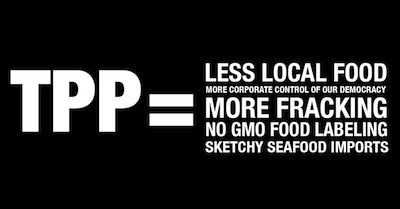
14. TPP: In one of the most widely-contested pieces of legislation in recent memory, the Trans-Pacific Partnership moved forward, often in secret. The TPP has been condemned as a corporate power grab that ensures profit for pharmaceutical companies, among many other loathed industries. From clamping down on internet freedom to effectively sanctioning sex trafficking, TPP signals an ominous fate for the future of freedom.

15. Sharp Uptick in Islamophobia: Amid the carnage of the Paris terror attacks, the recent shooting in San Bernardino, and the surge in Syrian refugees seeking asylum in Western nations, attacks against Muslims skyrocketed in 2015. In the United States, Muslims have been attacked for praying in public, wearing traditional head scarves, and for simply being out in public. Sikhs have been caught in the crossfire for the crime of being brown and wearing cloth on their heads — and thus being confused with Muslims — while at least one Christian has been terrorized as a result of the unmitigated hate currently permeating modern society. Many European nations and U.S. states have rejected the influx of refugees from war-torn Syria.

Amid the increased hate against Muslims, however, has come an outpouring of love and tolerance. Muslim groups across the world have condemned terror attacks, raised money to help the families of victims, and promoted programs to discourage extremism. At the same time, citizens across Europe and throughout the United States have welcomed Syrian refugees with open arms.

2015 was a year of chaos, violence, hate, and an ongoing struggle of freedom versus oppression. In many ways, it was like the years, decades, and even centuries and millenia that came before. But amid the conflict and often discouraging headlines, humanity has continued to persevere, offering resistance to seemingly all-powerful forces and paving the way for, if nothing else, potential peace, freedom, and respect for human life.

Full Text of TPP Released to Public… And It’s Horrible

TPP-protest-sign-from-Petrovich-lawn1-e1384352291139

‘We now have concrete evidence that the Trans-Pacific Partnership threatens our families, our communities, and our environment.’

By Jon Queally

Source: Commondreams

It’s a disaster for people, the planet, democracy, and the future of the global economy.

That was the immediate assessment of informed critics as world governments, including the United States, on Thursday morning made the full text of the controversial Trans Pacific Partnership Agreement (TPP) available to the public for the first time.

Though a tightly held secret throughout the years-long negotiating process, publication of the entire text (available online here) confirms the deal’s many woeful inadequacies which had been gleaned from leaked drafts and public statements by those privy to its contents.

“The TPP is a disaster for jobs, and environment and our democracy. It is the latest stage in the corporate capture of our society,” said Nick Dearden, executive director of Global Justice Now, in response to the full text.

The enormous so-called “free trade” deal between 12 Pacific Rim nations, he continued, “has less to do with selling more goods, than with rewriting the rules of the global economy is favor of big business. Like the North American Free Trade Agreement (NAFTA), 20 years ago, it will be very good for the very richest, and a disaster for everything and everyone else. NAFTA entrenched inequality and caused massive job losses in the USA, and TPP is turbo-charged NAFTA.”

Based on its initial assessment of the text, Sierra Club said—just as predicted—the TPP would threaten the health of communities, the environment, and global climate.

“We now have concrete evidence,” said Michael Brune, the group’s executive director, “that the Trans-Pacific Partnership threatens our families, our communities, and our environment. It’s no surprise that the deal is rife with polluter giveaways that would undermine decades of environmental progress, threaten our climate, and fail to adequately protect wildlife because big polluters helped write the deal.”

Now parked for all to see and review on the website of the U.S. Trade Representative, the deal itself is over 2,000 pages long, broken into 30 separate chapters and various indexes and appendixes.

Released one month after the final deal was secured at a final negotiating meeting in Atlanta, Georgia, the publication of the text in the U.S. begins a 90-day review period before Congress.

The good news, said Dearden, is that the TPP can still be stopped and that civil society groups in all of the countries involved will use the coming weeks and months to mobilize against its passage. “We’ll be doing all we can to support the huge swathe of trade unions, campaigners, activists and consumer groups  in all those countries fighting TPP in the coming months.”

In the U.S., said Brune, environmental groups like his will be marching and lobbying alongside allies from labor and economic justice groups to make sure lawmakers vote the deal down. “Congress must stand up for American jobs, clean air and water, and a healthy climate by rejecting the toxic Trans-Pacific Partnership.”

NATO and the West Just Became Irrelevant

antinato

By F. William Engdahl

Source: New Eastern Outlook

The dual summits that took place in Russia’s Ufa beginning 9 July were anything but routine. In fact it may be seen by future historians as a signal event that marked the definitive decline of the global hegemony of European civilization including North America. This is no small event in human history. It’s the most significant shift in relative global economic relations since the Fourth Crusade in 1204 when the Republic of Venice emerged as a world power following their brutal, disgraceful capture and sacking of Constantinople, marking the demise of the Byzantine Empire.

First a look at what transpired. Russia was host to two overlapping summits of emerging alternative organizations, the annual meeting of the BRICS nations as well as the annual meeting of the Shanghai Cooperation Organization. The larger significance has been all but entirely blacked out by western mainstream media such as the New York Times.

First we look at the results from the BRICS meeting where Brazil, Russia, India, China and South Africa are the five member states. The BRICS formally put their New Development Bank (NDB) into operation. It has world headquarters in Shanghai, China’s banking and financial center with a branch in South Africa to serve the African region.

It is explicitly operating as an alternative to the post-1945 domination of the IMF and World Bank, the heart of Washington’s Dollar System. It has member contributions of $50 billion for infrastructure projects mainly, but not exclusively, in the BRICS states. As well it has created a $100 billion financial defense fund, a so-called Contingent Reserves Arrangement, in event of speculative attacks such as were launched by Washington with the Soros Quantum Fund in 1997 to destroy the independent Asian Tiger economies.

The NDB bank is in business one year after the last BRICS summit agreed to its creation, and the meeting announced that first approved infrastructure projects will begin at the beginning of 2016. That’s an impressive testament to the mutual will to create an alternative to the IMF and World Bank, both of the latter controlled by Washington where they are headquartered. Notably BRICS agreed for the first time to institute formal cooperation with the leaders of the Eurasian Economic Union of Russia, Belarus, Kazakhstan, Armenia and Kyrgyzstan.

As well they agreed to meet the leaders of the Shanghai Cooperation Organization (SCO)–Russia, China, Kazakhstan, Kyrgyzstan, Russia, Tajikistan, and Uzbekistan.

SCO adds major security dimension

For its part, the nations of the SCO–Shanghai Cooperation Organization–in addition to formally admitting both India and Pakistan, agreed to increase its role combating terrorism in the region. The SCO was established in 2001 originally to settle border conflicts between China, Russia, Uzbekistan, Kyrgyzstan and Kazakhstan in the years after the dissolution of the Soviet Union. It is now undergoing an organic metamorphosis into something quite different and, in combination with China’s One Belt, One Road New Economic Silk Road high-speed rail network crisscrossing Russia and all Eurasia, potentially the kernel of an economic region whose growth over the next century and more can pale anything the debt-bloated OECD economies of the west are capable of.

This year the SCO members admitted Pakistan and India as full members, a move that undercuts some seventy years of Anglo-American geopolitics on the Indian Subcontinent by bringing the two bitter enemies into a forum dedicated to resolving border conflicts diplomatically. The Ufa BRICS declaration also stressed the importance of reaffirming the UN Charter and condemned unilateral military intervention, a clear reference to guess who?

That enlargement to include India and Pakistan into the Eurasian SCO has huge implications for China’s New Economic Silk Road high-speed rail infrastructure network across all Eurasia as well as potential gas and oil pipeline routes in the region. Significantly, for an Obama Administration that wants to pit Iran against Russia and China with the signing of the latest nuclear Geneva 6-power deal, Iranian President Hassan Rouhani attended the BRICS/SCO summits and held private talks with Russian President Vladimir Putin. Tehran will likely join the Shanghai Cooperation Organization after the embargo is withdrawn, perhaps as early as 2016, something that will give the SCO a major presence in the Middle East geographically.

With the planned lifting now of US economic sanctions on Iran, this could mean a huge economic deepening of the Eurasian economic space from Shanghai to St. Petersburg to Teheran and beyond, the nightmare scenario of US geopolitical actors like Zbigniew Brzezinski or Henry Kissinger.

Notably, the BRICS final declaration also pledged greater cooperation on combating terrorism and dealing with security problems of member states. This overlaps the Russia-initiated Collective Security Treaty Organization (CSTO), created in 1992 after the collapse of the Soviet Union to provide some semblance of security from rampant CIA monkey business using veterans of the CIA’s Afghani Mujahideen to “stir up” (to use Brzezinski’s term for it) the peoples of former Soviet states with large Muslim populations across Central Asia, especially Azerbaijan and the Caucasus.

Today, the CSTO is emerging as a far more serious organization and a means by which Russia can legitimately provide direct security expertise to weaker states inside the Eurasian Economic Union such as Kyrgyzstan or Armenia, both of whom have been targets of new US-sponsored Color Revolutions to spread chaos across the emerging Eurasian economic space.

What is notable about the joint BRICS-SCO-Eurasian Economic Union summit hosted by Russia’s Putin in Ufa, a city of some one million at the foot of the Ural mountain range near to Kazakhstan, is not only the degree of harmonizing that is taking place among the three vast organizations. It is also the fact that Russia uniquely is a member of all three, facilitating the harmonization of the three in terms of strategic goals. Moreover the member states have everything and everyone necessary to be fully independent of the dollar world and the dying EU with its misbegotten Euro sham.

As The Saker pointed out in a recent perceptive piece, “the full list of BRICS/SCO members will now look like this: Brazil , China , India , Kazakhstan , Kyrgyzstan , Pakistan , Russia , South Africa , Tajikistan and Uzbekistan. The BRICS/SCO will thus include 2 Permanent UN Security Council, 4 countries with nuclear weapons (only 3 NATO countries have nukes!), it’s members account for a full third of the world’s land area: they produce 16 trillion dollars in GDP and have a population of 3 billion people or half of the global world population.”

A new architecture of Eurasia is being formed, something which, were they of a mind to, the nations of the EU, above all Germany, France, Italy, could hugely benefit from cooperating with. Yet, what is the response of Washington and her “vassals” in European NATO, to use the term of Brzezinski?

The NATO Washington response

The response of Washington and NATO to all this is a bleak, pathetic contrast to put it mildly.

The new Obama nominee to become US Joint Chiefs of Staff chairman, Marine Corps General Joseph Dunford, declared Russia to be America’s greatest threat in his Congressional testimony some days ago. Conveniently forgetting all about the “existential threat” from ISIS, an organization US and Israeli intelligence brought into being to spread their chaos, Dunford declared, “If you want to talk about a nation that could pose an existential threat to the United States, I’d have to point to Russia.” The alarming thing is there was scarcely a peep of protest aside from blog remarks by retired Congressman Ron Paul and a few others. The tom-toms of bellicosity are pounding louder along the Potomac these days.

The war rage in Washington goes deeper than just one general. The Pentagon just released its Military Strategy of the United States, 2015. There the focus has clearly shifted away from “non-state actors” such as ISIS as being the greatest threat to the US and refocuses on “state actors” that are “challenging international norms.” The Pentagon strategy document goes on to name Russia, China, Iran, North Korea as the greatest threatsWhat they do not admit is the “threat” is to the continued sole Superpower hegemony of a United States that insists its will is the only valid one as self-appointed guardian of “democracy” and “human rights,” their New World Order as George Bush senior termed it in 1991.

On the economic front, what is emerging across the vast expanse of Eurasia is the greatest infrastructure investment in real physical infrastructure, which in turn will create new markets where today the remote regions of Siberia or Mongolia remain virtually untouched. By contrast, Obama’s Washington, a once-hegemon that has lost its soul, can only offer the US-dominated secret free trade pact, Trans-Pacific Partnership (TPP), for Asian states absent China, as a way to contain china economically, and the Trans-Atlantic Trade and Investment Partnership (TTIP) that offers the same geopolitical dead end for the economies of the EU. Both trade proposals are a desperate attempt by Washington strategists and their corporate backers in agribusiness such as Monsanto or the pharmaceutical industry to dominate world trade and finance.

Just as an individual can lose themselves through a trauma, so it’s possible for entire nations, even nations as large and apparently mighty as the United States of America, to lose its soul. Once a nation loses its soul, it loses its ability to do good, to be good. That tragically describes America today. The process has been a slow-motion rot from within, much as the Roman Empire in the Third and Fourth centuries AD. The rot has proceeded over decades.

There were many seminal events we as a people let pass without acting. One such over the past century or more was the US Congress’ surrender of the Constitutional responsibility to control the issue of money, handing it over to a private cabal of Wall Street bankers who named it the Federal Reserve. Another was the perfidy of our turning on our wartime allies in Russia and making them the “new Hitler,” so that Nelson Rockefeller’s national security state, complete with a CIA, could be built to justify the devaluation of the essence of the US Constitution. Another was the decision, well, perhaps you can fill in the blanks there are so many, each seemingly minor, but as a cumulative totality toxic to genuine respect for human life and individual freedom. Then, following the events of September 11,2001 we as a nation, crippled by our fear, stood by silently as the Bill of Rights went into the paper shredder of George W. Bush with the misnamed Patriots Act and other police state laws.

Once a people as once-wonderful as the American people lose all that that made them good, it takes a conscious decision and determination to regain that goodness. The first essential step is to become conscious of what is bad in us as a people today. David Rockefeller or George H.W. Bush or Bill Gates or Hillary Clinton or Jeb Bush did not do this. We did, and they merely took the use out of our action. There we must begin if we wish to take ourselves seriously again as a nation and as a people. Seeing ourselves as “victims” regardless of what or whoever is a dead end, literally.

F. William Engdahl is strategic risk consultant and lecturer, he holds a degree in politics from Princeton University and is a best-selling author on oil and geopolitics, exclusively for the online magazine “New Eastern Outlook”.

The Trans-Pacific Partnership and the Death of the Republic

TPPequals

By Ellen Brown

Source: Washington’s Blog

The United States shall guarantee to every State in this Union a Republican Form of Government.    — Article IV, Section 4, US Constitution

A republican form of government is one in which power resides in elected officials representing the citizens, and government leaders exercise power according to the rule of law. In The Federalist Papers, James Madison defined a republic as “a government which derives all its powers directly or indirectly from the great body of the people . . . .”

On April 22, 2015, the Senate Finance Committee approved a bill to fast-track the Trans-Pacific Partnership (TPP), a massive trade agreement that would override our republican form of government and hand judicial and legislative authority to a foreign three-person panel of corporate lawyers.

The secretive TPP is an agreement with Mexico, Canada, Japan, Singapore and seven other countries that affects 40% of global markets. Fast-track authority could now go to the full Senate for a vote as early as next week. Fast-track means Congress will be prohibited from amending the trade deal, which will be put to a simple up or down majority vote. Negotiating the TPP in secret and fast-tracking it through Congress is considered necessary to secure its passage, since if the public had time to review its onerous provisions, opposition would mount and defeat it.

Abdicating the Judicial Function to Corporate Lawyers

James Madison wrote in The Federalist Papers:

The accumulation of all powers, legislative, executive, and judiciary, in the same hands, . . . may justly be pronounced the very definition of tyranny. . . . “Were the power of judging joined with the legislative, the life and liberty of the subject would be exposed to arbitrary control, for the judge would then be the legislator. . . .”

And that, from what we now know of the TPP’s secret provisions, will be its dire effect.

The most controversial provision of the TPP is the Investor-State Dispute Settlement (ISDS) section, which strengthens existing ISDS  procedures. ISDS first appeared in a bilateral trade agreement in 1959. According to The Economist, ISDS gives foreign firms a special right to apply to a secretive tribunal of highly paid corporate lawyers for compensation whenever the government passes a law to do things that hurt corporate profits — such things as discouraging smoking, protecting the environment or preventing a nuclear catastrophe.

Arbitrators are paid $600-700 an hour, giving them little incentive to dismiss cases; and the secretive nature of the arbitration process and the lack of any requirement to consider precedent gives wide scope for creative judgments.

To date, the highest ISDS award has been for $2.3 billion to Occidental Oil Company against the government of Ecuador over its termination of an oil-concession contract, this although the termination was apparently legal. Still in arbitration is a demand by Vattenfall, a Swedish utility that operates two nuclear plants in Germany, for compensation of €3.7 billion ($4.7 billion) under the ISDS clause of a treaty on energy investments, after the German government decided to shut down its nuclear power industry following the Fukushima disaster in Japan in 2011.

Under the TPP, however, even larger judgments can be anticipated, since the sort of “investment” it protects includes not just “the commitment of capital or other resources” but “the expectation of gain or profit.” That means the rights of corporations in other countries extend not just to their factories and other “capital” but to the profits they expect to receive there.

In an article posted by Yves Smith, Joe Firestone poses some interesting hypotheticals:

Under the TPP, could the US government be sued and be held liable if it decided to stop issuing Treasury debt and financed deficit spending in some other way (perhaps by quantitative easing or by issuing trillion dollar coins)? Why not, since some private companies would lose profits as a result?

Under the TPP or the TTIP (the Transatlantic Trade and Investment Partnership under negotiation with the European Union), would the Federal Reserve be sued if it failed to bail out banks that were too big to fail?

Firestone notes that under the Netherlands-Czech trade agreement, the Czech Republic was sued in an investor-state dispute for failing to bail out an insolvent bank in which the complainant had an interest. The investor company was awarded $236 million in the dispute settlement. What might the damages be, asks Firestone, if the Fed decided to let the Bank of America fail, and a Saudi-based investment company decided to sue?

Abdicating the Legislative Function to Multinational Corporations

Just the threat of this sort of massive damage award could be enough to block prospective legislation. But the TPP goes further and takes on the legislative function directly, by forbidding specific forms of regulation.

Public Citizen observes that the TPP would provide big banks with a backdoor means of watering down efforts to re-regulate Wall Street, after deregulation triggered the worst financial crisis since the Great Depression:

The TPP would forbid countries from banning particularly risky financial products, such as the toxic derivatives that led to the $183 billion government bailout of AIG. It would prohibit policies to prevent banks from becoming “too big to fail,” and threaten the use of “firewalls” to prevent banks that keep our savings accounts from taking hedge-fund-style bets.

The TPP would also restrict capital controls, an essential policy tool to counter destabilizing flows of speculative money. . . . And the deal would prohibit taxes on Wall Street speculation, such as the proposed Robin Hood Tax that would generate billions of dollars’ worth of revenue for social, health, or environmental causes.

Clauses on dispute settlement in earlier free trade agreements have been invoked to challenge efforts to regulate big business. The fossil fuel industry is seeking to overturn Quebec’s ban on the ecologically destructive practice of fracking. Veolia, the French behemoth known for building a tram network to serve Israeli settlements in occupied East Jerusalem, is contesting increases in Egypt’s minimum wage. The tobacco maker Philip Morris is suing against anti-smoking initiatives in Uruguay and Australia.

The TPP would empower not just foreign manufacturers but foreign financial firms to attack financial policies in foreign tribunals, demanding taxpayer compensation for regulations that they claim frustrate their expectations and inhibit their profits.

Preempting Government Sovereignty

What is the justification for this encroachment on the sovereign rights of government? Allegedly, ISDS is necessary in order to increase foreign investment. But as noted in The Economist, investors can protect themselves by purchasing political-risk insurance. Moreover, Brazil continues to receive sizable foreign investment despite its long-standing refusal to sign any treaty with an ISDS mechanism. Other countries are beginning to follow Brazil’s lead.

In an April 22nd report from the Center for Economic and Policy Research, gains from multilateral trade liberalization were shown to be very small, equal to only about 0.014% of consumption, or about $.43 per person per month. And that assumes that any benefits are distributed uniformly across the economic spectrum. In fact, transnational corporations get the bulk of the benefits, at the expense of most of the world’s population.

Something else besides attracting investment money and encouraging foreign trade seems to be going on. The TPP would destroy our republican form of government under the rule of law, by elevating the rights of investors – also called the rights of “capital” – above the rights of the citizens.

That means that TPP is blatantly unconstitutional. But as Joe Firestone observes, neo-liberalism and corporate contributions seem to have blinded the deal’s proponents so much that they cannot see they are selling out the sovereignty of the United States to foreign and multinational corporations.

For more information and to get involved, visit:

Flush the TPP

The Citizens Trade Campaign

Public Citizen’s Global Trade Watch

Eyes on Trade

__________________

Ellen Brown is an attorney, founder of the Public Banking Institute, and author of twelve books including the best-selling Web of Debt. Her latest book, The Public Bank Solution, explores successful public banking models historically and globally. Her 300+ blog articles are at EllenBrown.com.

Hillary Clinton: The International Neocon Warmonger

06

By Webster G. Tarpley

Source: Voltaire.net

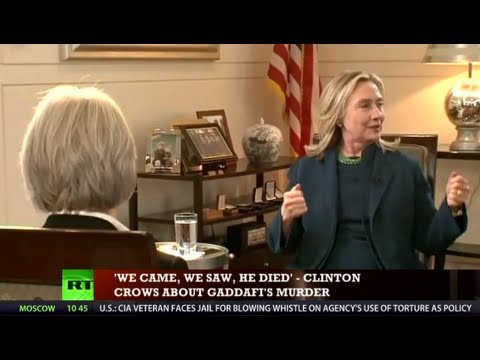
Hillary Clinton has announced her candidacy for President of the United States. While the European press showers her with praise without thinking, Webster G. Tarpley recalls her balance sheet: in all circumstances, she supported war and corporate interests.

As the National Journal reported in 2014, even the pathetically weak anti-war left is not ready to reconcile with Hillary given her warmongering as Secretary of State. And with good reason. Scratching just lightly beneath the surface of Hillary Clinton’s career reveals the empirical evidence of her historic support for aggressive interventions around the globe.

Beginning with Africa, Hillary defended the 1998 cruise missile strike on the El Shifa pharmaceutical plant in the Sudanese capital of Khartoum, destroying the largest producer of cheap medications for treating malaria and tuberculosis and provided over 60% of available medicine in Sudan. In 2006 she supported sending United Nations troops to Darfur with logistical and technical support provided by NATO forces. Libyan leader Moammar Qaddafi was outspoken in his condemnation of this intervention, claiming it was not committed out of concern for Sudanese people but “…for oil and for the return of colonialism to the African continent.”

This is the same leader who was murdered in the aftermath of the 2011 NATO bombing of Libya; an attack promoted and facilitated with the eager support of Mrs. Clinton. In an infamous CBS news interview, said regarding this international crime: “We came, we saw, he died.” As Time magazine pointed out in 2011, the administration understood removing Qaddafi from power would allow the terrorist cells active in Libya to run rampant in the vacuum left behind. Just last month the New York Times reported that Libya has indeed become a terrorist safe haven and failed state— conducive for exporting radicals through “ratlines” to the conflict against Assad in Syria.

Hillary made prompt use of the ratlines for conflicts in the Middle East. In the summer of 2012, Clinton privately worked with then CIA director and subversive bonapartist David Petraeus on a proposal for providing arms and training to death squads to be used to topple Syria just as in Libya. This proposal was ultimately struck down by Obama, reported the New York Times in 2013, but constituted one of the earliest attempts at open military support for the Syrian death squads.

Her voting record on intervening in Afghanistan and Iraq is well known and she also has consistently called for attacking Iran. She even told Fareed Zakaria the State Department was involved “behind the scenes” in Iran’s failed 2009 Green Revolution. More recently in Foreign Policy magazine David Rothkopf wrote on the subject of the Lausanne nuclear accord, predicting a “snap-back” in policy by the winner of the 2016 election to the foreign policy in place since the 1980s. The title of this article? “Hillary Clinton is the Real Iran Snap-Back.” This makes Hillary the prime suspect for a return to the madcap Iranian policies that routinely threaten the world with a World War 3 scenario.

Hillary Clinton is not only actively aggressing against Africa and the Middle East. She was one of the loudest proponents against her husband’s hesitancy over the bombing of Kosovo, telling Lucina Frank: “I urged him to bomb,” even if it was a unilateral action.

While no Clinton spokesperson responded to a request by the Washington Free Beacon regarding her stance on Ukraine, in paid speeches she mentioned “putting more financial support into the Ukrainian government”. When Crimea decided to choose the Russian Federation over Poroshenko’s proto-fascist rump state, Hillary anachronistically called President Putin’s actions like “what Hitler did in the ‘30s.” As a leader of the bumbled ”reset” policy towards Russia, Hillary undoubtedly harbors some animus against Putin and will continue the destabilization project ongoing in Ukraine.

Not content with engaging in debacles in Eastern Europe, she has vocally argued for a more aggressive response to what she called the “rollback of democratic development and economic openness in parts of Latin America.” This indicates her willingness to allow the continuation of CIA sponsored efforts at South American destabilization in the countries of Venezuela, Bolivia, Ecuador, Argentina and Brazil.

It is one of the proud prerogatives of the Tax Wall Street Party to push out into the light the Wall Street and foundation-funded Democrats. The final blow to Hillary’s clumsy façade comes directly from arch-neocon Robert Kagan. Kagan worked as a foreign policy advisor to Hillary along with his wife, Ukraine madwoman Victoria Nuland, during Hillary’s term as Secretary of State. He claimed in the New York Times that his view of American foreign policy is best represented in the “mainstream” by the foreign policy of Hillary Clinton; a foreign policy he obviously manipulated or outright crafted. Kagan stated: “If she pursues a policy which we think she will pursue…it’s something that might have been called neocon, but clearly her supporters are not going to call it that; they are going to call it something else.” What further reason could any sane person need to refute Hillary? A vote for Hillary is a vote for the irrational return to war.

The “Giant Sucking Sound”: Clinton Gave US NAFTA and Other Free Trade Sellouts

“There is no success story for workers to be found in North America 20 years after NAFTA,” states AFL-CIO president Richard Trumka. Unlike other failures of his Presidency, Bill Clinton can not run from NAFTA. It was Vice President Al Gore, not a veto-proof Republican congress, who lobbied to remove trade barriers with low-wage Mexico.

The record of free trade is clear. Multinational corporations and Wall Street speculators realize incredible profits, wages remain stagnant in the US, poverty persists in the developing world, and the remaining industrial corporations in America and Canada are increasingly owned by Chinese, Indian and other foreign interests.

America’s free trade policy is upside down. Besides Canada, Australia and Korea, most of our “free” trade partners are low-wage sweatshop paradises like Mexico, Chile, Panama, Guatemala, Bahrain and Oman. The US does in fact apply tariffs on most goods and on most nations of origin – rates are set by the US International Trade Commission (USTIC), a quasi-public federal agency.

Since a German- or Japanese-made automobile would under USITC’s schedule be taxed 10% upon importation, Volkswagen and Toyota can circumvent taxation by simply building their auto assembly plants for the US market in Mexico. In Detroit, an auto assembly worker is paid between $14 and $28/hour, ($29,120-$58,240/yr); hard work for modest pay. In Mexico, the rate varies from $2-5/hour.

In China, all automobile imports regardless of origin are tariffed as high as 25%. This allows the Chinese to attract joint ventures with Volkswagen and Toyota, and to paraphrase Abraham Lincoln, “keep the jobs, the cars and the money.”

NAFTA-related job loss is not a question of productivity, currency manipulation, “fair trade,” environmental standards, etc. While these issues are not trivial, free trade – as Lincoln’s advisor Henry C. Carey proved – is a matter of simple accounting. Can an American family survive on $4,160/year ($2/hr)? If not, cars and their components will be built in Mexico. If we want cars built in the United States, the only solution is a general tariff (import tax) reflecting the difference between those wage standards, like the very tariffs repealed by Bill Clinton.

In the United States the “runaway shop” under NAFTA and CAFTA has sent trade deficits and unemployment soaring while wages drop relative to the cost of living. Yet Mexico and other “partners” receive no benefit either. Many manufacturing sectors in Mexico pay wages lower than the equivalent sector in China. Mexico is now the world leader in illegal narcotics exportation and weapons importation. The poverty level between 1994 and 2009 remained virtually identical. (52.4% – 52.3%). The shipping of raw materials to Mexico comprise the majority of so called American “exports”. The finished products from these exports are assembled and sold back to the United States at slave labor prices.

Don’t expect Hillary to behave differently with the coming “Trans-Pacific Partnership,” which seeks to replace an ascendant China with less-developed Vietnam and Malaysia. Vietnam would overtake India-allied Bangladesh in the global apparel trade, and Malaysia has a high-tech manufacturing sector poised to rival China’s. With America’s manufacturing economy in shambles, the Clinton machine can now be redirected to geopolitical maneuvers.


News Video Roundup

12/11 A short but informative primer on the TPP:

12/11 Abby Martin critiques a New York Magazine article distorting and dismissing CIA drug smuggling operations:

12/12 Retired Marine General Michael Lehnert on why Guantanamo is a mistake and should be shut down:

12/12 Activist pranksters hijack a Shell Oil greenwashing event in Berlin (click “CC” icon for subtitles):

12/13 Joy Camp selling RFID chips in the style of a pharmaceutical commercial:

12/13 James Corbett on how to nullify the NSA and other tyrannical government agencies:

12/14 We Are Change interviews the Florida cop arrested for refusing to remove a Guy Fawkes mask: