Steiner and the Blood Demons

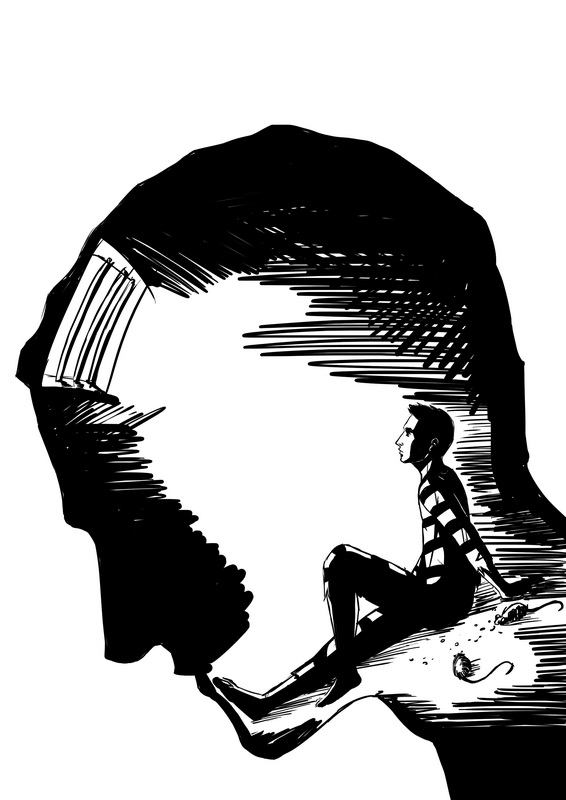
Blood Demons original title artwork by Michael Cox – see his art on Instagram here

By Jason Happenstall

Source: Beyond the Wasteland

Is the human race under spiritual attack? And did the esoteric philosopher and clairvoyant Rudolf Steiner warn about it over a century ago when he said a ‘vaccine’ would be the delivery system for the defeat of humanity?

For many, the overly-authoritarian response by governments worldwide to Covid-19 pointed to some deeper, more sinister, driving force. But it hasn’t just been the governments that seemed to be acting strange. Over the last two years we’ve witnessed people across a broad spectrum of society meekly submit to draconian attacks on their freedoms, many even fiercely defending the assault. In the same way, we’ve seen politicians and parties who once ran on platforms of personal freedom and economic autonomy almost overnight turn into overbearing control freaks, intent on micromanaging every aspect of our lives. How has this happened?

Recently, the term ‘mass formation psychosis’ has been on everybody’s lips. It’s defined as a psychological phenomenon whereby a mass of people voluntarily go through a process of deindividuation and a herd mentality forms. Due to their contagious nature, the thoughtforms affecting these deindividuated people, catalysed by the positive feedback loops of news programmes, social media and peer interaction, spread like wildfire throughout the population. In the past, this used to be called mob psychology, or more plainly, the madness of crowds.

Psychology: from Science to the Occult

Someone for whom the events of the past couple of years would not have been so surprising was the Austrian esoteric philosopher and mystic Rudolf Steiner, who died almost a century ago. Throughout the course of his life Steiner wrote numerous books and delivered thousands of lectures on his theories, contributing greatly to diverse spheres from architecture to education, and agriculture to beekeeping. His highly unique – and sometimes controversial – insights and methods led to the founding of the spiritual movement known as Anthroposophy, which emphasises the existence of a boundless potential for human beings.

Unlike some esoteric thinkers, Steiner saw the great importance of materialistic science, but argued that it was vital to see it as only a single aspect of reality which should ideally be combined with what he called ‘spiritual science’ – gained by mystical experience – in order to present the full picture. After all, breakthroughs often occur when scientists receive insights from beyond the material realm, as in the famous case of James Watson, credited with the discovery of the double helix shape of DNA which came to him in a dream featuring two intertwined serpents. Similarly, Dmitri Mendeleev, created the period table after a dream of “… a table where all the elements fell into place as required.” These cases go to show that not all scientific discoveries are the result of logical deduction and experimentation.

In fact, Steiner, who had been on the receiving end of mystical insights since childhood, honed his clairvoyant skills to such an extent that the information he received from non-conventional sources became more than the occasional flash of insight, His quest became the establishment of methods for obtaining objective extrasensory perception – a task he considered of paramount importance for he believed an epic battle was being fought in the spiritual realm that would have disastrous consequences for humankind unless it was addressed head-on.

Spirits of Darkness

His clearest warnings about the future fate of humanity came in a series of lectures delivered towards the end of his life in Dornach, Switzerland; these lectures are reproduced in the book The Fall of the Spirits of Darkness. Although Steiner’s detractors say his prose can be leaden, his lectures meandering, and his concepts difficult to grasp, he is remarkably clear and straightforward when it comes to the fate that awaits humanity if our obsession with scientific materialism is allowed to reign free without being pulled back into balance by the counterbalancing forces of spirituality.

This is most clearly illustrated in the final two lectures in the series – 13 and 14 – which are respectively titled The Fallen Spirits’ Influence in the World and Into the Future. Steiner posits that an unseen battle took place in the early 19th century which certain ‘spirits of darkness’ lost. These spirits were duly ejected from their heavenly realms and cast down into a more material plane of existence i.e. here. He is remarkably precise about when this occurred: autumn 1879.

These newly arrived spirits joined those who were already here – the ones that have been existing alongside and influencing humanity since the mythological times associated with the Fall. Given that it takes time for these malign spirits to work their way through human societies, it wasn’t until 1914 when their malign influence manifested in human society in the form of the First World War – a disastrous event the cause of which still puzzles secular historians.

Lucifer and Ahriman – the Leaders of the Pack

The spirits Ahriman and Lucifer have been hacking humanity for thousands of years, says Steiner, with Lucifer being the ‘light bringer’ intent on making us more spiritual and granting us more free will, and Ahriman doing the opposite and making us more materialistic and easier to control. In simplistic terms, Lucifer is an ascending influence, which Ahriman is a descending one.

Why should they want to do this? Well, we just don’t know – it’s difficult for our human minds to figure out what makes angels and demons tick. But whenever there’s one of those periodic battles in the spirit world, Steiner said, it tends to result in a new batch of reinforcements being thrown down into the material realm to join forces with those already here.

Steiner told us that Ahriman – a demon first identified by the Zoroastrians in ancient Persia – has the upper hand right now. He had a personal beef with Ahriman and had seen his face in vision – in fact he was still carving a likeness of it out of wood at the time of his death. Ahriman’s main aim seems to be to drag humankind into a purely materialistic state devoid of any form of spirituality, removing even the impulse to connect with our souls. The method of attack would be through science and technology, and by taking possession of the minds of powerful and influential people in order to push through this agenda. These controlled people could be scientists, politicians, religious leaders, or anyone with any influence. Thus, demonic forces would work through these people, and the people themselves, blinded by all-too-human failings such as greed or a lust for power, would lack the basic awareness to recognise what was occurring.

A New Religion for a New Age

The background to this power grab was the rise of atheism and the worship of science and progress. Now, we have a situation in which a purely materialist perspective is presented as the only explanation for all creation. Atheism has, for some, become a de facto religion, while the rich traditions of native spirituality have been side-lined and crushed under its heel. People, animals and in fact all life is regarded in the same cold manner; merely receptacles of proteins and genetic code that can be exploited. The endgame of this play is presented as a bleak, monochrome world expunged of spirit and light, where humans – their minds and spirits broken – are herded together and monitored like lab animals.

We can see how this scenario is being expedited. The CEOs of tech corporations are viewed almost as saints or Bodhisattvas, dangling the carrot of eternal life in the form of uploading the ‘data’ contained within our brains onto microchips. At the same time, politicians, corporate scientists, civil servants and economists are regarded as technocratic engineers tasked with ensuring the smooth functioning of the juggernaut of the material economy. Free will? The implicit assumption is that this will be unnecessary once the AI powered algorithms – which know us better than we do – reach escape velocity. At this stage, human life would have no intrinsic value, and the shells of our former selves would be occupied by the demonic army that Steiner warned us was waiting for its moment.

In the Blood

Some people say that Rudolf Steiner predicted a vaccine would appear which would be the delivery system for the final defeat of humankind. In light of the clandestine efforts made over the last two years to inject almost everybody on the planet with a gene editing treatment, his prescience seems remarkable – but how true is it? Amazingly, Steiner was remarkably clear (by his own standards) about the physical process by which this takeover would occur. He states in his final lecture in The Fall of the Spirits of Darkness that the spiritual world where entities such as angels, demons and archangels dwell is within the human blood. He meant this quite literally, saying:

“Both the Archangels and the Angels had their dwelling place in the blood, as it were. Truly, the blood is not something merely for chemists to analyse; it is also the dwelling place of entities from higher worlds.”

To that end, he speculated that the delivery mechanism will be in the form of a vaccine, injected directly into our bodies.

“Today [in 1917] bodies are vaccinated against one thing and another; in future, children will be vaccinated with a substance which it will certainly be possible to produce, and this will make them immune so that they do not develop foolish inclinations connected with spiritual life – ‘foolish’ here, of course, in the eyes of the materialists.”

This ‘vaccine’, he goes on to say, would block off any communication from the spirit world, meaning no messages or impulses would be able to get through from the ‘spirits of light’ whose aim is always to help humanity progress and fulfil our destiny. Positive impulses which were once transmitted to us would be permanently locked out by the vaccine, and instead the hapless victims would only be able to receive the impulses coming to them from disruptive sources, which we can imagine today might include the media, the education system and even established religion. There would be great confusion, he says, and Ahrimanic forces will turn people’s thoughts upside down and inside out. Everything that once was good and sensible will appear evil and crazy, while everything that was once considered insane and evil will be presented as sensible and good.

Squid Games: From Wetiko to The Matrix

Does this all sound implausible, the ramblings of a long-dead mystic? Many will no doubt say that it does, and that there are more earthly and plausible explanations for the psychic epidemic which has gripped the world. Perhaps Steiner was speaking metaphorically after all, some may reason. Nevertheless, the phenomenon to which Steiner alluded bears striking similarities to the Native American concept of the demonic force they call wetiko. The author Paul Levy has written extensively about this, defining it as “a contagious psychospiritual disease of the soul, a parasite of the mind that is currently being acted out en masse on the world stage via a collective psychosis of titanic proportions.”

Listening to a recent Legalise Freedom podcast entitled Covid-19: War on Humanity, Emma Farrell, a plant healer who uses shamanic techniques to access inner realms, made the observation that she and others in the same field had seen a veritable horde of spiritual parasitic entities attached to people over the last two years – as if a floodgate had been opened and they had poured through it. These entities, she says, come in all shapes and sizes but there are two very common and recognisable ones, one of which is squid-like. These squid-like beings, she says, attach themselves to unprotected people and harvest their spiritual energy by causing division and discord among us.

This struck me as interesting as we’ve seen this squid archetype move into human consciousness over the past few years, not least becoming apparent through popular culture. Many people have reported having dreams of octopus or squid-like creatures, and artists such as Peter Yankowski have painted pictures of these visions. Indeed, the villainous machines that control humans and harvest their energies in the Matrix movies look like robotic squids, while one of the top Netflix series of 2021 was Squid Game, a grim and violent survival thriller that posits human nature as intrinsically barbaric. What’s more, the resurgence in popularity of H.P. Lovecraft’s supernatural tales of horrors from the deep adds another tentacled layer to this rugose cake.

And let’s not forget when Goldman Sachs, one of the world’s largest investment banks, was memorable described by Rolling Stone journalist Matta Taibbi as a “great vampire squid wrapped around the face of humanity, relentlessly jamming its blood funnel into anything that smells like money.” The description is apt, after all, what is the purpose of an investment bank other than to turn every aspect of the sacred world into a monetised asset that can be traded, exploited and leveraged?

The Path Back to Sanity

Could this manifestation of a squid/octopus archetype into human consciousness be what Steiner was warning us about? Are there really spiritual entities within our blood that could account for billionaire technocrats’ obsession with injecting substances into us that are said to contain nanoparticles we know very little about? And how does this sit with the psychospiritual disease of wetiko outlined by Paul Levy, and the concept of ‘mass formation psychosis’ being talked about in the alternative media?

Perhaps the truth lies somewhere in the nexus of these concepts, with the implicit suggestion that we should not rest in our deep enquiry into the manner of the affliction that is currently so prevalent across the world. Only by doing so can we hope to find the necessary tools and weapons to fight back against it.

Or maybe the Ahrimanic demons that Steiner warned us about, the wetiko mind parasites Paul Levy writes of, and the tentacled entities that have squirmed into our collective consciousness via popular culture are all playing on the same team. If so, what does our team look like? And how do we win this game? Perhaps the fight is a necessary one at this juncture in human development, and that by defeating these ‘spirits of darkness’ we can progress to a higher level.

Whatever the case, referring back to the old adage alluded to earlier, people it’s said, might go mad in crowds, but the path back to sanity happens one person at a time.


Saturday Matinee: Enter the Void

Enter the Void and the Inhuman Condition

By Matt Cipolla

Source: RogerEbert.com

“I know it is coming, and I do not fear it, because I believe there is nothing on the other side of death to fear … I was perfectly content before I was born, and I think of death as the same state.” — Roger Ebert

Inaccessible as mortality itself and as jolting as a bullet to the back, Gaspar Noé’s “Enter the Void,” which made its Cannes debut ten years ago this month, is a science fiction movie, but it isn’t worried about what exists outside our world. It isn’t concerned with aliens or spaceships. It’s about what we’re all obsessed with—pretending to live, refusing to die, and latching onto any ersatz empathy just for the sake of hope. It isn’t an optimistic film in its depiction of the afterlife, but that’s entirely the point—and that’s what makes it sort of beautiful.

Writer/director Gaspar Noé has been a staple of the New French Extremity movement since the turn of the millennium. His debut feature, “I Stand Alone” (1998), was a cauldron of rage centered on a man so seething the audience had to strain to see his humanity. “Irreversible” (2002) existed in the same narrative universe but was thematically adjacent more than anything else. They were neck-deep in social nihilism, drowning in the worst of human nature. But while they were each an hour-and-a-half of vitriol, “Enter the Void” acts as the answer to that: a nearly three-hour dissociation of living, dying, and repeating, all from an atheistic view.

Noé has regularly disagreed with the concept of a higher power and life after death. This isn’t too surprising given how antitheist his films are, and while “Enter the Void” is much more spiritual than his other films, it’s also much more accepting of death. That may sound depressing in theory, but Noé is so comfortable in his beliefs that there’s little room for depression. Here, death is not sad. It’s nothing to fear, or hate, or cry about. It simply is.

“Death is an extraordinary experience,” Noé told the Irish Times. “I believe that. No one can really tell you what it is like because once you’ve experienced death, you are done. But it only happens just once in your life. By its nature it is extraordinary. If you are suffering or in pain, death is the best thing that can happen. I’m annoyed by a culture in which death is always considered something bad.”

“Enter the Void” revels in death right away by treating it like a breath of fresh air in a world hogtied by plastic. First, the film dives into its opening credits, an assault of flashing words and staccato techno music. It’s hypnotic, sure, but it also feels like a game of chicken between the viewer and a case of epilepsy. Just as we adjust to the anarchy, it dies. Cut to black.

Now we’re in a first-person point of view. We are Oscar (Nathaniel Brown), an American drug dealer and addict living in Tokyo. We talk with our sister Linda (Paz de la Huerta) on a balcony overlooking a world of neon and, after she leaves, smoke some DMT. Then a phone call interrupts the trip: it’s Victor (Olly Alexander), an acquaintance asking for some more drugs. But he can’t pick them up, so we need to bring them to him.

We oblige just as there’s a knock on the door—is it the police? No, it’s just Alex (Cyril Roy), a friend who’s lent us his copy of The Tibetan Book of the Dead. We head over to Victor and discuss the afterlife and reincarnation, and despite being in one of the most populous cities in the world, it never feels like we’re in more than a bubble. We’re itching to pop out of it.

We part ways with Alex and eventually find Victor in a bar. He’s crying. “I’m so sorry,” he says—and then the police swarm in. We run into the bathroom, try to flush the drugs, and pop!—the police shoot us through the door. We keel over. We die. Slowly, oh so slowly. And as we finally leave our body, we take the perspective of our spirit as it floats around the city, reliving our past memories and seeing our death’s aftermath. The first-person perspective becomes third person when replaying memories, and an over-the-shoulder framing motif carries an uncanny degree of separation from our own body. It’s a piggyback ride with our eyes on our back, right by the angel wings that never come to be.

Over the course of the journey, we remember that Linda’s and our parents died in a car crash while we were small kids. Foster care put her in a different home and, in accordance with a childhood pact we made to never leave each other, we started selling drugs to help Linda to move to Tokyo. But we got more and more into drugs. We needed more and more until more was never enough. Just maybe if we can find a second life, we can get just that: more.

Noé may find death to be happy if anything, but that’s something Oscar can’t bring himself to believe. His fatal flaw is what keeps him from passing on.

Truthfully, “Enter the Void”’s climax is Oscar’s death, only 25 minutes into the 161-minute film. It would be the inciting incident in most films, but here it caps off the part that’s grounded to reality. The film then dives into science fiction and becomes unstuck in time for its remaining 136 minutes, and as our protagonist searches for reincarnation, Noé approaches his arc with the detachment often seen in the sci-fi work of Tarkovsky and Kubrick. The idea of living, dying, and repeating until breaking the cycle is fundamentally spiritual (and specifically Buddhist), but it’s also a genre staple. From “2001: A Space Odyssey” to “Solaris” to “Under the Skin,” the concept is divorced from theism. It’s a form of atheistic spiritualism that Noé treats as sci-fi, like a drug-fueled melodrama as told by “2001”’s star child. 

In a September 2010 interview with Den of Geek, Noé said that he partly based the film’s premise on a theory that our brains contain limited amounts of DMT, which are unleashed during death. This was later echoed in a September 2018 article from the BBC that documented the reported similarities between DMT trips and near-death experiences. Combined with the languid pacing and psychedelic aesthetics, “Enter the Void”’s internalized sense of humanity feels just as elusive as the unknown encounters of “2001” or the personified dreams of “Solaris.”

As we do stumble out of the film, it ends with a rebirth. Could it be Oscar’s eventual reincarnation or could it just be a stoner’s dream that he had while dying? Was he trying to assign some sort of meaning to his life or was it actually there? If there was no latent purpose, is it better or worse for his life to reset? What if there is a latent purpose? Would the real damnation be an end to all emotions and the end of all life?

Whether Oscar’s life had meaning doesn’t matter because he couldn’t give himself to the possibility of it not. In the world of “Enter the Void,” it’s as good to cease to exist than it is to live and suffer.

____________________

Watch Enter the Void on tubi here: https://tubitv.com/movies/100000089/enter-the-void?start=true&tracking=google-feed&utm_source=google-feed

“Facing Clear Evidence of Peril” in a Country of Lies

By Edward Curtin

Source: Behind the Curtain

“In my seventy-plus years from 1946 to now, the chorus of fear-mongering bullshit has never ceased – only grown louder. The joke is on us. Ha Ha Ha.”

– Oliver Stone, Chasing the Light

Perhaps silence is the best response to the endless cavalcade of official lies that is United States history. The Internet and digital technology have allowed those lies to increase exponentially in number and frequency with the result that people’s minds have become like 7-Eleven stores, open 24/7 for snack-crap “news.”

But once you become conscious that it’s lies night and day, it sets your head aswirl and plunges your soul into depths of despair.  You are tempted to retreat from such knowledge and talk of trees and trivia.  But you are ashamed of your country.  It’s hard to laugh.  You feel you are drowning.  You flounder and gasp for air.  You look around and wonder why most people are able to go their merry ways believing the lies and whistling in the dark.  Junk news nation, indeed.

Yes, there are alternative voices who tell the truth, but their audiences and monetary support are very small or non-existent compared to the corporate mainstream media and those who shout and scream across the Internet as they take in a lot of money from naive followers. The recent revelations about Alex Jones’s wealth probably don’t bother his diehard fans, but they should.  Likewise, the funding sources for websites and writers of various persuasions are important to know, for they reveal possible biases in their work.  Snake oil salesmen are commonplace, and there are many naive customers lining up for their wares.

Wealth and power are the main drivers of the media chicanery that has captured so many minds. Writers, of course, should be fairly paid for their work, but in this Internet age, most are not.  As with the movies and book publishing, the income gap between the big names – the celebrity stars – and less well-known writers, even if their work is excellent, is huge.

Some sites and writers make a lot of money, but who they are is a guessing game.  No one’s talking.  Some regularly tell their readers that if they don’t receive enough contributions, they will be unable to continue to write or publish, even when the sites do not pay their contributors.  Whether this is good marketing or income-by-threat is up for grabs.  Whichever it is, it seems to work, as far as I can tell, for these writers and websites don’t disappear.

Money is the dirty secret of all news and commentary.  To paraphrase someone: It is very difficult to get truth from writers whose income is dependent on pleasing those who fund them.

You may have noticed how many former military officers, CIA agents, mainstream journalists, pharmaceutical company executives, and sundry other government and corporate bigwigs appear in the mainstream and alternative media to support or oppose government policies.  The mainstream ones doing the propaganda they always did, while the alternative ones appear as converts to the dissident faith.  No one ever explains how and by whom these people are financed or how their lucrative pensions affect their consciences.  “Former” is a funny word.  Ha Ha Ha.

Confidence “men” come in all shapes and sizes with no one talking money.

So let me fess up.  I received about $200 in support last year for edwardcurtin.com, my website.  Nothing before that and not a cent over the last 5-6 years for many hundreds of articles that have appeared very widely across the Internet.  Before the Internet, publications paid for work, mine and others.  Not now, at least for me.  How much money writers are receiving, and who is supporting their sites, is a taboo subject.

So I am thinking about selling mugs at my site with my name and mug shot on them and a line of supplements that will increase one’s testosterone and estrogen in equal measure to make sure no one takes offense in this era of delicate feelings.  Ha Ha Ha.  Yes, the joke is on us.  I identify as a man since I am one.  Don’t be offended.

Jokes aside, as Leonard Cohen sang:

“Oh, like a bird on the wire
Like a drunk in a midnight choir
I have tried in my way to be free”

If you are stubborn enough and have the good fortune to find inspiration from those brave dissidents who have gone before us and those who continue to lead us on, you realize silence is betrayal and that you must speak, even if all seems hopeless at times. Even when no one is paying you, or maybe more accurately, because no one is paying you. Even though it is hopeless, even though it isn’t.  This is another secret.  There are many.

It’s been twenty years since the U.S. brutally invaded Iraq.  When George W. Bush, at a staged pseudo-event in Cincinnati on October 7, 2002, as he set Americans up for the invasion of Iraq in March 2003, said, “Facing clear evidence of peril, we cannot wait for the final proof, the smoking gun, that could come in the form of a mushroom cloud,” no one laughed him out of the house.  His claim was simply an evil joke that was reported as truth.  It was all predictable, blatant deception.  And the media played along with such an absurdity, which is their job and what they always do.  I pointed it out at the time in a newspaper column, but who listened to a hick writer in a regional newspaper.

Iraq obviously had no nuclear weapons or the slightest capability to deliver even a firecracker on the U.S.  But the mainstream media, Senator Joe Biden, politicians galore, celebrities like Oprah Winfrey with her guest, the eventually disgraced Judith Miller of the New York Times, the despicable Tony Blair, et al., all supported Bush’s blatant lies.  Soon Colin Powell, the “hero” of George H. W. Bush’s 1991 made-for-TV Gulf War of aggression against Iraq, would do his Pinocchio act at the United Nations and the U.S. military was off to get Saddam Hussein, Osama bin Laden’s evil twin, both the latest Hitlers until Vladimir Putin replaced them.  I guess I skipped some others such as Muammar Gaddafi and Bashar Al-Assad.  New Hitlers proliferate so fast it’s hard to keep track of them.  Ha Ha Ha.  The joke is on us.

As everyone knows, or should, more than a million Iraqis died because of George W. Bush, but how many cared?  How many cared when once Bush was gone, Barack Obama, aided and abetted by the cackling Hilary Clinton, destroyed Libya and ignited the war against Syria?  You want examples?  There are too many to name here.  But let it be said these lies span all American administrations, whether it’s Bill Clinton continuously bombing Iraq and Serbia through Trump bombing Syria and Somalia, up to the present day with Biden attacking Russia via Ukraine, etc.  All these presidents are liars, but their followers treat them otherwise.  Biden says Jimmy Carter asked him to deliver his eulogy.  What does that tell you?  Shall we laugh?  Sing?

On the clear understanding
That this kind of thing can happen
Shall we laugh?
Shall we laugh?
Shall we laugh?

Shall we laugh harder if I mention the Covid-19 propaganda and all those writers who have failed to even address it, as they have failed to question 9/11 and other obvious official lies?  Is it not evident that if they did so, their money flows might dry up?  Here and no further is a widespread rule, for they must adhere to the boundaries imposed by “responsible thought” and the “no go” zones with which they tie their own hands in order to keep their wallets full.

If you are lucky, as I was, when you are young you discover how fearful of free thought and how corrupt our institutional authorities are.  You don’t spend decades feasting off the spoils of those institutions only to “wake up” once you have made your name and secured your fortune, which seems to be the way of so many wise luminaries of the Internet Age who are either trying to ease their consciences as they get ready to kick the bucket or are perhaps putting us on.

When I was twenty-four years-old, I accepted my first teaching job at a small Catholic college where I taught theology.  I had been trained in the latest and best scholarly work of the most renown international theologians.  Rather than indoctrinating my students with rote learning, I taught them to read widely and think deeply in the tradition of a liberal arts education.  To seek out the best scholarship.

But doing so became quickly apparent to the college and Church authorities who were stuck in the inquisitorial age of obedience or else and no thinking allowed.   Although my students loved my courses and felt freed up for the first time to think about their spiritual lives, I was hounded to correct my heretical teaching, which of course I refused to do.

At one point when I was at lunch in the cafeteria, a nun who was a professor, stole my brief case with my notes and left the cafeteria.  One of my students saw her do this and chased her into the ladies’ room where the nun hid in a stall.  The nun kept flushing the toilet to scare the student away, but the student wouldn’t let her out until she returned the briefcase.  Ha Ha Ha.  It sounds funny to recount but was an example of my experience at this college.  Someone vandalized my office door and ripped down anti-war posters that were on it.  I was gone from that college soon thereafter.  It taught me a lot.  Obey or else.

Heresy: The Latin word is from Greek hairesis, a taking or choosing for oneself, a choice.

At another teaching job a year or so later, I had a more chilling experience.  I was known as an anti-war activist, a conscientious objector from the Marines, etc., and one day, a late Friday afternoon when few were around, an administrator asked to meet me on a deserted stairwell where he proceeded in hushed tones to try to convince me to join him in Army Intelligence to spy on others.  He said I would be perfect for the job since I was known as an anti-war dissident.  I told him to fuck off, but I was shocked by his double life and his request.

I have since learned that this guy the spy was not an anomaly, for government confidence men are widespread.

I’ve had many other such early experiences for which I am very grateful, even though when I was fired from jobs and lost income it was traumatic at the time.  By my thirtieth year, I knew the system was corrupt to its core and subsequent experience has only ratified that conclusion.  I got the joke.

I recount these incidents not because my experiences are singular and I’m special, for others have suffered the same youthful fate.  But such good fortune can fortify you for life or break your spirit.  If the former, you don’t wait to retire to push back against all the lies or regret your past.  You find that it’s all good and life has set you on the heretic’s path of freedom and choice. You realize that what you went through is absolutely nothing compared to people around the world who have and continue to suffer at the hands of the U.S. military industrial complex.  You realize your experiences are trivial in the larger scope of things and that your government’s conduct is beyond condemnation.  It is an abomination.  You feel ashamed to live in a land where killing is a game.

The sociologist Peter Berger puts it well in his little classic, Invitation to Sociology, when he discusses experiences that lead to seeing through the play-acting nature of social life:

Experiences such as these may lead to a sudden reversal in one’s view of society – from an awe-inspiring vision of an edifice made of massive granite to the picture of a toy-house precariously put together with papier mâché. While such metamorphosis may be disturbing to people who have hitherto had great confidence in the stability and rightness of society, it can also have a very liberating effect on those more inclined to look upon the latter as a giant sitting on top of them, and not necessarily a friendly giant at that. It is reassuring to discover that the giant is afflicted with a nervous tick.

Notice the giant George W. Bush’s clicking eyes as he delivers his “facing clear evidence of peril” lies for the invasion of Iraq.  He and his presidential good friends are cardboard cartoon characters whose eyes reveal their evil intentions.  “It’s a Barnum and Bailey world/Just as phony as it can be,” but it would all fall to pieces if it weren’t for you and me failing to see through all the bad actors, not just presidents but the whole cast of characters that populate the Spectacle of news and opinion.

The Russians are coming!  Ha Ha Ha.  Yes, Oliver, the joke’s on us.

But it’s not really funny, except in the most sardonic and dark way, for we now do really face clear evidence of peril as a result of Biden and his crazy predecessors who have run U.S. foreign policy for so long. They have brought us to the edge of nuclear war with Russia by surrounding Russia with NATO bases and nuclear weapons, while doing the same to China.

Bertolt Brecht was right in his poem “To Those Born After”:

Truly I live in dark times!

Frank speech is naïve. A smooth forehead

Suggests insensitivity. The man who laughs

Has simply not yet heard

The terrible news.

What kind of times are these, when

To talk about trees is almost a crime

Because it implies silence about so many horrors?

When the man over there calmly crossing the street

Is already perhaps beyond the reach of his friends

Who are in need?

Arguments Against Despair

By David Edwards

Source: Media Lens

Eliot Jacobson is a retired professor of mathematics and computer science who regularly appears on our Twitter feed discussing the climate crisis. He sends tweets under the grim title, ‘Your “moment of doom” for the day’. These channel the latest news on rapidly rising carbon emissions and temperatures, catastrophic examples of extreme weather, and so on. It’s depressing fare, and Jacobson is candid about the level of anguish he feels:

‘I woke up feeling angry at about 2:30 AM this morning.

‘It’s easy to find something wrong with just about anything I look at. It’s all projection. I’ve been writing and deleting Tweets, but I still feel angry.

‘I’m angry that there’s very little I can do and there’s no way out.’

In a blog post, he wrote:

‘This sadness is so overwhelming, so all-consuming, that it takes my breath away. The things I do to cope with the weight of it all are mere distractions from this sadness. Volunteer for a few hours, then sadness. Go for a walk, then sadness. Listen to music, read, visit websites, then sadness. Visit with friends or family, then sadness. Sadness returns every time I have a moment to reflect on the predicament of the present moment.’

I’m no stranger to this emotional roller-coaster. 1988 was the big year for me, when NASA scientist James Hansen told the world we were heading for disaster. I had no difficulty believing him.

It seemed inconceivable to me that the profit motive driving global industry could be restrained, let alone reversed, in time. I was then working as a marketing manager for British Telecom in the West End of London where I set up a Green Initiatives Group. Small changes were made, but they were just window dressing – deeper changes impacting profit were completely unthinkable. It seemed obvious to me that this fundamentalist corporate resistance must, sooner or later, lead to disaster.

I first protested for action on climate change with Friends of the Earth on the streets of central London in October 1989. I was 27 when I started campaigning; I’m now 61. I’ve thought a lot, worried a lot, talked a lot, read a lot, and written a lot about these issues for three and a half decades, more than half my life.

It seems absolutely incredible to me – by which I mean it seems something that I honestly would not have believed was possible – that what seemed like an urgent crisis to me in the late 1980s can still seem like ‘hype’, a ‘liberal tax scam’, an ‘oligarch plot’ and ‘bourgeois hysteria’ to large numbers of people in 2023. In the 1980s, we said things would change when there were ‘bodies in the streets’ – but the bodies are all around us now, and there is still no sign of meaningful change.

I say all this to make clear that I am in no way complacent about, or indifferent to, the looming climate catastrophe (it seems absurd to even describe it as ‘looming’). My comments below are not intended to detract from the vital need to take immediate action; they are addressed to the despair that I know many people, like Jacobson, are feeling.

You, Me And The Mysterium Tremendum

After everything I have myself suffered, it seems to me that we have two main tasks at the present time: first, to do everything in our power to avert the terrifying crisis threatening us with extinction. Second, to do everything we can to transform the fear and suffering of our predicament into love and bliss.

The first of these is new. The second may sound preposterous, even annoying, but it has actually always been the great human task.

Many activists devoted to action, to change, despise the very idea that our own happiness should be any kind of concern. The suggestion is dismissed as self-indulgent ‘navel gazing’. We have to dispense with all such ‘sentimentality’ and focus on ‘hard politics’. We have to plunge into the darkness of realpolitik and fight for our lives. It’s going to be bruising, to hurt – forget all kitten-cuddling ideas about ‘love’ and feeling good. And how on earth can you feel ‘bliss’ when the world is falling apart? Such nonsense!

As so often, the anger is rooted in fear – the fear that such concerns will divert energy and attention away from what really matters. The counter-argument is that not giving a damn about personal feelings, about our needs as human beings in this short life, is actually one of the key factors that got us into this fine mess in the first place. (See my Cogitation: ‘Our Indifference To Ourselves’ – Beyond The ‘Virtue’ Of Self-Sacrifice – Parts 1 and 2)

Just as I can’t understand how so many people can fail to see the truth of the existential crisis we’re facing, I can’t understand how people can feel so absolutely certain about the significance, the meaning, of this crisis that they fall into absolute despair.

First of all, we need to remember that despair is a function of mind; it is not something mandated by Existence. As Thoreau noted, we have a choice:

‘However mean your life is, meet it and live it; do not shun it and call it hard names.’ (Thoreau, ‘Walden’, Oxford University Press, 1997, p.292)

This has been as true for everyone in human history facing death from illness, starvation, genocide, as it is for all of us now, facing extinction.

I find the universe so mysterious, so fundamentally Unknown, and even Unknowable, that I cannot establish a solid base of existential certainty that allows me to be confidently desperate about even this situation.

Of course, climate collapse is terrible for us – I don’t want to die, you don’t want to die; we don’t want so-called human ‘civilisation’ to disappear. But we all do have to die and the deeper significance of even a disaster on this scale is fundamentally unknown.

We are a miniscule part of billions of years of existence involving 200 billion galaxies each containing 200 billion stars, and who knows how many planets, swirling over distances that completely defy imagination – all of it emerging out of the mysterium tremendum, the how and why of Existence (we can’t say Creation; we don’t even know if it has a beginning or an end).

This immensity of space and time has led to this moment that stands before us. Here we are! Everything in this cosmos has led us here. We can’t just blame politicians, corporate executives and their journalistic enablers – the universe made them as they are and this is what the universe has given us to deal with.

Who are we to break down in despair as if we were certain about the final meaning of what is happening? What do we really know about anything? Do we really know enough to find a solid position from which we can cast judgement even on the extinction of human life, or even of all life, on this planet? 

In November, spiritual writer Steve Taylor posted a poem, ‘Being Watched by The Moon’, on Facebook. Taylor wrote of our cosmic near neighbour:

‘Then I noticed a look of concern on her face.

There was a glint of disapproval, a hint of dismay

in her gaze, as it followed me home

as if she was witnessing an accident, or a crime.

Had I done something wrong? I wondered.

Had I injured or offended someone?

Had I gone astray, and lost the meaning of my life?

But then I looked closer, and realised:

she wasn’t just watching me.

She was watching the whole world.’

A glint of ‘concern’, ‘disapproval’ and ‘dismay’, as if ‘witnessing an accident, or a crime’? Is this really the most likely reaction of the Moon? After all, she has seen a lot – she’s around 4.5 billion years old, about the same age as the Earth. Human beings have been around for just 2.8 million years, and in our problematic modern form for just 200,000 years. The Sun formed about 4.6 billion years ago from an enormous molecular cloud that gave birth to numerous other stars. Our star has about 5 billion years of life left; she’s in her prime. The universe itself is about 13.8 billion years old – at least in this cycle, if it is a cycle. We don’t know where all this comes from, what it means, what lies at the base of it all. 

Worst case scenarios suggest that human-induced climate change might devastate most animal and plant species to such an extent that it could take five million years for life to recover. But 5 million years is a blink of the cosmic eye to old-timers like the Moon, Earth and Sun whose memories stretch back, not millions, but billions of years. And if things don’t work out here post-climate collapse, maybe they’ll go better among the billions and billions of stars out there – that’s a lot of stars, a lot of possibility. From this perspective, one might surmise that human despair at the prospect of human extinction is one more manifestation of an egotism that causes us to vastly overestimate our own importance.

Might it alter our despairing perspective to consider that the enlightened mystics might be right in declaring that, not just plants and animals, but the entire universe is alive? We think life arises miraculously, ‘accidentally’ (what on earth does that mean?), Lazarus-like, from dead matter. But atoms are pretty lively phenomena; they are whizzing flea circuses of jumping sub-atomic particles, quantum waves and other forms of energy. Might we one day conclude that what we call life arises from these subtler forms of life? Is energy in some sense life?

And might our despair be leavened by the possibility, as mystics also insist, that, not just human beings, but the entire cosmos is conscious? What would it mean, if it turns out that even rocks are consciousness in a kind of coma; that evolution is ultimately a process of consciousness awakening from the slumber (not the death) of matter?

If everything is alive and everything is conscious, then even human beings are unable to inflict any real damage – a manifestation of eternal life rises and falls, comes and goes, but the ocean of living consciousness continues completely unharmed.

The universe seems to consist of objects, of material ‘things’. But that is not all: these rocks, animals, planets and stars appear in the something that is no-thing that we call space. Likewise, our awareness also provides an internal space in which sense perceptions, thoughts and emotions can appear and be known. We assume the universe is material and yet awareness seems non-material, seems entirely other than that which is material. Is it possible that external space and the internal space of awareness are related? Could they actually be the same phenomenon? We tend to see our internal space as an epiphenomenon of the brain, but is external space an epiphenomenon of matter?

Could the mystics even be right when they insist that awareness evolves in the universe by moving from ageing bodies to new ones? Westerners find this a childishly obvious example of wishful thinking. But does that make it untrue? Do we imagine that Buddha, Bodhidharma, Nagarjuna, Lao tse and all other enlightened humans were inventing when they made this claim over and over again? Could they even be right in arguing that consciousness moves from old, exhausted planets to fresh, new planets better suited to the continued evolution of consciousness?

If that sounds ludicrous, is it any crazier than the idea that the universe suddenly emerged from nothingness – nothing, nothing, nothing, then, Bang! – or that it has somehow always existed? These appear to be the only two possibilities, and yet both seem totally nonsensical to us. If the only logical possibilities seem impossible, how can we so confidently root our despair in our clearly inadequate human capacity for logic?

Satchitananda

I controversially suggested our task was to find bliss in the face of looming extinction. Is that possible? Is it moral even to try in the face of so much suffering?

Seasoned meditators tell us that the mysterious awareness perceiving these words is inherently blissful. Not just pleasurable, mind you – ecstatic. We are told the bliss is already there, is always there; that it is the very nature of awareness. The idea is captured in the Sanskrit epithet ‘satchitananda’, or ‘reality, consciousness, bliss’ – existence is aware and awareness is blissful.

This sounds counter-intuitive standing at a bus stop on a rainy Monday morning commute to work. We are here, we are aware, thank you very much, and we are emphatically not beaming with delight.

There are two possible explanations for this contradiction: either all the enlightened mystics were talking nonsense, or we are not in fact here, not in fact aware, and are therefore not able to experience the bliss that is here.

But if we’re not here, where on earth are we?

We are physically here, of course, but our minds are not in the present; they are in the past and in the future. Because the past and future do not exist, because they are mere ideas in the mind, when we are thinking we are absent; we are not truly here.

There are times when I sit in meditation for an hour when thoughts finally drop away; thoughts by which I am otherwise unceasingly plagued by day and night (dreams are thinking in pictures). When thoughts drop away, even for a moment, something very subtle, but very powerful slips through. In my experience, it emerges like a wispy strand of pink candy floss spinning out from some completely unknown depth and melting into my heart (my ‘dantian’ and ‘lower dantian’, in the terminology of Qigong). The melting is experienced as a sweetness, a delight, that glows with unconditional love for everyone and everything.

It is clear, sitting alone in a room, that this loving bliss is uncaused. I may have been as miserable as sin about the state of the world before slumping down to watch my thoughts and feelings – nothing in my world has objectively changed in that hour. In fact, as all the mystics insist, this loving delight has not been caused; it has simply been unveiled, revealed.

Thought is the veil. This is why we can’t feel the bliss of existence: it is hidden from us by layer upon layer of thought, rather like the multiple layers of cloud that typically greet solemn holidaymakers returning to Britain.

Human beings are the only animal that can become lost in the unreal world of mentation. All the virtuous, politically correct and well-intentioned thought by which we have always hoped to make the world a better place – the whole, misguided 17th and 18th century dream of the European ‘Enlightenment’ – has combined with all other thoughts to form an almost impenetrable barrier between us and the real source of civilisation, of personal and global salvation, within us.

The truth is that we have destroyed our planet and become almost completely estranged from the inherent bliss of being because we have sought civilisation and happiness in our heads. In reality, true civilisation – not the ability to build machines to pyrrhically ‘conquer’ nature, other animals and humans – is found when we transcend thought and connect deeply and often with our hearts.

‘The Best People In The World’ – Actual Human Civilisation

The very idea of technological ‘progress’ implies some kind of ‘Manifest Destiny’. It is our ‘destiny’ – the natural path of any ‘advanced’ civilisation on any planet – to develop ever more powerful technology, that we might one day voyage across the cosmic ocean just as we once voyaged across the water and air of our home planet.

But this may be wrong. It may be that the right option is to journey inwards in an exploration of being, of consciousness, to an unimagined brave new world of love and bliss.

Perhaps we don’t hear anything from highly technological ‘civilisations’ out there in the cosmos because the whole effort is a suicidal wrong turn that leads to near-instant decline and extinction. The cosmos may nevertheless be teeming with genuinely civilised beings who have gone in a very different direction.

After all, even on our planet, there have been examples of authentically civilised humans – people who live in their hearts rather than in their heads, who are free of our obsessive thinking. They appear to have rooted their daily lives in the kind of love and bliss that we in the West can only find in meditation.

In his book, ‘The Conquest of Paradise’, writer and ecologist Kirkpatrick Sale described the low-tech, Taino society encountered by the Spanish conquistadors in 1492:

‘So little a part did violence play in their system that they seem, remarkably, to have been a society without war (at least we know of no war music or signals or artifacts, and no evidence of intertribal combats) and even without overt conflict (Las Casas reports that no Spaniard ever saw two Tainos fighting).’ (Kirkpatrick Sale, ‘The Conquest of Paradise’, Papermac, 1992, p.99)

But the lack of violence was only one aspect of the Tainos’ towering civilisation:

‘And here we come to what was obviously the Tainos’ outstanding cultural achievement, a proficiency in the social arts that led those who first met them to comment unfailingly on their friendliness, their warmth, their openness, and above all – so striking to those of an acquisitive culture – their generosity.’ (p.99)

Even Admiral Cristobal Colon (‘Christopher Columbus’ in old money), the man who brought death and disaster to the lives of the Taino, recorded in his journal:

‘They are the best people in the world and above all the gentlest. They became so much our friends that it was a marvel… They traded and gave everything they had, with good will.’ (pp.99-100)

He continued:

‘I sent the ship’s boat ashore for water, and they very willingly showed my people where the water was, and they themselves carried the full barrels to the boat, and took great delight in pleasing us. They are very gentle and without knowledge of what is evil; nor do they murder or steal.’

Colon added:

‘They love their neighbours as themselves, and they have the sweetest talk in the world, and are gentle and always laughing.’ (p.100)

Sale wrote poignantly:

‘It is to be regretted that the Admiral, unable to see past their nakedness, as it were, knew not the real virtues of the people he confronted. For the Tainos’ lives were in many ways as idyllic as their surroundings, into which they fit with such skill and comfort. They were well fed and well housed, without poverty or serious disease. They enjoyed considerable leisure, given over to dancing, singing, ballgames, and sex, and expressed themselves artistically in basketry, woodworking, pottery, and jewellery. They lived in general harmony and peace, without greed or covetousness or theft.’ (pp.100-101)

American geographical scholar Carl Sauer concluded:

‘…the tropical idyll of the accounts of Columbus… was largely true’. (p.101)

The Tainos were human beings who lived in their hearts, not in their heads. They had no august universities packed with thinkers, philosophers and other half-crazed intellectuals; no 24/7 outpourings of media pollution – they lived in the bliss of awareness unclouded by obsessive thought.

As for us! By painful contrast, in his book, ‘Impact of Western Man’, historian William Woodruff commented on the society from which Colon had sailed:

‘No civilization prior to the European had occasion to believe in the systematic material progress of the whole human race; no civilization placed such stress upon the quantity rather than the quality of life; no civilization drove itself so relentlessly to an ever-receding goal; no civilization was so passion-charged to replace what is with what could be; no civilization had striven as the West has done to direct the world according to its will; no civilization has known so few moments of peace and tranquillity.’ (Sale, ibid, p.91, my emphasis)

To live in the head, to sacrifice the moment for the future, to prioritise the ‘serious’, ‘important’ work of the greedy, plotting mind over the bliss of the heart is to build a self-destructive, doomed version of fake ‘civilisation’.

Or consider the experience of the Mexican anthropologist Miguel Covarrubias on visiting the island of Bali in 1938. Covarrubias wrote:

‘No other race gives the impression of living in such close touch with nature, creates such a complete feeling of harmony between the people and the surroundings… The Balinese belong in their environment in the same way that a humming-bird or an orchid belongs in a Central American jungle.’ (Miguel Covarrubias, ‘Island of Bali’, KPI, 1986, p.11)

Covarrubias added:

‘A man is assisted by his neighbours in every task he cannot perform alone; they help him willingly and as a matter of duty, not expecting any reward other than the knowledge that, were they in his case, he would help in the same manner’. (p.14)

The result, Covarrubias wrote, was a village system which operated as ‘a closely unified organism in which the communal policy is harmony and cooperation – a system that works to everybody’s advantage’. (p.15)

In the late 1990s, I worked with the Swedish ecologist and activist Helena Norberg-Hodge who lived for many years among the people of Ladakh on the Tibetan plateau of Northern India. In her book ‘Ancient Futures’, Norberg-Hodge wrote of how she was bewildered by the strange fact that the Ladakhis were always smiling:

‘At first I couldn’t believe that the Ladakhis could be as happy as they appeared. It took me a long time to accept that the smiles I saw were real. Then, in my second year there, while at a wedding, I sat back and observed the guests enjoying themselves. Suddenly I heard myself saying, “Aha, they really are that happy”. Only then did I recognize that I had been walking around with cultural blinders on, convinced that the Ladakhis could not be as happy as they seemed. Hidden behind the jokes and laughter had to be the same frustration, jealousy, and inadequacy as in my own society. In fact, without knowing it, I had been assuming that there were no significant cultural differences in the human potential for happiness. It was a surprise for me to realize that I had been making such unconscious assumptions, and as a result I think I became more open to experiencing what was really there.’ (Helena Norberg-Hodge, ‘Ancient Futures – Learning From Ladakh,’ Sierra, 1992, p.84)

As amongst the Tainos, fighting in traditional Ladakhi society was unknown, disputes were settled quickly and peaceably, and when one person had a problem the entire community did its best to help:

‘In traditional Ladakh, aggression of any sort is exceptionally rare: rare enough to say that it is virtually non-existent… Even arguments are rare. I have hardly ever seen anything more than mild disagreement in the traditional villages—certainly nothing compared with what you find in the West.’ (p.46)

Norberg-Hodge concluded:

‘I have never met people who seem so healthy emotionally, so secure, as the Ladakhis.’ (p.85)

These societies that seem so ‘primitive’ and ‘uncivilised’ to goal-oriented, power-obsessed, head-trapped Europeans, were actually exemplars of authentic human civilisation.

I am not suggesting that we can become like the Tainos, Balinese and Ladakhis. If we are too high-tech primitive to save ourselves from climate disaster, we can obviously not hope to create that kind of paradise on earth.

What I am suggesting, though, is that the existence of these societies powerfully supports the contention of the mystics: that awareness unclouded by obsessive thinking is indeed in the nature of bliss and love. I am suggesting that such low-tech civilisations may exist in abundance, undetected, on other planets that will of course continue to thrive no matter what happens on our planet. I am also suggesting that you and I can create a little patch of this paradise in our own hearts.

Perhaps in our world as it is, genuinely civilised, loving societies are doomed to be destroyed by brutal, head-trapped, Western-style societies. But you and I still have the freedom, even in the face of this wider brutality, even in the face of environmental catastrophe, to live a life overflowing with love and bliss. Maybe that is all that is possible for us, and maybe that is enough. 

HOW TO DISCOVER YOURSELF THROUGH YOUR OWN PHILOSOPHY

By Mickey Z.

Source: Waking Times

“Be yourself; everyone else is already taken.” ~Oscar Wilde

There are now over eight billion people on the planet. We each have a different psychophysiological reaction to any given stimuli, no matter how minute the difference. From forks to forklifts, spoons to spoonerisms, folklore to philosophy. Every single one of us perceives everything differently.

The way I perceive the concept of something as simple as a tree is fundamentally different than the way every single other person perceives the “same” concept. This is due to our historically unique experiences with “trees.”

The memories we form influence our experience of perceiving trees. I may have fallen out of a tree and broken my arm. You may be blind and can only touch or smell a tree. I may have chopped down twenty trees to build a house. You may have crashed into a tree and totaled your car. The point is, every single historical interaction with a tree has formed a unique interpretation of “tree” in our psychophysiology.

The same thing applies to abstract concepts such as love, God, and philosophy. We each have historically unique experiences regarding these abstract concepts as well.

Which brings me to the point of this article: we should own up to the fact that we each have a devastatingly unique perception of all things, including philosophy. And rather than merely piggyback, kowtow, or place all our eggs into a single historical philosophy forsaking our individuality, we should make our individuality foremost and create our own philosophy out of the mulch, fodder, and compost of past philosophies.

We should double down on our uniqueness and fatten our individuality on the food of philosophies past.

Most people settle upon one established philosophy (religion, ideology, worldview), unaware that they have a unique perception of what that philosophy is. It is already the case that we perceive the concept of philosophy in a fundamentally different way than others do even within the same philosophy. Developing our own unique philosophy is simply becoming aware and honoring our unique perception.

It’s a matter of awareness and honor. Becoming aware of our unique perception of all things puts us into an existential pickle: We either admit it and honor it, or we deny it and dishonor it. If you choose the former, read on. If you choose the latter, not even the one-dimensional philosophy you lean on like a cripple can save you from yourself.

Here are five ways to discover yourself through your own philosophy…

1.) Practice self-inflicted philosophy:

“To go wrong in one’s own way is better than to go right in someone else’s.” ~Dostoevsky

What does it mean to inflict yourself with philosophy? It means being ruthless with your perception of reality. No excuses. No mercy. No self-pity. It means forcing your head over the edge of the abyss. No rose-colored glasses. No pie-in-the-sky delusions. No safety nets. Just you and the eternal darkness. Just you and the rawness of nihilism. Just you and the existential angst.

You’re faced with the bleeding-meat realness of reality, a snarling darkness puking up all things. It forces you into a vital confrontation, demanding you think rather than believe. Full-frontal, no punches pulled, it grabs you by the throat and asks you, point blank, “Are you ready to accept that everything you believed was a lie?”

Self-inflicted philosophy forces you to perceive reality with a clean slate. It gets down to brass tacks. It’s philosophy in action. It digs down to the roots of the human condition. It cuts deep into the pulsing blister of the mortal wound. It reveals the lodestone. It’s your ticket to staying ahead of the curve because it exposes how everything is on the curve. No exceptions.

As Marcus Aurelius said, “All that exists is the seed of what will emerge from it. You think the only seeds are the ones that make plants or children? Go deeper.”

2.) See the world from the shoulders of multiple giants:

“If I have seen further, it is by standing on the shoulders of giants.” ~Isaac Newton

Don’t be afraid of becoming an autodidact. Read a lot. Connect the dots. Stay curious. Seek the shoulders of giants. Seek help, expertise, guidance, and wisdom from others. Become a sponge for higher knowledge. Soak it up. Ring it out. Repeat. Learn; unlearn; relearn.

Don’t cling. Never settle. Putting down roots on a giant’s shoulder is a death knell for your uniqueness. Jump! Take a leap of courage out of faith. Stay loose. Stay flexible. Create a scaffolding between giants. Keep your curiosity ahead of your certainty.

Don’t get caught up in the hype. Don’t allow their destiny to prevent your own. Rather, use their destiny to invigorate your own hero’s journey.

What does this mean? It means staying out of your own way. It means allowing for guideposts, other points of view, and a healthy sense of detachment. It means sojourning, not standing, on the shoulders of multiple giants to see further than they did. It means employing self-interrogation strategies as pivot points in order to better navigate the labyrinth of life.

When you sojourn on the shoulders of giants, you are effectively building a bridge to the Overman. You rise above the outdated past to embrace the updated future.

3.) Interrogate the knowledge:

“As anywhere else in the world, the unwritten law defeated the written one.” ~Herman Hesse

The flipside of sojourning on the shoulders of giants is the ability to be circumspect with the knowledge gained. To truly be original one must be able to “entertain a thought without accepting it (Plato).” This means you must take the knowledge gained and interrogate your perception of it lest you become stuck in a belief.

Human ingenuity, like human evolution, is a flowing process of change and mutation. The key to maintaining the process is to allow reimagination despite past imaginings.

The stale and outdated past must give way to a fresh and updated future. Otherwise, there is only stagnation, devaluation, and de-evolution. Therefore, you must have the wherewithal to question everything you’ve learned to the nth degree.

The best way to do this is to honor what validates Universal Law and discard what doesn’t. A deep enough interrogation of the knowledge you gained from sojourning on the shoulders of giants should reveal its validity in relation to the benchmark of health.

When you use health as a benchmark, you realize that health is not a matter of opinion. Rather, it is dictated by an indifferent universe with universal laws that apply to everyone, despite our interests, biases, opinions, or beliefs. And this applies to everyone not only physically, but mentally and spiritually as well.

But health will only get you so far. It can teach you moderation and temperance. But it won’t get you outside the box, the comfort zone, the domesticated bliss, the indoctrination, the cultural conditioning, or the dogmatic mental paradigm. Only audacity and courage can do that.

It doesn’t take courage to blindly follow the dictates of the giants who came before you (manmade laws), but it does take courage to question them (using universal laws). Be audacious. Be courageous. Interrogate your knowledge.

4.) Blend it all together with your unique soul-signature imagination:

“Your time is limited, don’t waste it living someone else’s life.” ~Steve Jobs

If given a choice between the path most travelled and the path least travelled, choose neither. Choose your own path instead.

Don’t fall into the trap of following someone else’s plan. Deconstruct, analyze, and scrutinize their plan, then improvise it. Infuse it with your own essence. Take the knowledge gained from standing on the shoulders of giants and run it through the sieve of your imagination. Customize your life to your own fitting.

Take this piece from this ideology and that piece from that ideology, but then connect it all to your own unique perspective. Be creative. Think outside the box. Push your culturally prescribed comfort zone as far as it will go. It’s all yours for the making.

You are a pivot with a point of view. You are a wave crashing onto the shores of eternity. You are a unique emergence from the universal interdependent spirit molecule. You are the cosmos becoming aware of itself. And you are vital for the progressive evolution of the interconnectedness of all things, whether you realize it or not.

Don’t let anything else lay your uniqueness low, whether spiritually or psychologically. This is your life. This is your story to tell. As Nietzsche said, “The individual has always had to struggle to keep from being overwhelmed by the tribe. If you try it, you will be lonely often, and sometimes frightened. But no price is too high to pay for the privilege of owning yourself.”

Indeed. No price is too high to pay for the privilege of discovering yourself through your own philosophy. No price is too high to pay for the privilege of self-mastery.

5.) Recycle the mastery:

“To attain knowledge, add things every day. To attain wisdom, remove things every day.” ~Lao Tzu

When it’s all said and done, mastery is just as illusory is it is useful. Don’t allow it to kill your quest for truth. Let the life-death-rebirth process come alive inside you. Resurrect Beginner’s Mind. Keep the flow state flowing. Keep the fountainhead resonating. Keep the Truth Quest always ahead of the “truth.”

As Scott Adams said, “Awareness is about unlearning. It is the recognition that you don’t know as much as you thought you knew.”

For a true seeker there is no settled state, there is no final stage. There is always something more to learn. There is always an answer to question. Mastery is always recyclable. The journey is always the thing, or it is nothing. The sword is always sharpened dullness. The diamond is always pressurized coal. As James Hillman said, “the pearl is also always grit, an irritation as well as a luster.”

Mastery must be discarded on the funeral pyre of muscle memory lest it become the dogma that kills your journey. Feel the mastery, love it, relish being in awe and overwhelmed with gratitude for it. Then let it go. Surrender “mastery” to Cosmos. Practice detachment. When you’re attached to nothing, you’re connected to everything.

YOUR BODY IS A PROJECTION OF CONSCIOUSNESS AND THOUGHT

By Dylan Charles

Source: Waking Times

At the cutting edge of science and technology today is artificial intelligence and robotics, which are being driven by ever-increasing computational speeds made possible by quantum computing. When the capacity of technological computation rivals the speed of our capacity to think and process information as humans, then we will reach the singularity and a superintelligence will emerge in our society, triggering runaway technological growth.

While this is coming in the very near future, we are also now learning how this very type of quantum creative power is already at play in our world via the interplay of human consciousness and the material world. In the early 1900’s, the famous double-slit experiment demonstrated that material objects can actually change their composition based on what is being held in consciousness when said objects are observed.

In other words, the world around us is being created moment by moment, and our expectations of what the world should be is what gives it form. In order to alter its form or to change course, we can use the directed focus of the mind to envision and feel something different for ourselves, and in time and through repetition, this reality will eventually take form. The feeling is the key.

This is something we do all the time. The best example of this, perhaps, is the human body, which can by some measures be considered a projection of human consciousness. We see this everywhere. For example, just look at people’s bodies and consider their health, and you’ll be able to get a fair idea of what type of thought patterns and belief systems are at work in the everyday silence of their own minds.

The best example is someone with radiant health, high energy and intense vitality. This person didn’t get to be this way by happenstance. The patterns of thought in their mind support their belief that their body can be a radiant storehouse of health. This, in turn, supports the development of habits which create such well-being. This type of person engages in clean, clear thinking about their health and body, and the result is this very type of body. They intentionally feel how they want to feel.

On the other hand, a person with an out of shape, obese, or disease-ridden body undoubtedly engages in thought patterns and beliefs about health which support such poor health. They never believe that they can be disease free or of ideal weight, and so their thoughts reinforce habits which deteriorate their health. Inside this person’s mind is chaos, confusion, fear, self-loathing and other patterns which create dis-ease.

There is more to this, though, if we consider the possibilities unfolding in the realms of quantum physics and superintelligent technology. We are beginning to get a clear idea of what the quantum field actually is and what it can do. It appears to be waiting for us to purposefully interact with it.

The quantum world is waiting for us to make a decision so that it knows how to behave. That is why quantum physicists have such difficulties in dealing with, explaining, and defining the quantum world. We are truly, in every sense of the word, masters of creation because we decide what manifests out of the field of all-possibility and into form.

The thing is, the quantum level of reality isn’t a local and insignificant aspect of creation. It is all around us, and it is the most fundamental level of creation aside from the unified field itself. The human energy field is interacting and influencing the quantum field all around us at all times and the energy of our beliefs and intentions are infused into our energy field because they are defined by the energy of our thoughts and emotions. ~Brandon West

Final Thoughts

This may sound to some like a woo woo way of looking at the world, but there is immense practicality in this world view for improving your life, your health, your relationships, and your overall happiness. The takeaway here is that you must take control over your own mind, and plant thoughts that support the projection of a healthy body and life. As Dr. Joe Dispenza notes, you’ll need to decide what you want, then put your attention on creating that reality.

“Whatever it is that is your vision, you’re just going to have to be passionate enough to invest your attention and your energy into that future over and over again, till all of a sudden you start seeing feedback in your life.” ~Dr. Joe Dispenza

3 QUESTIONS YOU’RE NOT SUPPOSED TO ASK ABOUT LIFE IN A SICK SOCIETY

By Dylan Charles

Source: Waking Times

In a society this controlling, it’s no wonder so many people can’t let go of their grip on false realities, and pressure others to conform to their point of view. In my work as a self-mastery coach I help people see what false realities they’ve made for themselves, and help them let go of their grip on useless beliefs.  ~Dylan Charles

“It is no measure of health to be well adjusted to a profoundly sick society.” ~J. Krishnamurti

Society is directed by a never-ending mainstream narrative which is always evolving, and always reaching new dramatic peaks in sensationalism and hype. They fill your mind with topics they select, they keep your attention on these topics, and they invite and encourage you to argue amongst each other about these topics. In this way our collective attention is permanently commandeered, preventing us from diving too deeply into matters which have more than a superficial impact on day-today life.

Free-thinking is the ability and willingness to explore of ideas and areas of the mind which are yet undiscovered or are off-limits. It is a vanishing art that is deliberately being stamped out by a control system which demands conformity, acquiescence and obedience of body, mind, and spirit.

For your consideration, here are three questions you’re not supposed to ask about life in our profoundly sick society.

1. Who owns the money supply, and the world’s debt?

Pretty much the entire world is in financial debt, an insidious form of slavery which enables the exploitation of human beings and of all things in nature. It’s maddening when you think about it. The United States alone supposedly owes some $20 trillion, while the world at large owes a shocking $215 trillion?

But to whom, precisely?

Money is just a medium of exchange which facilitates transactions between people. In and of itself it has no intrinsic value as we could just as easily use sea shells instead of dollar bills and still be able to get things done. But today’s money is the property of private third-parties who rent it out to national governments, who then use the labor of their citizens as collateral against these loans. This is a highly refined form of slavery, which has already put future unborn generations of human beings in debt.

But who, exactly does the human race owe? Who are our debt-slave masters?

2. Who owns your body?

Ownership means having the explicit right to use, control and dispose of something in the manner of your choosing. The one thing you are born with that you take with you to your death is your own body, but do you own it? If not you, then who does own your body?

If this question were already settled in our society then there wouldn’t be ever-increasing pressure on those who choose to refuse vaccines. Children battling cancer and other serious illnesses wouldn’t be forced to take chemo and radiation under penalty of law and under threat of being taken from their parents. Water wouldn’t be fluoridated without our consent. Natural medicines wouldn’t be outlawed under threat of fines and prison time.

We are rapidly approaching a time when people will be required by law to take psychotropic medications as citizens were in Aldous Huxley’s dystopian classic, Brave New World.

Do you own your body, or does it belong to the state?

3.  Why is the exploration of consciousness restricted and illegal?

The most effective prisons are not material, but are constructed inside the mind. Perception, opinion and understanding are all dynamic concepts, not at all static. These can all change in the blink of an eye just because a new idea or experience resonates with you in a special way. Our evolution depends on our ability to expand the frontiers of what’s possible, and when the mind is held in confinement by an entrenched system and powerful cultural paradigm, progress, even happiness, is stunted.

In this societal trap you are given free rein to debase your consciousness and your spirit with alcohol, dangerous drugs, pharmaceuticals, television, pornography, theatrical violence, and then some, yet many natural medicines which elevate consciousness and provide a window into the soul are illegal.

“This is the way freedom is hijacked—not all at once, out in the open, but stealthily, little by little, behind closed doors, and with our own agreement. How will we be able to resist when so many of us have already willingly handed over the keys to our own consciousness to the state and accepted without protest that it is OK to be told what we may and may not do, what we may and may not explore, even what we may and may not experience, with this most precious, sapient, unique, and individual part of ourselves?

If we are willing to accept that then we can be persuaded to accept anything.” ~Graham Hancock

ILLUSION & TRUTH: THE DISINTEGRATION OF METAPHYSICAL VALUES

Little rabbit in a magician hat.

By Kingsley L. Dennis

Source: Waking Times

“Yes, the world is an illusion. But Truth is always being shown there.” ~Idries Shah, The Dermis Probe.

It seems that we can talk about consciousness and consciousness studies so long as it remains within the ‘reality remit’ and does not push against the ‘barriers of perception.’ This is why so much of our modern societies and the media marketplace are filled with pop-spirituality as they function as cultural remedies rather than revolutions. That is, they provide a band aid plaster rather than seeking to find a permanent cure. Many easy ‘self-help’ practices offer a ‘false exit’ revolving door so that people are given the sensation of finding a way out of the ‘system’ only to be brought back into it again. Such teachings or offerings act as auto-tranquilizers – they act as auto-tranquilizing mechanisms to provide an alternative treatment, or pleasing sensation, that appears as fringe or ‘outside’ the system but is not. Rather, it is another sub-set within the overall program; but a subset that does not constitute a threat or provide a means to perceive through the programmed reality set. In other words, it is an allowed anomaly.

The ‘allowed anomalies’ are examples of mechanisms of mental anesthesia that soften or even dispel the original urge to seek for answers. They also serve as a quick satiation (fast food) to bring temporary satisfaction. Temporary satiation, or satisfaction, dulls down the real hunger so that afterwards the developmental urge remains in the ‘goldilocks zone’ of not too hungry or too full – just full enough to want to keep on with the spiritual pursuit yet not too hungry that they wish to seek beyond what is openly offered or available in the marketplace. The forces currently acting upon humanity are those that shall compel us to die away or die to become. The opportunity now available compels us to become something qualitatively new. This is now the perfect time for personal advancement and for the expansion of perception and awareness. It is no longer necessary to be clever – it is essential to be wise.

There has been a noticeable decline in what, in simple terms, may be called the ‘metaphysical quest’ (what has also been known as the ‘spiritual quest’). The inner impulse to seek beyond material-physical appearances has almost vanished from contemporary life. It was long ago co-opted into religious pursuits and fashioned into ritualistic ceremonies and dogma. And more recently, it has been ushered into what I have previously called ‘Ashram Avenues’ and ‘Guru Boulevards’ by people enticed with exotic interests. The glamour of ‘self-development’ has found a wanting marketplace within the glare of social media. The depth of inner longing is scratched at the surface and satisfied by sipping at the singing bowls of inner harmony and world peace.

It is all too easy to become stereotypes of ourselves, driven by platitudes of false mysticism and superficial attainment. There is so much within contemporary life that bears down upon us to make us forget ourselves that just the act of self-remembering becomes a force of rebellion and treason against the material world. We are led to forget those capacities that we bring with us from the metaphysical realm. We are here in this world as both guests and custodians; we inhabit our bodies during the life experience in the hope of making the most of those gifted lives. And yet, we rarely come to realize the truth of who we really are. We become entranced by the material realm and its systemic diversions. Our independent liberty and free will is dismantled by succumbing to set patterns, habits, and programmed behaviours. Generally, in our societies an individual is ‘permitted’ to access a form of ‘spirituality’ just enough to provide them with a taster smell of satisfaction. This is then carried around throughout life as a constant marker of ‘satisfied attainment’ – an outer recognized badge of honour. The individual then stops doing the Work – the critical seeking – and falls into line within the Game. The perennial memory starts to fade again. Yet … have we ever done enough?

Human civilization is infected with deviant distractions distributed through social, cultural, and also spiritual mischief. So much false gold within circulation creates a parallel economy. On the other side, however, true gold increases its value. The disintegration of metaphysical values, and the moral decay that accompanies this, are part of a deliberate projection into hyper-materialism. We have yet to fully realize that the fastest way to awaken is to become the cause of someone else’s awakening. By assisting and serving our fellow human beings we are simultaneously helping ourselves. Many people are already awake – they just don’t know it yet. Sounds contradictory? How many times have we known that something is the right thing to do and yet we fail to do it? Similarly, so many people instinctively feel the inner urge, and sense the inversion of the world, and yet choose not to act upon this. In the words of the sage and philosopher Sri Aurobindo:

At first the inner consciousness seems to be the dream and the outer the waking reality. Afterwards the inner consciousness becomes the reality and the outer is felt by many as a dream or delusion, or else as something superficial and external.[i]

Our current consensus reality is not an accurate portrayal of the life experience, and it is no longer where we need to be. We need to turn things around so that the outer world is recognized to be the dream state, or the lower perceptive level of reality. It is time to choose a different timeline – if that makes any sense?

If people continue to be fed by the dross of the external world – its media circus, entertainment absurdities, and directed propaganda – then the consensus reality gets continually imprinted (validated) by these inputs that people feed back into the system. A new template or consciousness field struggles to come into existence. The mass perceptive state remains low – very low. And as a collective species, humanity can no longer remain at this low level of perceptive awareness (ignorance) at a time when an advancement in awareness is vital. It is simply not sustainable in the long term. If this polarized state continues, then there is likely to be a splintering in humanity’s future, and not everyone will walk the same path going forward. What we choose today will become the reality we shall experience later. Now is the time for advancement in terms of perceptive awareness: it is time to EXPAND. It is time to grow out of the lens of infantile perception. It is time to walk each step with awareness, with conscious knowing, instead of stumbling through on autopilot.

Let us ponder on our predicament by concluding with the following tale:

The Fruit of the Tree

An ancient tale tells how a wise man once related a story about a remarkable tree which was to be found in India. People who ate of the fruit of this tree, as he told it, would neither grow old nor die. This legend was repeated, by a reliable person, to one of the Central Asian kings of long ago, and this monarch at once conceived a passionate desire for the fruit – the source of the Elixir of Life.

So the King sent a suitably resourceful representative to find and to bring back the fruit of that tree. For many years the emissary visited one city after another, travelled all over India, town and country, and diligently asked about the object of his search from anyone who might know about its nature and where it was to be found.

As you can imagine, some people told this man that such a search must obviously only be a madman’s quest; others questioned him closely to find out how a person of such evident intelligence could actually be involved in such an absurd adventure; their kindness in this respect, showing their consideration for him as a deluded dupe, hurt him even more than the physical blows which the ignorant had also rained upon him.

Many people, of course, told him false tales, sending him from one destination to another, claiming that they, too, had heard of the miraculous Tree. Years passed in this way, until the King’s representative lost all his hope of success, and made the decision to return to the royal court and confess his dismal failure. Now, there was also, luckily, a certain man of real wisdom in India – they do occasionally exist there – and the King’s man, having heard of him late in his search, thought; ‘I will at least go to him, desperate as I am, to seek his blessing on my journey homeward.’

He went to the wise man, and asked him for a blessing, and he explained how it was that he had got into such a distressed condition, a failure without hope. The sage laughed and explained:

‘You simpleton; you don’t need a blessing half as much as you need orientation. Wisdom is the fruit of the Tree of Knowledge. Because you have taken images and form, secondary names for things, as your aim, you have not been able to find what lies beyond. It has thousands of names: it may be called the Water of Life, the Sun, an Ocean and even a Cloud … But the emblem is not the thing itself.’

Whoever, this Teacher continued, attaches himself to names and clings to concepts without being able to see that these derivative things are only stages, sometimes barriers, to understanding, will stay at the stage of secondary things. They create, and remain in a sub-culture of emotional stimulus, fantasy and quasi-religion.[ii]

References:

[i] Sri Aurobindo, Integral Yoga. Lotus Press (1993), p49

[ii] Idries Shah, (1978) A Perfumed Scorpion. London: Octagon Press, p137-8