
Today is a Good Day for Science Fiction

Image-1Snowpiercer_International_11_5_13

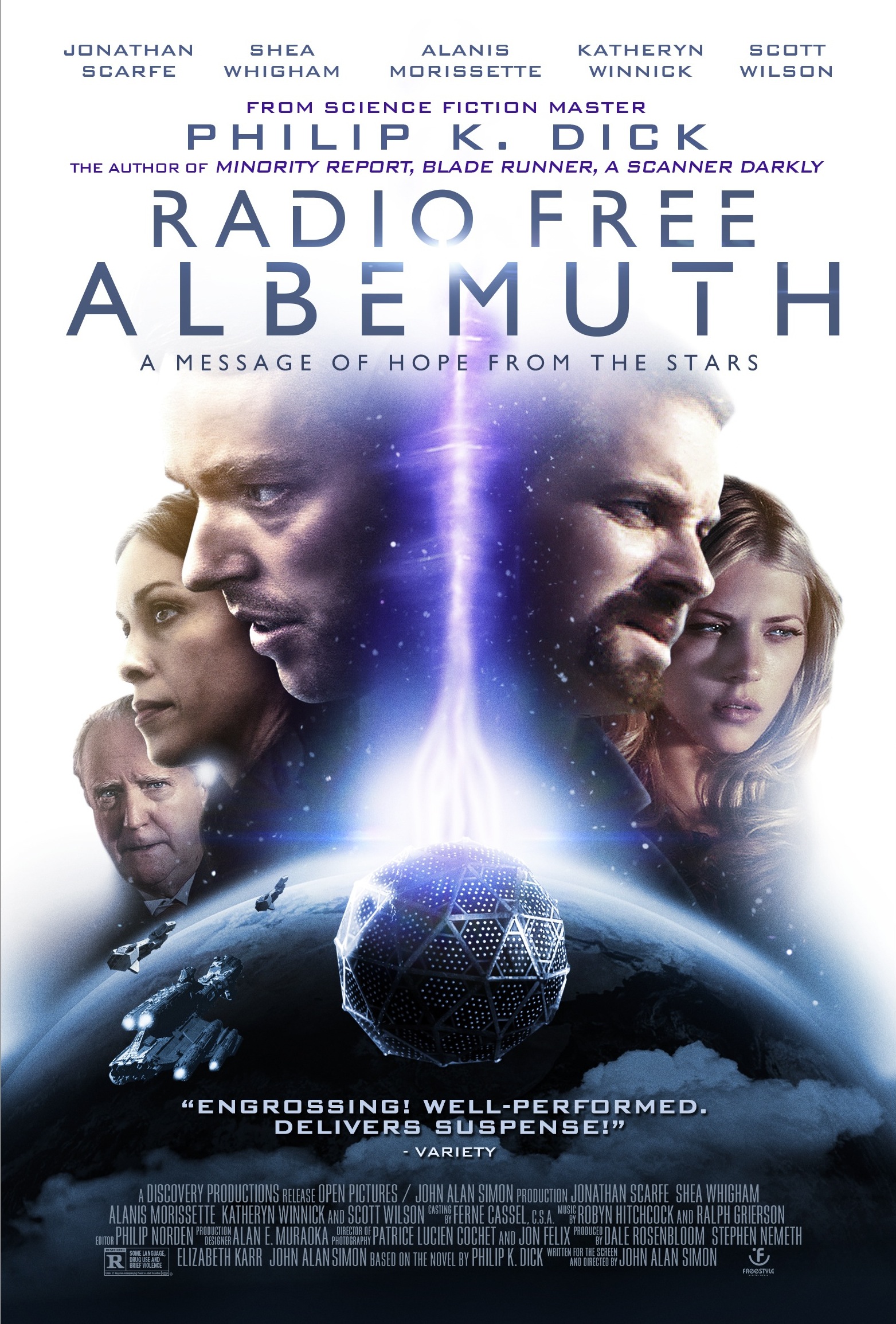
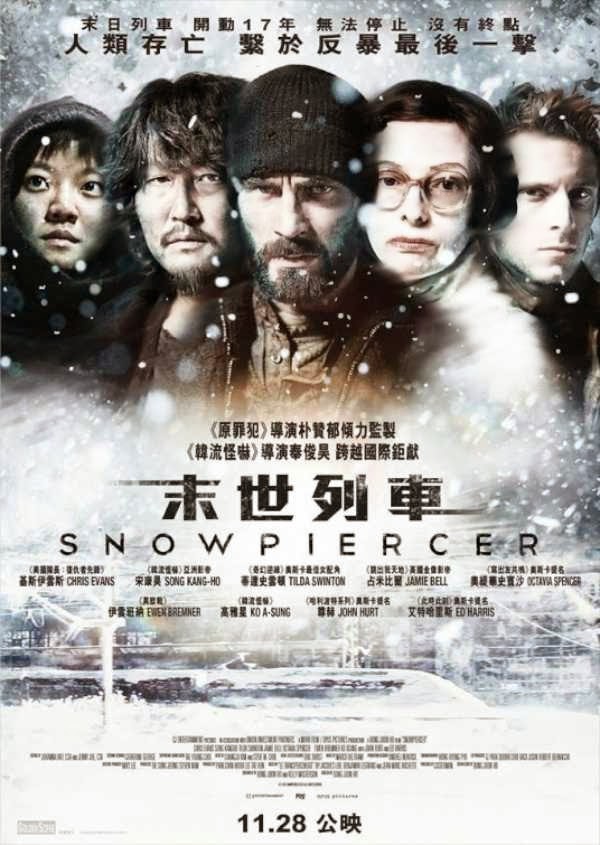
No, I’m not talking about Transformers 4. Today is the official U.S. release date for two films which will likely be regarded as cult classics of the sci-fi genre: “Radio Free Albemuth” and “Snowpiercer”. I’ve had the good fortune to have had the opportunity to see preview screenings of both films and can attest to their quality and excellent screenplays that are as intelligent as they are provocative.

Radio Free Albemuth, a film I’ve previously written about here, is possibly the most faithful cinematic adaptation of a Philip K. Dick novel, and while Snowpiercer may not follow its source material (Jacques Lob’s “Le Transperceneige”) as closely, it’s an excellent movie nevertheless. Korean director Bong Joon-ho, has made great films in the past such as “Memories of Murder” and “Mother”, but with Snowpiercer he manages to balance large scale Hollywood-style spectacle with the emotional intensity of his earlier work while getting excellent performances from English-speaking cast members such as Tilda Swinton, John Hurt and Ed Harris. It’s an odd coincidence that Snowpiercer and Radio Free Albemuth share the same U.S. release date since they’re not only the best science fiction films to come out in quite some time, but are also dark metaphors for the current socio-political moment (but not without a glimmer of hope).

To get an idea of what to expect from these films check out the reviews and trailers linked below to learn more about the projects:

http://totaldickhead.blogspot.com/2009/08/my-first-look-at-radio-free-albemuth.html

http://chycho.blogspot.ca/2014/05/may-i-recommend-post-apocalyptic-movie.html

According to the official Radio Free Albemuth website, June 27th also marks the day of significant events in history including:

  • In 1905 – Russian sailors mutinied onboard the Battleship Potemkin (the basis for Segei Eisenstein’s landmark film
  • in 1929 – the first color television was demonstrated
  • in 1942 – FBI captured 8 Nazi saboteurs from a sub off Long Island, New York.
  • 1969 – Police raid Stonewall Bar in Greenwich Village, NY, hundreds of gay patrons protest against police for 3 days
  • 1990 – Salman Rushdie, condemned to death by Iran for his novel The Satanic Verses.
  • Birthday of anarchist Emma Goldman, blind-deaf author Helen Keller, and the great Polish director Krzysztof Kieslowski




“Radio Free Albemuth” Gets June 27 Theatrical Release

29085827_jpeg_preview_large

“Radio Free Albemuth” happens to be my favorite Philip K. Dick novel, so I’ve followed the development of its cinematic incarnation since hearing a production company bought the movie rights nearly a decade ago. As one of the lucky few who has seen an early rough-cut (and has seen nearly every other feature length film based on a PKD novel) I can say with authority that it’s one of the most faithful PKD film adaptations yet. For fans of the novelist, it will probably stand among the ranks of “A Scanner Darkly” and “Blade Runner” but the film should appeal to many non-fans as well because:

  • Stories set in dystopias are all the rage. The alternate reality America depicted in Radio Free Albemuth is particularly compelling because of its similarity to our own.
  • For those not into sci-fi, it’s also a political/psychological thriller with themes of friendship, sacrifice and spiritual awakening.
  • Though not as polished as Hollywood productions with higher budgets, the indie film aesthetic meshes well to the story’s setting (and author’s sensibility) adding to its sense of authenticity.

From the official Radio Free Albemuth website:

Radio Free Albemuth has been in ‘radio silence’ mode while we were in the midst of negotiating relatively complex distribution strategies for the film – and completing the unexpectedly difficult and technically complex “delivery” of the film.

But “delivery” is complete – And we finally have definitive news to announce…

JUNE 27th –

In 1905 – Russian sailors mutinied onboard the Battleship Potemkin (the basis for Sergei Eisenstein’s landmark film
in 1929 – the first color television was demonstrated
in 1942 – FBI captured 8 Nazi saboteurs from a sub off Long Island, New York.
1967 – The world’s first ATM is installed in London.
1969 – Police raid Stonewall Bar in Greenwich Village, NY, hundreds of gay patrons protest against police for 3 days
1990 – Salman Rushdie, condemned to death by Iran for his novel The Satanic Verses.
Birthday of anarchist Emma Goldman, blind-deaf author Helen Keller, and the great Polish director Krzysztof Kieslowski, and…
In 2014 – the day that Radio Free Albemuth will open in theaters in at least ten cities across the United States. Also the same day that Radio Free Albemuth will be available across a wide array of Video on Demand Platforms in the U.S. To be followed by the DVD release and an exclusive subscription streaming window to be announced shortly.

This is a day that both RFA filmmakers and Philip K. Dick fans have been waiting for patiently – (and sometimes not so patiently!)

The first and most important of several deals with partner companies has been signed – and the ink is not even yet dry on the page. Our theatrical booking for the initial ten city release and digital sales partner will be a Los Angeles based company called Freestyle which has overseen the release and digital sales of other indie films such as Bottle Shock, Me & Orson Welles and The Illusionist.

More details will follow shortly about other distribution partners – and hopefully news on the international front.

Many thanks to all our Distribution Kickstarter Backers, Slacker Backers and Philip K. Dick fans and people who saw Radio Free Albemuth at film festivals for your support, sharing and enthusiasm. We can’t do this without you!

We’ll be asking for your help in the weeks that follow to make this an unprecedented grass-roots success in bringing the vision of Philip K. Dick to the widest audience possible. You can start now by sharing this announcement on social media, signing up on our mailing list and liking Radio Free Albemuth Facebook page.

You can also support the filmmakers through the purchase of items related to the film (available after the theatrical release) on this site: http://www.radiofreealbemuth.com/

Saturday Matinee: Max Headroom

“Max Headroom: 20 Minutes Into the Future” (1985) was a television movie originally broadcast on Britain’s Channel 4 and served as a pilot for a series co-produced with ABC in 1987. It’s widely considered the earliest science fiction TV movie and series of the cyberpunk subgenre. Part of the reason for its enduring cult status is the sharp social satire of its vision of the future which remains topical to this day.

The film takes place in a corporate dystopia controlled by an oligarchy of media conglomerates. Like in Orwell’s 1984, television is used as a tool for propaganda as well as mass surveillance. Similar to Winston Smith, the protagonist of 1984, reporter Edison Carter works within the system while questioning the ethics of his employer, but unlike Smith, Carter has enough clout and connections to challenge the system and whistleblow  while retaining relative autonomy. He is helped by his producer Theora Jones, computer hacker Bryce Lynch, pirate broadcaster Blank Reg, and rogue artificial intelligence personality Max Headroom.

In Max Headroom: 20 Minutes Into the Future, Edison uncovers a conspiracy involving a new commercial technology called blip-verts: subliminal advertising that can cram greater amounts of data into minds of viewers but with devastating side-effects. During the struggle to bring the investigative report to the airwaves, Max Headroom is accidentally unleashed.

Facing Death

Cemetery_PanoramaSharpweb

Jasun Horsley at Omni Reboot recently shared a number of intriguing insights on the topic of death and how it relates to science fiction, culture and transhumanism. He outlines how science fiction, whether utopia or dystopia, are scientific versions of a belief in a spiritual afterlife since they can soothe awareness of mortality and make us feel better about the present.

Horsley cites the work of Sheldon Solomon which shows how culture is a means of denying death via the manufacturing of extensions of the self and the body, including values which are carried by artifacts we create (ie. books, IPods, spaceships, etc.). The technology we create is meant to improve our lives and bring us closer to the utopia of sci-fi fantasies, but more often than not contributes to a dystopian reality. In his opinion, this happens because we’re unconscious of whatever it is within us causing the problems we’re trying to solve. We’re making things worse the more we try and improve them. A classic metaphor for this is Shelley’s Frankenstein which describes how the inability to accept death and the drive to “play God” creates a tragic monster.

According to Horsley, transhumanism is the religion of the (imagined) future, which most of us are already followers of, whether aware of it or not. For those not familiar with transhumanism (also known as extropianism), he provides an accurate and succinct definition in the following excerpt:

Transhumanism is a scientistic movement based on the belief that who (and what) we are can be divorced from biology. In its more extreme camps, Transhumanism divorces human existence from the psyche by suggesting that:

• At least some of the elements of consciousness can be converted to digital information.

• This data will be self-aware.

• It will be a continuation of the biologically-based awareness which it copied.

Horsley is skeptical of this view because it ignores the importance of the unconscious. In his words:

“Who we are” is not a mind-body system but a psyche-body system. We aren’t meat vessels with an internal stream of mental data running through them and animating them. The vast majority of our total “psychosoma” system functions at an unconscious level.

What he sees as a potentially more productive and fulfilling approach is the acceptance of death. Because it’s such an uncharted path (for the majority of us) it’s difficult to imagine the social impact such a paradigm shift would have, but he asks the following speculative questions which encourages further exploration:

Time is supposed to bestow wisdom on human beings. But can there be wisdom without acceptance of death?

How would both our fantasies and our culture be transformed if, instead of conquering death, we learned to accept it?

If death anxiety fuels human progress, maybe accepting death would not only be the end of fantasy, but the end of the fantasy we call “history”?

What it would be the beginning of, however, is anybody’s guess.

On a related note, rest in peace Nelson Mandela.

“Death is something inevitable. When a man has done what he considers to be his duty to his people and his country, he can rest in peace. I believe I have made that effort and that is, therefore, why I will sleep for the eternity.” – Mandela (1996)