If you read Western mainstream propaganda these days, you’ll find the truth hidden so deep no archaeologist could unearth it. A case in point is a buried lead in a story from the New York Post suggesting Russia has secret plans to hit NATO hard in the coming months.
According to the Post’s Chris Nesi, leaked secret documents released by German newspaper BILD tell of Europe preparing for Vladimir Putin to expand his military operation in Ukraine and to attack NATO ally countries next year. If readers take the headline and a keen graphic illustrating Putin’s alleged diabolical plan, you’d be in the right stocking up those bomb shelters in Wisconsin and Luxembourg.
Fortunately, Nesi’s story is entirely misleading. It suggests BILD got hold of Russian secret plans, conveniently categorised as a “plot” to sound more sinister, when in fact, German generals made plans to etch out WW3 like some chessboard game. The New York Post super sleuth waited until the article’s end to tell readers the truth about these “plans.” Here’s the passage.
“While the plans obtained by BILD are a potential scenario prepared by generals in the German army, European allies take Russia’s threat seriously and are preparing accordingly.”
The biggest problem with these misleading stories is the downstream effect of main outlets, and their tabloid cousins, spreading the lies to the broader public. Iona Cleave of The Sun titled her version “COUNTDOWN TO CONFLICT Putin’s ‘step-by-step plan to bring West to brink of WW3’ revealed in leaked intel doc…including date of ‘Day X’ in 2025.” In this case, the lead of the story is not just buried. It’s cremated and scattered into the digital air before publication by the tabloid. Still, grocery shoppers in London and Edinburgh catch the stunning revelations about “X-Day” while waiting in the checkout line. The Putin bad man campaign continues, and the everyday citizen wonders what their government will do to protect them.
Then the narrative arrives for curious business people via Banking News: “Britain sends 20,000 troops to mammoth NATO exercise against ‘Putin threat’.” Mail Online takes things further by quoting the former head of NATO forces in Europe, retired Lieutenant General Ben Hodges, assuring readers the “plot” is actual. So, the German Ministry of Defence’s so-called step-by-step doomsday guide is deftly transformed into a bored staff officer scenario-building game in leather armchairs somewhere beneath the Brandenburg Gate into a bonafide Putin strategy to take over Europe.
The media is not the only conduit for Russophobia these days. Leaders of state like Rishi Sunak, Prime Minister of the UK, say the Russians will not stop at Ukraine’s borders. American President Joe Biden has warned my people that if Putin wins a victory over Ukraine, Russia will attack a NATO country. And the minions of continual conflict for the Liberal Order are out in force in academia, business, and on the NGO and think tank circuit. One fine example is retired Colonel Hamish de Bretton-Gordon, who’s gone on the media/propaganda circuit to sell more gas masks and military headgear via companies he’s affiliated with, told The Telegraph, “Putin may be about to launch an apocalyptic assault.” For those unfamiliar, Colonel Hamish Stephen de Bretton-Gordon commanded NATO’s Rapid Reaction CBRN Battalion between 2005 and 2007. He was in all the right places about the time America was introduced to the post-9/11 idea of a “war on terror.” He later led a company profiting from his and other analysts’ apocalyptic prophecies. When regime change schemes came to Syria, it was the good colonel who “informed” the House of Commons and the waiting BBC audience of Assad’s alleged use of chemical weapons on his people. Bretton-Gordon and many others trained by the spooks and the Anglo-American military-industrial complex play a continuous melody of crisis and fear.
“The receptivity of the masses is very limited, their intelligence is small, but their power of forgetting is enormous. In consequence of these facts, all effective propaganda must be limited to a very few points and must harp on these in slogans until the last member of the public understands what you want him to understand by your slogan.” ― Adolf Hitler
Logic, the holy of holies these days, seems as lost as the Ark of the Covenant. Who could fail to notice, for instance, Russia taking up a defensive stance to save her soldiers’ lives and those of countless civilians in Ukraine cities like Kyiv, Karkhov, and Dnipro? With nearly half a million troops held in reserve and with Ukraine’s forces decimated, why haven’t the Russians already pushed through the weak spots on the way to the Dnieper River? And what about the billions and billions in arms and cash Western states have now lost to an impossible cause?
Looking at the latest tally of destroyed Ukraine equipment since the start of the operation tells the real story. So far, the Russians have knocked out almost 600 Ukrainian warplanes, 265 helicopters, almost 11,000 UAVs, 450 SAM systems, 14,645 tanks and armoured vehicles, 1,202 rocket launching systems, 7,750 artillery pieces, and 17,507 special military vehicles. Unbiased experts put the number of Ukraine dead at between 400 and 500 thousand combatants. And the number of wounded surely exceeds a million by now.
And finally, let’s remember that the elitist-controlled Western media, the politicians, and the so-called experts have been telling us Russia was finished for years now. Sanctions, the blown-up pipeline, and the weapons and money dump to Zelensky were supposed to weaken Russia. This is not the truth. Russia is more vital now than ever since the 1980s, militarily and economically. This points to another point of lost logic. Why would Russia want to take over states protected by NATO? Europe is a consumer continent. It’s where a billion people need feeding, not a breadbasket for good Russian families. There is nothing in Europe that Russia needs. It is Europe, on the other hand, that desperately needs Russia and the other BRICS countries. So, who are the most likely aggressors in all this?
Never believe their slogans, especially not NATO/good, Russia/bad.
A UN Security Council vote on December 8, demanding an immediate humanitarian cease-fire in the Israel-Gaza war, failed because the U.S. used their veto power in the sole dissenting vote. The U.S. Ambassador to the UN, Linda Thomas-Greenfield, did not cast the damning vote, she sent her assistant instead, shielding herself from the disgust of the international community. Thomas-Greenfield is the direct descendant of African slaves held in America without citizenship or human rights, similar to the Palestinian people today.
Secretary of State Antony J. Blinken met with Qatari Prime Minister and Minister of Foreign Affairs Mohammed bin Abdulrahman Al Thani ahead of the December 8 meeting with the Arab-Islamic Ministerial Committee, including Qatari Prime Minister and Minister of Foreign Affairs Sheikh Mohammed bin Abdulrahman Al Thani, Jordan’s Deputy Prime Minister and Minister of Foreign Affairs and Expatriates Ayman Al-Safadi, Egypt’s Minister of Foreign Affairs Sameh Shoukry, Palestinian Minister of Foreign Affairs and Expatriates Riyad Al-Maliki, and Turkish Minister of Foreign Affairs Hakan Fidan.
Some had envisioned the meeting between Blinken and the Arab ministers would take place prior to the UN vote, and the ministers could present their case as to why a ceasefire to save children’s lives should be supported by the U.S., as initiated by Secretary-General Antonio Gutteres.
But, instead Blinken waited until after the U.S. voted no, and the ceasefire was an impossibility, to sit around the table with the Arab-Islamic Ministerial Committee, who all looked dejected, and hopeless. They all told Blinken they reject the U.S.-Israeli aggression against the Palestinian people in Gaza, and called on the U.S. to assume its responsibilities and take the necessary measures to push Israel towards an immediate ceasefire. They also called for a lifting of the siege which prevents adequate amounts of humanitarian aid into Gaza.
They voiced their rejection against attempts to displace Palestinians from Gaza, emphasizing on “creating a real political climate that leads to a two-state solution,” after over 75 years of brutal occupation of the Palestinian people.
However, their concerns have fallen on deaf ears. The Biden administration is stuck in the past, thinking itself immune to criticism from the international community, and the Middle Eastern countries which are key allies of the U.S., energy providers, and housing some of the largest American military bases in the world.
“I certainly would hope that our partners in the U.S. will do more… we certainly believe they can do more,” the Saudi minister added.
Before the vote
Jordanian Foreign Minister Ayman Safadi said prior to the UN vote that if the resolution fails, it would be giving a license to Israel “to continue with its massacre.”
“Our priority for now is to stop the war, stop the killing, stop the destruction of Gaza’s infrastructure,” Safadi said adding, “The message that’s being sent is that Israel is acting above international law… and the world is simply not doing much. We disagree with the United States on its position vis-a-vis on the cease-fire.”
“The solution is a cease-fire,” said Egyptian Foreign Minister Sameh Shoukry,
What can the Arab world do?
Saudi Arabia, Qatar, UAE, Bahrain, Kuwait, Iraq, Jordan, and Egypt are all staunch American allies. They host some of the largest U.S. military bases on earth. Most of them buy their weapons from the U.S., and all of them are consumers of very large amounts of products made in the USA. Saudi King Faisal shut-off the oil in support of the Palestinians in the past, but they would never do that now as they are locked into OPEC pumping schedules. But, the Arabs have other leverage they could use to move the U.S. position from blind acquiescence to Israeli orders.
Israeli plan to wipe-out Gaza
Mustafa Barghouti is a Palestinian physician, activist, and politician who serves as General Secretary of the Palestinian National Initiative.
“I am 100% sure that their main goal right from the beginning was the ethnic cleansing of Gaza, complete ethnic cleansing of Gaza, trying to push people to Egypt, a terrible war crime. And if they managed to do so, I think their next goal will be to try to ethnically cleanse the West Bank and force people to join them,” said Barghouti.
Barghouti added, “If they fail to ethnically cleanse all Gazans, I am sure that Netanyahu’s plan B is to annex Gaza City and the north of Gaza completely to Israel and claim it as a security area.”
Concerning the prospect of Israeli troops remaining in Gaza, he said “Israel did that before and it didn’t work. And there will be resistance to their occupation, which they cannot tolerate. And that’s why Netanyahu’s goal really is to ethnically cleanse people. He wants to have military control of Gaza without people. He knows very well that Gaza with people is something that is unmanageable.”
Boycott Israel and the U.S.
The Arab world comprises about 300 million people. The populations are consumers of American products in huge amounts.
During World War II, a movement by American Jews called for a boycott of Nazi Germany. That was followed by a boycott of the Apartheid regime in South Africa that began in the late 1950s and is largely credited for raising awareness of the injustice in the following decades.
Purchasing Nazi products in Germany, or the Apartheid regime in South Africa, supported their crimes and gave their existence and activities a legitimacy that enabled them to continue.
In the past two months, ever since Starbucks’ corporate office announced it would sue its union for posting a pro-Palestine statement, a strong boycott has left the company with a loss of nearly $12 billion.
The company’s support for Israel has caused a drop in sales while the company was hosting its Red Cup Day, an annual event where baristias hand out reusable holiday themed cups. Over 5,000 workers at 200 stores went on strike in solidarity with Palestine and worker rights.
Coffee drinkers are looking to switch to a local café which does not support the ongoing genocide in Gaza.
American public is isolated, insulated, and far-removed from the war in Gaza, and often they have no idea what Europeans, South Americans, Canadians, Africans and Asians are thinking about the U.S. policy to support the genocide in Gaza and prevent a cease-fire.
Since 2005, the official BDS (Boycott, Divest, Sanctions) Movement has run a coordinated boycott effort to help Palestine, which called for “a broad boycott of Israel and the implementation of divestment from it, in steps similar to those applied against South Africa during the apartheid era.”
In the U.S., many college campuses have passed resolutions to divest from these companies, bringing boycotts to a new, younger, more energetic generation. President Joe Biden is far out-of-step with these younger people, who in a recent poll showed 70% disapprove of Biden’s handling of the war in Gaza.
Recent campaigns urging people to boycott companies such as McDonald’s, Disney, Starbucks, Coca Cola and others have gone viral around the world. In some countries, restaurants have removed Coca Cola and Pepsi products.
Many people globally have cancelled their Disney+ subscriptions, and young children have been heard saying they won’t eat McDonald’s because it kills children in Gaza.
There are lists of large companies around the world, owning hundreds of famous brands, that operate in Israel or support them in one way or another, such as L’Oréal, Nescafe coffee or Heinz products.
The boycott results in dwindling sales and revenues of American and Israeli products. With the academic and cultural boycott, the American Anthropological Association decided to boycott Israeli academic institutions.
Social media
Information, videos, photos and comments are being delivered to our phones and laptops constantly. The global audience can’t turn away from the genocide in Gaza. In the 2014 war on Gaza, which lasted six weeks, Israel killed about 2,300 Palestinians. But now, the Palestinian death toll exceeded 12,000 during the first six weeks, and is edging upward of 17,000.
The Biden administration has supported the genocide in Gaza, and has done nothing to stop the Israeli war machine. State Department employees and White House staffers have also voiced condemnation of the un-checked and un-restrained Israeli war machine marching through Gaza, which has left no place safe, and has caused the survivors to face actual starvation according to the UN. America is the chief supporter of Israel, and holds immense leverage over Israel, but refuses to demand that they stop the genocide and bring home the hostages. Biden and Blinken are oblivious to American public opinion, and the international community.
After nearly 2 years of portraying the ongoing conflict in Ukraine as unfolding in Kiev and the collective West’s favor, a sudden deluge of admissions have begun saturating Western headlines noting that Ukraine is not only losing, but that there is little or nothing its Western backers can do to change this fact.
What had been a narrative of Ukraine’s steady gains and indomitable fighting spirit has now been replaced by the reality of Ukraine’s catastrophic losses (as well as net territorial losses) and a steady collapse of morale among troops. What had been narratives of Russian forces poorly trained and led, equipped with inadequate quantities of antiquated weapons and dwindling ammunition stockpiles, have now been replaced by admissions that Russia’s military industrial base is out-producing the US and Europe combined while fielding weapon systems either on par with their Western counterparts, or able to surpass Western capabilities entirely.
Ukraine’s Catastrophic Losses
Ukrainian losses, especially after 5 full months of failed offensive operations, are almost impossible to hide now.
The London Telegraph in its article, “Ukraine’s army is running out of men to recruit, and time to win,” published as far back as August of this year admitted:
The war in Ukraine is now one of attrition, fought on terms that increasingly favour Moscow. Kyiv has dealt admirably with shortages of Western equipment so far, but a shortage of manpower – which it is already having to confront – may prove fatal.
The article also claimed:
It’s a brutal but simple calculation: Kyiv is running out of men. US sources have calculated that its armed forces have lost as many as 70,000 killed in action, with another 100,000 injured. While Russian casualties are higher still, the ratio nevertheless favours Moscow, as Ukraine struggles to replace soldiers in the face of a seemingly endless supply of conscripts.
The article paints a bleak picture of continued Ukrainian military operations that are almost certainly unsustainable.
The claim of 70,000 killed in action among Ukrainian troops is a gross underestimate, while claims that “Russian casualties are higher still” are not only unsubstantiated, but contradicted elsewhere among Western sources.
Mediazona, a media platform maintained by US government-backed Russian opposition figures, has tracked Russian casualties from February 2022 onward by allegedly tracking public information regarding the death of Russian soldiers.
Its numbers cannot be entirely verified, but on the few occasions the Russian Ministry of Defense released Russian casualty numbers, they were relatively close to Mediazona’s claims versus the cartoonish claims made by Ukraine’s General Staff – claims that are often unquestionably repeated by Western governments and media organizations.
A more recent article published by Business Insider in late October titled, “Ukraine official says it can’t properly use its Western kit because it has so few soldiers left, report says,” confirms that Ukraine’s losses and resulting manpower crisis is only getting worse.
The article reports:
A Ukrainian official said Ukraine’s army is suffering a manpower shortage that is hampering its ability to use Western-donated weapons, Time magazine reported. Since the start of the war, several Ukrainian officials have blamed their difficulty repelling Russia’s invasion on the slow pace of deliveries by its allies.
However, in the Time report, an unnamed source identified as a close aide to President Volodymyr Zelenskyy highlighted a different problem. “We don’t have the men to use them,” the aide said in reference to the Western weapons. Although Ukraine doesn’t give public figures, Western estimates suggest it has suffered in excess of 100,000 casualties.
In addition to irreversible losses in manpower, Ukraine is also losing territory despite 5 months of intensive offensive operations and the fact that the Russian military leadership has repeatedly stated Russia’s goal is to eliminate Ukraine’s military, not take territory.
The New York Times in a September article titled, “Who’s Gaining Ground in Ukraine? This Year, No One,” would note:
Ukraine’s counteroffensive has struggled to push forward across the wide-open fields in the south. It is facing extensive minefields and hundreds of miles of fortifications — trenches, anti-tank ditches and concrete obstacles — that Russia built last winter to slow Ukrainian vehicles and force them into positions where they could be more easily targeted. When both sides’ gains are added up, Russia now controls nearly 200 square miles more territory in Ukraine compared with the start of the year.
Along with steep losses in manpower and a net loss in territory, Ukraine suffers from an equally damaging loss of equipment. Compounding materiel losses is the fact Western military industrial production is incapable of replacing these losses.
Military Industrial Production: West Running Out as Russia Ramps Up
Last year, Western politicians and the Western media promoted the idea that superior Western military equipment would easily sweep aside Russia’s dwindling numbers of supposedly antiquated weapon systems. One article published by the London Telegraph in early June of this year was even titled, “British-made tanks are about to sweep Putin’s conscripts aside.”
Nothing could have been further from the truth.
Instead, Russian military equipment has proven itself capable if not superior to Western weapon systems and, together with Russia’s massive military industrial base, it has both outnumbered and outfought Ukrainians trained and equipped by the West.
This was admitted in the New York Times’ September article, Russia Overcomes Sanctions to Expand Missile Production, Officials Say,” which noted:
Russia is now producing more ammunition than the United States and Europe. Overall, Kusti Salm, a senior Estonian defense ministry official, estimated that Russia’s current ammunition production is seven times greater than that of the West.
The article admits that Russia has doubled tank production, increased missile production, and is producing at least as many as 2 million artillery shells a year – more than the US and Europe combined currently produce and more than the US and Europe combined if and when they meet increased production targets between 2025-2027.
A more recent article published by The Economist titled, “Russia is starting to make its superiority in electronic warfare count,” admits that Russia has developed an “impressive range of EW [electronic warfare] capabilities to counter NATO’s highly networked systems.” It explains how Russian EW capabilities have rendered precision-guided weapons provided by NATO to Ukraine ineffective, including GPS-guided Excalibur 155mm artillery shells, JDAM guided bombs, and HIMARS-launched GPS-guided rockets.
The article also discusses the impact Russian EW capabilities have on Ukrainian drones which are lost by the thousands week-to-week. And as Russian EW capabilities disrupt Ukraine’s ability to use guided weapons and drones on and over the battlefield, the article admits Russia is able to produce at least twice as many drones as Ukraine giving Russia yet another quantitative and qualitative advantage.
Despite much of the hype surrounding talk of equipping Ukraine with NATO-provided F-16 fighter aircraft, more sober Western analysts have gradually admitted that between Russia’s vast and growing aerospace forces and its superior integrated air defense systems, NATO-provided F-16s will fare no better than the Soviet-era aircraft Ukraine had and lost throughout the duration of the Special Military Operation.
After months, even years of “game-changers” sent to Ukraine only to prove incapable of matching let alone exceeding Russian military capabilities, the game is indeed revealed to have been changed – in favor of Russia and a military doctrine built on vast military industrial production, cheap-but-effective weapon systems, and most importantly, a doctrine built to fight and win against a peer or near-peer adversary.
This stands in stark contrast to a West who has shaped its military for decades to push over developing or failed states around the globe in military-mismatches, atrophying the technological, industrial, and strategic capabilities the US and its allies would have needed to put in place years ahead of time to “win” their proxy war against Russia in Ukraine.
The “solution” to Russia’s now admitted advantage in terms of quality and quantity on and over the battlefield is to “increase production” and “collect data” on Russian capabilities to then “develop counters to them.” However, these are processes that could take years to yield results, all while Russia continues expanding its capabilities to maintain this qualitative and quantitative edge.
And as this process continues to unfold, the US continues simultaneously seeking a similar conflict with China, which possesses an even larger industrial base than Russia.
One wonders how many lives could have been spared had these recent admissions across the Western media regarding Russia’s actual military capabilities been presented long before provoking conflict with Russia in the first place through Washington and Brussels’ long-standing policy of encroaching upon Russia’s borders. One wonders how many lives may yet be saved if the collective West learns from its current mistakes before repeating them all over again in a senseless conflict triggered by efforts to likewise encroach upon and provoke China.
Since the overthrow of Niger’s US-friendly government, West African nations of the ECOWAS bloc have threatened an invasion of their neighbor.
Before leading the charge for intervention, ECOWAS chair Bola Tinubu spent years laundering millions for heroin dealers in Chicago, and has since been ensnared in numerous corruption scandals.
Hours after Niger’s Western-backed leader was detained by the country’s presidential guard on July 28, Nigerian President and chair of the Economic Community of West African States (ECOWAS) Bola Tinubu leapt into action, warning that the group of nations “will not tolerate any situation that incapacitates the democratically-elected government.”
“As the Chairperson of ECOWAS…I state without equivocation that Nigeria stands firmly with the elected government in Niger.”
Two days later, ECOWAS imposed severe sanctions on Niger, and the bloc issued a stark ultimatum: if the newly-inaugurated junta won’t reinstall the ousted president in a week’s time, the group’s pro-Western African governments will — by military means, if necessary.
On Saturday, July 6 — one day before the deadline — ECOWAS leaders approved a plan to invade the country, with the ominous caveat that they are “not going to tell the coup plotters when and where we are going to strike.”
If ECOWAS gets its way, member states Benin, Cabo Verde, Côte d’Ivoire, The Gambia, Ghana, Guinea Bissau, Liberia, Nigeria, Sierra Leone, Sénégal and Togo will be pressured to send their soldiers to invade Niger.
These developments have thrust the typically-overlooked West African country of Niger into the Western media spotlight. But if hostilities break out, it wouldn’t just be one single impoverished African state in the crosshairs.
Neighboring Burkina Faso, Mali and Guinea, which are also governed by military administrations that recently seized power by force, have all warned that any attack on Niger will be viewed as an attack on them too. If their ECOWAS rivals make the first move, the nations which mainstream media have dubbed Africa’s “coup belt” have pledged to unleash their military forces as well — an announcement which should end any illusions that restoring the country’s previous president would be a painless process.
Leading the pro-Western coalition is the president of its most powerful country, Nigeria: Bola Tinubu. One of Nigeria’s wealthiest men, the source of the scandal-plagued president’s fortune remains unclear.
Documents reviewed by The Grayzone reveal Tinubu as a longtime US asset who was named as an accomplice in a massive drug running operation that saw him launder millions on behalf of a heroin-dealing relative.
I had a great time with other Heads of State and important dignitaries at the State Banquet hosted by President Emmanuel Macron in Paris, France, this evening. President Macron and his wife, First Lady Brigitte Macron were both gracious and warm, making the event a very pleasant… pic.twitter.com/lTHTZfTIMC
Bola Tinubu’s career marred by drug-trafficking, corruption allegations
For over 30 years, Bola Tinubu has been a major force in Nigeria’s political scene and the country’s economy, with local nicknames ranging from “the Mother of the Market” to “the Godfather of Lagos” and “the Lion of Bourdillon.” But his power inside Nigeria went largely unnoticed by international audiences until 2023, when he became ECOWAS chair after winning the presidency in an election closely tracked by the US government.
As president, Tinubu quickly instituted a regime of economic reforms backed by the US-controlled International Monetary Fund and the World Bank. Over the course of Tinubu’s political career in Nigeria, the African operator has cultivated a close relationship with the US embassy. According to a slew of classified State Department cables released by WikiLeaks, American officials relied heavily on Tinubu’s assessments of the domestic political landscape.
The ECOWAS chair’s early life is shrouded in mystery, and even his exact age is unknown. Nearly every detail of Tinubu’s personal history — prior to his appearance in Chicago on a student visa — is in dispute, including his legal birth name.
Records from Chicago State University show that Tinubu received a degree in Business Administration in 1979. In the following years, media reports indicate that Tinubu was employed in some capacity at a number of major US-based multinationals, including Mobil Oil Nigeria, consulting firm Deloitte, and GTE, which was the largest communication and utilities company in the US at the time.
Of the few details about the Nigerian President’s early exploits which can be confirmed, many are derived from a 1993 court docket naming Tinubu as an accomplice in a massive midwestern drug smuggling operation.
As journalist David Hundeyin has detailed, court documents from the US District Court’s Northern District of Illinois make it clear that Tinubu amassed a small fortune laundering money for a heroin-trafficking relative in Chicago, and that US government officials ultimately seized well over a million dollars from various bank accounts registered under the current Nigerian president’s name.
A 1993 report by IRS Special Agent Kevin Moss explained that “there is probable cause to believe that funds in certain bank accounts controlled by Bola Tinubu… represent proceeds of drug trafficking; therefore these funds are forfeitable to the United States.”
In the documents, Moss describes an extremely close working relationship between the future Nigerian president and two Nigerian heroin dealers named Abiodun Olasuyi Agbele and Adegboyega Mueez Akande, the latter of whom was listed as Tinubu’s cousin on an application for a vehicle loan.
“According to bank employees, when Bola Tinubu came to First Heritage Bank in December 1989 to open the accounts, he was introduced to them by Adegboyega Mueez Akande, who at that time maintained an account at the bank.” What’s more, bank records indicate that “Bola Tinubu also opened a joint checking account in his name and the name of his wife, Oluremi Tinubu,” who had “previously opened a joint bank account also at this bank with Audrey Akande, the wife of Adegboyega Mueez Akande,” Moss explained. In several of the applications, the addresses used by Tinubu exactly matched those previously used by Akande.
“According to bank records… Tinubu opened an individual money market account and a NOW account” at First Heritage Bank in December 1989, the special agent noted. “In the application, Tinubu stated that his address was 7504 South Stewart, Chicago, Illinois” — “the same address used previously by Akande.”
“Bank records disclosed that five days after the account was opened, on January 4, 1990, $80,000 was deposited into the NOW account at First Heritage Bank by wire transfer through First Chicago from Banc One Houston,” the report continues. According to the IRS, the money was sent by Akande.
But the Nigerian president’s financial dealings with the heroin traffickers went even further, according to the IRS special agent. He wrote that Citibank records documented “two additional corporate accounts held in the name of Compass Finance and Investment Company, Ltd. which were controlled by Bola Tinubu.”
“When Bola Tinubu opened these accounts,” he provided “a memorandum of association and articles of association” which “identified Mueez Adegboyega Akande and Abiodun Olasuyi Agbele as directors of Compass Finance and Investment Company, Ltd.,” Moss wrote.
In the end, Tinubu somehow managed to deposit over $660,000 in his First Heritage Bank account in 1990, and more than $1.2 million the next year — all while claiming to take home just $2,400 a month from his position at Mobil Oil Nigeria.
As the investigation into the money laundering scheme began to gain traction, Tinubu left the US and returned to Nigeria. Ultimately, Moss was able to speak to Tinubu by telephone on a number of occasions, and the special agent reported that the future president initially acknowledged his personal and financial dealings with the pair of drug traffickers.
But in late January of 1992, “Tinubu advised agents investigating this matter that he had no business association or financial relationship with Abele or Akande,” Moss wrote. “This information contradicted his prior statements on January 13, 1992, when he advised law enforcement officers that the money used to open the account at First Heritage Bank had come from Akande.”
Back in Nigeria, Tinubu had already begun to transition into the political arena. By 1992, he’d been elected to the Senate, and in 1999 he became the Governor of Lagos State, a position he retained until 2007. At some point in his tenure, Tinubu established a relationship with the US Embassy which would last for years to come, according to a trove of diplomatic cables released by Wikileaks.
But even his State Department allies couldn’t help noticing Tinubu’s penchant for dishonesty. One particularly noteworthy cable pointed out that the politician was “known to play fast and loose with the facts” and “has been caught in the past embellishing his educational achievements.”
In the end, however, Tinubu’s usefulness seemed to outweigh his casual relationship with the truth, and the future Nigerian president went on to provide American officials with a near-continuous assessment of the political situation in his country. One typically intimate meeting with Tinubu ended with the US ambassador to Nigeria commenting: “as always, we found his take on the national political scene to be insightful.”
When the cables came to light in 2011, many Nigerians were shocked at the candor with which their elected officials spoke to Washington’s envoys. “The willingness of our elites to divulge unsolicited information about the nation to U.S. officials betrays an infantile thirst for a paternal dictatorship,” Nigerian-American professor and columnist Farooq Kperogi wrote.
Though Tinubu appeared to have escaped justice for his alleged role in a heroin trafficking conspiracy, accusations of corruption would continue to dog the ECOWAS chair throughout his political career in Nigeria. Since leaving office as governor of Lagos in 2007, Tinubu “picked every subsequent winning candidate,” according to German broadcaster DW, which noted earlier this year that the tycoon “is believed to be one of Nigeria’s richest politicians but the source of his wealth is unknown.”
In recent years, clues about the origins of the fortune amassed by one of Africa’s leading political players have begun to come to light.
In 2009, Tinubu came under investigation by the Metropolitan Police of London, who were probing allegations that the politician had pooled money with two other Nigerian governors to create a front company known as the “African Development Fund Incorporation.”
Investigators alleged the unusual business arrangement was actually a joint effort to illegally acquire shares of ECONET, a telecommunications firm founded by US intelligence asset and Gates Foundation trustee Strive Masiyiwa. But attempts to probe the legitimacy of the transactions in question were sidelined when the Nigerian federal government stonewalled the British investigation, which ultimately concluded without a single arrest. To this day, Nigerian authorities have yet to release the evidence requested by UK authorities.
In 2011, Tinubu was tried before the Code of Conduct Tribunal in Nigeria for illegally operating 16 foreign bank accounts. Eager to avoid the embarrassment he’d previously suffered when being photographed in court, the ECOWAS chair reportedly refused to take his place at the dock in a judicial hearing.
But the unwelcome attention appears to have done little to rein in the politician’s extravagant taste, and Tinubu once again found himself embroiled in a corruption scandal following an investigation into the luxurious 7,000-square foot mansion where the Nigerian president stays when receiving medical care in London.
According to Nigerian outlet Premium Times, the massive villa in London’s exclusive Westminster borough was picked up for a song by Tinubu’s son, who somehow managed to purchase the property at a discount of approximately $10 million from a wealthy fugitive – even though the seller’s assets, including the mansion in question, had been frozen by a Nigerian court. Photos published on social media in 2017 show Tinubu posing inside the villa alongside Nigeria’s president at the time, Muhammadu Buhari.
The current and previous president worked closely for decades, and Tinubu has publicly claimed sole credit for Buhari’s presidency while campaigning. “If it were not for me standing before you leading the army, saying ‘Buhari, go ahead, we’re behind you,’ he could never have become the president,” he told supporters at a rally last year.
But the suspicious confluence of money and influence didn’t end with the mysterious mansion in London. During Nigeria’s 2019 general election, footage of armored trucks entering Tinubu’s residence went viral on social media, and the incident was widely seen as proof that the politician was engaged in a fraudulent vote-buying scheme. But Tinubu remained defiant, telling reporters, “I keep money wherever I want.”
“Excuse me, is it my money or government money?” he asked. “If I don’t represent any agency of government and I have money to spend, if I have money, if I like, I give it to the people free of charge,” he insisted.
This January, the official explanation for the episode evolved again when one of his party’s representatives told a Nigerian TV station that the armored trucks in question had simply “missed [their] way” and arrived at the wrong address. Asked why Tinubu had seemingly admitted to dispensing cash to the public, the party’s organizing secretary in Lagos offered the bemused presenters an equally improbable explanation: “he said that jokingly.”
ECOWAS as a neocolonial weapon
While ECOWAS was officially founded via the Treaty of Lagos in 1975, its official history notes the bloc’s origins date back to the creation of the CFA Franc in 1945, which consolidated France’s West African empire into a single-currency union. Publicly, the move was described as a benevolent attempt to shield these colonies from the consequences of the French franc’s sharp devaluation in 1945, following the creation of the US-dominated Bretton Woods system. As the French finance minister said at the time:
“In a show of her generosity and selflessness, metropolitan France, wishing not to impose on her faraway daughters the consequences of her own poverty, is setting different exchange rates for their currency.”
In reality, the introduction of the CFA Franc meant that Paris was able to maintain highly unequal trading relationships with its African colonies, at a time when its economy was ravaged by World War II and its overseas empire was rapidly disintegrating. The currency made it cheap for member states to import from France and vice versa, but prohibitively expensive for them to export anything anywhere else.
This forced dependency in Francophone West Africa created a captive market for the French, and by extension the rest of Europe. That dynamic, which has stunted regional economic development for decades, persists to this day. The CFA Franc’s continued dominance ensures West African states remain under the economic and political control of France. Those African nations are powerless to enact meaningful policy changes, as they lack control over their own monetary policy.
That the currency features so prominently in the authorized history of ECOWAS is instructive, because the bloc has long-been criticized as an extension of French imperialism. It was not for nothing that in 1960, then-French President Charles de Gaulle made membership of the CFA Franc a precondition for decolonization in Africa.
Though ECOWAS is theoretically meant to maximize member states’ collective bargaining power by fostering “interstate economic and political cooperation,” such harmonization makes it easier for former imperial powers like France to exploit and enfeeble their constituent countries. The bloc imposes a strict, Western-approved legal and financial framework upon its members, and any state deviating from these rules is harshly punished.
In January 2022, ECOWAS imposed strict sanctions on Mali, prompting thousands to take to the streets in support of the military government that seized power in January the previous year. The new government’s efforts to purge the country of malign foreign influence saw a complete ban on French media imposed, a decision which was slammed by the UN but cheered by average Malians.
ECOWAS applied similar measures to Burkina Faso in response to a September 2022 military coup, which saw Paul-Henri Sandaogo Damiba removed after just eight months in power. Though Damiba himself seized via military coup, there was little condemnation from Western officials and few suggestions that ECOWAS impose sanctions — perhaps due to the ousted leader’s pro-Western orientation and status as a graduate of multiple elite US military and State Department training courses.
Since 1990, ECOWAS has waged seven separate conflicts in West Africa, in order to protect the West’s preferred despots across the region. Meanwhile, between 1960 and 2020, Paris launched 50 separate overt interventions in Africa. Figures for clandestine activities conducted during this time are unavailable, but the country’s fingerprints are plastered all over multiple rigged elections, coups, and assassinations that have sustained compliant, corrupt governments in power throughout the continent.
As President Jacques Chirac remarked in 2008, “without Africa, France will slide down into the rank of a third [world] power.” This perspective was reaffirmed in a 2013 French Senate report, Africa is Our Future. Indeed, the mere existence of anti-imperialist governments anywhere in the region is intolerable to Paris.
Luckily for the French elite, compromised figures like Bola Tinubu are still on hand to do their dirty work for them.
The paradoxical thing is that U.S. and European sanctions against Russia while intended to cripple the Russian economy have made the stronger.
Russia’s economy is performing strongly, according to recent forecasts from the World Bank and International Monetary Fund. The outcome defies earlier predictions by the United States and its European allies which held that Western sanctions would bring the Russian economy to its knees and force it to submissively “Cry Uncle”.
When the conflict in Ukraine escalated 16 months ago (after eight years of NATO-sponsored aggression using the Kiev Neo-Nazi regime), various Western politicians and pundits were relishing the prospect of the Russian economy collapsing from “Total War” launched against its international banking and trade.
Well, it didn’t turn out like that. Far from it. As the World Bank noted above, the Western sanctions have simply helped Russia boost alternative markets in China, India, and elsewhere around the globe. A principal earner for Russia is energy exports of oil and gas. Increased sales to Asia have maintained revenues despite the loss of European markets due to Western sanctions.
The paradoxical thing is that U.S. and European sanctions against Russia while intended to cripple the Russian economy have actually made the latter stronger.
Michael Hudson, an American global economics analyst, points out: “The sanctions have obliged Russia to become self-sufficient in food production, manufacturing production and consumer goods.”
Hudson also notes that the U.S. geopolitical strategy is to use sanctions in order to make its supposed European allies more dependent and subservient to Washington.
Another respected commentator, Glenn Diesen, a Norwegian geoeconomics professor, likened the use of Western sanctions to the self-destructive behavior of “self-harm”. The United States and European Union, he says, have “handed over a huge market to the rest of the world”.
Diesen also observes that 85 percent of the world’s population lives in countries that do not comply with Western sanctions against Russia. This global majority is more than ever creating new forms of trade and finance that obviate Western control. A major impetus for this positive development is the necessity bequeathed by Washington’s systematic abuse of power and privilege.
The repercussions are more far-reaching and profound than the inadvertent benefits accruing to Russia’s national economy. What the Western sanctions are also doing is accelerating the development of a multipolar world and the demise of the U.S. dollar as a global reserve currency. The upshot of those two trends is the historic dwindling of American imperial power – albeit with outbursts of militarism and warmongering along the way down.
A significant illustration of the times a-changing was seen this week at the 25th summit of the St Petersburg International Economic Forum (SPIEF). Attending the four-day event were 17,000 delegates from some 130 nations. This year’s convocation witnessed large representations from Asia, Latin America and Africa.
The bustling event not only reflected Russia’s own economic strength but the fact that – far from being “isolated” and downtrodden – Russia is viewed by the rest of the world as an engine for growth and more prosperous multipolar relations.
Indeed, from the perspective of most nations, it looks like the United States and its Western allies are the ones who are isolated and anachronistic.
One of the attendees at SPIEF was American industrial analyst Douglas Andrew Littleton who commented: “Western sanctions against Russia have backfired.” And he added: “I’m happy that Russia has been able to bypass and skirt the sanctions in so many ways with their friends and allies.”
What’s going on here is not just merely the emergence of an alternative system, but an epochal political and perhaps moral paradigm shift. The globe wants more peaceful and mutual relations of cooperation and development. Most people on this Earth want endless warmongering, militarism and unilateral bullying by self-ordained powers to be put to an end. The planet is crying out for a world based on justice and peace.
What the world is realizing more than ever is that the unilateral use of economic sanctions by Washington is nothing but warfare and state terrorism by another, more palatable name. For decades, the U.S. has tried to use economic weapons to strangle and kill other nations. North Korea, Cuba, Iran, Iraq and many other countries come to mind where U.S. imperialism has imposed conditions of economic genocide.
The world is well aware of this fiendish legacy and has had enough of American barbarism wielded with the help of its Western lackeys in NATO and the European Union.
We should here make special mention of Syria, the Arab nation struggling to recover from 12 years of war that was inflicted upon it by Washington and its NATO partners for “regime change”. Today, Syria’s recovery is cruelly hampered by economic sanctions imposed by the U.S. and EU. How despicable is that?
There is an unerring historical sense, however, that Washington, has finally met its nemesis. By racking up sanctions against Russia and dragooning its EU lackeys to follow suit, the United States has now unleashed a historic dynamic process of its own imperial collapse.
For decades, U.S. sanctions worked to a nefarious degree on isolated, smaller nations to indeed enforce vengeful hardship.
Not anymore. Russia’s vast natural wealth and economy are too big to contain. Militarily, too, Russia will not be pushed around. Indeed, it has pushed back in Ukraine against the West’s deceptive and pernicious proxy war.
Organically and consciously, the world economy and international relations have been transformed in recent years, especially with the rise of China and Eurasia generally.
Another key development is that the Western imperialist media monopoly has also been broken. Washington and its minions in the European political class are held in contempt as liars and charlatans, even by their own populations.
By unwisely attempting to trap the Russian bear, the West has only created a scenario of revolt by the rest of the world from the West’s exploitative control. Five centuries of European and American Western parasitism have run their course.
Russia’s economic strength is galvanizing the rest of the world to shake off the chains of Western domination and subjugation. The process of dumping the dollar is gathering momentum which self-harming sanctions are precipitating. Pillars and facades are crumbling in real time.
The theme for the SPIEF event this year was “Sovereign Development – the Basis for a Just World”.
As with many other empires in the annals of history that have collapsed, arrogance and hubris often precede the fall. The American and Western elite thought they had an eternal license to wreak havoc for their own selfish gain. Their economic plunder and weaponry are now turning on their own heads. And it’s long overdue.
The West is now waking up to the reality of the emerging, polycentric and fluid global order, Alastair Crookewrites.
More than a year into Russia’s Special Operation, the initial burst of European excitement at western push-back on Russia has dissipated. The mood instead has turned to “existential dread, a nagging suspicion that [western] civilisation may destroy itself”, Professor Helen Thompson writes.
For an instant, a euphoria had coalesced around the putative projection of the EU as a world power; as a key actor, about to compete on a world scale. Initially, events seemed to play to Europe’s conviction of its market powers: Europe was going to bring down a major power – Russia – by financial coup d’état alone. The EU felt ‘six feet tall’.
It seemed at the time a galvanising moment: “The war re-forged a long-dormant Manichaean framing of existential conflict between Russia and the West, assuming ontological, apocalyptic dimensions. In the spiritual fires of the war, the myth of the ‘West’ was rebaptised”, Arta Moeini suggests.
After the initial disappointment at the lack of a ‘quick kill’, the hope persisted – that if only the sanctions were given more time, and made more all-embracing, then Russia surely would ultimately collapse. That hope has turned to dust. And the reality of what Europe has done to itself has begun to dawn – hence Professor Thomson’s dire warning:
“Those who assume that the political world can be reconstructed by the efforts of human Will, have never before had to bet so heavily on technology over [fossil] energy – as the driver of our material advancement”.
For the Euro-Atlanticists however, what Ukraine seemed to offer – finally – was validation for their yearning to centralise power in the EU, sufficiently, to merit a place at the ‘top table’ with the U.S., as partners in playing the Great Game.
Ukraine, for better or worse, underlined Europe’s profound military dependence on Washington – and on NATO.
More particularly, the Ukraine conflict seemed to open the prospect for consolidating the strange metamorphosis of NATO from military alliance to an enlightened, Progressive, peace alliance! As Timothy Garton Ash effused in the Guardian in 2002, “NATO has become a European peace movement” where one could watch “John Lennon meet George Bush”.
The Ukraine war is portrayed, in this vein, as the “war that even former pacifists can get behind. All its proponents seemed to be singing is “Give War a Chance””.
“…especially in the past 12 months, telegenic female leaders such as the Finnish Prime Minister, Sanna Marin, German Foreign Minister, Annalena Baerbock, and Estonian Prime Minister, Kaja Kallas, have increasingly served as the spokespersons of enlightened militarism in Europe … ”
“No political party in Europe better exemplifies the shift from militant pacifism to ardent pro-war Atlanticism than the German Greens. Most of the original Greens had been radicals during the student protests of 1968 … But as the founding members entered middle age, fissures began to appear in the party – that would one day tear it apart”.
“Kosovo then changed everything:The 78-day NATO bombing of what remained of Yugoslavia in 1999, ostensibly to halt war crimes committed by Serbian security forces in Kosovo, would forever transform the German Greens. NATO for the Greens became an active military compact concerned with spreading and defending values such as human rights, democracy, peace, and freedom – well beyond the borders of its member states”.
A few years later, in 2002, an EU functionary (Robert Cooper) could envisage Europe as a new ‘liberal imperialism’. The ‘new’ was that Europe eschewed hard military power, in favour of weaponising both a controlled ‘narrative’ and controlled participation in its market. He advocated for ‘a new age of empire’, in which Western powers no longer would have to follow international law in their dealings with ‘old fashioned’ states; they could use military force independently of the United Nations; and could impose protectorates to replace regimes which ‘misgovern’.
The German Greens’ Foreign Minister, Annalena Baerbock, has continued with this metamorphosis, scolding countries with traditions of military neutrality, and imploring them to join NATO. She has invoked Archbishop Desmond Tutu’s line: “If you are neutral in situations of injustice, you have chosen the side of the oppressor”. And the European Left has been utterly captivated. Major parties have abandoned military neutrality and opposition to war – and now champion NATO. It is a stunning reversal.
All this may have been music to the ears of the Euro-élites anxious for the EU to rise to Great Power status, but this soft-power European Leviathan was wholly underpinned by the unstated (but essential) assumption that NATO ‘had Europe’s back’. This naturally implied that the EU had to tie itself ever closer to NATO – and therefore to the U.S. which controls NATO.
But the flip-side to this Atlanticist aspiration – as President Emmanuel Macron noted – is its inexorable logic that Europeans simply end by becoming American vassals. Macron was trying rather, to rally Europe towards the coming ‘age of empires’,hoping to position Europe as a ‘third pole’ in a concert of empires.
The Atlanticists were duly enraged by Macron’s remarks (which nonetheless drew support of other EU states). It could even seem (to furious Atlanticists) that Macron actually was channelling General de Gaulle who had called NATO a “false pretence” designed to “disguise America’s chokehold over Europe”.
There are however, two related schisms that flowed out from this ‘re-imagined’ NATO: Firstly, it exposed the reality of internal European rivalries and divergent interests, precisely because the NATO lead in the Ukraine conflict sets the interests of the Central East European hawks wanting ‘more America, and more war on Russia’ up and against that of the original EU western axis which wants wanting strategic autonomy (i.e. less ‘America’, and a quick end to the conflict).
Secondly, it would be predominantly the western economies that would have to bankroll the costs and divert their manufacturing capacity towards military logistic chains. The economic price, non-military de-industrialisation and high inflation, potentially, could be enough to break Europe – economically.
The prospect of a pan-European cohesive identity might be both ontologically appealing – and be seen to be an ‘appropriate accessory’ to an aspiring ‘world actor’ – yet such identity becomes caricature when mosaic Europe is transformed into an abstract de-territorialised identity that reduces people to their most abstract.
Paradoxically, the Ukraine war – far from consolidating the EU ‘identity’, as first imagined – has fractured it under the stresses of the concerted effort to weaken and collapse Russia.
Secondly, as Arta Moeini, the director of the Institute for Peace and Diplomacy, has observed:
“The American push for NATO expansion since 1991 has enlarged the alliance by adding a host of faultline states from Central and Eastern Europe. The strategy, which began with the Clinton administration but was fully championed by the George W. Bush administration, was to create a decidedly pro-American pillar on the continent, centred on Warsaw – which would force an eastward shift in the alliance’s centre of gravity away from the traditional Franco-German axis”.
“By using NATO enlargement to weaken the old power centres in Europe that might have occasionally stood up to [Washington] such as in the run-up to the invasion of Iraq, Washington ensured a more compliant Europe in the short-term. The upshot, however, was the formation of a 31-member behemoth with deep asymmetries of power and low compatibility of interests” – that is much weaker and more vulnerable – than it believes itself to be”.
Here is the key: “the EU is much weaker than it believes it to be”. The outset of the conflict was defined by a cast of mind entranced by the notion of Europe as a ‘mover and shaker’ in world affairs, and mesmerised by Europe’s post-war prosperity.
EU leaders convinced themselves that this prosperity had bequeathed it the clout and the economic depth to contemplate war – and to weather its reversals – with panglossian sanguinity. It has produced rather, the converse: It has put its project in jeopardy.
In John Raply and Peter Heather’s The Imperial Life Cycle, the authors explain the cycle:
“Empires grow rich and powerful and attain supremacy through the economic exploitation of their colonial periphery. But in the process, they inadvertently spur the economic development of that same periphery, until it can roll back and ultimately displace its overlord”.
Europe’s prosperity in this post-war era, thus was not so much one of its own making, but drew benefit from the tail-end of accumulations hewn from an earlier cycle – now reversed.
“The fastest-growing economies in the world are now all in the old periphery; the worst-performing economies are disproportionately in the West. These are the economic trends that have created our present landscape of superpower conflict — most saliently between America and China”.
America may think of itself as exempt from the European colonial mould, yet fundamentally, its model is
“an updated cultural-political glue that we might call “neoliberalism, NATO and denim”, which follows in the timeless imperial mould: The great wave of decolonisation that followed WW2 was meant to end that. But the Bretton Woods system, which created a trading regime that favoured industrial over primary producers and enshrined the dollar as the global reserve currency – ensured that the net flow of financial resources continued to move from developing countries to developed ones. Even when the economies of the newly-independent states grew, those of the G7 economies and their partners grew more”.
A once-mighty empire is now challenged and feels embattled. Taken aback by the refusal of so many developing countries to join with isolating Russia, the West is now waking up to the reality of the emerging, polycentric and fluid global order. These trends are set to continue. The danger is that economically weakened and in crisis, western countries attempt to re-appropriate western triumphalism, yet lack the economic strength and depth, so to do:
“In the Roman Empire, peripheral states developed the political and military capacity to end Roman domination by force… The Roman Empire might have survived – had it not weakened itself with wars of choice – on its ascendant Persian rival”.
The final ‘transgressive’ thought goes to Tom Luongo: “Allowing the West to keep thinking they can win – is the ultimate form of grinding out a superior opponent”.
Let’s start with the basics. Roughly 5% of the human race currently live in the United States of America. That very small fraction of humanity, until quite recently, enjoyed about a third of the world’s energy resources and manufactured products and about a quarter of its raw materials. This didn’t happen because nobody else wanted these things, or because the US manufactured and sold something so enticing that the rest of the world eagerly handed over its wealth in exchange. It happened because, as the dominant nation, the US imposed unbalanced patterns of exchange on the rest of the world, and these funnelled a disproportionate share of the planet’s wealth to itself.
There’s nothing new about this sort of arrangement. In its day, the British Empire controlled an even larger share of the planet’s wealth, and the Spanish Empire played a comparable role further back. Before then, there were other empires, though limits to transport technologies meant that their reach wasn’t as large. Nor, by the way, was any of this an invention of people with light-coloured skin. Mighty empires flourished in Asia and Africa when the peoples of Europe lived in thatched-roofed mud huts. Empires rise whenever a nation becomes powerful enough to dominate other nations and drain them of wealth. They’ve thrived as far back as records go and they’ll doubtless thrive for as long as human civilisations exist.
America’s empire came into being in the wake of the collapse of the British Empire, during the fratricidal European wars of the early 20th century. Throughout those bitter years, the role of global hegemon was up for grabs, and by 1930 or so it was pretty clear that Germany, the Soviet Union or the US would end up taking the prize. In the usual way, two contenders joined forces to squeeze out the third, and then the victors went at each other, carving out competing spheres of influence until one collapsed. When the Soviet Union imploded in 1991, the US emerged as the last empire standing.
Francis Fukuyama insisted in a 1989 essay that having won the top slot, the US was destined to stay there forever. He was, of course, wrong, but then he was a Hegelian and couldn’t help it. (If a follower of Hegel tells you the sky is blue, go look.) The ascendancy of one empire guarantees that other aspirants for the same status will begin sharpening their knives. They’ll get to use them, too, because empires invariably wreck themselves: over time, the economic and social consequences of empire destroy the conditions that make empire possible. That can happen quickly or slowly, depending on the mechanism that each empire uses to extract wealth from its subject nations.
The mechanism the US used for this latter purpose was ingenious but even more short-term than most. In simple terms, the US imposed a series of arrangements on most other nations that guaranteed the lion’s share of international trade would use US dollars as the medium of exchange, and saw to it that an ever-expanding share of world economic activity required international trade. (That’s what all that gabble about “globalisation” meant in practice.) This allowed the US government to manufacture dollars out of thin air by way of gargantuan budget deficits, so that US interests could use those dollars to buy up vast amounts of the world’s wealth. Since the excess dollars got scooped up by overseas central banks and business firms, which needed them for their own foreign trade, inflation stayed under control while the wealthy classes in the US profited mightily.
The problem with this scheme is the same difficulty faced by all Ponzi schemes, which is that, sooner or later, you run out of suckers to draw in. This happened not long after the turn of the millennium, and along with other factors — notably the peaking of global conventional petroleum production — it led to the financial crisis of 2008-2010. Since 2010 the US has been lurching from one crisis to another. This is not accidental. The wealth pump that kept the US at the top of the global pyramid has been sputtering as a growing number of nations have found ways to keep a larger share of their own wealth by expanding their domestic markets and raising the kind of trade barriers the US used before 1945 to build its own economy. The one question left is how soon the pump will start to fail altogether.
When Russia launched its invasion of Ukraine in February 2022, the US and its allies responded not with military force but with punitive economic sanctions, which were expected to cripple the Russian economy and force Russia to its knees. Apparently, nobody in Washington considered the possibility that other nations with an interest in undercutting the US empire might have something to say about that. Of course, that’s what happened. China, which has the largest economy on Earth in purchasing-power terms, extended a middle finger in the direction of Washington and upped its imports of Russian oil, gas, grain and other products. So did India, currently the third-largest economy on Earth in the same terms; as did more than 100 other countries.
Then there’s Iran, which most Americans are impressively stupid about. Iran is the 17th largest nation in the world, more than twice the size of Texas and even more richly stocked with oil and natural gas. It’s also a booming industrial power. It has a thriving automobile industry, for example, and builds and launches its own orbital satellites. It’s been dealing with severe US sanctions since not long after the Shah fell in 1978, so it’s a safe bet that the Iranian government and industrial sector know every imaginable trick for getting around those sanctions.
Right after the start of the Ukraine war, Russia and Iran suddenly started inking trade deals to Iran’s great benefit. Clearly, one part of the quid pro quo was that the Iranians passed on their hard-earned knowledge about how to dodge sanctions to an attentive audience of Russian officials. With a little help from China, India and most of the rest of humanity, the total failure of the sanctions followed in short order. Today, the sanctions are hurting the US and Europe, not Russia, but the US leadership has wedged itself into a position from which it can’t back down. This may go a long way towards explaining why the Russian campaign in Ukraine has been so leisurely. The Russians have no reason to hurry. They know that time is not on the side of the US.
For many decades now, the threat of being cut out of international trade by US sanctions was the big stick Washington used to threaten unruly nations that weren’t small enough for a US invasion or fragile enough for a CIA-backed regime-change operation. Over the last year, that big stick turned out to be made of balsa wood and snapped off in Joe Biden’s hand. As a result, all over the world, nations that thought they had no choice but to use dollars in their foreign trade are switching over to their own currencies, or to the currencies of rising powers. The US dollar’s day as the global medium of exchange is thus ending.
It’s been interesting to watch economic pundits reacting to this. As you might expect, quite a few of them simply deny that it’s happening — after all, economic statistics from previous years don’t show it yet, Some others have pointed out that no other currency is ready to take on the dollar’s role; this is true, but irrelevant. When the British pound lost a similar role in the early years of the Great Depression, no other currency was ready to take on its role either. It wasn’t until 1970 or so that the US dollar finished settling into place as the currency of global trade. In the interval, international trade lurched along awkwardly using whatever currencies or commodity swaps the trading partners could settle on: that is to say, the same situation that’s taking shape around us in the free-for-all of global trade that will define the post-dollar era.
One of the interesting consequences of the shift now under way is a reversion to the mean of global wealth distribution. Until the era of European global empire, the economic heart of the world was in east and south Asia. India and China were the richest countries on the planet, and a glittering necklace of other wealthy states from Iran to Japan filled in the picture. To this day, most of the human population is found in the same part of the world. The great age of European conquest temporarily diverted much of that wealth to Europe, impoverishing Asia in the process. That condition began to break down with the collapse of European colonial empires in the decade following the Second World War, but some of the same arrangements were propped up by the US thereafter. Now those are coming apart, and Asia is rising. By next year, four of the five largest economies on the planet in terms of purchasing power parity will be Asian. The fifth is the US, and it may not be in that list for much longer.
In short, America is bankrupt. Our governments from the federal level down, our big corporations and a very large number of our well-off citizens have run up gargantuan debts, which can only be serviced given direct or indirect access to the flows of unearned wealth the US extracted from the rest of the planet. Those debts cannot be paid off, and many of them can’t even be serviced for much longer. The only options are defaulting on them or inflating them out of existence, and in either case, arrangements based on familiar levels of expenditure will no longer be possible. Since the arrangements in question include most of what counts as an ordinary lifestyle in today’s US, the impact of their dissolution will be severe.
In effect, the 5% of us in this country are going to have to go back to living the way we did before 1945. If we still had the factories, the trained workforce, the abundant natural resources and the thrifty habits we had back then, that would have been a wrenching transition but not a debacle. The difficulty, of course, is that we don’t have those things anymore. The factories were shut down in the offshoring craze of the Seventies and Eighties, when the imperial economy slammed into overdrive, and the trained workforce was handed over to malign neglect.
We’ve still got some of the natural resources, but nothing like what we once had. The thrifty habits? Those went whistling down the wind a long time ago. In the late stages of an empire, exploiting flows of unearned wealth from abroad is far more profitable than trying to produce wealth at home, and most people direct their efforts accordingly. That’s how you end up with the typical late-imperial economy, with a governing class that flaunts fantastic levels of paper wealth, a parasite class of hangers-on that thrive by catering to the very rich or staffing the baroque bureaucratic systems that permeate public and private life, and the vast majority of the population impoverished, sullen, and unwilling to lift a finger to save their soi-disant betters from the consequences of their own actions.
The good news is that there’s a solution to all this. The bad news is that it’s going to take a couple of decades of serious turmoil to get there. The solution is that the US economy will retool itself to produce earned wealth in the form of real goods and non-financial services. That’ll happen inevitably as the flows of unearned wealth falter, foreign goods become unaffordable to most Americans, and it becomes profitable to produce things here in the US again. The difficulty, of course, is that most of a century of economic and political choices meant to support our former imperial project are going to have to be undone.
The most obvious example? The metastatic bloat of government, corporate and non-profit managerial jobs in American life. That’s a sensible move in an age of empire, as it funnels money into the consumer economy, which provides what jobs exist for the impoverished classes. Public and private offices alike teem with legions of office workers whose labour contributes nothing to national prosperity but whose pay cheques prop up the consumer sector. That bubble is already losing air. It’s indicative that Elon Musk, after his takeover of Twitter, fired some 80% of that company’s staff; other huge internet combines are pruning their workforce in the same way, though not yet to the same degree.
The recent hullaballoo about artificial intelligence is helping to amplify the same trend. Behind the chatbots are programs called large language models (LLMs), which are very good at imitating the more predictable uses of human language. A very large number of office jobs these days spend most of their time producing texts that fall into that category: contracts, legal briefs, press releases, media stories and so on. Those jobs are going away. Computer coding is even more amenable to LLM production, so you can kiss a great many software jobs goodbye as well. Any other form of economic activity that involves assembling predictable sequences of symbols is facing the same crunch. A recent paper by Goldman Sachs estimates that something like 300 million jobs across the industrial world will be wholly or partly replaced by LLMs in the years immediately ahead.
Another technology with similar results is CGI image creation. Levi’s announced not long ago that all its future catalogues and advertising will use CGI images instead of highly-paid models and photographers. Expect the same thing to spread generally. Oh, and Hollywood’s next. We’re not too far from the point at which a program can harvest all the footage of Marilyn Monroe from her films, and use that to generate new Marilyn Monroe movies for a tiny fraction of what it costs to hire living actors, camera crews and the rest. The result will be a drastic decrease in high-paying jobs across a broad swathe of the economy.
The outcome of all this? Well, one lot of pundits will insist at the top of their lungs that nothing will change in any way that matters, and another lot will start shrieking that the apocalypse is upon us. Those are the only two options our collective imagination can process these days. Of course, neither of those things will actually happen.
What will happen instead is that the middle and upper-middle classes in the US, and in many other countries, will face the same kind of slow demolition that swept over the working classes of those same countries in the late 20th century. Layoffs, corporate bankruptcies, declining salaries and benefits, and the latest high-tech version of NO HELP WANTED signs will follow one another at irregular intervals. All the businesses that make money catering to these same classes will lose their incomes as well, a piece at a time. Communities will hollow out the way the factory towns of America’s Rust Belt and the English Midlands did half a century ago, but this time it will be the turn of upscale suburbs and fashionable urban neighbourhoods to collapse as the income streams that supported them disappear.
This is not going to be a fast process. The US dollar is losing its place as the universal medium of foreign trade, but it will still be used by some countries for years to come. The unravelling of the arrangements that direct unearned wealth to the US will go a little faster, but that will still take time. The collapse of the cubicle class and the gutting of the suburbs will unfold over decades. That’s the way changes of this kind play out.
As for what people can do in response this late in the game, I refer to a post I made on The Archdruid Report in 2012 titled “Collapse Now and Avoid the Rush”. In that post I pointed out that the unravelling of the American economy, and the broader project of industrial civilisation, was picking up speed around us, and those who wanted to get ready for it needed to start preparing soon by cutting their expenses, getting out of debt, and picking up the skills needed to produce goods and services for people rather than the corporate machine. I’m glad to say that some people did these things, but a great many others rolled their eyes, or made earnest resolutions to do something as soon as things were more convenient, which they never were.
Over the years that followed I repeated that warning and then moved on to other themes, since there really wasn’t much point to harping on about the approaching mess when the time to act had slipped away. Those who made preparations in time will weather the approaching mess as well as anyone can. Those who didn’t? The rush is here. I’m sorry to say that whatever you try, it’s likely that there’ll be plenty of other frantic people trying to do the same thing. You might still get lucky, but it’s going to be a hard row to hoe.
Mind you, I expect some people to take a different tack. In the months before a prediction of mine comes true, I reliably field a flurry of comments insisting that I’m too rigid and dogmatic in my views about the future, that I need to be more open-minded about alternative possibilities, that wonderful futures are still in reach, and so on. I got that in 2008 just before the real estate bubble started to go bust, as I’d predicted, and I also got it in 2010 just before the price of oil peaked and started to slide, as I’d also predicted, taking the peak oil movement with it. I’ve started to field the same sort of criticism once again.
We are dancing on the brink of a long slippery slope into an unwelcome new reality. I’d encourage readers in America and its close allies to brace themselves for a couple of decades of wrenching economic, social, and political turmoil. Those elsewhere will have an easier time of it, but it’s still going to be a wild ride before the rubble stops bouncing, and new social, economic, and political arrangements get patched together out of the wreckage.
When a real-world emergency happens, all of NATO’s pious and self-regarding talk implodes in a pile of dust.
A 7.8. magnitude earthquake hits Europe’s southern neighbors Türkiye and Syria – and the NATO alliance does next to nothing in response. What sort of security organization is that?
Rather, it seems to be too busy trying to start World War Three by undertaking an unprecedented mobilization of resources and equipment in Ukraine against Russia. A mobilization that is completely unwarranted and indeed is an audacious gaslighting charade played on the Western public.
The United States-led North Atlantic Treaty Organization has an annual military budget that exceeds well over $1 trillion spread over its 30 member nations. One of those members is Türkiye.
What sort of priorities has NATO? Not rhetorical, theoretical, or presumed priorities, but real-life practical, demonstrable priorities.
On Monday morning this week, southern Türkiye and neighboring Syria were devastated by a 7.8 magnitude earthquake and multiple huge aftershocks. The death toll in both countries has risen to over 11,000 with tens of thousands injured and made homeless. With thousands of missing people trapped under rubble, the casualties will increase over the coming days.
Many countries were quick to send emergency rescue teams to the zone of havoc that straddles the border between Türkiye and Syria. Russia and Iran – experienced in such natural disasters – were among the first neighboring countries to send in aid and salvage crews.
By contrast, the apathetic response from the U.S.-led NATO bloc has been abject. What’s even more incredible, Türkiye is a long-time prominent member of the organization and is considered a vital partner for the European Union.
NATO bills itself as a “collective security organization”. Its remit is not just about military security. It touts itself as protecting the Euro-Atlantic hemisphere from all security threats including from natural disasters. Its lackluster response to the earthquake this week on the very doorstep of Europe is like that of a big shiny red fire engine parked lazily near a building ablaze – and doing diddly-squat about it.
All one has to do is compare the massive mobilization of military and financial aid that the U.S. and NATO mounted for Ukraine. The proxy war in that country against Russia has been fueled with over $100 billion in “emergency” spending by the United States and its European allies. No expense has been spared by Western governments who have signed off a blizzard of cheques funded by their taxpaying citizens to prop up a corrupt regime in Kiev to fight against Russia. (If you don’t know about the farcical Zelensky cabal and its teeming corruption then you have been reading too much Western media and getting your geopolitical views from Hollywood celebs.)
NATO has been bragging about showing “unity” and “resolve” in support of Ukraine where Ukrainian foot-soldiers are being slaughtered in what is a proxy confrontation for Washington against Russia.
The United Nations estimates that civilian deaths in Ukraine’s year-long war are around 7,000. That’s relatively low compared with the military casualties which amount to perhaps 200,000. Up to 10 million Ukrainians have been displaced by the violence and most of them are being sheltered in Russia. About four million Ukrainians who fled their country are being put up in hotels across the European Union, given visa-free status and generous comforts funded by taxpayers.
In a matter of hours, however, the earthquake to have hit Türkiye and Syria resulted in civilian casualties far surpassing the year-long war in Ukraine.
Why aren’t the United States and NATO members mobilizing tens of billions of dollars in aid and rescue crews for the quake victims? What are all those airplanes, ships, tanks and engineering equipment for if they can’t be deployed with efficient timing and logistics to save lives? Where is the will to move heaven and earth to dig people out of crushing debris?
Of course, the answer is that NATO is not a “security organization” in the normal meaning of the word. It is a war machine that serves U.S. imperialist objectives. It’s a relic from the Cold War that has now been redeployed to fight Russia and China, and in doing so push the world to the abyss of global nuclear war – the ultimate “insecurity”.
If practical security concerns had anything to do with NATO, the disaster this week in Türkiye and Syria demonstrates beyond doubt that the organization is nothing but a monstrous hypocritical front.
This week U.S. President Joe Biden gave his State of the Union speech before Congress. He was speaking less than 24 hours after the earthquake wrought devastation. He did not even mention the calamity during an hour and a half of cloying self-admiration about the virtues of the “unique nation”. Preposterously, he insisted in his nationwide address that the war in Ukraine is “a test of our age” for American leadership.
Biden claimed that the ever-so-chivalrous U.S. was “defending a stronger Europe” and “defending democracy” in Ukraine from “Russian aggression”. How’s that? By installing and weaponizing a Neo-Nazi regime in Kiev from a CIA-backed coup in 2014 and which is up to its eyeballs in corruption? Joe Biden is deceiving himself and the American public with narcissistic fairytales. No wonder the United States and its Western minions are in such a mess economically, socially and morally when unabashed delusion is aired nationwide on primetime TV.
The truth is far more ugly and bloody. And the truth is that the earthquake has inflicted such horrendous damage this week because of the decade-long U.S. and NATO proxy war in Syria. That failed war from 2011 for regime change in Damascus (using Islamist terror gangs as NATO foot-soldiers) caused millions of refugees and weakened infrastructure in the afflicted border area. A humanitarian crisis was already in place before the quake struck – a humanitarian crisis that Washington and its crime syndicate NATO organization have created from their criminal intrigues for regime change.
Adding ignominy to grievous injury, the international response to the earthquake is being hampered by U.S. and European Union sanctions against the Syrian state. Washington heartlessly said this week it was not going to lift its sanctions off Damascus in the aftermath of the quake.
All the grand vanity and deception of Washington and its NATO minions gets buried in an instant by a sudden movement in tectonic plates.
The United States and its lackey Western “powers” talk endlessly – and nauseatingly – about democracy, humanitarianism and security. Then when a real-world emergency happens, all the pious and self-regarding talk implodes in a pile of dust. And when the dust settles and the heartrending cries of children fade, all that’s left of Western claims is earth-shattered hypocrisy.

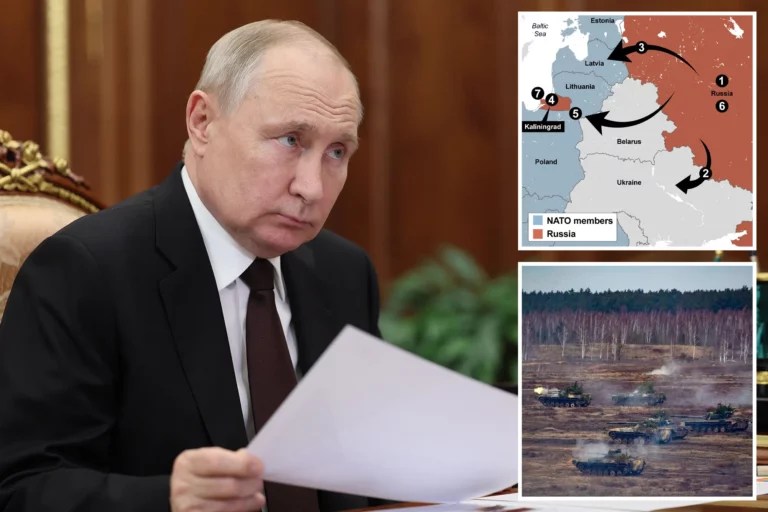

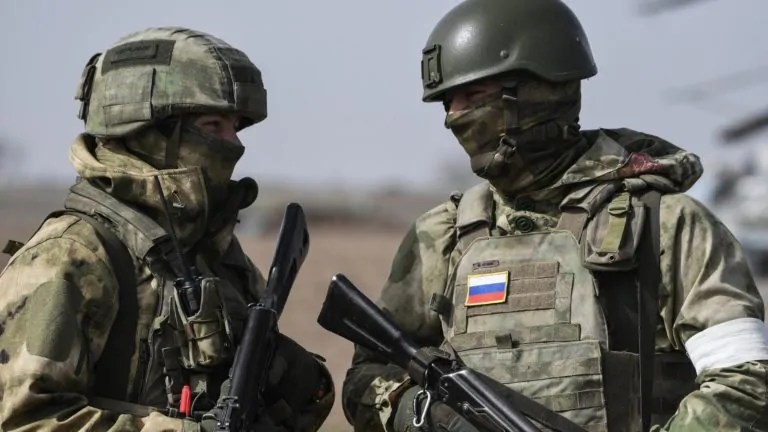
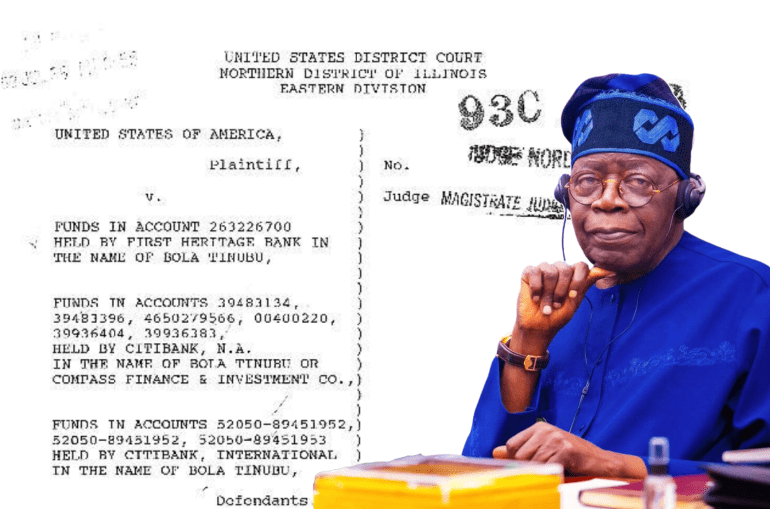
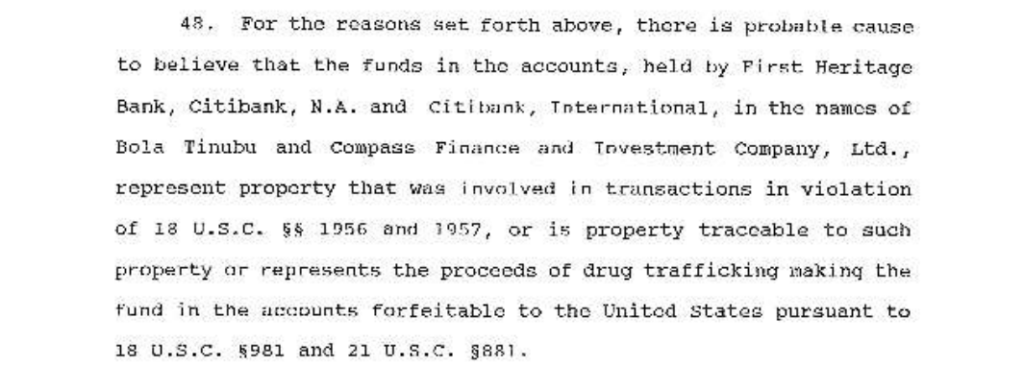
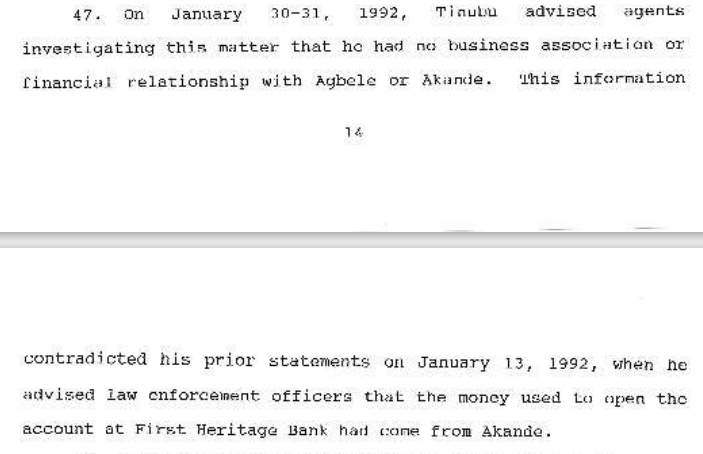

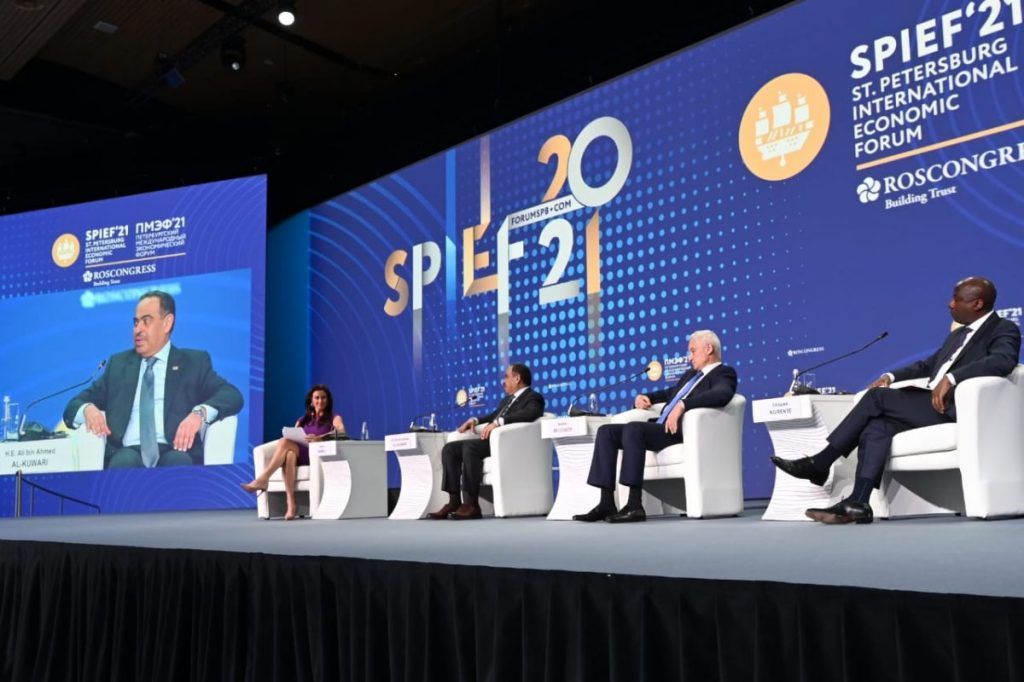
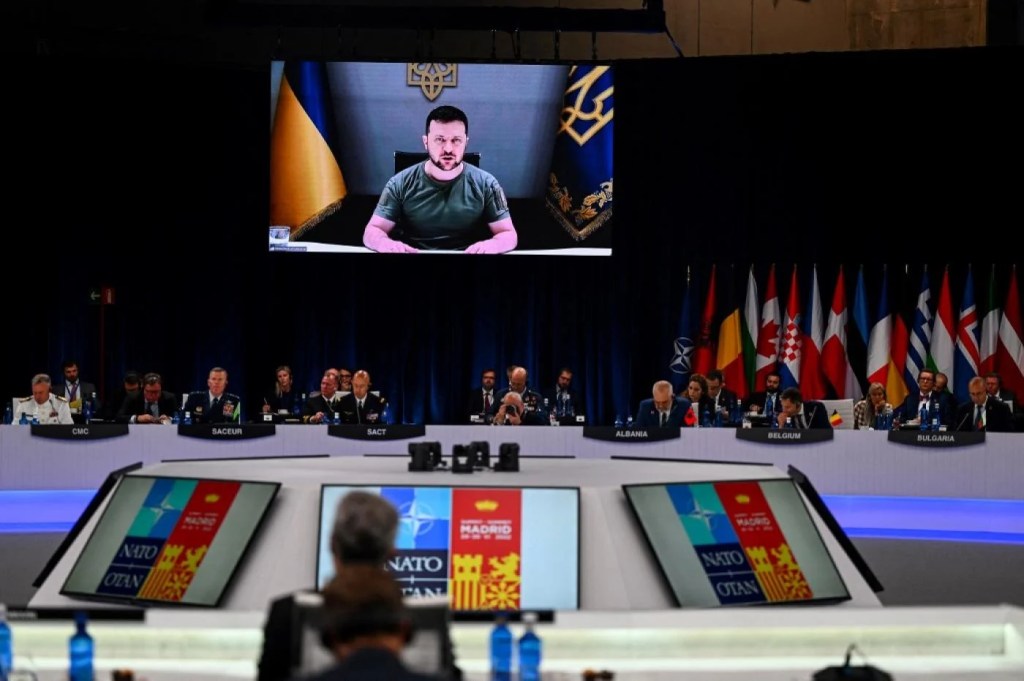


 After the Crash