

By James Curcio
Source: Rebel News
Let’s talk about being a rebel.
Everyone seems to want to be one. But it’s not entirely clear what it means. Does it take camo- pants? A Che T-shirt? A guitar? Is it just doing the opposite of whatever your parents did? “Be an individual, a rebel, innovate,” so many advertisements whisper. They’d have us believe that True Revolutionaries think different. They use Apple, or drink Coke. We signal our dissent to one another with the music we listen to and the cars we drive.
There’s something very peculiar going on here, something elusive and deeply contentious.
In the 1997 book, Commodify Your Dissent, Thomas Frank laid out a thesis that may appear common sense to those that have watched or lived in the commodified subcultures of the 90s, 00s, and beyond. A New York Times review comments,
… business culture and the counterculture today are essentially one and the same thing. Corporations cleverly employ the slogans and imagery of rebellion to market their products, thereby (a) seizing a language that ever connotes “new” and “different,” two key words in marketing, and (b) coaxing the young effortlessly into the capitalist order, where they will be so content with the stylishly packaged and annually updated goods signifying nonconformity they’ll never so much as consider real dissent — dissent against what Frank sees as the concentrated economic power of the “Culture Trust,” those telecommunications and entertainment giants who, he believes, “fabricate the materials with which the world thinks.” To have suffered the calculated pseudo-transgressions of Madonna or Calvin Klein, to have winced at the Nike commercial in which the Beatles’ “Revolution” serves as a jingle, is to sense Frank is on to something. (After reading Frank, in fact, you’ll have a hard time using words like “revolution” or “rebel” ever again, at least without quotation marks.)
The urge to rebel fuels the same system they ostensibly oppose. Whether it’s in arms trade, or far less ominously, manners of dress and behavior, there are dollars to be made fighting “The Man.” And maybe making money isn’t always an altogether bad thing. But it is certainly a complication, especially for those espousing neo-Marxists ideals.
As Guy Debord observed, “revolutionary theory is now the enemy of all revolutionary ideology and knows it.” Rebel movements are a counterculture, regardless of what they call themselves.
We’ll begin with a quintessential icon of the branded, shiny counterculture. The Matrix. We’ve probably all seen it. Even as an example it’s a cliché, and that’s part of the point. Here’s a framed sketch of the first movie, for those that haven’t: when it first ran, it was a slick take on the alienation most suburban American youth feel, packaged within the context of the epistemological skepticism Descartes wrestled with in the 17th century. Taken out of the cubicle and into the underworld, we witness the protagonist “keeping it real” by eating mush, donning co-opted fetish fashion, and fighting an army of identical men in business suits in slow motion. The movie superimposes the oligarchic and imperialist powers-that-be atop Neo’s quest of adolescent self-mastery. A successful piece of marketing — you can be sure no one collecting profits or licensing deals let their misgivings about “the Man” keep them from paying the rent.
This is not to point an accusatory finger, but rather to show the essential dependence of the counterculture upon the mainstream, because counter-cultures are not self-sustaining, and every culture produces a counter-culture in its shadow, just as every self produces an other. Any counterculture. Punk, mod, beatnik, romantic, hippy, psychedelic, straight edge, or occult. Even the early adopters of Internet culture started a group of outsiders that shared a collective vision,
The computer enthusiasts who could only dream of an open, global network in 1990 would go on to staff the dot-coms of the next decade. The closed networks that once guarded forbidden knowledge quickly fell by the wayside, and curiosity about computers could no longer be imagined a crime.
Our cyberspace today has its share of problems, but it is no dystopia — and for that, we must acknowledge the key part played by the messy collision of table-top games, computer hacking, law enforcement overreach and cyberpunk science fiction in 1990.
This article explores the strange history of Peter Jackson games, TSR, and the FBI. But it wasn’t the only one. Shadow Run, another popular cyberpunk RPGs of the 1990s, presented one of the more seemingly-improbable of cyberpunk futures, where you could play a freelancing mutant scrambling to survive in an ecosystem of headless corporations connected through cyberspace. Sound familiar? The Matrix just represented the final translation of these and similar fringe narratives into the mainstream.
Future vision has some effect on future reality, both in the identities we imagine for ourselves and the technologies we choose to explore. They almost always have unexpected consequences. Now we carry the networked planet in our palms, granting near instant communication with anyone, anywhere and anytime, and your intended subject isn’t always the only one listening.
We shouldn’t be surprised by this feedback loop. Without laying the material, mythic, and social groundwork for a new society, counterculture cannot be a bridge; it almost invariably leads back to the mainstream, though not necessarily without first making its mark and pushing some new envelope.
This even presents something of a false dichotomy — that old models of business can’t themselves be co-opted by countercultural myths. Yesterday’s counterculture is today’s mainstream. What better way to understand the so-called revolution of iPads or social media?
Our cultural symbols and signifiers are never static. Psychedelic and straight edge can share the same rack in a store if the store owner can co-brand the fashions, and people can brand themselves “green” through their purchasing power without ever leaving those boxes or worrying about the big picture. AdBuster’s Buy Nothing Day still capitalizes on the “rebel dollar.”
Rebellion is cool. “Cool” is what customers pay a premium for, along with the comfort of a world with easy definitions and pre-packaged cultural rebellions. This process itself isn’t new. The rebel or nonconformist is probably a constitutive feature of the American imagination: original colonies were religious non-conformist, the country was founded by rebellion, the frontier, the civil war, the swinging 20s, Jazz, James Dean, John Wayne, Elvis, the list goes on. The non-conformist imagination is as paradoxically and problematically American as cowboys and indians, apple pie and racism.
The territory between aesthetic, ideals, and social movement is blurry at best. But the most well-known expression of this trend in recent history is the now somewhat idealized 1960s, a clear view of which has been obscured through a haze of pot-smoke and partisan politics. Though this revolution certainly didn’t start in the 1960s, there we have one of the clearest instances of what good bed-fellows mass advertising and manufacturing make when branded under the zeitgeist of the counterculture.
When people bought those hip clothes to make a statement, whose pockets were they lining? It’s a revolving door of product tie-ins, and it all feeds on the needs of the individual, embodied in a sub-culture. The moment that psychedelic culture gained a certain momentum, Madison Avenue chewed it up and spit it back out in 7up ads. That interpretation of what it meant to be a hippie, a revolutionary, became an influence on the next generation. The rise of Rolling Stone magazine could also be seen as an example of this — a counterculture upstart turned mainstream institution.
While advertising and counterculture get along just fine, authenticity and profit often make strange bedfellows. But they aren’t necessarily diametric opposites, either. As movements gain momentum, they present a market, and markets are essentially agnostic when it comes to ideals.
There are many examples of how troubled that relationship can be. The Grunge movement in the 90s, before it was discovered, was just a bunch of poor ass kids playing broken ass instruments in the Pacific Northwest. This was the very reason it struck disenfranchised youth — the relationship between those acts and the aging record industry in many ways seemed to reflect the relationship of adolescent Gen Xers with their Boomer parents. They retained the desire to “drop out,” as Timothy Leary had preached to the previous counterculture generation of Laguna Beach and Haight Ashbury, but without the mystical optimism of “tuning in.” Hunter S Thompson maybe presaged this transition in the quotation from Fear and Loathing In Las Vegas that’s now rendered famous to the kids of 90s thanks to Terry Gilliam’s film adaptation,
We are all wired into a survival trip now. No more of the speed that fueled that 60’s. That was the fatal flaw in Tim Leary’s trip. He crashed around America selling “consciousness expansion” without ever giving a thought to the grim meat-hook realities that were lying in wait for all the people who took him seriously… All those pathetically eager acid freaks who thought they could buy Peace and Understanding for three bucks a hit. But their loss and failure is ours too. What Leary took down with him was the central illusion of a whole life-style that he helped create… a generation of permanent cripples, failed seekers, who never understood the essential old-mystic fallacy of the Acid Culture: the desperate assumption that somebody… or at least some force – is tending the light at the end of the tunnel.
I don’t think it’s a great stretch to imagine the suddenly-famous bands of the Grunge era as a part of this same legacy. Alice In Chains or Nirvana songs about dying drugged out and alone weren’t oracular prophecy, they were journal entry. And it became part of the allure, because it too was “authentic.” The greatest irony of all was that the tragic meltdowns and burn outs that followed on fame’s heels became part of the commodity. (Not that this vulture economy is new to tabloids).
Our narratives about authentic moments of aesthetic expression or innovation often depict them like volcanic eruptions: they build up and acquire force in subterranean and occluded environments, before erupting in a momentary and spectacular public display of creativity. It is telling that this quote from On The Road has become so popular, very likely cited in the papers and journals of more rebellion-minded American teens than any other from that book, “… The only people for me are the mad ones, the ones who are mad to live, mad to talk, mad to be saved, desirous of everything at the same time, the ones who never yawn or say a commonplace thing, but burn, burn, burn like fabulous yellow roman candles exploding like spiders across the stars.”
Hendrix, Joplin, Morrison, Cobain… the 27 Club is big. And quite a few more could be added if it was “the 20-something club.” Are the public self destructions of so many young, creative minds informed by this myth, or do they create it?
Maybe a bit of both. The Spectacle, in the sense Guy Debord uses it, disseminates its sensibilities, styles — a version of the truth. The particular moves ever toward the general, as facts gradually turn to legend and, eventually, myth. Mainstream appropriation is the process in which aesthetic movements affect broader society and culture. The ideals need a pulpit to reach the people, even if invariably it is fitted with guillotines for the early adopters once that message has been heard.
YOUR FATASS DIRTY DOLLAR
A message is a commodity, or it is obscure. Capitalism survives so well, in part, because it adapts to any message. If we instead think counterculture is an ideal that exists somehow apart from plebeian needs like making money, then countercultures will forever hobble itself. It doesn’t matter that these ideologies have little in common. It is the fashion or mystique that gets sold. Anti-corporate ideology sells as well as pro-. When all an ideology really boils down to is an easy to replicate aesthetic, how could they not?
Where do we draw the line between idealism and profit? The question is how individuals utilize or leverage the potential energy represented by that currency, and what ends it is applied to. Hard nosed books on business by the old guard, such as Drucker’s Management: Tasks, Responsibilities, Practices say exactly the same thing, in a less epigrammatic, Yoda-like way: profit is not a motive, it is a means. This much, at least, doesn’t change with the changing of the (sub)cultural tides. Within our present economic paradigm, without profit, nothing happens. Game over.
Those who position themselves as extreme radicals within the counterculture framework just disenfranchise themselves through an act of inept transference, finding anything with a dollar sign on it questionable. To this view, anyone that’s made a red cent off of their work is somehow morally bankrupt. This mentality generally ends one way: howling after the piece of meat on the end of someone else’s string, working by day for a major corporation, covering their self-loathing at night in tattoos, and body-modifications they can hide. That is, unless they lock themselves in a cave or try to start an agrarian commune. None of this posturing is in any way necessary, since business rhetoric itself has long since co-opted the countercultural message. For instance, this passage from Commodify your Dissent,
Dropping Naked Lunch and picking up Thriving on Chaos, the groundbreaking 1987 management text by Tom Peters, the most popular business writer of the past decade, one finds more philosophical similarities than one would expect from two manifestos of, respectively, dissident culture and business culture. If anything, Peters’ celebration of disorder is, by virtue of its hard statistics, bleaker and more nightmarish than Burroughs’. For this popular lecturer on such once-blithe topics as competitiveness and pop psychology there is nothing, absolutely nothing, that is certain. His world is one in which the corporate wisdom of the past is meaningless, established customs are ridiculous, and “rules” are some sort of curse, a remnant of the foolish fifties that exist to be defied, not obeyed. We live in what Peters calls “A World Turned Upside Down,” in which whirl is king and, in order to survive, businesses must eventually embrace Peters’ universal solution: “Revolution!”
“To meet the demands of the fast-changing competitive scene,” he counsels, “we must simply learn to love change as much as we have hated it in the past.” He advises businessmen to become Robespierres of routine, to demand of their underlings, “‘What have you changed lately?’ ‘How fast are you changing?’ and ‘Are you pursuing bold enough change goals?’” “Revolution,” of course, means for Peters the same thing it did to Burroughs and Ginsberg, Presley and the Stones in their heyday: breaking rules, pissing off the suits, shocking the bean-counters: “Actively and publicly hail defiance of the rules, many of which you doubtless labored mightily to construct in the first place.”
Growth on its own is never a clear indicator that the underlying ideals of a movement will remain preserved. If history has shown anything, it is that successful movements spread until core message becomes an empty, parroted aesthetic, as with most musical scenes and their transition from content to fashion; or that core is otherwise so emphasized that the meaning within is lost through literalism, as we can see in the history of the world’s major religions. One version of early Christian Gnostic history — of “love thy neighbor,” “all is one,” and scurrilous rumors of agape orgies — were replaced by the Roman Orthodoxy and the authority provided through the ultimate union of State and Religion. The hippies traded in their sandals and beat up VWs for SUVs and overpriced Birkenstocks. The relationship between ideology and act is far to complicated to enter into here, but the counter-history of Communism when viewed against the backdrop of Marxist ideals is perhaps equally insightful.
Enantiodromia, the tendency of things to turn into their opposites, is as much social observation as psychological. It oftentimes seems that succeeding too well can be the greatest curse to befall a movement. When the pendulum swings far in one direction, it often turns into its opposite without having the common decency to wait to swing back the other way.
As we’ve seen, this was part of the supposed downfall of counterculture in capitalism: “suits” decided they could deconstruct an organic process and manufacture it. They could own it from the ground up.
But this isn’t necessarily so. The branding of Cirque Du Soleil points toward a third option — arts movements will be dissected in the jargon of marketing, and they must succeed on those grounds to be taken seriously or accomplish anything.
Burning Man isn’t suddenly opening its gates to the wealthy. Yacht Communism has been a part of that movement ever since it gained some mainstream appeal, likely before. Seen as an arts and cultural movement, it has been vastly successful. Seen as an example of how to create a true egalitarian society, it would be an utter failure. But that was never the point.
Two weeks at Burning Man might be fun, even transformative, but spend two years there and you’d find out what hell is like.
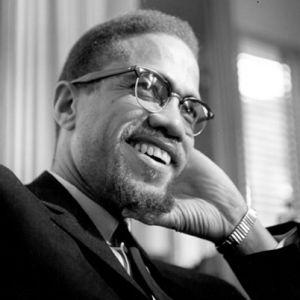
(Editors note: Tomorrow marks the 50th anniversary of the passing of Malcolm X. The venerated activist would surely have approved of Hedges’ radical appraisal of his philosophy and principles.)
By Chris Hedges
Source: Axis of Logic
Malcolm X, unlike Martin Luther King Jr., did not believe America had a conscience. For him there was no great tension between the lofty ideals of the nation—which he said were a sham—and the failure to deliver justice to blacks. He, perhaps better than King, understood the inner workings of empire. He had no hope that those who managed empire would ever get in touch with their better selves to build a country free of exploitation and injustice. He argued that from the arrival of the first slave ship to the appearance of our vast archipelago of prisons and our squalid, urban internal colonies where the poor are trapped and abused, the American empire was unrelentingly hostile to those Frantz Fanon called “the wretched of the earth.” This, Malcolm knew, would not change until the empire was destroyed.
“It is impossible for capitalism to survive, primarily because the system of capitalism needs some blood to suck,” Malcolm said. “Capitalism used to be like an eagle, but now it’s more like a vulture. It used to be strong enough to go and suck anybody’s blood whether they were strong or not. But now it has become more cowardly, like the vulture, and it can only suck the blood of the helpless. As the nations of the world free themselves, then capitalism has less victims, less to suck, and it becomes weaker and weaker. It’s only a matter of time in my opinion before it will collapse completely.”
King was able to achieve a legal victory through the civil rights movement, portrayed in the new film “Selma.” But he failed to bring about economic justice and thwart the rapacious appetite of the war machine that he was acutely aware was responsible for empire’s abuse of the oppressed at home and abroad. And 50 years after Malcolm X was assassinated in the Audubon Ballroom in Harlem by hit men from the Nation of Islam, it is clear that he, not King, was right. We are the nation Malcolm knew us to be. Human beings can be redeemed. Empires cannot. Our refusal to face the truth about empire, our refusal to defy the multitudinous crimes and atrocities of empire, has brought about the nightmare Malcolm predicted. And as the Digital Age and our post-literate society implant a terrifying historical amnesia, these crimes are erased as swiftly as they are committed.
“Sometimes, I have dared to dream … that one day, history may even say that my voice—which disturbed the white man’s smugness, and his arrogance, and his complacency—that my voice helped to save America from a grave, possibly even fatal catastrophe,” Malcolm wrote.
The integration of elites of color, including Barack Obama, into the upper echelons of institutional and political structures has done nothing to blunt the predatory nature of empire. Identity and gender politics—we are about to be sold a woman president in the form of Hillary Clinton—have fostered, as Malcolm understood, fraud and theft by Wall Street, the evisceration of our civil liberties, the misery of an underclass in which half of all public school children live in poverty, the expansion of our imperial wars and the deep and perhaps fatal exploitation of the ecosystem. And until we heed Malcolm X, until we grapple with the truth about the self-destruction that lies at the heart of empire, the victims, at home and abroad, will mount. Malcolm, like James Baldwin, understood that only by facing the truth about who we are as members of an imperial power can people of color, along with whites, be liberated. This truth is bitter and painful. It requires an acknowledgment of our capacity for evil, injustice and exploitation, and it demands repentance. But we cling like giddy children to the lies we tell ourselves about ourselves. We refuse to grow up. And because of these lies, perpetrated across the cultural and political spectrum, liberation has not taken place. Empire devours us all.
“We’re anti-evil, anti-oppression, anti-lynching,” Malcolm said. “You can’t be anti- those things unless you’re also anti- the oppressor and the lyncher. You can’t be anti-slavery and pro-slavemaster; you can’t be anti-crime and pro-criminal. In fact, Mr. Muhammad teaches that if the present generation of whites would study their own race in the light of true history, they would be anti-white themselves.”
Malcolm once said that, had he been a middle-class black who was encouraged to go to law school, rather than a poor child in a detention home who dropped out of school at 15, “I would today probably be among some city’s professional black bourgeoisie, sipping cocktails and palming myself off as a community spokesman for and leader of the suffering black masses, while my primary concern would be to grab a few more crumbs from the groaning board of the two-faced whites with whom they’re begging to ‘integrate.’ ”
Malcolm’s family, struggling and poor, was callously ripped apart by state agencies in a pattern that remains unchanged. The courts, substandard schooling, roach-filled apartments, fear, humiliation, despair, poverty, greedy bankers, abusive employers, police, jails and probation officers did their work then as they do it now. Malcolm saw racial integration as a politically sterile game, one played by a black middle class anxious to sell its soul as an enabler of empire and capitalism. “The man who tosses worms in the river,” Malcolm said, “isn’t necessarily a friend of the fish. All the fish who take him for a friend, who think the worm’s got no hook on it, usually end up in the frying pan.” He related to the apocalyptic battles in the Book of Revelation where the persecuted rise up in revolt against the wicked.
“Martin [Luther King Jr.] doesn’t have the revolutionary fire that Malcolm had until the very end of his life,” Cornel West says in his book with Christa Buschendorf, “Black Prophetic Fire.” “And by revolutionary fire I mean understanding the system under which we live, the capitalist system, the imperial tentacles, the American empire, the disregard for life, the willingness to violate law, be it international law or domestic law. Malcolm understood that from very early on, and it hit Martin so hard that he does become a revolutionary in his own moral way later in his short life, whereas Malcolm had the revolutionary fire so early in his life.”
There are three great books on Malcolm X: “The Autobiography of Malcolm X: As Told to Alex Haley,” “The Death and Life of Malcolm X” by Peter Goldman and “Martin & Malcolm & America: A Dream or a Nightmare” by James H. Cone.
On Friday I met Goldman—who as a reporter for a St. Louis newspaper and later for Newsweek knew and covered Malcolm—in a New York City cafe. Goldman was part of a tiny circle of white reporters Malcolm respected, including Charles Silberman of Fortune and M.S. “Mike” Handler of The New York Times, who Malcolm once said had “none of the usual prejudices or sentimentalities about black people.”
Goldman and his wife, Helen Dudar, who also was a reporter, first met Malcolm in 1962 at the Shabazz Frosti Kreem, a Black Muslim luncheonette in St. Louis’ north-side ghetto. At that meeting Malcolm poured some cream into his coffee. “Coffee is the only thing I liked integrated,” he commented. He went on: “The average Negro doesn’t even let another Negro know what he thinks, he’s so mistrusting. He’s an acrobat. He had to be to survive in this civilization. But by me being a Muslim, I’m black first—my sympathies are black, my allegiance is black, my whole objectives are black. By me being a Muslim, I’m not interested in being American, because America has never been interested in me.”
He told Goldman and Dudar: “We don’t hate. The white man has a guilt complex—he knows he’s done wrong. He knows that if he had undergone at our hands what we have undergone at his, he would hate us.” When Goldman told Malcolm he believed in a single society in which race did not matter Malcolm said sharply: “You’re dealing in fantasy. You’ve got to deal in facts.”
Goldman remembered, “He was the messenger who brought us the bad news, and nobody wanted to hear it.” Despite the “bad news” at that first meeting, Goldman would go on to have several more interviews with him, interviews that often lasted two or three hours. The writer now credits Malcolm for his “re-education.”
Goldman was struck from the beginning by Malcolm’s unfailing courtesy, his dazzling smile, his moral probity, his courage and, surprisingly, his gentleness. Goldman mentions the day that psychologist and writer Kenneth B. Clark and his wife escorted a group of high school students, most of them white, to meet Malcolm. They arrived to find him surrounded by reporters. Mrs. Clark, feeling that meeting with reporters was probably more important, told Malcolm the teenagers would wait. “The important thing is these kids,” Malcolm said to the Clarks as he called the students forward. “He didn’t see a difference between white kids and kids,” Kenneth Clark is quoted as saying in Goldman’s book.
James Baldwin too wrote of Malcolm’s deep sensitivity. He and Malcolm were on a radio program in 1961 with a young civil rights activist who had just returned from the South. “If you are an American citizen,” Baldwin remembered Malcolm asking the young man, “why have you got to fight for your rights as a citizen? To be a citizen means that you have the rights of a citizen. If you haven’t got the rights of a citizen, then you’re not a citizen.” “It’s not as simple as that,” the young man answered. “Why not?” Malcolm asked.
During the exchange, Baldwin wrote, “Malcolm understood that child and talked to him as though he was talking to a younger brother, and with that same watchful attention. What most struck me was that he was not at all trying to proselytize the child: he was trying to make him think. … I will never forget Malcolm and that child facing each other, and Malcolm’s extraordinary gentleness. And that’s the truth about Malcolm: he was one of the gentlest people I have ever met.”
“One of Malcolm’s many lines that I liked was ‘I am the man you think you are,’ ” Goldman said. “What he meant by that was if you hit me I would hit you back. But over the period of my acquaintance with him I came to believe it also meant if you respect me I will respect you back.”
Cone amplifies this point in “Martin & Malcolm & America”:
Malcolm X is the best medicine against genocide. He showed us by example and prophetic preaching that one does not have to stay in the mud. We can wake up; we can stand up; and we can take that long walk toward freedom. Freedom is first and foremost an inner recognition of self-respect, a knowledge that one was not put on this earth to be a nobody. Using drugs and killing each other are the worst forms of nobodyness. Our forefathers fought against great odds (slavery, lynching, and segregation), but they did not self-destruct. Some died fighting, and others, inspired by their example, kept moving toward the promised land of freedom, singing ‘we ain’t gonna let nobody turn us around.’ African-Americans can do the same today. We can fight for our dignity and self-respect. To be proud to be black does not mean being against white people, unless whites are against respecting the humanity of blacks. Malcolm was not against whites; he was for blacks and against their exploitation.
Goldman lamented the loss of voices such as Malcolm’s, voices steeped in an understanding of our historical and cultural truths and endowed with the courage to speak these truths in public.
“We don’t read anymore,” Goldman said. “We don’t learn anymore. History is disappearing. People talk about living in the moment as if it is a virtue. It is a horrible vice. Between the twitterverse and the 24-hour cable news cycle our history keeps disappearing. History is something boring that you had to endure in high school and then you are rid of it. Then you go to college and study finance, accounting, business management or computer science. There are damn few liberal arts majors left. And this has erased our history. The larger figure in the ’60s was, of course, King. But what the huge majority of Americans know about King is [only] that he made a speech where he said ‘I have a dream’ and that his name is attached to a day off.”
Malcolm, like King, understood the cost of being a prophet. The two men daily faced down this cost.
Malcolm, as Goldman writes, met with the reporter Claude Lewis not long before his Feb. 21, 1965, murder. He had already experienced several attempts on his life.
“This is an era of hypocrisy,” he told Lewis. “When white folks pretend that they want Negroes to be free, and Negroes pretend to white folks that they really believe that white folks want ’em to be free, it’s an era of hypocrisy, brother. You fool me and I fool you. You pretend that you’re my brother, and I pretend that I really believe you believe you’re my brother.”
He told Lewis he would never reach old age. “If you read, you’ll find that very few people who think like I think live long enough to get old. When I say by any means necessary, I mean it with all my heart, my mind and my soul. A black man should give his life to be free, and he should also be able, be willing to take the life of those who want to take his. When you really think like that, you don’t live long.”
Lewis asked him how he wanted to be remembered. “Sincere,” Malcolm said. “In whatever I did or do. Even if I made mistakes, they were made in sincerity. If I’m wrong, I’m wrong in sincerity. I think that the best thing that a person can be is sincere.”
“The price of freedom,” Malcolm said shortly before he was killed, “is death.”
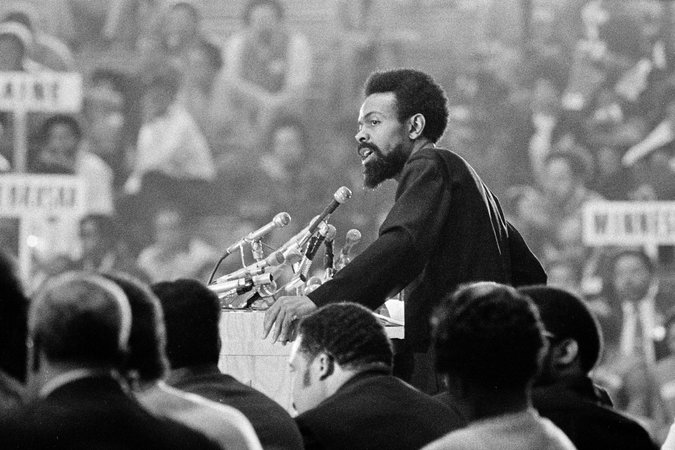
Photo: Gary Settle/The New York Times
Yesterday Amiri Baraka, a longtime activist and one of the great American poets, passed away at age 79. The cause of his death, at Beth Israel Medical Center in Newark, New Jersey, was not immediately released, but he was hospitalized in the facility’s intensive care unit since Dec. 21 and had a long struggle with diabetes.
Reflecting the exploratory and always-evolving nature of his mind, Amiri’s career path connected him to the Greenwich Village Beat community, the Black Nationalists, the Black Arts Movement (which he founded in 1964), and Marxist-Leninists. Though his beliefs during different stages of life may have different labels, he was consistently committed to justice, unity, social change and the struggle against oppression. As a revolutionary organizer, cultural critic, poet, novelist, essayist, historian, playwright, publisher and orator, Amiri Baraka’s words and ideas have influenced and inspired untold numbers of people around the world. His works have also been the source of much controversy, outrage and condemnation, at least during the initial time of their release.
One of Baraka’s last great acts as a rabble-rouser was his recitation of his poem “Somebody Blew Up America” before 2,000 people at the September 2002 Geraldine R. Dodge Poetry Festival held in Stanhope, New Jersey. This was incredibly courageous because throughout the country (especially on the East Coast) just one year after the attacks, questioning the official 9/11 story was enough to make one viewed as a conspiracy theorist, an apologist for terrorists, possibly traitorous, and/or insensitive to victims and their families. To do so and implicate the Israeli government, as Amiri Baraka did in his poem, led to accusations of antisemitism from the Anti-Defamation League. Many at the time believed the accusations even though under closer scrutiny it was obviously untrue because in the poem he clearly condemns the murder of Jews in the Holocaust and the lines in question could more accurately be described as anti-Zionist.
Who know why Five Israelis was filming the explosion And cracking they sides at the notion?
This is in reference to the well-documented case of the five dancing Israelis arrested on 9/11.
Who knew the World Trade Center was gonna get bombed Who told 4000 Israeli workers at the Twin Towers To stay home that day Why did Sharon stay away?
The most well-known incidence of Israeli foreknowledge are probably the reports from employees of instant messaging service Odigo. Other cases are listed here: http://911review.org/Wget/www.cooperativeresearch.org/wot/sept11/911mossad.html
Amiri Baraka was appointed Poet Laureate of New Jersey just one month before delivering “Somebody Blew Up America” to the public. Despite pressure from the powers that be to resign immediately, he steadfastly refused. In his own words, from an October 2, 2002 post on his website: “I WILL NOT ‘APOLOGIZE’, I WILL NOT ‘RESIGN!'” Governor Jim McGreevey and state legislators discovered there was no legal way to remove Poet Laureate appointees so in an act revealing their fear, hatred and desperation, they abolished the post in July 2003. This is just one chapter of many from Baraka’s often history-making career, but it’s emblematic of his courage, integrity, dedication to truth, and stubborn stance against injustice. This isn’t to say he was a saint or superhero. None of us are without fault, but what we can learn from Amiri is that development of political thought and civic engagement can and should be lifelong processes, and one can remain true to oneself yet open to new ideas and experiences. Above all, his life is a reminder that simple words (especially when composed and unleashed with skill at the right place and time) contain immense power; sometimes enough to change the world.
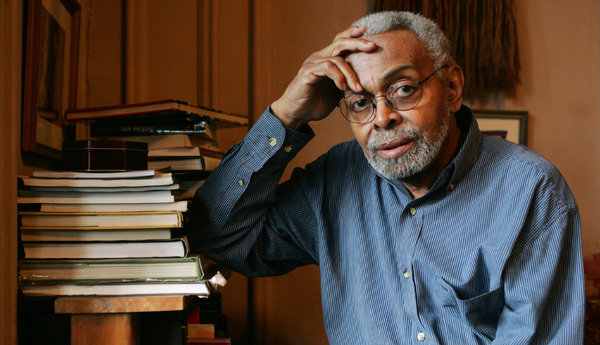
Photo: Ruth Fremson/The New York Times
Somebody Blew Up America
They say its some terrorist, some barbaric A Rab, in Afghanistan It wasn’t our American terrorists It wasn’t the Klan or the Skin heads Or the them that blows up nigger Churches, or reincarnates us on Death Row It wasn’t Trent Lott Or David Duke or Giuliani Or Schundler, Helms retiring
It wasn’t The gonorrhea in costume The white sheet diseases That have murdered black people Terrorized reason and sanity Most of humanity, as they pleases
They say (who say?) Who do the saying Who is them paying Who tell the lies Who in disguise Who had the slaves Who got the bux out the Bucks
Who got fat from plantations Who genocided Indians Tried to waste the Black nation
Who live on Wall Street The first plantation Who cut your nuts off Who rape your ma Who lynched your pa
Who got the tar, who got the feathers Who had the match, who set the fires Who killed and hired Who say they God & still be the Devil
Who the biggest only Who the most goodest Who do Jesus resemble
Who created everything Who the smartest Who the greatest Who the richest Who say you ugly and they the goodlookingest
Who define art Who define science
Who made the bombs Who made the guns
Who bought the slaves, who sold them
Who called you them names Who say Dahmer wasn’t insane
Who? Who? Who?
Who stole Puerto Rico Who stole the Indies, the Philipines, Manhattan Australia & The Hebrides Who forced opium on the Chinese
Who own them buildings Who got the money Who think you funny Who locked you up Who own the papers
Who owned the slave ship Who run the army
Who the fake president Who the ruler Who the banker
Who? Who? Who?
Who own the mine Who twist your mind Who got bread Who need peace Who you think need war
Who own the oil Who do no toil Who own the soil Who is not a nigger Who is so great ain’t nobody bigger
Who own this city
Who own the air Who own the water
Who own your crib Who rob and steal and cheat and murder and make lies the truth Who call you uncouth
Who live in the biggest house Who do the biggest crime Who go on vacation anytime
Who killed the most niggers Who killed the most Jews Who killed the most Italians Who killed the most Irish Who killed the most Africans Who killed the most Japanese Who killed the most Latinos
Who? Who? Who?
Who own the ocean
Who own the airplanes Who own the malls Who own television Who own radio
Who own what ain’t even known to be owned Who own the owners that ain’t the real owners
Who own the suburbs Who suck the cities Who make the laws
Who made Bush president Who believe the confederate flag need to be flying Who talk about democracy and be lying
Who the Beast in Revelations Who 666 Who know who decide Jesus get crucified
Who the Devil on the real side Who got rich from Armenian genocide
Who the biggest terrorist Who change the bible Who killed the most people Who do the most evil Who don’t worry about survival
Who have the colonies Who stole the most land Who rule the world Who say they good but only do evil Who the biggest executioner
Who? Who? Who?
Who own the oil Who want more oil Who told you what you think that later you find out a lie
Who? Who? Who?
Who found Bin Laden, maybe they Satan Who pay the CIA, Who knew the bomb was gonna blow Who know why the terrorists Learned to fly in Florida, San Diego
Who know why Five Israelis was filming the explosion And cracking they sides at the notion
Who need fossil fuel when the sun ain’t goin’ nowhere
Who make the credit cards Who get the biggest tax cut Who walked out of the Conference Against Racism Who killed Malcolm, Kennedy & his Brother Who killed Dr King, Who would want such a thing? Are they linked to the murder of Lincoln?
Who invaded Grenada Who made money from apartheid Who keep the Irish a colony Who overthrow Chile and Nicaragua later
Who killed David Sibeko, Chris Hani, the same ones who killed Biko, Cabral, Neruda, Allende, Che Guevara, Sandino,
Who killed Kabila, the ones who wasted Lumumba, Mondlane, Betty Shabazz, Die, Princess Di, Ralph Featherstone, Little Bobby
Who locked up Mandela, Dhoruba, Geronimo, Assata, Mumia, Garvey, Dashiell Hammett, Alphaeus Hutton
Who killed Huey Newton, Fred Hampton, Medgar Evers, Mikey Smith, Walter Rodney, Was it the ones who tried to poison Fidel Who tried to keep the Vietnamese Oppressed
Who put a price on Lenin’s head
Who put the Jews in ovens, and who helped them do it Who said “America First” and ok’d the yellow stars
Who killed Rosa Luxembourg, Liebneckt Who murdered the Rosenbergs And all the good people iced, tortured, assassinated, vanished
Who got rich from Algeria, Libya, Haiti, Iran, Iraq, Saudi, Kuwait, Lebanon, Syria, Egypt, Jordan, Palestine,
Who cut off peoples hands in the Congo Who invented Aids Who put the germs In the Indians’ blankets Who thought up “The Trail of Tears”
Who blew up the Maine & started the Spanish American War Who got Sharon back in Power Who backed Batista, Hitler, Bilbo, Chiang kai Chek
Who decided Affirmative Action had to go Reconstruction, The New Deal, The New Frontier, The Great Society,
Who do Tom Ass Clarence Work for Who doo doo come out the Colon’s mouth Who know what kind of Skeeza is a Condoleeza Who pay Connelly to be a wooden negro Who give Genius Awards to Homo Locus Subsidere
Who overthrew Nkrumah, Bishop, Who poison Robeson, who try to put DuBois in Jail Who frame Rap Jamil al Amin, Who frame the Rosenbergs, Garvey, The Scottsboro Boys, The Hollywood Ten
Who set the Reichstag Fire
Who knew the World Trade Center was gonna get bombed Who told 4000 Israeli workers at the Twin Towers To stay home that day Why did Sharon stay away?
Who? Who? Who?
Explosion of Owl the newspaper say The devil face cd be seen
Who make money from war Who make dough from fear and lies Who want the world like it is Who want the world to be ruled by imperialism and national oppression and terror violence, and hunger and poverty.
Who is the ruler of Hell? Who is the most powerful
Who you know ever Seen God?
But everybody seen The Devil
Like an Owl exploding In your life in your brain in your self Like an Owl who know the devil All night, all day if you listen, Like an Owl Exploding in fire. We hear the questions rise In terrible flame like the whistle of a crazy dog
Like the acid vomit of the fire of Hell Who and Who and WHO who who Whoooo and Whooooooooooooooooooooo!
Copyright 2002. AMIRI BARAKA.
INDIAN COUNTRY NEWS
"It is the duty of every man, as far as his ability extends, to detect and expose delusion and error"..Thomas Paine
Human in Algorithms
From the Roof Top
I See This
blog of the post capitalist transition.. Read or download the novel here + latest relevant posts
अध्ययन-अनुसन्धानको सार
 After the Crash