
By Cortland Pfeffer
Source: Wake Up World
Over the past 25 years, I have been immersed in the mental health and addiction system as a patient, later as staff, as a Registered Nurse (RN), and eventually as a supervisor. My time in the mental health system officially began at age 17 when I was first hospitalized in a psychiatric unit. This preceded further hospitalizations, a number of treatment episodes for alcoholism/addiction, along with multiple stints of incarceration in jails. Eventually, through this experience, I was able to embrace recovery and ultimately gain employment at some of these same facilities in which I was treated.
Often I am asked about how I went from being a psychiatric patient and homeless drug addict to being a registered nurse and a supervisor at some of these facilities. While there is no magical answer to that question, there certainly have been some valuable life lessons learned along the way. These are 10 of the life lessons I have learned over time, which allowed me to continue on this journey.
1. If you are naturally different than the majority, you will be labeled.
It is our nature to want to try to fit in with the tribe. It can be lonely when you feel like you are different from other people. When you are not like the majority, others will notice this and try to get you to fit in to this box of normality. But defining “normal” is an impossible task. It is defined as conforming to a standard. However, this standard changes with different cultures and time periods. What was once normal, is now insane. Today we clearly live in an insane society – one in which we favor materialism over that of our fellow man; one in which there is more public uproar over a sporting event than the humanitarian crisis in Aleppo. To be “normal” in this type of society would actually make one insane. Yet, when you don’t follow the mold of a brainwashed culture you get labeled as different.
This can be quite destructive as Erich Fromm points out in his 1941 book “Escape from Freedom” as he highlights how people are drawn to authority as it is safer to go along with the pack than to think independently.
We go along with the societal norms for harmony, acceptance, and belonging – which are also innate human desires. Each human has a desire to feel a sense of community and purpose. However, when we go along with the group – even when it is violates our personal beliefs just for acceptance – it causes us to believe that something is wrong with us for thinking differently.
Solomon Asch tested human’s conformity in an experiment in 1951. Over the 12 critical trials approximately 75% of participants conformed at least once; and 25% of participants never conformed. In the control condition, the participants were asked to write down the correct match between the lines without sharing their answers with the group. The results showed that the participants were very accurate, giving the correct answers 98-percent of the time. This is one of many studies that show most people will go along with a crowd, even if it is not what they believe. So what happens if the tribe has decided that there is something “wrong” with you? Science will show that most of us will go along with that.
However this is a mistake. Take a look at the bell curve, which is used to show “normality distribution.” The bell curve is used in many areas of life and can be used here. In many bell curves, you see that 95-percent are within two deviations from the mean, or average. On the very end you will always see 5-percent of people. They are at the extreme end and do not fall inside the box of “normal.” It doesn’t make you bad to be outside the norm, and it also doesn’t make you crazy or sick. In fact, I would argue that those on the extreme ends are the ones that have changed the world.
For example, Mahatma Gandhi did not fit inside that box. The “norm” of his time was to accept the British imperialism in his home country of India. He saw the injustices and spent his life trying to free his people from oppression. He was imprisoned and survived many assassination attempts (although one finally killed him). Likewise, Martin Luther King Jr. also saw the injustices of African-Americans were facing in the United States and stood up to the oppression. They both went against the norms, were labeled, judged, and eventually lost their lives for speaking against the status quo. They both ended up dead, but years later we realized they were speaking the truth against an insane society.
Other people’s labels of you are just that — other people’s labels. It is out of fear and ignorance. Do not adapt to other people’s expectations. The world needs people of all sorts. We need diversity.
If you closely take a look at the criteria for someone who is gifted versus someone who has ADHD, Bipolar, Aspergers, and many other mental health diagnosis you will see that they are almost identical. So whether you are called bipolar or gifted doesn’t depend on you, but rather on the so-called expert assessing your life. It is all about perception and none of it matters. All that matters is that you are your most authentic and true version of yourself.
2. We as a society create mental health and addiction.
There have been numerous studies that have exposed the fact that trauma as a child leads to neural chemistry changes in your brain. Childhood trauma has been called the smoking of mental health. The same way smoking can cause or invoke many physical diseases, childhood trauma and maltreatment does the equivalent for mental health and addiction.
There are higher relapse rates for hypertension and heart disease than there are for addiction and mental health. However, we often treat the addict like they are a bad person or making bad choices. So we are taking someone who has been traumatized and often did not receive treatment for their trauma and we punish them by locking them up. This creates more shame, exasperating the trauma and causing the cycle to repeat itself. Additionally, the patient is not going to be readily willing to seek help in the first place due to the aforementioned shame.
What if we had a cancer drug that works 10-percent of the time and made people sicker? We would throw the drug away! However if a treatment center has a 10-percent success rate for addiction or mental health they’re considered successful. What other business could be 10-percent successful and would continue to exist?
The addiction and mental health industry continue to grow, despite this complete lack of success. There are extremely high rates of recidivism in these fields. Speaking from personal experience, more often than not the patients get sicker while in treatment.
The staff then blames this lack of success on the patient. They point fingers and say that the patient “was not ready” or that they have “poor insight.” The site that failed to provide adequate treatment blames the victim and takes no responsibility for their failure.
This system only continues because too many people are making too much money off keeping people sick. The staff tends to be undertrained, under-qualified, and lack any meaningful or diverse life experience. They are trained to believe that their patients are bad people that are making bad choices instead of a sick person who has been traumatized. This obviously results in receiving much different treatment.
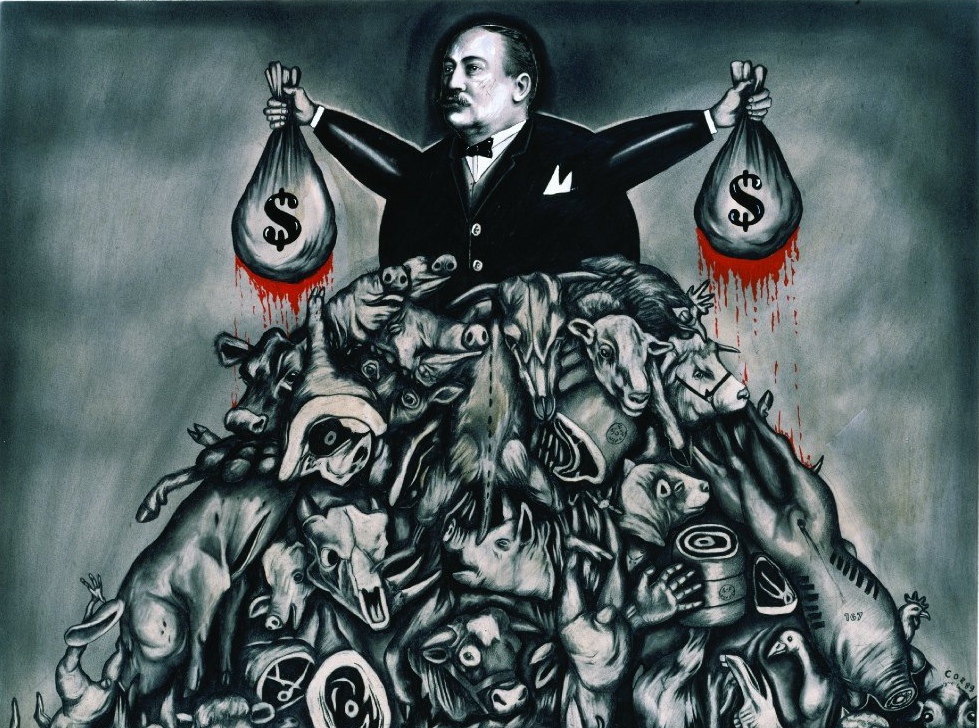
Now there are some absolutely wonderful people in this field. That is a fact. However, in general there is an overall lack of humanity and compassion in the way this population has been treated. We are the most incarcerating society in the history of mankind and most of these prisoners are there for harmless drug offenses. Due to this influx of incarcerations, we have created for-profit prisons which rely on mass incarcerations for profit. They set up contracts with governments to guarantee high occupancy rates and spend millions of dollars lobbying to congress to make tougher prison laws to ensure they stay profitable. In turn, members of congress then hold stock in these private prisons – meaning that the people that make the laws are making money off the laws they sign into action.
We are locking up people who have a disease to profit the rich. Punishment does not work for this disease – it never has and it never will. If it did work, we would not have a this astronomical recidivism rate in jails for drug offenses.
3. Be true to who you are.
We run from who we truly are because we are told to by our environment. We are told that it is not okay to be our true self from the time we are young and we begin to believe it to be true. We spend our whole lives living for other people and living based on other people’s expectations. We eventually lose ourselves and create a false persona (or false self) – This is what I refer to as “The Mask”.
The longer we wear the mask, the more we forget who we are underneath. We start to think that we are our masks – the character that we present to the world for acceptance. As this continues, we grow to dislike our mask because it is not our true self. This leads to depression, self-hate, or even suicidal ideation. We think we hate ourselves, but in reality we hate this false self that we have created. When we go against our own nature, it will always create depression.
If you have forgotten who you are, it’s easy to remember. You know the truth by how you feel. If you want to remember what that feeling is like, simply go do something that is pure, genuine, and has good intentions and see how that feels. If you can do something for somebody that can never repay you, you will remember this feeling – that is the feeling you are seeking.
Some of us may not even know who we really are because we’ve been wearing this mask for so long. In that case you get to explore and try new things. You get to discover who you truly are and what makes your soul feel alive. This can be viewed as an obstacle or an opportunity. You can now try everything – writing, dancing, singing, etc. – try anything you desire and you will find your true self in the process.
You will find out who you were, before the world told you who you were supposed to be.
This concept can be frightening, especially if we have become too accustomed to the mask. Some will do anything and everything to put the mask back on for safety, security, and possibly they are benefiting from pretending to be their false self. Although, in the long run it will create more inner dissent.
The world needs you to be you. Your true self fits into the world exactly how it should. When we go against this, we are robbing humanity of the gifts our true selves possess. Albert Einstein said, “great spirits have always encountered violent opposition from mediocre minds.”
It can be scary to finally be yourself. You will likely start feeling rejected and you will lose some people. But those are the people that you want to lose. You will also gain people in your lives – the ones that love the true you and not the false you.
This is a change that is painful and it causes most people to go back into their false self (ore put their mask back on). However, this is an essential struggle that you will encounter on your way. It will turn your world upside down and your relationships will change. But as the old saying goes, “it is better to be hated for who you are than to be loved for who you are not.”
You are only doing a smidgen of what you are capable of doing by being your true self. You have no idea what you’re capable of until you embrace who you are and you will be blown away by the results.
4. Fear destroys us; and makes others money.
When we are not ourselves, then our lives are being lived and based on fear. When we are always afraid, it is from remembering pain or trauma. Just like any animal, when we are afraid we will hide. We live in a society in which many people benefit of us being afraid.
We are evolutionarily programmed to remember the negative experiences at a much higher rate, more clearly and more intensely, than positive experiences.
Many businesses profit off of our fear. The news gets higher ratings when they show fights, violence, and all the things that are wrong with the world. So that is what they show and that is what we see. They are not showing a true representation of the world, but a sample size that spreads fear and increases ratings. This is paid for by commercial advertisements that spend millions of dollars by spreading fear into your mind in an effort to buy their product. They will tell you might get bitten by a snake, so you need to buy a fence to keep the snakes out. They tell you to buy material items to fit into society or you will be left out and not included. When the fear does not go away, we continue to consume more. And it never goes away until we realize that we are being played.
“If tomorrow, women woke up and decided they really liked their bodies, just think how many industries would go out of business?” – Dr. Gail Dines
Our insane society has created these masks and then they profit off these masks they created. Then you are labeled as insane if you don’t want to wear your mask anymore. Because when we take off our masks, they lose business.
What goes into your brain will affect your subconscious mind. If you feed it with fear, it will seek fear. If you feed it with love, it will find love. The opposite of living in fear is living with love. Love is the antidote to fear.
When you live with love, you will be faced resistance from those still guided by fear. But remember, in the end, throughout history, every single time love always wins. There may be a time it seems this is not true. But it becomes a crucial point in your recovery when you decide to choose love over fear if you are going to succeed. Every person going through a true recovery will come to this stage and it is scary, it is lonely, and it is supposed to be. It takes immense strength to love when everything inside of you tells you to run away. Once you make it through this stage, you have reached a turning point and the mask begins to crumble.
5. Love, acceptance, and truly listening is far more powerful than any advice you can ever give someone.
We have all seen someone struggling and we want to fix it. Usually we want to fix it the way we would fix it for ourselves if we were in the same struggle. We tend to go in and tell people how to change. Although well-intentioned, when we do this, we begin to lose them. Everyone is different, and every recovery is different. Every mask is unique, and therefore every mask removal must be unique.
Relationships are the single most important thing to someone going through a recovery. You can have the cure for them, but if they do not trust you, they will not hear it. They do not care how much you know, until they know how much you care.
Accepting people for who they are and where they are at in their life will go further than any piece of advice you can ever give them. Giving someone love and a hug when everybody else is kicking them is what I call “psychological life support.”
I had two people that did this for me and they saved my life. Not those who criticized me and tried to force me into treatment. It was those who offered unconditional love and acceptance who kept me alive. Unconditional, meaning without conditions/judgments, but just loving them and accepting them in their entirety with no desire to change or point out their flaws. When I was ready to change, I went to the same people because I had gained their trust.
Relationships come first. If you cannot build a relationship, a trusting relationship, then you will only do damage. I believe many staff in this field are well-intentioned, however they make these problems much worse and the patients get much sicker simply because there is a lack of acceptance, love, and an overabundance of advice giving and fixing.
Trust me, if there was an easy-fix, the person would have already done so. In rushing to fix a person, you are sending the message that they are incompetent and could not think of this on their own. A broken person doesn’t need to be fixed, they need to be loved, then they are able to heal themselves.
When I say listening, I mean being present completely with that person. This means not checking your phone, not looking at the clock, and not even thinking about anything else. This is referred to as active listening. The ten people I think are the best in this field all do this. They make the person they are with feel like they are the most important person on earth in that moment. When the person can feel heard, the magic begins.
6. Embrace your struggles, they are gifts.
When I see a patient walking around a treatment center saying “everything is fine,” “everything is ok,” or “I’m doing great,” this becomes a giant red flag. You should be struggling. Muscles do not grow without struggle and the same goes for our soul.
Since we were young, we were trained to believe that admitting to a struggle is a sign of weakness, but in fact it is a great strength. We are all going through a struggle. We should be working on the thing that is the most difficult for us for optimum growth. The thing that you are most scared to do is probably the thing that is most essential to your recovery.
If you are in pain, if you are crying, if you are scared, then you are growing. If you are questioning why you are there, or why you are going through this, or questioning your own sanity, then you are growing. If you are angry, if you are tense, if you are isolating, then you are growing.
If there is no struggle, there is no growth. If there is no growth, there is no recovery.
Everything in my life in which I thought would be my demise, ended up being the very best things in the long run. We see a small portion of the big picture and act like that’s the reality, when it’s not. We must trust the process and trust in the bigger picture. Without the illusion, there would be no enlightenment.
There will come a time that you will think this is not worth it and feel like giving up. This means you are getting close to breaking through. We usually give up right before the miracle happens.
There is not one magical moment where you reach some mountaintop. It usually takes two steps forward, followed by one step back. It is a continuous, non-linear process. It is like a newborn baby deer trying to learn to walk. Their feet are wobbly and they fall down often. Falling down is not the issue, it is the learning process that makes you stronger and not having shame about the fall. It is about being around people that do not judge the fall.
The only way through the pain you have is to deal with it. There are many things we have hidden inside ourselves through the years because of fear and using the mask. Sometimes it may be for years, or decades, but all things eventually rise to the surface and all your pain is revealed. But that is the only way that it can be healed is for it to come to the surface. It cannot be healed when it is buried.
Let the storm come. After the storm comes the rainbow.
“Life isn’t about waiting for the storm to pass; it’s learning to dance in the rain.” – Vivian Greene
7. Our subconscious is what drives us.
We have two parts of our mind – the conscious and the subconscious. The conscious is all of which we are aware. The subconscious is the part that we are not aware, but all the millions of things we process daily and store away.
Our brain cannot tell if what is in our subconscious is true or not. It takes everything in as fact. It is like a hard drive that receives commands and stores everything as fact. It is built by other people and society – parents, siblings, teachers, television, pop culture, advertisements, etc. If we grow up being told that we are “bad,” our subconscious processes it to be true.
Everything is a perception and not reality. However, as different things start to play out in our conscious mind, then the subconscious files come to the surface to back it up as “evidence.” This creates stronger files in our subconscious mind. These files in our subconscious mind are what drives us; not what we are consciously aware.
As young children and even as adolescents, our brains are flooded with gray matter. This is the part of our brain that can be molded and create the person we are to become. This is what shapes the subconscious mind which will determine what drives us for a lifetime. If someone is told they are bad, lazy, incompetent, then they will be driven by this. If someone deals with pain, torture, trauma, and abandonment, they will be drive by this as well.
The good news is we can change the subconscious mind by implanting new messages. It is flexible, but it takes time, practice and patience.
Additionally, some of us will be more affected than others by these messages. Some people are naturally more sensitive, more prone to trauma, and more prone to take things too personally.
We are all born with an innate temperament that lasts our entire lives. That would be like if a couple people were eating a pizza. One person takes a bite and it tastes lukewarm to them; but the other person burns their mouth and complains as to how hot it is. The others would not believe it to be true. However when it comes to emotions, we can’t see anything, the scars or burns are invisible. So we are told that it is not real and our emotions are crazy, in which we believe to be true. This only further pushes our true selves down and creates more negative self-talk which creates files in the subconscious.
This leads to the most sensitive, warm, kind people in our society being invalidated and told they are “babies” for feeling and caring more than most. We tell them that they are not right when inside they are going through a trauma.
But if a young boy acts out in anger instead of crying, that is more acceptable in our society. That is one form of a mask that is created and is prevalent among young men. Then with this mask, and all masks, comes depression from not being your true self from going against nature.
That’s the inner voice, it is the subconscious. It is strong but it may not even be true. The only way to combat this is to start telling yourself positive things (affirmations), surround yourself with positivity, changing your perceptions of the world (cognitive behavioral therapy), focus on the positive things in life (gratitude). This starts to build more positive files in your subconscious which drives you out of despair and into a positive direction.
We all are born pure, and with nothing but love in our hearts. This is often taken from some of us by a combination of temperament, environment, society, and trauma. We eventually believe that we are not good at our core. But we are. We can change our subconscious by what goes into our brain daily. This takes persistence and daily practice, and it is hard when we are used to thinking negatively about ourselves. However, this out of everything is probably the key to sustained long-term recovery- dealing with that inner voice and changing our thoughts. It will seem foreign at first to say “I’m a good person.” If you are going to make it, you have to start doing on a daily basis. You can replace those files just like your body replaces every cell in the body every seven years. Soon those old files will be gone and the new positive files will be your subconscious.
8. Who you surround yourself with is one of the most important decisions you will make.
I have heard many wise people say that we are the average of the five people we spend the most time with. As I said above, that directly affects our subconscious and what we think of ourselves.
I remember years ago my oldest daughter enrolled in a private school. Everyone in the school was Catholic and she came home and believed in her inner core that the entire world was Catholic. She cried about it at night that she was different because she did not go up to get the fake bread at their ceremonies. Similarly, if you are around five people that smoke pot and you do not smoke pot, then you are the weirdo for not smoking pot. However, if you are with five people that do not smoke pot and you do, then you are considered strange for smoking pot.
At the end of the day, if you are around negativity — eg. those who consider you strange or different — it will eventually influence you.
Now some negativity can be good if you’re an overly positive person and turn a blind eye to all negativity because that is also unrealistic and can actually benefit the person. Also, being angry can help mobilize and motivate you to change. People who are totally happy and content at all times are never the ones that change the world – see Martin Luther King Jr. and Gandhi. It is those that are healthy discontents that create change.
On the flip side, if you only are surrounded by negativity it will suck the life out of you. Likewise if you are around a bunch of people who believe that you are a bad person, be that your family, friends, or relatives, then that’s going to creep right back into your subconscious and you creep right back into old patterns. Soon you believe that pattern as real.
You cannot do this alone. It took many others to help us put the mask on, and it will take others to help remove the mask as well. I came across five amazing people that helped change my life and save it.
Part of recovering is making the effort to be true to yourself. Once you can do this, you will find yourself in others. You start to see that all of life is a synchronicity. You will suddenly be around people who can help you and you have to be willing to accept help and make yourself vulnerable. If you cannot expose yourself and be vulnerable to these good people, then you will fall.
Vulnerability allows others to lift the mask.
You have to start all over sometimes; that may even mean leaving your family and lifelong friends. It is terrifying, but you will find new people that embrace your true self, whereas your friends and family have only got to know your mask and are not ready for your true self. You’ll find that people who you thought were close friends really were not; and people who you thought were not your friends actually were. You find out everybody’s true character when you go through this. It’s a gift in that way as well. Someone you may not have associated with five years ago, you’ll love them when you are your true self. This just means that the transformation is happening.
9. You must learn to truly love yourself or you will not make it.
I wrote earlier about being your true self and that is completely different from loving your true self. There is a reason we wear these masks and have these false selves. It is because we think that at our core, we are not OK. Then we start to be ourselves, but also seek to make changes. We have to 100-percent, truly, genuinely love our true self and embrace it or we will eventually slip back on our masks.
This is the often overlooked Steps Six and Seven of the 12-Steps. We are removing the parts of ourselves that are not true and keeping those that are. However, we get confused at this point because we feel that part of ourselves is flawed.
But, that is impossible! Every single person is perfect at their core. You do not have any flaws. That is a lie created by society. Every person is perfect and once you find your true self you will see this to be true.
Which is why, when you are finally being yourself you are likely going to be mocked, ridiculed, and teased. It begins to seem much easier to revert back to old ways (the mask). It is hard when you have run your whole life and been afraid. Then you start to be yourself and people start teasing you or pushing you away. You must realize that this has nothing to do with you and has everything to do with them. If somebody loves you that usually has more to do with them than you; and if somebody hates you that has more to do with them than you.
I remember when I had to have a psychological test done, I had to have my four closest people fill out a form and I figured it would all be the same answers that they gave. I got four completely different forms with four completely different sets of answers. Others love us based on their perception of us or they hate us based on their perception of us, none of this is reality – but it is reality to them.
What matters is what we think of ourselves. If we love ourselves, we will glow and other people will be drawn to us and some will be drawn away from us.
“The ego says, ‘Once everything falls into place, I’ll find peace.’ The spirit says, ‘Find your peace, and then everything will fall into place.’” – Marianne Williamson
10. Whatever you do, if you do it with love in your heart as your intention, you cannot go wrong.
The world is full of opinions. Everyone has the answers. You can’t do this, or you shouldn’t do that. People can show you evidence about why they are right and why you are wrong. Everyone will tell you how to handle your recovery and how to handle every situation in life. When we are listening to other people instead of our true selves, we are going against our own truth and against our own nature.
There is no right and wrong. We used to think smoking was okay for you and doctors advertised it. We used to think the world was flat. We used to think Columbus discovered America. There is no truth, there is only perception. You must do what your true inner self believes. Your mask is unique so your mask’s removal is going to be unique. The one thing that is common for all mask removals is connection and love. Science and studies have found out that we are breathing the same air that people breathed in and breathed out thousands of years ago. The air we breathe is composed of mainly nitrogen, gas, and oxygen gas. Very little is lost in space, and only occasionally is there a new source of carbon or oxygen introduced into this planet. So every breath you take has atoms that have been here for billions of years.
There was a computer program set up in various spots around the world. It would shoot off random numbers, there was no pattern ever seen for years. This is called a Random Number Generator. However when the September 11th attacks happened, or other moments that human consciousness became coherent, things changed. For instance, in the case of a severe tragedy in which all humans are thinking about similar things and having similar emotions, all the numbers become structured and organized. They show an unpredictable sequence of ones and zeroes. The odds of this happening by chance is one in a trillion. How is this possible?
Every single thing you can see around you — the rocks, the birds, and the trees — all are comprised of the same atoms. They are just expressed differently — yet intricately interconnected. Whatever you do and whatever decisions you make, if you do it with love as your motive and if your intentions are pure with love you cannot be wrong. So know your intentions and know your truth and embrace it. You were born with a light that others have tried to dim with a mask, let your light shine again and take your mask off. Humanity needs the gift that your true self possess.
Taking the Mask Off: Destroying the Stigmatic Barriers of Mental Health and Addiction Using a Spiritual Solution
“Taking the Mask Off” is the new book by Cortland Pfeffer and Irwin Ozborne. Cortland Pfeffer spent years as a patient in psychiatric hospitals, treatment centers, and jails before becoming a registered nurse and working in the same facilities. Based on his experience, this story is told from both sides of the desk. It offers a unique and valuable perspective into mental health and addiction, revealing the problems with the psychiatric industry while also providing the solution – one that brings together science, spirituality, philosophy, and personal experience.
“Taking the Mask Off: Destroying the Stigmatic Barriers of Mental Health and Addiction Using a Spiritual Solution” is available on Amazon, and Balboa Press.




 After the Crash