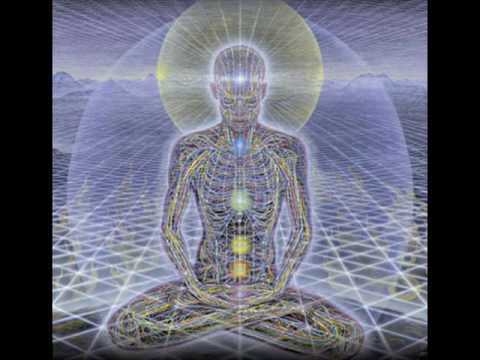
The Highest Path into the Light

aa1052ca78b1eb556e44f2f81b63b101

By rahkyt

Source: Sacred Space in Time

Sometimes you can feel bad things brewing behind the scenes. Just like dark clouds on the horizon portend a storm, feelings of unease can alert you to negative energy being directed your way.

It could be a general roiling of the collective psychic pond, or it can be something quite specific and directed at you and your life. Determining the difference can usually be assayed by a renewed attention to the synchronicities in your life that arise as auspicious clues to the general energetic tenor of particular periods of life transit.

It is a truism in life that there is balance in polarity. That good will eventually balance out evil in disparate realms of expression. As attention and will focuses on a singular expression of either, it’s opposition rises as a natural consequence of that quantum attention. Entanglement and superposition promise that.

As above, so below, according to hermetic principles. The universe is Mind, Vibrates and has Rhythm and Gender, must express Polarity and every Cause has an Effect. The individual life can mirror the collective in myriad ways. Haters, reading your Facebook feed with derision, spewing negativity at your attempts to live in the Light. Racist and prejudiced minions of all colors hating on interracial unions or people of other ethnicities proclaiming the Oneness of all humanity. Political enemies filled with enmity at your decision to take a stance, or not.

Your, our, choices birth consequences.  Our words, help – or force – others to formulate theirs. There can be a thin line between love and hate, folks. But hate is not the opposite of love, as so many espouse. Love has no opposition, it is God. Or, the fundamental, driving force and energy that drives Creation itself.

Rather, hate is the name we give to that simmering force of seperation and judgement. That energetic wall built within that defines the distance individuals and collectives insert between themselves and that holistic, all-encompassing fullness and heart’s resonation that indicates the presence of the abiding consciousness and the clarity of your, our, vessels, in their infinite expressiveness of the many faces of Divinity.

So when you feel those bad things, sense or hear tell of the haters behind the scenes, sending you ugliness and wishing you pain while writhing internally in their own self-inflicted hellish versions of reality, try to smile. Consciously relax the tightness in your solar plexus that being the subject of aggression gives rise to. Raise your brow, lift your cheeks and part your lips to reveal those pearly whites, thereby releasing the full brilliance of your inner truth into your experience of the world.

Breath in that negative energy; feel it in all of its visceral fear and loathing, then – again consciously – birth oppositional feelings of love, compassion and understanding in your truest heart of hearts. Breath it out in a cloud of intention and release that personalized expression of the Infinite and the Eternal that girds the loins of all open to it into the world. Thusly, we become one of those who wear the full armor of God and know that no weapon formed against me, or you, shall prosper.

Let the haters hate, because that well will run dry, eventually. But the lovers? We drink from a never-ending and ever-flowing spring that nourishes us continually as we traverse the shadowy dales and sunlit hills, ever searching for the Highest Path into the Light.


Psychologists Explain Why People Refuse to Question the Official Version of 9/11

10cd76d619701825d0496e5cf11f0b55

By Alex Pietrowski

Source: Waking Times

September 11th is the most polarizing event in modern world history. After looking at the aggregate of the accumulated facts and analysis that has emerged since the day itself in 2001, many people find it impossible to believe the official version of events, and since no serious government investigation is considering new evidence or professional analysis, people are left to decide for themselves if there is more to the story.

Due to the sheer volume of information that defies the government’s explanation of events, to believe the official story it now requires some sort of trick of the mind, or some sort of subconscious unwillingness to even entertain a contrary possibility. Regarding 9/11 truth, people will say the most absurdly illogical things, such as:

“I wouldn’t believe what you’re telling me, even if it were true.”
“I don’t need to look at the evidence.”
“I don’t want to know the truth, or I’d become too negative.”
“If that were true, someone would have leaked it by now.”
“That’s ridiculous, there is no way our government would harm us.”
“What makes you think we even deserve to know the truth?”

So, why is it that people have such a hard time even questioning the official version, and why is it difficult for them to even look at alternative information about the events of 9/11?

“At this point we have nine years of hard scientific evidence that disproves the government theory about what happened on September 11th, and yet people continue to be either oblivious to the fact that this information exists, or completely resistant to looking at this information. So the question becomes, why? Why is it that people have so much trouble hearing this information?

From my work  I think we would be remiss not to look at the impact of trauma.” – Marti Hopper, Ph.D.

Trauma Based Mind Control Works

Firstly, it is critical to bring attention to the severity of trauma incurred when witnessing and processing an event of this magnitude. The nation, and much of the world, is still suffering from mass, collective PTSD, and as time goes by, our exposure to more acts of terror only amplify our attempts to bury this trauma within the psyche.

The darker and more horrifying the affront to our humanity, the more effective we are at burying it. The shock and awe theory of consciousness.

“Many people respond to these truths in a very deep way. Some have a visceral reaction, like they’ve been punched in the stomach. To begin to accept the possibility that the government was involved is like opening pandoras box. If you open the lid and peek in a little bit, it’s going to challenge some of your fundamental beliefs about the world.” – Robert Hopper, Ph.D., Clinical Psychologist

Protecting Worldview Home

Psychologists highlight how the human mind has a tendency to look out for its own security, protecting itself from ideas that challenge core beliefs. When your worldview comes into serious doubt, it can feel like everything is crashing down, and that you’re being thrown into the great wide open with no security. Much as the body shifts into fight or flight mode when danger is clear and present, so too, the mind has tools of evasion from harm.

“When we hear information that contradicts our worldview, social psychologists call the resulting insecurity, ‘cognitive dissonance.’” – Frances Shure, M.A.

The mind tries to survive by allowing conflicting information to exist simultaneously, unconsciously choosing to bury that which causes the most disruption to the comfort of held beliefs.

In the case of 9/11, and other events where the media plays a critical role in creating a narrative of what happened, one cognition is always the official narrative which typically supports presently held beliefs about society, and the other cognition can be based on fact and evidence, but since it challenges to undermine the safety of such illusions, it is thusly over ridden.

“9/11 truth challenges the beliefs that our country protects us and keeps up safe, and that America is the good guy. When your beliefs are challenged, fear and anxiety are created. In response to that, our psychological defenses kick in, and they protect us from these emotions. Denial, which is probably the most primitive psychological defense is the one most likely to kick in when our beliefs are challenged.” – Robert Hopper, Ph.D

The result is disharmony, the collapse of a very important worldview and a source of psychological protection. What is left in its place is insecurity, vulnerability, and confusion, triggering a survival mechanism.

Cognitive-dissonance

Final Thoughts

9/11 is a crime and a public trauma so grand, that for one to look deeply into it will require them to change or adjust at least some of their fundamental beliefs about the world. Cognitive dissonance, which can lead to the most bizarre reactions to controversially true information, is the mind’s way of hunkering down and weathering the storm in self-protection.

“The terror associated with our unstoppable annihilation creates a subconscious conflict or anxiety called cognitive dissonance. We try to cope with having to accept two contrary ideas. – Gary Vey

This is why the 9/11 issue is so important in our collective awakening. It is so big, and so well-documented that it can lead to a complete reevaluation of our entire worldview and social systems, and a huge leap forward in consciousness and awareness.

If we can think of our world view as being sort of our mental and emotional home, I think all of us would do just about anythign to defend our homes, defend our families…” – Dorothy Loring, M.A., Counseling Psychologist

Take a look at the following presentation looking at why our minds tend to shut down when confronted with the alternate view of 9/11:


Alex Pietrowski is an artist and writer concerned with preserving good health and the basic freedom to enjoy a healthy lifestyle. He is a staff writer for WakingTimes.com and Offgrid Outpost, a provider of storable food and emergency kits. Alex is an avid student of Yoga and life.

Colin Wilson’s “The Outsider”

51el43rwbvl-_sy344_bo1204203200_

(Editor’s note: We’re sharing this article today to commemorate the third anniversary of Colin Wilson’s passing.)

By Gary Lachman

Source: Reality Sandwich

This is an excerpt from my new book, Beyond the Robot: The Life and Work of Colin Wilson. Wilson rose to global fame sixty years ago, when his first book, The Outsider, became a bestseller overnight and sparked the nascent counter culture into a sudden blaze. It thrust the twenty-four year old Wilson into celebrity, and inaugurated the brief craze for the Angry Young Men, a kind of British buttoned-down version of the Beat Generation. Wilson had little in common with his other Angries, who were focused mainly on social issues. Wilson’s concern was the lack of spiritual tension in the modern world, and he quickly became known as Britain’s “homegrown existentialist,” rivaling Sartre, Camus and others on the existential scene with his analysis of the modern predicament. Wilson’s path to success was bumpy. In the years before The Outsider he had worked at dozens of menial jobs, always moving on when he got bored. He survived a suicide attempt, hitchhiked across England and France, hob nobbed with bohemians in London and Paris, and slept rough on Hampstead Heath while writing by day in the British Museum. He died in 2013 at the age of 82.

Wilson’s success was short-lived, and soon after celebrating him the press and the critics, ever fickle, brought him down, the boy genius now persona non grata. Wilson went on to write an enormous number of books, over a remarkable range of subjects, from criminality and sex to the paranormal and mystical experience, as well as many novels, such as Ritual in the Dark, about a modern-day Jack the Ripper, and The Mind Parasites, a phenomenological science fiction thriller about alien psychic vampires in the mind…

This section introduces Wilson’s character of the Outsider, a person who has a hunger for meaning and purpose that the modern world cannot provide, and who must discover the “secret life” within him or face death, madness, or quiet despair.

In The Outsider Wilson made his first attempt at analysing a character he felt was peculiar to our age, a person with a pressing hunger for meaning and spiritual purpose in a world seemingly bent on denying him these. In the past, during the Middle Ages, such an individual could have found a home in the church, which was then the heart of life, and which provided a place, monasteries, where he could work toward his salvation – work, that is, to awaken the spiritual life within him, to grasping his purpose with an unwavering seriousness. That purpose was to become something greater than himself, to work against the laziness and complacency that keeps him second-rate and allows him to be satisfied with being “only human.”

But today, in our modern society, geared toward comfort and security and motivated by purely material aims, there is no place for such a person, and his spiritual seriousness is a liability. His or her desire to be something more than a happy, well-fed animal, puts him at odds with the world around him. This type is driven by needs that the people he knows do not understand. For him the world that they complacently accept is false. He sees “too deep and too much” and his awareness of the illusions that satisfy others brings him to despair. He is not at home in the world, his permanent sense of self-dissatisfaction does not allow him to be. This dissatisfaction cannot be met by any changes to the social or economic system, as Marxists like the theatre critic Kenneth Tynan, one of the Angry Young men, believed. “The question of freedom,” Wilson writes, “is not a social problem.” Only by the long, difficult, personal struggle to self-realization can the Outsider realize his goal. That realization, or actualization, as the psychologist Abraham Maslow, one of Wilson’s earliest readers, called it, requires an “intensity of will” and is fostered by anything that arouses one’s “will to more life.”

This path is difficult. The Outsider at first feels himself a kind of misfit, a “lone nutter,” and his dissonance from the Insiders, those content with the world of the second-rate, leads to neurosis. There must be something wrong with him, he believes, and he may try to “fit in.” Usually he fails, and winds up occupying an uncomfortable middle realm. He cannot accept the world and its triviality, but he is not strong enough to escape from it completely or to impose his own seriousness upon it. This may lead to nothing more than a life of quiet desperation, or the Outsider may smoulder with resentment at the insects around him, and lash out indiscriminately – as Wilson’s explorations of the “criminal” Outsider will show, this can have deadly results. But if he is lucky, there are moments of vision, when a sense of power and meaning comes to him and he sees that he is not a misfit, and that the hunger and dissatisfaction that drives him, and which drove the mystics and saints of the past, are more real than the newspapers, television, and mediocrity he abhors.

It is a vision of “a higher form of reality than he has so far known,” a glimpse of what Wilson calls “the secret life,” that sense of total affirmation that he had experienced more than once by now. But then the vision fades. The Outsider is back on earth and is left wondering what the vision was about and why he must return to the dreary treadmill. The Outsider examines the possibility of restoring the vision, of so strengthening one’s grasp on one’s sense of purpose that it is not weakened or confused by the banality of “life.”

Wilson’s notebooks were full of observations of such figures, of Outsiders who were not able to survive their clashes with the world and who succumbed to illness, suicide or madness, who were not quite strong enough to impose their vision on their contemporaries. What went wrong? Why did giants like Nietzsche, Nijinsky, Van Gogh, T. E. Lawrence, and others fail? To say they failed is not, of course, to diminish their greatness. But Nietzsche and Nijinsky went insane, Van Gogh shot himself, and Lawrence went into a kind of spiritual suicide, burying himself as a private in the RAF at the height of his fame. Why did so many poets and writers of the nineteenth century end in a kind of self-destruction? Shelley, Keats, Poe, Hölderlin, Schubert, Hoffman, Schiller, Kleist, Rimbaud, Verlaine, Lautreamont – this list of nineteenth century geniuses who either died young, went mad, killed themselves or succumbed to alcohol or drug addiction could go on.

Why did it happen? Could it have been prevented? All were infused with the Romantic vision that burst upon western consciousness in the late eighteenth century, the insight that informed the music of Beethoven and the poetry of Blake. This was the sense, lost in the modern age, that human beings are really gods, or at least are meant to be, if only they could overcome their laziness and timidity. The Outsider is an exploration of the psychological and spiritual stresses that these and other men of genius faced in the search for their true selves. “The Outsider,” Wilson tells us, “ is not sure who he is. He has found an ‘I’, but it is not his true ‘I’. His main business is to find his way back to himself.”


The Journey of a Psychedelic Marine

high-res-psymar-683x1024

The following is excerpted from Psychedelic Marine: A Transformational Journey from Afghanistan to the Amazon by Alex Seymour, published by Inner Traditions. This book follows Royal Marine Commando Alex Seymour as he copes with the extremes he’s experienced in the war through ayahuasca ceremonies in the Amazon.

By Alex Seymour

Source: Reality Sandwich


Force is temporary, consumes energy, moves from one location to another. Power is self-sustaining, permanent, stationery and invincible.
David R. Hawkins

We boarded the large motorized canoe that would take us all to where the riverbank met the jungle. The moon shone overhead, the water reflecting its brilliance like a mirror. The air temperature was a comfortable 75˚F. Ten minutes later the boatman killed the motor, and the canoe began to drift toward the riverbank. Waiting on shore to greet us was Alfredo, who prepared the ayahuasca, and his crew of four men, who had already cleared a space in the jungle for the ceremony and would act as a safety team.

We stepped ashore. Torches flicked on, and everyone trod off in single file into the jungle, each person walking quickly and staying close to the person in front. No one wanted to get left behind or stray off the freshly beaten path. We came to the clearing. A quick flick of the torch revealed it to be about twenty meters wide. Standing in the middle were eight tiny Shipibo women. None of these medicine or holy women was taller than five feet and most appeared to be quite old. None flinched as our torchlights passed over their faces, their eyes shining brightly in the swathes of light.

Torchlight was the only light. Insects buzzing, and occasional whispers from group members were the only sounds apart from the gentle footfall of people as they moved around, choosing a place to sit. Twenty thin mattresses had been laid out around the edge of the clearing. The Shipibo shamanas—all trained ayahuasqueros—sat in a row in the middle. César, an elderly man with a wide, beatific smile—the Shipibo master ayahuasquero—was seated on the ground at one end of the line of women. He nodded a welcome to each of us as we settled in.

The mood was somber. We all attended to our own needs, making ourselves comfortable as best we could, aware of the implications of where we were and what we were about to do. Most checked to ensure their torch, water, and other comfort items were close to hand.

Andreas called us all to rise from our mattresses and move toward the middle of the clearing and form a circle. He said “Argonauts . . . happiness is a choice! And know this: it’s also a skill, and with intention you can commit to making that choice and learning that skill.”

He instructed us to face north and hold our arms up toward the sky with hands outstretched. He began an incantation, his voice booming into the darkness: “To the eagle of the north, soar above us. Look out for us and guide us as we journey inside.”

He shuffled his bulk a quarter to the left, and we followed suit. “To the hummingbirds in the west, fly near and protect us, let your wings beat softly over us as we make this journey inside to peace.”

We turned south. “To the spirit of the Anaconda, encircle us with your protective strength as we seek love from the Divine Mother of the forest.”

Facing east. “To the spirit of the jaguar, give us your courage, your agility as we seek a connection to you and the spirit of the forest and of the Earth and the mighty river.”

Turning for the last time back to the center of the clearing, we lowered our arms, completing the calling in of the directions with a loud ho. This ritual would start the ceremony each night.

César began to sing very softly. Andreas called out names in groups of four, and we crept forward to receive a cup from one of the female ayahuasqueros. Each person stoically drank the foul-tasting brew, a few shuddered in disgust as the thick brown gloop made its way from mouth to throat to stomach. We crept back to our mattresses and prepared to journey. Andreas admonished us to remain sitting upright for the next twenty minutes to ensure the ayahuasca sank deep into our stomachs. César stopped singing, and we sat in silence, waiting for the brew to take effect.

Out of nowhere a long swathe of light snaked into my peripheral vision. OK, here we go . . . Within minutes phantasmagorical visions erupted volcanically in cataclysmic sensory overload. I watched multicolored geometrical shapes morph into organic sentient forms. As the visions came on in full force, I steadied myself. You’re grounded, you are sane.Despite the attempt to self-soothe, the sensations escalated to the completely otherworldly.

The eight tiny Shipibo women singing icaros were unbelievable! Their voices harmonized beautifully in layer upon layer of exquisite choral vibration. Each of them was singing an entirely different song, but it was woven into an aural tapestry, a giant sound-shawl gently laid over us. Alien, yet soothing. Pure South American genius.

The singing was the cue for us to lie down flat on our mats. A few people had already started purging into their buckets. I glanced up at the sky and the jungle canopy above. Wow! I could only see a chunk of sky filling one-third of my visual field. The rest was a mass of dark foliage. The jungle was dancing! This was my first session outdoors, and everywhere the branches, shrubs, and vines were bathed in neon light and were in motion in a primordial dance. Through the dancing canopy, stars were shining like I’d never seen light shine before. Luminescence from a thousand fireflies flickered on and off. Seeing them burst here and there, flashing one second, dark the next, it seemed Peter Pan’s Tinkerbell and her friends had come to visit. I extended my arms trying to grab them, like a child reaching for bubbles. Then I lay still, and they landed on my outstretched forearms, lights flickering on and off in concert. This couldn’t be happening! It was too magical!

The visual fireworks began to settle down, and I focused on my intention: show me how to trust. Overwhelmingly the thoughts were of my friend JJ. Over the next hour there wasn’t a minute that went by when I didn’t think of him. Here was that sense of the divine once again. I was feeling interconnected to everything, sensing how life on Earth was about us, the collective, not the individual. It’s our separation that’s causing our dis-ease and war. We are connected! My sense of ego diminished to something infinitesimally insignificant—to practically nothing—and it felt so good. For the first time in my life, I actually felt sensations emanating from my heart—emotions literally becoming heartfelt. Much of this energy was directed toward JJ. I sensed the pain from the catastrophe he had suffered in a way that was far more than empathy. JJ, I feel you—all the way from the Amazon. My God, our God, dear God, I feel you in my soul, brother. I felt comparable to a disciple and sensed that JJ was a true holy man. These were the extraordinarily peculiar thoughts that looped over and over for an hour. I got a sense that JJ had been born before and had been revered. It sounds insane, of course, but if you met him, you would know this was not an entirely insane thought.

My hands moved involuntarily, forming into a prayer position. An energy was controlling the actual physical position of my hands, so much so that when my hands moved away from one another, within a minute they mysteriously drew back together again in the prayer position, fingertips extended, touching lightly. Why did this always happen? I’m not religious but had an overwhelming sense that ayahuasca was teaching me something. JJ is a schoolteacher. I thought that he should come to the Amazon and drink. It was such a natural fit: the plant teacher and the schoolteacher. Together a formidable force for good. JJ come to the Amazon and drink ayahuasca. I recommend it 100 percent. I recommend it 1,000 percent. How ridiculous does that sound? But the same thought spilled over and over and over. I recommend it 1,000 percent. The words refused to go away.

The reverie was disturbed by queer noises coming from the people lying nearby. Until now everyone had remained disciplined and quiet. Occasionally, someone called out for Andreas, and he strode into the middle of the circle, his huge bulk silhouetted against ambient light from the moon and asked, “Who called me?”

When the person identified him- or herself, he went over and solved the problem. During the briefing on the ship, Andreas had told us that if someone appeared to be troubled or in need of assistance, we were to ignore them. He and his team would be on hand immediately to lend any assistance. He asked us to be selfish, to focus only on ourselves, to pay attention only to our intention. Hard as it might be, if someone needed assistance, we should not concern ourselves or take action—no matter how anguished the person seemed to be. “Do not help anyone!” he had explicitly commanded. Taking that instruction to heart had amplified the anticipation of what was to come.

But now exceptionally unusual noises were coming from a woman lying a few mattresses away. She was making a weirdahhh sound, more than a sigh, lasting as it did for five to ten seconds at a time. It started at a low pitch and rose higher and higher, or sometimes the reverse. Initially, rather than a woman in ecstasy, it sounded eerie. But it developed into much more than that—as if she were encountering an entity that possessed majesty so astounding that she was awed to a state where mere words were useless to express its magnificence. It was unnerving, the feeling you’d get from a wolf howling in the wild. She uttered occasional gasps of wonder, although she sounded simultaneously fearful and humbled in her rapture. At times it seemed as if she were on the cusp of either a scream or an uncontrollable laugh. I’d never heard anything like it. The noise must have been involuntary, because Andreas had instructed us to remain silent throughout the ceremony unless we needed his assistance. But as the ceremonies unfolded over the coming nights, this woman continued to make the same sounds.

In between my own intermittent gasps of wonder, introspection reigned. Understanding the significance of being able to detach my self from the ego was as insightful as learning the magnitude of the golden rule as a child. If only I could have parked my ego before now. It was infuriating that the solution to much of life’s angst had always been hidden in plain sight if only the veil could have been lifted. The fights I could have sidestepped, the conflicts and squabbles, the overwhelming enormity of self-inflicted suffering that could have been avoided didn’t bear thinking about. And with new comprehension I realized that it is entirely possible to cruise through life, from birth to death, and never even get out of the third gear of consciousness: asleep, awake, occasionally drunk. Repeat for eighty years. Die. There are men I know who will do this, of that there is no doubt. The unholy triumvirate of laws, beliefs, and culture will tragically exclude them from the psychedelic experience. A psychedelic encounter for many men would be like food to an anorexic—what could nourish them is denied, and denied by their own volition.

When the ceremony ended I lay there for a couple of minutes and watched the scene unfold as people rose up, shook themselves out of their introspection, and began talking. Robert, the heart surgeon, was near the foot of my mattress with Andreas, and I watched them embrace, two giants hugging. They held each other for a long while, an intimate moment. Andreas whispered in Robert’s ear. He listened intently for what seemed like an eternity, then slowly nodded and embraced Andreas again, only this time they placed their hands on each other’s upper arms and stared at each other in deep affection. Then they parted. I smiled, noticing a queue had formed behind Robert of other people who also wanted to thank Andreas. He asked us to thank César and the shamanas. We all clapped appreciatively, and they smiled rather shyly and nodded their heads in acknowledgment.

Back on board the ship, there was a celebratory atmosphere. Everyone seemed relieved that they’d gotten through the ceremony and were safe, sanity intact. Everyone I talked to was still very much feeling the aftereffects of the brew. People laughed, hugged, and kissed, inquiring, “So, how was it for you?”

I sat up on the top deck and shared a cigarette with Josh and Julian, the two young Americans. We were still feeling spaced out and woozy. I was thirsty and went to the dining room to grab a fruit juice. Glancing through the dining-room window, I saw Andreas sitting at the head of the long dining table on a high-backed chair reminiscent of a throne. He held a huge staff in his hand—a silent monarch. Two Australians—Phil and Trey—flanked him, sitting on each side, eyes closed, perhaps meditating. It was comically theatrical. I crashed into the room, breaking their trance. Andreas looked over, unfazed.

“Alex, how are you?” he asked, smiling warmly.

“Feeling supergood!” I gushed.

I got the juice, we said good night, and I trotted off to my cabin. Panos was still not back, and so I went over to the full-length mirror and stared at my reflection. My pupils were dilated. The beard—my first—longer than ever. Stripped to the waist, I could see ribs poking through. A pendulous crystal wrapped in a cross-section of ayahuasca vine hung on a leather cord around my neck. A castaway stared back at me—a grown-up Lord of the Flies survivor.

Panos returned, and we greeted each other like old friends. He looked deeply vulnerable as he described how he had developed what he referred to as a dark energy, a shadow, in his stomach area. He even had a specific name for this darkness—an Erebus, a kind of entity living in him. One of the reasons he had come on this trip was to try to manage his relationship with this Erebus. I surmised that Erebus were common to his part of Europe, a kind of ghoul that took up residence in certain unlucky people. He asked earnestly, “Do you have the same kind of thing where you come from?”

“I really don’t think so.”

Every night when he went to bed, he would liberally sprinkle Agua de Florida around him and tap his stomach with an eagle feather. While waiting to join the group back in Iquitos, he’d purchased the enormous feather, which was two feet long and six inches at its widest. He loved it, so much so that, before going to sleep each night, he gently waved it up and down, tapping the tip of the feather on his midriff, where the Erebus resided, furnishing himself the comfort he needed. The Agua de Florida is a sweet perfume often used by shamans and ayahuasqueros in ceremony to cleanse a person or environment of dark energy. It made our room stink.

Now, with this story of the Erebus, I understood that ritual—and that Panos was very superstitious. Sweet and gentle but plagued with doubts and conflicts exacerbated not only by his inability to see without glasses—to see things as they really are—but also by archaic beliefs about energies that could only be managed with rituals and potions. Then again, the shamans believed in and did the same thing. At the quantum level who really knows exactly what is happening?

In all the time we shared a room, Panos never once inquired about my life outside the Mythic Voyage: where I came from, who I was, if I had a family. I think he just enjoyed using his imagination.

I lay down and began to think about the war and the unorthodox possibility of how ayahuasca could help military men prepare for war and heal from war. If we could give modern combatants a sense of the possibility of an afterlife, as I had had with my very first experience with DMT, based on their own direct mystical experience and not something that was merely taught or dependent on faith, then this had to be worth exploring and a potential source of comfort. I lay there thinking that so much pain is endured by emotionally wounded troops. On returning to the US, more troops were committing suicide each year than were actually killed in Afghanistan. There are many men I know who have returned from serving in Iraq and Afghanistan who have suffered greatly, who are, at the very least, disillusioned. A friend of mine has serious post-traumatic stress disorder, is addicted to nicotine, and has been prescribed strong antidepressant medication for the last three years. Veterans like these are denied legal access to natural substances that can induce mystical states. Many feel misunderstood. Some go rogue and postal. Suicides are rife. Everyone loses. Surely, if a natural psychedelic could inspire me with such renewed optimism and faith in the value of life, then it could conceivably be of benefit to other veterans, too.

A totally unexpected gateway had opened in me to compassion, empathy, and a sense of everlasting life after death. The time for being culturally nudged into the seemingly blunt binary choice of being a religious believer or an atheist was over. This was a new alternative: spiritual. A new third way.

I drifted off to sleep feeling a genuine sense of forgiveness for my father and stepfathers. Once and for all, I had to just let that shit go.

The new mind control

mind_control

The internet has spawned subtle forms of influence that can flip elections and manipulate everything we say, think and do

By Robert Epstein

Source: Aeon Magazine

Over the past century, more than a few great writers have expressed concern about humanity’s future. In The Iron Heel (1908), the American writer Jack London pictured a world in which a handful of wealthy corporate titans – the ‘oligarchs’ – kept the masses at bay with a brutal combination of rewards and punishments. Much of humanity lived in virtual slavery, while the fortunate ones were bought off with decent wages that allowed them to live comfortably – but without any real control over their lives.

In We (1924), the brilliant Russian writer Yevgeny Zamyatin, anticipating the excesses of the emerging Soviet Union, envisioned a world in which people were kept in check through pervasive monitoring. The walls of their homes were made of clear glass, so everything they did could be observed. They were allowed to lower their shades an hour a day to have sex, but both the rendezvous time and the lover had to be registered first with the state.

In Brave New World (1932), the British author Aldous Huxley pictured a near-perfect society in which unhappiness and aggression had been engineered out of humanity through a combination of genetic engineering and psychological conditioning. And in the much darker novel 1984 (1949), Huxley’s compatriot George Orwell described a society in which thought itself was controlled; in Orwell’s world, children were taught to use a simplified form of English called Newspeak in order to assure that they could never express ideas that were dangerous to society.

These are all fictional tales, to be sure, and in each the leaders who held the power used conspicuous forms of control that at least a few people actively resisted and occasionally overcame. But in the non-fiction bestseller The Hidden Persuaders (1957) – recently released in a 50th-anniversary edition – the American journalist Vance Packard described a ‘strange and rather exotic’ type of influence that was rapidly emerging in the United States and that was, in a way, more threatening than the fictional types of control pictured in the novels. According to Packard, US corporate executives and politicians were beginning to use subtle and, in many cases, completely undetectable methods to change people’s thinking, emotions and behaviour based on insights from psychiatry and the social sciences.

Most of us have heard of at least one of these methods: subliminal stimulation, or what Packard called ‘subthreshold effects’ – the presentation of short messages that tell us what to do but that are flashed so briefly we aren’t aware we have seen them. In 1958, propelled by public concern about a theatre in New Jersey that had supposedly hidden messages in a movie to increase ice cream sales, the National Association of Broadcasters – the association that set standards for US television – amended its code to prohibit the use of subliminal messages in broadcasting. In 1974, the Federal Communications Commission opined that the use of such messages was ‘contrary to the public interest’. Legislation to prohibit subliminal messaging was also introduced in the US Congress but never enacted. Both the UK and Australia have strict laws prohibiting it.

Subliminal stimulation is probably still in wide use in the US – it’s hard to detect, after all, and no one is keeping track of it – but it’s probably not worth worrying about. Research suggests that it has only a small impact, and that it mainly influences people who are already motivated to follow its dictates; subliminal directives to drink affect people only if they’re already thirsty.

Packard had uncovered a much bigger problem, however – namely that powerful corporations were constantly looking for, and in many cases already applying, a wide variety of techniques for controlling people without their knowledge. He described a kind of cabal in which marketers worked closely with social scientists to determine, among other things, how to get people to buy things they didn’t need and how to condition young children to be good consumers – inclinations that were explicitly nurtured and trained in Huxley’s Brave New World. Guided by social science, marketers were quickly learning how to play upon people’s insecurities, frailties, unconscious fears, aggressive feelings and sexual desires to alter their thinking, emotions and behaviour without any awareness that they were being manipulated.

By the early 1950s, Packard said, politicians had got the message and were beginning to merchandise themselves using the same subtle forces being used to sell soap. Packard prefaced his chapter on politics with an unsettling quote from the British economist Kenneth Boulding: ‘A world of unseen dictatorship is conceivable, still using the forms of democratic government.’ Could this really happen, and, if so, how would it work?

The forces that Packard described have become more pervasive over the decades. The soothing music we all hear overhead in supermarkets causes us to walk more slowly and buy more food, whether we need it or not. Most of the vacuous thoughts and intense feelings our teenagers experience from morning till night are carefully orchestrated by highly skilled marketing professionals working in our fashion and entertainment industries. Politicians work with a wide range of consultants who test every aspect of what the politicians do in order to sway voters: clothing, intonations, facial expressions, makeup, hairstyles and speeches are all optimised, just like the packaging of a breakfast cereal.

Fortunately, all of these sources of influence operate competitively. Some of the persuaders want us to buy or believe one thing, others to buy or believe something else. It is the competitive nature of our society that keeps us, on balance, relatively free.

But what would happen if new sources of control began to emerge that had little or no competition? And what if new means of control were developed that were far more powerful – and far more invisible – than any that have existed in the past? And what if new types of control allowed a handful of people to exert enormous influence not just over the citizens of the US but over most of the people on Earth?

It might surprise you to hear this, but these things have already happened.

To understand how the new forms of mind control work, we need to start by looking at the search engine – one in particular: the biggest and best of them all, namely Google. The Google search engine is so good and so popular that the company’s name is now a commonly used verb in languages around the world. To ‘Google’ something is to look it up on the Google search engine, and that, in fact, is how most computer users worldwide get most of their information about just about everything these days. They Google it. Google has become the main gateway to virtually all knowledge, mainly because the search engine is so good at giving us exactly the information we are looking for, almost instantly and almost always in the first position of the list it shows us after we launch our search – the list of ‘search results’.

That ordered list is so good, in fact, that about 50 per cent of our clicks go to the top two items, and more than 90 per cent of our clicks go to the 10 items listed on the first page of results; few people look at other results pages, even though they often number in the thousands, which means they probably contain lots of good information. Google decides which of the billions of web pages it is going to include in our search results, and it also decides how to rank them. How it decides these things is a deep, dark secret – one of the best-kept secrets in the world, like the formula for Coca-Cola.

Because people are far more likely to read and click on higher-ranked items, companies now spend billions of dollars every year trying to trick Google’s search algorithm – the computer program that does the selecting and ranking – into boosting them another notch or two. Moving up a notch can mean the difference between success and failure for a business, and moving into the top slots can be the key to fat profits.

Late in 2012, I began to wonder whether highly ranked search results could be impacting more than consumer choices. Perhaps, I speculated, a top search result could have a small impact on people’s opinions about things. Early in 2013, with my associate Ronald E Robertson of the American Institute for Behavioral Research and Technology in Vista, California, I put this idea to a test by conducting an experiment in which 102 people from the San Diego area were randomly assigned to one of three groups. In one group, people saw search results that favoured one political candidate – that is, results that linked to web pages that made this candidate look better than his or her opponent. In a second group, people saw search rankings that favoured the opposing candidate, and in the third group – the control group – people saw a mix of rankings that favoured neither candidate. The same search results and web pages were used in each group; the only thing that differed for the three groups was the ordering of the search results.

To make our experiment realistic, we used real search results that linked to real web pages. We also used a real election – the 2010 election for the prime minister of Australia. We used a foreign election to make sure that our participants were ‘undecided’. Their lack of familiarity with the candidates assured this. Through advertisements, we also recruited an ethnically diverse group of registered voters over a wide age range in order to match key demographic characteristics of the US voting population.

All participants were first given brief descriptions of the candidates and then asked to rate them in various ways, as well as to indicate which candidate they would vote for; as you might expect, participants initially favoured neither candidate on any of the five measures we used, and the vote was evenly split in all three groups. Then the participants were given up to 15 minutes in which to conduct an online search using ‘Kadoodle’, our mock search engine, which gave them access to five pages of search results that linked to web pages. People could move freely between search results and web pages, just as we do when using Google. When participants completed their search, we asked them to rate the candidates again, and we also asked them again who they would vote for.

We predicted that the opinions and voting preferences of 2 or 3 per cent of the people in the two bias groups – the groups in which people were seeing rankings favouring one candidate – would shift toward that candidate. What we actually found was astonishing. The proportion of people favouring the search engine’s top-ranked candidate increased by 48.4 per cent, and all five of our measures shifted toward that candidate. What’s more, 75 per cent of the people in the bias groups seemed to have been completely unaware that they were viewing biased search rankings. In the control group, opinions did not shift significantly.

This seemed to be a major discovery. The shift we had produced, which we called the Search Engine Manipulation Effect (or SEME, pronounced ‘seem’), appeared to be one of the largest behavioural effects ever discovered. We did not immediately uncork the Champagne bottle, however. For one thing, we had tested only a small number of people, and they were all from the San Diego area.

Over the next year or so, we replicated our findings three more times, and the third time was with a sample of more than 2,000 people from all 50 US states. In that experiment, the shift in voting preferences was 37.1 per cent and even higher in some demographic groups – as high as 80 per cent, in fact.

We also learned in this series of experiments that by reducing the bias just slightly on the first page of search results – specifically, by including one search item that favoured the other candidate in the third or fourth position of the results – we could mask our manipulation so that few or even no people were aware that they were seeing biased rankings. We could still produce dramatic shifts in voting preferences, but we could do so invisibly.

Still no Champagne, though. Our results were strong and consistent, but our experiments all involved a foreign election – that 2010 election in Australia. Could voting preferences be shifted with real voters in the middle of a real campaign? We were skeptical. In real elections, people are bombarded with multiple sources of information, and they also know a lot about the candidates. It seemed unlikely that a single experience on a search engine would have much impact on their voting preferences.

To find out, in early 2014, we went to India just before voting began in the largest democratic election in the world – the Lok Sabha election for prime minister. The three main candidates were Rahul Gandhi, Arvind Kejriwal, and Narendra Modi. Making use of online subject pools and both online and print advertisements, we recruited 2,150 people from 27 of India’s 35 states and territories to participate in our experiment. To take part, they had to be registered voters who had not yet voted and who were still undecided about how they would vote.

Participants were randomly assigned to three search-engine groups, favouring, respectively, Gandhi, Kejriwal or Modi. As one might expect, familiarity levels with the candidates was high – between 7.7 and 8.5 on a scale of 10. We predicted that our manipulation would produce a very small effect, if any, but that’s not what we found. On average, we were able to shift the proportion of people favouring any given candidate by more than 20 per cent overall and more than 60 per cent in some demographic groups. Even more disturbing, 99.5 per cent of our participants showed no awareness that they were viewing biased search rankings – in other words, that they were being manipulated.

SEME’s near-invisibility is curious indeed. It means that when people – including you and me – are looking at biased search rankings, they look just fine. So if right now you Google ‘US presidential candidates’, the search results you see will probably look fairly random, even if they happen to favour one candidate. Even I have trouble detecting bias in search rankings that I know to be biased (because they were prepared by my staff). Yet our randomised, controlled experiments tell us over and over again that when higher-ranked items connect with web pages that favour one candidate, this has a dramatic impact on the opinions of undecided voters, in large part for the simple reason that people tend to click only on higher-ranked items. This is truly scary: like subliminal stimuli, SEME is a force you can’t see; but unlike subliminal stimuli, it has an enormous impact – like Casper the ghost pushing you down a flight of stairs.

We published a detailed report about our first five experiments on SEME in the prestigious Proceedings of the National Academy of Sciences (PNAS) in August 2015. We had indeed found something important, especially given Google’s dominance over search. Google has a near-monopoly on internet searches in the US, with 83 per cent of Americans specifying Google as the search engine they use most often, according to the Pew Research Center. So if Google favours one candidate in an election, its impact on undecided voters could easily decide the election’s outcome.

Keep in mind that we had had only one shot at our participants. What would be the impact of favouring one candidate in searches people are conducting over a period of weeks or months before an election? It would almost certainly be much larger than what we were seeing in our experiments.

Other types of influence during an election campaign are balanced by competing sources of influence – a wide variety of newspapers, radio shows and television networks, for example – but Google, for all intents and purposes, has no competition, and people trust its search results implicitly, assuming that the company’s mysterious search algorithm is entirely objective and unbiased. This high level of trust, combined with the lack of competition, puts Google in a unique position to impact elections. Even more disturbing, the search-ranking business is entirely unregulated, so Google could favour any candidate it likes without violating any laws. Some courts have even ruled that Google’s right to rank-order search results as it pleases is protected as a form of free speech.

Does the company ever favour particular candidates? In the 2012 US presidential election, Google and its top executives donated more than $800,000 to President Barack Obama and just $37,000 to his opponent, Mitt Romney. And in 2015, a team of researchers from the University of Maryland and elsewhere showed that Google’s search results routinely favoured Democratic candidates. Are Google’s search rankings really biased? An internal report issued by the US Federal Trade Commission in 2012 concluded that Google’s search rankings routinely put Google’s financial interests ahead of those of their competitors, and anti-trust actions currently under way against Google in both the European Union and India are based on similar findings.

In most countries, 90 per cent of online search is conducted on Google, which gives the company even more power to flip elections than it has in the US and, with internet penetration increasing rapidly worldwide, this power is growing. In our PNAS article, Robertson and I calculated that Google now has the power to flip upwards of 25 per cent of the national elections in the world with no one knowing this is occurring. In fact, we estimate that, with or without deliberate planning on the part of company executives, Google’s search rankings have been impacting elections for years, with growing impact each year. And because search rankings are ephemeral, they leave no paper trail, which gives the company complete deniability.

Power on this scale and with this level of invisibility is unprecedented in human history. But it turns out that our discovery about SEME was just the tip of a very large iceberg.

Recent reports suggest that the Democratic presidential candidate Hillary Clinton is making heavy use of social media to try to generate support – Twitter, Instagram, Pinterest, Snapchat and Facebook, for starters. At this writing, she has 5.4 million followers on Twitter, and her staff is tweeting several times an hour during waking hours. The Republican frontrunner, Donald Trump, has 5.9 million Twitter followers and is tweeting just as frequently.

Is social media as big a threat to democracy as search rankings appear to be? Not necessarily. When new technologies are used competitively, they present no threat. Even through the platforms are new, they are generally being used the same way as billboards and television commercials have been used for decades: you put a billboard on one side of the street; I put one on the other. I might have the money to erect more billboards than you, but the process is still competitive.

What happens, though, if such technologies are misused by the companies that own them? A study by Robert M Bond, now a political science professor at Ohio State University, and others published in Nature in 2012 described an ethically questionable experiment in which, on election day in 2010, Facebook sent ‘go out and vote’ reminders to more than 60 million of its users. The reminders caused about 340,000 people to vote who otherwise would not have. Writing in the New Republic in 2014, Jonathan Zittrain, professor of international law at Harvard University, pointed out that, given the massive amount of information it has collected about its users, Facebook could easily send such messages only to people who support one particular party or candidate, and that doing so could easily flip a close election – with no one knowing that this has occurred. And because advertisements, like search rankings, are ephemeral, manipulating an election in this way would leave no paper trail.

Are there laws prohibiting Facebook from sending out ads selectively to certain users? Absolutely not; in fact, targeted advertising is how Facebook makes its money. Is Facebook currently manipulating elections in this way? No one knows, but in my view it would be foolish and possibly even improper for Facebook not to do so. Some candidates are better for a company than others, and Facebook’s executives have a fiduciary responsibility to the company’s stockholders to promote the company’s interests.

The Bond study was largely ignored, but another Facebook experiment, published in 2014 in PNAS, prompted protests around the world. In this study, for a period of a week, 689,000 Facebook users were sent news feeds that contained either an excess of positive terms, an excess of negative terms, or neither. Those in the first group subsequently used slightly more positive terms in their communications, while those in the second group used slightly more negative terms in their communications. This was said to show that people’s ‘emotional states’ could be deliberately manipulated on a massive scale by a social media company, an idea that many people found disturbing. People were also upset that a large-scale experiment on emotion had been conducted without the explicit consent of any of the participants.

Facebook’s consumer profiles are undoubtedly massive, but they pale in comparison with those maintained by Google, which is collecting information about people 24/7, using more than 60 different observation platforms – the search engine, of course, but also Google Wallet, Google Maps, Google Adwords, Google Analytics, Chrome, Google Docs, Android, YouTube, and on and on. Gmail users are generally oblivious to the fact that Google stores and analyses every email they write, even the drafts they never send – as well as all the incoming email they receive from both Gmail and non-Gmail users.

According to Google’s privacy policy – to which one assents whenever one uses a Google product, even when one has not been informed that he or she is using a Google product – Google can share the information it collects about you with almost anyone, including government agencies. But never with you. Google’s privacy is sacrosanct; yours is nonexistent.

Could Google and ‘those we work with’ (language from the privacy policy) use the information they are amassing about you for nefarious purposes – to manipulate or coerce, for example? Could inaccurate information in people’s profiles (which people have no way to correct) limit their opportunities or ruin their reputations?

Certainly, if Google set about to fix an election, it could first dip into its massive database of personal information to identify just those voters who are undecided. Then it could, day after day, send customised rankings favouring one candidate to just those people. One advantage of this approach is that it would make Google’s manipulation extremely difficult for investigators to detect.

Extreme forms of monitoring, whether by the KGB in the Soviet Union, the Stasi in East Germany, or Big Brother in 1984, are essential elements of all tyrannies, and technology is making both monitoring and the consolidation of surveillance data easier than ever. By 2020, China will have put in place the most ambitious government monitoring system ever created – a single database called the Social Credit System, in which multiple ratings and records for all of its 1.3 billion citizens are recorded for easy access by officials and bureaucrats. At a glance, they will know whether someone has plagiarised schoolwork, was tardy in paying bills, urinated in public, or blogged inappropriately online.

As Edward Snowden’s revelations made clear, we are rapidly moving toward a world in which both governments and corporations – sometimes working together – are collecting massive amounts of data about every one of us every day, with few or no laws in place that restrict how those data can be used. When you combine the data collection with the desire to control or manipulate, the possibilities are endless, but perhaps the most frightening possibility is the one expressed in Boulding’s assertion that an ‘unseen dictatorship’ was possible ‘using the forms of democratic government’.

Since Robertson and I submitted our initial report on SEME to PNAS early in 2015, we have completed a sophisticated series of experiments that have greatly enhanced our understanding of this phenomenon, and other experiments will be completed in the coming months. We have a much better sense now of why SEME is so powerful and how, to some extent, it can be suppressed.

We have also learned something very disturbing – that search engines are influencing far more than what people buy and whom they vote for. We now have evidence suggesting that on virtually all issues where people are initially undecided, search rankings are impacting almost every decision that people make. They are having an impact on the opinions, beliefs, attitudes and behaviours of internet users worldwide – entirely without people’s knowledge that this is occurring. This is happening with or without deliberate intervention by company officials; even so-called ‘organic’ search processes regularly generate search results that favour one point of view, and that in turn has the potential to tip the opinions of millions of people who are undecided on an issue. In one of our recent experiments, biased search results shifted people’s opinions about the value of fracking by 33.9 per cent.

Perhaps even more disturbing is that the handful of people who do show awareness that they are viewing biased search rankings shift even further in the predicted direction; simply knowing that a list is biased doesn’t necessarily protect you from SEME’s power.

Remember what the search algorithm is doing: in response to your query, it is selecting a handful of webpages from among the billions that are available, and it is ordering those webpages using secret criteria. Seconds later, the decision you make or the opinion you form – about the best toothpaste to use, whether fracking is safe, where you should go on your next vacation, who would make the best president, or whether global warming is real – is determined by that short list you are shown, even though you have no idea how the list was generated.

Meanwhile, behind the scenes, a consolidation of search engines has been quietly taking place, so that more people are using the dominant search engine even when they think they are not. Because Google is the best search engine, and because crawling the rapidly expanding internet has become prohibitively expensive, more and more search engines are drawing their information from the leader rather than generating it themselves. The most recent deal, revealed in a Securities and Exchange Commission filing in October 2015, was between Google and Yahoo! Inc.

Looking ahead to the November 2016 US presidential election, I see clear signs that Google is backing Hillary Clinton. In April 2015, Clinton hired Stephanie Hannon away from Google to be her chief technology officer and, a few months ago, Eric Schmidt, chairman of the holding company that controls Google, set up a semi-secret company – The Groundwork – for the specific purpose of putting Clinton in office. The formation of The Groundwork prompted Julian Assange, founder of Wikileaks, to dub Google Clinton’s ‘secret weapon’ in her quest for the US presidency.

We now estimate that Hannon’s old friends have the power to drive between 2.6 and 10.4 million votes to Clinton on election day with no one knowing that this is occurring and without leaving a paper trail. They can also help her win the nomination, of course, by influencing undecided voters during the primaries. Swing voters have always been the key to winning elections, and there has never been a more powerful, efficient or inexpensive way to sway them than SEME.

We are living in a world in which a handful of high-tech companies, sometimes working hand-in-hand with governments, are not only monitoring much of our activity, but are also invisibly controlling more and more of what we think, feel, do and say. The technology that now surrounds us is not just a harmless toy; it has also made possible undetectable and untraceable manipulations of entire populations – manipulations that have no precedent in human history and that are currently well beyond the scope of existing regulations and laws. The new hidden persuaders are bigger, bolder and badder than anything Vance Packard ever envisioned. If we choose to ignore this, we do so at our peril.


Google’s lemmings: Pokémon go where Silicon Valley says

index

An analysis of Ingress and Pokémon Go reveals important truths about corporate control and the ability of our mobile phones to organize our desires.

By Alfie Brown

Source: ROAR Magazine

his article has a clickbaity title but a sobering and concerning point to make. In 2010, Google started up what is now a very important subsidiary, Niantic Inc. Google starts up a lot of companies each year and acquires a great many more, so there is nothing special in this. What is important is that whilst most of us see Google’s acquisition of every “start-up” and endless development of “subsidiary” companies with different names as simply an attempt to completely monopolize the market, the case of Niantic shows us that there is more to the extent of Google’s power.

Six years on from its inception with the launch of its biggest game yet, Pokémon Go, Niantic has hit the headlines and people are finally paying attention to the company, with some apparent leftists even claiming we ought to boycott Pokémon Go. In fact, Niantic have been working on mobile phone psychology and social organization for several years. An analysis of the company’s two big games, Ingress and Pokémon Go, shows us some important truths about the world we are living in, about corporate control and about the ability of our mobile phones to organize our desires.

Niantic developed their first major game, Ingress, in 2011. The game, one of the most important of recent years, is a key ideological tool for Google — one that, unlike Pokémon Go, is little publicized. Ingress has seven million or more players and Ingress tattoos show the degree to which people define themselves by the application. Some players even describe Ingress as a “lifestyle” rather than a “game”. The reader can be forgiven for thinking: “I don’t play it, so why would this apply to me?” But the entertainment coming out of Google via Niantic is in line with Google’s wider project of regulating our movements and experiences of the physical world; unless you don’t use Google or any of its applications, many of which come built-it to our phones and cannot be uninstalled, this applies to you.

Ingress reflects a trend of mobile phone application development (which includes Google Maps and Uber, among other well-known apps) designed to regulate and influence our experience of the city, turning the mobile phone into a new kind of unconscious: an ideological force driving our movements while we remain only semi-aware of what propels us and why we are propelled in the directions we are.

I first considered the importance of mobile phone games to be about a kind of “distraction” — an argument I made in my book and related article in The New Inquiry. Later, when playing Ingress for the first time, I realized there was a lot more to it than this. Ingress, rather than simply distracting us from the city around us, actually trains us to become Google’s perfect citizens. In Ingress, the player moves around the real environment capturing “portals” represented by landmarks, monuments and public art, as well as other less-famous features of the city. The player is required to be within physical range of the “portal” to capture it, so the game constantly tracks the player via GPS. Importantly, it not only monitors where we go, but directs us where it wants us to move.

As such it is very much the counterpart of Google Maps, which is also developing the ability not only to track our movements but to direct them. Of course, Google’s algorithms have long since dictated which restaurants we visit, which cafés we are aware of and which paths we take to get to these destinations. Now though, Google is developing new technology that actually predicts where you will want to go based on the time, your GPS location and your habitual history of movement stored in its infinitely powerful recording system. This, like Ingress, shows us a new pattern emerging in which the mobile phone dictates our paths around the city and encourages us, without realizing it, to develop habitual and repetitious patterns of movement. More importantly still, such applications anticipate our very desires, not so much giving us what we want as determining what we desire.

Here again, the connection with the concept of the unconscious is useful. While some have seen the unconscious as a morass of unregulated desires, followers of Freud and later of Lacanian psychoanalysis have been keen to show precisely how structured the unconscious is by outside forces. Our mobile phones pretend to be about fulfilling our every desire, giving us endless entertainment (games), easy transport (Uber) and instant access to food and drink (OpenRice, JustEat) and even near-instantaneous sex and love (Tindr, Grindr). Yet, what is much scarier than the fact that you can get everything you want via your mobile phone is the possibility that what you want is itself set in motion by the phone.

Into precisely this atmosphere enters Pokémon Go, out just days ago, and already the most significant mobile phone release of 2016. The game is, of course, made by none other than Niantic Labs. A series of hysterical events have already arisen from the ethical minefield that is Pokémon Go. In the case of Ingress, academic study has already been dedicated to the fact that the game has sent young children into unlit city parks at 3am. With Pokémon Go, Australian police have had to respond to a bunch of Pokémon trainers trying to get into a police station to capture the Pokémon within and some people found a dead body instead of a Pokémon. It has already been suggested that Pokémon Go is eventually going to kill someone — and since that article was published someone has crashed into a police car and another has been run-over while hunting Pokemon. But, as with Ingress, it is not the occasional mad story to emerge that should concern us, but the psychological and technological effects of every user’s experience.

The premise of Pokémon Go is simply that you use your GPS to find Pokémon in the real environment and then your camera to make the Pokémon visible, so that the world is enriched by looking through the screen at what lies behind it, as in the image below:

images

The Pokémon itself is an incredible phenomenon deserving of a book length study. Perhaps for now we can say that the Pokémon is the perfect example of what Jacques Lacan called the objet a, that perfectly cute fetishised but illusive object of desire that would truly make us happy if only we could just get our hands on it. We never do, because there is always a newer, cuter and harder to capture version that we just have to catch!

Dystopian visions of what technology and videogames would lead to seem to have got something completely wrong. Depictions of the dystopian videogame future have always tended to see the future as involving each individual isolated from the rest and sat quietly alone in a small room hooked up into a computer through which their lives are exclusively lived. In other words, the importance of the physical environment recedes in favor of the imaginary electronic world. On the contrary to these predictions of the future, we now live in a dystopia where Google and its subsidiaries send us madly around the city almost non-stop in directions of its choosing in search of the objects of desire, whether that be a lover on Tindr, a bowl of authentic Japanese ramen or that elusive Clefairy or Pikachu.

In the 1990s parents could ask their children to “get outside more” to escape the videogame space, but now it is the games that make us charge around the city capturing portals and collecting Pokémon and going on dates. Putting aside the full access that Google gets to your accounts via Pokémon Go, this shows us something really dangerous. It points to the increasing reality that there really is no escape from Google — and that while we are doing what we think we want, believing that we are just using our phones to help us get it, in fact Google has an even greater power, a truly revolutionary one: the ability to create and organize desire itself.

It is this truly revolutionary power that is important when it comes to Pokémon Go and Ingress. To say that these games are revolutionary is not to say that they are doing any good, nor that they are “radical”, and certainly it is not to say that they are left-wing — on the contrary, the revolution in desire appears to be corporate, hegemonic and centralized. If the left is to have any hope, however, it must not resist Pokémon Go, as Jacobin have now famously suggested, but understand and perhaps even embrace the power of the mobile phone to re-organize desire and look for ways forward from here.


Alfie Bown is the author of Enjoying It: Candy Crush and Capitalism (Zero, 2015) and The PlayStation Dreamworld (Polity, forthcoming 2017). He is the co-editor of the Hong Kong Review of Books and writes on the politics of technology and videogames for many publications.

Lifting the Veil of Psychopathic Intrusion in Everyday Life

what-people-think-psychopaths-are-streetdemocracy

By Nozomi Hayase

Source: Dissident Voice

In recent years, the conception of the psychopath has gained a new upsurge of interest. Popular culture’s sensational image of Hannibal Lecter in the movie Silence of the Lambs and notorious killers like Ted Bundy have long cultivated public fascination. Now, awareness is spreading beyond these portrayals of outlandish criminals. More people are beginning to recognize the existence of socialized psychopaths who are not so outwardly violent.

Psychopaths walk among us, quietly blending into society. They could be corporate CEOs who exploit their workers, politicians who lie to get elected or Don Juan-like womanizers who inspire love to play with others hearts. Roughly 1-2 % of individuals in overall society are estimated to have been affected by this pervasive personality disorder (Neumann & Hare, 2008), yet some suggest these numbers are conservative and that many go unnoticed (Kantor, 2006).

The difficulty of accurately identifying psychopaths partly lies in a significant ambiguity among mental health professionals. Psychopathy expert, Robert D. Hare (1996) described the pivotal shift that occurred in 1980 with the publication of the third edition of the American Psychiatric Association’s Diagnostic and Statistical Manual of Mental Disorders (DSM-3), concerning the diagnosis of psychopathy. He noted how in this standard classification of mental disorder that has become the clinician’s bible, psychopathy was renamed antisocial personality disorder (ASPD), and defined by “persistent violations of social norms, including lying, stealing, truancy, inconsistent work behavior and traffic arrests” (para. 5).

Hare (1996) explained how this change was made based on the reasoning that affective and interpersonal traits that play a primary role in understanding psychopathy were difficult to measure. As a result, this diagnostic criteria of ASPD that mainly refer to criminal and outwardly observable antisocial behaviors, stripped off personality traits that are critical factors inherent in psychopathy. The trend of omitting the traits unique to this pathology has not been overturned to this day in the latest version of diagnostic manual DSM-5.

Along with this blurring of diagnosis, the very nucleus of this psychiatric disorder seems to have contributed to creating this lack of clarity. In his seminal work The Mask of Sanity, first published in 1941, psychiatrist Hervey M. Cleckley articulated how, among other personality traits such as their superficial charm, emotional poverty and egocentricity, the essential characteristic of psychopathy lies in its deceitful nature; hiding their lack of internal structure in a façade of normalcy.

Without knowing what to look for, even for professionals it is extremely hard to detect the psychopathic individual. This is made even more difficult when the very characteristics involve deception. All this has unleashed this dangerous population with few restraints, bringing great risk to the public. Their ability to fake and hide makes their exploitation invisible to the public eye. Oftentimes, people do not recognize abuse in a relationship until much of the damage is done. There are even cases where those who suffered harm do not realize they are victims.

Now, with the Internet and social media, a new level of education is happening. Through YouTube channels and online forums, those who experienced significant pain inflicted by these deranged individuals are coming together to gain validation that is desperately needed, yet often lacking in formal therapy. They are spouses, friends and co-workers, whose life had been ruined financially, mentally or emotionally. Those who had close encounters with these unknown members of society have seen the true face of psychopathy. With this sharing of first hand experience and witnesses outside lab experiments, the mystery of psychopathy is slowly being unveiled.

Hollowness as Elusive Core

In Without Conscience, Hare (1993) describes a psychopath as “a self-centered, callous, and remorseless person profoundly lacking in empathy and the ability to form warm emotional relationships with others, a person who functions without the restraints of conscience” (p. 2). The elusive core of this pathology is an absence of empathy. This sets those affected apart from the rest. People equipped with the ability to put themselves into another’s shoes often take this attribute for granted and don’t recognize the crucial role this seemingly innate aspect of human nature plays in forming a sense of one’s own self.

Humans are social beings. We exist in relation and develop identity through making connections with others at an emotional level. For instance, mother’s validation and proper attuning to her baby’s needs is crucial for infants to cultivate their sense of reality.

Psychopaths do not bond in the same way most people do and have not secured healthy attachment to caregivers. Because of this lack of attachment, argued by Hare (1993) as being a symptom of psychopathy, they cannot develop their identity based upon concrete reality.

Empathy unlocks the door into the world of a larger humanity, allowing one to experience higher emotions of joy, love and compassion. As the foundation of their identity is divorced from an empathic ground, psychopaths are emotionally held down in a “pre-socialized world”, lacking the full range of emotions (Meloy, 1988).

There is nothing inside to hold their identity together. As described in a T.S. Eliot’s poem, they are “hollow men… stuffed men -leaning together, headpiece filled with straw” (1934/1951, p. 56). Out of this vacuousness at the center of their personality, a head grows with an intelligence that is cunning and clever and primarily serves narrow selfish interests.

The being personified in this entity is enslaved by an internal void. They are a nobody and are driven to fill an insatiable hunger at any cost. Hare (1993) describes how they are “social predators who charm, manipulate, and ruthlessly plow their way through life, leaving a broad trail of broken hearts, shattered expectations, and empty wallets” (p. xi). Like going out on a hunt, they trespass people’s boundaries, dragging those who enter their proximity into their dark hole of nothingness. Anyone can become a target and once trapped, they are often sucked dry if not completely destroyed.

Idealization, Prelude to Seduction

The psychopath’s predation follows certain destructive relationship patterns that they repeat throughout their life. Regardless of differences in background, the victims all share similar cycles of abuse. Claudia Moscovici (2010) on her blog Psychopathyawareness describes these patterns in three stages; idealization, devaluation and then discard.

The first stage of a psychopathic relationship is idealization. This is a powerful and seductive period when psychopaths allure their potential victims. With superficial charm, this cunning and manipulative population enchants their targets. They put their new love interest on a pedestal, saying whatever the person wants to hear, transfixing whoever has become the unfortunate prey. It could be a whirlwind romance or promising partnership. Showered with flattery and adulation, targets often feel they are finally getting the appreciation they deserve in life.

In Snakes in Suits: When Psychopaths Go to Work, Hare and leading organizational psychologist Paul Babiak (2006) described this period as an assessment phase, where psychopaths examine their targets’ value and utility. They outlined the four main messages that psychopaths convey to their targets to create an instant connection, which they call the “psychopathic bond”. These are: 1) “I like who you are”; 2) “I am just like you”; 3) “Your secrets are safe with me”; 4) “I am the perfect friend, lover, partner for you” (p. 74-78).

If you are chosen, you will be adored and made to feel special. In their idealizing gaze, you are a center of the universe and can do no wrong. This newly acquainted friend or lover taps into fears, insecurity and deep wishes and morphs themselves into becoming anything their victim wants them to be.

Their seemingly caring gestures appear very genuine and many mistake this as empathy. Later, targets would reflect back on that exciting beginning and feel that they had been fooled. Hare describes how, unlike other mental disorders, psychopaths are rational and that “their behavior is the result of choice, freely exercised” (1993, p. 22). Although it is true that some of the deviants are calculative and indeed plot all the way through, at the same time, as Hare suggests, it is often done more instinctively and is not necessarily planned out. Their love-bombing during this phase rather appears to be an effect of their pathology, caused by impaired emotional processing.

Narcissistic Mirror and Erosion of Identity

So, why do they idealize? The idealization is a part of their pathological makeup. Psychopaths are truly outsiders. Without being a part of the world informed by empathy, they live in isolation and develop a sense of self that is divergent from the majority of society. Researchers point to the psychopath as having a “narcissistic and grossly inflated view of their self-worth and importance” (Hare, 1993 p. 38), a “grandiose self-structure” and a “psychopathology of narcissism” (Meloy, 2001, p. 11).

Although psychopathy is different from the other severe personality dysfunction recognized in the psychiatric community as Narcissistic Personality Disorder (NPD), its core of empathy deficit encompasses some of the features exhibited by NPD. Like those who suffer from excessive narcissism, they are trapped in mirrors of self-absorption and can’t recognize others as having their own autonomous thoughts and feelings. Through not being grounded in a consensual reality, they lack objectivity in their assessment of their own selves. For them, reality is constructed not based on who they really are, but who they want and believe themselves to be.

Being cut off from emotional reality, they are dead inside and can’t harvest their own energy. So they become parasites and feed off others’ emotional reactions. When they idealize their partners, they are unconsciously wanting to establish a connection to a source of creativity, that which gives emotional sustenance. Through weaving a fantasy and duping the other into their web of deception, they extract the life forces of the victim.

For psychopaths, relationship is the stage on which they enact their grandiose fantasy. Others are seen as an extension of themselves, as props that can be used. Anyone who comes their way is screened for their ability to perform a role that serves their plot. Their chosen targets become an object of desire and are pursued with great passion. With beam-like attention, they turn the spotlight on the victims. Through mirroring the victims’ positive qualities, predators disarm their prey and bring them under the luminary light of their narcissistic mirror. In this, the victim’s identity is eroded, yet with constant flattery and attention, they feel pumped up and elated.

This internal casting process can be seen as the psychopath launching a parallel persona upon their targets’ identity and then using it as a mask to create a rapport with their target. Yet, this mirroring is not consciously carried out. It is an automatic reflex that happens when they see something they want in others. Also, in some cases, in others’ positive attributes, these self-absorbed individuals see an idealized image of themselves. Like the Greek myth of Narcissus who falls in love with his own reflection in the water and then pines away, this is the effect of psychopaths seeing themselves in another’s reflection that is created by victims favorably responding to idealization and then trying to claim that image for themselves.

This mirroring starts to fade after the psychopaths successfully attach themselves to their hosts and is then replaced with mind games. Without being able to feel genuine emotions, the psychopath from a young age studied human behavior and learned how to effectively create a favorable response. They will slowly start to use this acquired skill of clever manipulation to keep their victims inside their delusional bubble and maintain control.

Devaluation and the Broken Mirror

What comes next is devaluation, marked as a betrayal with broken promises. This is when psychopaths who had always seen their partners in a positive light will begin to criticize and withdraw their attention. They slowly tear down the pedestal they once put victims up on and engage in subtle ridicule and condescension. Confused, the targets often internalize these criticisms and start becoming convinced that they are not as perfect as the psychopaths initially made them feel and that they have faults just like everyone else.

So, why does this devaluation happen? Many who have been taken for a ride wonder why this person who once seemed to love them so much, changes all of sudden. After psychopaths absorb their targets’ good traits, they cannot truly make them their own. There is nothing that can fill their bottomless pit and soon the void starts to grow again. When the initial thrill and excitement of a new target wears off, they get bored. This is the point where those who have been taken in by the charm start to see the mask slipping.

While victims begin to have a glimpse of the hollow man behind the mask of the manufactured persona, in the eyes of the psychopath, the victim ceases to be the perfect mirror that reflects back their delusions of grandeur. This happens because those who were made to be reflections in their mirror are living human beings. When victims start to act autonomously, as every human being is meant to do, these malignantly narcissistic individuals experience their self-image fluctuating and their mirror of absorption beginning to shatter.

In a sense, psychopaths are like bullets that have been fired by a gun they themselves barely understand. Distortion in the mirror that occurs during this devaluation process is experienced by them as an attack on their very existence. When they start to realize their idealized partner is fallible, they experience injury and believe that what pulled the trigger is coming from outside them. The love of life that they once declared quickly becomes malformed or damaged goods and the victim can even be seen as an object of hatred and contempt. The idealized self-image projected onto their partners now disappears from the mirror and they have to look for it elsewhere. Thus, rinse and repeat. They start chasing a new object of ‘affection’ and begin the idealization phase all over again.

Discarded

Little does the victim know, but the person they had fallen for is now gone. The psychopath has already abandoned their masks. At this point, if the target remains useful to them, they would be kept around, but otherwise, the psychopath moves on, as if the previous victim never existed. The duration of each stage leading up to the final discard depends on how fast the targets catch on to their ploy or whether they cease to be useful.

After being cast aside, the victims might feel they were handled dishonestly. They realize that their partners were fraudulent and that what they thought was love or true friendship was an illusion. Those who were wronged ask themselves if their partners really cared about them at all. When the psychopath’s mask is finally blown off and one begins to glimpse the monster behind that mask, one is flooded with questions that may never be answered.

It is important not to forget that these are ‘hollow men’. They suffer from shallow emotions and don’t have the same capacity for feeling as most people do. Hare (1993) describes their apparent lack of emotional depth, noting how they “seem to know the dictionary meanings of words but fail to comprehend or appreciate their emotional value or significance” (p. 128). They are “like a color-blind person who sees the world in shades of gray but who has learned to function in a colored world” (p. 129). Without having vital emotional understanding, they mimic experiences they can’t really understand through simulating emotions and parroting words that others use.

Without this understanding, those with empathy assume the other has a similar orientation and they fill in the blanks by projecting good attributes and interpreting words of those who lack feeling for others according to how they themselves use language. As the relationship unfolds beyond the initial stage, the differences eventually begin to emerge and the shallow consciousness behind the beautiful words starts to unravel.

As they are not tied to others by empathy, psychopaths have little connection to their own history and are uprooted from the shared narrative of humanity. They live in the present moment and are driven by immediate needs and instinctual desires. Just like the hollowness of their soul, their words are empty, rarely matching actions. They promise eternal devotion and love to describe their transient and fleeting desires of the here and now. For them there is no future; there is no past. There is nothing lasting that deeply connects them with other human fellows. They try on one personality and then drop it when it becomes inconvenient and move on to the next as needed.

The Anesthetized Heart

Who are these empty souls, masquerading as friends, lovers and good Samaritans, whose self-gratifying deeds in the end always leave their victims bewildered? The beast inside this small minority of society seizes everything that moves. They conquer the other, turning constantly evolving images of their targets into frozen snapshots of abstraction, which they then possess. In extreme cases, this is seen in the example of serial killers cutting up victims’ dead bodies and sleeping with them. Although the degree might be different, this deadening force that works within is the same. Psychopaths try to wipe out victims’ identity, so to make them a clean slate that can more perfectly mirror their grandiose self. Through lies and re-framing events, they attack their target’s memory, making them doubt their own sense of self. What awaits one toward the end of the relationship, if one does not disentangle themselves in time, can even be a total annihilation of the self.

The horror displayed by psychopathy and this moral bankruptcy often provokes an image of evil. In People of the Lie: The Hope for Healing Human Evil, psychiatrist and author Scott Peck (1983) defined evil as a reversal of the word ‘live’, and portrayed it as something that crushes life. They have what psychologist James Hillman (1992) characterized as an “anesthetized heart, the heart that has no reaction to what it faces, thereby turning the variegated sensuous face of the world into monotony, sameness, oneness” (p. 64).

Empathy is the foundation of conscience. It is to think with the heart and to feel with others. As the psychopath is delinked from the heart; from that which ties all living beings together, they are in a kind of darkness, where the light of conscience cannot reach. They lack insight about the situations they are in. They can intellectually understand what they are doing, but they cannot be fully conscious of their own actions and their devastating effects.

This state of numbness blinds them to the beast within that is devouring their victims. It makes them become deaf to the cries of those who are slowly dying. After the initial honeymoon phase, when their partners don’t defer to the psychopath’s version of reality and question this pretend world, they rush out and punish the victims. When victims strike back, psychopaths often fail to see how those abused are trying to defend themselves and instead twist reality. They deflect, misconstrue conversations to fit a narrative where they are constantly aggrieved and injured, making the victims look like the perpetrators.

No amount of love is enough for them. In the effort to communicate with these disordered individuals, words bounce back off their hardened hearts and become echos that the psychopath cannot hear. They rationalize and make one feel what they can’t feel about themselves, transmitting these emotions like poison. Victims are called too sensitive, crazy or imagining things and are further dragged into the predator’s one-sided reality.

Recovery and Path Back to the Self

How can those who are captured in a toxic web escape this snare and stop the bleeding that has been feeding this beast? These hungry carnivores sink their claws into their prey through the innate human trait of empathy and exploit our trusting nature. Most people relate to others in dialogue, giving a space for another’s perspective to enter in the interaction. Psychopaths on the other hand, not abiding by empathy, live in solipsism and operate in a monologue. While victims are trying to understand their perspective, these emotional vampires move quickly to direct the narrative, giving no chance for their targets to participate in the unfolding story as a co-creator. Through being nitpicky and accusative, they make victims back off from asserting their needs and make them walk on eggshells.

In relationship with these deadly individuals, what remains unconscious, both the dark and bright parts of oneself become vulnerable for manipulation. During idealization, the psychopath, like a puppeteer, attaches invisible heartstrings to their targets. They promise to fill a void, play on one’s vanity, mirroring back desires and enamoring victims with their own reflected beauty. Victims would not know until much later how this idealization was conditioning them to act in a certain way. What happens is a transfer of authority, where without realizing it, victims slowly begin to seek for approval from this pretend friend or partner.

When the devaluation phase sets in, if victims begin to become aware of what is happening and try to fortify their boundaries, they are often so deep in the fantasy and the fog of confusion becomes so thick that they cannot even see the path from which they came. They often suppress their emotions and take the blame in confrontational situations, so as not to ruin this idealized image.

Master manipulators know their prey, their insecurities and desires and know very well which buttons to push to get what they want. Chosen targets become like rats in a maze that leads to a shadow of one’s former self. As long as one performs according to the master’s plot, they will be rewarded, yet when one derails from their story, they are punished. Many desperately try to mend the broken mirror that once reflected their idealized self and focus on fixing what they have been brainwashed to believe as their ‘issues’.

For those who have been abducted into psychopaths’ illusory world, the path back to the self lies within. Recovery from the terror of the anesthetized heart calls for fully reclaiming one’s own empathy. This first requires one to have empathy for oneself; to claim all that was disowned within. Through accepting one’s own emotions without judgment no matter what they are, one can make a more conscious relationship with them and recognize how these emotions have been used as a tool for control. One can then break this hypnotic spell and take back the power to define one’s own reality.

Larger Social Implications

The relationship with a psychopath is like nothing experienced before. Until it is lived on a personal level, it is difficult to understand the depth of its destruction. This is a kind of psychological warfare being quietly waged upon victims. Psychopaths build up their targets and then knock them down under the rug. In the aftermath, victims may come to realize that they have been in a battle for their own life and that what is at stake is something even larger. This psychopathic invasion into one’s life is an infiltration of our deeper humanity. So, what is the agenda behind this dark force and where is it taking us?

Those with imperiled empathy are haunted by an eternal emptiness. They are thirsty, yet they can’t drink from the water of life. All they see are frozen images on the surface. This internal vacuum can turn into a monstrous desire for power that boils below consciousness. Philosopher Friedrich Nietzsche (1920) once signified this force when he urged his readers to make themselves “superior to humanity in power, in loftiness of soul, —contempt” (p. 38). This fighter for human freedom revealed to us the fall of human nature in his call for the will to power. He asked:

What is good? —Whatever augments the feeling of power, the will to power, power itself, in man. What is evil? —Whatever that springs from weakness. What is happiness? —The feeling that power increases—that resistance is overcome. (p. 42-43)

In praise of independence, psychopaths condemn human emotions such as attachment and jealousy as weakness and deny attributes like compassion and cooperation. They hijack and pull the development of the individual into becoming a reflection of their dry and deserted soul.

The encounter with psychopaths brings forth the fundamental question of evil; how can humanity confront what has become so terrifying in the world? Austrian philosopher Rudolf Steiner (1943/1977) once elucidated how the role of evil is to educate us to freedom and love:

Love would be impossible for man and freedom would be impossible for man without the possibility of sailing down into the abyss. A man unable of his own free decision to choose good or evil, would be a being only led on a leading string to a good which must be attained of necessity and who had no power to choose the good of his own fully purified will, by the love which springs from freedom. (p. 206)

We are born into the cradle of nature and unconsciously carried by affects and desires that stem from deep obligation to one another. Governed by this internal law of empathy, emotions that arise from a communal ground such as the sense of guilt or shame or simply feelings for the other, naturally regulate self-interests and restrain actions in consideration of others’ needs.

Unless we are ripped away from this protective world of empathy, how will we become aware of it and understand its true value? Psychopaths make us fight against ourselves. Their assault on empathy awakens us to the force that denies and breaks the bond of brotherhood. It gives us an opportunity to find the strength within to resist this will to power. By being pushed to the edge, we are asked to uphold out of free will all that makes us human.

When one fights this battle consciously, one can see this ‘evil’ for what it truly is. Hare (1993) shared a view held by some investigators that “behind Cleckley’s ‘mask of sanity’ lies not insanity but a young child of nine or ten” (p. 169). Like poet Rainer Maria Rilke’s myth of dragons being transformed into princesses at the last moment, perhaps these frightening members of society are a part of our own humanity that is “waiting to see us just once being beautiful and courageous” (1992, P. 85).

When we find courage to turn to what has become so dark, we find ourselves anew in those who are forgotten or condemned –within the shadows of man. We become survivors and begin to understand the true meaning of this battle.

One day, a stranger knocked at the door and opened our eyes to a side of humanity that we didn’t know existed. Darkness had a gift. It let us see the light that shines from within. With this light, mankind may find its true path toward evolution, becoming a species that can truly love. This is our salvation, where lies the potential for redemption of ourselves and the world.


Nozomi Hayase, Ph.D., is a writer who has been covering issues of freedom of speech, transparency, and decentralized movements. Her work is featured in many publications. Find her on twitter @nozomimagine Read other articles by Nozomi.

Buddhism and the Brain

741-hz-consciousness-expansion-is-bes-airl-hear-the-messages-of-the-universe-in-your-mind

Many of Buddhism’s core tenets significantly overlap with findings from modern neurology and neuroscience. So how did Buddhism come close to getting the brain right?

By David Weisman

Source: Seed Magazine

Over the last few decades many Buddhists and quite a few neuroscientists have examined Buddhism and neuroscience, with both groups reporting overlap. I’m sorry to say I have been privately dismissive. One hears this sort of thing all the time, from any religion, and I was sure in this case it would break down upon closer scrutiny. When a scientific discovery seems to support any religious teaching, you can expect members of that religion to become strict empiricists, telling themselves and the world that their belief is grounded in reality. They are always less happy to accept scientific data they feel contradicts their preconceived beliefs. No surprise here; no human likes to be wrong.

But science isn’t supposed to care about preconceived notions. Science, at least good science, tells us about the world as it is, not as some wish it to be. Sometimes what science finds is consistent with a particular religion’s wishes. But usually not.

Despite my doubts, neurology and neuroscience do not appear to profoundly contradict Buddhist thought. Neuroscience tells us the thing we take as our unified mind is an illusion, that our mind is not unified and can barely be said to “exist” at all. Our feeling of unity and control is a post-hoc confabulation and is easily fractured into separate parts. As revealed by scientific inquiry, what we call a mind (or a self, or a soul) is actually something that changes so much and is so uncertain that our pre-scientific language struggles to find meaning.

Buddhists say pretty much the same thing. They believe in an impermanent and illusory self made of shifting parts. They’ve even come up with language to address the problem between perception and belief. Their word for self is anatta, which is usually translated as ‘non self.’  One might try to refer to the self, but the word cleverly reminds one’s self that there is no such thing.

When considering a Buddhist contemplating his soul, one is immediately struck by a disconnect between religious teaching and perception. While meditating in the temple, the self is an illusion. But when the Buddhist goes shopping he feels like we all do: unified, in control, and unchanged from moment to moment. The way things feel becomes suspect. And that’s pretty close to what neurologists deal with every day, like the case of Mr. Logosh.

Mr. Logosh was 37 years old when he suffered a stroke. It was a month after knee surgery and we never found a real reason other than trivially high cholesterol and smoking. Sometimes medicine is like that: bad things happen, seemingly without sufficient reasons. In the ER I found him aphasic, able to understand perfectly but unable to get a single word out, and with no movement of the right face, arm, and leg. We gave him the only treatment available for stroke, tissue plasminogen activator, but there was no improvement. He went to the ICU unchanged. A follow up CT scan showed that the dead brain tissue had filled up with blood. As the body digested the dead brain tissue, later scans showed a large hole in the left hemisphere.

Although I despaired, I comforted myself by looking at the overlying cortex. Here the damage was minimal and many neurons still survived. Still, I mostly despaired. It is a tragedy for an 80-year-old to spend life’s remainder as an aphasic hemiplegic. The tragedy grows when a young man looks towards decades of mute immobility. But you can never tell with early brain injuries to the young. I was yoked to optimism. After all, I’d treated him.

The next day Mr. Logosh woke up and started talking. Not much at first, just ‘yes’ and ‘no.’ Then ‘water,’ ‘thanks,’ ‘sure,’ and ‘me.’ We eventually sent him to rehab, barely able to speak, still able to understand.

One year later he came back to the office with an odd request. He was applying to become a driver and needed my clearance, which was a formality. He walked with only a slight limp, his right foot a bit unsure of itself. His voice had a slight hitch, as though he were choosing his words carefully.

When we consider our language, it seems unified and indivisible. We hear a word, attach meaning to it, and use other words to reply. It’s effortless. It seems part of the same unified language sphere. How easily we are tricked! Mr. Logosh shows us that unity of language is an illusion. The seeming unity of language is really the work of different parts of the brain, which shift and change over time, and which fracture into receptive and expressive parts.

Consider how easily Buddhism accepts what happened to Mr. Logosh. Anatta is not a unified, unchanging self. It is more like a concert, constantly changing emotions, perceptions, and thoughts. Our minds are fragmented and impermanent. A change occurred in the band, so it follows that one expects a change in the music.

Both Buddhism and neuroscience converge on a similar point of view: The way it feels isn’t how it is. There is no permanent, constant soul in the background. Even our language about ourselves is to be distrusted (requiring the tortured negation of anatta). In the broadest strokes then, neuroscience and Buddhism agree.

How did Buddhism get so much right? I speak here as an outsider, but it seems to me that Buddhism started with a bit of empiricism. Perhaps the founders of Buddhism were pre-scientific, but they did use empirical data. They noted the natural world: the sun sets, the wind blows into a field, one insect eats another. There is constant change, shifting parts, and impermanence. They called this impermanence anicca, and it forms a central dogma of Buddhism.

This seems appropriate as far as the natural world is concerned. Buddhists don’t apply this notion to mathematical truths or moral certainties, but sometimes, cleverly, apply it to their own dogmas. Buddhism has had millennia to work out seeming contradictions, and it is only someone who was not indoctrinated who finds any of it strange. (Or at least any stranger than, say, believing God literally breathed a soul into the first human.)

Early on, Buddhism grasped the nature of worldly change and divided parts, and then applied it to the human mind. The key step was overcoming egocentrism and recognizing the connection between the world and humans. We are part of the natural world; its processes apply themselves equally to rocks, trees, insects, and humans. Perhaps building on its heritage, early Buddhism simply did not allow room for human exceptionalism.

I should note my refusal to accept that they simply got this much right by accident, which I find improbable. Why would accident bring them to such a counterintuitive belief? Truth from subjective religious rapture is also highly suspect. Firstly, those who enter religious raptures tend to see what they already know. Secondly, if the self is an illusion, then aren’t subjective insights from meditation illusory as well?

I don’t mean to dismiss or gloss over the areas where Buddhism and neuroscience diverge. Some Buddhist dogmas deviate from what we know about the brain. Buddhism posits an immaterial thing that survives the brain’s death and is reincarnated. After a person’s death, the consciousness reincarnates. If you buy into the idea of a constantly changing immaterial soul, this isn’t as tricky and insane as it seems to the non-indoctrinated. During life, consciousness changes as mental states replace one another, so each moment can be considered a reincarnation from the moment before. The waves lap, the sand shifts. If you’re good, they might one day lap upon a nicer beach, a higher plane of existence. If you’re not, well, someone’s waves need to supply the baseline awareness of insects, worms, and other creepy-crawlies.

The problem is that there’s no evidence for an immaterial thing that gets reincarnated after death. In fact, there’s even evidence against it. Reincarnation would require an entity (even the vague, impermanent one called anatta) to exist independently of brain function. But brain function has been so closely tied to every mental function (every bit of consciousness, perception, emotion, everything self and non-self about you) that there appears to be no remainder. Reincarnation is not a trivial part of most forms of Buddhism. For example, the Dalai Lama’s followers chose him because they believe him to be the living reincarnation of a long line of respected teachers.

Why have the dominant Western religious traditions gotten their permanent, independent souls so wrong? Taking note of change was not limited to Buddhism. The same sort of thinking pops up in Western thought as well. The pre-Socratic Heraclitus said, “Nothing endures but change.” But that observation didn’t really go anywhere. It wasn’t adopted by monotheistic religions or held up as a central natural truth. Instead, pure Platonic ideals won out, perhaps because they seemed more divine.

Western thought is hardly monolithic or simple, but monotheistic religions made a simple misstep when they didn’t apply naturalism to themselves and their notions of their souls. Time and again, their prominent scholars and philosophers rendered the human soul exceptional and otherworldly, falsely elevating our species above and beyond nature. We see the effects today. When Judeo-Christian belief conflicts with science, it nearly always concerns science removing humans from a putative pedestal, a central place in creation. Yet science has shown us that we reside on the fringes of our galaxy, which itself doesn’t seem to hold a particularly precious location in the universe. Our species came from common ape-like ancestors, many of which in all likelihood possessed brains capable of experiencing and manifesting some of our most precious “human” sentiments and traits. Our own brains produce the thing we call a mind, which is not a soul. Human exceptionalism increasingly seems a vain fantasy. In its modest rejection of that vanity, Buddhism exhibits less error and less original sin, this one of pride.

How well will any religion apply the lessons of neuroscience to the soul? Mr. Logosh, like every person who’s brain lesion changes their mind, challenges the Western religions. An immaterial soul cannot easily account for even a stroke associated with aphasia. Will monotheistic religions change their idea of the soul to accommodate data? Will they even try? It is doubtful. The rigid human exceptionalism is cemented firmly into dogma.

Will Buddhists allow neuroscience to render their idea of reincarnation obsolete? This is akin to asking if the Dalai Lama and his followers will decide he’s only the symbolic reincarnation of past teachers. This is also doubtful, but Buddhism’s first steps at least made it possible. Unrelated to neuroscience and neurology, in 1969 the Dalai Lama said his “office was an institution created to benefit others. It is possible that it will soon have outlived its usefulness.” Impermanence and shifting parts entail constant change, so perhaps it is no surprise that he’s lately said he may choose the next office holder before his death.

Buddhism’s success was to apply the world’s impermanence to humans and their souls. The results have carried this religion from ancient antiquity into modernity, an impressive distance. With no fear of impermanent beliefs or constant change, how far will they go?