Our Real National Security Budget

$2 Trillion, Here We Come.
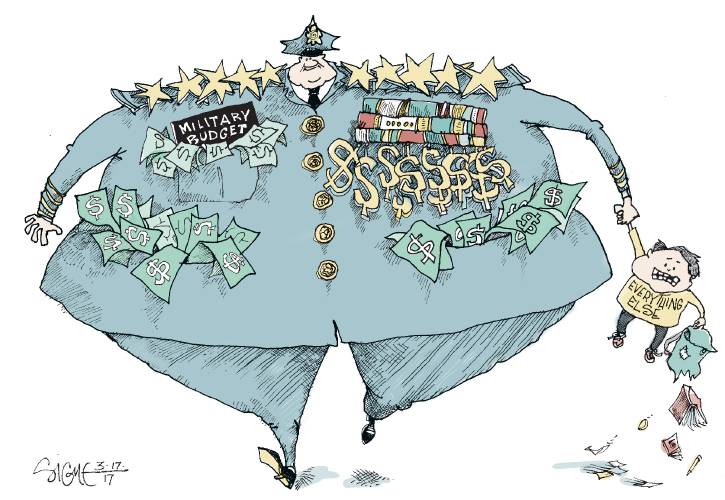
Signe’s second toon du jour SIGN17e Military

By Andrew Cockburn

Source: Spoils of War

The Biden Administration has just published its proposed budget, generating copious commentary, much of it displaying a commensurate degree of misunderstanding, especially regarding our gargantuan national security spending. To get at the truth of the matter, I consulted my friend Winslow Wheeler, who has been observing the insalubrious intricacies of the budget process over the past fifty years as a senior aide to Senators from both parties as well as a senior analyst for the General Accounting Office and directing the Center for Defense Information.

The defense budget has just been posted by the administration is being described as approaching a trillion dollars. Is that accurate?  :

No. It’s actually a lot more than that. In fact it’s beginning to inch up on $2 trillion. 

How so?

The problem is that when most people look at the defense budget, they don’t count everything that we spend even for the Pentagon. But in addition to that, there are hundreds of billions of dollars outside of the Pentagon’s budget that we spend for national security. Things like the nuclear weapons activities in the Department of Energy; that’s $37 billion$26 billion for retired military pensions and healthcare and $12 billion for the Selective Service, the National Defense Stockpile, and a strange and suspicious looking category for the international activities of the FBI in something called “Defense Related Activities.”

Do we have any idea what that last one is for?

It has always been classified. In the 50 years I’ve been watching the defense budget, it’s never been explained other than some occasional hints. One year they admitted to a lot of money being spent by the FBI in, wait for it, Taiwan, and so it’s very unclear exactly what this is, but it’s always counted as part of so-called defense related activities.  

The expenses that I have just been describing come to $970 billion, but that leaves out a lot.. Add in about $800 billion for the Department of Veterans Affairs, the State Department and its associated agencies, the Department of Homeland Security. And we know now from our Republican friends that border protection is a dire national security issue. Add all that together. Then you can calculate the share for the interest on the debt that we pay each year. All those activities I’ve just described come to 21% of all federal spending. Calculating in that percentage as a the amount it contributes to the debt burden gives you $254 billion.. And so you add all of that up together and you get $1.767 trillion.

Jesus Christ.  What about CIA and other intelligence spending?

All the intelligence agencies are in the Pentagon budget except for the intelligence agencies for the State Department, Coast Guard and  the Department of Homeland Security. Those are the few other things that are not in the Pentagon budget that are distributed in the other agencies that I’ve described.  When they last published the total amount for the intel budget it was over $120 billion, but it’s all embedded in these various agencies.

Since the budget was published, there’s been some wailing and lamentation that because of irksome spending restraints, this budget  actually represents a cut or at least restraint on defense spending. What’s your view on that?

Well, last yea the budget deal that then-Speaker Kevin McCarthy negotiated with the Democrats for the Pentagon allowed only a 1% increase in defense spending. But because of the screwy way that we actually calculate things, if you put together everything we spent just for the Pentagon without all those other items I mentioned, last year, it looks like we will have spent $968 billion, while for 2025, Biden’s requesting $921 billion. So yes, that’s a cut. But that doesn’t include the supplementals that Biden will request later this year for the Pentagon, for Ukraine, Israel, God knows what, that will get us back into competition with 2024. The reason why 2024 is higher than the Biden request is because it had 60 billion worth of emergency supplementals that Congress is about to approve and that money is counted in my total. But because of the broken accounting rules that we use for the budget, that money’s not counted when you calculate the deal that McCarthy made with the Democrats, and that’s emergency money that doesn’t count on budget cap.

For years we had the Overseas Contingency Operations defense spending, the so called war budget, which was the extra money the military got for actually fighting wars in Afghanistan and elsewhere. Are we getting back to that?

Yes.  The politically-derived budget caps don’t apply to that money.  And it’s a lot more than just for the wars; lots of billions for goodies for everybody added each year thereIt’s all part of the hocus pocus ways that Congress allows itself to appropriate money so it can pretend that it’s using restraint, but actually is exploiting all kinds of loopholes to increase whatever cap or restraint they pretend that they’ve added to the defense budget.

What’s the next budgetary legislative stage that we’re going to endure?

:We haven’t finished with 2024 yet, because Congress  has gotten into this habit of never passing budgets on time. And it also helps the Speaker of the House and the Majority Leader of the Senate discipline members so they don’t get out of the line on things. We do these things called continuing resolutions that keep the money flowing but only at the level approved in the previous year. And we’re in that situation for the Defense Department for 2024. Next week or the week after, they’re going to resolve that and pick a final total for 2024, which will include most, but probably not all of the emergency supplemental that Biden requested for Ukraine, Israel, Taiwan, and defense industrial base spending. So that number will become final in two or three weeks. We have barely begun on the 2025 consideration in Congress that will take the next three, four months and we’ll have another continuing resolution because they won’t pass things in time for the beginning of the fiscal year on October 1st, and we’ll go through this charade once again. And because this is an election year, it’ll be all that more sloppy, painful, and unappealing to observe.

Then when they do it, Chuck Schumer and whoever is the Speaker of the House will pat themselves on the back and say, ‘well, we’ve done a great job. Who says we can’t do anything. We just got the budget finally passed.’ But that will be months late yet again.

Are there items tacked onto the defense bills that have nothing to do with defense? 

Yes. There’s two bills. One is the National Defense Authorization Act, which is the bill that goes to the House and Senate Armed Services Committees. That’s a policy bill. It doesn’t make money actually available to be spent, but it pretends it does. It has lots of numbers in it; it’s a tar baby for all kinds of crazy stuff or politically driven stuff because the legislative process is so broken.  Members don’t have an opportunity to do stuff on the floor of the House and Senate and especially in the Senate because the Majority Leader exploits the rules to make amendments impossible. The National Defense Authorization Act is one of those bills where they actually get a chance to do amendments and they do all kinds of crazy stuff, lots of stuff that has absolutely nothing to do with national defense.  Last year they had 600 amendments for that bill.

Whew.

But they don’t really get debated. This is yet another way that the Majority Leader, Chuck Schumer, controls things. If you’re a Senator, you have to supplicate Schumer to get him to accept your amendment. That will then will get into a package that he’s blessed and it’ll be adopted wholesale by the Senate with perfunctory debate and members giving staff-written speeches about ‘this is a wonderful bill. It includes my important amendment to increase ice block cutting in Minnesota’ and all kinds of other crazy stuff. Every one of these will have been approved by Schumer or his agents as politically acceptable. If you are a dissenter and have a problem with how things are done in the Pentagon or anywhere else, you will not get Schumer’s blessing and your amendment will not be added to his package to be dumped into the National Defense Authorization Act, and you’ll be out in the cold. We go through essentially the same process with the appropriations bill, which is the one that actually makes the money available to all these agencies. Yet again, Schumer controls the process where if he likes the smell of your amendments and it’s okay with the prevailing political dogma that week or that month or for the last decade, it’ll get included. And if you have something that that Chuck Schumer doesn’t like, your amendment will be out in the cold.

Was it always like this?

When the Senate described itself as the world’s greatest deliberative body back in the 1970s and eighties, it would have a process where a bill would come up on the floor in the Senate, and the Senate took great pride in the fact that it had unlimited amendments, and you could offer an amendment on anything you wanted to all of these bills, whether it’s the National Defense Authorization Act or the FAA Authorization Act, and there would be a proper debate, and then the Senate would vote and the majority of those senators present in voting would prevail.

Today it’s a fundamentally broken process because of the automatic filibuster, which allows the party leaders to totally control things. Unless a Senator can somehow put together sixty votes to override a filibuster, Schumer and McConnell can simply prevent your amendment from even coming to the floor, let alone get debated. It’s also a corrupt process because if you legislate in ways that Chuck Schumer, or whoever is the leader, doesn’t like or your idea is a pain in the ass for the Democratic, or Republican, caucus, you will be on the outs.  Furthermore, Schumer, and McConnell control a large portion of the money that you need for your reelection campaign. And if you don’t behave yourself, you’ll be on the outs, not just on getting your amendment adopted, but you’ll be on the outs so far as getting any of his money is concerned. And for the money that he doesn’t directly control, he’ll be sending the message to the big political donors, ‘don’t give anything to Senator So and So. He’s not one of us; he’s not a good boy.’  That’s the way we do business these days.

Getting back to the defense bill, I saw an item this morning that the Navy is saying they all have to cut back Virginia class submarine production from two to one next year because of their terrible financially straitened circumstances. How do we read that?

There’s two things going on there. One is that the Navy has requested a gigantic ship-building budget, something like $45 billion. The problem is that navy ships are so expensive these days that you can’t fit much dirt into that bag. Those submarines are about $3 billion apiece. Aircraft carriers, and we’re paying for two more, are about $13 billion apiece. They have a brand new ‘low cost’ frigate that’s getting into production this year. Those come in at $1 billion apiece. When you have ships that cost these amounts, even with a gigantic budget, like $45 billion, you can’t buy many of them. The second thing that’s going on is the Navy is tickling the system. They’re saying, ‘Oh dear, we can only afford one sub this year because we’re so stretched running. And isn’t that just terrible?’ So they’re tickling Congress where it feels good, and they’re saying, ‘okay, when you add money, add money for another submarine.’

So does that mean the budget will grow beyond what the President has asked for?

The Biden request is a floor, not a ceiling.

And the other game that goes on is they are actually limited in a relative sense in the billions of dollars that they can add on each year. So the staff on the appropriations committee and the two armed services committees, they go looking for things to cut in the accounts in the Pentagon budget where nobody’s paying much attention. So they can then plow that money back into the stuff that the Navy wants for these submarines, or that Senator X, Y, or Z wants for a research and development program that just happens to be performed in his, or her, state and just happens to be from that company that gave him a healthy political contribution last year.  One of the things the staffs love to cut is training money for the Air Force and others,  because they’ll declare the request to have been excessive. They’ll add that few hundred million dollars to the pot for goodies that members of Congress want. An added problem, of course, is that the Air Force is already way, way behind on trending hours for pilots, and that account needs more money, not less money. There are all kinds of other games that the staff at these committees play to pretend they’re taking out unuseful money, and paying for the oh, so wonderful ideas that members of Congress want for their special requests.

Thank you. At least we’ve been warned.
The Ultimate All-American Slush Fund

How A New Budget Loophole Could Send Pentagon Spending Soaring Even Higher

By Julia Gledhill and William D. Hartung

Source: TomDispatch

On June 3rd, President Joe Biden signed a bill into law that lifted the government’s debt ceiling and capped some categories of government spending. The big winner was — surprise, surprise! — the Pentagon.

Congress spared military-related programs any cuts while freezing all other categories of discretionary spending at the fiscal year 2023 level (except support for veterans). Indeed, lawmakers set the budget for the Pentagon and for other national security programs like nuclear-related work developing nuclear warheads at the Department of Energy at the level requested in the administration’s Fiscal Year 2024 budget proposal — a 3.3% increase in military spending to a whopping total of $886 billion. Consider that preferential treatment of the first order and, mind you, for the only government agency that’s failed to pass a single financial audit! 

Even so, that $886 billion hike in Pentagon and related spending is likely to prove just a floor, not a ceiling, on what will be allocated for “national defense” next year. An analysis of the deal by the Wall Street Journal found that spending on the Pentagon and veterans’ care — neither of which is frozen in the agreement — is likely to pass $1 trillion next year.

Compare that to the $637 billion left for the rest of the government’s discretionary budget. In other words, public health, environmental protection, housing, transportation, and almost everything else the government undertakes will have to make do with not even 45% of the federal government’s discretionary budget, less than what would be needed to keep up with inflation. (Forget addressing unmet needs in this country.)

And count on one thing: national security spending is likely to increase even more, thanks to a huge (if little-noticed) loophole in that budget deal, one that hawks in Congress are already salivating over how best to exploit. Yes, that loophole is easy to miss, given the bureaucratese used to explain it, but its potential impact on soaring military budgets couldn’t be clearer. In its analysis of the budget deal, the Congressional Budget Office noted that “funding designated as an emergency requirement or for overseas contingency operations would not be constrained” by anything the senators and House congressional representatives had agreed to.

As we should have learned from the 20 years of all-American wars in Afghanistan and Iraq, the term “overseas contingency” can be stretched to cover almost anything the Pentagon wants to spend your tax dollars on. In fact, there was even an “Overseas Contingency Operations” (OCO) account supposedly reserved for funding this country’s seemingly never-ending post-9/11 wars. And it certainly was used to fund them, but hundreds of billions of dollars of Pentagon projects that had nothing to do with the conflicts in Iraq or Afghanistan were funded that way as well. The critics of Pentagon overspending quickly dubbed it that department’s “slush fund.”

So, prepare yourself for “Slush Fund II” (coming soon to a theater near you). This time the vehicle for padding the Pentagon budget is likely to be the next military aid package for Ukraine, which will likely be put forward as an emergency bill later this year.  Expect that package to include not only aid to help Ukraine fend off Russia’s ongoing brutal invasion but tens of billions of dollars more to — yes, of course! — pump up the Pentagon’s already bloated budget.

Senator Lindsey Graham (R-SC) made just such a point in talking with reporters shortly after the debt-ceiling deal was passed by Congress. “There will be a day before too long,” he told them, “where we’ll have to deal with the Ukrainian situation. And that will create an opportunity for me and others to fill in the deficiencies that exist from this budget deal.”

Senate Majority Leader Chuck Schumer (D-NY) made a similar point in a statement on the Senate floor during the debate over that deal. “The debt ceiling deal,” he said, “does nothing to limit the Senate’s ability to appropriate emergency/supplemental funds to ensure our military capabilities are sufficient to deter China, Russia, and our other adversaries and respond to ongoing and growing national security threats.”

One potential (and surprising) snag in the future plans of those Pentagon budget boosters in both parties may be the position of House Speaker Kevin McCarthy (R-CA). He has, in fact, described efforts to increase Pentagon spending beyond the level set in the recent budget deal as “part of the problem.” For the moment at least, he openly opposes producing an emergency package to increase the Pentagon budget, saying:

“The last five audits the Department of Defense [have] failed. So there’s a lot of places for reform [where] we can have a lot of savings. We’ve plussed it up. This is the most money we’ve ever spent on defense — this is the most money anyone in the world has ever spent on defense. So I don’t think the first answer is to do a supplemental.”

The Massive Overfunding of the Pentagon

The Department of Defense is, of course, already massively overfunded. That $886 billion figure is among the highest ever — hundreds of billions of dollars more than at the peak of the Korean or Vietnam wars or during the most intensely combative years of the Cold War. It’s higher than the combined military budgets of the next 10 countries combined, most of whom are, in any case, U.S. allies. And it’s estimated to be three times what the Chinese military, the Pentagon’s “pacing threat,” receives annually. Consider it an irony that actually “keeping pace” with China would involve a massive cut in military spending, not an increase in the Pentagon’s bloated budget.

It also should go without saying that preparations to effectively defend the United States and its allies could be achieved for so much less than is currently lavished on the Pentagon.  A new approach could easily save significantly more than $100 billion in fiscal year 2024as proposed by Representatives Barbara Lee (D-CA) and Mark Pocan (D-WI) in the People Over Pentagon Act, the preeminent budget-cut proposal in Congress. An illustrative report released by the Congressional Budget Office (CBO) in late 2021 sketched out three scenarios, all involving a less interventionist, more restrained approach to defense that would include greater reliance on allies. Each option would reduce America’s 1.3-million-strong active military force (by up to one-fifth in one scenario). Total savings from the CBO’s proposed changes would, over a decade, be $1 trillion.

And a more comprehensive approach that shifted away from the current “cover the globe” strategy of being able to fight (though, as the history of this century shows, not always win) wars virtually anywhere on Earth on short notice — without allies, if necessary — could save hundreds of billions more over the next decade. Cutting bureaucracy and making other changes in defense policy could also yield yet more savings. To cite just two examples, reducing the Pentagon’s cohort of more than half-a-million private contract employees and scaling back its nuclear weapons “modernization” program would save significantly more than $300 billion extra over a decade.

But none of this is even remotely likely without concerted public pressure to, as a start, keep members of Congress from adding tens of billions of dollars in spending on parochial military projects that channel funding into their states or districts. And it would also mean pushing back against the propaganda of Pentagon contractors who claim they need ever more money to provide adequate tools to defend the country.

Contractors Crying Wolf

While demanding ever more of our tax dollars, the giant military-industrial corporations are spending all too much of their time simply stuffing the pockets of their shareholders rather than investing in the tools needed to actually defend this country. A recent Department of Defense report found that, from 2010-2019, such companies increased by 73% over the previous decade what they paid their shareholders. Meanwhile, their investment in research, development, and capital assets declined significantly. Still, such corporations claim that, without further Pentagon funding, they can’t afford to invest enough in their businesses to meet future national security challenges, which include ramping up weapons production to provide arms for Ukraine.

In reality, however, the financial data suggests that they simply chose to reward their shareholders over everything and everyone else, even as they experienced steadily improving profit margins and cash generation. In fact, the report pointed out that those companies “generate substantial amounts of cash beyond their needs for operations or capital investment.” So instead of investing further in their businesses, they choose to eat their “seed corn” by prioritizing short-term gains over long-term investments and by “investing” additional profits in their shareholders. And when you eat your seed corn, you have nothing left to plant next year.

Never fear, though, since Congress seems eternally prepared to bail them out. Their businesses, in fact, continue to thrive because Congress authorizes funding for the Pentagon to repeatedly grant them massive contracts, no matter their performance or lack of internal investment. No other industry could get away with such maximalist thinking.

Military contractors outperform similarly sized companies in non-defense industries in eight out of nine key financial metrics — including higher total returns to shareholders (a category where they leave much of the rest of the S&P 500 in the dust). They financially outshine their commercial counterparts for two obvious reasons: first, the government subsidizes so many of their costs; second, the weapons industry is so concentrated that its major firms have little or no competition.

Adding insult to injury, contractors are overcharging the government for the basic weaponry they produce while they rake in cash to enrich their shareholders. In the past 15 years, the Pentagon’s internal watchdog has exposed price gouging by contractors ranging from Boeing and Lockheed Martin to lesser-known companies like TransDigm Group. In 2011, Boeing made about $13 million in excess profits by overcharging the Army for 18 spare parts used in Apache and Chinook helicopters. To put that in perspective, the Army paid $1,678.61 each for a tiny helicopter part that the Pentagon already had in stock at its own warehouse for only $7.71.

The Pentagon found Lockheed Martin and Boeing price gouging together in 2015. They overcharged the military by “hundreds of millions of dollars” for missiles. TransDigm similarly made $16 million by overcharging for spare parts between 2015 and 2017 and even more in the following two years, generating nearly $21 million in excess profits. If you can believe it, there is no legal requirement for such companies to refund the government if they’re exposed for price gouging.

Of course, there’s nothing new about such corporate price gouging, nor is it unique to the arms industry. But it’s especially egregious there, given how heavily the major military contractors depend on the government’s business. Lockheed Martin, the biggest of them, got a staggering 73% of its $66 billion in net sales from the government in 2022. Boeing, which does far more commercial business, still generated 40% of its revenue from the government that year. (Down from 51% in 2020.)

Despite their reliance on government contracts, companies like Boeing seem to be doubling down on practices that often lead to price gouging. According to Bloomberg News, between 2020 and 2021, Boeing refused to provide the Pentagon with certified cost and pricing data for nearly 11,000 spare parts on a single Air Force contract. Senator Elizabeth Warren (D-MA) and Representative John Garamendi (D-CA) have demanded that the Pentagon investigate since, without such information, the department will continue to be hard-pressed to ensure that it’s paying anything like a fair price, whatever its purchases.

Curbing the Special Interest Politics of “Defense”

Reining in rip-offs and corruption on the part of weapons contractors large and small could save the American taxpayer untold billions of dollars. And curbing special-interest politics on the part of the denizens of the military-industrial-congressional complex (MICC) could help open the way towards the development of a truly defensive global military strategy rather than the current interventionist approach that has embroiled the United States in the devastating and counterproductive wars of this century.

One modest step towards reining in the power of the arms lobby would be to revamp the campaign finance system by providing federal matching funds, thereby diluting the influential nature of the tens of millions in campaign contributions the arms industry makes every election cycle. In addition, prohibiting retiring top military officers from going to work for arms-making companies — or, at least, extending the cooling off period to at least four years before they can do so, as proposed by Senator Warren — would also help reduce the undue influence exerted by the MICC.

Last but not least, steps could be taken to prevent the military services from giving Congress their annual wish lists — officially known as “unfunded priorities lists” — of items they want added to the Pentagon budget. After all, those are but another tool allowing members of Congress to add billions more than what the Pentagon has even asked for to that department’s budget.

Whether such reforms alone, if adopted, would be enough to truly roll back excess Pentagon spending remains to be seen. Without them, however, count on one thing: the department’s budget will almost certainly continue to soar, undoubtedly reaching $1 trillion or more annually within just the next few years.  Americans can’t afford to let that happen.

First Came 9/11. Then COVID-19. What’s the Next Crisis to Lockdown the Nation?

By John & Nisha Whitehead

Source: The Rutherford Institute

“The whole aim of practical politics is to keep the populace alarmed (and hence clamorous to be led to safety) by an endless series of hobgoblins, most of them imaginary.”—H.L. Mencken

First came 9/11, which the government used to transform itself into a police state.

Then the COVID-19 pandemic hit, which the police state used to test out its lockdown powers.

In light of the government’s tendency to exploit crises (legitimate or manufactured) and capitalize on the nation’s heightened emotions, confusion and fear as a means of extending the reach of the police state, one has to wonder what so-called crisis it will declare next.

It’s a simple enough formula: first, you create fear, then you capitalize on it by seizing power.

Frankly, it doesn’t even matter what the nature of the next national emergency might be (terrorism, civil unrest, economic collapse, a health scare, or the environment) as long as it allows the government to lockdown the nation and justify all manner of tyranny in the so-called name of national security.

Cue the Emergency State.

Terrorist attacks, mass shootings, “unforeseen economic collapse, loss of functioning political and legal order, purposeful domestic resistance or insurgency, pervasive public health emergencies, and catastrophic natural and human disasters”: the government has been anticipating and preparing for such crises for years now.

As David C. Unger writes for the New York Times: “Life, liberty, and the pursuit of happiness have given way to permanent crisis management: to policing the planet and fighting preventative wars of ideological containment, usually on terrain chosen by, and favorable to, our enemies. Limited government and constitutional accountability have been shouldered aside by the kind of imperial presidency our constitutional system was explicitly designed to prevent.”

Here’s what we know: given the rate at which the government keeps devising new ways to establish itself as the “solution” to all of our worldly problems at taxpayer expense, each subsequent crisis ushers in ever larger expansions of government power and less individual liberty.

This is the slippery slope to outright tyranny.

You see, once the government acquires (and uses) authoritarian powers—to spy on its citizens, to carry out surveillance, to transform its police forces into extensions of the military, to seize taxpayer funds, to wage endless wars, to censor and silence dissidents, to identify potential troublemakers, to detain citizens without due process—it does not voluntarily relinquish them.

The lesson for the ages is this: once any government is allowed to overreach and expand its powers, it’s almost impossible to put the genie back in the bottle. As Harvard constitutional law professor Laurence Tribe recognizes, “The dictatorial hunger for power is insatiable.

Indeed, the history of the United States is a testament to the old adage that liberty decreases as government (and government bureaucracy) grows. To put it another way, as government expands, liberty contracts.

In this way, every crisis since the nation’s early beginnings has become a make-work opportunity for the government.

Each crisis has also been a test to see how far “we the people” would allow the government to sidestep the Constitution in the so-called name of national security; a test to see how well we have assimilated the government’s lessons in compliance, fear and police state tactics; a test to see how quickly we’ll march in lockstep with the government’s dictates, no questions asked; and a test to see how little resistance we offer up to the government’s power grabs when made in the name of national security.

Most critically of all, it has been a test to see whether the Constitution—and our commitment to the principles enshrined in the Bill of Rights—could survive a national crisis and true state of emergency.

Unfortunately, we’ve been failing this particular test for a long time now.

Indeed, the powers-that-be have been pushing our buttons and herding us along like so much cattle since World War II, at least, starting with the Japanese attacks on Pearl Harbor, which not only propelled the U.S. into World War II but also unified the American people in their opposition to a common enemy.

That fear of attack by foreign threats, conveniently torqued by the growing military industrial complex, in turn gave rise to the Cold War era’s “Red Scare.” Promulgated through government propaganda, paranoia and manipulation, anti-Communist sentiments boiled over into a mass hysteria that viewed anyone and everyone as suspect: your friends, the next-door neighbor, even your family members could be a Communist subversive.

This hysteria, which culminated in hearings before the House Un-American Activities Committee, where hundreds of Americans were called before Congress to testify about their so-called Communist affiliations and intimidated into making false confessions, also paved the way for the rise of an all-knowing, all-seeing governmental surveillance state.

By the time 9/11 rolled around, all George W. Bush had to do was claim the country was being invaded by terrorists, and the government used the USA Patriot Act to claim greater powers to spy, search, detain and arrest American citizens in order to keep America safe.

By way of the National Defense Authorization Act, Barack Obama continued Bush’s trend of undermining the Constitution, going so far as to give the military the power to strip Americans of their constitutional rights, label them extremists, and detain them indefinitely without trialall in the name of keeping America safe.

Despite the fact that the breadth of the military’s power to detain American citizens violates not only U.S. law and the Constitution but also international laws, the government has refused to relinquish its detention powers made possible by the NDAA.

Then Donald Trump took office, claiming the country was being invaded by dangerous immigrants and insisting that the only way to keep America safe was to expand the reach of the border police, empower the military to “assist” with border control, and essentially turn the country into a Constitution-free zone.

That so-called immigration crisis then morphed into multiple crises (domestic extremism, the COVID-19 pandemic, race wars, civil unrest, etc.) that the government has been eager to use in order to expand its powers.

Joe Biden, in turn, has made every effort to expand the reach of the militarized police state, pledging to hire 87,000 more IRS agents and 100,000 police officers. Read between the lines and you’ll find that Biden has all but declared war on the American people.

What the next crisis will be is anyone’s guess, but you can be sure that there will be a next crisis.

So, what should you expect if the government decides to declare another state of emergency and institutes a nationwide lockdown?

You should expect more of the same, only worse.

More compliance, less resistance.

More fear-mongering, mind-control tactics and less tolerance for those who question the government’s propaganda-driven narratives.

Most of all, as I point out in my book Battlefield America: The War on the American People and in its fictional counterpart The Erik Blair Diaries, you should expect more tyranny and less freedom.

There’s every reason to worry about what comes next.

Certainly, the government’s past track record and its long-anticipated plans for instituting martial law (using armed forces to solve domestic political and social problems) in response to a future crisis are cause enough to worry about the government’s handling of the next “crisis.”

Mark my words: if and when another nationwide lockdown finally hits—if and when we are forced to shelter in place— if and when militarized police are patrolling the streets— if and when security checkpoints have been established— if and when the media’s ability to broadcast the news has been curtailed by government censors—if and when public systems of communication (phone lines, internet, text messaging, etc.) have been restricted—if and when those FEMA camps the government has been surreptitiously building finally get used as detention centers for American citizens—if and when military “snatch and grab” teams are deployed on local, state, and federal levels as part of the activated Continuity of Government plans to isolate anyone suspected of being a threat to national security—and if and when martial law is enacted with little real outcry or resistance from the public—then we will truly understand the extent to which the government has fully succeeded in acclimating us to a state of affairs in which the government has all the power and “we the people” have none. 

It’s Time to Declare Your Independence from Tyranny, America

Photo by Alla Sokolova

By John W. Whitehead

Source: The Rutherford Institute

“These are the times that try men’s souls. The summer soldier and the sunshine patriot will, in this crisis, shrink from the service of their country; but he that stands it now deserves the love and thanks of man and woman. Tyranny, like hell, is not easily conquered; yet we have this consolation with us, that the harder the conflict, the more glorious the triumph.”—Thomas Paine, December 1776

It’s time to declare your independence from tyranny, America.

For too long now, we have suffered the injustices of a government that has no regard for our rights or our humanity.

Too easily pacified and placated by the pomp and pageantry of manufactured spectacles (fireworks on the Fourth of July, military parades, ritualized elections, etc.) that are a poor substitute for a representative government that respects the rights of its people, the American people have opted, time and again, to overlook the government’s excesses, abuses and power grabs that fly in the face of every principle for which America’s founders risked their lives.

We have done this to ourselves.

Indeed, it is painfully fitting that mere days before the nation prepared to celebrate its freedoms on the anniversary of the Declaration of Independence, the City Council for Charlottesville, Virginia—the home of Thomas Jefferson, author of the Declaration—voted to do away with a holiday to honor Jefferson’s birthday, because Jefferson, like many of his contemporaries, owned slaves. City councilors have opted instead to celebrate “Liberation and Freedom Day” in honor of slaves who were emancipated after the Civil War.

This is what we have been reduced to: bureaucrats dithering over meaningless trivialities while the government goosesteps all over our freedoms.

Too often, we pay lip service to those freedoms, yet they did not come about by happenstance. They were hard won through sheer determination, suffering and sacrifice by thousands of patriotic Americans who not only believed in the cause of freedom but also had the intestinal fortitude to act on that belief. The success of the American revolution owes much to these men and women.

In standing up to the British Empire and speaking out against an oppressive regime, they exemplified courage in the face of what seemed like an overwhelming foe.

Indeed, imagine living in a country where armed soldiers crash through doors to arrest and imprison citizens merely for criticizing government officials.

Imagine that in this very same country, you’re watched all the time, and if you look even a little bit suspicious, the police stop and frisk you or pull you over to search you on the off chance you’re doing something illegal.

Keep in mind that if you have a firearm of any kind (or anything that resembled a firearm) while in this country, it may get you arrested and, in some circumstances, shot by police.

If you’re thinking this sounds like America today, you wouldn’t be far wrong.

However, the scenario described above took place more than 200 years ago, when American colonists suffered under Great Britain’s version of an early police state. It was only when the colonists finally got fed up with being silenced, censored, searched, frisked, threatened, and arrested that they finally revolted against the tyrant’s fetters.

No document better states their grievances than the Declaration of Independence, drafted by Thomas Jefferson.

A document seething with outrage over a government which had betrayed its citizens, the Declaration of Independence was signed on July 4, 1776, by 56 men who laid everything on the line, pledged it all—“our Lives, our Fortunes, and our sacred Honor”—because they believed in a radical idea: that all people are created to be free.

Labeled traitors, these men were charged with treason, a crime punishable by death. For some, their acts of rebellion would cost them their homes and their fortunes. For others, it would be the ultimate price—their lives.

Yet even knowing the heavy price they might have to pay, these men dared to speak up when silence could not be tolerated. Even after they had won their independence from Great Britain, these new Americans worked to ensure that the rights they had risked their lives to secure would remain secure for future generations.

The result: our Bill of Rights, the first ten amendments to the Constitution.

Imagine the shock and outrage these 56 men would feel were they to discover that 243 years later, the government they had risked their lives to create has been transformed into a militaristic police state in which exercising one’s freedoms—at a minimum, merely questioning a government agent—is often viewed as a flagrant act of defiance.

In fact, had the Declaration of Independence been written today, it would have rendered its signers extremists or terrorists, resulting in them being placed on a government watch list, targeted for surveillance of their activities and correspondence, and potentially arrested, held indefinitely, stripped of their rights and labeled enemy combatants.

The danger is real.

We could certainly use some of that revolutionary outrage today.

Certainly, we would do well to reclaim the revolutionary spirit of our ancestors and remember what drove them to such drastic measures in the first place.

Then again, perhaps what we need to do is declare our independence from the tyranny of the American police state.

It’s not a radical idea.

It has been done before.

The Declaration of Independence speaks volumes about the abuses suffered by early Americans at the hands of the British police state.

Read the Declaration of Independence again, and ask yourself if the list of complaints tallied by Jefferson don’t bear a startling resemblance to the abuses “we the people” are suffering at the hands of the American police state.

If you find the purple prose used by the Founders hard to decipher, here’s my translation of what the Declaration of Independence would look and sound like if it were written in the modern vernacular:

There comes a time when a populace must stand united and say “enough is enough” to the government’s abuses, even if it means getting rid of the political parties in power.

Believing that “we the people” have a natural and divine right to direct our own lives, here are truths about the power of the people and how we arrived at the decision to sever our ties to the government:

All people are created equal.

All people possess certain innate rights that no government or agency or individual can take away from them. Among these are the right to Life, Liberty and the pursuit of Happiness.

The government’s job is to protect the people’s innate rights to Life, Liberty and the pursuit of Happiness. The government’s power comes from the will of the people.

Whenever any government abuses its power, it is the right of the people to alter or abolish that government and replace it with a new government that will respect and protect the rights of the people.

It is not wise to get rid of a government for minor transgressions. In fact, as history has shown, people resist change and are inclined to suffer all manner of abuses to which they have become accustomed.

However, when the people have been subjected to repeated abuses and power grabs, carried out with the purpose of establishing a tyrannical government, people have a right and duty to do away with that tyrannical Government and to replace it with a new government that will protect and preserve their innate rights for their future wellbeing.

This is exactly the state of affairs we are under suffering under right now, which is why it is necessary that we change this imperial system of government.

The history of the present Imperial Government is a history of repeated abuses and power grabs, carried out with the intention of establishing absolute Tyranny over the country.

To prove this, consider the following:

The government has, through its own negligence and arrogance, refused to adopt urgent and necessary laws for the good of the people.

The government has threatened to hold up critical laws unless the people agree to relinquish their right to be fully represented in the Legislature.

In order to expand its power and bring about compliance with its dictates, the government has made it nearly impossible for the people to make their views and needs heard by their representatives.

The government has repeatedly suppressed protests arising in response to its actions.

The government has obstructed justice by refusing to appoint judges who respect the Constitution and has instead made the Courts march in lockstep with the government’s dictates.

The government has allowed its agents to harass the people, steal from them, jail them and even execute them.

The government has directed militarized government agents—a.k.a., a standing army—to police domestic affairs in peacetime.

The government has turned the country into a militarized police state.

The government has conspired to undermine the rule of law and the constitution in order to expand its own powers.

The government has allowed its militarized police to invade our homes and inflict violence on homeowners.

The government has failed to hold its agents accountable for wrongdoing and murder under the guise of “qualified immunity.”

The government has jeopardized our international trade agreements.

The government has overtaxed us without our permission.

The government has denied us due process and the right to a fair trial.

The government has engaged in extraordinary rendition.

The government has continued to expand its military empire in collusion with its corporate partners-in-crime and occupy foreign nations.

The government has eroded fundamental legal protections and destabilized the structure of government.

The government has not only declared its federal powers superior to those of the states but has also asserted its sovereign power over the rights of “we the people.”

The government has ceased to protect the people and instead waged domestic war against the people.

The government has plundered our seas, ravaged our Coasts, and destroyed the lives of the people.

The government has employed private contractors and mercenaries to carry out acts of death, desolation and tyranny, totally unworthy of a civilized nation.

The government through its political propaganda has pitted its citizens against each other.

The government has stirred up civil unrest and laid the groundwork for martial law.

Repeatedly, we have asked the government to cease its abuses. Each time, the government has responded with more abuse.

An Imperial Ruler who acts like a tyrant is not fit to govern a free people.

We have repeatedly sounded the alarm to our fellow citizens about the government’s abuses. We have warned them about the government’s power grabs. We have appealed to their sense of justice. We have reminded them of our common bonds.

They have rejected our plea for justice and brotherhood. They are equally at fault for the injustices being carried out by the government.

Thus, for the reasons mentioned above, we the people of the united States of America declare ourselves free from the chains of an abusive government. Relying on God’s protection, we pledge to stand by this Declaration of Independence with our lives, our fortunes and our honor.

That was 243 years ago.

In the years since early Americans first declared and eventually won their independence from Great Britain, we—the descendants of those revolutionary patriots—have through our inaction and complacency somehow managed to work ourselves right back under the tyrant’s thumb.

Only this time, the tyrant is one of our own making: the American Police State.

The abuses meted out by an imperial government and endured by the American people have not ended. They have merely evolved.

“We the people” are still being robbed blind by a government of thieves.

We are still being taken advantage of by a government of scoundrels, idiots and monsters.

We are still being locked up by a government of greedy jailers.

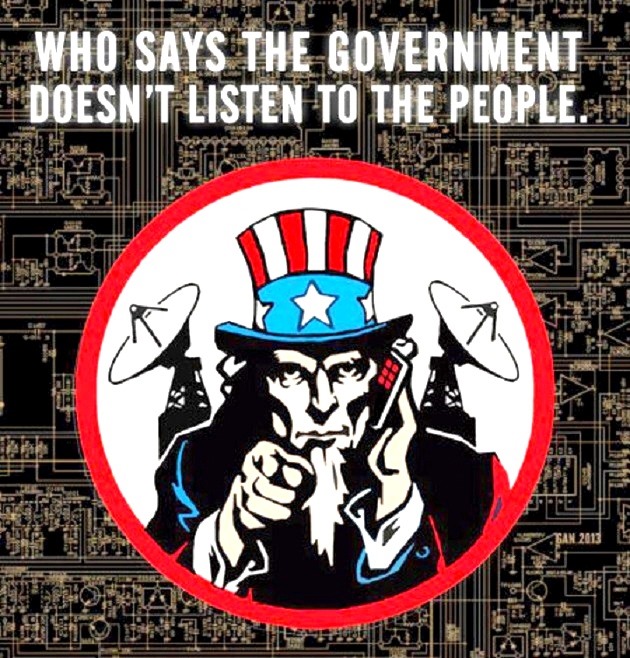
We are still being spied on by a government of Peeping Toms.

We are still being ravaged by a government of ruffians, rapists and killers.

We are still being forced to surrender our freedoms—and those of our children—to a government of extortionists, money launderers and corporate pirates.

And we are still being held at gunpoint by a government of soldiers: a standing army in the form of a militarized police.

Given the fact that we are a relatively young nation, it hasn’t taken very long for an authoritarian regime to creep into power.

Unfortunately, the bipartisan coup that laid siege to our nation did not happen overnight.

It snuck in under our radar, hiding behind the guise of national security, the war on drugs, the war on terror, the war on immigration, political correctness, hate crimes and a host of other official-sounding programs aimed at expanding the government’s power at the expense of individual freedoms.

The building blocks for the bleak future we’re just now getting a foretaste of—police shootings of unarmed citizens, profit-driven prisons, weapons of compliance, a wall-to-wall surveillance state, pre-crime programs, a suspect society, school-to-prison pipelines, militarized police, overcriminalization, SWAT team raids, endless wars, etc.—were put in place by government officials we trusted to look out for our best interests and by American citizens who failed to heed James Madison’s warning to “take alarm at the first experiment on our liberties.”

In so doing, we compromised our principles, negotiated away our rights, and allowed the rule of law to be rendered irrelevant.

There is no knowing how long it will take to undo the damage wrought by government corruption, corporate greed, militarization, and a nation of apathetic, gullible sheep.

The problems we are facing will not be fixed overnight: that is the grim reality with which we must contend.

Frankly, as I make clear in my book Battlefield America: The War on the American People, we may see no relief from the police state in my lifetime or for several generations to come.

That does not mean we should give up or give in or tune out.

Remember, there is always a price to be paid for remaining silent in the face of injustice.

That price is tyranny.

As Edmund Burke, the eighteenth-century British statesman and author who supported the American colonists warned, “The only thing necessary for the triumph of evil is for good men to do nothing.”

Australian police chief links media raids to US-led “Five Eyes” spy network

By Mike Head

Source: WSWS.org

The Australian Federal Police (AFP) called a news conference on Thursday to justify its raids targeting journalists at two media organisations this week.

Police spent seven hours ransacking a News Corp political reporter’s home in Canberra on Tuesday, and eight hours poring over and seizing files at the Australian Broadcasting Corporation’s (ABC) Sydney headquarters on Wednesday.

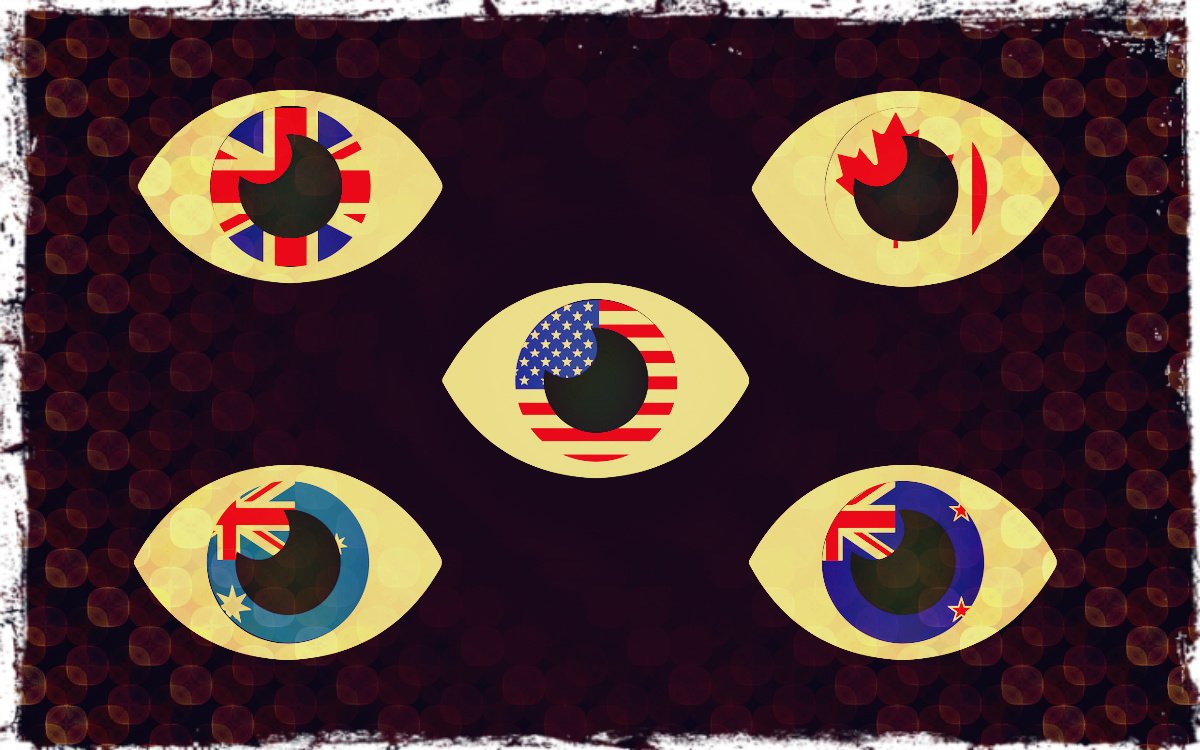
In an extraordinary admission, the AFP’s acting commissioner Neil Gaughan blurted out that the real reason for the raids was to protect the information that the Australian police and intelligence agencies receive from their “Five Eyes” counterparts. Five Eyes is a top-level network of intelligence agencies dominated by the US that also includes Britain, Australia, Canada and New Zealand.

“The Australian government, or particularly the Australian enforcement and intelligence communities, rely on secret and top-secret information from our international partners, particularly our Five Eyes partners,” the police chief said. “If we can’t be seen to protect our own internal information, [then] we are concerned that the information flow to us dries up.”

Citing government demands for investigations into leaks of secret information, Gaughan said the AFP received “numerous referrals to us [of leaks] and to be honest we get too many. But the premise of investigating these matters is to ensure the international community knows that we take the leaking of information, sensitive information, seriously.”

In other words, the AFP is under pressure not just from Canberra, but from Washington, to ensure that information, including about criminal actions of governments and its agencies, is kept from public view. This takes place amid the Trump administration’s mounting threats of war against Iran and Venezuela, as well as its escalating confrontation with China.

The AFP search warrants related to leaked documents exposing war crimes perpetrated by the Special Air Service (SAS) in Afghanistan and plans to legalise domestic mass surveillance by the Australian Signals Directorate (ASD), which are both central to Five Eyes operations.

Gaughan’s remarkable declaration went virtually unreported throughout the establishment media in Australia and internationally. His admission vindicates the analysis made by the WSWS on Thursday:

“[I]t is inconceivable that the Australian government would have instigated and pursued the investigation of the ABC and Murdoch media journalists without the agreement, if not urging, of Washington. Both the SAS and the ASD surveillance agency are closely integrated into all the wars and war preparations of the US.”

Gaughan’s statement also underscores the warnings made by the WSWS that the persecution of WikiLeaks founder Julian Assange for exposing the war crimes, mass spying and regime-change operations of Washington and its allies, including Australia, is setting a precedent for the criminalisation of journalism.

By specifically targeting journalists, as well as whistleblowers, the Australian government is following the lead of the Trump administration. The US has charged Assange, a journalist and publisher, with multiple counts under the Espionage Act, for which he faces life imprisonment.

At his press conference, Gaughan refused to rule out laying charges against News Corp journalist Annika Smethurst or ABC reporters Dan Oakes and Sam Clark for publishing alleged “national security” secrets. Such charges against journalists would be without precedent in Australia since World Wars I and II.

In a pointed warning, Gaughan said “no sector of the community should be immune” from police investigations into alleged law-breaking. Gaughan said the police are probing the “publication” of documents marked “secret” and “top secret,” placing journalists and publishers squarely under threat of prosecutions.

The AFP is investigating breaches of the Crimes Act, which criminalises unauthorised disclosures by public servants, and also contains offences that apply to journalists. Journalists, as well as alleged leakers, can be jailed for up to seven years. Dating back to World War I, the legislation outlaws “receiving” information that “prejudices the security or defence” of Australia.

But, asked what was the harm of revealing wrongdoing by Australian troops or plans to extend spying laws, Gaughan said the substance of the reports was “irrelevant.” The mere disclosure of protected information was a crime. He bluntly stated: “The issue of whether or not the public has the right to know is really not an issue that comes into our investigation process.”

The Crimes Act provisions were recently replaced by even more far-reaching measures embedded in the “foreign interference” legislation that the Liberal-National government pushed through parliament at Washington’s urging late last year, supported by the Labor Party. The maximum penalties were increased to 10 years’ imprisonment. However, the new laws could not be applied to the current cases, because the alleged leaks occurred in July 2017 and April 2018.

Gaughan tried to refute accusations that the AFP was acting at the government’s behest. He denied that the police had waited until after the May 18 federal election to execute warrants and claimed no contact had been made with the government since the AFP informed Home Affairs Minister Peter Dutton when the investigations first began.

These claims fly in the face of the facts. The government itself instigated both AFP investigations, and the Labor Party fully supported it in doing so. And Dutton and other government ministers immediately defended the raids. When Prime Minister Scott Morrison was asked at a press conference if he was bothered by police raiding journalists’ homes, he replied: “It never troubles me that our laws are being upheld.”

Above all, as Gaughan himself revealed, the raids were mounted to satisfy the Five Eyes powers, which means the US above all. Successive governments, both Liberal-National and Labor, have committed Australia to be a key partner in this network as part of its military alliance with the United States.

The police raids are part of a global crackdown on freedom of speech, including in the US and other countries, such as France, where governments are taking the Trump administration’s repressive lead.

This assault is targeted directly at the basic right of the working class to know the crimes, war plans and conspiracies of the capitalist ruling elites and the state apparatuses they control. It is being mounted amid growing struggles by workers around the world against soaring social inequality and declining living and working conditions.

The Australian police chief’s open threats highlight the urgency of the worldwide campaign being waged by the WSWS and the Socialist Equality Parties for the defence of Julian Assange and the jailed whistleblower Chelsea Manning. Their plight is a test case in the struggle against the lurch toward war and dictatorial forms of rule.

Death Of Russiagate: Mueller Team Tied To Mifsud’s Network

By Elizabeth Vos

Source: Disobedient Media

In April last year, Disobedient Media broke coverage of the British involvement in the Trump-Russia collusion narrative, asking why All Russiagate Roads Lead To London, via the quasi-scholar Joseph Mifsud and others.

The issue was also raised by WikiLeaks’s Julian Assange, just days before the Ecuadorian government silenced him last March. Assange’s Twitter thread cited research by Chris Blackburn, who spoke with Disobedient Media on multiple occasions covering Joseph Mifsud’s ties to British intelligence figures and organizations, as well as his links to Hillary Clinton’s Presidential campaign, the FBI, CIA and the private cyber-security firm Crowdstrike.

We return, now, to this issue and specifically the research of Chris Blackburn, to place the final nail in the coffin of the Trump-Russia collusion charade. Blackburn’s insights are incredible not only because they return us to the earliest reporting on the role of British intelligence figures in manufacturing the Trump-Russia collusion narrative, but because they also implicate members of Mueller’s investigation. What we are left with is an indication of collusion between factions of the US and UK intelligence community in fabricating evidence of Trump-Russia collusion: a scandal that would have rocked the legacy press to its core, if Western establishment-backed media had a spine.

In Disobedient Media’s previous coverage of Blackburn’s work, he described his experience in intelligence:

“I’ve been involved in numerous investigations that involve counter-intelligence techniques in the past. I used to work for the 9/11 Families United to Bankrupt Terrorism, one of the biggest tort actions in American history. I helped build a profile of Osama bin Laden’s financial and political network, which was slightly different to the one that had been built by the CIA’s Alec Station, a dedicated task force which was focused on Osama bin Laden and Al-Qaeda. Alec Station designed its profile to hunt Osama bin Laden and disrupt his network. I thought it was flawed. It had failed to take into account Osama’s historical links to Pakistan’s main political parties or that he was the figurehead for a couple of organizations, not just Al-Qaeda.”

“I also ran a few conferences for US intelligence leaders during the Bush administration. After the 9/11 Commission published its report into the attacks on the World Trade Center and the Pentagon it created a public outreach program. The US National Intelligence Conference and Exposition (Intelcon) was one of the avenues it used. I was responsible for creating the ‘View from Abroad’ track. We had guidance from former Senator Slade Gorton and Jamie Gorelick, who both sat on the 9/11 Commission. We got leaders such as Sir John Chilcot and Baroness Pauline Neville Jones to come and help share their experiences on how the US would be able to heal the rifts after 9/11.”

“The US intelligence community was suffering from severe turf wars and firewalls, which were hampering counter-terrorism efforts. They were concentrating on undermining each other rather than tackling terrorism. I had mainly concentrated on the Middle East, but in 2003 I switched my focus to terrorism in South Asia.”

Counter Terrorism, Not Counter Intelligence, Sparked Probe

In an article published by The Telegraph last November, the paper acknowledged the following:

“It forces the spotlight on whether the UK played a role in the FBI’s investigation launched before the 2016 presidential election into Trump campaign ties to the Kremlin… Mr. Trump’s allies and former advisers are raising questions about the UK’s role in the start of the probe, given many of the key figures and meetings were located in Britain… One former top White House adviser to Mr. Trump made similar insinuations, telling this newspaper: “You know the Brits are up to their neck.” The source added on the Page wiretap application: “I think that stuff is going to implicate MI5 and MI6 in a bunch of activities they don’t want to be implicated in, along with FBI, counter-terrorism and the CIA.” [Emphasis Added]

The article cites George Papadopoulos, who asked why the “British intelligence apparatus was weaponized against Trump and his advisers.” Papadopoulos has also addressed the issue at length via Twitter. In response to the Telegraph’s coverage of the issue, Chris Blackburn wrote via Twitter: “The Telegraph story on Trump Russia acknowledges that activities involving counter-terrorism are at the heart of the scandal…not counter-intelligence. If the [London Centre for International Law Practice] was British state, not private, some Commonwealth countries are going to be seriously pissed off.”

Blackburn spoke with Disobedient Media, saying: “If you factor in the dreadful reporting to discredit Joseph Mifsud and leaks, it is pretty clear something rather strange happened to George Papadopoulos during the campaign while he was shuttling around Europe and the Middle East. He was working with people who have intelligence links at the London Centre of International Law Practice. A recent article in The Telegraph also alludes to MI5, MI6, and CIA using counter-terrorism assets which would tie into the London Centre of International Law Practice (LCILP), and its sister organizations, doing counter-terrorism work for the Australian, UK and US governments. They quote anonymous officials who believe that their intelligence agencies used counter-terrorism personnel to kick start the investigation/scandal.” [Emphasis Added]

Blackburn discussed this differentiation with Disobedient Media: “Counter-terrorism is obviously involved in more kinetic, violent political actions-concerning mass casualty events, bombings, assassinations, poisonings, and hacking. But, the lines are blurring between them. Counter-intelligence cases have been known to stretch for decades- often relying on nothing more than paranoia and suspicion to fuel investigations. Counter-terrorism is also a broader discipline as it involves tactical elements like hostage rescue, crime scene investigations, and explosive specialists. Counter-Terrorism is a collaborative effort with counter-terrorism officers working closely with local and regional police forces and civic organizations. There is also a wider academic field around countering violent, and radical ideology which promotes terrorism and insurgencies. Cybersecurity has become the third major discipline in intelligence. The London Center of International Law Practice, the mysterious intelligence company that employed both Papadopoulos and Mifsud, had also been working in that area.”

Continuing, Blackburn pinpointed the significance of defining counter-terrorism as the starting point of the investigation, saying: “It shows that there is a high probability that intelligence was deliberately abused to make Papadopoulos’ activities look like they were something else. As counter-terrorism and counterintelligence are close in tactics and methods, it would seem that they were used because they share the same skill sets – covert evidence gathering and deception. It’s basically sleight of hand. A piece of theatre would be more precise. However, we don’t know if the FBI knew it was real or make-believe. It’s more likely that the CIA played the FBI with the help of close allies who were suspicious and frightened of a Trump presidency.”

Mueller’s Team And Joseph Mifsud

Zainab Ahmad, a member of Mueller’s legal team, is the former Assistant United States Attorney in the Eastern District of New York. As pointed out by Blackburn, Ahmad attended a Global Center on Cooperative Security event in 2017. In recent days, Blackburn wrote via Twitter: “Zainab Ahmad is a major player in the Russiagate scandal at the DOJ. Does she work for SC Mueller? She was at a GCCS event in May 2017. Arvinder Sambei, a co-director of the [London Centre of International Law Practice], worked with Joseph Mifsud, [George Papadopoulos] and [Simona Mangiante]. She’s a GCCS consultant.”

Blackburn told this author: “Zainab Ahmad was one of the first DOJ prosecutors to have seen the Steele dossier. In May 2017, she attended a counter-terrorism conference in New York with the Global Center on Cooperative Security (GCCS), an organization which Joseph Mifsud, the alleged Russian spy, had been working within London and Riyadh, Saudi Arabia.”

“Richard Barrett, the Former Chief of Counter-Terrorism at MI6, Britain’s foreign intelligence department traveled with Mifsud to Saudi Arabia to give a talk on terrorism in 2017. Ex-CIA officers, US Defense, and US Treasury officials were also there. The London Centre of International Law Practice’s relationship to the Global Center had been established in 2014. The Global Center on Cooperative Security made Martin Polaine and Arvinder Sambei consultants, they then became directors at the London Centre of International Law Practice.”

“The Global Center on Cooperative Security’s first major UK conference was at Joseph Mifsud’s London Academy of Diplomacy (LAD). Mifsud then followed Arvinder Sambei and Nagi Idris over to the London Centre of International Law Practice. Sources have told me that Mifsud was moonlighting as a specialist on counter-terrorism and Islamism while working at LAD which explains why he went to work in counter-terrorism after LAD folded.”

“I don’t think it’s a coincidence that Global Center on Cooperative Security is connected to various elements that popped up in the Papadopoulos case. The fact that a prosecutor on Mueller’s team was at Global Center before Mueller was appointed as special counsel is also troubling.”

Days ago, The Hill reported on Congressional testimony by Bruce Ohr, revealing that when served as a DOJ official, he warned FBI and DOJ figures that the Steele dossier was problematic and linked to the Clintons. Critically, The Hill writes:

“Those he briefed included Andrew Weissmann, then the head of DOJ’s fraud section; Bruce Swartz, longtime head of DOJ’s international operations, and Zainab Ahmad, an accomplished terrorism prosecutor who, at the time, was assigned to work with Lynch as a senior counselor. Ahmad and Weissmann would go on to work for Mueller, the special prosecutor overseeing the Russia probe.” [Emphasis Added]

This point is essential, as it not only describes Ahmad’s role in Mueller’s team but places her at a crucial pre-investigation meeting.

Last year, Blackburn noted the connection between Mifsud and Arvinder Sambei, writing: “LCILP director and FBI counsel, works with Mike Smith at the Global Center. They ran joint counter-terrorism conferences and training with Mifsud’s London Academy. Sambei then brought Mifsud over to the [London Centre of International Law Practice]. [Global Center works with Aussies, UK and US State too.”

Sambei has been described elsewhere as a “Former practising barrister, Senior Crown Prosecutor with the Crown Prosecution Service of England & Wales, and Legal Adviser at the Permanent Joint Headquarters (PJHQ), Ministry of Defence.” [British spelling has been retained]

That Sambei has been so thoroughly linked to organizations where Mifsud was a central figure is yet another cause of suspicion regarding allegations that Joseph Mifsud was a shadowy, unknown Russian agent until the summer of 2016. She is also a direct link between Robert Mueller and Mifsud.

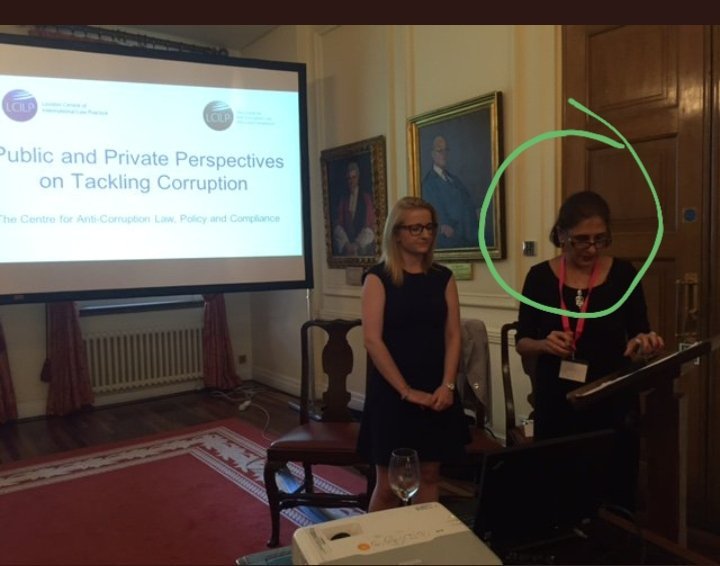
Blackburn wrote via Twitter: “Arvinder Sambei helped to organize LCILP’s counter-terrorism and corruption events. She used her contacts in the US to bring in Middle Eastern government officials that were seen to be vulnerable to graft. Lisa Osofsky, former FBI Deputy General Counsel, was working with her.” Below, Arvinder is pictured at a London Centre of International Law Practice (LCILP) event.

As Chris Blackburn told this author: “Mifsud and Papadopoulos’s co-director Arvinder Sambei was also the former FBI British counsel working 9/11 cases for Robert Mueller. She also runs a consultancy which deals with Special Investigative Measure (SIMs) which is just a posh description for covert espionage and evidence gathering. She has worked for major intelligence and national law agencies in the past. She wore two hats as a director of London Centre and a consultant for the Global Center on Cooperative Security (GCCS), a counter-terrorism think tank which is sponsored by the Australia, Canada, UK and US governments. Alexander Downer’s former Chief of Staff while at the Australian Department of Foreign Affairs and Trade now works for the Global Center. Mifsud was also due to meet with Australian private intelligence figures in Adelaide in March 2016. So. Australia is certainly a major focus for the investigation.” [Emphasis Added]

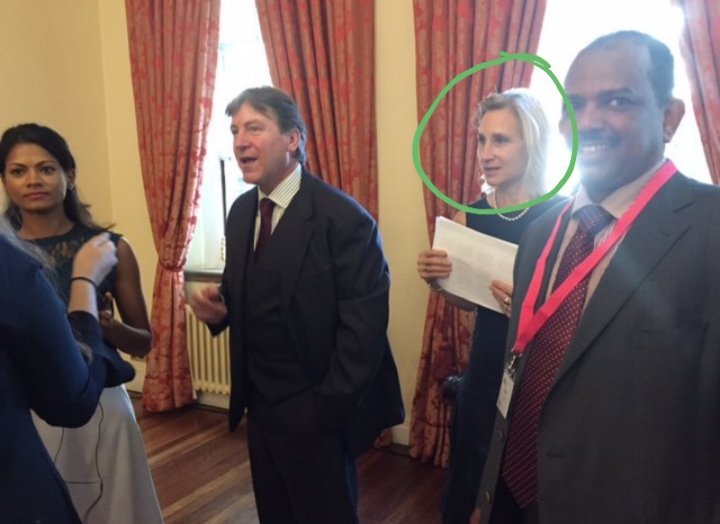
Below, former FBI Deputy General Counsel Lisa Osofsky is pictured at a London Centre for International Law Practice event. Osofsky also served as the Money Laundering Reporting Officer with Goldman Sachs International. Since 2018, she has served as the Director of the UK’s Serious Fraud Office (SFO).

An Embarrassment For John Brennan?

Disobedient Media previously reported that Robert Hannigan, then head of British spy agency GCHQ, flew to Washington DC to share ‘director-to-director’ level intelligence with then-CIA Chief John Brennan in the summer of 2016. This writer noted that “The Guardian reported Hannigan’s announcement that he would step down from his leadership position with the agency just three days after the inauguration of President Trump, on 23 January 2017. Jane Mayer, in her profile of Christopher Steele published in the New Yorker, also noted that Hannigan had flown to Washington D.C. to personally brief the then-CIA Director John Brennan on alleged communications between the Trump campaign and Moscow. What is so curious about this briefing “deemed so sensitive it was handled at director-level” is why Hannigan was talking director-to-director to the CIA and not Mike Rogers at the NSA, GCHQ’s Five Eyes intelligence-sharing partner.”

Blackburn told Disobedient Media: “Former Congressman Trey Gowdy, who has seen most of the information gathered by Congress from the intelligence community concerning the Russia investigation, said that if President Trump were to declassify files and present the truth to the American public, it would “embarrass John Brennan.” I think that is pretty concrete for me, but it’s not definitive. I know the polarization and spin in Washington has become perverse, but that statement is pretty specific for me. If Brennan is involved, it is most probably through Papadopoulos who sparked off the ‘official’ investigation at the FBI. He also made sure the Steele dossier was spread through the US government.”

Blackburn added: “Chris Steele was also working on FIFA projects, and a source has told me that he was working to investigate the Russian and Qatari World Cup bids. The London Centre of International Law Practice has been working with Majed Garoub, the former Saudi legal representative of FIFA, the world governing body for soccer. He’s also been working against the Qatari bid. Steele likes to get paid twice for his investigations.”

“Mifsud has also been associated with Prince Turki the former Saudi intelligence chief, Mifsud and the London Academy of Diplomacy used to train Saudi diplomats and intelligence figures while Turki was the Saudi Ambassador to London. Turki is a close friend of Bill Clinton and John Brennan. Nawaf Obaid was also courting Mifsud and tried to get him a cushy job working with CNN’s Freedom Project at Link Campus in Rome. He also knows John Brennan. Intelligence agencies like to give out professional gifts like this plum academic position for completing missions. In the US, it is widely known that intelligence agencies gift the children of assets to get them into prestigious Ivy League schools.”

At minimum, we can surmise that Mifsud was not a Russian agent, but was an asset of Western intelligence agencies. We are left with the impression that the Mifsud saga served as a ploy, whether he participated knowingly or not. It seems reasonable to conclude that the gambit was initially developed with participation of John Brennan and UK intelligence. Following this, Mueller inherited and developed the Mifsud narrative thread into the collusion soap opera we know today.

Ultimately, we are faced with the reality that British and US interests worked together to fabricate a collusion scandal to subvert a US Presidency, and in doing so, intentionally raised tensions between the West and a nuclear-armed power.

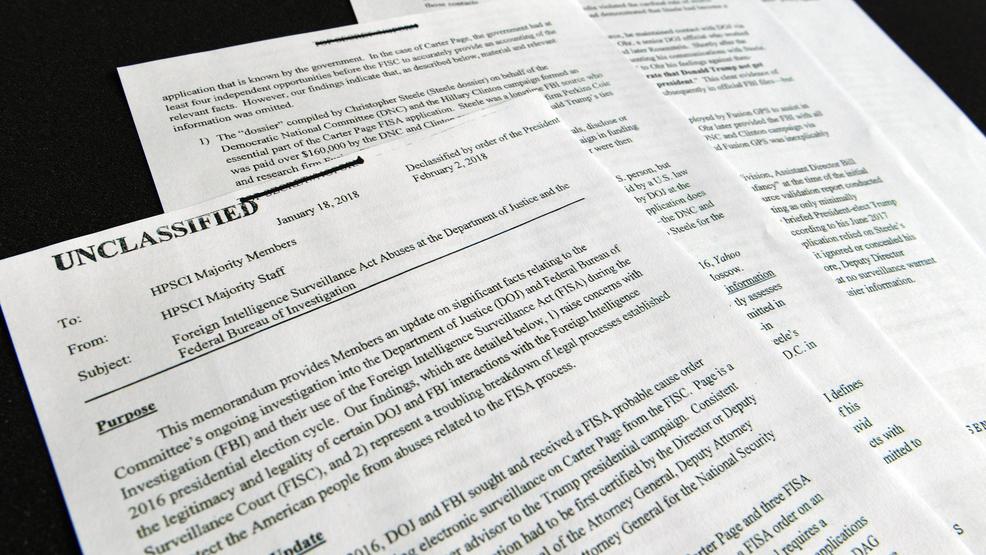
Biggest Nunes Memo Revelations Have Little To Do With Its Content

By Caitlin Johnstone

Source: Consortium News

It’s fitting that the ever-tightening repetitive loops of America’s increasingly schizophrenic partisan warfare finally hit peak shrillness and skyrocketed into a white noise singularity on Groundhog Day. Right now, we’re right about at the part of the movie where Bill Murray is driving over a cliff in a pickup truck with a large rodent behind the wheel.

If you only just started paying attention to U.S. politics in 2017 what I’m about to tell you will blow your mind, so you might want to sit down for this: believe it or not, there was once a time when both of America’s mainstream political parties weren’t screeching every single day that there was news about to break any minute now which would obliterate the other party forever. No Russiagate, no Nunes memo, no Rachel Maddow red yarn graphs, no Sean Hannity “tick tock,” no nothing. People screaming that the end is nigh and it’s all about to come crashing down were relegated to street corners and the occasional Infowars appearance, not practicing mainstream political punditry for multimillion dollar salaries on MSNBC and Fox News.

I’m not saying it’s a bad thing that Americans are starting to look critically at the power dynamics in their country, but the partisan filters they’ve pulled over their eyes are causing mass confusion and delusion. Now everyone who questions the CIA is a Russian agent and the term “deep state” suddenly means “literally anyone who doesn’t like Donald Trump.” Your take on the contents of the Nunes memo will put you in one of two radically different political dimensions depending on which mainstream cult you’ve subscribed to, and it will cause you to completely miss the point of the entire ordeal.

The part of the memo that has everyone talking today reads as follows: “Furthermore, Deputy Director McCabe testified before the Committee in December 2017 that no surveillance warrant would have been sought from the FISC without the Steele dossier information.”

This refers to a surveillance warrant requested by the FBI’s then-Deputy Director Andrew McCabe from the Foreign Intelligence Surveillance Court seeking permission to spy on the communications of Carter Page, a member of the 2016 Trump campaign. The controversy revolves around the claim that this surveillance warrant would never have even been requested if not for the clearly biased, Clinton-funded, and error-riddled Christopher Steele dossier which is acknowledged even by its former MI6 author to be 10 to 30 percent inaccurate.

Combine that with the fact that this has never been made clear to the public, and baby you’ve got yourself a scandal. The FBI knowingly using extremely tainted evidence from one presidential campaign to get permission to spy on another would indeed be a very big deal.

There are some problems with the “BOOM! Bigger than Watergate!” exclamations that pro-Trump partisans have been parading around about this, however. The first is that the memo is only an internal communication between Republican congressmen; it’s not a sworn testimony or legal transcript or anything legally binding. It’s basically just some Republican ideas about what happened. The assertions made therein are reportedly being hotly contested by Democrats with knowledge of the situation, which is in turn being disputed by Republicans.

Another thing putting a damper on the GOP’s “KABOOM!” parade is the fact that the memo’s contents are not even entirely new; CNN reported way back in April of last year that sources had informed them that the Steele dossier had been used to get a FISA warrant on the Trump campaign. Additionally, even if every single allegation in the memo is true, the revelations are still arguably far less earth shattering than the Edward Snowden revelations of 2013 exposing the NSA’s sprawling domestic espionage network, so the expectation that these less significant new revelations would cause a radical transformation in U.S. politics when the Snowden revelations did not seems highly unrealistic.

Nonetheless, there have been some extremely important revelations as a result of this memo; they just haven’t come from the contents of the memo itself. In the same way that cybersecurity analysts observe the metadata underlying hacked files rather than the contents of the files themselves, political analysts have been pointing out that a lot can be learned about the political establishment by looking at its response to the possibility of the memo’s release.

“Memo is clearly not a blockbuster. We can tell so by reading it. Which makes Dems’ frantic efforts to prevent anyone from reading it seem even more bizarre,” observed TYT’s Michael Tracey. “Veracity of memo’s claims aside, we were told that its release would undermine the rule of law. So, just checking: is the rule of law still in tact?” he added later.

“Now it is clear to all,” WikiLeaks’ Julian Assange tweeted. “The claims about how the ‘Nunes’ memo would destroy ‘national security’ were lies. Classification stickers are used by bureaucrats trying to obtain ‘political security’ for their cronies.”

“One effect of the memo – it’s an example of how extensively we overclassify information,” wrote National Review’s David French. “I’m highly dubious that any information disclosed threatens national security in any way, shape, or form. I’d be willing to bet the Dem response is similarly harmless. Release it.”

Indeed, both the FBI and high-profile Democrats have been claiming that the memo’s unredacted release would pose a national security threat, with California Congressman (and virulent Russiagater) Eric Swalwell going so far to call it “brainwashing.” A CNN panelist wandered completely off the paddock and suggested that yesterday may have been America’s last day as a democracy. Why were they all flipping out so hysterically over a release of information that plainly poses no threat to the American people?

In addition to Assange’s assertion that government secrecy has far less to do with national security than political security (a claim he has made before which seems to be proving correct time and time again), there’s the jarring question posed by Republican Congressman Thomas Massie: “who made the decision to withhold evidence of FISA abuse until after Congress voted to renew FISA program?”

Whoa, Nelly. Hang on. What is he talking about?

It would be understandable if you were unaware of the debate over the reauthorization of FISA surveillance which resulted in unconditional bipartisan approval last month – the mainstream media barely touched it. In point of fact, though, the very surveillance practices alleged to have been abused in this hotly controversial memo are the same which was waved through by both the House and the Senate, and by the very same people promoting the memo in many cases.

The McCabe testimony was in December. FISA was renewed in January. Why is all this just coming out now? If the Republicans truly believed that McCabe said what the memo claims he said, why wasn’t the public informed before their elected representatives renewed the intelligence community’s dangerously intrusive surveillance approval? Was this information simply forgotten about until after those Orwellian powers had been secured?

Of course not. Don’t be an idiot.

This makes the kicking, screaming, wailing and gnashing of teeth by the political establishment make a lot more sense, doesn’t it? Now suddenly we’re looking at a he-said, she-said partisan battle over an issue which can only be resolved with greater and greater transparency of more and more government documents, and we can all see where that’s headed. In their rush to win a partisan battle and shield their president from the ongoing Russiagate conspiracy theory, the Republicans may have exposed too much of the establishment foundation upon which both parties are built.

The term “deep state” does not mean “Democrats and Never-Trumpers” as Republican pundits would have you believe, nor does the term refer to any kind of weird, unverifiable conspiracy theory. The deep state is in fact not a conspiracy theory at all, but simply a concept used in political analysis for discussing the undeniable fact that unelected power structures exist in America, and that they tend to form alliances and work together in some sense.

There is no denying the fact that plutocrats, intelligence agencies, defense agencies and the mass media are both powerful and unelected, and there is no denying the fact that there are many convoluted and often conflicting alliances between them. All that can be debated is the manner and extent to which this is happening.

The deep state is America’s permanent government, the U.S. power structures that Americans don’t elect. These power structures plainly have a vested interest in keeping America’s Orwellian surveillance structures in place, as evidenced by the intelligence community’s menacingly urgent demand for FISA renewal back in December. If there’s any thread to be pulled that really could make waves in the way Official Washington (hat tip to the late Robert Parry) operates, it is in the plot holes between the bipartisan scramble toward unconditional surveillance renewal and the highly partisan battle over exposing the abuse of those very powers.

If we’re going to see a gap in the bars of our cages, that’s a great place to keep our eyes trained, so keep watching. Watch what happens in a partisan war where both parties have a simultaneous interest in revealing as little of the game as possible and exposing the other party. Things could get very interesting.