Is journalism going extinct? asks The Atlantic in an article of roughly the same name. The numbers are deadly: the grimmest news was from the Los Angeles Times, the biggest newspaper outside of the east coast. The paper announced it was cutting 115 people, more than 20 percent of its newsroom. In June of last year the Times previously dropped 74 people from its newsroom. Some 2,900 newspapers closed or merged since 2005. Sports Illustrated is in trouble. The Washington Post, NBC News, ABC News, CNN, NPR, Vice, Vox, and BuzzFeed, among others, have shed hundreds of journalists over the past year, including the author of the Atlantic article himself. Job losses among print, digital, and broadcast-news organizations grew by nearly 50 percent during 2023.
The reason for all this professional carnage according to the article? Something something the Internet something something digital advertising revenues blah blah social media.
One proposed solution calls for “direct and muscular government intervention” and legislation forcing Facebook and others to pay for “news” they feature off sources such as the New York Times. Yet, as journalist Glenn Greenwald asked rhetorically, “Will there ever come a moment when liberal journalists who work for corporate outlets, and who are being completely consumed by layoffs and financial failures and audience indifference, ask whether there’s anything they’ve done to contribute to the profession’s failure?”
The answer of course is no, no one is going to ask but Glenn. Somewhere along the way (we’ll tag it as the beginning of the first Trump campaign of the modern era) journalism lost all pretext of objectivity and decided to devote itself fully toward advocacy. It is clear now the public wants accurate reporting, not advocacy, but never you mind, the media elites on each coast know better what you need. As long as the MSM traffics in falsehoods people will disappear from their audiences.
Let’s look at one almost silly example: did Donald Trump says people should drink bleach to kill off Covid?
No, Donald Trump did not suggest that people should drink bleach to kill off Covid. However, during a White House briefing in April 2020, Trump did make comments about the potential use of disinfectants and ultraviolet light to treat the virus. His remarks were widely criticized because they seemed to suggest the possibility of injecting or ingesting disinfectants, which would be extremely harmful. The media, however, would not be stopped, making the bleach thing into a meme, handing it off to Late Night, then picking it up again throughout the 2020 presidential campaign.
Twelve months after the supposed statement, to keep things alive, Politico wrote “One year ago today, President Donald Trump took to the White House briefing room and encouraged his top health officials to study the injection of bleach into the human body as a means of fighting Covid. It was a watershed moment, soon to become iconic in the annals of presidential briefings. It arguably changed the course of political history.” “For me, it was the craziest and most surreal moment I had ever witnessed in a presidential press conference,” said ABC’s chief Washington correspondent.
A year after the “fact” it is bad enough the media could not accurately report what was said but how about some four years later, twice in recent New York Times articles, on January 24 and on January 29, 2024 (“oblivious or worse, peddling bleach as a quack cure.”)
The thing is Trump never said people should drink or inject bleach; knowing what he said is as easy as listening to what he said. Here it is in its entirety: “So, supposing we hit the body with a tremendous — whether it’s ultraviolet or just very powerful light — and I think you said that that hasn’t been checked, but you’re going to test it. And then I said, supposing you brought the light inside the body, which you can do either through the skin or in some other way, and I think you said you’re going to test that, too. It sounds interesting. And then I see the disinfectant, where it knocks it out in a minute. One minute. And is there a way we can do something like that, by injection inside or almost a cleaning. Because you see it gets in the lungs, and it does a tremendous number on the lungs. So it would be interesting to check that.” It was obvious Trump was talking via example, hypothetically in that hyperbolic style of his. It takes a selfish media mind to roll all that into an admonishment to the suffering American people to drink a poisonous substance but that’s what happened. Even four years later.
There are so many other example which persist in the media as untruths, exaggerations, or something evil done by other presidents but uniquely ascribed to Trump. Think that he wrenched children from their parents at the border into concentration camps, that he denounced fallen soldiers as suckers, and that he incited a bloody insurrection to overturn an election, and still peddles the Big Lie to the point where he is supposedly Constitutionally ineligible to run for president.
Journalism is at a crossroads at best (it may have already crossed into the abyss.) The old models of reader -supported or advertising-supported media no longer are sturdy and seem still to apply only to a few giants like the New York Times. Americans’ trust in the mass media’s reporting matches its lowest point in Gallup’s trend line, largely because of Democrats’ decreased trust (the Republicans were lost an election or two ago, see Russiagate, though independents still lead the two parties in lost trust.) Just 7 percent of Americans have “a great deal” of trust and confidence in the media, and 27 percent have “a fair amount.”
Meanwhile, 28 percent of U.S. adults say they do not have very much confidence and 39 percent have none at all in newspapers, TV, and radio. Social media is still the least trustworthy sector, while simultaneously being one of the most read/seen. The declines for the MSM have been steady since peaking in 1977 at about 70 percent trust levels. It has gotten worse since Trump but you can’t blame it all on him. It’s the media’s own fault.
The loss of trust is because of a perception the MSM is biased. Some 78 percent of conservatives think the mass media is biased, as compared with 44 percent of liberals and 50 percent of moderates. Only about 36 percent view mass media reporting as “just about right”. A September 2014 Gallup poll found that a plurality of Americans believe the media is “too liberal.”
Half of Americans in a recent survey indicated they believe national news organizations intend to mislead, misinform or persuade the public to adopt a particular point of view through their reporting. The survey goes beyond others that have shown a low level of trust in the media to the startling point where many believe there is an intent to deceive. Asked whether they agreed with the statement that national news organizations do not intend to mislead, 50 percent said they disagreed. Only 25 percent agreed.
The pattern is pretty clear: as long as the MSM is a significant source of misinformation never mind out-and-out lies, the people’s trust in it will continue to fall. We’ve reached a breaking point where many people believe the media intends to deceive. That distrust is entirely a self-own by the media, and finds itself expressed in the most direct terms. People literally are not buying what the MSM is selling.
It used to be a truth universally acknowledged by citizens of democratic nations that freedom of speech was the basis not just of democracy, but of all human rights.
When a person or group can censor the speech of others, there is – by definition – an imbalance of power. Those exercising the power can decide what information and which opinions are allowed, and which should be suppressed. In order to maintain their power, they will naturally suppress information and views that challenge their position.
Free speech is the only peaceful way to hold those in power accountable, challenge potentially harmful policies, and expose corruption. Those of us privileged to live in democracies instinctively understand this nearly sacred value of free speech in maintaining our free and open societies.
Or do we?
Alarmingly, it seems like many people in what we call democratic nations are losing that understanding. And they seem willing to cede their freedom of speech to governments, organizations, and Big Tech companies who, supposedly, need to control the flow of information to keep everyone “safe.”
The locus for the disturbing shift away from free speech is the 21st-century’s global public square: the Internet. And the proclaimed reasons for allowing those in power to diminish our free speech on the Internet are: “disinformation” and “hate speech.”
In this article, I will review the three-step process by which anti-disinformation laws are introduced. Then, I will review some of the laws being rolled out in multiple countries almost simultaneously, and what such laws entail in terms of vastly increasing the potential for censorship of the global flow of information.
How to Pass Censorship Laws
Step 1: Declare an existential threat to democracy and human rights
Step 2: Assert that the solution will protect democracy and human rights
Step 3: Enact anti-democratic, anti-human rights censorship fast and in unison
Lies, propaganda, “deep fakes,” and all manner of misleading information have always been present on the Internet. The vast global information hub that is the World Wide Web inevitably provides opportunities for criminals and other nefarious actors, including child sex traffickers and evil dictators.
At the same time, the Internet has become the central locus of open discourse for the world’s population, democratizing access to information and the ability to publish one’s views to a global audience.
The good and bad on the Internet reflect the good and bad in the real world. And when we regulate the flow of information on the Internet, the same careful balance between blocking truly dangerous actors, while retaining maximum freedom and democracy, must apply.
Distressingly, the recent slew of laws governing Internet information are significantly skewed in the direction of limiting free speech and increasing censorship. The reason, the regulators claim, is that fake news, disinformation, and hate speech are existential threats to democracy and human rights.
Here are examples of dire warnings, issued by leading international organizations, about catastrophic threats to our very existence purportedly posed by disinformation:
Propaganda, misinformation and fake news have the potential to polarise public opinion, to promote violent extremism and hate speech and, ultimately, to undermine democracies and reduce trust in the democratic processes.–Council of Europe
The world must address the grave global harm caused by the proliferation of hate and lies in the digital space.-United Nations
Considering the existential peril of disinformation and hate speech, these same groups assert that any solution will obviously promote the opposite:
Given such a global threat, we clearly need a global solution. And, of course, such a solution will increase democracy, protect the rights of vulnerable populations, and respect human rights.–WEF
Moreover, beyond a mere assertion that increasing democracy and respecting human rights are built into combating disinformation, international law must be invoked.
In its Common Agenda Policy Brief from June 2023, Information Integrity on Digital Platforms, the UN details the international legal framework for efforts to counter hate speech and disinformation.
First, it reminds us that freedom of expression and information are fundamental human rights:
Article 19 of the Universal Declaration of Human Rights and article 19 (2) of the Covenant protect the right to freedom of expression, including the freedom to seek, receive and impart information and ideas of all kinds, regardless of frontiers, and through any media.
Linked to freedom of expression, freedom of information is itself a right. The General Assembly has stated: “Freedom of information is a fundamental human right and is the touchstone of all the freedoms to which the United Nations is consecrated.” (p. 9)
Then, the UN brief explains that disinformation and hate speech are such colossal, all-encompassing evils that their very existence is antithetical to the enjoyment of any human rights:
Hate speech has been a precursor to atrocity crimes, including genocide. The 1948 Convention on the Prevention and Punishment of the Crime of Genocide prohibits “direct and public incitement to commit genocide”.
In its resolution 76/227, adopted in 2021, the General Assembly emphasized that all forms of disinformation can negatively impact the enjoyment of human rights and fundamental freedoms, as well as the attainment of the Sustainable Development Goals. Similarly, in its resolution 49/21, adopted in 2022, the Human Rights Council affirmed that disinformation can negatively affect the enjoyment and realization of all human rights.
This convoluted maze of legalese leads to an absurd, self-contradictory sequence of illogic:
Everything the UN is supposed to protect is founded on the freedom of information, which along with free speech is a fundamental human right.
The UN believes hate speech and disinformation destroy all human rights.
THEREFORE, anything we do to combat hate speech and disinformation protects all human rights, even if it abrogates the fundamental human rights of free speech and information, on which all other rights depend.
Because: genocide!
In practice, what this means is that, although the UN at one point in its history considered the freedom of speech and information fundamental to all other rights, it now believes the dangers of hate speech and disinformation eclipse the importance of protecting those rights.
The same warping of democratic values, as delineated by our international governing body, is now occurring in democracies the world over.
Censorship Laws and Actions All Happening Now
If hate speech and disinformation are the precursors of inevitable genocidal horrors, the only way to protect the world is through a coordinated international effort. Who should lead this campaign?
According to the WEF, “Governments can provide some of the most significant solutions to the crisis by enacting far-reaching regulations.”
Which is exactly what they’re doing.
United States
In the US, freedom of speech is enshrined in the Constitution, so it’s hard to pass laws that might violate it.
Instead, the government can work with academic and nongovernmental organizations to strong-arm social media companies into censoring disfavored content. The result is the Censorship-Industrial Complex, a vast network of government-adjacent academic and nonprofit “anti-disinformation” outfits, all ostensibly mobilized to control online speech in order to protect us from whatever they consider to be the next civilization-annihilating calamity.
The Twitter Files and recent court cases reveal how the US government uses these groups to pressure online platforms to censor content it doesn’t like:
In some cases, companies may even take it upon themselves to control the narrative according to their own politics and professed values, with no need for government intervention. For example: Google, the most powerful information company in the world, has been reported to fix its algorithms to promote, demote, and disappear content according to undisclosed internal “fairness” guidelines.
In their benevolent desire to protect us from hate speech and disinformation, Google/YouTube immediately removed the original Project Veritas video from the Internet.
European Union
The Digital Services Act came into force November 16, 2022. The European Commission rejoiced that “The responsibilities of users, platforms, and public authorities are rebalanced according to European values.” Who decides what the responsibilities and what the “European values” are?
very large platforms and very large online search engines [are obligated] to prevent the misuse of their systems by taking risk-based action and by independent audits of their risk management systems
EU countries will have the primary [oversight] role, supported by a new European Board for Digital Services
Brownstone contributor David Thunder explains how the act provides an essentially unlimited potential for censorship:
This piece of legislation holds freedom of speech hostage to the ideological proclivities of unelected European officials and their armies of “trusted flaggers.”
The European Commission is also giving itself the power to declare a Europe-wide emergency that would allow it to demand extra interventions by digital platforms to counter a public threat.
UK
The Online Safety Bill was passed September 19, 2023. The UK government says “It will make social media companies more responsible for their users’ safety on their platforms.”
The bill imbues the government with tremendous power; the capability to demand that online services employ government-approved software to scan through user content, including photos, files, and messages, to identify illegal content.
The new powers will enable the ACMA [Australian Communications and Media Authority] to monitor efforts and require digital platforms to do more, placing Australia at the forefront in tackling harmful online misinformation and disinformation, while balancing freedom of speech.
This legislation hands over a wide range of new powers to ACMA, which includes the enforcement of an industry-wide “standard” that will obligate digital platforms to remove what they determine as misinformation or disinformation.
Controversially, the government will be exempt from the proposed laws, as will professional news outlets, meaning that ACMA will not compel platforms to police misinformation and disinformation disseminated by official government or news sources.
The legislation will enable the proliferation of official narratives, whether true, false or misleading, while quashing the opportunity for dissenting narratives to compete.
Canada
The Online Streaming Act (Bill C-10) became law April 27, 2023. Here’s how the Canadian government describes it, as it relates to the Canadian Radio-television and Telecommunications Commission (CRTC):
The legislation clarifies that online streaming services fall under the Broadcasting Act and ensures that the CRTC has the proper tools to put in place a modern and flexible regulatory framework for broadcasting. These tools include the ability to make rules, gather information, and assign penalties for non-compliance.
Bill C-11 gives the CRTC unprecedented regulatory authority to monitor all online audiovisual content. This power extends to penalizing content creators and platforms and through them, content creators that fail to comply.
World Health Organization
In its proposed new Pandemic Treaty and in the amendments to its International Health Regulations, all of which it hopes to pass in 2024, the WHO seeks to enlist member governments to
Counter and address the negative impacts of health-related misinformation, disinformation, hate speech and stigmatization, especially on social media platforms, on people’s physical and mental health, in order to strengthen pandemic prevention, preparedness and response, and foster trust in public health systems and authorities.
Brownstone contributor David Bell writes that essentially this will give the WHO, an unelected international body,
power to designate opinions or information as ‘mis-information or disinformation, and require country governments to intervene and stop such expression and dissemination. This … is, of course, incompatible with the Universal Declaration of Human Rights, but these seem no longer to be guiding principles for the WHO.
Conclusion
We are at a pivotal moment in the history of Western democracies. Governments, organizations and companies have more power than ever to decide what information and views are expressed on the Internet, the global public square of information and ideas.
It is natural that those in power should want to limit expression of ideas and dissemination of information that might challenge their position. They may believe they are using censorship to protect us from grave harms of disinformation and hate speech, or they may be using those reasons cynically to consolidate their control over the flow of information.
Either way, censorship inevitably entails the suppression of free speech and information, without which democracy cannot exist.
Why are the citizens of democratic nations acquiescing to the usurpation of their fundamental human rights? One reason may be the relatively abstract nature of rights and freedoms in the digital realm.
In the past, when censors burned books or jailed dissidents, citizens could easily recognize these harms and imagine how awful it would be if such negative actions were turned against them. They could also weigh the very personal and imminent negative impact of widespread censorship against much less prevalent dangers, such as child sex trafficking or genocide. Not that those dangers would be ignored or downplayed, but it would be clear that measures to combat such dangers should not include widespread book burning or jailing of regime opponents.
In the virtual world, if it’s not your post that is removed, or your video that is banned, it can be difficult to fathom the wide-ranging harm of massive online information control and censorship. It is also much easier online than in the real world to exaggerate the dangers of relatively rare threats, like pandemics or foreign interference in democratic processes. The same powerful people, governments, and companies that can censor online information can also flood the online space with propaganda, terrifying citizens in the virtual space into giving up their real-world rights.
The conundrum for free and open societies has always been the same: How to protect human rights and democracy from hate speech and disinformation without destroying human rights and democracy in the process.
The answer embodied in the recent coordinated enactment of global censorship laws is not encouraging for the future of free and open societies.
The NSF has awarded the following nine grants since September 1:
A $330,000 grant to a postdoctoral fellowship that will “develop educational materials to help identify misinformation in media.” The associated program began on September 1, 2023.
A $1.5 million grant to Arizona State University as part of a biological sciences program. The grant will help build “new risk management strategies” and its description claims that the “rapid dissemination of information on the internet is contributing to the spread of misinformation about hazards, risks, and how to manage them.” The associated program began on September 1, 2023.
A $529,609 grant to Florida International University to conduct a study on “detection and containment of influence campaigns” that “distribute and amplify misinformation and hate speech with significant societal impact.” The associated program is due to start on October 1, 2023.
Two grants totaling $600,000 to the University of Rochester and Trustees of Indiana University for a collaborative research program that aims to increase the efficiency of an AI technique that can be applied to various areas, including “identifying misinformation on social media.” The associated programs are due to start on October 1, 2023.
The State Department has awarded the following five grants since September 1:
A $14,500 grant to Paraguay’s American Cultural Center that will be used to implement workshops that “seek to combat misinformation and promote responsible digital citizenship.” The associated program began on September 1, 2023.
A $50,000 grant to New York University to complete the implementation of a speaker series that supports “countering misinformation.” The associated program is due to start on October 1, 2023.
A $50,000 grant to the non-profit Digital Rights Nepal “to create a sustainable network of youth to promote digital rights, safer internet use and a collective resilience towards misinformation and disinformation.” The associated program is due to start on October 2, 2023.
These awards were granted as the Biden admin faces a major lawsuit for pressuring Big Tech to censor content that it deems to be misinformation.
While some of the grants focus have been awarded to non-American organizations, whose misinformation targeting efforts don’t fall under the scope of the First Amendment, these types of programs can result in the speech of Americans being targeted.
It seems there are many reasons to get shadow-banned, but unfortunately we’re never told what “crime” we committed nor are we given a chance to defend ourselves from the “indictment” in whatever “court” found us “guilty.” As in a nightmarish tale right out of Kafka, the powers making the charges, declaring the verdict “guilty as charged” and imposing the penalty are completely obscured.
Those found “guilty” discover their secret “conviction” and “sentence” when their livelihood is destroyed (i.e. they’re demonetized) and their online presence suddenly diminishes or vanishes.
I call this being sent to Digital Siberia. As with the real gulag, most of those convicted in the secret digital Star Chamber are innocent of any real crime; their “crime” was challenging the approved narratives.
Which leads to my question: why was little old marginalized-blogger me shadow-banned? Those responsible are under no obligation to reveal my “crime,” the evidence used against me, or offer me an opportunity to defend myself against the charges, much less file an appeal.
My astonishment at being shadow-banned (everyone in Digital Siberia claims to be innocent, heh) is based on my relatively restrained online presence, as I stick to the journalistic standards I learned as a free-lancer for mainstream print media: source data, excerpts and charts from mainstream / institutional sources and raise the questions / build the thesis on those links / data.
I avoid conspiracy-related topics (not my interest, not my expertise) and hot-button ideological / political cleavages (us vs. them is also not my interest). My go-to source for charts and data is the Federal Reserve database (FRED) and government agencies such as the Census Bureau, Bureau of Labor Statistics, IRS, etc., and respected non-governmental organizations (NGOs) such as the Pew Research Center, RAND, investment banks, etc.
Given my adherence to journalistic standards, I wonder: how did someone like me get shadow-banned?
The standard cause (or excuse) for being overtly banned is “distributing misinformation.” This charge is never specific; something you posted “violates our community standards,” or equivalent broad-brush language.
Shadow-banning is even more pernicious because you’re not even notified that your visibility to others has been restricted or dropped to zero. You see your post, but nobody else does.
What are the precise standards for declaring a link or statement as “misinformation?” As the twitter files revealed, what qualifies as “misinformation” is constantly shifting as a sprawling ecosystem of censors share information and blacklists. This report is well worth reading: The Censorship-Industrial Complex: Top 50 Organizations To Know (Zero Hedge).
Not only do we not know what qualifies as “misinformation,” we also don’t know what Big Tech algorithms are flagging and what their response is to whatever’s been flagged. My colleague Nate Hagens, who is equally scrupulous about using authoritative sources, posted this comment last year:
“It’s both funny and scary. It was explained to me today that the new Facebook/Meta algorithm downrates users who have cookies w evidence of visiting non-mainstream news sources/blogs. Even when one uses proxy servers and incognito mode, if you frequent e.g. Aljazeera or other news sites instead of CNN or FOX the algorithms categorizes your FB content (even if it’s a chicken soup recipe) as ‘non-mainstream’. Big brother is watching (and not even thinking). Those ideas/voices outside the status quo aren’t on equal footing- and the status quo (material growth/cultural values) is what’s leading us down the current path, without a map or plan.”
The systems that shadow-ban us are completely opaque. Who’s to say that a knowledgeable human reviews who’s been banned or shadow-banned? Given the scale of these Big Tech platforms and Search Engines, is that even possible?
It’s well known that YouTube constantly changes its ranking algorithms so they are harder to game, i.e. manipulate to advance one’s visibility.
It’s also known that simply posting a link to a site flagged as “misinformation” is enough to get your post excommunicated and your site flagged in unknown ways with unknown consequences.
What I do know is that Of Two Minds was publicly identified as “Russian Propaganda” by a bogus organization with no supporting data, PropOrNot in 2016. This front’s blacklist was prominently promoted by the Washington Post on page one in 2016, more or less giving it the authority of a major MSM outlet.
One might ask how a respected, trusted newspaper could publish a list from a shadowy front without specifying the exact links that were identified as “Russian Propaganda.” Standard journalistic protocol requires listing sources, not just publishing unverified blacklists.
Clearly, the Washington Post should have, at a minimum, demanded a list of links from each site on the blacklist that were labeled as “Russian Propaganda” so the Post journalists could check for themselves. At a minimum, the Post should have included inks as examples of “Russian Propaganda” for each site on the list. They did neither, a catastrophic failure of the most fundamental journalistic standards. Yet no one in the media other than those wrongfully blacklisted even noted or questioned this abject failure.
In effect, the real propaganda was the unsourced, un-investigated blacklist on the front page of the Washington Post.
How did I get on a list of “Russian Propaganda” when I never wrote about Russia or anything related to Russia?
There are two plausible possibilities. One is “guilt by association.” I’ve been interviewed by Max Keiser since 2011, and Max and his partner Stacy Herbert posted their videos on RT (Russia Today) and an Iranian media outlet. Needless to say, these sources were flagged, as was anyone associated with them. So perhaps merely having a link to an interview I did with Max and Stacy was enough to get me shadow-banned. (Shout-out to Max and Stacy in El Salvador.)
Alternatively, perhaps questioning the coronation of Queen Hillary in any way also got me on the blacklist.
Once on the blacklist, then the damage was already done, as the network of censors share blacklists without verifying the “crime”–a shadowy “crime” without any indictment, hearing or recourse, right out of Kafka.
Shadow-banning manifests in a number of ways. Readers reported that they couldn’t re-tweet any of my tweets. Another reader said the Department of Commerce wouldn’t load a page from my site, declaring it “dangerous,” perhaps with the implication that it was a platform for computer viruses and worms–laughable because there is nothing interactive on my sites and thus no potential source for viruses other than links to legitimate sources and adverts served by Investing Channel.
Users of platforms such as Twitter and Facebook have probably noticed that your feed is populated by the same “friends” or “folks you follow.” In other words, the feed you’re presented with is curated by algorithms which sort and display posts / tweets / search results according to parameters that are invisible to users and regulators.
It’s easy to send flagged accounts to Digital Siberia, and trouble-free to leave them there until the trouble-maker goes broke.
It’s impossible to chart the extent of the shadow-banning, or who’s doing it, sharing blacklists, etc. This entire ecosystem of censorship is invisible. Recall that in the Soviet gulag, having an “anti-Soviet dream” was enough to get you a tenner (10-year sentence) in the gulag. Here, posting a flagged link will get you a tenner in Digital Siberia.
In today’s zeitgeist, merely mentioning the possibility that the COVID-19 virus escaped from a lab resulted in an instant ban in 2020. How could the possibility that it escaped from a nearby lab dedicated to viral research be labeled as “disinformation” when the facts were not yet known?
The answer is of course that the lab-escape theory was “politically sensitive” and therefore verboten.
You see the problem: what’s deemed “politically sensitive” changes with the wind, and so the boundaries of what qualifies as “misinformation” have no visible or definable edge. Virtually anything consequential can suddenly become “politically sensitive” and then declared “misinformation.” When the guidelines of what’s a “crime” and the processes of “conviction” are all opaque, and there is no hearing or recourse to being “convicted” of a shadow-“crime,” we’ve truly entered a Kafkaesque world.
How did someone like me get shadow-banned? There is no way to know, and that’s a problem for our society and our ability to solve the polycrisis we now face.
I joke that what got me shadow-banned was using Federal Reserve charts. Perhaps that’s not that far from reality.
In an exclusive interview with The Defender, Dr. Robert Malone discussed his defamation lawsuit against The Washington Post, why he thinks corporate media is “alarmed” and where he thinks Dr. Anthony Fauci will go after he retires from his government jobs in December.
The Washington Post: Where Democracy Dies in Darkness
Dr. Robert Malone, who helped develop the mRNA technology used in COVID-19 vaccines, is seeking $50.35 million in compensatory and punitive damages from The Washington Post for alleged defamation.
Malone, an outspoken critic of COVID-19 vaccines and countermeasures, on Aug. 19 filed a lawsuit against the newspaper, owned by Jeff Bezos, in the U.S. District Court for the Western District of Virginia.
Malone’s defamation claims arise from a Jan. 24 article by The Washington Post — “A vaccine scientist’s discredited claims have bolstered a movement of misinformation.”
The article, published one day after the “Defeat the Mandates” rally in Washington, D.C., draws on Malone’s speech at the event.
Malone is demanding a jury trial.
In an exclusive interview with The Defender, Malone discussed the lawsuit, claims made about him by the mass media and also the establishment’s efforts to stifle so-called “conspiracy theories” and “misinformation.”
Malone also discussed developments around Monday’s announcement by Dr. Anthony Fauci that he will retire from his government positions in December.
Post took remarks from Malone’s ‘Defeat the Mandates’ speech ‘out of context’
Malone’s lawsuit describes him as “an internationally recognized scientist/physician and the original inventor of mRNA vaccination as a technology, DNA vaccination, and multiple non-viral DNA and RNA/mRNA platform delivery technologies.”
According to the complaint, he is “the leading contributor to the [mRNA] science exploited by Pfizer and other pharmaceutical corporations to create the alleged ‘vaccines’ for the novel coronavirus.”
The lawsuit alleges, “WaPo falsely accused Dr. Malone of fraud, disinformation, dishonesty, deception, lying to the American public, lack of integrity, immorality and ethical improprieties.”
“The gist of the article is that Dr. Malone is unfit to be a medical doctor and scientist [and] exposed Dr. Malone to public ridicule, scorn, and contempt, and severely prejudiced Dr. Malone in his employment,” the lawsuit states.
Malone told The Defender that while multiple mainstream media outlets have made defamatory statements against him, those published by The Washington Post were particularly egregious, resulting in the lawsuit.
“What we have done together with my attorney is, we went through and identified the most high-profile, egregious defamatory statements in the major press outlets,” said Malone, listing stories published by The New York Times, The Atlantic, Rolling Stone, and The Scientist, in addition to The Washington Post.
Malone sent cease-and-desist letters to the publications, which he said “were representational” of the defamatory claims made against him in the mainstream media.
According to Malone, all five outlets “denied that there was any merit to our defamation and cease-and-desist request, denied “any claims or liability” for anything they published about him and declined to take any action, such as retracting the articles in question or publishing corrections.
Out of these though, the story published by The Washington Post was the most extreme example of defamation, Malone said.
Malone told The Defender:
“In the case of The Washington Post, they had made these statements regarding what I had said on the steps of the Lincoln Memorial and then also the usual ‘spreader of misinformation’ [claim].
“They directly used terms like ‘lying’ [and] statements about misinformation. That just made it so that particular case was the most clear and the most compelling. And that’s why we decided to go with that one as the initial case.”
Malone added:
“They never used the term ‘disinformation.’ It’s always ‘misinformation.’ They rarely, if ever, identify what that ‘misinformation’ constitutes … they just throw it out as a characterization.”
According to Malone, The Washington Post took his remarks “out of context” and then “refuted” them “with information that the CDC had recently published on their MMWR [Morbidity and Mortality Weekly Report] page, which is not peer-reviewed.”
The newspaper twisted his remarks that “the vaccines are not working,” he said:
“What I clearly, unequivocally said is the vaccines are not working with Omicron. They are not preventing infection, replication and spread of this virus. I said nothing about death and disease, because I knew that was still controversial.
“What The Washington Post did was call me a liar, because the CDC had published just recently … that the vaccines were still effective at reducing death and disease from the virus.”
According to Malone, “There are many videos of the speech, so this can all be played out in court. The speech was very consciously written, knowing that I was likely to be attacked by ‘fact-checkers’ and others,” he said.
The lawsuit states that on June 7, Malone served The Washington Post “with written notice advising WaPo that the Statements in the Article were false and defamatory and demanding that the Statements be retracted and/or corrected and removed from the Internet,” which the newspaper refused to do.
Instead, according to the complaint, The Washington Post “chose to increase Dr. Malone’s damages by republishing the Article,” an action Malone, in his interview with The Defender, characterized as “adding even more fuel to the fire.”
The lawsuit quotes verbatim several specific instances of alleged defamation in The Washington Post article, including:
Malone’s claims have been “discredited” and his views constitute “misinformation.”
“Robert Malone stood on the steps of the Lincoln Memorial before thousands of anti-vaccine and anti-mandate demonstrators [and] repeated the falsehoods that have garnered him legions of followers.”
“‘Regarding the genetic COVID vaccines, the science is settled,’ [Malone] said in a 15-minute speech … ‘They are not working.’ The misinformation came two days after the Centers for Disease Control and Prevention released its first studies.”
Malone’s “claims and suggestions have been discredited … as not only wrong, but also dangerous.”
“There is a huge market for misinformation … The way he’s framed in the conspiracy-theory world is that he’s a courageous whistleblower rather than someone who is spreading misinformation — and it’s only enhancing his profile.”
“While Malone is a brilliant scientist who has a tremendous amount of experience and knowledge about vaccines, there is reason to be concerned about how his newfound stardom could be a public health risk.”
“There’s a risk we’re all facing when he’s not accurately representing the information.”
“On [the Joe Rogan Experience], he promoted an unfounded theory called ‘mass-formation psychosis,’ telling Rogan that a ‘third of the population [is] basically being hypnotized’ into believing what the mainstream media and Anthony S. Fauci report on the vaccine.”
“Malone has weaponized bad research.”
“With his increased profile in recent weeks, some are calling on him to take a step back and reflect on the damage his misinformation is causing.”
Based on these statements, the lawsuit argues that “the qualities WaPo disparaged — Dr. Malone’s honesty, veracity, integrity, competence, judgment, morals and ethics as a licensed medical doctor and scientist — are peculiarly valuable to Dr. Malone and are absolutely necessary in the practice and profession of any medical doctor and scientist.”
The lawsuit alleges The Washington Post “ascribes to Dr. Malone conduct, characteristics and conditions, including fraud, disinformation, misinformation, deception and dishonesty, that would adversely affect his fitness to be a medical professional and to conduct the business of a medical doctor.”
In doing so, the lawsuit reads, “WaPo was well-aware of Dr. Malone’s expertise and experience … intentionally ignored Dr. Malone’s credentials and stature, and chose to impugn his standing in the medical and scientific communities.”
Malone said The Washington Post’s intentions were evident to him from the first time they reached out to him, prior to publishing the article. Referring to Timothy Bella, who authored the piece, Malone told The Defender:
“[There was] something about the way this guy was approaching it and the fact that it was The Washington Post. I knew [it] was absolutely not going to be a friendly story.
“And so I said ‘no.’ I was very careful not to say ‘no’ in any way that would prejudice him. But I just said it wasn’t going to be possible.”
Malone referred to a prior experience being contacted by a reporter for The Atlantic before they ran a story about him, an experience that showed him how journalists from such media outlets often attempt to mislead individuals like him when first approaching them for an interview.
According to Malone:
“What they do is, they say. ‘I just want to be your friend and put out your story.’ They may say something to the effect that they acknowledge that I’ve been maligned in prior stories, and then they gain your confidence.
“It’s really a confidence game. We use the term ‘con artists’ … and many of these journalists, in my opinion, that seek to gain one’s confidence in this way really are con artists. That’s how they play it.”
According to Malone, Bella reached out to a colleague of his, who Malone infers is the same individual “that had made a negative comment in the Atlantic piece anonymously.”
The lawsuit addresses this, stating:
“WaPo blindly relied upon and republished statements of ‘sources’ that WaPo knew were unreliable, including sources known to be wildly biased and to have an ax to grind against Dr. Malone and who were intent on ruining his reputation.”
The lawsuit also describes how the newspaper’s president, Stephen Hills, “got in on the calumny” by tweeting, in reference to Malone, that “a vaccine scientist’s discredited claims have bolstered a movement of misinformation.”
You really can’t make this stuff up. Idiocoracy is here. A vaccine scientist’s discredited claims have bolstered a movement of misinformation https://t.co/ANBxv19ZWB
“Readers of the Article and followers of WaPo on Twitter immediately understood the [article’s] statements to convey the intended and endorsed defamatory gist and meaning: that Dr. Malone is a disreputable medical professional, that he should lose his license, that he is dishonest and dangerous, that he spreads lies and misinformation, and that he engages in fraud and disinformation.”
Such claims, “including [the article’s] direct and powerful accusations of ‘fraud’ and medical disinformation,” are considered “fighting words,” which are actionable under Virginia law, the suit argues.
The scope of potential damage to Malone’s reputation is also estimated in the lawsuit, which states that “in addition to publishing the Article in print and on its website, WaPo and its agents conspicuously published the Article to a third target audience — 19,703,612+ Twitter followers.”
In addition, the lawsuit states, “The Article was republished millions of times in Virginia [the state where the suit was filed], including by WaPo and its agents and followers, by Politico and its agents and by many others, most notably Democratic Party operatives.”
WaPo coordinated false narrative with Biden administration, lawsuit alleges
Claims of political motivation on the part of The Washington Post figure prominently in the lawsuit, which alleges:
“WaPo manufactured the story line and coordinated the false narrative with the Biden Administration and its agents and operatives with the specific purpose to target Dr. Malone.
“WaPo did not seek the truth or report it. Rather, WaPo betrayed the truth for the sake of its institutional bias and desire to support the political operations and machinations of the Biden Administration.”
In his interview, Malone highlighted the significance of this particular aspect of the lawsuit. He said:
“If this [lawsuit] is allowed to proceed … what we’re likely to see come out of discovery is further granularity about the interaction between The Washington Post and, by extension, a number of other corporate media outlets that are very aligned with the current administration and [its] political interests.
“If one can establish that these corporate media outlets were operating with directions and, in some cases, capitalization by the federal government, then we meet the criteria for those organizations acting as a surrogate for the federal government and … suppressing free speech on behalf of the government.”
This would carry constitutional implications, according to Malone:
“The federal government … cannot circumvent freedom of speech, First Amendment restrictions, by employing surrogates such as [the] corporate press or Big Tech.
“What we observe is the remarkable alignment over time between the positions taken particularly by the Biden administration, but also going back to the Trump administration.
“So it transcends left and right. This is not a left versus right issue. This is an administrative state issue.”
It’s also a part of a broader pattern, according to the lawsuit, which refers to “the sheer number and nature of the hit pieces published by WaPo since 2020.”
According to the complaint, “WaPo and its agents harbor an institutional hostility, hatred, extreme bias, spite and ill-will towards Dr. Malone and other medical professionals … who speak the inconvenient truth about COVID-19 and the so-called ‘vaccines.’”
Doubling down on its claims, The Washington Post reprinted aspects of the story on several occasions, according to the lawsuit, including on July 30, in an article that “falsely repeated that Dr. Malone ‘spread discredited information about coronavirus vaccines.’”
According to Malone, such republication — especially once a cease-and-desist letter has been served to the publication — “constitutes clear evidence of malice.”
Lawsuit: WaPo ‘acted with actual malice and reckless disregard for the truth’
Malone’s lawsuit seeks $50 million in compensatory damages and $350,000 in punitive damages, recovery of legal costs, and prejudgment and postjudgment interest of 6% per annum beginning on Jan. 24, the date the article was published.
In seeking these damages, the lawsuit alleges The Washington Post “published the Statements with actual or constructive knowledge that they were false or with reckless disregard for whether they were false,” adding the newspaper “acted with actual malice and reckless disregard for the truth.”
The lawsuit further claims Malone suffered “injury to reputation (past and future), insult, pain and mental suffering (past and future),” in addition to “special damages, including lost income, career damage and impairment of future earnings capacity.”
Career damage includes “los[t] business and income, lost public appearances due to perceived reputational risk … and impact upon [Malone’s] prospects for career advancement.”
Malone told The Defender that The Washington Post article “is often cited by physicians when presented with data from their patients about the risks of the [COVID] vaccine, and comments where patients are asking their physicians to just listen to what Dr. Malone has been saying.”
“What they get back,” according to Malone, are claims that “Dr. Malone spreads misinformation, according to The Washington Post.”
As a result, Malone said, “The Washington Post article succeeded … in its intention, which was to delegitimize [me], at least for those that are wrapped up in this kind of groupthink world … to not have to account for the information that I have been sharing over the last year and a half.”
The lawsuit also cited defamatory postings made by Twitter users in response to The Washington Post article, claiming among other things that “Malone is an anti-vaxx disinfo diva” and calling for medical professionals like Malone to “start losing licenses.”
According to the lawsuit, “Read as a whole, the Statements represent an egregious attack on Dr. Malone’s character, experience, standing in the medical community, and the truth.
The lawsuit argues that “Dr. Malone’s mission is to ensure vaccine safety [and] his goal is to save lives,” and that he “discovered short-cuts, database issues, obfuscation and, frankly, lies told in the development of” the COVID-19 vaccines.
Malone said if he prevails, society stands to benefit more than he will personally:
“Am I ever going to have my reputation corrected by prevailing in a lawsuit against The Washington Post? It would be minor. I think the proper term is ‘Pyrrhic victory.’
“But in terms of the broader implications for our government and the American experiment, establishing that it’s not acceptable for the government to employ its intelligence agencies or surrogates in the media to suppress information … would be a huge step forward for the right of free speech for individuals and super important as we move into this new media environment where things are not centralized … and where alternative voices are going to become among the most important information streams.”
Corporate media ‘alarmed’ by loss of control over messaging
In his interview, Malone remarked on recent efforts by the United Nations and the World Economic Forum (WEF), and also social media platforms, to further restrict and police “conspiracy theories” and alleged “misinformation,” predicting that alternative voices will find themselves in a stronger position of prominence “in the next couple of years.”
He told The Defender:
“We are now moving into a time where there is a great hunger for accountability.
“I think the big underlying message here, as we look forward over the next two years, is going to be the slow erosion of the power of corporate, centralized corporate media and the emergence of a much more balkanized media landscape in which users select the information streams that they wish to subscribe to.
“It will be increasingly difficult to control the narrative in the way that it’s been done in the past because of this balkanization.”
Major institutions and media outlets are increasingly alarmed by this, according to Malone:
“I think that what we are not seeing [on the part of major media outlets and institutions] is a reaction to loss of message control.
“Damage to the WEF is damage to [French President] Emmanuel Macron, damage to [Canadian Prime Minister] Justin Trudeau and the prime minister of New Zealand and the leadership in Australia. So all of that has to be controlled and they have to recapture control of the storyline.
“You’re seeing a more global effort to recapture control of the messaging and the storyline by these global players that have been partially damaged.”
Malone highlighted the role of major investment funds like Vanguard, BlackRock and State Street, which due to their significant ownership stakes in multiple companies across many industries — ranging from the media to banks to pharmaceuticals — leads to a situation where they “all function as one company” due to their “common ownership.”
Citing an example of such attempted control of the narrative, Malone argued that Google’s search algorithms have recently altered the results of searches containing the term “mass formation psychosis,” which he famously expressed during his interview with Rogan.
Malone said the Rogan interview is itself now “very hard to find, even though it’s probably got well over 100 million views … you can’t find it on Google.”
He described such actions as “a concerted effort to deny the validity” of the “mass formation psychosis” hypothesis, and of himself and other scholars who have promoted it, including researcher Mattias Desmet.
Malone cited recent attacks against professor of health policy Dr. Leana Wen, a CNN analyst who, ironically, is also a frequent Washington Post contributor.
Wen, who previously supported stringent COVID-19 countermeasures and vaccine mandates, has come under fire from her peers for now supporting a more moderate approach.
Fauci resigning early to avoid ‘witch hunt’?
Malone also addressed Fauci’s announcement Monday that he will step down from his position in December, rather than at the end of the Biden administration, as he had previously claimed.
Malone suggested that with the high likelihood that the House of Representatives, in particular, may flip to Republican control following the midterm elections, there is a strong chance there will be “significant investigations in the House come January.”
According to Malone, “The common explanation is that Fauci got out of the job now so that he could avoid being called to testify by the new Congress in January.”
But Malone dismissed these claims. “He’s going to be called no matter what,” he said.
Instead, by announcing a December departure, Fauci seeks to achieve two benefits, according to Malone. One possible benefit is that his departure will help the Democrats, because “the polling [likely] shows that Tony Fauci is a major problem for the Democratic Party heading into the midterms.”
The other potential benefit, Malone said, is that “it will give him the opportunity to select his successor and get that successor confirmed prior to the new House and Senate being convened.”
A departure at that point could allow Fauci to entirely avoid providing Congressional testimony, according to Malone.
“I suspect he steps up,” Malone said, “The pathway is the World Health Organization, a senior position at the Bill & Melinda Gates Foundation, or CEPI [the Coalition for Epidemic Preparedness Innovations].” “These are the pathways” followed by former public health officials from the U.S. and other countries, he said.
What this would mean, Malone told The Defender, is that Fauci “might well resist U.S. Congressional subpoenas for his testimony on the grounds that he’s doing very important work on the world stage now and that he has no time to waste on Republican ‘witch hunts,’ or some sort of messaging like that.”
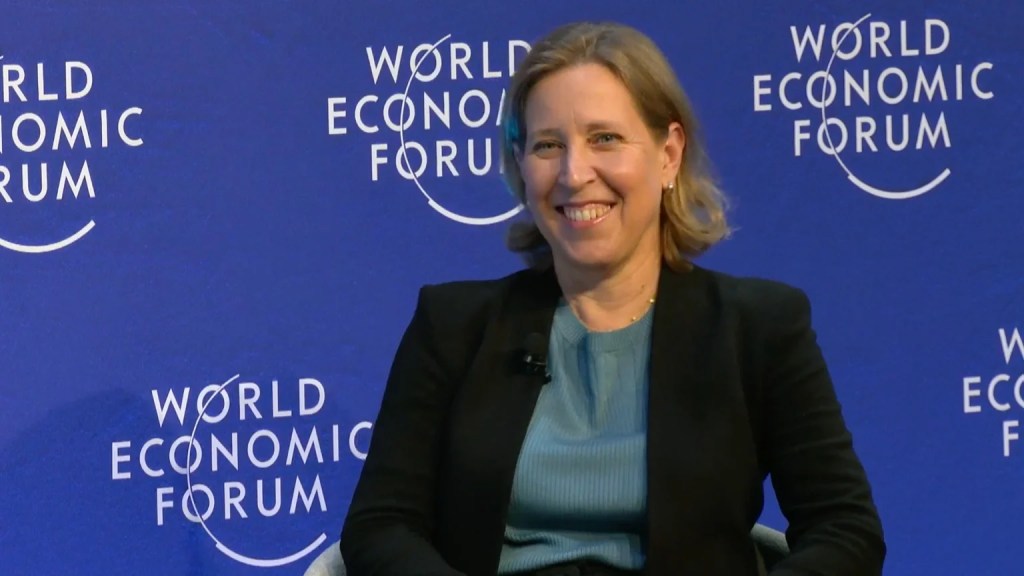
At the World Economic Forum Annual Meeting for 2022, an event where powerful CEOs and world leaders meet to “find solutions to the world’s most urgent challenges,” YouTube CEO Susan Wojcicki committed to persistent censorship of “misinformation” and praised YouTube’s existing censorship efforts.
Wojcicki made the comments after Alyson Shontell Lombardi, the Editor-in-Chief of Fortune Magazine, asked her whether YouTube’s efforts to censor misinformation will always be a “work in progress.”
“I think there’ll always be work that we have to do because there will always be incentives for people to be creating misinformation,” Wojcicki said. “The challenge will be to keep staying ahead of that and make sure that we are understanding what they are and the different ways that people may use to try to trick our systems and make sure that our systems are staying ahead of what’s necessary to make sure that we are managing that.”
Wojcicki continued by praising YouTube’s 5-6 year initiative of cracking down on content that’s deemed to be misinformation and said that users who look at YouTube search results or the homepage will see content from “authoritative sources” (mainstream media outlets that YouTube designates as authoritative) for “sensitive topics.”
Earlier in the conversation, Wojcicki said YouTube is “investing a huge amount to make sure that we’re fighting misinformation” and discussed the various ways YouTube is cracking down on misinformation. She pointed to YouTube introducing 10 COVID censorship policies, YouTube’s policy of not recommending “borderline content” which doesn’t break YouTube’s rules but is deemed to be “lower quality,” and YouTube’s policy of demonetizing content that’s deemed to be “propagating something that is generally understood as not accurate information.”
Wojcicki also talked about YouTube’s violative view rate (VVR) – a metric that shows how many views come from content that violates YouTube’s rules. The metric indicates how swiftly YouTube is censoring content. A low VVR signals that most of the content YouTube removes is being taken down before viewers have a chance to watch it.
Wojcicki noted that just 10-12 views of every 10,000 come from violative content and that this number has “come down significantly” over time.
“Our plan is to continue to work on it and make sure that we continue to reduce that,” Wojcicki added.
Wojcicki’s commitment to always crackdown on misinformation echoes her and the platform’s previous vows to censor misinformation. Days ago, Wojcicki promised to tackle “misinformation” to win over corporate cash. And earlier this year, she said: “Tackling misinformation and other harmful content is a top priority.”
The New York Times editorial board recently opined that Americans are losing “the right to speak their minds and voice their opinions,” yet this same newspaper refused to review, or even publish an advertisement for, RFK, Jr.’s runaway bestseller, “The Real Anthony Fauci.”
In a bold, but clearly disingenuous, statement from its famed editorial board, “a group of opinion journalists whose views are informed by expertise, research, debate, and certain longstanding values,” The New York Times issued a cautionary statement:
“For all the tolerance and enlightenment that modern society claims, Americans are losing hold of a fundamental right as citizens of a free country: the right to speak their minds and voice their opinions in public without fear of being shamed or shunned.”
The editorial board pounded the point home:
“People should be able to put forward viewpoints, ask questions and make mistakes, and take unpopular but good-faith positions on issues that society is still working through — all without fearing cancellation …. Freedom of speech requires not just a commitment to openness and tolerance in the abstract. It demands conscientiousness…
“We believe it isn’t enough for Americans to just believe in the rights of others to speak freely; they should also find ways to actively support and protect those rights.”
Of course, The New York Times should be leading by example. In fact, it has not supported free speech, protected the First Amendment, or allowed honest debate. It has not allowed competing perspectives about the most important issues of the day.
Instead, it has been a mouthpiece for greedy corporations and corrupt government officials.
In support of the newspaper’s interests, and at the expense of the interests of American citizens, The New York Times censored Robert F. Kennedy, Jr.’s latest book, “The Real Anthony Fauci,” in every conceivable way.
It ranked the book No. 7 on its non-fiction bestseller list even though the book outsold any other book in America that week by thousands of copies.
Then it refused to allow Skyhorse Publishing to place an advertisement for the book because its censorship division, ironically called “Standards Management,” decided the book itself constituted misinformation — despite the paper’s stated policy that “Standards” only looks into whether an ad itself is “non-defamatory and accurate.”
The New York Times followed up with a scathing hit piece targeting Kennedy as “a leading voice in the campaign to discredit coronavirus vaccines and other measures being advanced by the Biden White House to battle a pandemic that was … killing close to 1,900 people a day.”
The Times accused Kennedy of circulating “false information” — without indicating what that information was or explaining why it was false — and of comparing the government pandemic response to the Holocaust, even though he didn’t do that.
Finally, The New York Times refused to review “The Real Anthony Fauci” or so much as comment on its historic grassroots success, even though it’s become a cult classic, selling more than 1 million copies in just four months, and launching a worldwide movement against government corruption and corporate greed.
“Despite all the lying, or maybe in reaction to it,” Tucker Carlson told me, “Robert F. Kennedy, Jr. is becoming a legitimate folk hero.”
He is a folk hero because he stood up, grabbed a bullhorn and spoke truth to power. He’s risked everything. He’s realized that you either care about justice or you care about personal consequences.
And for him there have been many.
After suppressing freedom of speech for two years and defending a specific, myopic and harmful narrative, the editorial board of the New York Times decided it was the perfect time to take a strong stance against censorship and cancel culture.
The irony of the most powerful and high-profile violator of First Amendment rights lamenting the lack of free speech — and offering up ideas to protect the rights of Americans — was palpable, inescapable and despicable.
Like Captain Renault in “Casablanca,” when he closes Rick’s Café Americain and proclaims: “I’m shocked, shocked to find that gambling is going on in here,” The New York Times gladly accepts its winnings.
The paper’s profitability has soared during the worst and most pervasive period of censorship in recent American history. Its owners have done absolutely nothing to protect the free speech rights of hundreds, if not thousands, of doctors, nurses, scientists and concerned citizens who have tried to discuss views, make arguments and analyze scientific studies that challenge the prevailing COVID narrative.
The Times has silenced debate, worked tirelessly to chastise, vilify and discredit those whose positions they disagree with, and failed to investigate serious claims of government corruption.
Nevertheless, the paper claims to lament that “when public discourse in America is narrowed, it becomes harder to answer … the urgent questions we face as a society.”
What could be more important, more urgent, than the truth about corruption at the highest levels of government, about a pandemic response that led to more serious illness and death than was necessary, about the most powerful public health official in the country being more concerned with helping Big Pharma maximize return on investment and mitigate risk to industry, rather than protecting people’s lives?
As The Times wrote, the worst kind of censorship is cancel culture and the worst kind of cancel culture is the “piling on” kind.
Why then, one might ask, did the paper run a hit piece about Robert F. Kennedy, Jr. that covered essentially the same subject matter as a dozen other hit pieces? Why now? Why this target?
His family thinks he’s wrong about vaccines, The Times noted. His friends think he’s wrong about vaccines. Dr. Fauci thinks he’s wrong about vaccines. Ever heard that before?
Any analysis about vaccine safety? Any facts? Any citations? Any discussion of Dr. Fauci’s despicable corruption as described in “The Real Anthony Fauci”?
No, no, no, no and no.
What was The New York Times doing when the whole world was attacking Robert F. Kennedy, Jr.?
Where was The New York Times when Robert F. Kennedy, Jr., Dr. Robert Malone, Dr. Judy Mikovits, Dr. Pierre Kory — and so many other impressive voices — were being stifled?
They were “piling on.” (If The New York Times really wants to do something for free speech, it should publish a book review, finally, of the runaway bestseller — “The Real Anthony Fauci.”)
The Times has stated it won’t “publish ad hominem attacks,” but it does publish hit pieces that any rational person understands are meant to discredit a book they don’t mention and obviously haven’t read.
The Times protects corrupt government officials against the unsuspecting public by forwarding policy statements or official memos their editors and reporters have not thoroughly vetted, investigated or corroborated.
The Times writers and editors are the worst kind of co-conspirators: the kind that claims to be protecting their victims.
The New York Times writes:
“At the individual level, human beings cannot flourish without the confidence to take risks, to pursue ideas and express thoughts that others might reject…. When speech is stifled or when dissenters are shut out of the public discourse, a society also loses its ability to resolve conflict, and it faces the risk of political violence.”
That’s where we are in America today. There is no debate, no public discourse, and we have lost the ability to resolve conflict.
We have separated the country into two Americas, at least partially because of the policies and practices of The New York Times.
The New York Post pointed out that the New York Times “published lies to serve a biased narrative.” The Post accused The Times of “malicious misreporting” and cites a book, “The Grey Lady Winked,” by Ashley Rindsberg.
Rindsberg is quoted as calling The New York Times “a truth-producing machine.” He believes the “fabrications and distortions” they’ve peddled since the 1920s were a system of twisting facts to manipulate public opinion about everything from “Hitler’s Germany and Stalin’s Russia to Vietnam and the Iraq War.”
The “reporting” is designed to “support a narrative aligned with the corporate whims, economic needs and political preferences” of The New York Times, Rindsberg claims. He believes the paper has consistently created “false narratives.”
The New York Post says The Times has the resources to do it:
“With close to $2 billion in annual revenue, the Times has the money, prestige, experience and stature to set the narratives that other news outlets invariably follow.”
Rindsberg alleges a former Times bureau chief in Berlin was a Nazi collaborator and that another star reporter for the paper parroted Soviet propaganda to defend Stalin.
The New York Times coverage in the lead-up to the Vietnam and Iraq wars seemed like government disinformation designed to support going to war.
More recently Rindsberg points to the stories that The New York Times published about Russia putting a bounty on U.S. soldiers in Afghanistan, which the Biden administration later conceded was misinformation, and the story about Capitol Police Officer Brian Sicknick being “murdered by rampaging Trump supporters,” though it was later proven he died of a stroke.
Similarly, Glenn Greenwald accused The New York Times of participating in “one of the most successful disinformation campaigns in modern electoral history.”
The Times, which before the 2020 election dismissed the Hunter Biden laptop as Russian disinformation, recently conceded that it was authentic.
It seems likely The New York Times coverage of the COVID Pandemic isn’t any different than its coverage of Hitler, Stalin, Vietnam, the Iraq War, January 6, the Russian bounty on American soldiers or the Hunter Biden laptop.
Like most of the major Big Tech platforms, The New York Times appears to have worked closely with Dr. Fauci and others, as representatives of the U.S. government, to control and propagate a specific narrative and to do what the government can’t legally do itself — censor ideas that it disagrees with or narratives that might be harmful to its corporate partners.
As discussed above, The New York Times actively suppressed Robert F. Kennedy, Jr.’s book and his allegations of corruption against Dr. Anthony Fauci. It defended Dr. Fauci without any investigation, without a full, free and fair discussion of what is clearly the most important book of the decade.
By ignoring Kennedy’s book, by refusing to review it, by not allowing advertisements, by misrepresenting its success on its bestseller list, the paper clearly did everything in its power to avoid any debate whatsoever about the real science behind the origins of COVID or the best practices for controlling the virus and protecting the public.
The New York Times has shown a total disregard for the scientific process, individual due process rights or for any real search for truth.
And, once again, it did all this while lecturing us about the importance of free speech.
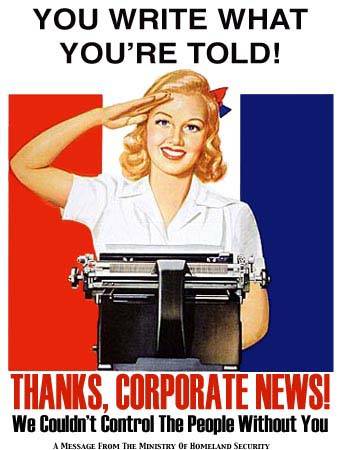
We have arrived at George Orwell’s “1984.” Doublespeak is the universal language. The paper of record floods the world with disinformation, claims to be working tirelessly to protect the American people and has clearly become The Ministry of Truth.
Reading Robert F. Kennedy, Jr.’s book, “The Real Anthony Fauci” — the book Big Pharma, Dr. Fauci, the U.S. government and The New York Times will do absolutely anything to prevent you from reading — has become an act of rebellion, a blow to fascism and a clear message that censorship in America just doesn’t work.
Tony Lyons, president and publisher at Skyhorse publishing, and an attorney, was publisher at The Lyons Press between 1997 and 2004. He founded Skyhorse Publishing in 2006 and has been involved with every aspect of the book publishing process.
The Department of Homeland Security (DHS) on Monday issued a bulletin warning of a heightened terrorism alert in the United States. One of the “key factors” for the heightened threat, which the DHS considers terrorism, is “the proliferation of false or misleading narratives, which sow discord or undermine public trust in U.S. government institutions.”
Naturally, this has many folks concerned, especially considering the examples cited in the bulletin which include “false or misleading narratives” about “unsubstantiated widespread election fraud and COVID-19.”
While parts of the memo cite calls for violence and attacks by foreign terrorist organizations — which are actual terror threats — as cause for concern, the idea that the government’s definition of misinformation could potentially earn you the label of “terrorist,” is shocking.
The bulletin is titled, “Summary of Terrorism Threat to the U.S. Homeland” and reads as follows (emphasis added):
The United States remains in a heightened threat environment fueled by several factors, including an online environment filled with false or misleading narratives and conspiracy theories, and other forms of mis- dis- and mal-information (MDM) introduced and/or amplified by foreign and domestic threat actors. These threat actors seek to exacerbate societal friction to sow discord and undermine public trust in government institutions to encourage unrest, which could potentially inspire acts of violence. Mass casualty attacks and other acts of targeted violence conducted by lone offenders and small groups acting in furtherance of ideological beliefs and/or personal grievances pose an ongoing threat to the nation. While the conditions underlying the heightened threat landscape have not significantly changed over the last year, the convergence of the following factors has increased the volatility, unpredictability, and complexity of the threat environment: (1)the proliferation of false or misleading narratives, which sow discord or undermine public trust in U.S. government institutions;(2) continued calls for violence directed at U.S. critical infrastructure; soft targets and mass gatherings; faith-based institutions, such as churches, synagogues, and mosques; institutions of higher education; racial and religious minorities; government facilities and personnel, including law enforcement and the military; the media; and perceived ideological opponents; and (3) calls by foreign terrorist organizations for attacks on the United States based on recent events.
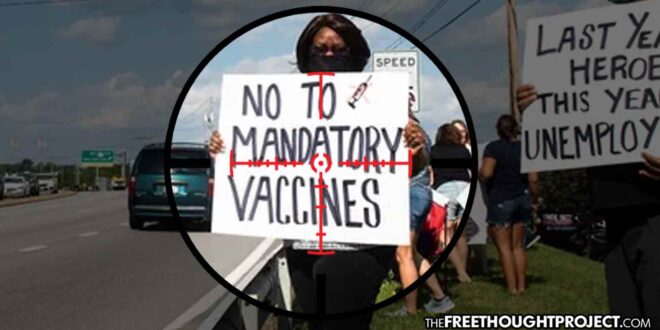
As stated above, reasons 2 and 3 are obvious threats of terror and make sense. However, given the government’s tendency to paint with a broad brush, undermining public trust could make millions of people terrorists, including the Free Thought Project.
It is the job of a true journalist to undermine trust in the government and given the shifting goal posts on what is defined as “misinformation” over just the last two years, literally anyone could find themselves subject to this definition. To hammer their point home, DHS specifically calls out misinformation on COVID-19.
Key factors contributing to the current heightened threat environment include:
The proliferation of false or misleading narratives, which sow discord or undermine public trust in U.S. government institutions:
For example, there is widespread online proliferation of false or misleading narratives regarding unsubstantiated widespread election fraud and COVID-19.
Remember in 2020, when any talk of a potential lab leak theory was considered “misinformation”? By this definition, everyone who talked about the lab leak theory was a potential terrorist.
Doctors like Robert Malone and Peter McCullough, who challenge the vaccination mandate, are now, according to this bulletin, terrorists. Given the fact that the government is urging Spotify to censor Joe Rogan for “misinformation,” according to this bulletin, Rogan is also a terrorist. Their information and discussions on Covid-19 have certainly sown discord and undermined public trust — and rightfully so — but does this make them a terror threat?
Obviously, it does not. The only people who would be threatened by healthy, science-based skepticism as espoused by doctors like these two, are tyrants who wish to control the narrative.
Given the extremely broad definition of what the government considers “misinformation,” this bulletin is one of the most worrisome documents to come from the feds in recent history. What’s more, the mere act of releasing such a document, actually “undermines public trust in U.S. government institutions” by threatening those who would dare question the status quo.
Make no mistake, this is a move to criminalize free speech by allowing the executive to declare anyone who disagrees with their dictates, a terrorist. With declarations like this, the government doesn’t need terrorist organizations to “sow discord” — they are doing it themselves.

 After the Crash