West Admits Ukraine is Losing Proxy War

By Brian Berletic

Source: New Eastern Outlook

After nearly 2 years of portraying the ongoing conflict in Ukraine as unfolding in Kiev and the collective West’s favor, a sudden deluge of admissions have begun saturating Western headlines noting that Ukraine is not only losing, but that there is little or nothing its Western backers can do to change this fact.

What had been a narrative of Ukraine’s steady gains and indomitable fighting spirit has now been replaced by the reality of Ukraine’s catastrophic losses (as well as net territorial losses) and a steady collapse of morale among troops. What had been narratives of Russian forces poorly trained and led, equipped with inadequate quantities of antiquated weapons and dwindling ammunition stockpiles, have now been replaced by admissions that Russia’s military industrial base is out-producing the US and Europe combined while fielding weapon systems either on par with their Western counterparts, or able to surpass Western capabilities entirely.

Ukraine’s Catastrophic Losses 

Ukrainian losses, especially after 5 full months of failed offensive operations, are almost impossible to hide now.

The London Telegraph in its article, “Ukraine’s army is running out of men to recruit, and time to win,” published as far back as August of this year admitted:

The war in Ukraine is now one of attrition, fought on terms that increasingly favour Moscow. Kyiv has dealt admirably with shortages of Western equipment so far, but a shortage of manpower – which it is already having to confront – may prove fatal.

The article also claimed:

It’s a brutal but simple calculation: Kyiv is running out of men. US sources have calculated that its armed forces have lost as many as 70,000 killed in action, with another 100,000 injured. While Russian casualties are higher still, the ratio nevertheless favours Moscow, as Ukraine struggles to replace soldiers in the face of a seemingly endless supply of conscripts.

The article paints a bleak picture of continued Ukrainian military operations that are almost certainly unsustainable.

The claim of 70,000 killed in action among Ukrainian troops is a gross underestimate, while claims that “Russian casualties are higher still” are not only unsubstantiated, but contradicted elsewhere among Western sources.

Mediazona, a media platform maintained by US government-backed Russian opposition figures, has tracked Russian casualties from February 2022 onward by allegedly tracking public information regarding the death of Russian soldiers.

Its numbers cannot be entirely verified, but on the few occasions the Russian Ministry of Defense released Russian casualty numbers, they were relatively close to Mediazona’s claims versus the cartoonish claims made by Ukraine’s General Staff – claims that are often unquestionably repeated by Western governments and media organizations.

A more recent article published by Business Insider in late October titled, “Ukraine official says it can’t properly use its Western kit because it has so few soldiers left, report says,” confirms that Ukraine’s losses and resulting manpower crisis is only getting worse.

The article reports:

A Ukrainian official said Ukraine’s army is suffering a manpower shortage that is hampering its ability to use Western-donated weapons, Time magazine reported. Since the start of the war, several Ukrainian officials have blamed their difficulty repelling Russia’s invasion on the slow pace of deliveries by its allies. 

However, in the Time report, an unnamed source identified as a close aide to President Volodymyr Zelenskyy highlighted a different problem. “We don’t have the men to use them,” the aide said in reference to the Western weapons. Although Ukraine doesn’t give public figures, Western estimates suggest it has suffered in excess of 100,000 casualties.

In addition to irreversible losses in manpower, Ukraine is also losing territory despite 5 months of intensive offensive operations and the fact that the Russian military leadership has repeatedly stated Russia’s goal is to eliminate Ukraine’s military, not take territory.

The New York Times in a September article titled, “Who’s Gaining Ground in Ukraine? This Year, No One,” would note:

Ukraine’s counteroffensive has struggled to push forward across the wide-open fields in the south. It is facing extensive minefields and hundreds of miles of fortifications — trenches, anti-tank ditches and concrete obstacles — that Russia built last winter to slow Ukrainian vehicles and force them into positions where they could be more easily targeted. When both sides’ gains are added up, Russia now controls nearly 200 square miles more territory in Ukraine compared with the start of the year.

Along with steep losses in manpower and a net loss in territory, Ukraine suffers from an equally damaging loss of equipment. Compounding materiel losses is the fact Western military industrial production is incapable of replacing these losses.

Military Industrial Production: West Running Out as Russia Ramps Up 

Last year, Western politicians and the Western media promoted the idea that superior Western military equipment would easily sweep aside Russia’s dwindling numbers of supposedly antiquated weapon systems. One article published by the London Telegraph in early June of this year was even titled, “British-made tanks are about to sweep Putin’s conscripts aside.”

Nothing could have been further from the truth.

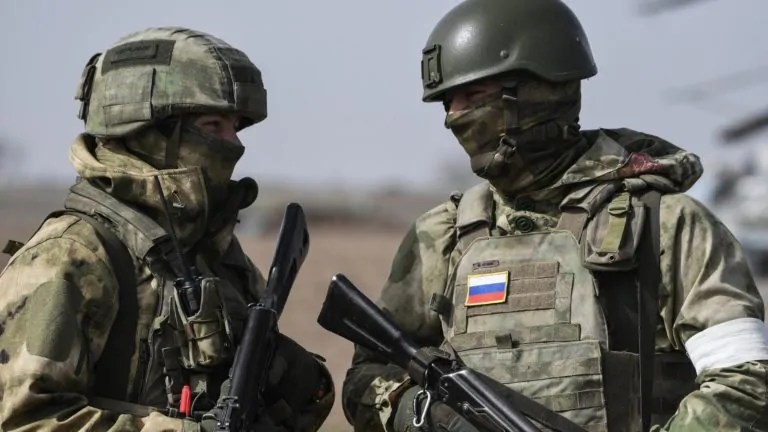
Instead, Russian military equipment has proven itself capable if not superior to Western weapon systems and, together with Russia’s massive military industrial base, it has both outnumbered and outfought Ukrainians trained and equipped by the West.

This was admitted in the New York Times’ September article, Russia Overcomes Sanctions to Expand Missile Production, Officials Say,” which noted:

Russia is now producing more ammunition than the United States and Europe. Overall, Kusti Salm, a senior Estonian defense ministry official, estimated that Russia’s current ammunition production is seven times greater than that of the West.

The article admits that Russia has doubled tank production, increased missile production, and is producing at least as many as 2 million artillery shells a year – more than the US and Europe combined currently produce and more than the US and Europe combined if and when they meet increased production targets between 2025-2027.

A more recent article published by The Economist titled, “Russia is starting to make its superiority in electronic warfare count,” admits that Russia has developed an “impressive range of EW [electronic warfare] capabilities to counter NATO’s highly networked systems.” It explains how Russian EW capabilities have rendered precision-guided weapons provided by NATO to Ukraine ineffective, including GPS-guided Excalibur 155mm artillery shells, JDAM guided bombs, and HIMARS-launched GPS-guided rockets.

The article also discusses the impact Russian EW capabilities have on Ukrainian drones which are lost by the thousands week-to-week. And as Russian EW capabilities disrupt Ukraine’s ability to use guided weapons and drones on and over the battlefield, the article admits Russia is able to produce at least twice as many drones as Ukraine giving Russia yet another quantitative and qualitative advantage.

Despite much of the hype surrounding talk of equipping Ukraine with NATO-provided F-16 fighter aircraft, more sober Western analysts have gradually admitted that between Russia’s vast and growing aerospace forces and its superior integrated air defense systems, NATO-provided F-16s will fare no better than the Soviet-era aircraft Ukraine had and lost throughout the duration of the Special Military Operation.

After months, even years of “game-changers” sent to Ukraine only to prove incapable of matching let alone exceeding Russian military capabilities, the game is indeed revealed to have been changed – in favor of Russia and a military doctrine built on vast military industrial production, cheap-but-effective weapon systems, and most importantly, a doctrine built to fight and win against a peer or near-peer adversary.

This stands in stark contrast to a West who has shaped its military for decades to push over developing or failed states around the globe in military-mismatches, atrophying the technological, industrial, and strategic capabilities the US and its allies would have needed to put in place years ahead of time to “win” their proxy war against Russia in Ukraine.

The “solution” to Russia’s now admitted advantage in terms of quality and quantity on and over the battlefield is to “increase production” and “collect data” on Russian capabilities to then “develop counters to them.” However, these are processes that could take years to yield results, all while Russia continues expanding its capabilities to maintain this qualitative and quantitative edge.

And as this process continues to unfold, the US continues simultaneously seeking a similar conflict with China, which possesses an even larger industrial base than Russia.

One wonders how many lives could have been spared had these recent admissions across the Western media regarding Russia’s actual military capabilities been presented long before provoking conflict with Russia in the first place through Washington and Brussels’ long-standing policy of encroaching upon Russia’s borders. One wonders how many lives may yet be saved if the collective West learns from its current mistakes before repeating them all over again in a senseless conflict triggered by efforts to likewise encroach upon and provoke China.


More Lethal “Aid” for Israel

Can’t the Israelis Pay for their Own Bullets, Bombs, and Missiles?

What U.S. “aid” to Israel produces: Jabalia refugee camp in Gaza after a bombing that killed dozens 11/1/23

By W.J. Astore

Source: Bracing Views

Apparently the top priority in the U.S. Congress is sending more “aid” to Israel, most of it lethal. It’s more important than health care for Americans, aid for the poor and disadvantaged, or even aid to U.S. schools and cities. Basically, it’s more important than anything.

Why is this? What elevates sending more bullets, bombs, and missiles to Israel above all other matters in the U.S. government? How does this make any sense?

Last time I checked, Israel is a modern country with healthy finances and is capable of buying this “aid” if it really needed to. Why is the U.S. taxpayer footing the bill for more munitions to kill innocent people in Gaza? I don’t want my money going to ethnic cleansing and more death; do you?

Most Americans, roughly two-thirds, support an immediate ceasefire in Gaza. Our voices are simply ignored by “our” government, which of course shows us that “our” government truly isn’t ours. The owners and donors, the oligarchs, have their own priorities, and they are not ours.

In a note to accompany an article with Medea Benjamin at Common Dreams, Nicolas Davies notes that:

The US media have failed to inform the public how isolated the US is in its support for the massacre taking place in Gaza. 120 countries voted for an immediate ceasefire in the UN General Assembly, while only 12 small countries voted with the US and Israel to oppose the resolution. US and Israeli leaders are not just out of touch with the rest of the world, but with their own people. Only 29% of Israelis wanted a full-scale invasion of Gaza, while 66% of Americans wanted a ceasefire – and that included 80% of Democrats.

Not only that, but new House Speaker Mike Johnson has decided to connect $14.3 billion in aid to Israel to an identical reduction in the budget of the IRS! He wants to cripple the ability of the IRS to go after tax cheats in America while giving a huge handout to America’s weapons makers in the cause of “defending” Israel.

You know the saying about death and taxes being the most certain things we face in life? Obviously in America selling death trumps collecting taxes.

The New Abnormal: Authoritarian Control Freaks Want to Micromanage Our Lives

By By John & Nisha Whitehead

Source: The Rutherford Institute

“Man is born free but everywhere is in chains.”—Jean-Jacques Rousseau

Authoritarian control freaks out to micromanage our lives have become the new normal or, to be more accurate, the new abnormal when it comes to how the government relates to the citizenry.

This overbearing despotism, which pre-dates the COVID-19 hysteria, is the very definition of a Nanny State, where government representatives (those elected and appointed to work for us) adopt the authoritarian notion that the government knows best and therefore must control, regulate and dictate almost everything about the citizenry’s public, private and professional lives.

Indeed, it’s a dangerous time for anyone who still clings to the idea that freedom means the right to think for yourself and act responsibly according to your best judgment.

This tug-of-war for control and sovereignty over our selves impacts almost every aspect of our lives, whether you’re talking about decisions relating to our health, our homes, how we raise our children, what we consume, what we drive, what we wear, how we spend our money, how we protect ourselves and our loved ones, and even who we associate with and what we think.

As Liz Wolfe writes for Reason, “Little things that make people’s lives better, tastier, and less tedious are being cracked down on by big government types in federal and state governments.”

You can’t even buy a stove, a dishwasher, a showerhead, a leaf blower, or a lightbulb anymore without running afoul of the Nanny State.

In this way, under the guise of pseudo-benevolence, the government has meted out this bureaucratic tyranny in such a way as to nullify the inalienable rights of the individual and limit our choices to those few that the government deems safe enough.

Yet limited choice is no choice at all. Likewise, regulated freedom is no freedom at all.

Indeed, as a study by the Cato Institute concludes, for the average American, freedom has declined generally over the past 20 years. As researchers William Ruger and Jason Sorens explain, “We ground our conception of freedom on an individual rights framework. In our view, individuals should be allowed to dispose of their lives, liberties, and property as they see fit, so long as they do not infringe on the rights of others.”

The overt signs of the despotism exercised by the increasingly authoritarian regime that passes itself off as the United States government (and its corporate partners in crime) are all around us: censorship, criminalizing, shadow banning and de-platforming of individuals who express ideas that are politically incorrect or unpopular; warrantless surveillance of Americans’ movements and communications; SWAT team raids of Americans’ homes; shootings of unarmed citizens by police; harsh punishments meted out to schoolchildren in the name of zero tolerance; community-wide lockdowns and health mandates that strip Americans of their freedom of movement and bodily integrity; armed drones taking to the skies domestically; endless wars; out-of-control spending; militarized police; roadside strip searches; privatized prisons with a profit incentive for jailing Americans; fusion centers that spy on, collect and disseminate data on Americans’ private transactions; and militarized agencies with stockpiles of ammunition, to name some of the most appalling.

Yet as egregious as these incursions on our rights may be, it’s the endless, petty tyrannies—the heavy-handed, punitive-laden dictates inflicted by a self-righteous, Big-Brother-Knows-Best bureaucracy on an overtaxed, overregulated, and underrepresented populace—that illustrate so clearly the degree to which “we the people” are viewed as incapable of common sense, moral judgment, fairness, and intelligence, not to mention lacking a basic understanding of how to stay alive, raise a family, or be part of a functioning community.

When the dictates of petty bureaucrats carry greater weight than the individual rights of the citizenry, we’re in trouble, folks.

Federal and state governments have used the law as a bludgeon to litigate, legislate and micromanage our lives through overregulation and overcriminalization.

This is what happens when bureaucrats run the show, and the rule of law becomes little more than a cattle prod for forcing the citizenry to march in lockstep with the government.

Overregulation is just the other side of the coin to overcriminalization, that phenomenon in which everything is rendered illegal, and everyone becomes a lawbreaker.

You don’t have to look far to find abundant examples of Nanny State laws that infantilize individuals and strip them of their ability to decide things for themselves. Back in 2012, then-New York Mayor Michael Bloomberg infamously proposed a ban on the sale of sodas and large sugary drinks in order to guard against obesity. Other localities enacted bans on texting while jaywalking, wearing saggy pants, having too much mud on your car, smoking outdoors, storing trash in your car, improperly sorting your trash, cursing within earshot of others, or screeching your tires.

Yet while there are endless ways for the Nanny State to micromanage our lives, things become truly ominous when the government adopts mechanisms enabling it to monitor us for violations in order to enforce its many laws.

Nanny State, meet the all-seeing, all-knowing Surveillance State and its sidekick, the muscle-flexing Police State.

You see, in an age of overcriminalization—when the law is wielded like a hammer to force compliance to the government’s dictates whatever they might be—you don’t have to do anything “wrong” to be fined, arrested or subjected to raids and seizures and surveillance.

You just have to refuse to march in lockstep with the government.

As policy analyst Michael Van Beek warns, the problem with overcriminalization is that there are so many laws at the federal, state and local levels—that we can’t possibly know them all.

“It’s also impossible to enforce all these laws. Instead, law enforcement officials must choose which ones are important and which are not. The result is that they pick the laws Americans really must follow, because they’re the ones deciding which laws really matter,” concludes Van Beek. “Federal, state and local regulations — rules created by unelected government bureaucrats — carry the same force of law and can turn you into a criminal if you violate any one of them… if we violate these rules, we could be prosecuted as criminals. No matter how antiquated or ridiculous, they still carry the full force of the law. By letting so many of these sit around, just waiting to be used against us, we increase the power of law enforcement, which has lots of options to charge people with legal and regulatory violations.”

This is the police state’s superpower: empowered by the Nanny State, it has been vested with the authority to make our lives a bureaucratic hell.

Indeed, if you were unnerved by the rapid deterioration of privacy under the Surveillance State, prepare to be terrified by the surveillance matrix that will be ushered in by the Nanny State working in tandem with the Police State.

The government’s response to COVID-19 saddled us with a Nanny State inclined to use its draconian pandemic powers to protect us from ourselves.

The groundwork laid with COVID-19 is a prologue to what will become the police state’s conquest of a new, relatively uncharted, frontier: inner space, specifically, the inner workings (genetic, biological, biometric, mental, emotional) of the human race.

Consider how many more ways the government could “protect us” from ourselves under the guise of public health and safety.

For instance, under the guise of public health and safety, the government could use mental health care as a pretext for targeting and locking up dissidents, activists and anyone unfortunate enough to be placed on a government watch list.

When combined with advances in mass surveillance technologies, artificial intelligence-powered programs that can track people by their biometrics and behavior, mental health sensor data (tracked by wearable data and monitored by government agencies such as HARPA), threat assessments, behavioral sensing warnings, precrime initiatives, red flag gun laws, and mental health first-aid programs aimed at training gatekeepers to identify who might pose a threat to public safety, these preemptive mental health programs could well signal a tipping point in the government’s efforts to penalize those engaging in so-called “thought crimes.”

This is how it begins.

On a daily basis, Americans are already relinquishing (in many cases, voluntarily) the most intimate details of who we are—their biological makeup, our genetic blueprints, and our biometrics (facial characteristics and structure, fingerprints, iris scans, etc.)—in order to navigate an increasingly technologically-enabled world.

Having conditioned the population to the idea that being part of society is a privilege and not a right, such access could easily be predicated on social credit scores, the worthiness of one’s political views, or the extent to which one is willing to comply with the government’s dictates, no matter what they might be.

COVID-19 with its talk of mass testing, screening checkpoints, contact tracing, immunity passports, and snitch tip lines for reporting “rule breakers” to the authorities was a preview of what’s to come.

We should all be leery and afraid.

At a time when the government has a growing list—shared with fusion centers and law enforcement agencies—of ideologies, behaviors, affiliations and other characteristics that could flag someone as suspicious and result in their being labeled potential enemies of the state, it won’t take much for any of us to be considered outlaws or terrorists.

After all, the government likes to use the words “anti-government,” “extremist” and “terrorist” interchangeably. The Department of Homeland Security broadly defines extremists as individuals “that are mainly antigovernment, rejecting federal authority in favor of state or local authority, or rejecting government authority entirely.”

At some point, being an individualist will be considered as dangerous as being a terrorist.

When anything goes when it’s done in the name of national security, crime fighting and terrorism, “we the people” have little to no protection against SWAT team raids, domestic surveillance, police shootings of unarmed citizens, indefinite detentions, and the like, whether or  not you’ve done anything wrong.

In an age of overcriminalization, you’re already a criminal.

All the government needs is proof of your law-breaking. They’ll get it, too.

Whether it’s through the use of surveillance software such as ShadowDragon that allows police to watch people’s social media activity, or technology that uses a home’s WiFi router and smart appliances to allow those on the outside to “see” throughout your home, it’s just a matter of time.

As I make clear in my book Battlefield America: The War on the American People and in its fictional counterpart The Erik Blair Diaries, it’s no longer a question of whether the government will lock up Americans for defying one of its numerous mandates but when.

Bill Kristol’s Refreshingly Honest Ukraine War Ad

One of the dumbest things the empire asks us to believe is that this war simultaneously (A) was completely unprovoked and (B) just coincidentally happens to massively advance the strategic interests of the government accused of provoking it.

By Caitlin Johnstone

Source: CaitlinJohnstone.com.au

The Bill Kristol-led group “Republicans for Ukraine” has released a TV ad to help drum up GOP support for Washington’s proxy war against Russia, and it’s surprisingly honest about what this war is really about: advancing US strategic interests using Ukrainians as sacrificial pawns.

Here’s a transcript:

“When America arms Ukraine, we get a lot for a little. Putin is an enemy of America. We’ve used 5% of our defense budget to arm Ukraine, and with it, they’ve destroyed 50% of Putin’s Army. We’ve done all this by sending weapons from storage, not our troops. The more Ukraine weakens Russia, the more it also weakens Russia’s closest ally, China. America needs to stand strong against our enemies, that’s why Republicans in Congress must continue to support Ukraine.”

“Republicans for Ukraine” was launched last month by “Defending Democracy Together”, another Kristol-led narrative management operation which is funded by oligarchs like Pierre Omidyar. Kristol, who as a neoconservative thought leader played a pivotal role in pushing for the 2003 invasion of Iraq, tweeted on Saturday that the ad “will air on the Sunday shows tomorrow in DC.”

One of the dumbest things the empire asks us to believe is that this war simultaneously (A) was completely unprovoked and (B) just coincidentally happens to massively advance the strategic interests of the government accused of provoking it. From the moment Russia invaded Ukraine in February 2022 westerners were aggressively hammered over and over and over again by the mass media with the uniform propaganda message that this was an “unprovoked invasion”, but ever since then we’ve also been receiving these peculiar messages from US empire managers and spinmeisters that this war is helping the United States crush its geopolitical enemies and advance its interests abroad.

This bizarre two-step occurs because the US-centralized empire needs to convey two self-evidently contradictory messages to the public at all times:
1. that the US is an innocent little flower who just wants to help its good friends the Ukrainians protect their democracy from the murderous Russians who invaded solely because they are evil and hate freedom, and
2. that it’s in the interest of Americans to continue this war.

The second point is required because the message that the US is merely an innocent passive witness to the violence in Ukraine necessarily causes certain political factions to ask, “Okay, so what are we doing there then? Why are we pouring all this money into something that has nothing to do with us?” So another narrative is required to explain that backing this proxy war also just so happens to be a massive boon to US strategic interests abroad while creating American jobs manufacturing weapons at home.

And of course this war advances US strategic interests. Of course it does. Only an idiot would believe the US is pouring weapons into another country because it loves the people who live there and wants them to be free, and that it is only by pure coincidence that this happens to kill a lot of Russians, bolster NATO, and advance US energy interests in Europe. It doesn’t benefit normal Americans at home, but it absolutely does serve the interests of the globe-spanning empire that’s centralized around Washington. That’s why the empire deliberately provoked it.

Empire managers were openly discussing the ways a war in Ukraine would directly benefit the US empire long before the invasion. In 2019 a Pentagon-funded Rand Corporation paper titled “Extending Russia — Competing from Advantageous Ground” detailed how the empire can use proxy warfare, economic warfare and other Cold War tactics to push its longtime geopolitical foe to the brink without costing American lives or sparking a nuclear conflict. The US Army-commissioned paper mentioned Ukraine hundreds of times, and explicitly discussed how a war there could be used to promote sanctions against Moscow and attack Russia’s energy interests in Europe.

In December of 2021 John Deni of NATO propaganda firm The Atlantic Council authored a piece for The Wall Street Journal titled “The Strategic Case for Risking War in Ukraine,” subtitled “An invasion would be a diplomatic, economic and military mistake for Putin. Let him make it if he must.” Deni argued that “there are good strategic reasons for the West to stake out a hard-line approach” against Moscow and refuse to negotiate or back down over Ukraine, because if doing so provokes Russia to invade it would “forge an even stronger anti-Russian consensus across Europe,” “result in another round of more debilitating economic sanctions that would further weaken Russia’s economy,” and “sap the strength and morale of Russia’s military while undercutting Mr. Putin’s domestic popularity and reducing Russia’s soft power globally.”

The minds on the inside of the empire were talking about how this war would benefit the US before the invasion, and they’ve been talking about how much it benefits the US ever since. As the Washington Post’s David Ignatius put it this past July: “these 18 months of war have been a strategic windfall, at relatively low cost (other than for the Ukrainians). The West’s most reckless antagonist has been rocked. NATO has grown much stronger with the additions of Sweden and Finland. Germany has weaned itself from dependence on Russian energy and, in many ways, rediscovered its sense of values. NATO squabbles make headlines, but overall, this has been a triumphal summer for the alliance.”

The managers of the empire are getting everything they want out of this war. In public they rend their garments and cry crocodile tears and call it a terrible criminal atrocity, but every now and then they look at the camera and flash it a quick Fleabag-style grin.

They knew exactly what they were doing when they provoked this war, and they know exactly what they’re doing by keeping it going. 

And they’re loving every minute of it.

NATO Now Acknowledges that Western Media Lie About Ukraine’s War

By Eric Zuesse

Source: The Duran

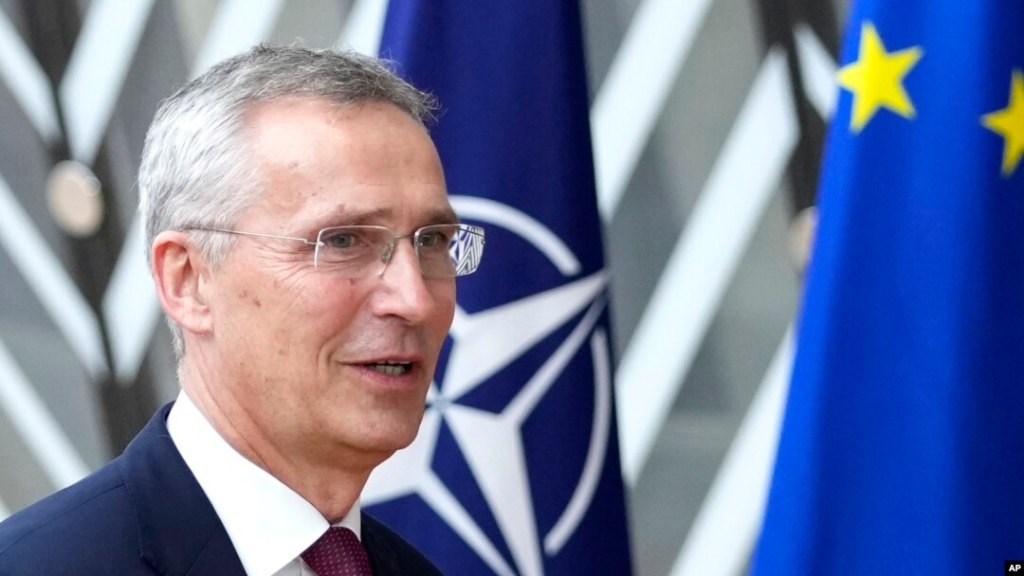
On September 7th, NATO’s Secretary General, Jens Stoltenberg, acknowledged that the war in Ukraine did not start on 24 February 2022 when Russia invaded Ukraine, like Western ‘news’-media say, but much earlier, in 2014, and that Russia’s invasion in 2022 resulted from NATO’s efforts to bring Ukraine into NATO and to bring NATO’s military forces closer to Russia’s borders: “He [Putin] went to war to prevent NATO, more NATO, close to his borders.” In other words: Russia’s invasion actually was defensive, not aggressive, on Russia’s side. And Stoltenberg proudly proclaimed that Russia has been defeated in that defensive objective, because instead both Sweden and especially Finland (one of the nearest nations to The Kremlin, other than the nearest of all, which is Ukraine) rushed to join NATO as a direct result of Russia’s invasion of Ukraine. Stoltenberg was so proud of having turned to dust Putin’s goal of making Russia safer, that Stoltenberg repeated many times NATO having done the exact opposite of what Putin was urging. Stoltenberg was clearly proud to have overseen the frustration of Russia’s need for a defense against a possible blitz-nuclear attack by NATO.

Furthermore: Stoltenberg acknowledged that this war is and has been good for NATO because it’s forcing NATO member countries to increase their expenditures on military weapons, and is thereby forcing down these countries’ expenditures on other matters that voters usually care more about.

Here are excerpts from what he said:

https://archive.ph/HKPPW

“Opening remarks by NATO Secretary General Jens Stoltenberg at the joint meeting of the European Parliament’s Committee on Foreign Affairs (AFET) and the Subcommittee on Security and Defence (SEDE) followed by an exchange of views with Members of the European Parliament”

07 September 2023

The war didn’t start in February last year. It started in 2014. The full-fledged invasion happened last year, but the war, the illegal annexation of Crimea, Russia went into eastern Donbas in 2014.

Since then, NATO has implemented the biggest adaptation on this Alliance in modern history, in decades. And part of that is to invest more in defence. I think I’ve told you before that I know it’s hard to allocate money for defence, because most politicians want to spend money on health, on education, on infrastructure instead of defence. …

The background was that President Putin declared in the autumn of 2021, and actually sent a draft treaty, that they wanted NATO to sign, to promise no more NATO enlargement. That was what he sent us. And was a pre-condition for not invade Ukraine. Of course we didn’t sign that.

The opposite happened. He wanted us to sign that promise, never to enlarge NATO. He wanted us to remove our military infrastructure in all Allies that have joined NATO since 1997, meaning half of NATO, all the Central and Eastern Europe, we should remove NATO from that part of our Alliance, introducing some kind of B, or second class membership. We rejected that.

So he went to war to prevent NATO, more NATO, close to his borders. He has got the exact opposite. He has got more NATO presence in eastern part of the Alliance and he has also seen that Finland has already joined the Alliance and Sweden will soon be a full member.

Earlier, Stoltenberg had said on 9 May 2023, “The war started in 2014.” He even was explicit that “You have to remember that the war didn’t start in 2022” (referring to Russia’s response on 24 February 2022 by invading Ukraine). Here is the best short video (only ten minutes long) accurately showing in the original historic video clips how Ukraine’s war started, and it is very clear there that the U.S. Government, U.S. President Obama, started it in February 2014, by means of a coup, which the Obama Administration had had in the planning stages for quite some time. The founder and head of the ‘private CIA’ firm Stratfor even called it “the most blatant coup in history”. The smoking-gun piece of evidence proving that it had been a coup by the U.S. Government is this recording of Obama’s mastermind of the coup, Victoria Nuland, telling Obama’s Ambassador in Ukraine Geoffrey Pyatt, a month before the coup became climaxed, whom to get appointed to lead the post-coup Ukraine. And, then, the smoking-gun piece of evidence proving that even the top officials of the EU didn’t know that it had been a coup instead of the ‘democratic revolution’ that the U.S. regime claimed, is this recording of the EU’s minister of foreign affairs being told in a phone call from Kiev, by her investigator there, immediately after the coup was over, that it had been a coup. On 4 November 2019, after enough verified evidence had become known about it and about how the war in Ukraine had actually been started by the U.S. Government, I headlined “The Obama Regime’s Plan to Seize the Russian Naval Base in Crimea”, which was the only part of Obama’s plan that failed; and that article documented also how the war had been started by that coup.

Stoltenberg’s speech on September 7th ignored America’s coup, and he even ignored that the coup was quickly followed by the breakaway of Crimea because a plebiscite was held there on 16 March 2014, which produced a 90%+ vote for Crimea to again be a part of Russia, of which Crimea had been a part from 1783 to 1954. And he ignored that the breakaway of Donbass resulted after the Obama-installed Ukrainian government started in April 2014 an ethic-cleansing invasion of Donbass because over 90% of the voters there had voted for the Ukrainian President whom Obama’s coup had replaced, and Obama didn’t want those voters ever again to vote in a Ukrainian election.

So, although what Stoltenberg said there was true, it was very incomplete, because it failed to mention the coup, and the coup-regime’s ethnic-cleansing campaign, though those American initiatives were actually the things that started the war in Ukraine.

ECOWAS Fiery Talk Towards Niger Loses Its Edge After Biden Talks With Its President

Biden’s little chat with Tinubu says a lot about the realities of what is going to happen and what can happen on the ground.

By Martin Jay

Source: Strategic Culture Foundation

Three interesting facets of news over Niger appear to be doing the rounds. Firstly, that a terrorist group in Nigeria has openly appealed to the Nigerian President – who also happens to be the ECOWAS leader – to avoid at all costs a military intervention in Niger; secondly, that Joe Biden took the initiative to meet the same gentleman Bola Ahmed Tinubu in the corridors of the United Nations, hinting that huge amounts of U.S. investment could be directed towards Nigeria if Tinubu played ball; and thirdly, that just recently, the stakes were raised in Niger when its junta announced that it had invited the armies of both Mali and Burkina Faso onto its soil to help defend themselves against an “intervention” which ECOWAS has threatened was on the cards only days earlier.

But Biden’s little chat with Tinubu says a lot about the realities of what is going to happen and what can happen on the ground as clearly his administration does not want another proxy war between East and West on its hands before the re-election run up next year. The question of whether the U.S. would support ECOWAS militarily has been answered by Biden’s bribe to the Nigerian president. It’s not going to happen.

Tinubu, who is certainly the man at the centre of events, gives the impression in interviews that he is under great pressure from ECOWAS members to intervene, but he is the one cooling tempers and looking for a diplomatic solution. And yet, his comments to the press seem to have been written by the U.S. state department such is the proximity of his office and the U.S. administration – debunking the myth of how much ECOWAS is influenced by France (given that the majority of the countries are former French colonies). The Nigerian president’s role as ECOWAS chief is under the spotlight.

What does he really want? Are his objectives focussed more on Nigeria rather than the bloc?

Joe Biden’s offer of a fresh injection of investment from U.S. firms hasn’t seemed to hit the mark. It seems that Tinubu is after even faster and even easier cash.

Tinubu said that African democracies are “currently under assault by anti-democratic forces within and outside the continent”, which is really state department jargon for “the Russians are coming”.

He then called on the “American-backed development finance and multilateral institutions, which were designed to support war-torn Europe after World War II, to adopt a swift and comprehensive reform to meet the developmental requirements of young democracies in Africa”.

The translation isn’t too cryptic. Can the U.S. intervene and, also, while they’re at it, pump our central bank full of never-never-pay soft loans from IMF and World bank? Cheers!

Neither Biden nor Tinubu though seem to be bothered about the possibility of a fourth francophone African country falling into the hands of Mother Russia. Mali and Burkina Faso, who both can be assumed to be vassals of Russia have shown great solidarity with Niger which has lost no time kicking the French out and becoming a major pain in the arse for western elites who are confused about the events and want to oversimplify the nuances. “We lost Niger to the Russians” may be the well worn cliché although the facts on the ground and more complicated. There certainly seems in Niger to be an endearment towards the new junta’s government but Russia’s role so far is unclear.

About the only thing that Putin and Biden agree on is they don’t want a war in Niger.

It’s easy to forget though that Niger was a key player in ECOWAS and that many of its members placed great importance on Niger’s front line assault on Islamic groups in the region – which, if given more freedoms, could cause havoc right across West Africa but in particular in neighbouring Nigeria.

For the moment though, the so-called pressure from ECOWAS is unlikely to manifest itself beyond chest beating. ECOWAS members may have the hunger for intervention but they don’t have the guts for a war, which neither the U.S. or Russia will bankroll, so sobriety is likely to take over the narrative in the coming days. The war in Ukraine, the abysmal foreign policy blunders of Biden, the deluded arrogance of Macron and the emergence of BRICS have all contributed to the current crisis in Africa as the old relationship with the West is put to the test, with disastrous consequences. The only thing left of Obama’s “soft power” idea he conjured up in 2015 after his humiliation in Syria is a suitcase full of cash for a corrupt West African leader to share with his cabal. Pretty pathetic.

Mental Health Round-Ups: The Next Phase of the Government’s War on Thought Crimes

By John & Nisha Whitehead

Source: The Rutherford Institute

“There are no dangerous thoughts; thinking itself is a dangerous activity.”—Hannah Arendt

Get ready for the next phase of the government’s war on thought crimes: mental health round-ups and involuntary detentions.

Under the guise of public health and safety, the government could use mental health care as a pretext for targeting and locking up dissidents, activists and anyone unfortunate enough to be placed on a government watch list.

If we don’t nip this in the bud, and soon, this will become yet another pretext by which government officials can violate the First and Fourth Amendments at will.

This is how it begins.

In communities across the nation, police are being empowered to forcibly detain individuals they believe might be mentally ill, based solely on their own judgment, even if those individuals pose no danger to others.

In New York City, for example, you could find yourself forcibly hospitalized for suspected mental illness if you carry “firmly held beliefs not congruent with cultural ideas,” exhibit a “willingness to engage in meaningful discussion,” have “excessive fears of specific stimuli,” or refuse “voluntary treatment recommendations.”

While these programs are ostensibly aimed at getting the homeless off the streets, when combined with advances in mass surveillance technologies, artificial intelligence-powered programs that can track people by their biometrics and behavior, mental health sensor data (tracked by wearable data and monitored by government agencies such as HARPA), threat assessments, behavioral sensing warnings, precrime initiatives, red flag gun laws, and mental health first-aid programs aimed at training gatekeepers to identify who might pose a threat to public safety, they could well signal a tipping point in the government’s efforts to penalize those engaging in so-called “thought crimes.”

As the AP reports, federal officials are already looking into how to add “‘identifiable patient data,’ such as mental health, substance use and behavioral health information from group homes, shelters, jails, detox facilities and schools,” to its surveillance toolkit.

Make no mistake: these are the building blocks for an American gulag no less sinister than that of the gulags of the Cold War-era Soviet Union.

The word “gulag” refers to a labor or concentration camp where prisoners (oftentimes political prisoners or so-called “enemies of the state,” real or imagined) were imprisoned as punishment for their crimes against the state.

The gulag, according to historian Anne Applebaum, used as a form of “administrative exile—which required no trial and no sentencing procedure—was an ideal punishment not only for troublemakers as such, but also for political opponents of the regime.”

Totalitarian regimes such as the Soviet Union also declared dissidents mentally ill and consigned political prisoners to prisons disguised as psychiatric hospitals, where they could be isolated from the rest of society, their ideas discredited, and subjected to electric shocks, drugs and various medical procedures to break them physically and mentally.

In addition to declaring political dissidents mentally unsound, government officials in the Cold War-era Soviet Union also made use of an administrative process for dealing with individuals who were considered a bad influence on others or troublemakers. Author George Kennan describes a process in which:

The obnoxious person may not be guilty of any crime . . . but if, in the opinion of the local authorities, his presence in a particular place is “prejudicial to public order” or “incompatible with public tranquility,” he may be arrested without warrant, may be held from two weeks to two years in prison, and may then be removed by force to any other place within the limits of the empire and there be put under police surveillance for a period of from one to ten years.

Warrantless seizures, surveillance, indefinite detention, isolation, exile… sound familiar?

It should.

The age-old practice by which despotic regimes eliminate their critics or potential adversaries by making them disappear—or forcing them to flee—or exiling them literally or figuratively or virtually from their fellow citizens—is happening with increasing frequency in America.

Now, through the use of red flag lawsbehavioral threat assessments, and pre-crime policing prevention programs, the groundwork is being laid that would allow the government to weaponize the label of mental illness as a means of exiling those whistleblowers, dissidents and freedom fighters who refuse to march in lockstep with its dictates.

That the government is using the charge of mental illness as the means by which to immobilize (and disarm) its critics is diabolical. With one stroke of a magistrate’s pen, these individuals are declared mentally ill, locked away against their will, and stripped of their constitutional rights.

These developments are merely the realization of various U.S. government initiatives dating back to 2009, including one dubbed Operation Vigilant Eagle which calls for surveillance of military veterans returning from Iraq and Afghanistan, characterizing them as extremists and potential domestic terrorist threats because they may be “disgruntled, disillusioned or suffering from the psychological effects of war.”

Coupled with the report on “Rightwing Extremism: Current Economic and Political Climate Fueling Resurgence in Radicalization and Recruitment” issued by the Department of Homeland Security (curiously enough, a Soviet term), which broadly defines rightwing extremists as individuals and groups “that are mainly antigovernment, rejecting federal authority in favor of state or local authority, or rejecting government authority entirely,” these tactics bode ill for anyone seen as opposing the government.

Thus, what began as a blueprint under the Bush administration has since become an operation manual for exiling those who challenge the government’s authority.

An important point to consider, however, is that the government is not merely targeting individuals who are voicing their discontent so much as it is locking up individuals trained in military warfare who are voicing feelings of discontent.

Under the guise of mental health treatment and with the complicity of government psychiatrists and law enforcement officials, these veterans are increasingly being portrayed as ticking time bombs in need of intervention.

For instance, the Justice Department launched a pilot program aimed at training SWAT teams to deal with confrontations involving highly trained and often heavily armed combat veterans.

One tactic being used to deal with so-called “mentally ill suspects who also happen to be trained in modern warfare” is through the use of civil commitment laws, found in all states and employed throughout American history to not only silence but cause dissidents to disappear.

For example, NSA officials attempted to label former employee Russ Tice, who was willing to testify in Congress about the NSA’s warrantless wiretapping program, as “mentally unbalanced” based upon two psychiatric evaluations ordered by his superiors.

NYPD Officer Adrian Schoolcraft had his home raided, and he was handcuffed to a gurney and taken into emergency custody for an alleged psychiatric episode. It was later discovered by way of an internal investigation that his superiors were retaliating against him for reporting police misconduct. Schoolcraft spent six days in the mental facility, and as a further indignity, was presented with a bill for $7,185 upon his release.

Marine Brandon Raub—a 9/11 truther—was arrested and detained in a psychiatric ward under Virginia’s civil commitment law based on posts he had made on his Facebook page that were critical of the government.

Each state has its own set of civil, or involuntary, commitment laws. These laws are extensions of two legal principlesparens patriae Parens patriae (Latin for “parent of the country”), which allows the government to intervene on behalf of citizens who cannot act in their own best interest, and police power, which requires a state to protect the interests of its citizens.

The fusion of these two principles, coupled with a shift towards a dangerousness standard, has resulted in a Nanny State mindset carried out with the militant force of the Police State.

The problem, of course, is that the diagnosis of mental illness, while a legitimate concern for some Americans, has over time become a convenient means by which the government and its corporate partners can penalize certain “unacceptable” social behaviors.

In fact, in recent years, we have witnessed the pathologizing of individuals who resist authority as suffering from oppositional defiant disorder (ODD), defined as “a pattern of disobedient, hostile, and defiant behavior toward authority figures.” Under such a definition, every activist of note throughout our history—from Mahatma Gandhi to Martin Luther King Jr.—could be classified as suffering from an ODD mental disorder.

Of course, this is all part of a larger trend in American governance whereby dissent is criminalized and pathologized, and dissenters are censored, silenced, declared unfit for society, labelled dangerous or extremist, or turned into outcasts and exiled.

Red flag gun laws (which authorize government officials to seize guns from individuals viewed as a danger to themselves or others), are a perfect example of this mindset at work and the ramifications of where this could lead.

As The Washington Post reports, these red flag gun laws “allow a family member, roommate, beau, law enforcement officer or any type of medical professional to file a petition [with a court] asking that a person’s home be temporarily cleared of firearms. It doesn’t require a mental-health diagnosis or an arrest.

With these red flag gun laws, the stated intention is to disarm individuals who are potential threats.

While in theory it appears perfectly reasonable to want to disarm individuals who are clearly suicidal and/or pose an “immediate danger” to themselves or others, where the problem arises is when you put the power to determine who is a potential danger in the hands of government agencies, the courts and the police.

Remember, this is the same government that uses the words “anti-government,” “extremist” and “terrorist” interchangeably.

This is the same government whose agents are spinning a sticky spider-web of threat assessments, behavioral sensing warnings, flagged “words,” and “suspicious” activity reports using automated eyes and ears, social media, behavior sensing software, and citizen spies to identify potential threats.

This is the same government that keeps re-upping the National Defense Authorization Act (NDAA), which allows the military to detain American citizens with no access to friends, family or the courts if the government believes them to be a threat.

This is the same government that has a growing list—shared with fusion centers and law enforcement agencies—of ideologies, behaviors, affiliations and other characteristics that could flag someone as suspicious and result in their being labeled potential enemies of the state.

For instance, if you believe in and exercise your rights under the Constitution (namely, your right to speak freely, worship freely, associate with like-minded individuals who share your political views, criticize the government, own a weapon, demand a warrant before being questioned or searched, or any other activity viewed as potentially anti-government, racist, bigoted, anarchic or sovereign), you could be at the top of the government’s terrorism watch list.

Moreover, as a New York Times editorial warns, you may be an anti-government extremist (a.k.a. domestic terrorist) in the eyes of the police if you are afraid that the government is plotting to confiscate your firearms, if you believe the economy is about to collapse and the government will soon declare martial law, or if you display an unusual number of political and/or ideological bumper stickers on your car.

Let that sink in a moment.

Now consider the ramifications of giving police that kind of authority in order to preemptively neutralize a potential threat, and you’ll understand why some might view these mental health round-ups with trepidation.

No matter how well-meaning the politicians make these encroachments on our rights appear, in the right (or wrong) hands, benevolent plans can easily be put to malevolent purposes.

Even the most well-intentioned government law or program can be—and has been—perverted, corrupted and used to advance illegitimate purposes once profit and power are added to the equation.

The war on terror, the war on drugs, the war on illegal immigration, the war on COVID-19: all of these programs started out as legitimate responses to pressing concerns and have since become weapons of compliance and control in the government’s hands. For instance, the very same mass surveillance technologies that were supposedly so necessary to fight the spread of COVID-19 are now being used to stifle dissent, persecute activists, harass marginalized communities, and link people’s health information to other surveillance and law enforcement tools.

As I make clear in my book Battlefield America: The War on the American People and in its fictional counterpart The Erik Blair Diaries, we are moving fast down that slippery slope to an authoritarian society in which the only opinions, ideas and speech expressed are the ones permitted by the government and its corporate cohorts.

We stand at a crossroads.

As author Erich Fromm warned, “At this point in history, the capacity to doubt, to criticize and to disobey may be all that stands between a future for mankind and the end of civilization.”

Clinging Bitterly to Guns and Religion

The End Stage of American Empire

By William J. Astore

Source: TomDispatch.com

All around us things are falling apart. Collectively, Americans are experiencing national and imperial decline. Can America save itself? Is this country, as presently constituted, even worth saving?

For me, that last question is radical indeed. From my early years, I believed deeply in the idea of America. I knew this country wasn’t perfect, of course, not even close. Long before the 1619 Project, I was aware of the “original sin” of slavery and how central it was to our history. I also knew about the genocide of Native Americans. (As a teenager, my favorite movie — and so it remains — was Little Big Man, which pulled no punches when it came to the white man and his insatiably murderous greed.)

Nevertheless, America still promised much, or so I believed in the 1970s and 1980s. Life here was simply better, hands down, than in places like the Soviet Union and Mao Zedong’s China. That’s why we had to “contain” communism — to keep them over there, so they could never invade our country and extinguish our lamp of liberty. And that’s why I joined America’s Cold War military, serving in the Air Force from the presidency of Ronald Reagan to that of George W. Bush and Dick Cheney. And believe me, it proved quite a ride. It taught this retired lieutenant colonel that the sky’s anything but the limit.

In the end, 20 years in the Air Force led me to turn away from empire, militarism, and nationalism. I found myself seeking instead some antidote to the mainstream media’s celebrations of American exceptionalism and the exaggerated version of victory culture that went with it (long after victory itself was in short supply). I started writing against the empire and its disastrous wars and found likeminded people at TomDispatch — former imperial operatives turned incisive critics like Chalmers Johnson and Andrew Bacevich, along with sharp-eyed journalist Nick Turse and, of course, the irreplaceable Tom Engelhardt, the founder of those “tomgrams” meant to alert America and the world to the dangerous folly of repeated U.S. global military interventions.

But this isn’t a plug for TomDispatch. It’s a plug for freeing your mind as much as possible from the thoroughly militarized matrix that pervades America. That matrix drives imperialism, waste, war, and global instability to the point where, in the context of the conflict in Ukraine, the risk of nuclear Armageddon could imaginably approach that of the 1962 Cuban Missile Crisis. As wars — proxy or otherwise — continue, America’s global network of 750-odd military bases never seems to decline. Despite upcoming cuts to domestic spending, just about no one in Washington imagines Pentagon budgets doing anything but growing, even soaring toward the trillion-dollar level, with militarized programs accounting for 62% of federal discretionary spending in 2023.

Indeed, an engorged Pentagon — its budget for 2024 is expected to rise to $886 billion in the bipartisan debt-ceiling deal reached by President Joe Biden and House Speaker Kevin McCarthy — guarantees one thing: a speedier fall for the American empire. Chalmers Johnson predicted it; Andrew Bacevich analyzed it. The biggest reason is simple enough: incessant, repetitive, disastrous wars and costly preparations for more of the same have been sapping America’s physical and mental reserves, as past wars did the reserves of previous empires throughout history. (Think of the short-lived Napoleonic empire, for example.)

Known as “the arsenal of democracy” during World War II, America has now simply become an arsenal, with a military-industrial-congressional complex intent on forging and feeding wars rather than seeking to starve and stop them. The result: a precipitous decline in the country’s standing globally, while at home Americans pay a steep price of accelerating violence (2023 will easily set a record for mass shootings) and “carnage” (Donald Trump’s word) in a once proud but now much-bloodied “homeland.”

Lessons from History on Imperial Decline

I’m a historian, so please allow me to share a few basic lessons I’ve learned. When I taught World War I to cadets at the Air Force Academy, I would explain how the horrific costs of that war contributed to the collapse of four empires: Czarist Russia, the German Second Reich, the Ottoman empire, and the Austro-Hungarian empire of the Habsburgs. Yet even the “winners,” like the French and British empires, were also weakened by the enormity of what was, above all, a brutal European civil war, even if it spilled over into Africa, Asia, and indeed the Americas.

And yet after that war ended in 1918, peace proved elusive indeed, despite the Treaty of Versailles, among other abortive agreements. There was too much unfinished business, too much belief in the power of militarism, especially in an emergent Third Reich in Germany and in Japan, which had embraced ruthless European military methods to create its own Asiatic sphere of dominance. Scores needed to be settled, so the Germans and Japanese believed, and military offensives were the way to do it.

As a result, civil war in Europe continued with World War II, even as Japan showed that Asiatic powers could similarly embrace and deploy the unwisdom of unchecked militarism and war. The result: 75 million dead and more empires shattered, including Mussolini’s “New Rome,” a “thousand-year” German Reich that barely lasted 12 of them before being utterly destroyed, and an Imperial Japan that was starved, burnt out, and finally nuked. China, devastated by war with Japan, also found itself ripped apart by internal struggles between nationalists and communists.

As with its prequel, even most of the “winners” of World War II emerged in a weakened state. In defeating Nazi Germany, the Soviet Union had lost 25 to 30 million people. Its response was to erect, in Winston Churchill’s phrase, an “Iron Curtain” behind which it could exploit the peoples of Eastern Europe in a militarized empire that ultimately collapsed due to its wars and its own internal divisions. Yet the USSR lasted longer than the post-war French and British empires. France, humiliated by its rapid capitulation to the Germans in 1940, fought to reclaim wealth and glory in “French” Indochina, only to be severely humbled at Dien Bien Phu. Great Britain, exhausted from its victory, quickly lost India, that “jewel” in its imperial crown, and then Egypt in the Suez debacle.

There was, in fact, only one country, one empire, that truly “won” World War II: the United States, which had been the least touched (Pearl Harbor aside) by war and all its horrors. That seemingly never-ending European civil war from 1914 to 1945, along with Japan’s immolation and China’s implosion, left the U.S. virtually unchallenged globally. America emerged from those wars as a superpower precisely because its government had astutely backed the winning side twice, tipping the scales in the process, while paying a relatively low price in blood and treasure compared to allies like the Soviet Union, France, and Britain.

History’s lesson for America’s leaders should have been all too clear: when you wage war long, especially when you devote significant parts of your resources — financial, material, and especially personal — to it, you wage it wrong. Not for nothing is war depicted in the Bible as one of the four horsemen of the apocalypse. France had lost its empire in World War II; it just took later military catastrophes in Algeria and Indochina to make it obvious. That was similarly true of Britain’s humiliations in India, Egypt, and elsewhere, while the Soviet Union, which had lost much of its imperial vigor in that war, would take decades of slow rot and overstretch in places like Afghanistan to implode.

Meanwhile, the United States hummed along, denying it was an empire at all, even as it adopted so many of the trappings of one. In fact, in the wake of the implosion of the Soviet Union in 1991, Washington’s leaders would declare America the exceptional “superpower,” a new and far more enlightened Rome and “the indispensable nation” on planet Earth. In the wake of the 9/11 attacks, its leaders would confidently launch what they termed a Global War on Terror and begin waging wars in Afghanistan, Iraq, and elsewhere, as in the previous century they had in Vietnam. (No learning curve there, it seems.) In the process, its leaders imagined a country that would remain untouched by war’s ravages, which was we now know — or do we? — the height of imperial hubris and folly.

For whether you call it fascism, as with Nazi Germany, communism, as with Stalin’s Soviet Union, or democracy, as with the United States, empires built on dominance achieved through a powerful, expansionist military necessarily become ever more authoritarian, corrupt, and dysfunctional. Ultimately, they are fated to fail. No surprise there, since whatever else such empires may serve, they don’t serve their own people. Their operatives protect themselves at any cost, while attacking efforts at retrenchment or demilitarization as dangerously misguided, if not seditiously disloyal.

That’s why those like Chelsea ManningEdward Snowden, and Daniel Hale, who shined a light on the empire’s militarized crimes and corruption, found themselves imprisoned, forced into exile, or otherwise silenced. Even foreign journalists like Julian Assange can be caught up in the empire’s dragnet and imprisoned if they dare expose its war crimes. The empire knows how to strike back and will readily betray its own justice system (most notably in the case of Assange), including the hallowed principles of free speech and the press, to do so.

Perhaps he will eventually be freed, likely as not when the empire judges he’s approaching death’s door. His jailing and torture have already served their purpose. Journalists know that to expose America’s bloodied tools of empire brings only harsh punishment, not plush rewards. Best to look away or mince one’s words rather than risk prison — or worse.

Yet you can’t fully hide the reality that this country’s failed wars have added trillions of dollars to its national debt, even as military spending continues to explode in the most wasteful ways imaginable, while the social infrastructure crumbles.

Clinging Bitterly to Guns and Religion

Today, America clings ever more bitterly to guns and religion. If that phrase sounds familiar, it might be because Barack Obama used it in the 2008 presidential campaign to describe the reactionary conservatism of mostly rural voters in Pennsylvania. Disillusioned by politics, betrayed by their putative betters, those voters, claimed the then-presidential candidate, clung to their guns and religion for solace. I lived in rural Pennsylvania at the time and recall a response from a fellow resident who basically agreed with Obama, for what else was there left to cling to in an empire that had abandoned its own rural working-class citizens?

Something similar is true of America writ large today. As an imperial power, we cling bitterly to guns and religion. By “guns,” I mean all the weaponry America’s merchants of death sell to the Pentagon and across the world. Indeed, weaponry is perhaps this country’s most influential global export, devastatingly so. From 2018 to 2022, the U.S. alone accounted for 40% of global arms exports, a figure that’s only risen dramatically with military aid to Ukraine. And by “religion,” I mean a persistent belief in American exceptionalism (despite all evidence to the contrary), which increasingly draws sustenance from a militant Christianity that denies the very spirit of Christ and His teachings.

Yet history appears to confirm that empires, in their dying stages, do exactly that: they exalt violence, continue to pursue war, and insist on their own greatness until their fall can neither be denied nor reversed. It’s a tragic reality that the journalist Chris Hedges has written about with considerable urgency.

The problem suggests its own solution (not that any powerful figure in Washington is likely to pursue it). America must stop clinging bitterly to its guns — and here I don’t even mean the nearly 400 million weapons in private hands in this country, including all those AR-15 semi-automatic rifles. By “guns,” I mean all the militarized trappings of empire, including America’s vast structure of overseas military bases and its staggering commitments to weaponry of all sorts, including world-ending nuclear ones. As for clinging bitterly to religion — and by “religion” I mean the belief in America’s own righteousness, regardless of the millions of people it’s killed globally from the Vietnam era to the present moment — that, too, would have to stop.

History’s lessons can be brutal. Empires rarely die well. After it became an empire, Rome never returned to being a republic and eventually fell to barbarian invasions. The collapse of Germany’s Second Reich bred a third one of greater virulence, even if it was of shorter duration. Only its utter defeat in 1945 finally convinced Germans that God didn’t march with their soldiers into battle.

What will it take to convince Americans to turn their backs on empire and war before it’s too late? When will we conclude that Christ wasn’t joking when He blessed the peacemakers rather than the warmongers?

As an iron curtain descends on a failing American imperial state, one thing we won’t be able to say is that we weren’t warned.