The alleged gunmen who killed the son of Esther Salas, the judge recently assigned to the Epstein-Deutsche Bank case, worked for a company of corporate spies and mercenaries with ties to intelligence and also to Deutsche Bank.
The news of the shooting of the husband and son of Esther Salas, the judge recently assigned to oversee the Jeffrey Epstein – Deutsche Bank case, caused shock and confusion while also bringing renewed scrutiny to the Epstein scandal just a week after Epstein’s main co-conspirator, Ghislaine Maxwell, was denied bail in a separate case.
The case Salas is set to oversee is a class action lawsuit brought by Deutsche Bank investors who allege that Deutsche Bank “failed to properly monitor customers that the Bank itself deemed to be high risk, including, among others, the convicted sex offender Jeffrey Epstein.” The case came after the New York state Department of Financial Services had settled with Deutsche Bank over the bank’s failure to cut ties with Epstein-linked accounts, resulting in Deutsche Bank paying a $150 million fine. Deutsche Bank, unlike other financial institutions, failed to close all of its accounts linked to Epstein until less than a month prior to his arrest last year, even though the bank had identified him as “high risk” years before.
Beyond the tragedy of Sunday’s shooting, which claimed the life of Salas’ only child, the quick discovery of the death of the main suspect, Roy Den Hollander, of a “self-inflicted” gunshot to the head before he could be arrested or questioned by authorities has led to speculation that there is more to the official narrative of the crime than meets the eye.
With law enforcement sources now claiming that Esther Salas was not the intended target of the attack and some media reports now suggesting that Den Hollander’s motive was related to his dislike of feminism, it appears there are efforts underway to distance Sunday’s tragic shooting from Salas’ recent assignment to the Epstein case, which occurred just four days before the tragic shooting.
The most likely reason for any such “damage control” effort lies in the fact that both U.S. law enforcement investigations and mainstream media reports have consistently downplayed the connections of Jeffrey Epstein’s sexual trafficking and financial crimes to intelligence agencies in the U.S. and Israel. Similarly, Roy Den Hollander previously worked for a New York firm has been described as a “private CIA” with ties to those countries’ intelligence agencies and, also, ties to Deutsche Bank.
A Private CIA
According to his website, Den Hollander once worked for Kroll Associates Moscow Office, where he “managed and upgraded Kroll’s delivery of intelligence and security in the former Soviet Union” from 1999 to 2000. A few years prior, Kroll had won a considerable bid from the Russian government to locate money allegedly “spirited out of the country by the directors of state enterprises when they realized that privatization was inevitable.” The Kroll executives in charge of the Russian portfolio prior to Den Hollander were E. Norbett Garrett, a former CIA station chief in Cairo and Kuwait, and Joseph Rosetti, former chief of security for IBM. During that period and prior to his hiring at Kroll, Den Hollender worked as a lawyer in Russia regarding “legal and business issues, including international financing and marketing” and married a Russian woman he met during his time there that he subsequently claimed was part of the “Russian mafia.”
Founded by Jules Kroll in 1972, Kroll Associates would later become known as the “CIA of Wall Street” and “Wall Street’s Private Eye” and was alleged to be an actual front for the CIA by French intelligence agencies, according to theWashington Post. Part of the reason for this nickname, which was once a boasting point for top Kroll executives, owes to the fact that the firm frequently hired former CIA and FBI officers, as well as former members of MI6 and Mossad. K2 Intelligence, the successor to Kroll Associates founded by Jules Kroll and his son Jeremy in 2009, has similar hiring practices, counting former FBI and NSA officials among its ranks alongside former high-ranking members of the Israel Defense Forces (IDF) and Shin Bet, Israel’s domestic intelligence agency. Kroll also boasted ties to the Bush family, with Jonathan Bush (George Bush Sr.’s brother) serving on its corporate advisory board, and Kroll was also employed by Bill Clinton’s first presidential campaign.
Though it is mainly involved in corporate security and investigations, Kroll has also frequently investigated targets of Washington foreign policy, including Saddam Hussein, and was also the company tapped to “reorganize” Enron in 2002. Kroll Associates also has long been a subject of scrutiny for those that question the official narrative on the attacks of September 11, 2001, given that the company was put in charge of security for the World Trade Center complex from 1993 bombing up through the 2001 attacks and has no shortage of ties to companies and individuals that profited from the attacks. Kroll itself experienced a “surge in business” following the events of 9/11, a day when its top executives all avoided going to work despite ostensibly providing security for the complex.
A similar “surge in business” for Kroll followed the 2003 U.S. invasion of Iraq after the company’s investigations into Saddam Hussein’s and the Bath Party’s finances had been used as partial justification for the military incursion. Kroll became a major provider of mercenaries along with companies like Blackwater and DynCorp to the U.S. invasion and subsequent occupation through its subsidiaryKroll Security International. Its clients included the United States Agency for International Development (USAID), which has long fronted for the CIA, and also provided mercenaries for the war in Afghanistan.
Kroll executives over the years have commented to the press on their reputation as a “private CIA” and have also noted the advantages of being a “private” as opposed to “public” intelligence agency. For instance, E. Norbett Garrett, the former CIA official turned Kroll executive, told The New Yorkerin 2009 the following:
“Garrett explained the disparity between what Kroll could do and what the C.I.A. could in a place like Sudan. “They have to rely on public and covert sources,” he said. “But we can go straight to Salah Idris. He’s our client, after all. We can go straight to his friends. We can be manipulated, of course, shown incomplete information, and sometimes we have to walk away from a case if we don’t trust somebody. But we definitely have some advantages.”
Kroll Associates and the Epstein Network
Aside from Kroll Associates’ own role as a private intelligence firm, it is also worth pointing out that Jules Kroll had an odd meeting with Robert Maxwell, Ghislaine Maxwell’s father, shortly before his death, alleged by most Maxwell biographers and his family to have been a homicide. Roughly two weeks before his death, Kroll met with Maxwell at New York’s Helmsley Palace Hotel. According to a 1992 article in Vanity Fair, “Maxwell had ushered Kroll and two other men out onto the patio so that their conversation could not be overheard or bugged,” with Maxwell allegedly seeking to hire Kroll to uncover “people out to get him, to destroy his empire, to cripple him financially, and to destroy his life and business in any way they could.”
The article further notes that “the meeting broke up with Maxwell’s promising that he would send Kroll what he called “a memorandum of suspicions and unexplained events.” “Maxwell was working on this compendium,” said the [anonymous] participant [in the meeting], “when he met his death.” Kroll Associates was never formally hired.”
Much more recently Kroll came under scrutiny after being hired by disgraced media mogul Harvey Weinstein alongside the “private Mossad for hire” firm Black Cube. Weinstein had been instructed to hire Black Cube by Ehud Barak, the former Israeli military intelligence head and Israeli Prime Minister with close ties to Jeffrey Epstein and a frequent visitor of Epstein’s residences. Weinstein hired Kroll to harass and cyberstalk women who had accused him of sexual assault. Weinstein was a one-time business partner of Jeffrey Epstein’s and the testimony of Epstein victim Maria Farmer strongly implies that Ghislaine Maxwell and Epstein “shared” women, and potentially underage girls, with the film producer. The Daily Beast later reported that Epstein had used his ties to Weinstein to impress and recruit potential victims and at least one of those victims landed a role in a film produced by a Weinstein-owned company due to Epstein’s ties to Weinstein.
In addition, Kroll’s long-time executive Vice President for Operations, James Bucknam, was previously chief adviser to former FBI director Louis Freeh and is now CEO of the Freeh Group. Freeh has since become notorious for having been hired by Epstein associate, lawyer Alan Dershowitz, to “investigate” the Epstein scandal, and was also involved in the cover-up of the Penn State child molestation and abuse scandal. Freeh was also director of the FBI when the Bureau declined to investigate accusations regarding Leslie Wexner, Ghislaine Maxwell and Jeffrey Epstein and their involvement in the sex trafficking of minors, first reported to the FBI in 1996 by Maria Farmer.
The Kroll – Deutsche Bank “Revolving Door”
After “retiring” from Kroll associates, Jules Kroll created a credit-rating agency, a field he had called just years earlier “a heck of a racket.” Named the Kroll Bond Rating Agency (KBRA), the firm was envisioned by Kroll as a “credit-rating agency on steroids,” but has failed to make a dent in the market shares of the so-called “Big Three” credit-rating agencies: Standard & Poor’s, Moody’s Investors Service, and Fitch Ratings.
Though it hasn’t managed to become a dominant force in credit ratings, KBRA has managed to be profitable and to have produced something of a “revolving door” between its senior management and Deutsche Bank executives. For instance, KBRA’s top executive in Europe, Mauricio Noé, had previously been a Managing Director of Deutsche Bank’s London branch. In another example, Vice President for Credit Structuring at Deutsche Bank in New York, Ian Ross, was previously employed by KBRA and Yee Cent Wong, managing director of KBRA for CMBS, was previously Vice President of the Credit Solutions Group at Deutsche Bank Securities. Another managing director of KBRA, Bill Baneky, had previously served as Deutsche Bank’s Vice President and National Relationship Manager. One of KBRA’s senior managing directors, Rosemary Kelley, is also a former Deutsche Bank Vice President, while another, Ken Kockenmeister, was Deutsche Bank’s Director for Large Loan Securitization and Underwriting.
While they may not be the “biggest” credit-rating agency, KBRA analysts and executives frequently speak to media outlets where they comment on the state of various businesses, Deutsche Bank among them. Given the amount of overlap between Deutsche Bank and KBRA, it is unsurprising that KBRA has lobbied in the press on Deutsche’s behalf. For instance, KBRA analyst Christopher Whalen told Business Insider in 2016 that“The problem with Deutsche Bank may be the end of Merkel’s career,” adding that “The question is does she want to be remembered for doing the right thing — which is to provide support for the bank and diffuse the situation — or does she want to be remembered for standing by when one of the largest banks in Europe failed?”
Jeffrey Epstein’s Links to Deutsche Bank
Jeffrey Epstein’s ties to Deutsche Bank go back decades, and potentially earlier. After working for Bear Stearns earlier in his career and then as a so-called “financial bounty hunter” with ties to intelligence-linked arms dealers and Wall Street, Epstein set up a Ponzi scheme with Steve Hoffenberg called Tower Financial, which collapsed in 1993 and subsequently landed Hoffenberg 20 years in prison. Epstein’s name, despite being a clear co-conspiractor, was suspiciously dropped from the case during the trial. Hoffenberg subsequently alleged that Epstein used his ill-gotten gains from Tower Financial alongside a series of suspect loans from Deutsche Bank to create his investment company.
“His lead bank is Deutsche Bank, Germany, that runs the lead on his financial trust company. They run the platform in the trading of the currencies for Epstein and with Epstein. He’s never disclosed to the investors that provide the money to Deutsche Bank his true legacy, that’s securities fraud.”
Following that point, Epstein’s financial activities, aside from his Deutsche Bank-enabled investment vehicle, were publicly conducted through Bear Stearns (until its 2008 collapse) and J.P. Morgan. When J.P. Morgan dropped Epstein as a client, he again turned to Deutsche Bank in 2013, becoming a client of the bank’s private wealth division in New York. Anti-money laundering compliance officers at the bank’s branches in New York and Florida subsequently flaggedEpstein’s accounts in 2015, in 2016 and again in 2019, creating suspicious activity reports regarding the movements of large amounts of funds tied to Epstein-linked accounts outside of the U.S.
The narrative emerging that Den Hollander was motivated to kill Esther Salas’ husband and sons due to his hatred of feminism is a rapid attempt to explain away a story that clearly warrants further investigation, albeit into avenues that mainstream media and powerful individuals in the public and private sectors prefer remain untouched.
As the heinous act targeting the Salas family has shown, individuals with a lot to lose are willing to go to the farthest extremes to keep the ties of Epstein to the financial sector and to intelligence out of sight and out of mind. Indeed, just last December, Epstein’s personal banker at Deutsche Bank, Thomas Bowers, the chief of Deutsche Bank’s Private Wealth Management division in New York from 2012 to 2015, was found dead in his home. His death was quickly ruled a suicide by hanging. Bowers had also signed off on “unorthodox” loans, not just for Epstein, but Donald Trump, who has his own ties to the Epstein scandal.
While some have been quick to point out that Trump (as well as his son-in-law Jared Kushner) could stand to lose from potential revelations in the Epstein-Deutsche Bank trial, there are other key power-brokers tied to both Epstein and Deutsche Bank who could also be feeling the heat. For instance, Lynn Forester de Rothschild, who became close to Epstein in the early 1990s and subsequently connected him to the Clinton White House and later to Alan Dershowitz, is intimately involved in the Deutsche Bank Microfinance Consortium.
Aside from Epstein’s use of the money, Deutsche Bank has been notorious for years as a cesspool of money launderingfor organized crime networks, paying $14.5 billion in fines in just seven years for official action taken against the bank by several governments. It is highly likely that the brutality of what happened outside the Salas family home on Sunday is more related to Deutsche Bank than Epstein, as numerous powerful individuals have ties to the embattled bank.
Even the recent move by Attorney General William Barr to remove SDNY District Attorney Geoffrey Berman from his post appears to be more related to Berman’s efforts to investigate Deutsche Bank than the Epstein scandal, as some have alleged. This is because Barr’s new pick for Berman’s old job counts Deutsche Bank among his former clients and notably defended the bank in a recent anti-money laundering probe, whereas Berman was investigating the bank (albeit for political reasons that took aim at the bank’s dealings with Trump).
While Epstein’s egregious and criminal actions targeting minors have now become public knowledge, in role in facilitating white collar crime, money laundering and financial frauds on behalf of corporations, governments and oligarchs remains sorely under-covered, despite his role in such activities preceding and continuing after his involvement in an intelligence-linked sexual blackmail operation.
It arguably remains one of the key components of the Epstein scandal, yet the most poorly understood and most under-investigated. If anything, the tragic events at the Salas family home on Sunday, and what appears to be a rapid yet shoddy cover-up of the shooter’s ties to Kroll Associates and actual motives, reveal that Epstein’s financial ties are more frightening to certain powerful individuals and institutions than his trove of sexual blackmail.
A closer look at the events surrounding Bari Weiss’ resignation suggests she omitted some critical details about her toxic presence inside the paper, and may have staged her resignation to drum up publicity for her next move.
Neoconservative New York Times columnist Bari Weiss quit the newspaper on July 14. In a resignation letter published on her personal website, the pundit lamented a supposed “illiberal environment” at the publication in which Weiss’ colleagues mocked her right-wing views, supposedly called her “a Nazi and a racist,” and branded her a “liar and a bigot.”
Weiss’ unexpected departure came days after the hawkish columnist signed a letter in Harper’s Magazine lamenting an “intolerance of opposing views” and demanding an “open debate” in the US media.
But there may have been more to Weiss’ dramatic resignation than her revulsion with the “illiberal” culture of a paper that had recruited her and several neocon allies. A closer look at the events surrounding her departure suggests she likely omitted some critical details about her toxic presence inside the paper, and may have staged her resignation to drum up publicity for her next move.
A neocon network rises inside the Times, embarrassment and outrage ensues
Back on June 3, neoconservative Sen. Tom Cotton published an op-ed in the New York Times calling for the US military to crack down on Americans protesting lethal police violence. The decision to publish the editorial touched off outrage among Times staff, with many demanding to know how such a fascistic piece made it into print.
It turned out that the staffer who edited the piece, Adam Rubenstein, was a card-carrying neocon hired by the Times in early 2019. Rubenstein was a former editor for the now-defunct Weekly Standard founded by William Kristol – the neocon leader responsible for rustling up pro-Israel money to support Cotton’s electoral ambitions.
New York Times staff claimed that the Cotton op-ed “was edited” by Rubenstein and other staffers “had not been aware of the article before it was published.”
The editorial disaster prompted the dismissal of op-ed page editor James Bennet, who had initially defended running Cotton’s screed.
Before joining the Weekly Standard, Rubenstein was a pro-Israel activist at Kenyon College who once attempted to cancel an appearance by the Palestian poet Remi Kanazi on the grounds that Kanazi was “part of a focus-grouped and incubated hatred.”
Rubenstein’s hiring by the Times complimented its hiring of Bari Weiss and fellow anti-Palestinian bigot Bret Stephens in 2017. In her resignation letter, Weiss acknowledged, “I was hired with the goal of bringing in voices that would not otherwise appear in [the Times’] pages: first-time writers, centrists, conservatives.”
In 2018, Weiss and Stephens responded to a critic who had called them “Zionist fanatics of near-unhinged proportions.” The two retorted: “The word ‘near’ should not have been a part of the sentence. Otherwise, we happily plead guilty as charged.”
When Rubenstein joined them at the paper, he became Weiss’s personal editor. Both Weiss and Stephens had risen to prominence at the op-ed page of the Wall Street Journal, where Rubenstein had also worked as a Robert Bartley Fellow.
In August 2019, Stephens provoked embarrassment for himself and his employers when he fired off an angry email to the employer of a George Washington University professor, David Karpf, who had compared him on Twitter to a bedbug. As Twitter users bombarded Stephens with a wave of ridicule, the NY Times apparently compelled Stephens to delete his Twitter account – but not before he staged a public meltdown in which he compared Karpf to “totalitarian regimes” and Nazis seeking to exterminate Jews.
When the Cotton column calling for a military crackdown on Black Lives Matter ran less than a year later, the Times’ neocon problem finally came to a head.
This June 5, as 300 non-editorial staffers planned a virtual walkout, Times publisher A.G. Sulzberger convened an all-hands meeting. During the question-and-answer session, according to a report by Vice, employees demanded to know “whether Opinion staff editor and writer Bari Weiss would be fired for ‘openly bad mouth[ing] younger news colleagues on a platform where they, because of strict company policy, could not defend themselves’; whether the opinion section had suggested the topic of the op-ed to Cotton; and what the Times would do to help retain and support Black employees.”
Times staff seemed to be pointing a finger at Weiss and her neocon network for soliciting the Cotton op-ed.
When Weiss resigned on July 14, she complained that colleagues “have called me a Nazi and a racist… Several colleagues perceived to be friendly with me were badgered by coworkers.” Yet she failed to acknowledge her apparent role in the Cotton op-ed affair, which was clearly the source of her colleagues’ outrage, painting herself instead as a blameless victim of “illiberal” cancel culture.
On the day that Weiss staged her dramatic self-expulsion, Andrew Sullivan – a center-right political ally of Weiss who has vigorously supported her – resigned from New York Magazine.
While Sullivan does not share the Likudnik politics of Weiss, he enjoys some notable institutional and personal links to her political network. As the former editor of The New Republic, Sullivan worked under the direction of the magazine’s fanatically pro-Israel former publisher, Marty Peretz, who has since relocated to Tel Aviv. Peretz’s daughter, Evgenia, published a fawning profile of Weiss in Vanity Fair in April 2019, portraying her as an inspiring new talent who was “genuinely fueled by curiosity, the desire to connect, to cross boundaries and try out new things.”
During the time Sullivan and Peretz ran The New Republic, the magazine was funded by the pro-Israel businessman Roger Hertog. Hertog also plowed his fortune into the Shalem Center to launch a training institute for young pro-Israel pundits in 2002.
Among the first interns to pass through the Shalem training school was a Columbia University student named Bari Weiss. (Weiss’ editor at the NY Times, Rubenstein, had also been involved in the Hertog Foundation).
Whether or not Weiss plans to join Sullivan at a new outlet for disgruntled anti-SJW centrists, the circumstances surrounding her self-expulsion reveal her resignation letter as an insincere whitewash.
Besides the possibility that Weiss’ departure was a PR stunt, there is the fact that she has spent a large portion of her adult life working to cancel Palestinian academics and left-wing politicians while howling about the rise of a totalitarian “cancel culture.”
A self-styled free thinker campaigns to silence left-wing dissenters
Before Bari Weiss branded herself as an avatar of free thought, she established herself as the queen of a particular kind of cancel culture. The 36-year-old pundit has dedicated a significant portion of her adult life to destroying the careers of critics of Israel, tarring them as anti-Semites, and carrying out the kind of defamation campaigns that would result in her targets losing their jobs.
The pundit has shown a particular obsession with Palestinian-American scholar Joseph Massad and the New York City-based Palestinian-American activist Linda Sarsour. Other targets have included Keith Ellison, the Minnesota Attorney General who was the first Muslim elected to Congress, and Rep. Tulsi Gabbard, an ardent opponent of US regime change wars.
There is also ample evidence that while at Columbia University, Weiss helped bring down the dean of Columbia’s School of International and Public Affairs, Lisa Anderson, for inviting Iran’s then-President Mahmoud Ahmadenijad to speak on campus. Anderson’s son has pointed to Weiss as a key factor in her resignation:
In her resignation letter, Weiss found space to castigate the Times for publishing an interview with renowned African-American author Alice Walker, whom she casually defamed as “a proud anti-Semite who believes in lizard Illuminati.”
Weiss also flexed her bona fides as a proud neoconservative activist, saying she was “honored” to have given the world’s most prestigious media platform to a slew of regime-change activists from countries targeted by the US national security for overthrow, including Venezuela, Iran, and Hong Kong, along with notorious Islamophobe Ayaan Hirsi Ali and Chloe Valdary – a fellow Israel lobby product who previously worked as an intern for Bret Stephens.
In her three-year career as an editor of the opinion section of the newspaper of record, Weiss devoted a significant chunk of her columns to attacking her left-wing critics, while complaining endlessly of the haters in her Twitter mentions (which is risible given her lamentation in her resignation letter that “Twitter has become [the Times’] ultimate editor”).
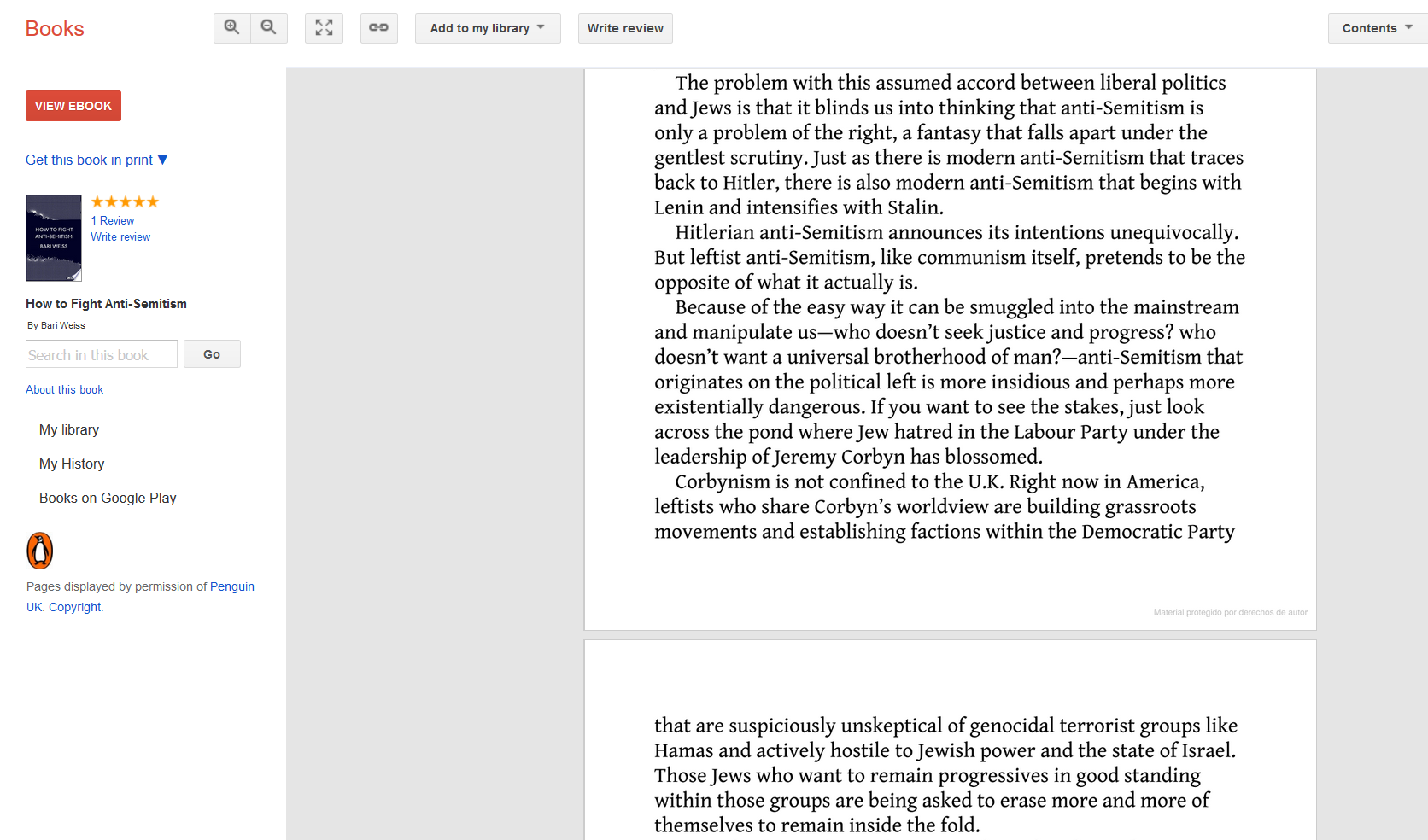
In her 2019 book, Weiss condemned the pro-Palestine left as a whole. She insisted the idea that Zionism is a colonialist and racist movement is an anti-Semitic “Soviet conspiracy;” that the UK Labour Party under leader Jeremy Corbyn was a “hub of Jew hatred,” and that “leftist anti-Semites” are “more insidious and perhaps existentially dangerous” than far-right “Hitlerian anti-Semites.”
It is worth reviewing this historical record to show how Cancel Queen Bari Weiss’ apparent change of heart on cancel culture might more appropriately be described as an opportunist career choice.
Bari Weiss’ campaigns to cancel Palestinians Joseph Massad and Linda Sarsour, and Muslim American politician Keith Ellison
In her 2019 book “How to Fight Anti-Semitism,” Weiss revived her condemnations of Massad, whom she first targeted at Columbia University after interning at the Hertog-funded Shalem Center.
Weiss also argued that New York University (NYU) was rife with anti-Semitism. Her proof? An individual student was told some stupid anti-Semitic comments, and — much more disconcertingly for Weiss – “In December 2018, the student government successfully passed a BDS resolution,” and “NYU gave the President’s Service Award, the school’s highest honor, to Students for Justice in Palestine.”
Massad was hardly the only victim of Bari Weiss’ compulsive cancel culture campaigns. The neoconservative pundit wrote an entire New York Times column in 2017 dedicated to trying to cancel Palestinian-American activist Linda Sarsour.
Rapping progressives over the knuckles for purportedly “embracing hate,” Weiss characterized Sarsour as an unhinged anti-Semite because of her criticism of the colonialist Zionist movement, and worked to disrupt the Women’s March, which Sarsour helped to found.
Then in a tag-team cancel campaign with feverishly pro-war CNN host Jake Tapper (who has his own questionable history with racial issues), they portrayed Sarsour as an extremist for expressing support for former Black Panther leader Assata Shakur, whom they jointly demonized as a “cop-killer fugitive in Cuba.”
Next, Weiss turned her sights on the Democratic Attorney General of Minnesota Keith Ellison, claiming in a 2017 column that he had a “long history of defending and working with anti-Semites.”
Bari Weiss attempts to cancel Tulsi Gabbard
Bari Weiss’ cancelation rampage continued without a moment of self-reflection.
In an interview with podcaster Joe Rogan in January 2019, the pundit tried to cancel Hawaii Representative Tulsi Gabbard because of her work advocating against the international proxy war on Syria.
When Rogan mentioned Gabbard’s name, Weiss scoffed that the congresswoman is “monstrous,” smearing her an “Assad toady,” in reference to the Syrian leader Bashar al-Assad. Confused, Rogan asked Weiss what exactly that meant. The bumbling New York Times pundit could not answer, unable to define or even spell the insult.
This hilarious video exemplifies how stupid and infantile discourse on Syria is:
If you oppose regime change and arming of fascist contra "rebels," a braindead neocon with a sinecure in the corporate media smears you as an Assad apologist using insults they can't spell or define pic.twitter.com/m0MLaHFPiX
Bari Weiss claims “leftist anti-Semitism” is worse than “Hitlerian anti-Semitism”
Bari Weiss’ most extreme views on Israel-Palestine and the left can be seen in her 2019 book How to Fight Anti-Semitism. In this tome, the neoconservative writer set out to cancel the pro-Palestinian anti-racist left as a whole by arguing that supposed “leftist anti-Semitism” is more dangerous than “Hitlerian anti-Semitism.”
Weiss wrote:
“Hitlerian anti-Semitism announces its intentions unequivocally. But leftist anti-Semitism, like communism itself, pretends to be the opposition of what it actually is.
“Because of the easy way it can be smuggled into the mainstream and manipulate us – who doesn’t seek justice and progress? who doesn’t want a universal brotherhood of man? – anti-Semitism that originates on the political left is more insidious and perhaps existentially dangerous [than on the right].”
When she says “leftist anti-Semitism,” Weiss almost invariably means progressive criticism of Israeli apartheid, racism, and brutality against the indigenous Palestinian population.
If that wasn’t already obvious, Weiss spelled it out:
“If you want to see the stakes, just look across the pond, where Jeremy Corbyn, an anti-Semite, has successfully transformed one of the country’s great parties into a hub of Jew hatred.
“Corbynism is not confided to the U.K. Right now in America, leftists who share Corbyn’s worldview are building grassroots movements and establishing factions with the Democratic Party that are suspiciously unskeptical of genocidal terrorist groups like Hamas and actively hostile to Jewish power and the state of Israel.”
In her book, Weiss insisted the idea that Zionism is a colonialist and racist movement is the product of a “Soviet conspiracy” spread by USSR in order to destroy Israel. She expressly ignored the words of the father of Zionism himself, Theodor Herzl, who wrote that Zionism “is a colonial idea” and requested help from British colonialists, including colonial master Cecil Rhodes.
“Progressives have, knowingly or unknowingly, embraced the Soviet lie that Israel is a colonialist outpost that should be opposed,” Weiss lamented.
“In the most elite spaces across the country, people declare, unthinkingly, that Israel is a racist state and that Zionism is racism, without realizing that they are participating in a Soviet conspiracy, without realizing that they are aligning themselves with the greatest mass murderers in modern history,” she bemoaned.
Not mincing her words, Weiss concluded, “When anti-Zionism becomes a normative political position, active anti-Semitism becomes the norm.”
With these passages, it became clear that her How to Fight Anti-Semitism was a book-length attempt to cancel anti-Zionists as a whole, by conflating their opposition to Israeli apartheid as anti-Semitism.
Anyone who disputes that Israel is “a political and historical miracle” is secretly a Jew hater, Weiss has argued. She effused, “That I can walk the streets of Tel Aviv today as a feminist woman in a tank top,” she marveled, “that it is a free and liberated society in the middle of the Middle East, is an achievement so great that it is often hard for many people to grasp.”
As with much of the content Weiss produces, her gushing praise for Israel’s supposedly “liberated society” could have been lifted from a propaganda pamphlet distributed on campus by a pro-Israel lobbying outfit. But it was never quality writing or original ideas that won Weiss the attention she sought, and which has virtually ensured she will be “cancelled” into a new, high-profile position in the mainstream commentariat.
Still unable to convince a sufficient number of their countryfolk to support them, the Venezuelan opposition has turned their efforts towards convincing an international audience—primarily Americans—to support their cause. Part of that is spending inordinate amounts of time online, arguing in English on social media, creating bot networks, and editing Wikipedia articles. Many Wikipedia articles on Venezuela are particularly biased towards the opposition, containing numerous inaccuracies, falsehoods and non-sequiturs.
Now, according to The Grayzone, a group of right-wing Venezuelans has managed to ban the use of a range of alternative media outlets that do not comport with their views. These include MintPress (already blackballed by Wikipedia), The Grayzone, and the much-lauded independent news site Venezuelanalysis, the most extensive English-language resource on the country available. One user in particular, ZiaLater, a member of a group called “Project Venezuela” who control and moderate content related to the country, was the catalyst for the banning of the sites taking an anti-imperialist stance. Some members of Project Venezuela spend long hours changing Venezuela-related pages so they are more critical of the government and sympathetic to the opposition.
Policing the narrative
Wikipedia suggests using corporate-funded mainstream sources who they feel are “generally reliable.” However, on Venezuela, these same outlets closely resemble and parrot U.S. regime change propaganda. For example, CNN, the BBC, and the Daily Telegraphall reported the blatant falsehood that the Venezuelan government burned aid trucks trying to enter the country last year. In reality, it was the opposition themselves that burned their own trucks, as immediately reported by The Grayzone, MintPressNews, and other outlets who were actually there. Multiple well-circulated live streams also showed the event in real-time. However, that was all ignored. The New York Times, a site recommended by Wikipedia for citation, currently employs a journalist covering Venezuela who openly admitted to me on tape that he considers himself a “mercenary” and deliberately plants outrageously exaggerated stories into Western media to push his goals. Other journalists told me that their colleagues consider it their number one mission to overthrow the Maduro government.
In 2017, The Washington Post published an article openly calling for a violent coup in the country, and currently employs a Venezuelan journalist who resigned from The New York Times, saying, “Too much of my lifestyle is bound up with opposition activism” that he “can’t possibly be neutral.” Meanwhile, The Guardiandescribed Oscar Perez, a local ex-soldier who hijacked a helicopter and used it to bomb parliament buildings as a “patriot,” and even pushing the debunked conspiracy theory that Perez was a “government plant.” They have not retracted it, nor apologized. This is just a minor sampling of the opposition propaganda disguised as objective reporting pumped out constantly by corporate media.
“The media coverage of Venezuela is about as terrible as for any country in the world, except possibly for Palestine. It is utterly biased, misleading and distorted,” said Dan Beeton, an economist and Latin America specialist from the Center for Economic Policy Research. “The gap between the image and the reality of Venezuela,” said professor William I. Robinson of the University of California, Santa Barbara, “is so enormous that it is unfathomable.”
In contrast, MintPress has a number of experienced contributors based in Latin America, including Camila Escalante and Ollie Vargas. I myself have published a Ph.D., book, and fivepeer-reviewedstudies in academicjournals on the country and find myself in the mainstream of academic thought. Yet the chasm between how specialists see the country and how it is reported in media is so large that we appear ultra-partisan in comparison to the corporate monolith.
A tool to propagate the biases of the ruling elite
While the popular view of Wikipedia is that it is a collective public undertaking that anyone and everyone can add to, in reality, the online encyclopedia has come to mirror the inequalities present in society. The more edits you do, the more power, prestige and influence you accrue, allowing individuals to wield unreasonable power over the world’s 13th most visited website. A class of powerful editors has emerged, who spend hours every day editing and changing content how they see fit. There are strong suspicions that governments and other wealthy organizations are paying people—or teams of people using the same account—to moderate the site full-time, and these power users openly advertise their services to corporations or other groups who want to sanitize or promote their image by changing their pages. Because these users have climbed the Wikipedia hierarchy, their edits become law and are very difficult to overrule.
The CIA has been exposed changing the pages of politically sensitive topics, such as the U.S. invasion of Iraq, Ronald Reagan and Richard Nixon, an FBI computer was spotted editing the entry on Guantanamo Bay, while the NYPD amended Eric Garner’s page and even tried to remove pages focussing on police brutality. Israeli groups are also active on the site, conducting an information war, trying to improve the country’s image. The Guardianrevealed they even gave out awards and prizes like free balloon rides for those selected as the “best Zionist editor.”
Thus, the site has effectively been turned into “a tool to propagate the reigning ideology and biases of the ruling elites,” in the words of former New York Times journalist Chris Hedges. As Wikipedia has shown little interest in opposing the site being slowly taken over by organized groups, it is unlikely that the mass blacklisting will be overturned.
Hybrid War 2.0 on China, a bipartisan U.S. operation, is already reaching fever pitch. Its 24/7 full spectrum infowar arm blames China for everything coronavirus-related – doubling as a diversionist tactic against any informed criticism of woeful American unpreparedness.
Hysteria predictably reigns. And this is just the beginning.
A deluge of lawsuits is imminent – such as the one in the Southern District of Florida entered by Berman Law Group (linked to the Democrats) and Lucas-Compton (linked to the Republicans). In a nutshell: China has to shell out tons of cash. To the tune of at least $1.2 trillion, which happens to be – by surrealist irony – the amount of U.S. Treasury bills held by Beijing, all the way to $20 trillion, claimed by a lawsuit in Texas.
The prosecution’s case, as Scott Ritter memorably reminded us, is straight out of Monty Python. It works exactly like this:
“If she weighs the same as a duck…
…she’s made of wood!”
“And therefore…”
“A witch!!!!!”
In Hybrid War 2.0 terms, the current CIA-style narrative translates as evil China never telling us, the civilized West, there was a terrible new virus around. If they did, we would have had time to prepare.
And yet they lied and cheated – by the way, trademark CIA traits, according to Mike “We Lie, We Cheat, We Steal” Pompeo himself. And they hid everything. And they censored the truth. So they wanted to infect us all. Now they have to pay for all the economic and financial damage we are suffering, and for all our dead people. It’s China’s fault.
All this sound and fury forces us to refocus back to late 2019 to check out what U.S. intel really knew then about what would later be identified as Sars-Cov-2.
“No such product exists”
The gold standard remains the ABC News report according to which intel collected in November 2019 by the National Center for Medical Intelligence (NCMI), a subsidiary of the Pentagon’s Defense Intelligence Agency (DIA), was already warning about a new virulent contagion getting out of hand in Wuhan, based on “detailed analysis of intercepted communications and satellite imagery”.
An unnamed source told ABC, “analysts concluded it could be a cataclysmic event”, adding the intel was “briefed multiple times” to the DIA, the Pentagon’s Joint Chiefs of Staff, and even the White House.
No wonder the Pentagon was forced to issue the proverbial denial – in Pentagonese, via one Col. R. Shane Day, the director of the DIA’s NCMI: “In the interest of transparency during this current public health crisis, we can confirm that media reporting about the existence/release of a National Center for Medical Intelligence Coronavirus-related product/assessment in November of 2019 is not correct. No such NCMI product exists.”
Well, if such “product” existed, Pentagon head and former Raytheon lobbyist Mark Esper would be very much in the loop. He was duly questioned about it by ABC’s George Stephanopoulos.
Question: “Did the Pentagon receive an intelligence assessment on COVID in China last November from the National Center for Medical Intelligence of DIA?”
Esper: “Oh, I can’t recall, George,” (…) “But, we have many people who watch this closely.”
Question: “This assessment was done in November, and it was briefed to the NSC in early December to assess the impact on military readiness, which, of course, would make it important to you, and the possible spread in the United States. So, you would have known if there was a brief to the National Security Council in December, wouldn’t you?”
Esper: “Yes (…) “I’m not aware of that.”
So “no such product exists” then? Is it a fake? Is it a Deep State/CIA concoction to trap Trump? Or are the usual suspects lying, trademark CIA style?
Let’s review some essential background. On November 12, a married couple from Inner Mongolia was admitted to a Beijing hospital, seeking treatment for pneumonic plague.
The Chinese CDC, on Weibo – the Chinese Twitter – told public opinion that the chances of this being a new plague were “extremely low.” The couple was quarantined.
Four days later, a third case of pneumonic plague was identified: a man also from Inner Mongolia, not related to the couple. Twenty-eight people who were in close contact with the man were quarantined. None had plague symptoms. Pneumonic plague has symptoms of respiratory failure similar to pneumonia.
Even though the CDC repeated, “there is no need to worry about the risk of infection”, of course there was plenty of skepticism. The CDC may have publicly confirmed on November 12 these cases of pneumonic plague. But then Li Jifeng, a doctor at Chaoyang Hospital where the trio from Inner Mongolia was receiving treatment, published, privately, on WeChat, that they were first transported to Beijing actually on November 3.
The key point of Li Jinfeng’s post – later removed by censors – was when she wrote, “I am very familiar with diagnosing and treating the majority of respiratory diseases (…) But this time, I kept on looking but could not figure out what pathogen caused the pneumonia. I only thought it was a rare condition and did not get much information other than the patients’ history.”
Even if that was the case, the key point is that the three Inner Mongolian cases seem to have been caused by a detectable bacteria. Covid-19 is caused by the Sars-Cov-2 virus, not a bacteria. The first Sars-Covid-2 case was only detected in Wuhan in mid to late December. And it was only last month that Chinese scientists were able to positively trace back the first real case of Sars-Cov-2 to November 17 – a few days after the Inner Mongolian trio.
Knowing exactly where to look
It’s out of the question that U.S. intel, in this case the NCMI, was unaware of these developments in China, considering CIA spying and the fact these discussions were in the open on Weibo and WeChat. So if the NCMI “product” is not a fake and really exists, it only found evidence, still in November, of some vague instances of pneumonic plague.
Thus the warning – to the DIA, the Pentagon, the National Security Council, and even the White House – was about that. It could not possibly have been about coronavirus.
The burning question is inevitable: how could the NCMI possibly know all about a viral pandemic, still in November, when Chinese doctors positively identified the first cases of a new type of pneumonia only on December 26?
Add to it the intriguing question of why the NCMI was so interested in this particular flu season in China in the first place – from plague cases treated in Beijing to the first signs of a “mysterious pneumonia outbreak” in Wuhan.
There may have been subtle hints of slightly increased activity at clinics in Wuhan in late November and early December. But at the time nobody – Chinese doctors, the government, not to mention U.S. intel – could have possibly known what was really happening.
China could not be “covering up” what was only identified as a new disease on December 30, duly communicated to the WHO. Then, on January 3, the head of the American CDC, Robert Redfield, called the top Chinese CDC official. Chinese doctors sequenced the virus. And only on January 8 it was determined this was Sars-Cov-2 – which provokes Covid-19.
This chain of events reopens, once again, a mighty Pandora’s box. We have the quite timely Event 201; the cozy relationship between the Bill and Melinda Gates Foundation and the WHO, as well as the World Economic Forum and the Johns Hopkins galaxy in Baltimore, including the Bloomberg School of Public Health; the ID2020 digital ID/vaccine combo; Dark Winter – which simulated a smallpox bio-attack on the U.S., before the 2001 anthrax attack being blamed on Iraq; U.S. Senators dumping stocks after a CDC briefing; more than 1,300 CEOs abandoning their cushy perches in 2019, “forecasting” total market collapse; the Fed pouring helicopter money already in September 2019 – as part of QE4.
And then, validating the ABC News report, Israel steps in. Israeli intel confirms U.S. intel did in fact warn them in November about a potentially catastrophic pandemic in Wuhan (once again: how could they possibly know that on the second week of November, so early in the game?) And NATO allies were warned – in November – as well.
The bottom line is explosive: the Trump administration as well as the CDC had an advance warning of no less than four months – from November to March – to be properly prepared for Covid-19 hitting the U.S. And they did nothing. The whole “China is a witch!” case is debunked.
Moreover, the Israeli disclosure supports what’s nothing less than extraordinary: U.S. intel already knew about Sars-Cov-2 roughly one month before the first confirmed cases detected by doctors in a Wuhan hospital. Talk about divine intervention.
That could only have happened if U.S. intel knew, for sure, about a previous chain of events that would necessarily lead to the “mysterious outbreak” in Wuhan. And not only that: they knew exactly where to look. Not in Inner Mongolia, not in Beijing, not in Guangdong province.
It’s never enough to repeat the question in full: how could U.S. intel have known about a contagion one month before Chinese doctors detected an unknown virus?
Mike “We Lie, We Cheat, We Steal” Pompeo may have given away the game when he said, on the record, that Covid-19 was a “live exercise”. Adding to the ABC News and Israeli reports, the only possible, logical conclusion is that the Pentagon – and the CIA – knew ahead of time a pandemic would be inevitable.
That’s the smokin’ gun. And now the full weight of the United States government is covering all bases by proactively, and retroactively, blaming China.
I remember when censorship in America was a limited phemonenon.It applied during war time—“loose lips sink ships.”It applied to pornography.It applied to curse words on the public airwaves and in movies.It applied to violence in movies.There could be violence, but not the level that has become common.
Today censorship is ubiquitous.It is everywhere.In the United States censorship is both imposed from above and flows from the bottom up.Censorship is imposed from above by, for example, TV and print media, Google, Facebook, Twitter, and by laws in 28 states prohibiting criticism and participation in boycotts of Israel and by President Trump’s executive order preventing federal funding of educational institutions that permit criticisms of Israel. Censorship flows from the bottom up by, for example, people of protected races, genders, and sexual preference claiming to be offended.
The ubiquitous censorship that today is characteristic of the United States has shut down comedians. It has shut down criticism of non-whites, homosexuals, transgendered, feminists, and Israel. Official explanations are shielded by labeling skeptics “conspiracy theorists.”The ubiquitous censorship in the United States is an extraordinary development as the US Constitution guarantees freedom of expression and a free press.
We owe journalist Abby Martin appreciation for reminding us of our right to free speech.Abby is suing the state of Georgia, one of 28 states that have violated the Constitutional protection of free speech.
Abby was scheduleded to give the keynote speech at a conference at Georgia Southern Univeristy.She discovered that in order to speak publicly at a Georgia college she had to sign a pledge of allegience not to criticize Israel.Her refusal to sign resulted in the conference being cancelled.
Think about this for a moment. More than half of the 50 states that comprise the United States have passed laws that are clear violations of the US Constitution.Moreover, these 28 states have imposed censorship in behalf of a foreign country.Americans have gags stuck in their mouths because 28 state governments put the interest of Israel higher than the First Amendment of the US Constitution. When government itself is opposed to free speech, what becomes of democracy and accountable government?
Why would 28 states legislate against the US Constitution?One explanation is that the state governments were bought by the Israel Lobby with money under the table, by promises of political campaign donations, or by threats of financing rival candidates.How else do we explain 28 state governments imposing censorship in behalf of a foreign country?
Abby Martin is one person who will not stand for it.She has brought a lawsuit that—if the US Supreme Court is still a protector of the First Amendment—will result in the 28 state laws and Trump’s executive order being overturned.The protection of Israel against boycotts parallels state laws passed in the 1950s that prevented Martin Luther King’s movement from boycotting businesses that practiced racial segregation. These laws were overturned by the Supreme Court.
The outcome of Abby Martin’s suit will tell us whether the US Constitution is still a living document.
FILE – In this May 6, 2019, file photo Microsoft CEO Satya Nadella delivers the keynote address at Build, the company’s annual conference for software developers in Seattle. Microsoft says it has detected more than 740 infiltration attempts by nation-state actors in the past year targeting U.S.-based political parties, campaigns and other democracy-focused organizations including think tanks and other non-profits. (AP Photo/Elaine Thompson, File)
Russia, China and Iran are already being blamed for using tech to undermine the 2020 election. Yet, the very technologies they are allegedly using were created by a web of companies with deep ties to Israeli intelligence.
As World War II drew to a close in Europe, British philosopher Bertrand Russell wrote that “neither a man nor a crowd nor a nation can be trusted to act humanely or to think sanely under the influence of a great fear.”
Though numerous examples in the post-World War II era have proven Russell’s point, perhaps one of the best examples was the U.S. public’s willingness to swallow lie after lie about Saddam Hussein’s Iraq due to the climate of fear that followed the September 11 attacks. Those lies, propagated by dubious intelligence, government officials and a compliant media, resulted in catastrophes – large and small, both abroad and at home.
Today, an analogous narrative is being crafted by many of the same players – both in media and government – yet it has avoided scrutiny, even from independent media.
Over the past several months and with a renewed zeal in just the last few weeks, anonymous intelligence officials, dubious “experts” and establishment media outlets have crafted a narrative about the coming “chaos” of the 2020 election, months before it takes place. Per that narrative, certain state actors will use specific technologies to target the “American mind” in order to undermine the coming presidential election. The narrative holds that those efforts will be so successful that the U.S. will never recover as a democracy.
Though these anonymous government sources and their stenographers have already named the countries who will be responsible and the technologies they will use, they also admit that no evidence yet exists to back up these claims, meaning they are — at best — pure speculation.
Historically, the goal of such fear-inducing narratives has been the trading of civil liberties for increased security, or rather, the appearance of increased security. Yet, when the need for security is felt due to a fear that is based on government-driven speculation and not on evidence, the goal of that narrative is not about protecting the public from a real, tangible threat but instead about the consolidation of power by the very groups responsible for crafting it — in this case, the intelligence community and other key players in the national security state.
However, what is particularly odd about this narrative surrounding imminent “chaos” and meddling in the upcoming 2020 election is the fact that, not only have the instruments of said meddling been named and described in detail, but their use in the election was recently simulated by a company with deep ties to both U.S. and Israeli intelligence. That simulation, organized and run by the Israeli-American company Cybereason, ended with scores of Americans dead, the cancellation of the 2020 election, the imposition of martial law and a spike in fear among the American populace.
Many of the technologies used to create that chaotic and horrific scenario in the Cybereason simulation are the very same technologies that U.S. federal officials and corporate media outlets have promoted as the core of the very toolkit that they claim will be used to undermine the coming election, such as deep fakes and hacks of critical infrastructure, consumer devices and even vehicles.
While the narrative in place has already laid the blame at the feet of U.S. rival states China, Russia and Iran, these very technologies are instead dominated by companies that are tied to the very same intelligence agencies as Cybereason, specifically Israeli military intelligence.
With intelligence agencies in the U.S. and Israel not only crafting the narrative about 2020 foreign meddling, but also dominating these technologies and simulating their use to upend the coming election, it becomes crucial to consider the motivations behind this narrative and if these intelligence agencies have ulterior motives in promoting and simulating such outcomes that would effectively end American democracy and hand almost total power to the national security state.
Media, intelligence foreshadow tech-powered doom for 2020
Even though the 2020 U.S. election is still months away, a plethora of media reports over the past six months (and even before then) have been raising concern after concern about how the U.S. election is still so vulnerable to foreign meddling that such meddling is essentially an inevitability.
Part of the reason for the recent pick-up in fear mongering appears to have been the release of a joint statement issued by key members of the Trump administration last November. That statement, authored by Attorney General Bill Barr, Defense Secretary Mark Esper, acting DHS Secretary Kevin McAleenan, acting Director of National Intelligence Joseph Maguire, FBI Director Christopher Wray, NSA Director Gen. Paul Nakasone, and Cybersecurity and Infrastructure Security Agency (CISA) Director Christopher Krebs, claimed that foreign interference in 2020 was imminent despite admitting that there is no evidence of interference having taken place:
Our adversaries want to undermine our democratic institutions, influence public sentiment and affect government policies. Russia, China, Iran, and other foreign malicious actorsall will seek to interfere in the voting process or influence voter perceptions. Adversaries may try to accomplish their goals through a variety of means, including social media campaigns, directing disinformation operations or conducting disruptive or destructive cyber-attacks on state and local infrastructure.
While at this time we have no evidence of a compromise or disruption to election infrastructure that would enable adversaries to prevent voting, change vote counts or disrupt the ability to tally votes, we continue to vigilantly monitor any threats to U.S. elections (emphasis added).”
Despite the key caveat of there being no evidence at the time the statement was issued, media reports used the statement to claim that foreign interference in 2020 was imminent, such as in these reports fromBuzzFeed, ABC News, and Newsweek.
In addition to the reports that have cast the involvement of state actors — namely Russia, Iran and China — as assured despite no evidence, other reports have made the claim that this allegedly imminent interference will inevitably be successful, largely due to claims that the tactics used will rely heavily on technology that the U.S. can’t hope to successfully counter. CSO Online, an online news outlets that provides news, analysis and research on security and risk management, recently warned that “fixing America’s voting and election infrastructure problems is a long-term proposition, one that won’t be fixed in time for the election in November” while the New York Times warned of imminent chaos and that “stealthier” malevolent foreign actors had already created the foundation for “an ugly campaign season marred by hacking and disinformation.” Wired claimed last year that U.S. election security “is still hurting at every level.”
In another example, Rolling Stone published an article earlier this month with the headline “Hackers Are Coming for the 2020 Election — And We’re Not Ready,” which claims that “the reality is that: “We’ve made progress since the last election — but we’re much less secure than we should be.” The article goes on to say that claim that the goal isn’t necessarily to hack voting machines or change results, but “to merely create the impression of an attack as a way to undermine our faith in the electoral process.”
It continues:
The target is the minds of the American people,” says Joshua Geltzer, a former counterterrorism director on the National Security Council. “In some ways, we’re less vulnerable than we were in 2016. In other ways, it’s more.” Nearly every expert agrees on this: The worst-case scenario, the one we need to prepare for, is a situation that causes Americans to question the bedrock of our democracy — free and fair elections.”
Well before this type of rhetoric made its way into the U.S. media, Israeli intelligence-linked tech firm Cybereason claiming in a release on its website that “messing with a voter’s mind” would have a bigger impact than changing vote totals, even before the 2016 election. That release, published by Cybereason prior to the last presidential election, was authored by the company’s CEO, Lior Div, who used to lead offensive hacking operations against nation-states for Israeli military intelligence.
Notably, of all of these media reports, there is a clear consensus that one of the main tactics that will soon be used to meddle in the coming U.S. election will be the use of so-called “deep fakes.” Deriving its name from a combination of “deep learning” and “fake,” deep fakes involve video and audio that has been manipulated using artificial intelligence (AI) to create media that appears to be authentic, but is not. Concern about its use in the upcoming election has spurred not only a wealth of media reports on the matter but has prompted both the U.S. military and Congress to take action to limit its potential misuse.
One thing that stands out about the media narrative regarding election meddling and deep fakes is that several news organizations have published articles that state that deep fakes will be used to undermine the 2020 election, as opposed to stating that they could be used or that they are a phenomenon worthy of attention (though some reportshave taken this more measured approach).
The reason for this level of confidence may owe to statements made by prominent U.S. intelligence officials last year, including those made by Dan Coats, the former Director of National Intelligence (DNI), who claimed in the 2019 Worldwide Threat Assessment for the U.S. Intelligence Community that deep fakes and other hi-tech forms of fake media would be used to disrupt the 2020 election. Coats specifically stated:
Adversaries and strategic competitors probably will attempt to use deep fakes or similar machine-learning technologies to create convincing—but false—image, audio, and video files to augment influence campaigns directed against the United States and our allies and partners.”
Since Coats made the warning, numerous media reports have promoted the concern with little scrutiny, representing just one of the numerous times in U.S. history where narratives first authored by U.S. intelligence are subsequently promoted heavily by U.S. media, even when the claim made by intelligence officials is speculative, as it is in this case. Indeed, the narratives being promoted with respect to the 2020 election involve many of the same intelligence agencies (American and Israeli) and media outlets who promoted claims that were later proven false about “weapons of mass destruction” in Iraq prior to the 2003 invasion, among other pertinent examples.
Notably, deep fakes figured prominently and was the tool most used by malevolent hackers in Cybereason’s 2020 election simulation, which saw both video and audio-only deep fakes used to spread misinformation on national and local TV channels in order to impersonate police officers and election officials and to create fake bomb threats by posing as the terror group Daesh (ISIS). Cybereason also happens to be a partner of the organization funding the most well-known creator and producer of deep fakes in the world, an organization that — much like Cybereason itself — is openly tied to Israeli intelligence.
Aside from deep fakes, other technologies weaponized in Cybereason’s election simulation have also been the subject of several media reports, such as the hacking of Internet of Things (IoT) devices and appliances and even the hacking of vehicles that have some form of internet connectivity. In the Cybereason simulation, IoT hacks were used to cut power to polling stations and disseminate disinformation while vehicles were hacked to conduct terror attacks against civilians waiting in line to vote, killing several and injuring hundreds.
Most media reports have claimed that these technologies will be part of the coming “explosion” in cyber warfare in 2020 and do not specifically link them to imminent election meddling. Others, however, have made the link to the election explicit.
Naming the culprits in advance
In addition to the apparent consensus on how foreign meddling will occur during the 2020 election, there is also agreement regarding which countries will be responsible. Again, this is largely based on statements made by U.S. national security officials. For instance, the joint statement issued last November by the DOJ, DOD, DHS, DNI, FBI, NSA, and CISA regarding 2020 election security, states that “Russia, China, Iran, and other foreign malicious actors all will seek to interfere in the voting process or influence voter perceptions” before adding “at this time we have no evidence.”
Similarly, the 2019 Worldwide Threat Assessment for the U.S. Intelligence Community, written by then-Director of National Intelligence Dan Coats, names these same three countries in relation to imminent 2020 election interference and states that their interference in the 2020 election is “almost certain.” The assessment adds the following about each nation:
Russia: “Russia’s social media efforts will continue to focus on aggravating social and racial tensions, undermining trust in authorities, and criticizing perceived anti-Russia politicians.”
China: “China will continue to use legal, political, and economic levers—such as the lure of Chinese markets—to shape the information environment. It is also capable of using cyber attacks against systems in the United States to censor or suppress viewpoints it deems politically sensitive.”
Iran: “Iran, which has used social media campaigns to target audiences in both the United States and allied nations with messages aligned with Iranian interests, will continue to use online influence operations to try to advance its interests.”
The vast majority of warnings regarding future election interference have come from U.S. intelligence officials with a dubious record of trustworthiness and a history of using the media to spread propaganda and disinformation, most famously through Operation Mockingbird. Most — if not all — of the recent and numerous articles on imminent interference rely heavily on claims made by the two aforementioned government documents, documents crafted by U.S. intelligence agencies for public consumption, as well as claims made by anonymous U.S. officials.
A recent New York Times article, for example, titled “Chaos Is the Point’: Russian Hackers and Trolls Grow Stealthier in 2020,” is based almost entirely on “interviews with dozens of officials and experts,” though the only government official named in the article is Shelby Pierson, the intelligence community’s election threats executive. The most quoted experts named in the article are Ben Nimmo, formerly of the hawkish, NATO-funded Atlantic Council and now with Graphika, and Laura Rosenberger, director of the neoconservative-created Alliance for Securing Democracy. The article nonetheless cites “American officials” and “current and former officials” several times to make claims about imminent election interference that paint a bleak picture of the current election season.
A recent article from The Hill relies on the acting head of DHS, Chad Wolf, as its only source, citing Wolf’s claim that “we fully expect Russia to attempt to interfere in the 2020 elections to sow public discord and undermine our democratic institutions” amid other warnings that Wolf gave about Chinese and Iranian cyber threats to U.S. elections. Other articles, including one titled “Russia, China plan to adjust their tactics to hack, influence 2020 elections” cite only Shelby Pierson of the U.S. intelligence community as its source for that headline’s claim. Another titled “Russia isn’t the only threat to 2020 elections, says U.S. intel” cites only anonymous U.S. intelligence officials, as the headline suggests.
Though Russia and China have consistently been named as the most likely election meddlers, reports have also been drumming up the likelihood that Iran will emerge as 2020’s foreign meddler of choice, especially in the months prior to and weeks after the killing of Iranian General Qassem Soleimani by the Trump administration. A recent “informal poll” conducted by the Washington Post asked hawkish think tank fellows, employees at companies like Raytheon and current and former federal officials if Iran would likely retaliate against the U.S. via cyberattack. The Post ran the results of the poll under the headline “Get ready for serious cyberattacks from Iran, experts say.”
Despite the media’s numerous warnings of imminent and “serious” cyber-retaliation from Iran, the only cyberattack attributed to the country after Soleimani’s death was the vandalism of the Federal Depository Library Program website, a rather benign act that was nevertheless blasted across headlines such as “US government website hacked with pro-Iranian messages, image of bloodied Trump.” The U.S. government is quoted in that article as saying that “At this time, there is no confirmation that this was the action of Iranian state-sponsored actors.”
Also notably absent from media reports is the fact that WikiLeaks revealed in 2017 that the CIA had stockpiled a library of “stolen” cyberattack techniques produced in other nations, including Russia and Iran. Those revelations, part of the Vault 7 release, revealed that the CIA’s UMBRAGE group was capable of “misdirect[ing] attribution [for cyberattacks actually done by the CIA] by leaving behind the ‘fingerprints’ of the groups that the attack techniques were stolen from.” In other words, the CIA was more than capable of conducting “false flag” cyber attacks and blaming them on foreign actors.
Conflict of interest-ridden Microsoft “defends democracy”
Last year saw the tech behemoth Microsoft join the effort to blame foreign state actors, specifically Iran, for cyberattacks against the U.S. This helped to bolster assertions that had largely originated with a handful of U.S. intelligence officials and hawkish, neoconservative-aligned think tanks as media reports on Microsoft’s related claims treated the company as an independent private sector observer.
Yet, as MintPress investigations have revealed, Microsoft has clear conflicts of interest with respect to election interference. Its “Defending Democracy” program has spawned tools like “NewsGuard” and “ElectionGuard” that it claims will help protect U.S. democracy, but — upon closer examination — instead have the opposite effect.
Last January, MintPress exposed NewsGuard’s neoconservative backers and how special interest groups were backing the program in an effort to censor independent journalism under the guise of the fight against “fake news.” Subsequent investigations revealed the risk that Microsoft’s ElectionGuard poses to U.S. voting machines, which it claims to make more secure and how the platform was developed by companies closely tied to the Pentagon’s infamous research branch DARPA and Israeli military intelligence Unit 8200.
ElecionGuard software has since been adopted by numerous voting machine manufacturers and is slated to be used in some Democratic Primary votes. Notably, the push for the adoption of ElectionGuard software has been spearheaded by the recently created Cybersecurity and Infrastructure Security Agency (CISA), which is the federal agency tasked with overseeing election security and is headed by Christopher Krebs, a former high level Microsoft executive.
In recent months, Microsoft has also been at the center of claims that Iran attempted to hack U.S. presidential campaigns ahead of 2020 as well as claims that Iran plans to target the U.S. power grid and other critical infrastructure with cyberattacks.
Last October, Microsoft penned a blog post discussing a “threat group” it named Phosphorus that they “believe originates from Iran and is linked to the Iranian government.” The post went on to claim that Phosphorus attempted to target a U.S. presidential campaign, which later media reports claimed was President Trump’s re-election campaign. Microsoft concluded that the attempt was “not technically sophisticated” and ultimately unsuccessful, but felt compelled to disclose it and link it to Iran’s government.
Media reports also left out the fact that Microsoft is a major government contractor for the U.S. intelligence community and the Pentagon. Notably, the Trump campaign, which Microsoft said was the target of this attack, was later identified as the only major presidential campaign using Microsoft’s “AccountGuard” software, part of its dubious “Defending Democracy” program that also spawned NewsGuard and ElectionGuard. AccountGuard claims to protect campaign-linked emails and data from hackers.
Microsoft surfaced not long after, again claiming that Iran was maliciously targeting the United States’ civilian infrastructure. This subsequent claim was first published by Wired and later covered by other outlets. Those reports cite a single person, Microsoft security researcher Ned Moran, who claimed that an Iran-backed hacking group called APT33 was targeting the U.S. “physical control systems used in electric utilities, manufacturing, and oil refineries.”
“They’re trying to deliver messages to their adversaries and trying to compel and change their adversaries’ behavior,” Moran told Wired. Moran also stated that “Microsoft hasn’t seen direct evidence of APT33 carrying out a disruptive cyberattack rather than mere espionage or reconnaissance, it’s seen incidents where the group has at least laid the groundwork for those attacks (emphasis added).”
Cybereason helps craft the narrative
While U.S. intelligence officials and media outlets alike have been largely responsible for setting the narrative that imminent meddling will be conducted by Russia, China and Iran, key components of that narrative, particularly with respect to China and Iran, have been laid by Cybereason, a company that recently ran 2020 doomsday election simulations and that has close ties to the intelligence communities of both the U.S. and Israel.
We’re three days into 2020, and the world is already on high alert from last night’s airstrike in #Baghdad. Read our latest blog to learn more about their history of #cyber retaliation and what could be in store. https://t.co/GktqUa4iaf
Shortly after the killing of Iranian General Qassem Soleimani earlier this month, an operation conducted in concert with Israeli intelligence, Cybereason warned that Iran could imminently retaliate with a cyber threat and quoted its own employees who explained what and how Iran would likely target in retaliation. Cybereason’s CSO Sam Curry, who actively participated in the firm’s 2020 doomsday election simulations, stated:
This means that Iran’s “forceful revenge” response is likely to be less about the flash and all about the bang. If you have connected systems that are responsible for kinetic world effects, like ICS systems and critical infrastructure around water, energy or vital services, it’s time to pay attention. Iran and the US are engaged in Cyber brinksmanship, which means that the gloves are off as Iran picks it’s targets (emphasis added).”
Cybereason also quoted visiting fellow for the National Security Institute and former advisor to the U.S. Secret Service (which participated in Cyberaeson’s election simulations), Anne Marie Zettlemoyer, who claimed that Iran could soon target Wall Street and critical U.S. infrastructure like the power grid:
An attack against the financial systems can be devastating economically and weaken the confidence and viability of markets. However, we cannot ignore the physical consequences and manifestations that can come from a cyberattack, particularly against critical infrastructure like energy and industry control systems.”
Cybereason’s claims regarding Iran’s interest in “critical infrastructure” systems likely originated with Microsoft, the claims were then parroted by the media in several reports, many of which quoted Cybereason’s Sam Curry. Curry is also a contributor to major news outlets like Forbes where he writes about Iran’s cyber warfare capabilities.
The Iranian hacking group, APT33, has been targeting industrial control systems used by power grids, manufacturing and oil refineries. Read CSO, @samjcurry's take on the group's focus in @ForbesTech. https://t.co/gAl3abUvlg
Notably, in Cybereason’s recent allegations against Iran, it states that “it’s clear that Iran has been preparing for future geopolitical conflict by gaining access to critical infrastructure and other important operations in the United States.” It backs these claims by citing an article authored by Curry for Forbes. Following Soleimani’s death, numerous media reports, including in the UK’s The Independent and ABC News, have cited Curry as an “expert” source in claiming that Iran would retaliate with cyberattacks.
Microsoft’s claims about foreign hackers and meddling — the evidence for which have never been made public but has been parroted as fact nonetheless — are frequently supported by Cybereason.
Last August, Microsoft claimed to have foiled Russian attempts at hacking two Republican-affiliated think tanks and, despite providing no evidence, Cybereason’s then-senior director of intelligence services Ross Rustici was quoted as an expert in several media reports as saying that such behavior was to be expected from Russia. In one such report, Rustici stated:
We’re very good at fighting the last war, but the Russians are very good at evolving their game. I suspect if they’re going to do a psychological operation around the elections, the way they do it will be different than what they did in 2016. How effective the defenses we’ve built for what they did in 2016 will be for those attacks is yet to be seen.”
None of the media reports quoting Rustici mentioned Cybereason’s ties to Israeli intelligence, referring to tech firms only a “Boston-based cybersecurity company” and similar variants. Cybereason’s Intelligence Group is stuffed with former and active members of U.S. and Israeli intelligence services and has released several reports about nation-state hacking with a focus on Russia and China.
Cybereason has also been at the forefront of claims that China has been engaged in aggressive cyberattacks against multinational companies that have also seen widespread coverage in U.S. media, despite the untransparent nature of the evidence for Cybereason’s claims.
In a story that received major coverage from outlets such as Fox News, Reuters, CNBC and others, Cybereason unveiled what it called “Operation Soft Cell,” an operation that stole mass troves of data from several global telecommunications companies. In each story, Cybereason is the sole source of the claim and declined to provide the name or location of any of the affected companies. The firm also claimed to have determined that the attack was likely perpetrated by someone “backed by a nation state, and is affiliated with China.” It further claimed to have debriefed and coordinated responses with U.S. intelligence.
In an article for Reuters, Cybereason stated that “this time as opposed to in the past we are sure enough to say that the attack originated in China” while Cybereason separately told CyberScoop that it had “found hacking tools such as a modified web shell and a remote access trojan that are commonly associated with, but not unique to, Chinese hackers.” Despite the incongruity, media reports laid the blame squarely on China, as seen in headlines such as “Chinese spies have been sucking up call records at multinational telecoms, researchers say.”
Prior to uncovering Operation Soft Cell, Cybereason had warned on its blogs in the months and years prior that China would imminently targetU.S. companies. The revelation of Operation Soft Cell — which originated exclusively with Cybereason — has been used to build the case that China is openly engaged in cyberwarfare against its rival states, like the United States, and targeting “democracy itself.”
Best Known Deep Fake Creator is Funded by Israeli Intelligence
While the media, and even Cybereason itself, have helped lay the foundation to blame specific state actors for 2020 election meddling well ahead of the fact, it is worth revisiting Cybereason’s “Operation Blackout” election simulation and the tactics used by the “bad actors” in that scenario.
That simulation, discussed in detail in the first installment of this series, saw the weaponization of specific technologies, namely deep fakes, hacks of Internet of Things (IoT) devices and hacks of vehicles, in order to target the 2020 U.S. election, resulting in the cancellation of the election and the imposition of martial law.
Given the current narrative regarding what state actors are likely to meddle in the 2020 election — namely Russia, China and Iran — and the tactics they will allegedly use, it is important to explore the sources of the technologies weaponized per that narrative as well as in “Operation Blackout.”
Indeed, if there is any clear overlap between the creators of those technologies and the state actors being blamed in advance for their imminent use, it would certainly lend credibility to the claims promoted by U.S. intelligence, the media and companies like Microsoft and Cybereason.
Yet, upon closer examination, it becomes clear that the companies and state actors most involved in developing these technologies are the very ones claiming that Russia, China and Iran will use them to undermine the 2020 election.
Take for instance the use of deep fakes. Not only have numerous media reports focused on how deep fakeswill be used to meddle in the 2020 elections, but Cybereason’s doomsday election simulation saw “bad actors” rely heavily on their use to spread disinformation and even make fake bomb threats. While much has been said of the coming election and deep fakes, remarkably few reports have bothered to look at the company best known for creating viral deep fakes.
Canny AI has garnered considerable media attention over the past few years for its persuasive deep fake videos that have frequently gone viral. In the last year alone, the tech firm’s viral deep fakes have included a controversial video of Mark Zuckerberg where the Facebook co-founder appears to be saying “Imagine this for a second: One man, with total control of billions of people’s stolen data, all their secrets, their lives, their futures,” as well as a video showing Richard Nixon giving a speech he never actually gave. More recently, Canny AI was behind the viral videos immediately prior to the 2019 U.K. general election that appeared to show Jeremy Corbyn and his rival Boris Johnson endorsing each other and another video that showed world leaders singing John Lennon’s “Imagine”:
Oddly, many of the media reports that discuss these viral videos fail to mention the role of Canny AI in creating these viral deep fakes and instead only mention the organization or artists with whom Canny AI partnered to create them. For instance, the Corbyn-Johnson videos were reported to have been producedby the group Future Advocacy and artist Bill Posters, but it was actually Canny AI that created those videos for that group. Similarly, the Nixon Speech deep fake was reported by several outlets as having been solely created by MIT’s Center for Advanced Virtuality. However, the Boston Globe noted that “the [MIT] team worked with Canny AI, an Israeli company that does Video Dialogue Replacement, and Respeecher, a Ukrainian startup specializing in speech-to-speech synthetic voice production” to create the video.
The Zuckerberg deep fake that Canny AI created led to lots of positive press for the company, with several media reports dubbing them as the company using “deep fakes for good” and that uses the controversial technology “responsibly.” The Zuckerberg deep fake has been cited as one of the main drivers behind Facebook’s new “deep fake” policy, which only bans some deep fake videos and has been criticized by U.S. lawmakers as insufficient. Notably, neither Facebook nor Facebook-owned Instagram ever took down Canny AI’s deep fake of Zuckerburg.
Given the concern over deep fakes in relation to the coming election and Canny AI standing out as the main producer of deep fakes that have gone viral over the past year, it is important to point out that Canny AI has ties to a state actor with a history of election meddling: the state of Israel.
Indeed, Canny AI is 100 percent funded by an Israeli start-up accelerator called Xcelerator, a joint venture between Tel Aviv University and Israeli intelligence agency Shin Bet (sometimes called Shabak). According to Start Up Nation Central, the Paul Singer-created organization that promotes Israeli technology start ups, Xcelerator-funded “start-ups participating in the program benefit from close mentoring from content and technology experts from the Shabak, experts from Tel Aviv University, and industry leaders. The connection to the Shabak also provides the entrepreneurs with ways to test the capabilities of their technologies and cooperation opportunities (emphasis added).”
It is also worth noting that Xcelerator also backs an “anti-fake news” start-up called Cyabra, which has direct ties to Israel’s Mossad and offers its AI-driven “disinformation protection” to government agencies as well as politicians, particularly during election seasons. Two of Cyabra’s co-founders previously co-founded Psy-Group, which attempted to interfere in the 2016 U.S. election by weaponizing “fake news” and social media and later closed down its operations after U.S. government scrutiny into its activities began as part of the Mueller investigation.
Psy-Group also engaged in doxxing campaigns targeting Palesintian rights activists in the U.S. which were planned in conjunction with Ram Ben-Barak, the former deputy director of the Mossad who now advises Cyabra. Given that much of the concern ahead of the next election is related not only to deep fakes but also “fake news,” Cyabra’s rise and its clear ties to Mossad and the now defunct Psy-Group are important to note.
Furthermore, in examining the other technologies weaponized during Cybereason’s 2020 election simulation and cited in the aforementioned media narrative regarding 2020 meddling, a pattern similar to that of Canny AI emerges.
Indeed, the other technologies linked to these “bad actors” and foreign meddlers — namely hacking IoT devices and hacking vehicles — are also pioneered by companies with deep ties to Israeli military intelligence, specifically Unit 8200, and Israeli tech companies that have aggressively spied on U.S. government institutions in collusion with Israeli intelligence in the past, namely Comverse (now Verint) and Amdocs.
Hacking the Internet of Things
In Cybereason’s doomsday election simulation, another of the tactics used was the hacking of devices and appliances connected to the internet, often referred to as the Internet of Things (IoT) and which includes everything from smartphones to power grid infrastructure to city traffic lights.
While most reports on IoT hacks to date have focused on “lone wolf” or non-state-aligned actors, one company has stood out for its efforts to create a tool that would allow governments and intelligence agencies to hack these devices with ease. That company, called Toka, announced in 2018 that it planned to offer “a one-stop hacking shop for governments that require extra capability to fight terrorists and other threats to national security in the digital domain,” with “a special focus on [hacking] the so-called Internet of Things (IoT), covering tech like Amazon Echo, Nest connected home products, as well as connected fridges, thermostats and alarms.”
The Israel-based company, which raised $12.5 million within months of launching, has since been busy marketing its services to governments around the world, most recently France where it described its product portfolio as “empower[ing] governments, Intelligence, and law enforcement agencies to enhance Homeland Security with groundbreaking cyber-intelligence and operational capabilities” during an exposition in Paris last November.
Even though Toka openly markets the ability to hack private consumer devices to governments and law enforcement agencies around the world, the clear threat to privacy has gone ignored by media outlets as the company has garnered nearly no media attention since it launched nearly two years ago.
Yet, Toka is not only notable for what it offers but also for its founders and investors. Indeed, the co-founders of Toka have been described as an “all-star” team, largely because of the role of former Israeli Prime Minister and former head of Israeli military intelligence, Ehud Barak. Barak, in addition to co-founding the company, serves as its director and is also the chairman of the board of the controversial Israeli company Carbyne911, which markets software to emergency call centers in the United States. Interestingly, Cybereason’s 2020 doomsday election simulation also dealt with the hacking and weaponization of 911 call centers. Also of note is the fact that another of Carbyne911’s leadership team, former Unit 8200 commander Pinchas Buchris, is an adviser to Cybereason.
Toka’s top brass is a who’s who of former Israeli military and intelligence officials
In addition to Barak, Toka was co-founded by retired Brigadier General Yaron Rosen, former Chief of the IDF’s cyber staff, where he was “the lead architect of all [IDF] cyber activities” including those executed by Israeli military intelligence Unit 8200. Rosen, who now serves as Toka’s CEO, has stated that Toka’s technology will only be sold to countries allied with the U.S. and Israel, telling Forbes that “Russia, China and ‘other enemy countries’ would never be customers.”
Toka’s leadership and software architects are similarly tied into Israel’s national security state. Several — including the “architect” of its hacking software — previously worked for Israel’s Prime Minister’s Office and developed “offensive technologies” for Israel’s head of state and other top Toka employees and executives share numerous connections to Unit 8200, other divisions of Israeli military intelligence and Unit 8200-connected tech companies like Check Point Technologies.
Though Toka’s leadership team makes its ties to Israeli military intelligence abundantly clear, important connections also appear in examining Toka’s investors. One of the major investors in Toka is Dell technologies, one of the world’s largest technology companies that was founded by Michael Dell, a well-known pro-Israel partisan who has donated millions of dollars to the Friends of the IDF and one of the top supporters of the so-called “anti-BDS” bills that prevent publicly employed individuals or public institutions from supporting non-violent boycotts of Israel, even on humanitarian grounds. It goes without saying that a major technology company investing in a company that markets the hacking of that very technology (computers, IoT, smartphones, etc.) should be a red flag.
With a major foot in the door through its connections to Dell, whose products are used by the private and public sectors around the world, other investors in Toka again reveal its ties to Israel’s military intelligence and the same controversial Israeli tech companies that have aggressively spied on the U.S. government in the past — Amdocs and Comverse. For instance, Entrèe Capital, a venture capital fund that is one of Toka’s main investors, is managed by Aviad Eyal and Ran Achituv. The latter, who manages Entrée’s investment in Toka and sits on Toka’s board of directors, is the founder of the IDF’s satellite-based signals intelligence unit and also a former senior Vice President at both Amdocs and Comverse Infosys (Verint).
Another notable investor in Toka is the venture capital firm Andreesen Horowitz, which is advised by former Secretary of the Treasury Larry Summers, a close friend of the infamous pedophile Jeffery Epstein, whose own ties to Israeli military intelligence have been discussed in several MintPress reports. Epstein was also a close friend of Ehud Barak, co-founder and director of Toka, and invested at least $1 million in another company with close ties to Barak, Carbyne911. The remaining investors in Toka are Launch Capital, which is deeply tied to the Pritzker family — one of the wealthiest families in the U.S. with close ties to the Clintons and Obamas as well as the U.S.’ pro-Israel lobby, and Ray Rothrock, a venture capitalist who spent nearly three decades at VenRock, the Rockefeller family venture capital fund.
Unit 8200 – From Hacking Cars to Protecting Them?
Arguably the most disturbing aspect of Cybereason’s “Operation Blackout” election simulation was the hacking of vehicles that were then rammed into civilians waiting in line to vote at polling stations. In the simulation, this led to scores of dead Americans and hundreds of injuries.
As was the case with other technologies used to undermine the 2020 election in the simulation, this technology — the hacking of vehicles — is the bread and butter of an Israeli cybersecurity firm called Upstream Security that specializes in automobiles and boasts deep ties to the country’s military intelligence service.
Though vehicle hacking seemed out of left field when the 2020 election simulation took place last November, media reports about the imminent dangers of “car hacking” began to emerge just a month after the exercise took place, most of which cited a December 2019 report created by Upstream. Some of those reports have warned that car hacking could be used to undermine the coming U.S. election.
One report titled “Car Hacking Hits the Streets,” cites only Upstream’s report to claim that “In 2020, the connected-car market will reach a tipping point, with the majority of vehicles already connected to the Internet when sold in the United States, representing a large base of potential targets for attacks.” Another report, titled “New study shows just how bad vehicle hacking has gotten,” uses Upstream’s report (i.e. study) to claim that hacks of regular vehicles have exploded since 2016 and that most of the cars on U.S. roads today are vulnerable to hackers and that over 80 percent of those hacks occur remotely.
Neither report noted Upstream’s ties to Israeli military intelligence. Equally notable is the fact that both reports that covered the Upstream-written study say that only manufacturers can address the problem by partnering with a company like Upstream.
Lucky for Upstream, they have already partnered with a slew of auto manufacturers, including Hyundai, Volvo, Renault and even U.S. auto insurance giants like Nationwide, who now number among Upstream’s most important investors. The company’s original investors are Charles River Ventures, one of Cybereason’s first investors, and Israeli venture capital firm Glilot Capital.
Glilot Capital’s interest in Upstream is telling given the firm’s deep ties to Israel’s Unit 8200. Glilot was founded by two former Israeli military intelligence officers and has “a heavy focus on the cyber sector and the entrepreneurs who emerge from the elite Unit 8200,” according to the Jerusalem Post. Even the name of the firm is an homage to Unit 8200, as the unit’s main base is located in Glilot, near Herzliya.
“It’s as if Americans called a VC Fort Meade Capital [the US Army base in Maryland where the National Security Agency and the United States Cyber Command are headquartered], some VC names are meant to be symbolic, as in our case. Glilot is the home of several of the best intelligence and technology units in the IDF, it’s where we came from and it is where we find our best entrepreneurs,” Glilot Capital co-founder Arik Kleinstein told the Jerusalem Post in 2016.
Upstream is certainly the type of company that Glilot Capital is used to investing in. It was founded by two Israelis who both served in the IDF, with one of them serving in an elite intelligence unit. Upstream’s co-founders, Yoav Levy and Yonathan Appel, met while working at Check Point Technologies, the Unit 8200 alumni-founded company with deep ties to Israel’s military intelligence and military-industrial complex as well as the IoT hacking company Toka. Notably, Upstream recently partnered with the Japanese company Fujitsu, a longtime partnerwith Softbank — Cybereason’s main investor.
Softbank has also invested heavily in another Unit 8200-founded vehicle security start-up called Argus Cyber Security, a firm known for its numerous demonstrations showing how easy it is to hack vehicles. Argus is also backed by Nadav Zafrir, the former Unit 8200 commander who now runs Team8. Argus’ CEO Ofer Ben-Noon, a former captain in Unit 8200, told Forbes in 2014 that “Everything will be hacked in every single [car] brand. It will take time, it might be weeks, months, or a couple of years, but eventually it will happen.”
Since then, Unit 8200 alumni from Argus, Upstream and other Israeli automobile cybersecurity firms have shown media outlets around the world how much easier hacking vehicles has become in the years since Ben-Noon first made the claim. One such report from VICE includes a vehicle hacking demonstration, courtesy of a Unit 8200 alumni, and notes that “most cars today are susceptible to hacker attacks.”
Of course, Unit 8200 isn’t the only intelligence agency known to be experts at hacking vehicles. Indeed, in 2017, WikiLeaks revealed that the CIA was capable of hacking vehicles and exploring their use in committing “undetectable assassinations.”
“Bring down nations to their knees”
At the Tel Aviv Cybertech Conference in 2017, Israeli Prime Minister Benjamin Netanyahu stated the following:
Today warfare has changed dramatically…With a click of a button, you can bring down nations to their knees very rapidly if you so desire and if you’re willing to take the risks, because every system can be hacked. Our hospitals, our airplanes, our cars, our banks. The most important word here is our data banks, they can be hacked.”
Media reports and even members of the Israeli public and private sector have openly acknowledged that Israel’s intelligence apparatus — from Unit 8200 to the Mossad — remains directly linked to many of the private technology companies founded by its former members, especially in the field of cybersecurity. Though reports on the matter often praise this merging of Israel’s public and private spheres, they rarely acknowledge the documented corruption within Unit 8200, the unit’s dark past in recruiting felons and even pedophiles to join its ranks, or the danger posed by having companies directly linked to foreign intelligence being given access to the U.S. government’s most classified and sensitive systems and data.
As was mentioned in the first installment of this series, Cybereason’s CEO Lior Div offers a clear example of this worrisome bridge between Israel’s public and private sector, as Div has openly stated that he views his work at Cybereason as a “continuation” of his service to Israeli military intelligence, where he led offensive cyberattacks against other nations.
Given Div’s past statements and his company’s clear ties to both Israeli and U.S. intelligence, Cybereason’s simulation of the 2020 U.S. election — which involved terrorist attacks and led to the election’s cancellation and the imposition of martial law — is highly concerning. This is particularly so considering that Cybereason’s investors have direct ties to individuals who would benefit from the election’s cancellation and also considering the clear narrative that has emerged in recent months regarding how the coming election will inevitably fall victim to tech-driven “chaos” in coming months.
The clear overlap between Cybereason’s simulation and the intelligence-driven media narrative is clear cause for concern, especially considering that the technologies that they highlight as ultimately upending the election are dominated by the very same intelligence agencies simulating and crafting that narrative.
The keyword that has been used to describe the end result of both Cybereason’s simulation and the prevailing media narrative regarding the 2020 election is “chaos,” chaos so imminent, widespread and unruly that it will shake American democracy to its core.
What has been left unsaid, however, is that a government’s solution to “chaos” is always the imposition of “order.” This means that — whatever “chaos” ultimately ensues prior to or on election day — will result in a government response that will do much more to crush freedom and undermine democracy than any act of foreign meddling has, be it real or imagined.
Behind the app that delayed Iowa’s voting results is a dark money operation funded by anti-Sanders billionaires. Its top donor, Seth Klarman, is a Buttigieg backer who has dumped money into pro-settler Israel lobby groups.
At the time of publication, twelve hours after voting in the Democratic Party’s Iowa caucuses ended, the results have not been announced. The delay in reporting is the result of a failed app developed by a company appropriately named Shadow Inc.
This firm was staffed by Hillary Clinton and Barack Obama campaign veterans and created by a Democratic dark money nonprofit backed by hedge fund billionaires including Seth Klarman. A prolific funder of pro-settler Israel lobby organizations, Klarman has also contributed directly to Pete Buttigieg’s campaign.
The delay in the vote reporting denied a victory speech to Sen. Bernie Sanders, the presumptive winner of the opening contest in the Democratic presidential primary. Though not one exit poll indicated that Buttigieg would have won, the South Bend, Indiana mayor took to Twitter to confidently proclaim himself the victor.
Iowa, you have shocked the nation.
By all indications, we are going on to New Hampshire victorious. #IowaCaucuses
Though a dark money Democratic operation turned out to be the source of the disastrous app, suspicion initially centered on former Hillary Clinton campaign manager Robby Mook and his Russiagate-related elections integrity initiative.
Leveraging Russia hysteria into lucrative election opportunities
While Iowa Democratic Party Chairman Troy Price refused to say who was behind the failed app, he told NPR that he “worked with the national party’s cybersecurity team and Harvard University’s Defending Digital Democracy project…” Price did not offer details on his collaboration with the Harvard group, however.
The New York Times reported that this same outfit had teamed up with Iowa Democrats to run a “drill of worst-case scenarios” and possible foreign threats, but was also vague on details.
Robby Mook, the former campaign manager for Hillary Clinton’s failed 2016 presidential campaign, was the co-founder of Defending Digital Democracy. His initiative arose out of the national freakout over Russian meddling that he and his former boss helped stir when they blamed their loss on Russian interference. Mook’s new outfit pledged to “protect from hackers and propaganda attacks.”
He founded the organization with help from Matt Rhoades, a former campaign manager for Republican Mitt Romney whose public relations company was sued by a Silicon Valley investor after it branded him “an agent of the Russian government” and “a friend of Russian President, Vladimir Putin.” Rhoades’ firm had been contracted by a business rival to destroy the investor’s reputation.
As outrage grew over the delay in Iowa caucus results, Mook publicly denied any role in designing the notorious app.
.@RobbyMook, you may not have built the app, but the @nytimes is reporting that you were involved in stress testing it.
Hours later, journalist Lee Fang reported that a previously unknown tech outfit called Shadow Inc. had contracted with the Iowa Democratic Party to create the failed technology. The firm was comprised of former staffers for Obama, Clinton and the tech industry, and had been paid for services by the Buttigieg campaign.
FEC filings show the Iowa Democratic party and Buttigieg campaign paid Shadow Inc.
An Israel lobby moneyman’s path to Mayor Pete’s wine cave
Shadow Inc. was launched by a major Democratic dark money nonprofit called Acronym, which also gave birth to a $7.7 million Super PAC known as Pacronym.
According to Sludge, Pacronym’s largest donor is Seth Klarman. A billionaire hedge funder, Klarman also happens to be a top donor to Buttigieg and Amy Klobuchar.
Though he has attracted some attention for his role in the campaign, Klarman’s prolific funding of the pro-settler Israel lobby and Islamophobic initiatives has gone almost entirely unmentioned.
Seth Klarman is the founder of the Boston-based Baupost Group hedge fund and a longtime donor to corporate Republican candidates. After Donald Trump called for forgiving Puerto Rico’s debt, Klarman – the owner of $911 million of the island’s bonds – flipped and began funding Trump’s opponents.
The billionaire’s crusade against Trump ultimately led him to Mayor Pete’s wine cave.
By the end of 2019, Klarman had donated $5600 to Buttigieg and pumped money into the campaigns of Amy Klobuchar, Cory Booker and Kamala Harris as well.
The billionaire’s support centrist candidates appears to be not only by his own financial interests, but by his deep and abiding ideological commitment to Israel and its expansionist project.
As I reported for Mondoweiss, Klarman has been a top funder for major Israel lobby outfits, including those that support the expansion of illegal settlements and Islamophobic initiatives.
Klarman was the principal funder of The Israel Project, the recently disbanded Israeli government-linked propaganda organization that lobbied against the Iran nuclear deal and backed the Israeli settlement enterprise.
Klarman has heaped hundreds of thousands of dollars on the Middle East Media Research Institute (MEMRI) and the American Jewish Committee. And he funded The David Project, which was established to suppress Palestine solidarity organizing on campuses across the US and battled to block the establishment of a Muslim community center in Boston.
Through his support for the Friends of Ir David Inc, Klarman directly involved himself in the Israeli settlement enterprise, assisting the US-based tax exempt arm of the organization that oversaw a wave of Palestinian expulsions in the occupied East Jerusalem neighborhood of Silwan.
Other pro-Israel groups reaping the benefits of Klarman’s generosity include Birthright Israel, the AIPAC-founded Washington Institute for Near East Policy, and the Foundation for the Defense of Democracies (FDD), a neoconservative think tank that helped devise Trump’s “maximum pressure” campaign of economic warfare on Iran.
Klarman is the owner of the Times of Israel, an Israeli media outlet that once published a call for Palestinian genocide. (The op-ed was ultimately removed following public backlash).
In recent weeks, Buttigieg has sought to distinguish himself from Sanders on the issue of Israel-Palestine. During a testy exchange this January with a self-proclaimed Jewish supporter of Palestinian human rights, the South Bend mayor backtracked on a previous pledge to withhold military aid to Israel if it annexed parts of the West Bank.
NEW: The day after Trump unveiled his plan green-lighting Israeli annexation and Netanyahu’s announcement of a cabinet vote on annexation this Tuesday, @PeteButtigieg backtracked on his repeated promise that the "U.S. will not foot the bill for annexation." #StopFundingOccupationpic.twitter.com/dldyRnI5lo
Battling Bernie with hedge fund money and sexism claims
Like Klarman, Donald Sussman is a hedge funder who has channeled his fortune into Pacronym. He has given $1 million to the Super PAC and was also top donor to Clinton in 2016.
His daughter, Democratic operative Emily Tisch Sussman, declared on MSNBC in September that “if you still support Sanders over Warren, it’s kind of showing your sexism.”
As Democratic elites like the Sussmans braced for a Bernie Sanders triumph in Iowa, a mysterious piece of technology spun out by a group they supported delayed the vote results, preventing Sanders from delivering a victory speech. And the politician many of them supported, Pete Buttigieg, exploited the moment to declare himself the winner. In such a strange scenario, the conspiracy theories write themselves.
This latest revelation should not surprise anyone who has been actively following the exploits of the current Trump Administration and its partner organization, Israel’s Netanyahu government.
According to a recent report released by the Times of Israel, it was officials in Tel Aviv who provided the White House with the key intelligence details leading to the targeted double assassination of Iranian Quds Force leader, General Qasem Soleimani, and senior Iraqi PMU commander, Abu Mahdi al-Muhandis, on January 3rd.
The illegal assassinations prompted an Iranian missile strike on two US bases in Iraq, and bringing Washington and Tehran dangerously close to a larger military confrontation, until Trump stood down in the face of reprisals by Iran and its allies in the region.
This latest news also validates previous analysis by 21WIRE which concluded that Israel has been the primary source of “intelligence” provided to the White House, relating to the recent chain of events involving the United States, Iraq and Iran.
Netanyahu Lied About Involvement
This also indicates that Israeli PM Benjamin Netanyahu was lying last week when he told ministers that the killing of Soleimani was “carried out solely by the US,” and that Israel was not involved. According to Axios:
“Netanyahu told Security Cabinet ministers Monday that the killing of Iranian Gen. Qasem Soleimani was carried out solely by the U.S. and that Israel was not involved in any way and must not be dragged into the escalating conflict, two ministers who attended the meeting told me.”
This calculated move to walk-back his previously hawkish stance on Soleimani and Iran appears to have been a shrewd and cynical political maneuver to avoid being implicated in the political maelstrom which ensued in Washington – where US Senators and Congressional Representatives were demanding the White House present any of the illusive intelligence relating to the successive incidents. Their calls were met with complete stonewalling from the Trump Administration who claimed that any discussion into the matter would be ‘helping the enemy.’
The question now is whether or not Israel also provided the White House the illusive intelligence that prompted Trump’s illegal assassination orders – the mysterious intelligence which claimed there were “imminent threats” to the United States. Elected representatives are still waiting.
The new reports now reveal how Israeli intelligence officials provided President Trump the location and reconnaissance data which resulted in the state-sanctioned murder of Soleimani. Details of the operation also appeared in an NBC News report:
Armed with a tip from informants at the airport in the Syrian capital of Damascus, the CIA knew exactly when a jet carrying Iranian Gen. Qassem Soleimani took off en route to Baghdad. Intelligence from Israel helped confirm the details.
Once the Cham Wings Airlines Airbus A320 landed, American spies at Iraq’s main airport, which houses U.S. military personnel, confirmed its exact whereabouts.
Three American drones moved into position overhead, with no fear of challenge in an Iraqi airspace completely dominated by the U.S. military. Each was armed with four Hellfire missiles.
(…) On large screens, various U.S. officials watched as an Iraqi militia leader walked up a set of stairs to greet the leader of Iran’s Quds Force as he emerged from the airplane. It was past 1 in the morning, so the black and white infrared imagery wasn’t very clear. No faces could be seen.
It is important to note that from the onset of the Trump presidency, Israel has played a visible role in directing US policy regarding Iran. In fact, the current round of hostilities between the US and Iran was started when the White House unilaterally withdrew from the landmark international JCPOA Iran Nuclear Agreement in May 2018. Leaked recordings reveal that Israeli PM Benjamin Netanyahu boasted about his own role in convincing the White House to unilaterally withdraw from the JCPOA deal.



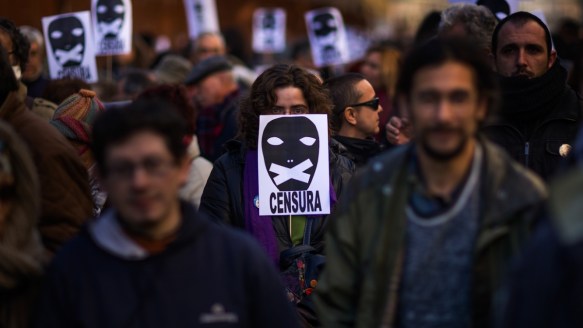


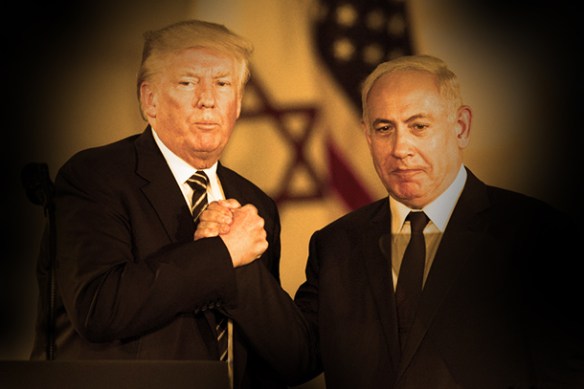
 After the Crash