The Resistance’s Disruptive Military Innovation May Determine the Fate of Israel

By Alastair Crooke

Source: The Unz Review

Looking back to what I wrote in 2012, in the midst of the so-called Arab Spring and its aftermath, it is striking just how much the Region has shifted. It is now almost 180° re-orientated. Then, I argued,

“That the Arab Spring “Awakening” is taking a turn, very different to the excitement and promise with which it was hailed at the outset. Sired from an initial, broad popular impulse, it is becoming increasingly understood, and feared, as a nascent counter-revolutionary “cultural revolution” – a re-culturation of the region in the direction of a prescriptive canon that is emptying out those early high expectations …

“That popular impulse associated with the ‘awakening’ has now been subsumed and absorbed into three major political projects associated with this push to reassert [Sunni primacy]: a Muslim Brotherhood project, a Saudi-Qatari-Salafist project, and a [radical jihadi] project.

“No one really knows the nature of the [first project] the Brotherhood project – whether it is that of a sect; or if it is truly mainstream … What is clear, however, is that the Brotherhood tone everywhere is increasingly one of militant sectarian grievance. The joint Saudi-Salafist project was conceived as a direct counter to the Brotherhood project – and [the third] was the uncompromising Sunni radicalism [Wahhabism], funded and armed by Saudi Arabia and Qatar, that aims, not to contain, but rather, to displace traditional Sunnism with the culture of Salafism. i.e. It sought the ‘Salifisation’ of traditional Sunni Islam.

“All these projects, whilst they may overlap in some parts, are in a fundamental way competitors with each other. And [were] being fired-up in Yemen, Iraq, Syria, Lebanon, Egypt, north Africa, the Sahel, Nigeria, and the horn of Africa.

[Not surprisingly] …“Iranians increasingly interpret Saudi Arabia’s mood as a hungering for war, and Gulf statements do often have that edge of hysteria and aggression: a recent editorial in the Saudi-owned al-Hayat stated: “The climate in the GCC [Gulf Cooperation Council] indicates that matters are heading towards a GCC-Iranian-Russian confrontation on Syrian soil, similar to what took place in Afghanistan during the Cold War. To be sure, the decision has been taken to overthrow the Syrian regime, seeing as it is vital to the regional influence and hegemony of the Islamic Republic of Iran”.

Well, that was then. How different the landscape is today: The Muslim Brotherhood largely is a ‘broken reed’, compared to what it was; Saudi Arabia has effectively ‘switched off the lights’ on Salafist jihadism, and is focussed more on courting tourism, and the Kingdom now has a peace accord with Iran (brokered by China).

“The cultural shift toward re-imagining a wider Sunni Muslim polity”, as I wrote in 2012, always was an American dream, dating back to Richard Perle’s ‘Clean Break’ Policy Paper of 1996 (a report that had been commissioned by Israel’s then-PM, Netanyahu). Its roots lay with the British post-war II policy of transplanting the stalwart family notables of the Ottoman era into the Gulf as an Anglophile ruling strata catering to western oil interests.

But look what has happened —

A mini revolution: Iran has, in the interim, ‘come in from the cold’ and is firmly anchored as ‘a regional power’. It is now the strategic partner to Russia and China. And Gulf States today are more preoccupied with ‘business’ and Tech than Islamic jurisprudence. Syria, targeted by the West, and an outcast in the region, has been welcomed back into the Arab League’s Arab sphere with high ceremony, and Syria is on its way to assuming again its former standing within the Middle East.

What is interesting is that even then, hints of the coming conflict between Israel and the Palestinians were apparent; as I wrote in 2012:

“Over recent years we have heard the Israelis emphasise their demand for recognition of a specifically Jewish nation-state, rather than for an Israeli State, per se. A Jewish state that in principle, would remain open to any Jew seeking to return: the creation of a ‘Jewish umma’, as it were.

“Now, it seems we have, in the western half of the Middle East, at least, a mirror trend, asking for the reinstatement of a wider Sunni nation – representing the ‘undoing’ of the last remnants of the colonial era. Will we see the struggle increasing epitomised as a primordial struggle between Jewish and Islamic religious symbols – between al-Aqsa and the Temple Mount?

“It seems that both Israel and its surrounding terrain are marching in step toward language which takes them far away from the underlying, largely secular concepts by which this conflict traditionally has been conceptualised. What will be the consequence as the conflict, by its own logic, becomes a clash of religious poles?”

What has driven this 180° turn? One factor, assuredly, was Russia’s limited intervention into Syria to prevent a jihadi sweep. The second has been China’s appearance on the scene as a truly gargantuan business partner – and putative mediator too – precisely at a time when the U.S. had begun its withdrawal from the region (at least in terms of the attention it pays to it, if not (yet) reflected in any substantive physical departure).

The latter – U.S. military withdrawal (Iraq and Syria) – however, seems more a question of ‘when’, rather than if. All expect it.

Put plainly, we have experienced a Mackinder-style ‘pivot of history’: Russia and China – and Iran – are slowly taking control of the Asian heartland (both institutionally and economically), as the pendulum of the West swings away.

The Sunni world – ineluctably and warily – marches towards the BRICS. Effectively, the Gulf finds itself badly wrong-footed by the so-called ‘Abraham Accords’ that tied them to Israeli Tech (which, in turn, was channelling considerable Wall Street venture ‘free money’ their way). Israel’s ‘suspect genocide’ (ICJ language) in Gaza is slowly driving a stake into the heart of the Gulf ‘business model’.

But another key factor has been the smart diplomacy pursued by Iran. It is easy for western Iran-hawks to decry Iran’s politicking and influencing across the region – the Islamic Republic is after all, unrepentantly ‘non-compliant’ with the U.S. aims and pro-Israeli ambitions in the Region. What else, other than pushback, might you expect when all the encircling western ‘fire’ was so concentrated on the Islamic Republic?

Yet, Iran has pursued an astute path. It has NOT gone to war against Sunni Arab states in Syria, as was mooted in 2012. Rather, it quietly has pursued a strategy of diplomacy and joint Gulf security and trade with Gulf States. Iran too, has partly succeeded in shaking itself free from much of the effects of western sanctions. It has joined both BRICS and the SCO and has acquired a new economic and political ‘spatial depth’.

Whether the U.S. and Europe likes it or not, Iran is a major regional political player, and it sits atop, with others, the coalition of Resistance Movements and Fronts that have been woven together through shrewd diplomacy to work in close conjunction with each other.

This development has become a key strategic ‘project’: Sunni (Hamas) and Shi’i (Hizbullah) are joined with other ‘fronts’ in an anti-colonial struggle for liberation under the non-sectarian symbol of Al-Aqsa (which is neither Sunni, nor Shi’a, nor Muslim Brotherhood, nor Salafist or Wahhabi). It represents, rather, the storied tale of Islamic civilisation. Yes, it is, in its way, eschatological too.

This latter achievement has done much to limit the threat of all-out war from engulfing the region (fingers-crossed though …). The Iranian and Resistance Axis’ interest is twofold: First, to retain power to carefully calibrate the intensity of conflict – upping and lowering as appropriate; and secondly, to keep escalatory dominance as much as possible in their hands.

The second aspect encompasses strategic patience. The Resistance Movements well understand the Israeli psyche – therefore, NO Pavlovian reflexes to Israeli provocations are accepted. But rather, to wait and rely on Israel to provide the pretext to any further step up the escalatory ladder. Israel must be seen to be the instigator for escalation – and the resistance merely the responder. The ‘eye’ must be on the Washington political psyche.

Thirdly, Iran draws confidence to pursue its ‘forwardness’ by having innovated a tectonic shift in asymmetric warfare, and in deterrence against Israel and the West. The U.S. might huff and puff, but Iran felt assured throughout this period that the U.S. well knows the risks associated with trying ‘blow the house down’.

Realists in the West tend to believe that ‘power’ is a simple function of national population size and GDP. So that, given the disparity in air and firepower, no way, as an example, can Hizbullah expect to ‘come out quits’ against Israel – a much richer and more populated entity.

This blindspot is the Resistance’s silent ‘ally’. It prevents the West (mostly) from understanding this pivot in military thinking.

Iran and its allies take a different view: They regard a state’s power to rest on intangibles, rather than literal tangibles: strategic patience; ideology; discipline; innovation and the concept of military leadership defined as the ability to cast a ‘magic’ spell over men so that they would follow their commander, even unto death.

The West has (or had) airpower and unchallenged air superiority, but the Resistance Fronts have their two-stage solution. They manufacture their own AI-assisted swarm drones and smart earth-hugging missiles. This is their Air Force.

The second stage naturally would be to evolve a layered air defence system (Russian-style). Does the Resistance possess such? Like Brer Rabbit, they stay mum.

The Resistance’s underlying strategy is clear: the West is over-invested in its air dominance and in its overwhelming fire-power. It prioritises quick shock and awe thrusts, but usually quickly exhausts itself early in the encounter. They rarely can sustain such high-intensity assault for long.

In Lebanon in 2006, Hizbullah remained deep underground whilst the Israeli air assault swept overhead. The physical surface damage was huge, yet their forces were unaffected and emerged only afterwards. Then came the 33 days of Hizbullah’s missile barrage – until Israel called it quits. This patience represents the first pillar of strategy.

The second therefore, is that whereas the West has short endurance, the opposition is trained and prepared for long attritional conflict – missile and rocket barrage to the point that civil society can sustain the impact no longer. War’s aim not necessarily has killing the enemy soldiers as a prime objective; rather it is exhaustion and inculcating a sense of defeat.

And what of the opposing project?

In 2012, I wrote:

“It seems that both Israel and [the Islamic world] are marching in step toward [eschatological narratives] which is taking them far away from the underlying, largely secular concepts by which this conflict traditionally has been conceptualised. What will be the consequence as the conflict, by its own logic, becomes a clash of religious poles? ” [– Al-Aqsa versus the Temple Mount].

Well, the West remains stuck with trying to manage and contain the conflict, using precisely those ‘largely secular concepts’ by which this conflict has been conceptualised and managed (or non-managed, I would say). In so doing, and through the West’s (secular) support for one particular eschatological vision (which happens to overlap with its own) over another, it inadvertently fuels the conflict.

Too late to return to secular modes of management; the genie is out.

Stupid Macho U.S. Electioneering Will Push Biden Into Doomed War

By Finian Cunningham

Source: Strategic Culture Foundation

Predictably, Joe Biden is being flayed by the Republicans over the killing of three U.S. troops in Jordan by Iraqi militants.

The Democrat president is slammed for being weak and a coward by his political opponents.

Donald Trump, his main Republican rival, mocked Biden as a “loser” and said the attacks on U.S. troops were because of the president’s “weakness and surrender”.

Nikki Haley, the other Republican vying for the presidential election this year, also taunted Biden for showing spinelessness toward Iran. She called for direct retaliation on the Islamic Republic “with the full force of American strength”. Logically, that could imply the use of nuclear weapons.

Unanimously across the mainstream U.S. political spectrum, it was assumed that Iran was ultimately responsible for the deadly attack on the U.S. military base on Sunday in Jordan where three military servicemen were killed and 34 were reportedly wounded, according to early reports.

The attack was claimed by Iraqi militants, the Kata’ib Hezbollah, as part of an umbrella group known as the Islamic Resistance. The militants are believed to be an alliance of militias based in Iraq, Syria, Palestine, Lebanon, and Yemen. The latter two include Hezbollah and the Ansar Allah movement also known as the Houthis. All are allied with Iran. But each is understood to have its own agency in directing and executing operations.

These groups have carried out hundreds of attacks on U.S. and Israeli bases since October 7 when Israel launched its offensive on Gaza following the deadly raid on Israel by Hamas. The Yemenis bring a maritime dimension to the region-wide resistance with the ongoing targeting of U.S. and other ships in the Red Sea area.

Iran has denied that it was involved in the latest attack on the U.S. base in Jordan. Tehran also denies it is behind the Yemeni operations in the Red Sea.

Iran and the resistance groups say they are an anti-imperialist alliance that is united by opposition to the U.S.-backed Zionist genocide in Gaza. These groups are not “Islamist” in the mold of Islamic State and its hardline Sunni (Wahhabi or Takfiri) offshoots. Far from it. The resistance groups were galvanized to defeat the Islamists which have been fomented and supported covertly by the United States for its regime change war in Syria. That proxy war was defeated after Russia intervened in 2015 in support of Syria.

The Americans are locked into a downward spiral created by their own flawed logic and cumulative imperialist occupation in the region.

Even President Biden has accused Iran of being responsible for the killing of the three U.S. military personnel. Biden vowed to respond at a time of “our choosing”.

So, Washington unquestioningly determines that Iran is the master culprit. That means the U.S. has committed itself to going after Tehran without any evidence or realistic understanding of where such a direction is leading. That is, how bad it could get for the Americans.

In a U.S. election year shaping up to be more fraught than ever, and with Biden facing dwindling poll numbers, the White House incumbent is highly susceptible to being goaded by Republican adversaries.

Trump has already been hammering Biden for being weak and frail. With the Middle East turning into a cauldron over the Israeli slaughter in Gaza, the Commander-in-Chief is cornered to show mettle. Biden is a hostage of stupid macho politics and bankrupt American imperialism. Diplomacy is simply not an option for the empire, according to its own logic and delusions.

After the deadly drone strike on the U.S. base in Jordan, Republican Senator Tom Cotton dialed up the revenge with the usual warmongering ranting and raving: “The only answer to these attacks must be devastating retaliation against Iran’s terrorist force… Anything less will confirm Joe Biden as a coward.”

Senate Republican leader Mitch McConnell said Biden’s inaction was the problem because it was emboldening enemies in the Middle East, saying: “The time to start taking this aggression seriously was long before more brave Americans lost their lives.”

How hilarious that Biden is scoffed at for being dovish. During his long career, he has been one of the most warmongering politicians in Washington. He backed the U.S.-led NATO wars in former Yugoslavia, Iraq, Afghanistan, Libya, Syria, and presently in Ukraine. The only thing cowardly about Biden is that he is a craven tool of the military-industrial complex and a pathetic psychopath.

Biden is also known for his bad temper and macho knee-jerk character. We can be quite certain that the Republican taunts about his supposed pusillanimous policy in the Middle East will get his hackles up. Biden has already taken a reckless militarist position over supporting Israeli aggression. The shocking mass killing of over 26,000 Palestinian civilians under a brutal blockade of starvation has shocked the world and in particular Arab and Muslim people. And yet Biden has not paused in his “unwavering support” for Israel.

Biden has led U.S. imperialism out of the quagmire of Afghanistan into an even bigger quagmire in the Middle East. With the goading by his equally brainless political rivals, the Americans are plowing further into disaster.

With over 50 military bases strung across the Middle East in 10 countries and with over 50,000 U.S. troops stationed in the region, the Americans are sitting ducks for the resistance. The advent of drones and newer missile technology is a new realm of warfare the Americans have not adapted to with their land garrisons in remote deserts and gaudy warships.

The death of three U.S. troops has long been on the cards. The stupid American politicians think they are going to get revenge. They have no idea what is coming to them given the long history of U.S. aggression, provocation, and illegal occupation in the region. The support of Israel’s genocide, the heartrending scenes of children being torn apart by American bombs, the bombing of Yemen – the poorest Arab country – the crazed threats to Iran, the insufferable American arrogance, and decades of impunity are all now welling up in the Middle East.

The stupid American politicians are digging a hole for themselves and have no awareness of how to reverse it. Democrats, Republicans, Biden, Trump, and so on, they are all a ship of fools.

Biden’s Foreign Policy; the Biden Doctrine

By Peter Van Buren

Source: WeMeantWell.com

Joe Biden ordered airstrikes on Iraq, against Iranian-backed militants, in retaliation for recent attacks by those militants that severely injured three American soldiers. Joe didn’t consult with Congress or anyone else before ordering the strikes, and no declaration of war exists of course. Yet no one believes the militias, following their spanking, will disappear or stop harming Americans.

That sums up the Biden Foreign Policy, call it a doctrine if you’d like: a series of geopolitically unsuccessful, inconsequential, mostly reactive unilateral actions, with no end game. Underlying it all is the sense that no one is particularly frightened, respectful or wary of American power anymore. Let’s see how this worked on a global scale over the last three bloody years.

The disastrous evacuation of Kabul in August 2021 should have warned all of us we were dealing with foreign policy amateurs. The rush for the last planes was an expected unexpected event. Yet the Biden administration did not quietly start the evacuation in February with high-value personnel, nor did it negotiate ahead of time for third country landing rights. Mistakes made as long ago as Vietnam evacuating locals who worked with us were clear, yet Biden did not kick start processing SIV visas for translators and others until literally the last flights were scheduled out. The entire evacuation appeared as an unplanned free fall, just “land some planes and see if that works.” No endgame really, simply a unilateral decision to cap the evacuation off at a certain point in time and declare it over no matter who was or was not saved.

Ukraine is some yellowed vision of cold war. The Biden plan was based on a Wonka-like act of imagination, that U.S. arms wielded by amateur fighters backed up by intelligence, space-based targeting, and special forces infiltrated on the ground would hastily defeat a determined opponent (See Afghanistan, failure of the same strategy, 2001-2003.) When the miracle cure strategy failed, there was no Plan B except to continue to pour arms in to a war that had no clear end game, that was not winnable, only sustainable. Meanwhile, Biden restrictions on domestic mining mean the United States is the largest purchaser of Russian enriched uranium. If the Russians are scared of American power they hide that well.

The results have not been better elsewhere. The 2022 Russian invasion of Ukraine preceeded what one pundit described as “the 2023 brazen Chinese spy balloon’s uncontested trajectory over the United States, the recent Hamas invasion of Israel, the serial Iranian-fueled terrorist attacks on U.S. installations in Iraq and Syria, and the terrorist Houthis’ veritable absorption of the Red Sea. America’s enemies had become opportunistic, not deterred.” Biden took the bait at each open-ended opportunity, and now Joe is dangerously close to letting Gaza and Yemen spiral into a global conflict.

And so another “coalition” fight, this time in Ukraine with NATO, ended up a U.S. primary struggle. It is NATO mostly walking away from the meat of the Ukraine struggle, and the baby NATO coalition elsewhere of France, Italy, and others that was supposed to control the Red Sea breaking down. It is a thin gruel of happy talk about caring for civilians backed up by unlimited arms to Israel, handled so poorly diplomatically that the U.S. has inherited pariah status globally. The modern version of American power was demonstrated when Egypt snubbed Joe Biden’s visit over the mess in Gaza. The question of Palestine, always simmering, is now another major issue to divide Red and Blue and further polarize society. In addition to receiving $6 billion in frozen oil funds from Biden as a ransom for five American hostages, Iran controls the playbook, attacking with impunity via its proxies across Iraq, Syria, and southern Lebanon; Iran’s partners carried out more than 100 attacks on U.S. forces in Iraq, Syria and the Red Sea.  They decide if and when the 1:1 conflict with Israel goes regional, and the U.S. will be again forced to react. The Houthis, also Iran-backed, have dragged the U.S. into a broad promise to keep the Red Sea open to shipping, as the world rolls its eyes as Pax Americana once again looks like a punchline. Can anyone say we are still indispensable?

Another Biden foreign policy disaster has come home, literally, in the immigration crisis. For reasons too vague to enunciate, the Biden administration did away with any semblance of immigration law and flung open the southern border to anyone interested in wandering in. Already more than eight million illegal entrants have come across, with another quarter-million entering each month. As in Ukraine and elsewhere, there is no endgame. When will the border close? How much will caring for the millions cost (New York City has processed more than 160,000 migrants; some 70,000 remain in the city’s care. In Denver, caring for the new migrants has consumed 10 percent of the city’s budget)? The United States has now exceeded, both in real numbers and in percentages, all past numbers of non-native born American residents. What impact on our greater society will such an influx have, especially given how it is targeted at a handful of cities? Will the Russians ever surrender? What about the immigrants?

Three years ago, there was no war in Ukraine and certainly no U.S. military involvement in the Crimea and Donbas. Israel and Hamas existed in their tinder-like stasis condition, no brutal massacre of 1,600 Jews (30 of whom were Americans) and no invasion of Gaza. Campus protestors limited their protestations that they were not anti-Semitic in their hatred of Israel. Iran and the U.S. cooperated on fighting ISIS in Iraq, uneasy partners for certain but not shooting cousins as now. The Houthi struggle was confined within Yemen’s borders. On the positive side, efforts were being made to watch diplomacy bloom with North Korea, which instead is now test firing missiles aplomb once again. Biden has made no progress on China either to limit their opportunistic stance or reduce their hold over America economically. Biden has largely ignored most of Africa and South America as well as the world’s most populous democracy (and nuclear power) India. It is impossible to call it progress and all too easy to call it sadly the Biden Doctrine.

Are the Houthis Being Punished for ‘Doing the Right Thing’?

By Mike Whitney

Source: The Unz Review

“Whoever does not try to stop a genocide, has lost his humanity.” Mohammed Al-Bukhaiti, Houthi spokesman

Events in the Middle East are spinning out of control. In the last week, the United States has attacked Houthi positions on the Yemeni mainland 7 times while the Houthis have launched 5 attacks on commercial vessels and US warships in the Red Sea. At the same time, Iran has launched multiple attacks on sites in Syria, Iraq and Pakistan, while Israel has hit targets in both Lebanon and Damascus. Adding more fuel to the fire, the IDF has continued its relentless assault on Palestinians living in Gaza resulting in scores of new deaths and injuries. In short, there’s been a sharp uptick in military activity across the Middle East that is steadily increasing. This suggests that the low-intensity conflict we have seen for the last few weeks is about to explode into something much more violent, far-reaching and unpredictable. Many analysts believe we are on the brink of full-blown regional war which—in view of recent developments—may be unavoidable. This is from an article at the Washington Post:

The Biden administration is crafting plans for a sustained military campaign targeting the Houthis in Yemen after 10 days of strikes failed to halt the group’s attacks on maritime commerce…

Officials say they don’t expect that the operation will stretch on for years like previous U.S. wars in Iraq, Afghanistan or Syria. At the same time they acknowledge they can identify no end date or provide an estimate for when the Yemenis’ military capability will be adequately diminished…..

While the attacks have so far taken a greater toll on Europe than the United States…the Houthi campaign is already beginning to reshape the global shipping map. Some firms have chosen to reroute ships around the Cape of Good Hope off southern Africa, while major oil companies including BP and Shell suspended shipments through the area…

“It’s impossible to forecast exactly what’s going to happen, and certainly not [to predict] future operations,” the first U.S. official said. “But the principle that it simply can’t be tolerated for a terrorist organization … with these advanced capabilities to essentially shut down or control shipping through a key international choke point is one that we feel very strongly about.”…

U.S. officials also are concerned that attacking the Houthis has thrust the United States into a conflict with little exit strategy and limited support from key allies. Notably, America’s most powerful Gulf partners have withheld their backing for the American operation. The prime minister of Qatar, a key U.S. ally in the Gulf, has warned that Western strikes would not halt the violence and could fuel regional instability. As Houthis vow to fight on, U.S. prepares for sustained campaignWashington Post

While the Washington Post article provides little new information, it does help to clarify a few important points:

  1. That the US is now embroiled in another “sustained military campaign” (War) that has not been approved by the UN Security Council, the US Congress or the American people. It’s clear that our domestic politics have deteriorated to the point where the president alone decides whether the country goes to war or not. And, not surprisingly, those wars invariably advance the interests of the billionaire elites who guide policy behind the fig leaf of representative government. In truth, all the war-making powers rest with them.
  2. Since, airstrikes alone will not “degrade” the Houthis military capability, “the operation will stretch on for years.” (So, get ready for another 20-year stint like Afghanistan)
  3. The real reason the administration has eschewed direct dialogue with the Houthis, is because “it simply can’t be tolerated for a terrorist organization …to control shipping through a key international choke point.” This is a tacit admission that Washington refuses to negotiate with people it doesn’t consider its equal. Thus, the only option available, is to “shoot first and ask questions later.”
  4. Interestingly, the Post admits that “the Houthis have thrust the United States into a conflict with little exit strategy and limited support from key allies.” What the authors should have added is that everything about the current strategy violates the so-called Powell Doctrine. There is no clearly attainable objective, nor have the risks and costs been fully analyzed, nor have all other non-violent options been exhausted, nor is there a plausible exit strategy, nor is the action supported by the American people, nor does the US have broad international support, nor is a vital national security interest threatened. All of the main precepts of the Powell Doctrine have been shrugged off by Biden’s foreign policy team. As a result, there’s no planning, no endgame, and no strategic objective, which is why the plan to wage war on Yemen is, perhaps, the most impulsive and poorly-thought out operation in recent times.

There’s also no guarantee that the plan will work at all. In fact, there is every reason to believe it will backfire spectacularly creating an even bigger crisis. Check out this clip from an article at Responsible Statecraft:

It would seem that the real threat here is the escalation from continued U.S. airstrikes, which are killing people. As RS has reported on these pages time and again, the Houthis are battle hardened and even emboldened by the reaction of the West to their provocations. … a number of realist voices are decrying the folly of once again falling into a spiral of retaliatory violence that will likely lead to a real military crisis, even the death of U.S. service members, before it is done.

“They (strikes) won’t work. They won’t sufficiently degrade Houthi capability or will stop their attacks on shipping,” says Ben Friedman, senior fellow of Defense Priorities. “Why do something that is so evidently reckless? Restraint reminds us that no such law says we must conduct airstrikes that won’t work. We always have the option not to employ pointless violence.” US strikes Yemen again, but Houthi attacks keep coming, Responsible Statecraft

The fact that 8 years of relentless airstrikes by the Saudis only served to strengthen the Houthis, has not dampened the administration’s enthusiasm for more of the same. Biden is convinced that the identical policy will produce a different result. But isn’t that the definition of “insanity”? And where do we see evidence that the prescribed method actually works: Afghanistan? Iraq? Syria? Libya? Ukraine? Are these the shining examples of ‘military triumph’ that have convinced Biden that he’s on the right track?

But even if the Biden team had a coherent military strategy, there would still be a fundamental problem with the current approach, mainly because it’s morally wrong. The United States should work alongside those who are trying to enforce the Genocide Convention, not treat them as enemies. The Houthis have taken a constructive and (so far) non-lethal approach to Israel’s depredations in Gaza, an approach that is consistent with Article 1 of the Convention on the Prevention and Punishment of the Crime of Genocide which clearly states:

The Contracting Parties confirm that genocide, whether committed in time of peace or in time of war, is a crime under international law which they undertake to prevent and to punish.

The Houthis blockade of Israel-linked commercial ships passing through the Red Sea also hews to the tenets of The Responsibility to Protect – known as R2P which “was unanimously adopted in 2005 at the UN World Summit, the largest gathering of Heads of State and Government in history”, a document which—by the way—was signed by representatives of the United States. Here’s a short excerpt from the text:

Each individual State has the responsibility to protect its populations from genocide, war crimes, ethnic cleansing and crimes against humanity…. The international community, through the United Nations, also has the responsibility to use appropriate diplomatic, humanitarian and other peaceful means, in accordance with Chapters VI and VIII of the Charter, to help to protect populations from genocide, war crimes, ethnic cleansing and crimes against humanity….

Pillar 1

Every state has the Responsibility to Protect its populations from four mass atrocity crimes: genocide, war crimes, crimes against humanity and ethnic cleansing.

Pillar 2

The wider international community has the responsibility to encourage and assist individual states in meeting that responsibility.

Pillar 3

If a state is manifestly failing to protect its populations, the international community must be prepared to take appropriate collective action, in a timely and decisive manner and in accordance with the UN Charter. WhatIsR2P? , Global Center for the Responsibility to Protect

While it’s true that the Houthis have not garnered UNSC approval for their unilateral blockade of Israeli-bound ships, that is because the US blocks all such measures just as it blocked the previous Ceasefire resolutions. But the fact that the international community is unable to enforce basic humanitarian precepts—due to the obstructionism of the US— does not absolve people or states from doing their duty. It would be vastly preferable to have the UN’s authorization, but it is not absolutely necessary. The higher priority is saving the lives of innocent people. Here’s how Houthi spokesman, Mohammed Al-Bukhaiti summed it up in a recent statement on Twitter:

Taking action to support the oppressed… is a true test of morality… and whoever does not take action to stop the crime of genocide… has lost his humanity.

Moral… values.. do not change with the race and religion of the person… If another group of humans were subjected to the injustice that the Palestinians are subjected to, we would take action to support them, regardless of their religion and race.

… the Yemeni people (are committed) ​​… to achieve a just peace that guarantees the dignity, safety and security of all countries and peoples Mohammed Al-Bukhaiti @M_N_Albukhaiti

Is it naive of us to think that the Houthis are acting in accordance with universally-accepted principles of justice and humanity? Are we wrong in assuming that the Houthis sound like men who can be reasoned with and with who one could negotiate an agreement that would end the blockade and the onslaught in Gaza at the same time? If that is so, then they why doesn’t Biden engage the group diplomatically instead of bombarding their ports and cities?

And, just for the record: The administration and their allies in the media continue to imply that the traffic in the Red Sea is at historic lows due to the “indiscriminate” attacks on commercial ships by the Houthis. But that is not the case. On Monday, Iranian Foreign Minister Hossein Amir-Abdollahian (in a visit to the United Nations) produced documentary evidence that traffic in the Red Sea remains relatively normal excluding the fact that Israel-linked ships are prevented from sailing the waterway. In other words, the western media is deliberately misleading the American people to accelerate the rush to war. Here’s the story from Press TV (Iranian state media):

The Iranian foreign minister noted that satellite images show that approximately 230 merchant vessels and oil tankers were cruising in the Red Sea at the time that the US and UK carried out their strikes against Yemen.

“This means that they (Americans and Britons) have well understood Yemenis’ point that only ships heading towards ports operated by the occupying Israeli regime will be blocked,” Amir-Abdollahian said. Iran has sternly warned Washington against attacks on Yemen, says Iranian foreign minister, Press TV

The Iranian FM’s remarks are underscored by an official Houthi statement that was published on X and which says the following:

The Yemeni Navy is steadfast to its commitment to ongoing operations in the Red Sea until the cessation of the blockade and the aggression against Gaza. Consequently, maritime activities and navigation in the Red Sea are securely facilitated for all vessels excluding those affiliated with Israel or bound for Israeli ports. For ships unaffiliated with Israel, it is crucial to maintain uninterrupted communication with Yemeni authorities throughout their entire journey through the following channels (radio and email) The Yemeni Armed Forces reiterates its dedication to conducting operations in strict adherence to international legal principles aimed at preventing genocide and punishing those responsible for it. Additionally, it underscores its commitment to facilitating unimpeded traffic flow and upholding maritime security in the Red Sea and the broader region. Yemeni Navy: “Here’s exactly what you have to do to identify your vessels so they’re not targeted” Houthi Spokesman

The idea that the Houthis are attacking commercial vessels willy-nilly just doesn’t pass the ‘smell test’. What’s more likely is that the narrative has been tweaked in order to demonize a rival of Israel.

Finally, I have taken the liberty of transcribing a short video by Tim Anderson who argues that the Houthis have not only seized the moral high-ground, but that the United States and Israel are acting in a way that is reckless, hypocritical and damaging to their own best interests. I think you’ll find it’s worth your time:

The United States has designated the Houthis as a foreign terrorist organization for what amounts to trying to stop Israel’s genocide…. Now the stated purpose of Ansar Allah’s (AKA—The Houthis) blockade, is to uphold Article 1 of the UN Genocide Convention. And given that Yemen is a member to the UN Genocide Convention, the Houthis say they have an obligation to stop the shipment of weapons and other supplies to Israel while it commits a genocide. …The US is saying that the “terrorists” aren’t the ones perpetrating a genocide, …but the ones who are trying to stop a genocide. …

Designating Ansar Allah as terrorists is also deeply ironic because the US is currently enforcing two unilateral economic blockades of Cuba and Venezuela. …and, unlike Ansar Allah’s blockade of Israel, which has yet to kill anyone, US blockades have killed thousands of people….Ansar Allah is using their blockade to stop a genocide whereas the US blockades are intended to starve and collectively punish the countries they target and can be considered a form of genocide. …

Ansar Allah is not being punished because of terrorism. They are being punished because their blockade is working. Israel imports 99% of its goods by sea. …The Israeli port of Eilat has been blocked by the Houthis and seen an 85% decrease in activity…. The shipping companies are going to pass the costs onto consumers which is going to cause prices to rise and imported goods to become scarcer. …The war resembles an economic recession for Israel. A survey taken in November found that one in three businesses in Israel is operating at 20% capacity or less, and more than half of Israeli businesses lost 50% of their revenue. According to the labor ministry, 18% of the Israeli workforce have been called up to fight the war which has left a huge hole in the Israeli workforce…. Over a million Israelis have left the country, tourism has collapsed, business investment has collapsed, and all in all the Israeli Treasury predicts that Israels GDP will have fallen 15% in the forth quarter, and that the war will cost Israel a total of $58 billion. …

State Department records show that for decades US elites were concerned they would lose control of the Red Sea. And, in 2015, the US would go on to arm, fund and support a genocidal war waged by Saudi Arabia against Ansar Allah. The war pushed two-thirds of the population to the brink of starvation and caused the worst cholera outbreak in human history. But it still failed to defeat Ansar Allah. And, now the same Yemeni people who faced a US-backed genocide only a few years ago, are now mounting the most disruptive actions against the US-backed genocide in Gaza. This is, of course, is humiliating to the United States.

It wasn’t so long ago, the US considered Nelson Mandela and his supporters “terrorists”. Then they defeated South African apartheid. In that sense, this latest terrorist designation of the Houthi movement, is just a continuation of this very long trend. Terrorism is a highly politicized term. Of course, apartheid states and their supporters are going to consider attempts to end their apartheid states as terrorism. But in Palestine and the Middle East, the real terrorists are the ones that are carpet-bombing hospitals, schools and entire neighborhoods; Israel and the United States.

UNITED AGAINST NUCLEAR IRAN: THE SHADOWY, INTELLIGENCE-LINKED GROUP DRIVING THE US TOWARDS WAR WITH IRAN

By Alan MacLeod

Source: Mint Press News

Most of the world has watched the Israeli assault on Gaza in horror. As tens of thousands have been killed and millions displaced, tens of millions of people around the world have poured onto the streets to demand an end to the violence. But a few select others have taken to the pages of our most influential media to demand an escalation of the violence and that the United States help Israel strike not just Palestine, Syria, and Lebanon but Iran as well.

“I might have once favored a cease-fire with Hamas, but not now,” wrote Bush-era diplomat Dennis Ross in The New York Times, explaining that “if Hamas is perceived as winning, it will validate the group’s ideology of rejection, give leverage and momentum to Iran and its collaborators and put [our] own governments on the defensive.”

In the wake of Hamas’ October 7 assault, arch-neoconservative official John Bolton was invited on CNN, where he claimed that what we witnessed was really an “Iranian attack on Israel using Hamas as a surrogate” and that the U.S. must immediately respond. When asked whether he had any evidence, given the implications of what he was saying, he shrugged and replied, “This is not a court of law.”

On December 28, Bolton doubled down on his hawkish stance, writing in the pages of Britain’s Daily Telegraph that “The West may now have no option but to attack Iran” – a position he has held for at least a decade.

Meanwhile, in an interview with Saudi state-funded broadcaster Iran International, senior Bush official Mark Wallace bellowed that, “This is Iran’s work. Iran will suffer at the hands of retribution and will suffer the consequences of supporting this terror group and its horrific attack on Israel.” Wallace continued:

No civilized country wants further conflict. But the Iranians are forcing the civilized world’s hand. And you will see a dramatic response soon as the United States, Israel, and our allies begin to position assets around the world in preparation.”

If there was any doubt as to what sort of “dramatic response” Wallace wanted to see, he added a message to Iran’s Islamic Revolutionary Guard Corps: “I look forward to seeing you hanged from the end of one of your own ropes.”

Iran was recently the victim of a deadly terrorist attack. As mourners commemorated the U.S. assassination of Qassem Soleimani, two bombs exploded, killing 91 and injuring hundreds more. In this context, it was understandable why Iranian officials pointed the finger at the U.S. and Israel.

Warmongers, Inc

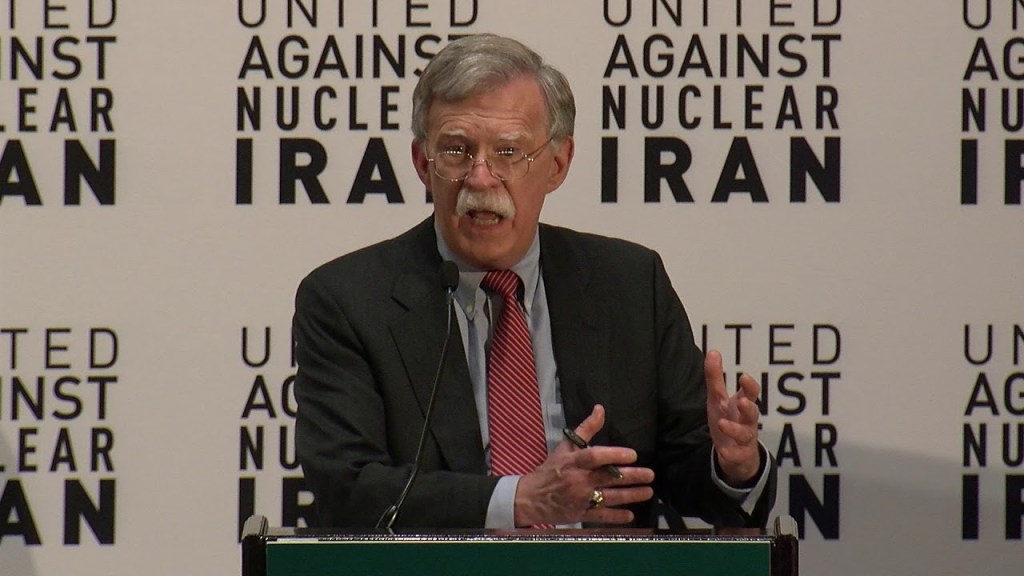
What these individuals all have in common is that they are board members of United Against Nuclear Iran (UANI), a shadowy but influential organization dedicated to pushing the West toward a military confrontation with the Islamic Republic.

Founded in 2008, the group is led by neoconservative hawks and has close ties to both U.S. and Israeli intelligence. It does not divulge where it receives its copious funding. However, it is known that right-wing Israeli-American billionaire Sheldon Adelson was a source. There is strong circumstantial evidence that Gulf dictatorships may also be bankrolling the group, although UANI has strongly denied this. In 2019, Iran designated UANI as a terrorist organization.

When asked by MintPress what he made of UANI’s recent statements, Eli Clifton, one of the few investigative journalists to have covered the group, said, “It’s very consistent with the positions and advocacy that the organization has taken since its inception.” Adding,

United Against Nuclear Iran does not miss an opportunity to try to bring the United States closer to a military conflict with Iran. And on the other side of the equation, they also have worked very hard to oppose efforts to de-escalate the U.S.-Iran relationship.”

UANI’s board is a who’s who of high state, military and intelligence officials from around the Western world. Among its more notable members include:

  • CEO Mark Wallace, former U.S. Ambassador to the United Nations and deputy campaign manager for George W. Bush’s 2004 reelection.
  • Chairman Joe Lieberman, former senator and Democratic vice-presidential nominee for the 2000 election.
  • Tamir Pardo, Director of the Mossad, 2011-2016.
  • Dennis Ross, former State Department Director of Policy Planning and former Middle East Envoy under George H. W. Bush and Bill Clinton.
  • Field Marshall Lord Charles Guthrie, ex-Chief of Staff of the U.K. Armed Forces.
  • Jeb Bush, former Governor of Florida.
  • August Hanning, President of the German Federal Intelligence Service (BND), 1998-2005; State Secretary at the Federal Interior Ministry, 2005-2009.
  • Zohar Palti, former head of the Political-Military Bureau, Israeli Ministry of Defense; former Director of Intelligence of the Mossad.
  • Frances Townsend, Homeland Security Advisor to President George W. Bush.
  • John Bolton, former U.S. National Security Advisor and former U.S. Ambassador to the U.N.
  • Roger Noriega, former Assistant Secretary of State for Western Hemisphere Affairs and Ambassador to the Organization of American States.
  • Otto Reich, former Assistant Secretary of State for Western Hemisphere Affairs and architect of the 2002 U.S. coup against Venezuela.
  • Michael Singh, White House Senior Director for Near East and North African Affairs, 2007-2008.
  • Giulio Terzi di Sant-Agata, former Italian Foreign Minister.
  • Robert Hill, former Minister of Defense of Australia.
  • Jack David, Deputy Assistant Secretary of Defense for Combating Weapons of Mass Destruction, 2004-2006.
  • Mark Kirk, U.S. Senator for Illinois, 2010-2017.
  • Lt. Gen. Sir Graeme Lamb, ex-Director of U.K. Special Forces and Commander of the British Field Army.
  • Norman Roule, former CIA Division Chief and National Intelligence Manager for Iran at the Director of National Intelligence.
  • Irwin Cotler, Canadian Minister of Justice and Attorney General, 2003-2006.
  • Baroness Pauline Neville-Jones, U.K. Minister of State for Security and Counter Terrorism, 2010-2011.

In addition, notable former board members include ex-CIA Director R. James Woolsey; head of Mossad between 2002 and 2011, Meir Dagan; and one-time chief of British spy agency MI6, Sir Richard Dearlove.

For 15 years, UANI has organized conferences, published reports, and lobbied politicians and governments, all with one goal: pushing a neoconservative line on Iran. “UANI are a force multiplier. They provide at least the veneer of an intellectual infrastructure for the Iran hawk movement. They did not invent being hawkish on Iran, but they sure made it a heck of a lot easier,” Ben Freeman, Director of the Democratizing Foreign Policy Program at the Quincy Institute, told MintPress.

Conflicts and Conflicts of Interest

For such a large, well-financed, and influential organization filled with senior officials, United Against Nuclear Iran keeps its funding sources very quiet. However, in 2015, Clifton was able to obtain a UANI donor list for the 2013 financial year. By far and away, the largest funders were billionaire New York-based investor Thomas Kaplan and multibillionaire Israeli-American casino mogul Sheldon Adelson.

Kaplan, whose $843,000 donation supplied around half the group’s 2013 funding, is a venture capitalist investor concentrating on metals, particularly gold. He is the chairman of Tigris Financial and the Electrum Group LLC. Both of Kaplan’s firms employ UANI CEO Mark Wallace as CEO and COO, respectively.

A 2010 Wall Street Journal article titled “Tigris Financial Goes All-in on Gold” noted that the company had bet billions of dollars on the price of gold rising, more than the reserves of the Brazilian central bank. As Clifton has noted, both Kaplan and Wallace have marketed gold to clients as the perfect commodity to hold if there is increased instability in the Middle East. Therefore, both Kaplan and Wallace stand to make massive sums if the U.S. or Israel were to attack Iran, making their UANI warmongering a gigantic and potentially profitable conflict of interest.

Adelson provided the majority of the rest of UANI’s funding. The world’s 18th-richest individual at the time of his 2021 death, the tycoon turned his economic empire into a political one, supporting ultraconservative causes in both the United States and Israel. Between 2010 and 2020, he and his wife donated more than $500 million to the Republican Party, becoming GOP kingmakers in the process. He would often vet Republican presidential candidates at his casino in Las Vegas, and it was often said that this “Adelson Primary” was almost as important as the public one.

An ardent Zionist, Adelson bankrolled numerous pro-Israel lobby projects, such as AIPAC, One Jerusalem and Taglit Birthright. He also owned Israel Hayom, the country’s most-read newspaper, with 31% of the national share. Relentlessly pro-Netanyahu, it was said that the Israeli prime minister asked his friend Adelson to set up a newspaper to help his political career.

Adelson and his influence have been one of the driving forces of American hostility towards Iran. In 2013, during a conversation with Rabbi Shmuley Boteach, he called for the United States to stop negotiating and drop a nuclear bomb on Iran to show that “we mean business.”

A potential third, even more controversial, source of funding is the Gulf monarchies of Saudi Arabia and the UAE. Leaked emails show UANI officials soliciting support from the Emirati royal family. Both Mark Wallace and Frances Townsend, for example, emailed the Emirati Ambassador to the U.S. detailing cost estimates for upcoming events and inquiring about support from the UAE.

Thomas Kaplan himself is extraordinarily close to the nation. “The country and the leadership of the UAE, I would say, are my closest partners in more facets of my life than anyone else other than my wife,” he told the Emirati outlet, The National News, which also detailed his friendship with Crown Prince of Abu Dhabi, Sheikh Mohamed bin Zayed.

Putting Iran in the Crosshairs

One of United Against Nuclear Iran’s primary activities, Iranian political commenter Ali Alizadeh told MintPress, is to create a worldwide “culture of fear and anxiety for investing in Iran.” The group attempts to persuade businesses to divest from the Islamic Republic and sign their certification pledge, which reads as follows:

The undersigned [Name], the [Title] of [Company] (the “Company”), does hereby certify on behalf of the Company that until the Iranian regime verifiably abandons its drive for nuclear weapons, support for terrorism, routine human rights violations, hostage-taking, and rampant anti-Americanism as state policy, that neither the Company nor any subsidiary or affiliate of the Company, directly or through an agent, representative or intermediary.”

One corporation that UANI targeted was the industrial machinery firm Caterpillar. UANI hectored the firm, even erecting a roadside billboard outside its headquarters in Peoria, IL, insinuating that they were aiding Iran in constructing a nuclear weapon. Caterpillar quickly ordered its Iran projects terminated. Wallace took heart from his group’s victory and warned that other businesses would be targeted.

These have included French companies such as Airbus and ​​Peugeot-Citroen, who were threatened with legal action. In 2019, UANI earned an official rebuke from the Russian Foreign Ministry for attempting to intimidate Russian corporations trading with Tehran. “We think such actions are unacceptable and deeply concerning,” said Foreign Ministry spokesperson Maria Zakharova. “Attempts to pressure and threaten Russian business … are a follow-up on the dishonorable anti-Iranian cause by the U.S. administration,” she added, hinting at collusion between the government and the supposedly non-governmental organization.

Some of UANI’s campaigns have been markedly petty, including pressuring New York City hotels to cancel bookings with Iranian officials (including then-President Mahmoud Ahmadinejad) visiting the city on United Nations business. Others, however, have been devastating to the Iranian economy, such as the SWIFT international money transfer terminating its relationship with Tehran, cutting the country off from the global banking system.

On UANI’s actions against businesses, Freeman said: “It’s effective, and (in some cases, at least) it’s to the detriment of the people of Iran; it’s to the detriment of these companies; and it’s to the detriment of peace in the region.”

While the group presents itself as against a nuclear Iran, UANI was strangely opposed to the Joint Comprehensive Plan of Action (JCPOA) – the deal between Iran and the West that limited the former’s nuclear technology research in exchange for sanctions relief from the latter. As MintPress reported at the time, UANI spent millions on T.V. advertisements trashing the agreement. As Wallace noted, “We have a multi-million-dollar budget, and we are in it for the long haul. Money continues to pour in.”

After the JCPOA was signed, UANI hosted a summit attended by senior Israeli, Emirati, and Bahraini officials, touting its failures. Once UANI’s John Bolton was named Donald Trump’s National Security Advisor, he persuaded the president to withdraw entirely from the deal. Bolton has deep connections to the Mojahedin-e-Khalq (MEK), an exiled Iranian political group widely identified as a terrorist organization. He has, for some time, considered them a government in waiting after the U.S. overthrows the current administration. “Before 2019, we will celebrate in Tehran,” he told the group in 2018, predicting that, with him at the helm, the Trump administration would soon cause the downfall of the Iranian government.

Bolton has long been a hardliner on regime change. “To stop Iran’s bomb, bomb Iran,” read the title of his 2015 New York Times op-ed. Yet this appears to be the dominant position at UANI. In March, Ross published an article in The Atlantic headlined “Iran needs to believe America’s threat,” which demanded that the U.S. “take forceful action to check Tehran’s progress toward a nuclear bomb.” Failure to do so, Ross claimed, would provoke Israel to do so itself – a “much more dangerous scenario,” according to him. Yet only two years previously, Ross called on the U.S. to “give Israel a big bomb” to “deter Iran,” noting that the “best way” to stop the Iranian nuclear program was to supply Israel with its own nukes, thereby taken as a given that Iran was indeed pursuing nuclear weapons itself (a highly questionable claim at the time) and ignoring Israel’s already existing 200+ stockpile of nuclear missiles.

“It doesn’t seem like UANI ever really took seriously the possibility of a diplomatic means to constrain Iran from continuing to increase its enrichment levels and moving towards a nuclear weapon,” Clifton told MintPress. “As a matter of fact, they generally fought tooth and nail against the JCPOA. They are eager to push the United States toward confrontation with Iran using the possibility of Iranian nuclear weapons as a reason,” he added.

Intelligence Connections

That UANI is headed by so many state, military and intelligence leaders begs the question: to what extent is this really a non-governmental organization? “That is one of the dirty secrets of think tanks: they are very often holding tanks for government officials,” Freeman said, adding:

The Trump folks all had to leave office when Biden won, so a lot of them ended up in think tanks for a while, four years, let’s say. And if Trump wins again, they will bounce back into government. And the same is true of Democratic administrations, too.”

The U.S. government also clearly has a longstanding policy of outsourcing much of its work to “private” groups in order to avoid further scrutiny. Many of the CIA’s most controversial activities, for example, have been farmed out to the National Endowment for Democracy (NED), a technically non-governmental organization funded entirely by Washington and staffed with ex-state officials. In recent years, the NED has funneled millions of dollars to protest leaders in Hong Kong, organized an attempted color revolution in Cuba, organized anti-government rock concerts in Venezuela, and propped up dozens of media organizations in Ukraine.

These sorts of institutions blur the line between public and private sectors. But a 2014 legal case raises even more questions about UANI’s connections to the U.S. government. After UANI accused Greek shipping magnate Victor Restis of working with the Iranian government, he sued them for libel. In an unprecedented move for what was a private, commercial lawsuit, Attorney General Eric Holder intervened in the lawsuit, ordering the judge to shut the case down on the grounds that, if it continued, it would expose key U.S. national security secrets. The case was immediately dropped without explanation.

In the past, when the Justice Department has invoked state secrets, a high-ranking state official has offered a public statement as to why. Yet, this time, nothing was offered. Reporters at the time speculated that much of the material Restis wanted to make public was possibly given to UANI by either the CIA or Mossad, which would have revealed a network of collusion between state intelligence agencies and a supposedly independent, private non-profit. Given the glut of ex-Mossad and CIA chiefs at UANI, this speculation is perhaps not as wild as it might seem.

UANI’s funders certainly also have extensive connections to Israel. Kaplan is the son-in-law of Israeli billionaire Leon Recanati and is said to be close with Prime Ministers Naftali Bennet and Yair Lapid. He has also employed a number of Israeli officials at his businesses. An example of this is Olivia Blechner, who, in 2007, left her role as the Director of Academic Affairs at the Israeli Consulate General in New York to become Executive Vice-President of Investor Relations and Research at Kaplan’s Electrum Group – a rather perplexing career move.

Adelson, meanwhile, was given what amounted to an official state funeral in Israel, one that even Prime Minister Netanyahu attended. He was buried on the Mount of Olives in Jerusalem – one of the holiest sites in Judaism and an honor that very few figures receive.

A Network of Regime Change Groups

While United Against Nuclear Iran is already a notable enough organization, it is actually merely part of a large group of shadowy non-governmental groups working to cause unrest and, ultimately, regime change in Iran. These groups all share overlapping goals, funders and key individuals.

One example of this is the Counter Extremism Project (CEP), a non-profit that purports to exist to “combat the growing threat posed by extremist ideologies.” Yet the group focuses largely on Islamist extremism – and only those groups that are enemies of the U.S., Israel and the Gulf Monarchies (about whose extremism and violence the CEP has nothing to say). Ten members of the CEP’s leadership council are also on UANI’s board, including Wallace, who is CEO of both organizations.

Another group headed by Wallace is the Jewish Committee to Support Women Life Freedom in Iran. This organization claims to be focused on improving women’s rights in Iran. It very quickly, however, divulges that this is a vehicle for regime change. On its homepage, for example, it writes:

These freedom fighters continue with no sign of relenting on their calls for regime change. Calls for “Woman Life Freedom” and the removal of Supreme Leader Ayatollah Ali Khamenei echo from rooftops, down street corridors, across campus hallways, and on government billboards. These brave Iranians have expressed their hatred for the ruling clerics not only in their words, but in their actions.”

Seven members of the Jewish Committee to Support Women Life Freedom in Iran’s steering group – including Wallace and Kaplan – also lead UANI.

Mike Wallace, second from right, poses with prominent anti-Iran figures at a lobbying event in Italy, February 2023. Photo | Twitter

Kaplan is well-known as a conservationist. However, his group, Panthera, which works to preserve the world’s 40 known species of big cats, has also been accused of being a secret regime change operation. Panthera has a number of UANI officials on its board or conservation council, including Wallace and Lamb (the ex-director of U.K. Special Forces and Commander of the British Army). Also on the council are Itzhak Dar, former Director of the Israeli Secret Service, Shin Bet, and General David Petraeus, former CIA Director and Commander of the U.S. invasion of Afghanistan.

In 2018, Iranian authorities arrested eight individuals working with Panthera inside the country. All eight were convicted of spying on behalf of the U.S. and Israel. While many in the West decried the trials as politically motivated, any organization led by these figures is bound to cause suspicions.

This is especially the case as Wallace is also a founder of PaykanArtCar, an organization that attempts to use art to, in its words, “advocate for the restoration of human rights and dignity for all in Iran.” All three team members of PaykanArtCar also work at UANI.

The final group in this Iran regime change network is the International Convention for the Future of Iran. Set up by Wallace himself, the organization’s website explains that it exists to “end the repression of the regime and bring true change to Iran.” Further purposes are to “connect the Iranian opposition in exile [i.e., the MEK] with policymakers in the United States and internationally” and to “offer program grants and technical support” to groups working to overthrow the government. However, judging by the lack of updates and the group’s Twitter profile having only 31 followers, it appears that it has not had much success achieving its goals.

In short, then, there exists a network of American NGOs with the mission statements of helping Iran, opposing Iran, preserving Iran, and bombing Iran, all staffed by largely the same ex-U.S. government officials.

Iran, however, is not the only target in Wallace’s sights. It appears that he is also trying to give Turkey similar treatment. Wallace is the CEO of the Turkish Democracy Project, a non-profit established to oppose the rule of President Recep Tayyip Erdoğan, who, it says, has “dramatically altered Turkey’s position in the international community and its status as a free and liberal democracy.” The Turkish Democracy Project denounces what it calls Erdoğan’s “destabilizing actions in and beyond the region, his systemic corruption, support for extremism, and disregard for democracy and human rights.” There are no Turkish people among the Turkish Democracy Project’s leadership. But there are seven UANI board members at the top, calling the shots.

A Lesson From History

The history of Iran has been intimately intertwined with the United States since at least 1953 when Washington orchestrated a successful coup against Prime Minister Mohammad Mosaddegh. Mosaddegh had refused U.S. demands to stamp out Communist influences in his country and had nationalized the nation’s oil. The U.S. installed Shah Mohammad Reza Pahlavi as a puppet ruler. An unpopular and authoritarian ruler, the Shah was overthrown in the Revolution of 1979. Since then, it has become a target for regime change, and its nuclear program is something of an obsession in the West.

Often orchestrated by UANI officials while they were in government, the U.S. has carried out a sustained economic war against Tehran, attempting to collapse its economy. American sanctions have severely hurt Iran’s ability to both buy and sell goods on the open market and have harmed the value of the Iranian rial. As prices and inflation rose rapidly, ordinary people lost their savings.

During the COVID-19 pandemic, the U.S. turned the screw once again, intimidating both businesses and nations into refusing to sell Tehran vital medical supplies. Eventually, the World Health Organization stepped in and directly supplied it with provisions – a factor in the Trump administration’s decision to pull out of the agency.

While U.S. actions have severely harmed the Iranian economy, a future bright spot may come in the form of BRICS, the economic bloc that Iran – along with Egypt, Ethiopia, Saudi Arabia, and the UAE – joined on January 1. American economic power on the global stage appears to be waning. However, This new reality might spur Washington policymakers to reconsider a military option, as UANI desperately wants them to.

It is perfectly reasonable to be worried about Iran – or any country, for that matter – developing atomic bombs. Nuclear weapons pose an existential threat to human civilization, and more actors with access to them increase the likelihood of a devastating confrontation. Already in the region, India, Pakistan, Israel and Russia possess them. But it is only the United States that has ever used them in anger, dropping two on Japan and coming close to doing so in China, Korea and Vietnam. And given the U.S.’ recent track record of attacking countries that do not possess weapons of mass destruction (e.g., Iraq, Libya, Afghanistan) and not touching those who do (such as North Korea), it is entirely understandable why Iran might want one. As Freeman said:

I certainly do not want Iran to get a nuclear weapon. But at the same time, you can also believe that it would be catastrophic if the U.S. were to engage in a war with Iran…And the concern with groups like UANI is that they are taking that [the worry of Iran getting a nuclear weapon] and pushing that argument to a point where it might lead to an active conflict.”

The slaughter in Gaza has been horrifying enough. More than 22,000 people have been killed in the Israeli invasion, and a further 1.9 million displaced. Israel is also simultaneously bombing the West Bank, Syria and Lebanon. The U.S. is facilitating this, sending billions of dollars in weaponry, pledging iron-clad political support to Israel, silencing critics of its actions, and vetoing United Nations resolutions.

But United Against Nuclear Iran is eager to escalate the situation to a vastly greater level, urging Washington to attack a well-armed country of nearly 90 million people, erroneously claiming that Iran is behind every Hamas or Hezbollah action. “This is not a nuclear non-proliferation organization” Clifton said, noting that there are plenty of genuine already existing peace and environmental groups worried about nuclear weapons that either supported the JCPOA or said it did not go far enough. “Their focus is more on working towards regime change in Iran rather than actually supporting efforts that might prevent Iranian nuclear weapons,” he added.

IF UANI gets its way, a conflict with Iran might spark a Third World War. And yet they are receiving virtually no pushback to their ultra-hawkish pronouncements, largely because they operate in the shadows and receive virtually no public scrutiny. It is, therefore, imperative for all those who value peace to quickly change that and expose the organization for what it is.

War Propaganda Intensifies as US Mainstream Media Calls for War on Iran to Stop the “Axis of Resistance”

By Timothy Alexander Guzman

Source: Silent Crow News

Remember when the mainstream media especially FOX News was calling for an attack on Iraq because Saddam Hussein and the Bath Party was developing Weapons of Mass Destruction (WMDs)?  FOX News was the main cheerleader for the US and its European allies to invade Iraq and take out Saddam Hussein.  To be fair, CNN and MSNBC and other news outlets were also cheerleading for war, but FOX News was clearly, the loudest voice.  Today, FOX News is at it again with other right-wing media networks who have been also calling for the US and its allies to bomb Iran to stop the Axis of Resistance that includes Hezbollah in Southern Lebanon, Syria, Iraqi resistance groups and now Yemen, with the Houthi rebels who have been launching missile attacks against Israeli and Western commercial ships in the Red Sea in support of Gaza. 

Fox News senior strategic analyst, who a former General with the US Army, Jack Keane, a war hawk who served as an advisor to manage the US occupation of Iraq and a member of the Defense Policy Board Advisory Committee.  Keane is also chairman of AM General, a heavy vehicle and automotive manufacturer that produces military Humvees for civilian and military use.  Recently, Keane spoke on FOX News regarding the 60 + strikes conducted by US and British fighter aircraft on Yemen.  The main points he made on the FOX network was that US and its British allies already had their targets pinpointed due to Centcom, the US central command, “they were likely tracking the Houthis were trying to hide some of this capability for the last few days.  But we got excellent surveillance there, and likely we will, we are able to determine whether they are moving a lot of this, they will finish the assessment, believe me, I think if there is capability there, that is still significant, we should reattack and then we got to remind ourselves what’s really happening here.” 

Keane went on to say that Iran is “the center of gravity”, therefore it must be attacked to stop its proxies in the region:

The center of gravity for the aggression in the Middle East that we’re experiencing is Iran. We have said this time and time and time again, and to deter the proxies themselves by hitting them will not be sufficient.  We have got to go after Iran themselves by hitting them will not be sufficient.  We have got to go after Iran, they are, as I mentioned, the center of gravity, Centcom has a table of targets that they have provided to the administration in how to go about doing that comprehensively to shut down their support for these proxies that has got to be high on our list.  And what that really means Brian, we have got to re-set the strategy in dealing with Iran in the region and admit the fact that this thing has failed.  When they came in, they removed the Trump sanctions.  Iran’s flush with oil money now, as a result of it, they went after the nuclear deal.  That failed    

Keane is not the only psychopath who wants World War III, another frequent quest on FOX News, Lindsey Graham who is South Carolina’s Republican Senator and a Pro-Israel activist was quoted in a FOX News article, ‘Lindsey Graham calls for warning Iran of retaliation if Hamas escalates, tells ‘Squad’ to ‘shut the hell up’ reported that the “South Carolina Republican Sen. Lindsey Graham castigated the far left’s “appeasement” of Iran’s regime, which he said has not prevented attacks by Hamas against Israel, telling the Palestinian-friendly “Squad” contingent in Congress to “shut the hell up.”  On America Reports, a show produced by FOX News, Graham said that “The only way you’re going to keep this war from escalating is to hold Iran accountable. How much more death and destruction do we have to take from the Iranian regime? I am confident this was planned and funded by the Iranians.”

Sounding like a far-right Israeli politician, Graham also said that “Hamas is a bunch of animals who deserve to be treated like animals” he added that “Israeli forces should use this opportunity to invade Palestinian territory and “dismantle” the militant group.”  Graham used the Hitler comparison to the Hamas’ resistance as “an effort to kill Jewish people on par with that of former German Chancellor Adolf Hitler in the 1930s.” 

In 2005, a few years after Iraq was already invaded and destroyed, Pew Research found that FOX News was more biased in reporting on the war in Iraq than CNN and MSNBC, “measurably more one-sided than the other networks, and Fox journalists were more opinionated on the air” and that “the news channel was also decidedly more positive in its coverage of the war in Iraq, while the others were largely neutral. At the same time, the story segments on the Fox programs studied did have more sources and shared more about them with audiences.”  This does not mean CNN and MSNBC is innocent nor any better on the lead-up to the war on Iraq, but FOX News is surely on the frontline when it comes to war propaganda. 

Iran is the ultimate prize for the neocons in Washington and Israel.  Israel wants to get the US military into another war but this time to attack Iran.  They are using the mainstream media that they control to gain support from the US population who are clueless about what is happening in the Middle East.  FOX News is a major part of the propaganda machine, so they will continue to call for another major war to appease their Zionist masters in Israel. 

In an article published in 2003 by The Guardian that was correctly titled, ‘Their Master’s Voice’ on Rupert Murdoch, the owner of FOX News said that “you have got to admit that Rupert Murdoch is one canny press tycoon because he has an unerring ability to choose editors across the world who think just like him.”   It goes on to say how much influence Rupert Murdoch, who is a neocon at heart, has in his media empire:

Murdoch is chairman and chief executive of News Corp which owns more than 175 titles on three continents, publishes 40 million papers a week and dominates the newspaper markets in Britain, Australia, and New Zealand. His television reach is greater still, but broadcasting – even when less regulated than in Britain – is not so plainly partisan. It is newspapers which set the agenda

What was Murdoch’s agenda during the war in Iraq? In an interview in the Sydney Daily Telegraph, one of the newspapers that Murdoch owns, said that “We can’t back down now, where you hand over the whole of the Middle East to Saddam…I think Bush is acting very morally, very correctly, and I think he is going to go on with it.” He was also asked about another war criminal-at-large and former British Prime Minister, Tony Blair:

I think Tony is being extraordinarily courageous and strong… It’s not easy to do that living in a party which is largely composed of people who have a knee-jerk anti-Americanism and are sort of pacifist. But he’s shown great guts as he did, I think, in Kosovo and various problems in the old Yugoslavia”

Fox News is cheerleading for another war but this time against Iran who is not Iraq.  Iran has the capabilities to hit every US base in the Middle East especially those in Iraq and Syria. It has a formidable military that is ready to defend their territorial integrity. If the US and their Israeli counterparts decide to attack Iran, rest assured, the entire Middle East would erupt and they would support Iran and that will be the end of all US bases in the region and possibly, the end of a 75-year-old occupation of Palestine.      

FOX News has supported every war, it has supported every assassination of foreign military and political leaders, and it has supported every regime change operation on all corners of the globe.  There is nothing “Fair and Balanced” with FOX News and their paid propagandists who basically work for Military arms manufacturers, major corporations, the right-wing part of the American and European political establishment and of course, Israel. 

This is dangerous war propaganda all over again, we can call it, Iraq 2.0., but this is much worse because this coming war will involve many countries and resistance groups, especially those in the Middle East.   

US-British Attacks on Yemen a Portent for Wider War

By Brian Berletic

Source: New Eastern Outlook

In the opening weeks of 2024, the US and British unilaterally launched several large-scale missile and air strikes on targets in territory held by Ansar Allah (referred to as the “Houthis” across the Western media) in Yemen.

The strikes follow a campaign of missile strikes and boardings conducted by Ansar Allah against commercial shipping destined to and from Israel in response to Israel’s ongoing punitive operations in Gaza.

While the stated purpose of the US-British strikes are to protect commercial shipping, hostility of any kind in the Red Sea is likely to prompt international shipping companies to continue seeking out and using alternative routes until fighting of any kind subsides.

Indeed, according to Euronews Business, despite the US-British strikes on Ansar Allah, the CEO of Maersk, responsible for one-fifth of global maritime shipping, believes safely transiting the Red Sea is still months away.

Despite the political posturing that accompanied these attacks, strategically, they will do little to impact Ansar Allah’s fighting capacity. The political movement possesses a formidable military organization that has weathered years of full-scale war waged against it by a Saudi-led Arab coalition, backed by both the US and UK.

Not only did the US and UK encourage Saudi Arabia to sustain an air and ground war against Yemen, both Western nations contributed directly to Saudi Arabia’s war efforts.

The New York Times in a 2018 article titled, “Army Special Forces Secretly Help Saudis Combat Threat From Yemen Rebels” admitted that US special forces were operating, at a minimum, along the Saudi-Yemeni border, assisting Saudi Arabia’s armed forces in choosing targets.

The same article admits that the US was also lending assistance related to “aircraft refueling, logistics and general intelligence sharing.”

The Guardian in a 2019 article titled, “‘The Saudis couldn’t do it without us’: the UK’s true role in Yemen’s deadly war,” admitted to the scope of support provided by the UK to Saudi Arabia in its war on Yemen. It included supplying weapons and munitions, thousands of maintenance contractors, pilot training, and even sending British troops to fight alongside Saudi soldiers in Yemen itself.

The scale of both Saudi Arabia’s own war on Yemen and the scale of US and British assistance to Saudi Arabia, including through the use of thousands of contractors and hundreds of soldiers on the ground, dwarfs the current missile and air strikes conducted by the US and British from the Red Sea. Even if the US and British significantly expanded their current missile and air strike campaign, it would still pale in comparison to the war that has been waged against Yemen in recent years.

Clearly then, the current US-British strikes on Yemen hold little prospect of deterring Ansar Allah, so why is the US and British carrying out these strikes anyway?

Washington’s True Motives for Striking Yemen 

CNN in an article titled, “US and UK carry out strikes against Iran-backed Houthis in Yemen,” would claim:

For weeks, the US had sought to avoid direct strikes on Yemen because of the risk of escalation in a region already simmering with tension as the Israel-Hamas war continues, but the ongoing Houthi attacks on international shipping compelled the coalition to act.

Yet, because the strikes only ensure shipping in the Red Sea remains obstructed and because the strikes themselves have little hope of impacting Ansar Allah strategically, the only other explanation as to why the US launched them was to specifically raise “the risk of escalation in the region.”

Ansar Allah’s ally, Iran, has been the target of US-sponsored regime change operations for decades. Entire policy papers have been written by US government and corporate-funded think tanks, including the Brookings Institution and its 2009 paper, “Which Path to Persia?,” detailing options to achieve regime change including through deliberate attempts to draw Iran into a war by both covert action within Iran, and through attacks on Iran’s network of regional allies.

The Brookings paper admits:

“…it would be far more preferable if the United States could cite an Iranian provocation as justification for the airstrikes before launching them. Clearly, the more outrageous, the more deadly, and the more unprovoked the Iranian action, the better off the United States would be. Of course, it would be very difficult for the United States to goad Iran into such a provocation without the rest of the world recognizing this game, which would then undermine it. (One method that would have some possibility of success would be to ratchet up covert regime change efforts in the hope that Tehran would retaliate overtly, or even semi-overtly, which could then be portrayed as an unprovoked act of Iranian aggression.)”

Preceding the US-British missile and air strikes on Yemen, the US has carried out strikes on Iranian allies across the region, including in Syria and Iraq. Israel, with US-backing, has also carried out attacks across the region on Iranian allies, specifically on Hezbollah in southern Lebanon.

There was also recently a terrorist bombing inside of Iran, likely carried out by one of several terrorist organizations sponsored by the US to carry out just such attacks, as per the Brookings paper’s own suggestion regarding “ratcheting up cover regime change efforts inside Iran.” It should be noted that elsewhere in the Brookings paper the option of using known terrorist groups to carry out US-backed “insurgency” is afforded an entire chapter (Chapter 7, Inspiring an Insurgency – Supporting Iranian Minority and Opposition Groups). 

Together, this constitutes a strategy of attempting to degrade Iranian allies in the region ahead of a wider conflict, and as a means of provoking and thus drawing Iran itself into that wider conflict.

So far, Iran has exhibited tremendous patience. Iran, as both Russia and China who face similar US policies of encirclement and containment, knows time works in its favor. Iranian patience has already served Tehran well. It has afforded it the ability to diplomatically resolve tensions between itself and Saudi Arabia through Chinese mediation. It has also allowed Iran to continue building up not only its own military capabilities, but those across its network of allies in the region, leading to a gradual shift in the balance of power in Tehran’s favor.

Washington realizes this. This time next year, if events continue to unfold as they have in recent years, Iran will only be stronger and the US more isolated in the region. The US faced a similar problem of waning primacy in Europe, using its proxy war in Ukraine against Russia as a means of reasserting itself over Europe. Washington likely imagines it can use a similar strategy to reassert itself over the Middle East while using a regional conflict to collectively weaken and thus subordinate the nations therein.

Only time will tell if the US is as “successful” in the Middle East as it was in Europe. Already many factors are working against the US, but from Washington’s perspective, it isn’t paying the price for any of these conflicts – the regions these conflicts are fought in are paying that price. As long as Washington is absolved from any direct cost in such a foreign policy, it will continue pursuing it until it is finally and fully denied the means to continue doing so.

US Seeks Plausible Deniability as it Lights Middle East on Fire

By Brian Berletic

Source: New Eastern Outlook

A surprising change of tone came from the Pentagon in early December. After weeks of devastating Israeli military operations inside Gaza, the US Secretary of Defense implored Israel to demonstrate restraint and concern for the civilian population.

The Hill in its early December 2023 article, “Israel risks ‘strategic defeat’ if civilians aren’t protected, Pentagon chief says,” would report:

Secretary of Defense Lloyd Austin said Israel risks a “strategic defeat” if it does not work to protect Palestinian civilians in Gaza amid its war on militant group Hamas in the region. “The center of gravity is the civilian population and if you drive them into the arms of the enemy, you replace a tactical victory with a strategic defeat…”

The article also noted:

The Biden administration has issued caution that a campaign in southern Gaza must be carried out more precisely than Israel did in the first leg of the war.

After a century of American military aggression killing millions (mostly civilians) around the globe, everywhere from Southeast Asia to North Africa, across the Middle East and deep into Central Asia, is Washington finally finding a sense of humanity?

No.

All while US Secretary of Defense Lloyd Austin attempted to convince the world that Washington cares about the Palestinian civilian population, the US continues flooding the Israeli arsenal with US-made weapons, enabling the campaign of indiscriminate brutality.

Bloomberg in its November 2023 article, “US Is Quietly Sending Israel More Ammunition, Missiles,” would report:

The Pentagon has quietly ramped up military aid to Israel, delivering on requests that include more laser-guided missiles for its Apache gunship fleet, as well as 155mm shells, night-vision devices, bunker-buster munitions and new army vehicles, according to an internal Defense Department list. 

The weapons pipeline to Israel is extending beyond the well-publicized provision of Iron Dome interceptors and Boeing Co. smart bombs. It continues even as Biden administration officials increasingly caution Israel about trying to avoid civilian casualties in the Gaza Strip.

Israel could not continue its military operations and the subsequent destruction of Gaza’s civilian population without this US military aid. Israel also continues to enjoy US political protection within the halls of the United Nations.

Washington cannot even say it didn’t know its weapons would be used by Israel to carry out this indiscriminate brutality because Israeli military representatives openly declared they would before their military operations into Gaza even began.

The Guardian in their October 10, 2023, article, “‘Emphasis is on damage, not accuracy’: ground offensive into Gaza seems imminent,” admitted:

IDF spokesperson R Adm Daniel Hagari made the startling admission that “hundreds of tons of bombs” had already been dropped on the tiny strip, adding that “the emphasis is on damage and not on accuracy…”

Why then does Washington want the world to believe it has growing concerns over the nature of Israel’s military operations in Gaza, and more specifically, concerns regarding the brutality Washington is admitting is being used against the civilian population?

Washington’s History of Pleading Peace While Pursuing War 

Washington wants plausible deniability. The US has for years followed a familiar pattern of attempting to covertly provoke nations and regions into conflict while publicly appearing to pursue reconciliation and peace.

For example, the US for years rhetorically supported the Minsk agreements regarding reconciliation within Ukraine, all while deliberately building up Ukraine’s military capabilities to empower and encourage the widening violence in eastern Ukraine and the eventual provocation of Russia to become directly involved in the conflict.

Likewise, the US officially maintains a “One China” policy in regards to the status of Taiwan, recognizing it as an integral part of Chinese territory, yet unofficially Washington has done everything in its power to undermine the policy and provoke war with China over its efforts to support separatism in Taipei.

Officially, the US supports the two-state solution regarding Israel and Palestine. Unofficially, and sometimes quite openly, the US has supported the most extreme elements within both Israel and among Palestinians to ensure no such peace agreement is ever possible.

Israel as the Eager Provocateur 

The intention by Washington to use Israel as a proxy and provocateur within the Middle East is well documented within US government and corporate-funded policy think tank papers. One such paper, published by the Brookings Institution in 2009 titled, “Which Path to Persia? Options for a New American Strategy Toward Iran,” focuses on containing Iran politically, militarily, and economically. It lays out options for disarming Iran and for overthrowing its government through US-sponsored sedition or US military intervention. Beyond the US and groups the paper sought to use as proxies within Iran, the paper also cited Israel as an eager regional proxy that could attack Iran, triggering a regional war that the US could then appear “reluctant” to join. The goal, of course, is to appear that the US sought peace, being left with no choice but war, all while a US-led war was the objective to begin with.

The paper notes:

…it would be far more preferable if the United States could cite an Iranian provocation as justification for the airstrikes before launching them. Clearly, the more outrageous, the more deadly, and the more unprovoked the Iranian action, the better off the United States would be. Of course, it would be very difficult for the United States to goad Iran into such a provocation without the rest of the world recognizing this game, which would then undermine it. (One method that would have some possibility of success would be to ratchet up covert regime change efforts in the hope that Tehran would retaliate overtly, or even semi-overtly, which could then be portrayed as an unprovoked act of Iranian aggression.)

It also says:

“In a similar vein, any military operation against Iran will likely be very unpopular around the world and require the proper international context—both to ensure the logistical support the operation would require and to minimize the blowback from it. The best way to minimize international opprobrium and maximize support (however, grudging or covert) is to strike only when there is a widespread conviction that the Iranians were given but then rejected a superb offer—one so good that only a regime determined to acquire nuclear weapons and acquire them for the wrong reasons would turn it down. Under those circumstances, the United States (or Israel) could portray its operations as taken in sorrow, not anger, and at least some in the international community would conclude that the Iranians “brought it on themselves” by refusing a very good deal.”

Here, the paper admits Iran does not seek war, but could be provoked into one anyway, and notes that the US, or Israel, could then carry out military aggression against Iran having convinced the world they did so reluctantly.

Israel factors so heavily in US plans to provoke war with Iran, it was given its own chapter in the paper. Chapter 5 of the paper is titled, “Leave it to Bibib: Allowing or Encouraging an Israeli Military Strike,” and notes how a war started by Israel could then be cited as a pretext for the US itself to join in afterwards, and most importantly, appear to do so “reluctantly.”

Thus, as Israel continues destroying Gaza, targeting the civilian population deliberately, knowingly triggering unrest across the region which in turn is placing pressure on Arab governments as well as Iran’s to respond, the stage is being set for the possibility of wider conflict.

As Israel attacks, invades, and erases Gaza, it is also targeting Hezbollah in Lebanon. Both the US and Israel have already carried out strikes in Syria. The goal is to trigger a conflict the US and Israel can portray as an act of aggression against either or both to then expand military operations across the whole region.

US Secretary of Defense Lloyd Austin posing as concerned for the Palestinian population all while arming Israel to continue indiscriminately brutalizing them, is being done to convince the world the US is pleading peace all while in actuality pursuing wider war.

The US used the proxy war in Ukraine to reorder Europe and reassert hegemony over the continent, rolling back European cooperation with both Russia and China. The US likely seeks to repeat a similar process in the Middle East where relations are improving within the region between Iran and Saudi Arabia, and between Syria and the rest of the Arab World. The region also collectively continues moving closer with Russia and China as well as toward multipolarism.

Only time will tell if the region continues successfully moving out from under generations of Western hegemony – first under the British Empire and now under the US – or if the US will successfully trigger regional conflict that can divide, destroy, and disrupt this process, just as it has in Europe.