As Maui Burns, Biden Demands Another $24 Billion…For Ukraine

By Ron Paul

Source: Eurasia Review

I am not a big fan of Federal Government disaster relief. Too much of the time the money never gets to those who need it most, and too often Washington’s armies of disaster “experts” are more interested in pushing people around than helping them.

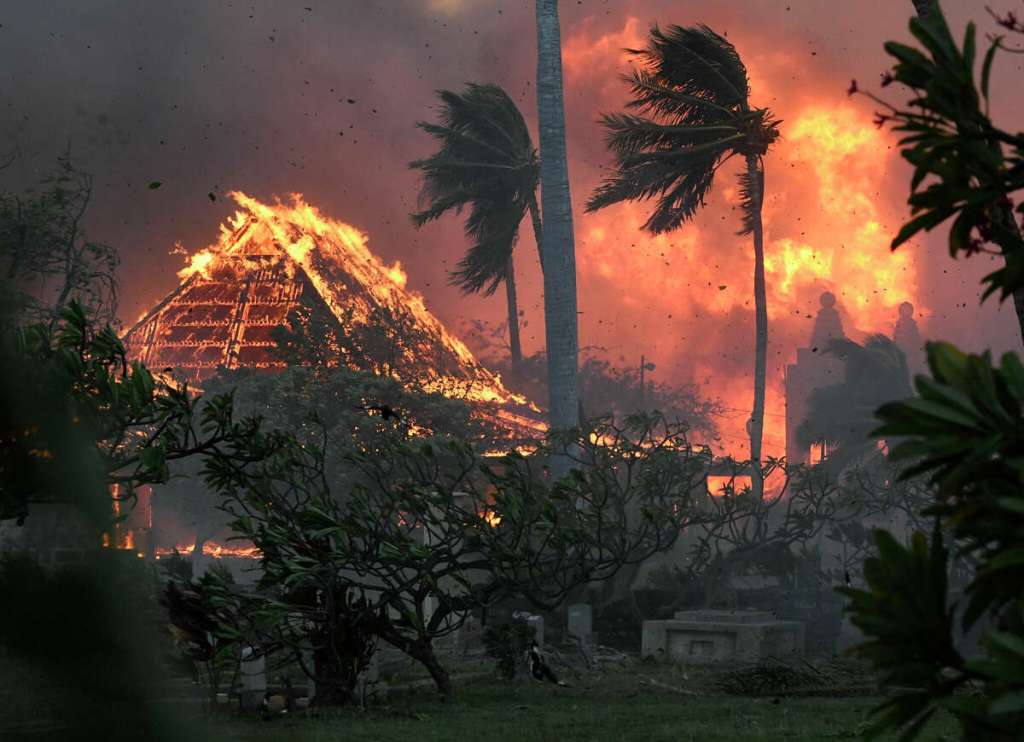
Nevertheless, it’s hard to look at recent footage of the devastation in Maui and then hear President Biden tell Congress that he needs another $24 billion for Ukraine. How can this Administration continue to justify tens of billions of dollars for this losing war that is not in our interest while the rest of the United States disintegrates?

Biden’s new $24 billion request comes on top of well over $120 billion already spent to fight the US proxy war on Russia in Ukraine. Heritage Foundation budget expert Richard Stern has done the math and determined that Biden’s spending on the Ukraine war thus far will cost each and every American household $900. How many Americans would rather have those $900 dollars back in their pocket rather than in the pockets of Lockheed-Martin, Raytheon, and Ukraine’s oligarchs?

Recent surveys have shown that a majority of Americans could not afford to cover a sudden $1,000 emergency. Will Americans connect the dots and realize that the reason they can’t find that $1,000 for an emergency is because the neocons have already sent it to Ukraine?

Ukraine has long been known as among the most corrupt countries on earth and not long ago investigative journalist Seymore Hersh wrote that Ukrainian president Vladimir Zelensky has embezzled at least $400 million in aid from the American people. Corruption scandals continue to break in Ukraine. Just last week Zelensky fired the heads of all local draft boards for corruption. Some press reports suggest that sales of luxury cars in Ukraine have broken all previous records. I wonder why.

No wonder the tide of US public opinion is turning against further involvement in the war. Recently CNN found that among all Americans, more than 55 percent are opposed to continued aid to Ukraine. Among Republicans the number opposing more aid to Ukraine rises to three-out-of-four. That is why we are finally starting to see more Republican Members raising concerns. I’d like to think they have seen the light that an aggressive and interventionist foreign policy is not in America’s interest, but most likely they are worried about losing elections. Whatever their motivation, this turning tide should be welcomed.

Yet the Biden Administration persists in backing Ukraine even as the US mainstream media is increasingly pointing out the obvious: Ukraine is not winning and cannot win, and continuing to pour money into a losing cause will just result in bankruptcy at home and more dead Ukrainians overseas.

Last week Newsweek published an article asking, “Does Ukraine Have Kompromat on Joe Biden?” In the article, Northeastern University Professor Max Abrahms wonders out loud whether Biden’s continued support for Ukraine might be related to compromising information held in Kiev about the many Biden family shady business ventures in Ukraine and the region. It is certainly worth considering.

Meanwhile, the residents of Maui that survived the recent horrific fire will take little comfort knowing that the Biden Administration is more interested in sending their money to Ukraine than in helping them recover.

I Know Why Can’t We Fix Homelessness

By Peter Van Buren

Source: We Meant Well

“What stands out for visitors?” I asked our guide during a Honolulu Chinatown tour with my out-of-town guests. “Always the same, the homeless. Even Mainlanders from big cities like San Francisco and New York are surprised how many we have here. I’m waiting to see how the Japanese and Korean guests respond when they start traveling again.”

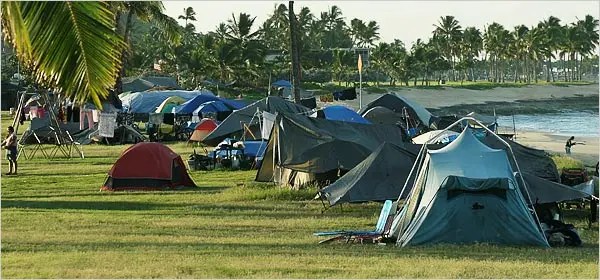
You can’t miss his point. During our brief walk through Chinatown’s markets we saw a disturbed man dressed only in his underwear touching himself, several seriously street-worn people begging, and watched the fire department respond to a prone homeless man who was dead or simply drugged into paralysis. When someone in our party needed the toilet, the shopkeeper apologized for having to keep it locked to prevent misuse by vagrants. Many places simply had signs saying “no public toilet.” Despite some great tasting food, it was hard to keep up a holiday spirit. Same for when we passed the tent cities and parks overtaken by homeless along a drive on the Windward side.

The numbers only begin to tell the story. Pre-COVID, there were an estimated 6,458 homeless in Hawaii. The Big Island saw the biggest jump in homelessness from 2019-2020, a 16 percent increase. On Oahu the homeless population is up 12 percent. San Francisco before COVID counted over 8,000 homeless persons, and while COVID-era numbers are hard to pin down, one measure is overdose deaths among the homeless, which have tripled. New York has the highest homeless population of any American metropolis, close to 80,000 and growing. The number of homeless there today is 142 percent higher than it was 10 years ago, and currently at the highest level since the Great Depression. Some 3,000 human beings make their full-time home in the subway.

Estimates for the United States as a whole run well over half a million people living homeless. The number shoots up dramatically if one includes people living in their cars, people on their way to exhausting the good will of friends who offered a couch, and those who slide in and out of motels as money ebbs and flows. Some 21 percent of American children live in poverty, homeless or not. In the end nobody actually knows how many people are living without adequate shelter except that it is a large number and it is a growing number and there is nothing in line to lower it, only to find new ways to tolerate it.

We have in many places already surrendered our public parks and libraries. The hostile architecture of protrusions and spikes which make it impossible to sleep on a park bench are pretty much sculpted into the architecture of the city, markers of the struggle for public space. The idea even has its own Instagram account. A security firm offers tips: restrict access to sidewalk overhangs protected from inclement weather, remove handles from water spigots, and keep trash dumpsters locked. If things get too bad, the company, for a price, will deploy “remote cameras with military-grade algorithms capable of detecting people in areas they shouldn’t be in.”

Keep in mind that all of these homeless people coexist in a United States whose wealthiest citizens have their own spaceships. NYC alone is home to 70 billionaires, more than any other American city. New York is also home to nearly one million millionaires, more than any other city in the world. How is it that the nation’s wealthiest city and poorest city are the same place?

All the solutions seem to fail. There are not enough shelters we are told but even when more shelters are built the homeless are too paranoid to move in,or the shelters become too dirty, too dangerous, chaos compacted, so the transition from an encampment to supportive housing isn’t easy. In ravaged San Francisco, one out of 10 of the city’s already existing supportive housing units are empty, with the director of the Department of Homelessness (!) placing the blame on individuals. So the homeless problem becomes a mental health problem which becomes a drug and alcohol problem which becomes a public health problem. Our society will not force people into care, and it will not deport the homeless against their will to desert camps. Instead we simply do nothing absent throwing a few bucks into food programs as an expedient over stepping around too many bodies in the street. Meanwhile nobody asks why nothing seems to work.

When you look at history with enough perspective you see very little happens without cause and effect. Things are connected. Casualty matters more than randomness. Answering the question of what to do about homelessness requires first answering the question of why we have the problem in the first place. Because while homelessness exists elsewhere in the developed world, you simply do not see it at pandemic proportions in equally-developed nations across Europe, and certainly not in the economic superstates like China, Japan, Singapore, et al. Scale and size matter and America wins on both. Why?

Because the American economic system requires homelessness. That’s why we can’t solve homelessness; no matter how much solving you do the system just makes more.

The Democratic arguments over raising the minimum wage are a smokescreen. As long there is a minimum wage and businesses do not have to compete for workers, there have to be homeless people. Think of the homeless as run-off, the unfortunate but necessary waste product of an economic system designed to exploit workers for the benefit of space-traveling overlords. The homeless — no wagers — are the endpoint of an economic spectrum dominated by the minimum wagers, people whose salary and hours, and thus whose chance at lifetime wealth status, are capped by agreement between the government and industry.

Until slavery ended, human beings were considered capital, just like stock today. Now we’re “human resources” so everything’s better. Bringing up race hides the real story of how long this has been going on and how deep a part of our way of life it is. The line between controlling someone with a whip and controlling someone through ever-lower wages gets finer and finer over time.

This is what “systematic” means: a system of public-private sector agreements codified as laws which push workers into a cesspool as grab-and-go disposable labor. Those who sink end up homeless. Those who tread water are guaranteed a life of maybe just enough, their place in society fixed for others’ goals, never their own. It also assures the sales of drugs, alcohol, and lottery tickets as the working poor try to convince themselves all this can’t be true. Can it?

The next step is clear. The working poor are allowed to exist at survival levels only because they are in jobs too expensive or difficult to automate. You think there are a lot of homeless now? Wait until self-driving vehicles click in and another job category simply disappears, leaving drivers and delivery people nowhere to go (there are more than 3.5 million truck drivers in the U.S., making driving one of the most popular occupations.) Same for fast food and other service jobs. Soon enough AI and/or remote online learning will make live teachers an expensive luxury for the children of the wealthy.

If you wanted a clever term about why we have and ignore and can’t address the homeless problem, you could call it systemic inequality in tune with the times’ nomenclature. A system designed to exploit will always exploit too much at its edges. It is supposed to, in order to keep driving the center downward, from 1950s middle class to 2022’s working poor.

But in the near term the issue isn’t confronting the reality of inequality, it is navigating the society it has created, much as my tour guide directed us around the homeless nests in Chinatown so we could sample the dim sum at leisure. “Don’t make eye contact” was some of his best advice.

Related Video:

The Future is Hawaii

By Peter Van Buren

Source: We Meant Well

I have seen the future. It looks a lot like Hawaii. What I saw there (absent the beautiful beaches, confused tourists, and incredible nature) was a glimpse of the future for much of America.

COVID paved the way for internal travel restrictions — Americans moving around inside their own country — never before thought possible, or even constitutional. Hawaii, an American state, had to decide if they accepted American me, much as a foreign country controls its borders and decides which outsiders may enter.

Hawaii required a very specific COVID test, from a “trusted partner” company they contract with, at the cost of $119 (no insurance accepted.) To drive home the Orwellian aspects of this all, after receiving the test kit I had to spit into the test tube during a Zoom call, some large head onscreen peeping into my bedroom watching to ensure it was indeed my spit. And now of course, after clicking Accept several times, my DNA information is in Hawaiian government hands along with whoever else’s name was buried in pages of Terms of Service. I was rewarded with the Scooby snack of an QR code on my phone.

Hawaii used to offer the option of skipping the test and doing quarantine on-island. However, they now pre-screen at major airports and so no QR code, no boarding. And for those who don’t think good, today it’s a COVID test, tomorrow other criteria may be applied. Aloha!

I will add that all the extra health screening at the airport made me a little nostalgic when I finally got to the bombs and weapons detecting set up by TSA. Just like the good old days when we worried about Muslim terrorists instead of each other turning our planes into flying death tubes, I was checked to make sure I was not carrying more than 3 ounces of shampoo. It felt… quaint to remove my shoes alongside everyone else, millions of pairs a day, all because some knucklehead failed to explode his shoe bomb and was subdued by other passengers 12 freaking years ago. For old times’ sake I prepared mentally to subdue my fellow cabin mates. The nostalgia was driven home as the TSA screener made everyone remove their mask for a moment to verify the face matched the ID picture except Muslim women, ensuring every non-Muslim woman passenger got to exhale a couple of COVID-era breaths into the crowd. Viva!

The future in Hawaii strikes you as soon as you clear the airport into that beautiful Pacific air. It smells good in patches, but in fact there are growing masses of homeless people everywhere; the unsheltered homeless population is up 12 percent on Oahu. Coming from NYC I am certainly not surprised by the zombie armies, but these people live outside. You can’t escape them by surrendering control of the subway system, or by creating shelters in someone else’s neighborhood. The homeless here live in tents, some in gleefully third world shacks made of found materials, others in government-paid shanties creatively called “tiny houses.”

Some make solo camp sites alone on the sidewalk, some create mini-Burning Man encampments in public parks. I’d like to say the latter resemble the migratory camps in Grapes of Wrath, but the Joad family could still afford an old jalopy and these people cannot. The Joads were also headed to find work; these people have burrowed in, with laundry hanging out, dogs running among the trash, rats and bugs happily exploring the host-parasite relationship. These folks stake out areas once full of tourists on Waikiki, and in public spaces once enjoyed more by locals. Drugs are a major problem and whether a homeless person will hassle you depends on which drug he favors, the kind that makes him aggressive or the kind that makes him sleep standing up at the bus stop.

The future is built around the homeless, literally. My business was in the Kakaako area, once a warehouse district between Waikiki and downtown Honolulu, now home to a dozen or more 40 story condos. They are all built like fortresses against the homeless. Each tower sits on a pedestal with parking inside, such that the street view of most places is a four story wall. There is an entrance (with security) but in fact the “first floor” for us is already four floors above ground. Once you’re up there, the top of the pedestal usually features a pool, a garden, BBQ, kiddie play area, dog walking space, all safely out of reach from whatever ugly is going on down below.

If you look out the windows from the upper, most expensive floors, you can see the ocean and sand but not the now tiny homeless people. They become invisible if you’re rich enough. Don’t be offended or shocked — what did you think runaway economic inequality was gonna end up doing to us? Macroeconomics isn’t a morality play. But for most of the wealthy the issue isn’t confronting the reality of inequality, it is navigating the society it has created. Never mind stuff like those bars on park benches that make it impossible to lay down. The architects in Kakaako have stepped it up.

These heavily defended apartments can run lots of millions of dollars, with most owners either coming from the mainland U.S. or Asia. They will live a nice life. Most of them work elsewhere, or own businesses elsewhere, which is good, because the future in Hawaii does not look good for the 99 percent below. It’s inevitable in a society that is constantly adding to its homeless population while simultaneously lacking any comprehensive way to provide medical treatment, all the while smoothing over the bumps on the street with plentiful supplies of alcohol and opioids.

Hawaii’s economy may be the future. Very little is made here. As making steel and cars left the Midwest in the late 2oth century, so did Hawaii’s old economy based on agriculture. It was cheaper to grow food elsewhere and import it to the mainland. The bulk of pineapple consumed in the United States now comes from Mexican, Central and South American growers same as steel now comes from China, and the few pineapple fields in Hawaii are for tourists. Hawaii now depends on two industries: tourism and defense spending. And both are controlled by government.

Tourism accounts directly for 24 percent of the state’s economy, more if one factors in secondary spending. The industry currently does not exist in viable form, with arrivals down some 75 percent. Unemployment Hawaii-wide is 24 percent, much more if you add in those who long ago gave up looking or are underemployed frying burgers. Much is driven by COVID. Will those ever recede? No one knows. When might things get better? No one knows. The decisions which control lives are made largely in secret, by the governor or “scientists,” and are not subject to public debate or a state congressional vote. One imagines a Dickensonian kid in hula skirt asking “Please sir, may we have jobs?”

Everyone knows Pearl Harbor, not only once a major tourist destination but also a part of direct Pentagon spending which pumps $7.2 billion into Hawaii’s economy, about 7.7 percent of the state’s GDP. Hawaii is second in the United States for the highest defense spending as a share of state GDP, and that’s just the overt stuff. Rumor has it the NSA has multiple facilities strewn around western Oahu with thousands of employees. All those government personnel, uniformed or covert, do a lot of personal spending in the local economy, much as they do in the shanty towns which ring American bases abroad. Everyone relies on local utilities like water, power, and sewers, and those bases need engineers, plumbers, electricians and others. Many are local residents either directly employed by DoD or working through contracts with private companies. The point is even more then tourism, this large sector of the economy is controlled by the government. At least they’re still working.

Another important sector of the Hawaiian economy is also government controlled, those who live entirely on public benefits. Benefits in Hawaii are the highest in the nation, an average of $49,175 and untaxed. For the last 9 years Hawaii spent more on public welfare benefits, about 20 percent of the state budget, then it did on education. More than one out ten people in Hawaii get food stamps (SNAP), though the number is higher if you include free lunches at school and for the elderly. Fewer working people means fewer tax paying people, so this is unsustainable into the future.

Who owns the future? The government in Hawaii owns the land. The Federal government owns about 20 percent of everything, and the state of Hawaii owns some 50 percent of the rest. Do Not Enter – U.S. Government Property signs are everywhere if you take a drive out of town. There are also plenty of private roads and gated communities to separate the rich from the poor, but the prize goes to Oracle owner Larry Ellison who owns almost the entire island of Lanai, serving as a gatekeeper inside another gatekeeper’s turf. For the rest of the people, homeownership rates in Hawaii are some of the lowest in the nation.

The good news (for some…) is in the future whites will be a minority race in all of America. They already are in Hawaii. Asians not including Native Hawaiians make up 37 percent of the population, with whites tagging in at 25 percent. Local government, some 55 percent of the jobs, is dominated by people of Japanese heritage. Japanese heritage people also have the highest percentage of homeownership, 70 percent. Almost all have a high school diploma, and about a third have a four-year college degree.

The well-loved mainland concept of “people of color” fades quickly in Hawaii, where Japanese color people are a majority over everyone else. And unlike in some minds, people in Hawaii are very aware that the concept of “Asian” is racist as hell, and know the differences among Japanese, Korean, Chinese, and Vietnamese. Things are such that local Caucasian and Hawaii Democratic Congressman Ed Case said he was an “Asian trapped in a white body” and meant it as, and was understood in Hawaii as, a good thing and was echoed by Case’s Japanese-American wife.

White supremacy has clearly been defeated here, though I am not sure BLM would be happy with how that actually worked out without them. On a personal note, I will say as a white-identifying minority I was well-treated by the police and others. I was not forced to wear one of those goofy shirts or add an apostrophe to words while in Hawai’i against my cultural mores, so there may be hope yet in the future I saw.

Hawaii Sees 10 Fold Increase in Birth Defects After Becoming GM Corn Testing Ground

hawaiians_against_gmo_720_375

By Jay Syrmopoulos

Source: The Free Thought Project

Waimea, HI – Doctors are sounding the alarm after noticing a disturbing trend happening in Waimea, on the island of Kauai, Hawaii. Over the past five years, the number of severe heart malformations has risen to more than ten times the national rate, according to an analysis by local physicians.

Pediatrician Carla Nelson, after seeing four of these defects in three years, is extremely concerned with the severe health anomalies manifesting in the local population.

Nelson, as well as a number of other local doctors, find themselves at the center of a growing controversy about whether the substantial increase in severe illness and birth defects in Waimea stem from the main cash crop on four of the six islands, genetically modified corn, which has been altered to resist pesticide.

Hawaii has historically been used as a testing ground for almost all GMO corn grown in the United States. Over 90% of GMO corn grown in the mainland U.S. was first developed in Hawaii, with the island of Kauai having the largest area used.

According to a report in The Guardian:

In Kauai, chemical companies Dow, BASF, Syngenta and DuPont spray 17 times more pesticide per acre (mostly herbicides, along with insecticides and fungicides) than on ordinary cornfields in the US mainland, according to the most detailed study of the sector, by the Center for Food Safety.

That’s because they are precisely testing the strain’s resistance to herbicides that kill other plants. About a fourth of the total are called Restricted Use Pesticides because of their harmfulness. Just in Kauai, 18 tons – mostly atrazine, paraquat (both banned in Europe) and chlorpyrifos – were applied in 2012. The World Health Organization this year announced that glyphosate, sold as Roundup, the most common of the non-restricted herbicides, is “probably carcinogenic in humans”.

Waimea is a small town that lies directly downhill from the 12,000 acres of GMO test fields leased mainly from the state. Spraying takes place often, sometimes every couple of days. Residents have complained that when the wind blows downhill from the fields, the chemicals have caused headaches, vomiting, and stinging eyes.

“Your eyes and lungs hurt, you feel dizzy and nauseous. It’s awful,” local middle school special education teacher Howard Hurst told the Guardian. “Here, 10% of the students get special-ed services, but the state average is 6.3%,” he says. “It’s hard to think the pesticides don’t play a role.”

To add insult to injury, Dow AgraSciences’ main lobbyist in Honolulu, until recently, actually ran the main hospital in town. Although only 1,700ft away from a Syngenta field, the hospital has never done any research into the effects of pesticides on its patients.

Hawaiians have attempted to reign in the industrial chemical/farming machine on four separate occasions over the past two years. On August 9 an estimated 10,000 people marched through Honolulu’s main tourist district to protest the collusion of big business and state putting profits over citizens’ health.

“The turnout and the number of groups marching showed how many people are very frustrated with the situation,” native Hawaiian activist Walter Ritte said.

Hawaiians have also attempted to use a ballot initiative to force a moratorium on the planting of GMO crops, according to The Guardian:

In Maui County, which includes the islands of Maui and Molokai, both with large GMO corn fields, a group of residents calling themselves the Shaka Movement sidestepped the company-friendly council and launched a ballot initiative that called for a moratorium on all GMO farming until a full environmental impact statement is completed there.

The companies, primarily Monsanto, spent $7.2m on the campaign ($327.95 per “no” vote, reported to be the most expensive political campaign in Hawaii history) and still lost.

Again, they sued in federal court, and, a judge found that the Maui County initiative was preempted by federal law. Those rulings are also being appealed.

Even amidst strong public pressure, the chemical companies that grow the GMO corn have continued to refuse to disclose the chemicals they are using, as well as the specific amounts of each chemical being used. The industry and its political cronies have continually insisted that pesticides are safe.

“We have not seen any credible source of statistical health information to support the claims,” said Bennette Misalucha, executive director of Hawaii Crop Improvement Association in a written statement distributed by a publicist.

Nelson pointed out that American Academy of Pediatrics’ report, Pesticide Exposure in Children, found “an association between pesticides and adverse birth outcomes, including physical birth defects,” going on to note that local schools have twice been evacuated and kids sent to the hospital due to pesticide drift. “It’s hard to treat a child when you don’t know which chemical he’s been exposed to.”

Sidney Johnson, a pediatric surgeon at the Kapiolani Medical Center for Women and Children who oversees all children born in Hawaii with major birth defects says he’s noticed that the number of babies born here with their abdominal organs outside. This is a rare condition known as gastroschisis and has grown from three a year in the 1980s to about a dozen now, according to The Guardian.

Johnson and a team of medical students have been studying hospital records to determine if any of the parents of the infants with gastroschisis were residing near fields that were undergoing spraying during conception and early pregnancy.

“We have cleanest water and air in the world,” Johnson said. “You kind of wonder why this wasn’t done before,” he says. “Data from other states show there might be a link, and Hawaii might be the best place to prove it.”

It was recently revealed that these chemical companies, unlike farmers, are allowed to operate under an antiquated decades-old Environmental Protection Agency permit. This permit was grandfathered in from the days of sugar plantations when the amounts and toxicities were significantly lower, and which allowed for toxic chemicals to be discharged into water. Tellingly the state of Hawaii has asked for a federal exemption to allow these companies to continue to not comply with modern standards.

The ominous reality of collusion between these mega-corporations and the political class in Hawaii has seemingly left the citizens of the state with virtually no ability to safeguard their children’s health. We tread dangerously close to corporate fascism when profits are put above the health of the people.


Jay Syrmopoulos is an investigative journalist, free thinker, researcher, and ardent opponent of authoritarianism. He is currently a graduate student at University of Denver pursuing a masters in Global Affairs. Jay’s work has been published on BenSwann’s Truth in Media, Chris Hedges’s Truth-Out, AlterNet, InfoWars, MintPress News and many other sites. You can follow him on Twitter @sirmetropolis, on Facebook at Sir Metropolis and now on tsu.

Pearl Harbor: The Original 9/11

pearl-harbor

Yesterday marked the 72nd anniversary of the Pearl Harbor attack, which from today’s perspective can be viewed as the template on which 9/11 was modeled after. In both cases, documentation exists implicating the U.S. government. In the case of Pearl Harbor, there’s the McCollum Memo which describes in detail the strategy used to successfully provoke the Japanese government into attacking. Shortly before the Pearl Harbor attack, Secretary of State Hull presented “peace terms” to the Japanese government that all but guaranteed an inevitable attack.

In the case of 9/11, there’s a policy document from Project for a New American Century called Rebuilding America’s Defenses, which provides a clear motive to create a “catastrophic and catalyzing event – like a new Pearl Harbor”. It’s not conclusive proof they were behind the attacks, but it’s suspicious to say the least that the people with established motives for conducting an event like 9/11 were responsible for national security at the time multiple unlikely and implausible coincidences made such a successful attack possible.

A number of other dubious aspects of the Pearl Harbor attack were compiled at Washington’s Blog last year, including:

Active Interference with Military’s Ability to Defend

It has also recently been discovered that the FDR administration took numerous affirmative steps to ensure that the Japanese attack would be successful. These steps included taking extraordinary measures to hide information from the commanders in Hawaii about the location of Japanese war ships (information of which they would normally be informed), denying their requests to allow them to scout for Japanese ships, and other actions to blind the commanders in Hawaii so that the attacks would succeed. See, for example, this book (page 186).

Key Military Players Incommunicado

In addition, the heads of the Army and Navy suddenly disappeared and remained unreachable on the night before Pearl Harbor. And they would later testify over and over that they “couldn’t remember” where they were (pages 320 and 335).

Gagging Whistleblowers

Two weeks after Pearl Harbor, the Navy classified all documents top secret, and the Navy Director of Communications sent a memo ordering all commanders to “destroy all notes or anything in writing” related to the attacks. More importantly, all radio operators and cryptographers were gagged on threat of imprisonment and loss of all benefits. (page 256).

Media Complicity

Amazingly, the Army’s Chief of Staff informed the Washington bureau chiefs of the major newspapers and magazines of the impending attacks before they occurred, and swore them to an oath of secrecy, which the media honored (page 361); and listen to interview here (we personally spent an hour speaking with Stinnett, and find him to be a highly credible and patriotic American.)

Postscript: Coincidentally, Philip Zelikow – the Executive Director of the 9/11 Commission, the administration insider whose area of expertise is the creation and maintenance of “public myths” thought to be true, even if not actually true, who controlled what the 9/11 Commission did and did not analyze, then limited the scope of the Commission’s inquiry so that the overwhelming majority of questions about 9/11 remained unasked – also happened to be the main guy defending the alleged unforeseeablity of the Pearl Harbor attack, who wrote a hit piece on Pearl Harbor historians like Stinnett.

Just like 9/11, Pearl Harbor was used as a tool to focus mass hatred on a race demonized by propaganda. The attack created a culture of fear allowing for suspension of civil liberties while crushing opposition to the war. Most importantly (for powerful interests pushing for war) the attacks were a pretense for pursuing and expanding global political and economic hegemony.

For a comprehensive compilation of evidence of U.S. government involvement in the Pearl Harbor conspiracy, see: http://whatreallyhappened.com/WRHARTICLES/pearl/www.geocities.com/Pentagon/6315/pearl.html

The Ocean is Broken

Pacific-garbage-patch-map_2010_noaamdp

A recent article from Australia’s Newcastle Herald has been going viral, and for good reason. It’s a chilling and heartbreaking first-hand account of the state of the Pacific Ocean. These observations in particular depict a hellish scenario:

“After we left Japan, it felt as if the ocean itself was dead,” Macfadyen said.

“We hardly saw any living things. We saw one whale, sort of rolling helplessly on the surface with what looked like a big tumour on its head. It was pretty sickening.

“I’ve done a lot of miles on the ocean in my life and I’m used to seeing turtles, dolphins, sharks and big flurries of feeding birds. But this time, for 3000 nautical miles there was nothing alive to be seen.”

In place of the missing life was garbage in astounding volumes.

“Part of it was the aftermath of the tsunami that hit Japan a couple of years ago. The wave came in over the land, picked up an unbelievable load of stuff and carried it out to sea. And it’s still out there, everywhere you look.”

Ivan’s brother, Glenn, who boarded at Hawaii for the run into the United States, marvelled at the “thousands on thousands” of yellow plastic buoys. The huge tangles of synthetic rope, fishing lines and nets. Pieces of polystyrene foam by the million. And slicks of oil and petrol, everywhere.

Countless hundreds of wooden power poles are out there, snapped off by the killer wave and still trailing their wires in the middle of the sea.

“In years gone by, when you were becalmed by lack of wind, you’d just start your engine and motor on,” Ivan said.

Not this time.

“In a lot of places we couldn’t start our motor for fear of entangling the propeller in the mass of pieces of rope and cable. That’s an unheard of situation, out in the ocean.

“If we did decide to motor we couldn’t do it at night, only in the daytime with a lookout on the bow, watching for rubbish.

“On the bow, in the waters above Hawaii, you could see right down into the depths. I could see that the debris isn’t just on the surface, it’s all the way down. And it’s all sizes, from a soft-drink bottle to pieces the size of a big car or truck.

“We saw a factory chimney sticking out of the water, with some kind of boiler thing still attached below the surface. We saw a big container-type thing, just rolling over and over on the waves.

“We were weaving around these pieces of debris. It was like sailing through a garbage tip.

“Below decks you were constantly hearing things hitting against the hull, and you were constantly afraid of hitting something really big. As it was, the hull was scratched and dented all over the place from bits and pieces we never saw.”

Plastic was ubiquitous. Bottles, bags and every kind of throwaway domestic item you can imagine, from broken chairs to dustpans, toys and utensils.

And something else. The boat’s vivid yellow paint job, never faded by sun or sea in years gone past, reacted with something in the water off Japan, losing its sheen in a strange and unprecedented way.

BACK in Newcastle, Ivan Macfadyen is still coming to terms with the shock and horror of the voyage.

“The ocean is broken,” he said, shaking his head in stunned disbelief.

Read the full article here: http://www.theherald.com.au/story/1848433/the-ocean-is-broken/

Large-scale human over-consumption and toxic waste are undoubtedly major factors contributing to a rash of unusual die-offs of Salmon, Herring, Sardines, Starfish, Dolphins, and others.