Google ‘News’ is hideous

By Wayne Madsen

Source: Intrepid Report

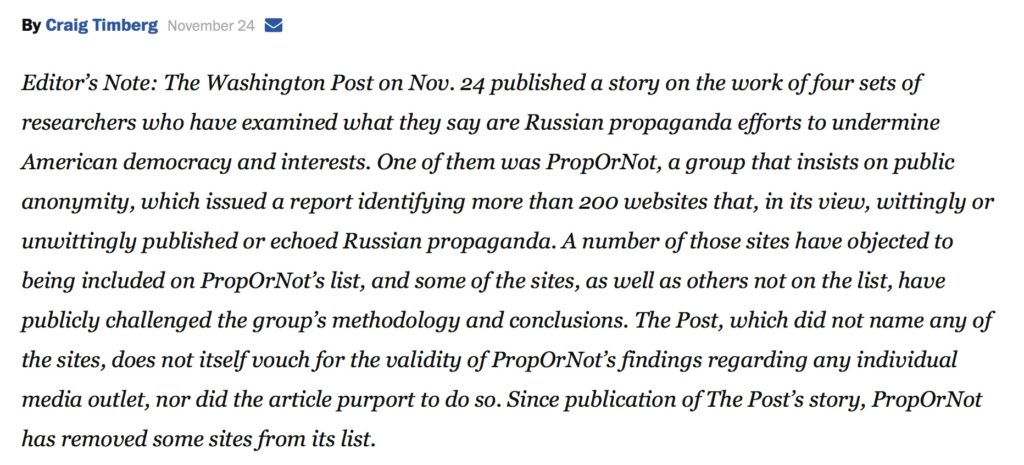
Even before its recent “redesign,” which was claimed to provide an “uncluttered” look, Google News was one of the worst news aggregator sites on the Internet. Many longtime Google News users have complained about the site’s quality and dubious “news” content. Google has offered no reasonable explanations for its poor business decisions that have resulted in Google News being a repository for misleading news links. Keeping in mind that Google received its initial seed investment from the CIA’s IN-Q-IT, now known as IN-Q-TEL, the agency’s venture capital firm in the Silicon Valley, the CIA may be playing some sort of massive social network experiment on Google News users.

The fact that Google News programmers cannot seem to distinguish between “World News” and “U.S. News” is laughable for a multi-billion dollar company that has supposedly recruited the best and brightest technologists into its ranks. The following appeared under Google News’s “World News” section on July 3, 2017:

“Media reaps benefit from Trump attacks,” The Hill

“White House pays women 80 cents for every dollar paid to men,” CNN

“New Jersey welfare fund arrests spark anti-Semitic sentiment,” USA Today

“Police Say Abduction Suspect Viewed Sexual Fetish Website,” U.S. News & World Report, with a story on the same subject regarding the University of Illinois appearing in the Champagne/Urbana News-Gazette

“Colorado man mistakes son for intruder, shoots and kills him,” WHIO

“5 significant gas explosions in Pennsylvania in the past decade,” PennLive.com

Something is seriously wrong with Google’s algorithms or the foreign programmers they have hired, to the exclusion of American employees, do not realize that from a U.S. perspective, events in Washington, DC, New Jersey, Illinois, Colorado, and Pennsylvania do not constitute “World News.”

Even Google News’s Science offering is trashed by nonsensical click bait, such as a Washington Post story, titled “No, NASA is not hiding kidnapped children on Mars.” The story emanates from comments made on the Infowars show by Alex Jones and his guest Robert Steele about a secret program to kidnap children and send them to Mars. With the advent of the Trump presidency, those who were once considered “controversial” are now just plain crazy. Yet, such wild rantings are found under “Science” in Google News!

Google News’s search engine is no better. Some apologists for Google claim that the searches are tailored for each customer. If that is so, why do this editor’s searches on various countries and areas of the world come back with the first ten stories being about sports. I do not like professional sports and never visit sporting websites. Therefore, if Google is to be believed, no sports stories should be returned on searches on international place names.

As an example, the following comes back from Google News on a search for “Barbados”:

“Marion makes Africa umpire team,” The Nation

“Barbados lose football opener to Dominica,” Nation News

“Young Gems leave for Botswana,” Nation News

Try out a search for “South Africa,” not an insignificant country, and returned are:

“England v South Africa: Faf du Plessis to miss first Test for family reasons,” BBC Sport. Among professional sports, which I detest in general, cricket is dead last on the list of topics to be ignored. This “top news story” about South Africa is followed by:

“South Africa disappointed by Cosafa exit,” BBC Sport. Cosafa is the Council of Southern Africa Football Associations and not a Covfefe-like typo by Donald Trump. This is a totally unimportant story about professional football of the soccer variety. Who cares? I don’t. Ranked around number five is a story about an upcoming no-confidence vote by the South African parliament against Jacob Zuma, the president of the country. Yet, cricket and soccer stories are given more prominence by Google News.

Try another country, New Zealand, and the result is the same, except rugby is considered more important by Google News than anything else happening in the nation:

“Lions beat New Zealand on tiniest of margins, and a thrilling finale awaits,” The Guardian

“New Zealand club rugby player in intensive care with spinal injury,” Telegraph (UK). Sad story, but the player might have taken up a safer line of work, like programming actual news stories for Google News searches.

Ranked third by Google in the search return is a fairly important story:

“New Zealand’s immigration laws favour the rich, a South African family says.” Radio New Zealand.

Ranked fourth is another non-news topic concerning Google News’s other distraction affectation, Entertainment News:

“Katy Perry gushes about her great ‘love’ for New Zealand,” Newshub. Katy Perry? Really, who gives a crap about her? Hillary Clinton loves her, as do many women motorcyclists. I don’t and don’t want stories about Katy Perry, Lady Gaga, or Taylor Swift returned on searches about important events around the world. Unless, of course, Katy Perry and Lady Gaga, along with Madonna, go missing on a flight over New Guinea and Don McLean writes a song about them. He could title it “American Magpies.”

Google News received five thumbs down before their recent “redesign.” Now, there are not enough thumbs in the world to express displeasure about them.


The West’s War on Free Speech

By Tony Cartalucci

Source: Land Destroyer

With a name like the “National Democratic Institute” (NDI) one might expect the US State Department-funded, corporate-financier chaired front to be the premier proponent of freedom and democracy worldwide. And although it poses as such, it does precisely the opposite. It uses principles like free speech, democracy, press freedom, and human rights as a facade behind which it carries out a politically motivated agenda on behalf of the special interests that fund and direct its activities.

In a recent Tweet, NDI linked to a New York Times article titled, “In Europe’s Election Season, Tech Vies to Fight Fake News.” It claimed in the Tweet that the article featured:

A look at some of the projects aiming to use automated algorithms to identify and combat fake news. 

The article itself though, reveals nothing short of a global effort by US tech-giants Google and Facebook, in collaboration with the Western media, to censor any and all media that fails to align with Western-dominated narratives.

The article itself claims:

The French electorate heads to the polls in the second round of presidential elections on May 7, followed by votes in Britain and Germany in the coming months. Computer scientists, tech giants and start-ups are using sophisticated algorithms and reams of online data to quickly — and automatically — spot fake news faster than traditional fact-checking groups can. 

The goal, experts say, is to expand these digital tools across Europe, so the region can counter the fake news that caused so much confusion and anger during the United States presidential election in November, when outright false reports routinely spread like wildfire on Facebook and Twitter.

The article then explains that once “fake news” is spotted, it is expunged from the Internet. It reports that:

After criticism of its role in spreading false reports during the United States elections, Facebook introduced a fact-checking tool ahead of the Dutch elections in March and the first round of the French presidential election on April 23. It also removed 30,000 accounts in France that had shared fake news, a small fraction of the approximately 33 million Facebook users in the country.

Were foreign government-linked tech companies purging tens of thousands of accounts ahead of elections in say, Thailand or Russia, it is very likely organizations like NDI and media platforms like the New York Times would cry foul, depicting it as censorship.

In determining what is and isn’t “fake news,” the New York Times offers some clues (emphasis added):

Using a database of verified articles and their artificial intelligence expertise, rival groups — a combination of college teams, independent programmers and groups from existing tech companies — already have been able to accurately predict the veracity of certain claims almost 90 percent of the time, Mr. Pomerleau said. He hopes that figure will rise to the mid-90s before his challenge ends in June.

In other words, “fake news” is determined by comparing it directly to narratives presented by establishment media platforms like the New York Times, the BBC, CNN, MSNBC, Fox News, and others who have notorious track records of serial deception, false reporting, and even war propagandizing.

Nowhere does the New York Times explain how these “verified articles” have been determined to be factually accurate, and instead, it appears that all these algorithms are doing is ensuring all media falls in line with Western narratives.

If media in question coincides with Western-dominated media platforms, it is given a pass – if not, it is slated for expunging as described elsewhere in the New York Times’ piece.

Thus, the National Democratic Institute, who claims on its website to “support and strengthen democratic institutions worldwide through citizen participation, openness and accountability in government,” finds itself promoting what is essentially a worldwide agenda of malicious censorship, manipulating the perception of the globe’s citizenry, not supporting or strengthening it’s participation in any sort of honest political process.

To answer the question as to what the NDI is referring to when it claims other nations are “censoring” free speech and press freedoms, it involves defending local fronts funded by the NDI and its parent organization, the National Endowment for Democracy (NED) who merely repeat Western propaganda in local languages and with local spins. When foreign nations attempt to deal with these instances of “fake news,” US fronts like NDI and NED depict it as censorship.

While the West poses as the premier champion of free speech, citizen participation, openness, and accountability, the New York Times article reveals an unfolding plan to utterly crush any narrative that deviates from Western media talking points, thus controlling citizen perception, not encouraging “participation,” and ensuring that the West alone determines what is “opened” and held “accountable.”

No worse scenario can be referenced in human history or even among human fiction than plans to determine for the world through automatic algorithms and artificial intelligence almost in real time what is heard and read and what isn’t. It is even beyond the scope and scale of George Orwell’s cautionary dystopian “1984” novel.

In a truly free society, an educated citizenry is capable of deciding for itself what is “fake news” and what isn’t. Because of the rise of alternatives to the West’s monopoly over global information, many people are doing just that – determining that Western narratives are in fact deceptions. At no other point in modern history has the Western media faced as many alternatives, and as much skepticism on this scale, as well as an ebbing of trust domestically and abroad. It is no surprise then, to find the West resorting to outright censorship, even if it cushions mention of it with terms like “fake news.”

Algorithmic Control and the Revolution of Desire

zuckerberg_VR_people-625x350

By Alfie Brown

Source: ROAR Magazine

Last year, Stanford University published a study confirming what many of us may long have suspected: that your computer can predict what you want with more accuracy than your spouse or your friends. Your digital footprint betrays the truth not only about what you “like” but about what you really like — or so the argument goes. But what if our digital footprints, besides revealing our desires, are also responsible for the very construction of these desires? If that were the case, we would need to display a far deeper level of suspicion towards the complex patterns of corporate and state control found in contemporary cyberspace.

There is little doubt that innovations in mobile technologies are part of emerging methodologies of social control. In particular, games and applications that make use of the Google Maps back-end system — including Uber, Grindr, Pokémon Go and hundreds of others — which should be seen as one of the most important technological developments of the last decade or so, are particularly complicit in these new regulatory practices. Putting the well-publicized data collection issue aside, such applications have two powerful ideological functions. First, they construct the new “geographical contours” of the city, regulating the paths we take and mapping the city in the service of both corporate interest and the prevention of uprisings. Second, and more unconsciously, they enact what Jean-Francois Lyotard once called the “desirevolution” — an evolution and revolution of desire, in which that what we want is itself now determined by the digital paths we tread.

The Psycho-Geographical Contours of the City 

In 1981, the French theorist Guy Debord famously wrote of the “psycho-geographical contours” of the city that govern the routes we take, even when we may feel we are wandering freely around the physical space. At that time, it was Debord’s topic — architecture — that was the dominant force in re-organizing our routes through the city. Today, however, that role is increasingly taken up by the mobile phone. It is Uber that dictates the path of your taxi, Maps that dictates the route of your walks and drives, and Pokémon Go that (for a summer at least) determined where the next crowd would gather.

Other similar map-based application programing interfaces, or APIs, dictate our jogging routes (MapMyRun), our recreational hikes (LiveTrekker) and our tourist activities (TripAdvisor Guides). Pokémon Go attracted some publicity because it accidentally and humorously gathered crowds in weird places, but this should only alert us to its potential ability to gather crowds in the right places (to serve corporate interest) or to prevent the gathering of crowds in the wrong ones (to prevent organized uprisings, for instance). Such applications should be seen as a testing phase in the project of Google and its affiliated corporations as they work out how best to regulate the movements of large populations via their phones. Pokémon Go players were the early cyborgs, complete with hiccups and malfunctions — a beta version of Google’s future human. These future humans will go where instructed.

On a smaller scale, this point can be seen in concrete terms with a case study of London. A recent Transport for London talk discussed the possibility of “gamifying” commuting. In order to facilitate this possibility, Transport for London have made the internet API and data streams used to monitor all London Transport vehicles open source and open access, in the hope that developers will build London-focused apps based around the public transport system, thus maximizing profit. One idea is that if a particular tube station is at risk of becoming clogged up due to other delays, TfL could give “in-game rewards” for people willing to use alternative routes and thus smooth out the jam.

While traffic jam prevention may not seem like evidence that we have arrived in the dystopia of total corporate and state control, it does actually reveal the dangerous potentiality in such technologies. It shows that the UK is not as far away from the “social credit” game system recently implemented in Beijing to rate each citizen’s trustworthiness and give them rewards for their dedication to the Chinese state. While the UK media reacted with shock to these innovations in Chinese app development, a closer look at the electronic structures of mapping and controlling our own movements shows that a similar framework is already in its development phase in London too. In the “smart city” of the future, it won’t just be traffic jams that are smoothed out. Any inefficient misuse or any occupation of public space deemed dangerous by the authorities can be specifically targeted.

The Corporate Surveillance State

When it comes to these developments in technology, state and corporate forces work more closely with each other than ever before — and much more closely than they are willing to admit. Srećko Horvat has pointed out the short distance between the creators of Pokémon Go and Hillary Clinton, despite her odd and unsolicited recent public claim that she didn’t know who made the game. Likewise, Julian Assange’s strangely under-discussed 2014 book When Google Met WikiLeaks showed the shocking proximity of Google chief Eric Schmidt and the Washington state apparatus. In terms of surveillance and the use of big data, it has become impossible to sustain the distinction between state control and the production of wealth, since the two have become so irrevocably intertwined. As such, old arguments that “it’s all just about money” need to be treated with greater suspicion, since major firms today are so closely tied to the state. Various aspects of state organization should likewise be considered equally suspect because of their corporate underpinnings.

Of course, when it comes to the mapping applications that promise to help us access the best quality objects of our desire with the greatest efficiency and the least cost, these tempting forces of joint corporate and state control are entered into willingly by participants. As such, they require something else in order to function in the all-consuming way that they do. Far from simply channeling and transforming our movements, they also need to channel and even transform our desires.

We are now firmly within the world of the electronic object, where the mediation of everything from lovers and friends to meals and activities via our mobile phones and computers makes it virtually impossible to separate physical from electronic objectivity. Whilst the electronic Pokémon or the “in-game rewards” offered by many applications may not yet have the physicality of a lover who can be accessed via Tinder, or a burger that can be located via JustEat, the burger and the lover certainly have the electronic objectivity of the Pokémon. We can therefore see a transformation in the objects of desire taking place by and through our devices, so that we are confronted not only with a change in how we get what we want, but with a change in what we want in the first place.

Italo Calvino once wrote of the “amorous relationship” that “erases the lines between our bodies and sopa de frijoles, huachinango a la vera cruzana, and enchiladas.” While in such a moment food and lover become one in a kind of orgy of physical consumption, in the same novel Calvino warned of a time “when the olfactory alphabet, which made them so many words in a precious lexicon, is forgotten,” and in which “perfumes will be left speechless, inarticulate, illegible.”

It is this world that we find ourselves desiring in, where an orgy of electronic objects with no olfactory physicality blurs the distinction between lovers, meals and “in-game” rewards. The purpose of this shift, of course, is to increase the power of technological corporations by giving them a new sort of control over the way we relate to our objects of desire. If the boundaries between the way we search, desire and acquire our burgers, lovers and Pikachus are dissolving, it is not so much the old point that everything has become a commodity, but a new point that this kind of substitutional electronic objectivity endows corporate and state technologists with unprecedented power to distribute and redistribute the objects of the desire around the “smart city.”

Data Centralization in China and the West

There is, moreover, a significant centralization of power underpinning these developments. Like the social credit idea, the Chinese phenomenon of WeChat — developed in 2011 by Tencent, one of the largest internet and mobile media companies in the world — has received concerned media coverage in the West. WeChat is the first truly successful “SuperApp,” the basic premise of which is that all applications like WhatsApp, Facebook, Instagram, OpenRice, Tinder, TripAdvisor and many more, are rolled into one cohesive application. All for our convenience, of course.

As a result, however, there is now a new level of cohesion between the data-collection and movement monitoring going on in the mobile phone as a whole, where all data is now directly collected in a single place. More than half of the 1.1 billion WeChat users access the app over 10 times per day, and many users simply leave it on continuously, using it to map, shop, date and play. This means that the app sets a new precedent for continually monitoring the movements of a whole nation of citizens. WeChat’s incredibly strange “heat map” feature actually lets users — and authorities — see where crowds are forming. The claim is that this has nothing to do with crowd control: the objective is simply to help us access the least crowded shopping malls, doing nothing more than helping us get what we want.

WeChat is already the most popular social media application in China, but it will soon have huge significance worldwide, with an international version now available and many replica “SuperApps” in production. What the Western media finds to be so concerning about WeChat is once again something that already exists here in the West, at least in beta form, without us knowing it. WeChat actually offers us a glimpse into an Orwellian future in which companies and governments can track every movement we make. While in China the blocking of Google means that WeChat uses Baidu Maps as its API, the international version of WeChat simply taps into Google Maps, showing just how deeply integrated these corporate technologies already are.

What emerges from Western media coverage of these developments is the continued insistence on an apparent division between the public and the private sphere in the United States and Europe. When it comes to digital surveillance and the monitoring of movement, the situation is almost certainly better in the West than it is in China at this moment. Yet from an analysis of recent developments in China we learn not only that we need to be attentive to similar dangers here in the West, but also that there are powerful ideological mechanisms at play to obscure these developments by presenting China and the US as fundamentally opposed to one another. Whilst in China the links between the new SuperApps and the state are commonly accepted, in the US the illusion of privacy remains paramount. Although data is often shared between different corporations and between the public and the private sectors, this fact is generally obscured. The continued expressions of shock at the more openly centralized state control visible in China serve only to further consolidate the impression that these things are not happening in the US and Europe.

Furthermore, WeChat reveals more than the dangers of mass data collection and new levels of technological surveillance. It also embodies the power of the phone over the objects of desire. Since one single app can successfully market us food, lovers, holidays, events, blogs and even charities, the connections between such “objects” become more important than the differences. While the structural similarities between Grindr, Pokémon Go and OpenRice become apparent via analysis of both their surfaces and back systems, WeChat makes the connections plain to see. The various forms and objects of each individual’s desire no longer represent discreet and separable elements of a subject’s life. Instead we enter a fully cohesive libidinal economy in which we are increasingly regulated and mapped via the organization of what and how we desire.

The Desirevolution

So what do we do when faced with this revolution — a technological revolution that is not overthrowing any existing power structures but rather transforming the world in the service of private corporations and the state? Often, the response of those concerned by such developments is to express hostility or distrust towards technology itself. Yet to break this corporate organization of desire, we need not nostalgically yearn for a desire that is free of politics and technology, for no such desire is possible. On the contrary, what we need is to recognize that desire is necessarily and always controlled by both politics and technology.

This awareness would be the first step towards ensuring that the centralized corporate and state organization of desire malfunctions — and, ultimately, it would be the first step towards its potential reprogramming. The corporate desirevolution depends on our blindness to the politics of its technologies, asking us to experience our desires as spontaneous yearning and our mobile phone and its powerful apps as just tools for our convenience, helping us get what we want in the easiest way possible. We need to recognize that this is far from the case. The principal concern of those who own the apps — perhaps even more powerful than data collection — is to transform desire itself. At the very least, we can make visible the complicity of such technologies in producing the perfect conformist modern citizen.

The Misguided ‘Vault 7’ Whodunit

By Jesselyn Radack

Source: Expose Facts

It is the leakiest of times in the Executive Branch. Last week, Wikileaks published a massive and, by all accounts genuine, trove of documents revealing that the CIA has been stockpiling, and lost control of, hacking tools it uses against targets. Particularly noteworthy were the revelations that the CIA developed a tool to hack Samsung TVs and turn them into recording devices and that the CIA worked to infiltrate both Apple and Google smart phone operating systems since it could not break encryption. No one in government has challenged the authenticity of the documents disclosed.

We do not know the identity of the source or sources, nor can we be 100% certain of his or her motivations. Wikileaks writes that the source sent a statement that policy questions “urgently need to be debated in public, including whether the CIA’s hacking capabilities exceed its mandated powers and the problem of public oversight of the agency” and that the source “wishes to initiate a public debate about the security, creation, use, proliferation and democratic control of cyber-weapons.”

The FBI has already begun hunting down the source as part of a criminal leak investigation. Historically, the criminal justice system has been a particularly inept judge of who is a whistleblower. Moreover, it has allowed the use of the pernicious Espionage Act—an arcane law meant to go after spies—to go after whistleblowers who reveal information the public interest. My client, former NSA senior official Thomas Drake, was prosecuted under the Espionage Act, only to later be widely recognized as a whistleblower. There is no public interest defense to Espionage Act charges, and courts have ruled that a whistleblower’s motive, however salutary, is irrelevant to determining guilt.

The Intelligence Community is an equally bad judge of who is a whistleblower, and has a vested interest in giving no positive reinforcement to those who air its dirty laundry. The Intelligence Community reflexively claims that anyone who makes public secret information is not a whistleblower. Former NSA and CIA Director General Michael V. Hayden speculated that the recent leaks are to be blamed on young millennials harboring some disrespect for the venerable intelligence agencies responsible for mass surveillance and torture. Not only is his speculation speculative, but it’s proven wrong by the fact that whistleblowers who go to the press span the generational spectrum from Pentagon Papers whistleblower Daniel Ellsberg to mid-career and senior level public servants like CIA torture whistleblower John Kiriakou and NSA whistleblower Thomas Drake to early-career millennials like Army whistleblower Chelsea Manning and NSA whistleblower Edward Snowden. The lawbreaker does not get to decide who is a whistleblower.

Not all leaks of information are whistleblowing, and the word “whistleblower” is a loaded term, so whether or not the Vault 7 source conceives of him or herself as a whistleblower is not a particularly pertinent inquiry. The label “whistleblower” does not convey some mythical power or goodness, or some “moral narcissism,” a term used to describe me when I blew the whistle. Rather, whether an action is whistleblowing depends on whether or not the information disclosed is in the public interest and reveals fraud, waste, abuse, illegality or dangers to public health and safety. Even if some of the information revealed does not qualify, it should be remembered that whistleblowers are often faulted with being over- or under-inclusive with their disclosures. Again, it is the quality of the information, not the quantity, nor the character of the source.

Already, the information in the Vault 7 documents revealed that the Intelligence Community has misled the American people. In the wake of Snowden’s revelations, the Intelligence Community committed to avoid the stockpiling of technological vulnerabilities, publicly claiming that its bias was toward “disclosing them” so as to better protect everyone’s privacy. However, the Vault 7 documents reveal just the opposite: not only has the CIA been stockpiling exploits, it has been aggressively working to undermine our Internet security. Even assuming the CIA is using its hacking tools against the right targets, a pause-worthy presumption given the agency’s checkered history, the CIA has empowered the rest of the hacker world and foreign adversaries by hoarding vulnerabilities, and thereby undermined the privacy rights of all Americans and millions of innocent people around the world. Democracy depends on an informed citizenry, and journalistic sources—whether they call themselves whistleblowers or not—are a critical component when the government uses national security as justification to keep so much of its activities hidden from public view.

As we learn more about the Vault 7 source and the disclosures, our focus should be on the substance of the disclosures. Historically, the government’s reflexive instinct is to shoot the messenger, pathologize the whistleblower, and drill down on his or her motives, while the transparency community holds its breath that he or she will turn out to be pure as the driven snow. But that’s all deflection from plumbing the much more difficult questions, which are: Should the CIA be allowed to conduct these activities, and should it be doing so in secret without any public oversight?

These are questions we would not even be asking without the Vault 7 source.

Vault 7: CIA Hacking Tools Revealed

Source: WikiLeaks

Press Release

Today, Tuesday 7 March 2017, WikiLeaks begins its new series of leaks on the U.S. Central Intelligence Agency. Code-named “Vault 7” by WikiLeaks, it is the largest ever publication of confidential documents on the agency.

The first full part of the series, “Year Zero”, comprises 8,761 documents and files from an isolated, high-security network situated inside the CIA’s Center for Cyber Intelligence in Langley, Virgina. It follows an introductory disclosure last month of CIA targeting French political parties and candidates in the lead up to the 2012 presidential election.

Recently, the CIA lost control of the majority of its hacking arsenal including malware, viruses, trojans, weaponized “zero day” exploits, malware remote control systems and associated documentation. This extraordinary collection, which amounts to more than several hundred million lines of code, gives its possessor the entire hacking capacity of the CIA. The archive appears to have been circulated among former U.S. government hackers and contractors in an unauthorized manner, one of whom has provided WikiLeaks with portions of the archive.

“Year Zero” introduces the scope and direction of the CIA’s global covert hacking program, its malware arsenal and dozens of “zero day” weaponized exploits against a wide range of U.S. and European company products, include Apple’s iPhone, Google’s Android and Microsoft’s Windows and even Samsung TVs, which are turned into covert microphones.

Since 2001 the CIA has gained political and budgetary preeminence over the U.S. National Security Agency (NSA). The CIA found itself building not just its now infamous drone fleet, but a very different type of covert, globe-spanning force — its own substantial fleet of hackers. The agency’s hacking division freed it from having to disclose its often controversial operations to the NSA (its primary bureaucratic rival) in order to draw on the NSA’s hacking capacities.

By the end of 2016, the CIA’s hacking division, which formally falls under the agency’s Center for Cyber Intelligence (CCI), had over 5000 registered users and had produced more than a thousand hacking systems, trojans, viruses, and other “weaponized” malware. Such is the scale of the CIA’s undertaking that by 2016, its hackers had utilized more code than that used to run Facebook. The CIA had created, in effect, its “own NSA” with even less accountability and without publicly answering the question as to whether such a massive budgetary spend on duplicating the capacities of a rival agency could be justified.

In a statement to WikiLeaks the source details policy questions that they say urgently need to be debated in public, including whether the CIA’s hacking capabilities exceed its mandated powers and the problem of public oversight of the agency. The source wishes to initiate a public debate about the security, creation, use, proliferation and democratic control of cyberweapons.

Once a single cyber ‘weapon’ is ‘loose’ it can spread around the world in seconds, to be used by rival states, cyber mafia and teenage hackers alike.

Julian Assange, WikiLeaks editor stated that “There is an extreme proliferation risk in the development of cyber ‘weapons’. Comparisons can be drawn between the uncontrolled proliferation of such ‘weapons’, which results from the inability to contain them combined with their high market value, and the global arms trade. But the significance of “Year Zero” goes well beyond the choice between cyberwar and cyberpeace. The disclosure is also exceptional from a political, legal and forensic perspective.”

Wikileaks has carefully reviewed the “Year Zero” disclosure and published substantive CIA documentation while avoiding the distribution of ‘armed’ cyberweapons until a consensus emerges on the technical and political nature of the CIA’s program and how such ‘weapons’ should analyzed, disarmed and published.

Wikileaks has also decided to redact and anonymise some identifying information in “Year Zero” for in depth analysis. These redactions include ten of thousands of CIA targets and attack machines throughout Latin America, Europe and the United States. While we are aware of the imperfect results of any approach chosen, we remain committed to our publishing model and note that the quantity of published pages in “Vault 7” part one (“Year Zero”) already eclipses the total number of pages published over the first three years of the Edward Snowden NSA leaks.


Analysis

CIA malware targets iPhone, Android, smart TVs

CIA malware and hacking tools are built by EDG (Engineering Development Group), a software development group within CCI (Center for Cyber Intelligence), a department belonging to the CIA’s DDI (Directorate for Digital Innovation). The DDI is one of the five major directorates of the CIA (see this organizational chart of the CIA for more details).

The EDG is responsible for the development, testing and operational support of all backdoors, exploits, malicious payloads, trojans, viruses and any other kind of malware used by the CIA in its covert operations world-wide.

The increasing sophistication of surveillance techniques has drawn comparisons with George Orwell’s 1984, but “Weeping Angel”, developed by the CIA’s Embedded Devices Branch (EDB), which infests smart TVs, transforming them into covert microphones, is surely its most emblematic realization.

The attack against Samsung smart TVs was developed in cooperation with the United Kingdom’s MI5/BTSS. After infestation, Weeping Angel places the target TV in a ‘Fake-Off’ mode, so that the owner falsely believes the TV is off when it is on. In ‘Fake-Off’ mode the TV operates as a bug, recording conversations in the room and sending them over the Internet to a covert CIA server.

As of October 2014 the CIA was also looking at infecting the vehicle control systems used by modern cars and trucks. The purpose of such control is not specified, but it would permit the CIA to engage in nearly undetectable assassinations.

The CIA’s Mobile Devices Branch (MDB) developed numerous attacks to remotely hack and control popular smart phones. Infected phones can be instructed to send the CIA the user’s geolocation, audio and text communications as well as covertly activate the phone’s camera and microphone.

Despite iPhone’s minority share (14.5%) of the global smart phone market in 2016, a specialized unit in the CIA’s Mobile Development Branch produces malware to infest, control and exfiltrate data from iPhones and other Apple products running iOS, such as iPads. CIA’s arsenal includes numerous local and remote “zero days” developed by CIA or obtained from GCHQ, NSA, FBI or purchased from cyber arms contractors such as Baitshop. The disproportionate focus on iOS may be explained by the popularity of the iPhone among social, political, diplomatic and business elites.

A similar unit targets Google’s Android which is used to run the majority of the world’s smart phones (~85%) including Samsung, HTC and Sony. 1.15 billion Android powered phones were sold last year. “Year Zero” shows that as of 2016 the CIA had 24 “weaponized” Android “zero days” which it has developed itself and obtained from GCHQ, NSA and cyber arms contractors.

These techniques permit the CIA to bypass the encryption of WhatsApp, Signal, Telegram, Wiebo, Confide and Cloackman by hacking the “smart” phones that they run on and collecting audio and message traffic before encryption is applied.


CIA malware targets Windows, OSx, Linux, routers

The CIA also runs a very substantial effort to infect and control Microsoft Windows users with its malware. This includes multiple local and remote weaponized “zero days”, air gap jumping viruses such as “Hammer Drill” which infects software distributed on CD/DVDs, infectors for removable media such as USBs, systems to hide data in images or in covert disk areas ( “Brutal Kangaroo”) and to keep its malware infestations going.

Many of these infection efforts are pulled together by the CIA’s Automated Implant Branch (AIB), which has developed several attack systems for automated infestation and control of CIA malware, such as “Assassin” and “Medusa”.

Attacks against Internet infrastructure and webservers are developed by the CIA’s Network Devices Branch (NDB).

The CIA has developed automated multi-platform malware attack and control systems covering Windows, Mac OS X, Solaris, Linux and more, such as EDB’s “HIVE” and the related “Cutthroat” and “Swindle” tools, which are described in the examples section below.


CIA ‘hoarded’ vulnerabilities (“zero days”)

In the wake of Edward Snowden’s leaks about the NSA, the U.S. technology industry secured a commitment from the Obama administration that the executive would disclose on an ongoing basis — rather than hoard — serious vulnerabilities, exploits, bugs or “zero days” to Apple, Google, Microsoft, and other US-based manufacturers.

Serious vulnerabilities not disclosed to the manufacturers places huge swathes of the population and critical infrastructure at risk to foreign intelligence or cyber criminals who independently discover or hear rumors of the vulnerability. If the CIA can discover such vulnerabilities so can others.

The U.S. government’s commitment to the Vulnerabilities Equities Process came after significant lobbying by US technology companies, who risk losing their share of the global market over real and perceived hidden vulnerabilities. The government stated that it would disclose all pervasive vulnerabilities discovered after 2010 on an ongoing basis.

“Year Zero” documents show that the CIA breached the Obama administration’s commitments. Many of the vulnerabilities used in the CIA’s cyber arsenal are pervasive and some may already have been found by rival intelligence agencies or cyber criminals.

As an example, specific CIA malware revealed in “Year Zero” is able to penetrate, infest and control both the Android phone and iPhone software that runs or has run presidential Twitter accounts. The CIA attacks this software by using undisclosed security vulnerabilities (“zero days”) possessed by the CIA but if the CIA can hack these phones then so can everyone else who has obtained or discovered the vulnerability. As long as the CIA keeps these vulnerabilities concealed from Apple and Google (who make the phones) they will not be fixed, and the phones will remain hackable.

The same vulnerabilities exist for the population at large, including the U.S. Cabinet, Congress, top CEOs, system administrators, security officers and engineers. By hiding these security flaws from manufacturers like Apple and Google the CIA ensures that it can hack everyone &mdsh; at the expense of leaving everyone hackable.


‘Cyberwar’ programs are a serious proliferation risk

Cyber ‘weapons’ are not possible to keep under effective control.

While nuclear proliferation has been restrained by the enormous costs and visible infrastructure involved in assembling enough fissile material to produce a critical nuclear mass, cyber ‘weapons’, once developed, are very hard to retain.

Cyber ‘weapons’ are in fact just computer programs which can be pirated like any other. Since they are entirely comprised of information they can be copied quickly with no marginal cost.

Securing such ‘weapons’ is particularly difficult since the same people who develop and use them have the skills to exfiltrate copies without leaving traces — sometimes by using the very same ‘weapons’ against the organizations that contain them. There are substantial price incentives for government hackers and consultants to obtain copies since there is a global “vulnerability market” that will pay hundreds of thousands to millions of dollars for copies of such ‘weapons’. Similarly, contractors and companies who obtain such ‘weapons’ sometimes use them for their own purposes, obtaining advantage over their competitors in selling ‘hacking’ services.

Over the last three years the United States intelligence sector, which consists of government agencies such as the CIA and NSA and their contractors, such as Booz Allan Hamilton, has been subject to unprecedented series of data exfiltrations by its own workers.

A number of intelligence community members not yet publicly named have been arrested or subject to federal criminal investigations in separate incidents.

Most visibly, on February 8, 2017 a U.S. federal grand jury indicted Harold T. Martin III with 20 counts of mishandling classified information. The Department of Justice alleged that it seized some 50,000 gigabytes of information from Harold T. Martin III that he had obtained from classified programs at NSA and CIA, including the source code for numerous hacking tools.

Once a single cyber ‘weapon’ is ‘loose’ it can spread around the world in seconds, to be used by peer states, cyber mafia and teenage hackers alike.


U.S. Consulate in Frankfurt is a covert CIA hacker base

In addition to its operations in Langley, Virginia the CIA also uses the U.S. consulate in Frankfurt as a covert base for its hackers covering Europe, the Middle East and Africa.

CIA hackers operating out of the Frankfurt consulate ( “Center for Cyber Intelligence Europe” or CCIE) are given diplomatic (“black”) passports and State Department cover. The instructions for incoming CIA hackers make Germany’s counter-intelligence efforts appear inconsequential: “Breeze through German Customs because you have your cover-for-action story down pat, and all they did was stamp your passport”

Your Cover Story (for this trip)
Q: Why are you here?
A: Supporting technical consultations at the Consulate.

Two earlier WikiLeaks publications give further detail on CIA approaches to customs and secondary screening procedures.

Once in Frankfurt CIA hackers can travel without further border checks to the 25 European countries that are part of the Shengen open border area — including France, Italy and Switzerland.

A number of the CIA’s electronic attack methods are designed for physical proximity. These attack methods are able to penetrate high security networks that are disconnected from the internet, such as police record database. In these cases, a CIA officer, agent or allied intelligence officer acting under instructions, physically infiltrates the targeted workplace. The attacker is provided with a USB containing malware developed for the CIA for this purpose, which is inserted into the targeted computer. The attacker then infects and exfiltrates data to removable media. For example, the CIA attack system Fine Dining, provides 24 decoy applications for CIA spies to use. To witnesses, the spy appears to be running a program showing videos (e.g VLC), presenting slides (Prezi), playing a computer game (Breakout2, 2048) or even running a fake virus scanner (Kaspersky, McAfee, Sophos). But while the decoy application is on the screen, the underlaying system is automatically infected and ransacked.


How the CIA dramatically increased proliferation risks

In what is surely one of the most astounding intelligence own goals in living memory, the CIA structured its classification regime such that for the most market valuable part of “Vault 7” — the CIA’s weaponized malware (implants + zero days), Listening Posts (LP), and Command and Control (C2) systems — the agency has little legal recourse.

The CIA made these systems unclassified.

Why the CIA chose to make its cyberarsenal unclassified reveals how concepts developed for military use do not easily crossover to the ‘battlefield’ of cyber ‘war’.

To attack its targets, the CIA usually requires that its implants communicate with their control programs over the internet. If CIA implants, Command & Control and Listening Post software were classified, then CIA officers could be prosecuted or dismissed for violating rules that prohibit placing classified information onto the Internet. Consequently the CIA has secretly made most of its cyber spying/war code unclassified. The U.S. government is not able to assert copyright either, due to restrictions in the U.S. Constitution. This means that cyber ‘arms’ manufactures and computer hackers can freely “pirate” these ‘weapons’ if they are obtained. The CIA has primarily had to rely on obfuscation to protect its malware secrets.

Conventional weapons such as missiles may be fired at the enemy (i.e into an unsecured area). Proximity to or impact with the target detonates the ordnance including its classified parts. Hence military personnel do not violate classification rules by firing ordnance with classified parts. Ordnance will likely explode. If it does not, that is not the operator’s intent.

Over the last decade U.S. hacking operations have been increasingly dressed up in military jargon to tap into Department of Defense funding streams. For instance, attempted “malware injections” (commercial jargon) or “implant drops” (NSA jargon) are being called “fires” as if a weapon was being fired. However the analogy is questionable.

Unlike bullets, bombs or missiles, most CIA malware is designed to live for days or even years after it has reached its ‘target’. CIA malware does not “explode on impact” but rather permanently infests its target. In order to infect target’s device, copies of the malware must be placed on the target’s devices, giving physical possession of the malware to the target. To exfiltrate data back to the CIA or to await further instructions the malware must communicate with CIA Command & Control (C2) systems placed on internet connected servers. But such servers are typically not approved to hold classified information, so CIA command and control systems are also made unclassified.

A successful ‘attack’ on a target’s computer system is more like a series of complex stock maneuvers in a hostile take-over bid or the careful planting of rumors in order to gain control over an organization’s leadership rather than the firing of a weapons system. If there is a military analogy to be made, the infestation of a target is perhaps akin to the execution of a whole series of military maneuvers against the target’s territory including observation, infiltration, occupation and exploitation.


Evading forensics and anti-virus

A series of standards lay out CIA malware infestation patterns which are likely to assist forensic crime scene investigators as well as Apple, Microsoft, Google, Samsung, Nokia, Blackberry, Siemens and anti-virus companies attribute and defend against attacks.

“Tradecraft DO’s and DON’Ts” contains CIA rules on how its malware should be written to avoid fingerprints implicating the “CIA, US government, or its witting partner companies” in “forensic review”. Similar secret standards cover the use of encryption to hide CIA hacker and malware communication (pdf), describing targets & exfiltrated data (pdf) as well as executing payloads (pdf) and persisting (pdf) in the target’s machines over time.

CIA hackers developed successful attacks against most well known anti-virus programs. These are documented in AV defeats, Personal Security Products, Detecting and defeating PSPs and PSP/Debugger/RE Avoidance. For example, Comodo was defeated by CIA malware placing itself in the Window’s “Recycle Bin”. While Comodo 6.x has a “Gaping Hole of DOOM”.

CIA hackers discussed what the NSA’s “Equation Group” hackers did wrong and how the CIA’s malware makers could avoid similar exposure.

Examples

The CIA’s Engineering Development Group (EDG) management system contains around 500 different projects (only some of which are documented by “Year Zero”) each with their own sub-projects, malware and hacker tools.

The majority of these projects relate to tools that are used for penetration, infestation (“implanting”), control, and exfiltration.

Another branch of development focuses on the development and operation of Listening Posts (LP) and Command and Control (C2) systems used to communicate with and control CIA implants; special projects are used to target specific hardware from routers to smart TVs.

Some example projects are described below, but see the table of contents for the full list of projects described by WikiLeaks’ “Year Zero”.


UMBRAGE

The CIA’s hand crafted hacking techniques pose a problem for the agency. Each technique it has created forms a “fingerprint” that can be used by forensic investigators to attribute multiple different attacks to the same entity.

This is analogous to finding the same distinctive knife wound on multiple separate murder victims. The unique wounding style creates suspicion that a single murderer is responsible. As soon one murder in the set is solved then the other murders also find likely attribution.

The CIA’s Remote Devices Branch‘s UMBRAGE group collects and maintains a substantial library of attack techniques ‘stolen’ from malware produced in other states including the Russian Federation.

With UMBRAGE and related projects the CIA cannot only increase its total number of attack types but also misdirect attribution by leaving behind the “fingerprints” of the groups that the attack techniques were stolen from.

UMBRAGE components cover keyloggers, password collection, webcam capture, data destruction, persistence, privilege escalation, stealth, anti-virus (PSP) avoidance and survey techniques.


Fine Dining

Fine Dining comes with a standardized questionnaire i.e menu that CIA case officers fill out. The questionnaire is used by the agency’s OSB (Operational Support Branch) to transform the requests of case officers into technical requirements for hacking attacks (typically “exfiltrating” information from computer systems) for specific operations. The questionnaire allows the OSB to identify how to adapt existing tools for the operation, and communicate this to CIA malware configuration staff. The OSB functions as the interface between CIA operational staff and the relevant technical support staff.

Among the list of possible targets of the collection are ‘Asset’, ‘Liason Asset’, ‘System Administrator’, ‘Foreign Information Operations’, ‘Foreign Intelligence Agencies’ and ‘Foreign Government Entities’. Notably absent is any reference to extremists or transnational criminals. The ‘Case Officer’ is also asked to specify the environment of the target like the type of computer, operating system used, Internet connectivity and installed anti-virus utilities (PSPs) as well as a list of file types to be exfiltrated like Office documents, audio, video, images or custom file types. The ‘menu’ also asks for information if recurring access to the target is possible and how long unobserved access to the computer can be maintained. This information is used by the CIA’s ‘JQJIMPROVISE’ software (see below) to configure a set of CIA malware suited to the specific needs of an operation.


Improvise (JQJIMPROVISE)

‘Improvise’ is a toolset for configuration, post-processing, payload setup and execution vector selection for survey/exfiltration tools supporting all major operating systems like Windows (Bartender), MacOS (JukeBox) and Linux (DanceFloor). Its configuration utilities like Margarita allows the NOC (Network Operation Center) to customize tools based on requirements from ‘Fine Dining’ questionairies.

HIVE

HIVE is a multi-platform CIA malware suite and its associated control software. The project provides customizable implants for Windows, Solaris, MikroTik (used in internet routers) and Linux platforms and a Listening Post (LP)/Command and Control (C2) infrastructure to communicate with these implants.

The implants are configured to communicate via HTTPS with the webserver of a cover domain; each operation utilizing these implants has a separate cover domain and the infrastructure can handle any number of cover domains.

Each cover domain resolves to an IP address that is located at a commercial VPS (Virtual Private Server) provider. The public-facing server forwards all incoming traffic via a VPN to a ‘Blot’ server that handles actual connection requests from clients. It is setup for optional SSL client authentication: if a client sends a valid client certificate (only implants can do that), the connection is forwarded to the ‘Honeycomb’ toolserver that communicates with the implant; if a valid certificate is missing (which is the case if someone tries to open the cover domain website by accident), the traffic is forwarded to a cover server that delivers an unsuspicious looking website.

The Honeycomb toolserver receives exfiltrated information from the implant; an operator can also task the implant to execute jobs on the target computer, so the toolserver acts as a C2 (command and control) server for the implant.

Similar functionality (though limited to Windows) is provided by the RickBobby project.

See the classified user and developer guides for HIVE.

Frequently Asked Questions

Why now?

WikiLeaks published as soon as its verification and analysis were ready.

In Febuary the Trump administration has issued an Executive Order calling for a “Cyberwar” review to be prepared within 30 days.

While the review increases the timeliness and relevance of the publication it did not play a role in setting the publication date.

Redactions

Names, email addresses and external IP addresses have been redacted in the released pages (70,875 redactions in total) until further analysis is complete.

  1. Over-redaction: Some items may have been redacted that are not employees, contractors, targets or otherwise related to the agency, but are, for example, authors of documentation for otherwise public projects that are used by the agency.
  2. Identity vs. person: the redacted names are replaced by user IDs (numbers) to allow readers to assign multiple pages to a single author. Given the redaction process used a single person may be represented by more than one assigned identifier but no identifier refers to more than one real person.
  3. Archive attachments (zip, tar.gz, …) are replaced with a PDF listing all the file names in the archive. As the archive content is assessed it may be made available; until then the archive is redacted.
  4. Attachments with other binary content are replaced by a hex dump of the content to prevent accidental invocation of binaries that may have been infected with weaponized CIA malware. As the content is assessed it may be made available; until then the content is redacted.
  5. The tens of thousands of routable IP addresses references (including more than 22 thousand within the United States) that correspond to possible targets, CIA covert listening post servers, intermediary and test systems, are redacted for further exclusive investigation.
  6. Binary files of non-public origin are only available as dumps to prevent accidental invocation of CIA malware infected binaries.

Organizational Chart

The organizational chart corresponds to the material published by WikiLeaks so far.

Since the organizational structure of the CIA below the level of Directorates is not public, the placement of the EDG and its branches within the org chart of the agency is reconstructed from information contained in the documents released so far. It is intended to be used as a rough outline of the internal organization; please be aware that the reconstructed org chart is incomplete and that internal reorganizations occur frequently.

Wiki pages

“Year Zero” contains 7818 web pages with 943 attachments from the internal development groupware. The software used for this purpose is called Confluence, a proprietary software from Atlassian. Webpages in this system (like in Wikipedia) have a version history that can provide interesting insights on how a document evolved over time; the 7818 documents include these page histories for 1136 latest versions.

The order of named pages within each level is determined by date (oldest first). Page content is not present if it was originally dynamically created by the Confluence software (as indicated on the re-constructed page).

What time period is covered?

The years 2013 to 2016. The sort order of the pages within each level is determined by date (oldest first).

WikiLeaks has obtained the CIA’s creation/last modification date for each page but these do not yet appear for technical reasons. Usually the date can be discerned or approximated from the content and the page order. If it is critical to know the exact time/date contact WikiLeaks.

What is “Vault 7”

“Vault 7” is a substantial collection of material about CIA activities obtained by WikiLeaks.

When was each part of “Vault 7” obtained?

Part one was obtained recently and covers through 2016. Details on the other parts will be available at the time of publication.

Is each part of “Vault 7” from a different source?

Details on the other parts will be available at the time of publication.

What is the total size of “Vault 7”?

The series is the largest intelligence publication in history.

How did WikiLeaks obtain each part of “Vault 7”?

Sources trust WikiLeaks to not reveal information that might help identify them.

Isn’t WikiLeaks worried that the CIA will act against its staff to stop the series?

No. That would be certainly counter-productive.

Has WikiLeaks already ‘mined’ all the best stories?

No. WikiLeaks has intentionally not written up hundreds of impactful stories to encourage others to find them and so create expertise in the area for subsequent parts in the series. They’re there. Look. Those who demonstrate journalistic excellence may be considered for early access to future parts.

Won’t other journalists find all the best stories before me?

Unlikely. There are very considerably more stories than there are journalists or academics who are in a position to write them.

Embedded beings: how we blended our minds with our devices

besucher-mit-smartphone-im-louvre-in-paris_image_width_884

By Saskia K Nagel  & Peter B Reiner

(aeon)

Like life itself, technologies evolve. So it is that the telephone became the smartphone, that near-at-hand portal to the information superhighway. We have held these powerful devices in the palms of our hands for the better part of a decade now, but there is a palpable sense that in recent years something has shifted, that our relationship with technology is becoming more intimate. Some people worry that one day soon we might physically attach computer chips to our minds, but we don’t actually need to plug ourselves in: proximity is a red herring. The real issue is the seamless way in which we are already hybridising our cognitive space with our devices. In ways both quotidian and profound, they are becoming extensions of our minds.

To get a sense of this, imagine being out with a group of friends when the subject of a movie comes up. One person wonders aloud who the director was. Unless everyone is a movie buff, guesses ensue. In no time at all, someone responds with: ‘I’ll just Google that.’ What is remarkable about this chain of events is just how unremarkable it has become. Our devices are so deeply enmeshed in our lives that we anticipate them being there at all times with access to the full range of the internet’s offerings.

This process of blending our minds with our devices has forced us to take stock of who we are and who we want to be. Consider the issue of autonomy, perhaps the most cherished of the rights we have inherited from the Enlightenment. The word means self-rule, and refers to our ability to make decisions for ourselves, by ourselves. It is a hard-earned form of personal freedom and, at least in Western societies over the past 300 years, the overall trajectory has been towards more power to the individual and less to institutions.

The first inkling that modern technology might threaten autonomy came in 1957 when an American marketing executive called James Vicary claimed to have increased sales of food and drinks at a movie theatre by flashing the subliminal messages ‘Drink Coca-Cola’ and ‘Hungry? Eat Popcorn’. The story turned out to be a hoax, but after attending a demonstration of sorts, The New Yorker reported that minds had been ‘softly broken and entered’. These days, we regularly hear news stories about neuromarketing, an insidious strategy by which marketers tap findings in neuropsychology to read our thoughts as they search for the ‘buy button’ in our brains. To date, none of these plots to manipulate us have been successful.

But the threat to autonomy remains. Persuasive technologies, designed to change people’s attitudes and behaviours, are being deployed in every corner of society. Their practitioners are not so much software engineers as they are social engineers. The most benign of these ‘nudge’ us in an attempt to improve decisions about health, wealth and wellbeing. In the world of online commerce, they strive to capture our attention, perhaps doing nothing more nefarious than getting us to linger on a webpage for a few extra moments in the hope that we might buy something. But it is hard not to be cynical when Facebook carries out an experiment on more than 680,000 of its loyal users in which it covertly manipulates their emotions. Or when the choices of undecided voters can be shifted by as much as 20 per cent just by altering the rankings of Google searches. There is, of course, nothing new about persuasion. But the ability to do so in covert fashion exists for one simple reason: we have handed the social engineers access to our minds.

Which leads us to the threat to privacy of thought. Together with his Boston law partner Samuel Warren, the future US Supreme Court Justice Louis Brandeis published the essay ‘The Right to Privacy’ (1890). They suggested that when law was still being developed as codified agreements among early societies, redress was given only for physical interference with life and property. Over time, society came to recognise the value of the inner life of individuals, and protection of physical property expanded to include the products of the mind – trademarks and copyright, for example. But the intrusive technology of the day – apparently, the first paparazzi had appeared on the scene, and there was widespread worry about photographs appearing in newspapers – raised new concerns.

Today’s worries are very similar, except that the photos might be snatched from the privacy of any one of your interconnected devices. Indeed, having institutions gain access to the information on our devices, whether flagrantly or surreptitiously, worries people: 93 per cent of adults say that being in control of who can get information about them is important. But in the post-Snowden era, discussions of privacy in the context of technology might be encompassing too broad a palette of potential violations – what we need is a more pointed conversation that distinguishes between everyday privacy and privacy of thought.

These issues matter, and not just because they represent ethical quandaries. Rather, they highlight the profound implications that conceiving of our minds as an amalgam between brain and device have for our image of ourselves as humans. Andy Clark, the philosopher who more than anyone has advanced the concept of the extended mind, argues that humans are natural-born cyborgs. If that is the case, if we commonly incorporate external tools into our daily routines of thinking and being, then we might have overemphasised the exceptionalism of the human brain for the concept of mind. Perhaps the new, technologically extended mind is not so much something to fear as something to notice.

The fruits of the Enlightenment allowed us to consider ourselves as rugged individuals, navigating the world by our wits alone. This persistent cultural meme has weakened, particularly over the past decade as research in social neuroscience has emphasised our essentially social selves. Our relationship to our devices provides a new wrinkle: we have entered what the US engineer and inventor Danny Hillis has termed ‘the Age of Entanglement’. We are now technologically embedded beings, surrounded and influenced by the tools of modernity, seemingly without pause.

In 2007, Steve Jobs introduced the world to the iPhone with the catchphrase ‘this changes everything’. What we didn’t know was that the everything was us.

Foxes Guard Facebook Henhouse

hqdefault

By F. William Engdahl

Source: New Eastern Outlook

The latest mantra of CIA-linked media since the “Pizzagate” leaks of data alleging that Hillary Clinton Campaign Manager John Podesta and other highly influential political persons in Washington were connected to an unusual pizza place near the White House run by a 41-year old James Achilles Alefantis called Comet Ping Pong, is the need to crack down (i.e. censorship) on what is being called “Fake News.” The latest step in this internet censorship drive is a decision by the murky social media organization called Facebook to hire special organizations to determine if Facebook messages are pushing Fake News or not. Now it comes out that the “fact check” private organizations used by Facebook are tied to the CIA and CIA-related NGO’s including George Soros’ Open Society Foundations.

In the last weeks of the US Presidential campaign, Wikileaks released a huge number of emails linked to Clinton Campaign Manager, John Podesta. The contents of thousands of emails revealed detailed exchanges between Podesta and the oddly-influential Comet Ping Pong pizza place owner, Alefantis, as well as the Clinton campaign, which held fundraisers at Comet Ping Pong.

The Pizzagate scandal exploded in the final weeks of the US campaign as teams of private researchers documented and posted Facebook, Instagram and other data suggesting that Alefantis and Comet Ping Pong were at the heart of a pedophilia ring that implicated some of the most prominent politicians in Washington and beyond.

The New York Times and Washington Post moved swiftly to assert that the Pizzagate revelations were Fake News, quoting “anonymous sources” who supposedly said the CIA “believed” Russia was behind hackers who exposed emails and documents from the Democratic National Committee (DNC) and Hillary Clinton’s campaign chair John Podesta. Former NSA senior intelligence expert William Binney claimed the Podesta and Clinton campaign data were leaked, not hacked. The NSA, he pointed out, would immediately identify a hack, especially a foreign hack, and they have remained silent.

The uncovering and release to Wikileaks of the Podesta emails were immediately blamed on Russian intelligence by the CIA, and now by the US President, with not a shred of proof, and despite the fact that NSA. Wikipedia, whose content is often manipulated by US intelligence agencies, rapidly posted a page with the curious title, “Pizzagate (Conspiracy Theory).”

To make certain the neutral interested reader gets the message, the first line reads, “Pizzagate is a debunked conspiracy theory which emerged during the 2016 United States presidential election cycle, alleging that John Podesta’s emails, which were leaked by WikiLeaks, contain coded messages referring to human trafficking, and connecting a number of pizzerias in Washington, D.C. and members of the Democratic Party to a child-sex ring.”

‘Fake News’ Mantra Begins

My purpose in mentioning Pizzagate details is not to demonstrate the authenticity of the Pizzagate allegations. That others are doing with far more resources. Rather, it is to point out the time synchronicity of the explosive Pizzagate email releases by Julian Assange’s Wikileaks web blog, with the launch of a massive mainstream media and political campaign against what is now being called “Fake News.”

The cited New York Times article that Wikipedia cites as “debunking” the Pizzagate allegations states, “None of it was true. While Mr. Alefantis has some prominent Democratic friends in Washington and was a supporter of Mrs. Clinton, he has never met her, does not sell or abuse children, and is not being investigated by law enforcement for any of these claims. He and his 40 employees had unwittingly become real people caught in the middle of a storm of fake news.” The article contains not one concrete proof that the allegations are false, merely quoting Alefantis as the poor victim of malicious Fake News.

That New York Times story was accompanied by a series of articles such as “How Fake News Goes Viral: A Case Study.” Another headline reads, “Obama, With Angela Merkel in Berlin, Assails Spread of Fake News.” Then on November 19, strong Clinton supporter, Facebook billionaire Mark Zuckerberg is quoted in a prominent article titled, “Facebook Considering Ways to Combat Fake News, Mark Zuckerberg Says.”

Facebook uses CIA Censors

Zuckerberg, CEO and founder of the world-leading social media site, Facebook.com, the world’s 5th wealthiest man at an estimated $50 billion, has now established a network of “Third Party Fact Checkers” whose job is to red flag any Facebook message of the estimated one billion people using the site, with a prominent warning that reads, “Disputed by Third-Party Fact Checkers.”

Facebook has announced that it is taking its censorship ques from something called The International Fact-Checking Network (IFCN). This IFCN, a new creation, has drafted a code of five principles for news websites to accept, and Facebook will work with “third-party fact checking organizations” that are signatories to that code of principles.

If we search under the name International Fact-Checking Network, we find ourselves at the homepage of something called the Poynter Institute for Media Studies in St. Petersburg, Florida.

OK. If we look a bit deeper we find that the Poynter Institute’s International Fact-Checking Network in turn, as its website states, gets money from the Bill & Melinda Gates Foundation, Google, the National Endowment for Democracy, the Omidyar Network, the Open Society Foundations of George Soros.

Oh my, oh my! Bill & Melinda Gates Foundation who partners with Soros in numerous nasty projects such as convincing African countries to accept Genetically Modified or GMO seeds? Google, whose origins date back to funding by the CIA and NSA as what intelligence researcher Nafeez Ahmed describes as a “plethora of private sector start-ups co-opted by US intelligence to retain ‘information superiority‘ “?

The Omidyar Foundation is the foundation of eBay founder and multi billionaire, Pierre Omidyar, which finances among other projects the online digital publication, The Intercept, launched in 2014 by Glenn Greenwald, Laura Poitras and Jeremy Scahill.

And the National Endowment for Democracy (NED), the US Government-financed “private” NGO behind every Color Revolution CIA regime change from the Ukraine Color Revolutions to the Arab Spring? The NED was a CIA project created in the 1980’s during the Reagan Administration as part of privatizing US intelligence dirty operations, to do, as Allen Weinstein, who drafted the Congressional legislation to establish the NED, noted in a candid 1991 Washington Post interview, “A lot of what we do today was done covertly 25 years ago by the CIA.”

And if we dig even deeper we find, lo and behold, the name George Soros, convicted hedge fund insider trader, tax-exempt philanthropist and giga-billionaire who seems to fund not only Hillary Clinton and virtually every CIA and US State Department Color Revolution from Russia to China to Iran through his network of Open Society Foundations including the 1990’s Jeffrey Sachs Shock Therapy plunder of Russia and most of former Communist East Europe.

Another one of the media working with Zuckerberg’s Facebook censorship of Fake News is the Washington Post, today owned by Amazon billionaire founder Jeff Bezos. Bezos is a major media business partner of….The US Central Intelligence Agency, a fact he omitted to inform about after taking over ownership of the most important newspaper in Washington.

Bezos’ Washington Post recently published a bizarre list of 200 websites it claimed generated Fake News. It refused to identify who gave them the list. Veteran Washington investigative reporter, Wayne Madsen, exposed the source of the McCarthy-style taboo list of so-called Fake News. It was a “website called PropOrNot.com that has links to the CIA and George Soros.”

It’s not merely the Pizzagate revelations that have triggered such a massive attack on independent Internet websites. It seems that back in January 2014 at the Davos World Economic Forum control of information on the Internet was a top item of discussion. At the time, Madsen noted, “With the impending demise of World Wide Web ‘net neutrality,’ which has afforded equal access for website operators to the Internet, the one percent of billionaire investors are busy positioning themselves to take over total control of news reporting on the Internet.”

It’s not even the foxes who are guarding the Internet Henhouse. It’s the werewolves of CIA and US Government censorship. Whether the explosive Pizzagate Podesta revelations merely triggered a dramatic acceleration in the timetable for the CIA’s planned “Fake News” operation as the successor to their 1980’s “Conspiracy Theory” linguistic discrediting operation, it’s clear this is no unbiased, objective, transparent public service to protect the Internet public from harmful content.

And, besides, who are they to tell me or you what you are allowed to read, digest and form your independent ideas about? This is a 21st Century reincarnation of the Spanish Inquisition, one by the real fake newsmakers–Washington Post, AP, ABCNews, Snopes.com, FactCheck.org, the CIA and friends. I would say it’s an alarming development of cyber warfare, not by Russia, but by those CIA-run networks that are fomenting Fake News to demonize any and everyone who opposes Washington intelligence propaganda.


F. William Engdahl is strategic risk consultant and lecturer, he holds a degree in politics from Princeton University and is a best-selling author on oil and geopolitics, exclusively for the online magazine “New Eastern Outlook.” 


‘Then We Will Fight in the Shade’ – A Guide to Winning the Media Wars

screen-shot-2016-12-08-at-9-32-54-am-768x326

By Michael Krieger

Source: Liberty Blitzkrieg

Victorious warriors win first and then go to war, while defeated warriors go to war first and then seek to win.

– Sun Tzu, The Art of War

The ongoing battle between independent, alternative media and legacy corporate-government sponsored propaganda media is in full swing following Donald Trump’s victory in the 2016 election. While I’m no big fan of Trump, his win has so emotionally damaged the U.S. status quo they have begun to lash out in a hysterical and careless manner against those they feel prevented Her Highness, Hillary Clinton, from ascending to the throne.

The escalation of this fight, which I have referred to as “The Media Wars” since the summer, was easy to foresee. As I noted in the post, Questioning Hillary’s Health is No Conspiracy Theory:

As I look at the landscape in 2016 to-date, I observe emergent signs that alternative media is finally beginning to take over from the legacy mainstream media when it comes to impact and influence. The mainstream media (unlike with John McCain in 2008), had decided that Hillary Clinton’s health was not an issue and chose not to pursue it. Many in the alternative media world took a different position, and due to mainstream media’s failure to inform the American public for decades, the alternative media drove that issue to the top of the news cycle. That’s power.

This is an incredibly big deal, and the mainstream media intuitively knows what it means. It means a total loss of legitimately, prestige and power. All of which is well deserved of course.

So here’s the bottom line. 2016 represents the true beginning of what I would call the Media Wars. Alternative media is now capable of driving the news cycle. Mainstream media now has no choice but to fight back, and fight back it will. It will fight back dirty. This is going to get very ugly, but by the time the dust has settled, I think much of the mainstream media will be left as a shell of its former self.

2016 was the year when alternative, independent media went from being merely influential, to affecting the outcome of a Presidential election. As was widely reported, basically every single newspaper in the nation endorsed Hillary Clinton for President. The fact she lost anyway represented the greatest middle finger to the media (and the status quo generally) doled out by the American public in at least a generation.

While genuinely fake Macedonia-based news sites certainly garnered a lot of clicks (and revenue) by inventing ridiculous stories, anyone who really thinks this is what led to Hillary’s defeat is simply in denial. We all know that independent websites taking Hillary to task on her very real and very deplorable track record of being a compulsive liar is what was truly decisive. The mainstream media knows this, which is why they haven’t actually been focusing on censoring provably fake news sites, but rather have been promoting an agenda to lump any non-establishment perspectives within the umbrella of “fake news” in order to destroy their competition and regain an upper hand in the national narrative. If those of us who value independent media want to thwart this nefarious plan, we need to fully understand what these cretins are up to.

To that end, I want to turn your attention to one of the best articles I’ve read on the topic. Published at Counterpunch and titled, Manufacturing Normality, here are a few excerpts (definitely make sure to read the entire thing):

Sometime circa mid-November, in the wake of Hillary Clinton’s defeat (i.e., the beginning of the end of democracy), the self-appointed Guardians of Reality, better known as the corporate media, launched a worldwide marketing campaign against the evil and perfidious scourge of “fake news.” This campaign is now at a fever pitch. Media outlets throughout the empire are pumping out daily dire warnings of the imminent, existential threat to our freedom posed by the “fake news” menace. This isn’t the just the dissemination of disinformation, propaganda, and so on, that’s been going on for thousands of years … Truth itself is under attack. The very foundations of Reality are shaking.

Who’s behind this “fake news” menace? Well, Putin, naturally, but not just Putin. It appears to be the work of a vast conspiracy of virulent anti-establishment types, ultra-alt-rightists, ultra-leftists, libertarian retirees, armchair socialists, Sandernistas, Corbynistas, ontological terrorists, fascism normalizers, poorly educated anti-Globalism freaks, and just garden variety Clinton-haters.

As I suggested in these pages previously, what we are experiencing is the pathologization (or the “abnormalization”) of political dissent, i.e., the systematic stigmatization of any and all forms of non-compliance with neoliberal consensus reality. Political distinctions like “left” and “right” are disappearing, and are being replaced by imponderable distinctions like “normal” and “abnormal,” “true” and “false,” and “real” and “fake.” Such distinctions do not lend themselves to argument. They are proffered to us as axiomatic truths, empirical facts which no normal person would ever dream of contradicting.

In place of competing political philosophies, the neoliberal intelligentsia is substituting a simpler choice, “normality” or “abnormality.” The nature of the “abnormality” varies according to what is being stigmatized. Today it’s “Corbyn the anti-Semite,” tomorrow it’s “Sanders the racist crackpot,” or “Trump the Manchurian candidate,” or whatever. That the smears themselves are indiscriminate (and, in many instances, totally ridiculous) belies the effectiveness of the broader strategy, which is simply to abnormalize the target and whatever he or she represents. It makes no difference whether one is smeared as a racist, as Sanders was during the primaries, or as an anti-Semite, as Corbyn has been, or a fascist, as Trump has relentlessly been, or peddlers of Russian propaganda, as Truthout, CounterPunch, Naked Capitalism, and a number of other publications have been … the message is, they are somehow “not normal.”

Why is this any different from the shameless smear jobs the press has been doing on people since the invention of the press and shameless smear jobs? Well, hold on, because I’m about to tell you. Mostly it has to do with words, especially binary oppositions like “real” and “fake,” and “normal” and “abnormal,” which are, of course, essentially meaningless … their value being purely tactical. Which is to say they denote nothing. They are weapons deployed by a dominant group to enforce conformity to its consensus reality. This is how they’re being used at the moment.

The meaningless binary oppositions that the neoliberal intelligentsia and the corporate media are supplanting traditional opposing political philosophies with (i.e., normal/abnormal, real/fake), in addition to stigmatizing a diversity of sources of non-conforming information and ideas, are also restructuring our consensus reality as a conceptual territory in which anyone thinking, writing, or speaking outside the mainstream is deemed some kind of “deviant,” or “extremist,” or some other form of social pariah. Again, it doesn’t matter what kind, as “deviance” in itself is the point.

Actually, the opposite of deviance is the point. Because this is how “normality” is manufactured. And how consensus reality as a whole is manufactured … and how the manufacturing process is concealed.

The above hits the nails entirely on the head. It also explains why it took the Washington Post two weeks to even address the fact that it published a fake news article about “fake news.” Here’s how The Washington Post is “taking responsibility.”

screen-shot-2016-12-08-at-10-30-16-am

While absolutely pathetic, the editor’s note is equally telling in its sloppiness and arrogance. For instance, the article was a such a gross piece of journalistic malpractice, the only honest, professional move by the paper would be to fully retract the story and apologize; yet The Washington Post didn’t do that. Why?

The reason is because the paper and its editors knew exactly what they were doing with the publication and promotion of this nonsensical fake news hit-piece. Sure, they’re now a bit embarrassed because they were called out by pretty much everybody, but the intent all along was to tie independent media sites with absolutely no connection to Russia, to Russia, in a desperate attempt to recapture the public narrative via blacklists and tech company censorship.

As an aside, for specifics on how the status quo is attempting to use developers and social media companies to censor alternative opinion under the guise of fighting “fake news,” read this excellent article published at Naked Capitalism: Witch Hunt: “Fake News” Software Touted by CBS Smears Naked Capitalism, ShadowProof, TruthDig, Others; Creator Admits He Made Up Who Went on Hit List.

Now that we know what they are up to, how worried should we be? Although I’m extremely optimistic about the future of decentralized, independent media, and the proliferation of individual voices generally, it’s quite obvious legacy media gatekeepers will not go down without a fight. The good news is they are the ones who are on the defensive, not us. They are the ones who are battling on our terms, not the other way around. A great example of this can be seen in how the “fake news” meme has been turned around against the mainstream media to great effect. As I tweeted earlier today:

It is when you get desperate, scared and panicky that you make the biggest mistakes, and the legacy media is currently desperate, scared and panicky.  As Napoleon Bonaparte allegedly said:

“Never interrupt your enemy when he is making a mistake.”

Whether or not he actually said them, those words still ring true. We mustn’t get in the way of the legacy media’s inevitable self-destruction. Part of this means that we do not self-destruct in the process. We need to recognize that there’s a reason independent, alternative media is winning the battle of ideas in the first place. For all the warts, mistakes and bad actors, the emergence of the internet is indeed the historical equivalent of the invention of the printing press on steroids.

Only a clueless self-important elitist actually believes that the smartest, most informed people in America are the pundits on tv and the journalists employed by the mainstream media. With a handful of companies and a few oligarchs in charge, you’d have to be the most naive fool on earth to not understand that legacy media is driven by well defined narratives, and that these narratives are not in your best interest. The rest of us understand that the Internet has served as a much needed countervailing force, and has been an incredible blessing to human knowledge, connectivity and the marketplace of ideas. Just because some people can’t distinguish truth from fiction, doesn’t negate the incredible progress that decentralized information dissemination provides. It is only those who do not wish to engage in public debate on the issues themselves who want to censor stuff. The rest of us are more than happy to have an open discussion.

Many of us have spent years, if not decades, building up our online reputations and we should be careful not to squander all we have gained. There will be attempts at co-option, explicitly and otherwise. Be on guard. There will be hit-pieces and smear attempts. Stay cool and fight back from a position of strength and calm. However, I believe the greatest threat comes from the ever present danger of self-inflicted error. Part of the reason independent, alternative media has been so successful is legacy media has made it easy to look good by being so obviously captured, puerile and propagandistic. We must continue to be better than they are. As such, we must be more honest in our actions, less hypocritical in our analysis of events, and just more ethical overall. Given the competition, this shouldn’t be difficult.

Another way the status quo will fight back is by attacking our means of surviving financially, which means readers must be prepared to donate to your favorite sites more than ever before (you can support Liberty Blitzkrieg here). The other way will be to prevent our content from appearing on social media sites or search engines, or when it does appear, it will come with a warning. If this is the tactic they choose, it’ll be relatively easy to fight back.

Ten years ago it would’ve been hard to counter such a strategy, but not today. The cat is simply too far out of the bag. Too many of us reach too many people, and many of the people we reach are smart and influential. We have already sufficiently infiltrated and influenced the public discourse, so denying us a voice is no longer an option. If Facebook or Google start presenting Liberty Blitzkrieg, Zerohedge, or Naked Capitalism with warning labels, the intelligent amongst us with see right through this tactic and become disgusted.

So let me end this with a warning to Facebook, Google, and all the other tech behemoths. You start this fight at your own risk. Any disingenuous attempt to smear genuine, independent media websites via blacklists and censorship will ultimately harm you more than it harms us. In a misguided attempt to destroy us, you will destroy yourselves. Tread carefully and be on the right side of history.

To everyone else, stay strong. My writing would be irrelevant without you. It is not alternative media writers who will inflict the final blow against legacy media, it will be you, the readers. We are in this together and dependent on each other. Together we will win.

For related articles, see:

Obama Enters the Media Wars – Why His Recent Attack on Free Speech is So Dangerous and Radical

Hillary Clinton Enters the Media Wars

The Death of Mainstream Media

Liberty Blitzkrieg Included on Washington Post Highlighted Hit List of “Russian Propaganda” Websites

Additional Thoughts on “Fake News,” The Washington Post, and the Absence of Real Journalism

If you enjoyed this post, and want to contribute to genuine, independent media, consider visiting Liberty Blitzkrieg’s Support Page.

In Liberty,
Michael Krieger