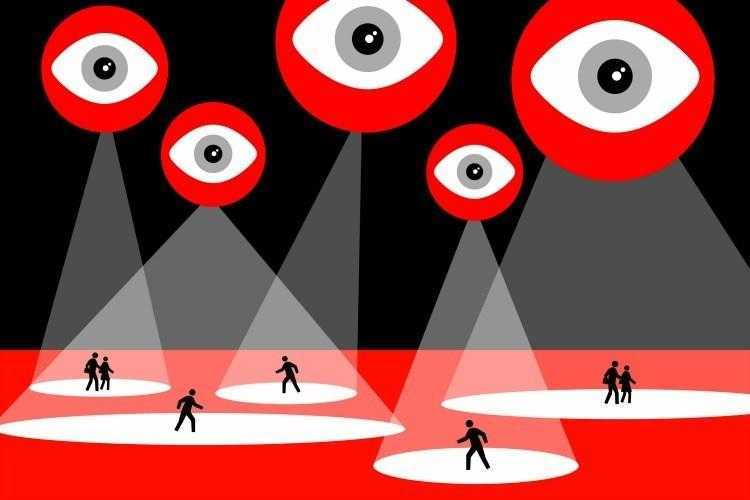
2024 Is the New 1984: Big Brother and the Rise of the Security Industrial Complex

By John & Nisha Whitehead

Source: The Rutherford Institute

“Big Brother is Watching You.”―George Orwell, 1984

2024 is the new 1984.

Forty years past the time that George Orwell envisioned the stomping boot of Big Brother, the police state is about to pass off the baton to the surveillance state.

Fueled by a melding of government and corporate power—the rise of the security industrial complex—this watershed moment sounds a death knell for our privacy rights.

An unofficial fourth branch of government, the Surveillance State came into being without any electoral mandate or constitutional referendum, and yet it possesses superpowers, above and beyond those of any other government agency save the military.

It operates beyond the reach of the president, Congress and the courts, and it marches in lockstep with the corporate elite who really call the shots in Washington, DC.

This is the new face of tyranny in America: all-knowing, all-seeing and all-powerful.

Tread cautiously.

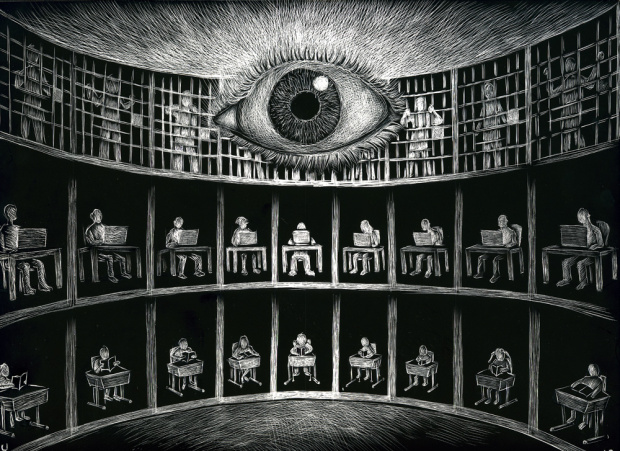
Empowered by advances in surveillance technology and emboldened by rapidly expanding public-private partnerships between law enforcement, the Intelligence Community, and the private sector, the Surveillance State is making the fictional world of 1984, Orwell’s dystopian nightmare, our looming reality.

1984 portrays a global society of total control in which people are not allowed to have thoughts that in any way disagree with the corporate state. There is no personal freedom, and advanced technology has become the driving force behind a surveillance-driven society. Snitches and cameras are everywhere. People are subject to the Thought Police, who deal with anyone guilty of thought crimes. The government, or “Party,” is headed by Big Brother who appears on posters everywhere with the words: “Big Brother is watching you.”

Indeed, in our present age of ubiquitous surveillance, there are no private lives.

Everything is increasingly public.

What we are witnessing, in the so-called name of security and efficiency, is the creation of a new class system comprised of the watched (average Americans such as you and me) and the watchers (government bureaucrats, technicians and private corporations).

We now find ourselves in the unenviable position of being monitored, managed and controlled by our technology, which answers not to us but to our government and corporate rulers.

This is the fact-is-stranger-than-fiction lesson that is being pounded into us on a daily basis.

In this way, 1984, which depicted the ominous rise of ubiquitous technology, fascism and totalitarianism, has become an operation manual for the omnipresent, modern-day surveillance state.

There are roughly one billion surveillance cameras worldwide and that number continues to grow, thanks to their wholehearted adoption by governments (especially law enforcement and military agencies), businesses, and individual consumers.

Surveillance cameras mounted on utility poles, traffic lights, businesses, and homes. Ring doorbells. GPS devices. Dash cameras. Drones. Store security cameras. Geofencing and geotracking. FitBits. Alexa. Internet-connected devices. 

Stingray devices, facial recognition technology, body cameras, automated license plate readers, gunshot detection, predictive policing software, AI-enhanced video analytics, real-time crime centers, fusion centers: all of these technologies and surveillance programs rely on public-private partnerships that together create a sticky spiderweb from which there is no escape.

With every new surveillance device we welcome into our lives, the government gains yet another toehold into our private worlds.

As the cost of these technologies becomes more affordable for the average consumer, an effort underwritten by the tech industry and encouraged by law enforcement agencies and local governing boards, which in turn benefit from access to surveillance they don’t need to include in their budgets, big cities, small towns, urban, suburban and rural communities alike are adding themselves to the surveillance state’s interconnected grid.

What this adds up to for government agencies (that is, FBI, NSA, DHS agents, etc., as well as local police) is a surveillance map that allows them to track someone’s movements over time and space, hopscotching from doorbell camera feeds and business security cameras to public cameras on utility poles, license plate readers, traffic cameras, drones, etc.

It has all but eliminated the notion of privacy enshrined in the  Fourth Amendment and radically re-drawn the line of demarcation between our public and private selves.

The police state has become particularly adept at sidestepping the Fourth Amendment, empowered by advances in surveillance technology and emboldened by rapidly expanding public-private partnerships between law enforcement, the Intelligence Community, and the private sector.

Over the past 50-plus years, surveillance has brought about a series of revolutions in how governments govern and populations are policed to the detriment of us all. Cybersecurity expert Adam Scott Wandt has identified three such revolutions.

The first surveillance revolution came about as a result of government video cameras being installed in public areas. There were a reported 51 million surveillance cameras blanketing the United States in 2022. It’s estimated that Americans are caught on camera an average of 238 times every week (160 times per week while driving; 40 times per week at work; 24 times per week while out running errands and shopping; and 14 times per week through various other channels and activities). That doesn’t even touch on the coverage by surveillance drones, which remain a relatively covert part of police spying operations.

The second revolution occurred when law enforcement agencies started forging public-private partnerships with commercial establishments like banks and drug stores and parking lots in order to gain access to their live surveillance feeds. The use of automatic license plate readers (manufactured and distributed by the likes of Flock Safety), once deployed exclusively by police and now spreading to home owners associations and gated communities, extends the reach of the surveillance state that much further afield. It’s a win-win for police budgets and local legislatures when they can persuade businesses and residential communities to shoulder the costs of the equipment and share the footage, and they can conscript the citizenry to spy on each other through crowdsourced surveillance.

The third revolution was ushered in with the growing popularity of doorbell cameras such as Ring, Amazon’s video surveillance doorbell, and Google’s Nest Cam.

Amazon has been particularly aggressive in its pursuit of a relationship with police, enlisting them in its marketing efforts, and going so far as to hosting parties for police, providing free Ring doorbells and deep discounts, sharing “active camera” maps of Ring owners, allowing access to the Law Enforcement Neighborhood Portal, which enables police to directly contact owners for access to their footage, and coaching police on how to obtain footage without a warrant.

Ring currently partners with upwards of 2,161 law enforcement agencies and 455 fire departments, and that number grows exponentially every year. As Vice reports, “Ring has also heavily pursued city discount programs and private alliances with neighborhood watch groups. When cities provide free or discounted Ring cameras, they sometimes create camera registries, and police sometimes order people to aim Ring cameras at their neighbors, or only give cameras to people surveilled by neighborhood watches.”

In November 2022, San Francisco police gained access to the live footage of privately owned internet cameras as opposed to merely being able to access recorded footage. No longer do police even have to request permission of homeowners for such access: increasingly, corporations have given police access to footage as part of their so-called criminal investigations with or without court orders.

The fourth revolutionary shift may well be the use of facial recognition software and artificial intelligence-powered programs that can track people by their biometrics, clothing, behavior and car, thereby synthesizing the many strands of surveillance video footage into one cohesive narrative, which privacy advocates refer to as 360 degree surveillance.

While the guarantee of safety afforded by these surveillance nerve centers remains dubious, at best, there is no disguising their contribution in effecting a sea change towards outright authoritarianism.

For instance, as an in-depth investigative report by the Associated Press concludes, the very same mass surveillance technologies that were supposedly so necessary to fight the spread of COVID-19 are now being used to stifle dissent, persecute activists, harass marginalized communities, and link people’s health information to other surveillance and law enforcement tools.

As the AP reports, federal officials have also been looking into how to add “‘identifiable patient data,’ such as mental health, substance use and behavioral health information from group homes, shelters, jails, detox facilities and schools,” to its surveillance toolkit.

These cameras—and the public-private eyes peering at us through them—are re-engineering a society structured around the aesthetic of fear and, in the process, empowering “people to not just watch their neighborhood, but to organize as watchers,” creating not just digital neighborhood watches but digital gated communities.

Finally, there is a repressive, suppressive effect to surveillance that not only acts as a potentially small deterrent on crime but serves to monitor and chill lawful First Amendment activity.

As Matthew Feeney warns in the New York Times, “In the past, Communists, civil rights leaders, feminists, Quakers, folk singers, war protesters and others have been on the receiving end of law enforcement surveillance. No one knows who the next target will be.

No one knows, but it’s a pretty good bet that the surveillance state will be keeping a close watch on anyone seen as a threat to the government’s chokehold on power.

After all, as I make clear in my book Battlefield America: The War on the American People and in its fictional counterpart The Erik Blair Diaries, the Surveillance State never sleeps.
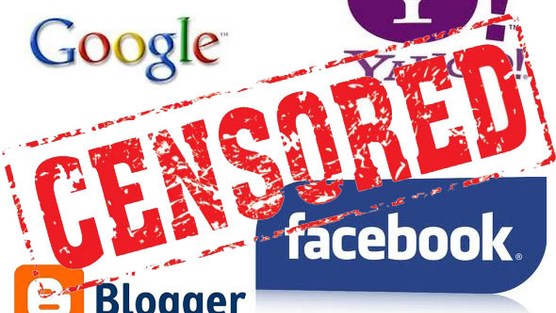
Internet Censorship, Everywhere All at Once

By Debbie Lerman

Source: Activist Post

It used to be a truth universally acknowledged by citizens of democratic nations that freedom of speech was the basis not just of democracy, but of all human rights.

When a person or group can censor the speech of others, there is – by definition – an imbalance of power. Those exercising the power can decide what information and which opinions are allowed, and which should be suppressed. In order to maintain their power, they will naturally suppress information and views that challenge their position.

Free speech is the only peaceful way to hold those in power accountable, challenge potentially harmful policies, and expose corruption. Those of us privileged to live in democracies instinctively understand this nearly sacred value of free speech in maintaining our free and open societies.

Or do we?

Alarmingly, it seems like many people in what we call democratic nations are losing that understanding. And they seem willing to cede their freedom of speech to governments, organizations, and Big Tech companies who, supposedly, need to control the flow of information to keep everyone “safe.”

The locus for the disturbing shift away from free speech is the 21st-century’s global public square: the Internet. And the proclaimed reasons for allowing those in power to diminish our free speech on the Internet are: “disinformation” and “hate speech.”

In this article, I will review the three-step process by which anti-disinformation laws are introduced. Then, I will review some of the laws being rolled out in multiple countries almost simultaneously, and what such laws entail in terms of vastly increasing the potential for censorship of the global flow of information.

How to Pass Censorship Laws

Step 1: Declare an existential threat to democracy and human rights 

Step 2: Assert that the solution will protect democracy and human rights

Step 3: Enact anti-democratic, anti-human rights censorship fast and in unison

Lies, propaganda, “deep fakes,” and all manner of misleading information have always been present on the Internet. The vast global information hub that is the World Wide Web inevitably provides opportunities for criminals and other nefarious actors, including child sex traffickers and evil dictators.

At the same time, the Internet has become the central locus of open discourse for the world’s population, democratizing access to information and the ability to publish one’s views to a global audience.

The good and bad on the Internet reflect the good and bad in the real world. And when we regulate the flow of information on the Internet, the same careful balance between blocking truly dangerous actors, while retaining maximum freedom and democracy, must apply.

Distressingly, the recent slew of laws governing Internet information are significantly skewed in the direction of limiting free speech and increasing censorship. The reason, the regulators claim, is that fake news, disinformation, and hate speech are existential threats to democracy and human rights.

Here are examples of dire warnings, issued by leading international organizations, about catastrophic threats to our very existence purportedly posed by disinformation:

Propaganda, misinformation and fake news have the potential to polarise public opinion, to promote violent extremism and hate speech and, ultimately, to undermine democracies and reduce trust in the democratic processes. Council of Europe

The world must address the grave global harm caused by the proliferation of hate and lies in the digital space.-United Nations

Online hate speech and disinformation have long incited violence, and sometimes mass atrocities.  –World Economic Forum (WEF)/The New Humanitarian

Considering the existential peril of disinformation and hate speech, these same groups assert that any solution will obviously promote the opposite:

Given such a global threat, we clearly need a global solution. And, of course, such a solution will increase democracy, protect the rights of vulnerable populations, and respect human rights. WEF

Moreover, beyond a mere assertion that increasing democracy and respecting human rights are built into combating disinformation, international law must be invoked.

In its Common Agenda Policy Brief from June 2023, Information Integrity on Digital Platforms, the UN details the international legal framework for efforts to counter hate speech and disinformation.

First, it reminds us that freedom of expression and information are fundamental human rights:

Article 19 of the Universal Declaration of Human Rights and article 19 (2) of the Covenant protect the right to freedom of expression, including the freedom to seek, receive and impart information and ideas of all kinds, regardless of frontiers, and through any media. 

Linked to freedom of expression, freedom of information is itself a right. The General Assembly has stated: “Freedom of information is a fundamental human right and is the touchstone of all the freedoms to which the United Nations is consecrated.” (p. 9)

Then, the UN brief explains that disinformation and hate speech are such colossal, all-encompassing evils that their very existence is antithetical to the enjoyment of any human rights:

Hate speech has been a precursor to atrocity crimes, including genocide. The 1948 Convention on the Prevention and Punishment of the Crime of Genocide prohibits “direct and public incitement to commit genocide”. 

In its resolution 76/227, adopted in 2021, the General Assembly emphasized that all forms of disinformation can negatively impact the enjoyment of human rights and fundamental freedoms, as well as the attainment of the Sustainable Development Goals. Similarly, in its resolution 49/21, adopted in 2022, the Human Rights Council affirmed that disinformation can negatively affect the enjoyment and realization of all human rights.

This convoluted maze of legalese leads to an absurd, self-contradictory sequence of illogic:

  • Everything the UN is supposed to protect is founded on the freedom of information, which along with free speech is a fundamental human right.
  • The UN believes hate speech and disinformation destroy all human rights.
  • THEREFORE, anything we do to combat hate speech and disinformation protects all human rights, even if it abrogates the fundamental human rights of free speech and information, on which all other rights depend.
  • Because: genocide!

In practice, what this means is that, although the UN at one point in its history considered the freedom of speech and information fundamental to all other rights, it now believes the dangers of hate speech and disinformation eclipse the importance of protecting those rights.

The same warping of democratic values, as delineated by our international governing body, is now occurring in democracies the world over.

Censorship Laws and Actions All Happening Now

If hate speech and disinformation are the precursors of inevitable genocidal horrors, the only way to protect the world is through a coordinated international effort. Who should lead this campaign?

According to the WEF, “Governments can provide some of the most significant solutions to the crisis by enacting far-reaching regulations.”

Which is exactly what they’re doing.

United States

In the US, freedom of speech is enshrined in the Constitution, so it’s hard to pass laws that might violate it.

Instead, the government can work with academic and nongovernmental organizations to strong-arm social media companies into censoring disfavored content. The result is the Censorship-Industrial Complex, a vast network of government-adjacent academic and nonprofit “anti-disinformation” outfits, all ostensibly mobilized to control online speech in order to protect us from whatever they consider to be the next civilization-annihilating calamity.

The Twitter Files and recent court cases reveal how the US government uses these groups to pressure online platforms to censor content it doesn’t like:

Google

In some cases, companies may even take it upon themselves to control the narrative according to their own politics and professed values, with no need for government intervention. For example: Google, the most powerful information company in the world, has been reported to fix its algorithms to promote, demote, and disappear content according to undisclosed internal “fairness” guidelines.

This was revealed by a whistleblower named Zach Vorhies in his almost completely ignored book, Google Leaks, and by Project Veritas, in a sting operation against Jen Gennai, Google’s Head of Responsible Innovation.

In their benevolent desire to protect us from hate speech and disinformation, Google/YouTube immediately removed the original Project Veritas video from the Internet.

European Union

The Digital Services Act came into force November 16, 2022. The European Commission rejoiced that “The responsibilities of users, platforms, and public authorities are rebalanced according to European values.” Who decides what the responsibilities and what the “European values” are?

  • very large platforms and very large online search engines [are obligated] to prevent the misuse of their systems by taking risk-based action and by independent audits of their risk management systems
  • EU countries will have the primary [oversight] role, supported by a new European Board for Digital Services

Brownstone contributor David Thunder explains how the act provides an essentially unlimited potential for censorship:

This piece of legislation holds freedom of speech hostage to the ideological proclivities of unelected European officials and their armies of “trusted flaggers.” 

The European Commission is also giving itself the power to declare a Europe-wide emergency that would allow it to demand extra interventions by digital platforms to counter a public threat. 

UK

The Online Safety Bill was passed September 19, 2023. The UK government says “It will make social media companies more responsible for their users’ safety on their platforms.”

According to Internet watchdog Reclaim the Net, this bill constitutes one of the widest sweeping attacks on privacy and free speech in a Western democracy:

The bill imbues the government with tremendous power; the capability to demand that online services employ government-approved software to scan through user content, including photos, files, and messages, to identify illegal content. 

The Electronic Frontier Foundation, a nonprofit dedicated to defending civil liberties in the digital world, warns: “the law would create a blueprint for repression around the world.”

Australia

The Communications Legislation Amendment (Combatting Misinformation and Disinformation) Bill 2023 was released in draft form June 25, 2023 and is expected to pass by the end of 2023. the Australian government says:

The new powers will enable the ACMA [Australian Communications and Media Authority] to monitor efforts and require digital platforms to do more, placing Australia at the forefront in tackling harmful online misinformation and disinformation, while balancing freedom of speech.

Reclaim the Net explains:

This legislation hands over a wide range of new powers to ACMA, which includes the enforcement of an industry-wide “standard” that will obligate digital platforms to remove what they determine as misinformation or disinformation. 

Brownstone contributor Rebekah Barnett elaborates:

Controversially, the government will be exempt from the proposed laws, as will professional news outlets, meaning that ACMA will not compel platforms to police misinformation and disinformation disseminated by official government or news sources. 

The legislation will enable the proliferation of official narratives, whether true, false or misleading, while quashing the opportunity for dissenting narratives to compete. 

Canada

The Online Streaming Act (Bill C-10) became law April 27, 2023. Here’s how the Canadian government describes it, as it relates to the Canadian Radio-television and Telecommunications Commission (CRTC):

The legislation clarifies that online streaming services fall under the Broadcasting Act and ensures that the CRTC has the proper tools to put in place a modern and flexible regulatory framework for broadcasting. These tools include the ability to make rules, gather information, and assign penalties for non-compliance.

According to Open Media, a community-driven digital rights organization,

Bill C-11 gives the CRTC unprecedented regulatory authority to monitor all online audiovisual content. This power extends to penalizing content creators and platforms and through them, content creators that fail to comply. 

World Health Organization

In its proposed new Pandemic Treaty and in the amendments to its International Health Regulations, all of which it hopes to pass in 2024, the WHO seeks to enlist member governments to

Counter and address the negative impacts of health-related misinformation, disinformation, hate speech and stigmatization, especially on social media platforms, on people’s physical and mental health, in order to strengthen pandemic prevention, preparedness and response, and foster trust in public health systems and authorities.

Brownstone contributor David Bell writes that essentially this will give the WHO, an unelected international body,

power to designate opinions or information as ‘mis-information or disinformation, and require country governments to intervene and stop such expression and dissemination. This … is, of course, incompatible with the Universal Declaration of Human Rights, but these seem no longer to be guiding principles for the WHO.

Conclusion

We are at a pivotal moment in the history of Western democracies. Governments, organizations and companies have more power than ever to decide what information and views are expressed on the Internet, the global public square of information and ideas.

It is natural that those in power should want to limit expression of ideas and dissemination of information that might challenge their position. They may believe they are using censorship to protect us from grave harms of disinformation and hate speech, or they may be using those reasons cynically to consolidate their control over the flow of information.

Either way, censorship inevitably entails the suppression of free speech and information, without which democracy cannot exist.

Why are the citizens of democratic nations acquiescing to the usurpation of their fundamental human rights? One reason may be the relatively abstract nature of rights and freedoms in the digital realm.

In the past, when censors burned books or jailed dissidents, citizens could easily recognize these harms and imagine how awful it would be if such negative actions were turned against them. They could also weigh the very personal and imminent negative impact of widespread censorship against much less prevalent dangers, such as child sex trafficking or genocide. Not that those dangers would be ignored or downplayed, but it would be clear that measures to combat such dangers should not include widespread book burning or jailing of regime opponents.

In the virtual world, if it’s not your post that is removed, or your video that is banned, it can be difficult to fathom the wide-ranging harm of massive online information control and censorship. It is also much easier online than in the real world to exaggerate the dangers of relatively rare threats, like pandemics or foreign interference in democratic processes. The same powerful people, governments, and companies that can censor online information can also flood the online space with propaganda, terrifying citizens in the virtual space into giving up their real-world rights.

The conundrum for free and open societies has always been the same: How to protect human rights and democracy from hate speech and disinformation without destroying human rights and democracy in the process.

The answer embodied in the recent coordinated enactment of global censorship laws is not encouraging for the future of free and open societies.

Published under a Creative Commons Attribution 4.0 International License
For reprints, please set the canonical link back to the original Brownstone Institute Article and Author.

Technocensorship: The Government’s War on So-Called Dangerous Ideas

By John & Nisha Whitehead

Source: The Rutherford Institute

“There is more than one way to burn a book. And the world is full of people running about with lit matches.”—Ray Bradbury

What we are witnessing is the modern-day equivalent of book burning which involves doing away with dangerous ideas—legitimate or not—and the people who espouse them. Seventy years after Ray Bradbury’s novel Fahrenheit 451 depicted a fictional world in which books are burned in order to suppress dissenting ideas, while televised entertainment is used to anesthetize the populace and render them easily pacified, distracted and controlled, we find ourselves navigating an eerily similar reality.

Welcome to the age of technocensorship.

On paper—under the First Amendment, at least—we are technically free to speak.

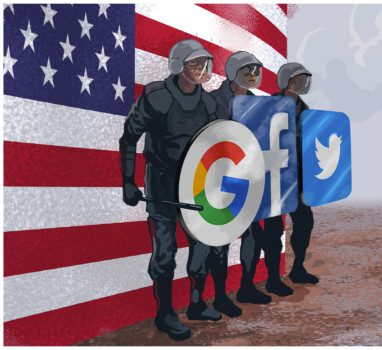
In reality, however, we are now only as free to speak as a government official—or corporate entities such as Facebook, Google or YouTube—may allow.

Case in point: internal documents released by the House Judiciary Select Subcommittee on Weaponization of the Federal Government confirmed what we have long suspected: that the government has been working in tandem with social media companies to censor speech.

By “censor,” we’re referring to concerted efforts by the government to muzzle, silence and altogether eradicate any speech that runs afoul of the government’s own approved narrative.

This is political correctness taken to its most chilling and oppressive extreme.

The revelations that Facebook worked in concert with the Biden administration to censor content related to COVID-19, including humorous jokes, credible information and so-called disinformation, followed on the heels of a ruling by a federal court in Louisiana that prohibits executive branch officials from communicating with social media companies about controversial content in their online forums.

Likening the government’s heavy-handed attempts to pressure social media companies to suppress content critical of COVID vaccines or the election to “an almost dystopian scenario,” Judge Terry Doughty warned that “the United States Government seems to have assumed a role similar to an Orwellian ‘Ministry of Truth.’

This is the very definition of technofascism.

Clothed in tyrannical self-righteousness, technofascism is powered by technological behemoths (both corporate and governmental) working in tandem to achieve a common goal.

The government is not protecting us from “dangerous” disinformation campaigns. It is laying the groundwork to insulate us from “dangerous” ideas that might cause us to think for ourselves and, in so doing, challenge the power elite’s stranglehold over our lives.

Thus far, the tech giants have been able to sidestep the First Amendment by virtue of their non-governmental status, but it’s a dubious distinction at best when they are marching in lockstep with the government’s dictates.

As Philip Hamburger and Jenin Younes write for The Wall Street Journal: “The First Amendment prohibits the government from ‘abridging the freedom of speech.’ Supreme Court doctrine makes clear that government can’t constitutionally evade the amendment by working through private companies.”

Nothing good can come from allowing the government to sidestep the Constitution.

The steady, pervasive censorship creep that is being inflicted on us by corporate tech giants with the blessing of the powers-that-be threatens to bring about a restructuring of reality straight out of Orwell’s 1984, where the Ministry of Truth polices speech and ensures that facts conform to whatever version of reality the government propagandists embrace.

Orwell intended 1984 as a warning. Instead, it is being used as a dystopian instruction manual for socially engineering a populace that is compliant, conformist and obedient to Big Brother.

This is the slippery slope that leads to the end of free speech as we once knew it.

In a world increasingly automated and filtered through the lens of artificial intelligence, we are finding ourselves at the mercy of inflexible algorithms that dictate the boundaries of our liberties.

Once artificial intelligence becomes a fully integrated part of the government bureaucracy, there will be little recourse: we will all be subject to the intransigent judgments of techno-rulers.

This is how it starts.

First, the censors went after so-called extremists spouting so-called “hate speech.”

Then they went after so-called extremists spouting so-called “disinformation” about stolen elections, the Holocaust, and Hunter Biden.

By the time so-called extremists found themselves in the crosshairs for spouting so-called “misinformation” about the COVID-19 pandemic and vaccines, the censors had developed a system and strategy for silencing the nonconformists.

Eventually, depending on how the government and its corporate allies define what constitutes “extremism, “we the people” might all be considered guilty of some thought crime or other.

Whatever we tolerate now—whatever we turn a blind eye to—whatever we rationalize when it is inflicted on others, whether in the name of securing racial justice or defending democracy or combatting fascism, will eventually come back to imprison us, one and all.

Watch and learn.

We should all be alarmed when any individual or group—prominent or not—is censored, silenced and made to disappear from Facebook, Twitter, YouTube and Instagram for voicing ideas that are deemed politically incorrect, hateful, dangerous or conspiratorial.

Given what we know about the government’s tendency to define its own reality and attach its own labels to behavior and speech that challenges its authority, this should be cause for alarm across the entire political spectrum.

Here’s the point: you don’t have to like or agree with anyone who has been muzzled or made to disappear online because of their views, but to ignore the long-term ramifications of such censorship is dangerously naïve, because whatever powers you allow the government and its corporate operatives to claim now will eventually be used against you by tyrants of your own making.

As Glenn Greenwald writes for The Intercept:

The glaring fallacy that always lies at the heart of pro-censorship sentiments is the gullible, delusional belief that censorship powers will be deployed only to suppress views one dislikes, but never one’s own views… Facebook is not some benevolent, kind, compassionate parent or a subversive, radical actor who is going to police our discourse in order to protect the weak and marginalized or serve as a noble check on mischief by the powerful. They are almost always going to do exactly the opposite: protect the powerful from those who seek to undermine elite institutions and reject their orthodoxies. Tech giants, like all corporations, are required by law to have one overriding objective: maximizing shareholder value. They are always going to use their power to appease those they perceive wield the greatest political and economic power.

Be warned: it’s a slippery slope from censoring so-called illegitimate ideas to silencing truth.

Eventually, as George Orwell predicted, telling the truth will become a revolutionary act.

If the government can control speech, it can control thought and, in turn, it can control the minds of the citizenry.

It’s happening already.

With every passing day, we’re being moved further down the road towards a totalitarian society characterized by government censorship, violence, corruption, hypocrisy and intolerance, all packaged for our supposed benefit in the Orwellian doublespeak of national security, tolerance and so-called “government speech.”

Little by little, Americans are being conditioned to accept routine incursions on their freedoms.

This is how oppression becomes systemic, what is referred to as creeping normality, or a death by a thousand cuts.

It’s a concept invoked by Pulitzer Prize-winning scientist Jared Diamond to describe how major changes, if implemented slowly in small stages over time, can be accepted as normal without the shock and resistance that might greet a sudden upheaval.

Diamond’s concerns related to Easter Island’s now-vanished civilization and the societal decline and environmental degradation that contributed to it, but it’s a powerful analogy for the steady erosion of our freedoms and decline of our country right under our noses.

As Diamond explains, “In just a few centuries, the people of Easter Island wiped out their forest, drove their plants and animals to extinction, and saw their complex society spiral into chaos and cannibalism… Why didn’t they look around, realize what they were doing, and stop before it was too late? What were they thinking when they cut down the last palm tree?”

His answer: “I suspect that the disaster happened not with a bang but with a whimper.”

Much like America’s own colonists, Easter Island’s early colonists discovered a new world—“a pristine paradise”—teeming with life. Yet almost 2000 years after its first settlers arrived, Easter Island was reduced to a barren graveyard by a populace so focused on their immediate needs that they failed to preserve paradise for future generations.

The same could be said of the America today: it, too, is being reduced to a barren graveyard by a populace so focused on their immediate needs that they are failing to preserve freedom for future generations.

In Easter Island’s case, as Diamond speculates:

The forest…vanished slowly, over decades. Perhaps war interrupted the moving teams; perhaps by the time the carvers had finished their work, the last rope snapped. In the meantime, any islander who tried to warn about the dangers of progressive deforestation would have been overridden by vested interests of carvers, bureaucrats, and chiefs, whose jobs depended on continued deforestation… The changes in forest cover from year to year would have been hard to detect… Only older people, recollecting their childhoods decades earlier, could have recognized a difference. Gradually trees became fewer, smaller, and less important. By the time the last fruit-bearing adult palm tree was cut, palms had long since ceased to be of economic significance. That left only smaller and smaller palm saplings to clear each year, along with other bushes and treelets. No one would have noticed the felling of the last small palm.

Sound painfully familiar yet?

We’ve already torn down the rich forest of liberties established by our founders. It has vanished slowly, over the decades. The erosion of our freedoms has happened so incrementally, no one seems to have noticed. Only the older generations, remembering what true freedom was like, recognize the difference. Gradually, the freedoms enjoyed by the citizenry have become fewer, smaller and less important. By the time the last freedom falls, no one will know the difference.

This is how tyranny rises and freedom falls: with a thousand cuts, each one justified or ignored or shrugged over as inconsequential enough by itself to bother, but they add up.

Each cut, each attempt to undermine our freedoms, each loss of some critical right—to think freely, to assemble, to speak without fear of being shamed or censored, to raise our children as we see fit, to worship or not worship as our conscience dictates, to eat what we want and love who we want, to live as we want—they add up to an immeasurable failure on the part of each and every one of us to stop the descent down that slippery slope.

As I make clear in my book Battlefield America: The War on the American People and in its fictional counterpart The Erik Blair Diaries, we are on that downward slope now.

TWITTER FILES: Brown University’s Claire Wardle Aids Censorship

Researchers on “disinformation” have little in common with academic scholars teaching Proust or studying astrophysics.

By Paul D. Thacker

Source: The Disinformation Chronicle

The Washington Post defended campus researchers collaborating with federal agencies to censor Americans in an awkward, bumbling article last week, alleging that congressional staff demanding university documents were “harassing academics” who studied falsehoods spread by Trump. In reality, Congress is investigating campus employees who have little in common with traditional university scholars teaching Proust or studying the atmospheric chemistry of distant planets.

Just last year, one Stanford University researcher disclosed that he and other academics at Stanford and the University of Washington worked with an agency in the Department of Homeland Security (DHS) “to fill the gap of the things the government could not do themselves,” admitting that academics served as a cutout for federal censoring of Americans. The DHS agency campus researchers collaborated with is called the Cybersecurity & Infrastructure Security Agency or CISA.

In a recent investigation, Tablet magazine noted that in 2021 CISA began determining which ideas Americans were allowed to discuss and debate during the COVID-19 pandemic.

Documents I discovered at Twitter’s headquarters further tie these censorship efforts to another researcher—Brown University’s Claire Wardle.

Who is Claire Wardle?

Largely unknown to most Americans, Wardle is a central figure in the disinformation industry and helped organize many of today’s campus disinformation groups in 2015 with funding from Google. But searching through Twitter’s files, I uncovered a government document marked “for official use only” that finds Wardle had also been chosen to brief CISA’s advisory committee.

A spokesperson for CISA emailed yesterday that he would get back to me and explain how often Wardle had briefed the agency.

Wardle has no training or background in science, yet she has long sought to define herself as an expert on vaccines. In a 2019 Twitter email that I discovered, Wardle tried to involve the company’s executives in a Ted Talk event that would define “credible sources” and “quality information around vaccines.”

That next year, Wardle emailed Twitter executives a report she had written looking into what she deemed to be antivaccine conspiracies and narratives found on social media. Wardle sent the email days after Pfizer announced initial positive findings for their COVID vaccine—results which Wardle said forced her to hurry up the report’s release.

“The dominant vaccine narrative is designed to undermine confidence in institutions and scientific sources,” Wardle alleged, in her email to Twitter. Wardle claimed in her report that vaccine mandates are “one of the prominent anti-vaccination narratives”—a narrative which, oddly enough, proved to be accurate when US companies as well as state and federal agencies began mandating COVID vaccines.

Since Wardle published her vaccine findings, one of the report’s authors joined a secretive UK government agency that investigative journalists exposed in recent weeks for censoring British citizens. Meanwhile, one of the report’s contributing researchers now works for a global PR firm that an Australian investigation found was helping that country’s government to censor its own people.

360 Degree Surveillance: How Police Use Public-Private Partnerships to Spy on Americans

By John & Nisha Whitehead

Source: The Rutherford Institute

We live in a surveillance state founded on a partnership between government and the technology industry.”— Law Professor Avidan Y. Cover

In this age of ubiquitous surveillance, there are no private lives: everything is public.

Surveillance cameras mounted on utility poles, traffic lights, businesses, and homes. License plate readers. Ring doorbells. GPS devices. Dash cameras. Drones. Store security cameras. Geofencing and geotracking. FitBits. Alexa. Internet-connected devices.  

There are roughly one billion surveillance cameras worldwide and that number continues to grow, thanks to their wholehearted adoption by governments (especially law enforcement and military agencies), businesses, and individual consumers.

With every new surveillance device we welcome into our lives, the government gains yet another toehold into our private worlds.

Indeed, empowered by advances in surveillance technology and emboldened by rapidly expanding public-private partnerships between law enforcement, the Intelligence Community, and the private sector, police have become particularly adept at sidestepping the Fourth Amendment.

As law professor Avidan Y. Cover explains:

A key feature of the surveillance state is the cooperative relationship between the private sector and the government. The private sector’s role is vital to the surveillance both practically and legally. The private sector, of course, provides the infrastructure and tools for the surveillance… The private sector is also critical to the surveillance state’s legality. Under the third-party doctrine, the Fourth Amendment is not implicated when the government acquires information that people provide to corporations, because they voluntarily provide their information to another entity and assume the risk that the entity will disclose the information to the government. Therefore, people do not have a reasonable expectation of privacy in their calling data, or potentially even their emails. As a result, the government does not normally need a warrant to obtain information transmitted electronically. But the Fourth Amendment is not only a source of protection for individual privacy; it also limits government excess and abuse through challenges by the people. The third-party doctrine removes this vital and populist check on government overreach.

Critical to this end run around the Fourth Amendment’s prohibitions against unreasonable searches and seizures by government agents is a pass play that allows police to avoid public transparency requirements (open bids, public meetings, installation protocols) by having private companies and individuals do the upfront heavy lifting, leaving police to harvest the intel on the back end.

Stingray devices, facial recognition technology, body cameras, automated license plate readers, gunshot detection, predictive policing software, AI-enhanced video analytics, real-time crime centers, fusion centers: all of these technologies and surveillance programs rely on public-private partnerships that together create a sticky spiderweb from which there is no escape.

As the cost of these technologies becomes more affordable for the average consumer, an effort underwritten by the tech industry and encouraged by law enforcement agencies and local governing boards, which in turn benefit from access to surveillance they don’t need to include in their budgets, big cities, small towns, urban, suburban and rural communities alike are adding themselves to the surveillance state’s interconnected grid.

What this adds up to for government agencies (that is, FBI, NSA, DHS agents, etc., as well as local police) is a surveillance map that allows them to track someone’s movements over time and space, hopscotching from doorbell camera feeds and business security cameras to public cameras on utility poles, license plate readers, traffic cameras, drones, etc.

It has all but eliminated the notion of privacy and radically re-drawn the line of demarcation between our public and private selves.

Over the past 50 years, surveillance has brought about a series of revolutions in how governments govern and populations are policed to the detriment of us all. Cybersecurity expert Adam Scott Wandt has identified three such revolutions.

The first surveillance revolution came about as a result of government video cameras being installed in public areas. There were a reported 51 million surveillance cameras blanketing the United States in 2022. It’s estimated that Americans are caught on camera an average of 238 times every week (160 times per week while driving; 40 times per week at work; 24 times per week while out running errands and shopping; and 14 times per week through various other channels and activities). That doesn’t even touch on the coverage by surveillance drones, which remain a relatively covert part of police spying operations.

The second revolution occurred when law enforcement agencies started forging public-private partnerships with commercial establishments like banks and drug stores and parking lots in order to gain access to their live surveillance feeds. The use of automatic license plate readers (manufactured and distributed by the likes of Flock Safety), once deployed exclusively by police and now spreading to home owners associations and gated communities, extends the reach of the surveillance state that much further afield. It’s a win-win for police budgets and local legislatures when they can persuade businesses and residential communities to shoulder the costs of the equipment and share the footage, and they can conscript the citizenry to spy on each other through crowdsourced surveillance.

The third revolution was ushered in with the growing popularity of doorbell cameras such as Ring, Amazon’s video surveillance doorbell, and Google’s Nest Cam.

Amazon has been particularly aggressive in its pursuit of a relationship with police, enlisting them in its marketing efforts, and going so far as to hosting parties for police, providing free Ring doorbells and deep discounts, sharing “active camera” maps of Ring owners, allowing access to the Law Enforcement Neighborhood Portal, which enables police to directly contact owners for access to their footage, and coaching police on how to obtain footage without a warrant.

Ring currently partners with upwards of 2,161 law enforcement agencies and 455 fire departments, and that number grows exponentially every year. As Vice reports, “Ring has also heavily pursued city discount programs and private alliances with neighborhood watch groups. When cities provide free or discounted Ring cameras, they sometimes create camera registries, and police sometimes order people to aim Ring cameras at their neighbors, or only give cameras to people surveilled by neighborhood watches.”

In November 2022, San Francisco police gained access to the live footage of privately owned internet cameras as opposed to merely being able to access recorded footage. No longer do police even have to request permission of homeowners for such access: increasingly, corporations have given police access to footage as part of their so-called criminal investigations with or without court orders.

We would suggest a fourth revolutionary shift to be the use of facial recognition software and artificial intelligence-powered programs that can track people by their biometrics, clothing, behavior and car, thereby synthesizing the many strands of surveillance video footage into one cohesive narrative, which privacy advocates refer to as 360 degree surveillance.

Finally, Wandt sees autonomous cars equipped with cameras that record everything around them as yet another revolutionary expansion of surveillance to be tapped by police.

Yet in the present moment, it’s those public-private partnerships that signify a watershed moment in the transition from a police state to a surveillance state and sound a death knoll for our privacy rights. This fusion of government power and private power is also at the heart of the surveillance state’s growing stranglehold on the populace.

As always, these intrusions into our personal lives are justified in the name of national security and fighting crime. Yet while the price to be paid for having the government’s so-called protection is nothing less than our right to privacy, the guarantee of safety remains dubious, at best.

As a study on camera surveillance by researchers at City University of New York concluded, the presence of cameras were somewhat effective as a deterrent for crimes such as car burglaries and property theft, but they had no significant effect on violent crimes.

On the other hand, when you combine overcriminalization with wall-to-wall surveillance monitored by police in pursuit of crimes, the resulting suspect society inevitably gives way to a nation of criminals. In such a society, we are all guilty of some crime or other.

The predatory effect of these surveillance cameras has also yet to be fully addressed, but they are vulnerable to being hacked by third parties and abused by corporate and government employees.

After all, power corrupts. We’ve seen this abuse of power recur time and time again throughout history. For instance, as an in-depth investigative report by the Associated Press concludes, the very same mass surveillance technologies that were supposedly so necessary to fight the spread of COVID-19 are now being used to stifle dissent, persecute activists, harass marginalized communities, and link people’s health information to other surveillance and law enforcement tools. As the AP reports, federal officials have also been looking into how to add “‘identifiable patient data,’ such as mental health, substance use and behavioral health information from group homes, shelters, jails, detox facilities and schools,” to its surveillance toolkit.

These cameras—and the public-private eyes peering at us through them—are re-engineering a society structured around the aesthetic of fear and, in the process, empowering “people to not just watch their neighborhood, but to organize as watchers,” creating not just digital neighborhood watches but digital gated communities.

Finally, there is a repressive, suppressive effect to surveillance that not only acts as a potentially small deterrent on crime but serves to monitor and chill lawful First Amendment activity. As Matthew Feeney warns in the New York Times, “In the past, Communists, civil rights leaders, feminists, Quakers, folk singers, war protesters and others have been on the receiving end of law enforcement surveillance. No one knows who the next target will be.

No one knows, but it’s a pretty good bet that the surveillance state will be keeping a close watch on anyone seen as a threat to the government’s chokehold on power.

It’s George Orwell’s 1984 on a global scale.

As I make clear in my book Battlefield America: The War on the American People and in its fictional counterpart The Erik Blair Diaries, Orwell’s dystopian nightmare has become our looming reality.

The Democrats Are Now the War Party

The Democratic Party has become the party of permanent war, fueling massive military spending which is hollowing out the country from the inside and flirting with nuclear war.

By Chris Hedges

Source: ScheerPost.com

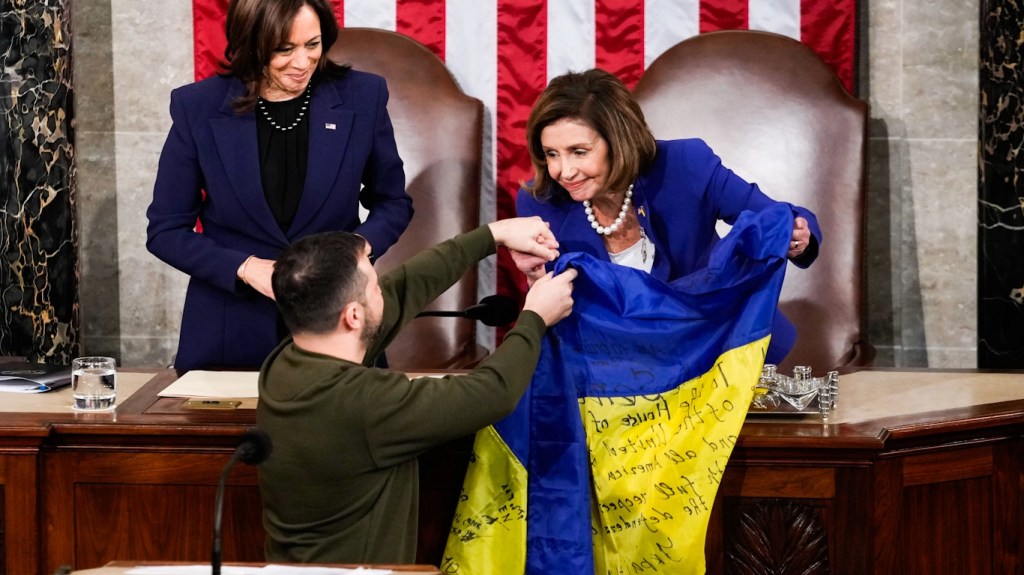
The Democrats position themselves as the party of virtue, cloaking their support for the war industry in moral language stretching back to Korea and Vietnam, when President Ngo Dinh Diem was as lionized as Ukrainian President Volodymyr Zelensky. All the wars they support and fund are “good” wars. All the enemies they fight, the latest being Russia’s Vladimir Putin and China’s Xi Jinping, are incarnations of evil. The photo of a beaming House Speaker Nancy Pelosi and Vice President Kamala Harris holding up a signed Ukrainian battle flag behind Zelensky as he addressed Congress was another example of the Democratic Party’s abject subservience to the war machine.

The Democrats, especially with the presidency of Bill Clinton, became shills not only for corporate America but for the weapons manufacturers and the Pentagon. No weapons system is too costly. No war, no matter how disastrous, goes unfunded. No military budget is too big, including the $858 billion in military spending allocated for the current fiscal year, an increase of $45 billion above what the Biden administration requested. 

The historian Arnold Toynbee cited unchecked militarism as the fatal disease of empires, arguing that they ultimately commit suicide. 

There once was a wing of the Democratic Party that questioned and stood up to the war industry: Senators J. William Fulbright, George McGovern, Gene McCarthy, Mike Gravel, William Proxmire and House member Dennis Kucinich. But that opposition evaporated along with the antiwar movement. When 30 members of the party’s progressive caucus recently issued a call for Biden to negotiate with Putin, they were forced by the party leadership and a warmongering media to back down and rescind their letter. Not that any of them, with the exception of Alexandria Ocasio-Cortez, have voted against the billions of dollars in weaponry sent to Ukraine or the bloated military budget. Rashida Tlaib voted present. 

The opposition to the perpetual funding of the war in Ukraine has come primarily from Republicans, 11 in the Senate and 57 in the House, several, such as Marjorie Taylor Greene, unhinged conspiracy theorists. Only nine Republicans in the House joined the Democrats in supporting the $1.7 trillion spending bill needed to prevent the government from shutting down, which included approval of $847 billion for the military — the total is boosted to $858 billion when factoring in accounts that don’t fall under the Armed Services committees’ jurisdiction. In the Senate, 29 Republicans opposed the spending bill. The Democrats, including nearly all 100 members of the House Congressional Progressive Caucus, lined up dutifully for endless war. 

This lust for war is dangerous, pushing us into a potential war with Russia and, perhaps later, with China — each a nuclear power. It is also economically ruinous. The monopolization of capital by the military has driven U.S. debt to over $30 trillion, $6 trillion more than the U.S. GDP of $24 trillion. Servicing this debt costs $300 billion a year. We spend more on the military than the next nine countries, including China and Russia, combined. Congress is also on track to provide an extra $21.7 billion to the Pentagon — above the already expanded annual budget — to resupply Ukraine.

“But those contracts are just the leading edge of what is shaping up to be a big new defense buildup,” The New York Times reported. “Military spending next year is on track to reach its highest level in inflation-adjusted terms since the peaks in the costs of the Iraq and Afghanistan wars between 2008 and 2011, and the second highest in inflation-adjusted terms since World War II — a level that is more than the budgets for the next 10 largest cabinet agencies combined.”

The Democratic Party, which, under the Clinton administration aggressively courted corporate donors, has surrendered its willingness to challenge, however tepidly, the war industry. 

“As soon as the Democratic Party made a determination, it could have been 35 or 40 years ago, that they were going to take corporate contributions, that wiped out any distinction between the two parties,” Dennis Kucinich said when I interviewed him on my show for The Real News Network. “Because in Washington, he or she who pays the piper plays the tune. That’s what’s happened. There isn’t that much of a difference in terms of the two parties when it comes to war.”

In his 1970 book “The Pentagon Propaganda Machine,” Fulbright describes how the Pentagon and the arms industry pour millions into shaping public opinion through public relations campaigns, Defense Department films, control over Hollywood and domination of the commercial media. Military analysts on cable news are universally former military and intelligence officials who sit on boards or work as consultants to defense industries, a fact they rarely disclose to the public. Barry R. McCaffrey, a retired four-star army general and military analyst for NBC News, was also an employee of Defense Solutions, a military sales and project management firm. He, like most of these shills for war, personally profited from the sales of the weapons systems and expansion of the wars in Iraq and Afghanistan.

On the eve of every congressional vote on the Pentagon budget, lobbyists from businesses tied to the war industry meet with Congress members and their staff to push them to vote for the budget to protect jobs in their district or state. This pressure, coupled with the mantra amplified by the media that opposition to profligate war funding is unpatriotic, keeps elected officials in bondage. These politicians also depend on the lavish donations from the weapons manufacturers to fund their campaigns.

Seymour Melman, in his book “Pentagon Capitalism,” documented the way militarized societies destroy their domestic economies. Billions are spent on the research and development of weapons systems while renewable energy technologies languish. Universities are flooded with military-related grants while they struggle to find money for environmental studies and the humanities. Bridges, roads, levees, rail, ports, electric grids, sewage treatment plants and drinking water infrastructures are structurally deficient and antiquated. Schools are in disrepair and lack sufficient teachers and staff. Unable to stem the COVID-19 pandemic, the for-profit health care industry forces families, including those with insurance, into bankruptcy. Domestic manufacturing, especially with the offshoring of jobs to China, Vietnam, Mexico and other nations, collapses. Families are drowning in personal debt, with 63 percent of Americans living paycheck to paycheck. The poor, the mentally ill, the sick and the unemployed are abandoned. 

Melman, who coined the term “permanent war economy,” noted that since the end of the Second World War, the federal government has spent more than half its discretionary budget on past, current and future military operations. It is the largest single sustaining activity of the government. The military-industrial establishment is nothing more than gilded corporate welfare. Military systems are sold before they are produced. Military industries are permitted to charge the federal government for huge cost overruns. Massive profits are guaranteed. For example, this November, the Army awarded Raytheon Technologies alone more than $2 billion in contracts, on top of over $190 million awarded in August, to deliver missile systems to expand or replenish weapons sent to Ukraine. Despite a depressed market for most other businesses, stock prices of Lockheed and Northrop Grumman have risen by more than 36 and 50 percent this year. 

Tech giants, including Amazon, which supplies surveillance and facial recognition software to the police and FBI, have been absorbed into the permanent war economy. Amazon, Google, Microsoft and Oracle were awarded multibillion-dollar cloud computing contracts for the Joint Warfighting Cloud Capability and are eligible to receive $9 billion in Pentagon contracts to provide the military with “globally available cloud services across all security domains and classification levels, from the strategic level to the tactical edge,” through mid-2028.

Foreign aid is given to countries such as Israel, with more than $150 billion in bilateral assistance since its founding in 1948, or Egypt, which has received over $80 billion since 1978 — aid that requires foreign governments to buy weapons systems from the U.S. The U.S. public funds the research, development and building of weapons systems and purchases them for foreign governments. Such a  circular system mocks the idea of a free-market economy. These weapons soon become obsolete and are replaced by updated and usually more costly weapons systems. It is, in economic terms, a dead end. It sustains nothing but the permanent war economy.

“The truth of the matter is that we’re in a heavily militarized society driven by greed, lust for profit, and wars are being created just to keep fueling that,” Kucinich told me.

In 2014, the U.S. backed a coup in Ukraine that installed a government that included neo-Nazis and was antagonistic to Russia. The coup triggered a civil war when the ethnic Russians in eastern Ukraine, the Donbass, sought to secede from the country, resulting in over 14,000 people dead and nearly 150,000 displaced, before Russia invaded in February. The Russian invasion of Ukraine, according to Jacques Baud, a former NATO security advisor who also worked for Swiss intelligence, was instigated by the escalation of Ukraine’s war on the Donbass. It also followed the Biden administration’s rejection of proposals sent by the Kremlin in late 2021, which might have averted Russia’s invasion the following year. 

This invasion has led to widespread U.S. and E.U. sanctions on Russia, which have boomeranged onto Europe. Inflation ravages Europe with the sharp curtailment of shipments of Russian oil and gas. Industry, especially in Germany, is crippled.  In most of Europe, it is a winter of shortages, spiraling prices and misery. 

“This whole thing is blowing up in the face of the West,” Kucinich warned. “We forced Russia to pivot to Asia, as well as Brazil, India, China, South Africa and Saudi Arabia. There’s a whole new world being formed. The catalyst of it is the misjudgment that occurred about Ukraine and the effort to try to control Ukraine in 2014 that most people aren’t aware of.”

By not opposing a Democratic Party whose primary business is war, liberals become the sterile, defeated dreamers in Fyodor Dostoevsky’s “Notes from the Underground.” 

A former convict, Dostoevsky did not fear evil. He feared a society that no longer had the moral fortitude to confront evil. And war, to steal a line from my latest book, is the greatest evil.

Censorship and Global Information Control: Who Is Behind the “Trusted News Initiative”(TNI)?

By Dr. Joseph Mercola

Source: Global Research

Story at-a-glance

  • The Trusted News Initiative (TNI) was founded by the BBC in July 2019. While TNI claims to promote democracy and freedom, its purpose for being is global information control
  • Partners in the initiative include global media outlets such as The Washington Post, Reuters, The Associated Press, AFP, the Financial Times and the European Broadcasting Union (EBU), and Big Tech partners such as Google, Facebook, Twitter, YouTube and Microsoft
  • TNI was formed mere weeks after a Reuters Institute report revealed trust in U.S. media had slipped to an all-time low of just 29% — the lowest of the 46 countries included. Clearly, people were going elsewhere for the facts, and that probably had everything to do with the creation of TNI. They have no control over alternative media, so they needed a comprehensive way to shut them all down
  • By suppressing information about early treatment and the adverse effects suffered from the COVID shots, TNI partners have played a direct role in the destruction of lives. In short, TNI is the converse of “trusted news.” It is the very “fake news” it claims to combat
  • In addition to TNI, Google also has a similar program going on, called the Google News Initiative, which includes a $300 million funding commitment to the future of the news industry. The Google News Initiative is partnered with advertising agencies in a program called Trusted News for Trusted Advertising (TNTA), to ensure advertisers don’t have their ads associated with “false or misleading news,” thereby allowing them to “regain control of the media on which they publish the advertising”

https://odysee.com/$/download/Vaccine-Safety-Research-Foundation-TNI/e12aa5cff1d4330b882766cf4f00ed41c42a532c

What is the Trusted News Initiative (TNI)? As you may have discovered, Orwellian doublespeak is rampant these days, and many organizations are named in complete opposition to their intended purposes. Such is the case with the TNI as well.

As explained in the video above, created by Steve Kirsch’s Vaccine Safety Research Foundation (VSRF), TNI is an organization created for the purpose of global information control. It was founded by the BBC in July 2019,1,2,3 mere months before the COVID pandemic shattered all semblance of free speech rights.

Partners in the initiative include global media outlets such as The Washington Post, Reuters, The Associated Press, AFP, the Financial Times and the European Broadcasting Union (EBU), and Big Tech partners such as Google, Facebook, Twitter, YouTube and Microsoft, just to name a few.4,5

TNI Formed as Trust in Mainstream Media Hit Rock Bottom

As astutely noted by Elizabeth Woodsworth in The Liberty Beacon,6 TNI was formed mere weeks after a Reuters Institute report revealed trust in U.S. media had slipped to an all-time low of just 29% — the lowest of the 46 countries included. Canadians trust in mainstream media was only slightly better at 45%.

Also supporting the distrust in the media is an even more appalling recent Gallup Poll.7 Just 16% of U.S. adults now say they have “a great deal” or “quite a lot” of confidence in newspapers and 11% in television news. Jimmy Dore goes into more details below.

This massive slip “can only mean that people are going elsewhere for their news,” Woodsworth said. And that probably had everything to do with the creation of TNI. They realized people didn’t trust mainstream media anymore and were looking elsewhere for the facts.

This presented a serious problem, as they had no control over alternative media. How then would they shut down undesirable facts and theories that might jeopardize the smooth transition into the New World Order? Enter TNI and a new cadre of “fact checking” organizations to wrangle the unruly masses back into the brainwashing line.

Promoting ‘Freedom and Democracy’ Through Censorship

According to TNI, its first order of business was to “promote freedom and democracy” by preventing foreign interference in the 2020 election. However, TNI’s mission didn’t end there. Its Big Pharma backers had a vaccination agenda right from the start, and TNI has been instrumental in promoting that agenda and upholding their financial interests.

In 2019 — before we knew anything about the COVID shots to come — TNI warned that “anti-vaxxers are gaining traction” and that online platforms would need to intervene using algorithms to suppress the growing anti-vaccine movement.

In addition to suppressing undesirable vaccine content, TNI also floods online users with pro-vaccine messages to drown out what little opposition is left. As noted by VSRF, from the start, TNI sought to normalize the use of this experimental gene transfer technology, despite a mountain of unanswered questions about the safety and efficacy of mRNA technology.

Suppressing early treatment successes was also part of the vaccine agenda, as early treatment options posed a direct threat to the Emergency Use Authorization of these experimental shots.

To that same end, TNI also fueled hatred against the unvaccinated, and hired so-called “fact checkers” to publish false fact checks and hit pieces on those who questioned the sanity and safety of pandemic countermeasures, such as masks and lockdowns, or raised concerns about the experimental shots.

We’re Made to Pay for Our Own Destruction

Hundreds of outspoken doctors and scientists — including experts from Harvard, Stanford and Oxford — have been banned and deplatformed over the past two and a half years.

No matter how prestigious their careers, they’ve been labeled “dangerous” and targeted for neutralization. Many have lost their careers. They’ve been ousted from professional associations and stripped of their medical licenses.By suppressing information about early treatment and the adverse effects suffered from the shots, TNI partners have played a direct role in the destruction of lives. In short, TNI is the very ‘fake news’ it claims to combat.

Thousands of vaccine-injured people have also been accused of spreading “misinformation” and have been targeted for elimination from social media, while mainstream media (MSM) have roundly ignored their plight and pleas for recognition and help.

As noted by VSRF, by suppressing information about early treatment and the adverse effects suffered from the shots, TNI partners have played a direct role in the destruction of lives. In short, TNI is the converse of “trusted news.” It actually creates and promotes mis- and disinformation. It is the very “fake news” it claims to combat.

And “Who’s paying for this harmful suppression of science?” VSRF asks. The answer: YOU are. We all are, through our taxes. Government has spent billions of tax dollars to promote the experimental COVID jabs, which benefits no one but Big Pharma, various patent holders and investors.

Legacy Media Is on the Wrong Side of History

In a June 25, 2021, article, unidentified staff at TrialSite News commented on the shocking censorship that was already becoming apparent:8

“Since time immemorial, those with power have used it to control those without. In the modern world, big government and big tech represent the seats of power when it comes to who is allowed to say what. Of course, many think that ‘private companies’ can regulate speech in any way they see fit. But from either an ethical or legal point of view, this is false …

COVID-19 and the Shadowy “Trusted News Initiative”

Legally, the Supreme Court has long held that when a private company creates something that functions as a public square (think of a company town), the First Amendment comes into play.

Way back in April 2020, it was already clear that the then-existing online socio-political censorship was going to expand into the world of science, medicine, and academia in the new COVID-19 era. On April 1 of that year, early in the pandemic, Foreign Policy took a look at these questions in a piece titled, ‘Coronavirus Has Started a Censorship Pandemic’9 …

[D]isallowing good-faith medical information because the public can’t be presumed to properly weigh claims is infantilizing said public, along with dismantling the free speech culture …

The efforts now underway to completely suppress positive data associated with early-onset treatment prospects such as ivermectin or the squelching of any discussion of vaccine safety issues is completely unacceptable in a civilized, democratic market-based society. Those perpetuating such offenses are in fact on the wrong side of history.”

And who are the ones perpetuating these offenses? The TNI, for sure. TNI partners have censored and tried to ruin the reputations and careers of fully qualified and licensed public health experts, doctors and scientists — all in the name of protecting you, the audience, from the life-saving information these experts are trying to share. In her closing remarks, Woodsworth says:10

“Regarding COVID-19, Dr. Piers Robinson, co-director of the Organization for Propaganda Studies, has judged, ‘It wouldn’t be an underestimation to say that this is probably one of the biggest propaganda operations that we have seen in history,’ concluding ‘what happens is down to how people resist and how much force and coercion the authorities use.’

Indeed, the very foundation of democracy is that public wisdom should be consulted and given its head in self-rule. The public has the constitutional right to full information to form and express its own conclusions and does not need a coordinated TNI to corral and contain it.

It is utterly outrageous that the voices the public needs from the top public health figures at its best universities are being denied to its hearing. A far superior job of investigative reporting is being done by the hard-working alternative media researchers without Big Pharma’s blood-stained advertising dollars.”

Organized Control

The reason the TNI has been so effective in shutting out opposing views is because all of the partners work together in a highly-organized manner. When one identifies a piece of “misinformation,” the order to quash it is shared across platforms. The same goes for the official narrative. Everyone supports and promotes it, no matter how illogical.

A debunking piece by one legacy media partner is used as “proof” by another, and Big Tech platforms, of course, have unprecedented ability to suppress unwanted content and push “official” or approved content to the front using algorithms alone.

As for who actually decides what the official narrative is supposed to be, your guess is as good as mine. What we do know is that wealthy and powerful interests control media worldwide.

Two major media controllers are BlackRock and the Vanguard Group, which combined own a vast majority of the world’s assets, including media companies. Another is Bill Gates, whose self-serving “donations” ensure media treat him like a medical expert (or climate expert, or nutritional expert, or agricultural expert) when, in reality, he’s just promoting ideas that will make him a ton of money.

TNI’s Not-so-Trustworthy Sources

And what about TNI’s “trusted sources”? Aside from other TNI partners and their fact checkers, trusted sources are the public health agencies, such as the World Health Organization, the U.S. Centers for Disease Control and Prevention, the U.S. Food and Drug Administration and the U.S. National Institutes of Health.

Every one of these agencies has a long “rap sheet” when it comes to corruption and errors in judgment, and their unreliability have been highlighted time and again over the course of the COVID pandemic. They’ve broken a long list of rules and regulations intended to ensure public safety, and rewritten others on the fly — again without following proper protocols.

Time and again, people have scratched their heads, saying, “How can they do that? That’s not lawful. They CAN’T do that!” Well, the reality is, they used to be merely corrupt, but now they’re completely lawless. And no one is stopping them.

Decisions made by the FDA, CDC, NIH and the WHO over the course of the pandemic have been downright shocking in their absolute absence of any moral compass. They’ve repeatedly deferred to Big Pharma and blatantly ignored even the most basic of safety protocols, putting even babies lives at risk.

In the past, we’d expect the Fourth Estate — journalists with integrity — to expose the kind of fraud and lawlessness these agencies are engaging in. But sadly, legacy media, just like nearly every federal regulatory agency, has been captured by the military industrial complex.

Legacy media is no longer the “free press.” It certainly is in no way shape or form your trusted source of news. Those days are long gone. They are completely captured; hardly a sentence is uttered that isn’t directed to them by the government and repeated parroting by all of legacy media in all their varied forms.

Google News Initiative

In addition to TNI, Google also has a similar program going on, called the Google News Initiative, which includes a $300 million funding commitment to the future of the news industry.

The Google News Initiative is partnered with advertising agencies in a program called Trusted News for Trusted Advertising (TNTA),11 to ensure advertisers don’t have their ads associated with “false or misleading news,” thereby allowing them to “regain control of the media on which they publish the advertising.”

This is wrong on so many levels. Advertising and news/editorial departments are not supposed to be mixed, period. They are intended to operate independently, not as complements or supporting helpmates. The very fact that newspapers are failing and ad revenue is dropping makes the entire press corps susceptible to doing whatever the advertisers want.

And, online, advertisers include the CDC and NIH, as evidenced by their many ads on social media. So, the TNTA program is really all about building revenue. It has nothing to do with providing trustworthy news.

Several other copycats also exist that have nearly the same name as TNI. There’s the Trusting News Initiative, the Trust Project, the News Integrity Initiative, the Journalism Trust Initiative, you get the idea.12 Some share partners with the TNI, further widening the media network of controlled news.

Add to that NewsGuard and scores of fact-checking organizations, all of whom work in tandem to promote the official narrative while suppressing opposing views. As I’ve stated before, NewsGuard received startup funds13 from the Publicis Groupe, one of the largest PR companies in the world, which serves the needs of several of the largest drug companies in the world.

Last but not least, there’s a tightly woven web of interlocking “fact-checking” agencies that work for advertisers in an effort to manipulate the news in favor of the advertisers or other entities with vested interests, such as governments and health organizations.

This web of fact-checkers is funded by hundreds of millions, possibly billions, of dollars. I believe this was planned long before the pandemic, and their goal is to steer the news into a second horn for advertisers. Not surprisingly, the drug industry has one of the largest advertising budgets, which is part of why you can’t get the truth about drugs and health from the legacy media or any of these fact-checkers.

TNI and Hitler’s Principles

In his Substack article, “Propaganda, Corporatism and the Hidden Global Coup,” Dr. Robert Malone describes the TNI thus:14

“The TNI uses advocacy journalism and journals to promote their causes. The Trusted News Initiative is more than this though; if you go back to Hitler’s basic principles, the members of the TNI are using these core principles to control the public.”

Hitler’s basic principles are described in the book, “Propaganda and Persuasion,” and are listed as:15

  • Avoid abstract ideas — appeal to the emotions
  • Constantly repeat just a few ideas. Use stereotyped phrases
  • Give only one side of the argument
  • Continuously criticize your opponents
  • Pick out one special “enemy” for special vilification

I believe Dr. Malone is onto something. These principles have certainly become media norms over the past couple of years. Who knows — perhaps I was picked to be a “special enemy for special vilification” because the TNI and those who pull their puppet strings are all Nazis. I didn’t expect it to be that simplistic, but who knows?

We’re all getting an education in psychopathy these days, and there’s nothing normal about psychopathic logic. Their brains are wired differently and you won’t be able to understand their motivations no matter how hard you try. Is this perhaps why so many decisions handed down to us make no rational sense, either from a scientific, medical or humanitarian perspective?

If it’s true that many of those who are trying to take over the world in a global coup are in fact on the psychopathic spectrum, then our response needs to be suitably appropriate.

Appropriate responses when faced with a psychopath include keeping your emotions in check (as they seek to manipulate your emotions); standing your ground in an assertive manner; not buying into their stories (especially not victim stories); and paying attention only to their actions, not their words.16,17

To be more precise, most experts have one primary suggestion for dealing with a psychopath, and that is, “Don’t.”18 Since we’re talking about media here, that’s a fairly simple action item. Just turn them off, and find alternative news sources that aren’t tainted by blood money and an overt attempt for global slavery.

You owe it to yourself and your family to take control of your health and avoid these propaganda tools and restrict your information to truly trusted and vetted sources.

Notes

1 Parispeaceforum TNI

2 BBC TNI

3, 6, 10 The Liberty Beacon August 13, 2021

4 Media Space TNI

5 EBU July 13, 2020

7 Gallup July 18, 2022

8 TrialSite News June 25, 2021

9 Foreign Policy April 1, 2020

11 Google News Initiative TNTA

12 Nieman Lab A Guide to the New Efforts Fighting for Journalism

13 CrunchBase NewsGuard

14, 15 RW Malone Substack February 28, 2022

16 INC How to Deal With a Psychopath

17, 18 Bakadesyo How to Deal With Psychopaths

YouTube CEO at World Economic Forum: “There’ll always be work that we have to do” to censor “misinformation”

A commitment to constant censorship.

By Tom Parker

Source: Reclaim the Net

At the World Economic Forum Annual Meeting for 2022, an event where powerful CEOs and world leaders meet to “find solutions to the world’s most urgent challenges,” YouTube CEO Susan Wojcicki committed to persistent censorship of “misinformation” and praised YouTube’s existing censorship efforts.

Wojcicki made the comments after Alyson Shontell Lombardi, the Editor-in-Chief of Fortune Magazine, asked her whether YouTube’s efforts to censor misinformation will always be a “work in progress.”

“I think there’ll always be work that we have to do because there will always be incentives for people to be creating misinformation,” Wojcicki said. “The challenge will be to keep staying ahead of that and make sure that we are understanding what they are and the different ways that people may use to try to trick our systems and make sure that our systems are staying ahead of what’s necessary to make sure that we are managing that.”

Wojcicki continued by praising YouTube’s 5-6 year initiative of cracking down on content that’s deemed to be misinformation and said that users who look at YouTube search results or the homepage will see content from “authoritative sources” (mainstream media outlets that YouTube designates as authoritative) for “sensitive topics.”

Earlier in the conversation, Wojcicki said YouTube is “investing a huge amount to make sure that we’re fighting misinformation” and discussed the various ways YouTube is cracking down on misinformation. She pointed to YouTube introducing 10 COVID censorship policies, YouTube’s policy of not recommending “borderline content” which doesn’t break YouTube’s rules but is deemed to be “lower quality,” and YouTube’s policy of demonetizing content that’s deemed to be “propagating something that is generally understood as not accurate information.”

Wojcicki also talked about YouTube’s violative view rate (VVR) – a metric that shows how many views come from content that violates YouTube’s rules. The metric indicates how swiftly YouTube is censoring content. A low VVR signals that most of the content YouTube removes is being taken down before viewers have a chance to watch it.

Wojcicki noted that just 10-12 views of every 10,000 come from violative content and that this number has “come down significantly” over time.

“Our plan is to continue to work on it and make sure that we continue to reduce that,” Wojcicki added.

Wojcicki’s commitment to always crackdown on misinformation echoes her and the platform’s previous vows to censor misinformation. Days ago, Wojcicki promised to tackle “misinformation” to win over corporate cash. And earlier this year, she said: “Tackling misinformation and other harmful content is a top priority.”

YouTube has already deleted more than a million videos for “COVID misinformation,” plans to preemptively censor “new misinformation,” and has considered hiding the share button to prevent misinformation spread.

Related Videos