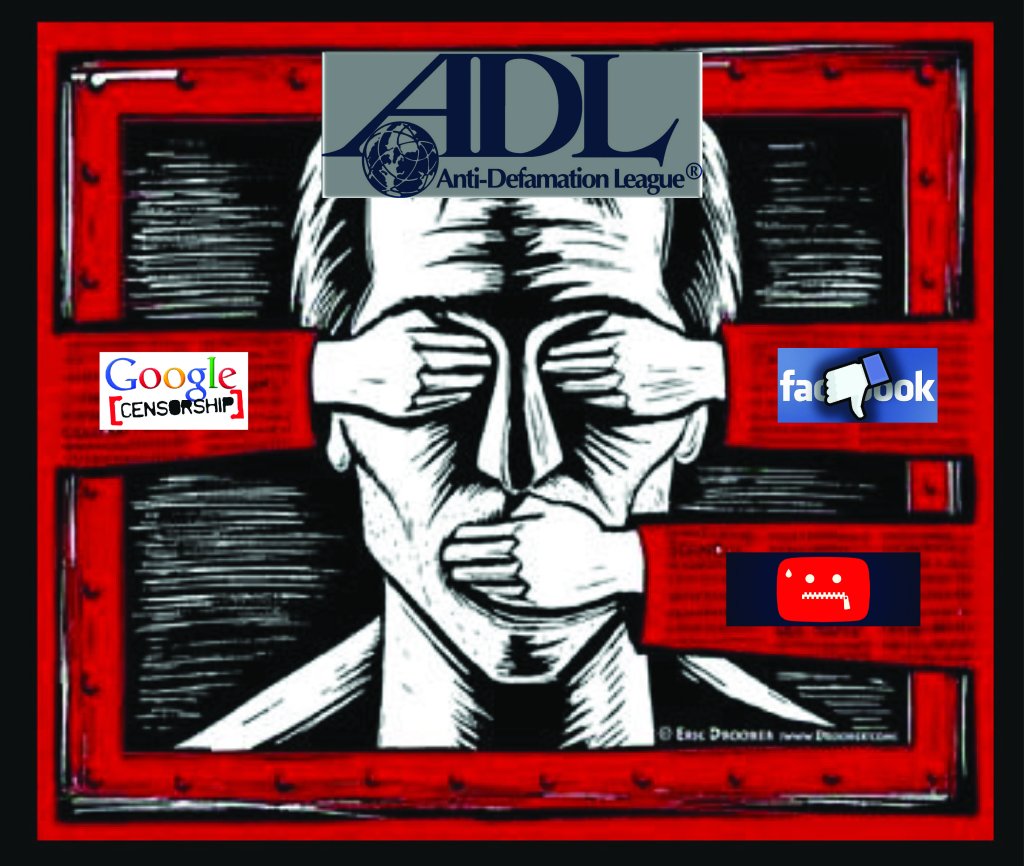
The Language of Force: How the Police State Muzzles Our Right to Speak Truth to Power

By John & Nisha Whitehead

Source: The Rutherford Institute

“If the state could use [criminal] laws not for their intended purposes but to silence those who voice unpopular ideas, little would be left of our First Amendment liberties, and little would separate us from the tyrannies of the past or the malignant fiefdoms of our own age. The freedom to speak without risking arrest is ‘one of the principal characteristics by which we distinguish a free nation.’”—Justice Neil Gorsuch, dissenting, Nieves v. Bartlett (2019)

Tyrants don’t like people who speak truth to power.

Cue the rise of protest laws, which take the government’s intolerance for free speech to a whole new level and send the resounding message that resistance is futile.

In fact, ever since the Capitol protests on Jan. 6, 2021, state legislatures have introduced a broad array of these laws aimed at criminalizing protest activities.

There have been at least 205 proposed laws in 45 states aimed at curtailing the right to peacefully assemble and protest by expanding the definition of rioting, heightening penalties for existing offenses, or creating new crimes associated with assembly.

Weaponized by police, prosecutors, courts and legislatures, these protest laws, along with free speech zones, bubble zones, trespass zones, anti-bullying legislation, zero tolerance policies, hate crime laws, and a host of other legalistic maladies have become a convenient means by which to punish individuals who refuse to be muzzled.

In Florida, for instance, legislators passed a “no-go” zone law making it punishable by up to 60 days in jail to remain within 25 feet of working police and other first responders after a warning.

Yet while the growing numbers of protest laws cropping up across the country are sold to the public as necessary to protect private property, public roads or national security, they are a wolf in sheep’s clothing, a thinly disguised plot to discourage anyone from challenging government authority at the expense of our First Amendment rights.

It doesn’t matter what the source of that discontent might be (police brutality, election outcomes, COVID-19 mandates, the environment, etc.): protest laws, free speech zones, no-go zones, bubble zones, trespass zones, anti-bullying legislation, zero tolerance policies, hate crime laws, etc., aim to muzzle every last one of us.

To be very clear, these legislative attempts to redefine and criminalize speech are a backdoor attempt to rewrite the Constitution and render the First Amendment’s robust safeguards null and void.

No matter how you package these laws, no matter how well-meaning they may sound, no matter how much you may disagree with the protesters or sympathize with the objects of the protest, these proposed laws are aimed at one thing only: discouraging dissent.

This is the painful lesson being imparted with every incident in which someone gets arrested and charged with any of the growing number of contempt charges (ranging from resisting arrest and interference to disorderly conduct, obstruction, and failure to obey a police order) that get trotted out anytime a citizen voices discontent with the government or challenges or even questions the authority of the powers-that-be.

These assaults on free speech are nothing new.

As Human Rights Watch points out, “Various states have long-tried to curtail the right to protest. They do so by legislating wide definitions of what constitutes an ‘unlawful assembly’ or a ‘riot’ as well as increasing punishments. They also allow police to use catch-all public offenses, such as trespassing, obstructing traffic, or disrupting the peace, as a pretext for ordering dispersals, using force, and making arrests. Finally, they make it easier for corporations and others to bring lawsuits against protest organizers.

Journalists have come under particular fire for exercising their right to freedom of the press.

According to U.S. Press Freedom Tracker, the criminalization of routine journalism has become a means by which the government chills lawful First Amendment activity.

Journalists have been arrested or faced dubious charges for “publishing,” asking too many questions of public officials, being “rude” for reporting during a press conference, and being in the vicinity of public protests and demonstrations.

For instance, Steve Baker, a reporter for Blaze News, was charged with four misdemeanors, including trespassing and disorderly conduct charges, related to his sympathetic coverage of the Jan. 6 riots. Dan Heyman, a reporter for the Public News Service, was arrested for “aggressively” questioning Tom Price, then secretary of the Department of Health and Human Services during an encounter in the West Virginia State Capitol.

It’s gotten so bad that merely daring to question, challenge or hesitate when a cop issues an order can get you charged with resisting arrest or disorderly conduct.

For example, Deyshia Hargrave, a language arts teacher in Louisiana, was thrown to the ground, handcuffed and arrested for speaking out during a public comment period at a school board meeting.

Fane Lozman was arrested for alluding to government corruption during open comment time at a City Council meeting in Palm Beach County, Fla.

College professor Ersula Ore was slammed to the ground and arrested after she objected to the “disrespectful manner” shown by a campus cop who stopped her in the middle of the street and demanded that she show her ID.

Philadelphia lawyer Rebecca Musarra was arrested for exercising her right to remain silent and refusing to answer questions posed by a police officer during a routine traffic stop. (Note: she cooperated in every other way by providing license and registration, etc.)

Making matters worse, the U.S. Supreme Court issued a ruling in Nieves v. Bartlett that protects police from lawsuits by persons arrested on bogus “contempt of cop” charges (ranging from resisting arrest and interference to disorderly conduct, obstruction, and failure to obey a police order) that result from lawful First Amendment activities (filming police, asking a question of police, refusing to speak with police).

These incidents reflect a growing awareness about the state of free speech in America: you may have distinct, protected rights on paper, but dare to exercise those rights, and you risk fines, arrests, injuries and even death.

Unfortunately, we have been circling this particular drain hole for some time now.

More than 50 years ago, U.S. Supreme Court Justice William O. Douglas took issue with the idea that merely speaking to a government representative (a right enshrined in the First Amendment) could be perceived as unlawfully inconveniencing and annoying the police.

In a passionate defense of free speech, Douglas declared: 

Since when have we Americans been expected to bow submissively to authority and speak with awe and reverence to those who represent us? The constitutional theory is that we the people are the sovereigns, the state and federal officials only our agents. We who have the final word can speak softly or angrily. We can seek to challenge and annoy, as we need not stay docile and quiet. The situation might have indicated that Colten’s techniques were ill-suited to the mission he was on, that diplomacy would have been more effective. But at the constitutional level speech need not be a sedative; it can be disruptive.

It’s a power-packed paragraph full of important truths that the powers-that-be would prefer we quickly forget: We the people are the sovereigns. We have the final word. We can speak softly or angrily. We can seek to challenge and annoy. We need not stay docile and quiet. Our speech can be disruptive. It can invite dispute. It can be provocative and challenging. We do not have to bow submissively to authority or speak with reverence to government officials.

In theory, Douglas was right: “we the people” do have a constitutional right to talk back to the government.

In practice, however, we live in an age in which “we the people” are at the mercy of militarized, weaponized, immunized cops who have almost absolute discretion to decide who is a threat, what constitutes resistance, and how harshly they can deal with the citizens they were appointed to “serve and protect.”

As such, those who seek to exercise their First Amendment rights during encounters with the police are increasingly finding that there is no such thing as freedom of speech.

Case in point: Tony Rupp, a lawyer in Buffalo, NY, found himself arrested and charged with violating the city’s noise ordinance after cursing at an SUV bearing down on pedestrians on a busy street at night with its lights off. Because that unmarked car was driven by a police officer, that’s all it took for Rupp to find himself subjected to malicious prosecution, First Amendment retaliation and wrongful arrest.

The case, as Jesse McKinley writes in The New York Times, is part of a growing debate over “how citizens can criticize public officials at a time of widespread reevaluation of the lengths and limits of free speech. That debate has raged everywhere from online forums and college campuses to protests over racial bias in law enforcement and the Israel-Hamas war. Book bans and other acts of government censorship have troubled some First Amendment experts. Last week, the Supreme Court heard arguments about a pair of laws — in Florida and Texas — limiting the ability of social media companies such as Facebook to ban certain content from their platforms.”

Bottom line: what the architects of the police state want are submissive, compliant, cooperative, obedient, meek citizens who don’t talk back, don’t challenge government authority, don’t speak out against government misconduct, and don’t resist.

What the First Amendment protects—and a healthy constitutional republic requires—are citizens who routinely exercise their right to speak truth to power.

Yet there can be no free speech for the citizenry when the government speaks in a language of force.

What is this language of force?

Militarized police. Riot squads. Camouflage gear. Black uniforms. Armored vehicles. Mass arrests. Pepper spray. Tear gas. Batons. Strip searches. Surveillance cameras. Kevlar vests. Drones. Lethal weapons. Less-than-lethal weapons unleashed with deadly force. Rubber bullets. Water cannons. Stun grenades. Arrests of journalists. Crowd control tactics. Intimidation tactics. Brutality. Contempt of cop charges.

This is not the language of freedom. This is not even the language of law and order.

Unfortunately, this is how the government at all levels—federal, state and local—now responds to those who choose to exercise their First Amendment right to speak freely.

If we no longer have the right to tell a Census Worker to get off our property, if we no longer have the right to tell a police officer to get a search warrant before they dare to walk through our door, if we no longer have the right to stand in front of the Supreme Court wearing a protest sign or approach an elected representative to share our views, if we no longer have the right to protest unjust laws by voicing our opinions in public or on our clothing or before a legislative body, then we do not have free speech.

What we have instead is regulated, controlled, censored speech, and that’s a whole other ballgame.

Remember, the unspoken freedom enshrined in the First Amendment is the right to challenge government agents, think freely and openly debate issues without being muzzled or treated like a criminal.

Americans are being brainwashed into believing that anyone who wears a government uniform—soldier, police officer, prison guard—must be obeyed without question.

Of course, the Constitution takes a far different position, but does anyone in the government even read, let alone abide by, the Constitution anymore?

The government does not want us to remember that we have rights, let alone attempting to exercise those rights peaceably and lawfully. And it definitely does not want us to engage in First Amendment activities that challenge the government’s power, reveal the government’s corruption, expose the government’s lies, and encourage the citizenry to push back against the government’s many injustices.

Yet by muzzling the citizenry, by removing the constitutional steam valves that allow people to speak their minds, air their grievances and contribute to a larger dialogue that hopefully results in a more just world, the government is creating a climate in which violence becomes inevitable.

When there is no First Amendment steam valve, then frustration builds, anger grows and people become more volatile and desperate to force a conversation.

As John F. Kennedy warned, “Those who make peaceful revolution impossible will make violent revolution inevitable.”

As I point out in my book Battlefield America: The War on the American People and in its fictional counterpart The Erik Blair Diaries, the government is making violent revolution inevitable.
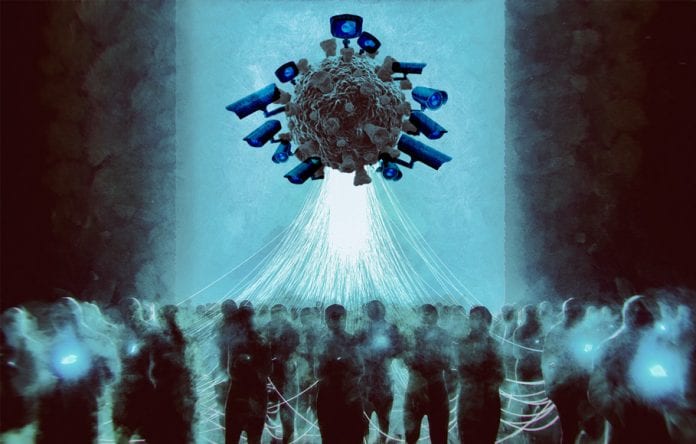
Technocensorship: When Corporations Serve As a Front for Government Censors

By John & Nisha Whitehead

Source: The Rutherford Institute

“Once a government is committed to the principle of silencing the voice of opposition, it has only one way to go, and that is down the path of increasingly repressive measures, until it becomes a source of terror to all its citizens and creates a country where everyone lives in fear. We must, therefore, be on our guard against extremists who urge us to adopt police state measures. Such persons advocate breaking down the guarantees of the Bill of Rights in order to get at the communists. They forget that if the Bill of Rights were to be broken down, all groups, even the most conservative, would be in danger from the arbitrary power of government.”—Harry S. Truman, Special Message to the Congress on the Internal Security of the United States (August 8, 1950)

Nothing good can come from allowing the government to sidestep the Constitution.

Unfortunately, the government has become an expert at disregarding constitutional roadblocks intended to protect the rights of the citizenry.

When these end-runs don’t suffice, the government hides behind the covert, clandestine, classified language of national security; or obfuscates, complicates, stymies, and bamboozles; or creates manufactured diversions to keep the citizenry in the dark; or works through private third parties not traditionally bound by the Constitution.

This last tactic is increasingly how the government gets away with butchering our freedoms, by having its corporate partners serve as a front for its nefarious deeds.

This is how the police state has managed to carry out an illegal secret dragnet surveillance program on the American people over the course of multiple presidential administrations.

Relying on a set of privacy loopholes, the White House (under Presidents Obama, Trump and now Biden) has been sidestepping the Fourth Amendment by paying AT&T to allow federal, state, and local law enforcement to access—without a warrant—the phone records of Americans who are not suspected of a crime.

The government used a similar playbook to get around the First Amendment, packaged as an effort to control the spread of speculative or false information in the name of national security.

As the House Judiciary Select Subcommittee on Weaponization of the Federal Government revealed, the Biden administration worked in tandem with social media companies to censor content related to COVID-19, including humorous jokes, credible information and so-called disinformation.

Likening the government’s heavy-handed attempts to pressure social media companies to suppress content critical of COVID vaccines or the election to “an almost dystopian scenario,” Judge Terry Doughty warned that “the United States Government seems to have assumed a role similar to an Orwellian ‘Ministry of Truth.’

Restricting access to social media has become a popular means of internet censorship.

Dare to voice politically incorrect views in anything louder than a whisper on social media and you might find yourself suspended on Twitter, shut out of Facebook, and banned across various social media platforms. This authoritarian intolerance masquerading as tolerance, civility and love is what comedian George Carlin referred to as “fascism pretending to be manners.”

Social media censorship runs the gamut from content blocking, throttling, and filtering to lockouts, shutdowns, shadow banning and de-platforming.

In fact, these tactics are at the heart of several critical cases before the U.S. Supreme Court over who gets to control, regulate or remove what content is shared on the internet: the individual, corporate censors or the government.

Yet what those who typically champion the right of corporations to be free from government meddling get wrong about these cases is that there can be no free speech when corporations such as Facebook, Google or YouTube become a front for—or extensions of—government censors.

This is the very definition of technocensorship.

On paper—under the First Amendment, at least—we are technically free to speak.

In reality, however, we are now only as free to speak as a government official—or corporate entities such as Facebook, Google or YouTube—may allow.

Clothed in tyrannical self-righteousness, technocensorship is powered by technological behemoths (both corporate and governmental) working in tandem to achieve a common goal: to muzzle, silence and altogether eradicate any speech that runs afoul of the government’s own approved narrative.

This is political correctness taken to its most chilling and oppressive extreme.

This authoritarian impulse to censor and silence “dangerous” speech masquerading as tolerance, civility and a concern for safety (what comedian George Carlin referred to as “fascism pretending to be manners”) is the end result of a politically correct culture that has become radicalized, institutionalized and tyrannical.

You see, the government is not protecting us from “dangerous” disinformation campaigns. It is laying the groundwork to insulate us from “dangerous” ideas that might cause us to think for ourselves and, in so doing, challenge the power elite’s stranglehold over our lives.

Thus far, the tech giants have been able to sidestep the First Amendment by virtue of their non-governmental status, but it’s a dubious distinction at best when they are marching in lockstep with the government’s dictates.

As Philip Hamburger and Jenin Younes write for The Wall Street Journal: “The First Amendment prohibits the government from ‘abridging the freedom of speech.’ Supreme Court doctrine makes clear that government can’t constitutionally evade the amendment by working through private companies.”

It remains to be seen whether the Supreme Court can see itself clear to recognizing that censorship by social media companies acting at the behest of the government runs afoul of the First Amendment.

Bottom line: either we believe in free speech or we don’t.

The answer to the political, legal and moral challenges of our day should always be more speech, not less.

Any individual or group—prominent or not—who is censored, silenced and made to disappear from Facebook, Twitter, YouTube and Instagram for voicing ideas that are deemed politically incorrect, hateful, dangerous or conspiratorial should be cause for alarm across the entire political spectrum.

To ignore the long-term ramifications of such censorship is dangerously naïve, because whatever powers the government and its corporate operatives are allowed to claim now will eventually be used against the populace at large.

These social shunning tactics borrow heavily from the mind control tactics used by authoritarian cults as a means of controlling its members. As Dr. Steven Hassan writes in Psychology Today: “By ordering members to be cut off, they can no longer participate. Information and sharing of thoughts, feelings, and experiences are stifled. Thought-stopping and use of loaded terms keep a person constrained into a black-and-white, all-or-nothing world. This controls members through fear and guilt.”

This mind control can take many forms, but the end result is an enslaved, compliant populace incapable of challenging tyranny.

As Rod Serling, creator of The Twilight Zone, once observed, “We’re developing a new citizenry, one that will be very selective about cereals and automobiles, but won’t be able to think.”

The problem is that we’ve allowed ourselves to be persuaded that we need someone else to think and speak for us, and we’ve bought into the idea that we need the government and its corporate partners to shield us from that which is ugly or upsetting or mean. The result is a society in which we’ve stopped debating among ourselves, stopped thinking for ourselves, and stopped believing that we can fix our own problems and resolve our own differences.

In short, we have reduced ourselves to a largely silent, passive, polarized populace incapable of working through our own problems and reliant on the government to protect us from our fears.

As Nat Hentoff, that inveterate champion of the First Amendment, once observed, “The quintessential difference between a free nation, as we profess to be, and a totalitarian state, is that here everyone, including a foe of democracy, has the right to speak his mind.”

What this means is championing the free speech rights of those with whom we might disagree.

That’s why James Madison, the author of the Bill of Rights, fought for a First Amendment that protected the “minority” against the majority, ensuring that even in the face of overwhelming pressure, a minority of one—even one who espouses distasteful viewpoints—would still have the right to speak freely, pray freely, assemble freely, challenge the government freely, and broadcast his views in the press freely. He understood that freedom for those in the unpopular minority constitutes the ultimate tolerance in a free society.

The government has no tolerance for freedom or free speech of any kind that challenges its chokehold on power.

At some point or another, depending on how the government and its corporate allies define what constitutes “disinformation,” “hate” or “extremism, “we the people” might all be considered guilty of some thought crime or speech transgression or other.

Yet as I make clear in my book Battlefield America: The War on the American People and in its fictional counterpart The Erik Blair Diaries, it’s a slippery slope from censoring so-called illegitimate ideas to silencing truth.

Eventually, as George Orwell predicted, telling the truth will become a revolutionary act.

Ultimately, the government’s war on free speech—and that’s exactly what it is—is a war that is driven by a government fearful of its people.

As President John F. Kennedy observed, “[A] nation that is afraid to let its people judge the truth and falsehood in an open market is a nation that is afraid of its people.”

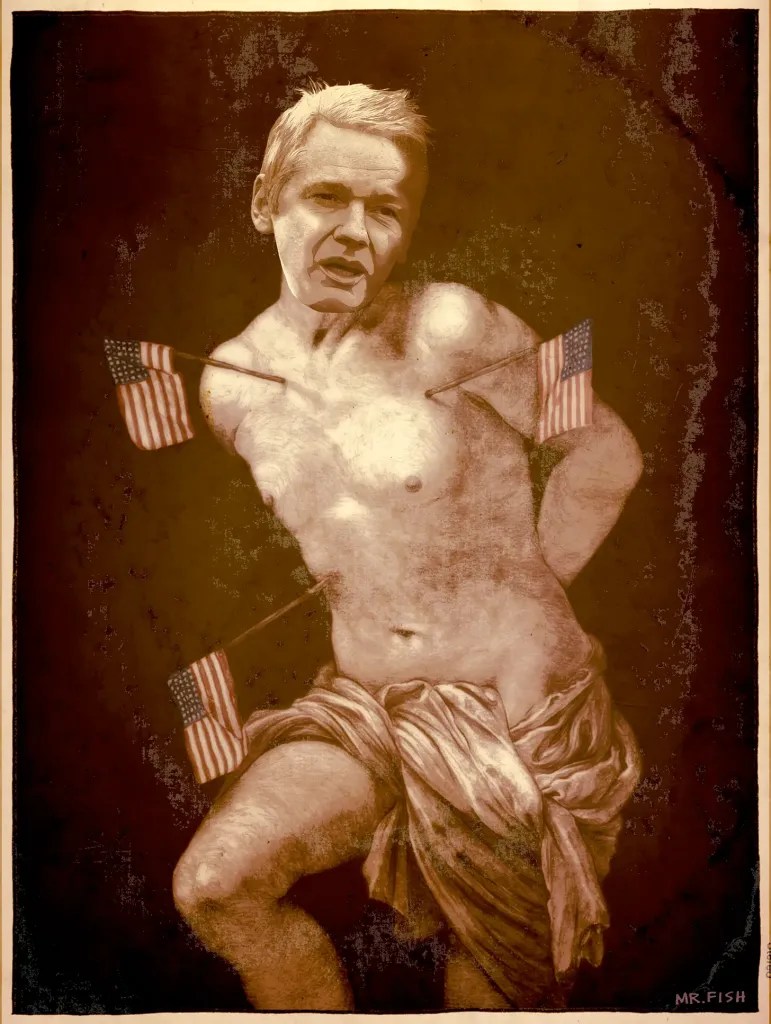
Julian Assange’s Day in Court

Julian Assange’s lawyers — in a final bid on Tuesday to stop his extradition — fought valiantly to poke holes in the case of the prosecution to obtain an appeal.

And Our Flags Are Still There – by Mr. Fish

By Chris Hedges

Source: Scheer Post

By the afternoon the video link, which would have allowed Julian Assange to follow his final U.K. appeal to prevent his extradition, had been turned off. Julian, his attorneys said, was too ill to attend, too ill even to follow the court proceedings on a link, although it was possible he was no longer interested in sitting through another judicial lynching. The rectangular screen, tucked under the black wrought iron bars that enclosed the upper left hand corner balcony of the courtroom where Julian would have been caged as a defendant, was perhaps a metaphor for the emptiness of this long and convoluted judicial pantomime. 

The arcane procedural rules — the lawyers in their curled blonde wigs and robes, the spectral figure of the two judges looking down on the court from their raised dais in their gray wigs and forked white collars, the burnished walnut paneled walls, the rows of lancet windows, the shelves on either side filled with law books in brown, green, red, crimson, blue and beige leather bindings, the defense lawyers, Edward Fitzgerald KC and Mark Summers KC, addressing the two judges, Dame Victoria Sharp and Justice Johnson, as “your lady” and “my lord” — were all dusty Victorian props employed in a modern Anglo-American show trial. It was a harbinger of a decrepit justice system that, subservient to state and corporate power, is designed to strip us of our rights by judicial fiat.

The physical and psychological disintegration of Julian, seven years trapped in the Ecuadorian Embassy in London and nearly five years held on remand in the high-security HM Prison Belmarsh, was always the point, what Nils Melzer the former U.N. Special Rapporteur on torture calls his “slow-motion execution.”  Political leaders, and their echo chambers in the media, fall all over themselves to denounce the treatment of Alexei Navalny but say little when we do the same to Julian. The legal farce grinds forward like the interminable case of Jarndyce and Jarndyce in Charles Dickens’ novel Bleak House. It will probably grind on for a few more months — one can’t expect the Biden administration to add the extradition of Julian to all its other political woes. It may take months to issue a ruling, or grant one or two appeal requests, as Julian continues to waste away in HM Prison Belmarsh. 

Julian’s nearly 15-year legal battle began in 2010 when WikiLeaks published classified military files from the wars in Iraq and Afghanistan — including footage showing a U.S. helicopter gunning down civilians, including two Reuters journalists in Baghdad. He took refuge in London’s Ecuadorian embassy, before being arrested by the Metropolitan Police in 2019 who were permitted by the Ecuadorian embassy to enter and seize him. He has been held for nearly five years in HM Prison Belmarsh.

Julian did not commit a crime. He is not a spy. He did not purloin classified documents. He did what we all do, although he did it in a far more important way. He published voluminous material, leaked to him by Chelsea Manning, which exposed U.S. war crimesliescorruptiontorture and assassinations. He ripped back the veil to expose the murderous machinery of the U.S. empire.

The two-day hearing is Julian’s last chance to appeal the extradition decision made in 2022 by the then British home secretary, Priti Patel. On Wednesday the prosecution will make its arguments. If he is denied an appeal he can request the European Court of Human Rights (ECtHR) for a stay of execution under Rule 39, which is given in “exceptional circumstances” and “only where there is an imminent risk of irreparable harm.” But the British court may order Julian’s immediate extradition prior to a Rule 39 instruction or may decide to ignore a request from the ECtHR to allow Julian to have his case heard by the court.

District Judge Vanessa Baraitser in January 2021, at Westminster Magistrates’ Court, refused to authorize the extradition request. In her 132-page ruling, she found that there was a “substantial risk” Julian would commit suicide due to the severity of the conditions he would endure in the U.S. prison system. At the same time, she accepted all the charges leveled by the U.S. against Julian as being filed in good faith. She rejected the arguments that his case was politically motivated, that he would not get a fair trial in the U.S. and that his prosecution is an assault on the freedom of the press.

Baraitser’s decision was overturned after the U.S. government appealed to the High Court in London. Although the High Court accepted Baraitser’s conclusions about Julian’s “substantial risk” of suicide if he was subjected to certain conditions within a U.S. prison, it also accepted four assurances in U.S. Diplomatic Note no. 74, given to the court in February 2021, which promised Julian would be treated well. The “assurances” state that Julian will not be subject to Special Administrative Measure. They promise that Julian, an Australian citizen, can serve his sentence in Australia if the Australian government requests his extradition. They promise he will receive adequate clinical and psychological care. They promise that, pre-trial and post-trial, Julian will not be held in the Administrative Maximum Facility in Florence, Colorado.

The defense must convince the two judges that the District Judge made serious legal errors to see an appeal granted.  

They argued that espionage is, as a matter of law, a political offense and that the extradition treaty with the U.S. prohibits extradition for political offenses. They focused on the extensive UK law, common law and international law that defines espionage as a “pure political offense” because it is directed against a state apparatus. For this reason, those charged with espionage should be protected from extradition. The lawyers spent a long time adjudicating the case of Chelsea Manning to justify her leak of documents that exposed war crimes as in the public interest, then arguing that if she was justified in leaking the documents Julian was justified in publishing them.

As the day wore on it became evident that the two judges were not well versed in the case, constantly asking for citations and expressing surprise that senior officials in the U.S., such as Mike Pompeo when he was head of the CIA, said Julian would not be protected by the First Amendment in an American court because he was not a citizen. Julian’s lawyers brought up past espionage cases, such as that of MI5 agent David Shaylerprosecuted under the Official Secrets Act 1989 for passing secret documents to The Mail on Sunday in 1997 — which included the names of agents. He also disclosed that MI5 (Britain’s domestic intelligence service) kept files on prominent politicians, including Labour ministers, and that MI6 (Britain’s foreign intelligence service) was involved in a plot to assassinate Libyan leader Colonel Momar Gaddafi. The British extradition request was rejected by the French Cour d’Appel because it was a “political offense.”  

All 18 counts filed against Julian allege that his purpose was “that such information so obtained could be used to the injury of the United States and the advantage of any foreign nation.”

The hearing was, after those in 2020 that focused on Julian’s mental and psychological health, refreshing in that it discussed the crimes committed by the U.S. and the importance of making them public. The two judges rarely interrupted, unlike other court proceedings for Julian I have attended where the judge often condescendingly cut short the defense. This may be a reflection of the broad public support, including by major media organizations, which have belatedly rallied behind Julian. Hundreds of people thronged the entrance to The Royal Courts of Justice, an expansive Victorian Gothic stone building adorned with statues of Jesus, Moses, Solomon and Alfred the Great, the celebrated pillars of the English legal tradition, to call for Julian’s freedom.

The afternoon session was different. On about a half dozen occasions the judges halted the defense to ask about how the leaks, because they were not thoroughly redacted, had endangered lives, although the U.S. has never been able to provide evidence of anyone whose life was lost as a result of the leaks. This canard has long been the cross on which U.S. officials have sought to crucify Julian. The two judges — one wonders if they had been given instructions during the lunch break — hurled these accusations at the defense lawyers until we adjourned.

“These indiscriminate disclosures were condemned by The Guardian and The New York Times,” Judge Sharp admonished the defense team. “They could have been done differently.”

This reference was especially egregious since the unredacted documents were first made public not by WikiLeaks or Julian but by the website Cryptome after reporters from The Guardian printed the password to the unredacted documents in their book.

The U.S. is officially seeking Julian’s extradition, where he potentially faces up to 175 years in prison, for the 2010 publication of the Iraq and Afghanistan war logs and US diplomatic cables. But the U.S. did not request his extradition until the release in March 2017 of the files known as Vault 7 which detailed how the CIA could hack Apple and Android smartphones and turn internet-connected televisions — even when they were off — into listening devices. Joshua Schulte, a former CIA employee, was found guilty last year of four counts each of espionage and computer hacking and one count of lying to FBI agents after handing over classified materials to WikiLeaks. He was given a forty-year sentence in February.

After the release of Vault 7 then CIA Director Mike Pompeo called WikiLeaks “a non-state hostile intelligence service.” The Attorney General at the time, Jeff Sessions, said that Julian’s arrest was a priority. By August the U.S. Senate had passed a 78-page intelligence finance bill which included a sentence declaring that “it is the sense of Congress that Wikileaks and the senior leadership of Wikileaks resemble a non-state hostile intelligence service often abetted by state actors and should be treated as such a service by the United States.” In May 2019 the Trump administration accused Julian of violating the Espionage Act and asked the UK to extradite him to stand trial in the U.S. Trump has called the allegations against Julian treason and called for “the death penalty or something.” Other politicians, including former Republican presidential candidate Mike Huckabee, have also called for Julian to be executed.

If Julian is extradited and additionally charged for the release of the Vault 7 documents, Fitzgerald told the court, “it could result in additional charges that merit the death penalty for aiding and abetting the enemy.” The U.S., he said, especially if Trump is elected again to the presidency, could easily “reformulate these charges into a capital offense.”

Summers brought up President Donald Trump’s request for “detailed options” of how to assassinate Julian when he was in the Ecuadorian Embassy. “Sketches were even drawn up,” he said, adding that the plot fell apart when the UK authorities backed down, especially over a potential shootout, in the streets of London”.

“The evidence showed that the US was prepared to go to any lengths, including misusing its own criminal justice system, to sustain impunity for US officials in respect of the torture/war crimes committed in its infamous ‘war on terror’, and to suppress those actors and courts willing and prepared to try to bring those crimes to account,” he said.

 The lawyers were right. The CIA is the driving force behind the extradition. The leak was highly embarrassing and to the CIA highly damaging. The CIA intends to make Julian pay. Schulte, who leaked Vault 7, was given a forty year sentence. Julian, if extradited, will be next. 

The Costs and Casualties of Government’s Information Total War

By Emily Burns

Source: Brownstone Institute

“I disapprove of what you say, but I will defend to the death your right to say it,”

This phrase, misattributed to Voltaire, has largely come to dominate—and confuse—our understanding of the importance of free speech in a free society. That misunderstanding seems to be at the heart of the very lukewarm response elicited by the exposure of “the most massive attack against free speech in United States’ history” unearthed through discovery in Missouri v. Biden now before the Supreme Court.  

The trouble with this framing of free speech is that it focuses on hateful speech, framing the imperative to defend the utterance of hateful speech as a form of polite, reciprocal tolerance, necessary for the smooth functioning of a liberal society. If ever there were a framing that caused one to miss the forest for the trees, this is it.

The primacy free speech enjoys here in the US has nothing whatever to do with some dewy-eyed ideal of tolerance. Rather, it owes its primacy to pragmatism. Freedom of speech is the best tool we have to ascertain the truth of any given matter. Like a sculptor transforming a shapeless piece of marble into a work of art, free and open debate chisels away at the falsehoods and misapprehensions in which the truth lays embedded. Restrict debate, and the gradual emergence of that truth will be delayed or deformed, with the result imperfect at times to the point of monstrosity.

The reason we must “defend to the death” the right to utter “intolerable speech,” is that failure to do so results in the swift and certain condemnation as “intolerable” all speech that diminishes the power or legitimacy of those in power. More succinctly, we must defend the pariah’s right to speak or everyone who crosses the regime, conveniently becomes a pariah. You either do as the ACLU did in 1978, defend the Nazi’s right to speak, or you have an explosion of government-designated “Nazis.” You may perhaps have noticed an exponential rise in the prevalence of “Nazis” and an ever-expanding panoply of -ists since our country’s commitment to free speech faltered? Yeah, me too.

No matter the political leanings or the content of the criticism, all those who have dared to critique the diktats of those in power for the last several years have been swiftly moved outside the pale, designated often times literal Nazis. It is this that explains the awesome scope of the censorship exposed in Missouri v. Biden, now before the Supreme Court.

We’re experiencing an information total war, resulting in blanket shutdown of any and all debate on each and every topic the government would prefer not to discuss. The cost to truth from this censorship carpet-bombing has been enormous. Lacking the refinement that comes from criticism and debate, the policies issuing from this informational hellscape are brutal and barbaric.

This information total war has been largely successful. Regime critics have been swiftly censored, defamed, and marginalized. The result is that most of the population continues to believe that the criticisms of government policies and actions over the past several years were levied by a bunch of cranks whose objections were largely based on gut level assumptions, political affiliation, or knee-jerk reactions. That many of those criticisms and warnings ended up being accurate is attributed to dumb luck. Thus, the public has little sympathy for the targets of government censorship, precisely because of the success of the censorship, and its complement, the propaganda generated to fill the vacuum left by the disappearance of truth. However, the public itself is harmed in myriad ways by this censorship, and not in any abstract fashion.

First and foremost, this censorship regime has harmed the public because the suppression of dissenting views resulted in the creation and deployment of a `whole` host of truly awful policies. Certain of its omniscience the government repeatedly censored, defamed and marginalized those who raised objections to its policies. Contrary to the propaganda narrative used to justify its censorship, the arguments against various strands of the government policies were based on sound reason, science, and data, the opponents often highly credentialed in the relevant field.

How many people know that one of the first critics of our maximalist approach to COVID was one of the most well-respected, frequently-cited scientists in the world, Stanford’s John Ioannidis? Or that his criticisms mirrored the guidance of the US’s actual extant pandemic plans?

How many people know that even from the very first, the opposition to masking was in fact based on its known futility, citing research from the CDC itself, published in May of 2020 (and recently vindicated by another systemic review by Cochrane)? Or that the most vocal opposition came from industrial hygienists (123) and others whose explicit job is to create specifications for safe work environments, including PPE? 

Source: U.S. CDC, Nonpharmaceutical Measures for Pandemic Influenza in Nonhealthcare Settings—Personal Protective and Environmental Measures. May 2020

How many people know that the opposition to the hysteria around hospital capacity was based on acknowledgement by hospital executives that 30 percent of COVID patients were in the hospital with COVID, versus for COVID? Or that this inflationary mis-characterization was incentivized by government payouts? Or that they were using HHS’s own data showing hospital capacity to have been no issue whatsoever in the US except in extremely localized areas and for extremely short periods—and hence easily remediable.

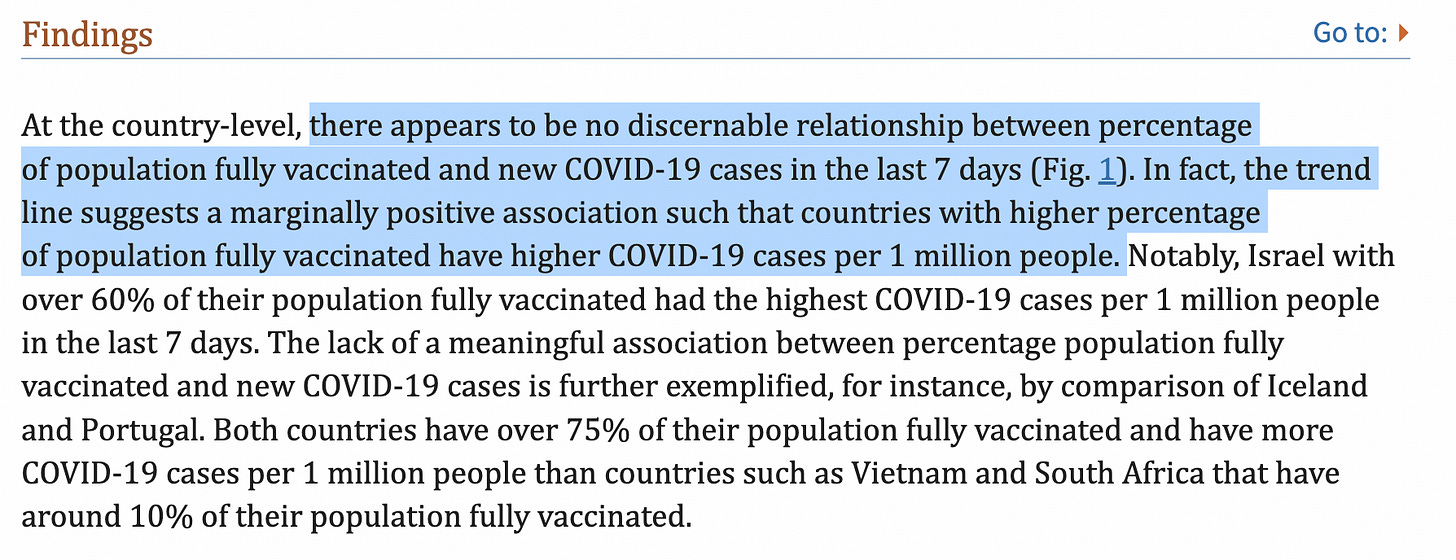
How many people know that the opposition to vaccine mandates, beyond being based on the obvious, and perfectly reasonable objection that there was no long-term data on their safety, was also based on published research showing no relationship between vaccination rates and disease transmission

Source: European Journal of Epidemiology, September, 2021 Increases in COVID-19 are unrelated to levels of vaccination across 68 countries and 2947 counties in the United States

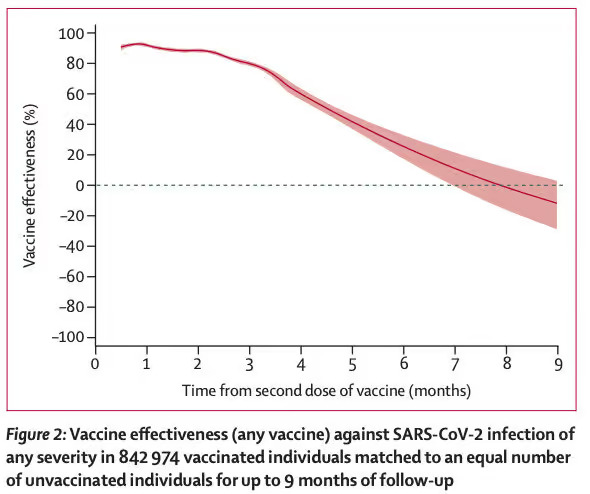
Or the concern that “original antigenic sin” could lead to mass vaccination resulting in negative efficacy, and that early published researched was demonstrating exactly that trend? Or that one of those who opposed vaccine mandates on ethical grounds was the director of medical ethics at one of the largest UC campuses?

The answer to all of these questions is, far too few. The sole reason for this widespread ignorance is government censorship. We have censorship to thank for the creation and implementation of divisive, harmful, and unjust policies. Lockdowns, school closures, mask mandates, vaccine mandates, vaccine passports all find their origins in the truth-starved, debate-deprived offices of our behemoth bureaucracies. Their continuance well after their futility was demonstrated empirically, and the harms they would cause already beginning to manifest can likewise be attributed to the same benighted bedfellows.

In addition to being harmed by the content of these censorship-protected policies, the public was further harmed by the division they created. Because these policies were propped up by censoring dissent and defaming dissenters, the debate was no such thing. Instead, framing it in Manichean terms of good and evil, the censors cast large groups of the population as enemies of the people, effectively engaging in a government-executed hate crime targeting tens of millions of people.

This censorship-fueled division didn’t just tear the country apart, it cut straight through the center of families, yielding countless divorces, and many millions of families estranging loved ones–all due to government-promoted lies. The polarization that has so demoralized us was a feature, not a bug, of the policies implemented by our politicians and bureaucrats.

Through the pervasive action of this wide-ranging government censorship/propaganda effort, vast swathes of the American people have been and continue to be weaponized against their fellow Americans. The faith these people had in institutions has been perverted to serve the institutions, not the people. This credulity-weaponization encompasses not just Joe Schmoe on the street, but extends all the way to the Supreme Court, where in oral arguments last year, several justices made claims whose easily verifiable falseness would have made them blush, if they weren’t so wholly taken in by the censorship and propaganda operations of the broader US government.

By acting as the witting or unwitting dupes of this vast censorship/propaganda operation, the credibility of virtually every civic institution in the US has been eroded possibly to the point of no return. Those whose credibility can be salvaged will be decades in the doing. Unfortunately, many, if not most, of our institutions and their denizens remain the censor’s reliable handmaidens, now seeming to hope the censors might somehow hide the gushing efflux of their credibility.

Among the harms that have been visited upon the American people through this censorship operation, vaccine injuries must also be counted. Our government not only censored questions and concerns, it acted as the marketing department for the vaccine manufacturers. However, there was one very important difference—if the manufacturers had been doing their own marketing, each ad would have had the long list of potential side effects and counter-indications that is required of all other pharmaceuticals. These risks were simply not communicated, except at the time of injection in the form of a long list of contra-indicated conditions.

However, if at that time one were to realize that one had one of the contra-indicated conditions, in many parts of the country, one would still have had no choice but to get the shot. Doctors who granted medical exemptions were threatened by the state to such a degree as to make exemptions virtually inaccessible, regardless of a doctor’s medical judgement. Vaccine mandates made getting the shot a requirement for engagement in public life and countenanced no exceptions.

This coercion effectively nullified informed consent for the entire American public, and thus, any adverse reaction ought to be considered fair game for redress. But it is the young and those who had already had COVID who present a picture of unalloyed harm. For these groups, the vaccines provided no benefit—only risk. Thus, every single adverse event incurred in these groups must be viewed as direct, personal harms caused by a government-sponsored censorship operation. That this particular strain of censorship benefited private companies at the same time that it harmed the American people adds grievous injury to the ongoing insult.

It is particularly demoralizing to realize that the polarization deliberately fomented by our government seems likely to protect its perpetrators from accountability. Everywhere, we see polls and articles about how fatigued people are by politics. And yet we have no other recourse to address this vast “censorship leviathan.” It is now the go-to tool with which our government effects policy.

The only way to change it is to remove from power those people who support this censorship regime and to dismantle the regime’s complex apparatus. Ultimately, government censorship reduces our society to just two groups of people: the censors and the censored. While it remains in place, the ranks of the censored will be ever-expanding as the censors require ever more censorship to ensure people continue to disbelieve their lying eyes.

American State Propaganda: A Thought Experiment

In a tyrannical dictatorship, the press is operated by employees of the government. In a Free Democracy™️, the press is operated by employees of the oligarchs who operate the government.

By Caitlin Johnstone

Source: CaitlinJohnstone.com.au

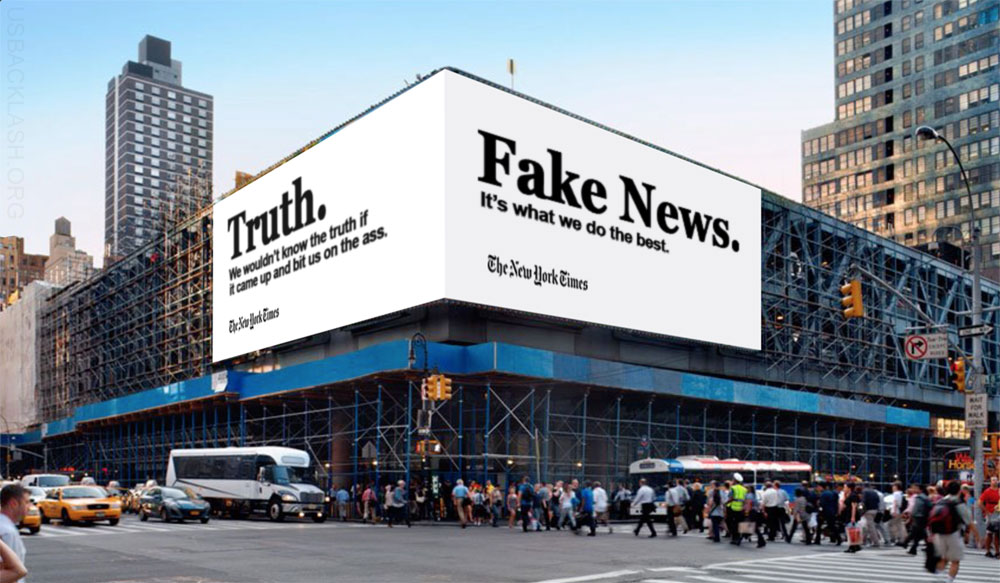
The New York Times has published another CIA press release disguised as news, this time aimed at whipping up paranoia toward anyone who criticizes the US proxy war in Ukraine.

The article is titled “Putin’s Next Target: U.S. Support for Ukraine, Officials Say”. Its author, Julian E Barnes, has written so many New York Times articles with headlines ending in the words “Officials Say” that we can safely assume the primary reason for his continued employment in that paper is because empire managers within the US government have designated him someone who can be trusted to print what they want printed. This designation would make him a reliable supplier of “scoops” (read: regurgitations of unevidenced government claims) for The New York Times.

“American officials said they are convinced that Mr. Putin intends to try to end U.S. and European support for Ukraine by using his spy agencies to push propaganda supporting pro-Russian political parties and by stoking conspiracy theories with new technologies,” Barnes writes.

Of course the report never gets any more specific than that, and of course the “American officials” Barnes cites promote their unevidenced assertions under cover of complete anonymity.

“The American officials spoke on the condition their names not be reported so they could discuss sensitive intelligence,” Barnes writes.

The only named source cited in the article is a CIA veteran named Beth Sanner, who says that “Russia will not give up on disinformation campaigns,” but adds that “we don’t know what it is going to look like.”

And that’s really the whole article right there. Putin is going to be using his spy agencies to promote political parties and messages which support ending the practice of pouring billions of dollars of weapons into Ukraine, but nobody knows what that will look like exactly, so we all have to just be sort of generally distrustful toward anyone who doesn’t think it’s a swell idea to perpetuate a horrific war with potentially world-ending consequences, because they might be part of an unspecified Russian influence operation.

We saw a similar report from CNN a few weeks ago, in which the public was warned that Russia’s FSB is working to convert westerners into mouthpieces for Russian propaganda using methods so sneaky and subtle that those westerners wouldn’t even know it’s happening. Again, details were extremely vague and the only obvious response to the information provided is for everyone to just get really paranoid toward anyone saying anything that doesn’t support current US foreign policy toward Russia.

As a thought experiment, imagine what it would look like if the CIA or some other agency wanted to advance US information interests by making the public distrustful of any people or information which go against US strategic objectives. Try to imagine some of the things they might say or do. 

Do you imagine it would look much different than what we’re seeing currently? Feeding trusted mainstream news reporters extremely vague stories about the Kremlin trying to deceive people into opposing the longstanding agendas of the US intelligence cartel, using online media and social subversion? Can you think of a more effective way to help shore up trust in your preferred narratives and sow distrust in narratives you do not prefer?

Here’s another one: imagine a state media outlet for a tyrannical dictatorship. Think about how its news stories are made, how it would often take orders from the government on what to report and what not to report, and how all its printing or broadcasting would always align with the information interests of that government.

Now ask yourself: in what material way is that reporting different from these CIA press releases we’re seeing from outlets like The New York Times and CNN? In both scenarios the government is feeding the media information it wants printed, and in both scenarios there will be consequences if the media don’t obey. In our hypothetical dictatorship those consequences might be more severe, but in our real life scenario the consequences are no less real. 

If Mr Barnes had refused to work on this story, he would have lost his “scoop” and it would have been given to someone else, perhaps at a competing outlet. If Barnes ceased uncritically reporting unevidenced assertions from anonymous government officials, his prominence in the mainstream media would quickly fizzle, and his career would dry up. If The New York Times ceased functioning as a reliable outlet for the credulous printing of unevidenced government claims, then the government agencies who’ve been elevating the paper to prominence with their artificial “scoops” can take those hot stories to another competing outlet and let them get the subscriptions and the glory.

In both scenarios, the government is able to get its propaganda messaging printed as hard news reporting. In one scenario the reporter reports what the government wants because they work for the government, in the other scenario the reporter reports what the government wants because that’s the only way to have a career in media outlets that are owned and controlled by the plutocrats who benefit from the political status quo the government is premised upon. The only major difference is that in our hypothetical dictatorship, the public probably knows it’s being fed propaganda, and is therefore more likely to take what they’re being told with a grain of salt.

In a tyrannical dictatorship, the press is operated by employees of the government. In a Free Democracy™️, the press is operated by employees of the oligarchs who operate the government. In both cases you’re getting state propaganda, but in one of them the propaganda is disguised as objective news reporting.

Internet Censorship, Everywhere All at Once

By Debbie Lerman

Source: Activist Post

It used to be a truth universally acknowledged by citizens of democratic nations that freedom of speech was the basis not just of democracy, but of all human rights.

When a person or group can censor the speech of others, there is – by definition – an imbalance of power. Those exercising the power can decide what information and which opinions are allowed, and which should be suppressed. In order to maintain their power, they will naturally suppress information and views that challenge their position.

Free speech is the only peaceful way to hold those in power accountable, challenge potentially harmful policies, and expose corruption. Those of us privileged to live in democracies instinctively understand this nearly sacred value of free speech in maintaining our free and open societies.

Or do we?

Alarmingly, it seems like many people in what we call democratic nations are losing that understanding. And they seem willing to cede their freedom of speech to governments, organizations, and Big Tech companies who, supposedly, need to control the flow of information to keep everyone “safe.”

The locus for the disturbing shift away from free speech is the 21st-century’s global public square: the Internet. And the proclaimed reasons for allowing those in power to diminish our free speech on the Internet are: “disinformation” and “hate speech.”

In this article, I will review the three-step process by which anti-disinformation laws are introduced. Then, I will review some of the laws being rolled out in multiple countries almost simultaneously, and what such laws entail in terms of vastly increasing the potential for censorship of the global flow of information.

How to Pass Censorship Laws

Step 1: Declare an existential threat to democracy and human rights 

Step 2: Assert that the solution will protect democracy and human rights

Step 3: Enact anti-democratic, anti-human rights censorship fast and in unison

Lies, propaganda, “deep fakes,” and all manner of misleading information have always been present on the Internet. The vast global information hub that is the World Wide Web inevitably provides opportunities for criminals and other nefarious actors, including child sex traffickers and evil dictators.

At the same time, the Internet has become the central locus of open discourse for the world’s population, democratizing access to information and the ability to publish one’s views to a global audience.

The good and bad on the Internet reflect the good and bad in the real world. And when we regulate the flow of information on the Internet, the same careful balance between blocking truly dangerous actors, while retaining maximum freedom and democracy, must apply.

Distressingly, the recent slew of laws governing Internet information are significantly skewed in the direction of limiting free speech and increasing censorship. The reason, the regulators claim, is that fake news, disinformation, and hate speech are existential threats to democracy and human rights.

Here are examples of dire warnings, issued by leading international organizations, about catastrophic threats to our very existence purportedly posed by disinformation:

Propaganda, misinformation and fake news have the potential to polarise public opinion, to promote violent extremism and hate speech and, ultimately, to undermine democracies and reduce trust in the democratic processes. Council of Europe

The world must address the grave global harm caused by the proliferation of hate and lies in the digital space.-United Nations

Online hate speech and disinformation have long incited violence, and sometimes mass atrocities.  –World Economic Forum (WEF)/The New Humanitarian

Considering the existential peril of disinformation and hate speech, these same groups assert that any solution will obviously promote the opposite:

Given such a global threat, we clearly need a global solution. And, of course, such a solution will increase democracy, protect the rights of vulnerable populations, and respect human rights. WEF

Moreover, beyond a mere assertion that increasing democracy and respecting human rights are built into combating disinformation, international law must be invoked.

In its Common Agenda Policy Brief from June 2023, Information Integrity on Digital Platforms, the UN details the international legal framework for efforts to counter hate speech and disinformation.

First, it reminds us that freedom of expression and information are fundamental human rights:

Article 19 of the Universal Declaration of Human Rights and article 19 (2) of the Covenant protect the right to freedom of expression, including the freedom to seek, receive and impart information and ideas of all kinds, regardless of frontiers, and through any media. 

Linked to freedom of expression, freedom of information is itself a right. The General Assembly has stated: “Freedom of information is a fundamental human right and is the touchstone of all the freedoms to which the United Nations is consecrated.” (p. 9)

Then, the UN brief explains that disinformation and hate speech are such colossal, all-encompassing evils that their very existence is antithetical to the enjoyment of any human rights:

Hate speech has been a precursor to atrocity crimes, including genocide. The 1948 Convention on the Prevention and Punishment of the Crime of Genocide prohibits “direct and public incitement to commit genocide”. 

In its resolution 76/227, adopted in 2021, the General Assembly emphasized that all forms of disinformation can negatively impact the enjoyment of human rights and fundamental freedoms, as well as the attainment of the Sustainable Development Goals. Similarly, in its resolution 49/21, adopted in 2022, the Human Rights Council affirmed that disinformation can negatively affect the enjoyment and realization of all human rights.

This convoluted maze of legalese leads to an absurd, self-contradictory sequence of illogic:

  • Everything the UN is supposed to protect is founded on the freedom of information, which along with free speech is a fundamental human right.
  • The UN believes hate speech and disinformation destroy all human rights.
  • THEREFORE, anything we do to combat hate speech and disinformation protects all human rights, even if it abrogates the fundamental human rights of free speech and information, on which all other rights depend.
  • Because: genocide!

In practice, what this means is that, although the UN at one point in its history considered the freedom of speech and information fundamental to all other rights, it now believes the dangers of hate speech and disinformation eclipse the importance of protecting those rights.

The same warping of democratic values, as delineated by our international governing body, is now occurring in democracies the world over.

Censorship Laws and Actions All Happening Now

If hate speech and disinformation are the precursors of inevitable genocidal horrors, the only way to protect the world is through a coordinated international effort. Who should lead this campaign?

According to the WEF, “Governments can provide some of the most significant solutions to the crisis by enacting far-reaching regulations.”

Which is exactly what they’re doing.

United States

In the US, freedom of speech is enshrined in the Constitution, so it’s hard to pass laws that might violate it.

Instead, the government can work with academic and nongovernmental organizations to strong-arm social media companies into censoring disfavored content. The result is the Censorship-Industrial Complex, a vast network of government-adjacent academic and nonprofit “anti-disinformation” outfits, all ostensibly mobilized to control online speech in order to protect us from whatever they consider to be the next civilization-annihilating calamity.

The Twitter Files and recent court cases reveal how the US government uses these groups to pressure online platforms to censor content it doesn’t like:

Google

In some cases, companies may even take it upon themselves to control the narrative according to their own politics and professed values, with no need for government intervention. For example: Google, the most powerful information company in the world, has been reported to fix its algorithms to promote, demote, and disappear content according to undisclosed internal “fairness” guidelines.

This was revealed by a whistleblower named Zach Vorhies in his almost completely ignored book, Google Leaks, and by Project Veritas, in a sting operation against Jen Gennai, Google’s Head of Responsible Innovation.

In their benevolent desire to protect us from hate speech and disinformation, Google/YouTube immediately removed the original Project Veritas video from the Internet.

European Union

The Digital Services Act came into force November 16, 2022. The European Commission rejoiced that “The responsibilities of users, platforms, and public authorities are rebalanced according to European values.” Who decides what the responsibilities and what the “European values” are?

  • very large platforms and very large online search engines [are obligated] to prevent the misuse of their systems by taking risk-based action and by independent audits of their risk management systems
  • EU countries will have the primary [oversight] role, supported by a new European Board for Digital Services

Brownstone contributor David Thunder explains how the act provides an essentially unlimited potential for censorship:

This piece of legislation holds freedom of speech hostage to the ideological proclivities of unelected European officials and their armies of “trusted flaggers.” 

The European Commission is also giving itself the power to declare a Europe-wide emergency that would allow it to demand extra interventions by digital platforms to counter a public threat. 

UK

The Online Safety Bill was passed September 19, 2023. The UK government says “It will make social media companies more responsible for their users’ safety on their platforms.”

According to Internet watchdog Reclaim the Net, this bill constitutes one of the widest sweeping attacks on privacy and free speech in a Western democracy:

The bill imbues the government with tremendous power; the capability to demand that online services employ government-approved software to scan through user content, including photos, files, and messages, to identify illegal content. 

The Electronic Frontier Foundation, a nonprofit dedicated to defending civil liberties in the digital world, warns: “the law would create a blueprint for repression around the world.”

Australia

The Communications Legislation Amendment (Combatting Misinformation and Disinformation) Bill 2023 was released in draft form June 25, 2023 and is expected to pass by the end of 2023. the Australian government says:

The new powers will enable the ACMA [Australian Communications and Media Authority] to monitor efforts and require digital platforms to do more, placing Australia at the forefront in tackling harmful online misinformation and disinformation, while balancing freedom of speech.

Reclaim the Net explains:

This legislation hands over a wide range of new powers to ACMA, which includes the enforcement of an industry-wide “standard” that will obligate digital platforms to remove what they determine as misinformation or disinformation. 

Brownstone contributor Rebekah Barnett elaborates:

Controversially, the government will be exempt from the proposed laws, as will professional news outlets, meaning that ACMA will not compel platforms to police misinformation and disinformation disseminated by official government or news sources. 

The legislation will enable the proliferation of official narratives, whether true, false or misleading, while quashing the opportunity for dissenting narratives to compete. 

Canada

The Online Streaming Act (Bill C-10) became law April 27, 2023. Here’s how the Canadian government describes it, as it relates to the Canadian Radio-television and Telecommunications Commission (CRTC):

The legislation clarifies that online streaming services fall under the Broadcasting Act and ensures that the CRTC has the proper tools to put in place a modern and flexible regulatory framework for broadcasting. These tools include the ability to make rules, gather information, and assign penalties for non-compliance.

According to Open Media, a community-driven digital rights organization,

Bill C-11 gives the CRTC unprecedented regulatory authority to monitor all online audiovisual content. This power extends to penalizing content creators and platforms and through them, content creators that fail to comply. 

World Health Organization

In its proposed new Pandemic Treaty and in the amendments to its International Health Regulations, all of which it hopes to pass in 2024, the WHO seeks to enlist member governments to

Counter and address the negative impacts of health-related misinformation, disinformation, hate speech and stigmatization, especially on social media platforms, on people’s physical and mental health, in order to strengthen pandemic prevention, preparedness and response, and foster trust in public health systems and authorities.

Brownstone contributor David Bell writes that essentially this will give the WHO, an unelected international body,

power to designate opinions or information as ‘mis-information or disinformation, and require country governments to intervene and stop such expression and dissemination. This … is, of course, incompatible with the Universal Declaration of Human Rights, but these seem no longer to be guiding principles for the WHO.

Conclusion

We are at a pivotal moment in the history of Western democracies. Governments, organizations and companies have more power than ever to decide what information and views are expressed on the Internet, the global public square of information and ideas.

It is natural that those in power should want to limit expression of ideas and dissemination of information that might challenge their position. They may believe they are using censorship to protect us from grave harms of disinformation and hate speech, or they may be using those reasons cynically to consolidate their control over the flow of information.

Either way, censorship inevitably entails the suppression of free speech and information, without which democracy cannot exist.

Why are the citizens of democratic nations acquiescing to the usurpation of their fundamental human rights? One reason may be the relatively abstract nature of rights and freedoms in the digital realm.

In the past, when censors burned books or jailed dissidents, citizens could easily recognize these harms and imagine how awful it would be if such negative actions were turned against them. They could also weigh the very personal and imminent negative impact of widespread censorship against much less prevalent dangers, such as child sex trafficking or genocide. Not that those dangers would be ignored or downplayed, but it would be clear that measures to combat such dangers should not include widespread book burning or jailing of regime opponents.

In the virtual world, if it’s not your post that is removed, or your video that is banned, it can be difficult to fathom the wide-ranging harm of massive online information control and censorship. It is also much easier online than in the real world to exaggerate the dangers of relatively rare threats, like pandemics or foreign interference in democratic processes. The same powerful people, governments, and companies that can censor online information can also flood the online space with propaganda, terrifying citizens in the virtual space into giving up their real-world rights.

The conundrum for free and open societies has always been the same: How to protect human rights and democracy from hate speech and disinformation without destroying human rights and democracy in the process.

The answer embodied in the recent coordinated enactment of global censorship laws is not encouraging for the future of free and open societies.

Published under a Creative Commons Attribution 4.0 International License
For reprints, please set the canonical link back to the original Brownstone Institute Article and Author.

Biden Admin Awards Over $4 Million In Grants To Programs That Target “Misinformation”

Millions of taxpayer dollars being spent on programs that target speech.

By Tom Parker

Source: Reclaim the Net

Since the start of September, the Biden administration’s National Science Foundation (NSF) and State Department have awarded grants totaling more than $4 million to programs, studies, and other initiatives that target “misinformation” — a term that the Biden admin has used to demand censorship of content that challenges the federal government’s Covid narrative.

The NSF has awarded the following nine grants since September 1:

The State Department has awarded the following five grants since September 1:

These awards were granted as the Biden admin faces a major lawsuit for pressuring Big Tech to censor content that it deems to be misinformation.

An appeals court recently stated that the Biden regime violated the First Amendment when pushing social media platforms to censor and in an Independence Day ruling on this case, a judge described the Biden admin’s actions as “Orwellian.” The Supreme Court is now considering whether to hear the case.

While some of the grants focus have been awarded to non-American organizations, whose misinformation targeting efforts don’t fall under the scope of the First Amendment, these types of programs can result in the speech of Americans being targeted.

For example, Biden’s State Department has previously funded foreign think tanks that created “disinformation” blacklists. These blacklists were used to target American conservative media outlets.

Both of the agencies that awarded these grants have been involved in prior censorship controversies.

In addition to funding groups that created disinformation blacklists, Biden’s State Department has flagged thousands of accounts to Twitter, now known as X, for censorship.

Meanwhile, the NSF has been accused of funding programs that develop tech that targets vaccine dissent and has funded research on correcting “false beliefs” online.

Disinformation, 1984-2023

By Peter Van Buren

Source: We Meant Well

Orwell, again. 1984 was prescient on so many concepts that it seems it was written for the Biden era. Underlying it all is the concept of disinformation, the root of propaganda and mind control. So it is in 2023. Just ask FBI Director Chris Wray. Or Facebook.

George Orwell’s novel explores the concept of disinformation and its role in controlling and manipulating society. Orwell presents a dystopian future where a totalitarian regime, led by the Party and its figurehead Big Brother, exerts complete control over its citizens’ lives, including their thinking. The Party employs a variety of techniques to disseminate disinformation and maintain its power. One of the most prominent examples is the concept of “Newspeak,” a language designed to restrict and manipulate thought by reducing the range of expressible ideas. Newspeak aims to replace words and concepts that could challenge or criticize the Party’s ideology, effectively controlling the way people think and communicate (unhomed, misspoke, LGBQTIAXYZ+, nati0nalist, terrorist.)

Orwell also introduces the concept of doublethink, which refers to the ability to hold two contradictory beliefs simultaneously and accept them both as true. This psychological manipulation technique allows the Party to control the minds of its citizens and make them believe in false information or embrace contradictory ideas without questioning (masks which do not prevent disease transmission are still mandatory.) The Party in 1984 alters historical records and disseminates false information through the Ministry of Truth. This manipulation of historical events and facts aims to control the collective memory of the society in a post-truth era, ensuring that the Party’s version of reality remains unquestioned (war in Ukraine, Iraq, El Salvador, Vietnam, all to protect our freedom at home.)

Through these portrayals, Orwell highlights the dangers of disinformation and its potential to distort truth, manipulate public opinion, and maintain oppressive systems of power. The novel serves as a warning about the importance of critical thinking, independent thought, and the preservation of objective truth in the face of disinformation and propaganda.

Disinformation is bad. But replacing disinformation with censorship and/or replacement with other disinformation is worse. 1984 closed down the marketplace of ideas. So for 2023.

In 2023 America the medium is social media and the Ministry of Truth is the Executive Branch, primarily the FBI. Topics the FBI at one point labeled disinformation and sought to censor in the name of protecting Americans from disinformation include but are not limited to the contents of Hunter Biden’s laptop, the Covid lab leak theory, the efficiency and value to society of masks, lockdowns, and vaccines, speech about election integrity and the 2020 presidential election, the security of voting by mail, even parody accounts mocking the president (about Finnegan Biden, Hunter Biden’s daughter.)

When asked before Congress to define disinformation, FBI Director Christopher Wray could not do it, even though it is the basis for the FBI’s campaign to censor Americans. It’s a made up term with no fixed meaning. That gives it its power, like “terrorism” was used a decade or so earlier. Remember “domestic terrorism”? That stretched to cover everything from white power advocates to J6 marchers to BLM protestors to Moms for Liberty. It just can’t be all those things all the time but it can be all those things at different times, as needed. The term “hate speech” is another flexible tool of enforcement and is why efforts to codify banning hate speech under the First Amendment must be resisted so strongly. Same for QAnon. We’ve heard about QAnon for years now but still can’t figure out if it even exists. To read the MSM, you would think it is the most powerful and sinister thing one can imagine yet seems to be imaginary, another Cthulhu. Do they have an office, an email address, a lair somewhere?

In simple words: the government is using social media companies as proxies to censor the contrary thoughts of Americans, all under the guise of correcting misinformation and in direct contrivance of the First Amendment.

How bad does it get? As part of its 2023 investigation into the federal government’s role in censoring lawful speech on social media platforms, the House Committee on the Judiciary issued a subpoena to Meta, the parent company of Facebook and Instagram, and Alphabet, the parent of Google and YouTube. Documents obtained revealed the FBI, on behalf of a compromised Ukrainian intelligence service, requested and, in some cases, directed, the world’s largest social media platforms to censor Americans engaging in constitutionally protected speech online about the war in Ukraine.

Another tool of thought control is the Foreign Intelligence Surveillance Act (FISA), which was supposed to be used to spy on foreigners but has been improperly used against thousands of Americans. Over 100,000 Americans were spied on in 2022, down from three million in 2021.

Does it sound familiar? An amorphous threat is pounded into the heads of Americans (Communism and Red Scares, Covid, terrorism, disinformation) and in its name nearly anything is justified, including in the most recent battle for freedom, censorship. The wrapper is that it is all for our own protection (Biden himself accused social-media companies of “killing people,” the more modern version of the terrorism-era’s “blood on their hands”) with the government assuming the role of knowing what is right and correct for Americans to know. The target in name is always some Ruskie-type foreigner, but in reality morphs to be censorship of our citizens ourselves (stained as “pro-Putin.”) Yet Meta CEO Mark Zuckerberg admitted the government asked Facebook to suppress true information. He said during the Covid era the scientific establishment within the government asked “for a bunch of things to be censored that, in retrospect, ended up being more debatable or true.”

Under President Joe Biden, the government has undertaken “the most massive attack against free speech in United States history.” That was the extraordinary conclusion reached by a federal judge in Missouri v. Biden. The case exposed the incredible lengths to which the Biden White House and its federal agencies have gone to bully social-media platforms into removing political views they dislike. The White House is appealing and attained a stay, hoping to retain this powerful tool of thought control right out of 1984. A victory for censorship of Americans and their thoughts could be the greatest threat to free speech in American history.