Revolution is On Doorstep in the US

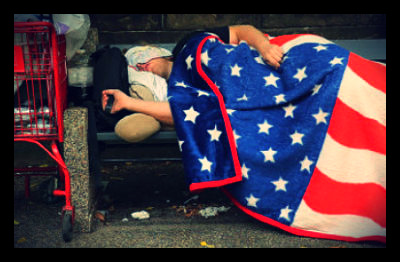
poverty_line_america

By Valery Kulikov

President Obama just like any other US politician is particularly keen on criticizing human rights situations in other countries, while glorifying the ideals of “American-style democracy.” Moreover, these topics are not simply the prime topic of his speeches, but the basis for meddling in other countries’ affairs under the guise of “promoting democracy”. To carry out these operations the US has been heavily funding a countless number of NGOs and when those fail to stage a coup d’etat – usually a military intervention follows. This was the case in Iraq, Libya, Afghanistan, Syria and a number of other states.

Financial Predators and Parasites Want to Live, Regardless of the Cost

Bankers-and-Tick1

By Charles Hugh Smith

Source: Of Two Minds

Reform is impossible in a system optimized for centralized power and financial predators and parasites.

The problem with optimizing private gain by any means available is you also optimize financial predators and parasites. The problem with optimizing a system for centralized power (i.e. the federal government and Federal Reserve) is that you also optimize regulatory capture, influence-peddling and the unholy marriage of wealth and power.

Optimization is a key principle of all technologies. Though the political class claims perfection is possible (with just a few more regulations and laws, heh), engineers understand every system is a series of trade-offs. If you want to optimize one output, everything else in the system is rendered secondary.

The master narrative of the status quo is that maximizing private gain by any means available is good because to get rich is glorious: the goal of getting rich motivates entrepreneurs to do wonderful things that benefit humanity while they amass vast fortunes.

This is the happy propaganda story, and we all know the few outliers who are endlessly trotted out to “prove” its truth: Steve Jobs, the Larrys (Ellison and Page) Bill Gates, et al. Nice, but the handful who fulfill the propaganda version of optimizing private gain by any means available only succeeded because there were no powerful vested interests in their way.

What our system actually optimizes is the assembly of vested interests that buy protection of their racket from the state. These vested interests include wealthy individuals, corporations, cartels and public unions.

Want to earn a 1,000% return on your investment? It’s very difficult to do so by producing a good or service. By any measure, the easiest, lowest-risk way to earn a 1,000% return on your investment is to buy political protection with lobbying and campaign contributions.

What we’ve done is optimize financial predation and parasitism. We’ve created enormous incentives for too big to fail/jail banks, financiers manipulating dark pools and high-frequency trading that add nothing to the real economy, public unions guaranteeing their members unbeatable pensions and benefits while taxpayers foot the bill, politicos who enter office with ambition and few financial means who leave office with great wealth, cartels that buy protection from competition from the centralized state and corporations that rewrite the tax code in their favor with campaign contributions.

Now that we’ve created vast menageries of insatiably greedy financial predators and parasites, we’ve created monsters who want to live regardless of the cost to the nation. Parasites prefer not to kill their host, but their ability to fine-tune the process of sucking as much money out of the system as possible without bringing it down is not as well-developed as their greed.

The Global Financial Meltdown of 2008 proved this. The financial parasites and their parasitic partners in the halls of federal power were blind to the risks of collapse their insatiable greed were generating; they continued sucking the maximum private gain out of the system until the moment it collapsed in a heap.

Predators don’t worry about maintaining the flock of sheep or the schools of little fish. They will dive into the swirling school of frantic fish and consume every last one. Financial predators are the same: financial predators will sell a subprime auto loan to every last debt-serf in the flock, until the ecosystem of prey collapses and there are no marks left for their cons.

This is why our system is well and truly doomed: we have optimized the system for vast menageries of insatiably greedy financial predators and parasites, and now that they exist and have gained power, they want to live and prosper regardless of the cost to the decimated prey and the nation. By optimizing centralized power, we have optimized the protection of financial predators and parasites by the all-powerful central state and bank.

Reform is impossible in a system optimized for centralized power and financial predators and parasites. The predators and parasites will gorge themselves until the system collapses.


Wall Street Panic

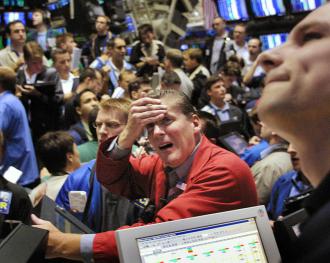
panicked trader

By Mike Whitney

Source: Counterpunch

“Not only is the equity market at the second most overvalued point in U.S. history, it is also more leveraged against probable long-term corporate cash flows than at any previous point in history.”

— John P. Hussman, Ph.D. “Debt-Financed Buybacks Have Quietly Placed Investors On Margin“, Hussman Funds

“This year feels like the last days of Pompeii: everyone is wondering when the volcano will erupt.”

— Senior banker commenting to the Financial Times

Last Friday’s stock market bloodbath was the worst one-day crash since 2008. The Dow Jones dropped 531 points, while the S&P 500 fell 64, and the tech-heavy Nasdaq slid 171. The Dow lost more than 1,000 points on the week dipping back into the red for the year. At the same time, commodities continued to get hammered with oil prices briefly dropping below the critical $40 per barrel mark. More tellingly, the market’s so called “fear gauge” (VIX) skyrocketed to a 2015 high indicating more volatility to come.  The VIX has remained at unusually low levels for a number of years as investors have grown more complacent figuring the Fed will intervene whenever stocks fall too far. But last week’s massacre cast doubts on  the Central Bank’s intentions. Will the Fed ride to the rescue again or not? To the vast majority of institutional investors, who now base their buying decisions on Fed policy rather than market fundamentals, that is the crucial question.

Ostensibly, last week’s selloff  was triggered by China’s unexpected decision to devalue its currency, the juan.   The announcement confirmed that the world’s second biggest economy is rapidly cooling off increasing the likelihood of a global slowdown. Over the last decade, China has accounted  “for a third of the expansion in the global economy,… almost double the contribution of the US and more than triple the impacts of Europe and Japan.” Fears of a slowdown were greatly intensified on Friday when a survey showed that manufacturing in China shrank at the fastest pace since the recession in 2009. That’s all it took to put the global markets into a nosedive. According to the World Socialist Web Site:

“The deceleration of growth in China, reflected in figures on production, exports and imports, business investment and producer prices, is fueling a near-collapse in so-called “emerging market” economies that depend on the Chinese market for exports of raw materials. The past week saw a further plunge in stock prices and currency rates in Russia, Turkey, Brazil, South Africa and other countries. These economies are being hit by a massive outflow of capital, placing in doubt their ability to meet debt obligations.”

(“Panic sell-off on world financial markets”, World Socialist Web Site)

While a correction was not entirely unexpected following a 6-year long bull market, the sudden drop in equities does have analysts rethinking the effectiveness of the Fed’s monetary policies which have had little impact on personal consumption, retail spending, wages, productivity, household income, or economic growth all of which remain weaker than they have been following any recession in the post war era.  For all intents and purposes, the plan to inflate asset prices by dropping rates to zero and injecting trillions in liquidity into the financial system has been an abject failure.   GDP continues to hover at an abysmal 1.5% while  signs of a strong, self sustaining recovery are nowhere to be seen. At the same time, government and corporate debt continue to balloon at a near-record pace draining capital  away from productive investments that could lay the groundwork for higher employment and stronger growth.

What’s so odd about last week’s market action is that the bad news on China put shares into a tailspin instead of sending them into the stratosphere which has been the pattern for the last four years. In fact, the reason volatility has stayed so low and investors have grown so complacent is because every announcement of bad economic data has been followed by cheery promises from the Fed to keep the easy-money sluicegates open until the storm passes.  That hasn’t been the case this time, in fact, Fed chair Janet Yellen hasn’t even scrapped the idea of jacking up rates some time in September which is almost unthinkable given last week’s market ructions.

Why? What’s changed?   Surely, Yellen isn’t going to sit back and let six years of stock market gains be wiped out in a few sessions, is she?  Or is there something we’re missing here that is beyond the Fed’s powers to change? Is that it?

My own feeling is that China is not the real issue. Yes, it is the catalyst for the selloff, but the real problem is in the credit markets where the spreads on high yield bonds continue to widen relative to US Treasuries.

What does that mean?

It means the price of capital is going up, and when the price of capital goes up, it costs more for businesses to borrow. And when it costs more for businesses to borrow, they reduce their borrowing, which decreases the demand for credit. And when the demand for credit decreases in a credit-based system, then there’s a corresponding slowdown in business investment which impacts stock prices and growth. And that is particularly significant now, since the bulk of corporate investment is being diverted into stock buybacks. Check out this excerpt from a post at Wall Street on Parade:

“According to data from Bloomberg, corporations have issued a stunning $9.3 trillion in bonds since the beginning of 2009. The major beneficiary of this debt binge has been the stock market rather than investment in modernizing the plant, equipment or new hires to make the company more competitive for the future. Bond proceeds frequently ended up buying back shares or boosting dividends, thus elevating the stock market on the back of heavier debt levels on corporate balance sheets.

Now, with commodity prices resuming their plunge and currency wars spreading, concerns of financial contagion are back in the markets and spreads on corporate bonds versus safer, more liquid instruments like U.S. Treasury notes, are widening in a fashion similar to the warning signs heading into the 2008 crash. The $2.2 trillion junk bond market (high-yield) as well as the investment grade market have seen spreads widen as outflows from Exchange Traded Funds (ETFs) and bond funds pick up steam.” (“Keep Your Eye on Junk Bonds: They’re Starting to Behave Like ‘08 “, Wall Street on Parade)

As you can see, the nation’s corporations don’t borrow at zero rates from the Fed. They borrow at market rates in the bond market, and those rates are gradually inching up. And while that hasn’t slowed the stock buyback craze so far,  the clock is quickly running out. We are fast approaching the point where debt servicing, shrinking revenues, too much leverage, and higher rates will no longer make stock repurchases a sensible option, at which point stocks are going to fall off a cliff. Here’s more from Andrew Ross Sorkin at the New York Times:

“Since 2004, companies have spent nearly $7 trillion purchasing their own stock — often at inflated prices, according to data from Mustafa Erdem Sakinc of the Academic-Industry Research Network. That amounts to about 54 percent of all profits from Standard & Poor’s 500-stock index companies between 2003 and 2012, according to William Lazonick, a professor of economics at the University of Massachusetts Lowell.”

You can see the game that’s being played here. Mom and Pop investors are getting fleeced again. They’ve been lending trillions of dollars to corporate CEOs (via bond purchases) who’ve taken the money, split it up among themselves and their wealthy shareholder buddies, (through buybacks and dividends neither of which add a thing to a company’s productive capacity) and made out like bandits.  This, in essence, is how stock buybacks work. Ordinary working people stick their life savings into bonds (because they were told “Stocks are risky, but bonds are safe”.) that offer a slightly better return than ultra-safe, low-yield government debt (US Treasuries) and, in doing so, provide lavish rewards for scheming executives who use it to shower themselves and their cutthroat shareholders with windfall profits that will never be repaid. When analysts talk about “liquidity issues” in the bond market, what they really mean is that they’ve already divvied up the money between themselves and you’ll be lucky if you ever see a dime of it back. Sound familiar?

Of course, it does. The same thing happened before the Crash of ’08. Now we are reaching the end of the credit cycle which could produce the same result. According to one analyst:

“There’s been worrying deterioration in the overall global demand picture with the continuation of EM (Emerging Markets) FX (Currency Markets) onslaught, deterioration in credit metrics with rising leverage in the US as well as outflows in credit funds in conjunction with significant widening in credit spreads…..The goldilocks period of “low rates volatility-stable carry trade environment of the last couple of years is likely coming to an end.”

(“Credit: Magical Thinking“, Macronomics)

In other words, the good times are behind us while hard times are just ahead. And while the end of the credit cycle doesn’t always signal a stock market crash, the massive buildup of leverage in unproductive financial assets like buybacks suggest that equities are in line for a serious whooping. Here’s more from Bloomberg:

“Credit traders have an uncanny knack for sounding alarm bells well before stocks realize there’s a problem. This time may be no different. Investors yanked $1.1 billion from U.S. investment-grade bond funds last week, the biggest withdrawal since 2013, according to data compiled by Wells Fargo & Co…..

“Credit is the warning signal that everyone’s been looking for,” said Jim Bianco, founder of Bianco Research LLC in Chicago. “That is something that’s been a very good leading indicator for the past 15 years.”

Bond buyers are less interested in piling into notes that yield a historically low 3.4 percent at a time when companies are increasingly using the proceeds for acquisitions, share buybacks and dividend payments. Also, the Federal Reserve is moving to raise interest rates for the first time since 2006, possibly as soon as next month, ending an era of unprecedented easy-money policies that have suppressed borrowing costs….

“Unlike the credit market, the equity market well into 2008 was very complacent about the subprime crisis that led to a full blown financial crisis,” the analysts wrote…..

So if you’re very excited about buying stocks right now, just beware of the credit traders out there who are sending some pretty big warning signs.”  (“U.S. Credit Traders Send Warning Signal to Rest of World Markets”, Bloomberg)

It’s worth noting that the above article was written on August 14, a week before the stock market blew up. But credit was “flashing red” long before stock traders ever took notice.

But that’s beside the point. Whether the troubles started with China or the credit markets, probably doesn’t matter. What matters is that the system about to be put-to-the-test once again because the appropriate safeguards haven’t been put in place, because bubbles are unwinding, and because the policymakers who were supposed to monitor and regulate the system decided that they were more interested in shifting  wealth to their voracious colleagues on Wall Street than building a strong foundation for a healthy economy. That’s why a simple correction could turn into something much worse.

NOTE: As of posting time, Sunday night, the Nikkei Index is down 710, Shanghai down 296, HSI down 1,031. US equity futures are all deep in the red

MIKE WHITNEY lives in Washington state. He is a contributor to Hopeless: Barack Obama and the Politics of Illusion (AK Press). Hopeless is also available in a Kindle edition. He can be reached at fergiewhitney@msn.com.

Our Spoiled-Brat Economy

f418a7472f5783aa8fcf04d0d72e443140b9e2325a6cf04371d142e41c4827e0

By Charles Hugh Smith

Source: Of Two Minds

By insuring spoiled brats/vested interests never face the consequences of their actions and choices, we guarantee failure of the entire system.

Spoiled brats do not take kindly to being called out as spoiled brats. Since economies are aggregates of individuals, we can anticipate howls of outraged denial at our economy being identified as spoiled rotten.


The two essential characteristics of spoiled brats are 1) a complete disregard for the burdens of those paying the bills and 2) a childishly self-absorbed sense of overweening entitlement. Spoiled brats have no sense of fiscal discipline. Indeed, it is their defining characteristic. They want what they want, and they want it now, regardless of the cost to others or the system as a whole.

In America’s Spoiled Brat Economy, no vested interest is ever allowed to fail. Lost billions gambling with borrowed money? Just throw a K Street temper tantrum and threaten to close all the ATMs when you go broke, and voila, Mommy and Daddy (the federal government and Federal Reserve) come rushing with trillions of dollars to make all the bad things like well-deserved bankruptcy go away.

That tens of millions of savers must be robbed of hundreds of billions of dollars in lost interest to rebuild your banks’ profits and balance sheets–the sacrifices of others are of no concern to spoiled brats.

What does not allowed to fail bring to mind? How about coddled children who are crippled by helicopter parents who do their homework for them and schools that give everybody passing grades and gold stars?

A system that doesn’t allow individuals and enterprises to fail is a system that is simply taking another path to failure. Students who are given gold stars and 9th place ribbons (Meet the Fockers) cannot possibly establish a real sense of accomplishment or learn how to make a realistic assessment of their deficiencies or strengths. They are crippled by all the “help” enablers press on them.

The same is true of spoiled-brat economies. Enterprises that are never allowed to fail (for example, too big to fail banks, bankrupt cities, counties and states, defense contractors who produce failed weapons systems, healthcare organizations that cheat the government and patients, etc. etc. etc.) become deadwood that saps the vitality of the economy, dragging down the few productive sectors.

The “help” lavished on vested interests include sweetheart contracts, direct subsidies, tax credits, lines of credit, zero interest rates and a vast range of other subsidies. The entire point of the vast lobbying machine that funnels federal and Federal Reserve largesse to vested interests is about staving off the very failure that keeps economies from imploding (creative destruction).

The Yellowstone Analogy and The Crisis of Neoliberal Capitalism (May 18, 2009)

Innovation, Risk and the Forest Fire Analogy (July 2, 2010)

By insuring spoiled brats/vested interests never face the consequences of their actions, choices and self-absorbed greed, we guarantee failure of the entire system. So by all means, keep passing out subsidies to too big to fail banks and 9th-place ribbons, and give the brats whatever they want as soon as they start wailing, regardless of the cost to the system itself.


U.S. Wealth-Concentration: The Most-Accurate Current Estimates

un2

By Eric Zuesse

Source: Washington’s Blog

CURRENT REALITIES:

Wealthiest Tenth (10%) of Americans Own 75% of America; They Draw 40% of All U.S. Income.

Wealthiest Hundredth (1%) of Americans Own 43% of America; They Draw 20% of All U.S. Income.

Wealthiest Thousandth (0.1%) of Americans Own 22% of America; They Draw 8% of All U.S. Income.

Wealthiest Ten-Thousandth (0.01%) Own 11.2% of America; They Draw 5% of All U.S. Income.

Wealthiest 0.0025% (Forbes 400) Own 2.75% (of all trackable privately-held wealth, not including ‘non-profits’ that are controlled by them).

That last (2.75%) is this $2.29 trillion divided by this $83,296 billion (representing all of the privately owned wealth in the U.S.), in the final quarter of 2014.

Incidentally, the wealthiest tenth are worth over $1 million and draw incomes above $200,000; so: they’re all “millionaires” in common parlance; all of the “top 10%” are.

Following will be mirror-images of the above-cited breakdowns:

Poorest 90% of Americans Own 25% of America; They Draw 60% of All U.S. Income.

Poorest 99% of Americans Own 57% of America; They Draw 80% of All U.S. Income.

Poorest 99.9% of Americans Own 78% of America; They Draw 92% of All U.S. Income.

Poorest 99.99% of Americans Own Less Than 88.8% of America; They Draw Less Than 95% of All U.S. Income.

Poorer 50%: Comprehensive figures for the wealthier and poorer 50% of Americans haven’t been published as recently. However, for the year 2010, the wealthier 50% of Americans owned 98.9% of America, and the poorer 50% of Americans owned 1.1% of America. That was the year after the crash had supposedly ended in 2009. The last prior year in that same study was 2007, the economic peak, and it showed the wealthier half owning 97.5% of America, and the poorer half owning 2.5% of it. In other words: the losses from the Wall Street economic crash went overwhelmingly to the poorer half of the U.S. population (their wealth going down from 2.5% to only 1.1% of America’s total), because of the bailouts to Wall Street. Wall Street complains about “welfare programs,” as if it’s the poor who get bailed out; but those complaints are merely part of Wall Street’s — and their billionaires’ — scams that are targeted to sway fools. The figures show the exact opposite to be the actual truth. America is overwhelmingly a kleptocracy by the top against everybody else; not a “welfare state for the poor.” That’s just aristocrats’ scam, pumped by the economists they hire, and by the ‘news’ media which are controlled by aristocrats, and believed by suckers they fool.

HERE ARE THE TRENDS:

Right before the crash, in 2006 and 2007, the top 1% owned 33.8% of America; they drew 21.4% of all U.S. income.

A Congressional Research Service study, “An Analysis of the Distribution of Wealth Across Households, 1989-2010,” found that between the economic peak in 2007, and the end of the opening phase of the Wall Street bailouts in 2010, wealth-inequality in America soared, rising even faster than it had been rising during the George W. Bush years. As a consequence, whereas in 2007, the top 1% owned 33.8% of America, by 2010 this figure had risen to 34.5% — and the latest figure is 43%; so, this soaring is continuing (it wasn’t occurring only at the start of Obama’s Administration). What was bad under Bush has thus become lots worse under Obama, despite all of Obama’s rhetoric against wealth-inequality. And yet the Wall Street bailouts continue (under the guise of “QE”), as if the trickle-down policies of Obama and the Republicans had “ended” the “recession” for Americans generally, instead of only for the top 1% — which latter was the reality, and which reality makes a mockery of economists, who say that the “recession ended in 2009.” “Ended,” for whom? The policy is to bail out the megabanksters who made trillions from the MBS scams that brought the economy down — those people were bailed out when they were deep in the hole — while not bailing out their homeowners and cheated investors, who never recovered; statistics show they continue to suffer from those crimes. As a consequence, under Obama, wealth has risen only for the wealthiest of Americans.

However, incomes have been rising slightly for everyone else. For example, the “Bottom 99% Incomes Real Growth” during “2009-2014” was only 4.3% — less than 1% per year — while for the “Top 1%” it was 58% during that 5-year time-expanse. But that — bad as it is — is nonetheless an improvement, on income.

Throughout Obama’s first term, 2009-2012, the “Bottom 99% Incomes Real Growth” had been only 0.4% — less than 1% throughout that entire four-year period. The “Top 1%” received 95% of the “Incomes Real Growth” then. And yet, even though even the incomes of the bottom 99% of the U.S. population were stagnant throughout that four-year period ending in 2012 (all of Obama’s first term), economists still say that the “recession ended in 2009.” And the reality was even worse than this incomes-picture shows, because, in terms of wealth, which is even more important than income, there hasn’t yet  been a “recovery,” in the U.S., for the bottom 99% of Americans. What there has been, instead, is continuing scams, misinforming the public, about what’s actually happening, and what happened, and what caused it to happen. It’s just a racket.

THE DEEPER MEANING:

Under Presidents G.W. Bush and Barack Obama, economic inequality in America has been more extreme, for more years, than under any Presidents in all of the previous U.S. history. But, at least, Bush didn’t pretend to care about it. Obama does. He pretended to a concern for justice which he never really had; he was always merely faking liberalism. It was thus entirely true-to-form that President Obama had his Solicitor General present an argument to the U.S. Supreme Court that lying in politics is Constitutionally protected “free speech.”

But what, then, is really left of ‘democracy’ in the U.S.? After all, even before Obama, democracy in America was already dying, if not yet dead. And what meaningful democracy can even possibly exist in a nation where lying in politics is constitutionally protected ‘free speech,’ which no state may penalize, under any conditions? How may “the people” even conceivably rule in a republic where politicians can reasonably be expected to win only lying-contests, because not to lie in such a nation is not to be politically competitive there at all? Can democracy really consist of contests in deception? Is such a political race-to-the-bottom consistent with democracy?

Or, is it instead the case that such extreme wealth-disparities as exist in the U.S. are the natural result of decades of politics being (perhaps increasingly within recent times) little more than lying-contests? Is that the deeper truth, behind the deplorable figures here?

Is this extreme inequality the result of state-imposed reduction of ‘democracy’ to being basically contests in deceiving the public? Is that what it’s really all about — a racket, basically, against the public, for and on behalf of the aristocracy?

Is this extreme inequality the intended result, or is it merely the result of the stupidity of those who just happen to win high national office in the United States?

Do the farm animals just happen to end up as burger-meat? Or is that what they are there for? We know. Do they?

9 Ominous Signals Coming From The Financial Markets That We Have Not Seen In Years

Meltdown-Secret-History-of-Global-Financial-Collapse

By Michael Snyder

Source: The Economic Collapse

Is the stock market about to crash?  Hopefully not, and there definitely have been quite a few “false alarms” over the past few years.  But without a doubt we have been living through one of the greatest financial bubbles in U.S. history, and the markets are absolutely primed for a full-blown crash.  That doesn’t mean that one will happen now, but we are starting to see some ominous things happen in the financial world that we have not seen happen in a very long time.  So many of the same patterns that we witnessed just prior to the bursting of the dotcom bubble and just prior to the 2008 financial crisis are repeating themselves again.  Hopefully we still have at least a little bit more time before stocks completely crash, because when this market does implode it is going to be a doozy.

The following are 9 ominous signals coming from the financial markets that we have not seen in years…

#1 By the time the markets closed on Monday, we had witnessed the biggest three day decline for U.S. stocks since 2011.

#2 On Monday, the S&P 500 moved below its 200 day moving average for the first time in about two years.  The last time this happened after such an extended streak of success, the S&P 500 ended up declining by a total of 22 percent.

#3 This week the put-call ratio actually moved higher than it was at any point during the collapse of Lehman Brothers in 2008.  This is an indication that there is a tremendous amount of fear on Wall Street right now.

#4 Everybody is watching the VIX at the moment.  According to the Economic Policy Journal, the VIX has now risen to the highest level that it has been since the heart of the European debt crisis.  This is another indicator that there is extraordinary fear on Wall Street…

US stock market volatility has jumped to the highest since the eurozone debt crisis, according to a closely watched index, the the CBOE Vix index of implied US share price volatility.

It jumped to 24.6 late on Monday and is up again this morning. On Thursday, it was as low as 15.

That’s a very strong move, but things have been much worse. At height of the recent financial crisis – the Vix index peaked at 80.1 in November 2008.

Could we get there again? Yeah.

#5 The price of oil is crashing.  This also happened in 2008 just before the financial crisis erupted.  At this point, the price of oil is now the lowest that it has been in more than two years.

#6 As Chris Kimble has pointed out, the chart for the Dow has formed a “Doji Star topping pattern”.  We also saw this happen in 2007.  Could this be an indication that we are on the verge of another stock market crash similar to what happened in 2008?

#7 Canadian stocks are actually doing even worse than U.S. stocks.  At this point, Canadian stocks have already dropped more than 10 percent from the peak of the market.

#8 European stocks have also had a very rough month.  For example, German stocks have already dropped about 10 percent since July, and there are growing concerns about the overall health of the German economy.

#9 The wealthy are hoarding cash and precious metals right now.  In fact, one British news report stated that sales of gold bars to wealthy customers are up 243 percent so far this year.

So what comes next?

Some experts are saying that this is the perfect time to buy stocks at value prices.  For example, USA Today published a story with the following headline on Tuesday: “Time to ‘buy’ the fear? One Wall Street pro says yes“.

Other experts, however, believe that this could represent a major turning point for the financial markets.

Just consider what Abigail Doolittle recently told CNBC

Technical strategist Abigail Doolittle is holding tight to her prediction of market doom ahead, asserting that a recent move in Wall Street’s fear gauge is signaling the way.

Doolittle, founder of Peak Theories Research, has made headlines lately suggesting a market correction worse than anyone thinks is ahead. The long-term possibility, she has said, is a 60 percent collapse for the S&P 500.

In early August, Doolittle was warning both of a looming “super spike” in the CBOE Volatility Index as well as a “death cross” in the 10-year Treasury note. The former referenced a sharp move higher in the “VIX,” while the latter used Wall Street lingo for an event that already occurred in which the fixed income benchmark saw its 50-day moving average cross below its 200-day trend line.

Both, she said, served as indicators for trouble ahead.

Speculative investors claim at least 1.7 billion Euros from crisis-hit countries

profiting-from-crisis-image

From CorporateEurope.org

PRESS RELEASE FROM CORPORATE EUROPE OBSERVATORY AND THE TRANSNATIONAL INSTITUTE

Amsterdam/Brussels, March 10, 2014 – Speculative investors are claiming more than 1,7 billion Euros in compensation from Greece, Spain and Cyprus in private international tribunals – for measures implemented to deal with economic crises, a new report released today by the Transnational Institute (TNI) and Corporate Europe Observatory (CEO) reveals.

The report Profiting from Crisis – How corporations and lawyers are scavenging profits from Europe’s crisis countries exposes a growing wave of corporate lawsuits against Europe’s struggling economies which could lead to European taxpayers paying out millions of euros in a second major public bailout – this time to speculative investors. The report argues that these lawsuits provide a salutary warning of the potential high costs of the proposed trade deal between the US and the EU, which start its fourth round of negotiations today in Brussels.

Pia Eberhardt, trade campaigner with Corporate European Observatory and co-author of the report said:“Speculative investors are already using investment agreements to raid the cash-strapped public treasuries in Europe’s crisis countries. It would be political madness to grant corporations the same excessive rights in the even more far-reaching EU-US trade deal.”

Profiting from Crisis examines a number of investor disputes launched against Spain, Greece and Cyprus in the wake of the European economic crisis. In most cases, the investors were not long-term investors, but rather invested as the crisis emerged and were therefore fully aware of the risks. They have used the investment agreements as a legal escape route to extract further wealth from crisis countries when their risky investment didn’t pay off, explains the report.

For example, in Greece, Poštová Bank from Slovakia bought Greek debt after the bond value had already been downgraded, and was then offered a very generous debt restructuring package, yet sought to extract an even better deal by suing Greece, using the bilateral investment treaty between Slovakia and Greece.

Cecilia Olivet, co-author of the report for the Transnational Institute said: “At a time when ordinary people across Europe have been stripped of many basic social rights, it is perverse that the EU supports an international investment regime which provides VIP protection to largely speculative foreign investors. It is time to reject a privatised justice system that supports predatory corporate vultures and undermines crucial regulation in the public interest.”

Profiting from Crisis also unveils how speculative investors have been backed by international law firms that actively encourage investor-state lawsuits. Law firms benefit – whether attacking or defending states – and are reaping substantial financial rewards in the process. UK-based Herbert Smith Freehills, hired to represent Spain in at least two cases, for example,could earn up to 1.6 million euros for the cases.

Growing controversy around the EU-US trade talks has forced the European Commission to temporarily halt negotiations on the investor rights chapter in the proposed transatlantic deal and announce a public consultation on the issue expected to start this month. But the Commission has already indicated that it does not want to abandon these controversial corporate rights, but rather reform them.

Pia Eberhardt commented: “The investor-state arbitration system cannot be tamed. Profit-greedy law firms and their corporate clients will always find a way to attack countries for actions that threaten their profits – even when it is much needed legislation to get out of a financial crisis. Corporate super-rights should be abolished.”

83 Numbers From 2013 That Are Almost Too Crazy to Believe

global-economic-crisis

Michael Snyder of The Economic Collapse blog recently compiled a long list of astounding social-economic statistics from the past year. They paint a bleak picture of the future of our current economic system and unless major changes are made, the numbers will only worsen in 2014. There’s probably many more indicators left off the list, but just a small sampling of what’s on it would be enough to worry even the most die-hard optimists:

#1 Most people that hear this statistic do not believe that it is actually true, but right now an all-time record 102 million working age Americans do not have a job.  That number has risen by about 27 million since the year 2000.

#2 Because of the lack of jobs, poverty is spreading like wildfire in the United States.  According to the most recent numbers from the U.S. Census Bureau, an all-time record 49.2 percent of all Americans are receiving benefits from at least one government program each month.

#3 As society breaks down, the government feels a greater need than ever before to watch, monitor and track the population.  For example, every single day the NSA intercepts and permanently stores close to 2 billion emails and phone calls in addition to a whole host of other data.

#4 The Bank for International Settlements says that total public and private debt levels around the globe are now 30 percent higher than they were back during the financial crisis of 2008.

#5 According to a recent World Bank report, private domestic debt in China has grown from 9 trillion dollars in 2008 to 23 trillion dollars today.

#6 In 1985, there were more than 18,000 banks in the United States.  Today, there are only 6,891 left.

#7 The six largest banks in the United States (JPMorgan Chase, Bank of America, Citigroup, Wells Fargo, Goldman Sachs and Morgan Stanley) have collectively gotten 37 percent larger over the past five years.

#8 The U.S. banking system has 14.4 trillion dollars in total assets.  The six largest banks now account for 67 percent of those assets and all of the other banks account for only 33 percent of those assets.

#9 JPMorgan Chase is roughly the size of the entire British economy.

#10 The five largest banks now account for 42 percent of all loans in the United States.

#11 Right now, four of the “too big to fail” banks each have total exposure to derivatives that is well in excess of 40 trillion dollars.

#12 The total exposure that Goldman Sachs has to derivatives contracts is more than 381 times greater than their total assets.

#13 According to the Bank for International Settlements, the global financial system has a total of 441 trillion dollars worth of exposure to interest rate derivatives.

#14 Through the end of November, approximately 365,000 Americans had signed up for Obamacare but approximately 4 million Americans had already lost their current health insurance policies because of Obamacare.

#15 It is being projected that up to 100 million more Americans could have their health insurance policies canceled by the time Obamacare is fully rolled out.

#16 At this point, 82.4 million Americans live in a home where at least one person is enrolled in the Medicaid program.

#17 It is has been estimated that Obamacare will add 21 million more Americans to the Medicaid rolls.

#18 It is being projected that health insurance premiums for healthy 30-year-old men will rise by an average of 260 percent under Obamacare.

#19 One couple down in Texas received a letter from their health insurance company that informed them that they were being hit with a 539 percent rate increase because of Obamacare.

#20 Back in 1999, 64.1 percent of all Americans were covered by employment-based health insurance.  Today, only 54.9 percent of all Americans are covered by employment-based health insurance.

#21 The U.S. government has spent an astounding 3.7 trillion dollars on welfare programs over the past five years.

#22 Incredibly, 74 percent of all the wealth in the United States is owned by the wealthiest 10 percent of all Americans.

#23 According to Consumer Reports, the number of children in the United States taking antipsychotic drugs has nearly tripled over the past 15 years.

#24 The marriage rate in the United States has fallen to an all-time low.  Right now it is sitting at a yearly rate of just 6.8 marriages per 1000 people.

#25 According to a shocking new study, the average American that turned 65 this year will receive $327,500 more in federal benefits than they paid in taxes over the course of their lifetimes.

#26 In just one week in December, a combined total of more than 2000 new cold temperature and snowfall records were set in the United States.

#27 According to the U.S. Census Bureau, median household income in the United States has fallen for five years in a row.

#28 The rate of homeownership in the United States has fallen for eight years in a row.

#29 Only 47 percent of all adults in America have a full-time job at this point.

#30 The unemployment rate in the eurozone recently hit a new all-time high of 12.2 percent.

#31 If you assume that the labor force participation rate in the U.S. is at the long-term average, the unemployment rate in the United States would actually be 11.5 percent instead of 7 percent.

#32 In November 2000, 64.3 percent of all working age Americans had a job.  When Barack Obama first entered the White House, 60.6 percent of all working age Americans had a job.  Today, only 58.6 percent of all working age Americans have a job.

#33 There are 1,148,000 fewer Americans working today than there was in November 2006.  Meanwhile, our population has grown by more than 16 million people during that time frame.

#34 Only 19 percent of all Americans believe that the job market is better than it was a year ago.

#35 Just 14 percent of all Americans believe that the stock market will rise next year.

#36 According to CNBC, Pinterest is currently valued at more than 3 billion dollars even though it has never earned a profit.

#37 Twitter is a seven-year-old company that has never made a profit.  It actually lost 64.6 million dollars last quarter.  But according to the financial markets it is currently worth about 22 billion dollars.

#38 Right now, Facebook is trading at a valuation that is equivalent to approximately 100 years of earnings, and it is currently supposedly worth about 115 billion dollars.

#39 Total consumer credit has risen by a whopping 22 percent over the past three years.

#40 Student loans are up by an astounding 61 percent over the past three years.

#41 At this moment, there are 6 million Americans in the 16 to 24-year-old age group that are neither in school or working.

#42 The “inactivity rate” for men in their prime working years (25 to 54) has just hit a brand new all-time record high.

#43 It is hard to believe, but in America today one out of every ten jobs is now filled by a temp agency.

#44 Middle-wage jobs accounted for 60 percent of the jobs lost during the last recession, but they have accounted for only 22 percent of the jobs created since then.

#45 According to the Social Security Administration, 40 percent of all U.S. workers make less than $20,000 a year.

#46 Approximately one out of every four part-time workers in America is living below the poverty line.

#47 After accounting for inflation, 40 percent of all U.S. workers are making less than what a full-time minimum wage worker made back in 1968.

#48 When Barack Obama took office, the average duration of unemployment in this country was 19.8 weeks.  Today, it is 37.2 weeks.

#49 Investors pulled an astounding 72 billion dollars out of bond mutual funds in 2013.  It was the worst year for bond funds ever.

#50 Small business is rapidly dying in America.  At this point, only about 7 percent of all non-farm workers in the United States are self-employed.  That is an all-time record low.

#51 The six heirs of Wal-Mart founder Sam Walton have as much wealth as the bottom one-third of all Americans combined.

#52 Once January 1st hits, it will officially be illegal to manufacture or import traditional incandescent light bulbs in the United States.  It is being projected that millions of Americans will attempt to stock up on the old light bulbs before they are totally gone from store shelves.

#53 The Japanese government has estimated that approximately 300 tons of highly radioactive water is being released into the Pacific Ocean from the destroyed Fukushima nuclear facility every single day.

#54 Back in 1967, the U.S. military had more than 31,000 strategic nuclear warheads.  That number is already being cut down to 1,550, and now Barack Obama wants to reduce it to only about 1,000.

#55 As you read this, 60 percent of all children in Detroit are living in poverty and there are approximately 78,000 abandoned homes in the city.

#56 Wal-Mart recently opened up two new stores in Washington D.C., and more than 23,000 people applied for just 600 positions.  That means that only about 2.6 percent of the applicants were ultimately hired.  In comparison, Harvard offers admission to 6.1 percent of their applicants.

#57 At this point, almost half of all public school students in America come from low income homes.

#58 Tragically, there are 1.2 million students that attend public schools in the United States that are homeless.  That number has risen by 72 percent since the start of the last recession.

#59 According to a Gallup poll that was recently released, 20.0 percent of all Americans did not have enough money to buy food that they or their families needed at some point over the past year.  That is just under the all-time record of 20.4 percent that was set back in November 2008.

#60 The number of Americans on food stamps has grown from 17 million in the year 2000 to more than 47 million today.

#61 Right now, one out of every five households in the United States is on food stamps.

#62 The U.S. economy loses approximately 9,000 jobs for every 1 billion dollars of goods that are imported from overseas.

#63 Back in 1950, more than 80 percent of all men in the United States had jobs.  Today, less than 65 percent of all men in the United States have jobs.

#64 According to one survey, approximately 75 percent of all American women do not have any interest in dating unemployed men.

#65 China exports 4 billion pounds of food to the United States every year.

#66 Overall, the United States has run a trade deficit of more than 8 trillion dollars with the rest of the world since 1975.

#67 The number of Americans on Social Security Disability now exceeds the entire population of Greece, and the number of Americans on food stamps now exceeds the entire population of Spain.

#68 It is being projected that the number of Americans on Social Security will rise from 57 million today to more than 100 million in 25 years.

#69 Back in 1970, the total amount of debt in the United States (government debt + business debt + consumer debt, etc.) was less than 2 trillion dollars.  Today it is over 56 trillion dollars.

#70 Back on September 30th, 2012 our national debt was sitting at a total of 16.1 trillion dollars.  Today, it is up to 17.2 trillion dollars.

#71 The U.S. government “rolled over” more than 7.5 trillion dollars of existing debt in fiscal 2013.

#72 If the U.S. national debt was reduced to a stack of one dollar bills it would circle the earth at the equator 45 times.

#73 When Barack Obama was first elected, the U.S. debt to GDP ratio was under 70 percent.  Today, it is up to 101 percent.

#74 The U.S. national debt is on pace to more than double during the eight years of the Obama administration.  In other words, under Barack Obama the U.S. government will accumulate more debt than it did under all of the other presidents in U.S. history combined.

#75 The federal government is borrowing (stealing) roughly 100 million dollars from our children and our grandchildren every single hour of every single day.

#76 At this point, the U.S. already has more government debt per capita than Greece, Portugal, Italy, Ireland or Spain.

#77 Japan now has a debt to GDP ratio of more than 211 percent.

#78 As of December 5th, 83 volcanic eruptions had been recorded around the planet so far this year.  That is a new all-time record high.

#79 53 percent of all Americans do not have a 3 day supply of nonperishable food and water in their homes.

#80 Violent crime in the United States was up 15 percent last year.

#81 According to a very surprising survey that was recently conducted, 68 percent of all Americans believe that the country is currently on the wrong track.

#82 Back in 1972, 46 percent of all Americans believed that “most people can be trusted”.  Today, only 32 percent of all Americans believe that “most people can be trusted”.

#83 According to a recent Pew Research survey, only 19 percent of all Americans trust the government.   Back in 1958, 73 percent of all Americans trusted the government. [While it’s unfortunate we can’t trust government, it’s a good thing that more are now aware of reasons why we shouldn’t trust it.]