Two for Tuesday
Reply

By DM
Source: blastingnews
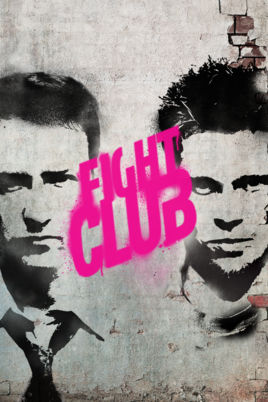
Based on Chuck Palahniuk’s novel of the same name, a film that was initially a commercial failure is now widely considered a cult classic and a philosophical marvel. Fight Club is one of the most important films of its generation and one of Fincher’s best. This thought-provoking masterpiece scratches the surface of various philosophical concepts and makes its audience think.
It is still as relevant as ever, perhaps even more so than before. Emasculation, Consumerism, beauty standards, identity, chaos vs order — these philosophical concepts are perhaps even more topical today than they’ve ever been.
Philosophically radical, this is a film that condemns the society of consumerism. As Edward Norton’s character says: “It’s just, when you buy furniture, you tell yourself, that’s it.
That’s the last sofa I’m gonna need. Whatever else happens, I’ve got that sofa problem handled.”
Fight Club also takes a critical look at beauty standards for men and women both and at advertisements that are served to us through mass media. Identity and alter-ego are philosophical concepts on which Fight Club is based on. Tyler Durden (Brad Pitt’s character) is what the narrator (Edward Norton’s character) wants to be.
The ideal alpha male. A leader of men. Tyler Durden gradually appears throughout the movie, emerging from the narrator’s subconscious and almost destroying him in the process.
Order, anarchy and chaos are perhaps the most prominent theme of Fight Club. At one point, Tyler Durden says: “It’s only after we’ve lost everything that we’re free to do anything.” Although primarily a critique of consumerism, this is a rejection of order and an acceptance of chaos.
When the underground fight club evolves into Project Mayhem and starts pouring into the outside world, members of it begin to dismantle every societal concept, causing controlled, deliberate and channeled chaos. Installing anarchy and rejecting every societal norm that had turned them into slaves. This is how they attempt to set themselves free, but the main protagonist loses himself in the chaos, initially merging with his alter-ego and then rejecting it.
In today’s America, where controlled chaos is caused by the media and fed to the panicked public, Fight Club resembles a warped house of mirrors in which the reflection of today’s America is seen.

“Mr. Robot” is one of the rare shows to make it to mainstream cable television with a perspective which may worry corporate sponsors of cable television. It incorporates elements of hacker and anarchist subcultures within its narrative centering on a network security programmer who moonlights as a cyber-vigilante and hacktivist ringleader. Series such as this are all too rare but much needed for their ability to introduce and/or spread important information through the collective imagination. It’s also one of the first television shows to speak to and reflect segments of contemporary countercultures.
Given the nature of its format, an episodic series on the USA Network (though it is the network that produced Night Flight), it’s vulnerable to censorship and cooptation. However, as it stands now it’s a refreshingly subversive voice in the basic cable wilderness.
(Hulu requires Adobe Flash Player 11.1 to view)
http://www.hulu.com/watch/814104
Pilot episode can also be viewed here.
Words of wisdom from KMO, creator of the C-Realm podcast, reading the opening presentation for his “Manifesting In Meat Space” couch-surfing tour:
http://c-realm.com/podcasts/crealm/377-manifesting-in-meat-space/
Among the topics covered: KMO’s intro to podcasting, peak oil, epochalism, technology, critical junctures, industrial society, Fight Club, the Unabomber, activism and conscious revolution.
INDIAN COUNTRY NEWS
"It is the duty of every man, as far as his ability extends, to detect and expose delusion and error"..Thomas Paine
Human in Algorithms
From the Roof Top
I See This
blog of the post capitalist transition.. Read or download the novel here + latest relevant posts
अध्ययन-अनुसन्धानको सार
 After the Crash