“Genetically Edited” Food – The next stage of the Great Reset?

By Kit Knightly

Source: Off-Guardian

The Queen’s Speech was interesting this year.

For all the people outside the UK who don’t understand what the “Queens Speech” actually is, it’s a farcical state occasion in which the Queen (or, in this case, Prince Charles since her majesty is ill/secretly dead/having “mobility issues”) makes a speech about what “her government” intends to do for the next 12 months.

Of course, the Queen doesn’t actually write the speech, or have any input on its content, or have any control at all over what “her” government intends to do. She’s just a mouthpiece in a big gold hat.

It’s the UK equivalent of the State of the Union, only done in Halloween costumes made out of shiny stolen rocks.

The whole thing is nothing but a grand, gilt statement of intent from the British Deep State, wrapped in mink and draped in medals they never earned. It’s a joke, but it is worth listening to.

Or, if you have a sensitive stomach, you can just read the full text the next day on the UK government’s website (that’s what I do).

A lot of the content is entirely predictable.

More money to Ukraine, with a promise the UK will “lead the way in championing security around the world”. More online censorship via the “Online Safety Bill”. A compulsory register for homeschooled children via the “Schools Reform Bill”.

There’s also mention of “securing the constitution” by introducing the UK’s own “Bill of Rights”. We broke down that particular Trojan Horse back in February.

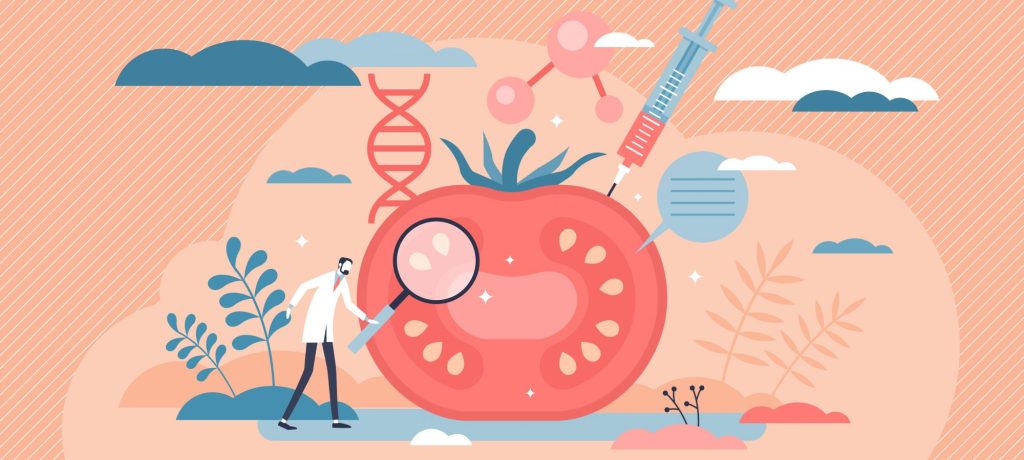
But the part I found most interesting is the stated plan to “encourage agricultural and scientific innovation at home” via the proposed Genetic Technology (Precision Breeding) Bill.

The proposed bill (which, for some reason is not available through the parliament website) follows on from DEFRA’s announced “loosened regulation” of genetic research back in January.

To quote the National Institute of Agricultural Botany (NIAB), the legislation would “take certain precision breeding techniques out of the scope of restrictive GMO rules”.

Essentially, this would see new “gene-edited” foods as distinct from old-fashioned “genetically modified” foods, and therefore not subject to the same rules and oversight.

The claimed distinction is that gene editing, as opposed to genetic modification, doesn’t introduce DNA from other species. Therefore, in effect, is merely speeding up what could potentially naturally happen over time.

Now, you might think this is just semantics, and that such a law will just provide a loophole for ALL “genetically modified” foods to simply rebrand themselves as “genetically edited” foods, and thereby avoid regulation. But that is disgustingly cynical and shame on you for even thinking it.

All in all, this is pretty on-message stuff, and not especially surprising. What’s noteworthy is – by pure happenstance, I’m sure – it appears to coincide with a renewed push on the GM food front in other countries all over the world.

In December 2021, Switzerland added an amendment to its moratorium on GMO crops, permitting the use of certain “gene editing” techniques.

Last month, Egypt announced their new strain of GM wheat. Just two days ago, Ethiopia’s National Agricultural Biotechnology Research Center announced they had researched, and the country will now be growing, genetically modified cotton and maize.

Despite Russia’s sweeping ban on the cultivation and/or importing of genetically modified crops, they have nonetheless created a 111 billion Ruble project to create up to 30 varieties of genetically edited plants and farm animals.

Britain’s deregulation of GM food is always described as a “post-Brexit” move – with the EU chided around the world for its “precautionary principle” on GM crops – and yet as long ago as last April, the EU was calling for a “rethink” on GM crops.

In fact, just today, European Biotechnology Magazine reports:

The EU Commission has launched its final consultation on the deregulation of new breeding techniques in agriculture

WHY THIS? WHY NOW?

So, we’re seeing a sudden increase in the variety of GM crops available and a simultaneous push for deregulation of the industry in Western nations.

Why would they be doing this now?

Well, there is a food crisis.

Or, more accurately, they have just created a food crisis. And as the cliched Hegelian dialectic inevitably goes, their manufactured “problem” is now in need of their contrived “solution”.

We should expect to see genetic engineering pitched as a solution to our food crisis in the very near future…like yesterday. Or indeed, two months ago.

That’s how fast they work now, with barely a pretence at concealing the plan. Spitting out the answer so fast they make it obvious they knew the question beforehand.

On March 15th, when the “special operation” in Ukraine was less than 3 weeks old, the Time was already headlining:

War forces farmers to think again about GM crops

…and reporting:

Genetic modification could make Britain’s food system less susceptible to geopolitical turmoil

A week later Verdict published an article titled “Improving food self-sufficiency with GM crops during geopolitical crises”

Last week, the Times of Israel asked:

Can gene editing help farmers satisfy the rising demand for food?

Four days ago, the Manila Times published an article titled “In times of food scarcity: Revisiting genetically modified crops”.

Two days ago (so before the Queen’s speech specifically mentioning the gene editing bill), Scotland’s Press & Journal ran an opinion piece headlined: “Scottish Government must lift GM crop ban to ease cost of living crisis”.

Yesterday, the “information services” company IHS Markit published an article on GM regulation in Europe, in which they claimed:

The Ukraine-Russia conflict has demonstrated the fragility and vulnerability of global and European food supply chains. Around the world, governments in leading agricultural-producing countries are now catching up with the United States, both to better legislate gene-edited (GE) products, as well as differentiate them from the older Genetically Modified Organism (GMO) technology, and its negative connotations to some consumers, commentators, farmers, retailers, politicians and lawmakers.

And just today, the Genetic Literacy Project published an article by Ukrainian-Canadian David Zaruk, railing against the EU’s “precautionary principle” on GMOs and calling for an embracing of “new technology” to prevent widespread hunger and increase food sovereignty.

It goes on and on and on.

…LET’S NOT FORGET CLIMATE CHANGE, GUYS

Of course, it’s not all about the food crisis – giving corporate giants free rein to genetically alter all the food we eat will also be good for the planet. They talk about that a lot recently.

On February 8th this year, the University of Bonn published a new study claiming “Genetic engineering can have a positive effect on the climate”

On February 24th this year, the Cornell-based NGO “Alliance for Science” published an article claiming “GMOs could shrink Europe’s climate footprint”, based on the study mentioned above.

In a response to the Queen’s Speech, the UK’s National Institute of Agriculture and Botany claimed that genetic modification will make farming “more sustainable”.

In a reminder we’re not just talking about crops but genetically engineering livestock as well, in February Deutsche Welle suggested that genetically altered “Climate sheep and eco pigs could combat global heating”.

Three weeks ago, Stuff.NZ asked simply:

Can GM save the planet?”

The narrative is clearly set: Genetically engineered food will save us all from the food crisis, and global warming too. Plus anything else they can think of.

THE KNIVES ARE OUT FOR ORGANICS

Not content with the semi-constant fluffing of the GM business, the MSM are also turning their guns on organic farming and giving it both barrels.

The Wall Street Journal reports:

Ukraine Crisis Reveals the Folly of Organic Farming: As food prices skyrocket, the world needs to admit it can’t live without modern, efficient agriculture.

The Telegraph blames organic farming policies for tipping Sri Lanka into bloody chaos”

The “Allliance for Science” article mentioned above goes out of its way to criticise the EU’s pro-organic “farm to fork” plans, claiming “[organic farming] has lower yields and would be associated with increases in global [greenhouse gas] emissions by causing land-use changes elsewhere”.

Meanwhile, Erik Fyrwald, the CEO of the Swiss agrochemicals group Syngenta (so possessing somewhat of a conflict of interests), told Swiss newspaper NZZ am Sonntag that the West must “stop organic farming to help future food crisis”, adding that organic farming is worse for the planet, because ploughing up fields releases more carbon dioxide into the atmosphere.

We already saw wellness “cults” accused of peddling “anti-vax conspiracy theories” last year, this will easily extend to organic farmers and their customers.

NOTE: In an interesting (again, probably totally accidental) parallel, the currently simmering “Bird Flu outbreak” has also hit organic and free-range farmers hard, with one (sponsored) Guardian article asking if “year-round” bird flu could spell “the end of free-range eggs”.

CONCLUSION

Having just seen how the Covid19 “vaccine” campaign unfolded, it’s not hard to see how the pro-GM push will go from here. Genome-edited crops and farm animals are going to become the new “settled science”.

They will be sold to the public as cheapermore nutritious, better for the environment and good for “preventing future pandemics” (yes, they literally did say that already).

Naturally, anyone who resists the push for gene-edited food, and/or mourns the planned death of organic farming, will be accused of “questioning the science”.

Eating British GM foods will be “doing your part” and “helping Ukraine”, while people who want more expensive organic products will be deemed “unpatriotic” or “selfish”.

Just as we saw Covid sceptics denounced as spreading “Russian disinformation”, despite Russia’s willing complicity in the Covid lie, those who argue against genome-edited food will be said to be “sharing Russian talking points” or “doing Putin’s work for him” despite Russia being well onboard the gene-editing train.

It all gets very predictable from there. Organic farmers will probably be “anti-vaxxer conspiracy theorist Russian spies” by the end of the summer.

…This probably explains why Bill Gates was buying up so much farmland last year, too.
A New Aesthetic

By Damaris Zehner

Source: Resilience

There are all these good ideas – intensive agriculture, organic farming, permaculture, the local food movement. But why is most food still not grown this way, if it really is better? Why don’t farmers switch to sustainable land use methods? It seems to me there are at least four reasons.

First is the conservative nature of farming. Any activity that involves a large and long investment for an uncertain outcome is going to be conservative; no one wants to experiment when a year’s income is riding on the results. Farmers tend to stick to what has seemed to work. The psychology of previous investment plays a part in their choices as well. Once you’ve bought the huge combine, well, you have to use it.

Even when things don’t work so well, farmers will keep doing them if there are financial incentives to do so. This is the second reason. Government programs have tended to encourage big agribusinesses and have been less friendly to smaller, more varied farms.

Third, farmers love their machines. All Americans do. We fall every time for the promise that new technology will make our lives easier, more fun, more productive, and more sophisticated, and people with outdated technology, whether cell phones or tractors, get made fun of. Many people don’t have the time or the patience for more manual ways of working. I knew of a horse farmer who recently complained that he wouldn’t hire young men on his farm because they got impatient with the horses and, as he put it, just wanted to be roaring off with an internal combustion engine. (His workers were young women). These young men have become habituated to the speed and power made possible by fossil fuels and get rattled when asked to move more slowly.

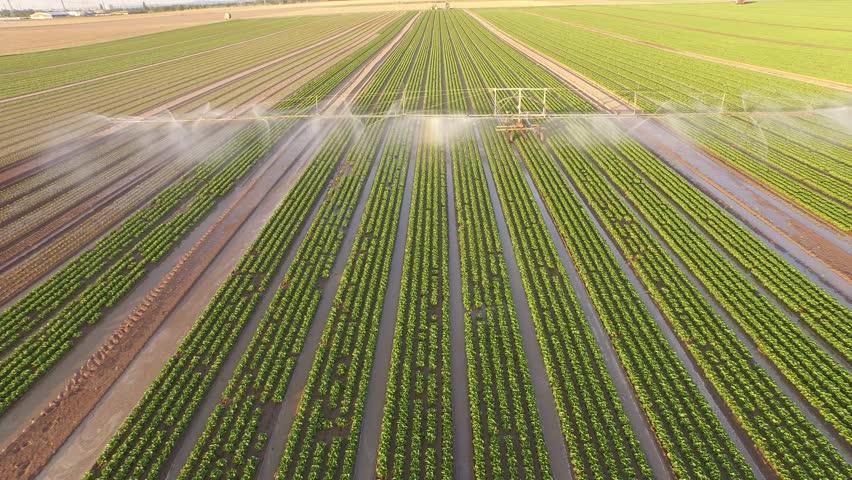
Finally, there is an unconscious but still powerful motivation why farmers don’t want to stop spraying and switch to more natural methods of food production. It is a mistaken aesthetic that dictates how people see and judge the land around them, that tells us what looks beautiful and productive and “American” – that is, efficient, high-tech, and gleaming with the promise of the future. Perfect, undisturbed expanses of commodity crops, synchronized lines of combines churning through thousand-acre wheat fields, shiny factories, and brightly colored grocery stores are our proof that we are not a third-world nation, or Amish, or hippies – that we are still orthodox worshipers of the god of progress.

I don’t dispute the attraction of the aesthetic. Honestly, the land around here looks pretty good. Or at least it looks pretty. But the cost of those perfect fields and vast expanses of monoculture may be more than we can pay. Our aesthetics are as damaging to the environment as our greed or carelessness. So we need to move toward a new aesthetic.

Before we can do so, we need to ask ourselves: how much of the world are we responsible for tidying up? Nature is messy by our standards. A patch of disturbed earth becomes populated with a swirling mob of what we’d call weeds – dock, plantain, dandelion, mulberry, crabgrass, lamb’s quarters, and a hundred plants I don’t have a name for. And that bothers us. We spray, mow, and weed, in the process disturbing the natural succession of plants. We say that keeping our lawns, gardens, and fields as pure monoculture is more efficient and attractive. I drove with farmers past fields of soybeans shortly after the introduction of Round-Up herbicide, and they talked about how beautiful the thick carpet of identical plants is. They’re not wrong. The lush uniformity is beautiful. But I’m not sure we have the right to expect the same sort of beauty from nature that we can create within our houses. Should a farm field look like wall-to-wall carpeting? Should every molehill be leveled, every fence row scorched, whatever t cost, just because we think it looks nicer?

We have neighbors down the road whose property has been described as a doll’s house because of its detailed perfection. It’s a good description – they treat their two acres as if it were as entirely under their control as a doll’s house. The fences have lines of brown under them where the mower can’t reach and herbicide has been sprayed. Their lawn is grass only, no violets or dandelions. Their mature hardwood trees are all pollarded to be a matching height. It’s pretty, I suppose. It’s also horrifying as an illustration of their attitude toward natural beauty. To speak in hyperbolic terms, those friendly neighbors are conducting an all-out war on nature, with policies of scorched earth and ethnic cleansing, and the result is extreme totalitarianism. This stands in striking contrast to the permaculture sites I’ve visited, which look like a hodgepodge of annuals, perennials, weeds, and small creatures and don’t involve any mowing. I suspect that everyone’s first reaction to seeing permaculture in action is, in fact, “Why don’t they mow?” They have their reasons, and they have a different aesthetic.

I admit I like the cleanliness and order that humans impose. I’m all right with keeping my house clean, but I have to decide how far my household extends. If I find insects on my kitchen counter, I kill them. But should I kill the insects in my yard? All the insects in the world? Because if farmers adopt a policy of insect genocide, as most do, it’s going to have costs to the surroundings – which include me. When the summer crop-dusting airplanes fly overhead carpet-bombing bugs and weeds, I have to run to bring the laundry inside and shut the windows if it’s windy, which it usually is, because – call me a crazy tree-hugger – I prefer my sheets and towels to smell of fresh air and not the toxin du jour. That’s where my aesthetic differs from the farmers’.

Farmers around here will tell you that they are aiming for efficiency, and I do appreciate that harvesting crops is easier when the equipment is not clogged with morning glory vines and ragweed stalks. I also understand that weeds and other plants compete with the crops and lower farmers’ yields, so there is a financial as well as an aesthetic motivation for them to keep their fields clean. But there’s no question that these farmers are also driven by the false aesthetic of human-imposed purity. I watch while they grub out a small patch of trees that they had no problem maneuvering around, just so the field looks “clean.”

It’s a competitive aesthetic, too. People in this small community will gossip about and criticize landowners whose fields aren’t clean – I hear them every year talking about whose land isn’t yet sprayed, tilled, or ditched. People from out of our area have asked me when they’ve come over to visit, “Whose land is that down the road? It looks bad.” What they mean when they say that farmers are not keeping their land “clean” is that farmers are not leaving a toe-hold for nature on their property. Rabbits and deer have no right to a corridor of shelter; killdeer and quail have to keep packing up and moving as their surroundings are cut down; coyotes are shot. And once we’ve expunged the aborigines, we can live the mindless imperialist lifestyle we like.

I have some sympathy, I guess. I don’t want coyotes eating my goats or rabbits ruining my garden. But I have to ask the question again: how much of the natural world do we have the right to control at the same level that we control our houses and yards? If we are going to live in a better balance with nature than we do now, we have to change not only our acquisitiveness and our focus on profit and exploitation; we also have to learn to see beauty in what we now consider messiness.

Life on Earth is Dying

deadearth

By Robert J. Burrowes

On the day that you read this article, 200 species of life on Earth (plants, birds, animals, fish, amphibians, insects, reptiles) will cease to exist. Tomorrow, another 200 species will vanish forever.

The human onslaught to destroy life on Earth is unprecedented in Earth’s history. Planet Earth is now experiencing its sixth mass extinction event and Homo sapiens sapiens is the cause. Moreover, this mass extinction event is accelerating and is so comprehensive in its impact
that the piecemeal measures being taken by the United Nations, international agencies and governments constitute a tokenism that is breathtaking in the extreme.

And it is no longer the case that mainly ‘invisible’ species are
vanishing: those insects, amphibians and small animals about which you had never even heard, assuming they have been identified and given a name by humans.

You and I are on the brink of driving to extinction some of the most iconic species alive today. For a photo gallery of threatened species, some of which are ‘critically endangered’, see ‘World’s wildlife being pushed to the edge by humans – in pictures‘.

If you want to read more about some aspects of the extinction threat, you can do so in these recent reports: ‘World Wildlife Crime Report: Trafficking in protected species‘ and ‘2016 Living Planet Report‘ which includes these words: ‘The main statistic from the report … shows a 58% decline between 1970 and 2012. This means that, on average, animal populations are roughly half the size they were 42 years ago.’

And if you want to read just one aspect of what is happening in the world’s oceans, this recent UN report will give you something to ponder:
New UN report finds marine debris harming more than 800 species, costing countries millions‘.

Of course, some of what is happening is related to the ongoing climate catastrophe and there isn’t any good news on that front. See ‘What’s Happening in the Arctic is Astonishing‘.

But not everything that is going badly wrong is well known either. Did you know that we are destroying the Earth’s soil? See ‘Only 60 Years of Farming Left If Soil Degradation Continues‘.

And did you realise that even nitrogen is now a huge problem too? See ‘Scientists shine a spotlight on the overlooked menace of nitrogen‘.

Of course, military violence has devastating consequences on the Earth’s ecosystems too, destroying land, water and atmosphere (not to mention killing human beings) in the fight over resources. You will get no joy from the article ‘Iraq’s oil inferno – government inaction in the face of eco-terrorism
or the website of the Toxic Remnants of War Project. But every single aspect of military spending is ultimately used to destroy. It has no other function.

While 2.5 billion human beings do not have enough to eat. See ‘One in three people suffers malnutrition at global cost of $3.5 trillion a year‘.

As you read all this, you might say ‘Not me’! But you are wrong. You don’t have to be an impoverished African driven to killing elephants for their tusks so that you can survive yourself. You don’t have to be a farmer who is destroying the soil with synthetic poisons. You don’t have to be a soldier who kills and destroys or a person who works for a corporation that, one way to another, forces peasants off their land.

You just have to be an ‘ordinary’ person who pays your military taxes and consumes more than your share of world resources while participating without challenge in the global system of violence and exploitation managed by the global elite.

‘Why is this?’ you might ask.

This is because the primary driver of the human-induced mass extinction is not such things as some people hunting a particular lifeform to extinction, horrendous though this is. In fact, just two things drive most species over the edge: our systematic destruction of land habitat – forests, grasslands, wetlands, peatlands, mangroves… – in our endless effort to capture more of the Earth’s wild places for human use (whether it be residential, commercial, mining, farming or military) and our destruction of waterways and the ocean habitat by dumping into them radioactive contaminants, carbon dioxide, a multitude of poisons and chemical pollutants, and even plastic.

And do you know what drives this destruction of land and water habitats? Your demand for consumer products, all of which are produced by using land and water habitats, and the resources derived from them, often far from where you live. The most basic products, such as food and clothing, are produced on agricultural land, sometimes created by destroying rainforests, or taken from the ocean (where overfishing has savagely depleted global fish stocks). But in using these resources, we have ignored the needs of the land, oceans and the waterways for adequate regenerative inputs and recovery time.

We also participate, almost invariably without question or challenge, in the inequitable distribution of resources that compels some impoverished people to take desperate measures to survive through such means as farming marginal land or killing endangered wildlife.

So don’t sit back waiting for some miracle by the United Nations, international agencies or governments to solve this problem. It cannot happen for the simple reason that these organizations are all taking action within the existing paradigm that prioritizes corporate profit and military violence over human equity and ecological sustainability.

Despite any rhetoric to the contrary, they are encouraging
overconsumption by industrialized populations and facilitating the inequitable distribution of income and wealth precisely because this benefits those who control these organizations, agencies and governments: the insane corporate elites who are devoid of the capacity to see any value beyond the ‘bottom line’. See ‘The Global Elite is Insane‘.

If you want action on the greatest challenge human beings have ever faced – to avert our own extinction by learning to live in harmony with our biosphere and equity with our fellow humans – then I encourage you to take personal responsibility.

If you do, you need to act. At the simplest level, you can make some difficult but valuable personal choices. Like becoming a vegan or vegetarian, buying/growing organic/biodynamic food, and resolutely refusing to use any form of poison or to drive a car or take an airline flight.

But if you want to take an integrated approach, the most powerful way you can do this is to systematically reduce your own personal consumption while increasing your self-reliance. Anita McKone and I have mapped out a fifteen-year strategy for doing this in ‘The FlameTree Project to Save Life on Earth‘. You might also consider signing the online pledge of ‘The People’s Charter to Create a Nonviolent World‘  which obviously includes nonviolence towards our fellow species.

One of the hidden tragedies of modern human existence is that we have been terrorized into believing that we are not personally responsible. See ‘The Delusion “I Am Not Responsible“‘.

For a fuller explanation, see ‘Why Violence?‘ and ‘Fearless Psychology and Fearful Psychology: Principles and Practice‘.

It isn’t true but few people feel powerful enough to make a difference.

And every time you decide to do nothing and to leave it to someone else,  you demonstrate why no-one else should do anything either.

Extinction beckons. What will you do?


Biodata: Robert J. Burrowes has a lifetime commitment to understanding and ending human violence. He has done extensive research since 1966 in an effort to understand why human beings are violent and has been a nonviolent activist since 1981. He is the author of ‘Why Violence?‘ His email address is flametree@riseup.net and his website is at http://robertjburrowes.wordpress.com


Robert J. Burrowes
P.O. Box 68
Daylesford
Victoria 3460
Australia
Email: flametree@riseup.net

Websites:
Nonviolence Charter
Flame Tree Project to Save Life on Earth
‘Why Violence?’
Nonviolent Campaign Strategy
Nonviolent Defense/Liberation Strategy
Anita: Songs of Nonviolence
Robert Burrowes
Global Nonviolence Network