Thoughts About Mind, Consciousness, & Humanity’s Origin

Can understanding the nature of Mind, consciousness and the ET phenomenon lead us to an expanded understanding of our origins?

By Tom Bunzel

Source: The Pulse

As a fan of Eckhart Tolle I’ve always liked his description of Consciousness (or ‘Being’ which seems his preference) as “No Thing.”

This separates “Being” from the world of form, and puts it into the area of what Tesla called “nonmaterial reality.”

I’ve generally thought of this reality as (an) Infinite Mind (again as opposed to “God”) to take out the anthropomorphic bias which seems to permeate organized religion. Political Christianity and some other groups seem to relish an angry and vengeful God to keep the parishioners paying. But when you step away from beliefs that are easily debunked you are still left with a fact.

We seem to be thinking.

Of course, it was Descartes who famously equated thought with Being, which has led to all sorts of issues that Eckhart Tolle describes well in his work.  When we identify with only our thoughts, we have narrowed our focus and reduced reality to labels. 

But the reality of thought persists.  What is it?

Is Thought Electricity in the Brain?

Neuroscientists seem to have identified the presence of thoughts in the brain through various instruments that can pick up electrical signals in parts of the brain and between synapses.

But so far, I don’t believe they can “download” these signals and decode them.

When we observe our thoughts, we can see that they seem to be comprised of “words”.  In fact, I’ve had the experience of thinking in languages other than English (my native language is German) and of course, the thoughts come as words – sometimes in cogent sentences or perhaps just one word. 

So, I was musing, what about ancient humans? Did they need to form a sentence in their brains to warn them that a lion might be in the bushes?

If you’ve ever experienced trauma, you know the answer – our limbic system activates, putting us in “fight or flight” well before any thought ever happens. 

I would suggest that a primal, lower frequency of Mind operates in our limbic system, before thought and language.

So, when did we start thinking in “words”?

According to my AI friend,

“scholars believe it [language] originated at least 100,000 years ago during the Middle Stone Age. The development of language is linked to the increased complexity of human culture and cognition.”

Maybe a tribe of hunter-gatherers developed a sound for “lion” and it became a warning cry.  Then perhaps “big” lion or “many lions”.

We know that our ancients memorialized beasts in petroglyphs of various kinds to communicate but the next big breakthrough was when the words, sentences and thus concepts were able to be preserved.

Writing Was the Big Game Changer

AI tells us that

“Writing systems were invented independently by different civilizations thousands of years ago as a means of recording information. The earliest writing emerged around 3,500-3,000 BCE in Mesopotamia and Egypt. Chinese writing developed around 1,200 BCE.”

So now I will do what they do on Ancient Aliens, which is take a speculative leap based on the foregoing.

It intrigues me that the cultures that seemed to “create” writing all have a version of the Prometheus myth – crediting the “Gods” with giving them the gift of higher knowledge.

To connect this to the beginning of writing seems to make sense, as we have precisely these myths in Mesopotamia (Annunaki) and Egypt. 

And it seems clear that with the onset of the written word (and mathematical notations) great leaps in human progress came almost in quantum intervals.  We got the printing press and eventually our modern technology.

We might speculate that it is likely that Mind has been with us forever, but that thought evolved and expanded dramatically with the beginning of writing – and that writing could easily be seen as a gift that transformed human civilization.   

There May Have Been Consequences for Teaching Humanity

It is also very plausible that any entity that conveyed such a gift to humanity may well have angered other entities that wanted to keep humans in check. 

Cuneiform tablets from the Sumerians describe how one “God” Enki created humans in the image of the Annunaki and gave them knowledge – but most of the humans were wiped out by his rival Enil in the great flood.  We now have evidence in the geological record that such a flood happened about 12,000 years ago.

But just this little thought experiment can vastly expand our sense of our place in the cosmos along with providing a much-needed dose of humility.

What if we did not simply “evolve” with natural selection but received assistance in an area we are now beginning to understand – genetics?  This would indicate a profound connection to the cosmos in a way that is disregarded by our current society.

It is also worth noting, as my AI explains,

“There is evidence that around 250,000-300,000 years ago there were some key genetic changes in early humans that contributed to increased brain size and advanced cognitive abilities compared to other primates.” 

Where these came from or how they came about is still a mystery.

And now that it seems apparent that some visitation by “entities” from the sky is not likely fiction but a reality, it may help to broaden our understanding of Nature and how we got here.

My AI friend makes another statement which I think is exactly backwards:

“Some key developments that enabled writing include the evolution of symbolic thought, the invention of systems of counting, and the emergence of urban civilization needing record-keeping.”

Clearly, it was first language, and then writing and math that led to this evolution of our brains, not the other way around.  Our original brains would have needed to expand to accommodate our first language which took us beyond the limbic system to labeling, and ultimately writing which led us to sharing ideas and thinking “symbolically” – using groups of letters as words and then sentences to convey increasingly complex concepts.

My own experience with neuroplasticity confirms that new uses for the brain expand its capacity, creating new pathways and neural networks. People who keep learning seem less susceptible to dementia.

Opening to the possibility that our evolution was “jump started” by extraterrestrials changes the narrative from chance and natural selection to a more profound connection to the universe in areas that our current science has mostly yet to penetrate. (Nonmaterial reality).

A Clue that Space Is Not Empty

But technology in particular seems to point us in the right direction – it was the offspring of the printing press – the computer – which eventually led us to a huge breakthrough in our awareness of the nonmaterial or seeming empty space as being potentially much much more.

When we developed WiFi suddenly the information encoded in words, thoughts and sentences could travel through space. So who knows what other information or Mind stuff has been around us all along?

Because Mind is everywhere and at the heart of Nature.
Why People Don’t Want To ‘Work’ Anymore

It’s not that people are lazy, there’s something much deeper going on that requires better questions.

By Joe Martino

Source: The Pulse

Last time I wrote about the increasing mental health crisis happening around the world. I didn’t write it to bring about negativity but more so to bring awareness to the reality of our current moment. Awareness is the first step toward any change.

That piece coupled with a video I did the other day on a collectively felt sense of meaninglessness, I believe these two subjects go hand in hand.

Tied in with both of those subjects is the decade-over-decade increase in the difficulty of surviving financially in our modern world.

More and more younger people have been struggling to buy a home and make ends meet due to the high cost of living and stagnating wages. For many, affording necessities in life has become difficult despite working 40-60 hours per week.

This reality recently drove a viral TikTok video that highlights the frustration younger generations feel and the misconceptions associated with their position.

Before you watch it, conversations I have with people about this issue don’t just exist in the Gen Z and Millenial age group. I’ve spoken to people in their 50s and 60s who have also become completely disenfranchised about the state of work.

Also, Quiet Quitting is a trend on the rise. Simply put, people are going to work and doing the bare minimum to stay employed at greater and greater rates. Gallup estimates that in the US 50% of employees have Quiet Quit and that it’s an increasing crisis. In Japan, 94% of employees report being disengaged at work.

Perhaps unsurprisingly, Gallup blames the trend on poor management. This is where humans really have to start waking up and thinking bigger in my opinion, more on this shortly.

Alright, let’s get to the video.

She makes many good points, and if we take her words to heart, clearly she isn’t lazy and trying to ‘not work.’ She is passionate about her work but sees the gap between salary and the reality of living a comfortable life. She also sees the value in work… just not like how it is today.

Not surprisingly, many have agreed with her while many have attacked her. Let’s explore why she might feel this way about life and work. (Note: There is an element that sometimes people can judge, hate, and avoid work so much that it’s a self sabotage situation, I talk about that here.)

  1. She and the generation she represents, even people like her from other generations, are just lazy or may even grow out of this idea.
  2. She’s lying about enjoying her job and if she were to quit and do something she likes she’d find just enough satisfaction to not care about the fact that she can’t afford to do anything beyond eat, have shelter, and enjoy a few things.
  3. Maybe she’s just permanently unhappy and therefore no matter what she does, she will find a way to frame it as negative and bad.
  4. From a position of common sense and orienting to our current environment, this girl realizes the losing game she is part of and is making the observation that this isn’t a reasonable game to play.

As an extension to number 4, the fact that multiple generations of people not only realize how rigged the game is, don’t want to play the game AND are saying something about it provides an evolutionary pressure for society to address it.

The key is, can we listen vs. sitting in judgment?

Oddly, reaction videos are all the craze on YouTube these days. When people make videos like hers or when something happens, creators turn on their cameras and watch the video while simultaneously reacting to it.

Usually, creators reacting to videos like this from Gen Z’ers are well off themselves or conservatives. Their career often stems around having a ‘hot take,’ creating polarity, and leaning into drama so their content can get a lot of views and thus pay their bills.

Sadly, this dynamic in content creation is often missed by the user, not realizing that the host of the video says what they say primarily because they know it will make them money even if it’s not entirely what they think.

Further, we never get to the bottom of what people bring forth because we are skipping the step of coming to the table in good faith and empathizing with each other’s position. Instead, we get a culture stuck in a debating/debunking/warring mindset. Good luck getting good faith conversation to go viral when most out there are focused on hi-jacking your attention.

Sensing Beyond The Surface

Sensing Beyond The Surface

  1. ‘Working’ is Important – Being part of something, contributing to something, living in a community and having a role, all add meaning and purpose to life.

    Being a creative, productive person is a necessity for human well-being, even if only for a few hours a day. No one is saying let’s sit around and do nothing all day. But should we have to work 40 or 50 hours a week to simply survive? No, that is the result of poor system design. We have advanced our technology incredibly to provide the necessities of life yet we work more than we ever have. Doesn’t something seem wrong there?
    Our cultural idea of needing to work 40 hours a week for most of our lives ‘just to be a contributor’ is rather warped. Many cultures have thrived working a few hours a day, yet look at us – working constantly yet experiencing mental illness, poor health, and meaninglessness at massive rates.
    It would benefit us to have a deeper look at WHY our society is currently producing results no one wants all while destroying our environment and people. Too many discussions about this topic think small and are limited to lazy questions from system protectors or political ideologies. This won’t get us to the root of the issue and why people feel the way they do.
  2. Cost of Living is Too High, But Why? – I’m 36, when my parents were my age one worked a mid-level job in corporate and the other a grocery store. They made enough to buy a fairly big house near Toronto, pay off the mortgage by 40 and raise two kids. These days, they’d need to make $100,000+ each just to buy the same house, and forget about paying off the mortgage by 40. Even when interest rates were 22% back then, things were a lot easier.

    Often, when I talk about mortgage rates with older generations, and how it is becoming hard to afford homes, they say “Back in my day rates were 18% – 22%.” The sense that people aren’t listening to what is being said is palatable. We’re not thinking clearly. In 1945 a US citizen dedicated on average 25% of his salary to pay rent/mortgage. In 2019 it was 47%. It’s higher now. And of course in that time interest rates have come down dramatically. Plain and simple, the cost of living has risen incredibly and wages didn’t climb at anywhere near the same rate.

    This is a losing game, and only set to get worse given the path we’re on. That said, this is what anyone should expect in a system driven by fractional reserve banking. When we understand the design of our system, we understand this isn’t about one political view or another, it’s about bad system design. We have to think deeper.
  3. Evolutionary Pressure – As our society declines more and more, younger people who look ahead to their future see something undesirable. The life their parents lived is no longer possible and they see the game is rigged. They aren’t lazy, they are demoralized.
    A left hemisphere reductionist and othering view, who sees humans as cogs in a system might say “Nah, people are lazy. Grow up. Things are fine.” Yet when we take a step back and include a sense of something sacred, our entire perspective changes. Why are we seeing life and merely working to uphold a rigged economy? Is this really all we are capable of? Why are we always trying to protect societal design producing results we don’t like? Do we realize we made all this up and it can be different?
    Sure, there are aspects of younger generations that I think are immature too, we’ve all been through it, but at the same time, younger people are not buying the rigged game and thus are not dying to play it. They are right. They are smart to speak up.
    And to tie things back to meaninglessness and mental health issues, I think we’re seeing now how this all ties into our current moment. People don’t thrive playing a losing game where basic needs are gated behind 100 foot walls.

    Movements toward system redesign have been around for many many decades. It’s not a new idea to discuss how rigged, limiting, and problematic our existing societal design is, but more people are waking up to it now.
    When I spoke about this stuff in 2009 and 2010, most people laughed at me thinking I was nuts. Now, they mostly agree with me. We’re on fertile ground for something new. For a while, we’ll likely live feeling and sensing the possibility of a new society while living in the old. Feeling that we’re not sure we quite belong to a visible society entirely.
    This is the Metacrisis. This is the shift in consciousness as I’ve always called it. It’s an evolutionary pressure that begs us to look deeper than political ideology and hot takes on why someone we don’t agree with is wrong. It begs us to re-taste the sacred. To examine what it means to be human and why we’re here.
    I believe the speed at which it unfolds is intimately connected to the quality of our attention, consciousness and state of being. The more capacity we have to steward a better world, the more it will unfold.
    Change starts within.

Rebalancing The Masculine & The Feminine For A New Paradigm

In a time of collapse, witnessing the consciousness and paradigm driving our current moment is paramount. A rebalancing of consciousness may be a solution.

By Anne Baring

Source: The Pulse

When the masculine and the feminine are in balance, there is fluidity, relationship, a flow of energy, unity, totality. This fluidity and balance is perhaps best illustrated by the Taoist image of the indissoluble relationship and complementarity of Yin and Yang.

In the broadest terms, the feminine is a containing pattern of energy: receptive, connecting, holding things in relationship to each other; the masculine is an expanding pattern of energy: seeking extension, expansion towards what is beyond.

More specifically, the feminine reflects the instinctual matrix and the feeling (heart) values of consciousness; the masculine reflects the questing, goal-defining, ordering, and discriminating qualities of consciousness, generally associated with the mind or intellect.

For millennia women have lived closer to the first pattern; men to the second. But now, there is a deep impulse to balance these within ourselves and in our culture. There is an urgent need to temper the present over-emphasis on masculine value with a conscious effort to integrate the feminine one.

In the ancient world the feminine principle in the image of the goddess stood for relationship – the hidden connection of all things to each other. Secondly, it stood for justice, wisdom and compassion. Thirdly, and most importantly, it was identified with the unseen dimension beyond the known world – a dimension that may be imagined as a matrix connecting invisible spirit with visible nature.

The word used then to name this matrix was goddess; later it was soul. The feminine principle offered an image of the oneness, sacredness and inviolability of all life; the phenomenal world (nature, matter, body) was regarded as sacred because it was a theopany or manifestation of invisible spirit.

The greatest flaw in civilisation has been the over-emphasis on the masculine archetype (identified with spirit) and the devaluation of the feminine one (identified with nature). This has been reflected in the fact that the god-head has no feminine dimension.

The history of the last 4000 years has been forged by masculine traits – principally the goals of conquest and control. (this is in no sense intended as a criticism; in the context of prevailing belief systems and general level of consciousness, things could not have been different).

However, religion and science – all our cultural ideas and patterns of behaviour – have developed from this unbalanced foundation. Throughout this time, everything designated as “feminine” (nature, body, woman) was devalued and repressed, including the rich diversity of the Pagan legacy of the ancient world.

In the domain of religion, heretics were eliminated; diverse ways of relating directly to the transcendent were lost. Naturally, this has created a deep imbalance in the culture and in the human psyche. It has led finally to the tyrannies of this century where the lives of some 200 million people have been sacrificed to totalitarian regimes.

The modern tyrant is the extreme reflection of a deeply-rooted pathology derived from a long-standing cultural imbalance between the masculine and feminine archetypes.

Where there is no relationship and balance between the masculine and feminine principles, the masculine principle becomes pathologically exaggerated, inflated; the feminine pathologically diminished, inarticulate, ineffective. The symptoms of a pathological masculine are rigidity, dogmatic inflexibility, omnipotence, and an obsession with or addiction to power and control.

There will be a clear definition of goals but no receptivity to ideas and values that conflict with these goals. The horizon of the human imagination will be restricted by an overt or subtle censorship. We can see this pathology reflected today in the ruthless values that govern the media, politics, and the technological drive of the modern world.

We can see the predatory impulse to acquire or to conquer new territory in the drive for global control of world markets, in the ideology of growth, in new technologies such as the genetic modification of food. We see exaggerated competitiveness – the drive to go further, grow faster, achieve more, acquire more, elevated to the status of a cult.

There is contempt for the feeling values grounded in the experience of relationship with others and with the environment. There is a predatory and compulsive sexuality in both men and women who increasingly lose the capacity for relationship. There is continuous expansion in a linear sense but no expansion in depth, in insight. The pressure of things to do constantly accelerates.

What is the result? Exhaustion, anxiety, depression, illness which afflict more and more people.

There is no time or place for human relationships. Above all, there is no time for relationship with the dimension of spirit. The water of life no longer flows. Men and women and, above all, children, become the victims of this harsh, competitive, uncaring ethos: women, in their disorientation, and because the feminine value has no clear definition or recognition in our culture, are drawn to copy the pathological image of the masculine which itself incorporates fear of the feminine.

Because to a large extent, this whole situation arises unconsciously, not much can be done about it until catastrophe intervenes.

Evolutionary Pressure Emerges

I feel we are living in a time of kairos – a mythic time of choice – a time of stupendous scientific discoveries which are enlarging our vision of the universe, shattering the vessel of our old concepts about the nature of reality.

Yet the delicate organism of life on our planet and the survival of our species are threatened as never before by technologies driven by an ethos of the conquest and control of nature, technologies which are applied with an utter disregard for the perils of our interference with the complex web of relationships upon which the life of our planet depends.

The choice is between clinging to an outworn and unbalanced ethos and maturing beyond it towards a more responsible and sensitive capacity for relationship. If we are unable to develop this empathic capacity to relate, we will surely destroy ourselves and the environment that sustains our life.

Bringing Balance

So how could we help to redress the balance between the masculine and feminine in ourselves and in our culture?

First of all, where are we, as individuals out of balance? Where are we driven by the unbalanced cultural ethos of achieving power and control, ignoring our feelings of depression, anxiety or symptoms of the body’s distress?

Are we allowing ourselves enough time for reflection, for relationships, for connection with a deeper dimension of reality?

The priority as I see it is to make the fact of this pathology a matter of public discussion. Shift the emphasis from achieving power to achieving balance.

Secondly, here are some suggestions for strengthening the feminine principle in our society.

  • Free the Imagination from the stranglehold exercised by a controlling minority which excludes the non-rational from inclusion in our understanding of life.
  • Formulate a new image of spirit as the totality of all that is – both seen and unseen. Recover the lost and devalued feminine aspects of spirit: restore nature, matter and the physical body (including sexuality) to the realm of the sacred.
  • Imagine the Soul as a cosmic internet. We belong to an immense field or matrix of relationships. We could imagine the soul in this new way as something we belong to and can develop a relationship with.
  • Religion – Relinquish the dogmatic formulations of the past: Monotheism as Mytheism. (Ravi Ravindra) Recognise the negative effects of deeply rooted beliefs – such as the belief in original sin – on our interpretation of life and its meaning. Welcome the idea of direct individual experience of the sacred and the numinous.
  • Science – Integrate the principle of empathic relationship with what is studied in scientific teaching and practice. In education give children an empathic understanding of their own bodies and of nature rather than the image of the body and the universe as a machine. Help them to become aware of their environment as a great chain of relationships in which their lives are embedded. Nourish their sense of wonder.
  • The psyche: Heal the split between mind and soul. Recognise that feeling is a valid mode of perceiving reality and must be integrated with thinking. The main problem in our society is emotional immaturity.
  • Politics: develop a forum beyond national and international politics where the true problems of the planet can be articulated and addressed. Recognise grandiosity, standardisation, the drive for control, the proliferation of bureaucracy as symptoms of the pathology of an inflated and unrelated masculine principle.
  • Medicine: integrate alternative (complementary) methods of healing with orthodox ones as a deliberate policy. Focus on preventive medicine. The modern GP has no time for an empathic relationship with his or her patient. The pressure of numbers is simply too great. However, in some surgeries and hospitals alternative practises are being integrated with orthodox ones. This integration could be expanded.
  • Agriculture: Focus on increasing the production of organic food. Removal of pesticides, antibiotics and toxins from our food and water.
  • Care of Children: A much higher level of prenatal care. Compared with the rest of Europe, we are way behind (Sweden is the most advanced). Attention to quality of children’s diet and to nourishing the imagination as well as the intellect.
  • Educate Women to be aware of their own specific value and the importance of their contribution to the culture. Articulating feeling values without fear or shame.
  • Educate Adolescents in awareness of the responsibilities of relationships and of the parent towards the child. Teach them the psychology of the child; its dependency; its sensitivity, its potential for emotional growth. Teach them about the complexities of neuroscience so they understand how their emotions affect their bodies and vice-versa. Ask them to invent ways of caring for the environment.
  • Teaching Methods: integrate right-hemispheric consciousness with the linear consciousness of the left hemisphere – opening to the creative power of the image. Balance in the curriculum between developing the capacity for logical thought and creative imagining and participation. This poem by a 12 year old boy at school in Southampton shows how a teacher can provide the environment in which a child can dare to express his true feelings:

I hear my inner voice talking to me,
Explaining, encouraging,
Opening the part of me that I thought was lost.
In this world of cruelty and fear little lights are burning.
Everyone has a flame inside their hearts,
If only they had the courage to find it.
The light can trickle out through a hole in your mind.
When the inside is out
You are transformed and revealed.
There is no need to be afraid,
But be curious
As you will probably never know
where the force is coming from.
 – Daniel Webster

Each of us is called to focus on rebalancing the masculine and feminine in ourselves and in our culture. This could affect a profound alchemy in our lives. Women and men could both participate in a process of transformation which could bring into being a new cultural focus whose emphasis is no longer on power and control but on relationship, balance and connectedness.

The phrase “the conquest of nature” could be replaced by the awareness that humanity and nature participate in a deeper and still unknown reality that embraces them both.

Millions of people have no choice. Those of us who do have a measure of choice could rise to the immense challenge of defining and living a new and responsible role in relation to each other and our planetary home.

Peering Into the Crystal Ball, We See… Instability Leading to Collapse

By Charles Hugh Smith

Source: Of Two Minds

We can only choose one: open, dynamic stability (evolution) or autocracy (instability and collapse).

When the fundamentals of life change, every organism must evolve or die. This is equally true of human organizations, societies and economies.

Evolution requires conserving what still works and experimenting until something comes along that works better. We call the fundamentals changing selective pressure and the process of experimenting with mutations / variations natural selection.

In genetic and epigenetics, this process is automatic. In human organizations, those in power influence the choice of what is conserved or replaced and what it’s replaced with. Those who benefit from the current arrangement will fight to conserve it as is, while those being weakened by selective pressure and those hoping to gain advantages with a new arrangement will fight for replacing the old with the new.

Longtime correspondent Ron G. recently shared an insightful economic characterization of this dynamic: wealth defense vs wealth creation. Those holding the system’s wealth have few incentives to risk changing the system, as those changes could undermine or erode their wealth. They have incentives to limit evolutionary forces that threaten their wealth as a means of defending their wealth.

Those who have lost wealth and those with little wealth have incentives to change the system to favor wealth creation.

We can describe the first as orthodoxy–evolution threatens the stability of the status quo, so limit evolution to the margins–and heretics being the second option that tosses out the status quo in favor of a more advantageous variation.

This isn’t either / or, of course. As Ron points out, corporations have incentives to both conserve stability and embrace variations that increase revenues and profits by expanding the markets for the company’s products. In Ron’s words: “The function of orthodoxy or corporate policy / rigor is to mitigate variations that would decrease stability.”

In other words, there’s a danger of throwing the baby out with the bath water. Dynamic equilibrium is based on a constant flux of variations and experiments–that is, low-level instability–continually modifying the system to maintain core stability.

Without this constant flux of low-level instability, sources of instability pile up, unnoticed and uncorrected, until they become consequential enough to destabilize the entire system. The system implodes, crashes, unravels, etc.

We can understand this flux of variations and experiments as evolutionary churn, and this churn requires two things: a steady flow of mutations / variations to feed the process of experimentation, and transparency so advantageous variations aren’t suppressed. In a transparent evolutionary system, data and information about each variation and experiment flows freely between all nodes in the system.

You see the problem. Those benefiting from the status quo are threatened by variations that could replace whatever is defending their wealth. Those in power benefit from the status quo, so their Job One is to suppress evolution by limiting transparency and variations, which include dissent.

Theoretically, those in power favor evolutionary advances that enhance their power and wealth, but anything that powerful is generally a two-edged sword: modified slightly, it could disrupt the entire status quo and fatally undermine their power.

So the safe bet is to suppress all evolutionary churn except those improvements which can be used to further cement their power. These are by definition autocratic.

You see the delicious irony: autocrats suppress evolutionary churn and transparency as threats, but evolutionary churn and transparency are the essential forces maintaining the system’s dynamic equilibrium. Once the system’s dynamic equilibrium decays, systemic instability builds up and eventually brings the entire system crashing down.

Because this process is obscured by authoritarian suppression of transparency, “nobody saw it coming.”

As those in power adopt ever stronger authoritarian measures to limit the potential threats of evolutionary churn and transparency, they accelerate the fatal instabilities building up within their self-serving, kleptocratic social, political and economic systems.

By suppressing the evolutionary churn and transparency that maintain the system’s dynamic equilibrium, they doom their regime to collapse.

The crystal ball isn’t cloudy, it’s crystal-clear: rising instability leading to collapse. “Nobody saw it coming” except those who understand evolution requires evolutionary churn and transparency.

Collapse is a perfectly good evolutionary solution. Stability is either dynamic or it’s not actually stable; it’s merely a simulacrum of stability sliding toward instability and ruin.

The better option is to embrace evolutionary churn and transparency and accept the trade-off: we can only choose one: open, dynamic stability (evolution) or autocracy (instability and collapse). Choose wisely, for once systems collapse there’s no turning back the clock.

Consider the Chickens

Intelligence, ethics, and the inner lives of animals

By Rafia Zakaria

Source: The Baffler

I OWE CHICKENS AN APOLOGY. Not only have I been eating them until very recently, but I have refused to even consider the possibility of a chicken having any kind of inner life. This estimation was not made from a lack of interaction. As children, my twin brother and I purchased baby chicks from a street vendor. We did this unfazed by the fact that quite often, the chickens would die. Once, when we were nine, we had two that lived, a hen and a rooster. No one told us that we should probably get more hens. Not having any other female companions, the rooster exerted his attentions on the one chicken. She would lay an egg or two every day, much to our delight, but soon sickened and died. Then there was only an incel rooster who roamed our compound and terrorized the women. After a few ugly incidents, he was “given away” to one of the women who worked at our house. We were never told what happened to him, and I didn’t care. There is nothing worse than an incel rooster patrolling your house all day long.

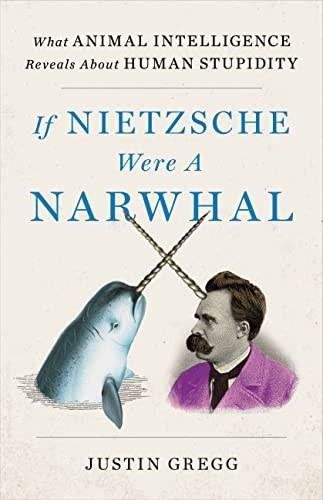
Now, so many years later, I’ve found my way to animal behaviorist Justin Gregg’s brilliant new book If Nietzsche Were a Narwhal: What Animal Intelligence Reveals About Human Stupidity. Gregg’s chicken coop is “a huge enclosed area” with high rafters, because as an animal scientist, he knows them to be jungle birds who need perches on which to sleep at night. But it is not only the magisterial heights of Gregg’s discussion of chickens that stayed with me. I was struck also by Gregg’s description of his chickens’ varied personalities, one anxious, another friendly, and so on; he tells us that these chickens do have inner lives and thus a consciousness of themselves as distinct from others. Instead of the feckless creatures I (and most people) assume them to be, chickens have just the sort of intelligence that is necessary for their own survival. They don’t think like humans, Gregg tells us, because they do not need to.

Intelligence, in Gregg’s explanation, does not exist in the way SATs or other IQ tests would have you believe. Those tests quantify a certain kind of ability to process information. People who do not do well on such tests may have other kinds of abilities that simply are not being measured. Intelligence is not one easily definable thing; engineers working on artificial intelligence cannot agree on a definition of it. But what humans have is a tendency to ask why things operate in a certain way. In Gregg’s terminology, humans are “why specialists,” a proclivity that in natural selection terms is no advantage and perhaps even a liability. A narwhal swimming around in the sea, for instance, would never have the kind of mental breakdown that the German philosopher pondering nihilism suffered toward the end of his life. Animal intelligence is practical and does not get caught up in abstract thought. By and large, animals make calculations based on what they can observe; ideas such as “causality,” which lie at the crux of human intelligence, are outside their capacity for thought.

Humans evolved to become why specialists. As Gregg tells it, 200,000 years ago, humans were hanging out with chimpanzees and exhibited no interest in the whys. They could make rudimentary tools and had some kind of assemblage of grunts that allowed for basic communication. He notes that roughly 40,000 years ago, cave paintings were created. Here were humans asking the whys; symbolic representation is an exclusively human thing.

Inability to be why specialists does not mean that animals are not capable of “metacognition,” the ability to be conscious of their own thinking or cognition. One of the most stunning examples in this book full of stunning examples is that of Natua, a dolphin at the Dolphin Research Center in Florida. An experiment was set up where Natua was exposed to two kinds of sounds, one a very high tone and one a very low tone. After hearing the sound, Natua had to choose between two paddles, one for the high and another for the low. If he chose correctly, he was given a fish for a reward. If he did not, he was sent for a long time-out, in that the experiment stopped. As the experiment progressed, the high tone sound came very close to the low sound such that they were nearly indistinguishable. At this point, Natua was unable to tell the difference; “he just started randomly pressing paddles,” Gregg writes. His behavior proved that some animals are capable of metacognition, the awareness that they do not know, or that their thinking about something is wrong.

It is no surprise that Gregg is pessimistic about how humans have used their abilities as why specialists, and he thinks that there is a chance that humans might not even survive over another century. The prospect of nuclear war and the climate crisis suggest, in Gregg’s view, that the end is possible. In the meantime, developing a consciousness of animals as beings who are capable of metacognition, of having individual personalities and so on, points to the need for a new ethics. This new set of basic premises would abandon the centering principle that the animal-human relationship must always be of one having dominion over the other.

But if you consider the continued resistance to the idea of animal rights, it is hard to be optimistic about the emergence of a new ethics of mutuality that eschews the dominion portion. Too many human rationalizations, attached to what we eat, what we wear, how we live, are predicated on the belief that we are the only feeling beings and that our actions upon animals are independent of consequences. If you know the fear of a chicken or a cow or a pig about to be slaughtered, you may look at your food in a different way. You might eschew fried chicken or beef or pork completely. If you understand that a horse being whipped is suffering terribly, is extremely scared and dissolute, you can also understand that there is a need for a radical expansion of mindfulness and a concomitant shrinking of power.

In the moral universe informed by Gregg’s argument, the survival of the human race is not an imperative for the planet because humans as a species have been far more disastrous for the world than others. “Prognostic myopia” keeps us horribly and condemnably in the moment, burning fossil fuels and trashing the oceans even though we know that it is terrible for the environment. This is a unique position among philosophers, a lot of whom have lately concerned themselves with questions of ethics and planetary survival. 

As a contrast to Gregg, the Oxford Associate Professor in Philosophy William MacAskill, in his What We Owe the Future, proposes “effective altruism” as a way to live ethically in times of climate crisis. If Gregg argues against human exceptionalism, MacAskill reduces humans to data points, where the survival of the most, and the most benefit to the planet, are guideposts to a present and future ethics. Using Gregg’s arguments, however, effective altruism is rendered meaningless. Even those who live sparingly on twenty-six thousand pounds a year, like MacAskill, are still a burdensome threat, unless we define their worth according to tiresome illusions of human exceptionalism.

If Nietzsche Were A Narwhal is the sort of critical look at human dominion that our world needs. A few years ago, Brown University environmental historian Bathsheba R. Demuth wrote Floating Coast: An Environmental History of the Bering Strait, a similarly groundbreaking look at the consequences of the extractive relationship humans have had with the environment. Just as Gregg reveals the risks of humans imagining their power over animals as shorn of consequences, Demuth reveals the consequences of human dominion over nature.

Thinkers and scientists like Gregg and Demuth are presenting readers with the urgent and pressing necessity for a new ethics. The unthinking, extractive, and dominant human treats animals as a lower form of existence, rather than a different form; we assess the environment based on what can be extracted from it. Like our means of communication, our means of travel, of treating disease, and so much else, our ethics need an urgent and pressing update that takes into consideration the understanding of animals. Factory farms, the constant consumption of animal products, and the greedy use of fossil fuels are the seeds of destruction.

I am not sure I could have offered the chicken and rooster of my childhood a deluxe chicken coop with high rafters, but an argument for better living conditions and the introduction of new companions for the rooster would have been easier if we had understood the first thing about the animals around us. I do not need to underscore the rapid pace at which our world is changing. If Nietzsche Were A Narwhal is a must-read because it explains how we can save the world only if we exist in symbiosis with the thinking, feeling creatures that have had the misfortune of sharing the planet with humans, who turn out not to be as intelligent as they believe themselves to be.

THE ELEVENTH HOUR

By Kingsley L. Dennis

Source: Waking Times

In the Age of Materialism, it is said that people have their orientation outwards and towards the boundary that separates humanity from the lower orders – the animals and plants – rather than the inner orientation towards Source. And it is within the great depth of materialism that represents the final stage of a grand cycle where the world reaches its ‘extremity of separation’ in a period of remoteness from the sacred impulse.

Unknowing and blind to this, the materialist believes they experience no loss because progress has given humanity much more than it ever had, and that material progress shall be their salvation. At such a time, it symbolizes that humankind has reached a limit of distance (an extremity) from its essential nature – from its centre – and thus from its sacred home. And the modern person – especially the product of westernized modernism – has gone so far from their essential nature that they have ceased to think of it or question its existence, and even fabricate and invent a pseudo-truth for its material reality.

Many now see these times of deep materialism as representing the ‘eleventh hour’ for humanity; as a decisive moment before a dramatic turn of events in its trajectory. Others, like myself, have referred to these times as representing humanity’s ‘dark night of the soul.’ I wrote the following passage over a decade ago:

We have now entered the crisis window, the transition phase – that heroic journey into the underworld – where we will be forced to experience a shamanic initiatory experience, perhaps a near-death experience, before we can emerge as an adolescent species with a new, more mature mind. Until we reach that stage, however, we will have to struggle with the death throes of the old mind, as old systems cling to power and global infrastructures attempt to remain in control of a world in transition…the ‘dark passage’ that we are now venturing into. This is part of our collective rites of passage: it will shake us, reshuffle and reorientate a great deal of life on the planet; and it will also, hopefully, catalyze and prepare us for a psychophysical transformation. The reorientation required – both psychological and physical – may be far from linear…as we wrestle with the cloak of the old world system that clings onto a modus operandi, refusing to let go without a fight. Despite our glorious, gleaming, polished achievements that the world displays with pride, our current systems (social, cultural, political and economic) are remarkably anachronistic, cunningly deceptive, opaque, and in dire need of renovation. Yet in order to sweep out the brushwood we may be forced to endure a metaphorical, and literal, dark night of the soul. The next 20 years cannot be the same as the last 20 years. Change is upon us rapidly, even if we are not aware of its pace.[1]

We were not aware of the pace as I wrote those words; and many are no more aware now even though that pace has dramatically quickened. At each cyclical renewal we are faced with prophecies of the ‘End Time’ that also throw up images and imaginations of the world apocalypse. Yet such an apocalypse is not a fatality but a revelation – a revealing. It marks the disintegration of one narrated cycle and the emergence of new mythological voices as heralding a departure from the dying throes of an aeon of time. At such a moment, the aftermath of an apocalypse/revealing lies a great expanse where reality itself requires a re-stitching together and reimagining. A new operation of worlding comes into being. There is a change of guard of the architypes: the social-status figures of leaders, politicians, and bankers are replaced by the metaphysician, the mystic, and the prophet.[2]

It is said that the nearness of an end of an era brings with it a sense of otherworldliness. It is at such threshold moments where the veil thins to allow a penetration, a mergence, of energies from various sources, physical and metaphysical. Dimensions start to crossover and intervene; boundaries begin to dissolve.  It is then that the illusion of ordinary, consensus reality is fast breaking down; this very same illusion that shielded many people from infra-psychic incursions. According to philosopher Rene Guenon, the extremity of materialistic beliefs and practices leads to a ‘solidification of the world,’ and it is this solidification that causes ‘fissures’ to open up through which ‘infra-psychic’ forces enter. In other words, humanity is invaded by the specters of its own psyche.

The reality of unknown psychic powers, and their influences, from beyond our world has always been part of human knowledge – only that now it comes out from its occult shell and more into visibility. The dissolution of the physical world, its fragmentation, chaos, and disarray, catalyzes the psychic manifestations that represent the phase of the dissolution of the present cycle. The dissolution of the present cycle of materialism only begets a necessary re-creation of the world. The hardening and extremity of corruption of our physical world must also lead to a degree of psychological fracturing if a new psycho-physical environment is to unfold. That is, unless there are cracks within the highly conditioned collective psychosphere of humanity, how can the light get it?

Every human soul is infused with a sense, a knowing, of the Transcendent – a filament or spark of Source – of the Alpha and Omega of all existence. Ignorance of it only exists on this physical, earthly plane, and obscured by the degraded forces of deep materialism. The inner faculty which recognizes this is often referred to as the Heart, and is the human being’s highest faculty – although it lies dormant or slumbering within most people. This is an incorruptible, inviolable element within the human – a ‘supramental organ of knowledge’ – that is beyond mind or intellect.

The sense of the transcendent implies an inner urge, longing, or pull to transcend the limitations of this plane of reality. These urges are the signs of the times – the moment of the eleventh hour. The contact with Source energy is available (gives) to those who are aware of it: ‘For unto every one that hath shall be given, and he shall have abundance: but from him that hath not shall be taken away even that which he hath.’ (Matthew 25:29). It is at the eleventh hour, from a dissolution to a new beginning, that we understand also the phrase: ‘and the last shall be first.’

Why We’re Doomed: Our Delusional Faith in Incremental Change

By Charles Hugh Smith

Source: Of Two Minds

Better not to risk any radical evolution that might fail, and so failure is thus assured.

When times are good, modest reforms are all that’s needed to maintain the ship’s course. By “good times,” I mean eras of rising prosperity which generate bigger budgets, profits, tax revenues, paychecks, etc., eras characterized by high levels of stability and predictability.

Since stability has been the norm for 75 years, institutions and conventional thinking have both been optimized for incremental change. This is an analog of natural selection in Nature: when the organism’s environment is stable, there’s little pressure to favor random mutations, as these can be risky.

Why risk big changes when everything’s working fine as is?

Absent any big changes in their environment, organisms’ genetic programming remains stable. Unlike natural selection’s process of generating random mutations and testing their efficacy and advantages over the existing programming, human organizations quickly habituate to stable eras by institutionalizing incremental changes as the only available process for reform / change.

Radical reforms are not just frowned on as 1) unneccesary and 2) needlessly risky, there is no institutionalized process to propose, test and adopt radical changes because there is no need for such a process.

Nature has such a process: punctuated equilibirium. When faced with a rapidly changing environment, organisms face intense evolutionary pressure to adapt or die. Mutations which confer a significant advantage in the new environment become part of the species’ genetic programming as those with the adaptation bear offspring who carry the advantageous adaptation. Those without the advantageous adaptation die and those with the adaptation thrive and multiply.

Once the environment stabilizes in “the new normal,” the evolutionary pressure lets up and the species returns to the stability of relatively few changes in its genetic programming.

Organisms which have lost the ability to adapt to rapid change die off once they encounter instability. Species that constantly face instability and rapid change will selectively favor genetic traits which optimize rapid evolution.

Nature tends to retain a basement closet full of fast-evolution tricks just in case the organism faces novel challenges.

Alas, human organizations and conventional thinking have no such closet of fast-evolution tricks. Rather, human organizations and conventional thinking marshal formidable forces to suppress anything which threatens the status quo, because why risk upsetting the feeding trough unless it’s absolutely necessary?

Therein lies the fatal problem: radical adaptation is never absolutely necessary in human organizations and conventional thinking until it’s too late–and even then, the leadership and conventional thinking will fatalistically accept oblivion rather than opt for a risky strategy of testing every mutation and fast-tracking whatever has promise, even though the odds of failure are high since 1) the challenge is novel and therefore unpredictable and 2) most mutations will fail to provide the radical advantages needed to meet the challenge.

In other words, what’s absolutely necessary to human organizations and conventional thinking is the suppression of potentially dangerous novel ideas because the worst-case scenario is that the novel ideas upset the feeding trough all the insiders have come to depend on.

Unfortunately for human organizations and conventional thinking, novel challenges demand precisely what they’re incapable of: risky rapid evolution. The risks will never seem worth it because some insiders might lose their spot at the feeding trough.

Since this loss is viewed as catastrophic by those at risk, they will fight with everything they have to stymie any radical reforms. Ironically, their resistance to rapid evolution only guarantees the demise of the entire organization / status quo, including the spot at the trough they were so eager to defend at all costs.

As the crisis deepens, the default setting in organizations and conventional thinking is that incremental changes and reforms will be enough, because they’ve been enough for four generations. I call this entirely natural default setting the delusional faith in incremental change because this faith isn’t guided by history or the logic of causality; it’s simply convenient and easy.

Nobody gets fired or demoted for agreeing to do more of what’s failed spectacularly.

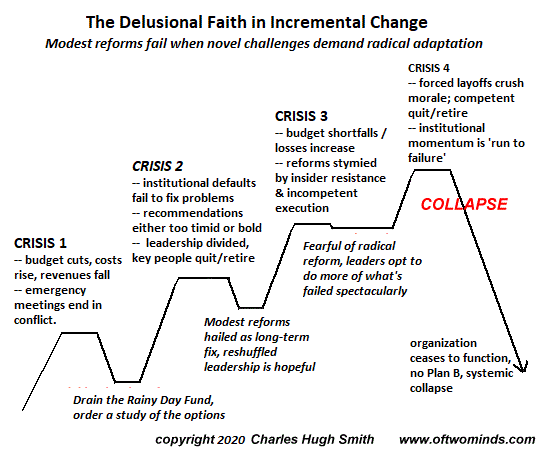
I’ve prepared a chart of the delusional faith in incremental change showing how each new crisis is met by incremental institutionalized defaults that are completely inadequate to the novel challenges that have arisen. The blindness to the need for radical adaption has been institutionalized as well: this is what worked in the past, so it will work nowWhy risk everything when we have procedures that have worked well?

Each stage of the crisis draws whatever conventional response causes the least pain. First, the “rainy day fund” is drained to keep everyone at the feeding trough. Studies of options are funded, and so on.

The recommendations are either too timid and clearly inadequate or they’re too bold and risky. So incremental policy and budget tweaks are adopted as acceptable institutional defaults.

But rifts open in the leadership as the farsighted few demand rapid, radical adaptations and the conventional risk-averse crowd digs in their heels. The farsighted few are pushed out or quit / retire, eliminating the only people who had the ability and experience to actually pull off a radical change of course.

A reshuffling of leadership evokes hope that the modest reforms will work magic. Alas, incremental tweaks only work in eras of stability. They fail miserably in unstable eras of rapidly-evolving challenges.

As everything runs to failure, the only acceptable path is to do more of what’s failed spectacularly, a default to low-risk incrementalism that only accelerates the final inevitable collapse.

The delusional faith in incremental change guarantees systemic failure. Better not to risk any radical evolution that might fail, and so failure is thus assured.

This is why our status quo is doomed:

HOW TO REPROGRAM YOUR MIND TO TAKE AN ACTIVE ROLE IN YOUR PERSONAL EVOLUTION

By Jonathan Davis

Source: Waking Times

For a long time we’ve been taught that evolution is a process that is happening to us. Thankfully we’re living in times where the human race is finally getting a grasp on the fact that we’re actually actively involved in how we evolve as a species.

As humans, our bodies are constantly changing in response to the environment around us. Our muscles change according to whether we choose to use them or not. The enzymes in our digestive system change in response to the foods we choose to eat. Our endocrine system is in a constant feedback loop with our emotions which can change dramatically according to what’s happening in the world around us. As Dr Bruce Lipton put it, “the cell is a carbon-based ‘computer chip’ that reads the environment”, and the field of epigenetics teaches us that our DNA changes in quality – again, according to our environment.

When science talks about ‘environmental influence’ it seems to imply ‘all that which is outside ourselves’. It’s easy to overlook the fact that that our conscious choices about which environmental factors we engage with are part of what shapes the way our bodies restructure. We are part of the environment that influences our own development; our free will lets us choose and change the environment. We participate in our own evolution during our lifetime and what we do in our own lives can also affect future generations. In this way, personal evolution is collective evolution, and nowhere is personal evolution more apparent than how we are capable of rewiring our own brain.

How Reprogramming the Mind Is Helpful To Us

Humans work really well with routines. We repeat the same pattern over and over, and through neuroplasticity our brain wires itself so that it doesn’t have to think too much about that task anymore, it just runs that established electrical pathway. To riff off Noel Burch, it’s like when we learn to drive a car: we move from unconscious incompetence ‘I don’t know how bad at this I’m going to be’; to conscious competence ‘I now know how bad I am at this’; to conscious competence ‘OK, I can do this but I have to keep my mind on the job’; to unconscious competence ‘I can wind the window down, change the radio, turn a corner and change gears all at the same time, without even thinking about it’.

We program ourselves all the time with repetition, so we don’t have to waste energy engaging isolated focus on every task. The question is whether these are routines we are choosing for ourselves or that have been imposed on us? If they are imposed, are they helpful to us both personally and as a species?

When Are We Most Easily Able To Wire And Re-wire Our Mind?

During early childhood our brains are wiring themselves for the first time. While this process slows after the intense surge of development in first few years, our brains are still establishing the wiring we will largely use for the rest of our life throughout childhood. When we hit our teenage years we experience the second surge of new wiring and there is an opportunity for patterns to be created during this time that can setup behaviours for years to come. After this period, neuroplasticity still occurs but it just isn’t as fluid as it was before. So you can teach an old dog new tricks, it’s just a slower process.

The problem here is that our subconscious is overhearing everything our conscious mind is hearing, and is therefore to a being programmed by whatever influence we’re being exposed to. The Jesuits knew this 400 years ago. They would boast:

“Give me a child until it’s seven, it will belong to the church for the rest of its life.’” – Dr Bruce Lipton, paraphrasing Jesuit priests.

We Are Always Programming Ourselves

I like to imagine the subconscious mind is like an autopilot system. It is overhearing everything we ever think or say, and it’s mission (in the background and whenever possible) is to guide us towards whatever we want… or at least whatever it thinks we want according to what it overhears. An extra level of challenge is introduced when we imagine that the conscious mind has the capacity for judgment its higher expression – discernment. The subconscious, however, doesn’t have that ability. When it is overhearing everything you think and every word you say it simply hears the topic, not the context. ‘I don’t want to be fat’ with the judgment of ‘I don’t want’ removed becomes the topic only: ‘be fat’. The subconscious ‘overhears’ the topic of what is active in your conscious mind and it is listening for repetition. This is how it figures out for how ready we need to be for that particular thought process.

Repetition Is The Key. Repetition Is The Key.

If we lift weights we are using repetition to say to the muscles, ‘be ready for this, we may need to do this at any moment, so restructure yourself’. Scientists have found the fastest way to get fit is to do interval sprints, which is basically a physical way of saying to the body through repetition ‘you need to restructure yourself so we can sprint at top speed at any time, at the drop of a hat’. Rest, get your breath back and sprint again, over and over. This repetition tells the body that it’s a high priority to restructure and be ready for this at all times. My observation is that the same appears to be true for our brain. When our subconscious overhears our thoughts and words and there is repetition, there is an increased likelihood of neural rewiring. After all – neurons that fire together wire together.

The path of least resistance

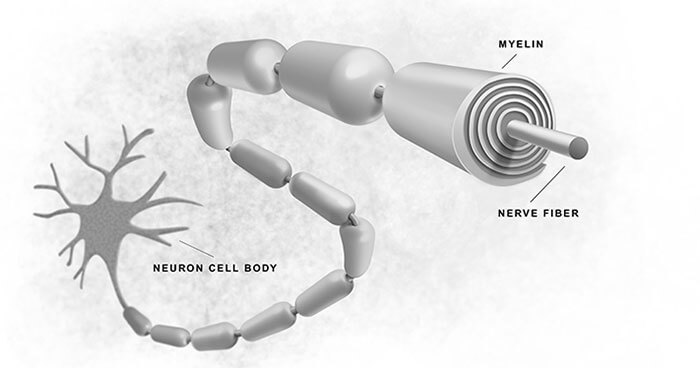
When attempting to re-wire an old habit or behaviour pattern, it is useful to remember the old adage from high school science: electricity follows the path of least resistance. Imagine the old pattern as a well-established electrical pathway in your brain. As you put conscious focus into creating a new electrical pathway to replace the old pattern, you make that new electrical pathway fatter. As soon as you stop putting conscious focus into running the new behaviour pattern the electricity will revert to the old cable for as long as it is the fatter of the two cables, as that is the path of least resistance. As soon as the day comes when the new electrical pathway is thicker than the old one you have a new program in your autopilot system, that will now run on it’s own without you needing to focus conscious intention on it. You have reached a level of conscious competence. According to Dan Coyle a key to making the consciously chosen wiring stick is holding the intention that ‘I want to know this for the rest of my life’. Coyle suggests this causes the brain to coat the new electrical pathway in the brain with myelin insulation, making it much more permanent.

Taking care with the programs we allow our subconscious to overhear

As stated earlier, our autopilot system is taking direction from everything you’re experiencing – which includes the media we watch, the people we surround ourselves with and more. For this reason, one of the most powerful things we can do is exercise discernment around the kind of experiences we expose ourselves to, and their level of intensity and repetition.

“It is easier to build strong children than to repair broken men.” – Frederick Douglass

More importantly is the need for extra care in exercising this discernment on behalf of the children in our care and teaching this discernment to teenagers as, in both cases they are in a heightened state of neuroplasticity and are more susceptible to influence. To be clear, I am by no means advocating prudishness or avoidance of the truth, just a higher level of awareness of how we are either consciously or inadvertently being programmed all the time.

In the video below Bruce Lipton speaks passionately on this very subject, citing this discernment on behalf of our children as a clear solution to war and conflict.