Perpetual Tyranny: Endless Wars Are the Enemy of Freedom

By John W. Whitehead & Nisha Whitehead

Source: The Rutherford Institute

“Of all the enemies to public liberty war is, perhaps, the most to be dreaded because it comprises and develops the germ of every other. War is the parent of armies; from these proceed debts and taxes… known instruments for bringing the many under the domination of the few.… No nation could preserve its freedom in the midst of continual warfare.” — James Madison

War is the enemy of freedom.

As long as America’s politicians continue to involve us in wars that bankrupt the nation, jeopardize our servicemen and women, increase the chances of terrorism and blowback domestically, and push the nation that much closer to eventual collapse, “we the people” will find ourselves in a perpetual state of tyranny.

It’s time for the U.S. government to stop policing the globe.

This latest crisis—America’s part in the showdown between Russia and the Ukraine—has conveniently followed on the heels of a long line of other crises, manufactured or otherwise, which have occurred like clockwork in order to keep Americans distracted, deluded, amused, and insulated from the government’s steady encroachments on our freedoms.

And so it continues in its Orwellian fashion.

Two years after COVID-19 shifted the world into a state of global authoritarianism, just as the people’s tolerance for heavy-handed mandates seems to have finally worn thin, we are being prepped for the next distraction and the next drain on our economy.

Yet policing the globe and waging endless wars abroad isn’t making America—or the rest of the world—any safer, it’s certainly not making America great again, and it’s undeniably digging the U.S. deeper into debt.

Indeed, even if we were to put an end to all of the government’s military meddling and bring all of the troops home today, it would take decades to pay down the price of these wars and get the government’s creditors off our backs.

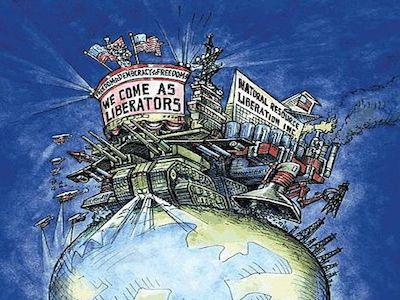
War has become a huge money-making venture, and the U.S. government, with its vast military empire, is one of its best buyers and sellers.

What most Americans—brainwashed into believing that patriotism means supporting the war machine—fail to recognize is that these ongoing wars have little to do with keeping the country safe and everything to do with propping up a military industrial complex that continues to dominate, dictate and shape almost every aspect of our lives.

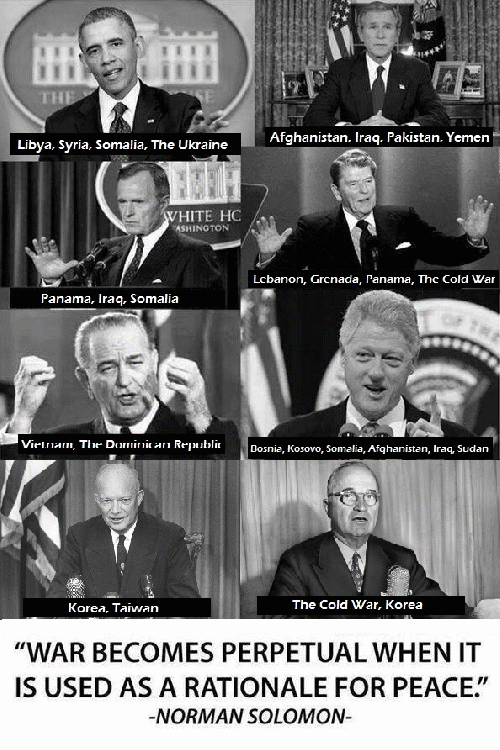
Consider: We are a military culture engaged in continuous warfare. We have been a nation at war for most of our existence. We are a nation that makes a living from killing through defense contracts, weapons manufacturing and endless wars.

We are also being fed a steady diet of violence through our entertainment, news and politics.

All of the military equipment featured in blockbuster movies is provided—at taxpayer expense—in exchange for carefully placed promotional spots.

Back when I was a boy growing up in the 1950s, almost every classic sci fi movie ended with the heroic American military saving the day, whether it was battle tanks in Invaders from Mars (1953) or military roadblocks in Invasion of the Body Snatchers (1956).

What I didn’t know then as a schoolboy was the extent to which the Pentagon was paying to be cast as America’s savior. By the time my own kids were growing up, it was Jerry Bruckheimer’s blockbuster film Top Guncreated with Pentagon assistance and equipment—that boosted civic pride in the military.

Now it’s my grandkids’ turn to be awed and overwhelmed by child-focused military propaganda. Don’t even get me started on the war propaganda churned out by the toymakers. Even reality TV shows have gotten in on the gig, with the Pentagon’s entertainment office helping to sell war to the American public.

It’s estimated that U.S. military intelligence agencies (including the NSA) have influenced over 1,800 movies and TV shows.

And then there are the growing number of video games, a number of which are engineered by or created for the military, which have accustomed players to interactive war play through military simulations and first-person shooter scenarios.

This is how you acclimate a population to war.

This is how you cultivate loyalty to a war machine.

This is how, to borrow from the subtitle to the 1964 film Dr. Strangelove, you teach a nation to “stop worrying and love the bomb.”

As journalist David Sirota writes for Salon, “[C]ollusion between the military and Hollywood – including allowing Pentagon officials to line edit scripts—is once again on the rise, with new television programs and movies slated to celebrate the Navy SEALs….major Hollywood directors remain more than happy to ideologically slant their films in precisely the pro-war, pro-militarist direction that the Pentagon demands in exchange for taxpayer-subsidized access to military hardware.”

Why is the Pentagon (and the CIA and the government at large) so focused on using Hollywood as a propaganda machine?

To those who profit from war, it is—as Sirota recognizes—“a ‘product’ to be sold via pop culture products that sanitize war and, in the process, boost recruitment numbers….At a time when more and more Americans are questioning the fundamental tenets of militarism (i.e., budget-busting defense expenditures, never-ending wars/occupations, etc.), military officials are desperate to turn the public opinion tide back in a pro-militarist direction — and they know pop culture is the most effective tool to achieve that goal.”

The media, eager to score higher ratings, has been equally complicit in making (real) war more palatable to the public by packaging it as TV friendly.

This is what professor Roger Stahl refers to as the representation of a “clean war”: a war “without victims, without bodies, and without suffering”:

“‘Dehumanize destruction’ by extracting all human imagery from target areas … The language used to describe the clean war is as antiseptic as the pictures. Bombings are ‘air strikes.’ A future bombsite is a ‘target of opportunity.’ Unarmed areas are ‘soft targets.’ Civilians are ‘collateral damage.’ Destruction is always ‘surgical.’ By and large, the clean war wiped the humanity of civilians from the screen … Create conditions by which war appears short, abstract, sanitized and even aesthetically beautiful. Minimize any sense of death: of soldiers or civilians.”

This is how you sell war to a populace that may have grown weary of endless wars: sanitize the war coverage of anything graphic or discomfiting (present a clean war), gloss over the actual numbers of soldiers and civilians killed (human cost), cast the business of killing humans in a more abstract, palatable fashion (such as a hunt), demonize one’s opponents, and make the weapons of war a source of wonder and delight.

“This obsession with weapons of war has a name: technofetishism,” explains Stahl. “Weapons appear to take on a magical aura. They become centerpieces in a cult of worship.”

“Apart from gazing at the majesty of these bombs, we were also invited to step inside these high-tech machines and take them for a spin,” said Stahl. “Or if we have the means, we can purchase one of the military vehicles on the consumer market. Not only are we invited to fantasize about being in the driver’s seat, we are routinely invited to peer through the crosshairs too. These repeated modes of imaging war cultivate new modes of perception, new relationships to the tools of state violence. In other words, we become accustomed to ‘seeing’ through the machines of war.”

In order to sell war, you have to feed the public’s appetite for entertainment.

Not satisfied with peddling its war propaganda through Hollywood, reality TV shows and embedded journalists whose reports came across as glorified promotional ads for the military, the Pentagon has also turned to sports to further advance its agenda, “tying the symbols of sports with the symbols of war.”

The military has been firmly entrenched in the nation’s sports spectacles ever since, having co-opted football, basketball, even NASCAR.

This is how you sustain the nation’s appetite for war.

No wonder entertainment violence is the hottest selling ticket at the box office. As professor Henry Giroux points out, “Popular culture not only trades in violence as entertainment, but also it delivers violence to a society addicted to a pleasure principle steeped in graphic and extreme images of human suffering, mayhem and torture.”

No wonder the government continues to whet the nation’s appetite for violence and war through paid propaganda programs (seeded throughout sports entertainment, Hollywood blockbusters and video games)—what Stahl refers to as “militainment“—that glorify the military and serve as recruiting tools for America’s expanding military empire.

No wonder Americans from a very young age are being groomed to enlist as foot soldiers—even virtual ones—in America’s Army (coincidentally, that’s also the name of a first person shooter video game produced by the military). Explorer Scouts, for example, are one of the most popular recruiting tools for the military and its civilian counterparts (law enforcement, Border Patrol, and the FBI).

No wonder the United States is the number one consumer, exporter and perpetrator of violence and violent weapons in the world. Seriously, America spends more money on war than the combined military budgets of China, Russia, the United Kingdom, Japan, France, Saudi Arabia, India, Germany, Italy and Brazil. America polices the globe, with 800 military bases and troops stationed in 160 countries. Moreover, the war hawks have turned the American homeland into a quasi-battlefield with military gear, weapons and tactics. In turn, domestic police forces have become roving extensions of the military—a standing army.

We are dealing with a sophisticated, far-reaching war machine that has woven itself into the very fabric of this nation.

Clearly, our national priorities are in desperate need of an overhaul.

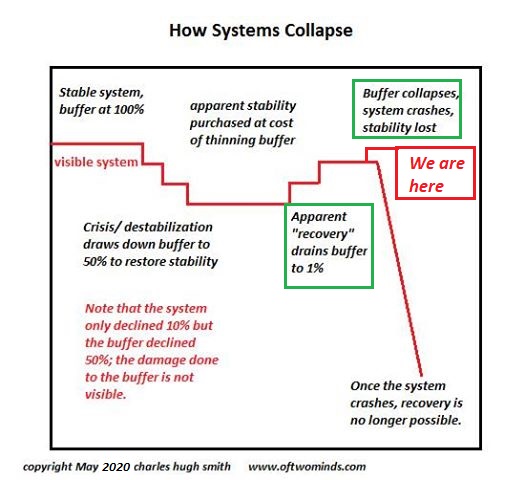
Eventually, all military empires fall and fail by spreading themselves too thin and spending themselves to death.

It happened in Rome: at the height of its power, even the mighty Roman Empire could not stare down a collapsing economy and a burgeoning military. Prolonged periods of war and false economic prosperity largely led to its demise.

It’s happening again.

The American Empire—with its endless wars waged by U.S. military servicepeople who have been reduced to little more than guns for hire: outsourced, stretched too thin, and deployed to far-flung places to police the globe—is approaching a breaking point.

The government is destabilizing the economy, destroying the national infrastructure through neglect and a lack of resources, and turning taxpayer dollars into blood money with its endless wars, drone strikes and mounting death tolls.

This is exactly the scenario President Dwight D. Eisenhower warned against when he cautioned the citizenry not to let the profit-driven war machine endanger our liberties or democratic processes. Eisenhower, who served as Supreme Commander of the Allied forces in Europe during World War II, was alarmed by the rise of the profit-driven war machine that, in order to perpetuate itself, would have to keep waging war.

Yet as Eisenhower recognized, the consequences of allowing the military-industrial complex to wage war, exhaust our resources and dictate our national priorities are beyond grave:

Every gun that is made, every warship launched, every rocket fired signifies, in the final sense, a theft from those who hunger and are not fed, those who are cold and are not clothed. This world in arms is not spending money alone. It is spending the sweat of its laborers, the genius of its scientists, the hopes of its children. The cost of one modern heavy bomber is this: a modern brick school in more than 30 cities. It is two electric power plants, each serving a town of 60,000 population. It is two fine, fully equipped hospitals. It is some 50 miles of concrete highway. We pay for a single fighter with a half million bushels of wheat. We pay for a single destroyer with new homes that could have housed more than 8,000 people. This, I repeat, is the best way of life to be found on the road the world has been taking. This is not a way of life at all, in any true sense. Under the cloud of threatening war, it is humanity hanging from a cross of iron.

We failed to heed Eisenhower’s warning.

The illicit merger of the armaments industry and the government that Eisenhower warned against has come to represent perhaps the greatest threat to the nation today.

What we have is a confluence of factors and influences that go beyond mere comparisons to Rome. It is a union of Orwell’s 1984 with its shadowy, totalitarian government—i.e., fascism, the union of government and corporate powers—and a total surveillance state with a military empire extended throughout the world.

As I make clear in my book Battlefield America: The War on the American People and in its fictional counterpart The Erik Blair Diaries, this is how tyranny rises and freedom falls.

The growth of and reliance on militarism as the solution for our problems both domestically and abroad bodes ill for the constitutional principles which form the basis of the American experiment in freedom.

As author Aldous Huxley warned: “Liberty cannot flourish in a country that is permanently on a war footing, or even a near-war footing. Permanent crisis justifies permanent control of everybody and everything by the agencies of the central government.”
Why the Russian Federation Recognized the Independence Movements in the Donbas

Recognition of the Donetsk and Luhansk People’s Republics is a direct result of U.S. efforts to contain Russian economically and militarily.

By Ajamu Baraka

Source: Black Agenda Report

“Minsk, Minsk, Minsk,” they cried after Russia recognized Donetsk and Luhansk. But those Western diplomats and pundits did not hear those of us in the anti-war, pro-peace and anti-imperialist movements who insisted that Minsk II was the only conceivable way out of the crisis!  

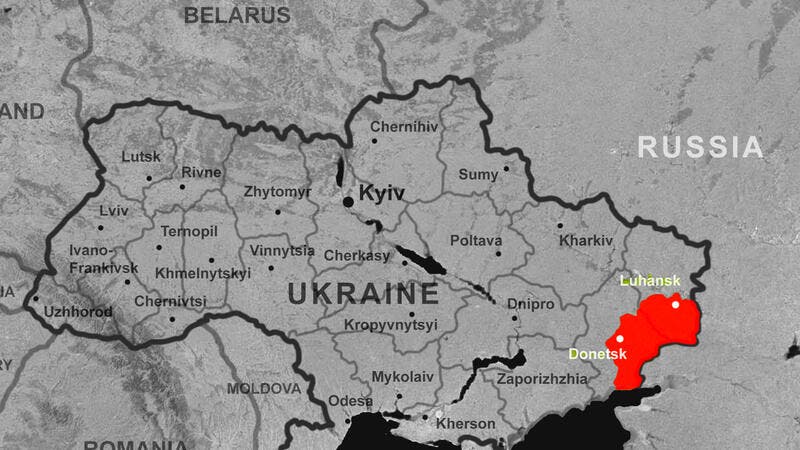
There will be reams of words attempting to provide a coherent analysis of the manufactured crisis dramatically unfolding in Ukraine, which took another unanticipated turn when Russia extended recognition to the Peoples’ Republics of Donetsk and Luhansk in the territory referred to as the Donbas in Eastern Ukraine. 

I will not add to that mountain of ink because, for me, the story is relatively simple. I have argued since 2015 that it was greed informed by miscalculations that drove the U.S. — with the support of European capital salivating from prospect of profits generated by gaining full control of the Ukrainian economy through the European Association agreement — to decide to overthrow the government of Viktor Yanukovych when he turned to Russia instead of surrendering Ukrainian sovereignty to U.S. and European capital. 

This was the genesis of the crisis. For U.S. policymakers it did not matter that the coup government was made up of literal neo-Nazis and extremist white supremacists and antisemitic ultra-nationalists from the neo-Nazi Svoboda party — the National Socialist Party of Ukraine. 

Nor was there any concern that one of the former commanders of the Azov Battalion, a violent right-wing gang that was merged into the Ukrainian National Guard and is now being trained by the British, said that Ukraine’s mission is to “lead in a final crusade … against the Semite-led Untermenschen” (sub-humans). 

No concern because aligning with rightist elements in order to advance the economic and geostrategic interests of the U.S. state and capitalist class behind the backs of the U.S. public is nothing new. That is why it is so ironic, or perhaps contradictory, that while Democratic Party activists are mobilized to struggle against the far-right in the U.S., Biden’s Ukrainian policies are affirming once again that the neoliberal right does not mind aligning with naked fascism to advance the imperial interests of capital.  

From rightist Islamic forces to right-wing apartheid state of Israel, to anti-democratic monarchs of Saudi Arabia and the Gulf Cooperation Council (GCC), there is usually never a state too odious for the U.S. to deal with as long as there was the possibility of a buck to be made. 

That is why it is almost surreal to read U.S. propaganda messages that still frame U.S. intentions in themes that suggest a benevolent character to U.S. behavior — and getting away with it! And even among African/Black radicals who should know better, instead of educating Africans on what was in play in Ukraine with the expansion of the white supremacist NATO structure, the gangster move being made on Ukraine in order for U.S. capital to continue to assert control over the European market, and the crude attempt to divert attention away from the failures of Biden’s domestic policies — some Africans, along with elements of the white left, were more interested in having abstract discussions on the class nature of the Russian state and economy — as if there was anything to debate there! 

Like other subversive actions by the U.S. state, the destabilization and then capturing of the Ukrainian state, and the installation of a puppet government had nothing to do with any concerns for democracy. It is impossible for the U.S. to be concerned about democracy when it is the principal state undermining democracy around the world. If the U.S. were committed to upholding democratic processes, it would not have overthrown a democratically elected government in Ukraine. 

And U.S. policy certainly did not reflect any concern for human rights in Ukraine. The war that was sparked after the coup government decided to attack its own citizens in the Donbas who rejected its legitimacy resulted in thousands of Ukrainians losing their lives.

The U.S. was not concerned with the territorial integrity of Ukraine either, because it was the coup government, backed by their bosses in Washington, that forced the separation of the Donbas from Ukraine by defining them as non-Ukrainians. Ukrainian citizens in Donbas became “pro-Russia separatists and terrorists,” which made them eligible for massive human rights violations, including murder as foreign entities. 

Yet, with all of that, up until February 21, 2022, the 57th anniversary of the assassination of Black internationalist revolutionary Malcolm X, a route to a peaceful resolution to the crisis existed — the Minsk II agreement.  It was the Minsk II agreement, put in place after the independent republics fought the Ukrainian neo-fascists to a military stand-still, along with provisions for a ceasefire, that provided a path to peaceful resolution. The agreement would have provided political autonomy for the Donbas within the Ukrainian state, thus preserving the existing borders of Ukraine before the coup of 2014. 

Unfortunately, with the election of Joe Biden, who was the Obama administration’s point person on Ukraine, the Democrats immediately picked-up where U.S. policy left off in 2016 and started to encourage the Ukrainian government to ignore the Minsk II agreement and to consider taking back the Donbas by force. 

Today, after the U.S. flooded Ukraine with weapons, including long-range artillery that was introduced into the conflict area in violation of the Minsk ceasefire deal, the deployment of 150,000 Ukrainian troops positioned along the contact line between Ukraine and Donbas, and the shelling from the Ukrainian forces right during the period that the U.S. predicted that Russia would invade, the Minsk agreement has become another casualty of war. 

On February 18, 2022, Russian foreign minister Sergei Lavrov stated that he was “alarmed ” by a reported spike in Ukrainian artillery attacks against rebels in the eastern region of Donbas with weapons prohibited by the Minsk agreement. Reports from the Organization for Security and Cooperation in Europe (OSCE), which was tasked with the responsibility, since 2015, to monitor and report on violations of the agreement, indicated that in Donetsk, between February 18 and February 20, 2022, there were 591 ceasefire violations, and in Luhansk it recorded 975 ceasefire violations, including 860 explosions.  

What was the response from the Ukraine government? The government claims that OSCE is biased because the data it is gathering seems to indicate that it is the Ukrainian forces that are responsible for the increase in military actions.  

But that controversy and debate over that data failed to find itself in the daily coverage of the situation by the Western press, even though the empirical data clearly showed that Ukrainian forces were responsible for escalating the military engagement.  

Ukraine is just the symptom; the Disease is U.S. Doctrine of “Full Spectrum Dominance”

The U.S. has its pretext to move the Europeans to impose economic sanctions against Russia, even though it is clear to many in Europe that the Biden administration’s policies are no more than the “liberal” version of “America First” as it relates to Europe. 

European capital, especially the Germans, are expected to take another hit for the team like it did during the first round of sanctions against Russia and the money they all lost with the Trump administration’s abrogation of the Joint Comprehensive Plan of Action (the Iran Nuclear Deal). 

The capitalist oligarchy that is the base of Putin’s governing coalition may understand something that U.S. policymakers in their arrogance are underestimating, namely, that European capital is getting closer to a breaking point with the U.S., especially when money can be made in a context of relative stability in Europe as opposed to the destabilizing effects of conflict. 

They also know that the world is changing and that multipolarity is rapidly becoming the new reality and that European capital will have to make careful choices.

China is the number one trade and investment partner with the European Union states, the Chinese inspired “Regional Comprehensive Economic Partnership (RCEP) ” is the largest “free trade” agreement on the planet constituting one third of humanity and one third of global GDP. Russia is sitting on top of the Eurasia Economic Union that, in terms of land, is the largest trade union on the planet, and of course the Belt and Road Initiative (BRI). 

The Russian recognition of the republics of Donbas was no more than the open acknowledgment of the dismembering of Ukraine. A process that started with the U.S. coup and the imposition of a government that completely turned over Ukrainian sovereignty to U.S. and European capital. 

The lesson for the colonized, working classes and nationally oppressed? Authentic national liberation, people(s)-centered human rights, and self-determination for peoples and nations are impossible in a world in which capitalist competition and war are the defining characteristics of global relations. 

We must, as we say in the Black is Back Coalition and the Black Alliance for Peace, turn imperialist wars into wars against imperialism! That is our task and responsibility. To do otherwise is to fail the historical mission of our generation. 

Europe Is Killing Itself With Its Russian Sanctions

By Paul Craig Roberts

Source: PaulCraigRoberts.org

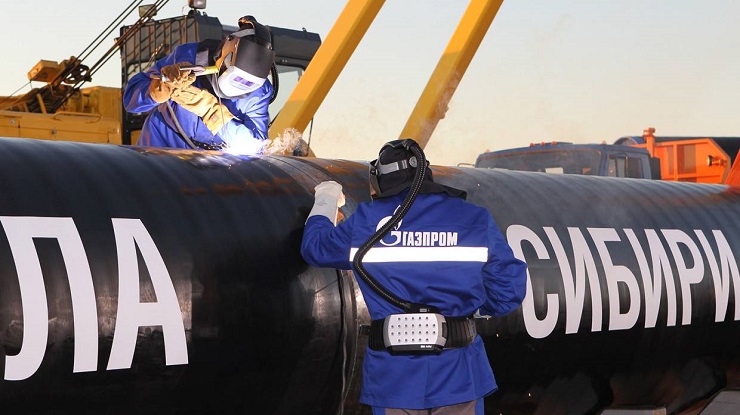
The sharp rise in natural gas price in Europe is entirely due to Western hysteria and stupidity. According to the EU’s own data, Europe is dependent on Russia for 46% of its natural gas. In the face of such extraordinary dependency on Russian energy, the moronic European “leaders” are falling all over themselves imposing impotent sanctions on Russia.  The idiotic German Chancellor actually punished the German people for Russia’s recognition of the Donbass republics by “cancelling” the Nord 2 pipeline.  This foolish act was a prime reason for the hysteria that has caused a sharp rise in prices.  The price rise helps Russia–if she continues to supply Europe with energy.  It hurts Europe and whoever financed the Nord 2 pipeline. If the pipeline sits not operating, it cannot produce a revenue stream to service the capital invested in the pipeline.  I do not know who financed the pipeline. If it was Germany, then the chancellor’s sanctions on Russia have twice injured the Germans.

The EU’s 46% dependency on Russian natural gas is independent of the Nord 2 pipeline, the opening of which has been on hold due to Washington’s pressure on Germany. Therefore, the rise in gas price is not due to a reduction of supply, but due to speculation that Russia will reduce or cut off supply. Europe is served by other pipelines.  What if Russia responds to the EU’s “sanctions” by closing the pipelines that deliver 46% of Europe’s natural gas?  What would Europe’s fate be?

Russia has accepted sanctions without replying in kind.  Perhaps it is time for Russia to impose sanctions to teach the West a lesson.

In my opinion there is no reason for Russia to deplete its own energy resources by sharing them with its European enemies.  Perhaps the Russian government’s idea was that energy sales would be a source of foreign exchange earnings and that providing Europe with energy was in the interest of good relations with the West.

Now that the West has demonstrated that the West has no interest in good relations with Russia there is no point in the Russian energy sales.  As I pointed out ( https://www.paulcraigroberts.org/2022/02/22/russia-and-china-should-go-their-own-way/ ) Russia has no need for foreign exchange.  The Russian central bank can finance Russian economic development with no need of foreign involvement.  Russia’s holdings of instruments denominated in dollars or euros would just be confiscated by sanctions.

To summarize:  Europe brought the high energy price on itself with its thoughtless sanctions; the high prices benefit Russia and hurt Europe; Russia should consider turning off all natural gas to Europe and conserve its energy source for its own and China’s development.

Europe is nothing but a thorn in Russia’s side, a collection of Washington’s puppets.  Russia owes Europe nothing. 

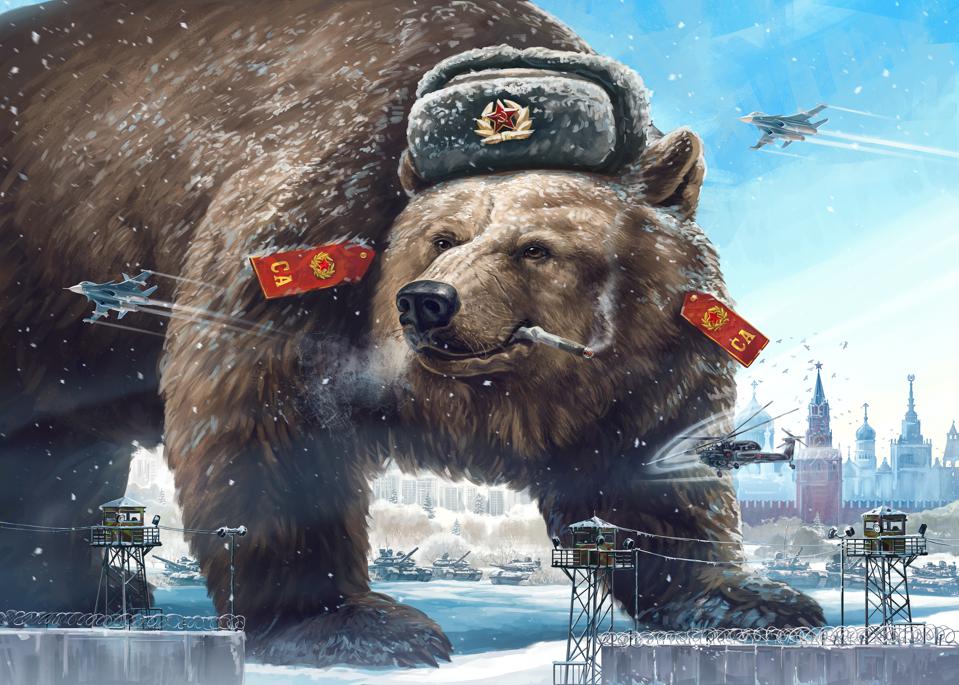
Russian bear wants justice

By Batko Milacic for the Saker Blog

Source: The Saker

Despite possible sanctions and their hard-hitting economic consequences, the hunted Russian bear has got out of the den and is going after the hunters. Until recently, Russians, Ukrainians, and Europeans believed that there would be no war. What we see now, however, is a full-scale Russian intervention and quite a successful one too. Where are the Russian troops going, and most importantly, why? And where will they stop?

Strengthened since the breakup of the Soviet Union, Russia was quite content with its new status of a leading regional power, and only verbally recalled its glorious imperial past. During the early 2000s, Russia even mulled the possibility of integrating into NATO and the EU, only to see its natural and legitimate interests repeatedly and shamelessly ignored. Millions of Russian-speakers living in the post-Soviet republics were deprived of their right to use their native language, while the Baltic countries and Ukraine profited from the transit of gas, oil, and raw materials. There was even a new “policy of gas pipelines,” when Russia was pressured into make concessions in exchange for being allowed to build a gas pipeline or simply put a stop to the syphoning off of its pipeline gas.

In fact, a resurgent Russia was gradually being presented as a “potential enemy” for the sake of reiterating NATO’s role as a defender against the imagined Russian threat. All this resulted in the 2013 events in Ukraine where nationalists came to power not without outside help, flatly refusing to safeguard the interests of the country’s Russian-speaking population, primarily in eastern Ukraine. Facing the risk of losing its naval base in Sevastopol (existing there since the 18th century) and wishing to protect the Russian-speaking people living in Ukraine, Russia, with the full support of the local population, re-absorbed Crimea and supported the separatists of Donbass. This was followed by Kiev’s ban on the use of the Russian language in the country (not entirely successful, though, since it was the main spoken language of Ukraine) and police persecution of those who advocated a dialogue with Moscow. In its effort to support Ukraine, the West introduced a series of anti-Russian sanctions, which seriously damaged the Russian economy. Still, for the past eight years, Russia was ready for dialogue. In exchange for autonomy for Russian-speakers and guarantees of non-deployment of a NATO infrastructure in eastern Ukraine, Moscow was prepared to roll back its support for the separatists and, possibly, even hold a new referendum in Crimea on its reunification with Russia.

However, during all these eight years, people continued to die along the disengagement line in Donbass, separating Kiev’s armed forces and the separatists (at the rate of more than 100 a year). Meanwhile, Russia was officially branded by Kiev as an “aggressor,” and those in power in Ukraine started to busily prepare for a big war, demanding military and financial assistance from the EU and Washington. And while President Zelensky’s predecessor, the millionaire Petro Poroshenko, was still able to maintain a dialogue with Moscow with the help of the oligarchs, the current president, who came to power on the strength of promises to seek peace and reconciliation, was trying hard to enter NATO and was threatening Russia with missiles deployed near Chernigov (750 km from Moscow). As for the Kremlin, it has spent the past six months trying to negotiate with Brussels, Washington and Zelensky himself. All that Putin was asking for were security guarantees for Russia. In fact, Moscow never really threatened Ukraine but was still being systematically pushed towards a military solution.

It should be noted that prior to the intervention, Putin explained in great detail to his compatriots what was going on, recalling how the borders of the Soviet republics had been cut and how Russian-speaking territories had been handed over to Ukraine. He also made it clear that one cannot talk about a violation of international law after the invasion of Iraq, the bombing of Serbia, the recognition of Kosovo and NATO’s move to the Russian borders.

Let’s be honest: a bear sleeping peacefully in its den was smoked out of there by being poked with a stick, and now they are wondering why it is chasing those who did that. Moscow has been pushed into a corner and is now demonstrating its strength and standing up for its interests. Now Putin will at best be satisfied with a change of guard in Kiev, and at worst, Ukraine as a state will disappear from the map of Europe. Is it possible to justify an aggression that has been provoked for a long time? This is a matter of a lengthy discussion. One thing is clear: 20 years ago, Russia could and wanted to join NATO and united Europe. However, the latter chose to make Russia an enemy…

Related Articles:

From the Black Sea to the East Med, Don’t Poke the Russian Bear – By Pepe Escobar

Scholz Caves on Nord Stream While Putin Throws Donbass a Lifeline – By Mike Whitney

Sino-Russia Energy Deals to Defeat US/NATO Expansionism

By Salman Rafi Sheikh

Source: New Eastern Outlook

While the recent meeting between Russia’s Vladimir Putin and China’s Xi in Beijing may not in itself be an extra-ordinary event, its significance against the backdrop of the on-going tussle between Russia and the US/NATO is quite unmistakable – not only for Russia itself, but for the US/NATO as well. Even though Russia does not really need China’s help to defend its sovereignty militarily or otherwise, it remains that China’s open support for Russia’s stance against the US plan to push NATO into Ukraine as a geo-political tool does debunk the US propaganda of Russian “isolation.” More than anything else, China’s growing strategic alliance allows Russia a great opportunity to withstand possible Western sanctions, or European decision to reduce its supply of gas from Russia. But co-operation in one field is often not possible without co-operation in other fields. That’s why the long joint statement issued after the meeting laid a lot of stress on jointly opposing Western plans to destabilise regions adjacent to mainland China and Russia i.e., Ukraine, Taiwan, and Hong Kong. As the sides reiterated:

“The sides oppose further enlargement of NATO and call on the North Atlantic Alliance to abandon its ideologized cold war approaches, to respect the sovereignty, security and interests of other countries, the diversity of their civilizational, cultural and historical backgrounds, and to exercise a fair and objective attitude towards the peaceful development of other States.”

While the fact that both Russia and China oppose Western expansionism both via NATO or anti-China AUKUS (Australia, United Kingdom and United States) treaty has already unsettled Western echelons of power, it is the growing co-operation between Russia and China in the energy sector that is most likely to defeat US designs vis-à-vis forcing Russia to submit. This is particularly significant given that the US is particularly interested in hurting Russia’s gas and oil sales. US President Biden recently said this, while standing next to his German counterpart, without mincing any words only recently on February 7:

“What everybody forgets here is Russia needs to be able to sell that gas and sell that oil.  Russia relies — a significant part of Russia’s budget — it’s the only thing they really have to export.  And if, in fact, it’s cut off, then they’re going to be hurt very badly, as well.  And it’s of consequence to them as well.  This is not just a one-way street.”

Moscow is, obviously, not unaware of this design. When Putin visited Beijing, he did not just attend the Winter Olympics; in fact, Putin signed a billion dollar oil and gas deal with Beijing. “Our oilmen have prepared very good new solutions on hydrocarbon supplies to the People’s Republic of China,” Putin said in Beijing. Besides the new deal, China also promised to ramp up Russia’s Far East exports. A new 30-year contract to supply 10 billion cubic meters (bcm) per year to China from Russia’s Far East was signed. With China supporting Russia’s stance on Ukraine, China’s increasing purchase of Russian oil and gas sent a powerful signal to the world that both superpowers will be taking care of each other’s interests against the combined strength of predatory western alliance, making their claims of punishing Russia hollow.

The announcement also comes against the backdrop of US claims that they – US and its allies – have a wide range of “tools” at their disposal to punish any state, including China, if they try to “backfill US exports controls” imposed on Russia. As Ned Price of the White House recently claimed in his press briefing:

“Putin knows that this would be of massive consequence to his country and to his economy. This – a closer relationship with the PRC, a closer relationship between Russia and the PRC – is not going to make up for that; it is not going to account for that. One final point. We have – and when I say we I mean collectively, the United States and our allies and partners – we have an array of tools that we can deploy if we see foreign companies, including those in China, doing their best to backfill U.S. export control actions, to evade them, to get around them.”

China’s deal, therefore, very clearly defies US threats, showing how the politics of sanctions – which is Washington’s favourite geo-political “tool” – cannot really deter states like China and Russia, who, too, posses enough “tools” to stage a counter-attack. The oil & gas deals are a manifestation of that counter-attack.

Even as many political pundits in the West have highlighted, the US plan against Russia cannot work unless Washington can first wean China away. The fact that Washington’s ties with Beijing are as bad as with Moscow means that Washington does not have enough geo-political capacity to dictate policies and decisions by really isolating Russia. Although it might still impose sanctions, China is unlikely to be bothered by them, thus defeating Washington’s plan to inflict an unacceptable level of damage on Russia, which also already has US$640 billion in foreign exchange reserves to withstand western sanctions.

But, as mentioned above, the real factor bothering the West is not what Russia can or might do in the wake of a conflict around Ukraine; the real factor is the almost absolute convergence between Russia and China on almost all issues of global politics – a fact duly highlighted via the said joint statement. This statement is not about their bi-lateral relations; in fact, it is an elaborate commentary on the challenges they are facing from the West and how these very challenges have transformed and elevated their ties to a level not known in the contemporary era.

Therefore, in the wake of US/European pressure on Russia and Moscow’s massive new deals with China means the Biden administration will now have to come up with a new plan to defeat Russia, or altogether drop its project. With Russia now clearly able to diversify its oil and gas deals away from Europe, the question is: can Europe itself do without Russia and without facing any economic backlash? It was only last week the UK government announced a whooping 54 per cent increase in domestic energy bills, causing a political outcry against the Johnson administration. The unnecessary war in Russia is already starting to bite back the war-wagers themselves.

WAR IN EUROPE AND THE RISE OF RAW PROPAGANDA

By John Pilger

Source: JohnPilger.com

Marshall McLuhan’s prophecy that “the successor to politics will be propaganda” has happened.  Raw propaganda is now the rule in Western democracies, especially the US and Britain

On matters of war and peace, ministerial deceit is reported as news. Inconvenient facts are censored, demons are nurtured. The model is corporate spin, the currency of the age. In 1964, McLuhan famously declared, “The medium is the message.” The lie is the message now.

But is this new? It is more than a century since Edward Bernays, the father of spin, invented “public relations” as a cover for war propaganda. What is new is the virtual elimination of dissent in the mainstream.

The great editor David Bowman, author of The Captive Press, called this “a defenestration of all who refuse to follow a line and to swallow the unpalatable and are brave”. He was referring to independent journalists and whistle blowers, the honest mavericks to whom media organisations once gave space, often with pride. The space has been abolished.

The war hysteria that has rolled in like a tidal wave in recent weeks and months is the most striking example. Known by its jargon, “shaping the narrative”, much if not most of it is pure propaganda.

The Russians are coming. Russia is worse than bad. Putin is evil, “a Nazi like Hitler”, salivated the Labour MP Chris Bryant. Ukraine is about to be invaded by Russia – tonight, this week, next week. The sources include an ex CIA propagandist who now speaks for the US State Department and offers no evidence of his claims about Russian actions because “it comes from the US Government”.

The no-evidence rule also applies in London. The British Foreign Secretary, Liz Truss, who spent £500,000 of public money flying to Australia in a private plane to warn the Canberra government that both Russia and China were about to pounce,  offered no evidence. Antipodean heads nodded; the “narrative” is unchallenged there. One rare exception, former prime minister Paul Keating, called Truss’s warmongering “demented”.

Truss has blithely confused the countries of the Baltic and Black Sea. In Moscow, she told the Russian foreign minister that Britain would never accept Russian sovereignty over Rostov and Voronezh – until it was pointed out to her that these places were not part of Ukraine but in Russia. Read the Russian press about the buffoonery of this pretender to 10 Downing Street and cringe.

This entire farce, recently starring Boris Johnson in Moscow playing a clownish version of his hero, Churchill, might be enjoyed as satire were it not for its wilful abuse of facts and historical understanding and the real danger of war.

Vladimir Putin refers to the “genocide” in the eastern Donbas region of Ukraine. Following the coup in Ukraine in 2014 – orchestrated by Barack Obama’s “point person” in Kyiv, Victoria Nuland – the coup regime, infested with neo-Nazis, launched a campaign of terror against Russian-speaking Donbas, which accounts for a third of Ukraine’s population.

Overseen by CIA director John Brennan in Kyiv, “special security units” coordinated savage attacks on the people of Donbas, who opposed the coup. Video and eyewitness reports show bussed fascist thugs burning the trade union headquarters in the city of Odessa, killing 41 people trapped inside. The police are standing by. Obama congratulated the “duly elected” coup regime for its “remarkable restraint”.

In the US media the Odessa atrocity was played down as “murky” and a “tragedy” in which “nationalists” (neo-Nazis) attacked “separatists” (people collecting signatures for a referendum on a federal Ukraine). Rupert Murdoch’s Wall Street Journal damned the victims – “Deadly Ukraine Fire Likely Sparked by Rebels, Government Says”.

Professor Stephen Cohen, acclaimed as America’s leading authority on Russia, wrote, “The pogrom-like burning to death of ethnic Russians and others in Odessa reawakened memories of Nazi extermination squads in Ukraine during world war two. [Today] storm-like assaults on gays, Jews, elderly ethnic Russians, and other ‘impure’ citizens are widespread throughout Kyiv-ruled Ukraine, along with torchlight marches reminiscent of those that eventually inflamed Germany in the late 1920s and 1930s…

“The police and official legal authorities do virtually nothing to prevent these neo-fascist acts or to prosecute them. On the contrary, Kyiv has officially encouraged them by systematically rehabilitating and even memorialising Ukrainian collaborators with Nazi German extermination pogroms, renaming streets in their honour, building monuments to them, rewriting history to glorify them, and more.”

Today, neo-Nazi Ukraine is seldom mentioned. That the British are training the Ukrainian National Guard, which includes neo-Nazis, is not news. (See Matt Kennard’s Declassified report in Consortium 15 February). The return  of violent, endorsed fascism to 21st-century Europe, to quote Harold Pinter, “never happened … even while it was happening”.

On 16 December, the United Nations tabled a resolution that called for “combating glorification of Nazism, neo-Nazism and other practices that contribute to fuelling contemporary forms of racism”. The only nations to vote against it were the United States and Ukraine.

Almost every Russian knows that it was across the plains of Ukraine’s “borderland” that Hitler’s divisions swept from the west in 1941, bolstered by Ukraine’s Nazi cultists and collaborators. The result was more than 20 million Russian dead.

Setting aside the manoeuvres and cynicism of geopolitics, whomever the players, this historical memory is the driving force behind Russia’s respect-seeking, self-protective security proposals, which were published in Moscow in the week the UN voted 130-2 to outlaw Nazism. They are:

– NATO guarantees that it will not deploy missiles in nations bordering Russia. (They are already in place from Slovenia to Romania, with Poland to follow)
– NATO to stop military and naval exercises in nations and seas bordering Russia.
– Ukraine will not become a member of NATO.
– the West and Russia to sign a binding East-West security pact.
– the landmark treaty between the US and Russia covering intermediate-range nuclear weapons to be restored. (The US abandoned it in 2019)

These amount to a comprehensive draft of a peace plan for all of post-war Europe and ought to be welcomed in the West. But who understands their significance in Britain? What they are told is that Putin is a pariah and a threat to Christendom.

Russian-speaking Ukrainians, under economic blockade by Kyiv for seven years, are fighting for their survival. The “massing” army we seldom hear about are the thirteen Ukrainian army brigades laying siege to Donbas: an estimated 150,000 troops. If they attack, the provocation to Russia will almost certainly mean war.

In 2015, brokered by the Germans and French, the presidents of Russia, Ukraine, Germany and France met in Minsk and signed an interim peace deal. Ukraine agreed to offer autonomy to Donbas, now the self declared republics of Donetsk and Luhansk.

The Minsk agreement has never been given a chance. In Britain, the line,  amplified by Boris Johnson, is that Ukraine is being “dictated to” by world leaders. For its part, Britain is arming Ukraine and training its army.

Since the first Cold War, NATO has effectively marched right up to Russia’s most sensitive border having demonstrated its bloody aggression in Yugoslavia, Afghanistan, Iraq, Libya and broken solemn promises to pull back.  Having dragged European “allies” into American wars that do not concern them, the great unspoken is that NATO itself is the real threat to European security.

In Britain, a state and media xenophobia is triggered at the very mention of “Russia”. Mark the knee-jerk hostility with which the BBC reports Russia. Why? Is it because the restoration of imperial mythology demands, above all, a permanent enemy? Certainly, we deserve better.

They don’t just lie to us about wars; they lie to us about everything

By Caitlin Johnstone

Source: Intrepid Report

Propaganda isn’t just about manufacturing consent for wars and ridiculous governmental measures we’d never normally accept. That’s what most people think of when they hear that word, but there’s so very, very much more to it than that.

The lion’s share of propaganda goes not toward convincing us to accept new agendas of the powerful, but toward keeping us entranced in the status quo dream world which enables the powerful to have power in the first place. Toward normalizing status quo systems and training us to shape ourselves to fit into them like neat little cogs in a well-oiled machine.

And it’s not even a grand, monolithic conspiracy in most cases. The giant corporations who indoctrinate us with their advertisements, their Hollywood movies and shows, their apps, their websites and their news media are all naturally incentivized to point us further and further into delusion by the fact that they benefit from the status quo systems which have elevated them to wealth.

So day in and day out we are presented with media which train us what to value, where to place our interest and attention, what success looks like, and how a normal human behaves on this planet. And it always aligns perfectly with the interests of the rich and powerful.

They don’t just teach us what to believe. They teach us who we are. They give us the frameworks upon which we cast our ambitions and evaluate our success, and we build psychological identities out of those constructs. I am a businessman. I am unemployed. My life is about making money. My life is about disappointing people. I am a success. I am a failure. They invent the test of our adequacy, and they invent the system by which we are graded.

These artificial constructs take up such vast portions of our personal psychology that people will live their entire lives completely enslaved to them, making them their entire focus. This enslavement is so pervasive that people will often even take their own lives based on what those made-up constructs tell them about who they are and what they’re worth.

And it’s all a lie. A dream world, made entirely of narrative, constructed by the powerful for the benefit of the powerful. Things as intimate as the thoughts in our heads and the movement of our interest and attention are controlled and dominated with iron-fisted force, all for the benefit of some stupid made-up games about imaginary money and fictional authority.

So most of us sleepwalk through life chasing make believe goals and fleeing artificially constructed demons. Too preoccupied with the illusion to look up and notice the thunderous majesty of life as it really is, and usually too confused to truly perceive it even on those rare occasions when we snap out of the trance for a moment to make an effort.

Untangling yourself from this dream world isn’t easy. It takes time. It takes work. It takes a deep, sustained curiosity about what’s really going on underneath all the muddled mental chatter, about what life truly is underneath all the stories we’ve been told about what life is, about who we truly are underneath all the stories we’ve been told about who we are.

The difference between what we’ve been told and what we find over the course of this investigation is the difference between dream and waking life. The real world is as different from the status quo narrative about the world as it is from any other work of fiction. The two things really could not be any more different.

And the good news is that just as your false view of yourself and your world shaped your human expression in the service of the powerful, the rolling back of that mind fog shapes your human expression into something else entirely. Something grounded in reality. Something authentic. Something primal. Something that exists not for the benefit of some faceless oligarchic empire, but for the same reason the grass grows and the galaxies spin in the cosmos.

And that’s what humanity looks like on the other side of this awkward transition phase that our species is going through at this adolescent point in its development. Free from illusion. In harmony with the real. Enslaved to nobody. Striding clear-eyed into the mystery of what’s to come.

How Empires Die

By Charles Hugh Smith

Source: Of Two Minds

From a systems perspective, nation-states and empires arise when they are superior solutions to security compared to whatever arrangement they replace: feudalism, warlords, tribal confederations, etc.

States and empires fail when they are no longer the solution, they are the problem. As the book The Upside of Down: Catastrophe, Creativity, and the Renewal of Civilization explains, when the dissolution of the state / empire becomes the pain-reducing solution, the inhabitants withdraw their support and the empire loses its grip and expires.

As I explain in my new book, Global Crisis, National Renewal, states and markets are problem-solving structures. These structures solve problems by optimizing adaptability and beneficial synergies that reinforce one another as evolutionary advances.

The rise of the middle class is an example of beneficial synergies: as this new class gains access to credit, expertise, trade, enterprise and pricing power for their labor, they have the means to transform their labor into capital by saving earnings and investing the capital in assets, new enterprises, etc. which then generate income from capital which fuels synergistic increases in credit, expertise, assets and income from investments.

States / empires fail and expire when they elevate the fatal synergies created by self-serving elites. Rather than encourage the dynamics of adaptation–competition, transparency, accountability, experimentation and dissent– the elites suppresses these forces as threats to their monopolies, cartels and wealth.

Stripped of adaptability and beneficial synergies, the state / empire is no longer able to solve problems. It becomes the problem which cannot be resolved.

A key dynamic fueling fatal synergies is the hubristic confidence that low-cost abundance is a birthright bestowed by the state /empire, so resources can be endlessly squandered on excess and extremes of consumption and waste. The state / empire no longer focuses on securing the material sources of security (food, energy, etc.) or the accountability, competition, dissent and transparency required to solve systemic problems.

Instead, the state / empire dissolves into divisive camps seeking to protect their petty fiefdoms and expanding their wealth at the expense of the populace. The super-wealthy build $500 million yachts and palaces, politicians trade on their positions to accumulate fortunes, and corruption replaces governance.

Markets spiral into fatal synergies as low quality products and services, speculative excess, extremes of grotesque consumption and blood-soaked entertainment become “growth industries” while blackouts dim electrical grids and store shelves empty of essentials.

The market solution to everyone already owning everything is to engineer planned obsolescence into every product and form service-sector cartels that then strip services to the bone to juice profits, a.k.a. the crapification of all goods and services.

The state / empire also fails to maintain basic security and functions such as tax collection and a fair enforcement. Petty crimes are exploited by those in power (civil forfeiture) while resistance to the state is severely punished. There are two legal systems, one for the commoners and another for the elite.

The state / empire protects those profiting from the status quo and then calls this profiteering a “solution.” But this profiteering doesn’t solve any problems; it is the problem, as self-serving profiteering protects its privileges by corrupting the state, finance and the economy.

For its part, the market seeks to maximize profits in excesses of consumption, predatory lending (student loans), the wholesale destruction of quality by monopolies and cartels and extremes of speculation.Maximizing profits by any means available has no moral foundation; predatory student loans are profitable, obscure medical billing is profitable, selling products designed to fail is profitable, declaring software outdated is profitable, deceiving consumers is profitable, and so on, in an endless array of shoddy, unhealthy products, rapacious services, fraudulent overcharges, etc.

Since problems go unresolved, things fall apart and the masses veer into extremes of derangement and magical thinking: fanaticism is substituted for friendship, cults abound, common ground vanishes and all the failures of the system are papered over with Bread and Circuses, free money, gaudy entertainments and lifeless displays of conspicuous consumption that reveal the decay and degradation.

Protecting the few stripmining the system at the expense of the many is not problem-solving. It adds a layer of problems that the state /empire is incapable of resolving. Ossified, sclerotic, self-serving, corrupt, focused on virtue-signaling and the appearance of tackling problems rather than actually solving problems because some sacred cow would lose its privileges and income stream, the state / empire is the problem, not the solution.

When the state / empire loses the ability to recognize and solve core problems of security and fairness, it will be replaced by another arrangement that is more adaptable and adept at solving problems. Artifice, fantasy, magical thinking, excuses and absurd cover stories are not part of problem-solving. Problems can only be solved if reality is faced directly.

When reality is unacceptable because it negatively impacts those stripmining the system for private gain, the state / empire is already on its fatal spiral to collapse.