The first group I encountered on my first day of full consciousness post-crash was a team of various medical professionals. A nurse recorded my vital signs while a doctor assessed my cognitive health through a series of questions which I answered by nodding or shaking my head.
A couple of people from the surgical team focused on the extent of my spinal cord injuries, asking if I was able to feel or move various parts of my arms and legs. I was able to feel everywhere, though in a tingly and imprecise way, similar to how one’s arms or legs feel “asleep” from lack of circulation. I could definitely feel a sense of touch, but it seemed to emanate not from the surface of the skin but from a layer beneath. As expected, I couldn’t move anywhere below the shoulders while areas touched on my arms were felt on corresponding areas of phantom limbs above my chest.
Lastly, a specialist investigated my emotional state through another round of questions including if I felt depressed or had suicidal thoughts. This line of questioning seemed absurd at the time for how self-apparent the answers should be. It’s inconceivable that anyone newly quadriplegic would not be depressed. Likewise, any sane person who loses movement of all limbs as well as loss or impairment of numerous internal bodily functions would be lying if they denied having suicidal ideation even fleetingly.
That being said, I nodded in agreement about being depressed but shook my head to signal “no” to the question about suicide. I didn’t want or need suicide counseling and even if I were seriously suicidal, what could I do about it? But my main motive for lying was the possibility that my family would find out. I imagined how they may have experienced trauma from witnessing the trauma I went through, and how much they’d want me to survive. It would hurt them to know they wanted me alive more than I did at the time. There are moments when I still have such thoughts, particularly when my wife and I experience economic setbacks related to my injury, but the emotional impact suicide would have on loved ones is enough to keep the thoughts ephemeral and in the realm of speculation.
As if conjured by thoughts and memories, my wife Danielle and mother Florence arrived soon after, looking just as worried as I expected.
Mass psychosis is defined as “an epidemic of madness” that occurs when a “large portion of society loses touch with reality and descends into delusions.” The witch trials of the 16th and 17th centuries are a classic example. We’re now in the middle of another mass psychosis, induced by relentless fearmongering coupled with data suppression and intimidation tactics of all kinds.
Fearmongering Breeds Insanity
A number of mental health experts have expressed concern over the blatant panic mongering during the COVID-19 pandemic, warning it can have serious psychiatric effects. For example, in a December 22, 2020, article2 in Evie Magazine, S.G. Cheah discussed the emergence of mass insanity caused by “delusional fear of COVID-19.”
“Even when the statistics point to the extremely low fatality rate among children and young adults (measuring 0.002% at age 10 and 0.01% at 25), the young and the healthy are still terrorized by the chokehold of irrational fear when faced with the coronavirus,” Cheah wrote, adding:3
“Instead of facing reality, the delusional person would rather live in their world of make-believe. But in order to keep faking reality, they’ll have to make sure that everyone else around them also pretends to live in their imaginary world.
In simpler words, the delusional person rejects reality. And in this rejection of reality, others have to play along with how they view the world, otherwise, their world will not make sense to them. It’s why the delusional person will get angry when they face someone who doesn’t conform to their world view …
It’s one of the reasons why you’re seeing so many people who’d happily approve the silencing of any medical experts whose views contradict the WHO or CDC guidelines. ‘Obey the rules!’ becomes more important than questioning if the rules were legitimate to begin with.”
In a December 2020 interview (below), psychiatrist and medical legal expert Dr. Mark McDonald4 also went on record stating “the true public health crisis lies in the widespread fear which morphed and evolved into a form of mass delusional psychosis.”We are now well beyond the first profound shocks of this crisis, and it’s deeply concerning that the number of [mental health] referrals remains so high. ~ Brian Dow, Deputy chief executive of Rethink Mental Illness
He went so far as to refer to the outside of his home or office as the “outdoor insane asylum,” where he must assume “that any person that I run into is insane” unless they prove otherwise.5
Reports of Psychotic Episodes Soar in Great Britain
Now, after some 19 months of abnormal “pandemic life,” the data are starting to reflect McDonald’s fears. For example, in the U.K., psychiatric referrals for first-time psychotic episodes have skyrocketed. As reported by The Guardian, October 17, 2021:6
“Cases of psychosis have soared over the past two years in England as an increasing number of people experience hallucinations and delusional thinking amid the stresses of the Covid-19 pandemic.
There was a 29% increase in the number of people referred to mental health services for their first suspected episode of psychosis between April 2019 and April 2021, NHS data7shows. The rise continued throughout the spring, with 9,460 referred in May 2021, up 26% from 7,520 in May 2019.
The charity Rethink Mental Illness is urging the government to invest more in early intervention for psychosis to prevent further deterioration in people’s mental health from which it could take them years to recover.
It says the statistics provide some of the first concrete evidence to indicate the significant levels of distress experienced across the population during the pandemic.”
Psychosis Takes a Heavy Toll on a Person’s Life
Deputy chief executive of Rethink Mental Illness, Brian Dow, commented on the findings:8
“Psychosis can have a devastating impact on people’s lives. Swift access to treatment is vital to prevent further deterioration in people’s mental health which could take them years to recover from. These soaring numbers of suspected first episodes of psychosis are cause for alarm.
We are now well beyond the first profound shocks of this crisis, and it’s deeply concerning that the number of referrals remains so high. As first presentations of psychosis typically occur in young adults, this steep rise raises additional concerns about the pressures the younger generation have faced during the pandemic.
The pandemic has had a game changing effect on our mental health and it requires a revolutionary response. Dedicated additional funding for mental health and social care must go to frontline services to help meet the new demand, otherwise thousands of people could bear a catastrophic cost.”
According to a spokesperson for the British Department of Health and Social Care, the agency will expand the NHS mental health services budget by £2.3 billion ($3.1 billion) per year by 2023/2024. They’ve also added £500 million ($691 million) to the 2021 budget to provide services to those hit hardest by pandemic measures.9
Anxiety and Depression Have Increased Dramatically Worldwide
Another study,10,11 looking at the rates of anxiety and depression worldwide, found both conditions increased dramatically in 2020. The researchers estimate the COVID pandemic resulted in an additional 76 million cases of anxiety and 53 million cases of major depressive disorder, over and above annual norms, with women and younger individuals being disproportionally affected. According to The Guardian:12
“… the team estimate there were 246m cases of major depressive disorder and 374m cases of anxiety disorders worldwide in 2020, with the figure for the former 28% higher, and for the latter 26% higher, than would have been expected had the crisis not happened.
About two-thirds of these extra cases of major depressive disorder and 68% of the extra cases of anxiety disorders were among women, while younger people were affected more than older adults, with extra cases greatest among people aged 20-24.”
Lead author Damian Santomauro, Ph.D., of the University of Queensland told The Guardian:13
“We believe [that] is because women are more likely to be affected by the social and economic consequences of the pandemic. Women are more likely to take on additional carer and household responsibilities due to school closures or family members becoming unwell.
Women also tend to have lower salaries, less savings, and less secure employment than men, and so are more likely to be financially disadvantaged during the pandemic. Youth have been impacted by the closures of schools and higher education facilities, and wider restrictions inhibiting young people from peer interactions.”
Increased prevalence of domestic violence may also be a contributing factor that places women at increased risk of mental problems, while young adults are more likely to become unemployed.
Massive Rise in Mental Health Problems in Children
Children are bearing a particularly heavy burden as adults succumb to irrational fears. It’s not surprising then that mental health referrals for children have nearly doubled in the U.K. since the start of the pandemic.14 According to British authorities, 16% of children between the ages of 5 and 16 were diagnosed with a mental disorder in 2020, compared to 10.8% in 2017.15 As noted in a September 23, 2021, press release by the Royal College of Psychiatrists:16
“Eighteen months after the first lockdown and after warnings from the mental health sector about the long-lasting mental health impact of the pandemic, the Royal College of Psychiatrists’ analysis of NHS Digital data found that:
190,271 0–18-year-olds were referred to children and young people’s mental health services between April and June this year, up 134% on the same period last year (81,170) and 96% on 2019 (97,342).
8,552 children and young people were referred for urgent or emergency crisis care between April and June this year, up 80% on the same period last year (4,741) and up 64% on 2019 (5,219).
340,694 children in contact with children and young people’s mental health services at the end of June, up 25% on the same month last year (272,529) and up 51% on June 2019 (225,480).”
Eating disorders are also more prevalent than ever, and the rapid increase has left many children waiting months for treatment — delays that could have life-threatening consequences — as facilities are at capacity. The press release quotes a mother whose teenage daughter relapsed into anorexia during the pandemic:17
“The pandemic has been devastating for my daughter and for our family. She has anorexia and was discharged from an inpatient unit last year, but the disruption to her normal routines and socializing really affected her recovery. She was spending a lot less time doing the things she enjoys and a lot more time alone with her thoughts.
Unfortunately, she relapsed, becoming so unwell she was admitted to hospital and sectioned. After 72 days in hospital with no specialist eating disorder bed becoming available, we brought her home where I had to tube feed her for 10 weeks.
My daughter urgently needed specialist help for this life-threatening illness, but services are completely overwhelmed because so many young people need help. It’s a terrifying situation for patients and families to be in.”
Mass Delusional Psychosis Traumatizes Children
Indeed, the widespread insanity on display among adults can have severe and lasting effects on children as they grow up. According to McDonald (see interview above), the mental states of the children he’s treated during this pandemic are far worse than he’s used to seeing in these age groups. This tells us the trauma inflicted by pandemic measures is very serious.
One of the worst traumas inflicted on children has been the ridiculous idea that they might kill their parents or grandparents simply by being around them. They’re also being taught to feel guilty about behaviors that would normally be completely normal — as just one example: hysterical adults calling a toddler who refuses to wear a mask a “brat,” when resisting having a restrictive mask put across your face is perfectly normal at that age.
It’s extremely abnormal for children to grow up thinking that they’re a danger to people around them, and that everyone around them is a danger to them. It’s completely abnormal to grow up thinking that facemasks, gloves and physical separation are required to stay alive.
Adults have also twisted irrational fear into a virtue, which is doubly tragic and wrong. Wearing a mask has become a way to demonstrate that you’re a “good person,” someone who cares about others, whereas not wearing a mask brands you as an inconsiderate lout, if not a prospective mass murderer, simply by breathing.
What’s more, by encouraging us to remain in fear and allow it to control and constrain our lives, the fear has become so entrenched that anyone who says we need to be fearless and fight for our freedoms is attacked for being both stupid and dangerous.
Adults Must Be Healed to Save the Children
It’s adults who are mindlessly inflicting this emotional trauma on an entire generation. As noted by McDonald in his interview, a primary cause of depression among children is feeling disconnected from family and friends.
Everyone, but children in particular, needs face-to-face contact, physical contact, and emotional intimacy. We need these things to feel safe around others and within our own selves. Digital interactions cannot replace these most basic human needs, and are inherently separating.
McDonald cites U.S. Centers for Disease Control and Prevention statistics showing there was a 400% increase in adolescent depression during 2020 compared to the year before, and in 25% of cases, they contemplated suicide. These are unheard of statistics, he says. Never before have so many teenagers considered committing suicide.
According to McDonald, parents and adults in general are to blame, because they are the ones scaring children to the point they don’t feel life is worth living anymore. This is why we can’t just treat the children. We must also address the psychosis of the adult population that is causing all this trauma.
Mass Delusion Is Leading Us Into Slavery
The mass delusion must also be addressed because it’s driving us all, sane and insane alike, toward a society devoid of all previous freedoms and civil liberties, and the corrupt individuals in charge will not voluntarily relinquish power once we’ve given it to them.
Clearly, many of our political leaders know COVID-19 isn’t the deadly plague it’s been made out to be. They issue stay-at-home orders from their vacation homes in the Caribbean and repeatedly break their own mask and lockdown mandates.
They ride their bikes, stroll through the park, have family gatherings and dine out without a care. They’re simply playing along, following the narrative coming from technocratic strongholds like the World Health Organization, because it benefits them.
You could say the ruling class suffers from a different kind of psychosis. As explained in “Mass Psychosis — How an Entire Population Becomes Mentally Ill,” totalitarianism actually begins as psychosis within the ruling class, as the individuals within this class are easily enamored with delusions that augment their power. And no delusion is greater than the delusion that they can, and should control and dominate others.
Whether the totalitarian mindset takes the form of communism, fascism or technocracy, a ruling elite that has succumbed to their own delusions of grandeur then sets about to indoctrinate the masses into their own twisted worldview. All that’s needed to accomplish that reorganization of society is the manipulation of collective feelings.
Sadly, many citizens are unwittingly aiding and abetting the global power grab that will result in our enslavement. Fear fueled hysteria, which led to mass delusional psychosis and group control where citizens themselves support and press for the elimination of basic freedoms.
There’s no doubt at this point that a totalitarian society is the ultimate end of this societal psychosis unless we do something about it. The truth is, we’re as safe now as we ever were. We must not allow our freedoms to be taken from us due to delusional fears. As noted by Cheah in her article:18
“It’s not unthinkable that the final outcome would be total societal control on every aspect of your life. Consider this — the endpoint of a mentally ill person is for them to be put under a controlled environment (institutionalized like an asylum) where all freedoms are restricted. And it’s looking more and more like that’s the endpoint of where this mass psychosis is heading.”
We Must Restore Sanity
Once a society is firmly in the grip of mass psychosis, totalitarians are free to take the last, decisive step: They can offer a way out, a return to order. The price is your freedom. You must cede control of all aspects of your life to the rulers, because unless they are granted total control, they won’t be able to create the order everyone craves.
This order, however, is a pathological one, devoid of all humanity. It eliminates the spontaneity that brings joy and creativity to one’s life by demanding strict conformity and blind obedience. And despite the promise of safety, a totalitarian society is inherently fearful. It is built on fear, and is maintained by it too. So, giving up your freedom for safety and a sense of order will only lead to more of the same fear and anxiety that allowed the totalitarians to gain control in the first place.
Knowing this, we must remember to embrace courage, truth, honesty and freedom as we move forward — not just in our thoughts and words but also in our actions. People cannot think logically when in a state of delusional psychosis, which is why sharing information, facts, data and evidence tends to be ineffective except in cases where the person was acting out of peer pressure rather than a delusional belief.
Typically, the best you can do is stand firm and act in alignment with truth and objective reality, much like you would if you were a first responder faced with an accident victim who is responding hysterically to what you know is only a minor injury.
In short, to help return sanity to an insane world, you first need to center yourself and live in such a way as to provide inspiration for others to follow — speak and act in such a way as to demonstrate that you are not afraid to live life and return to normalcy.
A year of lockdowns, mask-wearing, isolation and depriving youngsters from seeing friends and grandparents has caused a surge in kids committing suicide, self-harming and suffering other mental health issues. It needs to end.
Scrolling through Twitter the other day, I came across a tweet about a worrying increase in the numbers of children and youths having suicidal thoughts.
It mentioned that Boston Children’s Hospital had reported a 47% increase “in kids needing to be hospitalized for suicidal ideation or attempts,” between July and October 2020 compared to the same period in 2019.
So I started to research, and in doing so tried to contact organizations concerned with the mental health of young people.
One UK suicide prevention organization that I emailed for information on the correlation between lockdown restrictions and the rise in child (and adult) suicides instead played down the effects of lockdowns and warned against writing about children being affected.
Its media spokesperson told me: “We’re really keen to avoid any media narratives that suggests that suicide is an inevitable consequence of the pandemic and its restrictions, as this can be harmful to vulnerable readers and induce a sense of hopelessness during these uncertain times.”
Although I am not saying suicide is an inevitable consequence of Covid-19 restrictions, clearly there are strong correlations between a year of lockdowns, isolation, depriving children from seeing friends, classmates and grandparents, making them wear masks and other measures, and a sharp rise in child suicides, self-harm and increased mental health issues in general.
The UK organization (whose name I will leave out because, while I am critical of their perspective on these issues, I don’t want to tarnish their reputation for the possibly life-saving work they otherwise do), deflected on the matter of the correlation, saying:
“Currently there is no evidence of a national rise in suicide rates, real-time data is not yet available to determine the true impact on particular population groups or geographic areas.”
But that simply is not true.
As was reported in January 2021, the UK Centre for Mental Health revealed, “500,000 children under 18 in England, with no previous problems, will need mental health care due to the devastating economic, health and family pressures caused by the ongoing coronavirus crisis. This has manifested itself in children as young as five reporting self-harm and suicidal thoughts to counsellors and a tripling in the number of eating disorders reported by adolescents.”
An article the following month, citing a UK doctor’s diary, revealed: “Children in mental health crisis used to be brought to A&E about twice a week. Since the summer it’s been more like once or twice a day. Some as young as 10 have cut themselves, taken overdoses, or tried to asphyxiate themselves.”
The rise in children committing suicide, having suicidal thoughts and self-harming is happening around the world. A December 2020 report by the American Academy of Pediatrics found, “a significantly higher rate of suicide ideation in March and July 2020 and higher rates of suicide attempts in February, March, April, and July 2020, as compared with the same months in 2019.”
A January 20, 2021 article cited the executive director of the Youth Services Bureau of Ottawa as saying, “We’re seeing about a 30-40 percent increase in those who are contacting mental health crisis services. We’re seeing a doubling of the calls that are young people calling or their family is calling because they’re worried about suicide.”
A UNICEF Canada March 2021 press release noted: “The COVID-19 pandemic and the lockdowns that have disrupted every aspect of a child and young person’s childhood is a grim reminder of the sacrifices made by young people over the last year. For children experiencing violence, neglect or abuse at home, lockdowns have left many stranded without the support of teachers, extended families and communities.”
A March 15 article on the McMaster Children’s Hospital in Hamilton, began, “Pandemic safety measures have had a negative impact on some aspects of children’s and teens’ health.”
It cited a threefold increase of youths admitted for medical support after a suicide attempt, with youngsters reporting a “lack of social interaction, increased conflict at home, and the inability to rely on friends as main contributors” as factors contributing to their plight.
The article also noted an increase in substance abuse admissions (“doubled compared to last year”) and “unprecedented” rates of eating disorders, with referrals up “90% in a four month period, compared to last year.”
In France, doctors have reported children as young as 8 years old, “deliberately running into traffic, overdosing on pills and otherwise self-harming.”
The same article said that a doctor working in a northern England infirmary “used to treat one or two children per week for mental health emergencies, including suicide attempts. The average now is closer to one or two per day, sometimes involving children as young as 8.”
The evidence is overwhelmingly clear: there is a serious rise in child suicide, suicide attempts and thoughts, self-harm and mental health issues that can be attributed directly to the result of Covid-19 measures enforced on children, including many with no previous history of mental health issues.
Lifting lockdown measures would help children heal
The lockdowns are based both on the premise that they are necessary in order to “flatten the curve,” as was said one year ago, and to protect people.
Now (goalposts moved), they are apparently needed until everyone is vaccinated (with rushed vaccines that have raised concerns they may cause blood clots or deaths).
The different stages of lockdowns are largely based on the incessant reports of rising “cases” of Covid-19.
Cases are determined by Covid-19 tests, which have proved to be unreliable and inaccurate, giving false positives and creating a false picture of reality. This faulty testing is exacerbating the media hype over “rising cases.”
Even Ontario’s associate chief medical officer of health in July 2020 admitted, “… if you’re testing in a population that doesn’t have very much Covid, you’ll get false positives almost half the time. That is, the person actually doesn’t have Covid, they have something else, they may have nothing.”
Or as noted in December 2020, even the World Health Organization, “released a guidance memo on December 14th, warning that high cycle thresholds on PCR tests will result in false positives.”
The 24/7, sensationalist media we have been subjected to for the past year is a major cause for anxiety, fear, depression and hopelessness.
Talking honestly about the negative impacts of lockdowns, isolation, masking and the resulting mental health issues is something we need to be doing.
A Canadian initiative, Save Our Youth, has produced a series of short videos of parents speaking about how lockdowns are affecting their children. The coalition encourages others to submit their own clips.
Journalist Robert Bridge recently wrote: “Children have been taught to look at each other warily, like walking chemical factories capable of infecting and even killing, as opposed to fellow human beings that can provide love, comfort and support.
“We did the most unconscionable thing imaginable, forcing young children – at the most momentous times of their lives – to adhere to social distancing rules while shutting down their schools and imprisoning them in their homes. That is simply cruel and unusual punishment. In a word, it is child abuse.”
The UK suicide prevention organization which deflected the correlation between lockdowns and rising child suicides and self-harm does children a disservice with its stance.
The lockdowns and related measures are, in my and many others’ opinions, the core reasons for childrens’ suffering. The sooner we return to normal and lift lockdowns and end the masking of children, the sooner our young will start to heal and live in ways beneficial to their physical and mental health.
I do, however, agree with the organization’s guidance to “remind people that suicide is preventable by encouraging help-seeking and including sources of help.” And for parents and loved ones to pay close attention to any changes in behaviour in children (or adults) who might be silently suffering.
Recently, the editor of the Toronto Sun said: “Keeping children under lockdown so much in quarantine, not letting them just interact with their natural environment as much as they would normally be doing is actually going to stand a risk of harming their immune system, develop allergies, asthma, and even autoimmune diseases later in life because they’re not having a natural exposure to to the microbial atmosphere out there.
“It’s unethical, it’s immoral, to ignore the harms that are being done to our children to the degree that we are ignoring them as a society.”
I wholeheartedly agree. We should be doing everything we can to protect children from lockdowns, potentially toxic masks, isolation and the spiralling mental health issues that result from them.
Anxiety, depression, and fear ravage so many today, but few pause to consider that in addition to the material influences in our lives, we may be also under the influence of beings which exist in dimensions outside of our ordinary perception.
But there is much more to reality than what we can see. feel, hear, taste and touch. In fact, an accounting of the matter that makes up the universe reveals that some 73% of it is made up of dark energy, and another 23% is made up of dark matter, neither of which can we see, nor understand. Furthermore, the human eye is only capable of seeing around .0035% of the entire spectrum of electromagnetic (EM) radiation. When we look into the heavens, 96% of it is invisible to us. Include in this the spiritual realms and there is an entire universe of possibilities which exists beyond our five senses.
Very few scientists today are willing to explore metaphysics to examine life beyond ordinary perception in order to make a connection between the seen and the unseen.
Rudolf Steiner, though, one of the most prolific and gifted scientists, philosophers, and esotericists of his time, devoted much of his work to the task of peering behind the veil, sharing his insight into the deeper nature of life and of the world beyond.
Regarding anxiety and depression, Steiner spoke of hostile beings in the spiritual world which influence and feed off of human emotion; a concept flatly rejected by most today. Yet this also analysis holds true for shamans and others who access the spiritual dimensions in order to alleviate mental suffering for their patients.
Many are familiar with the notion of energy vampires, or people who suck your energy and feed off your negative emotions. On the existence of similar entities which exist in other dimensions, Steiner wrote:
“There are beings in the spiritual realms for whom anxiety and fear emanating from human beings offer welcome food. When humans have no anxiety and fear, then these creatures starve. People not yet sufficiently convinced of this statement could understand it to be meant comparatively only. But for those who are familiar with this phenomenon, it is a reality. If fear and anxiety radiates from people and they break out in panic, then these creatures find welcome nutrition and they become more and more powerful. These beings are hostile towards humanity.
Everything that feeds on negative feelings, on anxiety, fear and superstition, despair or doubt, are in reality hostile forces in supersensible worlds, launching cruel attacks on human beings, while they are being fed. Therefore, it is above all necessary to begin with that the person who enters the spiritual world overcomes fear, feelings of helplessness, despair and anxiety. But these are exactly the feelings that belong to contemporary culture and materialism; because it estranges people from the spiritual world, it is especially suited to evoke hopelessness and fear of the unknown in people, thereby calling up the above mentioned hostile forces against them.” ~Rudolf Steiner
Negative emotions are food for inimical spirits.
A concept such as this isn’t readily accepted into the everyday conversation steered by rigid skepticism and scientific materialism. The traditions of today have sought to expel ancient metaphysical wisdom and its practical application from our lives, and though scientific inquiry is exceptionally valuable, spiritual perception has always been a part of our experience.
“And yet, despite the cynical skepticism, all of the ancient mystery schools, true shamanic insights, and esoteric teachings (much of which have been suppressed and/or distorted over thousands of years for obvious reasons) have conveyed this truth for ‘the ones with eyes to see and ears to hear’, using their own language and symbolism, be it “The General Law” (Esoteric Christianity), Archons (Gnostics), “Lords of Destiny” (Hermeticism), Predator/Fliers – “The topic of all topics” (Shamanism, Castaneda), “The Evil Magician” (Gurdjieff), The Shaitans (Sufism), The Jinn (Arabian mythology), Wetiko (Native American Spirituality), Occult Hostile Forces (Sri Aurobindo & The Mother, The Integral Yoga), etc.” ~Bernhard Guenther
Dealings with extra-sensory or hyper-dimensional beings have long been a part of our history, and are directly accessible to any of us when proper practice and attention is given to the matter. I know this to be true from my experiences with plant medicine shamanism where it is entirely possible to enter into states of consciousness where entire cosmologies of life exist and are available to interact with.
Finding oneself in the rut of spiraling negative self-talk, depression, crippling anxiety, or uncontrollable, irrational fear, is a sign, as Steiner points out, of a disconnection from our true spiritual nature, exacerbated by beings who operate in the spiritual realms. This is why some consider disorders like this to be spiritual illnesses, and until the rift is healed with proper attention given to the development of spirit, the feelings tend to exacerbate and drive one further into distress.
“When humans have no anxiety and fear, then these creatures starve.” ~Rudolph Steiner
More and more people in the United States are feeling let down by American capitalism, and the population is being plunged into depression. This was the alarming conclusion reached by two researchers from Princeton University, Anne Case and winner of the Nobel Prize in Economics Angus Deaton. Over the past fifty years, many have been left feeling disillusioned with the American economic model, hyped up extensively within the United States, which even affects life expectancy in America: it has been declining for three consecutive years, a very unusual trend for a developed country. There has been a marked increase in the mortality rate among the white population in particular since the beginning of the new millennium. The number of suicides, as well as deaths from drug and alcohol abuse has increased dramatically.
These are the bleak findings of the research on the situation in the USA conducted by well-known American economists Anne Case and Angus Deaton, who carried out a detailed analysis of the suicide and mortality epidemic that has engulfed America, noting that the United States has been experiencing a “deaths of despair” epidemic since the mid 1990s. The researchers point out that life expectancy for Americans declined for three consecutive years, from 2015 through 2017, something that had not happened since World War One, when the world was gripped by the Spanish influenza pandemic. Among the many different root causes leading to deaths of despair, the study highlights a significant fall in American wages in recent years and a dearth of good jobs, which is weakening core institutions of American life, such as marriage, faith and community. Social spending and housing-related expenses are an increasingly heavy burden for ordinary Americans.
This is despite the fact that the United States had once led the way as the number-one country in the world in terms of reducing mortality rates and increasing life expectancy in the 20th century, and many important discoveries and achievements in medicine have come from the United States.
However, the United States is now leading the way in the opposite direction.
Numerous US researchers believe that the Great Recession which began with the 2008 financial crisis is to blame for today’s greatest woes in America. However, the Great Recession was not what provoked the deaths of despair epidemic among ordinary Americans, although it did lead to the deterioration of living conditions for many people, which provoked anger and division in the United States. The deep-rooted causes of this epidemic can be traced back to a feeling of dissatisfaction with living conditions among Americans which has been there for a long time, and when inequality began to grow, young Americans began realizing that they would never be able to live the lives their parents could afford, while young people without highly professional skills have fallen even further behind.
America’s health care system which has been prescribing more and more opioids is also on the list of “culprits” responsible for the situation America has found itself in today. According to US research, one out of every two unemployed men in the US take painkillers on a daily basis, and these are usually addictive opioids. The national health-care crisis associated with substance abuse has plagued Americans for decades. The opioid epidemic in the United States is largely a failure of regulation and control. This is an area where pharmaceutical companies wield great political influence.
In recent years, there has been a sharp increase in the number of patients reporting pain, difficulties with communication, and depression. Pharmaceutical companies and distributors have taken advantage of people’s growing desperation, seeing an opportunity to promote and ramp up the sales of opioid pain medication such as OxyContin, a legal drug approved by the US Food and Drug Administration even though it is essentially no different to heroin. Between 1999 and 2018, more than 200,000 Americans died of opioid overdoses. Doctors are seeing the increasing amount of harm being caused by these drugs, and have begun prescribing them on a less frequent basis, but these opioids have opened the gateway to illegal drugs: heroin from Mexico, as well as fentanyl from China in more recent years, which is far deadlier. These drugs are causing a huge amount of damage and killing a lot of people. However, when ordinary Americans are faced with hardship and suffering, when there is social upheaval, and people begin to feel that their lives are meaningless, these drugs fill the void, and the number of deaths from drug overdoses goes up, adding to the number of suicides and alcohol-related deaths.
Alcohol-related deaths in American society today are simply ballooning out of control. According to a series of studies, “Alcohol-related deaths” have more than doubled in the last two decades. This is well ahead of the population growth rate over the same period. A study conducted over a twenty-year period found that alcohol had been the cause of more than one million deaths! Apart from people who simply drank themselves “to death”, half of the alcohol-related deaths were due to liver disease and drug overdoses from substances taken together with alcohol. Nine states — Maine, Indiana, Idaho, Montana, New Jersey, New York, North Dakota, Ohio and Virginia — have recorded a significant increase in the number of Americans binge drinking dangerous amounts of alcohol, which can lead to fatal car crashes and other fatal accidents, according to a report recently published by the CDC (The Centers for Disease Control and Prevention). Americans almost all over the country who are trying to “drown their sorrows in alcohol” are already addicted to these hard drinks, and have began drinking more heavily and more often, with a 12% increase seen in the last five years alone.
Historically, there have always been more “deaths of despair” among men than women. However, a study published in the journal Alcoholism: Clinical and Experimental Research, found that the largest annual increase in alcohol-related deaths in recent years was seen among non-Hispanic white women.
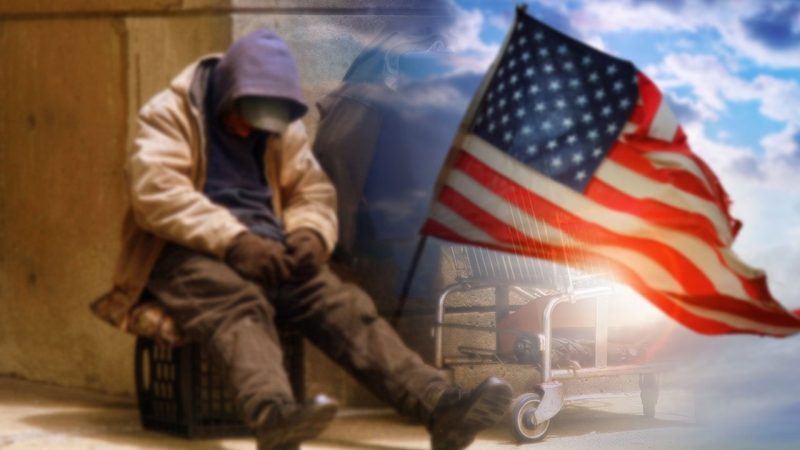
But these are not the only scourges of today’s American society. According to the January report published by the National Center for Homeless Education funded by the US Department of Education, over 1.5 million schoolchildren experienced homelessness in the 2017-2018 school year. 100,000 (7%) of these homeless schoolchildren spent the night in the open air and slept wherever they could, 7% slept in motels, 12% stayed in homeless shelters, and 74% stayed at a friend’s. And these are only the most modest estimates, but take figures from the American Institutes for Research, for example, which recorded that 2.5 million children had experienced homelessness in the year 2013. This could almost be considered some sort of historical “record”, with one in thirty American children experiencing homelessness! Criminal gangs, drug dealers, pimps and pedophiles are waiting for these children on the streets. In this context, does it really come as any surprise that crime is on the rise in the United States (especially juvenile crime)?
This grim situation in the US is hardly surprising if you look at the draft $4.8 trillion federal budget that US President Donald Trump is going to propose and use to pave the way for his re-election. After all, this budget is a continuation of a trend that has already been observed in federal budgets drafted in the United States, as we’ll see more big safety-net cuts and increased spending on defense, which even the Wall Street Journal has called out.
All of the Trump administration’s wall-to-wall “America First!” slogans cannot hide the glaringly ugly face of American reality we can see today.
Young Americans are killing themselves in record numbers, the victims of a confluence of economic and sociological factors that have singled them out – even above a nationwide surge in so-called “deaths of despair.”
Suicide rates among teens and young adults aged 15 to 24 – the older end of “Generation Z” – spiked in 2017, reaching their highest point since 2000, according to a study published Tuesday in the Journal of the American Medical Association (JAMA). They’ve risen 51 percent in the past 10 years, buoyed by rising rates of anxiety and depression along with social media and drug use, and the figures may be even higher, since some intentional overdoses are not counted as suicides.
Young men saw the steepest rise in deaths, according to the JAMA study, though women are catching up to them at an alarming pace. Teens and young adults report higher rates of anxiety and depression than previous generations, and multiple studies in recent years have shown that social media use exacerbates both conditions, creating a self-perpetuating feedback loop that can have tragic consequences.
But Generation Z is simply following in the footsteps of its predecessors. The much-maligned millennial generation, defined by the Census Bureau as those born between 1982 and 2000 (meaning some are included in the JAMA study), are also killing themselves in record numbers. Drug-related deaths among ages 18 to 34 have increased 108 percent since 2007, while alcohol-related deaths are up 69 percent and suicides are up 35 percent, according to a report published last week by Trust for America’s Health. While millennials have long been written off as entitled, spoiled snowflakes, the media and society are belatedly realizing that they aren’t just layabouts unmotivated to exit their parents’ basement – this “despair” has a cause, and it’s primarily economic.
The rise of millennial and Gen Z “deaths of despair” can be traced to the yawning gap between reality and expectations. Raised on the myths of the American Dream, these are the first Americans to experience a markedly lower standard of living than their parents, the Baby Boomers who grew prosperous on the fruits of the postwar economic boom. The national debt has ballooned, driven by two decades of an unwinnable war whose cost is poised to top $6 trillion, and the Pentagon’s budget has swollen to an unprecedented size even as cuts to social services have decimated what little social safety net Americans could once count on. Multiple rounds of tax cuts for the wealthy and corporations destroyed the government’s revenue base, and perhaps unsurprisingly, economic inequality has grown to exceed even the rates seen during the Great Depression.
And even these concerns are beside the point for a generation that left college already shackled with student loan debt that can run into the hundreds of thousands of dollars and cannot be canceled even by declaring bankruptcy. Millennials who graduated in the aftermath of the 2008 crash entered the “real world” to find no jobs waiting for them. Lucky if they could find an unpaid internship or a waitressing gig, they were forced to retreat back into their parents’ basements, a crushing blow for anyone but particularly for a generation told since birth that they were special, that they could do anything they wanted, that the world was their oyster.
The US, perhaps uniquely in the developed world, views poverty as a sin, and many millennials suffer in silence, believing they are the only ones in their peer group to “flunk out” of the “real world.” Instead of finding support from friends and family, they take advantage of the ready availability of alcohol and opioids, a factor that has caused the number of “deaths of despair” to skyrocket. Some economically-depressed states, like West Virginia, have seen drug overdoses increase more than fivefold in the last 12 years, according to a report published earlier this month by the Commonwealth Fund, and many more have seen their number double and triple. That pharmaceutical companies flooded the market with opioids at the same time the rise of social media devastated the quality and complexity of human relationships is a particularly deadly coincidence.
Since 1996, the average net worth of “consumers” under 35 has declined 35 percent, according to management consultancy Deloitte. Advertisers are starting to realize that targeting this group, while it may seem like a savvy marketing decision – they constitute a quarter of the US population, after all – doesn’t make sense, since they can’t afford to buy anything. Student debt is up 160 percent since 2004 for the under-30 population, and the home-ownership rate for millennials is only 37 percent – fully eight percentage points lower than their parents. Fully 89 percent would like to own a home, according to a survey conducted last year, but nearly half have zero dollars in savings – let alone the 20 percent most mortgages require for a down payment.
Young people aren’t the only ones afflicted by the “deaths of despair” phenomenon. Life expectancy nationwide is down for the third year in a row, and a report from Trust for America’s Health published last year projects that this “epidemic” – which they define as drug and alcohol deaths plus suicide – is on track to kill more than 1.6 million people by 2025 if it continues to grow at its current rate. As the Baby Boomers start to retire only to find they cannot live on their meager savings – assuming they still have any – they, too, are killing themselves more often, with suicide rates up 40 percent from 2007 to 2015.
This is not only a young people’s problem, nor is it an easy one to solve, but acknowledging the systemic poverty afflicting the “richest country in the world” – where two-thirds of the population doesn’t have enough saved to cover a $500 crisis – is a good place to start.
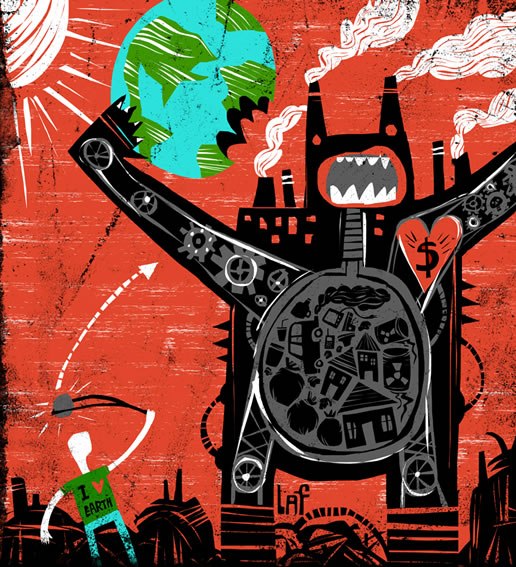
Depression is built into this machine and the evidence is plastered on the morose faces of people caught in the clutches of its business as usual activities. Depression is found in the insurmountable debts we owe for spending a lifetime of preparation and labor to serve the machine. In addition to debt, the machine awards us for our servitude with trinkets, gadgets, doodads and gizmos that provide a moment of hollow amusement and then sit on shelves in garages and decay. They represent the planned obsolescence of the human heart. The sacrifice paid for our fetish with materialism is the actual quality of our lives.
The gloom machine tells us the quality of our lives is defined by the machine in the driveway, and the machine that flushes away our excrement, and the machine that chills the tortured slaughtered animal flesh for later consumption, and the machine that flashes pornographic images and supplies numbers detailing how much we are liked by our so called friends. But to us humans it seems that quality of life is more appropriately measured in the amount of disposable time we have to pursue that which we want, and the quality of the community around us, and living without being chronically stressed with threats of being displaced from the land upon which we live for not working hard enough for the machine.
Depression is waking up at 6 in the morning in darkness to sit in traffic for an hour to arrive at a job that we don’t want to be at, only to serve the machinations of people with nothing but greed in their overstuffed bellies. And we go to these jobs so that we can pay rents that are unaffordable, and to service debt we’ll never escape, and we go home in darkness to our lonely lives in places where community is absent with a view of an equally lonely tree or a man-made retention pond which is an upgrade over the view of staring directly at your neighbor’s domicile. Depression is the realization there is no vacation on the horizon, no respite, just more of the same. Depression is knowing that such a life is better than many others have it.
Depression is recognizing the cynics were right about this society, that Cohen spoke truth when he sullenly moaned:
Everybody knows that the dice are loaded Everybody rolls with their fingers crossed Everybody knows the war is over Everybody knows the good guys lost Everybody knows the fight was fixed The poor stay poor, the rich get rich That’s how it goes Everybody knows
Depression is watching art die. The surrealist, the bohemian, the rock ’n roll, and the anti-authoritarian soul has lain down and pledged fealty to the dollar. For money, they’re now all willing to become ready made predictable cubes to be packaged and sold in plastic wrap placed in cleverly designed boxes which deliver to the depressed public what they want, more of something that’s pretty on the outside and vacant within. We are left with monthly subscriptions of more tales of self aggrandizement for the throngs of temporarily embarrassed millionaires.
Depression is watching the worst of us rise to legitimacy and awarded iniquitous riches for it. The popular is depressive, musical hack Cardi B sings about her money money money and she is loved. Jordan Peterson sells cheap self help stolen from better written material decades ago amalgamated with misogyny and dictates of hierarchal subjugation and becomes wildly popular. Trump purveys hatred of people of color and a love of authoritarianism and the depressive people, oh do they eat it up. This is sickness, depressive sickness.
Depression is acceptance of the violent now. The grossly unhappy men with their armaments spread their gloom and horror across the planet and claim righteousness for doing so. Depression is watching society applaud murderous hearts for their crimes who don badges and camouflage and have holidays to celebrate their violent history, while villains are made of those who simply don’t want to stand up for songs of oppression. Thank you for your service to the machine.
Depression is watching notions of resistance and revolution take form in slightly altered subservience. The great reformation desired now is for a “green new deal” that doesn’t come close to mitigating the impending culling of humanity from soon to be ecological catastrophes. Their plans offer only more endless work at the behest of the gloom machine while promising healthcare that will never happen, less debt it will also never deliver, and affordable housing that still won’t solve homelessness. They don’t want to break the machine, just tweak it, and they lack the ability to do that even. Never have I borne witness to such eager slaves and such depressive aspirations. The people seem to adore their cubicle lives, their environmental destruction, their corporations, their debts, their corrupt leaders, their prisons, their banks, and their taxes.
They want to continue to be put to work under the thumb of the status quo western civilization authoritarian mind and this is all the depressed mentally dominated masses can think of as a possible improvement. Instead of wanting to taste real liberty and be actual equals, their dreams are limited to being better treated servants. The gloom machine chugs along fueled with dimwitted ideas sold by boxed-in thinkers without any possibility of escaping the darkness, rather simply offering a more cushy seat for viewing the end of everything.
The machine bellows out demanding more, more, you owe me more, and somehow those wearing red, white, and blue agree and celebrate the demands of the machine. These debts we owe are servitude. The numbers held in digital machines are immoral which demand one must wake up to a dreary existence to do more of what is killing our souls along with the flora and fauna around us.
Depression is the downtrodden plebs who celebrate their corrupt democracy, which is in reality a thinly veiled oligarchy that should be obvious to all. They prop up a system of voting that allows the election of the presidency, a position that shouldn’t exist in the first place in an egalitarian society, to be awarded to candidates who don’t capture the most votes. What little democracy there is in a representative system is lost in totality when the winner of elections need not win the majority of votes. The gloom machine is straight up tyranny.
A non-depressed society would reject being served faux democracy. They’d reject a system absent of reason or compassion and disdain would be for ideas of continuing to support such a destructive way of being. But instead, within the gloom machine shame is reserved for those who don’t want to take part in the busted system, and it venerates those who cast votes for imperialist conquerers and planet destroyers, and those voters are lauded as doing their civic duty for taking part in open public corruption.
Depression is the insincere know it all crowd who are incapable of honest debate and have rarely endeavored to open a book of substance or engage in critical thought, but they know trivialities which they mistake as facts and wisdom. They know arrogance well and emanate it with aplomb. They know how to believe all they see in the corporatized media, but thinking without boundaries or limitations is beyond their capacity. This is not even depression, this is tragedy.
Depression is watching the trees be plowed down for more tract housing, a portion of which will sit empty for years because no one can afford to move there, and even if they could it’s a heinous boring life that awaits which is only significantly better compared to being homeless. Depression is knowing this is the reason why we are rapidly destroying our habitable environment and commencing a 6th mass extinction event which is now accelerating.
Depression is to know there is nothing we can do to stop the country we live in from mercilessly killing innocent people all over the world for no reason other than more economic expansion and our sadistic ideas of exceptionalism that entail spreading pain and hardship so a few elites can have more of what they already have more than enough of.
Depression is the powerlessness to change anything of significance. There is no other way they say other than the desolate gloom machine, they say this is how it must be. And so we remain here waiting for the horror that is soon to approach us all as the gloom descends in ever quickening waves.
A zombified indoctrinated populace can see no other way than capitalism and beating each other over the heads to satiate egos in needless competition that is unnecessary for survival and deleterious to the common good. Capitalism is the primary tool of empire, and a word that should be synonymous with depression. It’s the accumulation of resources in an effort to gain more power in man-made markets to leverage that power over other people and get them to do what the person with the most power desires. Capitalism’s depressing ideology is defined by the lecherous desire for more for the sake of it so the winner can pound their simian chest in victorious celebration of the devastation they’ve created.
Capitalism is inherently unsustainable due the way it allows power to coalesce via the leveraging abilities given to money to buy land, the means of production, elections, and advertising. It allows the whims of the few to overrun the needs of the many where those with the worst intentions aspire to gain more than others because they will attempt to fill the void in their hearts with self importance expressed via power over others. This is why it cannot be used.
If there is no central currency or advantage to collecting huge amounts of resources then the motivation to hoard would evaporate, as those resources would simply rot or become a burden to maintain. There’s no fun in that kind of hoarding. The “fun” comes to the simpleton power seeker when they acquire power to make others do what they want and thus gain the ephemeral validation they so desperately seek.
If one runs the math on players competing for money at different rates of gain over a certain amount of time, there will be a doubling effect which becomes exponential. And this effect will accelerate as it plunders along due to gains in leverage which allows for ever greater amounts of money to be made at faster rates. Eventually it always ends the way a game of monopoly ends, someone has all the power and everyone else is subservient to that entity/person.
These dour thoughts manifest from the recognition of the stranglehold empire has over our lives. The depression is the result of the myriad of expectations I can’t let go of that wants to see a kinder more egalitarian and sustainable world emerge while knowing how unlikely it is. Our collective depression is rooted in the foundations of social hierarchy and its economic tools of control, and understanding what a perfect trap it is, and so it goes, and everyone doesn’t know, but they feel it, though.
“The condition of alienation, of being asleep, of being unconscious, of being out of one’s mind, is the condition of the normal man. Society highly values its normal man. It educates children to lose themselves and to become absurd, and thus to be normal. Normal men have killed perhaps 100,000,000 of their fellow normal men in the last fifty years. Our behavior is a function of our experience. We act the way we see things. If our experience is destroyed, our behavior will be destructive. If our experience is destroyed, we have lost our own selves.”—R.D. Laing, The Politics ofExperience, 1967
“The artist is the man who refuses initiation through education into the existing order, remains faithful to his own childhood being, and thus becomes ‘a human being in the spirit of all times, an artist.’”—Norman O. Brown, Life Against Death
Most suicides die of natural causes, slowly and in silence.
But we hear a lot about the small number of suicides, by comparison, who kill themselves quickly by their own hands. Of course their sudden deaths elicit shock and sadness since their deaths, usually so unexpected even when not a surprise, allow for no return. Such sudden once-and-for-all endings are even more jarring in a high-tech world where people are subconsciously habituated to thinking that everything can be played back, repeated, and rewound, even lives.
If the suicides are celebrities, the mass media can obsess over why they did it. How shocking! Wasn’t she at the peak of her career? Didn’t he finally seem happy? And then the speculative stories will appear about the reasons for the rise or fall of suicide rates, only to disappear as quickly as the celebrities are dropped by the media and forgotten by the public.
The suicides of ordinary people will be mourned privately by their loved ones in their individual ways and in the silent recesses of their hearts. A hush will fall over their departures that will often be viewed as accidental.
And the world will roll on as the earth absorbs the bodies and the blood. “Where’s it all going all this spilled blood,” writes the poet Jacques Prévert. “Murder’s blood . . . war’s blood . . . blood of suicides . . . the earth that turns and turns with its great streams of blood.”
Of such suicides Albert Camus said, “Dying voluntarily implies you have recognized, even instinctively, the ridiculous character of that habit [of living], the absence of any profound reason for living, the insane character of that daily agitation, and the uselessness of suffering.” He called this feeling the absurd, and said it was widespread and involved the feeling of being an alien or stranger in a world that couldn’t be explained and didn’t make sense. Assuming this experience of the absurd, Camus wished to explore whether suicide was a solution to it. He concluded that it wasn’t.
Like Camus, I am interested in asking what is the meaning of life. “How to answer it?” he asked in The Myth ofSisyphus. He added that “the meaning of life is the most urgent of questions.” But I don’t want to explore his line of reasoning to his conclusions, whether to agree or disagree. I wish, rather, to explore the reasons why so many people choose to commit slow suicide by immersing themselves in the herd mentality and following a way of life that leads to inauthenticity and despair; why so many people so easily and early give up their dreams of a life of freedom for a proverbial mess of pottage, which these days can be translated to mean a consumer’s life, one focused on staying safe by embracing conventional bromides and making sure to never openly question a system based on systemic violence in all its forms; why, despite all evidence to the contrary, so many people embrace getting and spending and the accumulation of wealth in the pursuit of a chimerical “happiness” that leaves them depressed and conscience dead. Why so many people do not rebel but wish to take their places on this ship of fools.
So what can we say about the vast numbers of people who commit slow suicide by a series of acts and inactions that last a long lifetime and render them the living dead, those whom Thoreau so famously said were the mass of people who “lead lives of quiet desperation”? Is the meaning of life for them simply the habit of living they fell into at the start of life before they thought or wondered what’s it all about? Or is it the habit they embraced after shrinking back in fear from the disturbing revelations thinking once brought them? Or did they ever seriously question their place in the lethal fraud that is organized society, what Tolstoy called the Social Lie? Why do so many people kill their authentic selves and their consciences that could awaken them to break through the social habits of thought, speech, and action that lead them to live “jiffy lube” lives, periodically oiled and greased to smoothly roll down the conventional highway of getting and spending and refusing to resist the murderous actions of their government?
An unconscious despair rumbles beneath the frenetic surface of American society today. An unspoken nothingness. I think the Italian writer Robert Calasso says it well: “The new society is an agnostic theocracy based on nihilism.” It’s as though we are floating on nothing, sustained by nothing, in love with nothing—all the while embracing any thing that a materialistic, capitalist consumer culture can throw at us. We are living in an empire of illusions, propagandized and self-deluded. Most people will tell you they are stressed and depressed, but will often add—“who wouldn’t be with the state of the world”—ignoring their complicity through the way they have chosen compromised, conventional lives devoid of the spirit of rebellion.
I keep meeting people who, when I ask them how they are, will respond by saying, “I’m hanging in there.”
Don’t common sayings intimate unconscious truths? Hang—among its possible derivatives is the word “habit” and the meaning of “coming to a standstill.” Stuck in one’s habits, dangling over nothing, up in the air, going nowhere, hanging by a string. Slow suicides. The Beatles’ sang it melodically: “He’s a real nowhere man/Sitting in his nowhere land/Making all his nowhere plans for nobody/Doesn’t have a point of view/Knows not where he’s going to/Isn’t he a bit like you and me.” It’s a far cry from having “the world on a string,” as Harold Arlen wrote many years before.
Maybe if we listen to how people talk or what popular culture throws up, we will learn more through creative associations than through all the theories the experts have to offer.
There have been many learned tomes over the years trying to explain the act of suicide, an early and very famous one being Emile Durkheim’s groundbreaking sociological analysis Suicide (1897). In thousands of books and articles other thinkers have approached the subject from various perspectives—psychological, philosophical, biological, etc. They contain much truth and a vast amount of data that appeal to the rational mind seeking general explanations. But in the end, general explanations are exactly that—general—while a mystery usually haunts the living whose loved ones have killed themselves.
But what about the slow suicides, those D. H. Lawrence called the living dead (don’t let “the living dead eat you up”), those who have departed the real world for a conscienceless complacency from which they can cast aspersions on those whose rebellious spirits give them little rest. Where are the expert disquisitions about them?
We’ve had more than a century of pseudo-scientific studies of suicide and the world has gotten much worse. More than a century of psychotherapy and people have grown progressively more depressed. Large and increasing numbers are drugged to the teeth with pharmaceutical drugs and television and the Internet and cell phones and shopping and endless talk about food and diets and sports and nothing. Talk to talk, surface to surface. Pundits pontificate daily in streams of endless bullshit for which they are paid enormous sums as they smile with their fake whiter-than-white teeth flashing from their makeup masks. People actually listen to these fools to “inform” themselves. They even watch television news and think they know what is happening in the world. We are drowning in a “universe of disembodied data,” as playwright John Steppling has so aptly phrased it. People obsessively hover over their cell phones, searching for the key that will unlock the cells they have locked themselves in. Postliteracy, mediated reality, and digital dementia have become the norm. Minds are packaged and commodified. Perhaps you think I exaggerate, but I feel that madness is much more the norm today than when Laing penned his epigraphic comment.
Not stark raving screaming madness, just a slow, whimpering acceptance of an insane society whose very fabric is toxic and which continues its God-ordained mission of spreading death and destruction around the world in the name of freedom and democracy, while so many of its walking dead citizens measure out their lives with coffee spoons. A nice madness, you could say, a pleasant, depressed and repressed madness. A madness in which people might say with T. S. Eliot’s J. Alfred Prufrock (if they still read or could remember): “I have measured out my life with coffee spoons . . . And I have seen the eternal Footman hold my coat, / and snicker, / And in short, I was afraid.”
But why are so many so afraid? Everyone has fears, but so many normal people seem extremely fearful, so fearful they choose to blend into the social woodwork so they don’t stand out as dissenters or oddballs. They kill their authentic selves; become conscience-less. And they do this in a society where their leaders are hell-bent on destroying the world and who justify their nuclear madness at every turn. I think Laing was right that this goes back to our experience. When genuine experience is denied or mystified (it’s now disappeared into digital reality), real people disappear. Laing wrote:
In order to rationalize our industrial-military complex, we have to destroy our capacity to see clearly any more what is in front of, and to imagine what is beyond, our noses. Long before a thermonuclear war can come about, we have had to lay waste our sanity. We begin with the children. It is imperative to catch them in time. Without the most thorough and rapid brainwashing their dirty minds would see through our dirty tricks. Children are not yet fools, but we shall turn them into imbeciles like ourselves, with high I. Q.s if possible. From the moment of birth, when these forces of violence, called love, as its mother and father, as their parents and their parents before them, have been. These forces are mainly concerned with destroying most of it potentialities, and on the whole this enterprise is successful. By the time the new human is fifteen or so, we are left with a being like ourselves, a half-crazed creature more or less adjusted to a mad world. This is normality in our present age. Love and violence, properly speaking, are polar opposites. Love lets the other be, but with affection and concern. Violence attempts to constrain the other’s freedom, to force him to act in the way we desire, but with ultimate lack of concern, with indifference to the other’s own existence or destiny. We are effectively destroying ourselves by violence masquerading as love . . . We live equally out of our bodies and out of our minds.
So yes, I do think most people are victims. No one chooses their parents, or to be born into poverty, or to be discriminated against for one’s race, etc. No one chooses to have their genuine experience poisoned from childhood. No one chooses to be born into a mad society. This is all true. Some are luckier than others. Suicides, fast and slow, are victims. But not just victims. This is not about blame, but understanding. For those who commit to lives of slow suicide, to the squelching of their true selves and their consciences in the face of a rapacious and murderous society, there is always the chance they can break with the norm and go sane. Redemption is always possible. But it primarily involves overcoming the fear of death, a fear that manifests itself in the extreme need to preserve one’s life, so-called social identity, and sense of self by embracing social conventions, no matter how insane they may be or whether or not they bring satisfaction or fulfillment. Whether or not they give life a meaning that goes deep.
But for those who have taken their lives and are no longer among us, hope is gone. But we can learn from their tragedies if we are truthful. For them the fear of life was primary, and death seemed like an escape from that fear. Life was too much for them. Why? We must ask. So they chose a life-in-death approach through fast suicide. Everyone is joined to them in that fear, just as everyone is joined by the fear of death. It is a question of which dominates, and when, and how much courage we can muster to live daringly. The fear of death leads one to constrict one’s life in the safe surround of conventional society in the illusion that such false security will save one in the end. Death is too much for them. So they accept a death-in-life approach that I call slow suicide.
But in the end as in the beginning and throughout our lives, there is really no escape. The more alive we are, the closer death feels because really living involves risks and living outside the cocoon of the social lie. Mr. Pumpkin Head might seize you, whether he is conceived as your boss, an accident, disease, social ostracism, or some government assassin. But the deader we feel, the further away death seems because we feel safe. Pick your poison.
But better yet, perhaps there is no need to choose if we can regain our genuine experience that parents and society, for different reasons, conspire to deny us. Could the meaning of our lives be found, not in statements or beliefs, but in true experience? Most people think of experience as inner or outer. This is not true. It is a form of conventional brainwashing that makes us schizoid. It is the essence of the neuro-biological materialism that reduces humans to unfree automatons. Proffered as the wisdom of the super intelligent, it is sheer stupidity.
All experience is in-between, not the most eloquent of phrasing, I admit, but accurate. Laing, a psychiatrist, puts it in the same way as do the mystics and those who embrace the Tao. He says, “The relation of my experience to behavior is not that of inner to outer. My experience is not inside my head. My experience of this room is outside in this room. To say that my experience is intrapsychic is to presuppose that there is a psyche that my experience is in. My psyche is my experience, my experience is my psyche.” Reverie, imagination, prayer, dream, etc., are as much outer as inner, they are modalities of experience that exist in-between. We live in-between, and if we could experience that, we would realize the meaning of life and our connection to all living beings, including those our government massacres daily, and we would awaken our consciences to our complicity in the killing. We would realize that the victims of the American killing machine are human beings like us; are us, and we, them. We would rebel.
Thoreau said a life without principle was not worth living. Yet for so many of the slow suicides the only principals they ever had were those they had in high school. Such word confusion is understandable when illiteracy is the order of the day and spelling passé. Has anyone when in high school ever had Thoreau’s admonition drummed into his head: “The ways by which you may get money almost without exception lead downward. To have done anything by which you earned money merely is to have been truly idle or worse.” Of course not, since getting a “good” living is never thought to involve living in an honest, inviting, and honorable way. It is considered a means to an end, the end being a consumer’s paradise. “As for the means of living,” Thoreau added, “it is wonderful how indifferent men of all classes are about it, even reformers, so called—whether they inherit, or earn, or steal it.” Is it any wonder so many people end up committing slow suicide? “Is it that men are too much disgusted with their own experience to speak of it?”
What the hell–TGIH!
I believe the story has it that when he was in jail for refusing the poll tax that supported slavery and the Mexican-American war, Thoreau was visited by his friend Ralph Waldo Emerson, who asked him, “Henry, what are you doing in there?” To which Thoreau responded, “Ralph, what are you doing out there?” Today, however, most folks don’t realize that being outside their cells is being in them, and such imprisonment is far from principled. That’s not a text message they’re likely to receive.
I recently met a woman, where or when I can’t recall. It might have been when walking on the open road or falling in a dreaming hole. She told me “if you look through a window, you can see the world outside. If you look in a mirror, you can see yourself outside. If you look into the outside world, you can see everyone inside out. When the inside is seen outside and the outside is seen inside, you will know what you face. Everything becomes simple then,” as she looked straight through me and my face fell off.




 After the Crash