USA 2021: Capitalism For The Powerless, Crony-Socialism For The Powerful

By Tyler Durden

Source: Zero Hedge

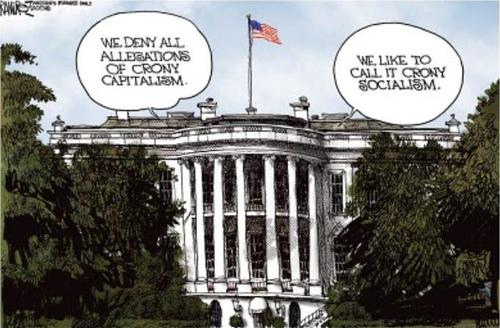
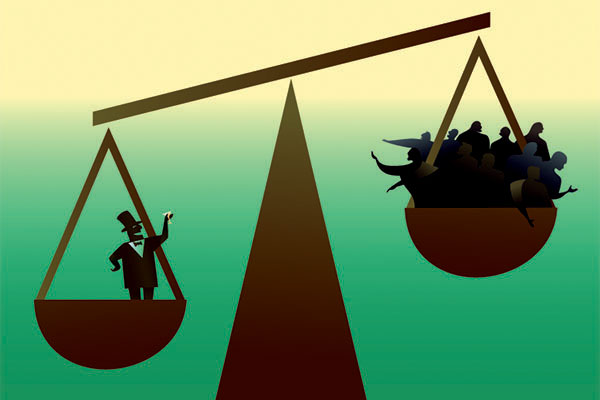
The supposed “choice” between “capitalism” and “socialism” is a useful fabrication masking the worst of all possible worlds we inhabit: Capitalism for the powerless and Crony-Socialism for the powerful. Capitalism’s primary dynamics are reserved solely for the powerless: market price of money, capital’s exploitive potential, free-for-all competition and creative destruction.

The powerful, on the other hand, bask in the warm glow of socialism: The Federal Reserve protects them from the market cost of money–financiers and the super-wealthy get their money for virtually nothing from the Fed, in virtually unlimited quantities–and the Treasury, Congress and the Executive branch protect them from any losses: their gains are private, but their losses are transferred to the public. The Supreme Court ensures the super-rich maintain this cozy crony-socialism by ensuring they can buy political power via lobbying and campaign contributions–under the laughable excuse of free speech.

Cronies get the best political system money can buy and you–well, you get to carry a sign on the street corner, just before you’re hauled off to jail for disturbing the peace (and you’re banned by social media/search Big Tech, i.e. privatized totalitarianism, for good measure).

The Federal Reserve is America’s financial Politburo: cronies get a free pass, the powerless get nothing. While the three billionaires who own more wealth than the bottom 165 million Americans can borrow unlimited sums for next to nothing thanks to the Fed (i.e. Crony-Socialist Politburo), the 165 million Americans pay exorbitant interest on payday loans, used car loans, student loans, credit cards and so on.

Capitalism (market sets price of money) for the powerless, Crony-Socialism (nearly free money) for the powerful–thanks to America’s Crony-Socialist Politburo, the Fed. Consider the “free market” plight of America’s working poor: earning low wages that are rapidly losing their purchasing power makes them a credit risk, i.e. prone to defaulting, so lenders (i.e. capital’s exploitive potential) charge high interest rates on loans to the working poor.

Since they pay such high rates of interest and earn so little, they default on their debt at higher rates–just what the lenders expected, and what the lenders created by charging sky-high rates of interest: gee, you’re having trouble paying 24% interest? Too bad you’re poor. You see the point: low wages, poverty and exorbitant rates of interest are mutually reinforcing: a primary driver of defaults and poverty is paying sky-high rates of interest and all the late fees, bounced check fees, etc. that go with 24% interest rates.

The Crony-Socialists have a much different deal with the Fed and its crony-bankers: the super-wealthy arrange for the corporations they own shares in to borrow billions of dollars to fund stock buybacks (which in a less exploitive era were illegal market manipulation). The super-wealthy Crony-Socialist’s personal wealth rises by $100 million thanks to the stock buybacks, and then the super-wealthy Crony-Socialist borrows $10 million for next to nothing against this newly conjured “wealth” (thanks, Fed!) to fund living large.

Crony-Socialist corporations pay no income tax thanks to loopholes and the Crony-Socialists who own the shares report $1 in salary and zero income because they borrowed their living expenses against their Fed-conjured wealth. Do you discern the difference between capitalism for the powerless and crony-socialism for the super-wealthy?

If you can’t yet discern the difference, then ask yourself: can you borrow $1 billion from the Fed’s cronies to buy back shares of your own company, and then borrow $10 million for near-zero rates of interest against the newly conjured “wealth”? You can’t? Well, why not?

If you answer “I don’t have enough collateral,” you missed the key point here: thanks to America’s Crony-Socialist Politburo (the Fed), the super-wealthy have no exposure to the market price of money. The Fed manipulates the cost of money to near-zero, and then funnels unlimited sums of this nearly-free money to corporations, financiers and the super-wealthy.

Collateral is unnecessary in Crony-Socialism; that’s just a excuse given to the powerless. Crony-Socialists borrow $1 billion for next to nothing, buy Treasuries with the free money, put the Treasuries up as collateral (but wait, didn’t they borrow the money? Never mind, it doesn’t matter), originate some financial instruments (CDOs, etc.), post those as collateral, and then leverage up another bet on that fictitious collateral.

If the bets all go bad, the Crony-Socialist claims the whole fraud is now a systemic risk and so the losses are transferred to the public / taxpayers to “save the financial system from collapse.” Isn’t Crony-Socialism fantastic?

Just as the rich kid caught with smack gets a suspended sentence and probation while the powerless kid gets a tenner in the War on Drugs Gulag, the super-wealthy Crony-Socialists avoid all the consequences of their gambles and frauds. America’s Crony-Socialist Politburo (the Fed) takes care of its cronies and the powerless bear the brunt of predatory exploitation that’s passed off as “capitalism.”

The only dynamic that’s even faintly “capitalist” about America’s Crony-Socialism is the price of political corruption is still a “market”: what’s the current price of protecting your monopoly or cartel from competition? It’s moving up fast, so better get those bribes (oops, I mean campaign contributions for the 2022 election) in now before the price of corrupting “democracy” goes even higher.

Remdesivir for Covid-19: $1.6 Billion for a “Modestly Beneficial” Drug?

By Elizabeth Woodworth

Source: Global Research

The U.S. Department of Health and Human Services has recently “bought” all of Gilead Science’s Remdesivir for $1.6 billion. “500,000 doses at $3,200 per patient – to be available to American hospitals but not for other countries”[6] 

That’s $1.6 billion tax dollars for a virtually untested drug showing only marginal efficacy in the hospital setting.

How could such a thing happen?

Introduction

If you believe an urgent call from the Yale School of Public Health that was recently published in the American Journal of Epidemiology— the top epidemiology journal in America — hydroxychloroquine (HCQ) + azithromycin is the quickest and most effective way to halt the Covid-19 pandemic.[1]

According to this Yale statement, hydroxychloroquine – a cheap, natural anti-malarial tree-bark known as quinine for 400 years – is highly effective during Phase 1 of Covid-19, while the virus is loading into the body.

As the first line of defense, it should be immediately, freely, and widely available to symptomatic high-risk patients – through doctors’ offices, outpatient clinics, and hospitals across the land.

Indeed, under the directorship of Dr. Anthony Fauci, a National Institute of Allergy and Infectious Diseases (NIAID) a clinical trial had been launched on May 14 to look into it.[2]

The HCQ + azithromycin protocol is being used successfully by France’s top, award-winning microbiologist, Dr. Didier Raoult.  He is director of the Infectious and Tropical Emergent Diseases Research Unit in Marseille (Institut Hospitalo-Universitaire) (IHU), with 200 staff.  Raoult, now almost a celebrity in France, has recently published his protocol and results, showing an overall 1.1% case fatality rate.[3]

The same protocol has also been highly successful in China, India, Senegal, and Brazil.[4]

So why suddenly is the U.S. government and the media ignoring recommendations from these top specialists,[5] and waiting, instead, until people get very sick and hospitalized to treat them with the relatively untested drug, Remdesivir, which is administered intravenously?

Why has the U.S. Department of Health and Human Services just bought up all the Remdesivir it could order – 500,000 doses at $3,200 per patient – to be available to American hospitals but not for other countries?[6]

To put Remdesivir’s cost in perspective, the CDC reports that the flu vaccine costs from $12-$18 a dose.[7]

The government, in order to justify its mind-boggling price, would need to show exceptional efficacy in saving lives. Efficacy, that is, once the disease has been allowed, through failure to use the HCQ + azithromycinearly preventive approach, to advance to Phase 2 (the dangerous inflammatory period) and Phase 3 (ICU ventilator intubation, often leading to death).[8]

What do studies say about the efficacy of remdesivir?

There are three main studies that have examined remdesivir as a treatment for Covid-19:

  1. The first, a study of seriously ill patients, was originally reported in the New England Journal of Medicine on April 10, 2020. Treated with “compassionate-use” remdesivir, clinical improvement was observed in 36 of 53 patients (68%).

The article was co-authored by 56 people, some of whom were on the staff of remdesivir’s producer, Gilead Sciences.[9] The study was funded by Gilead, and writing assistance was provided by David McNeel, also of Gilead.[10]

The following day, April 11, the Science Media Centre published expert reactions to the compassionate study from five British university professors. These assessments were not encouraging: “the research doesn’t prove anything at this point;” “the data is almost uninterpretable;” the research should be treated “with extreme caution.”[11]

  1. A Wuhan, China randomized, double-blind, placebo-controlled trial of 237 patients was accidentally leaked by the World Health Organization and published in The Lancet. It showed no statistically significant clinical benefits from remdesivir:

“The antiviral medicine remdesivir from Gilead Sciences failed to speed the improvement of patients with Covid-19 or prevent them from dying, according to results from a long-awaited clinical trial conducted in China.” [12]

This Lancet study also found that some 14% of patients in the treatment group died after 28 days, compared to 13% in the group that did not receive the treatment.

And it further reported that “remdesivir was stopped early because of adverse events in 18 (12%) patients versus four (5%) patients who stopped placebo early.”[13]

  1. The preliminary results of a NIAID remdesivir trial of 1063 patients showed a “modest” benefit in a controlled clinical trial:

“The infected people who received remdesivir, an experimental drug made by Gilead Sciences that cripples an enzyme several viruses use to copy their RNA, recovered in an average of 11 days versus 15 in patients who received a placebo. ‘Although a 31% improvement doesn’t seem like a knockout, 100% [success], it is a very important proof of concept,’ said Anthony Fauci, head of the National Institute of Allergy and Infectious Diseases (NIAID).”[14]

Health Policy Watch reported that “the death rate was 8% in the group that received remdesivir compared to 11.6% in the control group, although this result was not statistically significant.” Dr. Fauci told reporters that “what [this trial] has proven is that a drug can block the virus.”[15]

The excerpt below from a June 24 article in the British Medical Journal assesses the problems in the foregoing studies. (One of the four co-authors, Fiona Godlee, is the editor-in-chief of the BMJ):

“A serious imbalance in covid-19 research strongly favours the study of drug treatments over non-drug interventions, with many studies too small or too weak to produce reliable results.  Equally concerning is the release of partial or preliminary findings before peer review—often through commercial press releases—that is distorting public perceptions, ongoing evaluations efforts, and political responses to the pandemic.

Remdesivir is a key example. The antiviral drug, made by US company Gilead, was unapproved at the start of the pandemic, but in early April the New England Journal of Medicine published a small descriptive study of a compassionate use scheme for patients with covid-19. Gilead funded the study, a third of the authors were Gilead employees, and Gilead’s press release reported “clinical improvement in 68% of patients in this limited dataset.”  Despite being a non-randomised, uncontrolled, company funded study of just 53 patients, media headlines described “hopeful” signs and reported “two thirds” of patients showing improvement.[16]

Two weeks later, the Lancet published a randomised placebo controlled trial of remdesivir from China, finding no statistically significant clinical benefit in the primary outcome of time to clinical improvement. Twelve per cent of participants taking remdesivir stopped treatment early because of adverse events, compared with 5% taking placebo. The trial was stopped before meeting recruitment targets.”[17]

To summarize, the only study demonstrating even marginal efficacy for remdesivir shows it to reduce hospital recovery times 31%, from 15 days to 11 days.

What is the justification for spending $3,200 tax dollars per Covid-19 patient to save four days in hospital, unless it is to shorten hospital stays, thereby saving the average U.S. bed cost of approximately $2000 per day, while delaying hospital saturation that could leave some people untreated to die?

Leaving people untreated to die could cause civil unrest, which may be the covert political reason for spending the $1.6 billion.

None of the studies mention side effects of the drug. In the China study, kidney injury led to discontinuation for one patient, and in its use for ebola, liver risks were identified.[18]

How much does it cost to produce remdesivir?

The Institute for Clinical and Economic Review (ICER) is a non-profit organization seeking to improve healthcare value through clinical and cost-effective analyses.[19]

In a May 1, 2020 study, the ICER calculated that the cost of producing the remdesivir “final finished product,” including the pharmaceutical ingredients, formulation, packaging, and a small profit margin, was $9.32 US for a 10-day course of treatment.  They rounded this up to $10.[20]

Dr. Fauci’s NIAID Clinical Trial Evaluating Hydroxychloroquine and Azithromycin Closes Early

On June 20, 2020, nine days before the Department of Health and Human Services announced its $1.6 billion purchase of remdesivir on June 29, its NIAID branch closed a clinical trial that had been launched May 14 to investigate whether the inexpensive combination, hydroxychloroquine plus azithromycin, might be an effective treatment when given early in the course of the disease.[21]

The Department of Health and Human Services knew that hydroxychloroquine (aka chloroquine) was effective against coronavirus because chloroquine was tested against the SARS-1 virus during the outbreak in 2002. This work was written up in 2005, under the auspices of the U.S. Centers for Disease Control in Atlanta, which reports to the Department of Human Health and Services.[22]

Truth, as the saying goes, is stranger than fiction.

Who was responsible for this debacle?

Dr. Fauci has served in the National Institutes of Health under six presidents.

Were these bizarre decisions carried out under his authority? Or were they forced upon him from higher up?  Or has he become a victim of regulatory capture[23] by the drug industry?

Whatever the answer, this unprecedented fleecing of the American public should have been shouted from the rooftops, had there been a functioning US media.

*

Note to readers: please click the share buttons above or below. Forward this article to your email lists. Crosspost on your blog site, internet forums. etc.

Notes

[1] Harvey A. Risch, “Early Outpatient Treatment of Symptomatic, High-Risk Covid-19 Patients that Should be Ramped-Up Immediately as Key to the Pandemic Crisis,” Amer. J. Epid, 27 May 2020 (https://academic.oup.com/aje/advance-article/doi/10.1093/aje/kwaa093/5847586). Risch is Professor at the Yale Schools of both Medicine and Public Health.

[2] National Institute of Allergy and Infectious Diseases, “NIH Begins Clinical Trial of Hydroxychloroquine and Azithromycin to Treat COVID-19,” 14 May 2020 (https://www.niaid.nih.gov/news-events/nih-begins-clinical-trial-hydroxychloroquine-and-azithromycin-treat-covid-19).

[3] Jean-Christophe Lagier, et al, “Outcomes of 3,737 COVID-19 patients treated with hydroxychloroquine/azithromycin and other regimens in Marseille, France: A retrospective analysis,” Travel Medicine and Infectious Disease, 25 June 2020 (https://www.sciencedirect.com/science/article/pii/S1477893920302817). Rault has 2,300 indexed medical journals in print.

[4] The group “COVEXIT.com – News About Hydroxychloroquine & Other COVID-19 Treatments,” was founded March 29, 2020 by Jean-Pierre Kiekens. It keeps daily track of successful Covid treatments worldwide (https://www.facebook.com/groups/covexit)

[5] Elizabeth Woodworth, “The Media Sabotage of Hydroxychloroquine Use for COVID-19: Doctors Worldwide Protest the Disaster,” Global Research, 30 June 2020 (https://www.globalresearch.ca/media-sabotage-hydroxychloroquine-covid-19-doctors-worldwide-protest-disaster/5717382).

[6] US Department of Health and Human Services, “Trump Administration Secures New Supplies of Remdesivir for the United States,” June 29, 2010 (https://www.hhs.gov/about/news/2020/06/29/trump-administration-secures-new-supplies-remdesivir-united-states.html).

[7] Centers for Disease Control and Prevention, Vaccines for Children Program, “CDC Vaccine Price List,” updated 1 July 2020 (https://www.cdc.gov/vaccines/programs/vfc/awardees/vaccine-management/price-list/index.html#adflu).

[8] Dr. Raoult identified the three stages of Covid-19 while treating 3,737 patients with HCQ+azithromycin at his own clinic: “At the first viral stage, one must give medicines against the virus, in the second inflammatory phase, one needs to give medications against that [inflammatory] reaction, and then in the third phase, it’s work to be done in intensive care units.” Summarized from Didier Raoult, at: “The Marx Brothers are Doing Science: the Example of RECOVERY,” 9 June 2020 (http://covexit.com/professor-raoult-compares-the-oxford-recovery-trial-academics-to-the-marx-brothers/).

[9] Jonathan Grein, and 55 other authors, “Compassionate Use of Remdesivir for Patients with Severe Covid-19,” New England Journal of Medicine, 11 June 2020 (https://www.nejm.org/doi/full/10.1056/NEJMoa2007016), “Editor’s Note: This article was published on April 10, 2020, at NEJM.org.”

[10] Jason D. Goldman, et al., “Remdesivir for 5 or 10 days in Patients with Severe Covid,” New England Journal of Medicine, no date in header (https://www.nejm.org/doi/pdf/10.1056/NEJMoa2015301?articleTools=true). Sidebar:“This article was published on May 27, 2020, at NEJM.org.”

[11] Prof. Duncan Richards et al., “Expert reaction to a study about compassionate use of remdesivir for patients with severe COVID-19,” Science Media Centre, 11 April 2020 (https://www.sciencemediacentre.org/expert-reaction-to-a-study-about-compassionate-use-of-remdesivir-for-patients-with-severe-covid-19/).

[12] Ed Silverman, et al, “New data on Gilead’s remdesivir, released by accident, show no benefit for coronavirus patients. Company still sees reason for hope,” StatNews, 23 April 2020 (https://www.statnews.com/2020/04/23/data-on-gileads-remdesivir-released-by-accident-show-no-benefit-for-coronavirus-patients/).

[13] Yeming Wang, et al., “Remdesivir in adults with severe COVID-19: a randomised, double-blind, placebo-controlled, multicentre trial,” The Lancet, 16 May 2020 (original online publication 29 April 2020) (https://www.thelancet.com/journals/lancet/article/PIIS0140-6736(20)31022-9/fulltext).

[14] Jon Cohen, “Large trial yields strongest evidence yet that antiviral drug can help COVID-19 patients,” Science, 29 April 2020 (https://www.sciencemag.org/news/2020/04/large-trial-yields-strongest-evidence-yet-antiviral-drug-can-help-covid-19-patients).

[15] Grace Ren, “Conflicting Remdesivir Trial Results Released; Experts Urge More Research,” Health Policy Watch, 29 April 2020 (https://healthpolicy-watch.news/first-remdesivir-rct-shows-no-significant-clinical-benefit-for-severe-covid-19-patients-but-experts-urge-for-more-research/).

[16] Christopher Rowland, “Gilead’s experimental drug remdesivir shows ‘hopeful’ signs in small group of coronavirus patients,” Washington Post, 10 April 2020 (https://www.washingtonpost.com/business/2020/04/10/gileads-experimental-drug-remdesivir-shows-hopeful-signs-small-group-coronavirus-patients/).

[17] Ray Moynihan et al.,“Commercial influence and covid-19,” BMJ2020;369:m2456 (Published 24 June 2020) (https://www.bmj.com/content/369/bmj.m2456).

[18] Crystal Phend, “Remdesivir Safety Forecast: Watch the Liver, Kidneys,” Medpage Today, 19 May 2020 (https://www.medpagetoday.com/infectiousdisease/covid19/86582).

[19] https://en.wikipedia.org/wiki/Institute_for_Clinical_and_Economic_Review

[20] Melanie D. Whittington and Jonathan B. Campbell, “Alternative Pricing Models for Remdesivir and Other Potential Treatments for COVID-19,” Institute for Clinical and Economic Review, 1 May 2020 (https://icer-review.org/wp-content/uploads/2020/05/ICER-COVID_Initial_Abstract_05012020-3.pdf).

[21] National Institute of Allergy and Infectious Diseases, “BULLETIN—NIH Clinical Trial Evaluating Hydroxychloroquine and Azithromycin for COVID-19 Closes Early,” 20 June 2020 (https://www.niaid.nih.gov/news-events/bulletin-nih-clinical-trial-evaluating-hydroxychloroquine-and-azithromycin-covid-19).

[22] Martin J. Vincent et al., “Chloroquine is a potent inhibitor of SARS coronavirus infection and spread,” Journal of Virology, 22 August 2005 (https://www.ncbi.nlm.nih.gov/pmc/articles/PMC1232869/).

[23] “Regulatory capture is a theory that regulatory agencies may be dominated by the interests they regulate and not by the public interest.” In: Will Kenton, “Regulatory Capture,” Investopedia, 23 October 2019 (https://www.investopedia.com/terms/r/regulatory-capture.asp).

From Soft to Hard Fascism: “Get In Your House Right Now!”

By Kurt Nimmo

Source: Another Day in the Empire

There can no longer be any doubt—America is now a full-blown fascist state. In the past, authoritarian fascism was kept reserved in the shadows, largely out of the public eye, but in a remarkably short period of time it has emerged from the darkness to show its fangs and snarl menacingly at the people, many of them cowed and dutifully following irrational orders from on high.

As the following video demonstrates, state violence is not directed exclusively at rioters and Antifa goons pretending to be anarchists (most would be unable to define the term) as they loot, burn, and attack the media and innocent bystanders. Violence is used to frighten and intimidate the real enemies of the state—the American people, or those who casually and defy the COVID lockdown and others peacefully protesting murder at the hand of a psychopathic cop.

Fortunately, the woman in the video was not seriously injured. She wasn’t looting Target or burning down Walmart. The woman made the mistake of venturing out on the porch of her home, her private property, and for this crime, she was shot with a paintball by a member of a “state militia” (now federalized).

The social fabric is coming apart at the seams. First mandatory lockdowns, state-imposed impoverishment, followed by an unfolding Greatest Depression as a result of a shutdown economy, and now social unrest, violence, theft, and arson in two dozen large cities across the country.

If this degree of violence and destruction is possible centered around the death of a single man, imagine what will happen when millions of people are in desperate straits, unemployed, many evicted, and homeless. It will not be simply police stations that go up in flames. It will be statehouses.   

However, the American people have demonstrated repeatedly they are gullible and easily steered into dead-end diversions pumped up and hyped 24/7 by a corporate propaganda media. The Trump hatefest and political polarization—worse than any in recent memory—will no doubt go by the wayside as millions of Americans face the “new normal” envisioned by their masters—a standard of living in rapid freefall, soon to crash on the rocks. None of this is happenstance or coincidental.

Most Americans may not have protested the endless wars and criminal economic scams of the ruling elite (mostly due to decades of incessant propaganda), but they will raise their voices and fists when they are unemployed for months on end, evicted from homes and apartments, have their cars repossessed, and are confronted with hunger, want, and homelessness.

In order to enforce the latest manifestation of psychopathic neoliberalism and predatory crony capitalism, the state will depend on steroid-headed soldiers and cops to frighten and intimidate the people.

It may be paintballs today, but tomorrow it might be live ammo.

Billionaires are a Sign of Economic Failure

Inherited wealth and crony capitalism have created an aristocratic class that undermines social mobility and democracy

By Max Lawson

Source: Inequality.org

The New York Times published an editorial comment on its front page in January 2019, provocatively entitled “abolish billionaires.” The editorial raised a serious question: what if instead of being a sign of economic success, billionaires are a sign of economic failure?  In what ways can the boom in billionaires, and the dramatic increase in extreme wealth generally, be harmful?

To answer this question, we need to understand the origins of billionaire wealth, and to understand how that wealth is used once it is gained.  The answer to both these questions I think rightly casts doubt on the value of the super-rich in our society.

Approximately one third of billionaire wealth comes from inheritance. It is very hard to make the case for the economic utility of inherited wealth, and instead there is a strong case for the fact that it undermines social mobility and economic progress. It creates instead a new aristocracy who are rich simply because their parents were rich which is hard to see as a good thing.

Whether inherited or secured in other ways, extreme wealth takes on a momentum of its own.  The super-rich have the money to spend on the best investment advice, and billionaire wealth has increased since 2009 by an average of 11 percent a year, far higher than rates ordinary savers can obtain.

Bill Gates is worth nearly $100 billion dollars in 2019, almost twice what he was worth when he stepped down as head of Microsoft.  This is despite his admirable commitment to giving his money away.  As Thomas Piketty said in his book Capital in the 21st Century, “No matter how justified inequalities of wealth may be initially, fortunes can grow beyond any rational justification in terms of social utility.”

My Oxfam colleague Didier Jacobs calculated a few years ago that another third of billionaire wealth comes from crony connections to government and monopoly.  This could be for example when billionaires secure concessions to provide services exclusively from government, using crony connections and corruption.  The Economist has developed a similar measure of crony capitalism with similar findings. What is clear it seems to me is that corruption and crony connections to governments are behind a significant proportion of billionaire wealth.

Almost all sectors of our global economy are also now characterized by monopoly power, as is detailed by Nick Shaxson in his great new book, the Finance Curse. Whether food, pharmaceuticals, media, finance, or technology, each sector is characterized by a handful of huge corporations.

Decades of largely unquestioned mergers and acquisitions, where corporations have bought up competitors, have led to this.  Historically, and especially in the United States in the early part of the 20th century, monopoly power was rightly viewed as a serious threat to the economy and to society, and steps were taken to break up monopolies.  It was President Franklin Roosevelt who famously said that “government by organized money is just as dangerous as government by organized mob.” However, in recent decades, neoliberal economics has led a much more benign view of monopoly power, and very little action is now taken to dismantle them. I think this is a key distinction between neoliberalism and classical liberal economics.  These monopolies impose hidden monopoly taxes on every consumer, as it enables these companies, and their wealthy shareholders, to extract excessive profits from the market, directly fueling the growth in extreme wealth at the expense of ordinary citizens.

The actions of corporations, including the move towards monopoly, are driven by a relentless focus on ever-increasing returns to shareholders — shareholders who are primarily the very same extremely wealthy people.  Our new Oxfam paper on the “Seven Deadly Sins” of the G7, released this week, shows how returns to shareholders have increased dramatically whilst real wages have barely increased.

Behind corporate power and corporate actions is increasingly the power of super-rich shareholders.

Once billionaire wealth is accumulated, the way it is used also casts doubt on how useful it is to have billionaires.  The super-rich use their wealth to pay as little tax as possible, making active use of a secretive global network of tax havens, as revealed by the Panama Papers and other exposes.

One ground-breaking study that made use of this leaked information showed that the super-rich are paying as much as 30 percent less tax than they should, denying governments billions in lost tax revenue, that could have been spent on schools or on hospitals.  The super-rich are supported in this by the Society of Trust and Estate Practitioners (STEP), a secretive organization of over 20,000 wealth managers that actively pressures governments to reduce taxes on the richest.

Billions are not just used to ensure lower taxes. They can also be used to buy impunity from justice, to buy politicians, or to buy a pliant media.  The use of “dark” money to influence elections and public policy is a growing problem all over the world. The Koch brothers — Charles and the recently deceased David — two of the richest men in the world, have had a huge influence over conservative politics in the United States.

Another recent Oxfam study  showed the many ways in which politics has been captured by the very rich in Latin America.  Many of today’s new breed of nationalist, racist leaders have substantial financial backing.

This active political influencing by the super-rich directly drives greater inequality, by constructing reinforcing feedback loops, in which the winners of the game get even more resources to win even bigger next time.

For all these reasons, I think there is a strong case to be made that rather than being celebrated, as one U.S. commentator recently said, “every billionaire is a policy failure,” and that in particular if we are to end poverty and build fairer societies, we need to bring an end to extreme wealth.

The Psychological Warfare Behind Economic Collapse

By Brandon Smith

Source: Alt-Market.com

The concept of using the economy as a weapon is not an alien one to most people. Generally, we understand the nature of feudalism and how various groups can be herded onto centralized plantations to be exploited for their labor. Some people see this as a consequence of “capitalism,” and others see it as an extension of socialism/communism. Sadly, many people wrongly assume that one is a solution to the other — meaning they think that crony capitalism is a solution to communist centralization or that communism is a solution to the corruption of crony capitalism. The reality is that this is just another false paradigm.

What is most disturbing is that the majority of the public have no grasp whatsoever of the true solution to the problem of corrupt or totalitarian economies: free markets.

Free markets have not existed within the global economy on a large scale for at least the past 100 years. The rise of central banking has eroded all vestiges of freedom in production and trade. Crony capitalism with its focus on corporate power and monopoly has nothing to do with free markets, despite the arguments of rather naive socialists who blame “free markets” for the problems of the world. If you ever hear anyone making this claim, I suggest you remind them that corporations and their advantages are a creation of governments.

The protections of corporate personhood, limited liability, unfair taxation of small business competition and legislation shielding corporations from civil lawsuits are all generated by government. Therefore, corporations and crony capitalism are much more a product of socialist-style systems, not free markets. In a true free market devoid of constant government interference and favoritism, corporations could not exist and would be obliterated over time by the competitive environment. And without limited liability, business moguls that violate the rule of law and harm others would be subject to personal prosecution and jail time instead of simply paying a fine. The cost/benefit ratio for corrupt business would disappear and thus corrupt businesses would flounder.

At the very core of the combination of corporate power and government protection (what some might say is the classical definition of fascism), rest the central banks, globalist institutions and the banking elites behind them. Central banks are the stewards of the various plantations (nations) and oversee the exploitation of these societies and their labor. Major globalist constructs like the IMF or the Bank for International Settlements are the policy makers for the national central banks. They hand down the strategy, and the central banks implement that strategy in concert. At the top of the pyramid sit the round table groups and the international bankers themselves, reaping the rewards of the cycle of theft.

As noted scholar, globalist insider and mentor to Bill Clinton, Carroll Quigley wrote in his book Tragedy And Hope:

“The powers of financial capitalism had another far-reaching aim, nothing less than to create a world system of financial control in private hands able to dominate the political system of each country and the economy of the world as a whole. This system was to be controlled in a feudalist fashion by the central banks of the world acting in concert, by secret agreements arrived at in frequent private meetings and conferences. The apex of the system was to be the Bank for International Settlements in Basel, Switzerland, a private bank owned and controlled by the world’s central banks which were themselves private corporations. Each central bank … sought to dominate its government by its ability to control Treasury loans, to manipulate foreign exchanges, to influence the level of economic activity in the country, and to influence cooperative politicians by subsequent economic rewards in the business world.”

This is an easy notion to understand, I think. That is to say, the idea of oligarchs, the 1% if you will, controlling the other 99% through economic leverage is something that most people can agree exists, whether they identify with the political Right or the political Left. They may only have a vague notion of the facts behind this conspiracy, but they have seen it in action in their daily lives and they know it is real. Here is where most of them start to lose sight of the bigger picture, though…

Many see the conspiracy as merely a product of profit motive. That is to say, they don’t see it as a conscious and organized effort so much as unconsciously motivated greed. This reminds me of the most famous line from the movie The Usual Suspects:

“The greatest trick the devil ever pulled was to convince the world he didn’t exist.”

All the evidence overwhelmingly assures us that the conspiracy is fully conscious, organized and deliberate. It is not an ugly or random byproduct of “profit motive.” This is absurd when you consider the amount of coordination that is required or the number of think tanks and secretive conferences that occur yearly, from the Council on Foreign Relations, to Tavistock, to the Trilateral Commission, to the Brookings Institute, to Davos, to Bilderberg and to even weirder circles like Bohemian Grove. These are very real centers of power that can have far reaching influence in our daily lives.

To ignore this and reduce it all down to a “natural” extension of greed is to stupidly rest one’s soft spongy head in the jaws of organized evil while pretending you can’t smell the stench of its gingivitis.

The control mechanisms of the globalists are far more complex though than simply exploiting the flow of money or the accumulation of debt. Numerous liberty activists that have accepted the reality of institutionalized control of the economy still refuse to acknowledge another very real control mechanism — the use of economic collapse. I’m not sure why this idea is taken as farfetched by people who are already versed in the facts behind globalism. Their biases just won’t allow them to look at the environment objectively and see the usefulness of collapse as a tactic to gain more leverage and influence.

I believe the key to understanding economics and the world at large is to embrace the truth that almost everything that is done in the world of politics and finance is done to manipulate public psychology toward certain ends.  That is to say, the true battlefield is the human mind; everything else is secondary.

But what ends am I referring to? To be more specific, the masses are constantly being pressured into more dependency, more fear, less self-sufficiency and less awareness of the grand scheme. We are encouraged to box with our own shadows, to produce for the system but not for ourselves, to struggle for minimal gains spent haphazardly on meaningless objectives, to fight with each other for scraps while remaining blind to the enormous parasites attached to our backs, to affiliate with pointless causes led by puppet politicians and controlled opposition, to never build anything ourselves, always waiting for some hero on a white horse to come and save us.

In essence, we are consistently being distracted or admonished from our natural inclination to establish free markets – free markets in thought, in trade, in information, in government, etc.  The globalists are even willing to collapse entire economic systems to prevent this outcome and to keep us trapped in centralization.  This prison is a mental one, for the most part.  At any time, we could walk away from the totalitarian model and build our own free market systems.  Getting to this point psychologically, getting people to take the first steps, is the hard part, however.

Economics as the globalists implement it is not about profit. It is sometimes about milking the population for labor or hard assets, but this is a side benefit. What economics is really about is molding minds; it is about changing the psychology of millions of people. It is about erasing inborn conscience and moral compass. It is about destroying long held societal principles and heritage. And sometimes, it is about erasing history altogether, killing most of a generation, and then writing a new history that is more suitable to the globalist ideal, which is much easier when there are so few people who remember the truth left to argue about it.

Globalists exhibit most, if not all, the traits of narcissistic sociopaths, who sometimes organize into cooperative groups as long as there is a promise of mutual gain and a structure of top down dominance. Narcissistic sociopaths are notorious for using crisis as a means to keep the people around them off balance and serving their interests. Their ultimate goal is rarely profit. Instead, they seek power; power over every aspect of every life of every person around them. A modicum of power is not enough. They want total control, and they will use any means to get it, including engineering threats and disasters to elicit compliance or to paint themselves as a necessary hero or “protector.”

A sociopath is not content to control people through fear or violence alone. They want their victims to love them; to view them as saviors instead of tyrants.

To reiterate, the goal of economic subversion is to break down the human mind and change it into something else; something less human or, at the very least, something less rebellious. One can only control people through debt and false rewards for so long before they start to recoil and revolt. Economic collapse, on the other hand, can change people fundamentally through persistent terror and through tragedy. Through trauma, the globalists hope to make men into monsters or robots.

The current system was never built to last. Our economy is designed to fail, yet few people seem to question why that is? They tell themselves that this is because greed has led the money elite to self-sabotage, but this is a fantasy. It is not just that the system is designed to fail, but that it is designed to fail according to an organized timetable.

The globalist magazine The Economist announced in 1988 the coming of a one-world currency system, one that would be launched in 2018 and that would require the decline of the U.S. economy and the dollar to open the door to the reset. It is no coincidence that we are now witnessing the beginning of a major financial crash in the last quarter of 2018. This crash was engineered starting in 2008 by central banks first through the inflation of a historic bubble encompassing almost all asset classes using stimulus measures and near zero interest rates, and it is being imploded today by the same central banks using tightening measures into economic weakness.

It is also no coincidence that the globalists have announced in 2018 that their intention is to adapt to a digital monetary system using blockchain technology and cryptocurrency. That is to say, the one world currency system predicted in The Economist is already here. They are only waiting for a crisis large enough to pressure society to accept total global centralization as a solution.

Forcing the public to embrace worldwide centralization would require several measures. First, the current system, which as stated is designed to fail, would have to be allowed to crash. Second, the crash would have to be blamed on someone other than the globalists and their ideology of globalism. Third, philosophical opponents of globalism (i.e., conservatives, nationalists and decentralization activists) would have to be demonized or eliminated so that the globalists can build their new world order without opposition. Fourth, the population would need to be sufficiently traumatized to the point of psychological submission and desperation, so that when the new system is introduced, they will be grateful for it, thus preventing future rebellion by making the public a willing cooperator in their own enslavement.

The success of such a plan is not guaranteed. In fact, I believe the globalists will ultimately fail in their endeavor as I have outlined in past articles. This does not mean though that they aren’t going to try. Liberty activists must accept the fact that the plan of the globalists involves the deliberate destruction of our current economy. Those who refuse will find themselves bewildered by the outcome of future financial developments, instead of being prepared. They will find themselves easily subdued, instead of ready to rebel. And they will wonder after it’s all over why they didn’t see it coming when the end game was so obvious.

Multi-Billion Dollar Giveaway to Amazon

By Stephen Lendman

Source: StephanLendman.org

Seattle-based Amazon is like corporate predator Walmart, exploiting communities, along with harming local businesses and workers for maximum productivity and profits.

The company’s $100 billion dollar CEO Jeff Bezos didn’t get super-rich by being worker and community friendly – just the opposite, the way all Western corporate giants operate and most others, power, profits, and crushing competition their priorities.

That’s what predatory capitalism is all about – benefitting from harmful practices, polar opposite the way many, maybe most, locally owned and run small enterprises.

A London Guardian investigation revealed “numerous cases of Amazon workers being treated in ways that leave them homeless, unable to work or bereft of income after workplace accidents.”

One worker’s experience is similar to countless others, saying Amazon “cost me my home. They screwed me over and over, and I go days without eating.”

This “case is one of numerous reports from Amazon workers of being improperly treated after an avoidable work injury,” the Guardian explained, adding:

“Amazon’s warehouses were listed on the National Council for Occupational Safety and Health’s ‘dirty dozen’ list of most dangerous places to work in the United States in April 2018.”

“The company made the list due to its pattern of unsafe working conditions and its focus on productivity and efficiency over the safety and livelihood of its employees.”

“Amazon’s emphasis on fulfilling a high demand of orders has resulted in unsafe working conditions for its warehouse employees.”

Numerous workers “succumb to the fatigue and exhaustion of the fulfillment center work environment and quit before getting injured.”

The company lied claiming it prioritizes worker safety, expressing “pr(ide)” in its shameful record, causing enormous harm to countless numbers of workers at its fulfillment centers.

On November 13, Amazon announced two new headquarters locations, besides its current Seattle one.

Additional ones will be in suburban Washington’s Arlington, Virginia’s Crystal City and Queens, NY Long Island City.

An astonishing 238 US cities competed for what the company calls its HQ2. In January, 20 finalists were chosen for its second headquarters –  19 in America, Toronto the only one abroad.

Up for grabs is about 50,000 promised jobs and around a $5 billion investment. Whenever a corporate headquarters is sought,  cities and regions compete by offering companies huge tax breaks and other benefits – at the expense of small local businesses and cuts in public services.

For ordinary people, having major operations like Amazon, Walmart, and other corporate predators in communities is more of a curse than benefit.

Economics Professor Edward Glaeser said the downside of competition for companies like Amazon is it “become(s) a contest for throwing cash at the giant(s).”

The same thing goes on when professional sports teams consider moving to a new city, or the International Federation Association Football (FIFA) World Cup and International Olympic Committee (IOC) select locations for future events.

New stadiums become fields of schemes, not dreams, ordinary people in chosen areas harmed so super-wealthy ones can benefit hugely.

New York City won the bidding for one of two Amazon HQ2 locations by throwing $2.1 in tax incentives at the company – money badly needed for public education, affordable housing, and other vital public services lost to benefit Amazon.

The company’s move to NYC will cost area taxpayers around $61,000 for each of 25,000 promised jobs – double the per capita $32,000 for Virginia residents for the same number of promised jobs, according to Bloomberg, adding:

Amazon’s presence in these cities will likely “exacerbate the already fragile public transportation system and clogged roadways, and raise housing prices.”

Arlington, VA won its bid by offering Amazon $573 million in tax breaks and other benefits.

Locating one of two HQ2 locations there is related to the company’s pursuit of a $10 billion Defense Department cloud-computing contract it’s the front-runner to get.

In summer 2014, it got a $600 million Amazon Web Services cloud-computing contract for the CIA, linking the company and its Washington Post subsidiary to Langley, the broadsheet serving as its mouthpiece.

Bezos has a disturbing history currying favor with national security officials. Winning a major Defense Department contract will assure the company serves its interests along with the US intelligence community’s – at the expense of world peace, stability, and rights of ordinary people everywhere.

City officials betray their residents by throwing enormous amounts of money at deep-pocketed corporate giants to lure them to their areas – well able to defray the cost of expansion and conducting business operations without government handouts.

Yet it’s been the American way for time immemorial – Washington, states and cities financing enterprises from the earliest days of the republic.

The more concentrated business gets, the more power companies have over government – doing their bidding at the expense of ordinary people nationwide.

Amazon’s HQ2 is one of countless other examples of the same dirty business – getting enormous amounts of public money diverted from the general welfare.

The Singular Pursuit of Comrade Bezos

By Malcolm Harris

Source: Medium

It was explicitly and deliberately a ratchet, designed to effect a one-way passage from scarcity to plenty by way of stepping up output each year, every year, year after year. Nothing else mattered: not profit, not the rate of industrial accidents, not the effect of the factories on the land or the air. The planned economy measured its success in terms of the amount of physical things it produced.

— Francis Spufford, Red Plenty

But isn’t a business’s goal to turn a profit? Not at Amazon, at least in the traditional sense. Jeff Bezos knows that operating cash flow gives the company the money it needs to invest in all the things that keep it ahead of its competitors, and recover from flops like the Fire Phone. Up and to the right.

— Recode, “Amazon’s Epic 20-Year Run as a Public Company, Explained in Five Charts


From a financial point of view, Amazon doesn’t behave much like a successful 21st-century company. Amazon has not bought back its own stock since 2012. Amazon has never offered its shareholders a dividend. Unlike its peers Google, Apple, and Facebook, Amazon does not hoard cash. It has only recently started to record small, predictable profits. Instead, whenever it has resources, Amazon invests in capacity, which results in growth at a ridiculous clip. When the company found itself with $13.8 billion lying around, it bought a grocery chain for $13.7 billion. As the Recode story referenced above summarizes in one of the graphs: “It took Amazon 18 years as a public company to catch Walmart in market cap, but only two more years to double it.” More than a profit-seeking corporation, Amazon is behaving like a planned economy.

If there is one story on Americans who grew up after the fall of the Berlin Wall know about planned economies, I’d wager it’s the one about Boris Yeltsin in a Texas supermarket.

In 1989, recently elected to the Supreme Soviet, Yeltsin came to America, in part to see Johnson Space Center in Houston. On an unscheduled jaunt, the Soviet delegation visited a local supermarket. Photos from the Houston Chronicle capture the day: Yeltsin, overcome by a display of Jell-O Pudding Pops; Yeltsin inspecting the onions; Yeltsin staring down a full display of shiny produce like a line of enemy soldiers. Planning could never master the countless variables that capitalism calculated using the tireless machine of self-interest. According to the story, the overflowing shelves filled Yeltsin with despair for the Soviet system, turned him into an economic reformer, and spelled the end for state socialism as a global force. We’re taught this lesson in public schools, along with Animal Farm: Planned economies do not work.

It’s almost 30 years later, but if Comrade Yeltsin had visited today’s most-advanced American grocery stores, he might not have felt so bad. Journalist Hayley Peterson summarized her findings in the title of her investigative piece, “‘Seeing Someone Cry at Work Is Becoming Normal’: Employees Say Whole Foods Is Using ‘Scorecards’ to Punish Them.” The scorecard in question measures compliance with the (Amazon subsidiary) Whole Foods OTS, or “on-the-shelf” inventory management. OTS is exhaustive, replacing a previously decentralized system with inch-by-inch centralized standards. Those standards include delivering food from trucks straight to the shelves, skipping the expense of stockrooms. This has resulted in produce displays that couldn’t bring down North Korea. Has Bezos stumbled into the problems with planning?

Although OTS was in play before Amazon purchased Whole Foods last August, stories about enforcement to tears fit with the Bezos ethos and reputation. Amazon is famous for pursuing growth and large-scale efficiencies, even when workers find the experiments torturous and when they don’t make a lot of sense to customers, either. If you receive a tiny item in a giant Amazon box, don’t worry. Your order is just one small piece in an efficiency jigsaw that’s too big and fast for any individual human to comprehend. If we view Amazon as a planned economy rather than just another market player, it all starts to make more sense: We’ll thank Jeff later, when the plan works. And indeed, with our dollars, we have.

In fact, to think of Amazon as a “market player” is a mischaracterization. The world’s biggest store doesn’t use suggested retail pricing; it sets its own. Book authors (to use a personal example) receive a distinctly lower royalty for Amazon sales because the site has the power to demand lower prices from publishers, who in turn pass on the tighter margins to writers. But for consumers, it works! Not only are books significantly cheaper on Amazon, the site also features a giant stock that can be shipped to you within two days, for free with Amazon Prime citizensh…er, membership. All 10 or so bookstores I frequented as a high school and college student have closed, yet our access to books has improved — at least as far as we seem to be able to measure. It’s hard to expect consumers to feel bad enough about that to change our behavior.


Although they attempt to grow in a single direction, planned economies always destroy as well as build. In the 1930s, the Soviet Union compelled the collectivization of kulaks, or prosperous peasants. Small farms were incorporated into a larger collective agricultural system. Depending on who you ask, dekulakization was literal genocide, comparable to the Holocaust, and/or it catapulted what had been a continent-sized expanse of peasants into a modern superpower. Amazon’s decimation of small businesses (bookstores in particular) is a similar sort of collectivization, purging small proprietors or driving them onto Amazon platforms. The process is decentralized and executed by the market rather than the state, but don’t get confused: Whether or not Bezos is banging on his desk, demanding the extermination of independent booksellers — though he probably is — these are top-down decisions to eliminate particular ways of life.

Now, with the purchase of Whole Foods, Bezos and Co. seem likely to apply the same pattern to food. Responding to reports that Amazon will begin offering free two-hour Whole Foods delivery for Prime customers, BuzzFeed’s Tom Gara tweeted, “Stuff like this suggests Amazon is going to remove every cent of profit from the grocery industry.” Free two-hour grocery delivery is ludicrously convenient, perhaps the most convenient thing Amazon has come up with yet. And why should we consumers pay for huge dividends to Kroger shareholders? Fuck ’em; if Bezos has the discipline to stick to the growth plan instead of stuffing shareholder pockets every quarter, then let him eat their lunch. Despite a business model based on eliminating competition, Amazon has avoided attention from antitrust authorities because prices are down. If consumers are better off, who cares if it’s a monopoly? American antitrust law doesn’t exist to protect kulaks, whether they’re selling books or groceries.

Amazon has succeeded in large part because of the company’s uncommon drive to invest in growth. And today, not only are other companies slow to spend, so are governments. Austerity politics and decades of privatization put Amazon in a place to take over state functions. If localities can’t or won’t invest in jobs, then Bezos can get them to forgo tax dollars (and dignity) to host HQ2. There’s no reason governments couldn’t offer on-demand cloud computing services as a public utility, but instead the feds pay Amazon Web Services to host their sites. And if the government outsources health care for its population to insurers who insist on making profits, well, stay tuned. There’s no near-term natural end to Amazon’s growth, and by next year the company’s annual revenue should surpass the GDP of Vietnam. I don’t see any reason why Amazon won’t start building its own cities in the near future.

America never had to find out whether capitalism could compete with the Soviets plus 21st-century technology. Regardless, the idea that market competition can better set prices than algorithms and planning is now passé. Our economists used to scoff at the Soviets’ market-distorting subsidies; now Uber subsidizes every ride. Compared to the capitalists who are making their money by stripping the copper wiring from the American economy, the Bezos plan is efficient. So, with the exception of small business owners and managers, why wouldn’t we want to turn an increasing amount of our life-world over to Amazon? I have little doubt the company could, from a consumer perspective, improve upon the current public-private mess that is Obamacare, for example. Between the patchwork quilt of public- and private-sector scammers that run America today and “up and to the right,” life in the Amazon with Lex Luthor doesn’t look so bad. At least he has a plan, unlike some people.

From the perspective of the average consumer, it’s hard to beat Amazon. The single-minded focus on efficiency and growth has worked, and delivery convenience is perhaps the one area of American life that has kept up with our past expectations for the future. However, we do not make the passage from cradle to grave as mere average consumers. Take a look at package delivery, for example: Amazon’s latest disruptive announcement is “Shipping with Amazon,” a challenge to the USPS, from which Amazon has been conniving preferential rates. As a government agency bound to serve everyone, the Postal Service has had to accept all sorts of inefficiencies, like free delivery for rural customers or subsidized media distribution to realize freedom of the press. Amazon, on the other hand, is a private company that doesn’t really have to do anything it doesn’t want to do. In aggregate, as average consumers, we should be cheering. Maybe we are. But as members of a national community, I hope we stop to ask if efficiency is all we want from our delivery infrastructure. Lowering costs as far as possible sounds good until you remember that one of those costs is labor. One of those costs is us.

Earlier this month, Amazon was awarded two patents for a wristband system that would track the movement of warehouse employees’ hands in real time. It’s easy to see how this is a gain in efficiency: If the company can optimize employee movements, everything can be done faster and cheaper. It’s also easy to see how, for those workers, this is a significant step down the path into a dystopian hellworld. Amazon is a notoriously brutal, draining place to work, even at the executive levels. The fear used to be that if Amazon could elbow out all its competitors with low prices, it would then jack them up, Martin Shkreli style. That’s not what happened. Instead, Amazon and other monopsonists have used their power to drive wages and the labor share of production down. If you follow the Bezos strategy all the way, it doesn’t end in fully automated luxury communism or even Wall-E. It ends in The Matrix, with workers swaddled in a pod of perfect convenience and perfect exploitation. Central planning in its capitalist form turns people into another cost to be reduced as low as possible.

Just because a plan is efficient doesn’t mean it’s good. Postal Service employees are unionized; they have higher wages, paths for advancement, job stability, negotiated grievance procedures, health benefits, vacation time, etc. Amazon delivery drivers are not and do not. That difference counts as efficiency when we measure by price, and that is, to my mind, a very good argument for not handing the world over to the king of efficiency. The question that remains is whether we have already been too far reduced, whether after being treated as consumers and costs, we might still have it in us to be more, because that’s what it will take to wrench society away from Bezos and from the people who have made him look like a reasonable alternative.

Boobs on Credit

From BreastImplantFailure.net

By Jim Quinn

Source: The Burning Platform

Do you ever hear something so startlingly mind numbingly ridiculous you realize it must be a sign things have gotten so fucked up something has got to give? As I was driving to work yesterday morning on the Schuylkill Expressway a commercial comes on the radio from a plastic surgeon advertising for anyone looking for a better set of boobs. I had never heard a plastic surgeon commercial before, so I thought that was unusual. But, that wasn’t the best part. This plastic surgeon was offering no money down 18 month interest free financing on your new boobs.

I wonder if they are moving boobs with subprime debt the same way the auto companies have used subprime debt to move cars. Of course, when a deadbeat defaults on an auto loan the car is easily repossessed. What happens when a bimbo defaults on her boob loan? How narrow minded of me. What happens when some dude who wants to be a bimbo defaults on his/her loan? I guess it was just a matter of time before breast enhancement met debt enhancement in this warped world of materialism, narcissism, financialization, and delusions.

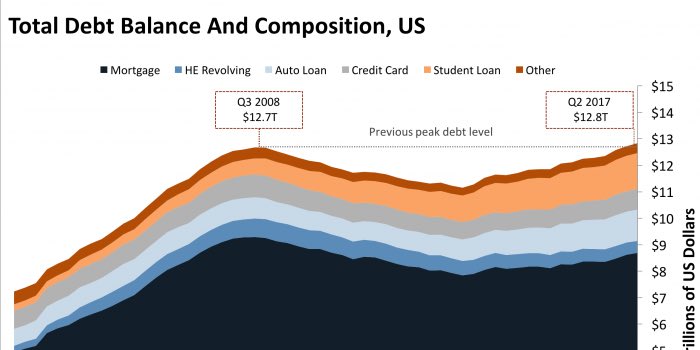
Now that revolving credit has reached a new all-time high of $1 trillion and total consumer debt outstanding has exceeded it’s 2008 peak at $12.8 trillion, the Fed has completed its job of helping the average American again in-debt themselves up to their eyeballs. This is considered a success story in this twisted, perverted, bizarro world we call America today. The solution to an epic debt induced global financial catastrophe caused by Federal Reserve easy money, Wall Street fraud, and Washington DC corruption has been to increase global debt by 50% since 2007, with virtually all of it created by central bankers and the governments they control.

In what demented Ivy League educated academic mind would piling $68 trillion more debt on the backs of taxpayers as a cure for a disease caused by the initial $149 trillion of debt be considered rational and sustainable? It’s like having pancreatic cancer and trying to cure it with a self inflicted gunshot. And no one seems to care about or even notice the coming reset when this mass debt induced hysteria of delusion turns into the biggest financial collapse in the history of mankind.

This entire ponzi scheme edifice of debt is nothing but a confidence game. When people begin to realize they can’t repay their own debts, start to understand their governments will never honor their debt based promises, and realize central bankers are nothing more than pretend wizards behind a curtain, the confidence will evaporate in an instant and a collapse which will make 2008/2009 look like a walk in the park will ensue. That’s when civil and global war will engulf the world and teach people real lessons about the real world.

The boobs on credit commercial I heard this week is just another example of Wall Street and their Deep State crony co-conspirators completing their scheme to financialize every aspect of our lives and entrap us in chains of debt, beholden to these modern day Wall Street slave owners. When you see the record number of retail bankruptcies and store closings happening when GDP is supposedly rising by 3% and witness with your own two eyes the number of vacant storefronts and restaurants across our great land of materialism, you might wonder why revolving credit card debt is at a new all-time high.

The answer is Wall Street has successfully financialized virtually every aspect of our day to day lives. Consumer and taxpayer transactions which required cash or check ten years ago can now be paid with a credit card. You can pay your IRS bill with a credit card. You can pay your real estate taxes with a credit card. You can pay your utilities with a credit card. You can pay your school tuition with a credit card. You can pay your rent with a credit card. You can “buy” furniture and appliances without paying for seven years. And guess what? That’s what millions of average Americans are doing. In addition, they are driving “rented” $35,000 automobiles on seven year nothing down payment plans.

This massive debt induced fraud of a recovery gives the appearance of normalcy and stability. The stock market is at all-time highs is used as the narrative of central banker success. We’ve experienced extremely low volatility as the central bankers around the world have coordinated their money printing/debt creating schemes to purposely elevate financial markets to give the masses confidence that all is well. Anyone with critical thinking skills knows all is not well. The longer this fake stability is maintained the greater the collapse. Success breeds disregard for the possibility of catastrophe.

So you can call me the boy who cried wolf, but our Minsky Moment is approaching. Sometimes they do ring a bell at the top. In this case they are shaking fake boobs at the top.

“Stability leads to instability. The more stable things become and the longer things are stable, the more unstable they will be when the crisis hits.”Hyman Minsky