Not Letting a Good Tragedy Go to Waste, Banking Elite Use FTX Fraud, Crypto Crash to Push CBDCs

CBDCs mean the total death of any economic freedom the public has left…

By Tyler Durden

Source: The Free Thought Project

Central bankers and international corporate financiers have long been pretending to hate the very concept of cryptocurrencies like Bitcoin and Etherium while at the same time investing heavily in blockchain technologies and infrastructure. The purpose of the ruse is not clear, but more than likely it was an attempt at mass reverse psychology – “We don’t like crypto and digital currencies because we supposedly have no control over them; free market proponents should embrace them blindly because that is how you will beat us.”

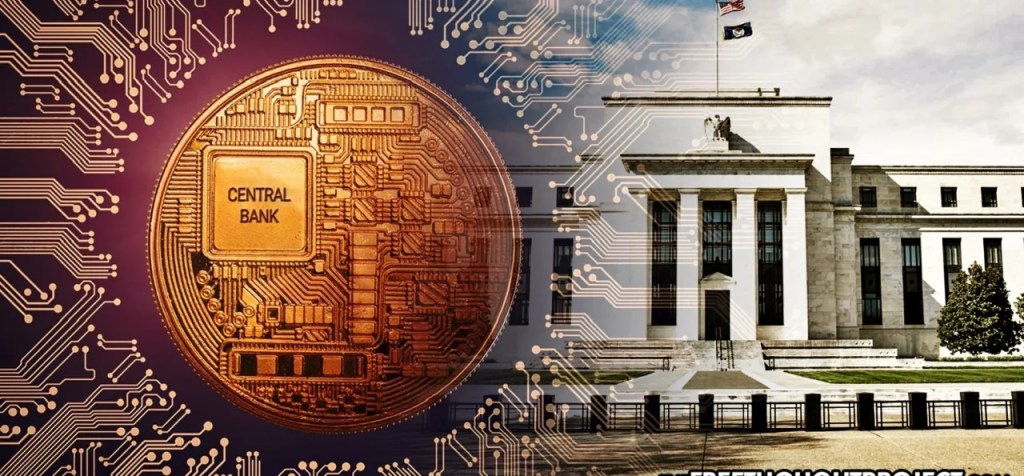
In the meantime, while major banking firms are investing billions into various blockchain products, central banks and global institutions like the BIS and IMF have been developing their own systems. In fact, the BIS notes with enthusiasm that around 90% of central banks around the world are already in the process of adopting CBDCs.

But why would anyone want to use government and establishment bank controlled cryptocurrencies when they have access to Bitcoin and dozens of other coins that are supposedly independent? Why trade freedom for more centralization?

First, existing cryptocurrencies are not as free as many people believe, with ample government tracking of blockchain transactions in place for years, the notion of the completely anonymous crypto user is a bit of a fantasy, and the idea that a product such as Bitcoin is going to “bring down” the central banks is becoming less realistic by the year.

Second, the crypto market is highly unstable in part because it is still very limited. While crypto use in America is higher than most other countries with around 12% of people using it as an investment (not as a currency), the rest of the world is mostly uninterested with an estimated global footprint of around 4%. Of that 4% only a handful of people actually own the majority of the market; these people are known as “whales” and they have the ability to tip the market up or down with little effort.

This happens in many other trade commodities and paper currencies also. The point is, crypto is not immune to manipulation.

Third, crypto is enticing to people because of the quick profits that can be had, but massive losses are also a danger. The overall crypto market has plunged by $2 trillion in the past year alone – Over 60% of its value. The implosion of huge trading companies like FTX also undermines the stability of the market and usually it’s the average investor that ends up suffering the consequences.

All of these factors and more can be used by banking elites as a rationale for the implementation of CBDCs and global regulation of crypto trading. And, if the bloodbath in existing coins continues, people may even welcome CBDCs as a “safe” investment or currency system.

The investment losses in blockchain products along with the scandals in exchanges is a rather convenient opportunity for the banking establishment to promote their own currencies as a replacement. In the wake of the FTX event, multiple international banks including JP Morgan and Goldman Sachs have called for government regulation and a shift over to CBDCs.

The US House has scheduled hearings on FTX with an emphasis on regulation. In Europe, globalist Christine Lagarde and the ECB are calling for global cooperation on monitoring and controlling cryptocurrencies. Lagarde wants a “digital Euro” to take the place of existing coins and blames FTX and the larger market losses on lack of oversight.

Numerous crypto analysts are also demanding regulation, calling crypto “broken and useless” until governments step in to mediate (control) trade. This is the exact opposite of what crypto activists originally intended over a decade ago when Bitcoin was in its infancy, and digital trade back then was sold as some kind of revolution against the banking oligarchy. However, it’s easy to see where this is all going.

It means even more pervasive centralization. With paper currencies at least there is true anonymity, but with CBDCs the existence of the blockchain ledger precludes any and all privacy in trade. Not only that, but the institutional ability to cut off people from their wealth and economic access is going to be profound. If you think corporate and government led cancel culture is bad now, just wait until they can freeze your digital accounts at a moment’s notice because of something you said on social media. And, in a cashless society there are few alternatives beyond some kind of black market.

CBDCs mean the total death of any economic freedom the public has left, and central banks are exploiting disasters like FTX to make that death happen even faster.

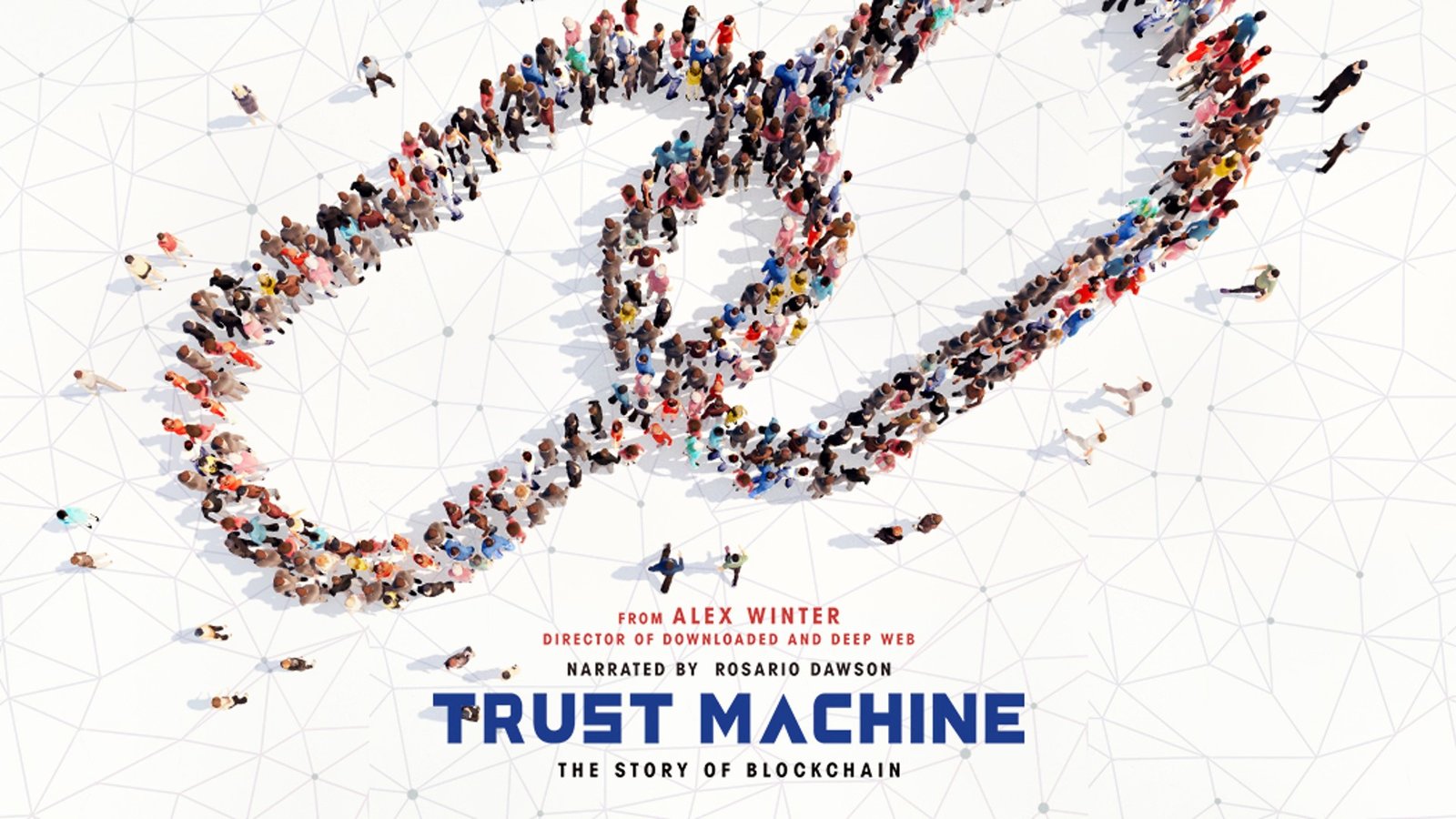
Saturday Matinee: Trust Machine

TRUST MACHINE is the first blockchain-funded, blockchain-distributed, and blockchain-focused documentary. It explores the evolution of cryptocurrency, blockchain and decentralization, including the technology’s role in addressing important real-world problems, such as world hunger and income inequality.

Watch the full film on Kanopy.

“Charity” Accused of Sex Abuse Coordinating ID2020’s Pilot Program For Refugee Newborns

A refugee family hold numbered placards as they pose for a photo during a census conducted by the Thai authorities at Mae La refugee camp in 2014. Photo: Reuters

A biometric identification program backed by the ID2020 alliance will see its new “digital id” program rolled out for refugee newborns in close coordination with a charity tied to Wall Street and prominent Western politicians whose workers have been accused of sexually exploiting refugee children.

By Whitney Webb

Source: Unlimited Hangout

iRespond, an international non-profit organization that is “dedicated to using biometrics to improve lives through digital identity,” has begun piloting a new biometric program for newborns among the predominately Karen refugee population along the Myanmar-Thailand border, a program it soon hopes to “quickly deploy” at a greater scale and make available to the general global population. The pilot program is being conducted as part of the controversial ID2020 alliance, backed by Microsoft, the GAVI vaccine alliance and the Rockefeller Foundation, and with the International Rescue Committee (IRC), a non-profit organization deeply tied to the Western political elite and Wall Street with a controversial track record of silencing numerous sex abuse and fraud allegations.

The new program, an extension of iRespond’s “voluntary” biometric identification program in the Mae La refugee camp, “will create a record of a birth, attested by a trusted clinic, with a goal of changing the life trajectory for the participants.” Through the program, “a guardianship relationship between the newborn and the mother is established and linked to digital and high security physical identity documents.”

However, iRespond’s CEO, Scott Reid, told Biometric Update that these credentials do “not carry the same weight as a true birth certificate,” but asserts that the organization’s biometric “birth attestation” program “could leapfrog the traditional barriers to establishing identity.” Despite the fact that iRespond’s quasi-birth certificates would seemingly serve little purpose in areas where actual birth certificates are readily available, the organization notes that “once the pilot is completed, iRespond is ready to quickly deploy the solution at scale” for mass use around the globe. “Product development” on adapting their platform for newborns began earlier this year and Reid notes that having an iRespond-provided biometric “birth attestation” will enable “access to vital services such as healthcare, social protection, education and banking.”

The pilot program is being conducted at the Mae Tao clinic, which is largely funded by the CIA cut-out USAID as well as the governments of Germany and Taiwan, the Open Society Foundations and the International Rescue Committee (IRC). The IRC is very active in the day-to-day functions of the clinic (financed by a USAID-funded project) and it is also intimately involved in iRespond’s digital identity program, including its new pilot program for newborns and its earlier efforts to supply Mae La’s residents with biometric identity.

Food or Sovereignty

iRespond’s work in Mae La in conjunction with IRC was first announced by the ID2020 alliance in September 2018. The ID2020-funded pilot program, the announcement states, was to be “led by Alliance partner iRespond and will be conducted in close partnership with the International Rescue Committee (IRC).” It aims to provide biometric identities to the approximately 35,000 individuals inhabiting the area, with the newer program aiming to ensure that babies born in the community are also made participants by default upon birth. It notes specifically that “the pilot will offer blockchain-based digital identification, linked to individual users through iris recognition, for refugees accessing the IRC’s services in the Mae La Camp in Thailand.” Having a “digital identity” would allow refugees “to access improved, consistent healthcare within the camp” with plans for the same system to eventually “electronically document both educational attainment and professional skills to aid with employment opportunities.”

A year later, the program, featured in a lengthy profile in Newsweek, was revealed to be “just the first step in an effort that aims to equip the camp’s entire refugee population with secure and portable “digital wallets” that will hold not just their medical records but also educational and vocational credentials, camp work histories and myriad other records,” ostensibly including financial activity. This is particularly likely given that iRespond is partnered with Mastercardanother ID2020 partner that is closely allied with the company, Trust Stamp, a biometric identity platform that also doubles as a vaccine record and payment system. In addition, IRC’s strategic plans for Mae La through 2020 include “expand[ing] micro-enterprise development and village savings and loans associations,” such as those offered by ID2020 partner Kiva, among others, who link biometric identity to the receipt of loans.

iRespond’s system, not unlike Trust Stamp’s, is also slated to serve as a vaccine record. Larry Dohr, iRespond’s head of Southeast Asia operations, told Reuters in April that “a biometric ID system can keep a record of such people [who have previously tested positive for Covid-19] and those getting the vaccine.” Dohr added that “we can biometrically identify the individual and tie them to the test results, as well as to a high security document. The person then has ‘non-refutable’ proof that they have immunity due to antibodies in their system.” Dohr then refers to such “proof” as a “very valuable credential.”

Notably, in press releases and news reports, iRespond executives emphasize how their biometric identity system, based on iris scans and powered by Microsoft, will “protect privacy” and allow “control and ownership of identity data belong to the holder.” However, the Mae La project does not offer this degree of control and ownership, with Newsweek noting that“Eventually, [iRespond and their collaborators] aim to offer the refugees a level of fine-grained control over what pieces of personal information are shared with others.” In other words, such control over their personal information has not yet been made available to them, despite the public portrayal that this functionality is a base component of iRespond’s system.

What is particularly noteworthy about iRespond’s and IRC’s digital identity efforts is that, while it is a “voluntary” program, destitute refugees wishing to access healthcare and other services IRC provides in the area, including access to clean water, must have their irises scanned in order to reap those benefits. It is highly unlikely that such individuals are not only uninformed about any potential risks of providing their biometrics for use in a pilot program, but are not in a stable enough state to make an informed decision on the matter, as their precarious position would see them choose urgent healthcare needs, etc. over privacy. It increasingly seems that Mae La was chosen as the pilot project because its residents were highly unlikely to decline participation, especially when healthcare access and other basic needs provided by IRC are dangled as carrots on a stick and only accessible upon participation in iRespond’s biometric identity program.

This program is remarkably similar to the World Food Programme’s recently implemented “Building Blocks” initiative, which  is funded by the US, German, Dutch and Luxembourgian governments. Building Blocks uses a blockchain-based biometric identity system “to expand refugees’ choices in how they access and spend their cash assistance” in Syrian refugee camps within Jordan. Now, “over 100,000 people living in the camps can purchase groceries by scanning an iris at checkout” as part of the checkout. Those who do not participate are unable to access their WFP “cash benefits” since they are available exclusively through this biometric system, leaving refugees the choice between surrendering their biometric data and food.

Equally noteworthy is the fact that those financially supporting the Mae La project and similar projects, particularly the ID2020 alliance, are “hopeful” that iRespond’s efforts in Mae La will some day be rolled out on a global scale. Indeed,Newsweek noted that “many of the funders [of the Mae La project]—part of what’s known as the ID2020 alliance, which includes Accenture, Microsoft and the Rockefeller Foundation—hope the Mae La project could eventually serve as a blueprint for the world’s millions of stateless people, as well as citizens of developed nations and everyone else.”

Biometric Enclosure

According to iRespond’s rather spartan website, their biometric identity platform “primarily relies on iris biometrics, the best modality after DNA for accuracy and reliability.” It further describes its platform as follows:

“When a new participant is enrolled, an encrypted biometric template is created from their iris scan and a randomly assigned 12-digit number is drawn from a pool of 90 billion numbers. On subsequent visits, the identity of the participant is verified when their template is matched and the system returns the original 12-digit unique identifier.”

iRespond’s platform also “easily integrates into healthcare, humanitarian aid, research, and human-rights applications,” and it has been used to grant refugees and other vulnerable populations access to food, healthcare, and other forms of aid provided by foreign NGOs operating in these areas. It has also been used to keep track of participants in clinical drug trials. iRespond’s platform in the latter case was used by the U.S. Center for Disease Control and Prevention (CDC) in conjunction with Johns Hopkins School of Public Health (both are iRespond partners), to track participants in clinical HIV treatment trials in Senegal as well as an additional Johns Hopkins study in South Africa. It has also been used to track recipients of the controversial HPV vaccine in Sierra Leone, where it was used “to track patients who have not completed their vaccination series.”

It is also being used among “vulnerable groups” in Myanmar by the NGO Population Services International (PSI) to “track demographics and the timing of positive HIV tests.” By analyzing these details, “we uncover which groups are most vulnerable to becoming infected,” according to PSI’s country representative for Myanmar.

The non-profit’s platform is powered by its main tech partner and another ID2020 member, Microsoft. iRespond’s platform “couldn’t exist without the cloud,” according to its CEO Scott Reid, and Microsoft supplies iRespond with a $60,000 grant to its Azure cloud system, allowing the organization to use it free of charge. In addition, Microsoft donated 39 tablets to iRespond that are used by the organization in the various places it operates “to enable flexibility in the field.” “The number of people we have helped has rapidly gone from the tens of thousands to the hundreds of thousands, and we look forward to soon working on behalf of many millions of people. These Microsoft tools are helping to make it possible,” iRespond’s Larry Dohr stated in a Microsoft profile.

Eric Rasmussen, iRespond’s president and chairman of the board, is a particularly interesting character who has been quite frank about the rationale behind the creation of iRespond. “When you understand who someone is, you understand what they’re entitled to, whether that’s national citizenship, international refugee support, or simply food distributions,” Rasmussen told Microsoft last year.

In addition to his key role at iRespond, Rasmussen is a professor at the Google-backed “Singularity University” as well as chairman of the board at InSTEDD, a “global NGO specializing humanitarian informatics, particularly around health in resource-poor economies” that is partnered with the Bill and Melinda Gates Foundation, the Rockefeller Foundation, the CDC, Google and UNICEF. In addition, Rasmussen is also the CEO of a “profit-for-purpose” company called Infinitum Humanitarian Systems (IHS). IHS works closely with USAID and the State Department as well as U.S. military intelligence agencies and intelligence/defense contractor Booz Allen Hamilton. Prior to his roles at iRespond, IHS and InSTEDD, Rasmussen was the Principal Investigator in humanitarian informatics for the Pentagon’s Defense Advanced Research Projects Agency (DARPA) and made multiple war time deployments to Bosnia, Iraq and Afghanistan.

“Charity” of the Predator Class

More troubling than the background and associations of iRespond are those of their partner in the recently announced newborn biometric identification initiative, the International Rescue Committee (IRC). The IRC describes themselves as responding “to the world’s worst humanitarian crises and help[ing] people whose lives and livelihoods are shattered by conflict and disaster to survive, recover and gain control of their future.”

Despite the IRC framing itself as a “humanitarian” venture, its board is stuffed with a sordid mix of Wall Street criminals and war criminals. For example, its board is co-chaired by Timothy Geithner, former Treasury Secretary during the 2008 financial crisis bail-outs and current President of Wall Street titan Warburg-Pincus, and Susan Susman, an Executive Vice President at Pfizer. Its board of advisers includes war criminals Henry Kissinger and Madeleine Albright as well as Condoleezza Rice and Colin Powell. Also present are current and former leaders and top executives at McKinsey, Morgan Stanley, Goldman Sachs, Kroll Associates (“the CIA of Wall Street”), PepsiCo, Bank of America, Lehman Brothers, Citigroup and the World Bank. Another advisor is former chairman and CEO of AIG Maurice “Hank” Greenberg, a name that will likely be familiar to those who have researched the September 11th attacks and Wall Street financial crimes in general.

Since 2013, the IRC has been led by David Miliband, the Tony Blair “protégé” who Bill Clinton once called “one of the ablest, most creative public servants of our time” and who worked closely with then-U.S. Secretary of State Hillary Clinton while serving as the U.K.’s Foreign Secretary. So close was Miliband to the Clintons, that he was being considered for a “top U.S. government job” if Hillary Clinton had won the 2016 election.

In the years since joining the IRC, Miliband’s salary as the group’s president has ballooned to nearly a million dollars annually (up from approximately $240,000 when he arrived at the organization in 2013). In addition, the group has been mired in scandal since Miliband became its president. For instance, it was revealed in 2018 that IRC was one of several U.K.-based charities where “workers [were] alleged to be in sexually exploitative relationships with refugee children” including through “sex-for-food scandals” where “sexual abuse was so endemic that the only way for many refugee families to survive was to allow a teenage girl to be exploited.” Reports further alleged that IRC and other charities named in the report, including Save the Children, had known of the egregious abuse for years prior to the allegations being made public and chose not to act.

That year, it was also found that the IRC had “silenced 37 sex abuse, fraud and bribery allegations,” resulting in the U.K. government, which had previously funneled millions to the organization, cutting off its funding entirely. Despite the troubling revelations, no IRC workers accused of wrong-doing were ever prosecuted.

Given the fact that the IRC’s board and presidency is stuffed with professional exploiters, from Wall Street to the public sector, it is hardly surprising that this “charity” would be caught doing the same under the guise of providing “aid” to the world’s most vulnerable populations, who they apparently view as easy prey.

Foxes in the Hen House

In the several media profiles of the iRespond-IRC biometric identity effort, the initiative is described as helping to prevent the exploitation of the world’s most vulnerable, particularly forced labor and sex trafficking. However, if that really were the case, why is this program being executed by iRespond, whose president and chairman has close ties to the U.S. military and intelligence communities, and the IRC, backed by a legion of war criminals and financial predators?

The U.S. military, a close partner of iRespond’s Eric Rasmussen, is notorious for its role in the trafficking of persons for forced labor, while many of its key contractors – like DynCorp — have been the subject of numerous scandalsregarding the sexual abuse or sex trafficking of war-torn or otherwise vulnerable populations. On the other hand, the IRC’s mix of backers like Madeleine Albright, infamous for her comment on the murder by sanctions of half a million Iraqi children being “worth it,” and Henry Kissinger, notorious for his words about using food as a weapon to force populations into subservience and to reduce third-world populations, is equally anathema to the publicly professed purpose of the iRespond-IRC biometric identification program.

Not unlike the “sex-for-food” scandal in which IRC was once embroiled, this new initiative is placing refugees in the position of taking part in a massive technocratic experiment if they wish to eat or access other basic services. Though certainly not as egregious as a sex crime, it is nonetheless another means of exploiting the world’s most vulnerable populations under the guise of “helping” them, when those really being aided are the technocratic elite who aim to take this biometric identification program global in short order.

Reimagining Money

What if markets were designed to build trust instead of wealth?

By Douglas Rushkoff

(The Atlantic)

Bitcoin was conceived as a modern solution to an ages-old problem: How can two parties agree on and verify an exchange of value? In this sense, Bitcoin is an effective technology, in that it trains the massive processing power of distributed personal computers on the same situation that paper currency was built to resolve. But in important ways, Bitcoin transposes some of the shortcomings of traditional currency onto the digital realm. It ignores a whole host of questions about the potential to reimagine what money can be designed to emphasize: What sorts of money will encourage admirable human behavior? What sorts of money systems will encourage trust, reenergize local commerce, favor peer-to-peer value exchange, and transcend the growth requirement? In short, how can money be less an extractor of value and more a utility for its exchange?Around the world, people have proposed experimental, tentative answers to these questions. What follows are three ways that people have toyed with rearranging the priorities of transactions—all of which would encourage a radical reimagination of what money is and can do.

The simplest approach to limiting the delocalizing, extractive power of central currency is for communities to adopt their own local currencies, pegged or tied in some way to a central currency. One of the first and most successful contemporary efforts is the Massachusetts BerkShare, which was developed to help keep money from flowing out of the Berkshire region.

One hundred BerkShares cost $95 and are available at local banks throughout the region. Participating local merchants then accept them as if they were dollars—offering their customers what amounts to a 5-percent discount for using the local money. Although it amounts to selling goods at a perpetual discount, merchants can in turn spend their local currency at other local businesses and receive the same discounted rate. Nonlocals and tourists purchase goods with dollars at full price, and those who bother to purchase items with BerkShares presumably leave town with a bit of unspent local money in their pockets.

The 5-percent local discount may seem like a huge disadvantage to take on—but only if businesses think of themselves as competing individuals. In the long term, the discount is more than compensated for by the fact that BerkShares can circulate only locally. They remain in the region and come back to the same stores again and again. Even if nonlocal stores, such as Walmart, agree to accept the local currency, they can’t deliver it up to their shareholders or trap it in static savings. The best Walmart can do is use it to pay their local workers or purchase supplies and services from local merchants.

* * *

Unlike local discount currencies, cooperative community currencies don’t need to be pegged to the dollar at all. They are not purchased into existence but are worked into circulation. They are best thought of less like money than like exchanges.

The simplest form of cooperative currency is a favor bank, such as those founded in Greece and other parts of southern Europe during the Euro crisis. Incapable of finding work or sourcing Euros, people in many places lost the ability to transact. Even though a majority of what they needed could be produced locally, they had no cash with which to trade. So they built simple, secure trading websites—mini-eBays—where people offered their goods and services to others in return for the goods and services they needed. The sites did not record value amounts so much as keep general track of who was providing what to the community and coordinate fair exchanges. This casual, transparent solution works particularly well in a community where people already know one another and freeloaders can be pressured to contribute.

Larger communities have been using “time dollars,” a currency system that keeps track of how many hours people contribute to one another. Again, a simple exchange is set up on a website, where people list what they need and what they can contribute. The bigger and more anonymous a community, the more security and verification is required. Luckily, dozens of startups and nonprofit organizations have been developing apps and website kits via which local or even nonlocal communities can establish and run their own currencies.

Time exchanges tend to work best when everybody values their time the same way or is providing the same service. Time dollars are extremely egalitarian, valuing each person’s time the same as anyone else’s. An “hour” is worth one hour of work, whether it is performed by a plumber or a psychotherapist.

The Japanese recession gave rise to one of the most successful time exchanges yet, called Fureai Kippu, or “Caring Relationship Tickets.” People no longer had enough cash to pay for their parents’ or grandparents’ health-care services—but because they had moved far away from home to find jobs, they couldn’t take care of their relatives themselves either. The Fureai Kippu exchange gave people the ability to bank hours of eldercare by taking care of old people in their communities, which they could then spend to get care for their own relatives far away. So one person might provide an hour of bathing services for an elder in her neighborhood in return for someone preparing meals for her grandfather who lives in another city. As the Caring Relationship Tickets became accepted things of value, people began using them for a variety of services.

Although a person can do a bunch of work in order to bank enough hours to get a whole bunch of services, most time exchanges put a limit on how many hours members can accumulate. They also put a limit on how many hours a person can owe. This way a freeloader can be removed from the system, and the entire community can absorb the cost of the unearned hours pretty easily.

* * *

How might traditional banks participate effectively in the financial rehabilitation of the communities they serve? Here’s just one possibility:

Sam’s Pizzeria is thriving as a local business, and Sam needs $200,000 to expand the dining room and build a second restroom. Normally, the bank would evaluate his business and credit and then either reject his loan request or give him the money at around 8 percent interest. The risk is that he won’t get enough new business to fill the new space, won’t be able to pay back the loan, and will go out of business. Indeed, part of the cost of the loan is that speculative risk.

In another approach, the banker could make Sam a different offer. The bank could agree to put up $100,000 toward the expansion project at 8 percent if Sam is able to raise the other $100,000 from his community in the form of market money: Sam is to sell digital coupons for $120 worth of pizza at the expanded restaurant at a cost of $100 per coupon. The bank can supply the software and administrate the escrow. If Sam can’t raise the money, then it proves the community wasn’t ready, and the bank can return everyone’s money.

If he does raise the money, then the bank has gained the security of a terrific community buy-in. Sam got his money more cheaply than if he borrowed the whole sum from the bank, because he can pay back the interest in retail-priced pizza. The community lenders have earned a fast 20 percent on their money—far more than they could earn in a bank or mutual fund. And it’s an investment that pays all sorts of other dividends: a more thriving downtown, more customers for other local businesses, better real-estate values, a higher tax base, better public schools, and so on. These are benefits one can’t see when buying stocks or abstract derivatives. Meanwhile, all the local “investors” now have a stake in the restaurant’s staying open at least long enough for them to cash in all their coupons. That’s good motivation to publicize it, take friends out to eat there, and contribute to its success.

For its part, the bank has diversified its range of services, bet on the possibility that community currencies will gain traction, and demonstrated a willingness to do something other than extract value from a community. The bank becomes a community partner, helping a local region invest in itself. The approach also provides the bank with a great hedge against continued deflation, hyperinflation, or growing consumer dissatisfaction with Wall Street and centrally issued money. If capital lending continues to contract as a business sector, the bank has already positioned itself to function as more of a service company—providing the authentication and financial expertise small businesses still need to thrive.

The bank transforms itself from an agent of debt to a catalyst for distribution and circulation. Like money in a digital age, it becomes less a thing of value in itself than a way of fostering the value creation and exchange of others.


This article has been adapted from Throwing Rocks at the Google Bus: How Growth Became the Enemy of Prosperity.

Decentralization and the Future World Order – Part I: The Revolution Is On

Bitcoin-Decentralized-World

Source: Thought Infection

A technological revolution is underway. An array of technologies are being developed that aim to do nothing less than disrupt the deepest fabric of the current world order. In a world where trust is power, decentralization steals the power from the hands of centralized institutions like corporations, banks, and even governments and puts it into the hands of the network. The revolution is beginning with a race to build the next generation of decentralized technologies that may soon replace internet giants like Dropbox or Facebook, but this is only the beginning of a transition to a future world order of decentralized power.

Lets start with a simple question: What is decentralization?

Many people equate decentralization with cryptographic networks like Bitcoin, which combine cryptography with decentralization, but decentralized applications do not inherently require encryption. The prototypical example of a modern decentralized technology would be Bittorrent, a technology with no inherent requirement for encryption. At its base, decentralization is the simple process of taking information and distributing copies among some sort of network so as to enhance data accessibility, security, redundancy, and congruence (consistency between parties).

The idea of decentralization is actually as old as communication itself. Cavemen would share their knowledge of hunting techniques and weapon technology among their tribe in order to be sure that the loss of no single individual would mean the loss of vital information. As humans created increasingly elaborate systems of exchange, organizations learned that keeping two or more copies of important documents was essential to ensuring their security.

The central problem of decentralization is that it also greatly increases the likelihood that information could fall into the hands of untrusted individuals. Thus, balancing the need for privacy and security meant finding a balance between centralized and decentralized structures for information sharing. To solve the age-old problem of privacy in shared information, cryptographic encoding or information was developed. Since at least Medieval times, people have been using simple ciphers to encode messages which they wished to share with only specific individuals.

In the 20th century, cryptography advanced greatly particularly during the world wars, when warring nations needed to be able to move around large amounts of information while preventing it from falling into the hands of the enemy. This spurned great innovations in both encryption and decryption, with both sides pouring resources into figuring out what their enemy was planning. It is widely believed, that the breaking of the Enigma code by British code-breakers which included one of the greatest minds of the 20th century, Alan Turing, was key to winning the war.

With the help of the universal computers Alan Turing helped invent, increasingly secure encryption algorithms were developed over the last half of the 20th century. Using these modern encryption algorithms, we can hide information well enough to confidently exchange sensitive financial information over a network which is essentially open (the internet). Thus, cryptography means that anyone eavesdropping on your web communications with your bank would have no way to understand the messages.

The Bitcoin blockchain is a distributed, encrypted ledger which stores the holdings of users of the network in individually encrypted data. This way, those using the network can be sure to agree on what amount of Bitcoin each user has, while only allowing those with the keys to be able to unlock their data and send some amount of Bitcoin to another user (see more here). Using the encrypted blockchain, Bitcoin is able to seamlessly transfer a limited supply of units of value between individuals in a way which does not rely on backing from any one central authority to provide value to the currency.

The core advance of the blockchain is that it allows the distribution of highly secure and highly congruent information throughout a network with no need for a centralizing authority.

As a side-thought, I would like to point out that although the software instantiation of the blockchain which underlies Bitcoin is totally dependent on digital computation, I see no reason a similar system based on mechanical encryption could not also be possible. Even if we never had invented computers I think we eventually would have come up with a sort of steam punk Bitcoin through which we could distribute value or congruent information using a cryptographic ledger system. 

Bittorrent was the first application to show that sharing of encrypted information over a decentralized network could be used to transfer value securely and efficiently, but there is no reason that decentralized technology could not be used to share any kind of information in a trustless network.

The MaidSafe and Storj projects have the ambitious goal of allowing anyone to share anything securely and efficiently over a decentralized network, something that could have deep consequences for the way that the internet works. If anyone can use the distributed network to share a website, then this could eliminate the needs for centralized servers which currently serve up websites when you visit them. Under these protocols, the cost of storing and sharing data with other users of the network who donate some part of their bandwidth and hard-drive space in exchange for the right to use the network. While some might worry that such a network would be used primarily for content piracy (as has been the case for Bittorrent), the integration of the Safecoin cryptocurrency with the MaidSafe network may actually make it easier than ever for content producers to monetize their content.

According to the project leader, both Maidsafe and Storj could be used to develop alternative, distributed versions of popular services such as Dropbox, Facebook, or even Google. Distributed versions of these centralized services could offer advantages for security and failure resistance. MaidSafe could also dramatically lower the barriers to entry for new players trying to compete such internet institutions as Facebook. While I have doubts whether the massive data-crunching necessary for Google could be pulled off on a decentralized network, a decentralized social network seems an obvious applications for MaidSafe.

Whereas MaidSafe, Storj and Bitcoin are specific applications of distributed technology, the Ethereum project aims to go much further and create a general distributed computer language on top of which anyone could easily develop an application like MaidSafe or Bitcoin. They are essentially trying to create a sort of decentralization operating system on top of which it would be possible to build any sort of program. By allowing the secure sharing of computer programs, Ethereum could allow the creation of advanced smart contracts with defined limits on how and when their funds could be disperse, or potentially even much more complex entities such a corporations.

2014 was a bit of a down year for Bitcoin, with coins falling from a value as high as $1000 to around $230 today. While this might be taken as a sign that the future of Bitcoin is in some danger, it is absolutely clear that it does not reflect at all on the wider cryptocurrency ecosystem. The ability to distribute trust through a network through the use of a Blockchain is a world changing technology, and the value of one currency does nothing to change its utility as a method of exchange. Saying that a drop in the price of bitcoin makes it irrelevant is like saying that the drop in the price of computer chips makes them irrelevant. Bitcoin is just the first in a series of decentralized applications that are already beginning to compete with centralized services.

Decentralization is becoming the gold standard for when you truly need to trust something, and in a world where trust is power it seems inevitable that decentralized technologies are destined to become the new nexus of power. In my next post I will discuss the past present and future of trust and power, and how that has been reshaped by decentralization.

————-

I would like to make a recommendation for a subreddit and a podcast that I think that those stimulated by this article might enjoy following, /r/Rad_Decentralization and the Decentralize Podcast