27 Premises

Silent Assumptions to Drive Systemic Thinking
By J Circio

Source: Modern Mythology

When you derive a conclusion, how do you get there? As you gather facts and pieces of narratives and figure out the picture that the puzzle should be configured into, what assumptions are you making — do you need to make for the sake of expediency, if nothing else — to get there without spending the better part of a lifetime so you no longer require a shortcut?

These are intrinsically generalizations, since they seem to arise from experience such as — if you find blue seashells every time you go to a particular sea shore, you might derive that sea shells are often blue and so come to conclude that is a general rather than local effect.

The following list each contain a brief explanation, and then a few additional comments. More on this in the upcoming Newsletter! (December 2023)

Talk with a GPT instructed to follow these 27 Premises, aka Narrative Machine-139.

1. Simpler is not necessarily more correct; Complicated is not necessarily more correct.

This principle challenges the idea that the truth or correctness of an idea, theory, or system can be judged based on its simplicity or complexity alone. It’s a rebuttal to both any rigid application of Occam’s Razor, which suggests that simpler explanations are generally better, and to the assumption that more complex theories are inherently more sophisticated or accurate simply on account of their complexity.

“Correctness” is question and context dependent, not innate.

2. Simplicity often obscures inner complications… and the inverse is also often true.

This principle underscores the notion that both simplicity and complexity can be misleading in their own ways. A simple explanation might overlook critical nuances, while a complex one might overcomplicate what is fundamentally straightforward.

An important corollary is that looking at a problem with the mindset of optimal complexity, or optimal simplicity, each will bring out some dynamics and minimize or remove others. Ideally, both frames need to be considered, although not always equally weighted.

3. Anything true is likely propped up by unspoken falsehoods. The inverse is sometimes but not always true.

This suggests that truths are often supported by assumptions or beliefs that may not be accurate. It underscores the importance of scrutinizing the underlying assumptions of any ‘truth,’ as well as the extreme difficulty of actually doing so. The inverse — that falsehoods can support truths — is acknowledged as a less common but possible scenario.

Logical relationship is based on assumptions about likeness, mimesis, and consistency with specified rules. In generalized form, it is tautological. This was a major fin de siecle fixation (before WW1), and in many ways historically and culturally, the devastation of that particular apocalypse was a form of answer to the question, in terms of some of the potential outcomes of “applied reason.”

Of that which goes beyond such tautological relationships, to quote Wittgenstein, “we cannot speak.” As he would also later come to recognize, that includes a significant portion of life.

4. Everything is relatively dependent on context; everything is in some sense connected, but not equivalently.

Context is critical in understanding any concept, idea, or system, as the environment in which anything might come to be. This principle aligns with systems theory, where the meaning and function of a component can only be fully understood in relation to the whole system. It also touches on existentialist ideas about individual perception being shaped by one’s unique context, however the emphasis is on the distributed interconnections of systems that actually operate within the world.

Everything is relatively dependent/contingent, and the range of possibilities that exist within those overlapping contexts in a given place and time, which is another way of saying that everything is connected but not equivalent. Your mileage may vary based on the local neighborhood you’re living in, whether that means solar system or city block. The same is likely true regarding time.

5. Time has various senses, such as that which is measured versus that which allows for experience.

This principle integrates ideas from physics and phenomenology. While time has measurable physical properties, our experience of time is subjective and varies based on individual perception and context.

Time can be measured through the entropy in a system, and it can be distorted by mass (4d curvature), but as a field that allows for experience to occur, our experience of time is just another socio-biological construct of our nervous system.

6. There are no first causes. Look instead for drivers of outcomes.

In line with complex systems theory, this principle rejects the notion of an original, singular cause of events, suggesting that causes are themselves effects of prior conditions, forming an interconnected web of causality.

The billiard ball model is oftentimes less salient than the idea of ‘entanglement.’ Attempting to chase that train to its point of origin will invariably lead you back to the big bang, although that neither means that it necessarily started there, or that it was ‘caused’ by it. Rather, if that had not happened, its antecedents would similarly not exist. That is to say the chain is one of contingency and continuity rather than discrete causality.

7. Nothing happens for a “reason”. (Causal syncretism).

This principle challenges the notion of a singular, directed purpose in events, instead favoring a view of causality where events are contingent on preceding conditions, always “reasons” plural. This aligns with complex systems theory, where outcomes are often the result of numerous interacting variables rather than a linear cause-effect relationship.

“It was meant to be.” Only in the sense that everything happens because many other things did or didn’t happen. What can we actually make of this contingency?

8. Meaning is something we project on the world, not the other way around.

This principle reflects the existentialist and constructivist view that meaning is not an inherent property of the world but is either constructed or imagined by individuals through their interactions, experiences, and interpretations.

Meaning is dependent on action and intent. What is the meaning of a rock? What is the meaning of a flower? What is the meaning of that letter you sent to me? Only one of these makes sense. Even the Buddha’s “flower sermon” only makes sense because of the intention behind holding up the flower, even if its specific meaning is enigmatic.

9. Conversely, and yet equally, our meaning is shaped by our being in the world.

Expanding on the previous as a corollary and yet seemingly contradictory point, this principle suggests that our personal meaning is contingent on our interactions with the world around us. There is in fact no contradiction here. This is a phenomenological view, recognizing that our consciousness and perception shape our understanding and meaning-making processes.

Our meaning is shaped by our own being in the world. We are not in any way inseparable from the worlds in which we have been. “Nothing exists within a void.” That also has dual meaning.

10. No point of view, model, or experience can singularly encompass the truth; they can only model it well or poorly, which is to say, be more or less pertinent to the needs of a specific situation.

This aligns with the philosophical understanding that absolute objectivity is unattainable, and in fact incoherent. All perspectives and models are inherently limited by virtue of their very existence, and can only approximate truth within specific contexts.

Those “needs” might be broad or narrow. Relating back to the first Premise, this is a determinative factor when it comes to how to model a situation, how many variables are necessary to track, and how they should be evaluated.

11. Correlation isn’t causation except when it is.

This principle addresses a fundamental concept in statistics and scientific reasoning, emphasizing the distinction between correlation (when two variables are related) and causation (when one variable directly affects another). While correlation does not inherently imply causation, there are instances where a causal relationship does exist, emphasizing the need for careful analysis in understanding relationships between variables.

This impetus to look for the exception to the rule holds true for many other things as well: e.g. The human mind isn’t like a computer… except in the ways it is.

12. Cause is often both partial and plural.

This principle suggests that in many situations, causes are not singular or absolute but are instead multiple and interconnected, each contributing partially to the outcome. It emphasizes a more nuanced understanding of causality that acknowledges the complexity and interdependence of factors in various contexts.

13. Beware false binaries, such as Free Will/Determinism.

This principle emphasizes the importance of recognizing and challenging oversimplified dichotomies, like the free will versus determinism debate. It suggests that such binary oppositions often fail to capture the complexity and nuance of philosophical, scientific, and ethical concepts.

Outcomes are determined within the context of systems, and in that sense nothing exists “outside” of the system including our own volition. We are free to the extent that our available range of choices allow us to be, although those actions are similarly conditioned (and so on down the chain). All parts affect all other parts, if not universally in the same type or measure.

14. Emergent complexity makes determinism problematic, and randomness or order may appear to emerge at certain levels of complexity or scale.

This principle addresses the challenges determinism faces in the context of complex systems, where emergent properties and behaviors can arise unpredictably. It suggests that at different levels of complexity, what may seem random or orderly may be a product of the system’s own inherent complexity. The unpredictability and non-linearity inherent in complex systems, where larger patterns and behaviors emerge from the interactions of simpler components, render deterministic models less applicable or even irrelevant in certain contexts.

Emergent complexity makes determinism not just epistemologically problematic, but also it doesn’t seem to hold between different scales. For example, things may appear more random at certain levels of complexity or scale, and deterministic at others.

15. Taxonomic categories are descriptive, not prescriptive.

This principle suggests that the classifications and categories we use in various disciplines are tools for describing the world, not inherent truths that dictate how the world must be. It aligns with contemporary understandings in linguistics, biology, and social sciences, challenging essentialist and fixed views of categorization.

We cannot learn all we need to know about an entity from its descriptive taxonomy. Language conceals as it reveals. This has cross-domain salience.

16. Fixed reality is always off limits.

This principle suggests that reality is not knowable without introducing some form of extension or abstraction based on our own prior assumptions, our experiences, and is similarly contingent upon the types of experience we can have. This aligns with post-structuralist ideas about the fluidity of meaning and reality.

We are required to look around corners to derive anything about the world we live in. This is at the root of the “problem of language” and representation in western philosophy.

17. Consciousness as we so far know it on earth is an embodied phenomenon.

This principle posits that consciousness may be a fundamentally embodied experience, emerging from the interactions between a living organism and its environment. It suggests that consciousness is not an abstract or detached entity but is intimately connected to the physical and experiential realities of organisms, operating within an environment.

More on this in upcoming notes.

18. Complexity and emergence on their own don’t simply result in capacity for experience.

This principle posits that consciousness arises not merely as a byproduct of complexity, but from a confluence of various factors within a system, leading to emergent phenomena that cannot be predicted solely from the properties of individual components. It emphasizes the role of emergence in the development of consciousness and warns against simplistic, reductionist views.

19. Consciousness may have a plurality of forms.

This principle recognizes the diversity and continuum of consciousness across different life forms, challenging the notion of a singular, universal model of consciousness. It posits that consciousness manifests in various forms, each unique to its bearer’s biological and ecological makeup.

20. The form of embodiment appears to determine cognitive shaping.

This principle acknowledges the significant role of the body in shaping cognition and consciousness, challenging the traditional dichotomy between the self and the external world. It suggests that the form of embodiment — how an entity exists within an existing ecosystem — plays a crucial role in the development and nature of its consciousness.

21. Self is sustained by narrative.

This is influenced by both existentialism and narrative psychology. It posits that our sense of self is constructed through the stories we tell about ourselves and our experiences, highlighting the importance of narrative in identity formation.

In this specific sense, we don’t exist save as a figment of our collective imagination, and the universe is just another such narrative construction, even if what it represents is obviously quite ‘real’ in a sense that none of our stories are. (Real, but singularly unknowable.)

22. Stories collectivize experience.

This aligns with the role of narrative in forming collective identities and shared understandings, a concept central to folklore and myth studies. Stories serve a crucial role in shaping collective understanding, identity, and social cohesion, but they also have the power to enforce and sustain hierarchies, manipulate public opinion, and solidify power structures.

This dual aspect of storytelling reflects its significant influence in societies, capable of both unifying and dividing through the central lie that the signifier is an entity akin to the signified.

23. A group, when regarded as a single entity, is a kind of mental fiction.

This principle acknowledges that while we often conceptualize groups as singular entities, this is a cognitive simplification. Each member of a group retains individuality as actually existing entities, whereas the group identity is an abstract construct.

The singular entities described by a group are not a mental fiction, nor are they usually strictly limited by that definition.

24. Entities are replicated within other minds by way of narrative methods.

This principle reflects the idea that our understanding of others and the world is mediated through the stories we construct and share, highlighting the role of narrative in shaping our understanding and internal representation of entities, whether they are individuals, groups, concepts, or events. It suggests that our mental models of these entities are largely formed and communicated through storytelling and narrative frameworks.

Our experience is direct, certain, and present to ourselves, and to no one else. Language is one of the primary ways that humans attempt to bridge that gap, to maintain the illusion of a society when living in groups far larger than actual kinship groups.

25. Ideology is a form of fashion.

This principle suggests that aesthetics, beyond mere surface beauty, play a significant role in forming ideologies, cultural hierarchies, and power dynamics. It emphasizes that our understanding and interpretation of the world are profoundly influenced by aesthetic values and preferences.

“Aesthetics” as based in the “image”, a field of idealized possibilities and desires that run through the whole of our daily lives, composed among other things of what we want to see and how we want to be seen. Much of our ethics might amount to the attempt to make that idealized vision a reality.

26. Performance is a fundamental aspect of social life.

This principle, drawing from Judith Butler’s concept of performativity and the ideas presented in the excerpt, suggests that performance and performativity are fundamental aspects of social life, shaping and reifying social relations, structures, and ethics. It highlights the dual nature of performance as both a real act in the world and a constructed representation that can distort reality.

This might seem a path through which ethics can be materialized from art — as if by a single work you might write a new Gospel through the act of speaking or writing. There is a danger, however, in misunderstanding the function of performativity.

It is not a process that lends inherent truth to the concepts it conveys, but rather, it creates a semblance of reality, often masking their inherently subjective and contingent nature.

27. Interpretation is in part an act of projection.

This principle reflects the postmodernist view that multiple interpretations of any text or artwork are valid. It acknowledges the intersubjective / co-creative nature of understanding and interpretation.

There is no singularly correct reading of a book, movie, album, meme, piece of street theater. This includes the creator’s reading of their own work. Some are however nearer or further from the mark. (Determined by who or what? There’s the rub).

There’s a deeper level to it. Mythic symbols — like a god such as Dionysus — tend to bear a great deal of resemblance on the people investing attention (manna) into that image. This is true whether that reflection is a positive or negative one. As an embodiment of libidinally repressed “homicidal fury” (in Rene Girdard’s words), to Freud, Dionysus was a threat. To Nietzsche, he came to represent the allure of a kind of revolution of the spirit. To Jung, the potential of casting off restriction seemed most salient. And so on.

It might even seem as if we only see the psychology of the person speaking writ large in their symbols and the stories they make of them. And yet it is not quite so. The fact that they aren’t just a simple mirror is the greater mystery, as there’s a character hiding out there within or perhaps beyond the symbol, or at least a bias or tendency, which exists outside our influence, on the other side of the mirror.

Reading List Recommendations

For more explication in the following, begin with the following list:

Philosophy and Systems Theory:

  • “The Structure of Scientific Revolutions” by Thomas Kuhn — Explores how scientific theories and paradigms evolve and are influenced by historical and social contexts.
  • “The Logic of Scientific Discovery” by Karl Popper — A critical analysis of the philosophy of science, emphasizing the importance of falsifiability in scientific theories.

Complexity Theory and Biology:

  • “Complexity: A Guided Tour” by Melanie Mitchell — Offers an accessible introduction to complexity theory and its applications in various disciplines, including biology and computer science.
  • “The Web of Life: A New Scientific Understanding of Living Systems” by Fritjof Capra — This book delves into the principles of living systems and their relevance to understanding complex biological and ecological networks.

Semiotics and Phenomenology:

  • “Course in General Linguistics” by Ferdinand de Saussure — A foundational text in the study of semiotics, exploring the nature of linguistic signs and their meaning.
  • “Being and Time” by Martin Heidegger — A seminal work in phenomenology, discussing concepts of being, time, and existence.

Existentialism:

  • “Existentialism is a Humanism” by Jean-Paul Sartre — A concise introduction to existentialist philosophy, emphasizing human freedom and responsibility.
  • “On Truth and Lie in a Non-moral Sense” by Friedrich Nietzsche — Examination of several cogent concepts.

Narrative Psychology and Myth Studies:

  • “The Hero with a Thousand Faces” by Joseph Campbell — Examines the common patterns in global myths, highlighting the significance of storytelling in human culture. The monomyth reduces differences and conflates similarities, which poses both a conceptual tool and a potential cognitive risk, if unexamined.
  • “Acts of Meaning” by Jerome Bruner — Explores the role of narrative in shaping human perception, cognition, and culture.

Folklore and Myth Studies:

  • “Mythologies” by Roland Barthes — A collection of essays analyzing modern myths and the semiotics of popular culture.
  • “The Power of Myth” by Joseph Campbell and Bill Moyers — A dialogue exploring the enduring power of myth in human society.

Manuel DeLanda:

  • “A Thousand Years of Nonlinear History” — DeLanda applies the concepts of nonlinearity and self-organization to interpret the course of history, offering a unique perspective on social and biological systems.
  • “Intensive Science and Virtual Philosophy” — This book tackles the topic of virtuality and its relation to reality, emphasizing the role of topological thinking in understanding complex systems.

Jean Baudrillard:

  • “Simulacra and Simulation” — Baudrillard’s exploration of the nature of reality, simulation, and the hyperreal offers critical insights into the impact of media and technology on society.
  • “The Consumer Society: Myths and Structures” — An analysis of consumer culture, exploring themes of consumption, social stratification, and the creation of modern myths.

Peter Godfrey-Smith:

  • “Other Minds: The Octopus, the Sea, and the Deep Origins of Consciousness” — An intriguing exploration of consciousness through the lens of cephalopod intelligence, blending philosophy, biology, and the study of the mind.
  • “Metazoa” — extends this exploration into the history of evolution beyond cephalopods.
  • “Theory and Reality: An Introduction to the Philosophy of Science” — This book provides an accessible introduction to the main themes in the philosophy of science, from logical positivism to scientific realism and antirealism.

John Gray:

  • “Straw Dogs: Thoughts on Humans and Other Animals” — Gray challenges the commonly held beliefs about what it means to be human, questioning humanism and our perceptions of human progress.
  • “The Silence of Animals: On Progress and Other Modern Myths” — A contemplative work that critiques the idea of human progress and explores the value of contemplating the world beyond human-centric narratives.

Additional Recommendations:

  • “Narrative Machines: Modern Myth, Revolution & Propaganda” by James Curcio — This work examines the role of narrative and myth in shaping cultural and political realities.
  • “Nonzero: The Logic of Human Destiny” by Robert Wright — An exploration of cultural evolution, arguing that human history is marked by a trend toward increased complexity and cooperation.
  • “Chaos: Making a New Science” by James Gleick — A seminal work on chaos theory, illustrating how the principles of chaos are evident in various scientific disciplines.
  • “The Postmodern Condition: A Report on Knowledge” by Jean-François Lyotard — This book examines the status of knowledge in the computerized societies of the West and the legitimization of knowledge in the postmodern era.
  • “The Spell of the Sensuous: Perception and Language in a More-Than-Human World” by David Abram — An examination of the relationship between human perception, language, and the natural world, advocating for a more ecologically attuned way of living.
  • “The Society of the Spectacle” by Guy Debord — A critical theory of media and consumer culture, examining the ways in which reality is constructed and consumed.
  • “Finite and Infinite Games” by James P. Carse — Explores the concept of life as a series of games, each with different rules and outcomes, influencing our perception of identity and reality.
Nature Is Not a Machine—We Treat It So at Our Peril

By Jeremy Lent

Source: resilience

From genetic engineering to geoengineering, we treat nature as though it’s a machine. This view of nature is deeply embedded in Western thought, but it’s a fundamental misconception with potentially disastrous consequences.

Climate change, avers Rex Tillerson, ex-CEO of ExxonMobil and erstwhile US Secretary of State,  “is an engineering problem, and it has engineering solutions.” This brief statement encapsulates how the metaphor of the machine underlies the way our mainstream culture views the natural world. It also hints at the grievous dangers involved in perceiving nature in this way.

This mechanistic worldview has deep roots in Western thought. The great pioneers of the Scientific Revolution, such as Galileo, Kepler, and Newton, believed they were decoding “God’s book,” which was written in the language of mathematics. God was conceived as a great clockmaker, the “artificer” who constructed the intricate machine of nature so flawlessly that, once it was set in motion, there was nothing more to do (bar the occasional miracle) than let it run its course. “What is the heart, but a spring,” wrote Thomas Hobbes, “and the nerves but so many strings?” Descartes flatly declared: “I do not recognize any difference between the machines made by craftsmen and the various bodies that nature alone composes.”

In recent decades, the mechanistic conception of nature has been updated for the computer age, with popularizers of science such as Richard Dawkins arguing that “life is just bytes and bytes and bytes of digital information” and as a result, an animal such as a bat “is a machine, whose internal electronics are so wired up that its wing muscles cause it to home in on insects, as an unconscious guided missile homes in on an aeroplane.” This digital metaphor of nature pervades our culture and is used unreflectively by those in a position to direct our society’s future. According to Larry Page, co-founder of Google, for example, human DNA is just “600 megabytes compressed, so it’s smaller than any modern operating system . . .  So your program algorithms probably aren’t that complicated.”

But nature is not in fact a machine nor a computer—and it can’t be engineered or programmed like one. Thinking of it as such is a category error with ramifications that are both deluded and dangerous.

A four-billion-year reversal of entropy

Ultimately, this machine metaphor is based on a simplifying assumption, known as reductionism, which approaches nature as a collection of tiny parts to investigate. This methodology has been resoundingly effective in many fields of inquiry, leading to some of our greatest advances in science and technology. Without it, most of the benefits of our modern world would not exist—no electrical grids, no airplanes, no antibiotics, no internet. However, over the centuries, many scientists and engineers have been so swept up by the success of their enterprise that they have frequently mistaken this assumption for reality—even when advances in scientific research uncover its limitations.

When James Watson and Francis Crick discovered the shape of the DNA molecule in 1953, they used metaphors from the burgeoning information revolution to describe their findings. The genotype was a “program” that determined the exact specifications of an organism, just like a computer program. DNA sequences formed the “master code” of a “blueprint” that contained a detailed set of “instructions” for building an individual. Prominent geneticist Walter Gilbert would begin his public lectures by pulling out a compact disk and proclaiming “This is you!”

Since then, however, further scientific research has revealed fundamental defects in this model. The “central dogma” of molecular biology, as coined by Crick and Watson, was that information could only flow one way: from the gene to the rest of the cell. Biologists now know that proteins act directly on the DNA of the cell, specifying which genes in the DNA should be activated. DNA can’t do anything by itself—it only functions when certain parts of it get switched on or off by the activities of different combinations of proteins, which were themselves formed by the instructions of DNA. This process is a vibrant, dynamic circular flow of interactivity.

This leads to a classic chicken-and-egg problem: if a cell is not determined solely by its genes, what ultimately causes it to “decide” what to do? Biologists who have researched this issue generally agree that the emergence of life on Earth was most likely a self-organized process known as autopoiesis—from the Greek words meaning self-generation—performed originally by non-living molecular structures.

These protocells essentially staged a temporary, local reversal of the Second Law of Thermodynamics which describes how the universe is undergoing an irreversible process of entropy: order inevitably becomes disordered and heat always flows from hot regions to colder regions. We see entropy in our daily lives every time we stir cream into our coffee, or break an egg for an omelet. Once the egg is scrambled, no amount of work will ever get the yolk back together again. It’s a depressing law, especially when applied to the entire universe which, according to most physicists, will eventually dissipate into a bleak expanse of cold, dark nothingness. Those first protocells, however, learned to turn entropy into order by ingesting it in the form of energy and matter, breaking it apart, and reorganizing it into forms beneficial for their continued existence—the process we know as metabolism.

Ever since then, for roughly four billion years, the defining quality of life has been its purposive self-organization. There is no programmer writing a program; no architect drawing up a blueprint. The organism is the weaver of its own fabric, using DNA as an instrument of transmission. It sculpts itself according to its own inner sense of purpose, which it inherited ultimately—like all of us—from those first autocatalytic cells: the drive to resist entropy and generate a temporary vortex of self-created order in the universe. In the words of philosopher of biology Andreas Weber,

“Everything that lives wants more of life. Organisms are beings whose own existence means something to them.”

This implies that, rather than being an aggregation of unconscious machines, life is intrinsically purposive. In recent decades, carefully designed scientific studies have revealed the deep intelligence throughout the natural world employed by organisms as they fulfil their purpose of self-generation. The inner life of a plant, biologists have discovered, is a rich plethora of complex experience. Plants have their own versions of our five senses, as well as up to fifteen other ways of sensing their environment for which we don’t have analogues. Plants act intentionally and purposefully: they have memories and learn, they communicate with each other, and can even allocate resources as a community through what biologist Suzanne Simard calls the “wood-wide web” of mycorrhizal fungi linking their roots together underground.

Extensive studies now point to the profound realization that every animal with a nervous system is likely to have some sort of subjective experience driven by feelings that, at the deepest level, are shared by all of us. Bees have been shown to feel anxious when their hives are shaken. Fish will make trade-offs between hunger and pain, avoiding part of an aquarium where they’re likely to get an electric shock, even if that’s where the food is—until they get so hungry that they’re willing to take a risk. Octopuses, one of the earliest groups to evolve separately from other animals about 600 million years ago, live predominantly solitary lives, but just like humans, get cozy with others when given a dose of the “love-drug” MDMA.

The ideology of human supremacy

As we confront the existential crises of the twenty-first century, the mechanistic thinking that brought us to this place may be driving us headlong toward catastrophe. As each new global problem appears, attention gets focused on short-term, mechanistic solutions, rather than probing deeper systemic causation. In response to the worldwide collapse of butterfly and bee populations, for example, some researchers have designed tiny airborne drones to pollinate trees as artificial substitutes for their disappearing natural pollinators.

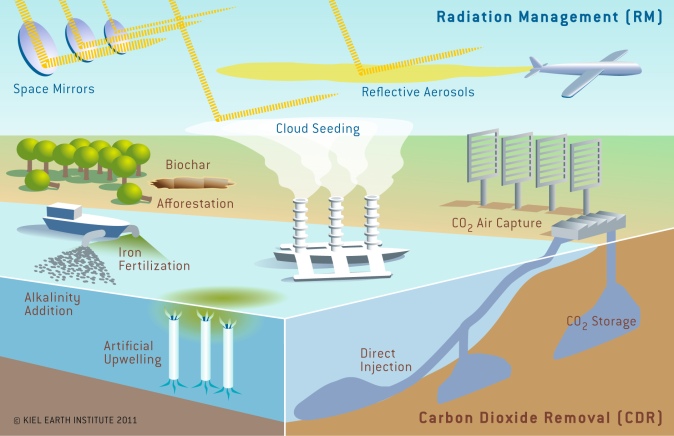
As the stakes get higher through this century, the dangers arising from this mechanistic metaphor of nature will only become more harrowing. Already, in response to the acceleration of climate breakdown, the techno-dystopian idea of geoengineering is becoming increasingly acceptable. Following Tillerson’s misconceived logic, rather than disrupt the fossil fuel-based growth economy, policymakers are beginning to seriously countenance treating the Earth as a gigantic machine that needs fixing, and developing massive engineering projects to tinker with the global climate.

Given the innumerable nonlinear feedback loops that generate our planet’s complex living systems, the law of unintended consequences looms menacingly large. The eerily named field of “solar radiation management”, for example, which has received significant financing from Bill Gates, envisages spraying particles into the stratosphere to cool the Earth by reflecting the Sun’s rays back into space. The risks are enormous, such as causing extreme shifts in precipitation around the world and exacerbating damage we’ve already done to the ozone layer. Additionally, once begun, it could never be stopped without immediate catastrophic rebound heating; it would further increase ocean acidification; and would likely turn the blue sky into a perpetual white haze. These types of feedback effects, arising from the innumerable nonlinear dynamic interdependencies of Earth’s complex systems, get marginalized by a worldview that ultimately sees our planet as a machine requiring a quick fix.

Further, there are deep moral issues that arise from confronting the inherent subjectivity of the natural world. Ever since the Scientific Revolution, the root metaphor of nature as a machine has infiltrated Western culture, inducing people to view the living Earth as a resource for humans to exploit without regard for its intrinsic value. Ecological philosopher Eileen Crist describes this as human supremacy, pointing out that seeing nature as a “resource” permits anything to be done to the Earth with no moral misgivings. Fish get reclassified as “fisheries,” and farm animals as “livestock”—living creatures become mere assets to be exploited for profit. Ultimately, it is the ideology of human supremacy that allows us to blow up mountaintops for coal, turn vibrant rainforest into monocropped wastelands, and trawl millions of miles of ocean floor with nets that scoop up everything that moves.

Once we recognize that other animals with a nervous system are not machines, as Descartes proposed, but likely experience subjective feelings similar to humans, we must also reckon with the unsettling moral implications of factory farming. The stark reality is that around the world, cows, chicken, and pigs are enslaved, tortured, and mercilessly slaughtered merely for human convenience. This systematic torment administered in the name of humanity to over 70 billion animals a year—each one a sentient creature with a nervous system as capable of registering excruciating pain as you or I—quite possibly represents the greatest cataclysm of suffering that life on Earth has ever experienced.

The “quantum jazz” of life

What, then, are metaphors of life that more accurately reflect the findings of biology—and might have the adaptive consequence of influencing our civilization to behave with more reverence toward our nonliving relatives on this beleaguered planet which is our only home?

Frequently, when cell biologists describe the mind-boggling complexity of their subject, they turn to music as a core metaphor. Denis Noble entitled his book on cellular biology The Music of Life, depicting it as “a symphony.” Ursula Goodenough describes patterns of gene expression as “melodies and harmonies.” While this metaphor rings truer than nature as a machine, it has its own limitations: a symphony is, after all, a piece of music written by a composer, with a conductor directing how each note should be played. The awesome quality of nature’s music arises from the fact that it is self-organized. There is no outside agent telling each cell what to do.

Perhaps a more illustrative metaphor would be a dance. Cell biologists increasingly refer to their findings in terms of “choreography,” and philosopher of biology Evan Thompson writes vividly how an organism and its environment relate to each other “like two partners in a dance who bring forth each other’s movements.”

Another compelling metaphor is an improvisational jazz ensemble, where a self-organized group of musicians spontaneously creates fresh melodies from a core harmonic theme, riffing off each other’s creativity in a similar way to how evolution generates complex ecosystems. Geneticist Mae-Wan Ho captures this idea with her portrayal of life as “quantum jazz,” describing it as “an incredible hive of activity at every level of magnification in the organism . . . locally appearing as though completely chaotic, and yet perfectly coordinated as a whole.”

What might our world look if we saw ourselves as participating in a coherent ensemble with all sentient beings interweaving together to collectively reverse entropy on Earth? Perhaps we might begin to see humanity’s role, not to re-engineer a broken planet for further exploitation, but to attune with the rest of life’s abundance, and ensure that our own actions harmonize with the Earth’s ecological rhythms. In the profound words of 20th century humanitarian Albert Schweitzer, “I am life that wills to live, in the midst of life that wills to live.” How, we may ask, might our future trajectory change if we were to reconstruct our civilization on this basis?

HOW TO REPROGRAM YOUR MIND TO TAKE AN ACTIVE ROLE IN YOUR PERSONAL EVOLUTION

By Jonathan Davis

Source: Waking Times

For a long time we’ve been taught that evolution is a process that is happening to us. Thankfully we’re living in times where the human race is finally getting a grasp on the fact that we’re actually actively involved in how we evolve as a species.

As humans, our bodies are constantly changing in response to the environment around us. Our muscles change according to whether we choose to use them or not. The enzymes in our digestive system change in response to the foods we choose to eat. Our endocrine system is in a constant feedback loop with our emotions which can change dramatically according to what’s happening in the world around us. As Dr Bruce Lipton put it, “the cell is a carbon-based ‘computer chip’ that reads the environment”, and the field of epigenetics teaches us that our DNA changes in quality – again, according to our environment.

When science talks about ‘environmental influence’ it seems to imply ‘all that which is outside ourselves’. It’s easy to overlook the fact that that our conscious choices about which environmental factors we engage with are part of what shapes the way our bodies restructure. We are part of the environment that influences our own development; our free will lets us choose and change the environment. We participate in our own evolution during our lifetime and what we do in our own lives can also affect future generations. In this way, personal evolution is collective evolution, and nowhere is personal evolution more apparent than how we are capable of rewiring our own brain.

How Reprogramming the Mind Is Helpful To Us

Humans work really well with routines. We repeat the same pattern over and over, and through neuroplasticity our brain wires itself so that it doesn’t have to think too much about that task anymore, it just runs that established electrical pathway. To riff off Noel Burch, it’s like when we learn to drive a car: we move from unconscious incompetence ‘I don’t know how bad at this I’m going to be’; to conscious competence ‘I now know how bad I am at this’; to conscious competence ‘OK, I can do this but I have to keep my mind on the job’; to unconscious competence ‘I can wind the window down, change the radio, turn a corner and change gears all at the same time, without even thinking about it’.

We program ourselves all the time with repetition, so we don’t have to waste energy engaging isolated focus on every task. The question is whether these are routines we are choosing for ourselves or that have been imposed on us? If they are imposed, are they helpful to us both personally and as a species?

When Are We Most Easily Able To Wire And Re-wire Our Mind?

During early childhood our brains are wiring themselves for the first time. While this process slows after the intense surge of development in first few years, our brains are still establishing the wiring we will largely use for the rest of our life throughout childhood. When we hit our teenage years we experience the second surge of new wiring and there is an opportunity for patterns to be created during this time that can setup behaviours for years to come. After this period, neuroplasticity still occurs but it just isn’t as fluid as it was before. So you can teach an old dog new tricks, it’s just a slower process.

The problem here is that our subconscious is overhearing everything our conscious mind is hearing, and is therefore to a being programmed by whatever influence we’re being exposed to. The Jesuits knew this 400 years ago. They would boast:

“Give me a child until it’s seven, it will belong to the church for the rest of its life.’” – Dr Bruce Lipton, paraphrasing Jesuit priests.

We Are Always Programming Ourselves

I like to imagine the subconscious mind is like an autopilot system. It is overhearing everything we ever think or say, and it’s mission (in the background and whenever possible) is to guide us towards whatever we want… or at least whatever it thinks we want according to what it overhears. An extra level of challenge is introduced when we imagine that the conscious mind has the capacity for judgment its higher expression – discernment. The subconscious, however, doesn’t have that ability. When it is overhearing everything you think and every word you say it simply hears the topic, not the context. ‘I don’t want to be fat’ with the judgment of ‘I don’t want’ removed becomes the topic only: ‘be fat’. The subconscious ‘overhears’ the topic of what is active in your conscious mind and it is listening for repetition. This is how it figures out for how ready we need to be for that particular thought process.

Repetition Is The Key. Repetition Is The Key.

If we lift weights we are using repetition to say to the muscles, ‘be ready for this, we may need to do this at any moment, so restructure yourself’. Scientists have found the fastest way to get fit is to do interval sprints, which is basically a physical way of saying to the body through repetition ‘you need to restructure yourself so we can sprint at top speed at any time, at the drop of a hat’. Rest, get your breath back and sprint again, over and over. This repetition tells the body that it’s a high priority to restructure and be ready for this at all times. My observation is that the same appears to be true for our brain. When our subconscious overhears our thoughts and words and there is repetition, there is an increased likelihood of neural rewiring. After all – neurons that fire together wire together.

The path of least resistance

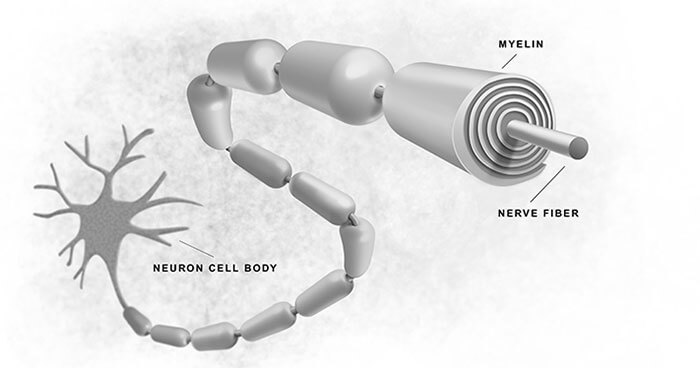
When attempting to re-wire an old habit or behaviour pattern, it is useful to remember the old adage from high school science: electricity follows the path of least resistance. Imagine the old pattern as a well-established electrical pathway in your brain. As you put conscious focus into creating a new electrical pathway to replace the old pattern, you make that new electrical pathway fatter. As soon as you stop putting conscious focus into running the new behaviour pattern the electricity will revert to the old cable for as long as it is the fatter of the two cables, as that is the path of least resistance. As soon as the day comes when the new electrical pathway is thicker than the old one you have a new program in your autopilot system, that will now run on it’s own without you needing to focus conscious intention on it. You have reached a level of conscious competence. According to Dan Coyle a key to making the consciously chosen wiring stick is holding the intention that ‘I want to know this for the rest of my life’. Coyle suggests this causes the brain to coat the new electrical pathway in the brain with myelin insulation, making it much more permanent.

Taking care with the programs we allow our subconscious to overhear

As stated earlier, our autopilot system is taking direction from everything you’re experiencing – which includes the media we watch, the people we surround ourselves with and more. For this reason, one of the most powerful things we can do is exercise discernment around the kind of experiences we expose ourselves to, and their level of intensity and repetition.

“It is easier to build strong children than to repair broken men.” – Frederick Douglass

More importantly is the need for extra care in exercising this discernment on behalf of the children in our care and teaching this discernment to teenagers as, in both cases they are in a heightened state of neuroplasticity and are more susceptible to influence. To be clear, I am by no means advocating prudishness or avoidance of the truth, just a higher level of awareness of how we are either consciously or inadvertently being programmed all the time.

In the video below Bruce Lipton speaks passionately on this very subject, citing this discernment on behalf of our children as a clear solution to war and conflict.

Saturday Matinee: Metamorphosis

(In memory of Terence McKenna, November 16, 1946 – April 3, 2000)

CHAOS AND THE WORLD SOUL

By Richard Kadrey

Source: Wired

METAMORPHOSIS – A video “trialogue” featuring Ralph Abraham, Terence McKenna, and Rupert Sheldrake – is part shamanic journey and part New Physics 101. It’s mostly talk, with touches of simple computer graphics and music adorning the presentation. But what talk it is. We’ve got Abraham, a mathematician and the godfather of chaos theory; McKenna, a shamanologist, ethnopharmacologist, and psychedelic philosopher; and Sheldrake, a radical biologist and originator of the idea of “morphic resonance,” a memory embedded in all natural systems. Their free-form discussion ranges from drug experiments to the anima mundi (world soul), chaos and complexity, and the effects of language and imagination on the shape of the universe – all in search of a new field theory that encompasses art, science, and philosophy.

In this particular chaotic system, McKenna is the strange attractor around which Abraham and Sheldrake orbit. The three unite in a quest for knowledge and an exchange about the sciences they’ve studied. Sheldrake talks passionately about trying to redefine biology in terms of living organisms, not the abstract dead things found in textbooks and labs. Abraham, not surprisingly, explains how protests over the Vietnam War lead him to leave his sheltered academic life, pursue meditation in the Himalayas, and study chaos theory.

With McKenna as the ringleader (and biggest talker), imagination and chaos are the principal themes. Chaos, as McKenna describes it, is a science to study, an opportunity to reshape the world by looking through the lens of nonlinear processes, and a metaphor to help us think about our place in the universe. In McKenna’s words, chaos “is telling us that the intimation of mysticism, the intimation of a possibility of transcendence, is all firmly grounded in science.”

This is heady stuff. Though you half expect the psychedelic proselytizing to drift off into some kind of Birkenstock-and-bean-sprout dead end, the rigor, intelligence, and wit of these three minds keep the ideas sharp and fast. For anyone interested in the edge of science, this video is both entertaining and inspiring.

The Complexity of Cultural Evolution

By Joe Brewer

Source: Resilience

What does the ecological crisis have in common with global poverty? How does politics relate to economics? The study of history? The changing landscape of technology, arts, and culture? Why is there not a coherent School of Social Sciences that brings themes like these together in one place? Answers can only be found by synthesizing two of the most important areas of scientific work in the last 150 years — in the fields of evolutionary studies and complexity science.

All of the most interesting and important topics of concern in the world today (How does consciousness work? What is the human mind? Is it possible to restore health to deteriorated ecosystems? Can we create political systems that promote widespread health and well-being?) involve vast networks of relationships interacting with each other — what are called complex adaptive systems in the lingo of complexity science.

Familiar examples include things like the weather with its inherent unpredictability or a market economy that has no central locus of control. The thing that makes a system “complex” is that patterns arise through the interactions that are not reducible to its constituent parts. You cannot explain the weather simply by describing what water molecules or solar radiation on their own are capable of doing. Neither can you explain an economy by describing how individuals engage in barter or exchange if they happen to be in a market-based society.

Importantly, complex adaptive systems are always far from equilibrium. They are not static. And the only way to make sense of their behavior is to computationally model how the various parts interact with each other dynamically — which leads to the importance of evolution. Emphasis on the word adaptive in complex adaptive systems gives an inkling of Charles Darwin’s Theory of Natural Selection, where the biological traits of an organism that happen to be adaptive in its environment tend to occur more frequently than traits that are not adaptive.

Over time (since living systems are also dynamic), the evolutionary pathway for biology is traced by the intersections of adaptive fitness in environments that might be changing quickly or slowly. All biological systems are complex (they have many interacting parts with emergent phenomena that are not reducible) and they are adaptive (as natural selection plays out in changing environments).

So what does this say about cultural evolution? How can we apply this basic finding from biology to the study of history and economics, politics, and environmental management? Well it turns out that researchers who study cultural evolution — and there are now nearly 2,000 of them in the newly formed Cultural Evolution Society that I was tasked to help create — have brought the mathematical toolkit used in complexity science to the study of cultural change in human and non-human species.

The earliest inklings of this synthesis go back to a debate a century ago when foundations were being laid for the study of population genetics. At that time, statisticians were actively grappling with questions about how to account for genetic variation in biological organisms without the use of digital computers. They developed accounting systems for biological traits that matured continuously through the early-to-mid 20th Century.

In the late 1970’s and early 80’s, there was a group of cultural evolution researchers who translated these statistical tools for the distinct mechanisms of “selection” that play out for behavioral repertoires and other cultural phenomena in human and non-human cultures. Among them were Luigi Cavalli-Sforza and Marcus Feldman at Stanford, Peter J. Richerson at UC-Davis, and Robert Boyd of Arizona State University. These efforts culminated in the publishing of Cultural Transmission and Evolution: A Quantitative Approach in 1981 and Culture and the Evolutionary Process in 1988.

It was during this same time period that the field of complexity research was getting underway — with the multidisciplinary Santa Fe Institute being established in 1984 to explore the mathematical patterns of complex adaptive systems across many domains of study. They organized workshops and symposia on economics, ecology, urban studies, epidemiology, and more to discover how complex systems evolve and change using the mathematical tools of fractal geometry, network science, differential equations, and computational methods.

As I have written elsewhere, the time is urgently upon us to synthesize and apply what is known about complexity and evolution. The fate of humanity literally depends on our ability to do this. In a time of unprecedented exponential change, we must learn to manage complex systems as they evolve in real time.

We need to firstly understand that cultural systems evolve according to Darwinian principles. The interested reader can find many books explaining why this is the case. Here are a few to get you started:

This is a mere sampling — there are now hundreds of books on cultural evolutionary studies that one can dive into. Important for this article is to note that (i) the field of cultural evolution is quite mature at this point in time; (ii) it has advanced rapidly since incorporating mathematical tools used in the study of complexity; and (iii)the world is in flux with tremendous need for this body of knowledge to be brought to bear on our global challenges in the 21st Century.

This is the work of culture design.

The most pressing challenges in the world have foundational cultural components. Global warming arose from the false illusions of human separation from nature and the perception of endless bounty for natural resources at the beginning of the industrial era. Terrorism is cultivated in landscapes where people feel deep-seated anxiety and economic desperation — which arise from particular models of colonial (or post-colonial) exploitation that have unique cultural histories.

Similarly, the spread of rugged individualism as a cultural construct treats human beings as if they are separate from their communities, inherently selfish, and venerable for engaging in psychopathic behaviors like wealth hoarding. In each case, the real state of power is culture and the only viable solutions involve the intentional management of cultural evolutionary change.

But we cannot even start to think this way if we don’t recognize how human cultures operate as complex systems. Only by learning to see that emergent patterns arise through the interactions of constituent parts will we begin to discern how evolutionary change is taking us closer to planetary-scale collapse — and that design practices will be needed that make use of what is now known from cultural evolutionary studies.

Onward, fellow humans.

Terror Cells

prostate_cells2

Ain’t no cure for dystopian biology

By Barbara Ehrenreich

Source: The Baffler

At around the turn of the millennium, some disturbing findings surfaced in the biomedical literature. Macrophages—immune cells whose function is to attack and kill microbes and other threats to the body—do not gather at tumor sites to destroy cancer cells, as had been optimistically imagined. Instead, they encourage the cancer cells to continue their mad reproductive rampage. Frances Balkwill, the British cell biologist who performed some of the key studies of treasonous immune cell behavior, described her colleagues in the field as being “horrified.”

By and large, medical science continues to present a happy face to the public. Self-help books and websites go right on advising cancer patients to boost their immune systems in order to combat the disease; patients should eat right and cultivate a supposedly immune-boosting “positive attitude.” Better yet, they are urged to “visualize” the successful destruction of cancer cells by the body’s immune cells, following guidelines such as:

• Cancer cells are weak and confused, and should be imagined as something that can fall apart like ground hamburger.

• There is an army of different kinds of white blood cells that can overwhelm the cancer cells.

• White blood cells are aggressive and want to seek out and attack the cancer cells.

At a more respectable level of discourse, Harvard physician Jerome Groopman wrote an entire 2012 New Yorker article on scientific attempts to enlist the immune system against cancer—without ever once mentioning that certain types of immune cells have a tendency to go over to the other side.

But the evidence for immune cell collusion with cancer keeps piling up. Macrophages supply cancer cells with chemical growth factors and help build the new blood vessels required by a growing tumor. So intimately are they involved with the deadly progress of cancer that they can account for up to 50 percent of a tumor’s mass. Macrophages also appear to be necessary if the cancer is to progress to its deadliest phase, metastasis. When cancerous mice were treated to eliminate all their macrophages, their tumors stopped metastasizing.

A May 2014 paper in the journal Cancer Cell offers a chilling account of the macrophage–cancer cell interaction. Macrophages are among the most mobile cells in the body, capable of moving through the bloodstream or creeping, like amoebae, by extending pseudopods and pulling themselves along. When macrophages encounter breast cancer cells, they do not do what we would like them to do, which is to attack and engulf the “enemy.” Instead, the Cancer Cell article suggests, the macrophages release a growth factor that encourages the cancer cells to elongate themselves into a mobile, invasive form poised for metastasis. These elongated cancer cells, in turn, release a chemical that further activates the macrophages—leading to the release of more growth factor, and so on. A positive feedback loop is established. Or, to put it more colorfully, the macrophages and cancer cells seem to excite one another to the point where the cancer cells are pumped up and ready to set out from the breast in search of fresh lebensraum—in the lungs, for example, or the liver or brain.

You will find little of this drama in the article itself, and not only because it is a scientific paper that happens to have seventeen coauthors. Their data focuses entirely on the chemical exchange between the two types of cells—which is a little like describing a human flirtation entirely in terms of hormones and pheromones. But what goes on among the living cells in the body? How many cells (macrophages and cancer cells) are required before the positive feedback loop can take off? Do the macrophages and cancer cells actually touch one another, perhaps briefly fusing cell membranes, or do the chemical messages they exchange travel through the intercellular matrix? And then there are the deeper, perhaps unanswerable, questions, like what’s in this for the macrophages, which by enabling metastasis seal their own doom? Or for that matter, what’s in it for the cancer cells, which will die along with the organism they destroy?

Kill, Eat, Repeat

If science seems to balk at the behavior of individual cells (and small groups of cells), this is because twentieth-century biology, in its reductionist zeal, tended to zip right past cells to get to the more glamorous molecular level. Cancer research came to focus on the DNA mutations that predispose cells to a career of selfish reproduction. Immunology downplayed macrophages in favor of an obsession with antibodies—the protein molecules that can mark a “foreign” cell, like a microbe, for destruction—although it is chiefly macrophages that do the destroying. My first thesis advisor at Rockefeller University won a Nobel Prize for elucidating the structure of antibody molecules. My second thesis advisor got far less recognition, and a much smaller lab, for his work on how macrophages kill and digest their prey.

Part of the appeal of molecules over cells is that molecules can be collected in test tubes like any nonliving chemical, stored in a refrigerator, and analyzed at leisure by the usual chemical methods. Cells can be pulverized and fractionated into their constituent molecules, of course, but living cells have to be observed with the patience of an ethnologist studying chimpanzee behavior in the wild. After months of biochemical studies of macrophages, I once had a chance to see a living one under a phase contrast microscope and was surprised, in my naïveté, to find that it was moving, its surface rippling and corrugating like that of a sea anemone. The cells of our body are analogs of, and evolutionary descendants of, the unicellular creatures that preceded multicellular life and, in a sense, are tiny animals themselves.

Only very recently, new techniques in microscopy have made it possible to track the behavior of individual cells in living tissue, and the resulting images reveal striking degrees of individuality. If you calculate the bulk average of movements within a sample group of cells, most cells turn out to be going their own way, on paths far from the average. Cancer cells within a tumor exhibit “extreme diversity.” NK, or “natural killer,” cells, which, like macrophages, attack targets like microbes, do not always kill. A 2013 article reports that about half of the NK cells sit out the fight, leaving a minority of them to become what their human observers call “serial killers.”

Individual cells have no mental life—no thoughts or feelings—at least none that we can imagine, if only because they lack nervous systems. But macrophages and NK cells are capable of “memory,” or different responses to stimuli they have encountered before. Risking anthropomorphism, scientists now speak of “decision-making” by individual cells such as macrophages. The cells sniff the chemicals in their microenvironment, seem to weigh their options, and then decide whether to attack or withdraw, move forward or remain where they are. As one science news site put it:

Cells are constantly making decisions about what to do, where to go or when to divide. Many of these decisions are hard-wired in our DNA or strictly controlled by external signals and stimuli. Others, though, seem to be made autonomously by individual cells.

Just a decade ago, any talk about cellular “decision-making” would have been taken for whimsy. Cells, as we knew them then, were programmed both genetically and epigenetically (through chemical modifications to DNA occurring during development) to perform their functions in the body. Heart cells beat, intestinal cells secrete digestive enzymes, nerve cells conduct electrical signals, etc.—and those that falter at their tasks obligingly commit suicide through a process called apoptosis. Furthermore, most body cells, most of the time, are fixed in place by glue-like attachments to other cells. Individual cells have no decisions to make, we used to think, because they have no choice but to serve the organism by tirelessly carrying out their assigned roles.

But that old deterministic model of cell behavior offered little insight into cellular rebellions such as cancer. Many cells may be exposed to a carcinogen, but only some turn into cancer cells, and of those, only a fraction go on to a career of metastasis. “Decisions” are made. As for macrophages, collusion with cancer cells is only one of the ways they can undermine the organism. Overly ambitious macrophages play a central role in autoimmune diseases and the many inflammatory ailments, like arthritis, that plague the elderly. In coronary artery disease, macrophages pile up on the arterial walls, where they fatten themselves on lipids until there is no space in the artery for blood to flow through. The macrophages are doing what comes naturally to them: eating. Unfortunately, there is no central authority to tell them to desist lest the whole multicellular contraption that is the body come to grief.

As an analogy to the erratic immune system (which includes macrophages, NK cells, and a host of other cell types, including antibody-producing lymphocytes), biology teachers often invoke the military. Any human society within a spear’s throw of potential enemies needs some kind of defensive force—minimally, an armed group who can defend against invaders. But there are risks to maintaining a garrison: the warriors may get greedy and turn against their own people, demanding ever more food and other resources. Similarly, in the case of the body, without immune cells we would be helpless in the face of invading microbes. With them, we face the possibility of insurrection and self-inflicted death.

Dystopian Biology

It is disconcerting to think of the biological self, or body, as a collection of tiny selves. The image that comes to mind is the grotesque portrait of a super-sized king in the frontispiece of Hobbes’s Leviathan: on close inspection, the king turns out to be composed of hundreds of little people crowded into his arms and torso. Hobbes’s point was that human societies need autocratic leaders; otherwise they risk degenerating into a “war of all against all.” But no “king” rules the body. Despite, or sometimes because of, all the communications—chemical and electrical—that connect the tissues and cells of the body, chaos can always break out.

It would be nice to think that the brain, with which we do our thinking, is a more tightly disciplined place, set off as it is from the turmoil of the body by the blood–brain barrier, like a computer kept in a dust-free, air-conditioned room. But living brain cells are not entirely predictable. The glial cells that support and nourish neurons can become cancerous (as, more rarely, can neurons themselves). Then too, the brain has its own army of macrophages, or microglia as they are called, and overactive microglia can, like macrophages in other parts of the body, create damaging inflammations, leading to neurodegenerative diseases. Bizarrely enough, new research this year shows that breast cancer cells sometimes “disguise” themselves as neurons, penetrate the blood–brain barrier, and start fresh tumors in the brain. If individual cells have functions, they do not always seem to know it.

It took science until 2012 to officially acknowledge that nonhuman animals possess feelings and consciousness. It may take a bit longer for biology to admit that the cells in our bodies are not simply automata, that they possess, if not consciousness, at least some sort of agency. As recently as 2008, an article on the confusing taxonomy of macrophages proposed that a new, “more informative” classification “should be based on the fundamental macrophage functions,” which are defined as “host defence, wound healing and immune regulation.” What about macrophages’ role in abetting cancer—or in instigating life-threatening inflammatory diseases? What “functions” do these activities represent? The “wisdom of the body,” which supposedly keeps the body unified as a single sustainable organism, does not always apply at the microscopic level, where an individual cell can sabotage the entire operation.

Natural selection should weed out cellular traitors, you might think, since people who are vulnerable to cancer, autoimmune diseases, and pathological inflammation—at least at early ages—are less likely to reproduce. The truth is, though, that we do not know for sure what natural selection means at the cellular level. Often, when a person with cancer is subjected to chemotherapy, some of the cancer cells survive through what can only be called natural selection. A victory at the cellular level may mean defeat for the organism.

This is madness, of course. But then, who are we, as human beings, to be appalled by the irresponsible “decisions” of our body’s cells? We too are biological organisms, supposedly doing our best to survive and promote the survival of our kin. And we too, like rogue cells in our bodies, can be murderous, suicidal, and systematically destructive of our physical habitats. We, of all creatures, should appreciate the perversity, as well as the clockwork precision, of biology.