Bill Gates’ Global Agenda and How We Can Resist His War on Life

By Vandana Shiva

Source: resilience

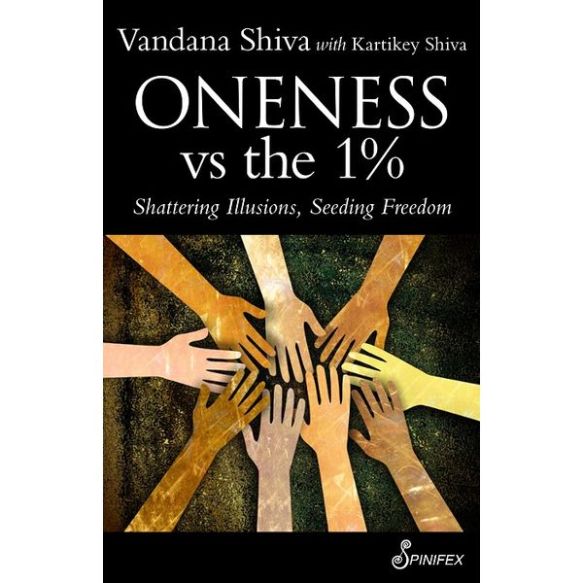
The following excerpt is from Vandana Shiva’s new book Oneness vs. the 1% (Chelsea Green Publishing, August 31, 2020) and is reprinted with permission from the publisher.

In March 2015, Bill Gates showed an image of the coronavirus during a TED Talk and told the audience that it was what the greatest catastrophe of our time would look like. The real threat to life, he said, is ‘not missiles, but microbes.’ When the coronavirus pandemic swept over the earth like a tsunami five years later, he revived the war language, describing the pandemic as ‘a world war’.

‘The coronavirus pandemic pits all of humanity against the virus,’ he said.

In fact, the pandemic is not a war. The pandemic is a consequence of war. A war against life. The mechanical mind connected to the money machine of extraction has created the illusion of humans as separate from nature, and nature as dead, inert raw material to be exploited. But, in fact, we are part of the biome. And we are part of the virome. The biome and the virome are us. When we wage war on the biodiversity of our forests, our farms, and in our guts, we wage war on ourselves.

The health emergency of the coronavirus is inseparable from the health emergency of extinction, the health emergency of biodiversity loss, and the health emergency of the climate crisis. All of these emergencies are rooted in a mechanistic, militaristic, anthropocentric worldview that considers humans separate from—and superior to—other beings. Beings we can own, manipulate, and control. All of these emergencies are rooted in an economic model based on the illusion of limitless growth and limitless greed, which violate planetary boundaries, and destroy the integrity of ecosystems and individual species.

New diseases arise because a globalized, industrialized, inefficient agriculture invades habitats, destroys ecosystems, and manipulates animals, plants, and other organisms with no respect for their integrity or their health. We are linked worldwide through the spread of diseases like the coronavirus because we have invaded the homes of other species, manipulated plants and animals for commercial profits and greed, and cultivated monocultures. As we clear-cut forests, as we turn farms into industrial monocultures that produce toxic, nutritionally empty commodities, as our diets become degraded through industrial processing with synthetic chemicals and genetic engineering, and as we perpetuate the illusion that earth and life are raw materials to be exploited for profits, we are indeed connecting. But instead of connecting on a continuum of health by protecting biodiversity, integrity, and self-organization of all living beings, including humans, we are connected through disease.

According to the International Labour Organization, ‘1.6 billion informal economy workers (representing the most vulnerable in the labour market), out of a worldwide total of two billion and a global workforce of 3.3 billion, have suffered massive damage to their capacity to earn a living. This is due to lockdown measures and/or because they work in the hardest-hit sectors.’ According to the World Food Programme, a quarter of a billion additional people will be pushed to hunger and 300,000 could die every day. These, too, are pandemics that are killing people. Killing cannot be a prescription for saving lives.

Health is about life and living systems. There is no ‘life’ in the paradigm of health that Bill Gates and his ilk are promoting and imposing on the entire world. Gates has created global alliances to impose top-down analysis and prescriptions for health problems. He gives money to define the problems, and then he uses his influence and money to impose the solutions. And in the process, he gets richer. His ‘funding’ results in an erasure of democracy and biodiversity, of nature and culture. His ‘philanthropy’ is not just philanthrocapitalism. It is philanthroimperialism.

The coronavirus pandemic and lockdown have revealed even more clearly how we are being reduced to objects to be controlled, with our bodies and minds as the new colonies to be invaded. Empires create colonies, colonies enclose the commons of the indigenous living communities and turn them into sources of raw material to be extracted for profits. This linear, extractive logic is unable to see the intimate relations that sustain life in the natural world. It is blind to diversity, cycles of renewal, values of giving and sharing, and the power and potential of self-organising and mutuality. It is blind to the waste it creates and to the violence it unleashes. The extended coronavirus lockdown has been a lab experiment for a future without humanity.

On March 26, 2020, at a peak of the coronavirus pandemic and in the midst of the lockdown, Microsoft was granted a patent by the World Intellectual Property Organization (WIPO). Patent WO 060606 declares that ‘Human Body Activity associated with a task provided to a user may be used in a mining process of a cryptocurrency system….’

The ‘body activity’ that Microsoft wants to mine includes radiation emitted from the human body, brain activities, body fluid flow, blood flow, organ activity, body movement such as eye movement, facial movement, and muscle movement, as well as any other activities that can be sensed and represented by images, waves, signals, texts, numbers, degrees, or any other information or data.

The patent is an intellectual property claim over our bodies and minds. In colonialism, colonisers assign themselves the right to take the land and resources of indigenous people, extinguish their cultures and sovereignty, and in extreme cases exterminate them. Patent WO 060606 is a declaration by Microsoft that our bodies and minds are its new colonies. We are mines of ‘raw material’—the data extracted from our bodies. Rather than sovereign, spiritual, conscious, intelligent beings making decisions and choices with wisdom and ethical values about the impacts of our actions on the natural and social world of which we are a part, and to which we are inextricably related, we are ‘users.’ A ‘user’ is a consumer without choice in the digital empire.

But that’s not the totality of Gates’ vision. In fact, it is even more sinister—to colonise the minds, bodies, and spirits of our children before they even have the opportunity to understand what freedom and sovereignty look and feel like, beginning with the most vulnerable.

In May 2020, Governor Andrew Cuomo of New York announced a partnership with the Gates Foundation to ‘reinvent education.’ Cuomo called Gates a visionary and argued that the pandemic has created ‘a moment in history when we can actually incorporate and advance [Gates’] ideas…all these buildings, all these physical classrooms—why with all the technology you have?’

In fact, Gates has been trying to dismantle the public education system of the United States for two decades. For him students are mines for data. That is why the indicators he promotes are attendance, college enrollment, and scores on a math and reading test, because these can be easily quantified and mined. In reimagining education, children will be monitored through surveillance systems to check if they are attentive while they are forced to take classes remotely, alone at home. The dystopia is one where children never return to schools, do not have a chance to play, do not have friends. It is a world without society, without relationships, without love and friendship.

As I look to the future in a world of Gates and Tech Barons, I see a humanity that is further polarized into large numbers of ‘throw away’ people who have no place in the new Empire. Those who are included in the new Empire will be little more than digital slaves.

Or, we can resist. We can seed another future, deepen our democracies, reclaim our commons, regenerate the earth as living members of a One Earth Family, rich in our diversity and freedom, one in our unity and interconnectedness. It is a healthier future. It is one we must fight for. It is one we must claim.

We stand at a precipice of extinction. Will we allow our humanity as living, conscious, intelligent, autonomous beings to be extinguished by a greed machine that does not know limits and is unable to put a break on its colonisation and destruction? Or will we stop the machine and defend our humanity, freedom, and autonomy to protect life on earth?

Saturday Matinee: Color Out of Space

By Peter Sobczynski

Source: RogerEbert.com

According to IMDb, the seemingly inexhaustible Nicolas Cage has no fewer than six additional movies in various stages of production that are currently scheduled for release in 2020, ranging from high-profile studio outings to the kind of demented head-scratchers that he somehow manages to sniff out in the manner of a pig finding truffles. And yet, none of these films may be able to top his latest effort, “Color Out of Space,” in terms of sheer nuttiness. Considering that the film takes its inspiration from one of the most famous short stories by the legendarily weird H.P. Lovecraft, and was directed and co-written by Richard Stanley (making his first stab at narrative filmmaking since being fired from his remake of “The Island of Dr. Moreau” after only a few days of shooting), there was very little chance that it was every going to be just another run-of-the-mill project. However, the addition of Cage to the already heady cinematic brew definitively puts it over the top, making it the kind of cult movie nirvana that was its apparent destiny from the moment the cameras started rolling.

The film centers on the Gardner family, who have recently left the hustle and bustle of the city for a more bucolic life in a remote house near a lake in the deep woods of Massachusetts. While father Nathan (Cage) is gung-ho about becoming a farmer and raising alpacas (“the animal of the future”) despite no discernible talent for either, wife Theresa (Joely Richardson) is preoccupied with recovering from a recent mastectomy, eldest son Benny (Brendan Meyer) is off getting stoned most of the time, teen daughter Lavinia (Madeline Arthur) vents her annoyance at the move by dabbling in the black arts with her paperback copy of “The Necronomicon” and young son Jack (Julian Hilliard) more often than not simply gets lost in the shuffle. The Gardners are not crazy or hostile in any way, but it also becomes quickly obvious that their isolation has begun to drive them all a bit batty. 

That weirdness escalates one night when the sky turns an almost indescribable shade of fuchsia, and a meteorite crashes into their front yard. Although the meteorite itself soon crumbles away, strange things begin happening in its wake. A batch of new and heretofore unseen flowers begin blooming while Nathan’s tomato crop comes in weeks ahead of schedule; the family’s phones, computers, and televisions are constantly being distorted by waves of static that render them all but useless. The Gardners themselves begin exhibiting signs of strange behavior as well: Nathan begins acting daffier than usual, flying off into rages at the drop of the hat; a seemingly dazed Theresa chops off the tops of a couple of her fingers while cutting carrots; Jack is constantly staring and whistling at a well that he claims contains a “friend.” Before long, everything in the area begins mutating in indescribable ways, and while Benny and Lavinia recognize what is happening around them, even they appear to be powerless to escape the grip of whatever is behind everything.

The stories of H.P. Lovecraft have inspired, directly or otherwise, any number of films over the years but with very few exceptions (chiefly Stuart Gordon’s cult classics “Re-Animator” and “From Beyond”), most of them have not been especially good. In most cases, the problem is that Lovecraft’s stories tended to focus on indescribable horrors and much of the impact for the reader came from taking the vague hints that he did parcel out and then picturing it in their own minds, where their imaginations had no limitations or budgetary restrictions. To successfully adapt one of his works, a filmmaker needs either an unlimited budget to try to bring his horrors fully to life, or the kind of unlimited imagination that allows them to take Lovecraft’s suggestions and go off in their own unusual directions. When these requirements are missing, the results can be fairly dire, as anyone who saw “The Curse,” a dire low-budget 1987 adaptation of Color of Outer Space, can attest.

In this case, the film works because it is clear that Stanley is not only working on the same wavelength as Lovecraft was when he wrote the original story, but has managed to transform the author’s decidedly purple prose into cinematic terms. Take the titular color, for example. In the original story, it is never properly described to us other than being of a shade never before seen on the typical color spectrum. That sort of non-description description can work on the page but isn’t especially helpful as a guide for someone who has to bring it to life. Stanley proves himself to be up to the challenge, and hits upon a wild color scheme that honors Lovecraft’s intentions by bathing everything in a genuinely otherworldly tinge. Not content to rest there, he builds upon that weirdness with an equally vivid soundscape, including a creepily effective score by Colin Stetson. Stetson’s score shifts levels of reality in aural terms and conjure up the kind of terrors that are even harder to shake than the numerous and undeniably eye-popping physical mutations on display.

Stanley also manages to work the film’s additional otherworldly element—Cage’s performance—organically into the material, without losing any of its total strangeness in the process. For fans of oddball cinema, a Cage-Stanley collaboration is the stuff dreams are made of. In that respect, it does not disappoint. Obviously, once things go crazy in the second half, Cage brings out the weirdness full force (even randomly employing the wheeling vocal tic that he used decades earlier in “Vampire’s Kiss”). But what is interesting is that, instead of making Nathan into a completely normal guy who does an immediate 180 as a result of the strange occurrences, he and Stanley instead see him as a guy who is already a bit off right from the start, albeit in endearingly oddball ways. As a result of his work in these early scenes, there is an unexpected degree of poignance that he brings to the proceedings later on even as things go fully gonzo.

The chief problem with “Color Out of Space” is that, at nearly two full hours, it is a little too much of a good thing at times, with some plot elements—chiefly one involving potentially shady dealings by the town’s mayor (Q’orianka Kilcher)—that could have easily been jettisoned. For the most part, however, the film is the kind of audacious and deliriously messed-up work that fans of Stanley, Cage, and cult cinema have been rooting for ever since the existence of the project became known. Both as an effective cinematic translation of Lovecraft’s particular literary skills, and as a freakout of the first order with sights and sounds that will not be easily forgotten, this is one of those films that I suspect is going to grow in significance and popularity in due time. Hopefully it will serve as just the first of many collaborations between Stanley and Cage, two decidedly kindred artistic spirits.

Watch Color Out of Space on Hoopla here: https://www.hoopladigital.com/title/13038495

Win-Win vs Lose-Lose: The Time Has Come for the World to Choose

By Matthew Ehret

Source: Strategic Culture Foundation

It is a tragedy of our age that society has been locked in a zero-sum operating system for so long that many people living in the west cannot even imagine a world order designed in any other way… even if that zero sum system can ultimately do nothing but kill everyone holding onto it.

Is this statement too cynical?

It is a provable fact that if one chooses to organize their society around the concept that all players of a “great game” must exist in a finite world of tension as all zero-sum systems presume, then we find ourselves in a relatively deterministic trajectory to hell.

You see, this world of tension which game masters require in today’s world are generated by increasing rates of scarcity (food, fuel, resources, space, etc). As this scarcity increases due to population increases tied to heavy doses of arson, it naturally follows that war, famine, and other conflict will rise across all categories of divisions (ethnic, religious, linguistic, gender, racial etc). Showcasing this ugly misanthropic philosophy during a December 21, 1981 People Magazine Interview, Prince Philip described the necessity of reducing the world population stating:

“We’re in for a major disaster if it isn’t curbed-not just for the natural world, but for the human world. The more people there are, the more resources they’ll consume, the more pollution they’ll create, the more fighting they will do. We have no option. If it isn’t controlled voluntarily, it will be controlled involuntarily by an increase in disease, starvation, and war.”

When such a system is imposed upon a world possessing atomic weapons, as occurred in the wake of FDR’s death and the sabotage of the great president’s anti-colonial vision, the predictably increased rates of conflict, starvation and ignorance can only spill over into a global war if nuclear superpowers chose to disobey the limits and “norms” of this game at any time.

Perhaps some utopian theoreticians sitting in their ivory towers at Oxford, Cambridge or the many Randian think tanks peppering foreign policy landscape believed that this game could be won if only all nation states relinquished their sovereignty to a global government… but that hasn’t really happened, has it?

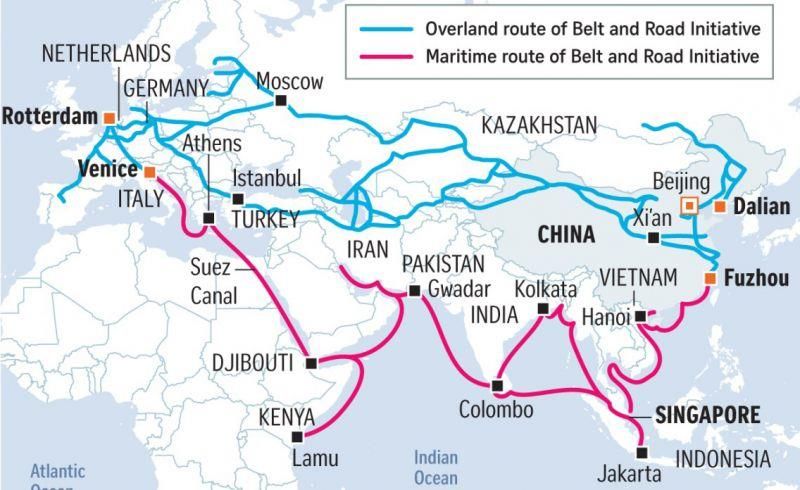
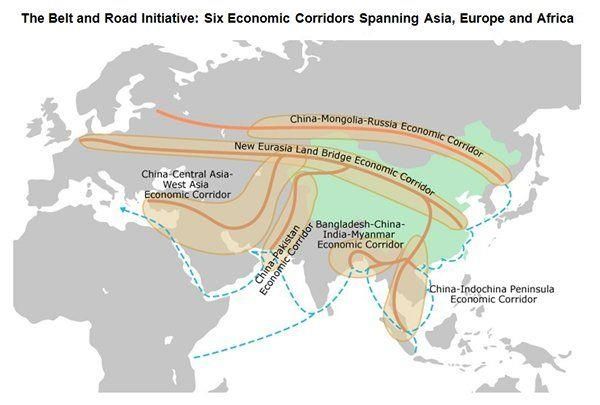
Instead of the relinquishing of sovereignty, the past decade has seen a vast rise of nationalism across all corners of the earth which have been given new life by the rise of China’s Belt and Road Initiative and broader multipolar alliance. While these impulses have taken on many shapes and forms, they are united in the common belief that nation states must not become a thing of the past but rather must become determining forces of the world’s economic and political destinies.

The Case of the Bi-Polar USA

Unfortunately, within the USA itself where nationalism has seen an explosive rise in popularity under President Trump, the old uni-polar geopolitical paradigm has continued to hold tight under such neocon carryovers as Mike Pompeo, Defense Secretary Esper, CIA director Gina Haspel and the large caste of Deep State characters still operating among the highest positions of influence on both sides of the aisle.

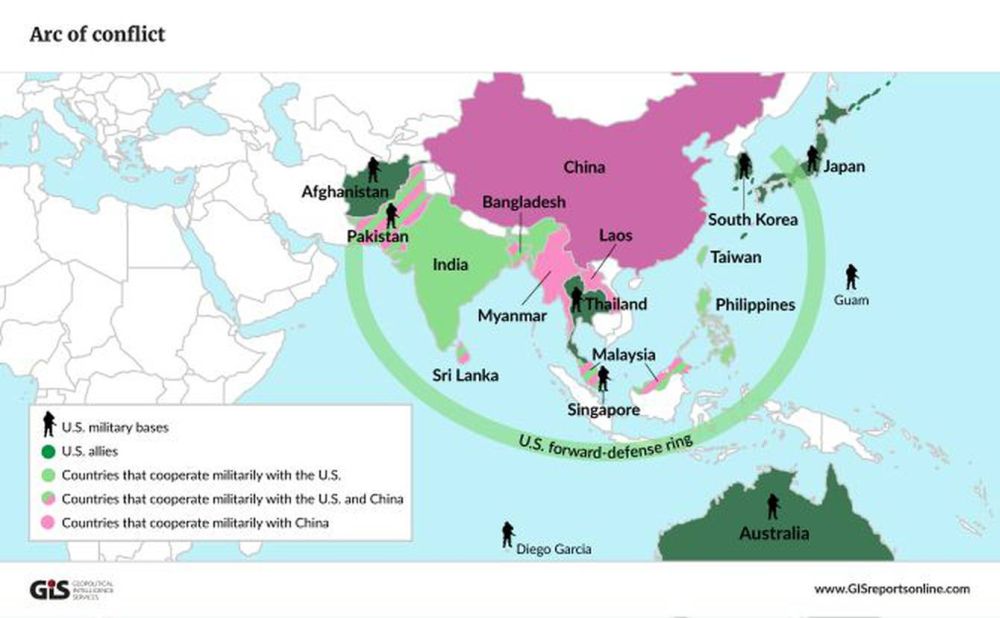
While I genuinely believe that Trump would much rather work with both Russia, China and other nations of the multipolar alliance in lieu of blowing up the world, these aforementioned neocons think otherwise evidenced by Pompeo’s October 6 speech in Japan. In this speech, Pompeo attempted to rally other Pacific nations to an anti-Chinese security complex known as the Quad (USA, Australia, Japan and India). With his typically self-righteous tone, Pompeo stated that “this is not a rivalry between the United States and China. This is for the soul of the world”. Earlier Pompeo stated “If the free world doesn’t change Communist China, Communist China will change us.”

Pompeo’s efforts to break China’s neighbours away from the Belt and Road Initiative have accelerated relentlessly in recent months, with territorial tensions between China and Japan, Vietnam, South Korea, Malaysia, Taiwan, Indonesia, Philippines, Indonesia and Brunei being used by the USA to enflame conflict whenever possible. It is no secret that the USA has many financial and military tentacles stretching deep into all of those Pacific nations listed.

Where resistance to this anti-China tension is found, CIA-funded “democracy movements” have been used as in the current case of Thailand, or outright threats and sanctions as in the case of Cambodia where over 24 Chinese companies have been sanctioned for the crime of building infrastructure in a nation which the USA wishes to control.

Pompeo’s delusional efforts to consolidate a Pacific Military bloc among the QUAD states floundered fairly quickly as no joint military agreement was generated creating no foundation upon which a larger alliance could be built.

China’s Foreign Minister Wang Yi accurately called out this regressive agenda on October 13 saying:

“In essence [the Indo-Pacific Strategy] aims to build a so-called Indo-Pacific NATO underpinned by the quadrilateral mechanism involving the United States, Japan, India and Australia. What it pursues is to trumpet the Cold War mentality and to stir up confrontation among different groups and blocs and to stoke geopolitical competition. What it maintains is the dominance and hegemonic system of the United States. In this sense, this strategy is itself an underlying security risk. If it is forced forward it will wind back the clock of history.”

China Responds with Class

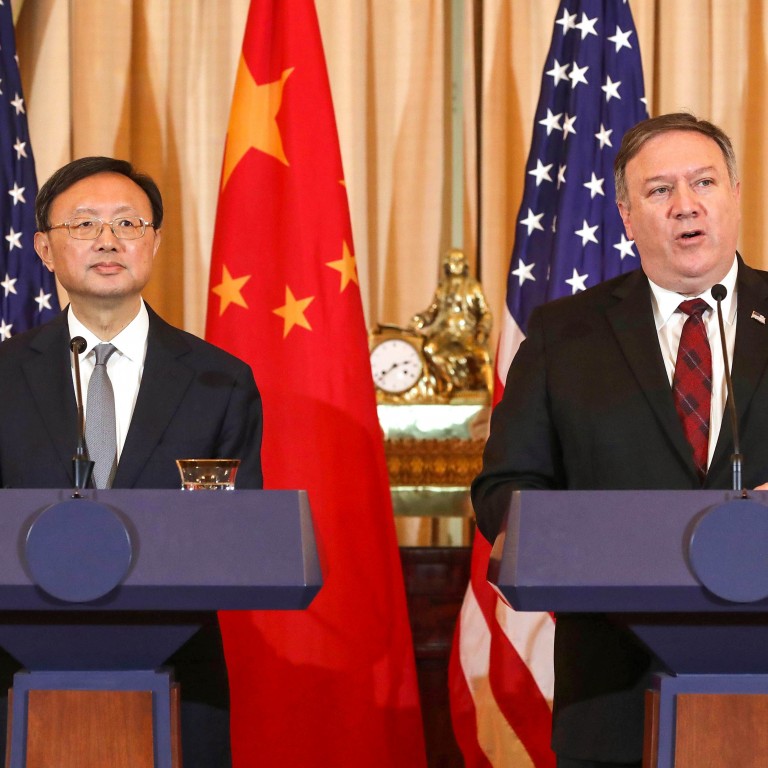
China’s response to this pompous threat to peace was classy to say the least with Wang Yi teaming up with Yang Jiechi (Director of China’s Central Foreign Affairs Commission) who jointly embarked on simultaneous foreign tours that demonstrated the superior world view of “right-makes-might” diplomacy. Where Wang Yi focused his efforts on Southeast Asia with visits to the Philippines, Indonesia, Cambodia, Malaysia, Laos, Thailand and Singapore, Yang Jiechi embarked on a four-legged tour of Sri Lanka, the UAE, Algeria and Serbia.

While COVID assistance was a unifying theme throughout all meetings, concrete economic development driven by the Belt and Road Initiative was relentlessly advanced by both diplomats. In all bilateral agreements reached over this past week, opportunities for cooperation and development were created with a focus on diminishing the points of tension which geopolticians require in order for their perverse “game” to function.

In Malaysia, the $10 billion, 640 Km East Coast Rail link was advanced that will be completed with China’s financial and technical help by 2026 providing a key gateway in the BRI, as well as two major industrial parks that will service high tech products to China and beyond over the coming decades.

After meeting with Wang Yi on October 9, Indonesia’s Special Presidential Envoy announced that “Indonesia is willing to sign cooperation documents on the Belt and Road Initiative and Global Maritime Fulcrum at an early date, enlarge its cooperation with China on trade and investment, actively put in place currency swap arrangements and settlements in local currency, step up the joint efforts in human resources and disaster mitigation, and learn from China’s fight against poverty.”

In Cambodia, a major Free Trade Agreement was begun which will end tariffs on hundreds of products and create new markets for both nations. On the BRI, the New International Land-Sea Trade corridor and Lancang-Mekong Cooperation plans were advanced.

In the Philippines, Wang Yi and Foreign Minister Locsin discussed Duterte’s synergistic Build Build Build program which reflects the sort of long term infrastructure orientation characteristic of the BRI which are both complete breaks with the decades-long practices of usurious IMF loans which have created development bottlenecks across the entire developing sector.

In Thailand Wang Yi met with the Thai Prime Minister where the two accelerated the building of the 252 km Bangkok-Korat high speed rail line which will then connect to Laos and thence to China’s Kunmin Province providing a vital artery for the New Silk Road.

In the past few years, the USA has been able to do little to counter China’s lucrative offers while at best offering cash under the rubric of the Lower Mekong Initiative established under the Hillary-Obama administration in preparation for the Asia Pivot encirclement of China that was unleashed in 2012. This was done as part of a desperate effort to keep China’s neighbors loyal to the USA and was meant to re-enforce Obama’s Trans-Pacific Partnership which Trump thankfully destroyed during his first minutes in office.

Yang Jiechi’s Four-Legged Tour

In Sri Lanka, a $90 million grant was offered by China which will be devoted to medical resources, water supplies and education and which the Chinese embassy website stated “will contribute to the well being of Sri Lankans in a post-COVID era”. Another $989 million loan was delivered for the completion of a massive expressway stretching from Central Sri Lanka’s tea growing district to the Port of Hambanota. While this port is repeatedly used by detractors of the BRI like Pompeo as proof of the “Chinese debt trap”, recent studies have proven otherwise.

In the UAE, the Chinese delegation released a press release after meeting with Prince Zayed al-Nahyan stating: “Under the strategic guidance of President Xi and the Abu Dhabi crown prince, China will enrich the connotation of its comprehensive strategic partnership with UAE, cement the political trust and support, promote alignment of development strategies, and advance high-quality joint construction of the Belt and Road.”

In Algeria, Yang offered China’s full support for the New Economic Revival Plan which parallels the Philippines’ Build Build Build strategy by focusing on long term industrial growth rather than IMF-demands for privatization and austerity that have kept North Africa and other nations backward for years.

Finally in Serbia which is a vital component of the BRI, the Chinese delegation gave its full support to the Belgrade-Budapest railway, and other long term investments centered on transport, energy and soft infrastructure, including the expansion of the Chinese-owned Smederevo Steel Plant which employs over 12 000 Serbians and which was saved from bankruptcy by China in 2016. By the end of the trip, Prime Minister Brnabic announced: “Serbia strongly supports China both bilaterally and multilaterally, including President Xi Jinping’s Access and Roads Initiative and the 17+1 Cooperation Mechanism, in the context of which most of Serbia’s infrastructure and strategy projects will be realized”

The Spirit of Win-Win Must Not Be Sabotaged

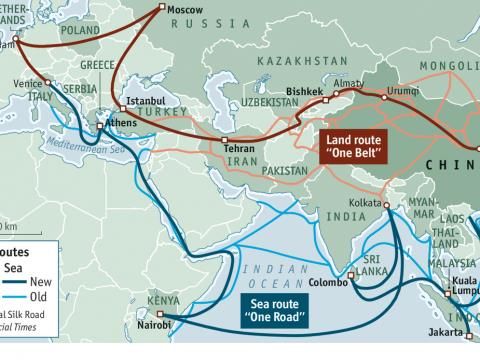
Overall, the spirit of the growing New Silk Road is fast moving from a simple east-south trade route towards a global program stretching across all of Africa, to the Middle East, to the High Arctic and Latin America. While this program is driven by a longer view of the past and future than most westerners realize, it is quickly becoming evident that it is the only game in town with a future worth living in.

While China has committed to the enlightened idea that human society is more than a “sum of parts”, the Cold Warriors of the west have chosen to hold onto obsolete notions of human nature that suppose we live in a world of “each vs. all”. These obsolete notions are premised on the bestial idea that our species is destined to do little more than fight for diminishing returns of scraps in a closed -system struggle for survival where only a small technocratic elite of game masters calling themselves “alphas” control the levers of production and consumption from above.

Thus far, President Trump has distinguished himself from other dark age war hawks in his administration by promoting a foreign policy outlook centered on economic development. This has been seen in his recent victories in achieving economic normalization between Serbia and Kosovo, and endorsing the Alaska-Canada railway last month. With the elections just around the corner and the war hawks flying in full force, it is clear that these piecemeal projects, though sane and welcomed are still not nearly enough to break the USA away from its course of war with China and towards a new age of win-win cooperation required for the ultimate survival of our species.

Why We’re Doomed: Our Delusional Faith in Incremental Change

By Charles Hugh Smith

Source: Of Two Minds

Better not to risk any radical evolution that might fail, and so failure is thus assured.

When times are good, modest reforms are all that’s needed to maintain the ship’s course. By “good times,” I mean eras of rising prosperity which generate bigger budgets, profits, tax revenues, paychecks, etc., eras characterized by high levels of stability and predictability.

Since stability has been the norm for 75 years, institutions and conventional thinking have both been optimized for incremental change. This is an analog of natural selection in Nature: when the organism’s environment is stable, there’s little pressure to favor random mutations, as these can be risky.

Why risk big changes when everything’s working fine as is?

Absent any big changes in their environment, organisms’ genetic programming remains stable. Unlike natural selection’s process of generating random mutations and testing their efficacy and advantages over the existing programming, human organizations quickly habituate to stable eras by institutionalizing incremental changes as the only available process for reform / change.

Radical reforms are not just frowned on as 1) unneccesary and 2) needlessly risky, there is no institutionalized process to propose, test and adopt radical changes because there is no need for such a process.

Nature has such a process: punctuated equilibirium. When faced with a rapidly changing environment, organisms face intense evolutionary pressure to adapt or die. Mutations which confer a significant advantage in the new environment become part of the species’ genetic programming as those with the adaptation bear offspring who carry the advantageous adaptation. Those without the advantageous adaptation die and those with the adaptation thrive and multiply.

Once the environment stabilizes in “the new normal,” the evolutionary pressure lets up and the species returns to the stability of relatively few changes in its genetic programming.

Organisms which have lost the ability to adapt to rapid change die off once they encounter instability. Species that constantly face instability and rapid change will selectively favor genetic traits which optimize rapid evolution.

Nature tends to retain a basement closet full of fast-evolution tricks just in case the organism faces novel challenges.

Alas, human organizations and conventional thinking have no such closet of fast-evolution tricks. Rather, human organizations and conventional thinking marshal formidable forces to suppress anything which threatens the status quo, because why risk upsetting the feeding trough unless it’s absolutely necessary?

Therein lies the fatal problem: radical adaptation is never absolutely necessary in human organizations and conventional thinking until it’s too late–and even then, the leadership and conventional thinking will fatalistically accept oblivion rather than opt for a risky strategy of testing every mutation and fast-tracking whatever has promise, even though the odds of failure are high since 1) the challenge is novel and therefore unpredictable and 2) most mutations will fail to provide the radical advantages needed to meet the challenge.

In other words, what’s absolutely necessary to human organizations and conventional thinking is the suppression of potentially dangerous novel ideas because the worst-case scenario is that the novel ideas upset the feeding trough all the insiders have come to depend on.

Unfortunately for human organizations and conventional thinking, novel challenges demand precisely what they’re incapable of: risky rapid evolution. The risks will never seem worth it because some insiders might lose their spot at the feeding trough.

Since this loss is viewed as catastrophic by those at risk, they will fight with everything they have to stymie any radical reforms. Ironically, their resistance to rapid evolution only guarantees the demise of the entire organization / status quo, including the spot at the trough they were so eager to defend at all costs.

As the crisis deepens, the default setting in organizations and conventional thinking is that incremental changes and reforms will be enough, because they’ve been enough for four generations. I call this entirely natural default setting the delusional faith in incremental change because this faith isn’t guided by history or the logic of causality; it’s simply convenient and easy.

Nobody gets fired or demoted for agreeing to do more of what’s failed spectacularly.

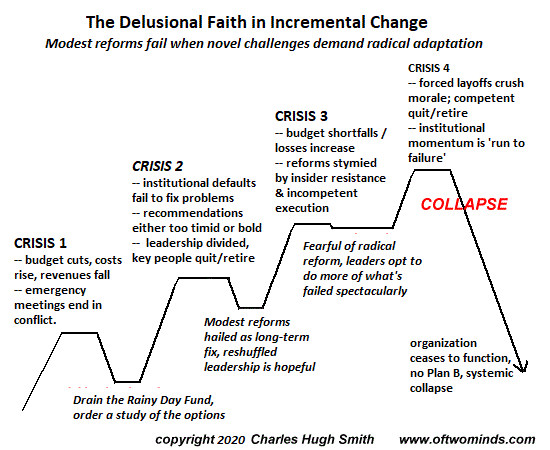
I’ve prepared a chart of the delusional faith in incremental change showing how each new crisis is met by incremental institutionalized defaults that are completely inadequate to the novel challenges that have arisen. The blindness to the need for radical adaption has been institutionalized as well: this is what worked in the past, so it will work now. Why risk everything when we have procedures that have worked well?

Each stage of the crisis draws whatever conventional response causes the least pain. First, the “rainy day fund” is drained to keep everyone at the feeding trough. Studies of options are funded, and so on.

The recommendations are either too timid and clearly inadequate or they’re too bold and risky. So incremental policy and budget tweaks are adopted as acceptable institutional defaults.

But rifts open in the leadership as the farsighted few demand rapid, radical adaptations and the conventional risk-averse crowd digs in their heels. The farsighted few are pushed out or quit / retire, eliminating the only people who had the ability and experience to actually pull off a radical change of course.

A reshuffling of leadership evokes hope that the modest reforms will work magic. Alas, incremental tweaks only work in eras of stability. They fail miserably in unstable eras of rapidly-evolving challenges.

As everything runs to failure, the only acceptable path is to do more of what’s failed spectacularly, a default to low-risk incrementalism that only accelerates the final inevitable collapse.

The delusional faith in incremental change guarantees systemic failure. Better not to risk any radical evolution that might fail, and so failure is thus assured.

This is why our status quo is doomed:

Not News But A Juicy Collection Of Narratives – How The New York Times Failed Its Readers

By Moon of Alabama

The New York Times star reporter Rukmini Callimachi had been widely criticized for her exaggerated reporting about the Islamic State and terrorism. But her editors kept supporting and promoting her stories. That finally ended when Canada recently indicted one Shehroze Chaudhry, also known as Abu Huzaifa, for falsely claiming to have been an ISIS member. Chaudhry had made up his blood dripping stories. He had never been with ISIS and had never been to Syria or Iraq.

But the unverified stories of Abu Huzaifa al-Kanadi had been the central element of the NYT’s ten part Caliphate podcast by Rukmini Callimachi.

The failure of her reporting finally was so evident that the NYT had to allow its media columnist Ben Smith to write about the issue. Remarkably his reporting was published in the Business section of the paper.

An Arrest in Canada Casts a Shadow on a New York Times Star, and The Times

It is a pretty devastating report about the support Callimachi got from her editors even as an ever growing number of her collogues criticized her over-sensationalized reporting. The root cause of the problem is the way in which the Times, as well as other news media, try to change from news providers to narrative creators:

The crisis now surrounding the podcast is as much about The Times as it is about Ms. Callimachi. She is, in many ways, the new model of a New York Times reporter. She combines the old school bravado of the parachuting, big foot reporter of the past, with a more modern savvy for surfing Twitter’s narrative waves and spotting the sorts of stories that will explode on the internet.
…
Ms. Callimachi’s approach and her stories won her the support of some of the most powerful figures at The Times: early on, from Joe Kahn, who was foreign editor when Ms. Callimachi arrived and is now managing editor and viewed internally as the likely successor to the executive editor, Dean Baquet; and later, an assistant managing editor, Sam Dolnick, who oversees the paper’s successful audio team and is a member of the family that controls The Times.
…
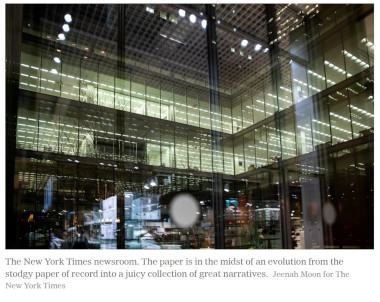
Ms. Callimachi’s approach to storytelling aligned with a more profound shift underway at The Times. The paper is in the midst of an evolution from the stodgy paper of record into a juicy collection of great narratives, on the web and streaming services. And Ms. Callimachi’s success has been due, in part, to her ability to turn distant conflicts in Africa and the Middle East into irresistibly accessible stories.

The highlighted sentence is the essence of the piece. It was even repeated in the caption of a picture accompanying it.

The striving for ‘juicy narratives’ is the biggest mistake of current news media. Their attempt to copy the success of Hollywood dramas by creating narratives has destroyed their credibility. It has put incentives on the wrong aspect of a reporter’s work. Instead of requiring well checked facts the editors are now asking for confirmations of preconceived tales:

What is clear is that The Times should have been alert to the possibility that, in its signature audio documentary, it was listening too hard for the story it wanted to hear — “rooting for the story,” as The Post’s Erik Wemple put it on Friday.

Callimachi is far from the only one guilty of creating fake news to fulfill her editors demand of narratives. The four year long coverage of ‘Russiagate’, the fairytale collection of made up connections between Donald Trump and Russia, was full of such. The editorial push towards narratives is rooted in the desire to create clickbait and to generate a social media echo around the reporting. That may be profitable in the short term but it is also a guarantee for a long term failure.

False of hyped narratives will over time get debunked. People then lose trust in the media that provided them with the fake news. That again will cause a long term loss of readership.

A similar case of falling for ‘narratives’ happened to German magazine Der Spiegel. Its star author Claas Relotius wrote fake stories on a large scale. Whether he wrote about Trump voters in Arizona or about a little girl in Syria, Relotius invented the witnesses to the ‘news’ he provided. He made up ‘facts’ and described himself visiting places he had never been to. For years there had been warnings that many of the detail Relotius provided were wrong. But his editors promoted him because the slick ‘narratives’ he delivered were exactly what they wanted. Der Spiegel, a once universally trusted source of news, is now joked about as ‘the former news magazine’.

The media trend towards providing narratives instead of verified facts also increases the danger of falling for manipulation. Governments as well as political marketing campaigns love to provide ready made tales. It is easier and cheaper for media to pick these up and repeat them instead of digging into the facts and their logic. We thus get false tales about chemical weapon use in Syria and a Skripal poisoning ‘narrative’ that does not stand up to the slightest scrutiny.

Can we please have real news? Just the new facts, with no ‘narrative’ or moral tales attached to them? Facts that are verified and described in the context of the issue they relate to? Do they fit the logic of already known ones? Do they make sense? How may they influence further developments?

To provide the above can easily fill a reporter’s day of work. It is usually enough material to write an 800 words report. Its sufficient for the reader to create his own narrative from it.

Dear news media. Please go back to providing real news. If you do so you will eventually regain my trust. That will be, in the long run, a much more valuable asset than the social media chatter you are currently trying to generate.

Battlefield Social Media: The West’s Growing Censorship

Censorship in the West flourishes as tech giants turn social media back into traditional programmed media. 

By Gunnar Ulson

Source: Land Destroyer

The United States, United Kingdom and the European Union are fond of passing judgement on nations around the globe regarding “free speech.”

While it is increasingly clear to a growing number of people that this “concern” is disingenuous and aimed at merely defending agitators funded and directed by Western special interests in these targeted nations, the West still likes to fashion itself as a sort of champion of free speech.

Yet back home the Internet has been taken over by social media and tech giants like Google, Facebook and Twitter.

Their platforms clearly serve as online public squares where everything is discussed and even election campaigns play out. Yet these companies have, over the years, begun to eliminate voices of dissent against a notion known as “consensus.”

If you are speaking out against “consensus” you are in real danger of disappearing from these platforms. Some of these platforms, like Google-owned YouTube, serve as the livelihood to people who have for years built up their audiences, produced hundreds of videos and when their accounts are deleted for speaking out against the “consensus,” they have their livelihoods destroyed.

In the wake of these incremental “purges” is a chilling effect with content creators self-censoring or even withdrawing entirely from Western social media.

It is the sort of very real censorship the West has crusaded against in fiction around the globe for decades. 

Concensus or Else 

A more recent example is Google’s decision to ban ad revenue for those going against the Coronavirus Disease 2019 (COVID-19) “consensus.”

CNBC in their story “Google will ban ads from running on stories spreading debunked coronavirus conspiracy theories,” would claim:

Google next month will ban publishers from using its ad platform to show advertisements next to content that promotes conspiracy theories about Covid-19. It will also ban ads that promote those theories. In cases where a particular site publishes a certain threshold of material that violates these policies, it will ban the entire site from using its ad platforms.

Those “conspiracy theories” might include questioning the official death rates of COVID-19. Yet even the British government itself has been recently forced to investigate its statistics regarding death rates, vindicating the very sort of people who would have been either forced into silence or forced to give up ad revenue.

The London Guardian in its article, “Matt Hancock orders urgent review of PHE Covid-19 death figures,” would admit:

The UK health secretary, Matt Hancock, is ordering an urgent review of the daily Covid-19 death statistics produced by Public Health England, after it emerged that they may include recovered former sufferers who could have died of other causes.

False reporting over deaths to hype COVID-19, induce greater public panic and pave the way for billions in government handouts to pharmaceutical giants is at the very core of many of these so-called “conspiracy theories” Google seeks to silence through its campaign of financial coercion.

Imagine if this chilling effect was achieved sooner. Would the British government have even bothered investigating its faulty statistics if there weren’t people suspicious of them?

The chilling effect this has over openly discussing something as serious as COVID-19 considering its socioeconomic impact is truly alarming and much more so because it is happening in the so-called “free world” overseen by its self-appointed arbitrators in the US, UK and EU.

A similar campaign was carried out to purge Google, Twitter and Facebook of anyone allegedly connected with “Russia” who also so happened to be anti-war and anti-NATO for waging those wars.

Entire lists are compiled by Western government-funded organizations which are then submitted to these tech giants for purging. The Western media writes accompanying articles announcing, justifying and spinning the purges… but also sending a warning to those left about what is and isn’t going to be tolerated on these platforms.

Social Media Transforming Back into Programmed Media 

Content creators are faced with two decisions; to either self-censor themselves to protect their work, their audiences and their livelihood, or to accept the possibility they will eventually be “purged” (censored) and need to rebuild their audiences from scratch on platforms with far fewer potential readers, viewers and patrons.

Social media, of course, is no longer social media in this sort of environment, but more akin to the sort of programmed media giant Western special interests built their power on over the course of the 20th and early 21st century.

Private Public Squares? 

Of course the defense is that Google, Facebook and Twitter are “private companies”and can do as they please with their platforms. In reality, these companies work in tandem with Western governments whether it is fomenting political destabilization abroad or creating “concensus” at home.

The notion that censorship is “ok” because the US, UK and EU governments launder it through private companies ignores the close relationship these companies have with the government and how their platforms have been transformed into defacto public squares and critical channels of public communication and participation.

The West’s growing overt censorship leaves it with a choice; to either accept that it is in reality as guilty of censorship and manipulating the public as it has claimed its opponents are, or continue pretending it isn’t but at the continued cost of its legitimacy upon the global stage.

There is a very good reason the West is in decline around the globe and why its attempts to leverage notions like “human rights” and “free speech” against nations like China or Russia are increasingly impotent. That reason can be found, at least in part, among the growing number of purge lists, censorship campaigns and calls for “consensus” across Western social media.

Finally, the increasingly overt nature of censorship and controlled narratives promoted by tech giants like Google, Facebook and Twitter should have them facing restrictions and bans around the globe. Why should any nation host a “public square” where discourse is entirely controlled by interests oceans away? Why shouldn’t a local alternative be created instead where the revenue is kept locally and if narratives are to be controlled, controlled in a way that best suits people locally?

It is ironic that, China for example, is condemned for not allowing Google, Facebook and Twitter to operate freely within their information space because it is a violation of “free speech,” even as Google, Facebook and Twitter cudgel free speech on their own respective platforms.

How much longer will the world tolerate these double standards? How long until individuals, organizations and even entire nations begin creating alternatives to Google, Facebook and Twitter to at the very least balance out the lopsided power and influence they have collectively accrued and abused? 

Omnibus Collisions: Coronavirus Policing and Overreach in Victoria

By Binoy Kampmark

Source: Dissident Voice

In her September 17 speech to parliament, the Attorney General of the Australian state of Victoria, Jill Hennessy, explained various provisions of the COVID-19 Omnibus (Emergency Measures) and Other Acts Amendment Bill.  Of most interest was the proposal that would dramatically inflate the scope of public health power in ostensibly preventing a spread of COVID-19.  “The broader class of persons who may be appointed as authorised officers may include public sector employees from Victoria and other jurisdictions.  For example, health services staff, WorkSafe officers such as Inspectors, Victoria Police members and Protective Service Officers.”

The formulation seemed an odd one: health services staff as designated officers to halt transmission perhaps, but unqualified members of the Victoria Police, along with Protective Service Officers?  The Secretary of the Department of Health and Human Services was the proposed appointer; the appointees (“authorised officers”) would be anybody deemed to possess appropriate skills, attributes or experience.  Such elevated, muscularly vested officers would have the power to detain anyone who has tested positive for COVID-19, or anyone who had been in close contact with a positive case, for a period “reasonably necessary to eliminate a serious risk to public health,” provided it was “reasonably believed”  they would fail to comply with a direction of self-quarantine.

Hennessy evaded the severe implications of such a broadly worded provision, arguing for convenience and efficiency, the two traditional hallmarks of the authoritarian mentality. The appointment power would focus upon “individuals with particular attributes, such as connection to particular communities”.  “Contact tracing” would be able to take place in “a culturally safe manner.”  As for any oversight limitations, these appointments would be subject to a “specific instrument” outlining specific authority and limitations authorised by the Secretary and Chief Health Officer.

This was something that did not escape the notice of some members of the Victorian Parliament.  Greens MP Tim Read noted how the Omnibus Bill, in that draft form, gave police, protective services officers and private security guards powers to unilaterally determine who constituted a high risk with little regard to medical expertise.  “Currently only public servants with the relevant skills and experience can make that decision”.  Enforcing directions was a separate function of law enforcement.  “So the bill would allow police to both make health directions on individuals and then to enforce them.”

The Omnibus Bill also saw various legal advocates spring into action. Michael Borsky QC went for understatement in claiming that detaining someone for hypothetical future conduct was a “very unusual legal construct”.  The provision was “open to abuse”.  Nor did impress the legal heads at the Victorian Bar, where there was much head shaking.  The proposed criteria for appointing such officers was deemed too “broad and generic”.  Their lack of precision “potentially opened the door for those who are not trained as health professionals to be appointed ‘authorised officers’.”

Granting such individuals unilateral powers of detention against individuals not abiding by a public health direction was another point of concern. An officer’s “reasonable belief” was a “standard of validation” vast and subjective.  The Victorian Bar also suggested some measure of accountability: that decisions made by such authorised officers be “reviewed by the Chief Health Officer (or senior delegate) within a short, stipulated period (preferably not longer than 24 hours).”

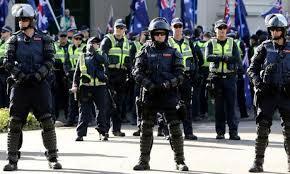
The talents of Victorian policing have already been found wanting during one of the most extreme lockdown measures in the developed world.  Reem Mussa, humanitarian advisor on forced migration to Médicins Sans Frontières, remembered the terror caused by the appearance of five hundred police “on housing estates [in Melbourne], trapping residents inside with no coherent health strategy or plans to keep them safe, fed or with access to medication and essentials.”  23 confirmed cases of COVID-19 had been found on the estates in July.  Panic coursed through the various administrative arms of government.

In September, a very public display of policing mismanagement took place with the arrest of Ballarat resident Zoe Buhler, a pregnant mother apprehended in front of her children and husband in their home for a Facebook post inciting protest against the lockdown rules.  No police officer thought it necessary to explain the offence of incitement, nor accept her offer to remove the offending post.  It was such conduct that prompted Greg Barns of the Australian Lawyers Alliance to argue for limits on police powers when linked to pandemic controls.

The Police Accountability Project, based at the Flemington & Kensington Community Legal Centre in Melbourne, has also been alarmed by the aggressive, untutored policing formula pursued in the state.  “The policing we have seen in Victoria to date and the scale of the policing we have seen [on July 4] and today in Flemington & North Melbourne, has caused and continues to do harm.”

Over the course of the lockdown, the PAP project has noted ten concerns about how harsh Stage 4 restrictions have been enforced.  A few are worth noting.  Police, for instance, were ill trained to make complex assessments about exemptions requiring health expertise.  “Police ignored genuine health based exemptions and continually resorted to lock-down responses because it more closely aligned with their training.”  They had failed to comprehend the public health impacts of their work, and that most pressing of points that policing “undermines public health responses.”  The policing of curfews had been “applied in a discriminatory, abusive and harmful manner.”  With such a stunning resume of faults and blunders, it is a wonder how the drafters in the Attorney-General’s department took leave of their senses.

On October 8, the Victorian government quietly trimmed parts of the proposed bill dealing with detention.  Finding themselves in retreat, a flutter of qualifications were made.  “We have always said we would negotiate in good faith,” claimed a less than chastened Hennessy.  Giving little away, the Attorney-General claims to have made such amendments that will continue “to deliver the temporary, necessary changes we need to respond to the challenges the pandemic presents”.

According to Guardian Australia, the proposed table of changes will still preserve the power to appoint police and protective services officers as authorised officers, but with fewer powers.  They will still be able to exercise considerable discretion in, for instance, searching property without a warrant if “necessary for the purpose of investigation, eliminating or reducing the risk to public health”.  The daft dangers of making police and security personnel pseudo-health officers remain.