Multi Billion Dollar Bonanza: Companies which Make Money By Keeping Americans “Terrified of Terror Attacks”

images

A massive industry profits off the government-induced fear of terrorism.

By Alex Kane

Source: Alternet

Michael Hayden, the former director of the National Security Agency, has invaded America’s television sets in recent weeks to warn about Edward Snowden’s leaks and the continuing terrorist threat to America.

But what often goes unmentioned, as the Guardian’s Glenn Greenwald pointed out, is that Hayden has a financial stake in keeping Americans scared and on a permanent war footing against Islamist militants. And the private firm he works for, called the Chertoff Group, is not the only one making money by scaring Americans.

Post-9/11 America has witnessed a boom in private firms dedicated to the hyped-up threat of terrorism. The drive to privatize America’s national security apparatus accelerated in the aftermath of the terrorist attacks, and it’s gotten to the point where 70 percent of the national intelligence budget is now spent on private contractors, as author Tim Shorrock reported. The private intelligence contractors have profited to the tune of at least $6 billion a year. In 2010, the Washington Post revealed that there are 1,931 private firms across the country dedicated to fighting terrorism.

What it all adds up to is a massive industry profiting off government-induced fear of terrorism, even though Americans are more likely to be killed by a car crash or their own furniture than a terror attack.

Here are five private companies cashing in on keeping you afraid.

1. The Chertoff Group

On August 11, former NSA head Michael Hayden, the man at the center of the Bush administration’s 2005 surveillance scandal, was defending his former agency on CBS News in the wake of the latest NSA spying scandal. Commenting on President Obama’s half-hearted promises to reform some NSA practices, Hayden told host Bob Schieffer that “the President is trying to take some steps to make the American people more comfortable about what it is we’re doing. That’s going to be hard because, frankly, Bob, some steps to make Americans more comfortable will actually make Americans less safe.”

Former Homeland Security chief Michael Chertoff had a similar message when he appeared on ABC News August 4. Speaking about the purported threat from an Al Qaeda affiliate in Yemen that led to the closure of 19 U.S. embassies, Chertoff said that “the collection of this warning information [about Al Qaeda] came from the kinds of programs we’ve been discussing about, the ability to capture communications overseas.”

CBS and ABC did not see fit to inform viewers that both Hayden and Chertoff are employees of the Chertoff Group, a private firm created in 2009 that companies hire to consult on best practices for security and combatting terrorism. Some of the companies the firm advises go on to win government contracts. Chertoff is the founder and chairman of the group, while Hayden serves as a principal. So they profit off a war on terror they say is crucial to keeping Americans safe.

Though it’s unclear how much in total exactly the firm makes, there are some known numbers. After the failed attempt in 2010 to blow up an airliner on Christmas Day with a bomb hidden in underwear, Chertoff pushed for better airport security procedures. One of the suggestions Chertoff made was for the Transportation Security Agency to use full-body scanners like the ones Rapiscan, one of the Chertoff Group’s clients, made. And sure enough, after the Christmas Day plot, the TSA ordered 300 Rapiscan machines. The Huffington Post reported that Rapiscan made $118 million from the government between 2009-2010.

2. Booz Allen Hamilton

This private intelligence contractor has become a household name in the wake of the NSA scandal. Edward Snowden, the man responsible for leaking secret documents that exposed the breadth of NSA surveillance, was working for Booz Allen when he downloaded the documents he handed off to media outlets. As the New York Times reported in June, the company parlays its technology expertise for intelligence uses into massive government contracts. Thousands of employees of the company provide services to the NSA, like analyzing the massive amounts of data the government agency collects every day. The company is also the shining symbol of the government-private security complex’s revolving door: its vice president is the former director of national intelligence, while the current director of national intelligence is a former employee of Booz Allen.

Despite the Snowden security breach, Booz Allen continues to work with the government. And they’re making a lot of money from the U.S. In the last fiscal year, the company made $1.3 billion from working in U.S. intelligence. In total, Booz Allen Hamiltion made over $5 billion last fiscal year. And the cash keeps coming: in January, the company announced that it had won a contract with the Defense Department to provide intelligence services. The amount of money it could make from the deal is up to $5.6 billion.

And like Hayden and Chertoff, Booz Allen’s vice president Mike McConnell has publicly hyped up the threat of terrorism to blast Snowden’s leaks. McConnell told a government contracting conference in July 2013 that Snowden’s leaks have done “irrevocable damage” to the U.S.’s ability to stop terrorism. “It’s going to inhibit our ability to understand nuclear activity in North Korea, what’s going on in Syria, what might be happening with the Taliban in Afghanistan,” said McConnell.

3. Science Applications International Corporation

Sometimes referred to as “NSA West” because so many former NSA employees go on to work for the formerly California-based Science Applications International Corporation (SAIC), this firm makes a ton of cash off government contracts. And they do so by hawking their expertise in combatting the terrorist threat.

Browse through SAIC’s website and you’re constantly greeted with the words “terrorist threat” and information on how the SAIC can help the government and others battle it. SAIC developed a “Terrorism Protection Manual” for Florida law enforcement that was developed to fight “today’s national terrorist threat and implement recommended security best practices.” They boast of their “experience meeting the terrorism incident response training needs of a wide variety of customers, from training for a national Weapons of Mass Destruction (WMD) scenario, applicable at agency response levels, to lesser levels of incidents affecting a city, a military installation or a special facility.”

Back when John P. Jumper, the current CEO of SAIC, was an Air Force general, he said the threat of terrorism is “greater than Nazism, greater than communism. This threat that we have of terrorist zealots is the most dangerous because these are people who care nothing about life. They care nothing about our lives, for sure, and they care nothing about their own lives.” And Larry Prior, a U.S. intelligence veteran who used to run the company’s Intelligence and Security Group, said in an internal newsletter that “the future of the nation rests on their backs,” referring to employees in his group.

SAIC is an immensely lucrative and large company. It boasts 42,000 employees—20,000 of whom hold U.S. government security clearances. It is the NSA’s largest contractor, according to CorpWatch, and is deeply involved in the NSA’s collection of intelligence. Last year it reported a net income of $525 million.

4. Center for Counterintelligence and Security Studies 

U.S. intelligence agencies aren’t the only sectors of government where the private sector has cashed in on the fear of terrorism. The post-9/11 world has seen the blossoming of a cottage industry of self-styled “experts” on Islam from private companies that market their supposedly ironclad analysis of the threat from Islamists to other federal agencies and state and local law enforcement. These companies have profited from law enforcement taking part in the “war on terror.”

Through Homeland Security grant programs like the State Homeland Security Program and the Urban Areas Security Initiative, the federal government has doled out over billions of dollars to these private companies to provide Islamophobic training. One of these companies is called the Center for Counterintelligence and Security Studies.

Based in Virginia, the center “posits radical Islam as a new global ideological menace on the order of the old communist threat from the Soviet Union,” as Political Research Associates (PRA) noted in a 2011 report on private firms doing counter-terror training. Staff members include former FBI, CIA and Defense Department personnel.

Their claim to fame is providing education and training to members of the U.S. national security community—including law enforcement agencies, according to their website. They say they have trained over 67,000 people over the past decade.

It’s unclear exactly how much this firm makes per year. But according to the PRA report, a five-day course for government employees on the “Global Jihadist Threat Doctrine” costs $39,280. The firm also lists the costs of individual courses on their website. For a 30-person class titled “Dying to Kill Us: Understanding the Mindset of Suicide Operations,” the cost is $7,856. For a three-day course for 30 people on “Informant Development for Law Enforcement to FighTerrorism,” the cost is $23,568.

The training pushes anti-Muslim ideology. On the section of their website where they list feedback from participants of the courses, one wrote: “An eye-opener. Especially how many Muslim Brotherhood front organizations there are and that the government doesn’t get it.”

5. Security Solutions International

Security Solutions International is yet another private firm hawking anti-Muslim training to law enforcement. This Miami-based company founded in 2004 uses its Israeli security connections to boost its standing in the market. They use Israeli security trainers in their courses and their president, Henry Morgenstern, is a dual Israeli-U.S. citizen who says he “developed excellent high level contacts with the Security Establishment [in Israel], making SSI the premiere training company for counter-terror related subjects.”

The company has trained over 700 law enforcement agencies since 2004. Officials from law enforcement agencies like the Massachusetts Bay Transportation Authority and the Department of Homeland Security have participated in the conferences they put on for profit. While SSI claims that they don’t cast aspersions on the whole of Islam, an examination of their trainings, conferences and the speakers they use indicate otherwise.

At a 2009 conference sponsored by Police magazine, an SSI instructor who is the company’s “expert” on Islam used a video that showed a terrorist beheading a hostage. After the course was met with criticism, the company’s CEO said “their religion got linked to terrorism a long time ago.”

The conferences they hold are usually well-attended, and this year SSI is putting on a conference in Orlando, Florida for three days. The cost for each attendee is $400. The keynote speaker this year is Steve Emerson, a well-known member of what’s been termed the “Islamophobia industry.” SSI also makes money off its Counter Terrorist magazine. A yearly subscription is $35, and the company says it has 15,000 subscribers.

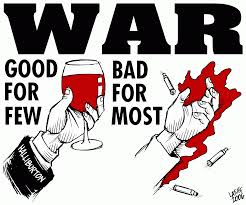
Editor’s note: Dishonorable mentions that should be added to the list include corporate news media, all crony contractors including Boeing, Lockheed Martin, Halliburton, Bechtel, etc., Neocon Pro-war Activists, and the SITE Intelligence Group.
ISIS, Weapons Makers, Thugs Benefit from Bombing

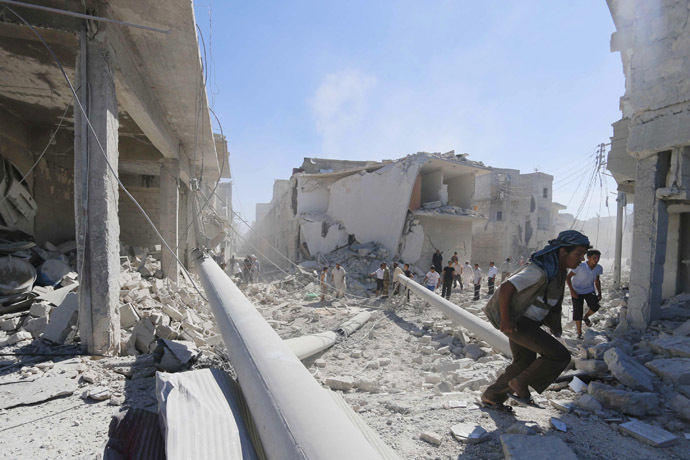
Residents inspect damage at a site hit by what activists said were barrel bombs dropped by forces of Syria's President Assad in Aleppo

By David Swanson

Source: Washington’s Blog

President Obama is bombing the opposite side in Syria from the side he swore we needed to attack one year ago, and those pleased by this declare that he is “doing something.”

U.S. polls suggest that the same people recognize that this something will make the U.S. more likely to be attacked and nonetheless favor this action. This is unthinking fear produced by slick beheading videos for audiences too distracted to notice that the Iraqi government, Saudi government and numerous other U.S. friends and allies behead. And are we to imagine that when Obama kills a 16 year old American and the 6 kids near him his head remains intact? Should we pretend that the people being killed by U.S. missiles right now aren’t losing their heads?

This action is illegal under the UN Charter, Kellogg-Briand Pact, and U.S. Constitution. This action is immoral as it fuels violence that needs to be reduced. This action is knowingly, maddeningly counterproductive, guaranteed to build hostility to the United States, which is already so hated that ISIS openly advocates for a U.S. attack on it. This action by this White House is what ISIS wants and what weapons makers want. It is not what the people of Syria or Iraq or the world want. It further shreds the rule of law while dumping gasoline on a fire of U.S. creation.

What’s needed is, contrary to what your television suggests, not to “do nothing” or love beheadings. What’s needed is an arms embargo. The U.S. ships 79% of the weapons shipped to the Middle East, not counting the weapons of the U.S. military. An arms embargo could be 79% successful with just one country participating, and others could certainly be brought to do so.

What’s needed is actual aid on a massive scale, restitution to the people of the region for the crimes of the U.S. government. An aid program sufficient to make the United States beloved rather than hated would cost a lot less money than the missiles and bombs for which price seems to be no concern at all.

What’s needed is diplomacy. The U.S. government is happy to talk with Syria or Iran or Russia when the object is war. Why can it not talk to them when the object is peace?

Our Constitutional scholar Nobel peace laureate no-dumb-wars end-the-mindset president will be protested today at the White House and at his appearance in New York, and should be protested everywhere he goes.

Congress members should not know a moment’s peace, but should be taught that cowardice is not a campaign strategy. None who voted for weapons to Syria should be returned to Washington next year.

War as a first resort, as our biggest public program, as the be all and end all of U.S. foreign policy is a form of insanity that has no redeeming feature. War is our top destroyer of the natural environment, of the economy, of civil liberties, of self-governance, and of morality. This is a case of a doctor trying to cure the world while suffering from a deadly and highly infectious disease that in his own mind is the epitome of health.

You can’t cure war fever with more war. You can only get to peace through peace.

Stop the bombing.

The US and Global Wars: Empire or Vampire?

GIF by WhatReallyHappened.com

GIF by WhatReallyHappened.com

By James Petras

Source: Axis of Logic

Introduction

To the growing army of critics of US military intervention, who also reject the mendacious claims by American officials and their apologists of ‘world leadership’, Washington is engaged in ‘empire-building”.

But the notion that the US is building an empire, by engaging in wars to exploit and plunder countries’ markets, resources and labor, defies the realities of the past two decades. US wars, including invasions, bombings, occupations, sanctions, coups and clandestine operations have not resulted in the expansion of markets, greater control and exploitation of resources or the ability to exploit cheap labor. Instead US wars have destroyed enterprises, reduced access to raw materials, killed, wounded or displaced productive workers around the world, and limited access to lucrative investment sites and markets via sanctions.

In other words, US global military interventions and wars have done the exact opposite of what all previous empires have pursued: Washington has exploited (and depleted) the domestic economy to expand militarily abroad instead of enriching it.

Why and how the US global wars differ from those of previous empires requires us to examine (1) the forces driving overseas expansion; (2) the political conceptions accompanying the conquest, the displacement of incumbent rulers and the seizure of power and; (3) the reorganization of the conquered states and the accompanying economic and social structures to sustain long-term neo-colonial relations.

Empire Building: The Past

Europe built durable, profitable and extensive empires, which enriched the ‘mother country’, stimulated local industry, reduced unemployment and ‘trickled down’ wealth in the form of better wages to privileged sectors of the working class. Imperial military expeditions were preceded by the entry of major trade enterprises (British East India Company) and followed by large-scale manufacturing, banking and commercial firms. Military invasions and political takeovers were driven by competition with economic rivals in Europe, and later, by the US and Japan.

The goal of military interventions was to monopolize control over the most lucrative economic resources and markets in the colonized regions. Imperial repression was directed at creating a docile low wage labor force and buttressing subordinate local collaborators or client-rulers who facilitated the flow of profits, debt payments, taxes and export revenues back to the empire.

Imperial wars were the beginning, not the end, of ‘empire building’. What followed these wars of conquest was the incorporation of pre-existing elites into subordinate positions in the administration of the empire. The ‘sharing of revenues’, between the imperial economic enterprises and pre-existing elites, was a crucial part of ‘empire building’. The imperial powers sought to ‘instrumentalize’ existing religious, political, and economic elites’ and harness them to the new imperial-centered division of labor. Pre-existing economic activity, including local manufacturers and agricultural producers, which competed with imperial industrial exporters, were destroyed and replaced by malleable local traders and importers (compradors). In summary, the military dimensions of empire building were informed by economic interests in the mother country. The occupation was pre-eminently concerned with preserving local collaborative powers and, above all, restoring and expanding the intensive and extensive exploitation of local resources and labor, as well as the capture and saturation of local markets with goods from the imperial center.

“Empire-building” Today

The results of contemporary US military interventions and invasions stand in stark contrast with those of past imperial powers. The targets of military aggression are selected on the basis of ideological and political criteria. Military action does not follow the lead of ‘pioneer’ economic entrepreneurs – like the British East India Company. Military action is not accompanied by large-scale, long-term capitalist enterprises. Multi-national construction companies of the empire, which build great military bases are a drain on the imperial treasury.

Contemporary US intervention does not seek to secure and take over the existing military and civilian state apparatus; instead the invaders fragment the conquered state, decimate its cadres, professionals and experts at all levels, thus providing an entry for the most retrograde ethno-religious, regional, tribal and clan leaders to engage in intra-ethnic, sectarian wars against each other, in other words – chaos. Even the Nazis, in their expansion phase, chose to rule through local collaborator elites and maintained established administrative structures at all levels.

With US invasions, entire existing socio-economic structures are undermined, not ‘taken over’: all productive activity is subject to the military priorities of leaders bent on permanently crippling the conquered state and its advanced economic, administrative, educational, cultural and social sectors. While this is militarily successful in the short-run, the medium and long-term results are non-functioning states, not a sustained inflow of plunder and expanding market for an empire. Instead what we have is a chain of US military bases surrounded by a sea of hostile, largely unemployed populations and warring ethno-religious groups in decimated economies.

The US claims to ‘world leadership’ is based exclusively on failed-state empire building. Nevertheless, the dynamic for continuing to expand into new regions, to militarily and politically intervene and establish new client entities continues. And, most importantly, this expansionist dynamic further undermines domestic economic interests, which, theoretically and historically, form the basis for empire. We, therefore, have imperialism without empire, a vampire state preying on the vulnerable and devouring its own in the process.

Empire or Vampire: The Results of US Global Warfare

Empires, throughout history, have violently seized political power and exploited the riches and resources (both material and human) of the targeted regions. Over time, they would consolidate a ‘working relation’, insuring the ever-increasing flow of wealth into the mother country and the expanding presence of imperial enterprises in the colony. Contemporary US military interventions have had the opposite effect after every recent major military conquest and occupation.

Iraq: Vampires Pillage

Under Saddam Hussein, the Republic of Iraq was a major oil producer and profitable partner for major US oil companies, as well as a lucrative market for US exports. It was a stable, unified secular state. The first Gulf War in the 1990s led to the first phase of its fragmentation with the de facto establishment of a Kurdish mini-state in the north under US protection. The US withdrew its military forces but imposed brutal economic sanctions limiting economic reconstruction from the devastation of the first Gulf War. The second US-led invasion and full-scale occupation in 2003 devastated the economy and dismantled the state dismissing tens of thousands of experienced civil servants, teachers and police. This led to utter social collapse and fomented ethno-religious warfare leading to the killing, wounding or displacement of millions of Iraqis. The result of GW Bush’s conquest of Baghdad was a ‘failed state’. US oil and energy companies lost billions of dollars in trade and investment and the US economy was pushed into recession.

Afghanistan: Endless Wars, Endless Losses

The US war against Afghanistan began with the arming, financing and political support of Islamist jihadi-fundamentalists in 1979. They succeeded in destroying and dismantling a secular, national government. With the decision to invade Afghanistan in October 2001 the US became an occupier in Southwest Asia. For the next thirteen years, the US-puppet regime of Hamad Karzai and the ‘NATO coalition’ occupation forces proved incapable of defeating the Taliban guerrilla army. Billions of dollars were spent devastating the economy and impoverishing the vast majority of Afghans. Only the opium trade flourished. The effort to create an army loyal to the puppet regime failed. The forced retreat of US armed forces beginning in 2014 signals the bitter demise of US ‘empire building’ in Southwest Asia.

Libya: From Lucrative Trading Partner to Failed State

Libya, under President Gadhafi, was evolving into a major US and European trading partner and influential power in Africa. The regime signed large-scale, long-term contracts with major international oil companies that were backed by a stable secular government. The relationship with the US and EU was profitable. The US opted to impose a ‘regime change’ through massive US-EU missile and bombing strikes and the arming of a motley collection of Islamist terrorists, ex-pat neo-liberals and tribal militias. While these attacks succeeded in killing President Gadhafi and most of his family (including many of his grandchildren) and dismantling the secular Libyan government and administrative infrastructure, the country was ripped apart by tribal war-lord conflicts, political disintegration and the utter destruction of the economy. Oil investors fled. Over one million Libyans and immigrant workers were displaced. The US and EU ‘partners-in-regime-change’ have even fled their own embassies in Tripoli – while the Libyan ‘parliament’ operates off-shore from a casino boat. None of this devastation would have been possible under President Gadhafi. The US vampire bled its new prize, Libya, but certainly could not incorporate it into a profitable ‘empire’. Not only were its oil resources denied to the empire, but even oil exports disappeared. Not even an imperial military base has been secured in North Africa!

Syria: Wars on Behalf of Terrorists not Empire

Washington and its EU allies backed an armed uprising in Syria hoping to install a puppet regime and bring Damascus into their “empire”. The mercenary assaults have caused the deaths of nearly 200,000 Syrians, the displacement of over 30% of the population and the seizure of the Syrian oil fields by the Sunni extremist army, ISIS. ISIS has decimated the pro-US mercenary army, recruiting and arming thousands of terrorists from around the world It invaded neighboring Iraq conquering the northern third of that country. This was the ultimate result of the deliberate US dismantling of the Iraqi state in 2003.

The US strategy, once again, is to arm Islamist extremists to overthrow the secular Bashar Assad regime in Damascus and then to discard them for a more pliable client. The strategy ‘boomeranged’ on Washington. ISIS devastated the ineffective Iraqi armed forces of the Maliki regime in Baghdad and America’s much over-rated Peshmerga proxy ‘fighters’ in Iraqi ‘Kurdistan’. Washington’s mercenary war in Syria didn’t expand the ‘empire’; indeed it undermined existing imperial outposts.

The Ukrainian Power Grab, Russian Sanctions and Empire Building

In the aftermath of the collapse of the USSR, the US and EU incorporated the Baltic, Eastern European and Balkan ex-communist countries into their orbit. This clearly violated major agreements with Russia, by incorporating most of the neo-liberal regimes into NATO and bringing NATO forces to the very border of Russia. During the corrupt regime of Boris Yeltsin, the ‘West’ absolutely looted the Russian economy in co-operation with local gangster – oligarchs, who took up EU or Israeli citizenship to recycle their pillaged wealth. The demise of the vassal Yeltsin regime and the ascent and recovery of Russia under Vladimir Putin led the US and EU to formulate a strategy to deepen and extend its ‘empire’ by seizing power in the Caucuses and the Ukraine. A power and land grab by the puppet regime in Georgia attacking Russian forces in Ossetia in 2012 was decisively beaten back. This was a mere dress rehearsal for the coup in Kiev. In late 2013-early 2014, the US financed a violent rightwing putsch ousting the elected government and imposing a hand-picked pro-NATO client to assume power in Kiev.

The new pro-US regime moved quickly to purge all independent, democratic, federalist, bilingual and anti-NATO voices especially among the bi-lingual citizens concentrated in the South-Eastern Ukraine. The coup and the subsequent purge provoked a major armed uprising in the southeast, which successfully resisted the invading NATO-backed neo-fascist armed forces and private armies of the oligarchs. The failure of the Kiev regime to subdue the resistance fighters of the Donbass region resulted in a multi-pronged US-EU intervention designed to isolate, weaken and undermine the resistance. First and foremost they attempted to pressure Russia to close its borders on the eastern front where hundreds of thousands of Ukrainian civilians eventually fled the bombardment. Secondly, the US and EU applied economic sanctions on Russia to abandon its political support for the southeast region’s democratic and federalist demands. Thirdly, it sought to use the Ukraine conflict as a pretext for a major military build-up on Russia’s borders, expanding NATO missile sites and organizing an elite rapid interventionist military force capable of bolstering a faltering puppet regime or backing a future NATO sponsored putsch against any adversary.

The Kiev regime is economically bankrupt. Its war against its own civilians in the southeast has devastated Ukraine’s economy. Hundreds of thousands of skilled professionals, workers and their families have fled to Russia. Kiev’s embrace of the EU has resulted in the breakdown of vital gas and oil agreements with Russia, undermining the Ukraine’s principle source of energy and heating with winter only months away. Kiev cannot pay its debts and faces default. The rivalries between neo-fascists and neo-liberals in Kiev will further erode the regime. In sum, the US-EU power grab in the Ukraine has not led to the effective ‘expansion of empire’; rather it has ushered in the total destruction of an emerging economy and precipitated a sharp reversal of financial, trade and investment relations with Russia and Ukraine. The economic sanctions against Russia exacerbate the EU current economic crisis. The belligerent posture of military confrontation toward Russia will result in an increase in military spending among the EU states and further divert scarce economic resources form job creation and social programs. The loss by significant sectors of the EU of agricultural export markets, as well as the loss of several billion-dollar military-industrial contracts with Russia, certainly weakens, rather than expands, the ‘empire’ as an economic force

Iran: 100 Billion Dollar Punitive Sanctions Don’t Build Empires

The US-EU sanctions on Iran carry a very high political, economic and political price tag. They do not strengthen empire, if we understand ‘empire’ to mean the expansion of multi-national corporations, and increasing access to oil and gas resources to ensure stable, cheap energy for strategic economic sectors within the imperial center.

The economic war on Iran has been at the behest of US allies, including the Gulf Monarchies and especially Israel. These are dubious ‘allies’ for US ‘empire’ . . . widely reviled potentates and a racist regime which manage to exact tribute from the imperial center!

In Afghanistan, Iraq and elsewhere, Iran has demonstrated its willingness to co-operate in power sharing agreements with US global interest. However, Iran is a regional power, which will not submit to becoming a vassal state of the US. The sanctions policy has not provoked an uprising among the Iranian masses nor has it led to regime change. Sanctions have not weakened Iran to the extent of making it an easy military target. While sanctions have weakened Iran’s economy, they has also worked against any kind of long-range empire building strategy, because Iran has strengthened its economic and diplomatic ties with the US’ rivals, Russia and China.

Conclusion

As this brief survey indicates, US-EU wars have not been instruments of empire-building in the conventional or historical sense. At most they have destroyed some adversaries of empire. But these have been pyrrhic victories. Along with the overthrow of a target regime, the systematic break-up of the state has unleashed powerful chaotic forces, which have doomed any possibility of creating stable neo-colonial regimes capable of controlling their societies and securing opportunities for imperialist enrichment via economic exploitation.

At most the US overseas wars have secured military outposts, foreign islands in seas of desperate and hostile populations. Imperial wars have provoked continuous underground resistance movements, ethnic civil wars and violent terrorist organizations that threaten ‘blowback’ on the imperial center.

The US and EU’s easy annexations of the ex-communist countries, usually via the stage-managed ballot-box or ‘color revolutions’, led to the take-over of great national wealth and skilled labor. However, Euro-American empires bloody campaigns to invade and conquer the Middle East, South Asia, North Africa and the Caucuses have created nightmarish ‘failed states’ – continuously draining imperial coffers and leading to a state of permanent occupation and warfare.

The bloodless takeover of the Eastern European satellites with their accommodating, corrupt elites has ended. The 21st century reliance on militarist strategies contrasts sharply with the successful multi-pronged colonial expansions of the 19th–20th century, where economic penetration and large scale economic development accompanied military intervention and political change. Today’s imperial wars cause economic decay and misery within the domestic economy, as well as perpetual wars abroad, an unsustainable drain.

The current US/EU military expansion into Ukraine, the encirclement of Russia, NATO missiles aimed at the very heart of a major nuclear power and the economic sanctions may lead to a global nuclear war, which may indeed put an end to militarist empire-building… and the rest of humanity.

US to rapidly expand war in Iraq and Syria

Screenshot from 2014-09-11 15_16_14(1)

By Peter Symonds

Source: World Socialist Web Site

In the wake of President Obama’s speech Wednesday night, the US is preparing to rapidly ramp up its military operations in Syria and Iraq. Over the past month, the American military has carried out about 150 air strikes against Islamic State of Iraq and Syria (ISIS) militias inside Iraq. Now, Obama declared, the US will “go on offense,” extending the war in Iraq and into Syria.

While ISIS “terrorists” are the nominal target, the new US-led war in the Middle East is above all a revival of plans shelved a year ago for the toppling of Syrian President Bashar al-Assad.

Immediately after Obama’s address, a senior American defence official briefed the media on the Pentagon’s plans, declaring that it “is ready to conduct direct action against ISIL [ISIS] targets in Syria.” Of the nearly 500 additional US troops due to arrive in Iraq next week, more than half will be allocated to boosting joint operational command centres in Baghdad and the northern Kurdish city of Erbil, closer to the Syrian border. Another 125 military personnel are to go to Erbil to boost the number of drone strikes inside Iraq and Syria.

US Special Forces are already operating in Iraq and undoubtedly will be deployed inside Syria. A senior Air Force commander told USA Today that, while spy planes could identify targets in Iraq and Syria, it was “absolutely crucial that pilots are talking to an American on the ground.” He drew a parallel with the US invasion of Afghanistan in 2001 when US Special Forces and CIA operatives infiltrated into the country to guide US air strikes on Taliban targets and lay the ground work for the military occupation.

The Obama administration is pressing for Congress to authorise $500 million to train and equip anti-Assad militias, which is likely to proceed quickly with bipartisan support. At the same time, US Secretary of State John Kerry is touring the Middle East to enlist political and military support for anti-Assad forces inside Syria.

Twelve months ago, Obama called off a US air war against the Assad regime at the last minute amid widespread popular hostility, divisions in US ruling circles, lack of support from key allies such as Britain and opposition, particularly from Russia. Now the White House has seized on the spectre of ISIS—which the US and its allies in the Gulf States helped foster and fund—as the pretext for dusting off its plans for regime-change in Syria.

Saudi Arabia, which was bitter about the US decision to cancel the air strikes last year, is enthusiastically supporting the new war against ISIS, even though significant sections of the Saudi elite have been backing ISIS. The Saudi monarchy is well aware that the US has Assad firmly in its sights. Assad’s overthrow would greatly weaken the Saudi regime’s arch rival, Iran, by removing Iran’s ally in the Middle East.

The Saudi regime has offered facilities on its soil for the US to train and arm “moderate” anti-Assad militias and yesterday hosted a meeting between Kerry and Middle Eastern foreign ministers, including from the Gulf States, Turkey, Jordan, Egypt, Lebanon and Iraq. A joint communiqué between the US and 10 Arab states endorsed efforts to cut off funding to ISIS and block the flow of volunteers to ISIS.

The statement called for a coordinated military campaign, to which each country would contribute “as appropriate.” No specifics were spelled out, but a US State Department official traveling with Kerry told the media that “there’s going to be a meeting soon of defence ministers to work out the details,” including “enhanced basing and overflights” for US military forces.

Speaking after the meeting, Saudi Foreign Minister Saud al-Faisal enthused: “There is no limit to what the kingdom can provide.” Asked about previous criticism of Obama’s decision last year to call off air strikes on Syria, he played down past differences, declaring: “I don’t see disagreement. I see agreement about the present situation.” Any Saudi involvement in military operations inside Syria would dramatically heighten tensions with Iran and throughout the region.

The presence of the new Iraqi foreign minister is significant because Saudi Arabia branded the previous Baghdad government headed by Prime Minister Nouri al-Maliki as an Iranian puppet and cut diplomatic relations. Washington’s determination to oust Maliki to make way for “a more inclusive government,” formed this week, was aimed at drawing Iraq toward Saudi Arabia and other Arab states, and isolating Iran.

Kerry, who met with new government ministers in Baghdad on Wednesday, underlined how critical Maliki’s removal was to Washington’s war plans. “Now that the Iraqi parliament has approved a new cabinet with new leaders and representative from all Iraqi communities, it’s full speed ahead. A new, inclusive Iraqi government has to be the engine of our global strategy against ISIL.”

While repeating the line that the US would not deploy combat troops, Kerry left the door wide open by adding the rider, “unless, obviously, something very, very dramatic changes.” Dramatic changes are virtually inevitable as the US plunges recklessly into a military conflict in Iraq and Syria. If a sufficiently dramatic event does not emerge, it can always be provoked or manufactured.

The governments in Syria, Iran and Russia understand that they are the targets of this phony new “war on terror.” Syrian National Reconciliation Minister Ali Haidar declared yesterday that “any action of any type without the approval of the Syrian government is an attack against Syria.” Haidar insisted “there must be cooperation with Syria,” but Obama has emphatically ruled that out.

Russia’s foreign ministry warned that any US action, “in the absence of a UN Security Council decision, would be an act of aggression, a gross violation of international law.” Obama has indicated that, while he will seek a UN resolution, the US is prepared to act without it. Already confronted by the intervention of the US and its European partners in Ukraine, Russia now faces the prospect of losing its only ally in the Middle East and access to a Mediterranean port for its naval vessels.

Just as the 2003 invasion of Iraq was never about weapons of mass destruction, so the latest US military intervention in the Middle East has nothing to do with fighting terrorism, but is aimed at securing American domination throughout the region. A decade on, under conditions of greatly heightened geo-political tensions, this new expanded war of aggression threatens to embroil the entire region and trigger a far broader conflagration.


“Shock and Awe” Comes to America

Ferguson_Day_6,_Picture_44

By Wayne Madsen

Source: Strategic Culture Foundation

The United States has employed «shock and awe» techniques – described by Pentagon policy documents as the use of «spectacular displays of force» to intimidate an opponent – against the civilian population of the St. Louis, Missouri suburb of Ferguson, just a stone’s throw from Lambert-St. Louis International Airport. The police use of shock and awe tactics followed street protests after the police shooting death of an 18-year old black teen, Michael Brown. According to a private autopsy, Brown, an African-American, was shot six times, including twice in the head, by white Ferguson police officer Darren Wilson. The St. Louis County coroner concluded that the number of shots that hit Brown could have been as high as eight.

Ferguson and St. Louis County police immediately dispatched military vehicles and equipment to quell the initially non-violent protests in Ferguson that erupted after the shooting. Two reporters covering the protests, one from The Washington Post and the other from the Huffington Post, were arrested by the police. An Al Jazeera television crew was subjected to a tear gas attack by police who then proceeded to shut off the news crew’s lights and disable their cameras.

After the local Ferguson and St. Louis County police were criticized for their «shock and awe» tactics, which also saw innocent protesters and members of the clergy shot at point blank range with rubber bullets and tear gassed, Missouri Governor Jay Nixon, who was slow to respond to the racially-inflamed incident, ordered Ferguson and St. Louis County police to stand down. Nixon replaced the local police with Missouri state police troopers who did not initially use military-clad law enforcement or vehicles.

However, after it was revealed that Brown was shot multiple times, rioters were reported to have looted local businesses. Nixon ordered the Missouri National Guard on to the streets and imposed a strict night time curfew. Police on the scene also issued a «keep moving» order to Ferguson citizens, an attempt to prevent any public protest organization efforts by pedestrians.

There were also numerous reports of neo-Nazi, Ku Klux Klan, and other far-right extremists arriving in Ferguson, with police «wink and a nod» foreknowledge in some cases, to stoke violence and engage in «false flag» attacks on people and property. In many respects, Ferguson discovered what occurs when government authorities, officially or unofficially, team up with right-wing racists and xenophobes to menace an entire civilian population. The authorities in Kiev have made similar deals with neo-Nazis, who have links to American white supremacist groups, to attack civilians in eastern and southern Ukraine.

Police allegedly reported that Molotov cocktails were thrown at police by unknown parties after violence increased. The violence was stirred after Ferguson police released a videotape from a convenience store that allegedly showed Brown in a physical altercation with the store’s clerk after Brown was said to have stolen a pack of miniature cigars. The store owner later said that the videotaped individual in what the police released to the media was not Brown and the Ferguson Police Chief later admitted that Officer Wilson did not stop Brown based on any suspicion that it was he who had stolen the cigars.

Eyewitnesses said that police reports that Molotov cocktails were thrown at police vehicles were false. And as further proof that police were permitting agitators to stir up violence, there were a number of social media reports that among those stoking violence in Ferguson was a white man sporting a swastika tattoo.

Governor Nixon later stated that the release of the store’s video by police needlessly incited an already tense situation in Ferguson.

American police using heavy-handed tactics against peaceful protesters is not limited to Ferguson and neither are police arrests of journalists covering protests. Neither was Ferguson the first time police arrested or threatened to arrest national television and radio reporters, as St. Louis area police threatened to do with a reporter for MS-NBC after another night of street violence in Ferguson.

In 2008, national reporters were arrested by police who used unjustified force at a protest at the Republican National Convention in St. Paul, Minnesota. The scenes from Ferguson were also reminiscent of strong-armed police tactics sued against Occupy Wall Street protesters around the country, as well as anti-globalization demonstrations in Seattle; Washington, DC; Pittsburgh, and other cities.

The presence of police-sanctioned provocateurs who engaged in violent acts in order to provoke a «shock and awe» response from military-armed police is endemic to protests around the United States, especially after 9/11, the date viewed by many Americans as the watershed date between pre- and post-Constitutional America.

Someone in the St. Louis County Coroner’s Office also leaked information on Brown’s blood test, saying that it showed past use of marijuana. The leak appeared timed to hurt a number of referenda around the United States on the legalization of marijuana. Many police departments are campaigning against the referenda and it would appear that the St. Louis authorities leaked the information as some sort of proof, albeit bogus, that marijuana legalization will lead to an increase in «violence.»

Many media commentators also drew comparisons between the scenes of the heavy paramilitary presence on the streets of Ferguson to scenes of Israeli soldiers in Gaza and on the West Bank. There are valid reasons for the comparisons.

In 2011, St. Louis County Police Chief Timothy Fitch received training from Israeli Defense Force (IDF) and Israeli National Police officials during a trip to Israel sponsored by the right-wing Anti-Defamation League (ADL). That same year, Oakland, California police who received similar training from former members of the IDF, shot Iraqi war U.S. Army veteran Scott Olsen in the head. Olsen suffered a severe brain injury from the assault.

Companies associated with Israel’s military-law enforcement infrastructure, including those specializing in Israeli Krav Maga martial arts techniques and other Israel crowd control tactics, have not only trained state and metropolitan police forces in the United States, but also state National Guard units. Police departments receiving such training include the St. Louis County Police, as well as the police departments of New York, Philadelphia, Houston, Dallas, Louisville, Richmond, Charlotte, Nashville, Albuquerque, Tulsa, and Atlantic City.

American police departments have a seemingly unlimited supply of military gear, weapons, and vehicles at their disposal. Under the Pentagon’s 1033 program, the Defense Department has made available, often free-of-charge, surplus military equipment to police departments from St. Louis County and Ferguson to Lewiston, Maine and Ohio State University.

Among the excess military equipment distributed to local, metropolitan, county, and state police by the Defense Logistics Agency are highly-mobile multi-wheeled vehicles (Humvees), militarized water craft, mine-resistant ambush protection (MRAP) vehicles, long-range acoustic device (LRAD) sound cannons, assault rifles, night scopes, flash bang grenades, and helicopters.

In addition to receiving population control training from Israelis, American police departments have also been trained by the constantly name-changing firm once known as Blackwater. Formerly known as Xe Security and Academi, the CIA-linked private military company, now merged with Triple Canopy under the Constellis Holdings, Inc., trained a number of U.S. police departments at its military base-like facility in Moyock, North Carolina. One of the police patches on the firm’s training alumni board in Moyock is that of the St. Louis County Police.

In addition to the St. Louis County Police, other U.S. law enforcement agencies trained by Blackwater include the Maricopa County, Arizona Sheriff’s Department; Atlanta Police; Chillicothe, Ohio Police; Charleston, South Carolina Police; Metropolitan Washington, DC Police; Metropolitan Washington Airports Authority Police (Dulles and Reagan National Airports); Prince George’s County, Maryland Police; the FBI SWAT Team; New York Police Department; Fairfax County, Virginia Police; Tampa Police; U.S. Drug Enforcement Administration (DEA); DeKalb County, Georgia Police; Arlington County, Virginia Police; Baltimore Police; U.S. Coast Guard; University of Texas Police; Norfolk, Virginia Police; Chicago Police Department; Oregon State Police; Los Angeles Police Department; Harvey Cedars, New Jersey Police; City of Fairfax, Virginia Police; Alexandria, Virginia Police Special Operations; Illinois State Police; and Dallas Police.

Based on the actions of the St. Louis County police and their cache of Pentagon weapons, as well as their Israeli and Blackwater training, the next dead U.S. citizen – African American, Caucasian, Hispanic, or otherwise – could be found lying in a pool of his or her own blood, drawn by a militarized police officer, from the Jersey shore to the streets of Los Angeles.

Detroit Cronies Sucking Money out of City to build Red Wings’ Stadium

Source: Collapse.com and Reason

Though I am usually not a fan of infographics/datagraphics, Reason just published the below graphic which details the horrible deal that the city of Detroit is getting by building this new arena. We see these kinds of deals being struck all around the country as politicians think that any sports team will be a boom to the local economy. What really ends up happening is that the owners of the teams get richer at the expense of the taxpayer.

These programs rarely net a positive result to the local economy. Most economists recognize research that has been done that shows that teams and new arenas do not increase entertainment spending in the region but just divert it from elsewhere that it would be spent. Ultimately, Detroit, a city that is dying already, stands to lose jobs and lose money on this investment and it just might be the straw that breaks the Detroit camel’s back.

Detroit Redwings Stadium Infographic

Sources

The Risky Economics of Sports Stadiums

Pro Sports Stadiums Don’t Bolster Local Economies, Scholars Say

General information about the Stadium proposal

Debunking the Economic Case for Sports Stadiums

Local Police and Much Else Will Be Militarized As Long As Federal Government Is

Outrage In Missouri Town After Police Shooting Of 18-Yr-Old Man

By David Swanson

Source: OpEdNews.com

Groups on the ground in St. Louis are calling for nationwide solidarity actions in support of Justice for Mike Brown and the end of police and extrajudicial killings everywhere.”

As they should. And we should all join in.

But “nationwide” and “everywhere” are odd terms to equate when discussing police militarization. Are we against extrajudicial killings (otherwise known as murder) by U.S. government employees and U.S. weapons in Pakistan? Yemen? Iraq? Gaza? And literally everywhere they occur? The militarization of local police in the United States is related to the militarization of U.S. foreign policy, which has now reached the point that bombing and “doing nothing” are generally conceived as the only two choices available. Local police are being militarized as a result of these factors:

  • A culture glorifying militarization and justifying it as global policing.
  • A federal government that directs roughly $1 trillion every year into the U.S. military, depriving virtually everything else of needed resources.
  • A federal government that still manages to find resources to offer free military weapons to local police in the U.S. and elsewhere.
  • Weapons profiteers that eat up local subsidies as well as federal contracts while funding election campaigns, threatening job elimination in Congressional districts, and pushing for the unloading of weapons by the U.S. military on local police as one means of creating the demand for more.
  • The use of permanent wartime fears to justify the removal of citizens’ rights, gradually allowing local police to begin viewing the people they were supposed to protect as low-level threats, potential terrorists, and enemies of law and order in particular when they exercise their former rights to speech and assembly. Police “excesses” like war “excesses” are not apologized for, as one does not apologize to an enemy.
  • The further funding of abusive policing through asset forfeitures and SWAT raids.
  • The further conflation of military and police through the militarization of borders, especially the Mexican border, the combined efforts of federal and local forces in fusion centers, the military’s engagement in “exercises” in the U.S., and the growth of the drone industry with the military, among others, flying drones in U.S. skies and piloting drones abroad from U.S. land.
  • The growth of the profit-driven prison industry and mass incarceration, which dehumanize people in the minds of participants just as boot camp and the nightly news do to war targets.
  • Economically driven disproportionate participation in, and therefore identification with, the military by the very communities most suffering from its destruction of resources, rights, and lives.

But policing is not the only thing militarized by what President Eisenhower called the “total influence — economic, political, even spiritual” of the military industrial complex. Our morality is militarized, our entertainment is militarized, our natural world is militarized, and our education system is militarized. “Unwarranted influence, whether sought or unsought, by the military industrial complex” is not easily opposed while maintaining the military industrial complex. When Congress Members lend their support to a new war in Iraq while proposing that the U.S. Post Office and a dozen other decent things not be defunded, they are speaking out of both sides of their mouths. The United States cannot live like other wealthy nations while dumping $1 trillion a year into a killing machine.

The way out of this cycle of madness in which we spend more just on recruiting someone into the military or on locking them up behind bars than we spend on educating them is to confront in a unified and coherent manner what Martin Luther King Jr. called the evils of racism, extreme materialism, and militarism. Not racism, extreme materialism, and what the military does to the local police. Not racism, extreme materialism, and what the military does to weapons testing sites. Not racism, extreme materialism, and what the military does to the people of Honduras causing them to flee to a land that then welcomes them with an attitude of militarism. Not any of these partial steps alone, but the whole package of interlocking evils of attitude and mindset.

There is a no-fly-zone over Ferguson, Missouri, because people in the U.S. government view the people of the United States increasingly as they view the people of other countries: as best controlled from the air. Notes the War Resisters League,

“Vigils and protests in Ferguson — a community facing persistent racist profiling and police brutality — have been attacked by tear gas, rubber bullets, police in fully-armored SWAT gear, and tank-like personnel carriers. This underscores not only the dangers of being young, Black, and male in the US, but also the fear of mobilization and rebellion from within racialized communities facing the violence of austerity and criminalization.

“The parallels between the Israeli Defense Forces in Palestine, the Military Police of Rio de Janeiro, the Indian police in Kashmir, the array of oppressive armed forces in Iraq, and the LAPD in Skid Row could not be any clearer. . . .

“This is not happening by accident. What is growing the capacity of local police agencies to exercise this force are police militarization programs explicitly designed to do so. As St. Louis writer Jamala Rogers wrote in an article on the militarization of St. Louis Police this past April, ‘It became clear that SWAT was designed as a response to the social unrest of the 1960s, particularly the anti-war and black liberation movements.’ Federal programs such as DoD 1033 and 1122, and the Urban Areas Security Initiative (UASI), in which St. Louis Police are active participants, provide weapons and training to police departments across the country, directly from the Pentagon. Commenting on the ominous growth of the phenomenon, Rogers continues: ‘and now, Police Chief [of St. Louis Police] Sam Dotson wants to add drones to his arsenal.’

“The events in Ferguson over these last few days demonstrate that the violence of policing and militarism are inextricably bound. To realize justice and freedom as a condition for peace, we must work together to end police militarization and violence.”

The War Resisters League is organizing against Urban Shield, an expo of military weapons for police and training event planned for Oakland, Calif., this September 4-8. The Week of Education and Action will take place in Oakland from August 30-September 5. Read all about it here.

David Swanson is a member of the National Committee of the War Resisters League and wants you to declare peace at http://WorldBeyondWar.org His new book is War No More: The Case for Abolition. He blogs at http://davidswanson.org and http://warisacrime.org and works for http://rootsaction.org. He hosts Talk Nation Radio. Follow him on Twitter: @davidcnswanson and FaceBook.uson

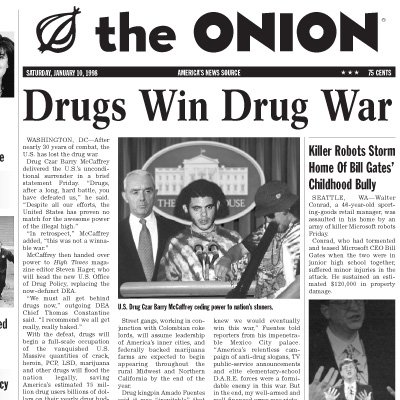
Why We Can’t Wage War on Drugs

drugs-win-war-on-drugs

The war on drugs was always a war against an idea. But ideas have a shelf-life, too, and this one has lost its potency

By Mike Jay

Source: Aeon Magazine

When the US President Richard Nixon announced his ‘war on drugs’ in 1971, there was no need to define the enemy. He meant, as everybody knew, the type of stuff you couldn’t buy in a drugstore. Drugs were trafficked exclusively on ‘the street’, within a subculture that was immediately identifiable (and never going to vote for Nixon anyway). His declaration of war was for the benefit of the majority of voters who saw these drugs, and the people who used them, as a threat to their way of life. If any further clarification was needed, the drugs Nixon had in his sights were the kind that were illegal.

Today, such certainties seem quaint and distant. This May, the UN office on drugs and crime announced that at least 348 ‘legal highs’ are being traded on the global market, a number that dwarfs the total of illegal drugs. This loosely defined cohort of substances is no longer being passed surreptitiously among an underground network of ‘drug users’ but sold to anybody on the internet, at street markets and petrol stations. It is hardly a surprise these days when someone from any stratum of society – police chiefs, corporate executives, royalty – turns out to be a drug user. The war on drugs has conspicuously failed on its own terms: it has not reduced the prevalence of drugs in society, or the harms they cause, or the criminal economy they feed. But it has also, at a deeper level, become incoherent. What is a drug these days?

Consider, for example, the category of stimulants, into which the majority of ‘legal highs’ are bundled. In Nixon’s day there was, on the popular radar at least, only ‘speed’: amphetamine, manufactured by biker gangs for hippies and junkies. This unambiguously criminal trade still thrives, mostly in the more potent form of methamphetamine: the world knows its face from the US TV series Breaking Bad, though it is at least as prevalent these days in Prague, Bangkok or Cape Town. But there are now many stimulants whose provenance is far more ambiguous.

Pharmaceuticals such as modafinil and Adderall have become the stay-awake drugs of choice for students, shiftworkers and the jet-lagged: they can be bought without prescription via the internet, host to a vast and vigorously expanding grey zone between medical and illicit supply. Traditional stimulant plants such as khat or coca leaf remain legal and socially normalised in their places of origin, though they are banned as ‘drugs’ elsewhere. La hoja de coca no es droga! (the coca leaf is not a drug) has become the slogan behind which Andean coca-growers rally, as the UN attempts to eradicate their crops in an effort to block the global supply of cocaine. Meanwhile, caffeine has become the indispensable stimulant of modern life, freely available in concentrated forms such as double espressos and energy shots, and indeed sold legally at 100 per cent purity on the internet, with deadly consequences. ‘Legal’ and ‘illegal’ are no longer adequate terms for making sense of this hyperactive global market.

The unfortunate term ‘legal highs’ reflects this confusion. It has become a cliché to note its imprecision: most of the substances it designates are not strictly legal to sell, while at the same time it never seems to include the obvious candidates – alcohol, caffeine and nicotine. The phrase hasn’t quite outgrown its apologetic inverted commas, yet viable alternatives are thin on the ground: ‘novel psychoactive substance’ (NPS), the clunky circumlocution that is preferred in drug-policy circles, is unlikely to enter common parlance. ‘Legal highs’, for all its inaccuracies, points to a zone beyond the linguistic reach of the war on drugs, that fervid state of mind in which any separation between ‘drugs’ and ‘illegal’ seems like a contradiction in terms. Then again, if that conceptual link breaks down, what does become of the old idea of drugs? When the whiff of criminality finally disperses, what are we left with?

I said ‘old idea’, but the word ‘drug’, at least in the sense that has been familiar throughout our lifetimes, turns out to be a recent coinage, peculiar to the 20th century. The word itself is, of course, centuries old: as a general term for any medication or chemical remedy, it dates back to the 14th century. But its more specific sense – as in ‘drug addict’, ‘drug control’ or ‘drug culture’ – can be dated quite precisely to the years around 1900. And on examination, it proves to be a curious hybrid, bridging two quite separate meanings.

The first is psychoactivity. A ‘drug’ is a substance that acts on the mind, changing the way we think or feel. But this descriptive meaning also carries a strong suggestion of judgment, less easily defined but unmistakably negative. ‘Drug’, in this sense, is a label to be avoided. Thus, according to the industries that produce and promote them, alcohol and tobacco are not drugs; cannabis advocates insist it is not a drug but a herb; and LSD enthusiasts say that it is not a drug but a sacrament. Indigenous users of coca, betel nut or ayahuasca are appalled at the suggestion these substances might be drugs. A cup of tea is psychoactive, but we would only call it a drug if we wished to make a point. An indeterminate white powder bought off the internet, on the other hand, might be legal, but it is undoubtedly still a drug.

Before the 20th century, it would have been difficult to express this idea. Many of today’s ‘drugs’, such as cannabis, cocaine and morphine, were sold in any high-street pharmacy. ‘Heroin’, for instance, emerged in 1898 as Bayer Pharmaceuticals’ new brand of over-the-counter cough medicine. Did the authorities simply turn a blind eye to the dangers that these substances posed? They did not: opium was classified as a poison because of its overdose risk, and cannabis was known to cause mental disturbance in some users. Yet these properties did not confer any exceptional status. And why should they? Even today, there are still plenty of prescription medicines that are toxic, habit-forming or that have deliriant side-effects. What made the drug-drugs special? In the 20th century, they came to be defined by their illegality, but of course they could not have been created by it. Only once certain hostile perceptions about drugs were in place could it make sense to ban them. What caused the perceptions?

We might start with the temperance movement. In the 19th century, alcohol was being recognised as a causal factor in all sorts of social ills, and so temperance campaigns promoted sobriety as the path to personal health, moral virtue and social respectability. Progressive social reformers joined forces with doctors and religious authorities to condemn the habitual intoxication of previous generations. Other intoxicating drugs might not have presented such a widespread problem, but they all got swept up in the same mixture of medical, moral and social opprobrium.

By the late 19th century, consumer groups were campaigning against the heavy doses of opiates and cocaine concealed in patent medicines

Global trade, meanwhile, made imported drugs such as opium and cocaine cheap and abundant; industry refined them into newly potent forms, which an energetic and largely unregulated business sector advertised and distributed to a booming consumer market. At the same time, the hypodermic syringe was transforming medical practice. It allowed doctors – and, increasingly, the general public – to inject large quantities of pure and potentially dangerous opiates such as morphine. This brought a breakthrough in pain relief, but also new risks such as abscesses and blood poisoning and, for some patients, compulsive and self-destructive overuse.

By the late 19th century, consumer groups were campaigning against the heavy doses of opiates and cocaine concealed in patent medicines, and doctors were diagnosing addiction as a medical pathology with serious social consequences. The first uses of ‘drug’ in its modern sense date from this era: in its earliest occurrences, it stood as an abbreviation of phrases such as ‘addictive drug’ or ‘dangerous drug’. Doctors advised governments and the public that injections of powerful narcotics should be confined to professionals. Use without medical supervision was classified as ‘abuse’.

Largely couched in medical terms as it was, the whole notion of ‘drugs’ carried moral and cultural implications from the start. Within the temperance debate, intoxication was an evil in itself and abstinence a corresponding virtue. Also, a good many of the substances that caused concern in the West were associated with immigrant communities: opium in the Chinese districts of San Francisco or London’s docklands, cocaine among the black communities of the southern US. In the racially charged debates of the day, these substances were presented as the ‘degenerate habits’ of ‘inferior races’, a ‘plague’ or ‘contagion’ that might infect the wider population. Such ideas might no longer be explicit, but the drug concept certainly carries a murky sense of the foreign and alien even now. That’s why it rarely applies to the psychoactive substances that we see as part of normal life, whether caffeine in the west, coca in the Andes, or ayahuasca in the Amazon.

During the first years of the 20th century, opium, morphine and cocaine became less socially acceptable, rather as tobacco has in our era. Their use was now viewed through the prism of medical harm, and their users correspondingly started to seem feckless or morally weak. The drugs themselves became, in a sense, ‘legal highs’: not technically prohibited but retreating into the shadows, available only under the counter or from those in the know. And then, once their sale was formally banned in the years around the Great War, ‘drugs’ became a term with legal weight: a specified list of substances that were not merely medically dangerous or culturally foreign, but confined to the criminal classes.

The banning of drugs occasioned strikingly little public debate, certainly compared with the prohibition of alcohol in the US. Then again, the ‘drug problem’ was pretty marginal at that point, and confined to subcultures (ethnic, bohemian, criminal) without a public voice. The only organised resistance to this new language of condemnation came from the pharmaceutical industry, concerned that its legitimate trade was being tarnished by unfortunate associations. What’s now the American Pharmacists Association, pressured by its major corporate sponsors such as Johnson & Johnson, complained about the casual use of terms such as ‘drug evil’, ‘drug fiend’ and ‘drug habit’, and lobbied newspapers to specify the drugs in question as ‘narcotics’ or ‘opiates’.

But ‘drugs’ was too vague and too useful to replace with more precise terms. It conveyed not simply particular chemicals, but a moral position on the use of them by certain people and for certain purposes. This position was eventually enshrined in the legal frameworks that emerged to prohibit them. The 1961 UN Single Convention on Narcotic Drugs, the founding document of the international drug laws, is unique among UN conventions in using the word ‘evil’ to describe the problem it seeks to address.

Legislators celebrated the 1961 Convention as the culmination of a 50-year battle to prohibit drugs, a battle that had begun at the Hague Opium Conference of 1911. Yet with hindsight, 1961 was the moment at which the consensus around the evils of drugs began to fracture. An adventurous postwar generation, the first to be raised as truly global consumers, was awakening to the realisation that alcohol was not the world’s only intoxicant. An international underground was beginning to spread news of hashish-smoking in Morocco and LSD synthesised in Swiss laboratories, as well as Benzedrine pills that propelled truck drivers through the night, and hallucinogenic mushrooms in Mexican mountain villages. For many, the resounding denunciations of drugs as dangerous, foreign and criminal no longer rang quite true. Within a booming youth culture, controlled substances were becoming the talismans of a new morality, an entire view of life that valorised pleasure, experiment and self-discovery.

In a sense, Nixon’s war on drugs was lost before it was even announced. It could have succeeded only by uniting an already polarised society in the belief that drugs were a genuine threat to civilisation, and that there was a genuine possibility of returning to a world without them. These propositions grew ever harder to sell over the intervening decades, as drug use became increasingly normal, while the vast sums of money spent trying to control it not only failed to reduce it, but actually created a global criminal market on a scale that Nixon could never have imagined.

psychiatric diagnoses such as low self-esteem and social anxiety open the door to new ‘feel-good’ drugs designed to enhance confidence and happiness

The problem is not just one of unintended consequences. As the war on drugs has dragged on, the medical, moral and cultural certainties that interlocked so tightly to create the very concept of ‘drugs’ have been drifting out of focus. In medical terms, the category rested on a clear distinction between sanctioned ‘use’ and criminal ‘abuse’. Yet today’s consumers are in practice free to make this distinction themselves. The arrival of online pharmacies means we can all take our chances with the prescription drugs of our choice: generic, pirated, off-label, out of date or semi-legitimately dispensed by doctors and pharmacists on the other side of the world. As a result, the line between pharmaceutical and illicit drugs is blurring. Recent studies in the US have found opiate users moving from prescription drugs such as OxyContin and Vicodin to street heroin and back again, depending on price and availability. As new ‘legal highs’ with opiate-like effects come on-stream, any such line may eventually become impossible to draw.

Within the pharmaceutical industry as a whole, other pressures and trends are conspiring to soften the distinction between recreation and medicine, ‘feeling good’ and ‘feeling better’. Smart drugs and nootropics promise to make us feel ‘better than well’; the broadening of psychiatric diagnoses to encompass conditions such as low self-esteem and social anxiety opens the door to new ‘feel-good’ drugs designed to enhance confidence and happiness. Pop-science catchphrases such as ‘serotonin-booster’ might apply equally to antidepressants or to MDMA. At the cutting edge of brain research, neural network studies are pointing the way towards implants for deep-brain stimulation or brain-embedded fibre-optic cables: a brave new world in which moods and perceptions might be controlled electronically and drugs, good or bad, would be redundant.

At the same time, the cultural landscape in which ‘drugs’ were defined is receding from view. Nixon launched his war on drugs in a country where even cannabis was a profoundly alien substance to almost everybody over the age of 30; today, most Westerners below retirement age recognise drugs, for better or worse, as part of the culture in which they grew up. We have long been comfortable global consumers, seeking out the novel and exotic in everything from food to travel, music to spirituality; our appetite for intoxicants participates in this pursuit of novel sensations, and is explicitly linked to it by corporate advertising that uses the visual lexicon of mind-expanding drugs to sell us everything from energy drinks to smartphones. ‘Drugs’, in its original sense, drew on a reflexive distaste for the culturally alien. This distaste has itself become alien to the inhabitants of the 21st century.

As drugs have swirled into this kaleidoscope of lifestyle and consumer choices, the identity of the ‘drug user’ has slipped out of view. A unitary class of ‘drugs’ depended for its coherence on an identifiable class of users, clearly recognised as deviant. But drug use has long ceased to function as a reliable indicator of class, ethnicity, age, political views or any criminality beyond itself. Plenty of drug users self-identify with confidence these days and, if conspicuous drug ‘scenes’ are easily located, the majority of drug use nevertheless takes place outside them. Buying and selling, the point of greatest visibility and risk for the user, has been rendered virtual: the shady street deals of the past can now be conducted online via PayPal or bitcoin, the incriminating package delivered through the letterbox in an innocuous Jiffy bag.

Though its medical and cultural underpinnings might be shifting, the category of drugs is still firmly defined by the law. At their margins, the drug laws could be starting to reflect the reality of what we might call a post-drug world, but it seems unlikely that they will drive the process. When the drug laws were first passed a century ago, they reflected a cultural shift that had already taken place; we can expect them to be dismantled only after the landscape of a post-drug world is plain for all to see. But even now, it is not hard to discern in outline. Alcohol prohibition, when it eventually collapsed, was superseded by a patchwork of regulatory controls – licensing, insurance, tax – that either existed already or were devised on the basis of pragmatic policy goals.

We can envisage a similar patchwork for a day – however close or distant – when drugs are removed from the ambit of criminal law. In so far as any drug presents medical risks, it requires regulation to minimise them, and a well-established spectrum, from labelling to licensing to prescription, already exists for this purpose. In so far as they constitute a luxury market, we might expect them to be taxed. As with alcohol, in some jurisdictions they might remain illegal by broad popular consent. The prohibition of drugs, including alcohol, was an emergency measure that overrode the logic of pragmatism. The alternative is not another leap in the dark, but a return to the routine regulatory calculus.

But what lies beyond the idea of ‘drugs’ itself? The simple answer is that there is nothing to replace. Behind the term lies a disparate group of chemicals whose varied effects – stimulant, narcotic, psychedelic, euphoriant – offer a more accurate language of description. Value-laden terms, both positive and negative, would doubtless emerge to complement them. A post-drug world would require not a new language but the recovery of an older one. The category of ‘drugs’ was an attempt, characteristic of its historical moment, to separate out good chemicals from bad ones. But as we have known since antiquity, good and evil, virtue and vice are not inherent in a plant or a molecule. Pedanius Dioscorides, the great classical authority on medicine, maintained that no substance is intrinsically good: it all depends on the dose at which it is administered, the use to which it is put, and the intentions behind that use. The Greek term pharmakon could mean both a medicine and a poison: there was no such thing as a harmless remedy, since anything with the power to heal also had the power to harm. All drugs, psychoactive or otherwise, are a technology, a prosthetic that extends our physical and mental reach. Like so many of the other technologies that are transforming our world, their benefits and dangers must ultimately be understood as extensions of ourselves.