Two years ago it was difficult for most of us online to avoid the KONY 2012 viral video. It was a slickly produced ad by the Invisible Children advocacy group for their campaign to assist efforts to capture or kill Joseph Kony, leader of Uganda’s Lord’s Resistance Army (a militia infamous for using child soldiers). The video spread rapidly through social media, getting millions of views. Criticism and suspicion towards Invisible Children spread just as rapidly as people spoke out against the group’s methods and started noticing how the majority of their money went towards advertising, staff, and transportation rather than children of Uganda. Many also questioned the group’s motives, pointing out that Kony hasn’t been seen for years and how Uganda happened to be a source of natural resources the U.S. government has an interest in such as oil and valuable minerals. Uganda’s President and friend of Obama, Yoweri Museveni, has also used child soldiers and was the focus of a recent Human Rights Watch report uncovering his government’s high-level corruption. Possibly as a result of the public pressure, about two weeks after the release of KONY 2012 leader and co-founder of Invisible Children, Jason Russell, had a very unusual and scandalous public breakdown.
Despite the rapid loss of much of their public support following the incident, Invisible Children’s campaign still impressed the U.S. government enough to extend a military advise-and-assist mission to central Africa the following month (if we are to believe their stated motives). In addition, the European Union established a Joint Operations Centre to assist central Africa’s counter-LRA regional task force in a show of support (again, if we take them for their word). Congress also passed the Rewards for Justice Bill authorizing $5 million for information leading to Kony’s capture in January 2013.
Just last Sunday, the Obama administration announced the deployment of about 150 Special Operations troops and military aircraft to Uganda, ostensibly to search for Joseph Kony. According to the Pentagon, at least four CV-22 Osprey aircraft will arrive in the country by midweek, together with refueling planes and Special Operations forces airmen to fly and maintain them.
As you ponder your potential moves regarding President Vladimir V. Putin’s annexation of Crimea (a large majority of its 2 million people are ethnic Russians), it is important to remember that whatever moral leverage you may have had in the court of world opinion has been sacrificed by the precedents set by previous American presidents who did not do what you say Mr. Putin should do – obey international law.
The need to abide by international law is your recent recurring refrain, often used in an accusatory context toward Mr. Putin’s military entry in Crimea and its subsequent annexation, following a referendum in which Crimean voters overwhelmingly endorsed rejoining Russia. True, most Ukrainians and ethnic Tatars boycotted the referendum and there were obstacles to free speech. But even the fairest of referendums, under UN auspices, would have produced majority support for Russia’s annexation.
Every day, presidential actions by you violate international law because they infringe upon national sovereignties with deadly drones, flyovers and secret forays by soldiers – to name the most obvious.
President Bush’s criminal invasion and devastation of Iraq in 2003 violated international law and treaties initiated and signed by the United States (such as the Geneva Conventions and the UN Charter). What about your executive branch’s war on Libya, now still in chaos, which was neither constitutionally declared, nor authorized by Congressional appropriations?
“Do as I say, not as I do,” is hard to sell to Russians who are interpreting your words of protest as disingenuous. This is especially the case because Crimea, long under the rule of the Ottoman Empire, became part of Russia over 200 years ago. In 1954, Soviet leader, Nikita Khrushchev gave Crimea to Ukraine, which was then part of the Soviet Union, out of sympathy for what Ukraine endured under the Nazi invasion and its atrocities. It mattered little then because both “socialist republics,” Ukraine and Crimea, were part of the Soviet Union. However, it is not entirely clear whether Khrushchev fully complied with the Soviet constitution when he transferred Crimea to Ukraine.
Compare, by the way, the United States’ seizure of Guantanamo from Cuba initially after the Spanish-American War, which was then retained after Cuba became independent over a century ago.
The Russians have their own troubles, of course, but they do have a legitimate complaint and fear about the United States’ actions following the collapse of the Soviet Union. Led by President William Jefferson Clinton, the United States pushed for the expansion of the military alliance NATO to include the newly independent Eastern European countries. This was partly a business deal to get these countries to buy United States fighter aircrafts from Lockheed Martin and partly a needless provocation of a transformed adversary trying to get back on its feet.
As a student of Russian history and language at Princeton, I learned about the deep sensitivity of the Russian people regarding the insecurity of their Western Front. Hitler’s attack on the Soviet Union took many millions of Russian lives. The prolonged Nazi siege of the city of Leningrad alone is estimated to have cost over 700,000 civilian lives, which is about twice the total number of United States soldiers killed in World War II.
The memories of that mass slaughter and destruction, and of other massacres and valiant resistance are etched deeply in Russian minds. The NATO provocation was only one of the West’s arrogant treatments of post-Soviet Russia, pointed out in the writings of Russian specialist, NYU professor Stephen Cohen (see his pieces in The Nation here:http://www.thenation.com/authors/stephen-f-cohen). That sense of disrespect, coupled with the toppling of the elected pro-Russian President of Ukraine in February, 2014 (which was not lawful despite his poor record) is why Mr. Putin’s absorption of Crimea and his history-evoking speech before the Parliament, was met with massive support in Russia even by many of those who have good reasons to not like his authoritarian government.
Now, you are facing the question of how far to go with sanctions against the Russian government, its economy and its ruling class. Welcome to globalization.
Russia is tightly intertwined with the European Union, as a seller and buyer of goods, services and assets, and to a lesser but significant degree with the United States government and its giant corporations such as oil and technology companies. Sanctions can boomerang, which would be far worse than just being completely ineffective in reversing the Russian annexation of Crimea.
As for sanctions deterring any unlikely future Russian moves westward into Ukraine, consider the following role reversal. If Russia moved for sanctions against the United States before Afghanistan, Iraq, Libya, Yemen and other attacks, would that have deterred either you or George W. Bush from taking such actions? Of course not. Such an outcome, politically and domestically, would not be possible.
If you want continued Russian cooperation, as you do, on the critical Iranian and Syrian negotiations, ignore the belligerent baying pack of neocons who always want more United States wars, which they and their adult children avoid fighting themselves. Develop a coalition of economic support for Ukraine, with European nations, based on observable reforms of that troubled government. Sponsor a global conference on how to enforce international law as early as possible.
Drop the nonsense of evicting Russia from the G8 – a get-together forum of leaders. Get on with having the United States comply with international law, and our constitution on the way to ending the American Empire’s interventions worldwide, as has been recommended by both liberal and conservative/libertarian lawmakers, along with much public opinion.
Concentrate on America, President Obama, whose long unmet necessities cry out from “sea to shining sea.”
Editor’s note: Those unfamiliar with the life and career of Ralph Nader should check out the excellent documentary “An Unreasonable Man” (2006), which happens to be available on YouTube:
War activists, like peace activists, push for an agenda. We don’t think of war activists as “activists” because they rotate in and out of government positions, receive huge amounts of funding, have access to big media, and get meetings with top officials just by asking — without having to generate a protest first.
They also display great contempt for the public and openly discuss ways to manipulate people through fear and nationalism — further shifting their image away from that of popular organizers. But war activists are not journalists, not researchers, not academics. They don’t inform or educate. They advocate. They just advocate for something that most of the time, and increasingly, nobody wants.
William Kristol and Robert Kagan and their organization, the Foreign Policy Initiative, stand out as exemplary war activists. They’ve modified their tone slightly since the days of the Project for the New American Century, an earlier war activist organization. They talk less about oil and more about human rights. But they insist on U.S. domination of the world. They find any success by anyone else in the world a threat to the United States.
And they demand an ever larger and more frequently used military, even if world domination can be achieved without it. War, for these war activists, is an end in itself. As was much more common in the 19th century, these agitators believe war brings strength and glory, builds character, and makes a nation a Super Power.
Kristol recently lamented U.S. public opposition to war. He does have cause for concern. The U.S. public is sick of wars, outraged by those in Iraq and Afghanistan, and insistent that new ones not be begun. In September, missile strikes into Syria were successfully opposed by public resistance. In February, a new bill to impose sanctions on Iran and commit the United States to joining in any Israeli-Iranian war was blocked by public pressure. The country and the world are turning against the drone wars.
The next logical step after ending wars and preventing wars would be to begin dismantling the infrastructure that generates pressure for wars. This hasn’t happened yet. During every NCAA basketball game the announcers thank U.S. troops for watching from 175 nations. Weapons sales are soaring. New nukes are being developed. NATO has expanded to the edge of Russia. But the possibility of change is in the air. A new peace activist group at WorldBeyondWar.org has begun pushing for war’s abolition.
Here’s Kristol panicking:
“A war-weary public can be awakened and rallied. Indeed, events are right now doing the awakening. All that’s needed is the rallying. And the turnaround can be fast. Only 5 years after the end of the Vietnam war, and 15 years after our involvement there began in a big way, Ronald Reagan ran against both Democratic dovishness and Republican détente. He proposed confronting the Soviet Union and rebuilding our military. It was said that the country was too war-weary, that it was too soon after Vietnam, for Reagan’s stern and challenging message. Yet Reagan won the election in 1980. And by 1990 an awakened America had won the Cold War.”
Here’s Kagan, who has worked for Hillary Clinton and whose wife Victoria Nuland has just been stirring up trouble in Ukraine as Assistant Secretary of State. This is from an article by Kagan much admired by President Barack Obama:
“As Yan Xuetong recently noted, ‘military strength underpins hegemony.’ Here the United States remains unmatched. It is far and away the most powerful nation the world has ever known, and there has been no decline in America’s relative military capacity — at least not yet.”
This pair is something of a good-cop/bad-cop team. Kristol bashes Obama for being a wimp and not fighting enough wars. Kagan reassures Obama that he can be master of the universe if he’ll only build up the military a bit more and maybe fight a couple more wars here and there.
The response from some Obama supporters has been to point out that their hero has been fighting lots of wars and killing lots of people, thank you very much. The response from some peace activists is to play to people’s selfishness with cries to bring the war dollars home. But humanitarian warriors are right to care about the world, even if they’re only pretending or badly misguided about how to help.
It’s OK to oppose wars both because they kill huge numbers of poor people far from our shores and because we could have used the money for schools and trains. But it’s important to add that for a small fraction of U.S. military spending we could ensure that the whole world had food and clean water and medicine. We could be the most beloved nation. I know that’s not the status the war activists are after. In fact, when people begin to grasp that possibility, war activism will be finished for good.
David Swanson is a peace pundit, antiwar author and talk radio host. He is syndicated by PeaceVoice. His books include War No More. He hosts Talk Nation Radio.
More about the Foreign Policy Initiative from Abby Martin, who was recently a target of their attacks:
Instances of the United States overthrowing, or attempting to overthrow, a foreign government since the Second World War. (* indicates successful ouster of a government)
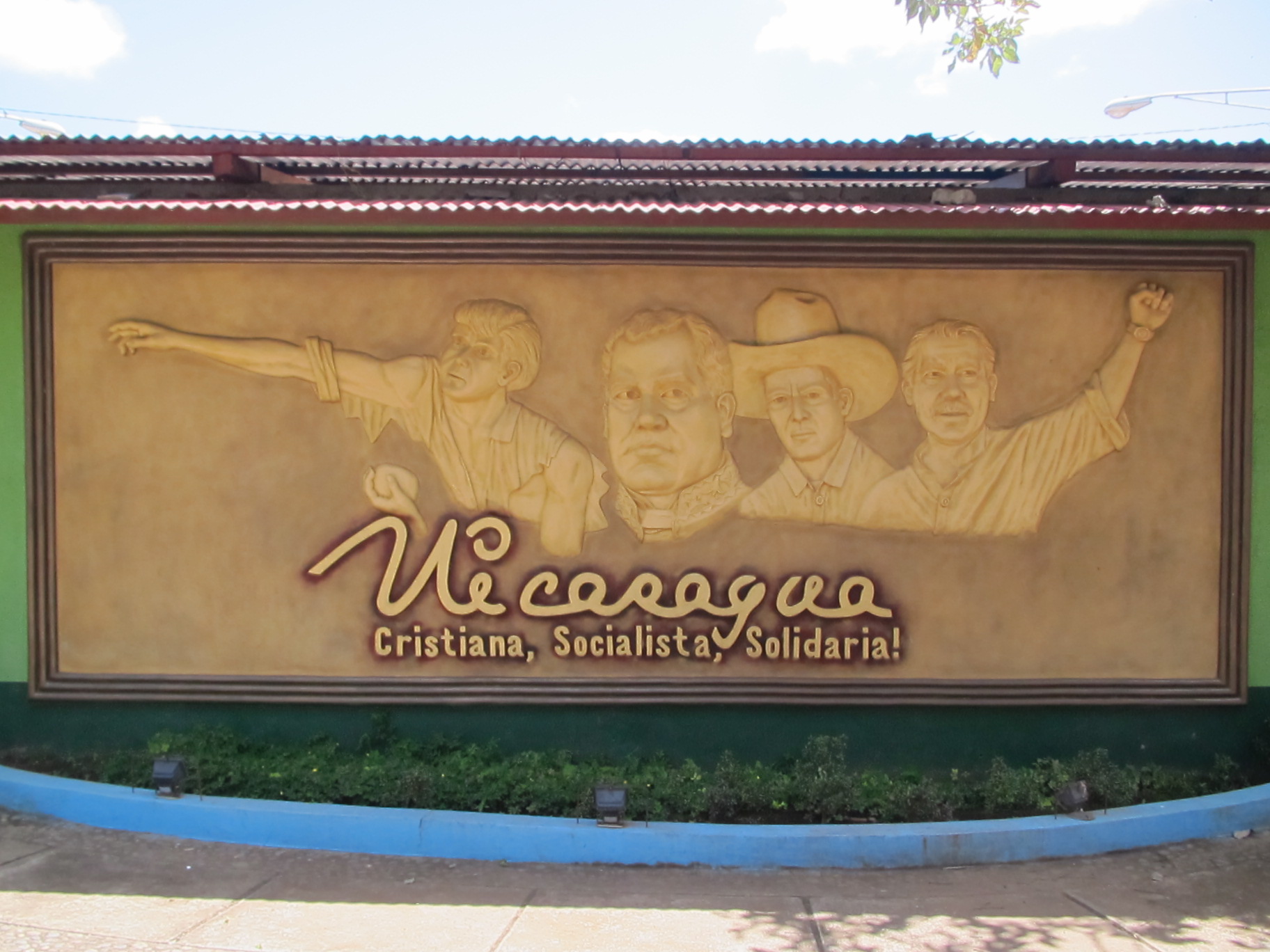
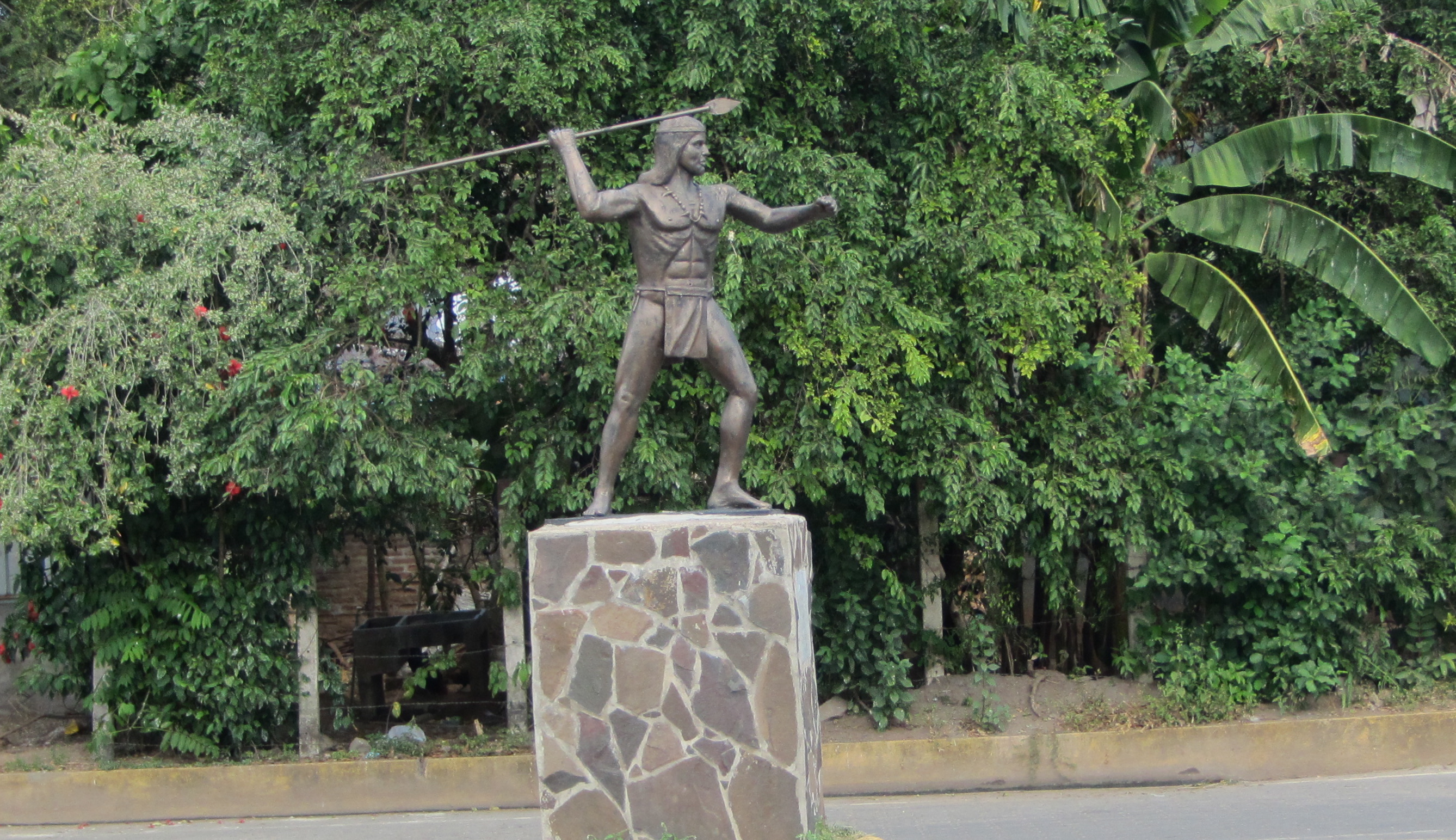
To have even a basic understanding of Nicaraguan culture it’s important to first know a little about the land’s history. In the Pre-Columbian era, the region now called Nicaragua was inhabited by several tribes culturally related to Aztec and Maya civilizations. Not long after Christopher Columbus first reached Nicaragua in 1502, an attempt was made to conquer the region by Gil González Dávila in the 1520s. On April 17, 1523, Dávila first met with Cacique Diriangen, leader of the Dirian peoples. Dávila gave the tribe a three day deadline to become Christians but rather than comply Diriangen led an attack, making him the first known resistance fighter of Nicaragua.
A statue of Diriangen at the entrance to the town of Diria.
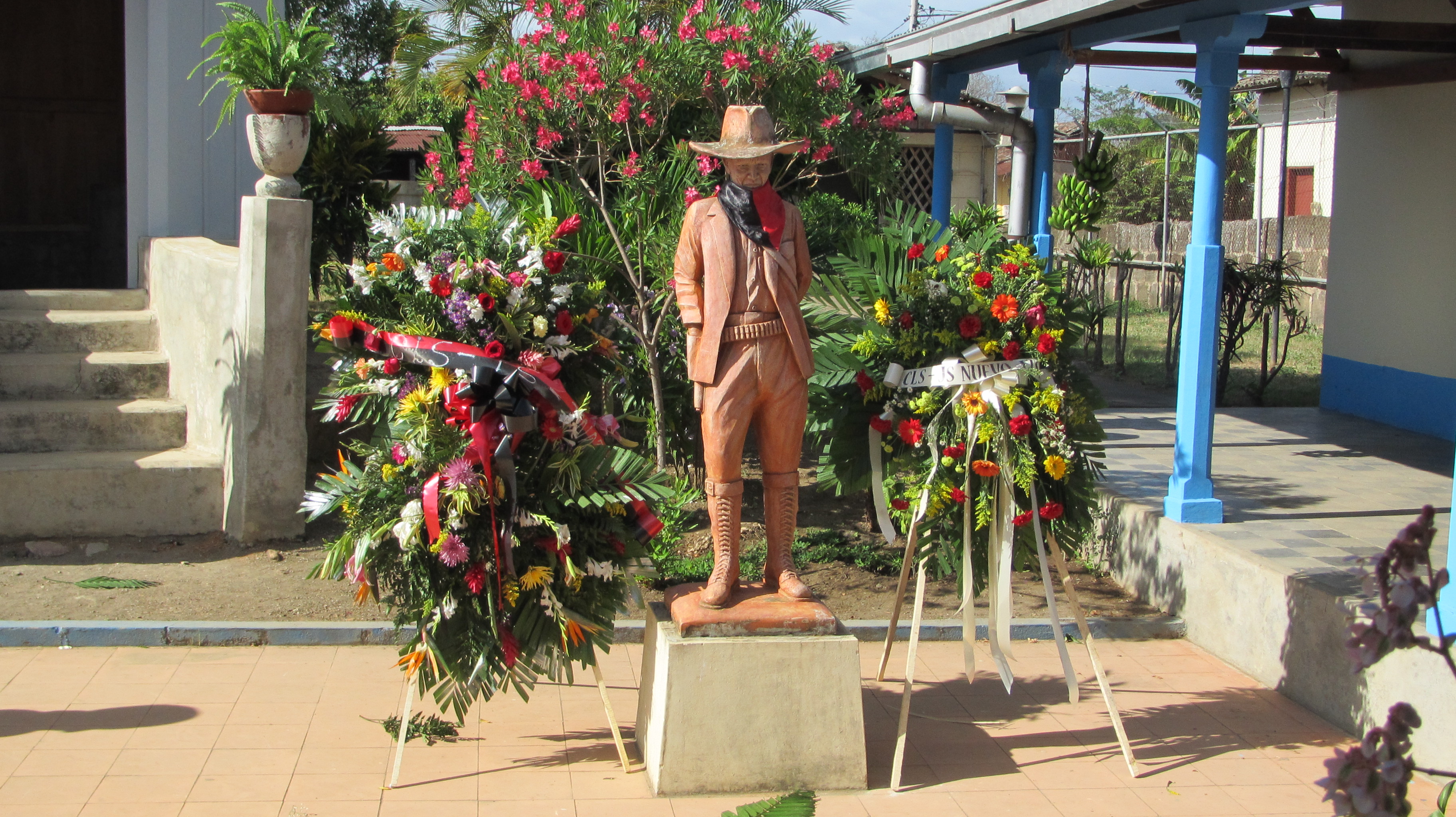
During over 300 years of colonization, countless indigenous people died of diseases, rival conquistadors waged war on each other, Caribbean pirates raided cities along Lake Nicaragua, British forces fought the Spanish in Nicaragua during a sub-conflict of the the Seven Years’ War, and in 1610 Momotombo volcano erupted, destroying the old capital city of León. In 1838, Nicaragua became an independent republic. Within a few decades, during a power struggle between León and Granada, filibusterer William Walker was hired by the government of León to fight on their side but he exploited the region’s instability and briefly established himself as President of Nicaragua before being forced out of the country a few years later. Three decades of conservative rule followed, during which the U.S. began formulating plans to build a canal across Nicaragua (which may soon become a reality with funding from Chinese corporations). However, when the U.S. shifted their plans to Panama, President Jose Santos Zelaya attempted to negotiate with European partners. Because of the potential threat Zelaya posed to U.S. hegemony and his ambitions to unite the Central American nations, the U.S. government compelled him to resign with the threat of military force and funding of conservative opposition groups, replacing him with a series of puppet regimes. Attempting to prevent insurrection, Nicaragua was occupied by U.S. Marines from 1912 to 1933. From 1927 (the start of Somoza’s rise to power though the National Guard), national hero Augusto César Sandino led a guerrilla war against the conservative government and the U.S. Marines. Shortly after a peace agreement was reached with a newly elected Sacasa administration, the Marines left Nicaragua and the head of the National Guard, Anastasio Somoza García ordered Sandino’s assassination. Sandino was killed by National Guard troops on February 21, 1934. His body was hidden and never found. In 1937 Somoza ousted the Sacasa government in a rigged election.
A statue of Sandino at the Augusto C. Sandino Library, a museum located in the house where he grew up in the town of Niquinohomo (Valley of the Warriors).
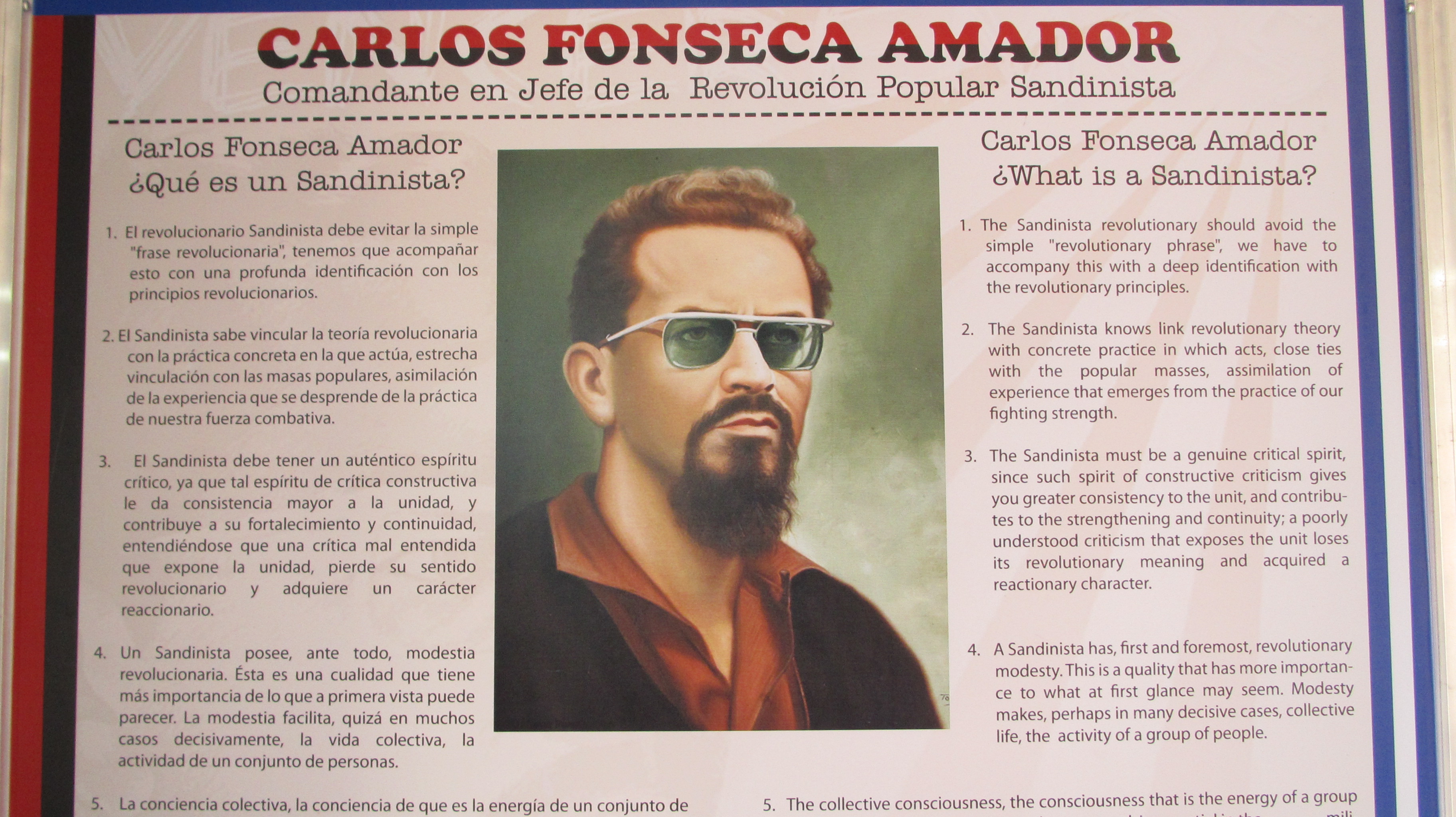
The Somoza regime was Nicaragua’s longest lasting hereditary military dictatorship, having ruled for 43 years. The father of the dynasty, Anastasio Somoza García, was famously called “our son of a bitch” by FDR and was assassinated by 27 year old poet Rigoberto López Pérez in León in 1956. In response to increasingly corrupt and reactionary policies of the Somoza government, Carlos Fonseca, Silvio Mayorga, and Tomás Borge led the formation of the Sandinista National Liberation Front (Frente Sandinista de Liberación Nacional or FSLN, named after and inspired by Augusto Sandino) in 1961. In 1972 a major earthquake hit Managua killing 6000 people, injuring tens of thousands and leaving hundreds of thousands homeless. President Anastasio Somoza Debayle mishandled the situation by failing to distribute essential aid and supplies. When it was later revealed that the government was siphoning relief money for personal gain, popularity and membership of the FSLN greatly increased. Hundreds of Chilean refugees also joined their ranks after a CIA-backed coup assassinated Chilean president Salvador Allende in 1973 and installed the dictator Augusto Pinochet the following year.
A display at the Carlos Fonseca Museum in Matagalpa.
When Pedro Joaquin Chamorro, editor of the national newspaper and critic of Somoza, was assassinated by the government on January 10, 1978, a mass insurrection was triggered. By the end of Summer, armed youths took over Matagalpa while factions of the FSLN and civilian recruits had the National Guard under siege in Managua, Masaya, León, Chinandega and Estelí. On July 19, 1979, FSLN forces entered the capital and officially assumed power. Just two days before, Anastasio Somoza Debayle resigned and fled to Miami. He was killed a year later by a rocket attack from members of the Argentinian Revolutionary Workers Party while in exile in Paraguay.
Though the Sandinista government inherited a country in ruins and over a billion dollars in debt, they had an ambitious platform which included:
nationalization of property owned by the Somozas and their supporters
improved rural and urban working conditions
free unionization for all workers, both urban and rural
price fixing for commodities of basic necessity
improved public services, housing conditions, education
abolition of torture, political assassination and the death penalty
protection of democratic liberties
equality for women
non-aligned foreign policy
The Sandinistas had early successes with their education and literacy programs but were soon hindered by emerging conflicts with counter-revolutionary Contra forces heavily financed, armed and trained by the CIA. Investigations into the Iran-Contra scandal revealed some of the funding was acquired through arms sales to Iran and drug shipments to U.S. inner cities (read Gary Webb’s Dark Alliance for more about this). Despite strong support for the opposition by the U.S., the FSLN’s Daniel Ortega won the 1984 elections. Less than a year later the Reagan administration implemented a complete embargo on U.S. trade with Nicaragua that would last five years. By the late 80s, the continuing Contra campaign was notorious for human rights violations, corruption and terrorism. In August 1987, Costa Rican president Oscar Arias Sanchez created a peace accord which led to a ceasefire signed by Contra and Sandinista representatives a year later. Disillusioned by conflict and economic strife (made worse by Reagan’s embargo), Nicaraguan voters elected conservative administrations throughout the 1990s and early 2000s but seeing little improvement and much corruption, they reelected FSLN member Daniel Ortega in 2006 and 2011. So far, there has not yet been radical reforms that corporate investors feared and that more radical liberals hoped for, but Ortega has maintained a skepticism towards capitalism while simultaneously maintaining relations with the U.S. and rivals such as Iran, Libya and Venezuela.
As for how the average Nicaraguan feels about their current situation, opinions seem to vary but I plan to share some of the impressions I got in a future post.
1/27 Luke Rudkowski of We Are Change interviews Gerald Celente on a variety of topics including economic turmoil, bitcoin and revolution:
1/28 An informative primer from James Corbett on the use of propaganda, false dichotomies and “divide and conquer” tactics by the ruling elite to keep the public powerless:
1/28 Ben Swann on the Grocery Manufacturers Association’s lobbying efforts to create a Federal Ban on GMO labeling:
1/28 Seattle Councilmember Kshama Sawant’s exceptional response to Obama’s State of the Union address:
1/28 An inspiring scene from the underrated “musical documentary” The American Ruling Class (2005) posted by the filmmakers in memory of Pete Seeger:
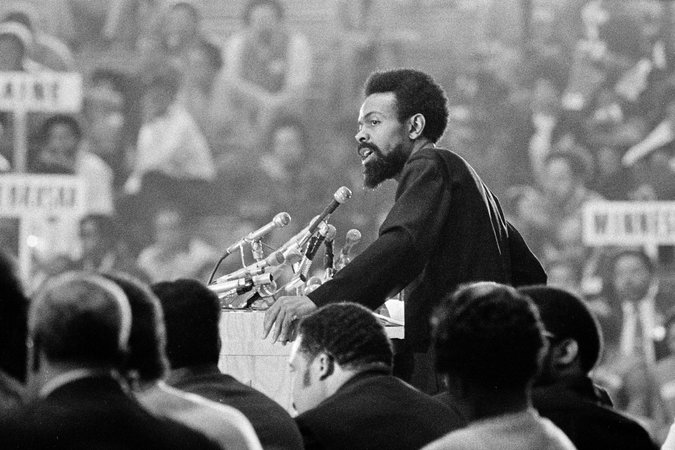
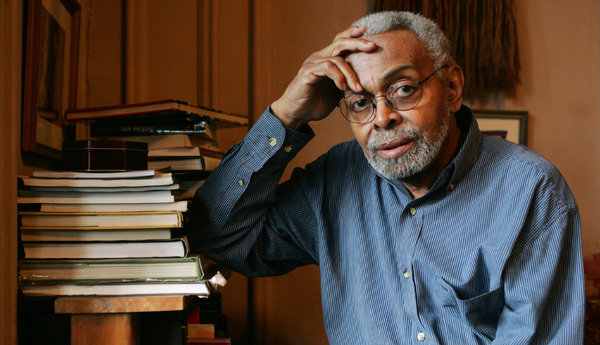
Yesterday Amiri Baraka, a longtime activist and one of the great American poets, passed away at age 79. The cause of his death, at Beth Israel Medical Center in Newark, New Jersey, was not immediately released, but he was hospitalized in the facility’s intensive care unit since Dec. 21 and had a long struggle with diabetes.
Reflecting the exploratory and always-evolving nature of his mind, Amiri’s career path connected him to the Greenwich Village Beat community, the Black Nationalists, the Black Arts Movement (which he founded in 1964), and Marxist-Leninists. Though his beliefs during different stages of life may have different labels, he was consistently committed to justice, unity, social change and the struggle against oppression. As a revolutionary organizer, cultural critic, poet, novelist, essayist, historian, playwright, publisher and orator, Amiri Baraka’s words and ideas have influenced and inspired untold numbers of people around the world. His works have also been the source of much controversy, outrage and condemnation, at least during the initial time of their release.
One of Baraka’s last great acts as a rabble-rouser was his recitation of his poem “Somebody Blew Up America” before 2,000 people at the September 2002 Geraldine R. Dodge Poetry Festival held in Stanhope, New Jersey. This was incredibly courageous because throughout the country (especially on the East Coast) just one year after the attacks, questioning the official 9/11 story was enough to make one viewed as a conspiracy theorist, an apologist for terrorists, possibly traitorous, and/or insensitive to victims and their families. To do so and implicate the Israeli government, as Amiri Baraka did in his poem, led to accusations of antisemitism from the Anti-Defamation League. Many at the time believed the accusations even though under closer scrutiny it was obviously untrue because in the poem he clearly condemns the murder of Jews in the Holocaust and the lines in question could more accurately be described as anti-Zionist.
Who know why Five Israelis was filming the explosion And cracking they sides at the notion?
Amiri Baraka was appointed Poet Laureate of New Jersey just one month before delivering “Somebody Blew Up America” to the public. Despite pressure from the powers that be to resign immediately, he steadfastly refused. In his own words, from an October 2, 2002 post on his website: “I WILL NOT ‘APOLOGIZE’, I WILL NOT ‘RESIGN!'” Governor Jim McGreevey and state legislators discovered there was no legal way to remove Poet Laureate appointees so in an act revealing their fear, hatred and desperation, they abolished the post in July 2003. This is just one chapter of many from Baraka’s often history-making career, but it’s emblematic of his courage, integrity, dedication to truth, and stubborn stance against injustice. This isn’t to say he was a saint or superhero. None of us are without fault, but what we can learn from Amiri is that development of political thought and civic engagement can and should be lifelong processes, and one can remain true to oneself yet open to new ideas and experiences. Above all, his life is a reminder that simple words (especially when composed and unleashed with skill at the right place and time) contain immense power; sometimes enough to change the world.
Photo: Ruth Fremson/The New York Times
Somebody Blew Up America
They say its some terrorist, some barbaric A Rab, in Afghanistan It wasn’t our American terrorists It wasn’t the Klan or the Skin heads Or the them that blows up nigger Churches, or reincarnates us on Death Row It wasn’t Trent Lott Or David Duke or Giuliani Or Schundler, Helms retiring
It wasn’t The gonorrhea in costume The white sheet diseases That have murdered black people Terrorized reason and sanity Most of humanity, as they pleases
They say (who say?) Who do the saying Who is them paying Who tell the lies Who in disguise Who had the slaves Who got the bux out the Bucks
Who got fat from plantations Who genocided Indians Tried to waste the Black nation
Who live on Wall Street The first plantation Who cut your nuts off Who rape your ma Who lynched your pa
Who got the tar, who got the feathers Who had the match, who set the fires Who killed and hired Who say they God & still be the Devil
Who the biggest only Who the most goodest Who do Jesus resemble
Who created everything Who the smartest Who the greatest Who the richest Who say you ugly and they the goodlookingest
Who define art Who define science
Who made the bombs Who made the guns
Who bought the slaves, who sold them
Who called you them names Who say Dahmer wasn’t insane
Who? Who? Who?
Who stole Puerto Rico Who stole the Indies, the Philipines, Manhattan Australia & The Hebrides Who forced opium on the Chinese
Who own them buildings Who got the money Who think you funny Who locked you up Who own the papers
Who owned the slave ship Who run the army
Who the fake president Who the ruler Who the banker
Who? Who? Who?
Who own the mine Who twist your mind Who got bread Who need peace Who you think need war
Who own the oil Who do no toil Who own the soil Who is not a nigger Who is so great ain’t nobody bigger
Who own this city
Who own the air Who own the water
Who own your crib Who rob and steal and cheat and murder and make lies the truth Who call you uncouth
Who live in the biggest house Who do the biggest crime Who go on vacation anytime
Who killed the most niggers Who killed the most Jews Who killed the most Italians Who killed the most Irish Who killed the most Africans Who killed the most Japanese Who killed the most Latinos
Who? Who? Who?
Who own the ocean
Who own the airplanes Who own the malls Who own television Who own radio
Who own what ain’t even known to be owned Who own the owners that ain’t the real owners
Who own the suburbs Who suck the cities Who make the laws
Who made Bush president Who believe the confederate flag need to be flying Who talk about democracy and be lying
Who the Beast in Revelations Who 666 Who know who decide Jesus get crucified
Who the Devil on the real side Who got rich from Armenian genocide
Who the biggest terrorist Who change the bible Who killed the most people Who do the most evil Who don’t worry about survival
Who have the colonies Who stole the most land Who rule the world Who say they good but only do evil Who the biggest executioner
Who? Who? Who?
Who own the oil Who want more oil Who told you what you think that later you find out a lie
Who? Who? Who?
Who found Bin Laden, maybe they Satan Who pay the CIA, Who knew the bomb was gonna blow Who know why the terrorists Learned to fly in Florida, San Diego
Who know why Five Israelis was filming the explosion And cracking they sides at the notion
Who need fossil fuel when the sun ain’t goin’ nowhere
Who make the credit cards Who get the biggest tax cut Who walked out of the Conference Against Racism Who killed Malcolm, Kennedy & his Brother Who killed Dr King, Who would want such a thing? Are they linked to the murder of Lincoln?
Who invaded Grenada Who made money from apartheid Who keep the Irish a colony Who overthrow Chile and Nicaragua later
Who killed David Sibeko, Chris Hani, the same ones who killed Biko, Cabral, Neruda, Allende, Che Guevara, Sandino,
Who killed Kabila, the ones who wasted Lumumba, Mondlane, Betty Shabazz, Die, Princess Di, Ralph Featherstone, Little Bobby
Who locked up Mandela, Dhoruba, Geronimo, Assata, Mumia, Garvey, Dashiell Hammett, Alphaeus Hutton
Who killed Huey Newton, Fred Hampton, Medgar Evers, Mikey Smith, Walter Rodney, Was it the ones who tried to poison Fidel Who tried to keep the Vietnamese Oppressed
Who put a price on Lenin’s head
Who put the Jews in ovens, and who helped them do it Who said “America First” and ok’d the yellow stars
Who killed Rosa Luxembourg, Liebneckt Who murdered the Rosenbergs And all the good people iced, tortured, assassinated, vanished
Who got rich from Algeria, Libya, Haiti, Iran, Iraq, Saudi, Kuwait, Lebanon, Syria, Egypt, Jordan, Palestine,
Who cut off peoples hands in the Congo Who invented Aids Who put the germs In the Indians’ blankets Who thought up “The Trail of Tears”
Who blew up the Maine & started the Spanish American War Who got Sharon back in Power Who backed Batista, Hitler, Bilbo, Chiang kai Chek
Who decided Affirmative Action had to go Reconstruction, The New Deal, The New Frontier, The Great Society,
Who do Tom Ass Clarence Work for Who doo doo come out the Colon’s mouth Who know what kind of Skeeza is a Condoleeza Who pay Connelly to be a wooden negro Who give Genius Awards to Homo Locus Subsidere
Who overthrew Nkrumah, Bishop, Who poison Robeson, who try to put DuBois in Jail Who frame Rap Jamil al Amin, Who frame the Rosenbergs, Garvey, The Scottsboro Boys, The Hollywood Ten
Who set the Reichstag Fire
Who knew the World Trade Center was gonna get bombed Who told 4000 Israeli workers at the Twin Towers To stay home that day Why did Sharon stay away?
Who? Who? Who?
Explosion of Owl the newspaper say The devil face cd be seen
Who make money from war Who make dough from fear and lies Who want the world like it is Who want the world to be ruled by imperialism and national oppression and terror violence, and hunger and poverty.
Who is the ruler of Hell? Who is the most powerful
Who you know ever Seen God?
But everybody seen The Devil
Like an Owl exploding In your life in your brain in your self Like an Owl who know the devil All night, all day if you listen, Like an Owl Exploding in fire. We hear the questions rise In terrible flame like the whistle of a crazy dog
Like the acid vomit of the fire of Hell Who and Who and WHO who who Whoooo and Whooooooooooooooooooooo!



 After the Crash