Podcast Roundup

9/7: On Expanding Minds, hosts Maja D’Aoust and Erik Davis have a conversation with Andy Sharp of English Heretic about death, Horror films, Hiroshima, psychogeography, and his latest release, The Underworld Service.

 
http://s50.podbean.com/pb/fd840a4721e38d3f25dd4ec01834d2c6/541340f7/data2/blogs18/276613/uploads/ExpandingMind_090714.mp3

9/8: R.U. Sirius joins hosts Chris Dancy and Klint Finley to discuss technology transhumanism, and the current social/political climate among other topics.

https://soundcloud.com/itsmweekly/pending-mindful-cyborgs-episode-37
 
9/9: Peter Null interviews Professor Andrew Kolin, a professor of political science at Hilbert College in Hamburg and Kevin Carson, researcher at the Center for a Stateless Society, on militarization of police, centralization of power, war and the military-industrial complex.


http://s53.podbean.com/pb/e788a26888199ef114360f06cc89f48c/541347f9/data1/blogs18/371244/uploads/ProgressiveCommentaryHour_090914.mp3

9/10: On the C-Realm, KMO and June Pulliam discuss and dissect the archetypes and cultural meaning of zombie apocalypse narratives.


http://c-realmpodcast.podOmatic.com/enclosure/2014-09-10T12_48_22-07_00.mp3

9/11: Christopher Knowles joins Aeon Byte Gnostic Radio to examine how Gnosticism connects to alternative cultures, politics and humanity’s existential crisis.


http://content.screencast.com/users/AeonByte/folders/AEON%20BYTE/media/7984ec1d-8363-4162-a034-0dabc54aef33/1.%20Gnosticism%20and%20Politics%20with%20Chris%20Knowles.mp3

9/12: On New World Next Week, James Corbett and James Evan Pilato report on 9/11 terror hysteria, Obama’s private CFR event with Sandy Berger (9/11 document thief) and the cryptocurrency/anti-surveillance potential of a new off-the-grid communications technology.

 
http://www.corbettreport.com/mp3/2014-09-11%20James%20Evan%20Pilato.mp3

Why Independent 9/11 Research and Education Still Matters

Editor’s note: This is a revised article from last year followed by recent podcasts and videos on the topic.

One of the ways corrupt people and institutions retain power is by discouraging criticism and discussions that could lead to organized opposition. A classic tactic is to vilify targets as unpatriotic, disloyal, traitorous, heretical, dangerous, crazy, etc. Think about what happened to critics of capitalism during the peak of the cold-war hysteria. George Orwell’s 1984 depicted how governments could also manipulate language, history, media and other information in order to diminish critical thought (which leads to critical speech and organizing) and to control thought. The creation of a Big Brother-style police/surveillance state is another way to create a climate of fear and foster a culture which discourages the sharing of knowledge about certain topics and prevents people from taking action.

This should be kept in mind when discussing 9/11, because those who still have complete faith in government and corporate media (an increasingly shrinking number), have been conditioned to ignore, deny or dismiss any information that would lead them to question the official story. The most common knee-jerk reaction is to defend the official story by labeling all alternative narratives “conspiracy theory”. Though this argument is not as convincing today, when political scandals and crimes are almost a daily occurrence, the association between “conspiracy theories” and negative terms such as “crazy” and “wacko” are deeply ingrained in the culture, and not by accident.

The term “conspiracy theory” was not used as an ad hominem attack until shortly after the assassination of John F. Kennedy. Documented evidence shows the CIA needed to develop new and more effective ways to attack and discredit those who dared to question the Warren Commission Report. So when one counters questions about the official narrative with “That’s just a crazy conspiracy theory” they’re actually using a psy-op attack developed by and for a conspiracy. Because of experience and greater proliferation of information through the internet, fewer people are naive enough to deny extremely wealthy and powerful people would conspire to protect their position and interests. History and hard evidence shows it would be crazier to suppose that they don’t.

Another common argument is “The government is too incompetent to pull off something of that scale and keep it a secret”. It’s true that aspects of the government are incompetent, but the incompetence is generally limited to things they care little about such as medical and educational systems, the food system, domestic infrastructure, safety, financial regulation, disaster relief, fair elections, etc. When it comes to things they prioritize such as wars, bailouts, black budgets, black ops, cronyism, crowd control, surveillance, propaganda, etc., the US government is extremely effective. And the higher up the hierarchy, the easier it is to keep secrets. All it takes is a relatively small number of people in key positions, and through division of labor, compartmentalization, formation of policies conducive to conspiring, and covert actions and communications protected under the cloak of “national security” (with help from a mass culture of conformity, credulity and fear). One should also keep in mind that governments are not monolithic and are comprised of factions with conflicting interests which can be used, manipulated and/or compromised by players involved in the conspiracy (not just within U.S. government but in foreign governments and the private sector as well).

Some simply can’t accept that individuals and factions within U.S. government could intentionally cause an attack such as 9/11 or let it happen. This speaks to the power of corporate media and establishment propaganda on different levels. It shows how a significant majority of Americans can be kept completely ignorant of decades of violent imperialist policy around the world and how false flags have been used to start wars through history. There’s also a long history of state violence against its own people and on American soil going back to the genocide of Native Americans, murders of countless slaves and people of color, multiple massacres of labor activists, assassination of leaders such as JFK, RFK, MLK, Black Panthers, and MOVE, the 93 WTC bombing, WACO, OK City bombing, etc. There’s also ample documentation proving the US government has at least considered actions not dissimilar to 9/11 such as Operation Northwoods and Project for a New American Century. What this argument presupposes is that powerful and wealthy (mostly) white men are inherently more trustworthy, empathetic, and righteous than “Muslim fanatics” or any other “enemy” most Americans have been conditioned to fear and hate.

Other attacks against independent 9/11 researchers include dismissals like “9/11 is no longer relevant” and/or “there’s more important problems to deal with so we need to move on”. I would argue that when such crimes occur that have harmed and killed vast numbers of people and is responsible for countless casualties and elimination of civil liberties more than a decade after due to policies supposedly justified by the event, we have a moral obligation to uncover who did it and why. There’s no peace without justice and no justice as long as the truth behind such nation-changing crimes remains suppressed. Of course there’s always plenty of immediate and equally important issues to address, but those who don’t know history are condemned to repeat it. More specifically, those who benefit most from historical events such as 9/11 are motivated to repeat it while those who only know a distorted version of history while remaining ignorant of the truth are more likely to let it happen again.

Because of the work of “conspiracy theorists” we are now more aware of the scope of government/corporate criminality and connections between government, wall street, war-profiteers, and the criminal underworld. For example, without the work of independent JFK researchers we wouldn’t be aware of Operation Northwoods which many now view as a false flag template used for 9/11. Gaining a better understanding of how and why 9/11 happened helps us put current geopolitical events in context while providing insight into how such operations work and how they can be counteracted.

There’s also the “straw man” argument which creates the illusion of having refuted a proposition by replacing an argument with a superficially similar yet non-equivalent proposition and refuting it without ever having refuted the original position. This is particularly easy to do with complex high profile incidents such as 9/11 and the JFK assassination, where there can be a wide array of theories and speculation due to the complexity of the narrative, widespread interest, deep secrecy and disinformation or misinformation from “useful idiots” and/or those who would benefit from keeping crucial information hidden.

Discussing controversial subjects is never easy but it’s always rewarding when people turn out to be more receptive and thoughtful than one might suspect. Though corporate media does its best to defend the official stories, more people than ever are waking up. On this 9/11 anniversary with the potential for another war on the horizon, it’s as good a day as any to talk about it, share this information and help others wake up.

9/11/14 Update:

On the 9/3/14 episode of “Guns and Butter” Tod Fletcher uses a contextual approach to analyzing events at the Pentagon, explores origins and elements of the hijacker story (ie. telephone calls from the planes, analysis of eyewitness reports, physical debris, photo/video evidence, black boxes and FBI involvement) and investigates means, motive and opportunity.


audio http://archives.kpfa.org/data/20140903-Wed1300.mp3

This episode was followed by the 9/10/14 Guns and Butter: “9/11 and the Politics of Deception” with Christopher Bollyn.


http://archives.kpfa.org/data/20140910-Wed1300.mp3

Project Censored 9/8/14: With the anniversary of the September 11 attacks at hand, Peter and Mickey speak with Ken Jenkins, organizers of the annual 911 Film Festival in Oakland, California, about questions that still linger 13 years after the attacks. Then Shahid Buttar of the Bill of Rights Defense Committee talks about the scope and implications of the ongoing federal surveillance activities against Americans, and how to resist them. The program concludes with Robbie Martin of Media Roots, speaking about his new documentary “American Anthrax.”

https://s3.amazonaws.com/Pcradiodos/Project+Censored+090514.mp3

9/11: The Mother of All Big Lies by Stephen Lendman

9/11 Truth, Inner Consciousness, and the Public Mind by James Tracy

Thirteen Years After the September 11 Attacks, Blindness Persists by Thierry Meyssan

Beyond Propaganda: Discourse of War and Doublethink. “When the Lie Becomes the Truth”

aa-Dees-mass-media-matrix1

By Jean-Claude Paye and Tülay Umay

Source: Global Research

Since the attacks of September 11, we are witnessing a transformation of the way the media report the news. They lock us in the unreal. They base truth not on the coherence of a presentation, but on its shocking character. Thus, the observer remains petrified and cannot establish a relation to reality.

The media are lying to us, but at the same time, they show us that they are lying. It is no longer a matter of changing our perception of facts in order to get our support, but to lock us in the spectacle of the omnipotence of power. Showing the annihilation of reason is based on images that serve to replace facts. Information no longer focuses on the ability to perceive and represent a thing, but the need to experience it, or rather to experience oneself through it.

From Bin Laden to Merah, through the “tyrant” Bashar al-Assad, media discourse has become the permanent production of fetishes, ordering surrender to what is “given to see.” The injunction does not aim, as propaganda, to convince. It simply directs the subject to give flesh to the image of the “war of civilizations”. The discursive device of “War of Good against Evil,” updating the Orwellian doublethink process must become a new reality that de-structures our entire existence, of everyday life in global political relations.

Such an approch has become ubiquitous, especially regarding the war in Syria. It consists of cancelling a statement at the same time as it is pronounced, while maintaining what has been previously given to see and hear. The individual must have the ability to accept opposing elements, without raising the existing contradiction. Language is thus reduced to communication and cannot fulfill its function of representation. The deconstruction of the faculty to symbolize prevents any protection vis-à-vis the real to which we are in submission.

Enunciating a Statement And its Opposite at the Same Time

In the reports on the conflict in Syria, the double think procedure is omnipresent. Stating at the same time a thing and its opposite produces a decay of consciousness. It is no longer possible to perceive and analyze reality. Unable to put emotion at a distance, we cannot but feel the real and thus be submitted to it.

Opponents of the regime of Bashar al-Assad are dubbed “freedom fighters” and Islamic fundamentalist enemies of democracy at the same time. It is the same with regard to the use of chemical weapons by belligerents. The media, in the absence of evidence, express certainty as to the Syrian regime’s responsability, although they mention the use of such weapons by the “rebels”. In particular, they relayed the statements of magistrate Carla Del Ponte, a member of the UN independent commission of inquiry into violence in Syria, who said, on May 5, 2013 on Swiss television, “According to the testimonies we have gathered, the rebels have used chemical weapons, making use of sarin gas.” This magistrate, who is also the former prosecutor of the International Criminal Tribunal for the former Yugoslavia can hardly be called indulgent toward the “regime of Bashar Assad.” “Our investigations should be further developed, verified and confirmed through new evidence, but according to what we have established so far, it is the opponents who used sarin,” she added. [1]

The White House, for its part, did not want to consider this evidence and has always expressed an opposite position. Thus, as regards the August 21 Ghouta massacre, it released a statement explaining that there is “little doubt” of the use by Syria of chemical weapons against its opposition. The statement added that the Syrian agreement to allow the UN inspectors in the area is “too late to be credible.”

Reduction of qualitative to quantitative.

Following the use, August 21, 2013, of chemical weapons in the suburbs of Damascus, Kerry reiterated the “strong certainty” of the United States concerning the liability of the Syrian regime. A U.S. intelligence report, released by the White House and said to rely on “multiple” sources, also said that the Syrian government used nerve gas in the attack, the use of which by the rebels is “highly unlikely”. [2]

The individual is placed outside the differentiating power of language. That which is qualitative, that which is certain, is reduced to that which is quantitative, to the “different degrees of certainty” expressed previously by Obama or the “high certainty” pronounced by J. Kerry. The “very little doubt”, as to the liability of the Syrian regime, also mirrors the “highly unlikely” responsibility attributed to opponents. Quality is thereby restricted to a quantitative difference. Quality, that which is, becomes at the same time, that which is not or at least that which may not be, because it no longer expresses a certainty, but a certain amount or degree of certainty or doubt. The opposites, “certainty” and “doubt” become equivalent. The qualitative difference is reduced to a quantitative gap. There is no longer any quality other than that of measurement.

This reduction of qualitative to quantitative has otherwise already invaded our daily lives. We no longer refer to the poor but to the “less fortunate”. Similarly, we no longer encounter invalids, but “less able persons”. The least skilled jobs are now given names that deny de-qualification. Thus, a cleaning woman becomes a ” housekeeper”, the cashier disappears in favour of the “sales assistant” and garbage Collector are now called « sanitation worker ».

The separating power of language is annihilated. Words are turned into verbal phrases that build a homogenized world. We are in a world in which everyone is advantaged. No more are there qualitative differences between human beings, but only quantitative differences. The vision of a world of perfect homogeneity where only equals exist, no longer differing other than quantitatively, was already foreseen by George Orwell in Animal Farm: « All are equal, but some would be more so than others » « [3].

Absolute Certainty in the Absence of Evidence.

The word, which describes and differentiates things, is replaced by an image, by that which is everything at the same time as being nothing. Instead of a word referring to an object, degrees of certainty concern only the feelings of the speaker. These verbal phrases are not intended to designate objective things, but to place the person who receives the message in the perspective of the speaker, to lock them in the warped meaning created by the latter.

Expressed certainty can detach itself from facts and present itself as purely subjective. It does not refer to an observation, but refers to a condition posing as objective through a quantization operation.

The certainty of U.S. and French authorities also distinguishes itself in that it is built on equivocal data, on the invocation of evidence of liability of the Syrian regime, although they recall the impossibility of knowing who struck and how chemical weapons were used. It is no longer possible to construct an objective certainty, because the observation of facts is defused and leaves room for the stupefaction of the observer. Expressed certainty no longer separates true from false, since the ability to judge is suspended.

Precisely, subjective and objective certainty is undifferentiated. It is not a matter of believing what is stated, but of believing the authority who speaks, no matter what he says. Statements of Presidents Obama and Holland are immediately given as absolute certainty, ie: they occupy the place that Descartes gives to God “as a principle guaranteeing the objective truth of subjective experience…” [4]. The matter of going through the steps of objective verification, through the judgment of existence, does not arise to the extent that certainty is set free from all spatial and temporal constraints. It is posited in the absence of limits, in the absence of what psychoanalysis calls the “Third Person”, the place of the Other. [5]

Removal of the “Third Person”

Absolute certainty, posing as the be all and end all, installs a denial of reality, that which escapes us. It does not recognize loss. Constituting “we” is no longer possible because it can only be formed from that which is missing. The monad, for its part, lacks nothing because it is fused with state power. Fetishes fabricated by “the news” fill the void of reality, occupy the place of that which is missing and operate a denial of the third party.

Absolute certainty is opposed to the establishment of a symbolic order integrating the “third person” [6], the domain of language. The proper function of language is to signify that which is real, knowing that the word is not reality itself, but that by which it is represented. Jacques Lacan expresses this necessity with his aphorism “the thing must be lost in order to be represented”. [7]

On the contrary, absolute certainty attaches words to things and does not take into account their relationships. In the absence of a ’third person’, it prevents any real articulation with the symbolic. This absence of linkage is the formation of a social psychosis wherein that which is stated by power becomes reality. The deficiency also allows the emergence of a perverse structure that reverses the speech act and prevents identifying the reality of the psychosis.

Enrolling us in psychosis, the discourse of French and American authorities originates in perverse denial. It constitutes a coup against language “coup because disavowal is situated at the logical basis of language” [8]. Denial of reality is realized by a commodification of words and a procedure of cleavage. The cynical coup is this: “pervert that by which law is articulated, make language the reasonable discourse of unreason” [9] as with “humanitarian war” or “counter-terrorism”.

Counter-terrorism legislation is presented as rational actions to dismantle the law in favour of the fabrication of images. U.S. law is particularly rich in these pictorial constructions, such as the “lone wolf”, a lone terrorist related to an international movement, the “enemy combatant” or “unlawful belligerent” that exist, because they are designated as such by the U.S. President. The enemy combatant, as illegal belligerent, may be a U.S. citizen who has never been on a battlefield and whose “military action” amounts to an act of protest against a military engagement. Deviation from that which is stated by the powers that be is no longer possible. Similarly, any protection against its real threat is removed. The reality manifests itself without dissimilation and can henceforth petrify us.

The suppression of the Third Person reducing the individual to a monad, no longer having an Other outside of state power, allows authority, especially as regards discourse on the war in Syria, to produce a new reality. Evidence of the guilt of the Syrian regime exists, because authority says so.

A “disturbing strangeness”.

The absence of a “third person” settles us in transparency, in a never-never land beyond language. It removes the relationship between interior and exterior. The expression of the omnipotence of the U.S. President, his will to break free from the constraints of language and of any judicial order, reveals our condition, its reduction to “naked life.” There then occurs “a special kind of scary” Freud calls Unheimliche [10], a term which has no equivalent in French and which can as well be translated as “disturbing strangeness” and as “disturbing familiarity.”

It would be, as defined by Schelling, something that should have remained hidden and which has reappeared. Unveiled, worldly things appear in their raw presence as Real. Where the individual believed himself at home, he suddenly feels driven from his home and becomes strangely foreign to himself. The inside of our condition, our annihilation is thrown out and appears to us as a plaything of the U.S. executive branch. The staging of our division, “disturbing strangeness”, becoming that which is most familiar to us, suppresses intimateness by replacing it.

Freud suggests a dissociation of the ego. The latter is then pulverised and can no longer display the Real, the threat that petrifies it. Freud speaks of the formation of a stranger “I” that can turn itself into moral conscience and treat the other part as an object [11].

This mechanism reappears as the return of the repressed archaic, that which is intended to hide the distress of the nursing child. The “disturbing strangeness”, produced by Obama’s speech is of the same order. It instrumentalises what happened in Iraq in order to prevent us from forgetting our impotence. Thus, it reinforces “the permanent return of the same” constitutive of a sense of “disturbing strangeness” or disturbing familiarity. The process of repetition presents itself as an inexorable process, like a power that we cannot confront.

Jacques Lacan confirms this reading. Echoing the work of Freud on the “disturbing strangeness”, he shows that anxiety arises when the subject is facing the “lack of lack” that is to say, an all-powerful otherness that invades the self to the point of destroying every faculty of desire. [12]

In fact, the two translations, the first highlighting the strangeness, the second its familiar character, make each highlight one aspect of this particular anxiety that one can also deal with thanks to the notion of transparency. Interior and exterior confusing themselves, the individual is at once struck by the strangeness of seeing his impotence, by his interior deprivation exhibited outside himself and by the colonization of his intimacy by the spectacle, become familiar, of the enjoyment of the other.

Denial and Splitting of the Ego.

Dissociation is an archaic defense attempt when faced with a power with which one cannot cope. This disintegration of the Ego allows the return of a “déjà vu”. The Superego calls one to see oneself as an infant, as one who does not speak, thus causing a feeling of “disturbing strangeness”.

Faced with the imperative need to believe in the responsibility of Bashar Assad, the individual must suspend contrary information and treat it as if it did not exist. He proceeds to a denial of all that is different, then couched in the regressive position, that of the umbilical union with the mother, a stage preceding language, before the appearance of the function of the father. [13]

The denial of the contradiction between a thing and its opposite, the responsibility of the Syrian government and the use of chemical weapons by the rebels, is the act of denying the reality of perception seen as dangerous because the individual would then have to face the omniscience displayed by the powers that be. To contain the anxiety produced by the “disturbing strangeness”, the subject is forced to juxtapose two opposing and parallel ways of reasoning. The individual then has two incompatible unlinked visions. The denial of the opposition between these two elements removes any confliction; because there coexists within oneself two opposing statements that are juxtaposed without influencing each other. This denial rests on what psychoanalysis calls the “splitting of the ego.”

The cleavage gives one the opportunity to live on two different levels, placing side by side, on the one hand, “knowledge”, the use of sarin gas by the rebels, and on the other hand a dodging of confrontation with a suspension of information. This is to prevent any struggle, any symbolism in order to enjoy the full omnipotence of the powers that be. In the absence of a perceived lack in what one is told, one finds oneself beneath the conflict in an annulment of any judgment.

Orwell has also highlighted this procedure in his definition of “doublethink.” It consists in the following: “to hold simultaneously two opinions which cancel each other out, knowing them to be contradictory and believing in both of them,” while being able to forget, « whatever it was necessary to forget, then to draw it back into memory again at the moment when it was needed ». Then one must forget, ie: “consciously to induce unconsciousness, and then, once again, to become unconscious of the act of hypnosis you have just performed. ” [14]

Cleavage is recurrent in the speech surrounding the war in Syria. Things here are regularly affirmed, at the same time as that which contradicts them without a relationship being established between the different enunciations. Contrary to statements by Carla Del Ponte, Washington would first have arrived, “with varying degrees of certainty,” at the conclusion that the Syrian government forces had used sarin gas against their own people. However, Barack Obama, at the same time, said the United States didn’t know ” how [these weapons] were used, when they were used or who used them” [15]. The operation places the subject in fragmentation, unable to react to the nonsense of what is said and shown. One cannot cope with a certainty that is claimed in the absence of evidence.

The logical reversal of language building becomes a manifestation of the power of the U.S. executive. It exhibits a capacity to overcome any language organisation and thus all symbolic order. The absurdity reclaimed by the statement is as a coup against the logical basis of language. It henceforth has a petrification effect on people and captivates them in psychosis.

Notes

[1] « Les rebelles syriens ont utilisé du gaz sarin, selon Carla Del Ponte », Le Monde.fr avec Reuters, le 6 mai 2013.

[2] « Syrie : les États-Unis ont la “forte certitude” que Damas a eu recours à des armes chimiques », Le Monde.fr, le 30 août 2013.

[3] « All are equal but some than others », Georges Orwell, in Animal Farm.

[4] Charles-Éric de Saint Germain, L’Avènement de la vérité Hegel, Kierkegaard, Heidegger, L’Harmattan 2003, p. 37.

[5]Dominique Temple, “Lacan et la réciprocité”, 2008, http://dominique.temple.free.fr/reciprocite.php?page=reciprocite_2&id_article=202

[6] Le « Tiers » est ce qui défusionne l’enfant de la mère, lui donnant ainsi accès au champ du langage et de la parole. Il permet l’assujettissement du sujet à un ordre symbolique.

[7] Jacques Lacan, « Fonction et champ de la parole et du langage en psychanalyse » – in : Écrits 1, Le Seuil, Paris, 1966.

[8] Houriya Abdellouahed, « La tactilité d’une parole. Le pervers et la substance », in Cliniques méditerranéennes N° 72,  Érès , p.5, http://www.cairn.info/revue-cliniques-mediterraneennes-2005-2.htm

[9] Op. Cit., p. 8.

[10] Unheimliche est un adjectif substantivé, formé à partir de deux termes : le préfixe Un, exprimant la privation et l’adjectif heimlich (familier). La traduction « l’inquiétante étrangeté », d’abord proposée par Marie Bonaparte, ne tient compte ni de la familiarité signifié par heimlich, ni de la négation marquée par le Un. Aussi d’autres traductions ont été proposées telle que « l’inquiétante familiarité ». Lire les remarques préliminaires de François Stirn à la traduction de Une inquiétante étrangeté, par Marie Bonaparte et E. Marty, Profil Textes Philosophiques, Philosophie, octobre 2008, www.esparedes.pt/escola/images/freud_etrangete.pdf

[11] Le partage en deux éléments séparés a pour conséquence « que l’un participe au savoir, aux sentiments et aux expériences de l’autre, de l’unification à une autre personne, de sorte que l’on ne sait plus à quoi s’en tenir quant au moi propre, ou qu’on met le moi étranger à la place du Moi propre —donc dédoublement du Moi, division du Moi, permutation du Moi— et enfin, le retour permanent du même », S. Freud, « Inquiétante étrangeté et clivage », in L’Inquiétante étrangeté et autres essais, Gallimard 1988, p. 236.

[12] Régine Detambel, « Sigmund Freud, L’inquiétante étrangeté  autres essais, http://www.detambel.com/f/index.php?sp=liv&livre_id=656

[13] « Inquiétante étrangeté et clivage », http://theses.univ-lyon2.fr/documents/getpart.php?id=lyon2.2002.ravit_m&part=66598

[14] « Retenir simultanément deux opinions qui s’annulent alors qu’on les sait contradictoires et croire à toutes deux… Oublier tout ce qu’il est nécessaire d’oublier, puis le rappeler à sa mémoire quand on en a besoin, pour l’oublier plus rapidement encore. Surtout, appliquer le même processus au processus lui-même. Là, était l’ultime subtilité. Persuader consciemment l’inconscient, puis devenir ensuite inconscient de l’acte d’hypnose que l’on vient de perpétrer. La compréhension même du mot « double pensée » impliquait l’emploi de la double pensée. »,  George Orwell, 1984, première partie, chapitre III, Gallimard Folio 1980, p.55

[15] « Les rebelles syriens ont utilisé du gaz sarin, selon Carla Del Ponte », Op. Cit.


This article was first published on our French language website www.mondialisation.ca

Article in French :

Discours de la guerre et double pensée. L’exemple de la Syrie. Mondialisation.ca, 29 of June of 2014

The Stealing of America by the Cops, the Courts, the Corporations and Congress

edward_r_murrow_a_nation_of_sheep_will_soon_have_a_government_of_wolves__2013-06-24

By John W. Whitehead

Source: The Rutherford Institute

“What the government is good at is collecting taxes, taking away your freedoms and killing people. It’s not good at much else.” —Author Tom Clancy

Call it what you will—taxes, penalties, fees, fines, regulations, tariffs, tickets, permits, surcharges, tolls, asset forfeitures, foreclosures, etc.—but the only word that truly describes the constant bilking of the American taxpayer by the government and its corporate partners is theft.

We’re operating in a topsy-turvy Sherwood Forest where instead of Robin Hood and his merry band of thieves stealing from the rich to feed the poor, you’ve got the government and its merry band of corporate thieves stealing from the poor to fatten the wallets of the rich. In this way, the poor get poorer and the rich get richer. All the while, the American Dream of peace, prosperity, and liberty has turned into a nightmare of endless wars, debilitating debt, and outright tyranny.

What Americans don’t seem to comprehend is that if the government can arbitrarily take away your property, without your having much say about it, you have no true rights. You’re nothing more than a serf or a slave.

In this way, the police state with all of its trappings—from surveillance cameras, militarized police, SWAT team raids, truancy and zero tolerance policies, asset forfeiture laws, privatized prisons and red light cameras to Sting Ray guns, fusion centers, drones, black boxes, hollow-point bullets, detention centers, speed traps and abundance of laws criminalizing otherwise legitimate conduct—is little more than a front for a high-dollar covert operation aimed at laundering as much money as possible through government agencies and into the bank accounts of corporations.

The rationalizations for the American police state are many. There’s the so-called threat of terrorism, the ongoing Drug War, the influx of illegal immigrants, the threat of civil unrest in the face of economic collapse, etc. However, these rationalizations are merely excuses for the growth of a government behemoth, one which works hand in hand with corporations to profit from a society kept under lockdown and in fear at all times.

Indeed, as I point out in my book A Government of Wolves: The Emerging American Police State, the real motivating factor behind erecting a police state is not to protect the people, but to further enrich the powerful. Consider the following costly line items, all part of the government’s so-called quest to keep us safe and fight terrorism while entrenching the police state, enriching the elite, and further shredding our constitutional rights:

$4.2 billion for militarized police. Almost 13,000 agencies in all 50 states and four U.S. territories participate in a military “recycling” program which allows the Defense Department to transfer surplus military hardware to local and state police. In 2012 alone, $546 million worth of military equipment was distributed to law enforcement agencies throughout the country.

$34 billion for police departments to add to their arsenals of weapons and equipment. Since President Obama took office, police departments across the country “have received tens of thousands of machine guns; nearly 200,000 ammunition magazines; thousands of pieces of camouflage and night-vision equipment; and hundreds of silencers, armored cars and aircraft.” While police departments like to frame the acquisition of military surplus as a money-saving method, in a twisted sort of double jeopardy, the taxpayer ends up footing a bigger bill. First, taxpayers are forced to pay millions of dollars for equipment which the Defense Department purchases from megacorporations only to abandon after a few years. Then taxpayers find themselves footing the bill to maintain the costly equipment once it has been acquired by the local police.

$6 billion in assets seized by the federal government in one year alone. Relying on the topsy-turvy legal theory that one’s property can not only be guilty of a crime but is also guilty until proven innocent, government agencies have eagerly cashed in on the civil asset forfeiture revenue scheme, which allows police to seize private property they “suspect” may be connected to criminal activity. Then whether or not any crime is actually proven to have taken place, the cops keeps the citizen’s property. Eighty percent of these asset forfeiture cases result in no charge against the property owner. Some states are actually considering expanding the use of asset forfeiture laws to include petty misdemeanors. This would mean that property could be seized in cases of minor crimes such as harassment, possession of small amounts of marijuana, and trespassing in a public park after dark.

$11,000 per hour for a SWAT team raid on a government dissident. The raid was carried out against Terry Porter, a Maryland resident who runs a welding business, is married with three kids, is outspoken about his views of the government, and has been labeled a prepper because he has an underground bunker and food supplies in case things turn apocalyptic. The raiding team included “150 Maryland State Police, FBI, State Fire Marshal’s bomb squad and County SWAT teams, complete with two police helicopters, two Bearcat ‘special response’ vehicles, mobile command posts, snipers, police dogs, bomb disposal truck, bomb sniffing robots and a huge excavator. They even brought in food trucks.”

$3.8 billion requested by the Obama administration to send more immigration judges to the southern border, build additional detention camps and add border patrol agents. Border Patrol agents are already allowed to search people’s homes, intimately probe their bodies, and rifle through their belongings, all without a warrant. As one journalist put it, “The surveillance apparatus is in your face. The high-powered cameras are pointed at you; the drones are above you; you’re stopped regularly at checkpoints and interrogated.” For example, an American citizen entering the U.S. from Mexico was subjected to a full-body cavity search in which she was subjected to a variety of invasive procedures, including an observed bowel movement and a CT scan, all because a drug dog jumped on her when she was going through border security. Physicians found no drugs hidden in her body.

$61 billion for the Department of Homeland Security, one of the most notoriously bloated government agencies ever created. The third largest federal agency behind the Departments of Veterans Affairs and Defense, the DHS—with its 240,000 full-time workers and sub-agencies—has been aptly dubbed a “runaway train.”

$80 billion spent on incarceration by the states and the federal government in 2010. While providing security, housing, food, medical care, etc., for six million Americans is a hardship for cash-strapped states, it’s a gold mine to profit-hungry corporations such as Corrections Corp of America and GEO Group, the leaders in the partnership corrections industry. Thus, with an eye toward increasing its bottom line, CCA has floated a proposal to prison officials in 48 states offering to buy and manage public prisons at a substantial cost savings to the states. In exchange, the prisons would have to contain at least 1,000 beds and states would have to maintain a 90% occupancy rate for at least 20 years. This has led to the phenomenon of overcriminalization of everyday activities, in which mundane activities such as growing vegetables in your yard or collecting rainwater on your property are criminalized, resulting in jail sentences for individuals who might otherwise have never seen the inside of a jail cell.

$6.4 billion a year for the Bureau of Prisons and $30,000 a year to house an inmate. There are over 3,000 people in America serving life sentences for non-violent crimes. These include theft of a jacket, siphoning gasoline from a truck, stealing tools, and attempting to cash a stolen check. Most of the non-violent offenses which triggered life sentences were drug crimes involving trace amounts of heroin and cocaine. One person imprisoned for life was merely a go-between for an undercover officer buying ten dollars’ worth of marijuana. California has more money devoted to its prison system than its system of education. State spending on incarceration is the fastest growing budget item besides Medicaid.

93 cents an hour for forced, prison labor in service to for-profit corporations such as Starbucks, Microsoft, Walmart, and Victoria’s Secret. What this forced labor scheme has created, indirectly or not, is a financial incentive for both the corporations and government agencies to keep the prisons full to capacity. A good portion of the 2 million prisoners in public facilities are forced to work for corporations, making products on the cheap, undermining free laborers, and increasing the bottom line for many of America’s most popular brands. “Prison labor reportedly produces 100 percent of military helmets, shirts, pants, tents, bags, canteens, and a variety of other equipment. Prison labor makes circuit boards for IBM, Texas Instruments, and Dell. Many McDonald’s uniforms are sewn by inmates. Other corporations—Microsoft, Victoria’s Secret, Boeing, Motorola, Compaq, Revlon, and Kmart—also benefit from prison labor.”

$2.6 million pocketed by Pennsylvania judges who were paid to jail youths and send them to private prison facilities. The judges, paid off by the Mid Atlantic Youth Service Corporation, which specializes in private prisons for juvenile offenders, had more than 5,000 kids come through their courtrooms and sent many of them to prison for petty crimes such as stealing DVDs from Wal-Mart and trespassing in vacant buildings.

$1.4 billion per year reportedly lost to truancy by California school districts, which receive government funding based on student attendance. The so-called “solution” to student absences from school has proven to be a financial windfall for cash-strapped schools, enabling them to rake in millions, fine parents up to $500 for each unexcused absence, with the potential for jail time, and has given rise to a whole new track in the criminal justice system devoted to creating new revenue streams for communities. For example, Eileen DiNino, a woman serving a two-day jail sentence for her children’s truancy violations, died while in custody. She is one of hundreds of people jailed in Pennsylvania over their inability to pay fines related to truancy, which include a variety of arbitrary fees meant to rack up money for the courts. For example, “[DiNino’s] bill included a laundry list of routine fees: $8 for a “judicial computer project”; $60 for Berks constables; $40 for “summary costs” for several court offices; and $10 for postage.” So even if one is charged with a $20 fine, they may end up finding themselves on the hook for $150 in court fees.

$84.9 million collected in one year by the District of Columbia as a result of tickets issued by speeding and traffic light cameras stationed around the city. Multiply that income hundreds of times over to account for the growing number of localities latching onto these revenue-generating, photo-enforced camera schemes, and you’ll understand why community governments and police agencies are lining up in droves to install them, despite reports of wide scale corruption by the companies operating the cameras. Although nine states have banned the cameras, they’re in 24 states already and rising.

$1.4 billion for fusion centers. These fusion centers, which represent the combined surveillance and intelligence efforts of federal, state and local law enforcement, have proven to be exercises in incompetence, often producing irrelevant, useless or inappropriate intelligence, while spending millions of dollars on “flat-screen televisions, sport utility vehicles, hidden cameras and other gadgets.”

In sum, the American police state is a multi-billion dollar boondoggle, meant to keep the property and the resources of the American people flowing into corrupt government agencies and their corporate partners. For those with any accounting ability, it’s clear that the total sum of the expenses being charged to the American taxpayer’s account by the government add up to only one thing: the loss of our freedoms. It’s time to seriously consider a plan to begin de-funding this beast and keeping our resources where they belong: in our communities, working for us.

Processing Distortion with Peter B. Collins: Big Data Shows Only 5% of FBI Domestic Terrorism Cases Are Untainted

TerronoiaUSA

By Peter B. Collins

Source: Boiling Frogs

Peter B. Collins Presents Attorney Stephen Downs

As a retired lawyer, Steve Downs volunteered to represent a local Muslim who was entrapped in an FBI sting. From that, he learned of other similar cases, and he co-founded Project Salam. Their new report, Inventing Terrorists: The Lawfare of Preemptive Prosecution, analyzes about 400 domestic terrorism prosecutions since 2001 and finds that 72% of the cases involved preemptive investigations that included paid informants and provocateurs who often supplied the idea and the means for plots that were then exposed to fawning media outlets. Another 22% of the cases involved minor, non-terrorist crimes that were manipulated and amplified by the FBI. The numbers show a clear pattern of abuse, mostly of Muslim suspects.

*Stephen Downs spent most of his career as an attorney for New York State’s judicial oversight commission. You can read the report and browse the database here

Listen to the Preview Clip Here

http://www.boilingfrogspost.com/wp-content/uploads/PD.clip.0039.Downs.mp3

Is Open-Ended Chaos the Desired US-Israeli Aim in the Middle East?

98412608_second day of war in Iraq

By Thomas S. Harrington

Source: Counterpunch

During the last week we have seen Sunni militias take control of ever-greater swathes of eastern Syria and western Iraq. In the mainstream media, the analysis of this emerging reality has been predictably idiotic, basically centering on whether:

a) Obama is to blame for this for having removed US troops in compliance with the 2008 Status of Forces Agreement (SOFA) negotiated and signed by Bush.

b) Obama is “man enough” to putatively resolve the problem by going back into the country and killing more people and destroying whatever remains of the country’s infrastructure.

This cynically manufactured discussion has generated a number of intelligent rejoinders on the margins of the mainstream media system. These essays, written by people such as Juan Cole, Robert Parry, Robert Fisk and Gary Leupp, do a fine job of explaining the US decisions that led to the present crisis, while simultaneously reminding us how everything occurring  today was readily foreseeable as far back as 2002.

What none of them do, however, is consider whether the chaos now enveloping the region might, in fact, be the desired aim of policy planners in Washington and Tel Aviv.

Rather, each of these analysts presumes that the events unfolding in Syria and Iraq are undesired outcomes engendered by short-sighted decision-making at the highest levels of the US government over the last 12 years.

Looking at the Bush and Obama foreign policy teams—no doubt the most shallow and intellectually lazy members of that guild to occupy White House in the years since World War II—it is easy to see how they might arrive at this conclusion.

But perhaps an even more compelling reason for adopting this analytical posture is that it allows these men of clear progressive tendencies to maintain one of the more hallowed, if oft-unstated, beliefs of the Anglo-Saxon world view.

What is that?

It is the idea that our engagements with the world outside our borders—unlike those of, say, the Russians and the Chinese—are motivated by a strongly felt, albeit often corrupted, desire to better the lives of those whose countries we invade.

While this belief seems logical, if not downright self-evident within our own cultural system, it is frankly laughable to many, if not most, of the billions who have grown up outside of our moralizing echo chamber.

What do they know that most of us do not know, or perhaps more accurately, do not care to admit?

First, that we are an empire, and that all empires are, without exception, brutally and programmatically self-seeking.

Second, that one of the prime goals of every empire is to foment ongoing internecine conflict in the territories whose resources and/or strategic outposts they covet.

Third, that the most efficient way of sparking such open-ended internecine conflict is to brutally smash the target country’s social matrix and physical infrastructure.

Fourth, that ongoing unrest has the additional perk of justifying the maintenance and expansion of the military machine that feeds the financial and political fortunes of the metropolitan elite.

In short, what of the most of the world understands (and what even the most “prestigious” Anglo-Saxon analysts cannot seem to admit) is that divide and rule is about as close as it gets to a universal recourse the imperial game and that it is, therefore, as important to bear it in mind today as it was in the times of Alexander the Great, Julius Caesar, the Spanish Conquistadors and the British Raj.

To those—and I suspect there are still many out there—for whom all this seems too neat or too conspiratorial, I would suggest a careful side-by side reading of:

a) the “Clean Break” manifesto generated by the Jerusalem-based Institute for Advanced Strategic and Political Studies (IASPS) in 1996

and

b) the “Rebuilding America’s Defenses” paper generated by The Project for a New American Century (PNAC) in 2000, a US group with deep personal and institutional links to the aforementioned Israeli think tank, and with the ascension of  George Bush Junior to the White House, to the most exclusive  sanctums of the US foreign policy apparatus.

To read the cold-blooded imperial reasoning in both of these documents—which speak, in the first case, quite openly of the need to destabilize the region so as to reshape Israel’s “strategic environment” and, in the second of the need to dramatically increase the number of US “forward bases” in the region—as I did twelve years ago, and to recognize its unmistakable relationship to the underlying aims of the wars then being started by the US in Afghanistan and Iraq, was a deeply disturbing experience.

To do so now, after the US’s systematic destruction of Iraq and Libya—two notably oil-rich countries whose delicate ethnic and religious balances were well known to anyone in or out of government with more than passing interest in history—, and after the its carefully calibrated efforts to generate and maintain murderous and civilization-destroying stalemates in Syria and Egypt (something that is easily substantiated despite our media’s deafening silence on the subject), is downright blood-curdling.

And yet, it seems that for even very well-informed analysts, it is beyond the pale to raise the possibility that foreign policy elites in the US and Israel, like all virtually all the ambitious hegemons before them on the world stage, might have quite coldly and consciously fomented open-ended chaos in order to achieve their overlapping strategic objectives in this part of the world.

Thomas S. Harrington is a professor of Iberian Studies at Trinity College in Hartford, Connecticut and the author of the recently released  Livin’ la Vida Barroca: American Culture in a Time of Imperial Orthodoxies.

Saturday Matinee: Documentary Double Feature

MV5BMTQxMjMzMTczM15BMl5BanBnXkFtZTcwNzg5MzUyMQ@@._V1_SY317_CR4,0,214,317_AL_MV5BMTM4Nzk5Mzk4N15BMl5BanBnXkFtZTcwNTk5OTgyMQ@@._V1_SY317_CR5,0,214,317_AL_

Today I’m featuring two classic political documentaries, both more than a decade old (from 2003) yet still equally topical and among the best films on their respective subject matters.

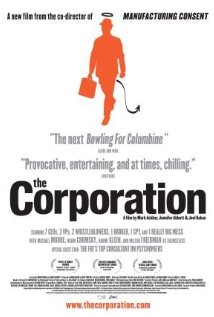
The first is Mark Achbar and Jennifer Abbott’s “The Corporation”, a comprehensive and well-researched film exploring the history of corporations, how they operate and how they’ve come to attain so much political power. Related topics they cover include the 1933 attempted corporate coup exposed by General Smedley Butler, the Fox news coverup of the dangers of Monsanto’s Bovine Growth Hormone, and the mass protests in Bolivia sparked by the attempted privatization of their water supply in 2000.

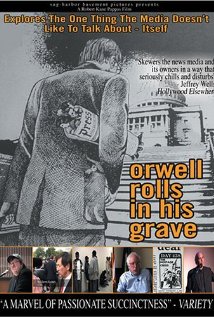
“Orwell Rolls in His Grave” directed by Robert Kane Pappas is possibly the best dissection of contemporary mass media propaganda yet, with a focus on corporate media consolidation and the role of corporate media in the controversial US presidential election of 2000. The film features interviews with Mark Crispin Miller, Bernie Sanders and Danny Schechter among others.

What Would Afghan Spending Buy at Home?

By Russ Baker

Source: WhoWhatWhy

Most of the stories headlining how President Obama plans to cut troops in Afghanistan as part of his planned exit from that country have not bothered to provide numbers on U.S. military spending there.

A few have, but almost in passing. For example, CNN doesn’t indicate the current levels of spending, but notes that

Tony Blinken, Obama’s deputy national security adviser, told CNN that the United States will spend about $20 billion on the continued military presence in Afghanistan after 2014.

In other words, $20 billion is what the U.S. will spend after it has effectively “withdrawn.”

Too bad news organizations don’t routinely give us a sense of what we are spending, or what else we might get for the same monies directed toward other purposes.

But here’s one thing to consider: $20 billion is about one-third to one-half of what the United States Department of Education spends on elementary, secondary and vocational education, and comparable to what it spends on higher education.

When President Obama released his Fiscal Year 2013 budget, Education Secretary Arne Duncan “announced that high-quality education is absolutely critical to rebuilding our economy.” Maybe so, but domestic spending is constantly under assault—and the lawmakers who reflexively support any and all military allocations are often the same ones complaining about “big government” and “wasteful” spending.

Here are a few other comparative statistics: (numbers vary, of course, from year to year)

-$20 billion is what the U.S. government budgeted for 2013 to subsidize often-struggling farmers

-It’s four-fifths of what we spend for science, space and technology

-It’s more than twice the budget of the Environmental Protection Agency

-It’s a third of what we spend on veterans’ hospital and medical care—on the people who fight in all wars combined

-It’s about a third of what we spend on administration of justice

-It’s five times what’s budgeted for energy conservation in 2014 and 2015

-It’s about 8 times what we spend on national parks—which have suffered continued cuts in recent years, resulting in reduced services and closures

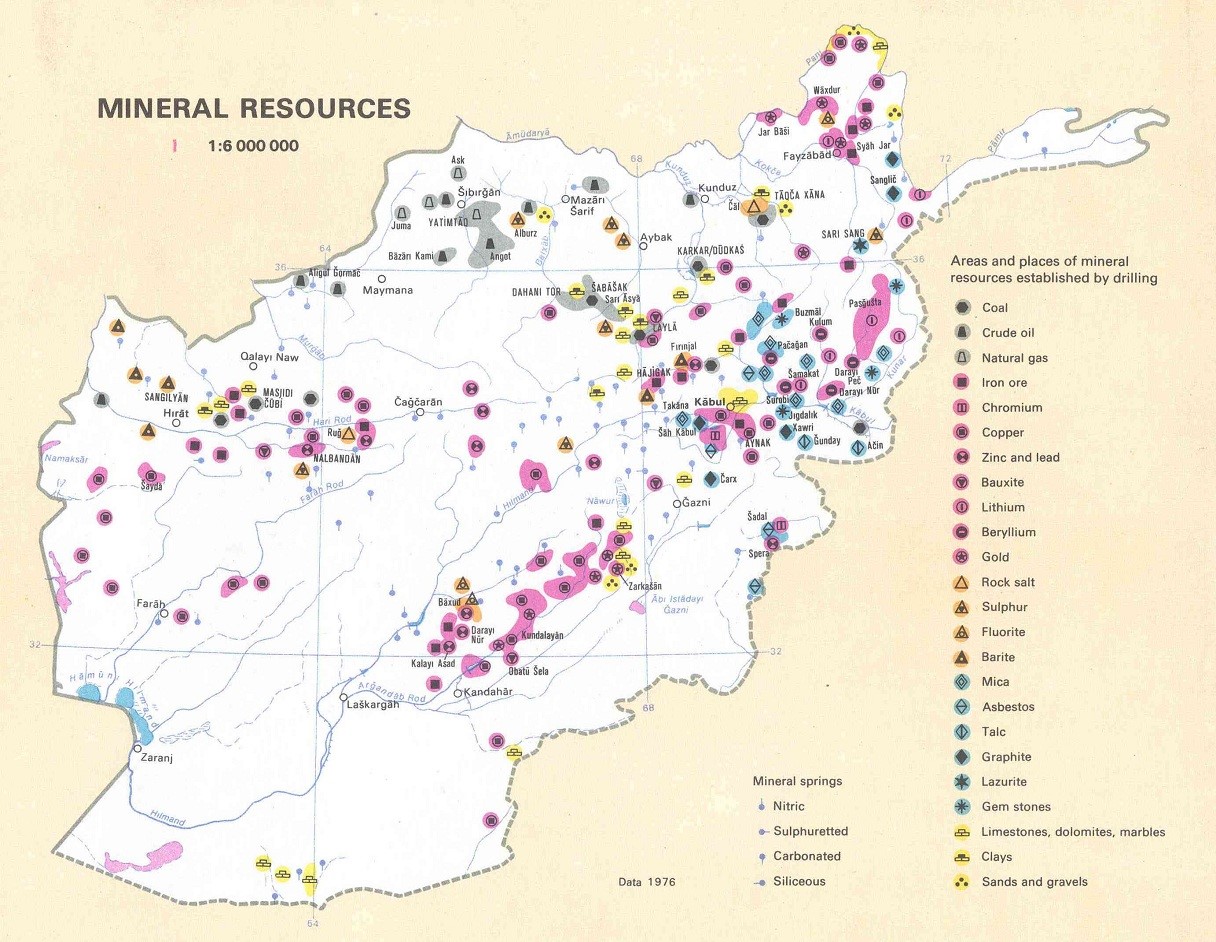
If it’s not achieving something of clear benefit to Americans, why does the spending continue at such levels? Here’s another thing to consider, a graphic on Afghanistan we’ve run in the past to considerable interest:

11

Sources for Budget Data:

OMB Historical Budget Tables

Department of Interior 2014 Budget Highlights