
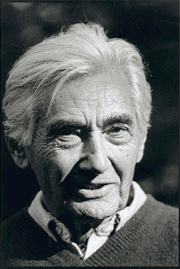
Today marks the birthday of historian/author/playwright/activist Howard Zinn (8/24/1922 – 1/27/2010). He is best known for his groundbreaking and influential A People’s History of the United States but was also a tireless voice for the oppressed and disenfranchised across the globe for most of his life and beyond (through writings, recorded words and continuing efforts of those he inspired). In honor of his life and work, I’d like to share this inspiring excerpt from his book A Power Governments Cannot Suppress which remains as relevant as ever:
In this world of war and injustice, how does a person manage to stay socially engaged, committed to the struggle, and remain healthy without burning out or becoming resigned or cynical?
I am totally confident not that the world will get better, but that we should not give up the game before all the cards have been played. The metaphor is deliberate; life is a gamble. Not to play is to foreclose any chance of winning. To play, to act, is to create at least a possibility of changing the world.
There is a tendency to think that what we see in the present moment will continue. We forget how often we have been astonished by the sudden crumbling of institutions, by extraordinary changes in people’s thoughts, by unexpected eruptions of rebellion against tyrannies, by the quick collapse of systems of power that seemed invincible.
What leaps out from the history of the past hundred years is its utter unpredictability. A revolution to overthrow the czar of Russia in that most sluggish of semi feudal empires not only startled the most advanced imperial powers but took Lenin himself by surprise and sent him rushing by train to Petrograd. Who would have predicted the bizarre shifts of World War II-the Nazi-Soviet pact (those embarrassing photos of von Ribbentrop and Molotov shaking hands), and the German army rolling through Russia, apparently invincible, causing colossal casualties, being turned back at the gates of Leningrad, on the western edge of Moscow, in the streets of Stalingrad, followed by the defeat of the German army, with Hitler huddled in his Berlin bunker, waiting to die?
And then the postwar world, taking a shape no one could have drawn in advance: The Chinese Communist revolution, the tumultuous and violent Cultural Revolution, and then another turnabout, with post-Mao China renouncing its most fervently held ideas and institutions, making overtures to the West, cuddling up to capitalist enterprise, perplexing everyone.
No one foresaw the disintegration of the old Western empires happening so quickly after the war, or the odd array of societies that would be created in the newly independent nations, from the benign village socialism of Nyerere’s Tanzania to the madness of Idi Amin’s adjacent Uganda. Spain became an astonishment. I recall a veteran of the Abraham Lincoln Brigade telling me that he could not imagine Spanish Fascism being overthrown without another bloody war. But after Franco was gone, a parliamentary democracy came into being, open to Socialists, Communists, anarchists, everyone.
The end of World War II left two superpowers with their respective spheres of influence and control, vying for military and political power. Yet they were unable to control events, even in those parts of the world considered to be their respective spheres of influence. The failure of the Soviet Union to have its way in Afghanistan, its decision to withdraw after almost a decade of ugly intervention, was the most striking evidence that even the possession of thermonuclear weapons does not guarantee domination over a determined population.
The United States has faced the same reality. It waged a full-scale war in Indochina, conducting the most brutal bombardment of a tiny peninsula in world history, and yet was forced to withdraw. In the headlines every day we see other instances of the failure of the presumably powerful over the presumably powerless, as in Bolivia and Brazil, where grassroots movements of workers and the poor have elected new presidents pledged to fight destructive corporate power.
Looking at this catalogue of huge surprises, it’s clear that the struggle for justice should never be abandoned because of the apparent overwhelming power of those who have the guns and the money and who seem invincible in their determination to hold on to it. That apparent power has, again and again, proved vulnerable to human qualities less measurable than bombs and dollars: moral fervor, determination, unity, organization, sacrifice, wit, ingenuity, courage, patience-whether by blacks in Alabama and South Africa, peasants in El Salvador, Nicaragua, and Vietnam, or workers and intellectuals in Poland, Hungary, and the Soviet Union itself. No cold calculation of the balance of power need deter people who are persuaded that their cause is just.
I have tried hard to match my friends in their pessimism about the world (is it just my friends?), but I keep encountering people who, in spite of all the evidence of terrible things happening everywhere, give me hope. Wherever I go, I find such people, especially young people, in whom the future rests. And beyond the handful of activists there seem to be hundreds, thousands, more who are open to unorthodox ideas. But they tend not to know of one another’s existence, and so, while they persist, they do so with the desperate patience of Sisyphus endlessly pushing the boulder up the mountain. I try to tell each group that they are not alone, and that the very people who are disheartened by the absence of a national movement are themselves proof of the potential for such a movement.
Revolutionary change does not come as one cataclysmic moment (beware of such moments!) but as an endless succession of surprises, moving zigzag toward a more decent society. We don’t have to engage in grand, heroic actions to participate in the process of change. Small acts, when multiplied by millions of people, can quietly become a power no government can suppress, a power that can transform the world.
Even when we don’t “win,” there is fun and fulfillment in the fact that we have been involved, with other good people, in something worthwhile. We need hope. An optimist isn’t necessarily a blithe, slightly sappy whistler in the dark of our time. To be hopeful in bad times is not being foolishly romantic. It is based on the fact that human history is a history not only of competition and cruelty but also of compassion, sacrifice, courage, kindness.
What we choose to emphasize in this complex history will determine our lives. If we see only the worst, it destroys our capacity to do something. If we remember those times and places-and there are so many-where people have behaved magnificently, it energizes us to act, and raises at least the possibility of sending this spinning top of a world in a different direction. And if we do act, in however small a way, we don’t have to wait for some grand utopian future. The future is an infinite succession of presents, and to live now as we think human beings should live, in defiance of all that is bad around us, is itself a marvelous victory.
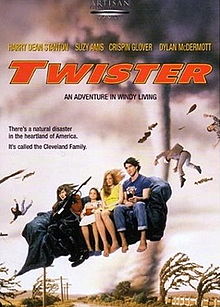
No, not the 1996 disaster flick, but a relatively little-known indie movie from 1989 directed by Michael Almereyda and based on the novel “Oh” by Mary Robison. The film explores the self-contained world of an eccentric family whose various escalating emotional issues coincides with an oncoming tornado. What it may lack in comparison to a standard Hollywood budget and plot it more than makes up for in atmosphere, humor and unforgettable performances.
It features one of Harry Dean Stanton’s best performances (after “Paris, Texas” and Repo Man”), Crispin Glover’s most eccentric character (out of many he has portrayed), great supporting roles by Charlayne Woodard, Suzy Amis, Dylan McDermott, and cult actress Jenny Wright, and a cameo by William S. Burroughs.

Many are familiar with Marcus Garvey through numerous references to him in Reggae music since he’s a prophet in the Rastafarian religion. However, those of us in the US who value civil rights should be particularly thankful for Garvey’s legacy, for his life and the ideas he promoted were an influence on Malcolm X and Martin Luther King Jr. among many others and the organization he founded, the Universal Negro Improvement Association and African Communities League, continues his work to this day. This biography is from the Marcus Garvey Foundation:
The Honorable Marcus Mosiah Garvey was born in St. Ann Bay in the parish of St. Ann on the north coast of the island of Jamaica on 17 August 1887. He described it like this, “I was born in the beautiful Parish of St. Ann, near the falls of the Roaring River. I grew up with nature and drank much of her inspiration.” He developed an interest in playing cricket early in life. Apprenticed to his godfather who was a printer, young Marcus early evinced an interest in the printed word. He read widely and was always anxious to discuss current events as well as history. At the age of eighteen he was already a foreman at P.J. Benjamin’s Printing Shop in Jamaica’s capital city of Kingston. He could be seen grounding with his brethren at Victoria Pier on Sunday nights. Garvey joined the printer’s trade union and gained a reputation as courageous, dedicated and highly concerned young leader. At the age of twenty-three he embarked upon a most significant journey that carried him to both Latin America and Europe. He found employment on the docks of London, Liverpool and Cardiff like many West Indians and Africans at the time.
Meeting Duse Mohammed Ali, an Egyptian editor and publisher of the African Times and Orient Review, made a lasting impression on Marcus Garvey. Duse Ali later became active in the UNIA and later a newspaper publisher in Nigeria. Five days after he returned to Kingston, Jamaica, Marcus Garvey founded the Universal Negro Improvement Association, a mass based organization designed to unite people of African ascent around the world. Those who joined Garvey in founding the UNIA shared with him an interest in working hard to overcome conditions of oppression. The organization’s motto is “One God, One Aim, One Destiny.” Seeking the advice and assistance of Booker T. Washington, a well-known leader in the Black world community and at the helm of Tuskegee Institute, Marcus Garvey arrived in the U.S.A. several months after Washington’s death. He traveled from city to city spreading the word of Pan African unity. On May 10, l916, he kicked off the lecture tour at St. Mark’s Roman Catholic Church Hall on 138th Street and reportedly visited 38 states in a year. The cities Garvey visited later were to become major sites of UNIA activity. From those formative years at Liberty Hall on West 138th Street, this mass movement engulfed the African world, increasing from a few to millions worldwide. It wasn’t long before the establishment of the Negro World, Negro Factories Corporation, grocery stores, markets, steamships, and steam laundry companies occurred. The launching of the Black Star Line in 1919 and the successful First International Convention of the Negro Peoples of the World in 1920 catapulted this organization on to the world stage. Between World Wars I and II the UNIA rose and declined, never to be rivaled by another black mass movement.
Currently, the UNIA lives not only in its present form, but also in the memories of so many around the world. It is clear that the Universal Negro Improvement Association and African Communities League served as the model and foundation for 20th century Pan African movements.
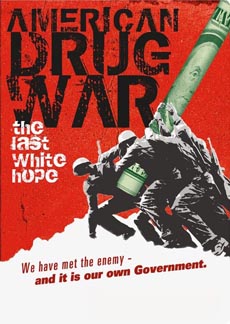
Source: AmericanDrugWar.com
The War on Drugs has become the longest and most costly war in American history, the question has become, how much more can the country endure? Inspired by the death of four family members from “legal drugs” Texas filmmaker Kevin Booth sets out to discover why the Drug War has become such a big failure. Three and a half years in the making the film follows gang members, former DEA agents, CIA officers, narcotics officers, judges, politicians, prisoners and celebrities. Most notably the film befriends Freeway Ricky Ross; the man many accuse for starting the Crack epidemic, who after being arrested discovered that his cocaine source had been working for the CIA.
AMERICAN DRUG WAR shows how money, power and greed have corrupted not just dope fiends but an entire government. More importantly, it shows what can be done about it. This is not some ‘pro-drug’ stoner film, but a collection of expert testimonials from the ground troops on the front lines of the drug war, the ones who are fighting it and the ones who are living it.
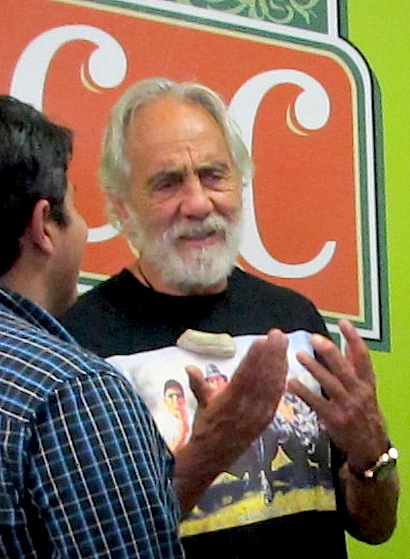
Source: AKATommyChong.com
At the height of popularity of the Bush administration — the federal government entrapped and subsequently imprisoned Tommy Chong. Josh Gilbert began documenting the federal case against his long time friend, for the terrible crime of selling bongs.
This film examines the personal effects on Tommy, the motivations and tactics of the politicized Justice Department under George Bush, set against the back drop of the War on Drugs and the legal issues involved. The film premiered at the Toronto Film Festival to huge press and critical acclaim, and appeared at many other film festivals. It premiered theatrically at Film Forum in New York City and went on to a successful arthouse theatrical release throughout North America. It was recently broadcast on Showtime and the CBC in Canada.
 Tomorrow marks the birthday of working class poet and author Charles Bukowski (he would have been 94). Bukowski’s creativity had been stifled for most of his adult life as a wage slave until at age 49 he seized an opportunity to break free. Bukowski showed his gratitude to his benefactor, Black Sparrow Press, by publishing most of his subsequent major works with them while supporting countless other independent presses across the country with numerous poetry and short story submissions. He also wrote a letter of thanks to John Martin, owner of Black Sparrow Press in 1986, (also containing thoughts on modern life many of us can relate to) featured in the following article:
By Maria Popova
Source: Brain Pickings
“To not have entirely wasted one’s life seems to be a worthy accomplishment, if only for myself.”
“Unless it comes unasked out of your heart and your mind and your mouth and your gut,” Charles Bukowski wrote in his famous poem about what it takes to be a writer, “don’t do it.” But Bukowski himself was a late bloomer in the journey of finding one’s purpose, as his own “it” — that irrepressible impulse to create — took decades to coalesce into a career.
Like many celebrated authors who once had ordinary day jobs, Buk tried a variety of blue-collar occupations before becoming a full-time writer and settling into his notorious writing routine. In his mid-thirties, he took a position as a fill-in mailman for the U.S. Postal Service. But even though he’d later passionately argue that no day job or practical limitation can stand in the way of true creativity, he found himself stifled by working for the man. By his late forties, he was still a postal worker by day, writing a column for LA’s underground magazine Open City in his spare time and collaborating on a short-lived literary magazine with another poet.
In 1969, the year before Bukowski’s fiftieth birthday, he caught the attention of Black Sparrow Press publisher John Martin, who offered Buk a monthly stipend of $100 to quit his day job and dedicate himself fully to writing. (It was by no means a novel idea — the King of Poland had done essentially the same for the great astronomer Johannes Hevelius five centuries earlier.) Bukowski gladly complied. Less than two years later, Black Sparrow Press published his first novel, appropriately titled Post Office.
But our appreciation for those early champions often comes to light with a slow burn. Seventeen years later, in August of 1986, Bukowski sent his first patron a belated but beautiful letter of gratitude. Found in Reach for the Sun: Selected Letters 1978–1994 (public library), the missive emanates Buk’s characteristic blend of playfulness and poignancy, political incorrectness and deep sensitivity, cynicism and self-conscious earnestness.
August 12, 1986
Hello John:
Thanks for the good letter. I don’t think it hurts, sometimes, to remember where you came from. You know the places where I came from. Even the people who try to write about that or make films about it, they don’t get it right. They call it “9 to 5.” It’s never 9 to 5, there’s no free lunch break at those places, in fact, at many of them in order to keep your job you don’t take lunch. Then there’s overtime and the books never seem to get the overtime right and if you complain about that, there’s another sucker to take your place.
You know my old saying, “Slavery was never abolished, it was only extended to include all the colors.”
And what hurts is the steadily diminishing humanity of those fighting to hold jobs they don’t want but fear the alternative worse. People simply empty out. They are bodies with fearful and obedient minds. The color leaves the eye. The voice becomes ugly. And the body. The hair. The fingernails. The shoes. Everything does.
As a young man I could not believe that people could give their lives over to those conditions. As an old man, I still can’t believe it. What do they do it for? Sex? TV? An automobile on monthly payments? Or children? Children who are just going to do the same things that they did?
Early on, when I was quite young and going from job to job I was foolish enough to sometimes speak to my fellow workers: “Hey, the boss can come in here at any moment and lay all of us off, just like that, don’t you realize that?”
They would just look at me. I was posing something that they didn’t want to enter their minds.
Now in industry, there are vast layoffs (steel mills dead, technical changes in other factors of the work place). They are layed off by the hundreds of thousands and their faces are stunned:
“I put in 35 years…”
“It ain’t right…”
“I don’t know what to do…”
They never pay the slaves enough so they can get free, just enough so they can stay alive and come back to work. I could see all this. Why couldn’t they? I figured the park bench was just as good or being a barfly was just as good. Why not get there first before they put me there? Why wait?
I just wrote in disgust against it all, it was a relief to get the shit out of my system. And now that I’m here, a so-called professional writer, after giving the first 50 years away, I’ve found out that there are other disgusts beyond the system.
I remember once, working as a packer in this lighting fixture company, one of the packers suddenly said: “I’ll never be free!”
One of the bosses was walking by (his name was Morrie) and he let out this delicious cackle of a laugh, enjoying the fact that this fellow was trapped for life.
So, the luck I finally had in getting out of those places, no matter how long it took, has given me a kind of joy, the jolly joy of the miracle. I now write from an old mind and an old body, long beyond the time when most men would ever think of continuing such a thing, but since I started so late I owe it to myself to continue, and when the words begin to falter and I must be helped up stairways and I can no longer tell a bluebird from a paperclip, I still feel that something in me is going to remember (no matter how far I’m gone) how I’ve come through the murder and the mess and the moil, to at least a generous way to die.
To not to have entirely wasted one’s life seems to be a worthy accomplishment, if only for myself.
yr boy,
Hank
Complement with Bukowski’s “so you want to be a writer,” then revisit this essential compendium of advice on how to find your purpose and do what you love and the spectacular resignation letter Sherwood Anderson wrote when he decided to quit his soul-sucking corporate job and become a full-time writer.
INDIAN COUNTRY NEWS
"It is the duty of every man, as far as his ability extends, to detect and expose delusion and error"..Thomas Paine
Human in Algorithms
From the Roof Top
I See This
blog of the post capitalist transition.. Read or download the novel here + latest relevant posts
अध्ययन-अनुसन्धानको सार
 After the Crash