“Goodbye 20th Century” (1998) is a twisted but ambitious Macedonian film (directed by Darko Mitrevski and Aleksandar Popovski) connecting three allegorical tales from different eras. In the first segment, a man cursed with immortality in a post-apocalyptic world encounters a trickster who may hold the key to ending his existence. A shorter segment follows depicting the tragic first wedding captured on film in 190o. The film concludes in 1999 when a man in a Santa suit’s interruption of a military wake has violent consequences for all involved.
For English subtitles, click on the “cc” button near the bottom right corner of the video window.
Here is the quote that perfectly captures our era: “People of privilege will always risk their complete destruction rather than surrender any material part of their advantage.” (John Kenneth Galbraith) The trick, of course, is to mask the unspoken second half of of that statement: everybody else gets destroyed along with the Elites when the system implodes.
Union pension funds: toast. Government employees’ pension funds: toast. 401Ks: toast. IRAs: toast. The echo-bubble in housing: toast. The Fed’s favorite PR cover to cloak the enrichment of their financier cronies, the wealth effect:toast.
The primary tool the Elites use to mask the risk of complete destruction is magical thinking–specifically, that “given enough time, the system will heal itself.”
That’s rich, considering that the Elites’ primary tool of avoiding destruction is crippling the market’s self-healing immune system: price discovery. Thanks to ceaseless interventions by central banks, the price discovery mechanism has been shattered: want to know the price of risk? It’s near-zero. Yield on sovereign bonds? Near-zero. And so on.
Prices have been so distorted (the ultimate goal of Central Planning everywhere, from China to the EU to Japan to the U.S.) that the illusion of stability is impossible without more intervention.
This leads to two self-liquidating dynamics: diminishing returns (every intervention yields less of the desired result) and the Darwinian selection of only those money managers who believe risk has been vanquished.
Everyone who pursues prudent risk management has either been fired or saw the writing on the wall and exited stage right. So the only people left at the gaming tables of the big institutional players are those individuals who are genetically incapable of responding appropriately to rising risk. Those who did have long been fired for “underperformance.”
So how did classical free-market capitalism become state-cartel crony-capitalism, a Ponzi scheme of epic proportions that is entirely dependent on ceaseless central bank perception management and interventions on a scale never before seen?
We can start with these six factors:
1. Those who control most of the wealth are willing to risk systemic collapse to retain their privileges and wealth. Due to humanity’s virtuosity with rationalization, those at the top always find ways to justify policies that maintain their dominance and downplay the distortions the policies generate. This as true in China as it is in the U.S.
2. Short-term thinking: if we fudge the numbers, lower interest rates, etc. today, we (politicians, policy-makers, money managers, etc.) will avoid being sacked tomorrow. The longer term consequences of these politically expedient policies are ignored.
3. Legitimate capital accumulation has become more difficult and risky than buying political favors. Global competition and the exhaustion of developed-world consumers has made it difficult to reap outsized profits from legitimate enterprise. In terms of return-on-investment (ROI), buying political favors is far lower risk and generates much higher returns than expanding production or risking investment in R&D.
4. The centralization of state/central bank power has increased the leverage of political contributions/lobbying. The greater the concentration of power, the more attractive it is to sociopaths and those seeking to buy state subsidies, sweetheart contracts, protection from competition, etc.
5. Any legitimate reform will require dismantling crony-capitalist/state-cartel arrangements. Since that would hurt those at the top of the wealth/power pyramid, reform is politically impossible.
6. Understood in this light, it’s clear that central bank monetary policy—zero-interest rates, asset purchases, cheap credit to banks and financiers, QE, etc.—is designed to paper over the structural problems that require real reform.
Japan is a case in point: the Powers That Be in Japan have put off real reforms of the Japanese economy and political system for 25 years, and they’ve enabled this avoidance by pursuing extremes of fiscal and monetary policy that have eroded the real economy and created long-term structural imbalances.
In this 24 minute video Gordon T. Long and Charles Hugh Smith discuss through the aid of 17 slides the rapid advancement of Crony Capitalism in America. The facts are undeniable, but why is it becoming so obvious and undeniable? Why is it accelerating without any apparent ‘checks and balances’? Where have the safeguards against this happening gone?
“The Color of Life” (2002) is a feature-length compilation of some of the oddest of the many odd moments from cult Japanese late night comedy/variety program “Vermilion Pleasure Night”. Recurring skits featured on the show include NSFW English language and cooking educational programs, an alien trapped on a starship resembling a Japanese studio apartment and antics of families of zombies, mannequins and human Barbie dolls. Interspersed through the film and television episodes are surrealistic musical and/or animated segments.
For English subtitles, click on the “cc” button near the bottom right corner of the video window.
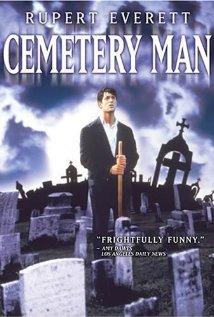
“Cemetery Man” (1994) is a film adaptation of the novel “Tiziano Sclavi” and directed by Michele Soavi. It’s an interesting hybrid of horror, comedy and art film in which Rupert Everett plays a caretaker of a cemetery whose recent arrivals come back to life a few days later. This zombie film stands out of the crowd for its visual flair and philosophical subtext. Cemetery Man should appeal to fans of early Sam Raimi, Dario Argento, and cult horror cinema in general.
“Panther” (1995) is an excellent yet underrated historical drama directed by Mario Van Peebles and written by his father Melvin Van Peebles. The film traces the founding of the organization and backlash from the FBI’s COINTELPRO program. Unlike many historical dramas, Panther is engaging, entertaining, and stays close to historical facts. It also features excellent performances from a great cast including Kadeem Hardison, Bokeem Woodbine, Marcus Chong, Angela Bassett, Chris Rock, Joe Don Baker and M. Emmet Walsh.





 After the Crash