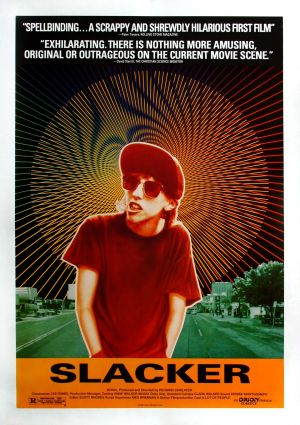
Slacker, directed by Richard Linklater, presents a day in the life of a loose-knit Austin, Texas, subculture populated by eccentric and overeducated young people. Shooting on 16 mm for a mere $3,000, writer-producer-director Linklater and his crew of friends threw out any idea of a traditional plot, choosing instead to create a tapestry of over a hundred characters, each as compelling as the last. Slacker is a prescient look at an emerging generation of aggressive nonparticipants, and one of the key films of the American independent film movement of the 1990s.
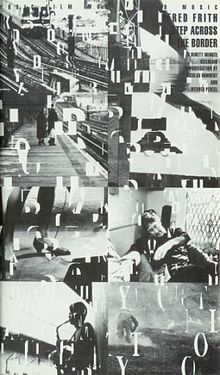
In “Step Across the Border” two forms of artistic expression, improvised music and cinema direct, are interrelated. In both forms it is the moment that counts, the intuitive sense for what is happening in a space. Music and film come into existence out of an intense perception of the moment, not from the transformation of a preordained plan. In improvisation the plan is revealed only at the end. One finds it. The other connection concerns the work method: the film team as band. Much as musicians communicate via the music, our work, too, was realized within a very small and flexible team of equals. What mattered was exchange. And movement. Sometimes we started filming in the middle of the night, responding to a new idea that had arisen only minutes before. We had a fundamental feeling for what we wanted to do, for what kind of film this should be. And we followed that feeling. It was all very instinctive…
Do you know a white rabbit who, playing trumpet, circles the world on his flying carpet?
May be you have met him somewhere already, in Zurich, London, Leipzig, Tokyo or New York. That at least was about the route we took and what resulted from it was the black-and-white wink of an eye at the symphonic connection between subways, storms and electric guitars.
An American critic wrote: ‘Fred Frith’s music makes your jaw drop, your feet dance, and your neighbours move.’
Also starring: several telephones, puddles, scarecrows, saxophones, orchestrated cities and motors.
A music film.
Maricopa County, AZ — A video was submitted to the Free Thought Project Sunday, which illustrates the brutal insanity of the state’s War on Drugs.
The video was taken during a heated debate on whether or not to legalize marijuana in Arizona. Maricopa County Attorney, Bill Montgomery, and Attorney Marc Victor went head to head on the topic of prohibition. Victor advocated to end prohibition and Montgomery held the position to continue locking people in cages for a plant.
At the end of the nearly 2 hour long debate, the two debaters took questions from the audience. That is when Vietnam veteran Don Ream stood up to explain to Montgomery how calling people who use marijuana for medicine, “Pot Heads,” was offensive.
Ream explained how he has been a patient for four years, and he is off all of his pharmaceutical medicine. All he uses for his symptoms is his medical marijuana. He then politely invited Mr. Montgomery to come and learn about the benefits of the substance and how safe marijuana actually is.
As Ream began to close his statement, Montgomery took to the podium ready to fire back.
“There is a difference between medical application of marijuana and recreational use of the substance,” said Montgomery, who is an attorney, not a doctor.
Ream then admitted that he uses his marijuana recreationally as well.
“Well, then you’re violating the law, and I have no respect for you,” Montgomery said. “I have no respect for someone who would try to claim that you served this country and took an oath to uphold the Constitution and protect against all enemies foreign and domestic – because you’re an enemy.”
Montgomery was then met with several “Boos” from the audience.
How exactly does ingesting a plant make you an enemy?
The person who wants to ingest a substance for medical or recreational reasons is not the criminal. However, the person that would kidnap, cage, or kill someone because they have a different lifestyle is a villain on many fronts.
The only “enemy” in the interchange below is the person who would deprive someone of their freedom by using government violence to enforce their personal preference. Shame on you Bill Montgomery.
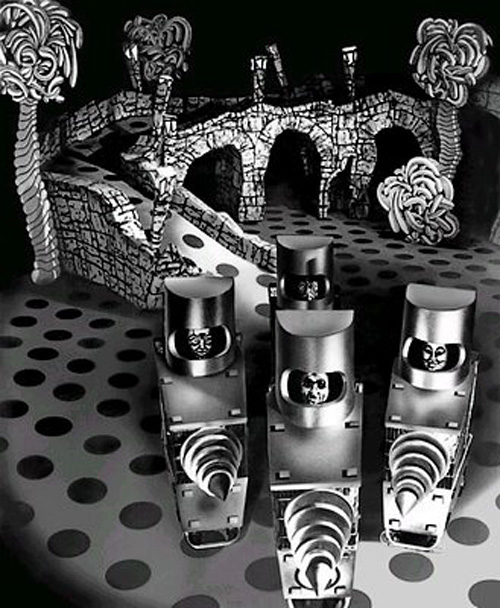
The Residents had begun a movie in 1972 called Vileness Fats. The concept of the movie was to shoot it on a new media form (reel-to-reel video) and tell most of the story through music. The story itself was about a village under siege by bandits stealing the meat supply, forcing the population to exist on vegetables. Unbeknownst to the population, the leader of the bandits is their own spiritual leader. To take care of things, the village hires Siamese twin tag-team wrestlers to be their saviors. Unfortunately their saviors also have other problems, including an Indian princess whose lovers always die.
The film itself, despite over 14 hours of footage, was never finished. In 1984 it was edited to approx. 32 minutes and released on a VHS videocassette titled Whatever Happened to Vileness Fats?; the companion soundtrack was also released the same year. Another re-edited version (approx. 17 minutes) of the footage was released on the Icky Flix DVD in 2002.


 After the Crash