Money Woes and the Trials of Job

6

By Mark Anthony Rockeymoore

Source: Sacred Space in Time

Being broke seems to be endemic. Money woes, bills pilling up, creditors calling for blood and first born children. Money flowing in is gone before it is received and there seems to be no end in sight.

How can we focus on higher spiritual ideals when the daily grind calls for all our attention?

We can’t, as long as the two are separated.

By two, I mean, material concerns and spiritual concerns. Simply put, Divinity is not separate from the world. How we deal with our worldly concerns is directly related to how we deal with our spiritual concerns. If we diligently apply ourselves to becoming more accountable and responsible in our daily lives, carefully attending to the details of a normative life, then this concentration will similarly affect our pursuit of the higher goals. And vice versa, if balance is sought.

Money is energy. It greases the wheels of the mechanism of life, providing impetus to support our lifestyles. Money flows where energy goes. And our work, produces that energy. Labors of love produce value that result in success in life. If you do not care for what you do then your efforts are in vain and doomed to failure.

How hard are you working toward your goals? Or are you a debt slave, working toward someone else’s goals? Do you love what you do? If so, could you – in any conceivable way – get paid for it?

Whatever you are thinking about right this moment – that art, that writing, that building, that repairing, that knitting, that video game, that party you put together, the food you make – whatever it may be, if your passion is there then your joy is there as well. If you can get paid by doing what you love to do, then your success is guaranteed.

Money woes – being broke – are a transitory state, as money comes and goes. The idea of wealth itself is subjective and not necessarily even related to money. Health, family, friends are a form of wealth that are worth more than gold. Ask Job, of bible fame, who lost all – money, family, friends – but never disbelieved in the oneness of spirituality, thereafter receiving what he had lost and more as a result of his faith. For Job, there was no separation between his life and his relationship to his god. He saw all he experienced as expressive of his own failures, although the test of his faith through physical illness also challenged his understanding of the Greater Plan for his life. His humility in the face of total ruin is an exemplar of true faith, which is certain knowledge of the efficacy and necessity of each and every lesson we go through that we perceive as negative in nature. The appearance of God in the storm was all that was necessary for his faith to be restored, despite his continuing ignorance in the face of the Adversary’s enmity. It is funny, how, in life, so many things that appear bad, turn out good at some point.

As life shifts, perspectives shift. Life shifts as the mind and spirit undergo transformation. What occurs within, affects that which occurs without.

The trials of Job occurred because he was the best, not the worst. A faithful servant to his god. His faith and devotion were cast upon the flames of tribulation, resulting in the loss of his wealth, his health and his family. And yet, throughout his torment, Job’s confusion, misery and even anger reveal his pain and desperation and also his utter reliance upon his god as the ultimate salvation from his problems. Throughout his trials, his knowledge of the interwoven strands of body and soul remained intact. For him, there was no separation and, in the end, this knowing was his saving grace.

Hard times can be instructional if the lesson is internalized. As we undergo one or more of the trials of Job, realizing that, in the end, even though the workings of creation can be inscrutable and beyond our ability to understand, there is a reason for every iota of pain, suffering and heartache we experience. That the experience, no matter its intensity, is designed to lift us up, to make us stronger, and to bring us closer to the God that holds us in his arms, that loves, that is Love itself.

Building upon strong foundations can only lead to a solid structure. Living, then, within this structure – this house of many mansions – can be the realization of one’s highest dreams and aspirations, if the dream, the joy and the energy coincide.

Saturday Matinee: Heaven and Earth

Heaven_&_Earth

“Heaven and Earth” (1993) was released at the height of director Oliver Stone’s popularity (made between JFK and Natural Born Killers) and is considered the final film of his “Vietnam Trilogy” following Platoon and Born on the Fourth of July. While Heaven and Earth is just as powerful and provocative (if not more so) than Stone’s other films, it has never received the popular and critical recognition it deserves. Unlike the other films of the Vietnam Trilogy (and most films about war) Heaven and Earth tells the story of an innocent civilian of a war-torn nation as well as the psychological impact of war on soldiers and their post-war life. The film features a remarkable debut performance by Hiep Thi Le and a career-best performance by Tommy Lee Jones.


The Web Revolution That’s Changing How the World Gets High

ibdt-carousel

By Mike Power

Source: Disinfo.com

It is mainly the young who are suffering the consequences of society’s inability to update our drug laws effectively for the modern age. Almost one third of young people are searching for ways of getting legally high, according to the latest survey commissioned by the Angelus Foundation, a campaign group founded in 2009 by Maryon Stewart, whose twenty-one-year-old daughter Hester, a gifted medical student and keen athlete, died after taking GBL in 2009. (Gamma-butyrolactone, a paint stripper and industrial cleaner, can be used as an intoxicant and is poplar on the club scene. It is active at 1 ml, and causes euphoria and disinhibition, but overdoses, where users fall into a coma-like state, are commonplace since it is so potent. It was legal until late 2009.)

Two-thirds of the 1,011 sixteen-to-twenty-four-year-olds surveyed by the Angelus Foundation in October 2012 admitted they were not well-informed about the risks associated with the new drugs on the market.

Festivals since Woodstock have been linked with drug use, whatever message their PR machines might seed in the press, so events there can tell us much about current trends of use and the attendant problems. Dip your head under the canvas at a festival medical tent and you arrive at the intersection of the net, new drugs and young people. Monty Flinsch, who runs Shanti Camp, a non-profit aid organization providing drug crisis intervention at American festivals, says that in recent years instead of dealing with the psychological issues caused by LSD, psilocybin and MDMA, they have seen seizures, delirium, violence and deaths. ‘Even discounting the hyperbolic news coverage of face-eating zombies, the real situation is substantially worse with legal research chemicals than it ever was before. It is now easier for an American teenager to obtain a powerful psychedelic than it is to obtain alcohol. Today’s scene is much more complex with the influx of large numbers of research chemicals ranging from the more common bath salts (MDPV, methylone) to much more obscure chemicals such as 25C-NBOMe and methoxetamine,’ he said.

The reasons the drugs are taken are manifold, but he believes their legality is a major draw, along with cultural influences. ‘Kids feel they are exposing themselves to less risk by taking drugs that are not going to get them arrested, and drug use is highly subject to countercultural trends, and whatever the cool kids are taking quickly becomes popular. In many cases the legal consequences of drug use far outweigh the medical risks. Our drug laws in the US are forcing users to experiment with increasingly dangerous compounds in order to avoid having their lives ruined by a criminal conviction.’

Flinsch says he cannot see any likely improvements in the future. ‘New research chemicals are ubiquitous and the problems associated with them are growing. From the frontlines we see the situation getting worse rather than better. The new compounds are poorly understood and have little or no history of human use, and therefore the problems we see are harder to characterize and therefore treat. It is sad that what is currently legal is substantially more dangerous than what is illegal.’

The entire debate around drugs, which was already philosophically and practically complex, has been made yet more intractable by the emergence of these new drugs and distribution systems. Our insistence on overlaying anachronistic models of drug control onto this digital world might, in future years, be seen as a fatal flaw that we did not address when we had the chance.

The popularization of research chemicals presents legislators, policymakers and police with an almost existential dilemma. They are charged with protecting the health of populations and reducing crimes, and these new drugs pose health risks, but are legal. The Chinese factories that produce them operate with none of the quality control typical in most pharmaceutical manufacturing plants, but customer uptake is enthusiastic. Each new ban brings a newer, possibly more dangerous drug to the market, and it is impossible to predict what the next moves might be.

Legal responses seem not only not to work, but to exacerbate the issue. The American Analog Act did nothing to prevent the arrival in 2009–11 of the JWH chemicals, the cathinones found in bath salts, and the other synthetic cannabinoids that had hit the UK and Europe in 2008. And where the early vendors of synthetic cannabis substitutes had sold the drugs online, the US did it bigger and better, and even more publicly and commercially.

In the US, in October 2011 the DEA responded by adding several of the new drugs to the controlled-substances schedule, making them formally and specifically illegal. The Synthetic Drug Control Act of 2011 was finally signed into law in July 2012, banning dozens of research chemicals at a stroke. Soon after the bill was passed, Time magazine quoted a Tennessee medic, Dr Sullivan Smith, who said the state had been engulfed by the new drugs. ‘The problem is these drugs are changing and I’m sure they’re going to find some that are a little bit different chemically so they don’t fall under the law,’ he said. ‘Is it adequate to name five or ten or even twenty? The answer is no, they’re changing too fast.’

Within weeks of these laws being passed, there were dozens more new drugs available in the US. One category, known as the NBOME-series of chemicals, is composed of unscheduled analogues of the banned Shulgin psychedelics 2C-I, 2C-B, 2C-D, and so on. Where Shulgin’s chemicals were generally active between 10 mg and 20 mg, these new compounds, created in legitimate medical settings for experimental purposes, are more potent by a large order of magnitude, active at around 200 µg. Each gram of these new, unresearched drugs contains around 5,000 doses, and they cost fractions of a penny per dose. The compounds existed before the most recent bans, but it was the new laws that inspired their wider use; use that will only grow as talk of their effects is amplified online. They have already claimed victims. At the Voodoo Fest in New Orleans in October 2012, twenty-one-year-old Clayton Otwell died after taking one drop of an NBOME drug. The New Orleans Times Picayune newspaper spoke to festival goers who said many dealers were selling the drug 25I-NBOME as artificial LSD or mescaline at the event. ‘This weekend, it was everywhere,’ festivalgoer Jarod Brignac, who also was with Otwell at the festival, told the paper. ‘People had bottles and bottles of it; they were walking through the crowd, trying to make a dime off people at the festival.’

There have been at least six other fatalities in the US from 25I-NBOME, Erowid reported in late 2012. There are dozens of other NBOME-drugs, and their use is growing. The Bluelight bulletin board has three threads on 25I-NBOME, running to over seventy-five pages with more than 100,000 views. Search Google for it and there are suppliers on the first page. A kilo of it can be bought for a few thousand dollars from China.

We must now allow drug users to make safer choices, and that means a gradual, tested, evaluated but concerted roll-back of all existing drug laws; particularly those concerning MDMA, marijuana, magic mushrooms and mescaline, for these are the drugs that most research chemicals seek to emulate. Only then will dangerous innovation end. Simultaneously, drug awareness classes should be compulsory at all schools with credible, evidenced and honest discussions of each drug’s effects, good and bad, including alcohol and tobacco. This will not end the debate, or addiction, or reduce drug use. But it will mean those who choose to take drugs in the future will be better informed and safer, and the costs to society lower. Governments must now seize control of the market in new and old drugs from amateurs, criminals and gangsters.

Perhaps the web’s final and most dramatic effect will be to strip drug culture of its mystique, its cachet of countercultural cool, to reveal that behind the magic and madness, there lie only molecules. At the end of it all, drugs are just carbon, hydrogen and a few other elements. They have their meaning projected onto them by users and the culture more widely. Remove the thrill of social transgression that acting illegally provides and reframe drug use in a clinical context, as a health issue, and that might change. We know in detail what the route we have taken for the last century results in: greater and more dangerous use. We now need a new approach and new data to analyse. It is not this book’s argument that any drug is entirely safe; they demonstrably are not. But to persist in the digital age with this failed and arbitrary strategy of prohibition in the face of all the evidence that it increases harm is irresponsibly dangerous.

However, although some politicians are able to admit grudgingly to youthful experimentation with drugs, it seems few are willing to experiment even moderately with new approaches in policy now they have the power to effect positive change – even at a time when the people who vote for them are demanding exactly that, and when it is more urgent than ever before.

Mike Power is a freelance investigative journalist living in London. He has worked for The Guardian, the Mail on Sunday, the BBC, and Reuters. In 2014 he received the Best Investigative Journalism Award, awarded by the Association of British Science Writers, for his piece “The drug revolution that no one can stop,” which appeared in the online journal Matter. Drugs Unlimited is his first book.

Privatized Ebola

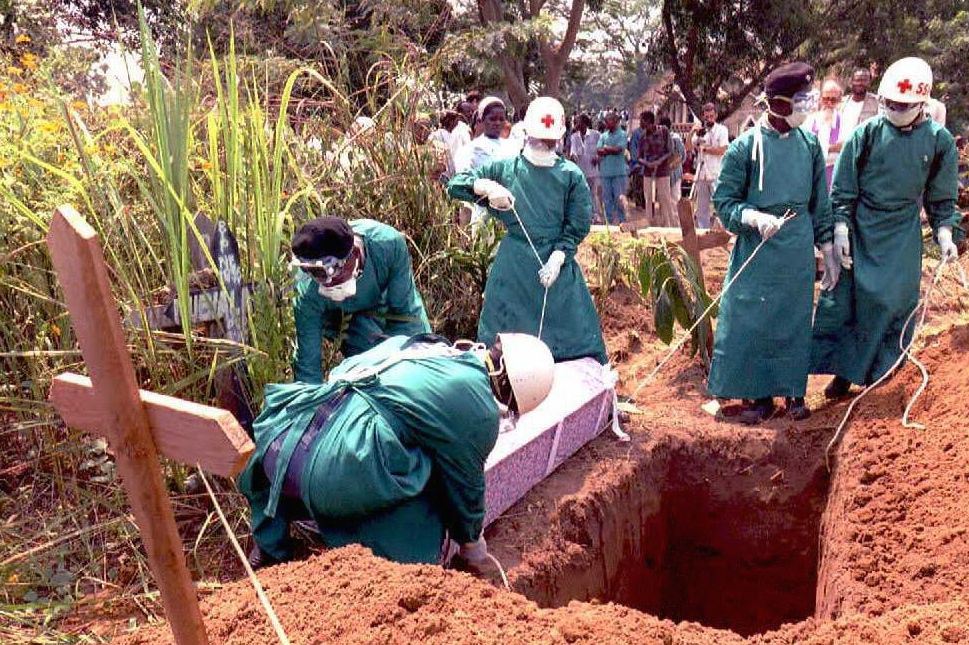
Red Cross workers burry 14 May Italian nun Dinaros

By Margaret Kimberly

Source: Black Agenda Report

“The world of private dollars played a role in consigning thousands of people to death.”

Sierra Leone has waved the white flag in the face of Ebola Virus Disease (EVD). Its meager infrastructure has buckled under the onslaught of a disease which could have been curtailed. The announcement that infected patients will be treated at home because there is no longer the capacity to treat them in hospitals is a surrender which did not have to happen. Not only did Europe and the United States turn a blind eye to sick and dying Africans but they did so with the help of an unlikely perpetrator.

The World Health Organization is “the directing and coordinating authority for health within the United Nations system.” Its very name implies that it takes direction from and serves the needs of people all over the world but the truth is quite different. The largest contributor to the WHO budget is not a government. It is the Bill and Melinda Gates Foundation which provides more funding than either the United States or the United Kingdom. WHO actions and priorities are no longer the result of the consensus of the world’s people but top down decision making from wealthy philanthropists.

The Bill and Melinda Gates Foundation may appear to be a savior when it provides $300 million to the WHO budget, but those dollars come with strings attached. WHO director general Dr. Margaret Chan admitted as much when she said, “My budget [is] highly earmarked, so it is driven by what I call donor interests.” Instead of being on the front line when a communicable disease crisis appears, it spends its time administering what Gates and his team have determined is best.

The Ebola horror continues as it has for the last ten months in Guinea, Liberia and Sierra Leone. The cruelty of the world’s lack of concern for Africa and all Africans in the diaspora was evident by the inaction of nations and organizations that are supposed to respond in times of emergencies. While African governments and aid organizations sounded the alarm the WHO did little because its donor driven process militates against it. The world of private dollars played a role in consigning thousands of people to death.

Critics of the Gates Foundation appeared long before this current Ebola outbreak. In 2008 the WHO’s malaria chief, Dr. Arata Kochi, complained about the conflicts of interest created by the foundation. In an internal memo leaked to the New York Times he complained that the world’s top malaria researchers were “locked up in a ‘cartel’ with their own research funding being linked to those of others within the group.” In other words, the standards of independent peer reviewed research were cast aside in order to please the funder.

Private philanthropy is inherently undemocratic. It is a top down driven process in which the wealthy individual tells the recipient what they will and will not do. This is a problematic system for charities of all kinds and is disastrous where the health of world’s people is concerned. Health care should be a human right, not a charity, and the world’s governments should determine how funds to protect that right are spent. One critic put it very pointedly. “…the Gates Foundation, Bill & Melinda Gates, do not believe in the public sector, they do not believe in a democratic, publically owned, publically accountable system.”

There is little wonder why the Ebola outbreak caught the WHO so flat footed as they spent months making mealy mouthed statements but never coordinating an effective response. The Gates foundation is the WHO boss, not governments, and if they weren’t demanding action, then the desperate people affected by Ebola weren’t going to get any.

Privatization of public resources is a worldwide scourge. Education, pensions, water, and transportation are being taken out of the hands of the public and given to rich people and corporations. The Ebola crisis is symptomatic of so many others which go unaddressed or improperly addressed because no one wants to bite the hands that do the feeding.

The Bill and Melinda Gates Foundation has pledged an additional $50 million to fight the current Ebola epidemic but that too is problematic, as Director General Chan describes. “When there’s an event, we have money. Then after that, the money stops coming in, then all the staff you recruited to do the response, you have to terminate their contracts.” The WHO should not be lurching from crisis to crisis, SARS, MERS, or H1N1 influenza based on the whims of philanthropy. The principles of public health should be carried out by knowledgeable medical professionals who are not dependent upon rich people for their jobs.

The Gates are not alone in using their deep pockets to confound what should be publicly held responsibilities. Facebook founder Mark Zuckerberg announced that he was contributing $25 million to fight Ebola. His donation will go to the Centers for Disease Control Foundation. Most Americans are probably unaware that such a foundation even exists. Yet there it is, run by a mostly corporate board which will inevitably interfere with the public good. The WHO and its inability to coordinate the fight against Ebola tells us that public health is just that, public. If the CDC response to Ebola in the United States fails it may be because it falls prey to the false siren song of giving private interests control of the people’s resources and responsibilities.


Margaret Kimberley’s Freedom Rider column appears weekly in BAR, and is widely reprinted elsewhere. She maintains a frequently updated blog as well as at http://freedomrider.blogspot.com. Ms. Kimberley lives in New York City, and can be reached via e-Mail at Margaret.Kimberley(at)BlackAgendaReport.com.

Confronting Battered Citizen Syndrome

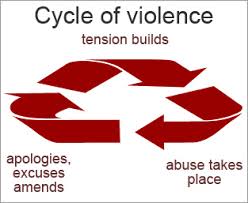
cycle_of_violence

By James F. Tracy

Source: The Memory Hole

State-sponsored terrorism poses a significant challenge to the psychological well-being of the body politic. While evident in many geopolitical locales, this condition arising from such government abuses is especially prevalent in the West. Such a disorder is comparable to the psychological manipulation recognized on a micro-level in some spousal relationships.

Indeed, the 13-year-old “war on terror” has contributed to a grave societal malady that might be deemed “battered citizen syndrome.” As the project of a transnational New World Order is laid out, the psychological constitution of the polity must necessarily experience perpetual crises and the threat thereof. Genuinely non-conventional political communication, organization and activism are among the few substantial means of combating battered citizen syndrome and the spiritual and psychological slavery it perpetuates.

Battered citizen syndrome is an extremely damaging psychological condition that effects individuals who are collectively subjected to emotional abuse and political disenfranchisement by the psychopathic types that all-too-frequently occupy public office in an era of political and socio-economic decay. The condition is often the result of “false flag” terrorism initiated by a tyrannical state that has long grown unresponsive to the citizen’s actual needs. This syndrome subdues individuals’ awareness of their own historical and political agency, and discourages them from seeking assistance for and ultimately remedying their unsafe situation.

There are various stages one will experience as a result of this condition. When persons in the singular or aggregate undergo the threat or experience of state violence in the form of false flag terror (i.e., political assassinations, seemingly spontaneous bombings or shootings, gigantic skyscrapers falling inexplicably at free-fall speed, CIA-sponsored terror bogeys such as Al Qaeda and ISIS, and perhaps even deadly plagues) they will find it expedient to deny such exploitation and decline to admit they are being manipulated by a paranoid and psychopathic state. Corporate-owned or controlled mass media routinely propagating the notion of “free choice” and personal agency by touting the supposed integrity of electoral processes and political institutions actively aid in this denial.

Once a victim accepts the fact that such manipulation is taking place, they will feel remorse. Victims will often believe that the abuse is their fault and not the fault of criminal governance. Eventually, a victim of state terror and violence will realize that they are not to blame for the cruelty they are being subjected to. Despite this realization, the individual will typically choose to remain in the abusive relationship. It may take some time, but eventually the truly self-respecting citizen-victim will understand that in order to defend themselves and their loved ones from harm they must escape their injurious relationship. These stages can be observed in many of the victims who have ultimately recognized and escaped their relationships with an abusive state.

Denial
The first stage of battered citizen syndrome is denial. Denial occurs when a victim of abuse is unable to acknowledge and accept that they are being subjected to political violence in the form of false flag terror and contrived events. During this stage, a victim of such psychological abuse will not only avoid admitting the mistreatment to their friends and their family members, but they themselves will not acknowledge the brutality from which they suffering. They will fail to recognize any problems between themselves and their government. There are numerous factors that may contribute to such steadfast denial.

In many instances, an individual does not realize they are being subjected to such calculating state violence. This is largely due to the manipulative and coercive behavior of the offending government. The acts of abuse may be so subtle that they do not appear to be harmful or damaging. In other instances, a victim of Machiavellian offenses may suppose that denial is the most effective way to avoid being subjected to further violence and cruelty. Whatever the cause, denial is extremely unhelpful to the victim. Until citizens individually and collectively admit and confront the abuses they are experiencing, they will not be able to secure necessary psychic and material aid and protection.

Guilt
After a citizen experiences the denial period they will move on the guilt stage. During this phase, victims of such coercive violence will undergo feelings of extreme guilt and dishonor by being fingered as potential terrorists themselves. Through the suggestion that they may also be terrorists, citizens will believe they may have somehow caused the harm that in reality elements within their exploitative government has subjected them to.

Abusive governments stage false flag terror events not only to create confusion, but also induce guilt in their subjects. Professional political and opinion leaders prompt feelings of guilt through similar rhetorical appeals. Those of the liberal or “progressive” sort in particular claim that such events are the result of “blow back,” due to the given nation’s foreign policy and imperialist overreach. Similarly, conservatives assert that the nation has been victimized because it has been too forthright in parading its “freedoms.”

Once internalized, “war on terror” guilt ideation is reinforced via the messaging slogans of state agencies. Typical messaging may include communications such as, “Is your neighbor or coworker a homegrown extremist?” “Keep your luggage with you at all times,” “Step this way after removing your shoes and valuables,” and so on.

Regardless of guilt stimulus, feelings of culpability are used to exert further control via rituals of submission, such as enacting excessive and unwarranted security measures to partake in travel, gain access to a public building, or withdraw cash from one’s bank account.

Along these lines, the offending government will convince the victim that it must resort to physical violence in order to punish the citizenry for their negative qualities or behavior. They may threaten or enact violence to teach the citizen not to take part in the activities of which it disapproves or finds inconvenient, such as public demonstrations and civil disobedience.

In addition to such acts, tyrannical governments strip citizens of their civil liberties and establish or strengthen a police state in order to further expand their control. As a result, the citizen’s already low self-esteem and depression will accelerate downward. Once this occurs, it is not difficult to convince the victim that they are being subjected to abuse due to their own faults and inadequacies. If they could only be more dependent on the state and live up to its expectations, they would not be experiencing state terror and exploitation. Victims of such manipulation will believe this. Therefore, they will not contest the abuse being experienced because they have rationalized that their abusive government is not to blame for such cruelty.

Enlightenment
One of the most important phases of the battered citizen’s syndrome is enlightenment. This occurs when a target of abuse recognizes how they are not to blame for their ill-treatment. They will begin to understand that no one deserves to be subjected to state-inflicted terror and violence regardless of their personal characteristics or perceived shortcomings. The fact that the state  seeks to manipulate their subjects and exhibits disapproval of their victim’s behavior does not justify exposing the victim to the trauma prompted by terrorist threats and violence.

During this stage, a citizen will begin to acknowledge that most states are abusive, violent, overseen by psychopathic personalities, and thus the violence experienced is the result of an external socio-political condition and not inherent in themselves. It is now that a victim begins to realize the importance of coming to terms with their situation and holding those in power accountable.

Despite the realization that their fear, anxiety, and loss of civil liberties likely stem from the broader designs of treacherous individuals in power, victims will continue to accept overzealous state power and commit themselves to saving the seriously flawed relationship. They will often use various reasons in order to justify this decision. However, individuals who choose to remain in such an environment will soon find that in most cases the tyrannical government will only increase the severity of its abuses.

Responsibility
Once a citizen recognizes how the psychological torment and terroristic violence they are suffering from is the fault of their government, it is only a matter of time before these victims understand the importance of taking responsibility and escaping their current situation. In the majority of cases, state violence does not improve over time. Most governments subjecting their citizens to violence and brutality are “repeat offenders” and will continue to reinforce control by exposing subjects to heightened abuses. When an individual acknowledges this, they will understand that their safety, and the safety of their loved ones, depends on establishing new modes of governance. During the responsibility stage of the battered citizen’s syndrome, a victim of state violence may experience a vast array of difficulties.

It is essential that an individual plan their escape well. Citizens who have decided to depart from their unfavorable situation should avoid the enticements of major political parties that are usually the root cause of battered citizen syndrome.

If a victim would like support and advice about leaving their abusive relationship they may wish to contact or support a third party candidate running for public office. Citizen violence shelters in the form of information derived from alternative news media, meaningful political discussion and debate, and grassroots and independent political organizing can also provide victims with the necessary support to make a clean break from tyrannical state power that will ultimately lead toward the forging of more constructive political realities for themselves and their fellow citizenry.

Afroman Remakes “Because I Got High” to Support Legalization

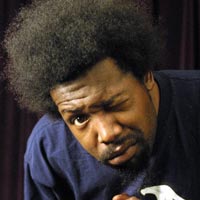
Afroman

By Sabrina Fendrick

Source: Norml

Nearly fifteen years after the release of “Because I Got High”- a song well known for poking fun at overzealous reefer madness rhetoric – Afroman is ready to jump headfirst back into the marijuana limelight.  Only this time, as an advocate for legalization.

The grammy nominated artist recently teamed up with NORML and Weedmaps to launch a remake of his hit song, turning the hip hop classic into a positive legalization anthem for the 2014 elections. The remix is a new and entertaining way to drive the narrative surrounding the benefits of cannabis law reform, as well as the medical benefits of the plant itself. With election day right around the corner, his latest project is geared towards keeping up the momentum for all the marijuana law reform efforts taking place across the country, and especially upcoming ballot initiatives.

On November 4th, two states and the District of Columbia will be voting to legalize marijuana, and Florida will be voting on a medical marijuana amendment. The timing couldn’t have been better to take, and remake the canna-cult classic. The 2014 version of “Because I Got High” not only challenges old stereotypes, it also seeks to build support and enthusiasm for the three measures proposing to create a regulated pot market for adults, age 21 and over.

Standard & Poor’s: Runaway Inequality Dampens GDP Growth, Leads to Boom/Bust Cycles and Discourages Trade, Investment and Hiring

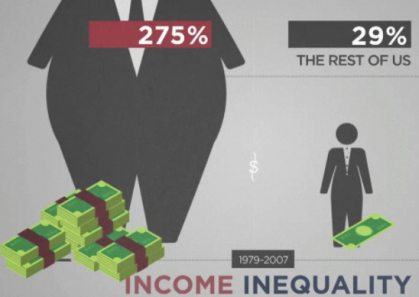
income-inequality-yahoo

Source: Washington’s Blog

Inequality Also Dampens Social Mobility, Increases Political Pressure and Produces a Less Competitive Workforce

Standard & Poor’s released a report on inequality today, concluding:

Higher levels of income inequality increase political pressures, discouraging trade, investment, and hiring. Keynes first showed that income inequality can lead affluent households (Americans included) to increase savings and decrease consumption (1), while those with less means increase consumer borrowing to sustain consumption…until those options run out. When these imbalances can no longer be sustained, we see a boom/bust cycle such as the one that culminated in the Great Recession (2).

Aside from the extreme economic swings, such income imbalances tend to dampen social mobility and produce a less-educated workforce that can’t compete in a changing global economy. This diminishes future income prospects and potential long-term growth, becoming entrenched as political repercussions extend the problems.

Our review of the data, as well as a wealth of research on this matter, leads us to conclude that the current level of income inequality in the U.S. is dampening GDP growth, at a time when the world’s biggest economy is struggling to recover from the Great Recession and the government is in need of funds to support an aging population.

S&P joins many others in concluding that runaway inequality hurts the economy, including:

  • Former U.S. Secretary of Labor and UC Berkeley professor Robert Reich
  • Global economy and development division director at Brookings and former economy minister for Turkey, Kemal Dervi
  • Societe Generale investment strategist and former economist for the Bank of England, Albert Edwards
  • Michael Niemira, chief economist at the International Council of Shopping Centers
  • Former executive director of the Joint Economic Committee of Congress, senior policy analyst in the White House Office of Policy Development, and deputy assistant secretary for economic policy at the Treasury Department, Bruce Bartlett
  • Deputy Division Chief of the Modeling Unit in the Research Department of the IMF, Michael Kumhof

Even the father of free market economics – Adam Smith – didn’t believe that inequality should be a taboo subject.

Numerous investors and entrepreneurs agree that runaway inequality hurts the economy, including:

Indeed, extreme inequality helped cause the Great Depression, the current financial crisis … and the fall of the Roman Empire . And inequality in America today is twice as bad as in ancient Rome, worse than it was in Tsarist Russia, Gilded Age America, modern Egypt, Tunisia or Yemen, many banana republics in Latin America, and worse than experienced by slaves in 1774 colonial America. (More stunning facts.)

Bad government policy – which favors the fatcats at the expense of the average American – is largely responsible for our runaway inequality.

And yet the powers-that-be in Washington and Wall Street are accelerating the redistribution of wealth from the lower, middle and more modest members of the upper classes to the super-elite.