Internationally Banned Tear Gas: For Domestic Use Only

19-ferguson-gas.w529.h352.2x

By Abby Martin

Source: Media Roots

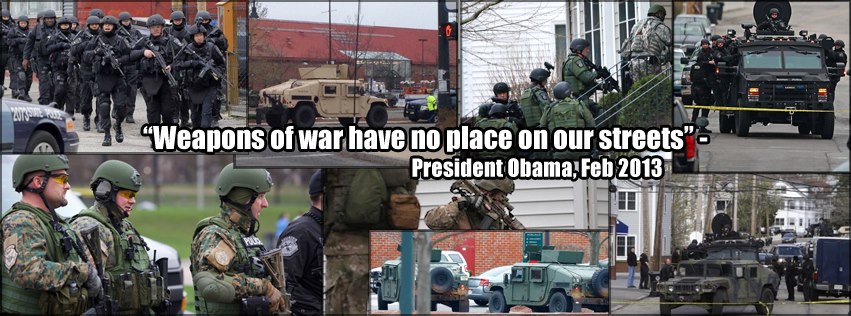
As unrest erupts from Oakland to Egypt, there’s one weapon of war that has come to define the militarized police state: tear gas.

And while a St. Louis judge ruled recently that limits must be placed on the use of tear gas in Ferguson, he didn’t rule that tear gas should only be implemented as a last resort.

Around the country, contingents of peaceful protesters are being confronted by assemblies of heavily militarized police officers that regularly use chemical agents to disperse crowds. But usually the act of getting doused with chemicals is so infuriating that it only incites chaos.

People have a good reason to be afraid of tear gas, considering it’s a banned agent of war under the 1993 Chemical Weapons Convention. Here’s the catch – there’s a clause in the treaty that includes an exception for domestic use. Yes, it’s illegal for the US military to use tear gas against ISIS, but cool to use against American citizens.

The US ensured the exception, claiming it was afraid the convention may prohibit lethal injection. Because of this caveat for riot control, countries around the world regularly and irresponsibly use chemical agents against their own populations. In American cities like Ferguson, police deploy tear gas at the drop of a hat, often at cameramen and journalists.

Despite all of the apocalyptic imagery associated with the weapon, government officials maintain tear gas is perfectly safe, including Ferguson police chief Tom Jackson, who said ”There are complaints about the response from some people… but to me, nobody got hurt seriously, and I’m happy about that.”

He forgot to say yet, considering how Ferguson police are using tear gas canisters from the Cold War era and are so old, there’s a severe risk of shrapnel flying into crowds. Make no mistake, this “less than lethal” weapon can actually be quite deadly. Look no further than Palestine, where a man was killed from a tear gas canister hitting him at close range in 2011. Or in Egypt, when a policeman shot tear gas into a caravan holding  37 protesters, choking and killing them all.

Horrifyingly, tear gas also causes amputations and miscarriages. In Bahrain, Physicians for Human Rights reported that many pregnant women had miscarriages after exposure with the chemical agent. Officials assure there are no long term health effects, but that hasn’t been proven given the lack of long term studies. Sven-Eric Jordt, a leading expert in tear gas, says

“I frankly think that we don’t know much about the long-term effects, especially in civilian exposure…There’s very few follow-up studies. These are very active chemicals that can cause quite significant injury. I’m very concerned that, as use has increased, tear gas has been normalized. The attitude now is like, this is safe and we can use it as much as we want.”

And boy, do we. As the world’s leading military and arms supplier, the US is also the biggest producer of less than lethal weaponry. During Egypt’s revolution, while police gunned down protesters and made mass arrests, they liberally used tear gas that read “Made in the USA” (at a little place called Combined Systems International of Jamestown, Pennsylvania). According to VisionGain, the non-lethal weapons market has exploded over the last decade, and is worth a whopping 1.6 billion dollars this year.

Somehow the government has convinced the American people that using tear gas is perfectly harmless, despite stark evidence to the contrary. So, next time it tries to sell us another war because *this leader gasses his own people*, remember that claim isn’t so far from home.

Genetically Modified Organisms (GMO): Profit, Power and Geopolitics

monsanto

By Colin Todhunter

Source: GlobalResearch.ca

Genetically modified organisms (GMOs) are not essential for feeding the world [1,2], but if they were to lead to increased productivity, did not harm the environment and did not negatively impact biodiversity and human health, would we be wise to embrace them anyhow?

The fact is that GMO technology would still be owned and controlled by certain very powerful interests. In their hands, this technology is first and foremost an instrument of corporate power, a tool to ensure profit. Beyond that, it is intended to serve US global geopolitical interests. Indeed, agriculture has for a long time been central to US foreign policy.

“American foreign policy has almost always been based on agricultural exports, not on industrial exports as people might think. It’s by agriculture and control of the food supply that American diplomacy has been able to control most of the Third World. The World Bank’s geopolitical lending strategy has been to turn countries into food deficit areas by convincing them to grow cash crops – plantation export crops – not to feed themselves with their own food crops.” Professor Michael Hudson [3].

The Project for a New American Century and the Wolfowitz Doctrine show that US foreign policy is about power, control and ensuring global supremacy at any cost [4,5]. Part of the plan for attaining world domination rests on the US controlling agriculture and hijacking food sovereignty and nations’ food security.

In his book ‘Seeds of Destruction’, William Engdahl traces how the oil-rich Rockefeller family translated its massive wealth into political clout and set out to capture agriculture in the US and then globally via the ‘green revolution’ [6]. Along with its big-dam, water-intensive infrastructure requirements, this form of agriculture made farmers dependent on corporate-controlled petroproducts and entrapped them and nations into dollar dependency and debt. GMOs represent more of the same due to the patenting and the increasing monopolization of seeds by a handful of mainly US companies, such as Monsanto, DuPont and Bayer.

In India, Monsanto has sucked millions from agriculture in recent years via royalties, and farmers have been compelled to spend beyond their means to purchase seeds and chemical inputs [7]. A combination of debt, economic liberalization and a shift to (GMO) cash crops (cotton) has caused hundreds of thousands of farmers to experience economic distress, while corporations have extracted huge profits [8]. Over 270,000 farmers in India have committed suicide since the mid to late nineties [9].

In South America, there are similar stories of farmers and indigenous peoples being forced from their lands and experiencing violent repression as GMOs and industrial-scale farming take hold [10]. It is similar in Africa, where Monsanto and The Gates Foundation are seeking to further transform small-scale farming into a corporate controlled model. They call it ‘investing’ in agriculture as if this were an act of benevolence.

Agriculture is the bedrock of many societies, yet it is being recast for the benefit of rich agritech, retail and food processing concerns. Small farms are under immense pressure and food security is being undermined, not least because the small farm produces most of the world’s food [11]. Whether through land grabs and takeovers, the production of (non-food) cash crops for export, greater chemical inputs or seed patenting and the eradication of seed sharing among farmers, profits are guaranteed for agritech corporations and institutional land investors.

The recasting of agriculture in the image of big agribusiness continues across the globe despite researchers saying that this chemical-intensive, high-energy consuming model means Britain only has 100 harvests left because of soil degradation [12]. In Punjab, the ‘green revolution’ model of industrial scale, corporate dominated agriculture has led to a crisis in terms of severe water shortages, increasing human cancers and falling productivity [13]. There is a global agrarian crisis. The increasingly dominant corporate-driven model is unsustainable.

More ecological forms of agriculture are being called for that, through intelligent crop management and decreased use of chemical inputs, would be able to not only feed the world but also work sustainably with the natural environment. Numerous official reports and scientific studies have suggested that such policies would be more appropriate, especially for poorer countries [14-16].

When on occasion the chemical-industrial model indicates that it does deliver better yields than more traditional methods (a generalization and often overstated [17]), even this is a misrepresentation. Better yields but only with massive chemical inputs from corporations and huge damage to health and the environment as well as ever more resource-driven conflicts to grab the oil that fuels this model. Like the erroneous belief that economic ‘growth’ (GDP) is stimulated just because there becomes greater levels of cash flows in an economy (and corporate profits are boosted), the notion of improved agricultural ‘productivity’ also stems from a set of narrowly defined criteria.

The dominant notions that underpin economic ‘growth’, modern agriculture and ‘development’ are based on a series of assumption that betray a mindset steeped in arrogance and contempt: the planet should be cast in an urban-centic, ethnocentric model whereby the rural is to be looked down on, nature must be dominated, farmers are a problem to be removed from the land and traditional ways are backward and in need of remedy.

“People are perceived as ‘poor’ if they eat food they have grown rather than commercially distributed junk foods sold by global agri-business. They are seen as poor if they live in self-built housing made from ecologically well-adapted materials like bamboo and mud rather than in cinder block or cement houses. They are seen as poor if they wear garments manufactured from handmade natural fibres rather than synthetics.” Vandana Shiva [18]

Western corporations are to implement the remedy by determining policies at the World Trade Organization, IMF and World Bank (with help from compliant politicians and officials) in order to  depopulate rural areas and drive folk to live in cities to then strive for a totally unsustainable, undeliverable, environment-destroying, conflict-driving, consumerist version of the American Dream [19,20].

It is interesting (and disturbing) to note that ‘developing’ nations account for more than 80% of world population, but consume only about a third of the world’s energy. US citizens constitute 5% of the world’s population, but consume 24% of the world’s energy. On average, one American consumes as much energy as two Japanese, six Mexicans, 13 Chinese, 31 Indians, 128 Bangladeshis, 307 Tanzanians and 370 Ethiopians [21].

Despite the environmental and social devastation caused, the outcome is regarded as successful just because business interests that benefit from this point to a growth in GDP. Chopping down an entire forest that people had made a living sustainably from for centuries and selling the timber, selling more poisons to spray on soil or selling pharmaceuticals to address the health impacts of the petrochemical food production model would indeed increase GDP, wouldn’t it? It’s all good for business. And what is good for business is good for everyone else, or so the lie goes.

“Corporations as the dominant institution shaped by capitalist patriarchy thrive on eco-apartheid. They thrive on the Cartesian legacy of dualism which puts nature against humans. It defines nature as female and passively subjugated. Corporatocentrism is thus also androcentric – a patriarchal construction. The false universalism of man as conqueror and owner of the Earth has led to the technological hubris of geo-engineering, genetic engineering, and nuclear energy. It has led to the ethical outrage of owning life forms through patents, water through privatization, the air through carbon trading. It is leading to appropriation of the biodiversity that serves the poor.” [22]

The ‘green revolution’ and now GMOs are ultimately not concerned with feeding the world, securing well-rounded nutritious diets or ensuring health and environmental safety. (In fact, India now imports foods that it used to grow but no longer does [23]; in Africa too, local diets are becoming less diverse and less healthy [24].) Such notions are based on propaganda or stem from well-meaning sentiments that have been pressed into the service of corporate interests.

Biotechnological innovations have always had a role to play in improving agriculture, but the post-1945 model of agriculture has been driven by powerful corporations like Monsanto, which are firmly linked to Pentagon and Wall Street interests [25]. Motivated by self-interest but wrapped up in trendy PR about ‘feeding the world’ or imposing austerity to ensure prosperity, the publicly stated intentions of the US state-corporate cabal should never be taken at face value [26,27].

In India, Monsanto and Walmart had a major role in drawing up the Knowledge Initiative on Agriculture [28]. Monsanto now funds research in public institutions and its presence and influence compromises what should in fact be independent decision and policy making bodies [29,30]. Monsanto is a driving force behind what could eventually lead to the  restructuring and subjugation of India by the US [31]. The IMF and Monsanto are also working to ensure Ukraine’s subservience to US geopolitical aims via the capture of land and agriculture [32]. The capture of agriculture (and societies) by rich interests is a global phenomenon.

Only the completely naive would believe that rich institutional investors in land and big agribusiness and its backers in the US State Department have humanity’s interests at heart. At the very least, their collective aim is profit. Beyond that and to facilitate it, the need to secure US global hegemony is paramount.

The science surrounding GMOs is becoming increasingly politicized and bogged down in detailed arguments about whose methodologies, results, conclusions and science show what and why. The bigger picture however is often in danger of being overlooked. GMO is not just about ‘science’. As an issue, GMO and the chemical-industrial model it is linked to is ultimately a geopolitical one driven by power and profit.

Notes

1] This report indicates the root causes for global food shortages:  http://www.cban.ca/Resources/Topics/Feeding-the-World/Will-GM-Crops-Feed-the-World

2] Citing official reports and data sources, references in this article indicate agricultural productivity in India was better in 1760 and 1890 and that India does not require chemical-industrial agriculture let alone GMOs: http://www.globalresearch.ca/india-genetically-modified-seeds-agricultural-productivity-and-political-fraud/5328227

3] http://michael-hudson.com/2014/10/think-tank-memories/

4] http://www.informationclearinghouse.info/article1665.htm

5] http://www.informationclearinghouse.info/article40093.htm

6] Arun Shrivastava reviews and summarizes Engdahl’s book here: http://www.globalresearch.ca/seeds-of-destruction-the-hidden-agenda-of-genetic-manipulation-2/9379

7] http://www.countercurrents.org/shiva180614.htm

8]  Based on the findings of a report by researchers at Cambridge University in the UK: http://www.cam.ac.uk/research/news/new-evidence-of-suicide-epidemic-among-indias-marginalised-farmers

9] Official figure quoted by the BBC as of 2013: http://www.bbc.co.uk/news/magazine-21077458

10]http://www.theecologist.org/News/news_analysis/2267255/gm_crops_are_driving_genocide_and_ecocide_keep_them_out_of_the_eu.html

11] Official report released by GRAIN: http://www.grain.org/article/entries/4929-hungry-for-land-small-farmers-feed-the-world-with-less-than-a-quarter-of-all-farmland

12] Farmers Weekly quotes a report by researchers at the University of Sheffield in the UK: http://www.fwi.co.uk/news/only-100-harvests-left-in-uk-farm-soils-scientists-warn.htm

13] Newspaper report quoting official statistics and research findings: http://www.deccanherald.com/content/337124/punjab-india039s-grain-bowl-now.html

14] Official UN report: http://unctad.org/en/PublicationsLibrary/tdr2013_en.pdf

15]http://www.srfood.org/en/official-reports# and http://www.plantpartners.org/agroecology-reports.html

16] http://www.tandfonline.com/doi/full/10.1080/14735903.2013.806408#tabModule

17] http://phys.org/news/2014-12-crops-industrial-agriculture.html

18] http://www.organicconsumers.org/btc/shiva112305.cfm

19] Food policy analyst Devinder Sharma outlines the motives of Western corporations in India: http://www.bhoomimagazine.org/article/cash-food-will-strike-very-foundation-economy

20] Arundhati Roy discusses the erroneous notion of ‘progress’ being applied in India and the conflict and violence that has followed: http://www.guernicamag.com/features/we-call-this-progress/

21] http://public.wsu.edu/~mreed/380American%20Consumption.htm

22] http://www.spaziofilosofico.it/numero-07/2959/economy-revisited-will-green-be-the-colour-of-money-or-life/

23] Vandana Shiva describes how the ‘green revolution’ and ‘free trade’ have turned India into a net importer of foods it used to be self sufficient in: http://www.aljazeera.com/indepth/opinion/2013/09/201398122228705617.html

24] Article describing the plight of agriculture in Africa: http://www.globalresearch.ca/behind-the-mask-of-altruism-imperialism-monsanto-and-the-gates-foundation-in-africa/5408242

25] http://www.globalresearch.ca/monsantos-gmo-food-and-its-dark-connections-to-the-military-industrial-complex/5389708

26] Article providing factual historical insight into Monsanto and its wrongdoings: http://www.globalresearch.ca/the-complete-history-of-monsanto-the-worlds-most-evil-corporation/5387964

27] Analysis of Wall Street’s fraudulent practices in recent times and the complicity of the entire political and economic system: http://www.wsws.org/en/articles/2012/03/pers-m15.html

28]http://www.democracynow.org/2006/12/13/vandana_shiva_on_farmer_suicides_the

29]  http://dissidentvoice.org/2009/07/monsanto-a-contemporary-east-india-company-and-corporate-knowledge-in-india/

30] http://www.thehindu.com/opinion/lead/nip-this-in-the-bud/article5012989.ece

31] http://www.countercurrents.org/todhunter031114.htm

32] http://www.oaklandinstitute.org/food-security-hostage-wall-street-and-us-global-hegemony

A Gloomy Summary of the Outgoing Year

index

By Vladimir Mashin

Source: New Eastern Outlook

The outgoing 2014 is destined, apparently, to go down in the annals of history as a special year given its share of iconic dates (note, for example, 100 years since WWI and 75 years since WWII, 25 years since the fall of the Berlin Wall), and due to abundance of events having worldwide significance.

Today the mankind is on the verge of epochal changes in its history, which will determine the course of the world development for decades to come. 2014 was a turning point in international relations, sharply denoting the main trend of our time – the reconfiguration of the entire world system, reformatting of global structures, the shift from a unipolar to a polycentric world in which decisions on key issues should be based on cooperation and agreements between states and their associations, relying on equal participation and consideration of the interests of the whole mankind. And the contours of this world are now visible.

On the surface, these processes take the form of a deep civilizational and geopolitical fault.

There is a weakening of the position of the United States and the West in general as the center of gravity of the world. Many European political scientists and world known academics speak explicitly about the decline of the Western civilization. European nations are homogeneous, and the continual rise of immigration in recent decades has in fact already changed the ethnic composition of the Old World. Europe found itself unable to integrate the Muslim minority, which is already more than 30 million people, but it is also unable, due to the declining population and its aging, to maintain the current standard of living and the rate of production growth without an influx of the young foreign workforce.

The European sub-ethnic group has entered the phase of obscuration and is on the verge of (according to the criteria of historical time) being absorbed by new, emerging and already prominently visible types (of sub-ethnic groups). This is the Asian sub-ethnic group – a synthesis of several types of cultures and religions. By 2020, experts anticipate a rise of the African sub-ethnic group. In the Western Hemisphere the Hispanic sub-ethnic group is being created on the basis of a huge diversity of ethnic groups and beliefs.

These processes are to a large extent objective: for example, the outgoing year marked the emergence of China as an economic leader (China surpassed the United States in its purchasing power parity in 2014).

If the current trend continues, the “third world”, which today by population surpasses the West five times, by 2050 will surpass it ten-fold.

The reformatting of international relations will further continue. China proposed the following definition for this process: construction of a new non-American world.

In 2014 the US administration, giving itself the status of a self-proclaimed “exceptional nation” entitled to lead world processes, in fact launched a war for the world domination using the NATO military force in conjunction with new methods of disinformation and media control. (This has already occurred in history three-quarters of a century ago, when Germany tried to become a superpower promoting the “Aryan supremacy” with a reliance on military force and Goebbels propaganda). This manifested itself in successive waves of the NATO expansion, contrary to assurances given at the highest level, and in violation of a solemn declaration on the establishment of an equal and indivisible security system in the Euro-Atlantic area. By this logic, the Anschluss of 2014 is a large-scale operation by the US State Department to subjugate the European Union, and then, with combined forces, to launch an attack on the East – stubborn, but temptingly rich with its natural resources and human potential.

The Ukrainian crisis was the result of the policy pursued by the United States and Western countries during the last quarter-century of controlled expansion of their geopolitical space, strengthening their own security at the expense of others. Washington took a line on the separation of Ukraine from Russia and dragging it into the NATO. With the support of the United States and some European countries an armed anti-constitutional coup was carried out in Ukraine. Radical nationalists put the country on the brink of a schism and pushed it into a civil war that has taken thousands of lives and led to the horrible devastation turning into a tragedy for hundreds of thousands of civilians.

In a way, the EU is solving its own problems by capturing Ukrainian markets in order to prevent the collapse of its own integration scheme which had failed the test posed by the protracted economic crisis, since Ukraine, with its 46 million people, black earth, metallurgy and engineering, can reanimate Europe going through a systemic crisis.

The Ukrainian crisis is not a simple episode – it reflects a deep civilizational fault, which has ripped across all continents. The already complex and tense situation is further aggravated, poisoned by provocative, negatively charged statements of certain Western officials.

The Western attempt to tear Ukraine away from Russia and drag it to its side has only further exacerbated the general systemic crisis of international relations.

There is a growing discrepancy between the global ambitions of the US administration and their actual capabilities. America remains the leading economic and military power; however, Washington has no real power, and especially no moral right to lecture everyone else on democracy and proper behavior. Normal people’s hair stands on end from what they see on TV and read in the detailed reports and presentations about the tortures by CIA “experts” of so-called terrorists whose guilt has not been proven. And that’s not to mention the evidence submitted by Snowden about the United States espionage around the world.

In 2014, the Western media coined the “hybrid war” term. It applies to, first of all, the United States and the American war strategy – it is truly hybrid and focused on the military defeat of the enemy, and simultaneously regime change in states pursuing policies objectionable to Washington. Financial and economic pressure is used as well as information attacks, increasing pressure by proxy along the borders of the respective state, and, of course, informational and ideological influence by relying on externally funded non-governmental organizations. Is this not what is called a war?

In 2014, the flares of the “Arab Spring”, seemingly so encouraging at the initial stages, proceeded to incinerate the Middle East which by its degree of ‘flashpoint’ tension – right now twelve different scale armed conflicts are blazing there – has moved to the forefront of world events. The main reason is the US military invasion of Iraq in 2003. The transition of control in Baghdad from the Sunnis who had been in power traditionally to the Shiite majority, with the direct complicity of the United States, has led to a breach in the balance of power in the Persian Gulf, which had existed for decades and was the basis for maintaining stability. This resultant bias towards the growing influence of Shiites and indirectly Iran immediately caused an explosion of discontent and fear within the Sunni minority in Iraq and Sunni communities as a whole in the region.

Open intervention by Western powers in the Iraqi drama, into the affairs of Libya and Syria, seriously complicates the situation and leads to the increased activity of Islamist extremists. At the core of the “Arab Spring” events was the struggle for social justice, for a way out of the vicious circle of underdevelopment and injustice – it was an arising national identity, the movement against Westernization, the desire for self-assertion and defining a decent place for Arabs in the international community. The US and some European countries have tried to turn to their advantage the rise of revolutionary action and in its wake the ascent of Islamic parties to the levers of power in a number of Arab countries. To do this, proven methods were used, such as incitement to religious and ethnic strife, the tacit support of extremist organizations. The activation of al-Qaeda, Boko Haram, the Taliban and the establishment of the Islamic Caliphate in Syria and Iraq is a direct result of the policy of the United States and other Western powers.

There is a real disintegration of state, social and civilizational structures going on in the Middle East region. ISIS terrorists have laid claim to their statehood status, and are beginning to develop the territories, setting up governmental authorities there, that are quasi-state, but, nonetheless, perform administrative functions. We cannot exclude the possibility that the actions of Islamist terrorists can also spread beyond the region.

Throughout 2014, new centers of the extremist activity in Africa (Libya, Mali, Sinai, Nigeria, Somalia, etc.) have appeared and the centers of radicalism in Afghanistan and Pakistan are expanding on the map.

Some Western leaders are still thinking in terms of the Cold War, not fully grasping the possible catastrophic consequences of current trends. But the development of some of them raises the question of the preservation of life on our planet: for example, the fact that nine states have 16,300 nuclear warheads at their disposal, which is enough to kill all life on the Earth many times over.

In the 20th century, the world repeatedly faced with the risk of weapons of mass destruction being used (UN official sources indicated thirteen such situations after 1962). In 2002, the world was in danger of the Indo-Pakistani War (note that Pakistan has the fastest growing nuclear program in the world). According to Al-Arabiya website of December 10, 2014, Israel offered to sell a nuclear bomb to the apartheid regime in South Africa. And the 2003 UN Security Council resolution number 687 declared as its goal “making the Middle East a zone free of weapons of mass destruction and missiles capable of delivering these weapons” (The Conference for the implementation of this task was scheduled for 2012, but is still delayed to this day).

The civilizational fault in today’s globalized, but very fragile world is becoming one of the forms of many contradictions. And, at their base is the question of values. Western powers are moving away from their once traditional postulates and are trying to return their former hegemony by force. This is a very painful process, because the West does not want to accept the fact of its diminishing influence and loss of ability to manage global processes. Now there is an increasingly growing tendency towards asserting the unconditional right of every civilization to choose, without pressure and pointers from the outside, a system of government, relevant government institutions, ethnic, ethical and cultural paradigms.

There is a genuine war going on between sound conservatism – for the preservation of ethical moral principles developed by the mankind over centuries of Homo sapiens’ evolvement, and rampant liberalism, the accession to power of instincts, which means degradation, offensive barbarism, leading eventually to the extinction of the human race. Our outstanding scientists – Vernadsky, Moiseev, Rauschenbach – warned us about this.

Russia consistently and firmly acts from its belief in the cultural and civilizational diversity of the modern world, where each state has the right to its own path of development and should be able to freely and independently determine its foreign policy in the framework of the goals and principles of the UN Charter. Attempts to impose a different value system, interference in the internal affairs of other countries are fraught with the danger of sliding towards chaos and unmanageability of international affairs.

Brzezinski’s famous political thriller – “The Grand Chessboard: American Primacy and Its Geostrategic Imperatives” – clearly defines the objectives of the chess game: to provide the US world domination euphemistically called “leadership”. Besides, it directly and bluntly asserts that in the twenty-first century “the chief geopolitical prize for America is Eurasia.”

And now, when the center of global processes has suddenly moved to Ukraine, where a real opposition front opened up, the United States and Western Europe have lined up openly against Russia.

Linking together the events in Ukraine, the Middle East, Southwest Asia and the Caucasus, it is possible to see strategic plans of globalists. The situation is extremely fluctuant, the balance vacillates, and there is a reason to believe that the historical time for containing Russia by the combined West has been lost.

Russia, with its unique natural resources, economic and, most importantly, human potential, a fusion of many peoples and cultures, is geographically and historically a unique independent world civilization, able to withstand the challenges of the coming epoch.

Russian President Vladimir Putin in his recent speech said that no one in history has ever been able to subjugate Russia to his will. It’s not even an assessment, but a statement of fact. Although such attempts have been made by the West for the sake of quenching its thirst for expanding the geopolitical space under its control.

The obvious fact now is that the vast majority of the states with which Russia continues its dialogue appreciate the independent role of the Russian Federation in the international arena.

American professor Samuel Huntington, a historian so often quoted recently while praising the power of the United States, nonetheless admitted that “the West conquered the world not by the superiority of its ideas, moral values or religion (few other civilizations were converted to it) but rather as a result of superiority in the use of organized violence.” In the West, this fact has been forgotten, but in the East – it will never be. The US invasion to Iraq, which in fact laid the groundwork for a chain of collisions – tragic for the peoples and endless to this day – national, ethnic, religious, economic, and social, at the same time has sucked the US deeply into the quagmire of a perpetual conflict with the Islamic world. Since the Roman Empire there has never been a situation where the tentacles of one nation’s claims stretched so far from its borders.

Ultimately, humanity can survive if it realizes that there is no real alternative to cooperation. We have so many global and regional issues, and the world is becoming so fragile that there is simply no other way out. (For example, Secretary of State Kerry, for nine long months made unilateral shuttle trips in an attempt to reach a peaceful political settlement between Israel and the Palestinians. But unilateral American efforts proved ineffective. Moreover, there has been a new outbreak of bloody clashes in Jerusalem, and tension in Israeli-Palestinian affairs is growing. Meanwhile, in another situation on the Syrian track, when Russia and the United States worked together with China, we were able to prevent a major war in the region, eliminate chemical weapons in Syria and convene the Geneva Conference).

Unfortunately, in today’s world the number of terrorist attacks and conflict situations is on the rise again. New dividing lines or the construction of new walls will not lead to the resolution of these problems.

To cope with these and other pending challenges, we can only work together on the basis of equal and mutually respectful cooperation.

Vladimir Mashin, Ph.D. in History, a political commentator, exclusively for the online magazine “New Eastern Outlook”.

False Flagging the World towards War. The CIA Weaponizes Hollywood

PROPAGANDA

By Larry Chin

Source: GlobalResearch.ca

Almost all wars begin with false flag operations.

The coming conflicts in North Korea and Russia are no exception.

Mass public hysteria is being manufactured to justify aggression against Moscow and Pyongyang, in retaliation for acts attributed to the North Korean and Russian governments, but orchestrated and carried out by the CIA and the Pentagon.

The false flagging of North Korea: CIA weaponizes Hollywood

The campaign of aggression against North Korea, from the hacking of Sony and the crescendo of noise over the film, The Interview, bears all the markings of a CIA false flag operation.

The hacking and alleged threats to moviegoers has been blamed entirely on North Korea, without a shred of credible evidence beyond unsubstantiated accusations by the FBI. Pyongyang’s responsibility has not been proven. But it has already been officially endorsed, and publicly embraced as fact.

The idea of “America under attack by North Korea” is a lie.

The actual individuals of the mysterious group responsible for the hacking remain conveniently unidentified. A multitude of possibilities—Sony insiders, hackers-for-hire, generic Internet vandalism—have not been explored in earnest. The more plausible involvement of US spying agencies—the CIA, the NSA, etc. , their overwhelming technological capability and their peerless hacking and surveillance powers—remains studiously ignored.

Who benefits? It is illogical for Pyongyang to have done it. Isolated, impoverished North Korea, which has wanted improved relations with the United States for years (to no avail), gains nothing by cyberattacking the United States with its relatively weak capabilities, and face the certainty of overwhelming cyber and military response. On the other hand, Washington benefits greatly from any action that leads to regime change in North Korea.

But discussion about Pyongyang’s involvement—or lack of—risks missing the larger point.

This project, from the creation of The Interview to the well-orchestrated international incident, has been guided by the CIA, the Pentagon, and the State Department from the start. It is propaganda. It is a weapon of psychological warfare. It is an especially perverted example of military-intelligence manipulation of popular culture for the purpose of war.

There is nothing funny about any of it.

The Interview was made with the direct and open involvement of CIA and Rand Corporation operatives for the express purpose of destabilizing North Korea. Star and co-director Seth Rogen has admitted that he worked “directly with people who work in the government as consultants, who I’m convinced are in the CIA”. Originally conceived to be a plot taking place in an “unnamed country”, Sony Pictures co-chairman Michael Lynton, who also sits on the board of the Rand Corporation, encouraged the film makers to make the movie overtly about murdering Kim Jong-Un. Bruce Bennett, the Rand Corporation’s North Korean specialist, also had an active role, expressing enthusiasm that the film would assist regime change and spark South Korean action against Pyongyang. Other government figures from the State Department, even operatives connected to Hillary Clinton, read the script.

The infantile, imbecilic, tasteless, reckless idiots involved with The Interview, including the tasteless Rogen and co-director Evan Goldberg, worked with these military-intelligence thugs for months. “Hung out” with them. They do not seem to have had any problem being the political whores for these Langley death merchants. In fact, they had fun doing it. They seem not to give a damn, or even half a damn, that the CIA and the Pentagon have used them, and co-opted the film for an agenda far bigger than the stupid movie itself. All they seem to care about was that they are getting publicity, and more publicity, and got to make a stupid movie. Idiots.

The CIA has now succeeded in setting off a wave of anti-North Korea war hysteria across America. Witness the ignorant squeals and cries from ignorant Americans about how “we can’t let North Korea blackmail us”, “we can’t let Kim take away our free speech”. Listen to the ridiculous debate over whether Sony has the “courage” to release the film to “stand up to the evil North Koreans” who would “blackmail America” and “violate the rights” of idiot filmgoers, who now see it as a “patriotic duty” to see the film.

These mental midgets—their worldviews shaped by the CIA culture ministry with its endorsed pro-war entertainment, violent video games, and gung-ho shoot ‘em ups—are hopelessly brain-curdled, irretrievably lost. Nihilistic and soulless, as well as stupid, most Americans have no problem seeing Kim Jong-Un killed, on screen or in reality. This slice of ugly America is the CIA’s finest post-9/11 army: violent, hate-filled, easily manipulated, eager to obey sheeple who march to whatever drumbeat they set.

And then there are the truly dumb, fools who are oblivious to most of reality, who would say “hey lighten up, it’s only a comedy” and “it’s only a movie”. Naïve, entitled, exceptionalist Americans think the business of the war—the murderous agenda they and their movie are helping the CIA carry out —is all just a game.

The CIA’s business is death, and that there are actual assassination plans in the files of the CIA, targeting heads of state. Kim Jong-Un is undoubtedly on a real assassination list. This is no funny, either.

The real act of war

The provocative, hostile diplomatic stance of the Obama administration speaks for itself. Washington wanted to spark an international incident. It wants regime change in Pyongyang, does not care what North Korea or China think, and does not fear anything North Korea will do about it.

On the other hand, imagine if a film were about the assassination of Benjamin Netanyahu and the toppling of the government in Tel Aviv. Such a film, if it would ever be permitted even in script form, would be stopped cold. If it made it through censors that “magically” never slowed down The Interview (and yes, there is censorship in America, a lot of it) Obama would personally fly to Tel Aviv to apologize. At the very least, Washington would issue statements distancing themselves from the film and its content.

Not so in the case of The Interview. Because American elites actually want the Kim family murdered.

Despite providing no proof of North Korean involvement, President Barack Obama promised a “proportional response”. Promptly, North Korea’s Internet was mysteriously shut down for a day.

Unless one is naïve to believe in this coincidence, all signs point to US spy agencies (CIA, NSA, etc.) or hackers working on behalf of Washington and Langley.

Given the likelihood that North Korea had nothing to do with either the hacking of Sony, the initial pulling of the movie (a big part of the publicity stunt, that was not surprisingly reversed) or the “blackmailing” of moviegoers, the shutting down of North Korea’s Internet was therefore a unilateral, unprovoked act of war. Washington has not officially taken responsibility. For reasons of plausible denial, it never will.

Perhaps it was a dry run. A message. The US got to test how easily it can take down North Korea’s grid. As we witnessed, given overwhelming technological advantage, it was very easy. And when a war against Pyongyang begins in earnest, American forces will know exactly what they will do.

The US is flexing its Asia-Pacific muscles, sending a message not only to Pyongyang, but to China, a big future target. Some of the other muscle-flexing in recent months included the anti-Beijing protests in Hong Kong (assisted by the CIA and the US State Department), ongoing provocations in the South China Sea over disputed oil, and new defense agreements that place new anti-missile systems and missile-guided naval vessels to the region.

The bottom line is that America has once again been mobilized into supporting a new war that could take place soon. The CIA and Sony have successfully weaponized a stupid movie, making it into a cause and a battle cry.

If and when bombs fall on North Korea, blood will be on the hands of the makers of The Interview, every single executive who allowed it to be made, and the hordes who paid to see it.

If America were a decent, sane society, The Interview would be exposed, roundly denounced, boycotted and shunned. Instead it is celebrated.

The CIA should be condemned. Instead, Seth Rogen hangs out with them. America, increasingly dysfunctional, loves them. Obeys them.

The false flagging of Russia

Regarding The Interview, Russian Foreign Ministry spokesman Alexander Lukashevich issued a statement in sympathy with North Korea, correctly calling the film’s concept aggressive and scandalous, and decried the US retaliatory response as counterproductive and dangerous to international relations.

Of course. Washington has no interest in improved international relations.

The Russians should know.

Like Kim Jong-Un, Vladimir Putin has been vilified, demonized and false-flagged, incessantly. If Kim is today’s object of ridicule, Putin is Evil Incarnate.

Consider the hysterical, desperate provocations by Washington in recent months.

A US-NATO coup, engineered by the CIA, toppled the government of Ukraine, planting a pro-US neo-Nazi criminal apparatus on Russia’s doorstep. The CIA and its worldwide network of propagandists pinned the blame on Putin and Russia for aggression, and for obstructing “democracy”.

The MH-17 jetliner is downed by Ukrainian operatives, with the support of the CIA, Mi-6, etc. etc. This false flag operation was blamed on Russia— “Putin’s Missile”. The US and NATO are still trying to pin these murders on Putin.

The war against the Islamic State—a massive CIA false flag operation—seeks to topple with the the Assad government as well as to militarily counter Russia. The ongoing Anglo-American conquest of regional oil and gas supplies, and energy transport routes is also aimed at checkmating Russia and China across the region.

The US and NATO have attacked the Russian federation with sanctions. The US and Saudi Arabia have collapsed oil prices, to further destroy the Russian economy. Full-scale military escalations are being planned. The US Congress is pushing new legislation tantamount to an open declaration of war against Russia.

What next? Perhaps it is time for the CIA to produce a Seth Rogen-James Franco movie about assassinating Putin. Another “parody”. Or how about a movie about killing Assad, or anyone else the United States wants to make into a Public Enemy? Don’t think Langley isn’t working on it.

The return of the Bushes (who were never gone) 

In the midst of all escalating war hysteria comes news that Jeb Bush is “actively exploring” running for president in 2016. The long predicted return of the Bush family, the kings of terrorism, the emperors of the false flag operation, back to the White House appears imminent.

The CIA will have its favorite family back in the Oval Office, with true CIA scion to manage the apocalyptic wars are likely to be launched in earnest in the next two years: Russia/Ukraine, North Korea, the Middle East.

Jeb Bush will “finish the job”.

The 2016 presidential “contest” will be a charade. It is likely to put forth two corrupt establishment political “friends” posing as adversaries, when in fact, they are longtime comrades and conspirators. On one side, Hillary (and Bill) Clinton. On the other side, Jeb Bush, with George H.W., George W. and all of the Bush cronies crawling back out of the rotten woodwork. The fact is that the Clintons and Bushes, and their intertwined networks, have run the country since the 1980s, their respective camps taking turns in power, with Obama as transitional figurehead (his administration has always been run by neoliberal elites connected to the Clintonistas, including Hillary Clinton herself).

The collective history of the Bushes stretches back to the very founding of the American intelligence state. It is the very history of modern war criminality. The resume is George H.W. Bush—the CIA operative and CIA Director—is long and bloody, and littered with cocaine dust. The entire Bush family ran the Iran-Contra/CIA drug apparatus, with the Clintons among the Bush network’s full partners in the massive drug/weapons/banking frauds of that era, the effects of which still resonate today. And we need not remind that the Bush clan and 9/11 are responsible for the world of terror and false flag foreign policy and deception that we suffer today.

While it remains too early to know which way the Establishment will go with their selection (and it depends on how world war shakes out between now and 2016), it is highly likely that Jeb

Bush would be the pick.

Hillary Clinton has already been scandalized—“Benghazi-ed”. Jeb Bush, on the other hand, has ideal Establishment/CIA pedigree. He has waited years for the stupid American public to forget the horrors that his family—Georges H.W. and W.— brought humanity. And now Americans , with their ultra-short memories, have indeed forgotten, if they had ever understood it in the first place.

And the American public does not know who Jeb Bush is, beyond the last name. Jeb Bush, whom Barbara Bush always said was the “smart one”, has been involved in Bush narco-criminal business since Iran-Contra. His criminal activities in Florida, his connection with anti-Castro Cuban terrorists and other connections are there, for those who bother to investigate them. His Latin American connections—including his ability to speak fluent Spanish, a Latin wife and a half-Latin son (George P. Bush, the next up and coming political Bush)—conveniently appeals to the fastest-growing demographic, as well as those in the southern hemisphere drug trade. Recent Obama overtures towards the Latino demographic—immigration, Cuba—appear to be a Democratic Party move to counter Jeb Bush’s known strengths in the same demographic.

Today, in the collective American mind, Kim Jong-Un and Vladimir Putin are “the bad guys”. But the mass murdering war criminal Bushes are saints. “Nice guys”.

A Jeb Bush presidency will be a pure war presidency, one that promises terror, more unspeakable than we are experiencing now, lording it over a world engulfed in holocaust.

This is not a movie.

“Protect and Serve?” More like Hate and Fear

dyqniri

By Kevin Carson

Source: Center for a Stateless Society

The recent trajectory of events leading up to the shooting of NYPD officers Wenjian Liu and Rafael Ramos, and the nationwide police backlash afterward, have made it clearer than ever how police feel about the public they supposedly protect and serve: they’re terrified of us. For more than twenty years, the Drug War and associated police militarization encouraged an increasing tendency of urban police to see local populations as a dangerous occupied enemy. In Radley Balko’s Rise of the Warrior Cop they admit to stopping and exiting patrol cars randomly in non-white neighborhoods solely to make a show of force, reminding cowed residents who’s boss. And thanks to the mushroom proliferation of SWAT teams (originally designed for use in rare situations like hostage crises) even in small towns, and the enormous flow of surplus military equipment to local police forces like Ferguson, that hostile and fearful attitude towards the local population has spread downward into suburbs and towns.

Meanwhile internal police culture has taken on the same paranoid coloring that caused Lt. Calley and his men to snap and massacre the population of My Lai. Since Hill Street Blues days, cops have commonly described their jobs patrolling the community using “Band of Brothers” rhetoric reminiscent of extended recon missions in Vietnam. But these self-perceptions are utterly detached from reality. Soldiers in Vietnam actually had a high risk of getting killed. But police on-duty casualty rates have fallen steadily for decades. Policing is the ninth-most dangerous job (the top two are logging and fishing); sanitation work is twice as deadly.

That embattled self-image has been the police norm, to an increasing extent, for the past twenty years or more. In recent years police resentment ratcheted further upward over the “chilling effect” of widespread citizen recording of brutality with smart phones, and social media criticism after the Occupy camp shutdowns. But internal police culture went into full-blown panic mode in response to protests over the shooting of Michael Brown, and to the nationwide #WeCantBreathe and #BlackLivesMatter demonstrations after the verdicts in the Michael Brown and Eric Garner shootings.

On police-only message boards, off-duty cops feel free to admit how they really see us: a bunch of sniveling ingrates too spoiled to appreciate the “thin blue line” protecting them from chaos.  Virtually any unarmed non-white person killed by a cop is referred to in such venues as a “criminal” or “thug.” Police apologists go frantically to work digging up dirt on the victims. They depict the victims in language appealing to the most bestial, menacing stereotypes of black men (like the fixation on 12-year-old Tamir Rice’s height and the description of Michael Brown as a hulking linebacker grunting like an animal).

Poul Anderson once wrote that government is the only institution that’s entitled to kill you for disobeying it. That comes through loud and clear with the police — especially the “entitled” part. A police union spokesman flat-out said, if you don’t want to get killed, obey police orders without question. (As if even that were a sufficient guarantee, considering the people having epileptic seizures or in diabetic comas who were killed for “resisting arrest.”) Among the general public “Stop resisting! Stop resisting!” is a punchline, but police even joke among themselves about literally getting away with murder (for example those “We Show Up Early to Beat the Crowds” t-shirts).

To police any criticism at all, even a suggestion that police may sometimes engage in racial profiling or excessive force, is seen as an existential threat. Those same police message boards mentioned above were rife with complaints that protests over the Brown and Garner verdicts were creating an “open season” on cops. The NYPD union gave Mayor Bill de Blasio notice, after he mentioned warning his biracial son to be especially careful around cops, that he would not be welcome at police funerals.

Police paranoia increased its simmer to a boil in response to the protests over Brown’s death and the verdicts; the shooting of Liu and Ramos made it an exploding pressure cooker. Internal NYPD emails accused de Blasio of having “blood on his hands” for his remarks, and implicated protestors as accomplices. Police nationwide have echoed the sentiments.

In short, the cops blame everyone for the hostility that led to Liu’s and Ramos’s death except themselves. Police are professionals at playing the victim card.

The NYPD now considers itself at war. Cops only patrol in pairs, serving warrants and summonses only when absolutely necessary to make an arrest. After decades of asserting how inconceivably dangerous their jobs are, the NYPD responds to two line-of-duty deaths in a force of thousands — the first in THREE YEARS — like it was Pearl Harbor. That speaks volumes about how privileged and entitled they really are.

We can safely assume that, NYPD officers minimize interactions with the public to when an arrest is absolutely necessary, rates of crime by both the public and the cops themselves can only decrease. While they’re at it, maybe they can go on strike — another phenomenon that’s historically associated with drastic drops in the crime rate. That’s one good way of taking criminals off the street.

Saturday Matinee: Black Mirror

bm1

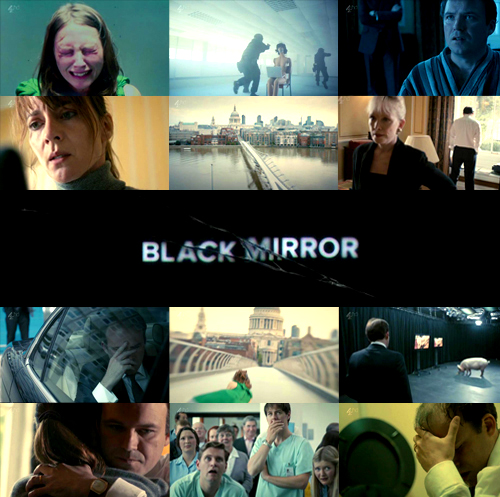
“Black Mirror” (2011 – ) is a British anthology series created by satirist Charlie Brooker exploring potential unintended social/psychological effects of technology. It’s sort of an updated and darker version of The Twilight Zone offering (often pessimistic) commentary on society, government, culture and relationships.

Season 1

The National Anthem

15 Million Merits
http://www.dailymotion.com/video/xyllhh_black-mirror-15-million-merits_shortfilms

The Entire History of You

Season 2

Be Right Back

White Bear

The Waldo Moment

White Christmas

Time and the Technological World

321e730d017aeaf2228d3217ae9abd77

Source: The Hipcrime Vocab

Check out this fascinating summary of  How We Got to Now: Six Innovations That Made the Modern World. This particular summary looks at the part of the book that documents how our perception of time has changed, and how that has affected the modern world.

The book talks about something called the “Hummingbird Effect,” which describes the way in which various inventions and technical discoveries change the world in unexpected ways. Some of you may recall James’ Burke’s excellent TV show Connections on BBC/PBS (These used to be available on YouTube, but JamesBurkeWeb appears to have disappeared. Still, some episodes can still be found) which covered the same ground:

Johnson points out that, much like the evolution of bees gave flowers their colors and the evolution of pollen altered the design of the hummingbird’s wings, the most remarkable thing about innovations is the way they precipitate unanticipated changes that reverberate far and wide beyond the field or discipline or problem at the epicenter of the particular innovation. Pointing to the Gutenberg press — itself already an example of the combinatorial nature of creative breakthroughs — Johnson writes:

    “Johannes Gutenberg’s printing press created a surge in demand for spectacles, as the new practice of reading made Europeans across the continent suddenly realize that they were farsighted; the market demand for spectacles encouraged a growing number of people to produce and experiment with lenses, which led to the invention of the microscope, which shortly thereafter enabled us to perceive that our bodies were made up of microscopic cells. You wouldn’t think that printing technology would have anything to do with the expansion of our vision down to the cellular scale, just as you wouldn’t have thought that the evolution of pollen would alter the design of a hummingbird’s wing. But that is the way change happens.”

It starts with Galileo’s observation that a pendulum always swings to-and-fro in a regular amount of time.

“But machines that could keep a reliable beat didn’t exist in Galileo’s age; the metronome wouldn’t be invented for another few centuries. So watching the altar lamp sway back and forth with such regularity planted the seed of an idea in Galileo’s young mind. As is so often the case, however, it would take decades before the seed would blossom into something useful.”

The ability to accurately measure time was a departure from before when:

    “Instead of fifteen minutes, time was described as how long it would take to milk the cow or nail soles to a new pair of shoes. Instead of being paid by the hour, craftsmen were conventionally paid by the piece produced — what was commonly called “taken-work” — and their daily schedules were almost comically unregulated.”

Once the regimentation of the clock was introduced, many things followed from that due to the Hummingbird Effect:

Over the century that followed, the pendulum clock, a hundred times more accurate than any preceding technology, became a staple of European life and forever changed our relationship with time. But the hummingbird’s wings continued to flap — accurate timekeeping became the imperceptible heartbeat beneath all technology of the Industrial Revolution, from scheduling the division of labor in factories to keeping steam-powered locomotives running on time. It was the invisible hand of the clock that first moved the market — a move toward unanticipated innovations in other fields. Without clocks, Johnson argues, the Industrial Revolution may have never taken off — or “at the very least, have taken much longer to reach escape velocity.” He explains:

    “Accurate clocks, thanks to their unrivaled ability to determine longitude at sea, greatly reduced the risks of global shipping networks, which gave the first industrialists a constant supply of raw materials and access to overseas markets. In the late 1600s and early 1700s, the most reliable watches in the world were manufactured in England, which created a pool of expertise with fine-tool manufacture that would prove to be incredibly handy when the demands of industrial innovation arrived, just as the glassmaking expertise producing spectacles opened the door for telescopes and microscopes. The watchmakers were the advance guard of what would become industrial engineering.”

Not mentioned is the introduction of public schools, designed to take farmers used to “cow milking time” and “discipline” them into a workforce able to sit still and obey and punch a clock, a system we are still living with today. Those of us who cannot or will not conform to this ruthless discipline are severely punished:

And yet, as with most innovations, the industrialization of time came with a dark side — one Bertrand Russell so eloquently lamented in the 1920s when he asked: “What will be the good of the conquest of leisure and health, if no one remembers how to use them?” Johnson writes:

    “The natural rhythms of tasks and leisure had to be forcibly replaced with an abstract grid. When you spend your whole life inside that grid, it seems like second nature, but when you are experiencing it for the first time, as the laborers of industrial England did in the second half of the eighteenth century, it arrives as a shock to the system. Timepieces were not just tools to help you coordinate the day’s events, but something more ominous: the “deadly statistical clock,” in Dickens’s Hard Times, “which measured every second with a beat like a rap upon a coffin lid.”

[…]

    “To be a Romantic at the turn of the nineteenth century was in part to break from the growing tyranny of clock time: to sleep late, ramble aimlessly through the city, refuse to live by the “statistical clocks” that governed economic life… The time discipline of the pendulum clock took the informal flow of experience and nailed it to a mathematical grid. If time is a river, the pendulum clock turned it into a canal of evenly spaced locks, engineered for the rhythms of industry.

And as clocks became ever more precise and ubiquitous, things flowed from that – more regimentation, more standardization (village clocks used to be set by the sun’s position, but this introduced inaccuracies in railroad timetables – thus two inventions, one steam-powered and one not, are bound up together), and entirely new scientific discoveries which led to new inventions such as the computers that now rule over our lives:

Johnson goes on to trace the hummingbird flutterings to the emergence of pocket watches, the democratization of time through the implementation of Standard Time, and the invention of the first quartz clock in 1928, which boasted the unprecedented accuracy of losing or gaining only one thousandth of a second per day…But the most groundbreaking effect of the quartz clock — the most unpredictable manifestation of the hummingbird effect in the story of time — was that it gave rise to modern computing and the Information Age. Johnson writes:

    “Computer chips are masters of time discipline… Instead of thousands of operations per minute, the microprocessor is executing billions of calculations per second, while shuffling information in and out of other microchips on the circuit board. Those operations are all coordinated by a master clock, now almost without exception made of quartz… A modern computer is the assemblage of many different technologies and modes of knowledge: the symbolic logic of programming languages, the electrical engineering of the circuit board, the visual language of interface design. But without the microsecond accuracy of a quartz clock, modern computers would be useless.”

And once the computer is invented – note that it becomes the new mega-metaphor taking over from the steam engine – the brain as “neural network” that can be simulated, the economy as a perfect “information processing machine” via the price mechanism and humans as “rational utility maximizers”of Neoliberal economics, and recasting the analog world as binary one of ones and zeros – art, music, literature, etc. that can be simulated through sufficiently complex algorithms. All this flows from our view of the world, which in turn is dictated by our technology.

The Hummingbird Effect: How Galileo Invented Time and Gave Rise to the Modern Tyranny of the Clock (Brain Pickings)

More at the link. It’s worth noting that this entire thesis was laid out by Lewis Mumford as far back in the 1930’s in Technics and Society, and this book looks like it covers much the same ground.

Mumford’s these is that the Industrial Revolution did not spring forth fully-formed from nowhere, but came forth from changes in the human perception of the world and man’s relationship to nature that had been occurring for centuries beforehand. He called this the Eotechnic period, and points out that it needs to be understood to see how the modern world emerged. He classified the subsequent periods as Paleotechnic (centered around the stream engine, iron and coal), and the Neotechnic (centered around electricity and the scientific method). He stressed how much our perception of the natural world and human nature dictate the nature of our science and social organization.

Several intellectual revolutions had to take place in order to get us to the Industrial Revolution. One, as noted above and emphasized by Mumford, was the accurate measurement of time. Another was the increasing control over motive forces exemplified by the windmill and watermill. Another was individual perception, as indicated by the use of perspective in painting. Another was the increasing standardization, political centralization and bureaucracy. Another was the discovery of the New World of which the ancients had no knowledge or precedent. Another was the increasing use of the abstraction of money for trade. But perhaps the biggest one of all was recasting the natural world as a machine that could be analyzed and understood. These changes were all formative to the Industrial Revolution, which could not have come about without them.

Mumford writes extensively about the Medieval period, and how that period increasingly used technology to control the environment but in a genuinely humane way, one designed to enhance human needs and desires rather than control or eliminate them. Think of the medieval clock-making guild as opposed to the deskilled factory worker for example. The decentralized and localized nature of the Medieval period is what allowed technology to be used in this way.

But, beginning in the seventeenth century with the rise of the nation-state and the consolation of Europe’s kingdoms into large, centralized states with standards and bureaucracy (much of it due to the emergence of gunpowder and artillery, against which castles and mounted knights were useless), all that began to to change. Technology became increasingly tyrannical, and man was more and more forced into the “logic of the machine.” Consider the armies that emerged identical uniforms, identical weapons with interchangeable parts and drilled, regimented training designed to turn men into interchangeable parts themselves. Military training was the precursor to the disciplined workforce of the Industrial Revolution, which is why the connection between business and military discipline remains to this day (corporations today are run on the top-down hierarchical military model). Since battles were won by sheer numbers of “citizens” with rifles rather than an aristocratic warrior class who owned horses, the social relations changed, and the common man emerged with more importance. Population growth equaled national strength in the new order. Man’s rationality became celebrated, all other values were discounted. Productivity and technological “progress” became goals in the themselves rather than means to an end. Pursuit of growth and profit became all-consuming, human needs be damned.

In contrast to the Medieval period, today’s technology is dehumanizing, submitting man to centralized control, and seeing him as nothing more than a machine. Mumford envisioned a society where human values could once again take center stage instead of the productivist logic of “the myth of the machine” Thus Mumford was not anti-technology; rather he wanted a world in which technology served profoundly different values than in our present time. The brutal regulation of time, rather than the human time of being in the world – the difference between chronos and kairos, or the subjective and the objective – is one of the best illustrations of this difference. Just because we can measure time down to the nanosecond does not mean we have to be enslaved to it. That is a social choice, as Mumford would quickly remind us.


Christmas Grab Bag (holiday music edition)

Christmas_Reporting_800

As mentioned last Christmas, one of my least favorite Christmas songs is Do They Know It’s Christmas. Particularly callous were the words sung by Bono: “Tonight thank god it’s them instead of you”. Despite the removal of that line for a new version from Band Aid 30, it manages to retain an offensively patronizing tone. To give Band Aid the proper ribbing they deserve, Bland Aid has released Fleece the World (Charity Begins at Home):

Patton Oswald shares his thoughts on a couple of other notorious Christmas songs:

New Song’s “The Christmas Shoes”:

and Alvin and the Chipmunk’s “Christmas Don’t Be Late”:

The Onion AV Club recently did an interesting post on the surprisingly bleak origins of a well-known Christmas standard.

If you need to end a Christmas party but guests won’t leave, just play this at high volume:

A surprisingly traditional version of The Christmas Song from John Zorn and Mike Patton: