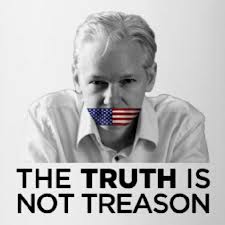
The War on Free Speech Is Really a War on the Right to Criticize the Government

By John & Nisha Whitehead

Source: The Rutherford Institute

Since when have we Americans been expected to bow submissively to authority and speak with awe and reverence to those who represent us? The constitutional theory is that we the people are the sovereigns, the state and federal officials only our agents. We who have the final word can speak softly or angrily. We can seek to challenge and annoy, as we need not stay docile and quiet.”— Justice William O. Douglas

Absolutely, there is a war on free speech.

To be more accurate, however, the war on free speech is really a war on the right to criticize the government.

Although the right to speak out against government wrongdoing is the quintessential freedom, every day in this country, those who dare to speak their truth to the powers-that-be find themselves censored, silenced or fired.

Indeed, those who run the government don’t take kindly to individuals who speak truth to power.

In fact, the government has become increasingly intolerant of speech that challenges its power, reveals its corruption, exposes its lies, and encourages the citizenry to push back against the government’s many injustices.

This is nothing new, nor is it unique to any particular presidential administration.

For instance, as part of its campaign to eradicate so-called “disinformation,” the Biden Administration likened those who share “false or misleading narratives and conspiracy theories, and other forms of mis- dis- and mal-information” to terrorists. This government salvo against consumers and spreaders of “mis- dis- and mal-information” widens the net to potentially include anyone who is exposed to ideas that run counter to the official government narrative.

In his first few years in office, President Trump declared the media to be “the enemy of the people,” suggested that protesting should be illegal, and that NFL players who kneel in protest during the national anthem “shouldn’t be in the country.”

Then again, Trump was not alone in his presidential disregard for the rights of the citizenry, especially as it pertains to the right of the people to criticize those in power.

President Obama signed into law anti-protest legislation that makes it easier for the government to criminalize protest activities (10 years in prison for protesting anywhere in the vicinity of a Secret Service agent). The Obama Administration also waged a war on whistleblowers, which The Washington Post described as “the most aggressive I’ve seen since the Nixon administration,” and “spied on reporters by monitoring their phone records.”

Part of the Patriot Act signed into law by President George W. Bush made it a crime for an American citizen to engage in peaceful, lawful activity on behalf of any group designated by the government as a terrorist organization. Under this provision, even filing an amicus brief on behalf of an organization the government has labeled as terrorist would constitute breaking the law.

President Franklin D. Roosevelt authorized the FBI to censor all news and control communications in and out of the country in the wake of the attack on Pearl Harbor. Roosevelt also signed into law the Smith Act, which made it a crime to advocate by way of speech for the overthrow of the U.S. government by force or violence.

President Woodrow Wilson signed into law the Espionage and Sedition Acts, which made it illegal to criticize the government’s war efforts.

President Abraham Lincoln seized telegraph lines, censored mail and newspaper dispatches, and shut down members of the press who criticized his administration.

In 1798, during the presidency of John Adams, Congress passed the Alien and Sedition Acts, which made it a crime to “write, print, utter or publish … any false, scandalous, and malicious” statements against the government, Congress or president of the United States.

Clearly, the government has been undermining our free speech rights for quite a while now.

Good, bad or ugly, it’s all free speech unless as defined by the government it falls into one of the following categories: obscenity, fighting words, defamation (including libel and slander), child pornography, perjury, blackmail, incitement to imminent lawless action, true threats, and solicitations to commit crimes.

This idea of “dangerous” speech, on the other hand, is peculiarly authoritarian in nature. What it amounts to is speech that the government fears could challenge its chokehold on power.

The kinds of speech the government considers dangerous enough to red flag and subject to censorship, surveillance, investigation, prosecution and outright elimination include: hate speech, bullying speech, intolerant speech, conspiratorial speech, treasonous speech, threatening speech, incendiary speech, inflammatory speech, radical speech, anti-government speech, right-wing speech, left-wing speech, extremist speech, politically incorrect speech, etc.

Conduct your own experiment into the government’s tolerance of speech that challenges its authority, and see for yourself.

Stand on a street corner—or in a courtroom, at a city council meeting or on a university campus—and recite some of the rhetoric used by the likes of Thomas Jefferson, Patrick Henry, John Adams and Thomas Paine without referencing them as the authors.

For that matter, just try reciting the Declaration of Independence, which rejects tyranny, establishes Americans as sovereign beings, recognizes God (not the government) as the Supreme power, portrays the government as evil, and provides a detailed laundry list of abuses that are as relevant today as they were 240-plus years ago.

My guess is that you won’t last long before you get thrown out, shut up, threatened with arrest or at the very least accused of being a radical, a troublemaker, a sovereign citizen, a conspiratorialist or an extremist.

Try suggesting, as Thomas Jefferson and Benjamin Franklin did, that Americans should not only take up arms but be prepared to shed blood in order to protect their liberties, and you might find yourself placed on a terrorist watch list and vulnerable to being rounded up by government agents.

“What country can preserve its liberties if their rulers are not warned from time to time that their people preserve the spirit of resistance. Let them take arms,” declared Jefferson. He also concluded that “the tree of liberty must be refreshed from time to time with the blood of patriots and tyrants.” Observed Franklin: “Democracy is two wolves and a lamb voting on what to have for lunch. Liberty is a well-armed lamb contesting the vote!”

Better yet, try suggesting as Thomas Paine, Marquis De Lafayette, John Adams and Patrick Henry did that Americans should, if necessary, defend themselves against the government if it violates their rights, and you will be labeled a domestic extremist.

“It is the duty of the patriot to protect his country from its government,” insisted Paine. “When the government violates the people’s rights,” Lafayette warned, “insurrection is, for the people and for each portion of the people, the most sacred of the rights and the most indispensable of duties.” Adams cautioned, “A settled plan to deprive the people of all the benefits, blessings and ends of the contract, to subvert the fundamentals of the constitution, to deprive them of all share in making and executing laws, will justify a revolution.” And who could forget Patrick Henry with his ultimatum: “Give me liberty or give me death!”

Then again, perhaps you don’t need to test the limits of free speech for yourself.

One such test is playing out before our very eyes on the national stage led by those who seem to believe that only individuals who agree with the government are entitled to the protections of the First Amendment.

To the contrary, James Madison, the father of the Constitution, was very clear about the fact that the First Amendment was established to protect the minority against the majority.

I’ll take that one step further: the First Amendment was intended to protect the citizenry from the government’s tendency to censor, silence and control what people say and think.

Having lost our tolerance for free speech in its most provocative, irritating and offensive forms, the American people have become easy prey for a police state where only government speech is allowed.

You see, the powers-that-be understand that if the government can control speech, it controls thought and, in turn, it can control the minds of the citizenry.

This is how freedom rises or falls.

Americans of all stripes would do well to remember that those who question the motives of government provide a necessary counterpoint to those who would blindly follow where politicians choose to lead.

We don’t have to agree with every criticism of the government, but we must defend the rights of all individuals to speak freely without fear of punishment or threat of banishment.

Never forget: what the architects of the police state want are submissive, compliant, cooperative, obedient, meek citizens who don’t talk back, don’t challenge government authority, don’t speak out against government misconduct, and don’t step out of line.

What the First Amendment protects—and a healthy constitutional republic requires—are citizens who routinely exercise their right to speak truth to power.

Tolerance for dissent is vital if we are to survive as a free nation.

While there are all kinds of labels being put on so-called “unacceptable” speech today, the real message being conveyed by those in power is that Americans don’t have a right to express themselves if what they are saying is unpopular, controversial or at odds with what the government determines to be acceptable.

By suppressing free speech, the government is contributing to a growing underclass of Americans who are being told that they can’t take part in American public life unless they “fit in.”

Mind you, it won’t be long before anyone who believes in holding the government accountable to respecting our rights and abiding by the rule of law is labeled an “extremist,” is relegated to an underclass that doesn’t fit in, must be watched all the time, and is rounded up when the government deems it necessary.

It doesn’t matter how much money you make, what politics you subscribe to, or what God you worship: as I make clear in my book Battlefield America: The War on the American People and in its fictional counterpart The Erik Blair Diaries, we are all potential suspects, terrorists and lawbreakers in the eyes of the government.


USAID Board Member Says ‘New World Order’ will Continue Despite a Rising Multipolar World

By Timothy Alexander Guzman

Source: Silent Crow News

That same old American institution called the United States Agency for International Development (USAID) who supports regime change and wars across the world has a board member who wrote an opinion piece for The Hill, a liberal online news organization on the relevance of the rules-based order and how much the world needs it.  Harley Lippman, a board member for USAID wrote about how the rules-based order (New World Order) will continue despite the challenges of a multipolar world and the peace dividends it has brought to the table thus far.  Lippman’s claims about where the rules-based order stands in this new world of geopolitics is propaganda at its best, so you might already know where this article is going since the liberal media is absolutely pro-establishment and pro-war.  

Lippman wrote an opinion piece called ‘The rules-based order will endure, despite ‘shifting sands’ based on Russia and China’s achievements that includes establishing a diplomatic solution between Iran and Saudi Arabia and bringing back Syria into the fold with the rest of the Middle East which is a big deal, but to Lippman, it “rings hollow”, its insincere:

Russia and China recently have attempted to act as chief mediators on the international stage. Russia reportedly facilitated meetings between Saudi Arabia and Syria to restore ties and reopen their respective consular services, and China played peacemaker between Saudi Arabia and Iran. More recently, Saudi Arabia’s Cabinet approved a decision to join the Shanghai Cooperation Organization (SCO) as a dialogue partner. The SCO was created to counter U.S. economic hegemony and includes longtime adversaries and partners of our country. These recent developments have been described by some as evidence of the decline of the U.S.-led rules-based order.

Despite the clamoring of pundits to bemoan America’s decline, Moscow and Beijing’s attempts at diplomatic relevance ring hollow as the U.S. shores up the post-World War II international order by reinvigorating existing strategic alliances that underpin various security architectures

Lippman says that the US-led rules-based order is in decline but at the same time, it is working on replenishing its old alliances as a counterweight to Russia and China even though they were able to forge a peaceful solution among nations who were at odds against each other at one time or another.  However, Russia and China are trying to establish real peaceful solutions among nations and that should be welcomed by the international community.  Lippman says that “the U.S. values its alliance with Japan and South Korea in the Asia-Pacific to serve as a counterweight to an increasingly belligerent China.”  A belligerent China?  How many military bases does the US have around the world?  In fact, how many of these bases surround China?  China’s peace initiatives should be welcomed at all costs.  Bringing peace is a good thing while the US and its Western allies (and Israel) has brought endless wars and chaos on almost every continent on the planet, in fact the US war machine has killed more than 20 million people since World War II.  In other words, when Lippman says that the US “values” its alliance with Japan and South Korea, he is talking about the continuation of selling them military hardware and keeping the same US bases in place to counter China’s growing influence in the region so that the US war machine can keep antagonizing China in the South Pacific sea at all costs even if it means starting a war.   

Lippman also takes aim at Russia, “Correspondingly, America’s role in NATO is pivotal to the West’s efforts to face off an aggressive Russia that threatens the security of Europe and the Balkans.”  Seriously?  Wasn’t Ukraine’s continuous bombardment of the Eastern Donbass region for more than 8 years killing at least 8,000 Ukrainian people who spoke Russian an aggressive action that was and still is supported by the US-NATO alliance? 

The US has used its alliances to counter Russia and China as part of the old rules-based order strategy of divide and conquer in Asia and Eastern Europe.  In other words, he wants Washington to keep the same policies of funding and arming one-side against another to advance the US war machine and continue the rules-based order to establish their Great Reset agenda.  

Concerning the Middle East, Russia and China also have a wide range of interests with Iran, therefore that arrangement angers the US political establishment and their bosses who are based in Israel, and that’s the other problem for Lippman:

In contrast to America’s values-based approach to allies and partners, engagement with Russia and China offers only a transactional and interest-based relationship that rests on economic ties both countries share equally with such aggressors as Iran and Iran’s proxies 

Russia and China’s strategic partnership with Iran, Syria and now Saudi Arabia bypasses US interests in the region so for most of the people in the Middle East, it’s a new development that is welcomed in a region that has only experienced regime change and endless wars that the US and its closest ally, Israel sponsored and at times participated in since the end of World War II:   

Riyadh’s decision to restore diplomatic relations with Tehran via China is an attempt to reduce regional tensions with an aggressive neighbor committed to militant Islam and regional hegemony. In the near term, Tehran will likely seek to avoid actions that threaten this new relationship. However, absent an Iranian decision to radically redefine its foreign policy and abolish the Revolutionary Guards, this rapprochement is likely to collapse in the wake of fresh Iranian violence

First, let me start by saying that Iran is not looking to expand into a hegemonic footprint in the Middle East, it is Israel who is looking to expand its territorial ambitions by hoping to destroy all its Arab neighbors’ piece by piece and carry-out Oded Yinon’s plan or what is known as the “Greater Israel” project.  Rabbi Fischmann, a member of the Jewish Agency for Palestine testified to the U.N. Special Committee of Enquiry on July 9th, 1947, said that “the Promised Land extends from the River of Egypt up to the Euphrates, it includes parts of Syria and Lebanon.” But Iran is the aggressor?  The rules-based order will continue if the U.S. Central Command (CENTCOM) focuses on its security commitments according to Lippman:

America’s security commitment to the region must be paramount. U.S. Central Command (CENTCOM) remains the foundation of the region’s security architecture that protects trade and energy arteries critical to global economic stability. The Biden administration should ensure that CENTCOM remains well-resourced and focused on building regional partnerships. Furthermore, economic ties must be strengthened. American firms view the region with enthusiasm. The Biden administration must be more vocal in its support for trade and expedite approvals for technology sharing on 5G and 6G communications, green energy, and space. Furthermore, increased cabinet-level visits to the region would demonstrate the U.S.’s commitment to the region. While this will not offset the inevitable commercial relationships between the Gulf States and China, it will assert America’s ability to compete in this strategic region

Using the Sunni-Shiite argument is propaganda to further instigate that there is a sectarian divide in the Arab world for thousands of years’, and the threat of a nuclear-armed Iran and because of that, the US security structure under CENTCOM will remain in place since the US and Saudi Arabia has a long-standing relationship.  China’s peace deal between Iran and Saudi Arabia is what he calls “cosmetic”, and that China has no place for its peace initiative in the Middle East:

Despite the region’s “shifting sands” of ever-changing relationships, the Sunni-Shiite tensions are over a thousand years old and Iran’s advancement toward nuclear status has every U.S. partner in the Middle East on alert. The traditional security architecture underpinned by U.S.-Saudi strategic ties will remain intact. As a result, future Chinese transactional neutrality is likely to be cosmetic, devoid of any significant strategic substance. 

The U.S. and its allies can best sustain the rules-based order established after WWII through robust engagement with allies and partners in which we show that we understand and support their core economic and security interests in the same way that we expect they will do the same for American interests

Tell that to the families of the 20 million people that US and its NATO allies killed since the end of World War II.  The old rules-based order has collapsed in the face of a new multipolar world, as for Harley Lippman’s vision for the US and its globalist cabal to continue its hegemonic agenda in this new world of ours, is just wishful thinking.       

America’s Social Contract Is Broken

Design by Robomega

By Charles Hugh Smith

Source: Of Two Minds

I do not claim any expertise in social contract theory, but in broad brush we can delineate two implicit contracts: one between the citizenry and the state (government) and another between citizens.

We can distinguish between the two by considering a rural county fair. Most of the labor to stage the fair is volunteered by the citizenry for the good of their community and fellow citizens; they are not coerced to do so by the government, nor does the government levy taxes to pay its employees or contractors to stage the fair.

The social contract between citizens implicitly binds people to obeying traffic laws as a public good all benefit from, not because a police officer is on every street corner enforcing the letter of the law.

The social contract between the citizens and the state binds the government to maintaining civil liberties, equal enforcement of the rule of law, defending the nation, and in the 20th century, providing social welfare for the disadvantaged, disabled and low-income elderly.

Critiques of “trickle down economics” focus on income inequality as a key metric of the Social Contract: rising income inequality is de facto evidence that the Social Contract is broken.

I think this misses the key distinction in the Social Contract between citizens and the state, which is the legitimacy of the process of wealth creation and the fairness of the playing field and the referees, i.e. that no one is above the law.

Few people begrudge legitimately earned wealth, for example, the top athlete, the pop star, the tech innovator, the canny entrepreneur, the best-selling author, etc. The source of these individual’s wealth is transparent, and any citizen can decline to support this wealth creation by not paying money to see the athlete, not buying the author’s books, not shopping at the entrepreneur’s stores, etc.

The Social Contract is broken not just by wealth inequality per se but by the illegitimate process of wealth acquisition, i.e. the state has tipped the scales in favor of the few behind closed doors and routinely ignores or bypasses the intent of the law even as the state claims to be following the narrower letter of the law.

By this definition, the Social Contract in America has been completely smashed. One sector after another is dominated by cartel-state partnerships that are forged and enforced in obscure legislation written by lobbyists. Once the laws have been riddled with loopholes and the regulators have been corrupted, “no one is above the law” has lost all meaning.

Those who violate the intent of the law while managing to conjure an apparent compliance with the letter of the law are shysters, scammers and thieves who exploit the intricate loopholes of the system, all the while parading their compliance as evidence the system is fair and just. In this way, the judicial system becomes part of the illegitimate process of wealth accumulation.

In America, political and financial Elites are above the intent of the law. Is bribery of politicos illegal? Supposedly it is, but in practice it is entirely and openly legal.

This is the norm in banana republics, whose ledgers are loaded with thousands of codes and regulations that are routinely ignored by those in power. In the Banana Republic of America, financial crimes go uninvestigated, unindicted and unpunished: banks and their management are essentially immune to prosecution because the crimes are complex (tsk, tsk, it’s really too much trouble to investigate) and they’re “too big to prosecute.”

The rot has seeped from the financial-political Aristocracy to the lower reaches of the social order. The fury of those still working legitimate jobs and paying their taxes is grounded in a simple, obvious truth: America is now dominated by scammers, cheaters, grifters and those gaming the system, large and small, to increase their share of the swag.

The honest taxpayer is a chump, a mark who foolishly ponies up the swag that’s looted by the smart operators. Everyone knows that the vast majority of wealth accumulation in America flows not from transparent effort on a level playing field, but from persuading the Central State (the Federal government and the Federal Reserve) to enforce cartels and grant monopolistic favors such as tax shelters designed for a handful of firms and unlimited credit to private banks.

When scammers large and small live better than those creating value in the real economy, the Social Contract has ceased to exist. When the illegitimate process of wealth acquisition–a rigged playing field, a bought-off referee, and an Elite that’s above the law by every practical measure–dominates the economy and the political structure, the Social Contract has been shattered, regardless of how much welfare largesse is distributed to buy the complicity of state dependents.

Once the chumps and marks realize there is no way they can ever escape their exploited banana-republic status as neofeudal debt-serfs, the scammers, cheats and grifters large and small will be at risk of losing their perquisites. The fantasy in America is that legitimate wealth creation is still possible despite the visible dominance of a corrupt, venal, self-absorbed, parasitic, predatory Aristocracy. Once that fantasy dies, so will the marks’ support of the Aristocracy.

As Voltaire observed, “No snowflake in an avalanche ever feels responsible”: every claim, every game of the system, every political favor purchased is “fair and legal,” of course. This is precisely how empires collapse.

In broad brush, we can trace the transition from feudalism to capitalism to the present financialized, globalized cartel-state neofeudalism and next, to a synthesis built on the opposite of neofeudalism, which is decentralization, transparency, accountability, legitimacy and the adaptive churn of competing ideas and proposals.

China, Russia and India Versus USA, EU and Japan: Axis Powers of a New Global Cold War?

By Gilbert Mercier

Source: New Junkie Post

The birth of a bipolar world order?

Since 2014, which marked the first Russian intervention in Ukraine, a new global geopolitical dynamic has amplified under conflicting impulses. The areas of direct, or more often proxy conflicts, have been in many senses contained with some sort of cynical pressure-cooker mechanism. If empires always seek hegemony, sane geopolitics imply balance to avoid slipping into World War scenarios. We have presently reached a Cold War-like balance between two blocks: the West and their satellites on one side, against BRICS nations and their affiliates on the other side. In the best case scenario, this new cold war could give birth to a lasting bipolar world order: curiously enough, following pretty closely Orwell’s cartography of Oceania & Eurasia.

The West is defined by the US empire and its vassals

The two axes of powers must be explained more precisely. On one side “the West” includes US, UK, EU, Canada, Japan, South Korea and Australia. The command headquarters of this imperial structure are of course located in the United States of America. The empire’s military muscle is NATO. As for the junior members such as the UK, European Union and Japan, they are, despite some claims of the contrary the vassals of big Uncle Sam.

One factor could be viewed as a miscalculation by Vladimir Putin. In many ways his decision last year to start a military operation in Ukraine had a paradoxical effect. The intervention was an attempt by Russia to prevent Ukraine from joining NATO & the EU, but this has failed as Western military gears as well as direct assistance have poured in. Just like in Afghanistan in the 1980’s Russia was effectively sucked into a West proxy war. Meanwhile, NATO has found a new raison d’etre with Finland now officially a member and Sweden soon also to become one. The general paranoia used in Western media to depict Putin as the ultimate bogeyman has worked wonders on Europe’s public opinion.

BRICS & affiliates

On the other side it is more complex as China’s dominance is more subdued than that of the US. Besides the BRICS nations of Brazil, Russia, India, China & South-Africa, other nations are gravitating into the same geopolitical orbit: notably Iran, Venezuela and African countries such as Mali and Burkina Faso. While China is clearly the biggest power within BRICS, the other two major players, which are Russia and India, also are heavyweights on an overall geopolitical and economic scale.

Russia holds vast reserves of energy products, such as gas and oil, and since the European sanctions has quickly worked on redirecting its energy production both towards China and India. India, which has become the most populous country on Earth, has just like China a considerable manufacturing power as well as a huge internal market for products and services. In other words, neither China nor India have to rely mainly on exports to sustain their respective economic growth.

Non-alignment is dead

The concept of non-alignment in a multipolar world, dear to the likes of Tito and de Gaulle, has unfortunately become a geopolitical faux pas at best, or a risky behavior for a small state wanting to stay independent at worst. Because of a lack of political will and leadership, the European Union has basically capitulated from asserting itself as a third block to become a provincial entity of the US empire. The notion of true non-alignment might have run its course in this new bipolar order.

As matter of fact, one of the Ukraine war’s major side effects has been to speed up the process of obedient realignment of the EU to the US. European leaders with their respective media propaganda divisions (either state or corporate controlled) have managed to convince the bulk of their public opinion that the ogre Vladimir Putin and Russia had to be defeated in Ukraine as if the hordes from a memory of the Red Army were about to invade Europe. The Ukraine war has been sold in Europe as a war of necessity to counter an existential threat that was never really there. Public opinion largely bought it, and the financial rewards are pouring into the coffers of the military-industrial complex, as well as US and Qatari energy businesses of natural gas liquefaction, to replace the well-organized Russian gas supply Europe used to get before the sanctions against Russia.

Ukraine war cannot be won on the battle fields

Despite what most people are lead to believe in the West, a military victory by Ukrainian forces, even with full logistic support from NATO in equipment and training is quasi impossible. After all, a lesson should be learned from Afghanistan where the Taliban managed to defeat the mighty alliance. If the EU and the United States cared for the welfare of Ukrainians, they would come to the realization that only a diplomatic solution can resolve the crisis. A sine qua non condition of diplomacy is that it requires concessions on all sides.

For example, let’s take the case of Crimea. It has a complex history. During the 15th century Crimea was under control of the Ottoman Empire. In 1783, the Russian Empire of Tsarina Catherine the Great annexed Crimea after a conflict with Turkey. Lastly, under the authority of Nikita Khrushchev, the USSR gave Crimea to Ukraine in 1954. Therefore, Crimea was Russian for 171 years while it was Ukrainian for only 60 years. The weight of history, in this case, should tilt the balance in favor of Russia.

Military-industrial complex Uber Alles

Wars have always been capitalism‘s best friend. Ultimately they are seldom about the lofty notions of patriotism but systematically about profits. Ukraine’s Western proxy adventure is no exception. As matter of fact, it has been a gargantuan bonanza for the global military-industrial complex and its stockholder war profiteers. Case in point: since Russia started its military operation in Ukraine in February 2022, the United States has spent $30 billion in military equipment which was shipped to Ukraine. This is according to the US Department of Defense.

For its part the European Union is planning a 74 billion Euros increase in military spending within three years. This trend of huge increase in military spending affects all the EU 27 members, as they are allocating bigger shares of their respective GDPs to this weapons race. In December 2022, the European Defense Agency proudly announced that EU defense spending had surpassed 200 billion Euros for the first time in the union’s history. What an accomplishment!

Needless to say, military-industrial consortium and their unscrupulous stockholders have collected huge dividends from the death and destruction business. Stocks in the so-called aerospace & defense area of the market have been incredibly profitable for investors and are therefore in high demand. On average, most defense-company stocks have seen their values increase by 25 to 30 percent since February 2022.

Naturally, in terms of military spending, the United States represents the lions’ share with a whopping 38 percent of the global military spending. It is an astronomical $800 billion a year or 3.1 percent of the US GDP. Unfortunately other major powers are catching up. In second place comes China with $293 billion or 1.7 percent of its GDP; then India with $76.6 billion; the UK with 68.4 billion; Russia with $65.9 billion or 3.1 percent of GDP; France and Germany with $56 billion each; and Japan with $54 billion. In France, despite a very concerning debt, the Macron administration has announced that 413 billion Euros will be spent on the military between 2024 and 2030.

Taiwan: the Ukraine of the far-east?

With Russia sucked into what can be called a military quagmire in Ukraine, one has to wonder if the Oceania empire, with its Washington nevralgic center, would not indeed want to take advantage or even provoke a Chinese move to take over Taiwan, in accordance to the One-China precept. This could create a Ukrainian-like situation for China in Taiwan. Instead of having the obedient EU to absorb part of the cost in the West, in the Pacific it could be US vassals such as Japan, South-Korea and Australia that could get involved into a proxy war with China, and therefore increase their military spending in US equipment. Trillion of dollars would be wasted in resources to allow the chess masters of geopolitics to keep playing their mindless criminal games. Everywhere, the brutal Russian roulette folly of capitalism, either state or corporate, would thrive while all populations suffer.

Why Kim Dotcom Connects The DNC Email Leak To The Murder Of Seth Rich

By: b

Source: Moon of Alabama

Last week we learned a new fact about the DNC email leak in 2016 and of the events that likely led to the killing of Seth Rich.

A quite aggressive Wikipedia page discusses the Murder of Seth Rich:

The murder of Seth Rich occurred on July 10, 2016, at 4:20 a.m. in the Bloomingdale neighborhood of Washington, D.C. Rich died about an hour and a half after being shot twice in the back. The perpetrators were never apprehended; police suspected he had been the victim of an attempted robbery.

The 27-year-old Rich was an employee of the Democratic National Committee (DNC), and his murder spawned several right-wing conspiracy theories, including the false claim, contradicted by the law enforcement branches that investigated the murder, that Rich had been involved with the leaked DNC emails in 2016. It was also contradicted by the July 2018 indictment of 12 Russian military intelligence agents for hacking the e-mail accounts and networks of Democratic Party officials and by the U.S. intelligence community’s conclusion the leaked DNC emails were part of Russian interference in the 2016 United States elections. Fact-checking websites like PolitiFact, Snopes, and FactCheck.org stated that the theories were false and unfounded. The New York Times, the Los Angeles Times and The Washington Post wrote that the promotion of these conspiracy theories was an example of fake news.

Well, that is not what really had happened.

Yes, Seth Rich worked as IT administrator for the Democratic National Committee. He was a fan of Bernie Sanders. During the 2016 primaries DNC functionaries did their best to work against Bernie Sanders and for Hillary Clinton. To make that public Seth Rich collected an archive of all DNC emails, copied it onto an USB stick and looked for someone who would publish them.

UPDATE 20:00 UTC

The former British ambassador Craig Murray said that he was given the USB stick by an intermediary of a disgusted Democratic whistleblower and brought it from Washington DC to Wikileaks which eventually published the emails. The data involved were not only from the DNC but also from Clinton’s campaign chair John Podesta:

WikiLeaks made the DNC messages public in July and the incriminating emails from Podesta were published in October. The messages predominantly showed that DNC officials were bent on sabotaging the presidential campaign of Bernie Sanders in favor of Hillary Clinton. Murray insisted that the information was leaked and not hacked by Russia.

“Neither of the leaks came from the Russians. The source had legal access to the information. The documents came from inside leaks, not hacks…leakers were motivated by disgust at the corruption of the Clinton Foundation and the tilting of the primary election playing field against Bernie Sanders.”

/End Update/

Craig Murray did not mention Seth Rich. Up to last week we did not know if Seth Rich really made contact with Wikileaks.

But we did know that the DNC was never ‘hacked’ by anything Russia. The date/timestamps of the leaked files were consistent with local copying and inconsistent with an internet transfer. The company Crowdstrike which was hired to protect the DNC’s networks and which did an investigation into the case never observed an actual ‘Russian’ hack or any data exfiltration from the DNC network. As ITwire wrote in May 2020:

The controversial American security firm CrowdStrike, which was called in to investigate the alleged Russian hack of DNC servers in 2016, had no proof that any emails from the system had been exfiltrated despite public assertions that this had occurred, according to the transcript of an interview released by the US Government a few days ago.

The transcript was from an interview conducted with CrowdStrike’s president of services and chief security officer Shawn Henry by the US House Permanent Select Committee on Intelligence in December 2017, but only released to the US Special Counsel Robert Mueller who conducted a two-year inquiry into alleged Russian collusion in the 2016 presidential poll.

While the exfiltration of emails from the DNC server has been accepted as a proven fact, Henry’s answers to queries from committee members make it clear that this was definitely not the case.

In one typical exchange, Henry was asked, “What about the emails that everyone is so, you know, knowledgeable of? Were there also indicators that they were prepared but not evidence that they actually were exfiltrated?” To this Henry responded, “There’s not evidence that they were actually exfiltrated. There’s circumstantial evidence – but no evidence that they were actually exfiltrated.”

PolitiFact, Snopes and FactCheck.org are, unsurprisingly, wrong with their assertions.

But how did the emails find their way to Julian Assange at Wikileaks. Assange has never explained that. But Wikileaks set out a $20,000 reward for finding the killer of Seth Rich. That made it obvious that there was a connection between them but no one gave further explanations of it.

It took until last week for the world to learn more about what really happened. On April 21 some rather pungent NAFO activist, Pekka Kallionniemi, launched a Twitter thread with an attack on a person well known in IT circles:

Pekka Kallioniemi @P_Kallioniemi – 10:09 UTC · Apr 21, 2023

In today’s #vatniksoup, I’ll introduce a German-Finnish entrepreneur, conspiracy theorist and propagandist, Kim Dotcom. He’s best-known for his illegal online activities and projects, for his hate towards the US, and for his unwavering support for Putin’s imperialism.
1/18
[…]
In 2017, Dotcom claimed that he worked with Seth Rich, a US citizen and employee on the Democratic National Committee who was murdered during a suspected robbery.His death spawned..
10/18
[…]
..several conspiracy theories stating that he was a whistleblower who had leaked documents damning Hillary Clinton and her campaign manager, John Podesta. The hack-and-leak operation was actually conducted by Russian intelligence service GRU’s hacker group called Fancy Bear.
11/18

Who is Kim Dotcom you might ask:

Kim Dotcom (born Kim Schmitz; 21 January 1974), also known as Kimble and Kim Tim Jim Vestor, is a German-Finnish Internet entrepreneur and political activist who lives in Glenorchy, New Zealand.

Dotcom is the founder and former CEO of the defunct file hosting service Megaupload (2005–2012). In 2012, the United States Department of Justice seized its website and pressed charges against Dotcom, including criminal copyright infringement, money laundering, racketeering and wire fraud. Dotcom was residing in New Zealand at the time; at the request of US authorities, New Zealand police raided his home in 2012 and arrested him. Dotcom posted bail and has been going through legal proceedings ever since to avoid extradition to the United States.

In 2017, Dotcom played a role in spreading conspiracy theories about the murder of Seth Rich.

In May 2017 the Washington Post wrote:

When Seth Rich’s Gmail account received an alert this week from Mega.com, attempting to start a new account on a website created by the New Zealand-based Internet businessman and convicted hacker Kim Dotcom, his family knew that something was off.

Over seven frenzied days, Dotcom had become a leading purveyor of the theory that Rich, a staffer at the Democratic National Committee who was shot dead near his home in Northeast Washington last summer, had supplied DNC documents to WikiLeaks and was killed as a result. Multiple security analysts and an FBI investigation have tied the release to hackers with ties to Russia. D.C. police have said repeatedly that they think Rich was slain in a random robbery attempt.

According to experts and Rich’s family, the emailed invitation from welcome@mega.nz appeared to be an attempt to gain access to Rich’s email. Joel Rich, who monitors his late son’s Gmail account when new emails come in, did not click the link. Dotcom had not worked at Mega itself for years, but he was promising on Twitter to prove that the younger Rich had been in contact with WikiLeaks — and Fox News host Sean Hannity was telling his 2.37 million Twitter followers to be ready for a ­revelation.

Hannity had invited Dotcom to appear on his show for what he said on Twitter would be a “#GameChanger” interview. The implication: that Dotcom would finally offer evidence of his claim that Rich had sent internal DNC documents to WikiLeaks before his death.

All that began to unravel Tuesday afternoon when Fox News retracted a story that had claimed the same Rich-WikiLeaks connection, telling readers that the article was “not initially subjected to the high degree of editorial scrutiny we require for all our reporting.” Fox News did not respond to a request for comment, but Dotcom wrote on his website that he would not speak further about his allegations.

Since then little on the issue was heard from Kim Dotcom. There was no explanation why he was involved in the Seth Rich issue in the first place.

But after Pekka Kallionniemi’s attack was widely retweeted Kim Dotcom contested it:

Kim Dotcom @KimDotcom – 0:41 UTC · Apr 22, 2023

🧵 NAFO bullying exposed

I’m responding to an attempted character assassination by NAFO troll @P_Kallioniemi who prides himself with having attacked over 150 “pro-Russian actors and propagandists.”

His problem is that he picked the wrong guy for his cyber bullying.

Who is Pekka? A research fellow at Tampere University in Finland and a self-proclaimed disinformation expert. Ironic because most of the claims in his attack against me are false. I’m tagging the Dean of Tampere University @SaariJuho to make him aware of Pekka’s NAFO bullying.

First of all I’m in good company because some of the people Pekka has bullied on Twitter are @ggreenwald, @mtaibbi, @rustyrockets & @jimmy_dore. None are “Russian propagandists” or “grifters looking to make some easy money” as Pekka claims. They are truth-tellers, like myself.

False claim 1: Kim was deported from Thailand to Germany.<

Truth: I was never deported from Thailand. I left voluntarily.
[…]
False claim 6: Dotcom claimed that he worked with Seth Rich.

Truth: Seth Rich contacted me and offered information about the DNC. I rejected receiving the data personally and forwarded him to someone close to Wikileaks. That’s how Wikileaks got the DNC and Hillary Clinton leaks.

False claim 7: The (DNC) hack and leak operation was conducted by Russian intelligence.

Truth: A forensic analysis of the leaked DNC data by former US intelligence officials proved that it wasn’t remotely transferred. The meta data shows that the files were transferred locally.

The bold part is significant as it is first time that we learn:

  • That there was a direct connection between Seth Rich and Wikileaks.
  • Why Kim Dotcom had involved himself in the Seth Rich case after Rich had been killed.

You may say that the first claim is not new because many had presumed that. But no one involved had ever actually publicly made the claim. Dotcom’s assertion of this connection through him is new.

After contacting Kim Dotcom Seth Rich was pointed to someone else near to Wikileaks. Eventually Wikileaks asked Craig Murray to fly to DC and to bring the files to Wikileaks. The  Clinton server emails were published by Wikileaks in March 2016. The DNC emails were published in June and July 2016. The Podesta emails were published in October 2016.

I hope that Kim Dotcom will one day write down the complete sequence of events that are related to Seth Rich and the publishing of the Clinton, Podesta and DNC leaks by Wikileaks.

America’s empire is bankrupt

The dollar is finally being dethroned

Credit: JOEL PETT

By John Michael Greer

Source: UnHerd

Let’s start with the basics. Roughly 5% of the human race currently live in the United States of America. That very small fraction of humanity, until quite recently, enjoyed about a third of the world’s energy resources and manufactured products and about a quarter of its raw materials. This didn’t happen because nobody else wanted these things, or because the US manufactured and sold something so enticing that the rest of the world eagerly handed over its wealth in exchange. It happened because, as the dominant nation, the US imposed unbalanced patterns of exchange on the rest of the world, and these funnelled a disproportionate share of the planet’s wealth to itself.

There’s nothing new about this sort of arrangement. In its day, the British Empire controlled an even larger share of the planet’s wealth, and the Spanish Empire played a comparable role further back. Before then, there were other empires, though limits to transport technologies meant that their reach wasn’t as large. Nor, by the way, was any of this an invention of people with light-coloured skin. Mighty empires flourished in Asia and Africa when the peoples of Europe lived in thatched-roofed mud huts. Empires rise whenever a nation becomes powerful enough to dominate other nations and drain them of wealth. They’ve thrived as far back as records go and they’ll doubtless thrive for as long as human civilisations exist.

America’s empire came into being in the wake of the collapse of the British Empire, during the fratricidal European wars of the early 20th century. Throughout those bitter years, the role of global hegemon was up for grabs, and by 1930 or so it was pretty clear that Germany, the Soviet Union or the US would end up taking the prize. In the usual way, two contenders joined forces to squeeze out the third, and then the victors went at each other, carving out competing spheres of influence until one collapsed. When the Soviet Union imploded in 1991, the US emerged as the last empire standing.

Francis Fukuyama insisted in a 1989 essay that having won the top slot, the US was destined to stay there forever. He was, of course, wrong, but then he was a Hegelian and couldn’t help it. (If a follower of Hegel tells you the sky is blue, go look.) The ascendancy of one empire guarantees that other aspirants for the same status will begin sharpening their knives. They’ll get to use them, too, because empires invariably wreck themselves: over time, the economic and social consequences of empire destroy the conditions that make empire possible. That can happen quickly or slowly, depending on the mechanism that each empire uses to extract wealth from its subject nations.

The mechanism the US used for this latter purpose was ingenious but even more short-term than most. In simple terms, the US imposed a series of arrangements on most other nations that guaranteed the lion’s share of international trade would use US dollars as the medium of exchange, and saw to it that an ever-expanding share of world economic activity required international trade. (That’s what all that gabble about “globalisation” meant in practice.) This allowed the US government to manufacture dollars out of thin air by way of gargantuan budget deficits, so that US interests could use those dollars to buy up vast amounts of the world’s wealth. Since the excess dollars got scooped up by overseas central banks and business firms, which needed them for their own foreign trade, inflation stayed under control while the wealthy classes in the US profited mightily.

The problem with this scheme is the same difficulty faced by all Ponzi schemes, which is that, sooner or later, you run out of suckers to draw in. This happened not long after the turn of the millennium, and along with other factors — notably the peaking of global conventional petroleum production — it led to the financial crisis of 2008-2010. Since 2010 the US has been lurching from one crisis to another. This is not accidental. The wealth pump that kept the US at the top of the global pyramid has been sputtering as a growing number of nations have found ways to keep a larger share of their own wealth by expanding their domestic markets and raising the kind of trade barriers the US used before 1945 to build its own economy. The one question left is how soon the pump will start to fail altogether.

When Russia launched its invasion of Ukraine in February 2022, the US and its allies responded not with military force but with punitive economic sanctions, which were expected to cripple the Russian economy and force Russia to its knees. Apparently, nobody in Washington considered the possibility that other nations with an interest in undercutting the US empire might have something to say about that. Of course, that’s what happened. China, which has the largest economy on Earth in purchasing-power terms, extended a middle finger in the direction of Washington and upped its imports of Russian oil, gas, grain and other products. So did India, currently the third-largest economy on Earth in the same terms; as did more than 100 other countries.

Then there’s Iran, which most Americans are impressively stupid about. Iran is the 17th largest nation in the world, more than twice the size of Texas and even more richly stocked with oil and natural gas. It’s also a booming industrial power. It has a thriving automobile industry, for example, and builds and launches its own orbital satellites. It’s been dealing with severe US sanctions since not long after the Shah fell in 1978, so it’s a safe bet that the Iranian government and industrial sector know every imaginable trick for getting around those sanctions.

Right after the start of the Ukraine war, Russia and Iran suddenly started inking trade deals to Iran’s great benefit. Clearly, one part of the quid pro quo was that the Iranians passed on their hard-earned knowledge about how to dodge sanctions to an attentive audience of Russian officials. With a little help from China, India and most of the rest of humanity, the total failure of the sanctions followed in short order. Today, the sanctions are hurting the US and Europe, not Russia, but the US leadership has wedged itself into a position from which it can’t back down. This may go a long way towards explaining why the Russian campaign in Ukraine has been so leisurely. The Russians have no reason to hurry. They know that time is not on the side of the US.

For many decades now, the threat of being cut out of international trade by US sanctions was the big stick Washington used to threaten unruly nations that weren’t small enough for a US invasion or fragile enough for a CIA-backed regime-change operation. Over the last year, that big stick turned out to be made of balsa wood and snapped off in Joe Biden’s hand. As a result, all over the world, nations that thought they had no choice but to use dollars in their foreign trade are switching over to their own currencies, or to the currencies of rising powers. The US dollar’s day as the global medium of exchange is thus ending.

It’s been interesting to watch economic pundits reacting to this. As you might expect, quite a few of them simply deny that it’s happening — after all, economic statistics from previous years don’t show it yet, Some others have pointed out that no other currency is ready to take on the dollar’s role; this is true, but irrelevant. When the British pound lost a similar role in the early years of the Great Depression, no other currency was ready to take on its role either. It wasn’t until 1970 or so that the US dollar finished settling into place as the currency of global trade. In the interval, international trade lurched along awkwardly using whatever currencies or commodity swaps the trading partners could settle on: that is to say, the same situation that’s taking shape around us in the free-for-all of global trade that will define the post-dollar era.

One of the interesting consequences of the shift now under way is a reversion to the mean of global wealth distribution. Until the era of European global empire, the economic heart of the world was in east and south Asia. India and China were the richest countries on the planet, and a glittering necklace of other wealthy states from Iran to Japan filled in the picture. To this day, most of the human population is found in the same part of the world. The great age of European conquest temporarily diverted much of that wealth to Europe, impoverishing Asia in the process. That condition began to break down with the collapse of European colonial empires in the decade following the Second World War, but some of the same arrangements were propped up by the US thereafter. Now those are coming apart, and Asia is rising. By next year, four of the five largest economies on the planet in terms of purchasing power parity will be Asian. The fifth is the US, and it may not be in that list for much longer.

In short, America is bankrupt. Our governments from the federal level down, our big corporations and a very large number of our well-off citizens have run up gargantuan debts, which can only be serviced given direct or indirect access to the flows of unearned wealth the US extracted from the rest of the planet. Those debts cannot be paid off, and many of them can’t even be serviced for much longer. The only options are defaulting on them or inflating them out of existence, and in either case, arrangements based on familiar levels of expenditure will no longer be possible. Since the arrangements in question include most of what counts as an ordinary lifestyle in today’s US, the impact of their dissolution will be severe.

In effect, the 5% of us in this country are going to have to go back to living the way we did before 1945. If we still had the factories, the trained workforce, the abundant natural resources and the thrifty habits we had back then, that would have been a wrenching transition but not a debacle. The difficulty, of course, is that we don’t have those things anymore. The factories were shut down in the offshoring craze of the Seventies and Eighties, when the imperial economy slammed into overdrive, and the trained workforce was handed over to malign neglect.

We’ve still got some of the natural resources, but nothing like what we once had. The thrifty habits? Those went whistling down the wind a long time ago. In the late stages of an empire, exploiting flows of unearned wealth from abroad is far more profitable than trying to produce wealth at home, and most people direct their efforts accordingly. That’s how you end up with the typical late-imperial economy, with a governing class that flaunts fantastic levels of paper wealth, a parasite class of hangers-on that thrive by catering to the very rich or staffing the baroque bureaucratic systems that permeate public and private life, and the vast majority of the population impoverished, sullen, and unwilling to lift a finger to save their soi-disant betters from the consequences of their own actions.

The good news is that there’s a solution to all this. The bad news is that it’s going to take a couple of decades of serious turmoil to get there. The solution is that the US economy will retool itself to produce earned wealth in the form of real goods and non-financial services. That’ll happen inevitably as the flows of unearned wealth falter, foreign goods become unaffordable to most Americans, and it becomes profitable to produce things here in the US again. The difficulty, of course, is that most of a century of economic and political choices meant to support our former imperial project are going to have to be undone.

The most obvious example? The metastatic bloat of government, corporate and non-profit managerial jobs in American life. That’s a sensible move in an age of empire, as it funnels money into the consumer economy, which provides what jobs exist for the impoverished classes. Public and private offices alike teem with legions of office workers whose labour contributes nothing to national prosperity but whose pay cheques prop up the consumer sector. That bubble is already losing air. It’s indicative that Elon Musk, after his takeover of Twitter, fired some 80% of that company’s staff; other huge internet combines are pruning their workforce in the same way, though not yet to the same degree.

The recent hullaballoo about artificial intelligence is helping to amplify the same trend. Behind the chatbots are programs called large language models (LLMs), which are very good at imitating the more predictable uses of human language. A very large number of office jobs these days spend most of their time producing texts that fall into that category: contracts, legal briefs, press releases, media stories and so on. Those jobs are going away. Computer coding is even more amenable to LLM production, so you can kiss a great many software jobs goodbye as well. Any other form of economic activity that involves assembling predictable sequences of symbols is facing the same crunch. A recent paper by Goldman Sachs estimates that something like 300 million jobs across the industrial world will be wholly or partly replaced by LLMs in the years immediately ahead.

Another technology with similar results is CGI image creation. Levi’s announced not long ago that all its future catalogues and advertising will use CGI images instead of highly-paid models and photographers. Expect the same thing to spread generally. Oh, and Hollywood’s next. We’re not too far from the point at which a program can harvest all the footage of Marilyn Monroe from her films, and use that to generate new Marilyn Monroe movies for a tiny fraction of what it costs to hire living actors, camera crews and the rest. The result will be a drastic decrease in high-paying jobs across a broad swathe of the economy.

The outcome of all this? Well, one lot of pundits will insist at the top of their lungs that nothing will change in any way that matters, and another lot will start shrieking that the apocalypse is upon us. Those are the only two options our collective imagination can process these days. Of course, neither of those things will actually happen.

What will happen instead is that the middle and upper-middle classes in the US, and in many other countries, will face the same kind of slow demolition that swept over the working classes of those same countries in the late 20th century. Layoffs, corporate bankruptcies, declining salaries and benefits, and the latest high-tech version of NO HELP WANTED signs will follow one another at irregular intervals. All the businesses that make money catering to these same classes will lose their incomes as well, a piece at a time. Communities will hollow out the way the factory towns of America’s Rust Belt and the English Midlands did half a century ago, but this time it will be the turn of upscale suburbs and fashionable urban neighbourhoods to collapse as the income streams that supported them disappear.

This is not going to be a fast process. The US dollar is losing its place as the universal medium of foreign trade, but it will still be used by some countries for years to come. The unravelling of the arrangements that direct unearned wealth to the US will go a little faster, but that will still take time. The collapse of the cubicle class and the gutting of the suburbs will unfold over decades. That’s the way changes of this kind play out.

As for what people can do in response this late in the game, I refer to a post I made on The Archdruid Report in 2012 titled “Collapse Now and Avoid the Rush”. In that post I pointed out that the unravelling of the American economy, and the broader project of industrial civilisation, was picking up speed around us, and those who wanted to get ready for it needed to start preparing soon by cutting their expenses, getting out of debt, and picking up the skills needed to produce goods and services for people rather than the corporate machine. I’m glad to say that some people did these things, but a great many others rolled their eyes, or made earnest resolutions to do something as soon as things were more convenient, which they never were.

Over the years that followed I repeated that warning and then moved on to other themes, since there really wasn’t much point to harping on about the approaching mess when the time to act had slipped away. Those who made preparations in time will weather the approaching mess as well as anyone can. Those who didn’t? The rush is here. I’m sorry to say that whatever you try, it’s likely that there’ll be plenty of other frantic people trying to do the same thing. You might still get lucky, but it’s going to be a hard row to hoe.

Mind you, I expect some people to take a different tack. In the months before a prediction of mine comes true, I reliably field a flurry of comments insisting that I’m too rigid and dogmatic in my views about the future, that I need to be more open-minded about alternative possibilities, that wonderful futures are still in reach, and so on. I got that in 2008 just before the real estate bubble started to go bust, as I’d predicted, and I also got it in 2010 just before the price of oil peaked and started to slide, as I’d also predicted, taking the peak oil movement with it. I’ve started to field the same sort of criticism once again.

We are dancing on the brink of a long slippery slope into an unwelcome new reality. I’d encourage readers in America and its close allies to brace themselves for a couple of decades of wrenching economic, social, and political turmoil. Those elsewhere will have an easier time of it, but it’s still going to be a wild ride before the rubble stops bouncing, and new social, economic, and political arrangements get patched together out of the wreckage.

US to double its ‘defense’ budget

Signe’s second toon du jour SIGN17e Military

By Drago Bosnic

Source: InfoBRICS.org

Back in late March, top American General Mark Milley, Chairman of the Joint Chiefs of Staff, said that the United States of America would be doubling its military budget in case the Kiev regime was defeated by Russia. At the time, Milley claimed that “not supporting Ukraine now would lead to a massive increase in future defense budgets”. He also added that “it would lead to a global conflict that has been avoided since World War II ended”.

“If that rules-based order, which is in its 80th year, if that goes out the window, then be very careful,” Milley said while testifying before the US Congress on March 23, further adding: “We’ll be doubling our defense budgets at that point because that will introduce not an era of great power competition. That’ll begin an era of great power conflict. And that’ll be extraordinarily dangerous for the whole world.”

Firstly, it should be noted that Milley’s remark about the so-called “rules-based (world) order” supposedly lasting 80 years is completely misplaced. The geopolitical situation in the last three decades has merely been a shadow of the post-WWII global order. With the US conducting virtually incessant aggression against the entire world, any notion that there are actual rules that equally apply to everyone is beyond laughable. However, his claim that Washington DC would need to double its “defense” spending is much more serious and consequential. Ironically, he’s threatening to do that while “warning” about a looming global conflict, one which is solely caused by the US itself, as it’s the only country on the planet with an openly stated strategy of “full spectrum dominance”.

Milley testified before the House Appropriations Committee-Defense on the next year’s DoD (Department of Defense) budget, alongside Defense Secretary Lloyd Austin. The figure for the Pentagon officially stands at $842 billion, $69 billion more than the $773 billion the military requested for 2023. However, the total spending on national “defense”, including work on nuclear weapons (officially under the jurisdiction of the Department of Energy), pushes that up to $886 billion. This is without including the so-called “aid” for the Kiev regime, which stood at approximately $113 billion at the beginning of 2023. However, the updated figure is now getting closer to $150 billion and there’s no indication that it will stop growing any time soon.

General Milley has repeatedly described the conflict in Ukraine as “an important national interest” and “fundamental to the United States, to Europe and to global security”. It could be argued that it’s neither of those things, as the world, the EU and the US itself all have more pressing concerns. Unfortunately, this notion is extremely unlikely to lead to any peaceful settlement, especially as the US Military Industrial Complex (MIC) keeps getting its windfall. While some members of Congress have consistently been skeptical about the “aid” for the Kiev regime, the majority still have a strong preference for the official narrative. The skeptics usually cite “the US and Kiev regime’s failure to more clearly define their strategic goals” as the primary reason for the lack of “more adamant support”.

This clearly indicates that the only “strategic goal” is to keep the war going for as long as possible, which also explains the repeated calls for the perpetual increase of the Pentagon’s budget. However, Milley’s call for doubling it is a major escalation and it’s unclear how exactly Washington DC is planning to achieve such a monumental task. Global military spending for 2022 was around $2.1 trillion, meaning that the US is already at over 40% of the world’s total with its current budget. Doubling it, even over the next several years (also taking into account other superpowers would certainly respond to it) could push that figure close to 60%. In terms of the US federal budget, it would also require further cuts to investment in healthcare, infrastructure, education, etc.

As the military currently spends approximately 15% of the entire US federal budget, obviously, doubling it would mean the percentage would go up to (or even over) 30%. Such figures are quite close to what the former Soviet Union was spending in terms of its overall budget, which was one of the major factors that contributed to its unfortunate dismantlement. On the other hand, it also forces others to drastically increase their own military spending. If China were to follow suit, its military budget would then be close to $500 billion, with Russia’s military budget approaching $200 billion. This would cause a military spending “death spiral” that would be extremely difficult (if possible at all) to control, leading the world into an unprecedented arms race.

However, this “new” Cold War could potentially be far more dangerous than the “old” one, as there would be approximately half a dozen superpowers and great powers competing for influence and a bigger geopolitical footprint. On the other hand, if the rest of the world refuses to respond in kind, such a massive increase in US military spending would only push the multipolar world into greater integration, as it would be the only way to counter US aggression without doubling their own military budgets. Either way, the US is left with a choice – further escalate, not only with Russia, but the rest of the world as well, or find an off-ramp. Otherwise, its inflation will surge so much that the “doubling” of the Pentagon’s budget will happen on its own.

Hunger Profiteers, Granny Killers, and Skin-Deep Morality

By Colin Todhunter

Source: Dissident Voice

Today, a fifth (278 million) of the African population are undernourished, and 55 million of that continent’s children under the age of five are stunted due to severe malnutrition.  

In 2021, an Oxfam review of IMF COVID-19 loans showed that 33 African countries were encouraged to pursue austerity policies. Oxfam and Development Finance International also revealed that 43 out of 55 African Union member states face public expenditure cuts totalling $183 billion over the next few years. 

As a result, almost three-quarters of Africa’s governments have reduced their agricultural budgets since 2019, and more than 20 million people have been pushed into severe hunger. In addition, the world’s poorest countries were due to pay $43 billion in debt repayments in 2022, which could otherwise cover the costs of their food imports. 

Last year, Oxfam International Executive Director Gabriela Bucher stated that there was a terrifying prospect that in excess of a quarter of a billion more people would fall into extreme levels of poverty in 2022 alone. That year, food inflation rose by double digits in most African countries.  

By September 2022, some 345 million people across the world were experiencing acute hunger, a number that has more than doubled since 2019. Moreover, one person is dying of hunger every four seconds. From 2019 to 2022, the number of undernourished people grew by 150 million

Billions of dollars’ worth of arms continue to pour into Ukraine from the NATO countries as US neocons pursue their goal of regime change in Russia and balkanisation of that country. 

Yet people in those NATO countries are experiencing increasing levels of hardship. The US has sent almost 80 billion dollars to Ukraine, while 30 million low-income people across the US are on the edge of a ‘hunger cliff’ as a portion of their federal food assistance is taken away. In 2021, it was estimated that one in eight children were going hungry in the US. In England, 100,000 children have been frozen out of free school meals.  

Due to the disruptive supply chain effects of the conflict in Ukraine, speculative trading that drives up food prices, the impact of closing down the global economy under the guise of COVID and the inflationary impacts of pumping trillions of dollars into the financial system between September 2019 and March 2020, people are being driven into poverty and denied access to sufficient food. 

Matters are not helped by issues that have long plagued the global food system: cutbacks in public subsidies to agriculture, WTO rules that facilitate cheap, subsidised imports which undermine or wipe out indigenous agriculture in poorer countries and loan conditionalities, resulting in countries ‘structurally adjusting’ their agri sectors thereby eradicating food security and self-sufficiency – consider that Africa has been transformed from a net food exporter in the 1960s to a net food importer today.  

Great game food geopolitics continue and result in elite interests playing with the lives of hundreds of millions who are regarded as collateral damage. Policies, underpinned by neoliberal dogma masquerading as economic science and necessity, which are designed to create dependency and benefit a handful of multi-billionaires and global agribusiness corporations who, ably assisted by the World Bank, IMF and WTO, now preside over an increasingly centralised food regime. 

Many of these corporations have engaged in rampant profiteering at a time when people across the world are experiencing rising food inflation. For instance, 20 corporations in the grain, fertiliser, meat and dairy sectors delivered $53.5 billion to shareholders in the fiscal years 2020 and 2021. At the same time, the UN estimates that $51.5 billion would be enough to provide food, shelter and lifesaving support for the world’s 230 million most vulnerable people. 

As a paper in the journal Frontiers noted in 2021, these corporations form part of a powerful alliance of multinational corporations, philanthropies and export-oriented countries who are subverting multilateral institutions of food governance. Many who are involved in this alliance are co-opting the narrative of ‘food systems transformation’ as they anticipate new investment opportunities and seek total control of the global food system. 

This type of ‘transformation’ is more of the same wrapped in a climate emergency narrative in an attempt to move food and farming further towards an ecomodernist techno-dystopia controlled by big agribusiness and big tech, as described in the article “The Netherlands: Template for Ecomodernism’s Brave New World.” 

A ‘brave new world’ where a concoction of genetically engineered items, synthetic food and ultra-processed products will do more harm than good – but will certainly boost the bottom line of the pharmaceutical corporations.  

While securing further dominance over the global food system and undermining food security in the process, global agribusiness frames this as ‘feeding the world’. 

The model these corporations promote not only creates food insecurity but also produces death and illness.   

Former Professor of Medicine Dr Paul Marik recently stated

If you believe the narrative, Type 2 diabetes is a progressive metabolic disease that’ll result in cardiac complications. You’re going to lose your legs. You’re going to have kidney disease, and the only treatment is expensive pharma drugs. That is completely false. It’s a lie.

It is projected that by the end of this decade half of the world’s population are going to be obese and over 20% to 25% will have Type 2 diabetes.   

According to Marik, the bottom line is Type 2 diabetes is a metabolic disease due to bad lifestyle and really bad eating habits: 

“We eat all the time. We snack all the time. This is part of the food industry’s goal. Processed food, starch, becomes an addiction. Most of us are glucose addicted and it’s, in fact, more addictive than cocaine. It creates this vicious cycle of insulin resistance.” 

He adds that if you’re insulin resistant, this prevents leptin and the other hormones acting on your brain, so you’re continually hungry: 

“If you are continually hungry, you eat more, which causes more insulin resistance. It causes this vicious cycle of overeating carbohydrates…” 

This is the nature of the modern food system. Cheap processed ingredients, low-nutrient value, highly addictive and maximum profits. A system that is being imposed or has already been imposed on countries whose populations once had healthy, unadulterated diets (see Obesity, malnutrition and the globalisation of bad food – theecologist.org). 

Over the past 60 years in Western nations, there have been fundamental changes in the quality of food. In 2007, nutritional therapist David Thomas in “A Review of the 6th Edition of McCance and Widdowson’s the Mineral Depletion of Foods Available to Us as a Nation” noted a precipitous change towards convenience and pre-prepared foods containing saturated fats, highly processed meats and refined carbohydrates, often devoid of vital micronutrients yet packed with a cocktail of chemical additives including colourings, flavourings and preservatives. 

Aside from the negative impacts of Green Revolution cropping systems and practices, Thomas proposed that these changes are significant contributors to rising levels of diet-induced ill health. He added that ongoing research clearly demonstrates a significant relationship between deficiencies in micronutrients and physical and mental ill health. 

Increasing prevalence of diabetes, childhood leukaemia, childhood obesity, cardiovascular disorders, infertility, osteoporosis and rheumatoid arthritis, mental illnesses and so on have all been shown to have some direct relationship to diet, specifically micronutrient deficiency, and pesticide use

It is clear that we have a deeply unjust and unsustainable food system that causes environmental devastation, illness and malnutrition, among other things. People often ask: So, what’s the solution? The solutions have been made clear time and again and involve a genuine food transition towards agroecology.  

Unlike the co-opted version of ‘food transition’ being promoted, agroecology offers concrete, practical solutions to many of the world’s problems that move beyond (but which are linked to) agriculture. Agroecology challenges the prevailing moribund doctrinaire economics of a neoliberalism that drives a failing system. Well-known academics like Raj Patel and Eric Holtz-Gimenez have written extensively on the potential of agroecology. And its benefits are clear

In finishing, let us consider the skin-deep morality pedalled throughout the COVID period. During COVID, the official narrative was underpinned by emotive slogans like ‘protect lives’ and ‘keep safe’. Those who refused the COVID jab were labelled ‘granny killers’ and ‘irresponsible’. All presided over by government politicians who too often failed to obey their own COVID rules.  

Meanwhile, while having terrorised the public with a health crisis narrative, they continue to collude with powerful agrifood corporations that destroy health courtesy of their practices. They continue to facilitate a system that serves the needs of global agricapital and ruthless investors like BlackRock’s Larry Fink who secure massive profits from a monopolistic food system (Fink also invests in the pharma sector – one of the biggest beneficiaries of a sickening global food regime) that by its very nature creates illness, malnutrition and hunger.    

The COVID narrative was imbued with the notion of moral responsibility. The people who sold it to the masses have no morality. Like the UK’s former health minister and COVID rule breaker Matt Hancock (see Matt Hancock’s Car Crash Interview), they are willing to sell their soul (or influence) to the highest bidder – in Hancock’s case, a £10,000 wage demand for a day’s ‘consultancy’ as a sitting politician or a few hundred thousand to bolster his ego, bank balance and image on a celebrity TV programme.  

In a corrupted and corrupting society, the rewards could be even higher for the likes of Hancock when he leaves office (a health minister who helped traumatise the population while doing nothing to hold the health-damaging agribusiness corporations to account). But with a long line of well-rewarded fraudsters to choose from, we already know that.