6/8: Hosts Mickey Huff and Peter Phillips discuss the ongoing situation in the Ukraine with Dr. Michael Parenti, Prof. Michel Chossudovsky, and former Congresswomen and Green Party Presidential candidate Cynthia McKinney on “the Project Censored Show”. All of them are contributors to a new book by Clarity Press edited by Stephen Lendman, “Flashpoint Ukraine: How the US Drive for Hegemony Risks WWIII.”
6/9: On “the Progressive Commentary Hour”, host Gary Null interviews Dr. Andrew Wakefield, a gastroenterologist and academician specializing in inflammatory bowel disease and the measles-mumps-rubella vaccine or MMR. They discuss how the US government uses corporations and universities to support policies, silence top scientists, jeopardize public health and protect corporate profits.
6/10: On “the Higherside Chats”, Adam Gorightly and Vyzygoth joins host Greg Carlwood for a freewheeling but illuminating conversation about the suppressed history of the United States hidden beneath lies and disinformation most have been led to believe.
6/12: KMO talks with Vincent Horn of Buddhist Geeks on the lastest C-Realm podcast. They discuss the use of mindfulness techniques in technological society and its connection to DIY, Quanitifed Self and Maker movements. KMO wraps up with commentary on the nature of individualism and community.
Ecological economists such as Herman Daly write that the more full the world becomes, the higher are the social or external costs of production.
Social or external costs are costs of production that are not captured in the price of the products. For example, dead zones in the Gulf of Mexico that result from chemicals used in agriculture are not included as costs in agricultural production. The price of food does not include the damage to the Gulf.
Food production is a source of large social costs. Indeed, it seems that the more food producers are able to lower the measured cost of food production, the higher the social costs imposed on society.
Consider the factory farming of animals. The density of operations results in a concentration of germs and in animals being fed antibiotics. Lowering the cost of food in this way contributes to the rise of antibiotic resistant superbugs that will impose costs on society that will more than offset the savings from lower food prices.
Monsanto has reduced the measured cost of food production by producing genetically modified seeds that result in plants that are pest and herbicide resistant. The result is increased yields and lower measured costs of production. However, there is evidence that the social or external costs of this approach to farming more than offsets the lower measured cost. For example, there are toxic affects on microorganisms in the soil, a decline in soil fertility and nutritional value of food, and animal and human infertility.
When Purdue University plant pathologist and soil microbiologist Don Huber pointed out these unintended consequences of GMOs, other scientists were hesitant to support him, because their careers are dependent on research grants from agribusiness. In other words, Monsanto essentially controls the research on its own products.
In his book, Genetic Roulette, Jeffrey M. Smith writes: “Genetically modified (GM) foods are inherently unsafe, and current safety assessments are not competent to protect us from or even identify most dangers.” The evidence is piling up against such foods; yet the US government is so totally owned by Monsanto that labeling cannot be required.
Pesticides damage birds and bees. Some years ago we learned that ingestion of pesticides by birds was bringing some species near to extinction. If we lose bees, we lose honey and the most important pollinating agent. The rapid decline in bee populations have several causes. Among them are the pesticides sulfoxaflor and thiamethoxam produced by Dow and Syngenta. Dow is lobbying the Environmental Protection Agency to permit sulfoxaflor residues on food, and Syngenta wants to be able to spray alfalfa with many times the currently allowed amount of thiamethoxam.
As the regulators are more or less in the industry’s pocket, the companies will likely succeed in their efforts to further contaminate the food of people and animals.
The profits of Monsanto, Dow, and Syngenta are higher, because many of the costs associated with the production and use of their products are imposed on third parties and on life itself.
Many countries have put restrictions on GMO foods. Lawmakers in Russia equate genetically engineered foods to terrorist acts and want to impose criminal penalties.
The French parliament has approved a ban on GMO cultivation in France. However, Washington lobbies foreign governments on behalf of its agribusiness and chemical donors. Dick Cheney used his two terms as vice president to staff up the environmental agencies with corporate friendly executives. Just as the political appointees at the SEC would not let SEC prosecutors bring cases against the big banks, environmental regulators have a difficult time protecting the environment and food supply from contamination. The way Washington works is that the regulators protect those they are supposed to regulate in exchange for big jobs when they leave government. The economist, George Stigler, made this clear several decades ago.
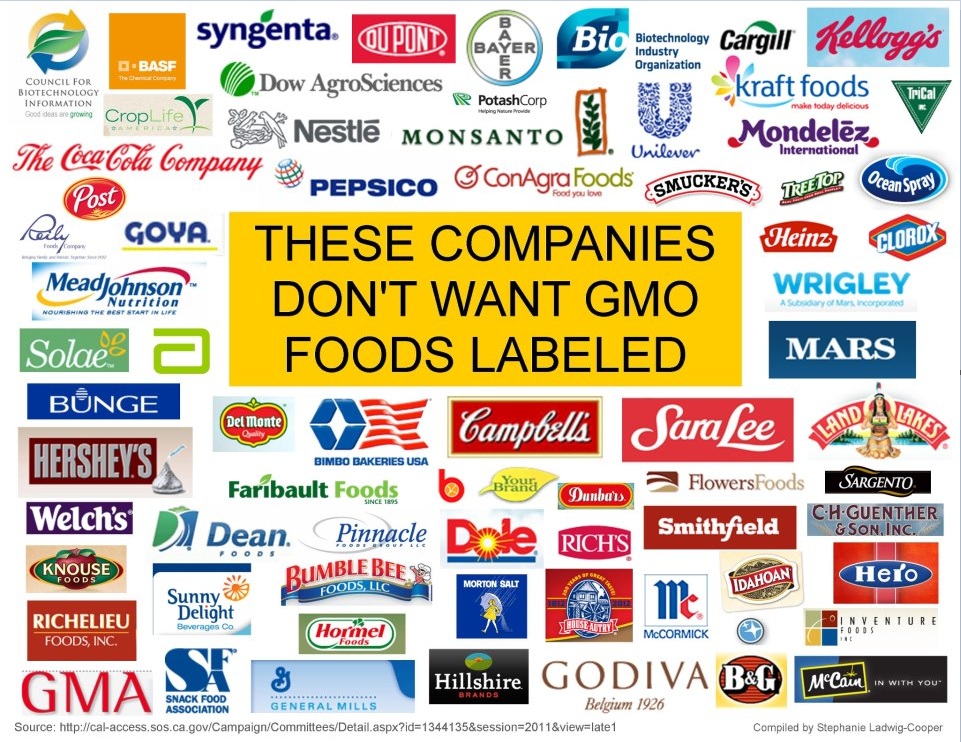
The public favors labeling of genetically engineered food, but Monsanto and the Grocery Manufacturers Association have so far been successful in preventing it. On May 8 the governor of Vermont signed a bill passed by the state legislature that requires labeling. Monsanto’s response is to sue the state of Vermont.
The opposition to labeling by agribusiness is suspicious. It creates the impression of hiding information from the public. Normally, this is not good public relations. Currently, foods are mislabeled when genetically engineered food is labeled “natural.”
Breakthroughs in science and technology allow mere humans to play God with insufficient information. The downsides of genetic engineering are unknown, and the costs could exceed the benefits. What economists term “low cost production” might turn out to be very high cost.
Neoclassical economists do not lose sleep over external costs, because they think that there is always a solution. They think that the way to deal with pollution is to price it so that the entity that most needs to pollute ends up with the right. Somehow this is thought to solve the problem of pollution. Neoclassical economists think that it is impossible to run out of resources, because they believe man-made capital is a substitute for nature’s capital. It is a fantasy world in which we become ever more productive and better off and never run out of anything.
Ecological economists see the world differently. Nature’s capital, such as mineral resources and fisheries, are being depleted, and the disposal sinks for wastes are filling up, with land, air, and water being polluted. Every act of production produces useful products and wastes. As external costs and the depletion of nature’s capital are not measured, we have no way of knowing whether an increase in output is economic or uneconomic. All we can tell is whether the costs that are measured are covered by the price of the product.
What this means is that in a full world, neoclassical economics becomes less meaningful and is less able to contribute to our understanding of problems. It cannot even tell us whether GDP is rising or falling as we do not have a measure of the full cost of production.
For further information on these issues, see my book, The Failure Of Laissez Faire Capitalism And Economic Dissolution Of The West, and the website: http://steadystate.org
Two Oregon Counties Vote to Ban Genetically Engineered Crops Despite Massive Contributions by Monsanto and Corporate Agribusiness
Wins for Community Rights in Jackson and Josephine Counties a Sign of Growing Momentum for Anti-GMO Movement
FINLAND, Minn. – On Wednesday, May 20, voters in two counties in Oregon passed ballot initiatives to ban the growing of genetically engineered crops.
Jackson County’s Measure 15-119 passed overwhelmingly, by 66 percent to 34 percent. Proponents of the ban raised only $375,000 compared with a record nearly $1 million raised by the opposition, which included agribusiness giants Monsanto, Syngenta and DuPont Pioneer.
Voters in Josephine County passed Measure 17-58 by a vote of 58 percent to 42 percent. However, the ban will be tested in court because the state passed a controversial law in October 2013, stripping counties of the right to pass GMO bans. The Jackson County measure is exempt from the state law because it had already qualified for the ballot prior to the passage of S.B. 863.
Ronnie Cummins, national director of the Organic Consumers Association (OCA), and the Organic Consumers Fund which mobilized its members and donated $50,000 to the Oregon campaigns, issued this statement today:
“The passing of these two GMO bans in Jackson and Josephine Counties should send a clear signal to politicians that citizens not only reject unregulated and hazardous GMOs, but are willing to defy the indentured politicians who pass laws, like Oregon’s S.B. 863, that take away county rights to ban GMOs and obliterate a 100-year tradition of home rule and balance of powers between counties and the state.
“This is a tremendous victory for the citizens of these two counties, and for the farmers who are determined to fight the threat of unwanted contamination by GMO crops. It is also a victory for the national anti-GMO movement as it builds momentum for similar bans in counties in other states.
“The margins of victory for these two measures also bode well for passing Oregon’s Ballot Initiative #44 in November 2014, a statewide ballot measure to require mandatory labeling of GMO foods and foods containing GMO ingredients, sold at retail.
“And finally, these victories make it clear to agribusiness giants like Monsanto and Dow that the day has come when they can no longer buy and lie their way to victory. By using the tools of democracy, such as ballot initiatives, citizens can overcome corporate and government corruption through honest campaigns, built on a foundation of truth, science and fair play.
“The OCA looks forward to helping the citizens of Josephine County defend their right to ban GMOs when they go to court to test the state’s new law, S.B. 863, and to helping the Oregon Right to Know campaign pass a strong GMO labeling law in November.”
The Organic Consumers Association (OCA) is an online and grassroots non-profit 501(c)3 public interest organization campaigning for health, justice, and sustainability. The Organic Consumers Fund is a 501(c)4 allied organization of the Organic Consumers Association, focused on grassroots lobbying and legislative action.
Just in case you’ve been living under a rock (or absorbing the limited range of carefully selected and controlled news reports from the corporate media), Monsanto is a sinister multinational with headquarters in Creve Coeur, Missouri, and it’s engaged in the production of seriously harmful chemicals and agricultural biotechnology.
It’s the largest manufacturer of products which include genetically engineered seed and herbicide glyphosate.
Apart from the genetically produced seed, they have also been known to produce chemicals such as DDT, PCBs, Agent Orange and bovine growth hormone among others. It has been given the name merchant of death by many groups that inform the sleepwalking masses about the dangers of using Monsanto products.
So let’s take a look at just 6 ways Monsanto are destroying humanity:
They produce genetically engineered seeds which are used to grow corn which is fed to cows with the intention of increasing their mass. GMO’s are harmful since they have been known to cause cancer therefore Monsanto has become a promoter of cancer.
Poisonous pesticides and other farm chemicals
They produce chemicals which are harmful and are sprayed on plants which eventually find their way on the tables of many families. These chemicals poison our body organs which eventually lead to death.
Promoters of Deforestation and desertification
Monsanto clears huge tracts of forest in order to set up their farms. This means they promote deforestation which eventually leads to desertification. As years go by with this kind of practice there will be no land to produce food which will lead to hunger and finally death.
They produce synthetic nitrogen fertilizer which when sprayed in their farms is absorbed by the soil making its way to the water table. This has poisoned over two thirds of US drinking water with nitrate poisoning. Apart from poisoning drinking water, the chemicals make their way to the oceans which has led to oceanic dead zones. Examples include the Gulf of Mexico and Chesapeake bay among others.
Wetland and Rainforest Destroyers
Monsanto model of draining wetlands and cutting down rainforests is a big promoter of destructive green house gases. Argentina is one of the victims of Monsanto’s rainforest destruction where they have planted genetically engineered soy. The destruction of the forest has led to destruction of animal and plant life that depend on the forest.
Generating new animal and human diseases
Glyphosate, one of the chemicals produced by Monsanto with the intention of killing pests has found to be a contributor to new diseases in both humans and animals. The chemical when sprayed on plants kills the useful bacteria and leads to formation of virulent pathogens which are introduced in the body when one consumes the food. These pathogens have led to infertility and miscarriages in animals and soon humans.
Russia has some of the most precious uncontaminated top soil on the planet and if it is rigorously controlled to stay GMO-free and free from chemicals its productivity would increase as Europe declines, geopolitical analyst William Engdahl told RT.
Russian PMs have pondered a draft bill outlawing GMOs. A draft bill submitted to the Russian parliament likens GMO production and distribution to terrorism. After entering the World Trade Organization, Russia was expected to allow GM food production and distribution within its market. However, in March Russia’s President Putin said the country would stay GM-free without violating its obligations to the WTO.
RT:What do you think about this latest bill in Russia’s parliament, which equates GM producers who flout the rules with terrorists. Is that a bit over the top?
William Engdahl: The language on Russian media blogs is [that] punishment for knowingly introducing GMO crops into Russia illegally should have a punishment comparable to that given to terrorists for knowingly hurting people. The direction of this is anything that stops, and puts the genie back in the bottle called genetic manipulation of plants and organisms is to the good for the future of the mankind. The comment about 20 percent of harvest increase in some GMOs is absolute rubbish. There is no long-term harvest gain that has been proven for GMO crops anywhere in the world because they are not modified to get harvest increases. So this is just soap bubbles that Monsanto, Syngenta and GMO giants are putting out to loll the public into thinking it is something good.
RT:Will this measure, if adopted, reduce the number of GM products on the market?
WE: I hope it does. I haven’t got access to the paragraphs of legislation but I think the direction that Prime Minister Medvedev indicated two-three months ago in terms of making this U-turn against GMO that seemed to have a green light after WTO. A year ago it was looking like GMO was a common thing in Russia which would be a catastrophe. I think the point is Russia has some of the most precious non-destroyed top soil on this planet and the richness of this top soil, if it is rigorously controlled to be GMO-free, to be free from chemicals, from Roundup or Atrazyne which is Syngenta’s favorite poison, and is marketed on the world markets as certified organic. Russia has a huge export market in Germany, in Western Europe, the European Union and elsewhere because there is a tremendous lack of it. So anything that Russia does to block GMO, keep in mind, the EU has not certified for commercial planting any GMO for years. There is such a great popular opposition in the EU that Monsanto, despite all the proclivities of the corrupt European Commission in Brussels to go with it, or even some people in the German government. The population is absolutely adamant here, they do not want this in their food.
RT:How can consumers be better protected from inadvertently buying genetically modified food?
WE: They can quite easily. First of all, they can do what the State of California tried, and Monsanto spent millions of dollars to block it and will try again. The State of Washington tried it and the same thing with Monsanto spending millions of dollars to create false lobbying campaigns [ensued]. The State of Vermont tried and succeeded in getting labeling on products that contain above 0.9 percent of GMO, which is similar to the EU. That is labeled on the shelves, when you buy this box of Kellogg’s Cornflakes you make sure to look and see if this is not GMO corn in my Cornflakes that my child is going to eat or is it this GMO garbage that Kellogg’s would so lovingly like to get rid of. That is one step. The other thing is for people to become informed about what we eat. Support local farmers, it is not against technology. I have seen it directly in Germany and elsewhere in Europe that properly done organic farming creates greater harvest yields than industrialized agriculture. The productivity is better, the quality is finer. The animals that are range fed, grass fed cows, chickens, they are real cows and chickens, they are not these synthetic pseudo-meat that we buy on the supermarket shelves in the big chains in Europe and in the US. So that is something that Russia has a great positive contribution to make.
William Engdahl is an award-winning geopolitical analyst and strategic risk consultant whose internationally best-selling books have been translated into thirteen foreign languages.
The issue of water fluoridation has long been a divisive one, creating a split between those who blindly trust government and those who question authority and research government claims independently. Those on the government’s side of the issue have plenty of faulty and inaccurate studies to cite while cherry-picking and highlighting equally false allegations against fluoridation to attack critics (known as the straw man argument). After decades of being misled and misinformed about water fluoridation, it seems more Americans are finally becoming aware of the facts regarding its true impact on public health, as indicated by the following excerpt from an article by Dr. Joseph Mercola reposted by Organic Consumers Association:
5 Fluoride-Free Victories to Celebrate Already in 2014
Despite compelling scientific evidence against the practice, the US still lags far behind other nations in acknowledging the mistake of water fluoridation and ending this tragic “public health” measure.
As a result, individual communities around the US have taken up the fight to end water fluoridation in their own local areas. Around the world, even more countries are also opting to go fluoride-free. The latest fluoride-free victories include:1
1. Wellington, Florida: After hours of debate and testimony from medical experts and residents, council members voted to end 14 years of fluoridation. A number of pro-fluoride dentists are unfortunately working to overturn the council’s vote, but it’s still a victory for now. FAN reported:
“Ultimately, a majority of councilors agreed that citizens shouldn’t be forced to ingest an unnecessary chemical in the public drinking water supply.”
2. Amherst County, Virginia: The Service Authority Board voted to discontinue fluoridation because of conflicting opinions on what constitutes “optimal” levels of fluoride. According to FAN, “Several Board Supervisors felt that the additive was unnecessary and a waste of resources.”
3. Woodsville, Oregon: The Woodsville City Council was considering adding fluoride to the city’s drinking water, but after polling residents found that 100% of respondents were against it. They have since ended their fluoridation discussions.
4. Sebastopol, California: City Councilors voted unanimously against fluoridation in Sonoma County because of concerns the fluoride could leach into their groundwater from surrounding communities, putting residents at risk.
5. Bantry, Ireland: Town Councilors voted unanimously for an immediate end to fluoridation throughout Ireland.
So far in 2014, it looks like the trend against water fluoridation that started in recent years is gaining speed. In 2013, fluoridation was rejected by voters in Wichita, Kansas and Portland, Oregon. Israel also announced it will end its mandatory fluoridation program, and Ireland even proposed legislation that would make water fluoridation a criminal offense!
Canada has also seen a 25 percent drop in fluoridation programs over the past five years as a result of increasing public awareness about the associated dangers, and it seems such awareness is only on the rise.
Why Are So Many People Now Against Water Fluoridation?
If you’re new to this issue, you may be wondering why so many municipalities are striking down water-fluoridation efforts. Available research clearly shows that:
Water fluoridation does not work to prevent cavities
Fluoride works when topically applied only (and even then not dramatically so)
There are unacceptable risks involved in the practice of water fluoridation
If you live in an area that fluoridates water, and you drink from the municipal water supply, you’re being exposed to a highly toxic drug-like substance every time you take a sip.
This is reckless, as you cannot control the dose ingested, or who receives it, and there’s no medical supervision. Water fluoridation clearly violates your right to informed consent as far as medical decisions go, and it may also be making future generations less intelligent across the board — there are at least 25 studies showing that fluoride reduces IQ in children!
There is not a single process in your body that requires fluoride, but swallowing this toxin has been found to damage your soft tissues (brain, kidneys, and endocrine system), as well as teeth (dental fluorosis) and bones (skeletal fluorosis). It’s also known that over time, fluoride accumulates in many areas of your body, including areas of your brain that control and alter behavior, particularly your pineal gland, hippocampus, and other limbic areas.
Reduction in nicotinic acetylcholine receptors
Damage to the hippocampus
Formation of beta-amyloid plaques (the classic brain abnormality in Alzheimer’s disease)
Reduction in lipid content
Damage to the purkinje cells
Exacerbation of lesions induced by iodine deficiency
These and other potentially harmful effects of fluoridation were recapped in a recent piece by Anna Hunt at Waking Times. She cited a new study by Stephen Peckham and Niyi Awofeso published in The Scientific World Journal which highlighted 18 dangers of water fluoridation and was prefaced by the following introduction:
Fluorine is the world’s 13th most abundant element and constitutes 0.08% of the Earth crust. It has the highest electronegativity of all elements. Fluoride is widely distributed in the environment, occurring in the air, soils, rocks, and water. Although fluoride is used industrially in a fluorine compound, the manufacture of ceramics, pesticides, aerosol propellants, refrigerants, glassware, and Teflon cookware, it is a generally unwanted byproduct of aluminium, fertilizer, and iron ore manufacture. The medicinal use of fluorides for the prevention of dental caries began in January 1945 when community water supplies in Grand Rapids, United States, were fluoridated to a level of 1 ppm as a dental caries prevention measure. However, water fluoridation remains a controversial public health measure. This paper reviews the human health effects of fluoride. The authors conclude that available evidence suggests that fluoride has a potential to cause major adverse human health problems, while having only a modest dental caries prevention effect. As part of efforts to reduce hazardous fluoride ingestion, the practice of artificial water fluoridation should be reconsidered globally, while industrial safety measures need to be tightened in order to reduce unethical discharge of fluoride compounds into the environment. Public health approaches for global dental caries reduction that do not involve systemic ingestion of fluoride are urgently needed.
Without mincing words, this new study moves right into support these assertions, offering the following indications that fluoride is not only of dubious benefit for dental health, but that it is also terrible for overall human health:
“It is widely accepted that fluoride only helps prevent dental decay by topical means—by direct action on the tooth enamel predominantly after eruption and dental plaque [16, 17]. However, it is important to note that while fluoride contributes to the remineralisation process in the enamel of the tooth surface this is not dependent on fluoride, and that fluoride’s anticaries effect is critically dependent on calcium and magnesium content of teeth enamel.”
2. Fluoride may actually make certain people more vulnerable to dental caries:
“Among young individuals with low calcium and magnesium in teeth enamel (usually due to undernutrition), fluoride ingestion and contact with teeth present histologically as hypo-calcification and/or hypoplasia, which may paradoxically make such individuals more vulnerable to dental caries [18, 19].”
3. Because of the complex nature of how dental caries develop, it is too difficult to tell if water fluoridation actually helps prevent dental caries:
“…the multiple pathways to the development of dental caries make it difficult to accurately ascertain the contribution of fluoride ingestion to dental caries prevention. Given that the action of fluoride on dental caries prevention is topical, only topical fluoride products are likely to provide optimal benefits claimed for this chemical.”
4. The history of research into ingesting fluoride as an effective means of preventing dental caries is controversial, at best:
“A survey of 55 reputable oral health specialists on the impacts of artificial water fluoridation and other preventive technologies on the decline in dental caries prevalence over the past four decades in most nations revealed that, apart from fluoridated toothpaste, there were conflicting responses on the impact of artificial water fluoridation and other fluoride-based technologies [32]. Studies focused on dental caries trends following cessation of fluoridation have produced contradictory results, in part due to study technique, availability of other fluoride sources, and consumption patterns of cariogenic foods [33, 34].”
5. Fluoride is classified as a pollutant and there is no such thing as a disease caused by fluoride deficiency.
6. Drinking fluoride in public water makes it impossible to administer a proper dose, causing a rise in toxic dental fluorosis:
“One of the key concerns about water fluoridation is the inability to control an individual’s dose of ingested fluoride which brings into question the concept of the “optimal dose.” Since the 1980s numerous studies have identified that adults and children are exceeding these agreed limits, contributing to a rapid rise in dental fluorosis—the first sign of fluoride toxicity [35–37].”
7. Mass contamination of drinking water with fluoride is toxic for children:
“In 1991, the Centers for Disease Control (CDC) in the USA measured fluoride levels and found that where water is fluoridated between 0.7 and 1.2 ppm overall fluoride, total fluoride intake for adults was between 1.58 and 6.6 mg per day while for children it was between 0.9 and 3.6 mg per day and that there was at least a sixfold variation just from water consumption alone [38].
The inability to control individual dose renders the notion of an “optimum concentration” obsolete. In the USA, a study in Iowa found that 90% of 3-month-olds consumed over their recommended upper limits, with some babies ingesting over 6 mg of fluoride daily, above what the Environmental Protection Agency and the WHO say is safe to avoid crippling skeletal fluorosis [41].
8. Fluoride may increase the risk of dental caries for malnurished children:
“Fluoride exposure has a complex relationship in relation to dental caries and may increase dental caries risk in malnourished children due to calcium depletion and enamel hypoplasia, while offering modest caries prevention in otherwise well-nourished children.”
“In a meta-analysis of 27 mostly China-based studies on fluoride and neurotoxicity, researchers from Harvard School of Public Health and China Medical University in Shenyang found strong indications that fluoride may adversely affect cognitive development in children [50].”
10. Water fluoridation may cause hypothyroidism in children:
“In a 2005 study, it was found that 47% of children living in a New Delhi neighbourhood with average water fluoride level of 4.37 ppm have evidence of clinical hypothyroidism attributable to fluoride.”
11. Fluoride consumption may actually cause bone disease:
“In some cases—where fluoride levels are very high or where there is prolonged ingestion at 2 ppm or higher, cases of skeletal fluorosis have been reported. Skeletal fluorosis is a chronic metabolic bone disease caused by ingestion or inhalation of large amounts of fluoride.”
12. As an enzyme disruptor, fluoride interferes with the body’s normal functioning in many complex ways:
“Fluoride is a known enzyme disruptor. For example, fluoride’s anticaries effect is derived in part from its ability to derange the enzymes of cariogenic bacteria [20, 21]. Fluoride can interfere by attaching itself to metal ions located at an enzyme’s active site or by forming competing hydrogen bonds at the active site which is not exclusively just on the teeth [64]. There are 66 enzymes which are affected by fluoride ingestion, including P450 oxidases, as well the enzyme which facilitates the formation of flexible enamel [65].”
13. “Chronic fluoride ingestion is commonly associated with hyperkalaemia and consequent ventricular fibrillation [70].”
14. Fluoride ingestion has been linked to cancer, although it has not yet been proven to directly cause cancer:
“There have also been a number of studies that link fluoride and cancer. More than 50 population-based studies which have examined the potential link between water fluoride levels and cancer have been reported in the medical literature. Most of these studies have not found a strong link between chronic fluoride ingestion and cancer.
However, population-based-studies strongly suggest that chronic fluoride ingestion is a possible cause of uterine cancer and bladder cancer; there may be a link with osteosarcoma—highlighted as an area where there is evidence of problems requiring further research [30, 72–74].”
“…community water fluoridation provides policy makers with important questions about medication without consent, the removal of individual choice and whether public water supplies are an appropriate delivery mechanism [75, 76]. “
16. The human body does not need fluoride to be healthy:
“One of the early controversies following the completion of the post-1945 Grand Rapids trial of water fluoridation was how fluoride ingested by humans should be classified—a nutrient, medication, or pollutant. Despite numerous studies, the essentiality of fluoride as a trace element or nutrient has not been proven and it is now widely accepted that fluoride is not essential element for human physiology [30, 78].
In an extensive review of fluoride and human health published in 2011, the European Commission’s Scientific Committee on Health and Environmental Risks concluded that fluoride is not essential for human growth and development [30].”
17. Although promoted as a medicine for tooth decay, fluoride is not regulated or controlled as a medicine:
“Although fluoride, used in artificial water fluoridation, is promoted as a medicine for preventing tooth decay, it is not subject to the strict guidelines of medicines statutes in the nations that implement artificial water fluoridation. The practice of water fluoridation is recommended as a means of preventing dental caries. Despite this very clear definition of purpose, no fluoridating country defines fluoridation of water supplies as a medicine.”
18. There are better alternatives to preventing cavities than fluoridation:
“The polarised debate on the role of ingested fluoride in dental health ignores the basic problem that dental caries is essentially the outcome of bacterial infection of teeth enamel. While it might have been excusable in the 1950s to utilise an enzyme poison such as fluoride to undesirably alter dental architecture and to kill cariogenic bacteria, a better understanding of the pathogenesis of dental caries, coupled with development of antibiotics and probiotics with strong anticariogenic effects, diminishes any major future role for fluoride in caries prevention.”
Last week, Representative Mike Pompeo (R-KS) introduced the “Safe and Accurate Food Labeling Act of 2014” (HR 4432), a brainchild of the Grocery Manufacturers Association (GMA) that would serve as a real road block to the thousands of people who have been fighting for the right to know what’s in their food. This piece of legislation would make voluntary (not mandatory) labeling for genetically engineered foods the national standard, ensure that GMOs can be ambiguously labeled as “natural,” create its own rules for non-GMO labeling and, most heinously, preempt all state efforts to require labeling of GMO foods.
We have been aware of the GMA’s plot to move into the GMO labeling policy world since Politico leaked its proposed bill language in January and then the GMA launched its “Safe and Affordable Food Coalition” in February. Unsurprisingly, the GMA found a sponsor who would support all of its original intended language in the bill, resulting in an extremely industry-friendly final version.
So, what is the GMA and why is it so powerful that congressmen do its bidding? Well, this massive trade organization represents 300 of the world’s biggest food and beverage companies as well as agribusinesses like Monsanto, Dow AgroSciences and Syngenta. The GMA and its member companies have poured over $50 million into political action committees to help block GMO labeling ballot initiatives in California and Washington state over the past two years. To illustrate the type of political power GMA is wielding with its big pockets, here’s a paragraph from Food & Water Watch’s new profile on the GMA:
“Between 2001 and 2012, the GMA political action committee donated more than $1 million to federal candidates, political parties and other campaign committees. But it is a much bigger presence roaming the halls of Congress. From 2004 to 2013, the GMA spent $38.9 million lobbying the U.S. Congress and federal officials. In 2013 alone, the GMA spent $14.3 million lobbying on food labeling, country-of-origin labeling, labeling foods with genetically engineered ingredients (commonly known as GMO labeling), food marketing to children and other regulations affecting the food and beverage industry.”
This kind of spending activity on the GMA’s part makes the food movement’s state-level efforts that much more significant. Not only does it show that grassroots organizing is working to hold elected officials accountable on food issues, but it also shows how work in the states is truly bothering the industry and impacting national policy. It gives us even more reason to keep pressuring our lawmakers to protect consumers because they want the right to know if GMOs are in their food. What consumers definitely don’t want is a voluntary labeling policy created by the very companies who have kept that information from them for 20 years.
Now is the time to stop the GMA from getting its way and fueling its own profit-driven interests. Food & Water Watch will continue to work with the grassroots movement to fight for GMO labeling around the country. You can take action by telling your members of Congress not to pass Monsanto’s dream bill. For more information on the GMA, you can view our industry profile, here.
Given the widespread use of technology and stresses caused by economic instability, it’s no surprise that more than one out of three adults in America today get less than seven hours of sleep a night and 38% reported unintentionally falling asleep during the day at least once in the past month according to a Centers for Disease Control’s Morbidity and Mortality Report. What may come as more of a surprise are results of studies which indicate just how important getting a healthy amount of sleep really is for our physical and mental well-being. According to a recent article by Dr. Joseph Mercola, risks associated with sleep deprivation include:
Reaction Time Slows: When you’re sleep-deprived, you’re not going to react as quickly as you normally would, making driving or other potentially dangerous activities, like using power tools, risky. One study even found that sleepiness behind the wheel was nearly as dangerous as drinking and driving.2
Your Cognition Suffers: Your ability to think clearly is also dampened by lack of sleep. If you’re sleep-deprived, you will have trouble retaining memories, processing information, and making decisions. This is why it’s so important to get a good night’s sleep prior to important events at work or home.
Emotions Are Heightened: As your reaction time and cognition slows, your emotions will be kicked into high gear. This means that arguments with co-workers or your spouse are likely and you’re probably going to be at fault for blowing things out of proportion.
Meanwhile, previous research has found that sleep deprivation has the same effect on your immune system as physical stress or illness,3 which may help explain why lack of sleep is tied to an increased risk of numerous chronic diseases.
In addition, getting less than seven hours of sleep or having regular interrupted and/or impaired sleep can affect hormone levels and expression of genes which can:
Increase your risk of heart disease and cancer
Harm your brain by halting new neuron production. Sleep deprivation can increase levels of corticosterone (a stress hormone), resulting in fewer new brain cells being created in your hippocampus
Contribute to a pre-diabetic, insulin-resistant state, making you feel hungry even if you’ve already eaten, which can lead to weight gain
Contribute to premature aging by interfering with your growth hormone production, normally released by your pituitary gland during deep sleep (and during certain types of exercise, such as high-intensity interval training)
A recent post at Thought Infection also highlights the importance of sleep, speculating on how it could serve as a biological compression algorithm. From the article’s conclusion:
One might think about it like a similar process that happens when a computer is put to sleep. The energetically costly RAM is compressed and dumped to the much more efficient, but also much slower hard disk. Perhaps the brain might operate in a similar way, finding the most energetically efficient means to store new memories in synaptic circuits by connecting new memories to old ones.
Taking this a little further, I think this idea has given me a little bit of insight into how biological brains function. Unlike a computer which fills up the hard drive with new information stored with (more or less) perfect fidelity, organic brains have to have some pre-existing map to connect a novel sensation both in order to make sense of it and to store the memory of it.
An apple is only an apple after you know what an apple is.
The brain does not have an unlimited tape of memory onto which to record, or an infinite supply of energy to build synapses. The brain must make due with what resources it has, and that is the genius of it. Because brains must find ways that new ideas and memories connect to old ones, we are energetically required to find new ways of thinking about the world every night. Sleep reinvents us one night at a time.
While this theory may possibly explain an important neurological function of sleep, the subjective experience of the dream state remains as shrouded in mystery as ever.
Anecdotal evidence suggests that during sleep it sometimes is not just one’s direct experiences being processed but also future experiences and experiences of loved ones, ancestors, and those of people going through traumatic events as well. In other words, in rare cases it may also be an an interconnected and non-local state of consciousness.
The following two examples were recently featured in an article reposted at Red Ice Creations:
Scene 1. Mark Twain was famous for mocking every orthodoxy and convention, including, it turns out, the conventions of space and time. As he relates the events in his diaries, Twain and his brother Henry were working on the riverboat Pennsylvania in June 1858. While they were in port in St. Louis, the writer had a dream:
In the morning, when I awoke I had been dreaming, and the dream was so vivid, so like reality, that it deceived me, and I thought it was real. In the dream I had seen Henry a corpse. He lay in a metallic burial case. He was dressed in a suit of my clothing, and on his breast lay a great bouquet of flowers, mainly white roses, with a red rose in the centre.
Twain awoke, got dressed, and prepared to go view the casket. He was walking to the house where he thought the casket lay before he realized “that there was nothing real about this—it was only a dream.”
Alas, it was not. A few weeks later, Henry was badly burned in a boiler explosion and then accidentally killed when some young doctors gave him an overdose of opium for the pain. Normally the dead were buried in a simple pine coffin, but some women had raised $60 to put Henry in a metal one. Twain explains what happened next:
When I came back and entered the dead-room Henry lay in that open case, and he was dressed in a suit of my clothing. He had borrowed it without my knowledge during our last sojourn in St. Louis; and I recognized instantly that my dream of several weeks before was here exactly reproduced, so far as these details went—and I think I missed one detail; but that one was immediately supplied, for just then an elderly lady entered the place with a large bouquet consisting mainly of white roses, and in the center of it was a red rose, and she laid it on his breast.
Who would not be permanently marked, at once inspired and haunted, by such a series of events? Who of us, if this were our dream and our brother, could honestly dismiss it as a series of coincidences? Twain could not. He was obsessed with such moments in his life, of which there were many. In 1878 he described some of them in an essay and even theorized how they worked. But he could not bring himself to publish it, as he feared “the public would treat the thing as a joke whereas I was in earnest.” He offered the essay to the North American Review on the condition that it be published anonymously. The magazine refused to do so. Finally, Twain published the article in Harper’s, in two installments: “Mental Telegraphy: A Manuscript With a History” (1891) and “Mental Telegraphy Again” (1895).
Mental telegraphy. The technological metaphor points to Twain’s conviction that such events were connected to the acts of reading and writing. Indeed, he suspected that whatever processes this mental telegraphy involved had some relationship to the sources of his literary powers. The “manuscript with a history” of the first essay’s title refers to a detailed plotline for a story about some Nevada silver mines that one day came blazing into his mind. Twain came to believe that he had received this idea from a friend 3,000 miles away through mental telegraphy.
Scene 2. The American forensic pathologist Janis Amatuzio’s book Beyond Knowing is filled with extraordinary stories of impossible things that routinely happen around death. Here is one such tale.
It began one night when Amatuzio encountered a very troubled hospital chaplain, who asked her if she knew how they had found the body of a young man recently killed in a car accident. Amatuzio replied that her records showed that the Coon Rapids Police Department had recovered the body in a frozen creek bed at 4:45 a.m.
“No,” the man replied. “Do you know how they really found him?” The chaplain then explained how he had spoken with the dead man’s wife, who related a vivid dream she’d had that night of her husband standing next to her bed, apologizing and explaining that he had been in a car accident, and that his car was in a ditch where it could not be seen from the road. She awoke immediately, at 4:20, and called the police to tell them that her husband had been in a car accident not far from their home, and that his car was in a ravine that could not be seen from the road. They recovered the body 20 minutes later.
Neil Kramer recently posted an interesting piece on hypnosis, Neural Linguistic Programing and social control. He began his essay with an analysis of the tricks of illusionist Darren Brown. While seemingly magic, they’re actually a skillful use of various psychological reading and manipulation techniques which exploit subconscious and unconscious processes (ie. mirroring, eye accessing cues, cold reading and NLP). To explain some of the psychological mechanisms behind such “Jedi mind tricks”, he provides the following description of a hypnotic handshake:
Many actions are learned and operate as a single chunk of behavior: shaking hands and tying shoelaces being two good examples. However, if the behavior is diverted or frozen midway, the person literally has no mental space for this. He is stopped in the middle of unconsciously executing a behavior without a corresponding pattern. The mind crashes, suspending itself in trance until either something happens to give a new direction, or it reboots itself. A skilled hypnotist uses that momentary confusion and suspension of normal processes to induce a TDS trance.
By interrupting the pattern of a normal handshake in a particular manner, the hypnotist causes the subject to wonder what is going on. If the handshake continues to develop in a way which is out-of-keeping with expectations, a simple, non-verbal trance is created, which may then be reinforced by the hypnotist. All these responses happen naturally and automatically without telling the subject to consciously focus on an idea.
Also intriguing and relevant to the current moment is Kramer’s analysis of how principles of hypnosis are used by corporate media as a tool for mass control and manipulation:
Confusion is a tool used by hypnotists to put the subject into an altered state. The slumbering brain state induced by injudiciously watching TV and surfing the net achieves exactly the same thing. This is how the Empire implants its messages deep into the minds of the great unwashed masses. To the unconscious observer, the messages are not properly perceived at the point of entry. They are nevertheless permanently recorded in precise detail and influence the individual emotionally, intellectually, and physically with their latent memes.
For this to have impact on a mass scale, people need to also believe that they are finite, separate, the world happens “out there”, and they are essentially powerless. Once this is achieved, the covert messaging is much more readily absorbed. The isolated little human seeks comfort and reassurance wherever he can find it. If the mind is suitably controlled, the thrill of a new gadget, the delight of a new snack food, the consolation of a new TV drama, and the platitudes of government, may constitute all the solace required to get through another day. The prescribed messaging sinks in and no-one is any the wiser.
This deception can be swiftly dismantled with one simple mental gear shift: for the common man to cease regarding his mind as some plain old fiddle churning out the tunes of unseen dubious impresarios – and instead to recognize it as an exquisite Stradivarius violin that is at its greatest when playing the authentic and beautiful music of his own making.
Though it was released late last year, I just recently found this provocative speech from Benjamin Bratton which addresses problems of the TED talks format ironically delivered as a TED talk (hat tip to 21st Century Wire).
Many of the issues brought up by Bratton have previously been addressed through satire in various Onion Talks.
Despite its problems, in defense of TED it is to their credit that they allowed a forum for an anti-TED presentation. There have also been a few thought provoking TED talks that I felt did not fall into the trap of over-simplification and yet conveyed ideas elegantly and efficiently. Unfortunately, some of those have been censored for ideological reasons, including this must-see talk by Nick Hanauer about economic inequality:
Last month, NBC and a number of other corporate news sites reported on cluster of extremely rare and severe birth defects in Yakima, Benton and Franklin counties in Washington State. The reports stated there have been over two dozen cases of anencephaly (a condition which blocks the development of parts of the brain and skull) and spina bifida (a related condition in which the neural tube fails to close properly). The national average rate of anencephaly is 2.1 per 10,000. In Yakima, Benton and Franklin counties between 2010 and 2013 the average was 8.4 per 10,000.
In the NBC coverage of the story, the reporter quoted CDC health scientist Jim Kucik, who claimed “A group of birth defects can appear to be related, when it’s actually just coincidence”. Other possibilities mentioned in the article included: lack of folic acid, complications related to obesity and diabetes, and exposure to fumonisins, grain molds and/or pesticides. Surprisingly, and suspiciously (especially for NBC which is partly owned by GE, a nuclear power manufacturer), there was no mention made of the fact that anencephaly was one of the most common birth defects among the offspring of radiation-poisoned survivors of the Hiroshima and Nagasaki atomic bomb explosions (see: Radiation Effects Research Foundation), and that the Yakima-Benton-Franklin Tri-Cities area happens to be near the Hanford Nuclear Plant.
In 2012 it was revealed that a giant double-walled storage tank containing radioactive materials was leaking. Exactly how much radioactive waste was released into the environment and for how long was never clarified. A more recent AP article analyzed (possibly leaked) new documents that showed “…subsequent surveys of the other double-walled tanks performed for the U.S. Department of Energy by one of its Hanford contractors found at least six shared defects with the leaking tank that could lead to future leaks”. Similar concerns about the storage of nuclear waste and the threat of leaks arose last month in New Mexico when 17 workers at an underground nuclear dump in New Mexico were exposed to radiation. But the situation at Hanford is particularly serious because it stores about two-thirds of the nation’s high-level radioactive waste. Authorities are so concerned about information about its dangers getting out, at least two Hanford whistleblowers have recently been fired.
If the birth defects are in fact a result of radioactive groundwater contamination from Hanford, it wouldn’t be the first time residents living near the plant have been poisoned. In December of 1949 they were exposed to between 7,000 and 12,000 curies of airborne iodine-131 during Operation Green Run (see: Toxipedia.org). The result was numerous cases of down-winder residents being afflicted with thyroid disorders, many of whom shared their experiences through public comment letters to the CDC for a thyroid disease study in 1999.








 After the Crash