Quantum Strangeness & Becoming Oneself

By toomajj

Source: NOEMAYA

Our classical world is composed of mutually exclusive alternatives: Everything is either something or something else; it is a this or a that, though we may be unaware of these identities due to ignorance. A color is always either red or not red; two socks in a closed box are either a pair or not a pair whether we look inside or not. There is never a middle case in the classical world.

Quantum world, however, is quite different. Besides the two/many mutually exclusive alternatives everything in between too exists. A color is at once all colors until we pick one color by looking at it! A particle has no particular place until we force it to pick a place by measuring its place!

It turns out that mutually exclusive alternatives, our classical world, is only a small and often filtered portion of the underlying reality. Which reality we pick is determined by which reality we are inclined to pick, namely the reality that we desire.

The mutually exclusive alternatives of the classical world constitute a space of all possibilities existing at once, that is, a state of pure potentiality.

The logical principle that collapses in the quantum world is the principle of identity which says “Everything is itself.” Not anymore: Everything is both itself and not-itself until we make it into something that it is. In the quantum realm this new peculiarity is translated into the indistinguishability of identical particles. Quantum particles don’t have a history any more; they don’t have a memory or identity. They can at once choose to turn out at the other corner of the universe without being subject to Einstein’s principles of relativity. In fact, entanglement is a consequence of particles lacking fixed identities: No two electrons can be distinguished in principle.

Identity is a construct that we ourselves carry on our shoulders; it has no substantial reality; it is just like a name we are attached to. For us to be our ideal person we only need to be it; that is it. Actions don’t make people; it is people who make actions.

Data and census don’t determine people’s behavior; it is people who determine data and census.

You should not think twice about what you want to be, its chances, whether it is possible or not, or what the data or others say. You determine data and others by what and who you choose to be. Then choose to be your own idol and hero.

You are what you consider yourself to be.

The Birth of the Time-Motion Human

QuantimetricSelfSensingPrototypeMannApparatus

By Dale Lately

Source: The Baffler

In a darkened room, a woman lies watched by an infra-red camera as she sleeps. It monitors her breathing, her movements, the flicker of her eyelids. Some hours later it stings her with a painful electric shock. She wakes, tumbles out of bed and into the restroom, whereupon a chip installed in her toothbrush tracks her arm movements. She’s photographed, silently, every thirty seconds. As she sets off in the morning her location is logged and data is streamed on the steps she takes. Her pulse and calorie count are recorded and sent to unseen observers. She has a dog at her side. The dog’s data is logged as well.

Such a tableau would be the envy of any futuristic dictatorship. In fact, the devices outlined above are all available on the consumer market now, for voluntary use. The impetus towards tracking our lives with smartphones, apps and stats represents a massive growth area into which companies like Jawbone, MyFitnessPal, RunKeeper, Runtastic, MapMyRun, Foodzy, GymPact, and Fitocracy are flooding. Alongside the Nike+ Fuelband, there’s the popular Fitbit Flex, a wristband that counts the steps you take by day and the number of times you stir in your sleep. There are smart cups to track what you drink and wristbands programmed to give you electric shocks for not achieving your goals. There’s even a “Fitbit for your vagina” in the form of the KGoal Smart Kegel Trainer—a Kickstarter project designed to track kegels, exercises for women’s pelvic floor muscles to improve childbirth and continence, and for helping them to achieve a better “clench strength” via Bluetooth.

With all this biofeedback now available on our phones, the act of walking, living and breathing can—at least to the “datasexuals” who embrace it—be an ongoing project with limitless potential for improvement. But might such potential also lead to a kind of “Taylorism within”? Applying scientific management to twentieth century business created a workforce optimized for maximum efficiency. Likewise, life-tracking is encouraging us to internalize this dream by optimizing ourselves. Rather than a tool for liberation, we’re using the tech, in other words, to tune our lives for maximum “productivity.”

Perhaps none of this should seem surprising for a consumer society that drives on anxiety. If bad breath had to be invented as a disease mouthwash would help to cure a century ago, now the Quantified Self movement suggests we must live in permanent beta, to aim not just at maintaining ourselves but to become “better than well.” And so, Dave Allen’s Getting Things Done and websites like Lifehacker help to turn our lives into a series of sanctioned tasks and goals, where one must carry a “Surprise Journal” to find areas for self-improvement in one’s life, and sleep comes in the form of “power” naps. There’s the Lumo Back, a gizmo that monitors the tricky process of sitting in a chair, while the Narrative wearable camera snaps your life twice a minute. Time management lessons are now available for kids, while the iPotty seems to give toddlers the message that they shouldn’t take their eyes off a screen even when satisfying the most basic of human needs.

Silicon Valley, naturally, is more than happy to export the mantra of ongoing product optimization to our bodies: life-hacking fanatics talk of “upgrades” and “body hacks,” with often obsessive results. In a Financial Times article that marked a mainstream recognition of the movement, Tim Ferriss–author of The 4-Hour Body–claimed that he could teach people how to lose weight without exercising, work on two hours’ sleep, and have a fifteen-minute orgasm, while bio-hacker Dave Asprey was adamant that he’s made himself twenty years younger and forty IQ points smarter through life-tracking and smart pills (“I’ve rewired my brain,” he said). All of this task management can become a considerable task in itself, leading to the piling up of Catch 22 ironies—like the fact that developers are now working on smartphone apps to solve the problem of people spending too much time on their smartphones.

Luckily, some are questioning the use of intimate monitoring devices in our lives. The information asymmetry provided by the emergent “Internet of Things” may create a class of uninsurable people, while ”digital Taylorism”—the tracking and tagging of workers like cattle—has been roundly criticized as it has begun to emerge at companies like Amazon. What’s disquieting about the popularization of life-tracking is the voluntary desire to become “time-motion humans,” to subject ourselves to a self-imposed surveillance state. “Track everything. Track your entire day—wherever you go,” says the website for the LumoBack. “VESSYL AUTOMATICALLY KNOWS AND TRACKS EVERYTHING YOU DRINK,” the Vessyl “smart mug” warns us in stark capitals. And once we’ve volunteered for this intimate biological scrutiny, we’re keen to publicize the results—using tools like the Withings scale, which threatens to broadcast our weight gains to our Twitter followers as “encouragement.” Self-Improvement Macht Frei.

Since the invention of the forceps we’ve been introducing machinery into our bodies to improve our lives (the aforementioned KGoal is actually based on a biofeedback device from the 1940s by Dr. Arnold Kegel), and undoubtedly many of these trackers are helping to make people healthier. But life tracking also comes from a certain ideological background, one that denigrates macro-interventions in our lives (nationalized health care) in favor of individual micro-solutionism (becoming our own gym instructors and fitness trainers).

We’re living in an entrepreneurial model of humanity, a vision of human beings as start-ups, where unfitness or obesity are viewed as “bugs” to be fixed rather than as products of an economy based on long hours and precarious work. Daily exercise has always been an individual responsibility, but sharing our biofeedback via social media encourages people to compete like businesses, vying for better health scores with the personal data that makes us special. (Flex boasts that it reflects “your stats, not any average Joe’s.”) Here we can all be Superman—“Join over 141,000 other people who want to discover their inner superhero,” urges website Superheroyou—while, back in the complex, unquantifiable real world, we often struggle to maintain control over the most basic facts of our finances and job prospects.

The Quantified Self literature is full of such fantasizing. It all treats the body as a fun challenge, a puzzle to be solved. We see this in the current trend towards adding game-like features to the process of life tracking, which leads to some quite startlingly intimate results (“Spreadsheets,” an app that promises to gamify your sex life, has the user get on the bed and talk dirty to a computer). Even antenatal workouts aren’t immune: the KGoal promises gamification in forthcoming product updates for those who fancy comparing their pelvic thrust scores to those of their peers.

The friendly rivalry that has always been a part of amateur fitness starts to look less inspiring, and more controlling, when it’s built into the architecture of smartphones and social media. It’s more like a crowd-sourced version of what philosopher Michel Foucault termed “Biopower,” the control over our bodies wielded by states and their institutions. But in this version, it’s not the institutions; we control ourselves, and each other.

As more and more aspects of our lives are seen as legitimate targets for intrusion by technology, the gaze inevitably falls on the newly born. Start-ups like Sproutling, Owlet, and Mimo are springing up to replace old-fashioned baby monitors with comprehensive, round-the-clock surveillance (temperature, pulse, breathing, position, room ambience) as well as all the attendant data crunching. These infants may be the first humans to grow up entirely in the lens of machines, with the process of rearing having been refashioned as a high-tech, high-maintenance project, requiring endless inputs from both parent and child alike. They will be the first “time-motion babies”: faster, happier, more productive, in the words of Radiohead’s Ok Computer.

Will they really be happier, versed as they will be, since birth, in the techniques of maximizing their sleep, optimizing their nutrients, and tracking the number of steps they walk? It seems doubtful, but then, it’s impossible to really tell when we talk about happiness—even Silicon Valley hasn’t worked out how to put a number on that.


Dale Lately writes about culture and communications and has contributed to the Guardian, 3:AM Magazine, OpenDemocracy, Litro and Pop Matters. His regular musings can be found at @dalelately and www.dalelately.blogspot.com.

Franco Berardi on the Digital Colonization of Human Experience

rupertmurdock-digital-immigrant

By Franco Berardi

Source: Adbusters

The Spanish colonization of Mesoamerica was essentially a process of symbolic and cultural submission.

The “superiority” 
of the colonizers lay on the operational effectiveness of their technical production. The colonization destroyed the cultural environment in which indigenous communities had been living for centuries: the alphabetic technology, the power of the written word overwhelmed, jeopardized and finally superseded the indigenous cultures. The conquistadors re-coded the cultural universe of nowadays Mexico and Central America.

Before the arrival of the Spanish invaders Malinche (Malinalli in Nahuatl language, Marina for the Spaniards), the daughter
 of a noble Aztec family, was given away as 
a slave to passing traders after her father died and her mother remarried. By the time Cortés arrived, she had learned the Mayan dialects spoken in the Yucatan while still understanding Nahuatl, the language of the Aztecs. As a youth she was given as tribute again, this time to the invaders.

She became the lover of Cortés and accompanied him as interpreter. She translated the words exchanged by Cortés and Moctezuma, king of the Aztec population of Tenochtitlan, and she translated the conqueror’s words when he met crowds of indigenous persons. She translated for Nahuatl-speaking people the words of Christian conquerors and of Christian priests. The Christian message melted with pre-colonisation mythologies, and the modern Mexican culture emerged. She and Cortés had a child, Martín, the first Mexican. She betrayed her own people by linking with the invaders. By the moral point of view, however, she owed nothing to her own people who had sold her into slavery, and treated her as a servant. She betrayed the conquerors, too, though they did not realize it as such.

Malinche is the ultimate symbol of the end of a world, and also the symbol of the formation of a new semiotic and symbolic space. Only when you are able to see the collapse as the end of a world, can a new world be imagined. Only when you are free from hope (which is the worst enemy of intelligence) can you start seeing a new horizon of possibility. This is the lesson that Malinche is teaching us.

DEMOCRACY

On 31 October 2011, George Papandreou announced his government’s intentions to hold a referendum for the acceptance of the terms of a Eurozone bailout deal. He wanted the Greek people to decide if the diktat of the financial class that was strangling Greek society would be accepted or rejected. Overnight, the elected Prime Minister of Greece was obliged to resign. In the very place where it was invented and named twenty-five centuries ago, democracy was finally cancelled. It will never again come to life. Financial abstraction has swallowed the destiny of billions of people. European workers’ salaries have been halved in the last ten years and unemployment and precariousness are on the rise. Meanwhile, profits skyrocket.

WAR

The Eurasian continent is heading toward a proliferation of fragmentary conflict. At the same time, the infinite war launched by Cheney and Bush has paved the way to the establishment of the Caliphate. In Japan, the Prime Minister travels the world looking for allies against China. In India, a racist mass murderer (neoliberal of course) has been elected Prime Minister. In Europe, a Euro-Russian war is in the making at the Ukrainian border. In Ferguson, Missouri, another racialized killing reveals the American police state and the poverty industrial complex — two million homeless in the US and counting. In Gaza, Israel bombards the world’s largest open air prison and blames the victims, most of them children, for dying while the world looks on. In Northern Africa, Western powers prepare for the next season of Gaddafi blowback. In Liberia, Ebola fans the flames of civil and regional war, one bleeding eyeball at a time. In Mexico, a momentary silence shrouds the bloodiest drug war humanity has ever known, with cartels ranking among the wealthiest corporations.

While capitalism will continue to thrive thanks to massive slavery and eco-catastrophe, the next 20 years will be marked by the clash between financial abstraction and biofascism. A social, cognitive breakdown is estranging the masses from the body, so the decerebrated body is taking the form of aggression. Those who have been lost in the competition react under the banners of aggressive identification. We can even see fascism revived by the vengeful spirit of the dispossessed.

BIO-FINANCIAL POWER

Nation states are over, stripped by the global machine
 of finance, computation and all-pervading behavioral Big Data algorithms. Global corporations are replacing nation states as holders of power. We now embrace the first stages of the automation of mind, language and emotions … the architecture of bio-financial power. Power, in fact, is no longer political or military. It is based more and more on the penetration of techno-linguistic automatisms into the sphere of language. Soon, life will be based on the automation of cognitive activity. Who cares if the US military machine is running on empty because of Bush’s self-defeating strategy — it’s a remnant of geopolitical thinking now dead.

THE CIRCLE

Mediocre as it is, Dave Eggers’s novel 
The Circle is a metaphor for the relation between technology, communication, emotion and power. “The Circle” is the name of the most powerful corporation 
in the world, a sort of conglomerate of Google, Facebook, Paypal and YouTube. Three men lead the company: Stockton 
is a financial shark, Bayley is a utopian and Ty Gospodinov is the project’s hidden mastermind.

The main character of the book is Mae, a young woman hired by The Circle during “the Completion,” the final phase in the implementation of TrueYou, a program intended to enforce the recording of every instant of life for pervasive, ceaseless sharing. Mae becomes the corporation’s spokesperson, the face that appears every day on the infinite channels of The Circle’s television network — the ambassador of the new credo.

The Circle is all about the utter
 capture of human attention: ceaseless communication, mandatory friendliness and creation of a new neediness — the obsessive need to express and share. One may remark that Eggers is simply re-enacting Orwell more than 60 years after the publishing of 1984. That’s true, but in the final pages of the novel, Eggers goes further than Orwell, when Ty exposes the transhuman potency of the totalitarian nightmare.

In the last scene of the novel, the inventor and founder of The Circle manages to covertly meet Mae, the newbie seducing
 the global audience. He has lost control of his own creature, the project he originally conceived, and is deprived of all power in its unstoppable self–deployment.

“I did not intend any of this to happen. And it’s moving so fast. I didn’t picture a world where Circle membership was mandatory, where all government and all life was channeled through one network … there used to be the option of opting out. But now that’s over. Completion is the end. We are closing the circle around everyone. It’s a totalitarian nightmare.”

The automaton cannot be stopped, as even the creator himself becomes overpowered by his own invention: the circle of continuous attention, the circle of perfect transparence of everybody to everybody, the circle of total power and of total impotence.

PLEASURE, AFFECTION AND EMPATHY

At the beginning of the 21st century we are in a position that is similar to the position of Malinche: the conqueror is here, peaceful or aggressive, functionally superior, unattainable, incomprehensible. The bio-info automaton is taking shape from the connection between electronic machines, digital languages and minds formatted in such a way to comply with the code. The automaton’s flow of enunciation emanates a connective world that the conjunctive codes cannot interpret, a world that is symbolically incompatible with the social civilization that was the outcome of five centuries of Humanism, Enlightenment and Socialism.

The automaton is the reification of the networked cognitive activity of millions of semio-workers around the globe. Only if they become compatible with the code, the program, can semio-workers enter in the process of networking.

This implies the de-activation of old, subconsciously engrained, modes of communication and perception (compassion, empathy, solidarity, ambiguousness and irony), paving the way to the assimilation of the conscious organism with the digital automaton.

Will the general intellect be able to disentangle itself from the automaton? Can consciousness act on neural evolution? Will pleasure, affection, empathy find a way to re-emerge? Will we translate into human language the connective language of the automated meaning-making machine buzzing and buzzing in our heads?

These are questions that only 
Malinche can answer, opening to the incomprehensible other, betraying her people and reinventing language in order to express what can not be said.

—Franco “Bifo” Berardi is an Italian Marxist theorist and activist in the autonomist tradition. He writes about the condition of media, mental breakdown
 and information technology within post-industrial capitalism. His next book, Heroes, dedicated to the suicidal wave provoked by financial nihilism, will be out in the first months of 2015.

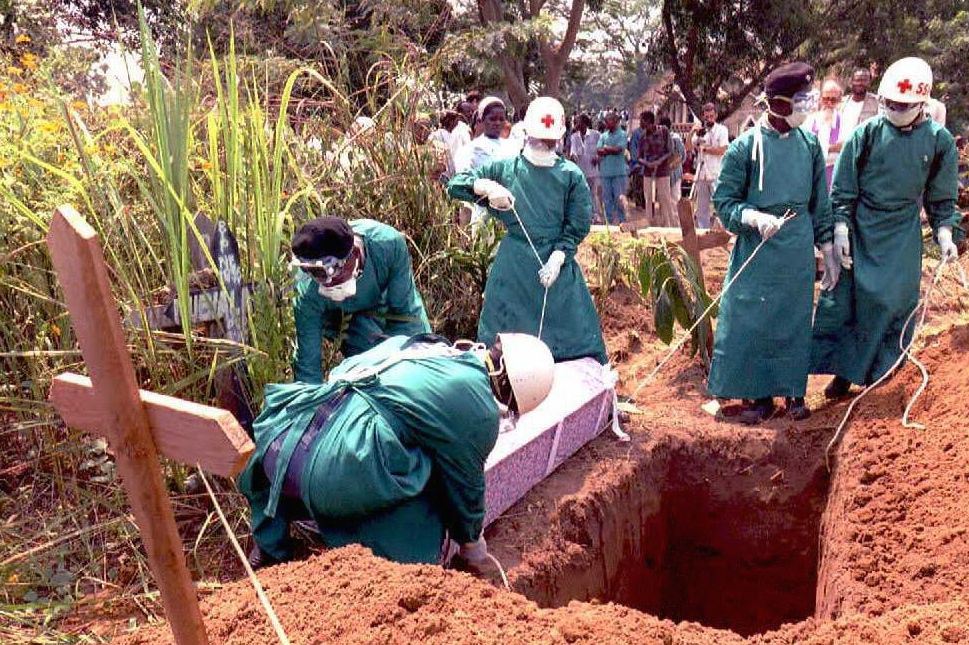
Privatized Ebola

Red Cross workers burry 14 May Italian nun Dinaros

By Margaret Kimberly

Source: Black Agenda Report

“The world of private dollars played a role in consigning thousands of people to death.”

Sierra Leone has waved the white flag in the face of Ebola Virus Disease (EVD). Its meager infrastructure has buckled under the onslaught of a disease which could have been curtailed. The announcement that infected patients will be treated at home because there is no longer the capacity to treat them in hospitals is a surrender which did not have to happen. Not only did Europe and the United States turn a blind eye to sick and dying Africans but they did so with the help of an unlikely perpetrator.

The World Health Organization is “the directing and coordinating authority for health within the United Nations system.” Its very name implies that it takes direction from and serves the needs of people all over the world but the truth is quite different. The largest contributor to the WHO budget is not a government. It is the Bill and Melinda Gates Foundation which provides more funding than either the United States or the United Kingdom. WHO actions and priorities are no longer the result of the consensus of the world’s people but top down decision making from wealthy philanthropists.

The Bill and Melinda Gates Foundation may appear to be a savior when it provides $300 million to the WHO budget, but those dollars come with strings attached. WHO director general Dr. Margaret Chan admitted as much when she said, “My budget [is] highly earmarked, so it is driven by what I call donor interests.” Instead of being on the front line when a communicable disease crisis appears, it spends its time administering what Gates and his team have determined is best.

The Ebola horror continues as it has for the last ten months in Guinea, Liberia and Sierra Leone. The cruelty of the world’s lack of concern for Africa and all Africans in the diaspora was evident by the inaction of nations and organizations that are supposed to respond in times of emergencies. While African governments and aid organizations sounded the alarm the WHO did little because its donor driven process militates against it. The world of private dollars played a role in consigning thousands of people to death.

Critics of the Gates Foundation appeared long before this current Ebola outbreak. In 2008 the WHO’s malaria chief, Dr. Arata Kochi, complained about the conflicts of interest created by the foundation. In an internal memo leaked to the New York Times he complained that the world’s top malaria researchers were “locked up in a ‘cartel’ with their own research funding being linked to those of others within the group.” In other words, the standards of independent peer reviewed research were cast aside in order to please the funder.

Private philanthropy is inherently undemocratic. It is a top down driven process in which the wealthy individual tells the recipient what they will and will not do. This is a problematic system for charities of all kinds and is disastrous where the health of world’s people is concerned. Health care should be a human right, not a charity, and the world’s governments should determine how funds to protect that right are spent. One critic put it very pointedly. “…the Gates Foundation, Bill & Melinda Gates, do not believe in the public sector, they do not believe in a democratic, publically owned, publically accountable system.”

There is little wonder why the Ebola outbreak caught the WHO so flat footed as they spent months making mealy mouthed statements but never coordinating an effective response. The Gates foundation is the WHO boss, not governments, and if they weren’t demanding action, then the desperate people affected by Ebola weren’t going to get any.

Privatization of public resources is a worldwide scourge. Education, pensions, water, and transportation are being taken out of the hands of the public and given to rich people and corporations. The Ebola crisis is symptomatic of so many others which go unaddressed or improperly addressed because no one wants to bite the hands that do the feeding.

The Bill and Melinda Gates Foundation has pledged an additional $50 million to fight the current Ebola epidemic but that too is problematic, as Director General Chan describes. “When there’s an event, we have money. Then after that, the money stops coming in, then all the staff you recruited to do the response, you have to terminate their contracts.” The WHO should not be lurching from crisis to crisis, SARS, MERS, or H1N1 influenza based on the whims of philanthropy. The principles of public health should be carried out by knowledgeable medical professionals who are not dependent upon rich people for their jobs.

The Gates are not alone in using their deep pockets to confound what should be publicly held responsibilities. Facebook founder Mark Zuckerberg announced that he was contributing $25 million to fight Ebola. His donation will go to the Centers for Disease Control Foundation. Most Americans are probably unaware that such a foundation even exists. Yet there it is, run by a mostly corporate board which will inevitably interfere with the public good. The WHO and its inability to coordinate the fight against Ebola tells us that public health is just that, public. If the CDC response to Ebola in the United States fails it may be because it falls prey to the false siren song of giving private interests control of the people’s resources and responsibilities.


Margaret Kimberley’s Freedom Rider column appears weekly in BAR, and is widely reprinted elsewhere. She maintains a frequently updated blog as well as at http://freedomrider.blogspot.com. Ms. Kimberley lives in New York City, and can be reached via e-Mail at Margaret.Kimberley(at)BlackAgendaReport.com.

10 Things You Didn’t Know About the History of Marijuana

Cannabis_sativa_Koehler_drawing

By Keri Blakinger

Source: Waking Times

Fancy yourself a connoisseur of all things weed? Then see whether this trip from ancient China to modern Alaska takes you anywhere unexpected.

What do Sarah Palin, Barack Obama, Justin Bieber, Maya Angelou and well over 100 million Americans all have in common? They’ve all smoked pot. Throughout its history, marijuana has attracted plenty of unexpected users and proponents. And much of the history of greenery is now familiar to us—thanks to History Channel specials, the burgeoning legalization movement and the popularity of anti-pot propaganda films like Reefer Madness. But even if you’re intimately familiar with the plant in all its forms, we’re willing to wager that some of these facts will surprise you.

1. The first known potheads lived in ancient China, circa 2,727 BC. Emperor Shen Nung helpfully compiled an encyclopedic list of drugs and their uses, which includes “ma,” or cannabis. But ancient Chinese weed consumption is indicated by more than just written records: Six years ago, archaeologists on a dig in the Gobi Desert found the world’s oldest pot stash in the grave of a shaman of the Gushi tribe. The purpose of the cannabis was easily identified because the male plant parts, which are less psychoactive, had been removed.

The Chinese certainly weren’t the only ancient culture to enjoy toking. The Greeks and Romans used marijuana, as did the citizens of the Islamic empires. In 1545, Spanish conquistadors introduced it to the New World when they began planting cannabis seed in Chile to be used for fiber.

2. You probably heard that a bunch of the Founding Fathers grew weed, but did you know the details? Technically, you can’t really classify them as pot farmers because they were growing hemp, which is not the same cannabis variety that you’ll find in a joint. Hemp and pot are the same species—cannabis sativa—but the hemp variety has a lower THC content and was useful instead as a source of fiber for those distinguished dudes’ duds.

But debate continues about whether the Founding Fathers actually smoked cannabis in addition to growing it. While many traditional sources say there’s no evidence of it, other, less buttoned-down ones—including, predictably, High Times—contend that there is.

One factor that muddies the water and the Internet is an oft-repeated Thomas Jefferson “quote” that experts agree is not legit. Although he was a hemp farmer, Thomas Jefferson never said: “Some of my finest hours have been spent sitting on my back veranda, smoking hemp and observing as far as my eye can see.”

Admittedly, that’s a pretty difficult image to forget.

3. Hashish, which is a compressed or purified form of pot resin, became faddish in the mid-1800s, as a result of its prominence in popular novels of the era, including two classics: The Count of Monte Cristo and Arabian Nights, an early English translation of One Thousand and One Nights.

In one scene fit to make any DARE instructor shudder, the Count of Monte Cristo virtually coerces another character into a mind-bending hashish adventure, urging, “Taste the hashish, guest, taste the hashish!”

Arabian Nights meanwhile contains multiple references to hashish, including the story “The Tale of the Hashish Eater.” Both Monte Cristo and Arabian Nights found wide audiences due to their exotic settings, foreign cultures and adventure plots that heightened the allure of the drug described on the pages. Contemporary readers who would never had the opportunity to go Persia could at least cop a little bit of Persia off seafaring vessels from foreign ports.

4. Pot’s reputation began to go south when the first English-language newspaper started in Mexico in the 1890sSensationalized stories of marijuana-induced violence gave the drug a bad rap, although pot didn’t really hit the US until after the Mexican Revolution in 1910, when a flood of Mexican immigrants moved north, bringing their favorite weed.

US groups began spreading stories of violence induced by the drug, playing on anti-immigrant sentiment, and referring to the drug by the Mexican-sounding name “marijuana.” This highly racialized propaganda led to widespread fear of the drug, which grew into a panic in the early 1930s when government research “determined” that marijuana-induced criminal acts were “primarily committed by ‘racially inferior’ or underclass communities.”

Interestingly, some of the accounts of violence and crime may not have been entirely fabricated. Just as the myth of the unicorn may have been based on early and inaccurate descriptions of the rhinoceros, the tales may have partly been the result of some confusion regarding plant names. Some media stories of the era conflated marijuana with locoweed, a type of poisonous plant. So it’s just possible that some of the horror stories held a grain of truth—relating to a completely different plant.

5. There is no consensus about where the word “marijuana” came from. The word sounds like a Spanish language cognate, but some etymologists trace its origins to China or India. The plant itself originated in Central Asia, and China and India were the first two regions to begin cultivating it.

One theory is that Chinese immigrants brought the phrase ma ren hua—which translates more or less as “hemp seed flowers”—to Mexico, where it became Spanishized into “marijuana.” Another theory is that Angolan slaves brought the Bantu word for cannabis—ma’kaña—to the Americas via Brazil and Spanish-speakers later adapted it. Yet another theory traces the word back to the Semitic root mrr.

Whatever its origins, there is some agreement that the first recorded use of a similar term was in a feature called “The American Congo” published in Scribner’s Magazine in 1894. In the article, author John G. Burke used the word “mariguan” to refer to a species of plant included in his description of the flora on the banks of the Rio Grande River between Texas and Mexico.

6.  But we do know that the term “pot” entered the lexicon in the 1930s as a shortened form of the Spanish potiguaya, an alcoholic drink in which cannabis buds have been steeped. A literal translation of potiguaya or potacion de guaya is “the drink of grief.”

Other terms are also far easier than “marijuana” to trace. “Ganja,” for example, likely entered the English lexicon in the 1800s when it was borrowed from a similar Hindi word. While words like pot and ganja endured, other terms for cannabis—such as “gage” (17th-century word for a pipe)  and “muggles” (used in the 1920s by the New Orleans jazz crowd)—have sadly fallen by the wayside.

7. Henry Ford experimented with the invention of a car that was possibly partially made of hemp. Some pro-pot sites claim that Ford actually developed a hemp-based automobile, but the evidence suggests that they are blowing smoke.

In the early 1940s, Ford developed a plastic car intended to be a lighter, stronger and more affordable alternative to traditional metal vehicles. Newspaper articles stated that the new car was a combination of resin binder and cellulose fiber supposedly drawn from pine fiber, hemp, soybean and ramie. However, The Henry Ford, a museum in Michigan, says that the exact ingredients for the car’s recipe have been lost, so they can’t confirm that hemp was in the mix.

Whether or not Ford’s car contained hemp, current scientists have apparently drawn inspiration from the concept as they work to develop cars made of plant fibers such as hemp and elephant grass.

8. Marijuana was initially criminalized by the federal government in an indirect, de facto way: a 1937 tax act. The act set such high taxes on the purchase of weed that it discouraged people from going through the proper legal channels. And because arrest was the penalty for non-compliance, the tax act essentially criminalized marijuana possession.

In 1969, the act was ruled unconstitutional because paying the federal tax required admitting to the possession of something already made illegal by some state laws—and thus violated the right against self-incrimination spelled out in the Fifth Amendment. The following year the law was repealed and replaced with a measure that fully criminalized marijuana. Prior to the federal bans, though, many states had adopted the Uniform Narcotics Drug Act in the early 1930s, which made pot and other drugs illegal under state law.

Today, in a reversal of that situation, marijuana remains illegal on a federal level but two states—Colorado and Washington—legalized recreational use in 2012. More are likely to follow soon.

9. Popular urban legend has it that the term “420” is a reference to a 1970s police code, but in fact a group of high school kids coined the term. In 1971, five California high school students heard about a plot of pot plants whose owner could no longer tend them. Eager to find the green, sticky treasure, the students agreed to meet outside the school at 4:20 pm to look for the plants until they found them. They never did, even after weeks of hunting.

But their fruitless search would be immortalized. Because their school was in Marin County, a counterculture hotspot, and because the treasure hunters had an indirect contact with Grateful Dead member Phil Lesh, the term 420 gradually became a part of drug culture throughout California and then the country.

10. Alaska effectively legalized marijuana 39 years ago. You might have thought otherwise—especially considering the viral video of Alaskan reporter Charlo Greene quitting on-air last month in order to campaign for marijuana legalization. And policy wonks would insist that pot is technically decriminalized, rather than legalized, in the state. But marijuana in Alaska occupies an interesting legal gray area.

In 1975, the Alaska Supreme Court decided that the state’s constitutional right to privacy protects the right of adults to use and possess small amounts of marijuana in their own homes. However, Alaskan criminal law currently bans the possession of even small amounts of pot. As a result, Alaskans can be charged with possession for having pot in their homes—but technically courts should throw out the charges for amounts under four ounces.

This confusing state of affairs may be cleared up very soon, though: Next month, Alaskans go to the polls to vote on an initiative to officially legalize marijuana for recreational use.

CBD Protective Against Ebola Virus

med-marijuana

by David B. Allen M.D.

Source: Cannabis Digest

There is good scientific evidence that cannabinoids, and in particular Cannabidiol (CBD), may offer control of the immune system and in turn provide protection from viral infections (4). Cannabis has already been recognized to inhibit fungus and bacteria and can be considered a new class of antimicrobial because of the different mechanism of action from other antimicrobials. (1)

Ebola is a complex RNA viral organism that causes the cell to engulf it by pinocytosis, and then the virus hijacks the cell to replicate itself. This replication can involve many mutations in the RNA code that make it difficult to impossible to create an effective vaccine. There are U.S. Patents showing evidence that Cannabinoids have significant anti-viral activity. (3) (4)

Normally any virus infected cells will produce surface proteins that are identified as foreign. The Immune system attacks these cells when the surface protein is identified as foreign.  The Ebola virus infection causes the cell to produce proteins that hide the virus from the immune system. The viral proteins are sterically shielded, i.e. “hidden” from view, thereby hindering cellular (and thus viral) destruction by the immune system.  This mechanism allows the RNA virus to hide the infected cell by shielding it from view from the immune system.

The cause of death by this virus is the body’s own immune response to the viral infection. This is what causes the mortality and morbidity of this infection.  Subsequently, the virus triggers the immune killer cells to release the enzymes (cytokines) they hold. This release of enzymes causes other lymphocyte to release even more Cytokines in a Storm of release. This is properly termed a Cytokine Storm.

Causes small blood clots to form in all arterioles, called; DIC or Disseminated Intravascular Coagulation.
Causes a massive Coagulopathy where the blood will not to clot properly simultaneously with the DIC (Bleeding and clotting occur at the same time.) Toxic Shock Syndrome occurs when the cytokines release causes the blood vessels to dilate to such an extent that a shock state exists.

Cannabinoids are proven to reduce and prevent Toxic Shock and DIC (2)

The Ebola virus also attacks the adhesions between cells caused by the immune Killer cells to release of VEGF (Vascular Endothelial Growth Factor) which result in the destruction of the Tight Junction between cells and causes a fluid leakage between cells until bleeding occurs. The inhibition of VEGF by cannabinoids prevent the cellular junctions from haemorrhage.

Cannabinoids Inhibit VEGF and inhibit Glioma brain tumors growth by this mechanism. (6) It is reasonable to predict that inhibition of VEGF and other Cytokines by Cannabinoids during an Ebola infection will help the survival of this deadly disease.  (6 and 7) Stopping the release of Cytokines will be a key feature of treatment of this deadly disease.

The discovery and application of the Endocannabinoid Signalling System is proving to be the control of virtually all diseases of mankind. Cannabinoids are emerging as a new class of drugs that treat infections of bacteria, fungi and virus by different mechanisms of action not found in any other class of drug. (1)

Cannabinoids are proving to have significant cidal (killer) activity to many viruses, including hepatitis C and the HIV virus. Cannabinoids down-regulate (inhibit) the immune response to the infection (2) (3). The cited U.S. Patents (3 and 4) are proof that cannabinoids inhibit many different virus strains from replicating. These patents also prove cannabinoids decreases the body’s immune over stimulated response to the viral infection.  Claims that are made in these U.S. Patents include the following:

(refer to patent for exact quote.)

  • A method of treating HIV disease by the direct inhibition of viral replication using a cannabinol derivative of claim 2. (see patent)
  • The cannabinol derivatives of claim 10 wherein the cannabinol derivative of claim  is used to treat HIV disease by the direct inhibition of viral replication. (see patent)
  • A method of treating diseases of immune dysfunction which are the result of infectious origin such as Simian Immunodeficiency Virus, Feline Immunodeficiency Virus, Herpes Simplex virus, Epstein-Barr virus, Cytomegalovirus, hepatitis B and C, influenza virus, rhinovirus and mycobacterial infections using the cannabinol derivatives of claim 2. (see patent)
  • This United States Patent, proves cannabinoids treats this immune dysfunction that becomes what is known as a Cytokine Storm caused by different viral infections. (4)

In Summation; The US Patents prove down regulation of the immune system by cannabinoids may be a key in survival of HIV and may indeed translate into survival for Ebola patients. The direct Killing or Cidal effect of Cannabinoids is proven in HIV infections,(4) but not yet in Ebola. Inhibition of VEGF is crucial to prevent endothelial leakage and haemorrhage.

Because cannabis is so very safe especially under doctor supervision, I believe it is crucial for the medical community to start human trials on survivability of Ebola infected patients regardless of the political restraints.


David B. Allen M.D.
retired Cardiothoracic and Vascular Surgeon
Medical Director, Cannabis Sativa, Inc. (Cali215doc@gmail.com)


References

1)   Antibacterial Cannabinoids from Cannabis sativa: A Structure−Activity Study Antibacterial Cannabinoids from Cannabis sativa: A Structure−Activity Study; Giovanni Appendino et al. The School of Pharmacy, University of London

2)   Protection Against Septic Shock and Suppression of Tumor Necrosis Factor α and Nitric Oxide Production by Dexanabinol (HU-211), a Nonpsychotropic Cannabinoid Ruth Gallily1,
Aviva Yamin1, Departments of Immunology The Hebrew University, Faculty of Medicine, Jerusalem,  Rehovot, Israel.

3)    Cannabinoid derivatives US patent 20070179135 A1

4)    Treatment of HIV and diseases of immune dysregulation US 20080108647 A1

5)    Curr Pharm Des. 2006;12(24):3135-46. Cannabinoids, immune system and cytokine network. Massi PVaccani AParolaro D, University of Insubria, Via A. da Giussano 10, 21052 Busto Arsizio (VA), Italy

6)    Cancer Res August 15, 2004 64; 5617 Cannabinoids Inhibit the Vascular Endothelial Growth Factor Pathway in Gliomas Cristina Blázquez HYPERLINK “http://cancerres.aacrjournals.org/content/64/16/5617.full”1,

7)    How Cannabis Might Keep Coronary Stents Open Longer
http://www.cbds.com/…/how-cannabis-might-keep-coronary-stents-open-longer
Jun 10, 2014 David Allen M.D.

Another “Gift” From Monsanto: Cancer-Causing Astroturf

images

Could artificial turf cause cancer?

Source: La Opinion

Artificial turf has always been seen as practical; not only are old tires being put to good use, athletic facilities are spared the expense and maintenance costs of keeping up with real grass. There appears to be a huge potential down-side to this common athletic tool, however–it may be giving people cancer.

Artificial turf is made of synthetic grass fibers, filled in with black or green pieces of re-purposed rubber, typically gained from old tires. It was first introduced to the public in 1965 by Donald L. Elbert, James M. Faria, and Robert T. Wright, employees of Monsanto Company, a company now best-known for its genetically modified crop products. The University of Connecticut Health Center indicates in 1967, Indiana State built the first stadium with outdoor artificial turf, a product called Astroturf.

Since then, many debates have surfaced as to the health risks of artificial turf exposure. Concerns have ranged from an increase in athletic injuries to cancer, with parents, teachers and other officials worried what prolonged exposure to tire particles might mean for children. The rubber in artificial turf heats up on hot days, causing the rubber particles to release small amounts of chemicals. The question is: Are these chemicals being released in enough quantity to actually cause someone harm?

What the research says about artificial turf and cancer

First and foremost, there are no studies linking artificial turf to cancer, and the Synthetic Turf Council, an industry group, says that the evidence collected so far by scientists and state and federal agencies proves that artificial turf is safe.

“We’ve got 14 studies on our website that says we can find no negative health effects,” said to NBC News, Dr. Davis Lee, a Turf Council board member. While those studies aren’t “absolutely conclusive,” he added, “There’s certainly a preponderance of evidence to this point that says, in fact, it is safe.”

Other research and a number of case studies suggest otherwise, though, like the inconclusive evidence saying artificial turf is safe, these studies and individual accounts also don’t prove the turf causes cancer. What has been proven is that, in its natural setting, artificial turf does leech out potentially dangerous substances.

Environment and Human Health, Inc. (EHHI) notes artificial turf was examined in the Connecticut Agricultural Experiment Station report, and found to leech more than two dozen chemicals into the environment, some of which have been linked to cancer in other studies, with four compounds conclusively identified with confirmatory tests: benzothiazole; butylated hydroxyanisole; n-hexadecane; and 4-(t-octyl) phenol.

“Those chemicals identified with confirmatory analytical studies at the Connecticut Agricultural Experiment Station study have the following reported actions:

  • Benzothiazole: Skin and eye irritation, harmful if swallowed. There is no available data on cancer, mutagenic toxicity, teratogenic toxicity, or developmental toxicity.
  • Butylated hydroxyanisole: Recognized carcinogen, suspected endocrine, gastrointestinal toxicant, immunotoxicant, neurotoxicant, skin and sense-organ toxicant. There is no available data on cancer, mutagenic toxicity, teratogenic toxicity, or developmental toxicity.
  • n-hexadecane: severe irritant based on human and animal studies. There is no available data on cancer, mutagenic toxicity, teratogenic toxicity, or developmental toxicity.
  • 4-(t-octyl) phenol: corrosive and destructive to mucous membranes. There is no available data on cancer, mutagenic toxicity, teratogenic toxicity, or developmental toxicity.

The study also detected metals that were leached from the tire crumbs. Zinc was the predominant metal, but selenium, lead and cadmium were also identified,” states EHHI.

In addition to the substances found in the Connecticut Agricultural Experiment Station study, in 2013, the Centers for Disease Control (CDC) updated their artificial turf data, stating another concern for individuals in close contact with this athletic product was exposure to lead.

“The risk for harmful lead exposure is low from new fields with elevated lead levels in their turf fibers because the turf fibers are still intact and the lead is unlikely to be available for harmful exposures to occur,” stated the CDC. “As the turf ages and weathers, lead is released in dust that could then be ingested or inhaled, and the risk for harmful exposure increases. If exposures do occur, CDC currently does not know how much lead the body will absorb; however, if enough lead is absorbed, it can cause neurological development symptoms (e.g., deficits in IQ). Additional tests are being performed by NJDHSS to help us better understand the absorption of lead from these products.”

While no link between these risks and actual cancer cases have been established, some experts believe the individual reports speak for themselves.

In the NBC News report, soccer coach Amy Griffin said she was visiting athletes in the hospital during 2009, two of which were goalkeepers diagnosed with non-Hodgkin lymphoma. She hadn’t thought much about the correlation between the illness and artificial turf until a nurse made the comment, “Don’t tell me you guys are goalkeepers. You’re the fourth goalkeeper I’ve hooked up this week.”

Since then, Griffin has compiled a list of 38 American soccer players who have been diagnosed with cancer. Thirty-four of those players are goalies, individuals who have the most contact with the turf compared to other players.

The case reports suggest athletes and those spending time on artificial turf may be putting themselves at-risk in a manner similar for people who work in rubber and tire plants.

“Use of recycled tire shreds or crumbs in athletic fields, gardening and playgrounds involves repeated and direct exposures for both children and adults to tire dust and some chemicals similar to those in tire plants,” stated EHHI. “A comprehensive assessment of the information known about the health risks to the public is necessary to assess safety.”

Treading water in the stream

yun_2729

By Chris Arkenberg

Source: URBEINGRECORDED

I haven’t posted much here in a while and, honestly, I don’t know if I have an audience anymore. You gotta feed the beast or it’ll just go gorge elsewhere at the unlimited trough of spankulation that is the Internet. It’s easier to tweet, and now there’s Ello which hasn’t yet found its center of gravity or true genus locii to root down a thriving community. But it’s refreshing to post more than 140 char without the expectation of serious long-form journeys. And I don’t use Facebook so Ello at least offers some potential to have an intellectual cohort that won’t rat-hole into that heady blend of extremism and uncritical non-thinking that seems to be coded directly into the DNA of Disgracebook. So consider this post my sort of Fakebook personal rant…

But then, I’m not sure I have a lot to say these days. Partly, I do so much of this sort of thing at work where the audience is internal. The content is fairly narrow but still insightful. Not the broad random walks through techno-behaviorology that I’m inclined to pursue here. Partly, on another axis, the Twitters and the constant streams of the technoverse and geopolity have got me a bit swirly, like the inertia of information is too great to adequately slow down and process into some sort of theory. The fascination with the stream is at the expense of any fascination with the particulars of life, like it’s all moving too fast and I’m being entrained to be little more than a relay node in the network. Click, retweet, copy-past, post. A servant to the memes, like apes collared to silicon just to grind out more 1’s and 0’s.

So much of the stream seams meaningless – fleeting glimpses, spikes of outrage, stories about things and events that will be wiped from the collective memory within a week. And maybe that’s the point, to bring all the mundane details to light, to share the bits with each other, to fully become the eyes of the world, in witness of it all. But then, if I really think about it, it’s appalling how many resources, how much energy, how much labor born on the backs of the impoverished, how much of this all goes to keeping the platters spinning and the switches switching and the rare earth’s rare-earthing, across global data centers sucking down megawatts to make sure we archive every random bleating of the global mind. To a post-psychedelic techno-futurist like myself, it’s a bit confusing to feel at odds with the marvel of it all.

I can’t remember the source but this phrase about digital transformation really stuck with me: that it’s emulsifying entire industries. Which underlines that there’s very real import to the network spankulation, that we have some obligation to roll the dung ball of modernity around and around beneath the Sun, to check it for deformations that might drive truly dangerous emulsifications. We can snicker at the death of old industries but what about the demise of comfort or wellness or nutrition or the oft-anticipated end of the state… Are we really ready for this degree of transformation? So I’m left with a crutch of faith that the stream is, on balance, a positive tool to keep us all engaged with the Great Work of unfolding the possible with some integrity, without destroying more than we create. That the relentless bleating of sheep is what keeps the shepherds attentive and considerate, and that the global mind helps us better evolve the animal within towards something more tenable than base self-preservation, something much holier than religion, something much more wise than science.

It’s a lot to put on a stream, I know, but maybe having a degree of faith is what keeps us swimming, lest we give in to the rushing depths and fall like stones, inert and silent.