In the 21st century, the social engineering of dread and longing have evolved into a bio-political arena of terror and a psycho-political culture of internalized domination. The globally deployed technology of the spectacle transforms to a creative panic industry, the pacification of the self and the silencing of multitudes. With no visible alternatives to universal pancapitalism there seems to be no need for payoffs for the disenchanted, no necessity to bribe the dissenting segments of the population and no incentive to grant extension of freedoms.1
Instead of peddling hope and visions of mutually shared commonwealth, authority is maintained by the production of synthetic fear and the need to secure property against some other. Deimos and Phobos, the gods of panic, angst and terror dominate the omni-directional realm of geo-psychological strategies in an asymmetric world war against invisible enemies without qualities. Market concentrations benefit neo-feudal power structures that know how to use access to media, private security and intelligence services to advance their interests. Austerity, power, and impersonal anonymity interface with a world replete with vast global migrations, desperation, and panic victims who willingly comply and give up liberties for shared security. An Orwellian world of competing agencies, wars, famines, and pestilence drive the panic cities of current criminal elements to traffic in sex, drugs, and war.
Private oligarchic networks of finance and business cartels cultivate relations to governmental entities controlling state agencies and military units. Media narratives and public relations strategies transform synthetic fear into advantages that produce windfalls of power and profit. This theater of fear is a skillful interplay of compartmentalized information units, privatized command centers, loyal officials and gatekeepers as well as professional Special Forces. Technocommercial Black-Ops programs that infiltrate both governmental and public spheres through experimental use of technics and pharmakon in collusion with DARPA and other shadow or Deep State agencies across the globe provide a base infrastructure for a 21st century society of control. Productions of artificial angst call for scenarios of counter-terrorist theater rehearsals and paramilitary actors as well as the professional staging of scapegoats and dupes. The dark networks draw on privatized intelligence units, so called “asteroids”, business entities which provide cover for compartmentalized operations.2
Space was formerly known as heaven and manned space flight from earth could be understood as mechanical equivalent to an ascent to divinity. Johannes Kepler suspected paradise to be located on the moon and Konstantin Tsiolkowsky, the Russian pioneer of modern rocket science, saw manned space flight as a freeway to the supernatural. In his novel “Gravity’s Rainbow” Thomas Pynchon contemplates the ambiguous interrelations between sex, rockets and magic.
Jack Parsons, a key figure in American rocketry, lost his reputation and security clearance in obsessive pursuit of occult rituals and sexual mumbo-jumbo before he diffused into space in a lab explosion in 1952. A crater on the dark side of the moon is named in memory of Parsons, a tribute to the shady cofounder of the famed Jet Propulsion Laboratory (JPL). The 19th century spiritualist pseudoscience of a world of ghosts and occult belief in spirits, a complex adaptation to modernity, has morphed into 20th century sciences. From social theories and “optimization” of the workplace, from operations research to scientific communication and applied psychology, many genres of academic disciplines and the influence business are rooted in the twilight zone of the netherworlds.
When Norbert Wiener, who developed his work on cybernetics from ballistics research, writes that “Communication and control belong to the essence of man’s inner life, even as they belong to his life in society” he evokes the ancient art of assessing the human personality and exploiting motivations. Developed out of clandestine mind control programs in the 1960’s, the methodical application of Personality Assessment Systems became standard operating procedure in business and intelligence. Systems of discipline and control which took shape in the 19th century on the basis of earlier procedures have mutated into new and aggressive forms, beyond simplistic theories of state and sovereignty. In the past, the science of power branched into the twin vectors of political control and control of the self.
In the 21st century the technologies of material control and subjective internalization are in a process of converging. The traditional twin operations, with which the authorities aim to win the hearts and minds, the binding maneuvers of law enforcement and the dazzling illusionist control of the imagination, are transforming into each other. Not unlike werewolves using the powers of the moon for a violent metamorphosis, contemporary agencies of power turn into shape shifters and fluctuating modes of dominance. Star Wars technology shape-shifts into applications of creative industries, into the domain of desire, imagination and mediated lunacy.
Technologies of individualization bound to controllable identities and the global machinery of homogenization are superimposing to a double-bind of contemporary power structures. The renaissance heretic Giordano Bruno anticipates these developments in his visionary treatise “De Vinculis in Genere” – a general account of bonding – on operational phantasms and the libidinal manipulation of the human spirit. The disputatious philosopher of an infinite universe, beyond his unique investigation into the imaginary and the persuasion of masses and the individual, also challenged the ontological separation between the spheres of the heavens and the sublunary world of his time.
Today, in a technological marriage of heaven and earth, there is a full spectrum military entertainment fusion of global conflict management. A strategic analysis of the enforced colonization of space and mind will certainly provide a more comprehensive understanding of the parameters of life and death on planet Earth. The extraterrestrial highway in the United States, is near the zone 51, a top secret area of the American army. In this zone “black projects” subjected to the secrecy defense are carried out. In 1994 a Congressional subcommittee revealed that up to 500,000 Americans were endangered by secret defense related tests between 1940 and 1974. They included covert experiments with radioactive materials, mustard gas, LSD, and biological agents.3
Disneyland and the global media sightings of men on the moon are exemplary for the universal power of imagination management and the spectacle. Receptiveness for the spectacle is deeply embedded in human desires for excitement, stimulation, knowledge acquisition and the construction of self esteem. Largely based on the biocybernetic exploitation of human response mechanisms that influence emotion, excitement and thrill, the technological spectacle in its play with danger and disorientation is rooted in the biology of ancient neural patterns. But its arena has been dramatically extended through technology. The machinery of the spectacle generates affect by triggering failures of orientation and control. This can be loss of physical balance, a rollercoaster ride or cognitive dissonance. The intensity of affect is directly correlated with the depth of disorientation and the more that vital human response structures are touched, the deeper the effect. Contextual parameters of relatively secure environments allow appreciating these disorientations as hedonistic experiences instead of discomfort and panic. These mechanisms trigger delight and numinous experiences, moving and enthusing audiences.
Aldous Huxley once remarked that there are two kinds of propaganda— rational propaganda in favor of action that is consonant with the enlightened self-interest of those who make it and those to whom it is addressed, and non-rational propaganda that is not consonant with anybody’s enlightened self-interest, but is dictated by, and appeals to, passion. 4
In the years and decades ahead both invasive and non-invasive technologies will enslave the uneducated masses, luring them with technologies of delight or fear to do the bidding of the Oligarchs without little or any resistance since for the most part people will willingly give up there freedoms for comfort, security, and happiness. Of course not all will give into such notions, nor condone the power of persuasion through both extrinsic propaganda and public relations, nor intrinsically through technological pharmakon or invasive forms of implants or nanobots. But these resistant anti-bodies will like any virus be hunted down and annihilated in a society that will have become a unified fascist enclave, a mindless world of automated machines both inorganic and organic. For in the end there will be no barriers between them, only the merger and enhancement of their twined potentials. This is the dark truth-condition of our future… can we stop it?
Konrad Becker, Hypno Politics, Hyper State Control, Law Entrainment and the Symbolic Order. Center for Cognitive Liberty (2015)
Lofgren, Mike. The Deep State: The Fall of the Constitution and the Rise of a Shadow Government. Penguin Books (January 5, 2016); Englehardt, Tom. Shadow Government: Surveillance, Secret Wars, and a Global Security State in a Single-Superpower World. Haymarket Books (September 15, 2014)
Valentine, Douglas. The CIA as Organized Crime: How Illegal Operations Corrupt America and the World. Clarity Press (December 31, 2016)
Huxley, Aldous. Brave New World Revisited. Harper Perennial; Reprint edition (July 1, 2014)
The use of information to enhance martial power goes back to the beginning of human civilization itself, where propaganda and psychological warfare went hand-in-hand with slings, arrows, swords and shields.
The most recent iteration of this takes the form of social media and cyberwarfare where tools are being developed and deployed to influence populations at home and abroad, to manipulate political processes of foreign states and even tap into and exploit global economic forces.
In the beginning of the 21st century, the United States held an uncontested monopoly over the tools of cyberwarfare. Today, this is changing quickly, presenting an increasingly balanced cyberscape where nations are able to defend themselves on near parity with America’s ability to attack them.
To reassert America’s control over information and the technology used to broker it, Jared Cohen, current Google employee and former US State Department staff, has proposed a US-created and dominated “international” framework regarding cyberconflict.
His op-ed in the New York Times titled, “How to Prevent a Cyberwar,” begins by admitting the very pretext the US is using to expand its control over cyberwarfare is baseless, noting that “specifics of Russia’s interference in the 2016 America election remain unclear.”
Regardless, Cohen continues by laying out a plan for reasserting American control over cyberwarfare anyway, by claiming:
Cyberweapons won’t go away and their spread can’t be controlled. Instead, as we’ve done for other destructive technologies, the world needs to establish a set of principles to determine the proper conduct of governments regarding cyberconflict. They would dictate how to properly attribute cyberattacks, so that we know with confidence who is responsible, and they would guide how countries should respond.
Cohen, unsurprisingly, nominates the US to lead and direct these efforts:
The United States is uniquely positioned to lead this effort and point the world toward a goal of an enforceable cyberwarfare treaty. Many of the institutions that would be instrumental in informing these principles are based in the United States, including research universities and the technology industry. Part of this effort would involve leading by example, and the United States can and should establish itself as a defender of a free and open internet everywhere.
Cohen never explains how this US-dominated framework will differ from existing “international” frameworks regarding conventional warfare the US regularly abuses to justify a growing collection of devastating conflicts it is waging worldwide.
And as has been repeatedly documented, the United States’ definition of a “free and open internet everywhere” is an Internet dominated by US tech companies seeking to enhance and expand US interests globally.
Cohen ironically notes that:
Cyberweapons have already been used by governments to interfere with elections, steal billions of dollars, harm critical infrastructure, censor the press, manipulate public conversations about crucial issues and harass dissidents and journalists. The intensity of cyberconflict around the world is increasing, and the tools are becoming cheaper and more readily available.
Indeed, cyberweapons have already been used, primarily by the United States.
It included the training, funding and equipping of activists years ahead of the the uprisings as well as active participation in the uprisings themselves, including providing assistance to both protesters and militants everywhere from Libya to Syria in overthrowing governments targeted by Washington for regime change.
An interactive tool created by Google was designed to encourage Syrian rebels and help bring down the Assad regime, Hillary Clinton’s leaked emails have reportedly revealed.
By tracking and mapping defections within the Syrian leadership, it was reportedly designed to encourage more people to defect and ‘give confidence’ to the rebel opposition.
The article would continue, mentioning Jared Cohen by name:
The email detailing Google’s defection tracker purportedly came from Jared Cohen, a Clinton advisor until 2010 and now-President of Jigsaw, formerly known as Google Ideas, the company’s New York-based policy think tank.
In a July 2012 email to members of Clinton’s team, which the WikiLeaks release alleges was later forwarded to the Secretary of State herself, Cohen reportedly said: “My team is planning to launch a tool on Sunday that will publicly track and map the defections in Syria and which parts of the government they are coming from.”
Would Cohen’s more recently proposed “framework” have prevented the United States’ use of these cyberweapons against sovereign states to undermine sociopolitical stability, overturn entire governments and plunge them into enduring chaos many still remain in 6 years later? Most likely not.
What Cohen and the interests he represents are truly concerned with is that nations are now not only able to recognize, prepare for and defend against US cyberwarfare, they may be capable of retaliating against the US.
Cohen’s proposal for an international framework to govern cyberwarfare simply seeks to define it in terms that leaves the US with both an uncontested monopoly over cyberwarfare as well as the means to wield it globally with absolute impunity.
It would be not unlike current “international” frameworks used to govern conflicts between nations which the US has used to justify an expansive, global campaign of extraterritorial war stretching from North Africa to Central Asia and beyond.
Such frameworks have become enablers of injustice, not a deterrence to it.
As nations from Iran to North Korea are discovering, the only true means of defending oneself from foreign military aggression is creating a plausible deterrence to dissuade foreign nations from attacking. This is done by creating a price for attacking and invading that is higher than the perceived benefits of doing so.
Nations like Russia and China have already achieved this balance with the United States in terms of conventional and nuclear warfare, and have now nearly established a similar deterrence in terms of cyber and information warfare. For the rest of the world, developing cyberdefense is not as costly as conventional military or nuclear arsenals, making cyberwarfare a corner of the battlefield unlikely to be monopolized by the US as it had done at the turn of the century.
Ensuring that no single nation ever has the opportunity to abuse such a monopoly again means exposing and confronting efforts by those like Google’s Jared Cohen and his proposal for an “international framework” for cyberwarfare that resembles the same sort of enabling the United Nations provides the US in terms of proliferating conventional conflicts across the globe.
What does the ecological crisis have in common with global poverty? How does politics relate to economics? The study of history? The changing landscape of technology, arts, and culture? Why is there not a coherent School of Social Sciences that brings themes like these together in one place? Answers can only be found by synthesizing two of the most important areas of scientific work in the last 150 years — in the fields of evolutionary studies and complexity science.
All of the most interesting and important topics of concern in the world today (How does consciousness work? What is the human mind? Is it possible to restore health to deteriorated ecosystems? Can we create political systems that promote widespread health and well-being?) involve vast networks of relationships interacting with each other — what are called complex adaptive systems in the lingo of complexity science.
Familiar examples include things like the weather with its inherent unpredictability or a market economy that has no central locus of control. The thing that makes a system “complex” is that patterns arise through the interactions that are not reducible to its constituent parts. You cannot explain the weather simply by describing what water molecules or solar radiation on their own are capable of doing. Neither can you explain an economy by describing how individuals engage in barter or exchange if they happen to be in a market-based society.
Importantly, complex adaptive systems are always far from equilibrium. They are not static. And the only way to make sense of their behavior is to computationally model how the various parts interact with each other dynamically — which leads to the importance of evolution. Emphasis on the word adaptive in complex adaptive systems gives an inkling of Charles Darwin’s Theory of Natural Selection, where the biological traits of an organism that happen to be adaptive in its environment tend to occur more frequently than traits that are not adaptive.
Over time (since living systems are also dynamic), the evolutionary pathway for biology is traced by the intersections of adaptive fitness in environments that might be changing quickly or slowly. All biological systems are complex (they have many interacting parts with emergent phenomena that are not reducible) and they are adaptive (as natural selection plays out in changing environments).
So what does this say about cultural evolution? How can we apply this basic finding from biology to the study of history and economics, politics, and environmental management? Well it turns out that researchers who study cultural evolution — and there are now nearly 2,000 of them in the newly formed Cultural Evolution Society that I was tasked to help create — have brought the mathematical toolkit used in complexity science to the study of cultural change in human and non-human species.
The earliest inklings of this synthesis go back to a debate a century ago when foundations were being laid for the study of population genetics. At that time, statisticians were actively grappling with questions about how to account for genetic variation in biological organisms without the use of digital computers. They developed accounting systems for biological traits that matured continuously through the early-to-mid 20th Century.
In the late 1970’s and early 80’s, there was a group of cultural evolution researchers who translated these statistical tools for the distinct mechanisms of “selection” that play out for behavioral repertoires and other cultural phenomena in human and non-human cultures. Among them were Luigi Cavalli-Sforza and Marcus Feldman at Stanford, Peter J. Richerson at UC-Davis, and Robert Boyd of Arizona State University. These efforts culminated in the publishing of Cultural Transmission and Evolution: A Quantitative Approach in 1981 and Culture and the Evolutionary Process in 1988.
It was during this same time period that the field of complexity research was getting underway — with the multidisciplinary Santa Fe Institute being established in 1984 to explore the mathematical patterns of complex adaptive systems across many domains of study. They organized workshops and symposia on economics, ecology, urban studies, epidemiology, and more to discover how complex systems evolve and change using the mathematical tools of fractal geometry, network science, differential equations, and computational methods.
As I have written elsewhere, the time is urgently upon us to synthesize and apply what is known about complexity and evolution. The fate of humanity literally depends on our ability to do this. In a time of unprecedented exponential change, we must learn to manage complex systems as they evolve in real time.
We need to firstly understand that cultural systems evolve according to Darwinian principles. The interested reader can find many books explaining why this is the case. Here are a few to get you started:
This is a mere sampling — there are now hundreds of books on cultural evolutionary studies that one can dive into. Important for this article is to note that (i) the field of cultural evolution is quite mature at this point in time; (ii) it has advanced rapidly since incorporating mathematical tools used in the study of complexity; and (iii)the world is in flux with tremendous need for this body of knowledge to be brought to bear on our global challenges in the 21st Century.
The most pressing challenges in the world have foundational cultural components. Global warming arose from the false illusions of human separation from nature and the perception of endless bounty for natural resources at the beginning of the industrial era. Terrorism is cultivated in landscapes where people feel deep-seated anxiety and economic desperation — which arise from particular models of colonial (or post-colonial) exploitation that have unique cultural histories.
Similarly, the spread of rugged individualism as a cultural construct treats human beings as if they are separate from their communities, inherently selfish, and venerable for engaging in psychopathic behaviors like wealth hoarding. In each case, the real state of power is culture and the only viable solutions involve the intentional management of cultural evolutionary change.
But we cannot even start to think this way if we don’t recognize how human cultures operate as complex systems. Only by learning to see that emergent patterns arise through the interactions of constituent parts will we begin to discern how evolutionary change is taking us closer to planetary-scale collapse — and that design practices will be needed that make use of what is now known from cultural evolutionary studies.
Natural disasters like Hurricane Harvey are greatly exacerbated by America’s neglected infrastructure nationwide – a deplorable situation unaddressed by Republicans and undemocratic Democrats alike for decades.
Poor maintenance, aging pipe networks installed up to a century ago, and lack of proper drainage facilities in flood-prone cities like Houston, New Orleans, and Chicago’s downtown Loop, along with poor communities in these and other cities left especially vulnerable, make disasters like Katrina and Harvey far worse than otherwise if proper protections were in place.
They’re not nationwide. America’s neglected infrastructure bears much of the blame for Houston’s epic disaster – worsening as rain keeps falling, making landfall a second time west of Cameron, LA, heavy rain hitting the state’s coastal areas.
The National Weather Service issued a flash flood emergency, its severest flood alert. Millions of Texas and Louisiana residents vulnerable. Rainfall in Houston already exceeds 50 inches.
By Tuesday afternoon, an estimated 444 square miles were flooded, an area six times the size of Washington, DC. Shocking, and things keep worsening as rain keeps falling – lightly in Houston, not torrentially like earlier, but floodwaters are still rising.
According to Rice University Environmental Engineering Professor Phil Bedient, “Houston is the most flood-prone city in the United States. No one is even a close second – not even New Orleans, because at least they have pumps there.”
Rice University Environmental Law Professor Jim Blackburn said Houston’s system is designed to drain only up to 12 or 13 inches of rain per 24-hour period. It’s “so obsolete it’s just unbelievable,” he stressed.
Houston’s Harris County has the nation’s least-regulated drainage policy, according to Bedient. Reservoirs overflowed. Water pressing against 70-year-old dams was released, worsening downstream flooding.
Houston’s storm drain and pipe system is minimal compared to other cities. Overdevelopment eliminating green space exacerbated what’s ongoing.
Chairman of Residents Against Flooding Ed Browne said area politicians bend to the will of developers. Whatever they want they get.
According to Bedient, the way Houston is governed created “a perfect mix for the perfect storm. And that’s why we flood so often” – though never before like now.
The calamity is hugely aggravated by damaged oil refineries and fuel facilities along the Texas Gulf coast – releasing millions of pounds of toxic chemicals into the air and water, creating a serious health hazard for area residents.
Releases include carcinogenic benzene and nitrogen oxide. Texas environment director Luke Metzger warned that “(i)t’s adding to the cancer risk to the community and well as respiratory problems.”
Area refineries and plants account for about 25% of America’s refining capacity, over 40% of its ethylene production, and more than half of its jet fuel.
The Gulf Coast is home to around half of the nation’s chemical manufacturing facilities. Hazardous gases were emitted during plant shutdowns.
The effects on human health won’t be known for some time. Exposure to toxins causes cancer and other diseases.
It’s just a matter of how many local residents will be harmed – besides damage or loss of homes and personal possessions.
Last time we looked at the differences between the “Left” as manifested in the mainstream political discourse and those of a number of authors, blogger and thinkers that I’ve (somewhat arbitrarily) lumped under the umbrella of the Alt-Left. We listed a lot of their views, but what lies at the heart of the Alt-Left’s critique?
The article describes the ideas of a thinker named Rajani Kanth. Like some on the Alt-Right, Kanth is highly critical of many of the ideas which came out of the European Enlightenment. Kanth’s critique, thought, centers around what he calls Eurocentric Modernism, which he feels had come to define the current world order, pushing out any alternatives:
We’re taught to think of the Enlightenment as the blessed end to the Dark Ages, a splendid blossoming of human reason. But what if instead of bringing us to a better world, some of this period’s key ideas ended up producing something even darker?
In [author Rajani Kanth’s] view, what’s throwing most of us off kilter…was…a set of assumptions, a particular way of looking at the world that pushed out previous modes of existence, many quite ancient and time-tested, and eventually rose to dominate the world in its Anglo-American form…Kanth argues that this framework, which he calls Eurocentric modernism, is collapsing….
Many of the authors previously mentioned are critical of Eurocentric Modernism, even if they are not familiar with that concept. What is Eurocentric Modernism?
The Eurocentric modernist program, according to Kanth, has four planks: a blind faith in science; a self-serving belief in progress; rampant materialism; and a penchant for using state violence to achieve its ends. In a nutshell, it’s a habit of placing individual self-interest above the welfare of community and society.
Eurocentric Modernism is also intrinsically tied up with the concept of the One Big Global Market put into place by European economic liberals using strong centralized states and top-down state violence. The Market itself is the greatest “social engineering” project ever conceived, and is currently showing signs of fraying around the edges (or even collapsing outright):
Eurocentric modernism…delivered a society which is essentially asocial — one in which everybody sees everybody else as a means to their own private ends…[and] consigned us to an endless and exhausting Hobbesian competition. For every expansion of the market, we found our social space shrunk and our natural environment spoiled. For every benefit we received, there came a new way to pit us against each other…[P]eople are not at all like Adam Smith’s homo economicus, a narrowly self-interested agent trucking and bartering through life. Smith…turned the human race — a species capable of wondrous caring, creativity, and conviviality — into a nasty horde of instinctive materialists: a society of hustlers.
In fact, economics has been called the “crown jewel” of the Eurocentric Modernist project. Rather than any sort of actual “science,” it is a code of ethics and philosophical justification for the world as it is under Eurocentric Modernism. It prevents any challenge to it, depicting the current order as “scientific,” “natural” and “inevitable.” (i.e. “There is no alternative”). According to its adherents, any criticism of it is contrary to “human nature.” Every day, millions of people in every corner of the globe are indoctrinated in its tenets, like a modern-day religion. You can’t understand the political regime of Eurocentric Modernism without its philosophical handmaiden—Economics.
Modern orthodox economists frequently theorize and propose their models wrapped in algebraic expressions and econometrics symbols that make their theories incomprehensible to anyone without a significant training in mathematics. These complicated mathematical models rely on sets of assumptions about human behavior, institutional frameworks, and the way society works as whole; i.e. theoretical underpinnings developed through history. Yet, more frequently than not, their assumptions go to such great lengths that the models turn out utterly detached from reality.
This approach was promoted during the 1870s, in an effort to emulate the success of the natural sciences in explaining the world around us, and so transform Political Economy into the “exact” science of Economics. The new discipline, born with a scientific aura, would provide a legitimate doctrine to rationalize the existing system and state of affairs as universal, natural, and harmonious.
It is understandable that economists wanted their field to be more like the natural sciences. At the time, great advances in physics, biology, chemistry, and astronomy had unraveled many mysteries of the universe. Those discoveries had yielded rapid development around the world. The Second Industrial Revolution was well underway, causing a transition from rudimentary techniques of production to the extensive uses of machines. Physics and mathematics were validated to a great extent with the construction of large bridges, transcontinental railroads, and the telephone. There exists extensive evidence to establish that this success of the natural sciences and the scientific method had a big influence on the mathematization of what had been the field of Political Economy. Early neoclassical theorists misappropriated the mathematical formalism of physics, boldly copied their models, and mostly admitted so. Particularly guilty of this method were W.S. Jevons and Léon Walras; credited with having arrived at the principle of marginal utility independently…
Not only did it borrow the language of science, at around the same time it eliminated all class/institutional power relations from consideration, instead depicting us all as “equals” making mutually beneficial voluntary exchanges.
…Power was originally recognised as important by the Classical economists like Adam Smith. However this changed with the rise of socialism. Wealthy industrialists and rulers feared this threat and sought to find an economic theory that would debunk socialism and protect themselves. It was for this reason that economics began to downplay issues like inequality and poverty. It also de-emphasised production and therefore any resulting questions about social relations. Instead economics switched to discussing marginal utility of hypothetical individuals where none had power over the other. There was no boss or servant, but rather groups of individuals voluntarily interacting in mutually beneficial arrangements.
Crucially, economics became depersonalised and it was no longer possible to make value judgements. A dollar spent by a rich person on a loaf of bread was the same as a dollar spent by a poor person on the same loaf. It was no longer argued that one person may need the dollar more or that the starving may need the loaf more than the fat. Economics abandoned the idea that people have needs and assumed we only have desires. This change in focus did not happen by chance or due to superior argument but due to the politics of the time…
Rather than the pseudoscience of Economics, Kanth suggests we take our social inspiration from a different source—human anthropology:
Utopian dreamers have often longed for a more hospitable way of living. But Kanth believes that when they look to politics, economics or philosophy for answers, they are missing the best inspiration: human anthropology…without which our forays into economics, psychology, sociology, and pretty much everything are hopelessly skewed…the Eurocentric modernist tradition, influenced by the Judeo-Christian idea that we are distinct from the world of nature, seeks to separate us from the animal world. We are supposed to be above it, immortal, transcending our bodies and the Earth…
As Kanth sees it, most of our utopian visions carry on the errors and limitations born of a misguided view of human nature. That’s why communism, as it was practiced in the Soviet Union and elsewhere, projected a materialist perspective on progress while ignoring the natural human instinct for autonomy— the ability to decide for ourselves where to go and what to say and create. On flip side, capitalism runs against our instinct to trust and take care of each other.
[D]idn’t Eurocentric modernism…give us our great democratic ideals of equality and liberty to elevate and protect us?…Kanth…notes that when we replace the vital ties of kinship and community with abstract contractual relations, or when we find that the only sanctioned paths in life are that of consumer or producer, we become alienated and depressed in spirit. Abstract rights like liberty and equality turn out to be rather cold comfort. These ideas, however lofty, may not get at the most basic human wants and needs.
The key is not to project ourselves into the future, but to learn from the practical, beneficial ways humans have lived in the past and still do, in some cases, in the present…
Now let’s introduce a related concept here called High Modernism. This concept was developed by James Scott in his book Seeing Like A State. It has some similarities and overlaps with Eurocentric Modernism, but is distinct from it.
High Modernism is associated with the project of state-building. To this end, it is intrinsically tied up with many elements of the mainstream Left/Right view–democracy, meritocracy, top-down technocratic management, rationalism, materialism, educational attainment, laissez-faire capitalist markets, centralized power, standardization, multiculturalism and globalism.
High Modernism is the attempt to standardize and regularize the world so as to make it legible for rational management and top-down planning by centralized bureaucracies. It places a premium on maximizing “efficiency.” The ultimate purpose is taxation–the funneling of resources from a periphery to a core. In Scott’s view, this process defines the creation of what we normally term “the State.” However, this process often has unforeseen consequences.
[James] Scott defines [High Modernism] as[:]
“A strong, one might even say muscle-bound, version of the self-confidence about scientific and technical progress, the expansion of production, the growing satisfaction of human needs, the mastery of nature (including human nature), and above all, the rational design of social order commensurate with the scientific understanding of natural laws.”
…which is just a bit academic-ese for me. An extensional definition might work better: standardization, Henry Ford, the factory as metaphor for the best way to run everything, conquest of nature, New Soviet Man, people with college degrees knowing better than you, wiping away the foolish irrational traditions of the past, Brave New World, everyone living in dormitories and eating exactly 2000 calories of Standardized Food Product (TM) per day, anything that is For Your Own Good, gleaming modernist skyscrapers, The X Of The Future, complaints that the unenlightened masses are resisting The X Of The Future, demands that if the unenlightened masses reject The X Of The Future they must be re-educated For Their Own Good, and (of course) evenly-spaced rectangular grids (maybe the best definition would be “everything G. K. Chesterton didn’t like.”).
Clearly both the Mainstream Left and Right are adherents of High Modernism. But more importantly, even the major so-called “Leftist” or “collectivist” movements of the Twentieth Century, such as Soviet Communism, were just as wedded to ideas of “progress” and High Modernism as was Western “libertarian” capitalism. The distinction between Left and Right breaks down here.
Many adherents of Communism were moved by Marx’s descriptions of Capitalism’s flaws and shortcomings, but they attempted to construct a “new and improved” top-down hierarchical system in its place which was just as much based on a flawed conception of human nature (the Soviet “new man;” a “classless society”). To keep this utopian project going also required state violence and oppression. Yet we forget that our Capitalist Systems rely just as much on state violence and social control. Note that the “free” societies of the West have now become just as much carceral/surveillance states as the fallen regimes of Eastern Europe, if not more so. As John Gray commented, “The Cold War was a family quarrel among Western ideologies. “
Both ostensibly “Left” and “Right” movements were obsessed with an idea of “progress” that left millions of dead bodies in its wake. As I’ve written before, we are taught to believe that One Big Capitalist Market came about organically through the “scaling up” of primordial farmer’s markets due to our “natural” instincts to “truck barter and exchange.” Yet this is horribly wrong. It’s another part of economics indoctrination.
As Karl Polanyi demonstrated, the One Big Global Market was an artificially constructed by aggressive top-down state violence. The Enclosure Movement, the Highland Clearances, the Poor Laws, Speenhamland, Work Houses, Debtor’s Prisons, the Luddite Revolts, the Corn Laws, Game Laws, Colonialism, the Gold Standard, state-granted corporate charters (e.g. the East India Companies), national banks (the Bank of England), and many other historical changes brought it about.
Millions of people perished in the construction of the Market, from Native Americans, to English peasants, to Irish subsistence farmers, to Indian and African villagers (to the unemployed coal miners overdosing in rural Appalachia today). Many institutions we take for granted in the modern world are band-aids put into place as a result of popular demands for some sort of protection from the destructiveness of this project (e.g. popular democracy, the Welfare State, unemployment insurance, child labor laws, environmental protections, etc.). These people were victims of Modernism just as much as the victims of the Holdomor, yet they have been erased from history. The top-down creation of the Market by central governments is what allowed Capitalism to form in Northern Europe and to project itself around the world.
It may be hard to believe given how much we’ve become inured to it, but the social dysfunction we take for granted today, with its rampant homelessness, mental illness, unemployment, abused children and elderly, beggars on the street, and so forth, would have been unthinkable to traditional societies. What was once shocking has become normal.
Scott describes in detail the processes by which local knowledge is supplanted by regularized systems. Some examples he gives are: the replacement of small-plot peasant agriculture with large-scale, “efficient” mechanized farms of monocrops, assigning people permanent last names (and later ID numbers), bulldozing neighborhoods of crooked streets and replacing them with planned, rectangular grids of wide-open streets, replacing vernacular architecture with cookie-cutter high-rise housing projects, the supplanting of regional dialects with a single “national” language, universal childhood education, and the standardization of money, weights and measures. For example:
…Enlightenment rationalists noticed that peasants [in 18th century Prussia] were just cutting down whatever trees happened to grow in the forests, like a chump. They came up with a better idea: clear all the forests and replace them by planting identical copies of Norway spruce (the highest-lumber-yield-per-unit-time tree) in an evenly-spaced rectangular grid. Then you could just walk in with an axe one day and chop down like a zillion trees an hour and have more timber than you could possibly ever want.
This went poorly. The impoverished ecosystem couldn’t support the game animals and medicinal herbs that sustained the surrounding peasant villages, and they suffered an economic collapse. The endless rows of identical trees were a perfect breeding ground for plant diseases and forest fires. And the complex ecological processes that sustained the soil stopped working, so after a generation the Norway spruces grew stunted and malnourished. Yet for some reason, everyone involved got promoted, and “scientific forestry” spread across Europe and the world.
And this pattern repeats with suspicious regularity across history, not just in biological systems but also in social ones…
With the advent of globalism, the High Modernist concept now has the entire world in its grip, and is driving us off a cliff. From the countless environmental catastrophes, to the breakdown of entire nations like Syria and Afghanistan, to the ultimate High Modernist project of China, it seems like this project has run its course and is leaving us with a destabilized climate and social situation.
Unemployment, violent crime, war, violence, depression, obesity, environmental catastrophe, social chaos, extreme inequality, mass incarceration–all are getting worse, and our leaders have no answers besides enriching themselves! No wonder we’re desperately searching for alternatives.
I see a lot of the criticism of the Alt-left stemming from a critical view of both Eurocentric modernism and High Modernism. The similarities between them are that both are fundamentally a Procrustean bed for humans, as opposed to the anthropology-centered approach advocated by Kanth.
Nassim Nicholas Taleb argues that we, the human beings inhabiting this planet, try to solve problems of great significance and complexity with the…Procrustean method. Instead of making the bed fit the travelers, we stretch and cut off limbs to do the inverse.
One example Taleb points out are schoolchildren who we pump full of medication so that they adapt to the unbelievably flawed education system, instead of altering the curriculum to suit the children. It couldn’t be that the 10-year-old boy is not meant to sit in the same chair inside the dull classroom for hours on end every day, and when he starts to fidget he’s diagnosed with ADHD, considered hyperactive and has a learning disability, which of course needs to be corrected by tinkering with his brain chemistry.
Situations like this are everywhere around us and they often bear grave consequences…[The Bed of Procrustes] represents Taleb’s view of modern civilization’s hubristic side effects:
Modifying humans to satisfy technology
Blaming reality for not fitting economic models
Inventing diseases to sell drugs
Defining intelligence as what can be tested in a classroom
Convincing people that employment is not slavery
Philosopher John Gray writes in Straw Dogs:
The chief effect of the Industrial Revolution was to engender the working class. It did this not so much by forcing a shift from the country to towns as by enabling a massive growth in population. At the beginning of the twenty-first century, a new phase of the Industrial Revolution is under way that promises to make much of that population superfluous.
Today the Industrial Revolution that began in the towns of northern England has become worldwide. The result is the global expansion in population we are presently witnessing. At the same time, new technologies are steadily stripping away the functions of the labour force that the Industrial Revolution has created.
An economy whose core tasks are done by machines will value human labour only in so far as it cannot be replaced. [Hans] Moravec writes: ‘Many trends in industrialized societies lead to a future where humans are supported by machines, as our ancestors were by wildlife.’ That, according to Jeremy Rifkin, does not mean mass unemployment. Rather, we are approaching a time when, in Moravec’s words, ‘almost all humans work to amuse other humans’.
In rich countries, that time has already arrived. The old industries have been exported to the developing world. At home, new occupations have evolved, replacing those of the industrial era. Many of them satisfy needs that in the past were repressed or disguised. A thriving economy of psychotherapists, designer religions and spiritual boutiques has sprung up. Beyond that, there is an enormous grey economy of illegal industries supplying drugs and sex. The function of this new economy, legal and illegal, is to entertain and distract a population which – though it is busier than ever before secretly suspects that it is useless.
Industrialisation created the working class. Now it has made the working class obsolete. Unless it is cut short by ecological collapse, it will eventually do the same to nearly everyone. ..Bourgeois life was based on the institution of the career – a lifelong pathway through working life. Today professions and occupations are disappearing. Soon they will be as remote and archaic as the ranks and estates of medieval times.
Our only real religion is a shallow faith in the future; and yet we have no idea what the future will bring. None but the incorrigibly feckless any longer believe in taking the long view. Saving is gambling, careers and pensions are high-level punts. The few who are seriously rich hedge their bets. The proles – the rest of us – live from day to day.
In Europe and Japan, bourgeois life lingers on. In Britain and America it has become the stuff of theme parks. The middle class is a luxury capitalism can no longer afford.
What is Kanth’s alternative?
Kanth thinks what we’d much prefer is to live in what he calls a “social economy of affections,” or, put more simply, a moral economy. He points out that the simple societies Europeans were so moved by when they first began to study them, conjuring images of the “noble savage,” tended toward cooperation, not competition. They emphasized feeling and mutual affection. Karl Marx got his idea of communism from looking at the early anthropological studies of simple societies, where he was inspired by the way humans tended to relate to each other.
“Today we are taught to believe that society doesn’t owe us a living,” says Kanth. “Well, in simple societies they felt the exact opposite. Everybody owed everybody else. There were mutual ties. People didn’t rely on a social contract that you can break. Instead, they had a social compact. You can’t break it. You’re born with it, and you’re delighted to be part of it because it nurtures you. That’s very different from a Hobbesian notion that we’re all out to zap each other.”
Note that this is very different from the Alt-Right, who celebrate capitalist Markets as Social Darwinist winnowing mechanisms eliminating the “weak” and “unfit” and argue that one’s intrinsic value as human being is solely a function of one’s Intelligence Quotient (IQ) and money-earning power. They celebrate a society of constant, unremitting conflict, where all one is entitled to is what he or she can claw free from the impersonal market, nothing more and nothing less.
The Alt-Right is, as one commenter observed, obsessed with the idea of inequality–between people, nations, and various “races.” They believe that the strong are entitled to rule, and that the weak must yield. They believe in a society where the “best” climb to the top, and anything that retards this, like “democracy” or “collectivism” is bad and leads to dysgenics or some sort of ill-defined cultural rot. The Alt-Right wants an “every man for himself” predatory world of relentless individualism, where society owes you nothing and you owe nothing to society, and the strong are free to prey upon the weak at every turn (“There is no such thing as society…there are individuals, and there are families…”).
In my view, one of the major mistakes of the Alt-Right is their refusal to accept that modern globalized libertarian capitalism is a project of the High Modernism of the Enlightenment, rather than a permanent feature of the human condition stemming from our “natural instincts” to “exchange value.” Note that “exchanging value” is not the same thing as maximizing profits. Most ancient thinkers saw profiting at the expense of others as unnatural, since by definition it implies an unequal exchange of value (which it must be). Furthermore, they made no distinction between “the economy” and the rest of society. This was a creation of economic liberals of eighteenth century Britain.
While there’s always been an elite with a lust for power, the desire to hoard and accumulate possessions was not a major factor until fairly recently. Neither was acquiring large amounts of money. The Alt-Right accepts the economics creed as gospel—that markets are “natural”, that we are instinctively inclined to maximize our own self-interest, and that anything that restricts this behavior is an affront to “freedom.” However, most societies before the present day recognized that runaway greed and self-interest would tear society apart and lead to collapse, not to “higher” states of civilization. They put certain limits on self-seeking behavior. It was the centuries-long process of breaking down communitarian values and privatizing the commons that led to market-based capitalism (along with mechanization). Capitalism is simply impossible without strong centralized states (meaning that “anarcho-capitalism” is an oxymoron).
The Alt-Right looks to the Victorian Era (and perhaps the Roman Empire) as their ideal society. Men rule, and women’s sexual behavior is extremely regulated. Constraints on social behavior are strictly enforced by restrictive social norms. Political control is restricted to the “best” people (the wealthy and property-holders) rather than the “rabble.” Monarchy is still a valid system of government, and power is often hereditary. The gap between rich and poor is extreme, and there is no “welfare state” to support the useless eaters. In this Dickensian economy, people are forced to struggle just to survive, and this breeds “achievement culture.” The winners (usually white males) are rewarded with higher reproductive success, driving Darwinian evolution to “superior” lifeforms. Without being able to satisfy their carnal urges, people instead channel their efforts into work and duty to empire. Europe is not on its back foot, but ruling over much of the globe (including Africans and Muslims) with no apologies, as it should be. The Market dominates the globe without all the pesky rules and regulations imposed by nanny states to protect the weak and unfit. Large-scale heroic engineering projects are launched on a weekly basis, from bridges to canals to railroads. Anything that departs from this ideal society is “decline”–an obsession with the alt-right.
Personally, I don’t think that most people want to live this way.
We may be able to perform dazzling technical feats, like putting a colony on Mars, but we will pay for it by working even harder and longer hours so that a few may get the benefit. A whole lot of lost time and suffering, and for what? Kanth points out that the Bushmen do not have a Mars rocket, but they do have a two-and-a-half-day workweek — something that most modern humans can only dream of. What’s more significant to the lives of most of us?
“We have become unhinged from our own human nature as heat-seeking mammals,” says Kanth. “What we really crave is warmth, security, and care — the kinds of things we get at home and in close social units.” Our greatest human need, he says, is something far more humble than launching rockets: we want to huddle.
The Alt-Left, from what I can tell, is much more focused on creating a well-functioning society where the rapacity of the elites is held in check. They believe in communitarian values–things like common ownership and worker self-determination. To this end, they oppose authoritarianism, institutionalized hierarchy, slavery, gender inequality, racism, bigotry, and conflict. They advocate that the needs of business and the market be subordinated to the needs of a healthy society, rather than society arranging itself according to the requirements of the global marketplace. They advocate environmental stewardship and living in harmony with the natural world (e.g. Permaculture in place of the industrial food system).
If there’s once commonality I see in many of the Alt-Left’s arguments, it is the replacement of large-scale, depersonalized, centralized, high-tech, authoritarian systems with communal, locally-based, more informal ones based in face-to-face relationships and intrinsic social ties such as family, friendship and community. This does not advocate isolationism; only that one’s local community is intact and more important than abstract notions of globalism. It is a vision of a convivial society. There is often more than a hint of nostalgia in their writings.
Thus, for example, James Howard Kunstler argues that we need to downsize and downscale, abandon suburban sprawl, move back to small and medium-sized towns, grow our own food in local farms and gardens, get the old train system up and running again (NOT build new high-speed rail) and reactivate downtown main streets in place of Wal mart. He sees much ill in the alienating suburban infrastructure America has built around automobiles (“Happy Motoring”) and big-box consumerism.
His fictional World Made by Hand series of books depicts a future America where we live essentially like modern-day Amish–with pre-Civil war technology in small towns connected by horses, canals and railroads, growing food locally and living in line with the seasons. Computer scientists, business executives and telemarketers have been replaced by dirt farmers, carpenters and blacksmiths. But the key is, he depicts this way of life, harsh as it is–as far more meaningful and emotionally satisfying than life in modern-day America, which is increasingly resembling the hellish dystopias envisioned by cyberpunk authors in the 1980’s.
When I go around the country, there’s a great clamor for ‘solutions.’ Whenever I hear that world solutions, it’s always invariably in connection with the wish to keep all our stuff running. The amount of delusional thinking that’s being generated by this set of very vexing problems is staggering. There’s understandably a wish to keep all the stuff running that we’ve got up running. That’s the psychology of previous investment. The only conversation they want to have at the Aspen Environmental Institute is all the nifty new ways we’re going to run our cars.
The most impressive part of the situation at the moment is our failure to construct a coherent consensus about what’s happening to us, and what we’re going to do about it…I think the young people especially are going to have to discover that hope is not something that is given to them by a politician or a corporation or by anybody else. Hope is something that you generate inside yourself by demonstrating to yourself that you’re competent–that you understand the signals that are coming to you from the universe…Life is tragic, and history doesn’t care if we pound our civilization down a rathole…
John Michael Greer advises us to “collapse now and avoid the rush.” He argues that we will increasingly be unable to sustain our extravagant ways of life due to decreasing net energy available to industrial civilization. This means that more and more people will inevitably be thrown into what is considered poverty by modern American standards, and we had best learn to live with it. He looks to the past to find inspiration about different and less resource-intense ways to live. He is highly skeptical of new technology, seeing them as “solutions in search of problems.”
His recent fiction work imagines a world where modern cutting-edge high technology has been replaced with older, simpler, more resilient technologies (Retropia). The imaginary country has “fallen back” to earlier levels of development, but these are far more stable and politically functional that the world depicted “outside” where the status-quo is failing and a slavish devotion to technology and “innovation” is increasingly becoming a burden for most people rather than a blessing.
First, industrial society was only possible because our species briefly had access to an immense supply of cheap, highly concentrated fuel with a very high net energy—that is, the amount of energy needed to extract the fuel was only a very small fraction of the energy the fuel itself provided…Second, while it’s easy to suggest that we can simply replace fossil fuels with some other energy source and keep industrial civilization running along its present course, putting that comfortable notion into practice has turned out to be effectively impossible. No other energy source available to our species combines the high net energy, high concentration, and great abundance that a replacement for fossil fuel would need…Third, these problems leave only one viable alternative, which is to decrease our energy use, per capita and absolutely, to get our energy needs down to levels that could be maintained over the long term on renewable sources. The first steps in this process were begun in the 1970s, with good results, and might have made it possible to descend from the extravagant heights of industrialism in a gradual way, keeping a great many of the benefits of the industrial age intact as a gift for the future. Politics closed off that option in the decade that followed, however, and the world’s industrial nations went hurtling down a different path, burning through the earth’s remaining fossil fuel reserves at an accelerating pace and trusting that economic abstractions such as the free market would suspend the laws of physics and geology for their benefit…
Fourth, while it’s fashionable these days to imagine that this process will take the form of a sudden cataclysm that will obliterate today’s world overnight, all the testimony of history and a great many lines of evidence from other sources suggests that this is the least likely outcome of our predicament. Across a wide range of geographical scales and technological levels, civilizations take an average of one to three centuries to complete the process of decline and fall, and there is no valid reason to assume that ours will be any exception…Fifth, individuals, families, and communities faced with this predicament still have choices left. The most important of those choices parallels the one faced, or more precisely not faced, at the end of the 1970s: to make the descent in a controlled way, beginning now, or to cling to their current lifestyles until the system that currently supports those lifestyles falls away from beneath their feet…
Dmitry Orlov advises us to disengage from the money economy and formal work arrangements, and instead develop informal, face-to-face relationships based on shared commonalities. He advises “investing” in practical skills and land rather than opaque financial instruments. He himself lives a peripatetic life based on sailing.
His book “Communities that Abide” looks at what are considered minority “out-group” cultures that nonetheless have managed to sustain themselves even as big, top-down hierarchical political systems have collapsed around them (like the Soviet Union, the original focus of his writings). These groups all have durable, time-tested ways of living that have largely resisted Scott’s “High Modernism” and retained earlier lifeways, for example, the Roma (Gypsies), The Old Order Mennonites (Amish), the Pashtun tribes of Afghanistan, and others. His latest book, “Shrinking the Technosphere” describes how our dependence on centralized high technology is increasingly antagonistic to genuine freedom and autonomy, and describes ways to minimize dependence on such technologies in our daily lives.
He cynically believes that large-scale institutions, including state, national, and local governments, are irreformable, and that any attempts to “fix” them are doomed to fail. Politics is nothing more than show business. Instead, he argues, we should actively disengage from them to the greatest extent possible, refuse to participate, and tend to our own business by forming ways to attend to our daily needs which do not rely on the existence of any large-scale institutions, whether public or private.
I would argue that all of the above authors are all “Small-C” conservatives, in the true sense of the word. They are highly suspicious of anarchic capitalist markets and banks and skeptical of all the new technology being foisted upon us. They see “innovation” as more often than not a dirty word. They all advocate less dependence on top-down hierarchical systems, an emphasis on local community, self-reliance for one’s daily needs, and a slower/simpler way of living.
According to Ran Prieur:
If I defined an alt-left, it would explicitly take no position on race, or on racially charged subjects like immigration. The core of my alt-left definition would be economics. Libertarians want a “level playing field” but I want a playing field slanted so hard that trying to turn a lot of money into more money would be like climbing a mountain, and being content with just enough money for basic dignity and comfort would be like coasting downhill on a bicycle.
Rather than the Victorian Era, the Alt-Left looks back much farther—to the hunter-gatherer past—in search of answers. It was a world of equality, sexual openness, freedom, spontaneity, abundance, and leisure. They are likely to see our decline as starting with the transition to sedentary agriculture where elites gained control of the political system, women’s reproductive behavior began to be strictly regulated, war became endemic, slavery was established, yawning gaps between rich and poor emerged, we destroyed our natural habitats, population exploded, people got sicker had to work far longer and harder to support the ruling class.
Or, perhaps they might look for inspiration to the European High Middle Ages, with the dissolution of the centralized Roman State and the re-emphasis on small-scale local economies. While the mainstream Left sees this as a time of backwardness caused by adherence to religion, the Alt-Left sees much to admire in societies not based on acquisition and overproduction, but instead focused on humanism and spiritual values (even if the behavior of the Catholic Church was less then admirable):
The Alt-Left has many antecedents, what Morris Berman calls the “alternative tradition.” This ranges from the old-school communist/anarchist thinkers such as Marx, Proudhon, Kropotkin, Owen, and others, to the American Transcendentalists like Thoreau, Whitman and Emerson, to voices from the 1960’s–Lewis Mumford, E.F. Schumacher, Richard Theobald, Kenneth Boulding, Jane Jacobs, Barry Commoner, and others. These views have always been suppressed by the dominant culture, which is dedicated to the religion of progress.
However, the religion of progress seems to be breaking down. It’s telling that many of the above writers are put in the “collapse” camp. Perhaps when Eurocentric Modernism has run its course and consigned to the dustbin of history, we can rebuild something more healthy and durable. Assuming there are any of us left, that is.
Kanth…senses that a global financial crisis, or some other equivalent catastrophe, like war or natural disaster, may soon produce painful and seismic economic and political disruptions. Perhaps only then will human nature reassert itself as we come to rediscover the crucial nexus of reciprocities that is our real heritage. That’s what will enable us to survive.
Hopefully it won’t come to that, but right now, we can learn to “step out and breathe again,” says Kanth. We can “reclaim our natural social heritage, which is our instincts for care, consideration, and conviviality.” Even in large cities, he observes, we naturally tend to function within small groups of reference even though we are forced into larger entities in the workplace and other arenas. There, we can build and enrich our social ties, and seek to act according to our moral instincts. We can also resist and defy the institutions that deny our real humanity. Rather than violence or revolution, we can engage in “evasion and disobedience and exile.”
We had better get to it, he warns. To put it bluntly, Eurocentric modernism is not compatible with human civilization. One of them has got to go.
God is alive, magic is afoot God is alive, magic is afoot God is afoot, magic is alive Alive is afoot, magic never died Leonard Cohen
The sense of the sacred does not require any image of the gods. There will be no more gothic cathedrals built to exalt humankind to the heavens; no more prophets to lead humankind to the divine; and no more Holy Grails to entice humankind upon the Quest – we now have the sacred suffusing us en masse, manifesting as both the tangible and intangible. Our cultures are being finely renewed from the inside-out by a subtle vibration that has come to us through a myriad of emanations in different forms. Look at the conversations we are having today with each other; look at how many creative projects around the world are being instigated and led by young people. The generations before us were not discussing transcendence or the technologies of the soul so openly and publicly. Our era has brought the inner world out into the open world and into focus. The sacred is not a concept but an experiential understanding, of life beyond our limited selves – of transcendence and immersion simultaneously. Only two or three generations before us there was no inner world to explore publicly. Before the rise of the psychological sciences there was no cultural language to explore the subconscious. The inner landscape of the human being was quietly explored and navigated by the mystics, seers, adepts, shamans, and initiates that kept their traditions away from the masses – away from persecution.
For millennia the sacred arts were defiled, harassed, and discriminated against. The magical arts also fell into this tarnished category. And yet magic and alchemy are found worldwide, in all traditional cultures, in remarkably similar manifestations. Spiritual realization has never been a mass pursuit; usually pursued by those few individuals often classed as outsiders. And so the presence of the sacred in our societies has always been unperceived, operating unseen and under the radar. It has always been present and operating, only not in ways suspected by humankind. Magic too has always been present in its various guises – magic is afoot, magic is alive, magic never died. Magic, in its original form, is that which concentrates and radiates the mind; it is a deep penetrating force-field of compassion and communion. Our reality-matrix is composed of energy; everything within it is a form of energy in various states. Those states can be modified, like the fine tuning of an instrument to create a more harmonious sound. The wisdom traditions, the perennial philosophy, speak of how a human being, by their own spiritual ascent, is able to also animate and raise up the world around them. The emanation of the sacred energies furthers the spiritual realization within material reality.
Most of what is today labeled as supernatural is but the residue of the sacred which is inherent in humankind and the world, no matter how we ignore or discard it. Unbeknown to us we recreate this sense of the sacred through our pursuits and pastimes. Magic may shock the profane, yet it has existed as a core experience long before we had any sense of what it actually was. As historian and scholar Arthur Versluis notes,
The reason that magic is not in good standing in the West is that it is based upon the fundamental unity of man and cosmos and so is in conflict with the inherent dualism of the modern outlook. But magic will be in existence long after the modern era has disappeared: it cannot be otherwise, for magic is the physical expression of the eternal, inner, spiritual transmutation. 1
When it comes to the ‘eternal, inner, spiritual transmutation’ there are no absolute laws, just the continual unfolding. As human beings we each interact with the world differently because we perceive the world differently. In interacting differently we each contribute to creating a different world. The sacred reality understands that we exist as part of a participatory cosmos. It is this sacredness without a name that infuses the human condition. To be a human being is to be inherently imbued with a spiritual force that animates us in ways we are largely unaware of. And yet through this animated force we see the world around us – it cultivates our worldview, our values, and is the source of our quest for meaning. And a civilization’s worldview is its most precious possession.
Everything proceeds from this primary perception – a collective gaze of wonder…or of limitation. The basic, fundamental understanding is that we cannot observe the world without changing it. And the presence of the sacred is so crucial in our lives that without it our human status itself is in question. The sacred order of the past existed at a time when the world was different, when its needs were different. At each moment we articulate the human condition in the context of our times. The sacred energies, the spiritual impulses, are a medium – and a means – through which we come to learn of and express the human condition. And these expressions are in response to a shifting and unfolding understanding of the cosmos and of our reality-matrix. Before the emergence of structured religions the human condition articulated itself in ‘pre-religious forms’ of spirituality. Whatever the times, the sacred impulse attempts to be known. For great periods the sacred impulse was almost invisible within human societies, as we struggled with the raw energies of brute materiality ‘red in tooth and claw,’ and cloaked in mechanical rationalism. Yet now the sacred impulse is raising its head again in new cultural forms, expressions, and mediums.
Magic has a role in helping to give shape and substance to our meanings. Magic teaches us that the way forward, the way to heal the rift in our reality-matrix, is by the uniting of the spiritual and the profane, the celestial and the mundane. In our reality, each day lived is an expression of the spiritual and the sacred existing through us, invisible as a silent breath. And yet the magic never died; magic is still alive, magic is afoot (to paraphrase Leonard Cohen). For us now, ‘the greatest danger to us shall arise, not because of “magic,” but rather if true magic, true transmutation, should disappear.’2 The world is becoming an exciting, magical, and mysterious domain once again. And within this domain technology is likewise moving from its position as a brute, mechanistic hardware to a fluid, almost seamless, magical part of our augmented reality. The world is reviving its sense of being a Misterium Tremendes, a sacred place to dwell in. To live as part of the sacred is about living that which comes through us – as beacons we must pass it on as well as lighting up the way for each traveler upon the path. The truth is a spiritualizing force that actualizes through us. The sacred impulse is also the creative and dynamic force of transcendence. And yet it must be a sacred energy for our times. It must be alive and relevant, otherwise it becomes another relic to be idolized and venerated rather than lived. The sense of the sacred is of a living work.
Our physical global body – our systems and structures – are responding to this need by shifting from top-down structures to decentralized networks. As this unfolds we need to meet this transformation by changing the ways we think; by altering the ways we do things; by allowing consciousness and the sacred energies to flow into the world – to flow through us. That is, to manifest the qualities, attitudes, and our presence in the world that will most effectively receive, hold, and transmit this consciousness. This responsibility is also a part of our living work right now. The days of working in seclusion are over – the new sacred energy does not support monasticism. The sacred strives to connect fluidly between our inner and outer worlds; it is not a monastic endeavor but exists within the active avenues and marketplaces of life. High castles, priestly enclaves, guru sanctuaries, etc, are edifices of the past where a different energy was contained. The sacred revival of today is a nurturing, feminine energy that comes alive through people. The sacred revival stands as comfortable with the spandex superhero mutants on our screens as it does with the appreciative touch, the supportive word, the reassuring glance that we each can weave into our lives. This is the sacred impulse for our times – that which is a part of the living substance that comes through us. It is a living soul that holds within it the species body. As Meister Eckhart said – ‘The soul is not in the body; the body is in the soul.’
The sacred is already affecting us, infecting our thinking patterns and consciousness whether we are aware of it or not. Our perspectives on the world and the cosmos have been changing dramatically over recent years. Most of us who have thought deeply about life and the cosmos have come to the realization that we do not exist as part of a dead universe. Even our sciences, our telescopes, have begun to point their attention toward intelligent life in the cosmos. We are unfolding – slowly metamorphosing out of our cocoon of cosmic quarantine. The human being too is forced to transcend beyond the conditioned cocoon we sleep within – to continually transcend every station we reach. A part of our transformation is the recognition that the human being is a sacred particle in a sacred universe.
Enchantment has been humanity’s natural state for aeons. The innate state of humanity is to feel integral to all life. This continuity has only been disrupted for a number of centuries, whereas our state of enchantment has been with us for millennia. It is time we return to that enchantment, and to a re-connection with a source of meaning. Those streams of significance, those waters of wisdom, have always been with us. It only depended upon whether we wished to get our feet wet or not. As the poet Rainer Maria Rilke says, ‘we are the bees of the invisible’ and our task as individuals is for each of us to be a channel for the transmutation of the familiar things of this world into the transcendent. The sacred impulse works through the planet, the living species, and also each individual. As we come together, increasingly so through the medium of our technologies, we each can bring a spark into the burning flame of the living workof our transmutation. As Sri Aurobindo understood, our sacred revival (what he considered as a spiritual age) must ‘be preceded by the appearance of an increasing number of individuals who are no longer satisfied with the normal intellectual, vital and physical existence of man, but perceive that a greater evolution is the real goal of humanity and attempt to effect it in themselves, to lead others to it and to make it the recognised goal of the race.’3 The antithesis of the sacred revival, those whom attempt the reverse of leading others toward transition, seek their power in the sorcery of psychological control and manipulation, also now on a mass scale. Yet the call of the sacred impulse beats within each one of us – yet for some it is louder than others.
The sacred presence is a reflection of the individual soul as well as the world soul. The integral communion of the soul is between the inner world of the individual (the individual soul), and the physical world outside of us. It is a synthesis which gives us meaning. If we do not renew our task daily – reflect upon the soul – we do an injustice to ourselves. And yet this is no easy task. No other relationship can be achieved that is higher than the one you have with the sacred essence within yourself. Life must have meaning for us before we can bring authentic meaning into the lives of others. Maybe Pierre Teilhard de Chardin said it best when he said that sacred human becoming is not only ‘open to a few of the privileged nor to one chosen people to the exclusion of all others’ but rather is ‘in a direction in which all together can join and find completion in a spiritual regeneration of the earth.’4
Our ancestors were aware that they lived in a sacred cosmos, where the physical world existed in communion with the unseen dimension which ensouled and sanctified it. There was no rigid line drawn between what was the inner world and what was external reality, because both domains were in correspondence. The individual human soul was a part of the greater sacred reality. And just as the sacred is an instrument of the human, so the human is an instrument of the sacred. The sacred worldview is one that accepts not only the metaphysical but also the magical and the mysterious – the magnificent wonder in everything and all. As the Greek Orphic Mysteries of 2,500 years ago spoke: ‘I am a child of earth and starry heaven, but my race is of heaven alone.’
References
1 Versluis, Arthur (1986) The Philosophy of Magic. London, Arkana, p129
2 Versluis, Arthur (1986) The Philosophy of Magic. London, Arkana, p125
3 Aurobindo, Sri (1999/1950) The Human Cycle: The Psychology of Social Development. Twin Lakes, WI, Lotus Light Publications, p263
4 Cited in Davis, Erik (1998) Techgnosis: myth, magic and mysticism in the age of information. New York, Three Rivers Press, p317
Adapted from Kingsley L. Dennis’s forthcoming book, The Sacred Revival: Magic, Mind & Meaning in a Technological Age, to be published October 24th, 2017.
Human beings are now waging war against life itself as we continue to destroy not just individual lives, local populations and entire species in vast numbers but also destroy the ecological systems that make life on Earth possible.
By doing this we are now accelerating the sixth mass extinction event in Earth’s history and virtually eliminating any prospect of human survival.
‘Earth’s sixth mass extinction is more severe than perceived when looking exclusively at species extinctions…. That conclusion is based on analyses of the numbers and degrees of range contraction … using a sample of 27,600 vertebrate species, and on a more detailed analysis documenting the population extinctions between 1900 and 2015 in 177 mammal species.’ Their research found that the rate of population loss in terrestrial vertebrates is ‘extremely high’ – even in ‘species of low concern’.
In their sample, comprising nearly half of known vertebrate species, 32% (8,851 out of 27,600) are decreasing; that is, they have decreased in population size and range. In the 177 mammals for which they had detailed data, all had lost 30% or more of their geographic ranges and more than 40% of the species had experienced severe population declines. Their data revealed that ‘beyond global species extinctions Earth is experiencing a huge episode of population declines and extirpations, which will have negative cascading consequences on ecosystem functioning and services vital to sustaining civilization. We describe this as a “biological annihilation” to highlight the current magnitude of Earth’s ongoing sixth major extinction event.’
Illustrating the damage done by dramatically reducing the historic geographic range of a species, consider the lion. Panthera leo ‘was historically distributed over most of Africa, southern Europe, and the Middle East, all the way to northwestern India. It is now confined to scattered populations in sub-Saharan Africa and a remnant population in the Gir forest of India. The vast majority of lion populations are gone.’
Why is this happening? Ceballos, Ehrlich and Dirzo tell us: ‘In the last few decades, habitat loss, overexploitation, invasive organisms, pollution, toxification, and more recently climate disruption, as well as the interactions among these factors, have led to the catastrophic declines in both the numbers and sizes of populations of both common and rare vertebrate species.’
Further, however, the authors warn ‘But the true extent of this mass extinction has been underestimated, because of the emphasis on species extinction.’ This underestimate can be traced to overlooking the accelerating extinction of local populations of a species.
‘Population extinctions today are orders of magnitude more frequent than species extinctions. Population extinctions, however, are a prelude to species extinctions, so Earth’s sixth mass extinction episode has proceeded further than most assume.’ Moreover, and importantly from a narrow human perspective, the massive loss of local populations is already damaging the services ecosystems provide to civilization (which, of course, are given no value by government and corporate economists).
As Ceballos, Ehrlich and Dirzo remind us: ‘When considering this frightening assault on the foundations of human civilization, one must never forget that Earth’s capacity to support life, including human life, has been shaped by life itself.’ When public mention is made of the extinction crisis, it usually focuses on a few (probably iconic) animal species known to have gone extinct, while projecting many more in future. However, a glance at their maps presents a much more realistic picture: as much as 50% of the number of animal individuals that once shared Earth with us are already gone, as are billions of populations.
Furthermore, they claim that their analysis is conservative given the increasing trajectories of those factors that drive extinction together with their synergistic impacts. ‘Future losses easily may amount to a further rapid defaunation of the globe and comparable losses in the diversity of plants, including the local (and eventually global) defaunation-driven coextinction of plants.’
They conclude with the chilling observation: ‘Thus, we emphasize that the sixth mass extinction is already here and the window for effective action is very short.’
Of course, it is too late for those species of plants, birds, animals, fish, amphibians, insects and reptiles that humans have already driven to extinction or will yet drive to extinction in the future. 200 species yesterday. 200 species today. 200 species tomorrow. 200 species the day after…. And, as Ceballos, Ehrlich and Dirzo emphasize, the ongoing daily extinctions of a myriad local populations.
If you think that the above information is bad enough in assessing the prospects for human survival, you will not be encouraged by awareness or deeper consideration of even some of the many variables adversely impacting our prospects that were beyond the scope of the above study.
While Ceballos, Ehrlich and Dirzo, in addition to the problems they noted which are cited above, also identified the problems of human overpopulation and continued population growth, as well as overconsumption (based on ‘the fiction that perpetual growth can occur on a finite planet’) and even the risks posed by nuclear war, there were many variables that were beyond the scope of their research.
For example, in a recent discussion of that branch of ecological science known as ‘Planetary Boundary Science’, Dr Glen Barry identified ‘at least ten global ecological catastrophes which threaten to destroy the global ecological system and portend an end to human beings, and perhaps all life. Ranging from nitrogen deposition to ocean acidification, and including such basics as soil, water, and air; virtually every ecological system upon which life depends is failing’. See ‘The End of Being: Abrupt Climate Change One of Many Ecological Crises Threatening to Collapse the Biosphere‘.
Apart from the above, there is a host of other critical issues – such as destruction of the Earth’s rainforests, destruction of waterways and the ocean habitat and the devastating impact of animal agriculture for meat consumption – that international governmental organizations such as the UN, national governments and multinational corporations will continue to refuse to decisively act upon because they are controlled by the insane global elite. See ‘The Global Elite is Insane‘ with more fully elaborated explanations in ‘Why Violence?‘ and ‘Fearless Psychology and Fearful Psychology: Principles and Practice‘.
So time may be short, the number of issues utterly daunting and the prospects for life grim. But if, like me, you are inclined to fight to the last breath, I invite you to consider making a deliberate choice to take powerful personal action in the fight for our survival.
If you do nothing else, consider participating in the fifteen-year strategy of ‘The Flame Tree Project to Save Life on Earth‘. You can do this as an individual, with family and friends or as a neighbourhood.
If you are involved in (or considering becoming involved in) a local campaign to address a climate issue, end some manifestation of war (or even all war), or to halt any other threat to our environment, I encourage you to consider doing this on a strategic basis. See Nonviolent Campaign Strategy.
And if you would like to join the worldwide movement to end violence in all of its forms, environmental and otherwise, you are also welcome to consider signing the online pledge of ‘The People’s Charter to Create a Nonviolent World‘.
We might be annihilating life on Earth but this is not something about which we have no choice.
In fact, each and every one of us has a choice: we can choose to do nothing, we can wait for (or even lobby) others to act, or we can take powerful action ourselves. But unless you search your heart and make a conscious and deliberate choice to commit yourself to act powerfully, your unconscious choice will effectively be the first one (including that you might take some token measures and delude yourself that these make a difference). And the annihilation of life on Earth will continue, with your complicity.
Extinction beckons. Will you choose powerfully?
Biodata: Robert J. Burrowes has a lifetime commitment to understanding and ending human violence. He has done extensive research since 1966 in an effort to understand why human beings are violent and has been a nonviolent activist since 1981. He is the author of ‘Why Violence?‘ His email address is flametree@riseup.net and his website is at http://robertjburrowes.wordpress.com
— Robert J. Burrowes P.O. Box 68 Daylesford Victoria 3460 Australia Email: flametree@riseup.net
The proportion of deaths due to cancer around the world increased from 12 percent in 1990 to 15 percent in 2013. Globally, cancer is already the second-leading cause of death after cardiovascular diseases.
In India, government data indicates that cancer showed a 5 percent increase in prevalence between 2012 and 2014 with the number of new cases doubling between 1990 and 2013. The incidence of cancer for some major organs in India is the highest in the world. Reports have also drawn attention to rising rates of breast cancer in urban areas, and, in 2009, there was a reported increase in cancer rates in Tamil Nadu’s textile belt, possibly due to chemically contaminated water.
The increase in prevalence of diabetes is also worrying. By 2030, the number of diabetes patients in India is likely to rise to 101 million (World Health Organisation estimate). The number doubled to 63 million in 2013 from 32 million in 2000. Almost 8.2 percent of the adult male population in India has diabetes. The figure is 6.8 percent for women.
In India, almost 76,000 men and 52,000 women in the 30-69 age group died due to diabetes in 2015, according to the WHO. The organisation reports South-East Asia had a diabetic population of around 47 million, which is expected to reach 119 million by 2030.
A new study in The Lancet has found that India and China continue to have the largest number of underweight people in the world; however, both countries have broken into the top five in terms of obesity.
India leads the world in terms of underweight people. Some 102 million men and 101 million women are underweight, which makes the country home to over 40 percent of the global underweight population.
Contrast this with India’s surge in obesity. In 1975, the country had 0.4 million obese men or 1.3 percent of the global obese men’s population. In 2014, it was in fifth position globally with 9.8 million obese men or 3.7 percent of the global obese men’s population. Among women, India is globally ranked third, with 20 million obese women or 5.3 percent of global population.
Although almost half the nation’s under-5s are underweight, the prevalence of underweight children in India is among the highest in the world; at the same time, the country is fast becoming the diabetes and heart disease capital of the world.
Many social and economic factors, including environmental pollution, poor working and living conditions, tobacco smoking, lack of income and economic distress, lack of access to healthcare and poverty, contribute to ill health and disease. However, conditions like cardiovascular disease and obesity have among other things been linked to sedentary lifestyles and/or certain types of diet, not least modern Western-style convenience food (discussed later).
Western junk food aside, it will be shown that even when we have access to sufficient calorific intake or seemingly nutritious and wholesome traditional diets, there is little doubt that due to the processes involved in growing and processing the food we eat, diet can be a (major) contributory factor in causing certain conditions and illnesses.
The junk food revolution, ‘free’ trade and poor health
The impact of the North American Free Trade Agreement on Mexico and the subsequent flood of cheap US processed food into the country has adversely affected the health of ordinary people. Western ‘convenience’ (junk) food has displaced more traditional-based diets and is now readily available in every neighbourhood. Increasing rates of diabetes, obesity and other health issues have followed. This report by GRAIN describes how US agribusiness and retailers have captured the market south of the border and outlines the subsequent impact on the health of Mexican people.
In Europe, due to the ‘harmonisation’ of food regulatory standards, the Transatlantic Trade and Investment Partnership (TTIP) could seriously impact the health of Europeans. Washington wants Europe to eliminate all restrictions on imports of food from the US and to adopt a US-style food supply regulatory regime, stripped of the precautionary principle. US corporations want to make it difficult for European consumers to identify whether what they’re eating is food that was produced using health-damaging practices that EU consumers are against, like GMOs, chlorine-washed chicken and meat from animals treated with growth hormone.
These types of trade agreements represent little more than economic plunder by transnational corporations. They use their massive political clout to author the texts of these agreements with the aim of eradicating all restrictions and regulations that would impede greater profits.
Western agribusiness, food processing companies and retail concerns are gaining wider entry into India and through various strategic trade deals are looking to gain a more significant footprint within the country. The Knowledge Initiative on Agriculture and the ongoing India-EU free trade agreement (like TTIP, both are secretive and largely authored by powerful corporations above the heads of ordinary people) talks have raised serious concerns about the stranglehold that transnational corporations could have on the agriculture and food sectors, including the subsequent impact on the livelihoods of hundreds of millions and not least the health of the public.
Western style fast-food outlets have already been soaring in number throughout the country. Pizza Hut now operates in 46 Indian cities with 181 restaurants and 132 home delivery locations, a 67 percent increase in the last five years). KFC is now in 73 cities with 296 restaurants, a 770 percent increase. McDonalds is in 61 Indian cities with 242 restaurants as compared to 126 restaurants five years back, a 92 percent increase). According to a study published in the Indian Journal of Applied Research, the Indian fast food market is growing at the rate of 30-35 percent per annum (see this).
Heart disease, liver damage, stroke, obesity and diabetes are just some of the diseases linked to diets revolving around fast-food. Frequent consumption of fast food has been associated with increased body mass index as well as higher intakes of fat, sodium, added sugars and sugar-sweetened beverages and lower intakes of fruits, vegetables, fibre and milk in children, adolescents and adults. Fast food also tends to have higher energy densities and poorer nutritional quality than foods prepared at home and in comparison with dietary recommendations (see this).
To further appreciate just how unhealthy even seemingly healthy food can be in well-stocked supermarkets, this report in The Guardian reveals the cocktails of additives, colourants and preservatives that the modern food industry adds to our food.
Moreover, in many regions across the globe industrialised factory farming has replaced traditional livestock agriculture. Animals are thrown together in cramped conditions to scale up production and maximise output at minimum cost. For example, just 40 years ago the Philippines’ entire population was fed on native eggs and chickens produced by family farmers. Now, most of those farmers are out of business. And because world trade rules encourage nations from imposing tariffs on subsidised imported products, they are forced to allow cheap, factory-farmed US meat into the country. These products are then sold at lower prices than domestic meat. There is therefore pressure for local producers to scale up and industrialise to compete.
Factory farms increase the risk of pathogens like E coli and salmonella that cause food-borne illness in people. Overuse of antibiotics can fuel the growth of antibiotic-resistant bacteria, the use of arsenic and growth hormones can increase the risk of cancer in people and crowded conditions can be a breeding ground for disease. And genetically modified animal feed is also a serious issue, leading to concerns about the impact on both animal and human health.
The green revolution, micronutrient deficient soil and human health
We often hear unsubstantiated claims about the green revolution having saved hundreds of millions of lives, but any short-term gains have been offset. This high-input petro-chemical paradigm helped the drive towards greater monocropping and has resulted in less diverse diets and less nutritious foods. Its long-term impact has led to soil degradation and mineral imbalances, which in turn have adversely affected human health (see this report on India by botanist Stuart Newton – p 9 onward).
Adding weight to this argument, the authors of this paper from the International Journal of Environmental and Rural Development state:
“Cropping systems promoted by the green revolution have increased the food production but also resulted in reduced food-crop diversity and decreased availability of micronutrients (Welch, 2002; Stein et al., 2007). Micronutrient malnutrition is causing increased rates of chronic diseases (cancer, heart diseases, stroke, diabetes and osteoporosis) in many developing nations; more than 3 billion people are directly affected by the micronutrient deficiencies (Cakmak et al., 1999; Welch, 2002; WHO, 2002; Welch and Graham, 2004). Unbalanced use of mineral fertilizers and a decrease in the use of organic manure are the main causes of the nutrient deficiency in the regions where the cropping intensity is high (Prasad, 1984; Welch, 1993, 2005).”
The authors imply that the link between micronutrient deficiency in soil and human nutrition is now regarded as crucial:
“Moreover, agricultural intensification requires an increased nutrient flow towards and greater uptake of nutrients by crops. Until now, micronutrient deficiency has mostly been addressed as a soil and, to a smaller extent, plant problem. Currently, it is being addressed as a human nutrition problem as well. Increasingly, soils and food systems are affected by micronutrients disorders, leading to reduced crop production and malnutrition and diseases in humans and plants (Welch et al., 1982; Welch and Graham, 2004). Conventionally, agriculture is taken as a food-production discipline and was considered a source of human nutrition; hence, in recent years many efforts (Rengel and Graham, 1995a, b; Cakmak et al., 1999; Frossard et al., 2000; Welch and Graham, 2005; Stein et al., 2007) have been made to improve the quality of food for the growing world population, particularly in the developing nations.”
Pesticides, the environment, food and health
Hand in hand with the practices outlined above has been the growth of the intensive use of chemical pesticides. There are currently 34,000 pesticides registered for use in the US. Drinking water is often contaminated by pesticides and more babies are being born with preventable birth defects due to pesticide exposure. Illnesses are on the rise too, including asthma, autism and learning disabilities, birth defects and reproductive dysfunction, diabetes, Parkinson’s and Alzheimer’s diseases and several types of cancer. The association with pesticide exposure is becoming stronger with each new study.
In Punjab, pesticide run-offs into water sources have turned the state into a ‘cancer epicentre‘, and Indian soils are being depleted as a result of the application of green revolution ideology and chemical inputs. India is losing 5,334 million tonnes of soil every year due to soil erosion because of the indiscreet and excessive use of fertilisers, insecticides and pesticides. The Indian Council of Agricultural Research reports that soil is become deficient in nutrients and fertility.
India is one of the world’s largest users of pesticides and a profitable market for the corporations that manufacture them. Ladyfinger, cabbage, tomato and cauliflower in particular may contain dangerously high levels because farmers tend to harvest them almost immediately after spraying. Fruit and vegetables are sprayed and tampered with to make them more colourful, and harmful fungicides are sprayed on fruit to ripen them in order to rush them off to market.
Consider that if you live in India, the next time you serve up a good old ‘wholesome’ meal of rice and various vegetables, you could be taking in half a milligram of pesticide also. That would be much more than what an average North American person would consume.
Research by the School of Natural Sciences and Engineering (SNSE) at the National Institute of Advanced Studies in Bangalore has indicated disturbing trends in the increased use of pesticide. In 2008, it reported that many crops for export had been rejected internationally due to high pesticide residues. Moreover, India is one of the largest users of World Health Organization (WHO) class 1A pesticides, including phorate, phosphorus, phosphamidon and fenthion that are extremely hazardous.
Kasargod in Kerala is notorious for the indiscriminate spraying of endosulfan. The government-owned Plantation Corporation of Kerala aerially sprayed the harmful pesticide on cashews for a period of over 20 years. Consequently, it got into rivers, streams and drinking water. Families and their children have been living with physical deformities, cancers and disorders of the central nervous system ever since.
Officials and the pesticide companies benefited from the spraying. At the time, cashew was grown without pesticides throughout Kerala, but the government-run plantation invested millions of rupees of public money in spraying the deadly pesticide. Endosulfen poisoning cases also emerged elsewhere, including Karnataka.
The SNSE notes that pesticide use across India has greatly increased over the years. This not only impacts the health of consumers but also the health of agricultural workers who are subject to pesticide drift and spaying, especially as they tend to wear little or no protection. Research by SNSE shows farmers use a cocktail of pesticides and often use three to four times the recommended amounts (see this).
Forced-fed development: who benefits?
If there are any beneficiaries in all of this, it is the pesticide manufacturers, the healthcare sector, especially private clinics and drug companies, and the transnational food and agribusiness companies, which now see their main growth markets in Asia, Africa and South America, where traditionally people have tended to eat food from their own farms or markets that sell locally-produced foods.
Of course, the commodification and privatisation of seeds by corporate entities, the manufacturing and selling of more and more chemicals to spray on them, the opening up fast food outlets and the selling of pharmaceuticals or the expansion of private hospitals to address the health impacts of the modern junk food system (in India, the healthcare sector is projected to grow by 16 percent a year) all amounts to the holy grail of neoliberal capitalism, GDP growth; which increasingly means a system defined by jobless growth, greater personal and public debt and massive profits for large corporations and banks.
While there are calls for taxes on unhealthy food and emphasis is placed on encouraging individual ‘lifestyle changes’ and ‘healthy eating’, it would be better to call to account the corporations which profit from the growing and production of health-damaging food in the first place and to get agriculture off the chemical treadmill.
Part of the solution entails restoring degraded soils. It also includes moving towards healthier and more nutritious organic agriculture, encouraging localised rural and urban food economies that are shielded from the effects of rigged trade and international markets and shying away from the need for unhealthy food-processing practices, unnatural preservatives and harmful additives.


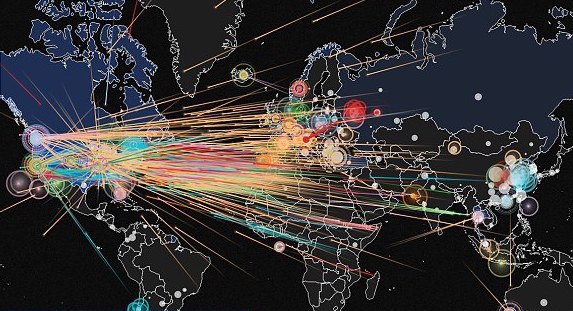




 After the Crash