Saturday Matinee: Anima Mundi

MV5BMTI4Mjk4NzQ5N15BMl5BanBnXkFtZTYwMTAxODU5._V1_SX214_

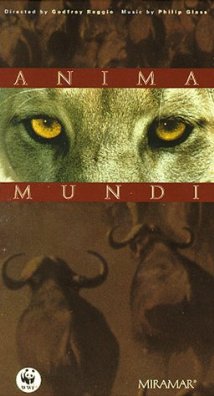
“Anima Mundi” (1992) was the third collaboration between director Godfrey Reggio and composer Philip Glass (following Koyaanisqatsi and Powaqqatsi). It was produced in collaboration with the World Wildlife Fund’s Biological Diversity Campaign and features amazing, beautiful and hypnotic images of a multitude of animal species from around the world. At just under half an hour, it’s a relatively short film but well worth seeing, especially for fans of non-narrative documentaries such as Koyaanisqatsi, Baraka, and Samsara.

Saturday Matinee: Duck, You Sucker! (aka A Fistful of Dynamite)

duck

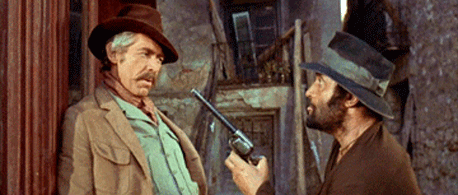
Most people know director Sergio Leone for his classic collaborations with Clint Eastwood on the “Man With No Name” trilogy of westerns or his later epics, “Once Upon a Time in the West” and “Once Upon a Time in America”. Fewer are familiar with the film he directed between the “Once Upon a Time” films, “Duck, You Sucker!” (1971). Its relative obscurity in the U.S. could partly be attributed to the horrible marketing from its American distributor United Artists.

The film’s title and advertising may have misled viewers to think they were in for a lighthearted comedy. It does have comedic moments but also contained scenes of massacres, some of which was edited out. For the film’s initial U.S. release it was trimmed by over half an hour because of violent and politically subversive content. Leone reportedly believed “Duck, You Sucker!” to be a common American colloquialism and so was probably not aware of the title’s slapstick tone. Not long after its release the film was reissued as “A Fistful of Dynamite” to cash in on the Clint Eastwood westerns which were popular at the time. Many were probably disappointed to discover that Eastwood wasn’t in the film. To add to the confusion, the title “Once Upon a Time…the Revolution” was used for some European releases to associate it with Leone’s previous film “Once Upon a Time in the West”.

Though “Duck You Sucker!” is not quite on par with Leone’s more well-known westerns such as “The Good, the Bad and the Ugly” and “Once Upon a Time in the West”, it’s still a great film though unfairly underrated. It contains many elements of classic Leone films such as beautiful panoramas, tense showdowns, extreme close-ups, morally complex characters, and a memorable soundtrack by Ennio Morricone. Similar to some of his earlier works, “Duck, You Sucker!” is at heart a philosophical action film exploring morality, honor, friendship, betrayal, idealism, pragmatism, redemption and the consequences of violence.

Update: Looks like MGM pulled it from YouTube, but the film is still available here: http://www.metacafe.com/watch/7555695/rod_steiger_james_coburn_duck_you_sucker_legendado/

http://www.dailymotion.com/video/x21vzyh_a-fistful-of-dynamite-1971_shortfilms

Sunday Matinee: The Spook Who Sat by the Door

spook_who_sat_by_door_poster_02

“The Spook Who Sat by the Door” (1973) is one of the most unabashedly radical revenge fantasies ever filmed. Based on the 1969 novel by Sam Greenlee, the film was directed by Ivan Dixon, and co-produced by Dixon and Greenlee, who had to resort to grassroots community fundraising to get it made. The plot centers on Dan Freeman, a covert black nationalist who infiltrates the Chicago offices of the CIA as a token black employee in a clerical position (they seat him by the door to demonstrate their commitment to diversity for visitors). After learning what he needs to learn, Freeman promptly resigns, gets a new position as a social worker in the ghetto, recruits an army of freedom fighters and teaches them CIA guerrilla warfare tactics in preparation for an uprising. Not surprisingly, the film was removed from theaters shortly after release due to pressure from the FBI and was not available on home video until 2004.

The full version of the The Spook Who Sat by the Door presented on the following YouTube video is preceded by interviews with Sam Greenlee who provides details about how his film was suppressed by the government:

Saturday Matinee: Walker

Walker afiche

Following the modest successes of “Repo Man” and “Sid and Nancy”, director Alex Cox took a chance on an Acid Western filmed in Nicaragua about soldier-of-fortune William Walker. Featuring a script by cult screenwriter Rudy Wurlitzer, a great soundtrack by Joe Strummer of the Clash, and an excellent performance by Ed Harris in the title role, “Walker” (1987) is unlike any historical biopic made before or since. The stylistic madness of the film reflects the madness of Walker’s misadventures. A sense of absurdity and inevitability is added to the proceedings through intentional anachronisms. While this may take viewers out of the story, it also makes it impossible to ignore parallels between the colonialist, imperialist attitudes of Walker’s time and U.S foreign policy of the 1980s and today.

While the film failed at the box-office in the U.S., it became the second highest grossing film in Nicaragua at the time. Walker is a rare film that not only has a radical message but its production was a radical political act in itself, having economically supported the Sandinista government.

Saturday Morning Matinee: The Net

netcover2

Notes by Other Cinema:

Ultimately stunning in its revelations, Lutz Dammbeck’s The Net explores the incredibly complex backstory of Ted Kaczynski, the infamous Unabomber. This exquisitely crafted inquiry into the rationale of this mythic figure situates him within a late 20th Century web of technology—a system that he grew to oppose. A marvelously subversive approach to the history of the Internet, this insightful documentary combines speculative travelogue and investigative journalism to trace contrasting countercultural responses to the cybernetic revolution.

For those who resist these intrusive systems of technological control, the Unabomber has come to symbolize an ultimate figure of Refusal. For those that embrace it, as did and do the early champions of media art like Marshall McLuhan, Nam June Paik, and Stewart Brand, the promises of worldwide networking and instantaneous communication outweighed the perils. Dammbeck’s conceptual quest links these multiple nodes of cultural and political thought like the Internet itself. Circling through themes of utopianism, anarchism, terrorism, CIA, LSD, Tim Leary, Ken Kesey and the Merry Pranksters, The Net exposes a hidden matrix of revolutionary advances, coincidences, and conspiracies.

Saturday Matinee: Bad Boy Bubby

Screen shot 2011-01-10 at 15.08.57

In “Bad Boy Bubby” (1993), an Australian film by writer/director Rolf de Heer, Nicholas Hope gives a brilliant performance as Bubby, a man who’s been kept confined and abused physically and emotionally by his mother for 35 years. He eventually escapes and has a number of chance encounters which reveal different aspects of himself and society. The first portion of the film is the most brutal, but as Bubby ventures out into the world the film’s tone lightens a bit and becomes more of a traditional (yet still twisted) dark comedy. Bad Boy Bubby is definitely not for all tastes and is initially difficult to watch, but is ultimately rewarding for its uniformly great performances, writing and direction.

Saturday Matinee: Max Headroom

“Max Headroom: 20 Minutes Into the Future” (1985) was a television movie originally broadcast on Britain’s Channel 4 and served as a pilot for a series co-produced with ABC in 1987. It’s widely considered the earliest science fiction TV movie and series of the cyberpunk subgenre. Part of the reason for its enduring cult status is the sharp social satire of its vision of the future which remains topical to this day.

The film takes place in a corporate dystopia controlled by an oligarchy of media conglomerates. Like in Orwell’s 1984, television is used as a tool for propaganda as well as mass surveillance. Similar to Winston Smith, the protagonist of 1984, reporter Edison Carter works within the system while questioning the ethics of his employer, but unlike Smith, Carter has enough clout and connections to challenge the system and whistleblow  while retaining relative autonomy. He is helped by his producer Theora Jones, computer hacker Bryce Lynch, pirate broadcaster Blank Reg, and rogue artificial intelligence personality Max Headroom.

In Max Headroom: 20 Minutes Into the Future, Edison uncovers a conspiracy involving a new commercial technology called blip-verts: subliminal advertising that can cram greater amounts of data into minds of viewers but with devastating side-effects. During the struggle to bring the investigative report to the airwaves, Max Headroom is accidentally unleashed.

Saturday Matinee: F for Fake

Via Dangerous Minds:

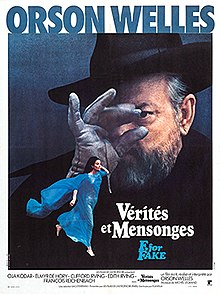
If you’ve seen Orson Welles’ late period quasi-documentary F for Fake, then you know about the mysterious art forger Elmyr De Hory. In his freewheeling cinematic essay, Welles explored the funhouse mirror life of de Hory, who found that he had an uncanny knack for being able to paint counterfeits of Picasso, Matisse, Modigliani and Renoir’s work. After some of his fakes were sold to museums and wealthy collectors, suspicions were raised and his legal troubles—and a life spent moving from place to place to avoid the long arm of the law—began.

At the time Welles met up with Elmyr in the early 70s, he was living in Ibiza and had been the subject of Fake! The Story of Elmyr de Hory the Greatest Art Forger of Our Time written by notorious “biographer” Clifford Irving, who himself figures prominently in the film. During the course of filming F for Fake, Irving (who was later portrayed by Richard Gere in The Hoax), was serendipitously revealed to have forged his own “autobiography” of Howard Hughes (not to mention Hughes’ signature). The resulting film, an essay on the authorship of “truth” in art, is a dazzling, intellectuality challenging masterpiece that can never quite decide if it’s a fake documentary about a fake painter of fake masterpieces who himself was the subject of a fake biographer… or what it is. (It’s no wonder that Robert Anton Wilson was such a fan of F for Fake, which figures prominently in his book, Cosmic Trigger II).

F or Fake also calls into question the nature of “genius”: If Elmyr’s forgeries were good enough to pass off as Picasso or Modigliani’s work, or even to hang in museums under the assumption that they were the work of these masters, wouldn’t Elmyr’s genius be of equal or even nearly equal value to theirs? (Worth noting that it was ego that got in the way of Elmyr’s scam at several points in his life: He was often left apoplectic at hearing how much crooked art dealers were making from his paintings!)

De Hory’s former bodyguard and driver, Mark Forgy, has kept Elmyr’s archive since his suicide in December 1976. In recent years Mr. Forgy has been trying to make more sense of Elmyr’s odd life. From the New York Times:

“I’m so far down the rabbit hole,” Ms. Marvin said in a recent phone interview, “I’m just not going to rest until I find out who this man is.”

A few weeks ago, she and Mr. Forgy traveled to western France and unrolled a dozen de Hory paintings that had been discovered in a farmhouse’s attic. In Budapest, they found birth records, dated 1906, for Elemer Albert Hoffmann, son of Adolf and Iren. No one knows when Elemer upgraded his name, or how he financed art studies in Munich and Paris before moving to New York in 1947.

He claimed that his father was a Roman Catholic and a diplomat, but the Budapest ledgers list Adolf as a Jewish merchant. The Nazis killed his entire family, Mr. de Hory said. But a cousin named Istvan Hont visited the artist’s villa on Ibiza, where Mr. Forgy was working at various times as a chauffeur, secretary and gardener. Mr. Hont, it turns out, was the forger’s brother.

Mr. Forgy knew that his boss copied masterpieces but did not much question their life on Ibiza, in which they kept company with celebrities like Marlene Dietrich and Ursula Andress. “I accepted the amazing with a nonchalance,” Mr. Forgy said in a recent phone interview. Mr. de Hory was the focus of Orson Welles’s 1974 documentary “F for Fake,” and Clifford Irving breathlessly titled his book “Fake! The Story of Elmyr de Hory the Greatest Art Forger of Our Time.”

After Mr. de Hory’s suicide, Mr. Forgy returned to Minnesota. “I went into deep seclusion” working as a night watchman and house restorer, he said. He held onto the papers and paintings. “I have schlepped them around endlessly,” he said. “The walls here in the house look like the Pitti Palace in Florence.”

His wife, Alice Doll, encouraged him in recent years to examine the stacks of false passports, Hungarian correspondence and Swiss arrest reports. Ms. Marvin contacted him last year. She had helped organize a show about faked and stolen art at the National Museum of Crime & Punishment in Washington, including a portrait of a pensive brunette by Mr. de Hory imitating Modigliani.

The researchers are now raising money for the documentary, developing an exhibition for the Budapest Art Fair in November and preparing to interview a nonagenarian de Hory cousin in Germany. They also plan to send paintings for lab analysis. “We’re trying to create a forensics footprint of his work,” Ms. Marvin said.

They already know that Mr. de Hory tore blank pages out of old books for sketching paper and bought paintings at flea markets to scrape and recycle the canvases. His fakes have become collectibles. Last fall, at a Bonhams auction in England, a buyer paid more than $700 for a seascape of crowded sailboats, with a forged Raoul Dufy signature on the front and “Elmyr” on the back.

Elmyr website

Watch the full film on Kanopy here: https://www.kanopy.com/s?query=f%20for%20fake