
Billed as the first post-apocalyptic short from Romania, “Tax Payer” (2011) follows the journey of a lone wanderer in a cold inhospitable post-war world who must risk life and limb to retrieve the priceless contents of a stolen bag.

Billed as the first post-apocalyptic short from Romania, “Tax Payer” (2011) follows the journey of a lone wanderer in a cold inhospitable post-war world who must risk life and limb to retrieve the priceless contents of a stolen bag.

Synopsis by Savage Revival:
A film about civilization, why we should bring it down and why most civilized people don’t.
[THE FUCK-IT POINT]
‘When you have had enough. When you decide to take matters into your own hands and don’t care what’s going to happen to you. When you know that from now on you will resist with whatever tactic you think is most effective.’
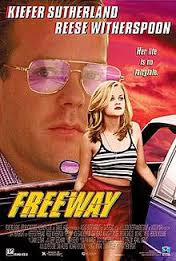
“Freeway” (1996) is a satisfyingly dark retelling of Little Red Riding Hood written/directed by Matthew Bright and featuring excellent performances by Reese Witherspoon as the protagonist, a seemingly stereotypical “white trash” teen, and Keifer Sutherland as the “wolf”, a secretly psychopathic high school guidance counselor. While the film works on the level of a traditional exploitation film, it provides much welcome commentary on racism, sexism, class-ism and societal hypocrisy.
(Video may not stream on some portable devices.)
 “Missing” (1982) is one of the best of director Costa-Gavras’s long filmography of great political dramas. It’s based on the true investigation of the disappearance of American filmmaker and journalist Charles Horman during the 1973 Pinochet coup in Chile. Jack Lemmon and Sissy Spacek both contribute outstanding performances as Charles’s father and wife, who are led by officials through a darkly revelatory bureaucratic maze on their quest to find the truth about Charles’s fate.
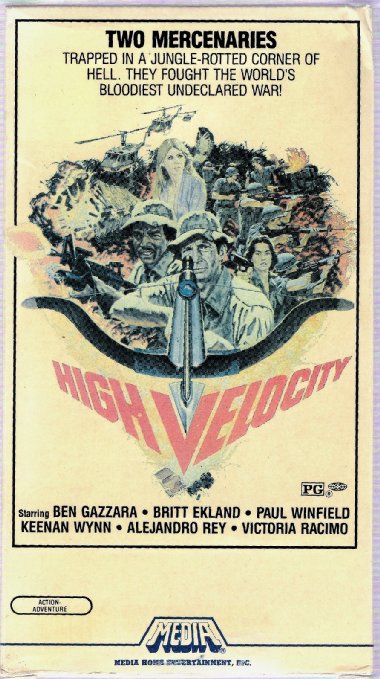
“High Velocity” (1976) is an obscure b-movie starring Ben Gazzara and Paul Winfield as Vietnam vets hired by a corporation to rescue a CEO kidnapped by an underground resistance group in the Philippines. On one level, it’s an early version of the heroic mercenary film which had a resurgence in the 80s after the success of Rambo and Missing in Action, but it’s also unrelentingly cynical with a surprisingly astute depiction of colonialism, government/corporate corruption and the power elite. The film is further elevated by a great lead performance by Ben Gazzara and atmospheric soundtrack by Jerry Goldsmith (famous for his work on Star Trek). Interestingly, High Velocity was the first film produced by Takafumi Ohashi, who later produced tons of great (and not-so-great) Japanese genre features.

“Journey to the West” (2013) is writer/director Stephen Chow and Derek Kwok’s film adaptation of the classic 16th century Chinese novel of the same name. It chronicles the portion of the story in which young monk Xuan Zang (Zhang Wen) protects a village from three demons with the help of demon hunter Miss Duan (Qi Shu) and has his first encounter with the Monkey King (Bo Huang). Like Stephen Chow’s other blockbusters Kung Fu Hustle and Shaolin Soccer, Journey to the West features delightfully over-the-top performances and slapstick sensibility, but unlike previous works it also contains a spiritual message about redemption, sacrifice and enlightenment.

From Wikipedia:
Everything is Terrible! is a Chicago-based video blogging website that features clips of VHS tapes from the late 20th century. The project was founded in 2000 by a group of friends while at Ohio University. “Every weekend or free afternoon they get,” according to NPR, they search at thrift stores, garage sales, and “bargain bins” for the worst and most outrageous VHS tapes to share with each other. The website was launched in 2007 in Chicago….In 2009, the website released a video titled Everything is Terrible! The Movie, which featured the same type of VHS clips that would be featured on their website. The A.V. Club called the video “a portal into a world halfway between showbiz and real life—a look at how the people who make entertainment for a living think the rest of us saps actually live”, adding that it’s “simultaneously enlightening, hilarious, and deeply sad”.

By Jonathan Crow
Source: Open Culture
The beginning of the 1972 documentary Future Shock, directed by Alex Grasshof, shows Orson Welles, bearded and chomping on a cigar, standing on an airport people mover. He turns to the camera and delivers a monologue in his trademark silken baritone. “In the course of my work, which has taken me to just about every corner of the globe, I see many aspects of a phenomenon which I’m just beginning to understand. Our modern technologies have changed the degree of sophistication beyond our wildest dreams. But this technology has exacted a pretty heavy price. We live in an age of anxiety and time of stress. And with all our sophistication, we are in fact the victims of our own technological strengths –- we are the victims of shock… a future shock.”
The documentary itself is wonderfully dated. From its bizarre opening montage; to its soundtrack, which lurches from early electronic music to jazz funk; to some endearing video special effects, which, for whatever reason, mostly centers around Orson Welles’s head, the film feels thoroughly rooted in the Nixon administration. Yet many of the ideas discussed in the movie are, if anything, more relevant now than in the 1970s. Watch it above.
The term “future shock” was invented in Alvin Toffler’s hugely bestselling book of the same name to describe the constant, bewildering barrage of new technologies and all the resulting societal changes those technologies bring about. Anyone who has struggled to comprehend a new, baffling and supposedly essential social media platform, anyone who has been driven to paralysis over the number of choices on Netflix, anyone who found their livelihood decimated because of a hot new app knows what “future shock” is.
Toffler (along with his wife and uncredited co-writer Heidi Toffler) argued that we are in the midst of a massive structural change from an industrial society to a post-industrial one – a society that boggles the mind with an overload of information and an overload of consumer choices. “Change,” as they wrote, “is the only constant.”
Along the way, the Tofflers managed to predict the collapse of America’s manufacturing sector, along with things like Prozac, temp jobs, the internet and the meteoric rise and fall of insta-celebs (Alex from Target, we hardly knew you.) Other predictions – underwater cities, paper clothes and being able to choose your own skin color – haven’t yet come to pass. Still, they had a surprisingly good track record considering these predictions were written over four decades ago.
The video ends with a plea from not Welles, but Toffler himself, who is seen addressing college students.
If we can recognize that industrialism is not the only possible form of technological society, if we can begin to think more imaginatively about the future, then we can prevent future shock and we can use technology itself to build a decent, democratic and humane society. […] We can no longer allow technology just to come roaring down at us. We must begin to say “No” to certain kinds of technology and begin to control technological change, because we have now reached the point at which technology is so powerful and so rapid that it may destroy us, unless we control it. But what is the most important is we simply do not accept everything; that we begin to make critical decisions about what kind of world we want and what kind of technology we want.
Related Content:
Isaac Asimov Predicts in 1964 What the World Will Look Like Today — in 2014
Arthur C. Clarke Predicts the Future in 1964 … And Kind of Nails It
Walter Cronkite Imagines the Home of the 21st Century … Back in 1967
Marshall McLuhan Announces That The World is a Global Village
Jonathan Crow is a Los Angeles-based writer and filmmaker whose work has appeared in Yahoo!, The Hollywood Reporter, and other publications. You can follow him at @jonccrow. And check out his blog Veeptopus, featuring lots of pictures of badgers and even more pictures of vice presidents with octopuses on their heads. The Veeptopus store is here.
INDIAN COUNTRY NEWS
"It is the duty of every man, as far as his ability extends, to detect and expose delusion and error"..Thomas Paine
Human in Algorithms
From the Roof Top
I See This
blog of the post capitalist transition.. Read or download the novel here + latest relevant posts
अध्ययन-अनुसन्धानको सार
 After the Crash