Step 1.) Realize that imagination is superior to reason:
“Necessary illusions enable us to live.” ~Ingmar Bergman
Before transformation, before self-empowerment, even before courage, there must be imagination. If you cannot even think outside your tiny lamb’s box, how will you ever be able to transform yourself into a lion powerful enough to trample it?
Thus, imagination is foremost. It is even more important than reason. Because reason is telling you that you’re just a little lamb stuck in a little lamb world with mighty wolf laws keeping you in check, docile, and immure. So, you will have to sacrifice reason to imagination in order to gain the wherewithal to challenge the system. Most of which is religious smoke and mirrors, a political song and dance, and merely a cultural cartoon playing itself out in your brain.
You must be able to transcend the box that has you thinking like a lamb before you can gain the courage to crush it. Mind must come before matter in this matter. It’s a delicate epistemological balancing act, a precarious existential highwire show, an intellectually Herculean task requiring Promethean audacity. And it is one that you will probably fail at.
This is because cognitive dissonance itself will be your greatest enemy. Which means you will be your greatest enemy. Therefore, the most important part of realizing that imagination is superior to reason is understanding the importance of staying ahead of the curve of your own human conditioning. In short: it means getting out of—and then staying out of—your own way.
This will require putting your Ego on a leash. Which will require resurrecting the only thing that can keep it on a leash: your Soul.
Step 2.) Take a leap of courage out of faith:
“It is the certainty that they possess the truth that makes men cruel.” ~Anatole France
After you’ve managed to think outside your tiny lamb’s box through the power of imagination, it’s time to crawl out of it. But how do you do that? The simple answer is courage. In particular: a leap of courage. In more particular: a leap of courage out of faith (rigid certainty) and into fortitude (flexible curiosity).
But first, we need some context. What exactly is it that’s buttressing your lamb’s faith? What is it in particular that’s propping up your lamb’s rigid certainty? What is it precisely that is keeping you conditioned, indoctrinated, and/or brainwashed into believing a certain way?
Put simply: it’s the pettiness of your ego. Put a bit more complexly: it’s the culturally conditioned aspect of yourself projected onto the world. Put concisely: It’s the socially constructed part of you that you have subconsciously used as an identity to engage with reality.
But what happens when—having used the power of imagination over reason—you finally realize that this culturally conditioned aspect of you is limiting you and keeping you inside the box? What happens when you finally see how it is the culturally constructed ego that is keeping you meek, weak, and courage-less in your lamb-hood? What happens when you finally understand what’s preventing you from becoming a lion?
Now enter Ego Death. Most people falsely assume that Ego Death means killing off the ego. This is not what it means. Ego Death means annihilation. The ego is annihilated in the “cocoon” of “death” in order to emerge as the “butterfly” of the soul. Ego Death is more of a rebirth than it is a destruction.
The metaphor of the cocoon is trite but important. The invulnerable ego must die in order for the vulnerable soul to be born. Certainty must die for curiosity to be born. Attachment must die for detachment to be born. Rigidity must die for flexibility to be born.
Taking a leap of courage out of your tiny lamb’s box (faith) must take place in order to cure the disease of certainty with the medicine of curiosity. Without curiosity there is no openness to new knowledge, there is no flexibility of thought, there is no plasticity of spirit. Without curiosity there is no way you will be able to integrate your shadow. Which is the next vital step in how to transform a lamb into a lion.
3.) Integrate the shadow:
“My devil had long been caged; he came out roaring.” ~Dr. Jekyll
With your curiosity in front of you and your certainty behind you, you now have the existential plasticity to face the Underdark of Yourself. Your certainty is shattered glass behind you as you walk “barefoot” into yourself. Your curiosity is a blazing light inside you, shining into the darkness, making the darkest parts of yourself light up into glorious conscious awareness.
Having been hidden, hushed, and repressed for so long, the shadows come alive. They dance with fierce revivification. They laugh with thirsty desire. They sing with jovial howls. They are finally seen, felt, heard. And they are hungry. Their appetite slams together inside you, a soul-quaking shockwave, shaking you to the core. They join forces to become the shadow aspect, the inner beast reborn, primal darkness incarnate.
It rises up inside you, an alien demon taking over, seemingly separate at first, but finally coalescent. In the end, you realize that it is more you than your previous self could have ever hoped to be. More real. More primal. More vital to becoming the best version of yourself than anything that could have come before. It transforms your delicate sheepishness into fierce lionheartedness.
You feel more alive than ever. A sacred alignment manifests. The pieces of your puzzled self-paradoxically click together. You feel whole, actualized, aware. Most of all, you feel hungry, thirsty, ravenous, voracious. Your lion appetite swallows your tiny sheep stomach whole. It’s finally time to eat—and eat well.
4.) Grow your teeth; sharpen your claws:
“We should go to heaven for form and to hell for energy and marry the two.” ~William Blake
Now that your shadow has been aligned with your light, it’s time to transform fear into fuel for the fire to come. It’s time to grow those teeth and sharpen those claws. It’s time for fierceness over pettiness, absolute vulnerability over resolute invulnerability, and courage over cowardice. In short: it’s time to start living a courage-based lifestyle rather than a fear-based one.
You do this by first honoring what came before. Honor the death of your Ego and its painful transformation into Soul. Honor the death of your naivete and its painful transformation into shadow alignment. Honor the death of your sheepishness and its painful transformation into lionheartedness.
Second, you must transform your roots into a crown. You must force your mortal coil into a vital halo. You must dig deep into the humus of your humanity and strike the primal lodestone. From the spark will come an energy that will sharpen your teeth, claws, and soul. It will propel you into animal greatness. It will teach you honor, humility, and humor. But it will also teach you fierceness, courage, and audaciousness.
It’s finally time to crush that outdated sheep’s box with your mighty lion’s paw.
5.) Draw a line in the sand; challenge all comers:
“The increasing dependence on the State is anything but a healthy symptom, it means that the whole nation is in a fair way to becoming a herd of sheep, constantly relying on a shepherd to drive them into good pastures. The shepherd’s staff soon becomes a rod of iron, and the shepherds turn into wolves.” ~Carl Jung
How does a lamb transform fear into courage and become the brave lion who is capable of keeping wolves in check? The lamb must first put itself in check by questioning why it believes what it believes about the way the world works.
The lamb must ask itself: Are my beliefs culturally conditioned by a sick society? Have I been brainwashed into believing a certain way by a religious or political party? Do I just blindly obey out of fear of losing my comfort, safety and security? And, most importantly of all, once I realize I’ve been mistaken, will I cease being mistaken or will I cease being honest?
It’s a tricky tightrope between fear and courage. The way toward freedom is not for the faint of heart. Which is probably why there are so few lions among men.
A lamb that can manage to question its fear-based lifestyle—a lifestyle built upon blind obedience, addiction to comfort, and reliance on wolves to keep them “safe”—is a lamb that has the potential to become a courageous lion.
If a lamb can manage to become a courageous lion, then the next step is to reveal its courage to the world. This requires a complex recipe of trust, vulnerability, adaptability, and risk-taking.
Lions realize that life is a risk. They embrace that risk with honor and courage. Where sheep fear making waves, lions relish in it. For they realize that sometimes you must rock the boat to keep it afloat.
Life is too short to be a bystander. Lions take a stand. They draw a line in the sand. They bare their teeth. They show their claws. They crush ultimatums through the power of their own moral autonomy. They ruthlessly reveal why the buck must stop here.
Lions are all too willing to cause trouble when the culture itself is troubled. They must. Trouble be damned! When society fails to regulate itself, the lionhearted must regulate society. This has always been the task of lions.
When is the last time you were outside in the morning to experience a glorious dawn? Or sat watching the sun set across the ocean horizon?
How do you feel when you touch the skin of someone you love? A grandparent, parent, lover or child?
Have you ever seen a spider’s web full of morning dew, or after the rain, when the sun is shining through the droplets in the web to reveal the flashing diamonds, sapphires, rubies and emeralds hidden within?
Have you ever stood in a natural environment – a beach, desert, rainforest… – far from a city and noticed that strange and subtle feeling of freedom tremor through your body?
Have you ever marveled at the breath of wind that cools your face on a hot Summer’s day? Or been intoxicated by the smell of blossom in Spring?
Have you gaped in wonder at the birth of new life: a chick pecking out of its shell, a seed germinating or a baby being born?
Or paused to ponder the sheer magic of being alive yourself?
Or do you find life in the real physical world too constricting, painful, frightening and demanding: something from which you seek to escape, with some distraction or another (work, television, sport, a novel, a drug…), as often as you can?
Well, very soon now, we are promised, you will be able to escape reality far more effectively than those primitive means of distraction made possible previously. And far more effectively than even the outcomes promised in those dystopian novels.
So the fundamental questions we must ask ourselves are simple: Do you want real life, with all of the pains, sorrows, fear and fury that go along with beauty, freedom and love? Or do you believe what they tell us and want everything unpleasant to go away? Permanently. And to live in delusion thereafter, given synthetic versions of all of the pleasant feelings and experiences described above?
Remember the dialogue between the Savage and Mustapha Mond during the closing stages of Aldous Huxley’s dystopian novel Brave New World?
‘But I don’t want comfort. I want God, I want poetry, I want real danger, I want freedom, I want goodness. I want sin.’
‘In fact,’ said Mustapha Mond, ‘you’re claiming the right to be unhappy.’
‘All right then,’ said the Savage defiantly, ‘I’m claiming the right to be unhappy.’
‘Not to mention the right to grow old and ugly and impotent; the right to have syphilis and cancer; the right to have too little to eat; the right to be lousy; the right to live in constant apprehension of what may happen to-morrow; the right to catch typhoid; the right to be tortured by unspeakable pains of every kind.’
There was a long silence.
‘I claim them all,’ said the Savage at last.
Well, after nearly one hundred years, the dystopian future described by Huxley is almost upon us and, if we are to defeat it, we need a lot more ‘savages’ willing to forego the promised ‘comforts’.
Because if those who see themselves as our global masters get their way, we are about to enter a virtual world that will become more complete by the day and from which there will be no escape.
The Metaverse
Based on many years of effort, the World Economic Forum (WEF) has recently launched its plan to create our new all-digital world, called the ‘metaverse’. See ‘Defining and Building the Metaverse’.
So if you find natural phenomena – ranging from rainforests, beaches and weather variations to ill-health, danger and unhappiness – annoying, you will soon be able to escape them, compliments of the metaverse. Or so we are promised. And you won’t be troubled by anything resembling what might be called ‘free will’ either. You will be content to do as you are told, even more than you are content to do already. See ‘Terrified of Freedom: Why Most Human Beings are Embracing the Global Elite’s Technotyranny’.
After all, your mind will no longer be your own. And while the usual descriptions, written by elite agents, fail to mention it, a quick flash of metaverse-induced fear will make sure that you comply, whatever you are required to do. The point is this: You won’t be escaping all of those unpleasant feelings after all. They can just be used to control you more directly, to fulfill an elite-determined purpose. But that is a fact they are not advertising.
In their iconic hit song ‘In the Year 2525’, written in 1964 by Rick Evans and later recorded by he and Denny Zager to become a No.1. hit around the world in 1969, Evans captured key elements of what is already upon us somewhat ahead of the schedule mapped out in the song.
[Chorus 2] In the year 3535 Ain’t gonna need to tell the truth, tell no lies Everything you think, do, and say Is in the pills you took today
[Chorus 3] In the year 4545 Ain’t gonna need your teeth, won’t need your eyes You won’t find a thing to chew Nobody’s gonna look at you
[Chorus 4] In the year 5555 Your arms are hanging limp at your sides Your legs got nothing to do Some machine’s doing that for you
[Chorus 5] In the year 6565 Ain’t gonna need no husband, won’t need no wife You’ll pick your sons, pick your daughters too From the bottom of a long glass tube Whoa-oh-oh
So what is the Metaverse?
According to the WEF: ‘The metaverse is a future persistent and interconnected virtual environment where social and economic elements mirror reality. Users can interact with it and each other simultaneously across devices and immersive technologies while engaging with digital assets and property.’ See ‘Defining and Building the Metaverse’.
Moreover, ‘if technologists are right that 2022 will separate thinkers from builders, then last years’ technical advances will produce this year’s first steps towards making the metaverse a reality….
‘But from the perspective of the human experience, one development stands out above all others: extended reality (XR) technologies. These include virtual reality (VR), augmented reality (AR), and brain-computer interfaces (BCI), which together position themselves as the next computing platforms in their own right.’
Having written that, here is one definition elaborated in the article above that reveals just how far some of those heavily involved in this work have become disconnected from any sense of themselves and, hence, reality: ‘Specifically, the metaverse is the moment at which our digital lives – our online identities, experiences, relationships, and assets – become more meaningful to us than our physical lives.’ The original quotation can be read here: ‘Spheres of Self: Performativity and Parasociality in the Metaverse’.
And, as Cathy Li describes it, the metaverse is ‘most useful as a lens through which to view ongoing digital transformation. The belief is that virtual worlds, incorporating connected devices, blockchain and other tech, will be so commonplace that the metaverse will become an extension of reality itself.’ See ‘Who will govern the metaverse?’
Let me reiterate two points from the paragraphs immediately above: ‘our digital lives… become more meaningful to us than our physical lives.’ And ‘the metaverse will become an extension of reality itself.’
Really?
While statements such as these reveal the breathtaking level of insanity that underpins this entire enterprise – see ‘The Global Elite is Insane Revisited’ – it does not mean that we are not under enormous threat. Just as vast arsenals of nuclear weapons, by some insane ‘logic’, are supposed to provide us with ‘security’ while actually threatening the existence of all life on Earth, the metaverse is part of a substantial package of measures that will reduce human life to one not worth living.
Why? Well, as noted by authors such as Tom Valovic: The metaverse is one element in the path to implementing technocratic governance over all of humanity.
‘As Planet Earth and our physical world continue to experience massive biospheric degradation and disruption, the elites that are now in many cases pulling the strings of governance at the country level are heading for the exit doors. Elon Musk and Jeff Bezos are exploring the realm of space and Musk has a Mars mission planned. Globally oriented elites… looked out for themselves which is what they do best….
‘Paralleling the notion of space flight as a form of existential escapism is the metaverse. So what if our cities are crumbling, infrastructures falling apart, and the biosphere is seriously degrading? So what if our wasteful consumer-driven lifestyle has created unprecedented levels of pollution so extensive that it’s now the number one cause of health problems globally? No problem… we’ll just kick back and don our Meta headsets (or worse get a brain implant) and escape into an artificially fabricated world that lets us turn our back on the massive ecological and environmental problems we now face.’ See ‘Why We Should Reject Mark Zuckerberg’s Dehumanizing Vision of a “Metaverse”’.
‘Education’ in the Metaverse
Of course, the metaverse is deeply interwoven with other components of their plan, such as those in relation to what they call ‘education’, which is more accurately described as the process by which young transhuman slaves are programmed to perform their function in the technocratic economy that is being imposed upon us. Of course, ‘education’ sounds better than ‘virtual programming of young transhuman slaves’ so, in the interests of not raising obvious concerns, the word ‘education’ has been used.
As noted by Dr. Michael Nevradakis, discussions on this subject at the recent gathering of the World Economic Forum emphasized the importance of virtual reality (VR) and artificial intelligence (AI) technologies with participants touting the purported educational and economic benefits that would derive from use of these technologies in the classroom by helping, according to Dr. Ali Saeed Bin Harmal Al Dhaheri & Dr. Mohamad Ali Hamade, to ‘increase accessibility, enhance quality and improve the affordability of education globally’. See ‘Experiential learning and VR will reshape the future of education’.
Of course, there is no need for concern about the ‘early-life experiences’ of those young transhumans who are being programmed for decades of servitude prior to being terminated when they are no longer functional.
Beyond claimed educational and economic benefits, however, some authors argue that digitalizing education can play a role in easing pressures on the environment and climate. How so? Nevradakis again: ‘Indeed, the WEF said the use of “textbooks, notebooks and pencils as critical learning tools” is on the way out, due to “environmental pressures and COP26 goals (from the 2021 United Nations Climate Change Conference),” which “will drive the digitalizing of education streams.”’ See ‘Future of Education? WEF’s Vision – Heavy on Virtual Reality and AI Technologies, Light on Privacy Concerns’
But it is clearly delusional to suggest that the use of textbooks, notebooks and pencils has greater adverse impact on the environment and climate than the environmental cost and climate impact of producing sophisticated technology for each student. And despite claims of ‘improved affordability’ it is equally delusional to ignore the economic and social cost, for example, to the child ‘laborers’ in the Congo working in appalling conditions to extract strategic minerals to produce this technology. See ‘Humanity’s “Dirty Little Secret”: Starving, Enslaving, Raping, Torturing and Killing our Children’.
Besides, as touched on below, education is already a monstrous experience, destroying the Selfhood of the child so that they become submissively obedient. Removing the bulk of education’s remaining social component by technologizing it can only make it even worse.
Babies in the Metaverse
Then again, maybe ‘children’ will no longer be put through school. It simply won’t be necessary because children, for transhuman slaves at least, will no longer exist.
By 2070, the metaverse will offer you virtual babies, ‘environmentally-friendly digital children’, according to UK artificial intelligence (AI) expert Catriona Campbell. ‘Parents will see and interact with their offspring through next-generation AR [augmented reality] glasses and haptic gloves.’ The latter devices enable users to experience ‘a realistic sense of touch when handling virtual or holographic objects’. As a bonus, these children take up no space, cost nothing to feed and remain healthy, if that is what you want, for as long as they are programmed to ‘live’. A subscription might cost as little as $25 each month.
And if this seems like a monumental leap out of reality to you, Campbell also believes that ‘within 50 years technology will have advanced to such an extent that babies which exist in the metaverse are indistinct from those in the real world…. As the metaverse evolves, I can see virtual children becoming an accepted and fully embraced part of society in much of the developed world.’ See ‘“Virtual babies” who grow up in real time will be commonplace by 2070, expert predicts’.
That’s right, Campbell is claiming that ‘within 50 years… babies which exist in the metaverse are indistinct from those in the real world’! Pause a moment. How does that sound to you?
Beyond the criticisms already noted above, there are a great many other criticisms of the metaverse and the role it will play in the overall elite program being implemented under what the WEF calls its ‘Great Reset’. This comprehensive program will transform human society and human life for those people left alive after the eugenics component has been fully implemented. See ‘The Final Battle for Humanity: It is “Now or Never” in the Long War Against Homo Sapiens’.
If you like, you can read a little more about what the masters of this metaverse intend for us, as well as critiques of it, by authors such as these.
Derrick Broze: While some people ‘may not intend for The Metaverse to become an all encompassing reality that supersedes physical reality, for the Zuckerbergs, Microsofts, and WEFs of the world, that is exactly what they intend for The Metaverse…. For the billionaire class and their puppet organizations, such as the WEF and the United Nations, the Metaverse offers up the potential to commandeer all life into digital prisons where the people can be charged for services and products in the digital realm…. With the people of the world safely tucked into their digital beds, the Technocrats could complete their total takeover of natural resources, the economy, and humanity itself.’ See ‘The Great Narrative And The Metaverse, Part 2: Will The Metaverse End Human Freedom?’
Dr. Michael Nevradakis: ‘Who will govern the “metaverse”?… According to the WEF, “real-world governance models” represent one possible option for metaverse governance. However, far from referring to constitutionally defined institutions of governance, with checks and balances, the WEF cites Facebook’s “Oversight Board” as an example of such a “real-world governance model.”’ See ‘WEF Launches “Metaverse” Initiative, Predicts Digital Lives Will Become “More Meaningful to Us Than Our Physical Lives”’.
So if you believe that you and I are destined to have a say in the metaverse that is unfolding, you would be wise to keep investigating. Elite proposals are invariably very distant from the type of governance models usually considered by ‘ordinary’ people in a multiplicity of contexts, where the emphasis is on facilitating widespread grassroots participation, not rule by technocrats.
And here’s another simple issue to ponder. Remember how I mentioned above that a quick flash of metaverse-induced fear would ensure that you complied with an elite-determined directive, how does the idea of eating bugs, processed sewage and human flesh appeal? Well, given that your mind will no longer be your own, what appeals now, or doesn’t, will be irrelevant once the metaverse is determining how you perceive things. See ‘Canadian Company Pledges To Produce TWO BILLION BUGS Per Year For Human Consumption’ and ‘Will You Eat Cultured Meat Grown From Human Cells?’
You will eat ‘Soylent Green’ because that is what the program tells you.
So why are people embracing the Metaverse?
In a recent article in which he described taking his son to watch a film through 3D glasses, Charles Eisenstein noted ‘The on-screen reality was so vivid, stimulating and intense that it made the real world seem boring by comparison.’ See ‘Transhumanism and the Metaverse’.
Fundamentally, this terrorization works because it compels our children into suppressing awareness of how they feel. As a result, only the most intense experiences register emotionally: The capacity to experience a subtle feeling has been lost. And without this capacity, they cannot develop into the powerful, courageous Self-willed individuals that evolution intended. They are human relics. Ready and willing to be turned into a transhuman slave in the unconscious hope they will be finally able to experience, in the metaverse, what was taken from them in the real world as a child.
But they won’t get that experience, even in the metaverse. It is not what the elite has in mind for us.
Resisting the Metaverse
Of course, the metaverse is just one feature of the Global Elite agenda that is being imposed upon us. And it is not enough to resist individual features of the ‘Great Reset’ program. We must strategically resist its most fundamental elements so that the entire agenda is defeated.
If you are inclined to join those strategically resisting the ‘Great Reset’ and its related agendas, you are welcome to participate in the ‘We Are Human, We Are Free’ campaign which identifies a list of 30 strategic goals for doing so.
In addition and more simply, you can download a one-page flyer that identifies a short series of crucial nonviolent actions that anyone can take. This flyer, now available in 17 languages (Czech, Danish, Dutch, English, Finnish, French, German, Greek, Hebrew, Hungarian, Italian, Polish, Romanian, Russian, Serbian, Spanish & Slovak) with more languages in the pipeline, can be downloaded from here: ‘The 7 Days Campaign to Resist the Great Reset’.
If strategically resisting the ‘Great Reset’ (and related agendas) appeals to you, consider joining the ‘We Are Human, We Are Free’ Telegram group (with a link accessible from the website).
And if you want a child who is powerfully able to perceive the dysfunctional lure of the metaverse, and is able to join you in resisting it, consider making ‘My Promise to Children’.
CONCLUSION
So, for just a little longer, the choice is yours.
You can live your life with all its challenges and problems, joys and achievements. Or you can live the virtual life that someone else programmed for you, including whatever comes with it that they didn’t tell you about.
In short, like Neo in the film ‘The Matrix’, you have a choice. You can choose the Blue Pill and proceed to live in a synthesized, fictional, computer-generated world. Or you take the Red Pill and, in this case, join the fight with those of us determined to defend the real world and avert descent into the metaverse.
But you must make that choice while you still have free will.
So you must make that choice soon.
Biodata: Robert J. Burrowes has a lifetime commitment to understanding and ending human violence. He has done extensive research since 1966 in an effort to understand why human beings are violent and has been a nonviolent activist since 1981. He is the author of ‘Why Violence?’ His email address is flametree@riseup.net and his website is here.
A review essay of James and Whitehead on Life after Death by David Ray Griffin
Life is entwined with death from the start, for death is the price we must pay for being born, even though we don’t choose it, which may be why some people who are very angry at the deal, decide to choose how and when they will die, as if they are getting revenge on someone who dealt them a rotten hand, even if they don’t believe in the someone.
The meaning of death, and whether humans do or do not survive it in some form, has always obsessed people, from the average person to the great artists and thinkers. Death is the mother of philosophy and all the arts and sciences. It is arguably also what motivates so much human behavior, from keeping busy to waging war to trying to hit a little white ball with a long stick down a lot of grass into a hole in the ground and doing it again and again.
Death is the mother of distractions.
It is also what we cannot ultimately control, although a lot of violent and crazy rich people try. The thought of it drives many people mad.
No one is immune from wondering about it. We are born dying, and from an early age we ask why. Children often explicitly ask, but as they grow older the explicit usually retreats into implicity and avoidance because of adults’ need to deny death or their lack of answers about it that makes sense.
David Ray Griffin is not a child or an adult in denial. He has spent his life in an intrepid search for truth in many realms – philosophy, theology, politics, etc. He is an esteemed author of over forty books, an elderly man in his eighties who has spent his life writing about God, and also in the last twenty years a series of outstanding books on the attacks of September 11, 2001 and the demonic nature of U.S. history. He fits T.S Eliot’s description in The Four Quartets:
Old men ought to be explorers Here and there does not matter We must be still and still moving Into another intensity For a further union, a deeper communion Though the dark cold and the empty desolation, The wave cry, the wind cry, the vast waters Of the petrel and the porpoise. In my end is my beginning
In his latest book, which is another beginning, James and Whitehead on Life after Death, he explores the age-old question of whether there is life after death and concludes that there probably is. It is a conclusion that is arguably shared in some way still by many people today but is clearly rejected by most intellectuals and highly schooled people, as Griffin writes:
The traditional basis for hope was belief in life after death. Modern culture, however, has so diminished this belief that today, in educated circles, it is largely assumed that life after death is an outmoded belief….The dominant view among science-based modern intellectuals is that the idea of life after death is not one to take seriously. That conclusion, however, is virtually implicit in the presuppositions of these intellectuals, such as Corliss Lamont. According to these modern intellectuals, there is no non-sensory perception; the world is basically mechanistic; and the world contains nothing but physical bodies and forces.
Griffin argues the opposite. His book is devoted to refuting these presuppositions with the help of William James and Alfred North Whitehead. It is not an easy read, and is not aimed at regular people who would find it rough going, except for the middle chapters on mediums, extrasensory perception, telepathy, apparitions, near-death out-of-body experiences, and reincarnation – the stuff of tabloid nonsense but which in Griffin’s scholarly hands is treated very intelligently. Moreover, these chapters are crucial to his overall argument. However, the book will mainly appeal to the intellectuals whom Griffin wishes to convince of their errors, or to those who agree with him. It is scholarly.
Without entering into all the nuances of his rather complicated thesis, I will try to summarize his key points.
Griffin is what is called a process theologian and his work of philosophical theology is intimately linked with scientific thinking and the idea of evolution, even as it rejects the modern mechanistic worldview for a “postmodern” cosmology based on recent science, in particular, the work of microbiology. Although he is a Christian, the present book does not presuppose any Christian beliefs such as revelation, nor, for that matter, specific beliefs of any religion, although he does presuppose (and partially explains in chapter eleven) the existence of a “divine creator” or “divine reality” who is responsible for the evolutionary process that is the expression of a cosmic purpose with the “fine-tuning” of the universe. This “Holy Reality” is important to his argument.
The thought of the philosopher Alfred North Whitehead underlies everything Griffin writes here. Whitehead is known as the creator of process philosophy, which, to simplify, is the idea that all reality is not made up of things or bits of inert matter, no matter how small (e.g. atoms, brain molecules) or large (people or trees) interacting in some blind way with other bits of matter, but consists of conscious processes of ongoing experiences. In other words, reality is constant change, flowing experiences with types of awareness and intention and the free creativity to change. Humans are, therefore, ongoing experiments, not static entities.
Following Whitehead, Griffin has coined the term “panexperientialism,” meaning that all reality is comprised of experiences. It is worth noting that the etymology of the words experience and experiment are the same – Latin, experiri, to try. Life is therefore a trying. As some might say, it is trying to be born and to know you will die.
Griffin begins by noting the importance of life after death and why many argue against it. He states how he will avoid many of their objections and how he will show how the valid ones dissolve under his analysis. He promptly writes that “Microbiology has dissolved the mind-body problem.” He bases this on the work of acclaimed evolutionary biologist Lynn Margulis,, among others, and her theory of symbiogenesis:
Her theory of symbiogenesis was based on the idea that all living organisms are sentient. Saying that her world view ‘recognizes the perceptive capacity of all live beings,’ she held that ‘consciousness is a property of all living cells,’ even the most elementary ones: ‘Bacteria are conscious. These bacterial beings have been around since the origin of life.’
Margulis’s point is consonant with Whitehead’s philosophy of organism, meaning that all physical reality possesses a degree of perceptive experience, although Griffin says “some of us may prefer to save the term ‘consciousness’ for higher types of experience.” The fundamental point is that all of physical reality experiences, or, as he quotes William James, “is a piece of full experience.” In layman’s language as applied to people, the mind and body are one.
Having laid down this scientific/philosophical foundation in the first four chapters (and in two more detailed appendices), Griffin turns to psychical research and how Whitehead and James believed in the need for such research and how James’s radical empiricism supported the reality of parapsychological events as did Whitehead, who accepted telepathy. Griffin writes:
Like James, Whitehead affirmed the reality of non-sensory perception. Moreover, besides affirming its reality,Whitehead argued that non-sensory perception is fundamental, so that sensory perception is secondary. Far from being primary, sensory perception is derivative from non-sensory perception….Accordingly, there is nothing supernatural about telepathy; one becomes aware of the content of other minds through the same non-sensory mode of perception that tells us about causation, the real existence of physical objects, memory, and time.
(Let me interject the simple but important point that it follows that in order to have any perceptions one must exist in physical form.)
Turning to actual psychical research that was promoted by the establishment of The Society For Psychical Research (SPR) in London in 1882, Griffin, as previously mentioned, devotes four key chapters to mediums, telepathy, extrasensory perception, near-death out-of-body experiences, apparitions, and reincarnation. This research and its findings, while rejected by the modern scientific worldview, is widespread and quite believable, in various degrees. Griffin shows why this is so. The truth of such psychic experiences is hard to refute since there are so many examples, which Griffin gives. He would agree with James who said:
The concrete evidence for most of the ‘psychic’ phenomenon under discussion is good enough to hang a man twenty times over.
And James, of course, the longtime professor at Harvard University, is revered as one of the United States’ most brilliant thinkers, not a fringe nut-case. This is also true for many of the others Griffin calls on to show how solid is the evidence for much psychic phenomena. Most readers will find these chapters very engaging and the most accessible.
Finally, Griffin explains why the idea of a fine-tuned universe makes the most sense and how it dovetails with the belief in God, even as it runs counter to the mechanistic, materialistic, and atheistic view of many intellectuals. He writes:
The new worldview advocated in this book requires a new understanding of the divine reality. Whitehead and [Charles] Hartshorne [an American process philosopher and theologian who developed Whitehead’s work] advocated a view of the universe known as ‘panentheism.’ The term means ‘all-in-God.’ Panentheism [the world is in God] is thus distinguished from pantheism, on the one hand, and traditional theism, on the other.
Based on these factors – microbiology, Whitehead and James’s philosophy, psychic research, etc. – Griffin concludes that there is ample evidence for life after death, not in the physical sense but in that of psyche or soul or spirit. He says that he has “long believed in life after death,” but that in offering this book with his argument for life after death as our “only empirical ground for hope” since we all die, he does so reluctantly. “I suggest this answer with fear and trembling, knowing that most of my friends and other people whose opinions I respect will hate this answer.”
That they would be surprised by his conclusion is a bit perplexing since he has long believed in life after death. I surely do not hate his answer and believe that he has made a strong case for his long-held belief. I share it, but differently. And I think that many of his scientifically-oriented friends and others may indeed agree with him more than he thinks, for his argument is rooted, not just in philosophy and theology, but in science. It is based on the idea of the non-duality between mind and matter, with the difference being that for him matter is conscious and for them it is not. They may come to accept the recent findings of microbiology and reject the “assumption of materialists and dualists alike” that “neurons are insentient.” They may reject some of their own presuppositions. For these debates take place at the highest level of abstraction where intellectuals dwell, and accepting one new scientific paradigm does not necessarily lead to belief in life after death. Far from it. That is when God enters the picture.
Griffin wisely uses hardcore commonsense beliefs to refute dualism and materialism. But I propose that there is another hardcore, commonsense belief that he ignores: that people know and feel that they are flesh and bones. Out of this feeling comes our conceptions about life, not the other way around. The Spanish philosopher Miguel De Unamuno, in The Tragic Sense of Life, put it this way:
Our philosophy – that is, our mode of understanding or not understanding the world and life – springs from our feeling toward life itself …. Man is said to be a reasoning animal. I do not know why he has not been defined as an affective or feeling animal …. And thus, in a philosopher, what must needs most concern us is the man.
David Griffin, relying on John Cobb’s term, says the “resurrection of the soul” is a better term for life after death than the more traditional ones of “immortality of the soul” and the “resurrection of the body,” since it splits the difference, thereby taking a bit of truth from both terms.
But as I understand his argument in this book, he is doing what he cautions against via Whitehead: “… he [Whitehead] said that one must avoid ‘negations of what in practice is presupposed.’” Griffin’s presupposition is that both dualism and materialism are both wrong and panexperientialism is correct. He writes:
Panexperientialism is based upon the supposition that we can and should think about the units comprising the physical world by analogy with our own experience, which we know from within. The supposition, in other words, is that the apparent difference in kind between our experience, or our ‘mind,’ and the entities comprising our bodies is an illusion, resulting from the fact that we know them in two different ways. We know our minds from within, by identity and memory, whereas in sensory perception of our bodies, as in looking in a mirror, we know them from without. Once we realize this, there is no reason to assume them really to be different in kind. [my emphasis]
So if that is true, I ask this question: why, if body and soul/mind are inseparable and are what people are, why is it necessary to argue for their divorce in death? If God created them as one at birth, could not God recreate them as one in death? Why Griffin concludes that this is impossible or would require a miracle escapes me. Maybe contemplating it is a bit too pedestrian and non-philosophical.
Despite my point above, James and Whitehead on Life after Death is another quintessentially brilliant volume from Griffin’s pen. It forces you to think about difficult but essential matters. It may not be easy reading, but it may force you to imaginatively ask yourself, what, if anything were possible and life continued after death, you would want such a life to be like. Maybe the man David Ray Griffin wants it to be non-bodily. Maybe many do and can’t imagine an alternative. But I can, and I hope for bodily resurrection. It’s just what I am.
Philosophy and theology can get very abstract and leave regular people in the dust. Another poet comes to mind, a counterpoint to T.S. Eliot, William Butler Yates, who wrote in “An Acre of Green Grass”:
Grant me an old man’s frenzy,
Myself I must remake
Till I am Timon and Lear
Or that William Blake
Who beat upon the wall
Till Truth obeyed his call;
A mind Michael Angelo knew
That can pierce the clouds,
Or inspired by frenzy
Shake the dead in their shrouds;
Forgotten else by mankind,
An old man’s eagle mind.
I would love to read what a frenzied David Ray Griffin has to say, now that I have read his philosophical logic. I can’t help agreeing with Unamuno:
And thus, in a philosopher, what must needs most concern us is the man
“Have you ever wondered who’s pulling the strings? … Anything we touch is a weapon. We can deceive, persuade, change, influence, inspire. We come in many forms. We are everywhere.”— U.S. Army Psychological Operations recruitment video
Psychological warfare, according to the Rand Corporation, “involves the planned use of propaganda and other psychological operations to influence the opinions, emotions, attitudes, and behavior of opposition groups.”
For years now, the government has been bombarding the citizenry with propaganda campaigns and psychological operations aimed at keeping us compliant, easily controlled and supportive of the police state’s various efforts abroad and domestically.
Of the many weapons in the government’s vast arsenal, psychological warfare may be the most devastating in terms of the long-term consequences.
As the military journal Task and Purpose explains, “Psychological warfare is all about influencing governments, people of power, and everyday citizens… PSYOP soldiers’ key missions are to influence ‘emotions, notices, reasoning, and behavior of foreign governments and citizens,’ ‘deliberately deceive’ enemy forces, advise governments, and provide communications for disaster relief and rescue efforts.”
Yet don’t be fooled into thinking these psyops (psychological operations) campaigns are only aimed at foreign enemies. The government has made clear in word and deed that “we the people” are domestic enemies to be targeted, tracked, manipulated, micromanaged, surveilled, viewed as suspects, and treated as if our fundamental rights are mere privileges that can be easily discarded.
Aided and abetted by technological advances and scientific experimentation, the government has been subjecting the American people to “apple-pie propaganda” for the better part of the last century.
Consider some of the ways in which the government continues to wage psychological warfare on a largely unsuspecting citizenry.
Weaponizing violence. With alarming regularity, the nation continues to be subjected to spates of violence that terrorizes the public, destabilizes the country’s ecosystem, and gives the government greater justifications to crack down, lock down, and institute even more authoritarian policies for the so-called sake of national security without many objections from the citizenry.
Weaponizing surveillance, pre-crime and pre-thought campaigns. Surveillance, digital stalking and the data mining of the American people add up to a society in which there’s little room for indiscretions, imperfections, or acts of independence. When the government sees all and knows all and has an abundance of laws to render even the most seemingly upstanding citizen a criminal and lawbreaker, then the old adage that you’ve got nothing to worry about if you’ve got nothing to hide no longer applies. Add pre-crime programs into the mix with government agencies and corporations working in tandem to determine who is a potential danger and spin a sticky spider-web of threat assessments, behavioral sensing warnings, flagged “words,” and “suspicious” activity reports using automated eyes and ears, social media, behavior sensing software, and citizen spies, and you having the makings for a perfect dystopian nightmare. The government’s war on crime has now veered into the realm of social media and technological entrapment, with government agents adopting fake social media identities and AI-created profile pictures in order to surveil, target and capture potential suspects.
Weaponizing digital currencies, social media scores and censorship. Tech giants, working with the government, have been meting out their own version of social justice by way of digital tyranny and corporate censorship, muzzling whomever they want, whenever they want, on whatever pretext they want in the absence of any real due process, review or appeal. Unfortunately, digital censorship is just the beginning. Digital currencies (which can be used as “a tool for government surveillance of citizens and control over their financial transactions”), combined with social media scores and surveillance capitalism create a litmus test to determine who is worthy enough to be part of society and punish individuals for moral lapses and social transgressions (and reward them for adhering to government-sanctioned behavior). In China, millions of individuals and businesses, blacklisted as “unworthy” based on social media credit scores that grade them based on whether they are “good” citizens, have been banned from accessing financial markets, buying real estate or travelling by air or train.
Weaponizing compliance. Even the most well-intentioned government law or program can be—and has been—perverted, corrupted and used to advance illegitimate purposes once profit and power are added to the equation. The war on terror, the war on drugs, the war on COVID-19, the war on illegal immigration, asset forfeiture schemes, road safety schemes, school safety schemes, eminent domain: all of these programs started out as legitimate responses to pressing concerns and have since become weapons of compliance and control in the police state’s hands.
Weaponizing behavioral science and nudging. Apart from the overt dangers posed by a government that feels justified and empowered to spy on its people and use its ever-expanding arsenal of weapons and technology to monitor and control them, there’s also the covert dangers associated with a government empowered to use these same technologies to influence behaviors en masse and control the populace. In fact, it was President Obama who issued an executive order directing federal agencies to use “behavioral science” methods to minimize bureaucracy and influence the way people respond to government programs. It’s a short hop, skip and a jump from a behavioral program that tries to influence how people respond to paperwork to a government program that tries to shape the public’s views about other, more consequential matters. Thus, increasingly, governments around the world—including in the United States—are relying on “nudge units” to steer citizens in the direction the powers-that-be want them to go, while preserving the appearance of free will.
Weaponizing desensitization campaigns aimed at lulling us into a false sense of security. The events of recent years—the invasive surveillance, the extremism reports, the civil unrest, the protests, the shootings, the bombings, the military exercises and active shooter drills, the lockdowns, the color-coded alerts and threat assessments, the fusion centers, the transformation of local police into extensions of the military, the distribution of military equipment and weapons to local police forces, the government databases containing the names of dissidents and potential troublemakers—have conspired to acclimate the populace to accept a police state willingly, even gratefully.
Weaponizing fear and paranoia. The language of fear is spoken effectively by politicians on both sides of the aisle, shouted by media pundits from their cable TV pulpits, marketed by corporations, and codified into bureaucratic laws that do little to make our lives safer or more secure. Fear, as history shows, is the method most often used by politicians to increase the power of government and control a populace, dividing the people into factions, and persuading them to see each other as the enemy. This Machiavellian scheme has so ensnared the nation that few Americans even realize they are being manipulated into adopting an “us” against “them” mindset. Instead, fueled with fear and loathing for phantom opponents, they agree to pour millions of dollars and resources into political elections, militarized police, spy technology and endless wars, hoping for a guarantee of safety that never comes. All the while, those in power—bought and paid for by lobbyists and corporations—move their costly agendas forward, and “we the suckers” get saddled with the tax bills and subjected to pat downs, police raids and round-the-clock surveillance.
Weaponizing genetics. Not only does fear grease the wheels of the transition to fascism by cultivating fearful, controlled, pacified, cowed citizens, but it also embeds itself in our very DNA so that we pass on our fear and compliance to our offspring. It’s called epigenetic inheritance, the transmission through DNA of traumatic experiences. For example, neuroscientists observed that fear can travel through generations of mice DNA. As The Washington Postreports, “Studies on humans suggest that children and grandchildren may have felt the epigenetic impact of such traumatic events such as famine, the Holocaust and the Sept. 11, 2001, terrorist attacks.”
Weaponizing the future. With greater frequency, the government has been issuing warnings about the dire need to prepare for the dystopian future that awaits us. For instance, the Pentagon training video, “Megacities: Urban Future, the Emerging Complexity,” predicts that by 2030 (coincidentally, the same year that society begins to achieve singularity with the metaverse) the military would be called on to use armed forces to solve future domestic political and social problems. What they’re really talking about is martial law, packaged as a well-meaning and overriding concern for the nation’s security. The chilling five-minute training video paints an ominous picture of the future bedeviled by “criminal networks,” “substandard infrastructure,” “religious and ethnic tensions,” “impoverishment, slums,” “open landfills, over-burdened sewers,” a “growing mass of unemployed,” and an urban landscape in which the prosperous economic elite must be protected from the impoverishment of the have nots. “We the people” are the have-nots.
The end goal of these mind control campaigns—packaged in the guise of the greater good—is to see how far the American people will allow the government to go in re-shaping the country in the image of a totalitarian police state.
The facts speak for themselves.
Whatever else it may be—a danger, a menace, a threat—the U.S. government is certainly not looking out for our best interests, nor is it in any way a friend to freedom.
When the government views itself as superior to the citizenry, when it no longer operates for the benefit of the people, when the people are no longer able to peacefully reform their government, when government officials cease to act like public servants, when elected officials no longer represent the will of the people, when the government routinely violates the rights of the people and perpetrates more violence against the citizenry than the criminal class, when government spending is unaccountable and unaccounted for, when the judiciary act as courts of order rather than justice, and when the government is no longer bound by the laws of the Constitution, then you no longer have a government “of the people, by the people and for the people.”
“We the people”—who think, who reason, who take a stand, who resist, who demand to be treated with dignity and care, who believe in freedom and justice for all—have become undervalued citizens of a totalitarian state that views people as expendable once they have outgrown their usefulness to the State.
“If we do not develop within ourselves this deeply rooted feeling that there is something higher than ourselves, we shall never find the strength to evolve to something higher.” ~Rudolf Steiner
Humanity is passing through a difficult phase in its development, and of concern is the potential risk of being plunged into deeper states of materialism and automatism. These two states are often in cooperation together, for the deeper we become embedded in material forces then the greater are the influences that can make us act without conscious thought or intention. It can also be said that there are certain forces, or agents, in this current time that are pushing for greater immersion into materialism in order to paralyze or prevent humanity’s spiritual development. In this regard, even the notion of anything ‘spiritual’ has come to be either ridiculed, diluted into commercialism, or hijacked into pseudo-spiritual forms (such as corporate retreats and online guruism).
It is important that we now cast a critical eye upon the state of human society and the nature of our times. This is not to criticize but to draw attention – to be aware of its aspects – as if to shine a light upon it. It is necessary to look beyond the ‘scenery of external affairs.’
For those people caught up within the external civilization of the moment, with its impacts, distractions, and stimulations, it is difficult to acknowledge the existence of knowledge and perceptual understanding that lies beyond the conditioned senses. Yet it must also be said that now is the time for people to live, and be guided, more in accordance with inner, or esoteric, principles than ever before. It is this connection with one’s inner life that brings greater awareness onto external events. And without this awareness, this degree of perceptive insight, then we allow greater concentrations of power to be wielded in the hands of the few, who will exercise this control over the masses in a negative way. What is necessary is awareness and intention emerging through each individualized person. It is this state of individualization, as opposed to group/mass behaviour, that marks the correct stage of human development for these times.
Taking the work of Austrian thinker/mystic Rudolf Steiner, the state of human perception and awareness can be recognized as relating to three soul stages: sentient, intellect-mind, and consciousness. Within the stage of sentient soul (i), the human being lives primarily within the world of the senses. They are drawn into their passions, desires, and are easily manoeuvred or manipulated into following trends, politics, and mass movements. These people form the majority, are swayed by the media, and are the general masses that move with the machinations of the mob.
They are influenced by the ‘influencers,’ convinced by the consensus narrative, and swim in the mainstream. The second stage, that of the intellect-mind soul (ii), represents the person of the intellect who strives to free themselves from the rash impulses of the senses. They are aware of these tendencies yet steer themselves by rational thinking. They also attempt to keep their feelings under check and express their heart’s desire through critical engagement. At the same time, this rational ordering often allies such people with conservatism, dogma, ideologies and a sense of righteousness. As they can manipulate others, so too can they be manipulated by their own allegiance to fixed systems. They can be blinded by ideals and uncritical of their own weaknesses.
Such people can appear exceedingly clever whilst lacking humanity. Broadly speaking, such people fill the ranks of the political and leadership organizations. And the third stage, that of the consciousness soul (iii) has yet to fully emerge within the current epoch. It is this stage that deals with the formation of the aware individual who is not easily influenced or swayed by the emotional-psychological masses, and the strategies employed for these persuasions.
The phase of individualization within humankind was, and continues to be, a necessary step to release the human being from the previous mode of group consciousness. The egoistic self was required in this transference into individualization. Yet the danger now is that this operational ego grows beyond its function and becomes a dominant aspect of the human being. Acting and striving from the egoistic self is what leads to the imbalance and inequality of the world. The stage of individualization is bound up with increased egoism, yet this is a necessary relationship to reach the depths of self-realization. It becomes troublesome when the ego, instead of leading to inner growth, gets projected externally and becomes the major aspect of the outward personality.
This can lead to stunted inner growth and continued external ego projection. The extremity of this is when a person sinks back into group consciousness and seeks security within a group environment. This can lead to cultic tendencies, as well as nationalism and other ideological and religious groupings. Part of the polarity tension in world affairs has been the pull between the dominant egoists and the group mentality masses. However, it can also be recognized that this stage of growth has to be lived and experienced in order to be moved through. The strains and stresses increase when people seem incapable, or are disallowed, from moving beyond this stage of human development. In this case, the person remains at the level of the lower ‘I’, which is a mass phenomenon and below that of full individualization.
The lower self becomes the dominant expression of the personality, and this can literally run amok, getting entangled in passions, persuasions, disagreements, and disputes. The worst case of affairs is when societies establish structures, systems, and forms of management that cater to this lower stage of human development. People are then caught in a loop, where the base behaviours of this lower individualization are sustained and supported, deliberately creating a civilization of stagnation and stunted growth. The task here is for people to take the direction of their life into their own hands.
The human being must establish an intention to develop their aligned individualization for it seems that there are forces opposed to this human evolvement. For this reason, it is now essential that a perceptive state of consciousness (referred to in Steiner terminology as the consciousness soul) is allowed to emerge among those people receptive and prepared for this. The consciousness soul can be said to elicit higher morals and values within the individual. This requires also that the person has an inner freedom and the ability to perceive and act beyond the confines of social conditioning. This is a form of perceptual thinking as opposed to programmed thinking. The human being has it in their power to transform themselves whilst participating in active life. In fact, life provides friction for the transformational process. And this transformation takes place in the innermost self, which later can be projected outwards into life. It is not enough to affect correct behaviour if the inner life is stunted (as is the case with so many people, especially those most visible upon the world stage). As Rudolf Steiner put it:
‘For every human being bears a higher man within himself besides what we may call the work-a-day man. This higher man remains hidden until he is awakened. And each human being can himself alone awaken this higher being within himself. As long as this higher being is not awakened, the higher faculties slumbering in every human being, and leading to supersensible knowledge, will remain concealed.’[1]
Steiner also considered entropic forces (what some would call ‘evil’ or de-evolutionary forces) as a necessary part of human development. Such forces create the friction that fuels potential development, such as the friction between the road and the tyre helps create the movement of the car. To a degree, such forces are unavoidable in physical existence. All development is a matter of stages, and each stage must be reached before attempting the move to another. Where is humanity at this current scale of development, we may wonder?
Each person must decide for themselves how they wish to live life. It can be said that a person who is ignorant of this decision, or who negates making such a decision, is more likely to fall under the sway of entropic forces, for it is these forces that target/attract the unaware or lazy souls. This recognition should encourage us to make perceptive choices in life. In every sphere of human life – whether social, cultural, or political – there are forces in operation that represent spheres of activity of greater magnitude than most people are able to realize. There are ‘universal forces’ that have been in contention – in motion – for a very long time. As for human beings, all motion, all movement, requires effort. That the many are unaware of this, only places more emphasis upon the responsibility of the few who are aware. This has always been the case and is likely to remain so for the time ahead.
The inner impulse towards working for the greater good of humanity – the ‘macrocosmic good’ – comes out of genuine understanding and not general emotions or mass psychology. It is also the responsibility for such aware individuals to gain an understanding, a level of perspective, for perceiving the events of our time. It is this understanding of forces behind events at face value that helps in the growth of the consciousness soul. Just as we can recognize there are occult forces in play in the physical realm, so too does this suggest that there are forces operable beyond the physical domain. To not acknowledge this is the same as seeing the branches of a tree swaying in the wind and to consider that the branches are moving of their own accord and under their own volition. It is a fundamental error to mistake secondary phenomena for primary causes. And when a person acts out of limited understanding, there is the potential to serve not the good but ultimately the contrary. In terms of entropic forces (my term for ‘evil’), they cannot be banished for they form a part of existence; rather, they are to be transmuted into good for them to be overcome. And this is the task of our times, the task for the spiritual soul of today.
What is needed is a re-cognition and refocusing upon metaphysical realities. Rudolf Steiner stated that if all human beings were to decide that they did not want higher development, then this potential for development would come to an end. It is therefore the responsibility of those with awareness, and inner cognition, to maintain within humankind the urge for inner evolvement. The present task for responsibly aware people today is to seek out that knowledge which comprehends not only world forces but the primary causes of events in this phenomenal, physical realm. In doing so, the person is able to raise themselves beyond petty inclinations and selfish, egoistic behaviour. This is not a denial of physical reality but rather a strengthened recognition of the primary realm of spirit.
To conclude, it can be said that there are forces coming through into this realm that humanity has limited knowledge or experience of. This is not something to be afraid of, for these forces are a part of humanity itself. We-You-I are part of the same consciousness, only that material existence – the physical life – has split, divided, and splintered these aspects. Humanity, for the most part in recent times, has been living as if a partial existence – a semi-existence – for it has been cut-off from recognition of its Source and the greater field of consciousness. The planet Earth, as well as other planets in the solar system, are entering a new alignment where it shall be easier for these correspondences to be made. That this age was coming has been known for a long time by other groupings that have power and influence within human civilization.
For this reason, these groupings have come together to create conditions across the planet – physical, mental, psychical – that would attempt to halt the emergence of greater perceptive consciousness. The attempts being made across the planet are for the realization of anesthetizing certain aspects of the human being so that it is less receptive to ‘spiritual’ or metaphysical truths and their correspondences. In other words, humanity is being further cut-off from its inherent connection to developmental impulses. Yet this approach has only a limited range of success. Humanity’s faculties can only be ‘blinded’ for so long. Evolutionary, developmental forces are far more powerful than supposed by these planetary power groups. At the same time, we need to recognize that events of world history are symptoms of the occurrences on the metaphysical level of reality, where primary, non-material aspects have their existence. These essential, primary phenomena have their impulses that come into being within the physical world of secondary phenomena. For most of humankind, these primary aspects are the unknowables.
It is time to become receptive to the forces available to us so that as a human being we can be of assistance rather than ignorant or, worse still, a hindrance. For those people capable of developing their understanding and receptivity to such impulses, it is time to begin the journey to know of the unknowables.
“The power of the Void is the power of wombness in us all, the power of true creativity.” ~Peggy Andreas
The status quo is a juggernaut. It’s excessive. It’s overreaching. It’s ominous. It is so massive that it’s closed off from the underlying essence. It is so extensive that it’s lacking. It is so supreme that it’s extreme. It is so ubiquitous that it’s stifling. It is so vast that it must be checked by something greater than it is lest it spiral out into corruption.
What is greater than the vast somethingness of the status quo? The vast nothingness of the void. What is more powerful than the unimaginative zeitgeist? The creative power of the void. What is always bigger than the existing condition? The potential reconditioning force of the void.
The void is between worlds even as it creates worlds. It is the primal source, the vital core, the perennial roots, the primordial seed. It is all at once a lodestone, a whetstone, a steppingstone, and a Philosopher’s Stone.
It’s the floating nothing, the blindman’s target, the flow state between the bowman’s mind, the arrow, and the bull’s eye. It is the pivot point where all points point. It is the darkness that shines all light.
Indeed. The seed of somethingness can only grow from the heart of nothingness—the almighty void, the birthplace of all things, the great womb from which we are all born. Even the status quo is merely one of its infinite creations.
The void is not only a place of death and disorder, but also the birthplace of order. It’s the state in which the caterpillar is annihilated in the cocoon. It’s the place where the Phoenix is reborn. It’s a sacred space where bludgeoned aspects of the profane status quo can unwind and flourish. It’s a vital humus for human creativity.
Even regarding imagination, the void is the state of mind where No-mind and mindfulness intersect to become curiosity and wonder.
Those of us mindful enough can tap into the curiosity and wonder of the void and avoid the stifled certainty of the status quo. From the seat of No-mind (healthy detachment), we see how everything is connected to everything else. We see how the mind of Everything holds the heart of Nothingness, and the void of Nothingness holds the core of Everything.
Sometimes in order to open our mind we must lose it. Sometimes in order to cultivate mindfulness we must embrace No-mind in the void. Sometimes the only way to discover that the “door to our jailcell is open” is to lose the mindset that conditioned us into thinking that we were trapped in the first place.
Thus, the power of the void is the power of creativity in the face of contentment. It’s the power of audacious questioning in the face of accepted answers. It’s the power of imagination in the face of rigidity. It’s the power of humor in the face of self-seriousness. It’s the power of death and rebirth in the face of excess and stillbirth.
Have no illusions, the status quo is the pinnacle of contentment, accepted answers, rigidity, self-seriousness, excess, and stillbirth. It is our responsibility alone to flip the script, to turn the tables, to push the envelope, and to stay ahead of the curve. Nobody else can do it for us.
If we can gain mastery over the void, we can gain mastery over the status quo. Just as the master must integrate the darkness within him to become whole, we must integrate the void within us to become creative. Otherwise, the status quo consumes us. Otherwise, we drown in cultural conditioning. Otherwise, the Matrix has us by the balls, and the blue-pill-poppers will have outflanked our red-pill-popping courage.
But if we can gain the courage to create through the integration of the void, we can avoid the stifling trap of the status quo. We can rise above stagnation, complacency, comfort, and certainty. We can transcend the unhealthy scene and transform ourselves into a thundercloud fat with healing rain.
We can seize the lightning that splits the cosmos and fall in love with the split. Realizing that we are the split. We always have been. And that’s okay. We attain healthy detachment by understanding that we are a creature that must constantly negotiate its own delusionary attachment to being a thing separated from cosmos.
The power of the void is the power of holistic detachment in the face of illusory attachment. From the void we can see how our tiny self is outflanked by the mighty cosmos. We can see how petty our stress, anxiety, and existential angst really is. The grand scheme of things becomes a mighty hammer that shatters the glasshouse paradigm of our small-mindedness.
The void teaches the power of rebirth and creation from the ashes of death and destruction. It digs up the skull of God and props it up like a scarecrow. It drags the bones of the Phoenix across the desert and into the Garden of Rebirth. It blackens the sun and dances in the shadows, kicking up dust, and dousing the fires in Plato’s Cave. It awakens those who have pretended to be asleep.
From the self-inflicted wreckage of the void, we emerge more robust and antifragile than before, fixed by having been broken, whole by having been split in half, healed by honoring our wounds and brandishing them like trophies atop the summit of our having fallen apart and come back together again.
From our mastery of the void comes the unity of summit and abyss inside us. The wisdom gained at the summit guides us through the lows of the abyss. The courage gained in the abyss helps us navigate the highest heights. The unity of both gives us the power to create and to destroy in the face of that which seeks to fixate, stagnate, and perversely preserve conditions at the expense of healthy change. It gives us the power to overcome the status quo and to become a force of healthy change to be reckoned with.
In early 2020, the Global Elite launched its long-planned coup to capture control of the human population by killing off a substantial proportion and technologically imprisoning those left alive as transhuman slaves. A primary intended outcome of this agenda is to enable the Elite to own and completely control use of the Earth’s remaining resources.
Using the World Economic Forum (WEF) as its primary agent, and with the complicity of key international organizations and all national governments (after some hiccoughs requiring the assassination of five national presidents), the Global Elite has gone about progressively implementing the many components of its plan for a full takeover of Planet Earth. See ‘The Final Battle for Humanity: It is “Now or Never” in the Long War Against Homo Sapiens’.
Despite the facts that the horrendous details of the World Economic Forum’s ‘Great Reset’ – which, without consulting any of us, identifies changes to some 200 areas of human life – can be read by anyone on the WEF website and many spokespeople, including the delusional chairperson Klaus Schwab – The fourth industrial revolution ‘is characterized by a range of new technologies that are fusing the physical, digital and biological worlds… and even challenging ideas about what it means to be human.’ – and his equally delusional adviser Yuval Noah Harari – ‘History began when humans invented gods, and will end when humans become gods.’ – have outlined some key details of what they are doing to us, the bulk of the human population has submissively accepted their fate by burying their heads deeply into the sand and, gullibly believing the Elite’s ‘virus-threat’ narrative, meekly tolerated a long series of encroachments on their rights and freedom, including mask-wearing, social distancing, lockdowns, QR codes, multiple gene-altering (and, in many cases, injury or death-inflicting) injections, as well as the political, economic and social costs of these elite measures. See ‘Great Reset’, ‘The Fourth Industrial Revolution, by Klaus Schwab’ and Yuval Noah Harari.
And these encroachments and costs are just the beginning of their very detailed agenda!
Given the value of understanding the psychology underpinning the main categories of actors in this conflict if we are to fully comprehend what has taken place and why, as well as the psychological qualities necessary to resist the Elite agenda effectively, I want to revisit this subject (partly so that the inadequacies of other psychological explanations – including elite critiques of activists – are exposed).
Before proceeding, I wish to acknowledge Erich Fromm’s 1942 classic, The Fear of Freedom, while simply noting that the explanation offered here diverges profoundly in its explanation of the shared thesis: humans fear freedom.
So, let me briefly answer six questions: Why is the bulk of the human population willing to give away the little freedom they have left so readily? Why is the Global Elite so committed to taking over planet Earth and all life on it? Why do all those elite agents collaborate with their masters’ plans? Why are most of those unhappy about the loss of their freedom happy to protest ineffectively rather than resist strategically? Why are psychological critiques of activists by elite agents misconceived? And what psychological qualities are needed to resist effectively?
Before answering these questions in any detail, I will start by briefly explaining why fear or, more accurately, unconscious terror, is the fundamental answer to the first five of the above six questions and then go on to elaborate why this terror manifests differently in the five circumstances. I will then answer the sixth question.
Terrorizing Children into Submission
As I have explained at some length elsewhere, the process of what human beings like to benignly call ‘socialization’ is a process of terrorizing children and adolescents into submissive obedience. Delivered daily by parents, teachers, religious figures and other significant adults in the child’s life as an endless stream of violence – whether ‘visible’, ‘invisible’ and/or ‘utterly invisible’ – the child is progressively reduced to a socially constructed delusional identity who is storing a vast amount of suppressed fear, pain, anger, sadness and other feelings that they were not allowed to feel and express throughout childhood (and then adolescence). This individual goes on to lead the life they have been terrorized into leading (with only utterly superficial choices at the margin still allowed). See ‘Why Violence?’, ‘Fearless Psychology and Fearful Psychology: Principles and Practice’ and ‘Do We Want School or Education?’
And because disobedience on the part of a child is almost invariably met with ‘punishment’ – the sanitized word that adults like to use to obscure from themselves and others the fact that they are being violent – it is a rare child who survives into adulthood with much of the unique Selfhood that evolution bequeathed them at birth. See ‘Punishment is Violent and Counterproductive’.
Hence, as a result of this violence inflicted throughout childhood and adolescence, the typical human being grows into an adult who, perhaps despite complaining at times, is submissively obedient to ‘authority figures’ in a wide variety of contexts: employers, religious figures, doctors, government officials, police and military personnel, legal and prison personnel, and bureaucrats generally. People do not ‘believe’ in authority; they are fearful of being disobedient.
In other words: Virtually all human beings fear the freedom to think for themselves, decide what to believe and choose how to behave. Hence, they think, believe and behave in accord with norms that are determined by Elites and promulgated through Elite-controlled channels including education systems, entertainment outlets and news media.
Devoid of a mind that can critique the structures and processes of the society in which they live (and the role of the actors within them), this compliant individual is also unable to critique Elite propaganda, whether presented as ‘education’, ‘entertainment’ or ‘news’. See ‘Why Do Most People Believe Propaganda andFalse Flag Attacks?’
Hence the typical human being spends their life as a victim of those structures, processes, individuals and information they learned to fear as a child. And, for example, the idea that they could be responsible for their own health by consulting relevant evidence, information and personnel before making their own informed decision is simply preposterous. After all, as the propaganda they believed taught them, we have ‘experts’ who will tell us what is best for us. And while they accept that this expertise might involve a financial cost, the true cost of this belief in experts is immeasurable: A mind that has been robbed of its capacity for unique and powerful investigation, analysis and action.
So let us return to the six questions above, answering each briefly in turn.
Why is the bulk of the human population willing to give away the little freedom they have left so readily?
Obviously, the answer to this first question is simple: As explained above, terrorized in childhood, the typical person simply adopts obedience as their way of life. Of course, they might powerlessly complain and they might resist a little at the margins (by being ‘a bit late’ or not doing exactly as expected, for example) but, apart from this, they will invariably comply as directed. The idea of genuinely disputing any ‘authority’ is out of the question. Paradoxical though it might seem, plenty of these people will end up in relative positions of authority and expect those in their charge to obey them. Of course, there is no real paradox. They have ‘learned’ throughout childhood that people in higher positions of authority are obeyed, and that includes them in very limited contexts. But there is always a wide range of higher authorities to keep them in line too, and they submit readily.
And told they need to take four or more injections to combat the ‘virus’, they submit. Obedience is all. Although, of course, they will usually characterize their belief and behaviour more favourably – such as ‘I am doing the right thing by the community’ – to (unconsciously) avoid any risk of exposing the terror driving both their belief and behaviour.
Another important way in which their fear works is to suppress awareness of bigger, more profound threats – which might trigger enormous and paralysing (conscious) terror – in favour of focusing on something much smaller (even if untrue) that feels ‘manageable’; that is, the person feels able to exercise sufficient control to navigate or neutralize the threat. So in this current context, most of the population is focusing on more narrow and imminent threats – whether or not these are true and particularly those ‘threats’ (‘SARS-CoV-2’, its ‘variants’ and now ‘Monkeypox’) heavily promoted by governments, the corporate media and other elite agents – because this enables people to participate in the delusion that their cooperation is helping to contain the smaller (delusional) threat.
But the idea of considering the real threat – in this case, a coup by the Global Elite to kill off or control the vast bulk of the human population while capturing full control of Earth’s resources – is simply too terrifying so it is easier to suppress awareness of it and ignore, dismiss or dispute this deeper agenda as unfounded, a ‘conspiracy theory’ or simply non-existent. Delusion, denial and other psychological aversion techniques are extremely common human behaviours among those who are (unconsciously) terrified. See ‘The Disintegrated Mind: The Greatest Threat to Human Survival on Earth’ and ‘The Limited Mind: Why Fear Is Driving Humanity to Extinction’.
Why is the Global Elite so committed to taking over planet Earth and all life on it?
Well, at the superficial level, there are various explanations offered, notably including the fact that the Earth’s resources are depleted and so conserving the bulk of what is left for elite use, shared only minimally with the remaining population of transhuman slaves, is their plan. But there is a deeper and more truthful explanation. Members of the Global Elite have been so utterly terrorized that they are insane. For a careful explanation of this point, see ‘The Global Elite is Insane Revisited’.
Why do all those elite ‘agents’ (international organizations, governments, corporate media, medical and legal systems, industries, professional groups) collaborate with their masters’ plans?
Well, again, in simple terms, they are too terrified not to collaborate but because their terror is unconscious to them they will characterize their obedience as ‘the right thing to do’, ‘just doing my job’, ‘I’ve got a family to support’ or an equivalent. However they characterize their behaviour, it is simply to mask from themselves the fear that drives their submissive behaviour.
For collaborators, the importance of obedience also far outweighs any sense of personal moral choice. Obviously, it is their fear that generates this attitude and behaviour. If you are scared to resist ‘authority’, then you must make a virtue out of submission and obedience. In essence: the collaborator will dogmatically defend their behaviour as ‘right’ in the circumstances as the means of suppressing their own awareness of the terrifying and painful tangle of feelings (suppressed fear, pain and anger…) in their own unconscious.
You can read a great deal more detail in the section headed ‘People Who Pretend to be Your Friend: The Emotional Profile of Collaborators and Traitors’ in ‘Why Violence?’
Why are most of those unhappy about the loss of their freedom happy to protest ineffectively rather than resist strategically?
Once again, as already mentioned, because they are unconsciously terrified. While able to penetrate the superficial layer of the ‘virus’/‘vaccine’ narrative, they are unlikely to perceive the far-reaching and horrific agenda – and those responsible – beyond this.
Moreover, by ‘pretending’ to resist – by attending a rally, for example, in which freedom is powerlessly ‘demanded’ from an elite agent (a government) – they can delude themselves and those around them that they are powerful in defence of their freedom when, of course, they have fearfully passed off responsibility for fighting for it, as Anita McKone noted, by powerlessly asking others to change their behaviour and demanding that others give them freedom.
But freedom given is freedom that can be taken away.
Consequently, such events have zero strategic value – and would only have it if used to promote strategically-focused actions designed to defeat the Elite coup – and so those attending such events can obscure their fear of doing something effective. By engaging in these powerless acts of rebellion, they can minimize (and often eliminate) the risk of incurring the cost of disobedience (that will often accompany powerful acts of resistance), by hiding in a crowd whose actions are well known to have no impact. After all, protest rallies are notoriously ineffective as the extensive record demonstrates.
And while government authorities might outlaw such events and even precipitate police engagement to prevent or disrupt them (as has been happening in the past two years), this only obscures the reality that such actions, in themselves, are ineffective anyway and simply distract the bulk of those resisting from taking (different) action powerfully. See ‘Why Activists Fail’.
In essence, the fear of the typical activist makes them incapable of analysing and critiquing the true depth of the crisis and then identifying and taking strategic action in response.
Consequently, this fear then makes them unwilling to offer deeper analyses and more powerful action to those they perceive as only just ‘awakening’. They project their own fear onto others.
Why are psychological critiques of activists by elite agents misconceived?
As noted earlier in this article, several authors in the past two years have purported to show that those opposing the elite agenda are suffering from one or another psychological disorder.
However, these articles are either written by elite agents working in psychiatry or other authors who are too terrified to critique their own submissiveness in the context and, often enough, well paid to discredit, one way or another, those individuals courageous enough to have a mind of their own.
In relation to the first category, while there is no scientific basis to psychiatry, the tragic reality is that there is an extensive and well-documented history that psychiatry has long been used to inflict violence on targeted populations, particularly those resisting an elite-driven narrative. In other words, psychiatric violence is just another elite tool for silencing and discrediting those who resist elite imperatives. See ‘Defeating the Violence of Psychiatry’.
So when certain authors label those resisting the elite-driven narrative as suffering from a psychological dysfunctionality, they are merely continuing what has been a long-term effort to marginalize those who offer serious critiques of, and resistance to, elite behaviour. Another recent effort has been the labeling of those people who resist as suffering from ‘oppositional defiance disorder’. See ‘Psychiatrists now say non-conformity is a mental illness: only the sheeple are “sane”’.
And while many other authors are paid to promote an elite-driven narrative designed to discredit opponents for this or other reasons, it is also the case that all of these authors have been so terrorized by their own ‘socialization’ experience that any concept that each individual has a unique Self is not only incomprehensible but also both terrifying and ‘wrong’. Hence, the person who is truly an individual is dangerous because they have not ‘learned’ to obey – parents, teachers, employers… and elites – as directed.
In essence, for these individuals especially, disobedience of authorities is simply ‘wrong’: not in a moral sense, however, but simply in the sense that they have been terrorized into believing that disobedience reflects improper ‘learning’ and, hence, inadequate punishment to ‘induce’ social conformity. So activists should be pejoratively labeled and punished for not conforming to elite-driven norms.
What psychological qualities are needed to resist effectively?
Mainly, just one: Courage. The courage to investigate what is happening until the truth is uncovered, the courage to analyze what is driving it, and the courage to act powerfully in response.
Easy to type; not so easy to find.
Defeating the Global Elite’s Agenda
If you have the courage to strategically resist the ‘Great Reset’ and its related agendas, you are welcome to participate in the ‘We Are Human, We Are Free’ campaign which identifies a list of 30 strategic goals for doing so.
In addition and more simply, you can download a one-page flyer that identifies a short series of crucial nonviolent actions that anyone can take. This flyer, now available in 16 languages (Czech, Danish, English, Finnish, French, German, Greek, Hebrew, Hungarian, Italian, Polish, Romanian, Russian, Serbian, Spanish & Slovak) with more languages in the pipeline, can be downloaded from here: ‘The 7 Days Campaign to Resist the Great Reset’.
If strategically resisting the ‘Great Reset’ (and related agendas) appeals to you, consider joining the ‘We Are Human, We Are Free’ Telegram group (with a link accessible from the website).
Finally, while the timeframe for this to make any difference is now in doubt, if you want to raise children who are powerfully able to investigate, analyze and act, you are welcome to make ‘My Promise to Children’.
Conclusion
Human freedom is on the verge of being lost. Forever.
If the Global Elite is successful in implementing its ‘Great Reset’ agenda, everything that humans value will be taken from us including, in many cases, our life.
The evidence on this issue is now overwhelming and it is virtually impossible to keep track of all of it once you start to investigate it.
And given the rapidly advancing technological elements of the Elite coup, as well as the ongoing destruction of food and energy supply chains, time is now very short.
Do you have the courage to act on this by resisting strategically?
In a recent conversation with a close friend we were talking about the insane firehose of fear-inducing narratives coming from the talking heads on TV, and she commented that, ‘it was all just a big distraction.’
I hear that a lot. It’s all just a big distraction.
Perhaps it’s true.
But a distraction from what, exactly?
I’m going to zoom all the way out for a few hundred words here. All the way out beyond the distraction from the economic and globalist reality bearing down on all of us. All the way out beyond the cultural revolution underpinning the agendas being pimped on us by mainstream media. All the way out beyond the technocratic, bio-fascist takeover coming from the world’s largest and most-overfunded organizations, like the WEF. All the way out, even, beyond the dehumanization and depopulation agenda becoming evermore clear to the layman in today’s post-Covid authoritarian world.
I’m going full spiritual here, because there’s something big that warrants your attention. Something which all the news, narratives and punditry never even skirt around, much less touch upon.
And that is the fact that you are so much more that what the material scientists and policy makers would have you believe. You’re being distracted from your connection to your higher self, to spirit itself.
It’s been a fascinating journey writing and publishing at Waking Times for over ten years. We’ve discussed in great detail the works of pioneering thinkers like Rupert Sheldrake and Graham Hancock, and even brought renewed attention to the works of people like Rudolf Steiner, Carl Jung and other intellectuals who’ve helped to walk us over the gap between science and spirit. The message that always stuck with me is that the true value of being human, as opposed to a mind-controlled robot, is their uniqueness, individuality and our unique human capacity experience wonder, mystery, and inspiration.
And we need inspiration right now. It’s the antidote to fear. And we need to wonder about the big picture. Your connection to your higher self and all the courage and humanity to be found within that. We need to wonder what we truly are, without all the dense commentary and negative social thought loops keeping us bound to the stupidity inherent in pop culture and group think.
What are you, truly?
“The cosmos is within us. We are made of star-stuff. We are a way for the universe to know itself.” ~Carl Sagan
Yeah, something like that.
The thing is, when you lose track of, or allow yourself to be distracted from, this reality, the walls of the world close in on you. You forget about the present moment and look at the future as a foe whose power comes from the failures of your past. You forget that you’re endowed with the power to create, as Paul Levy reminded us in a podcast I did with him. You forget that your natural state is independence and courage, and you forget that you always have instant access to access these qualities, should you desire to call them in.
When you’re distracted from the reality of your own sovereign standing as a unique and potentially powerful spiritual being, you’re unable to set your own sails according to your own life passions. You are rudderless in a sea of mediocrity and conformity, and thereby perpetually seek the false sense of security and safety that comes from thinking you’re part of a tribe. You self-sabotage and engage in all kinds of senseless self-destruction in order to numb the pain of denying your
Your connection to spirit is what gives your life meaning in a world where phoniness is front page news all day, everyday.
The reason why this connection matters is because you’re being put to the test. The test is whether or not you can keep yourself together through all of the bullshit we’re doggie-paddling around in, so that you can still manage to be effective in your own life rather than becoming food for the hostile beings that feed off fear and anxiety.
So, above all the information, data and reasoning required to find material truth in this world, you need to be connected to who you really are, and you need to know what’s right for you. Not what they say is right for you. These are distinctly different things. You need a connection to your spirit. Your higher self. You need access to the best part of your being.
The part of you that doesn’t need public consensus in order to make a decision regarding your personal health. That part of you that doesn’t check to see what everyone else is doing before declaring whatever it is you truly want out of this magical life. That part of you that wants to you be healthy, balanced and vital in a world of poison and pollution.
When you don’t know who or what you are, you look outward towards others to complete this complex puzzle. When you don’t know who you are, you deny your own inner wisdom. You concern yourself with things you have no power over. You live your life seeking approval, people pleasing and over-obligating yourself. When you don’t know who you are, you leave the door wide open for fear, self-doubt, worry, and overwhelm.
If it’s all a distraction, then it’s time you refocus and recover your energy and power from the rigid, thought-controlling social discredit system being built up around you. The only thing that can save any of us is if all us remember who we are.
“A man with outward courage dares to die; a man with inner courage dares to live.” ~Lao Tzu


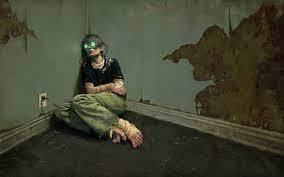
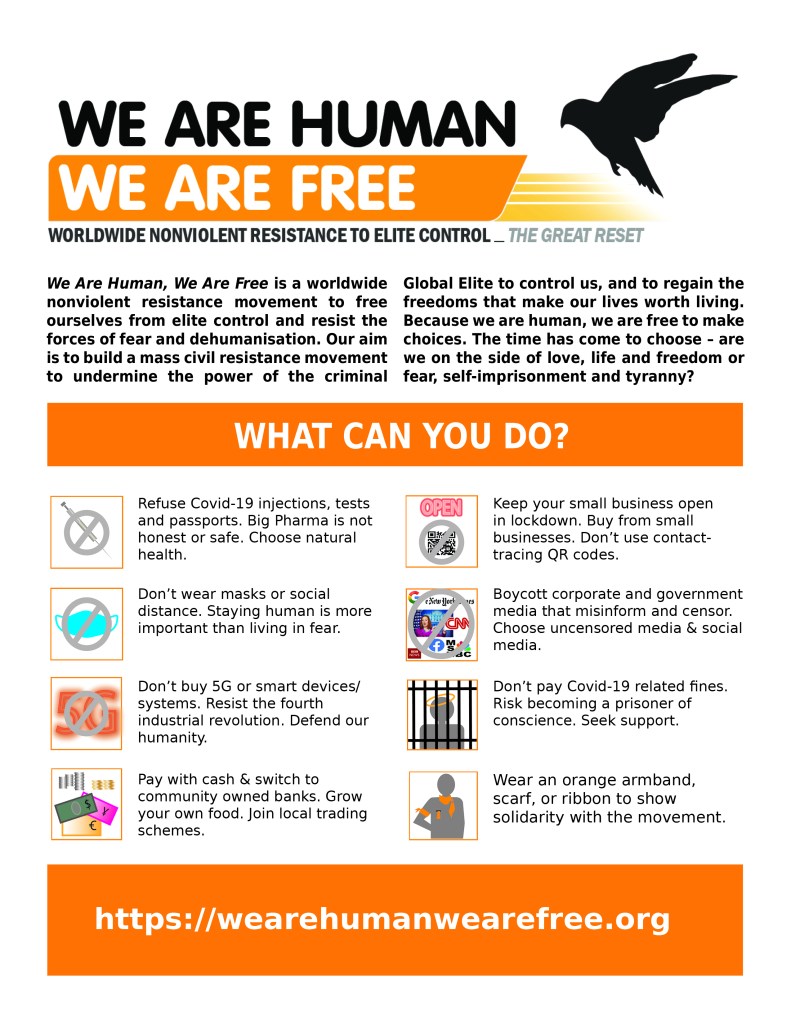

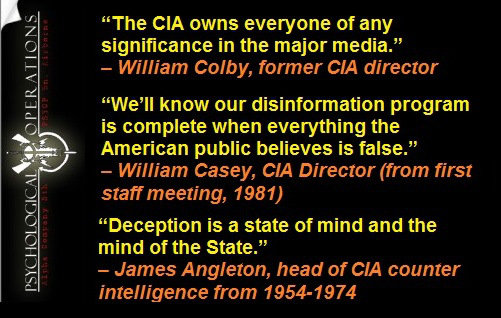



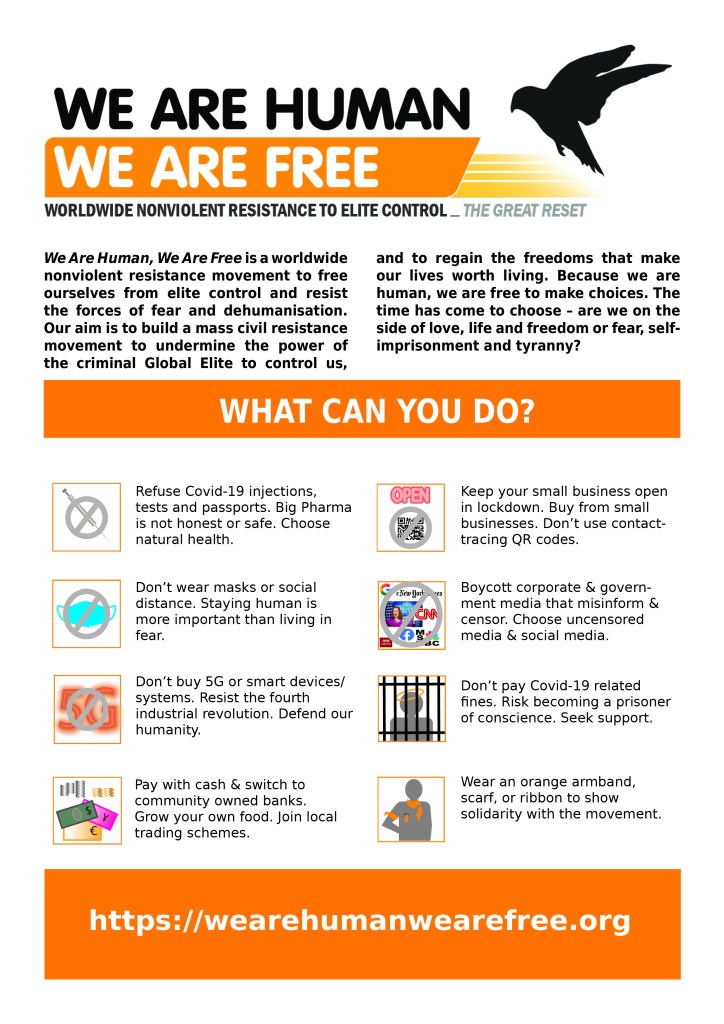

 After the Crash